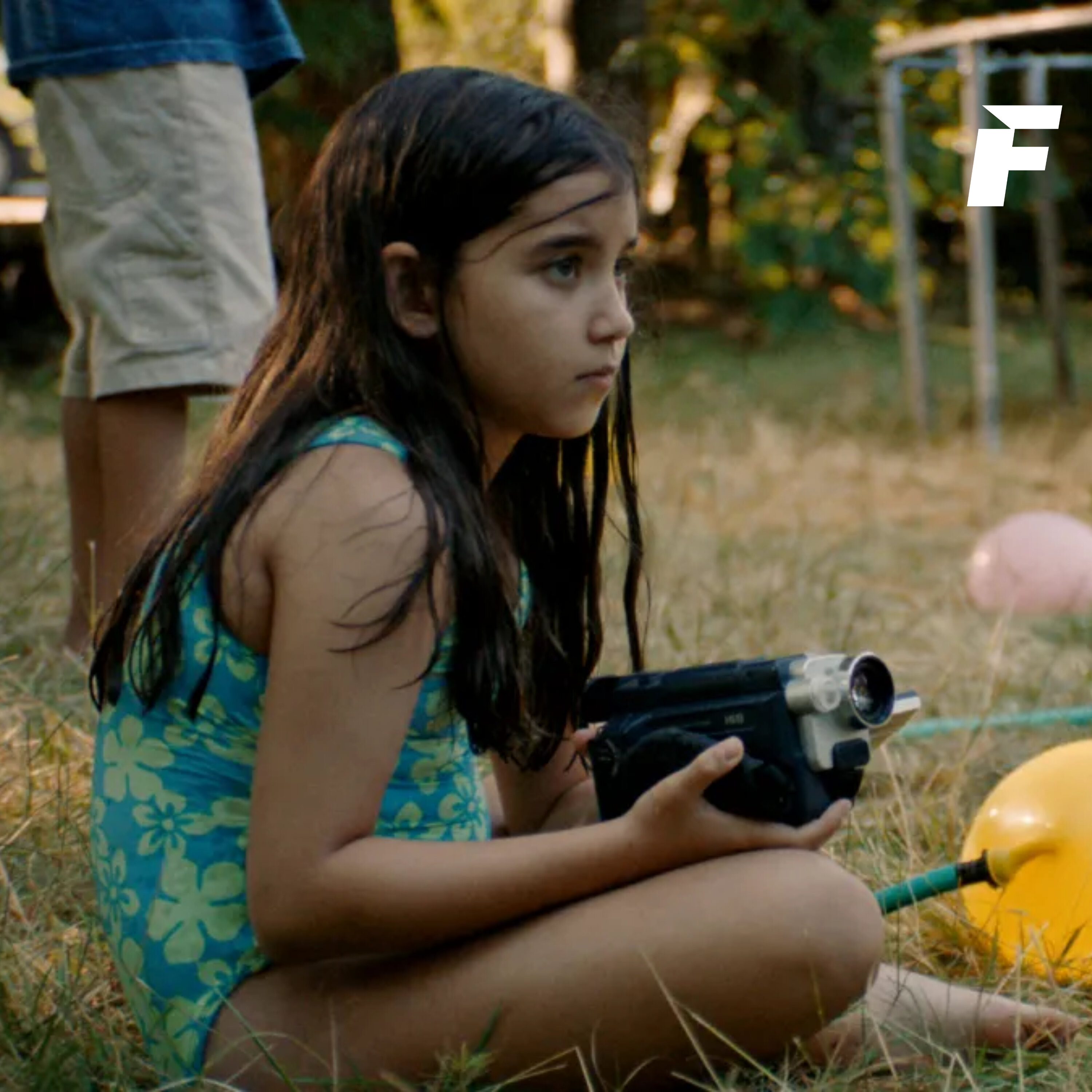
Blue Heron: A Lyrical Debut — and an Early Golden Brick Contender
Adam and Josh review Sophy Romvari’s debut feature Blue Heron, a semi-autobiographical "memory piece" that follows a Hungarian immigrant family on Vancouver Island in the late 1990s. They discuss Romvari’s distinct "observational elegance," the film’s striking meta-elements, and how it stacks up against other recent memory-focused masterworks like Aftersun. Plus, a look at why this is already a frontrunner for the 2026 Golden Brick.
See omnystudio.com/listener for privacy information.
2026-05-14
37 min
Transcript
Available Results
Generated results are saved to the knowledge database for reuse and search.
No generated results are available for this episode yet.
Extract Knowledge
Pick what you want extracted first. Model, scope, and chapter options appear after a template is selected.
Generated results for public episodes are saved to the knowledge database so they can be reused and searched later.
Transcript
00:00:21
Speaker 1: Film Spotting is presented by Regal Unlimited, the all you can watch movie subscription pass that pays for itself in just two visits. See any standard two D movie anytime with no blackoutdates or restrictions. Sign up now on the Regal app or at the link in our description and use code film spot twenty six to receive fifteen percent off. What kind of a show you guys putting on here today? You're not interested in art?

00:00:49
Speaker 2: Now?

00:00:50
Speaker 1: No, Look, we're going to do this thing. We're going to have a conversation.

00:00:55
Speaker 2: Hey, film Spotters Adam and Josh. Here coming Friday are Pantheon Project review of Terrence Malix The Tree of Life at fifteen? Is it Terrence Malick's best film? I know you're prepared to answer that question. I saw on letterboxed. It's been in that number one position for quite some time, Josh, I.

00:01:15
Speaker 1: Mean pretty much since it came out, and none of his film since have dethroned it. So I will be eager to hear on Friday where it sits for you after this revisit. That's Friday. However, today, finally, Adam, we're going to get to our first golden brick nominee of twenty twenty six. Usually at this point we have maybe two, possibly three titles thrown in the mix here, but we're just getting to that now. The golden Brick, of course, is our annual award that we give to an up and coming filmmaker whose maybe early film doesn't have to be a debut, shows distinct vision, some adventurous choices perhaps, And I think you can say that is the case for Sophie Raumvari's Blue Heron.

00:02:05
Speaker 2: Who is it?

00:02:06
Speaker 3: Jason? If you wanted to let us know that our son is dead on the front step, I told him, not Touri, he will come back to life.

00:02:13
Speaker 1: So Blue Heron opened in April seventeen and select cities. It's been expanding regionally since then, and we both have had a chance to catch it, Adam. And this is I guess you could call a bit of a memory piece. It is an adult young woman's thinking through processing her early years as an eight year old when her family had recently moved to Vancouver Island. And this family consists of her parents. She has two brothers around her age, and then an older teenage brother who is struggling with some difficulties. Clearly troubled in some way and causing increasing disturbances for their family, and she's trying to process this. And a lot of the film, certainly the first half, I think we can say for now our recreations of this woman's memories as a fairly tense family drama. I guess the first thing I'm curious about, Adam, is in this golden brick consideration, is there one aspect of Blue Heron that does jump out at you as making it worth consideration for a gold brick given those parameters that we usually look for.

00:03:24
Speaker 2: Yeah, well, there's a lot to the filmmaking, and I think maybe the most obvious is some of these meta elements that you're referring to. I think how Rumbari uses point of view specifically in this film, and maybe that's going to get a little too into the weeds to start off with, so I'll hold on that. But I do want to talk just generally about my reaction to the film, and even before that, I'll say, I know I do this all the time, but I love that it just magically works out this way so often, and it is completely random. We're discussing this movie the same week we're discussing, as we said, Terrence Malix the Tree of Life. Did you think about the crossover between these two films.

00:04:08
Speaker 3: I watched them.

00:04:09
Speaker 2: I watched them back to back, and maybe you didn't. I know, you watched Blue hairn at least a week ago, and you had watched The Tree of Life something like three times since it came out. But I watched them just a day apart. We have an adult reliving their childhood, instigated by an event involving a sibling, trying to reconcile their complicated relationship with a family member whose difficult nature shaped everyone's experience in that home. And it even begins with a voiceover. There's a lot here.

00:04:42
Speaker 1: There's a lot just in terms of the narrative. But I think it's as I think you were going to get to the filmmaking, that point of view element and the immersion in specific three to eight second snippets of a memory of what it was like at that age that somehow capture as much as a novella could. Yeah, in just yeah, that seconds of filmmaking.

00:05:05
Speaker 2: And I think ultimately Rombari and Malick used the camera very very differently. Again, as we'll get into, but you knew I was going to go for this, the portrait of a filmmaker as a young girl, and a movie that plays in the same stylistic and thematic sandbox as to name a few after Somen All of Us Strangers, Kiristami's Close Up. There's even a moment where a sort of space time fissure occurs where I felt almost the same thrill I felt during a similar meta moment watching Jafar Panahi's The Mirror. Now almost is the keyword. The moment ultimately didn't deliver quite the way The Mirror did, nor did Blue Heron stagger me the way any of those four movies did. But then, in fairness, as you know, I'm talking about two recent movies I named number one of their respective years and another Close Up I nominated for the Pantheon, our Pantheon a couple months ago, and another The Mirror, that I would nominate for the Pantheon if I thought it would get any support. Yes, absolutely, Blue Heron is setting a high brick bar for the rest of the year. So POV, I'm going to try to dissect that a little bit more later. You've alluded to the filmmaking that definitely stood out to you and those snippets that are so powerful here, What is it for you that really stands out as far as a brick resume.

00:06:29
Speaker 1: Yeah, I think it is. I guess we could call it the meta element. It's the formal breaking of what we're seeing and the mixture of memory and reality changing time, changing eras so fluidly, and in the second half, almost not changing at all, but melding them together at once in ways we'll probably get to. Don't want to spoil right now. I'm glad you made the Malick distinction in terms of the filmmaking as well, because you know, Malichian is thrown around a lot, and you know, you get these ideas in your head of nature, imagery and that sort of thing, and this really is doing something distinct. I would describe it as there's an observational elegance that Roumvari has that is both soft and searing. There is something about the incisiveness, and maybe it's it's part of the story. She's where there is always a tension in the air. What Jeremy, this older brother might bring when he walks into a room no one knows, and somehow Ramvari translates that into the imagery itself. So that boy, I'm just thinking of an early shot that maybe seems like a throwaway, but mentioned how this family has moved to this no home and we understand this. Where the camera is inside the moving van, it's all dark and you're you're not sure where you are shot to the movie is a very early shot, except you hear the rumble of traffic and there's this horizontal slit at the bottom of the screen that's kind of getting a little wider and a little smaller, and eventually dawns on you, Okay, this is a moving truck and that door isn't all the way closed, And sure enough, the truck comes to a stop. The father pulls open the door and we can see that they've arrived at the home. I still haven't put my mind around why that is such a grip image that somehow captures some of the things we've touched on, the tension, the instability, the glimmer of something more that you might find if you just look hard enough. How much of this movie Adham is about recordings. The father is constantly taking photos or video of his family and Sasha, the girl at this age, at the age of eight is sometimes taking video as well. There's something about that early choice to hide what's happening from us, give us a hint, and then reveal it that sets the stage for so much of what is to come. And I think, you know, just go back to the golden brick thing quickly. This is something that we're looking for. Is like, how many memory pictures do we see about going back to a filmmaker's childhood. How many times does that involved moving to a new place or a new neighborhood. How many ways could you show that that just gives us the facts? And here in the early moments, Ramvari instantly gives us something we've seen a million times on screen in a way I don't think I have ever seen on screen that connects with everything else she's doing and the rest of the film. Yeah.

00:09:27
Speaker 2: Absolutely, you expressed that very well. I loved that shot. I was similarly disoriented, and that was it felt to me like the entire purpose. I knew from that point on that throughout the entire movie, I was probably going to find myself at times, not lost, but like our main character Sasha, disoriented like a little girl in this house. I was going to find myself struggling to make sense of what exactly is happening. And that's true of any eight year old kid in any house, much less a house that's this volatile, right, You just can't wrap your head around this type of situation. And so you knew you were disoriented, and you knew that that with that door opening of the truck, that something was going to be revealed. But our answer is going to come? Is anything really going to be revealed? That felt like, you know, it almost felt like a movie screen right being lifted up and you're watching a picture being revealed there. So it felt it felt so appropriate the point of view stuff I wanted to talk about, Josh. I found it so striking because it wasn't in an obvious or restrictive way. This is very much, as we're saying, a movie about Sasha. It's about her experience growing up and the way she does see the world, the way she hears the world, the way she is trying to process the world around her. But Rombari doesn't only use the camera or doesn't use it. She doesn't focus on trying to use it this way to reflect Sasha's one to one observation of the world. Right it's not told directly from her point of view or again, nor does she try to really make it that way. More often than not, we spend most of our time as viewers you suggested this watching her watch or watching her listen, And where her specific point of view then becomes more apparent and is employed so effectively, is in a scene like the one early on where she is playing with some new friends in the neighborhood and she gets into a little bit of trouble because she gets into the swimming pool of one of the neighbor's houses with the cover still on it, and then she realizes that, oh, she's actually in some trouble here. She doesn't know how to get out of this pool, and she starts calling for help, but the other girls they they just maybe think she's playing, or they're still hiding from her, and they're ignoring her. Another parent comes and gets her out by giving her the end of one of those pool leaf rakes to grab onto. But we don't see here again unconventional choices, right. We don't see the parent notice her struggling, We don't see the parent run over to her. We don't even see the parent at all, except for the arm reaching out with the rape, right, we just we just hear the footsteps and their voice say here, grab on to this, and and stay calm, and and then and then a question. This movie is filled with these kinds of questions, the type of questions that people can't answer because there kind of isn't really an answer, or or the people you're asking can't answer them, they're not equipped to answer them. Why'd you do that, honey? And of course she's silent. She can't explain it. She just she just did it. And and the camera, the camera here doesn't mimic her exact point of view, but it, man does it put us precisely into her perspective. And if you think about it, I think that that that is mirroring the lens of memory as as it makes sense for the context of this movie. These are the details that she would remember. She would remember that way. She would just think about the arm reaching out to grab her and what the person would say. She doesn't remember the details of that person or even probably their name. She may have not even had any other interactions with that person right now. Romvari would probably also say, it's a lot more straightforward and cheaper to shoot that way without all that coverage. But that's also this strategy that Romvari chose to employ with this type of memory film, and it's so much more effective because it ties directly to all the big ideas this movie is dealing with.

00:13:57
Speaker 1: I really like that phrase, the lens of memory. I think that perfectly encapsulates what this movie is trying to do and the challenge of trying to make that come alive, not just in the filmmaking, but because it's impossible for anyone. Our memories are constantly not exactly what happened, right, They're not exactly what happened the next day, let alone. There's maybe twenty years or so have passed, you might guess here, and so the movie is mostly about how even when you remember things distinctly, they don't answer the questions you have about your childhood. In this case, particularly with the brother, the lens of memory and phrase makes me think of another shot, And it's interesting because it's the same in that as you describe in that pool sequence, it's not what she sees from her perspective, So think about how it works. Similarly in the scene where she and her mom are making something at the stove, they've been peeling potatoes together before, we've seen this as a long process. Now they're over at the stove using the peeled pieces and they're going to be frying them. And as they're having this difficult conversation about Sasha wanting to have a friend over for dinner and her mom talking about, well, I don't know if you want to do that, and you know, because Jeremy's unpredictable and I don't want you to be embarrassed, and they're having this, you know what, for a kid, is a monumental conversation. That is one you would remember till you were an adult, for sure, because you're so invested in having a friend over. You're so conflicted about this older brother who, lets be clear, she loves and has affection for. She's not just afraid of him, right, but she's afraid of what he might do in certain situations. So this is a distinct memory. But how does rumvari capture it. It's similar to how you describe the pool sequence of close up of the bowl of potato peelings waiting to be put in the pan, and in the background we can see mother and daughter and we can hear them, but they're blurred. We're just looking at these potato peelings. And I thought when I was watching that this is exactly I can remember, like hard conversations as a little kid with my parents. I can remember the fabric on the couch, yeah, that I was sitting on, better than their facial expressions. And this is what she knows as a filmmaker and captures in this scene that I am sure the idea is that Sasha at one point or maybe the whole time, is staring at that bowl of potato peelings. You know, all this inner turmoil is going on, and she's just laser focused on that as a safety net. I guess we do that. I don't know why we do that, but then that's what locks into our brains and we carry it for decades. And so there are so many moments in this movie that uses imagery in this way. And it's not just the visuals either, Adam. You mentioned I think how Sasha is always listening. So key to this movie is first of all, this is a very quiet home. I mean for kids, for active kids, it's usually pretty quiet in there. But then we can notice things like the thudding against the wall in that one scene where the mother and are having a tense Yeah, they're having a tense conversation, and again disorientation. We don't know what the thudding is. It's a rhythmic thudding. Yeah, And we wait until the mother goes outside to take the kids away, and then she comes around the corner and tells Jeremy get in the car. Yeah, and we see he's been bouncing the basketball against the exterior wall the house.

00:17:25
Speaker 3: YEA.

00:17:26
Speaker 1: So great sound design there, and also how about there is some scoring. But every once a while we get diegetic music that I realized is coming from the dad's computer, which is in the main family room, and he's on it a lot, and that's where he's playing music. And I love the quality of it. It's distant, it's timmy, it's quiet and just a little it's a little off because it's not coming from a clear speaker point that just you get a sense that this is part of the family's atmosphere. Is this sort of music that is so distinct to them in their home and her lived childhood experience. Have you ever heard about a family like this?

00:18:13
Speaker 2: Jeremy, look at me, look at me, please, Just the way rom Vari's camera focuses on the mom's hands getting into the potatoes and the squishy.

00:18:29
Speaker 3: Sound of it.

00:18:29
Speaker 2: That's the kind of thing we remember from our childhoods, watching and paying attention and noticing that and feeling like, that's how this is made. My mom has to do that, my dad has to do that. They their hands get that dirty. And you mentioned something else that reminded me. An element I really like is And this is something else that speaks to the economy of this film, which just makes it stronger and more authentic, is the way through that dialogue. There are little bits of dialogue, but just the insinuations where we understand that, of course everybody on this street and probably everybody within about a three block radius, knows what's happening with Jeremy.

00:19:18
Speaker 3: They have to, right because at a certain point, for sure, he's being.

00:19:23
Speaker 2: That disruptive, and you know, what's the talk of a neighborhood like this? But do we ever see the neighbors. Do we ever get shots of the neighbors looking over or whispering, or any scenes of them actually gossiping?

00:19:38
Speaker 3: No, we don't. We don't need to. We just we get enough.

00:19:41
Speaker 2: We get enough little bits of dialogue that we we understand what's happening, and we understand how how powerful it can still be without needing those types of scene, How how how much of an impact that can still have, that we can have the mom saying no, you can't have a friend over because because of this that that it is something that you need to be aware of, even though right now you're you're blissfully ignorant. You mentioned the incisiveness of the camera, and I think the stillness, and I also want to say with the POV, by not restricting it or trying to restrict it too much to her actual point of view, that makes the moments when we do see through Sasha's eye more powerful. But I think it's the stillness of the camera. And this is where it's very different from Malik, especially something like The Tree of Life, where the camera is just flying all over the place.

00:20:32
Speaker 3: Right right, the camera does.

00:20:34
Speaker 2: Not move here maybe at all, And so what you come to realize it it zooms, it tilts, but it's very stationary. And so what you come to realize is that the point of view that matters most is really not young Sasha's. Here's the lens of memory, right, it's older Sasha. It's her memory reliving and re envisioning the past, and that I think is shown. This is not spoilers at all, but it's in that scene I was referring to as the fissure scene, right, the moments that precipitated Josh. This scene for me is is magical because and that really is what it is. And in terms of the construct of the film or the context of the film, it is it is effectively magical realism. It It is a moment too that I rewatched it, Josh, and it feels like this is the one moment that feels actually like it almost could have been taken out of the Tree of Life because the sequence begins with a magic hour shot of the sun. It's rays coming through the trees. But what it is is when they're all playing outside. All the kids are playing outside and including Sasha, the little boys and the little girl are all on the trampoline, and Jeremy is just in his world like he usually as, being quiet like he is. He He barely has any lines of dialogue in this film. The actor's name is Edic Beddos, and he's.

00:22:01
Speaker 1: Very very good.

00:22:02
Speaker 2: I mean, what he does with very little dialogue here is something.

00:22:07
Speaker 1: And the adam like just a quick aside. As far as I can tell, this is his first role. Yeah, and I think what's key about this character is that he keeps a distance as the character, which is necessary, but he brings enough to the screen to still have a presence. You know, yes, and yes, as you you're just describing it, it doesn't mean not just when he's disruptive, even when he's just off to the side, Bedos is doing something that has real presence to it, so he fully exists in that moment, even if he's a bit of parts. I think it's a really incredible performance.

00:22:41
Speaker 2: And I think you could even go so far as to say, even though he is very rarely in the film, very rarely, if ever, do we actually see him being towards other people aggressively or violently disruptive, I would also still say he's almost never very likable in the film. He's not an athabare person. And yet there is something about the way Bedos plays him that when we do hear someone in the film later describe him, I believe as soulful. You see that from the first moment you look at him in this film, you believe that it is there, which is what makes part of this story so so tragic. And so we're watching them. He's listening to music with headphones on, the kids are bouncing, and this shot, in a lot of ways, then is the whole movie, because it's this point of view shot of the mind's eye of Sasha, older Sasha looking back as the kids are playing, including on herself, and she's looking at the house through the glass, and what's happening inside the living room. Mom's on the phone having a conversation we don't know with who yet, having a conversation about Jeremy, a tough conversation about what we're going to do with him, and how she doesn't know what to do and she doesn't want to make a very tough decision. What's dad doing. Dad's doing what Dad always does, Dad's filming. So we've got the mirror, the reflection of the camera pointed back at the camera. And then something happens there too, Josh, which is we do get, speaking of soulful, we do get a moment where, just as the sequence is ending, Bettos turns and looks right at us and looks at the camera, and and just for a moment, it holds on him, and then just for a moment, he starts to give a little smile, and Romvari has the the right instinct to not stay on that smile and let that moment become more saccharin.

00:24:42
Speaker 3: Than it than it could be.

00:24:44
Speaker 2: She just lets the smile just just start right and then and then cut away because the scene that's actually playing out is something that's way more tense and difficult, and it's going to be the thing that launches the entire second half of this this film. But but what the camera does here, Josh, is that it's stationary the entire time, and so it tilts a little bit, as I said, it pans, it'll even wiggle. But what it starts doing is it's just the slow zoom forward toward the glass on the parents. And I think the way I see that, the way it works so of effectively for me in the moment, is that I do see it as grown up Sasha Sophie Ramvari. It is her mind's eye looking back on this scene, and by being stuck like that, the camera being fixed, it feels to me like the character the director's eye being fixed, being stuck. You can only go so far back. You can only capture so much, and when it starts to zoom, it's almost like when you squint to try to look at something and try to get a better view, to try to get a clearer picture. Yes, you can move in a little bit, you can try to see things a little more clearly, but you're just never fully going to get there. The past will always elude us, and certainly seeking any easy answers from the past is something that's always going to elude us.

00:26:15
Speaker 1: This really is a good case study for the possibilities of the zoom, because you know, we're probably making it sound like she's employing it all the time in this movie, and I think it's actually just very effective and noticeable, but not in a bad way when she does employ it. And I think, Adam, in the moment you're describing, and in another one here I'll get to, it makes me realize that the zoom is very effective to convey searching. Right You're like, you're trying, Yes, you're trying to get closer to what's happening. And that moment I mentioned where he's throwing the basketball against the wall of the house and his mother comes out and says to get in the car where all the kids, we're all going somewhere, get in the car, and he just ignores her. This is where she employs another one of those zooms, almost imperceptible, like you just you suddenly you notice, we're seeing we're a little closer to Jeremy, a little closer. And here, of course it's searching, it's asking the question, why isn't he responding? What's he going to do next? So there's a curiosity but also attention to it as well. Right, it is like the moment's getting more the more he ignores her, the more she calls, we are feeling that time she's going to give, and so who's going to give? And so the zoom is effective there. I also like the opposite though, and there's only one instance where she does this that I can recall. Maybe there are more, but the kids and the mom go to the beach, and I like how she starts in close on this rocky beach from the water, and we see maybe the younger brothers come first, I think, and they're running towards the water, and as the family approaches, and they come from between two larger rocks. As a family approaches, she's zooming back and out and there suddenly we have it. I found it to be like maybe one of the few moments in the film where I took a breath because the zoom is now opening. It is breathing, the screen is breathing, and it's creating a welcoming atmosphere as the family spills out onto the beach. So yeah, just effective use of zoom here, which I don't know. I don't know how much we call attention to that except for me maybe I always think of it as like a seventies technique, you know, it's being probably employed in the seventies, Yeah.

00:28:27
Speaker 2: Without a doubt, and and maybe only certain filmmakers in particular. It's not commonly used. Most filmmakers are going to use tracks, they're going to set up a dolly, or they're going to use the steady cam they're not going to use or just cut where they're just cut absolutely right. But but Rmbari really really uses it well here. I think there's also I wonder if you felt the same way. I think there's a scene of the Year candidate potentially in this film when.

00:28:53
Speaker 1: I say there's a couple, Yeah.

00:28:55
Speaker 2: I mean, what what comes to mind for you when when I say that, is there one or two? When you say there's a couple, what stands out.

00:29:01
Speaker 1: The one that comes to mind is another moment of the dad capturing the family in looseness. And this is back in the kitchen, yes, and yeah, the sifting of the baking.

00:29:15
Speaker 2: Sifting of the baby, yeah, and going into the dark room. That entire sequence, right.

00:29:20
Speaker 1: Yeah, the dark room is key. Like you know, as we both touched on the father with this recording habit, what does he say at one point? And this isn't pushed too heavily, you know, I say it because it makes the movie sound way more thematic than it is. But he just calmly says something about, you know, the developing film is it's kind of like going back in time. And he just casually mentioned, no, you know.

00:29:45
Speaker 2: The exact line. It's so good, and he does. He says it's so casually it is almost hard to catch. But he says, it's in the fixer, you know, whatever the chemicals you use in the dark room. I haven't been in a dark room since seventh grade, so bear with me. But the pictures developing, it's coming to life. And think about the metaphor of that here, especially in this movie, based on everything we're saying about the construct of this film and this image of this family that was just taken minutes before. Now they're in the dark room bringing time back, and he says, time is going back.

00:30:21
Speaker 3: It's a time warp.

00:30:23
Speaker 1: Yeah, yeah, it is.

00:30:24
Speaker 3: This whole movie is.

00:30:25
Speaker 2: A time warp. And of course that image itself is a time warp.

00:30:28
Speaker 1: Yeah, and it's played way more lightly than then, you know we're describing it works really beautifully. We should probably say the father played by Adam Tampa and the mother I Ringo Rettie, both very good. And you mentioned how you know, the tools when we're talking about developing here photography, the tools to try to recapture these memories. Of course, we get more of that in the second half of the film, which I think I probably maybe we do want to leave as a surprise for viewers, except to say it becomes more explicit about the tools that the older Sasha employs to recapture some of these memories as a filmmaker. And there's really sort of a formal break in this movie that's very bold where past and present.

00:31:15
Speaker 3: Yes, there's a break I was referring to.

00:31:17
Speaker 1: Yeah, yeah, there's a break, but then then it comes both come back together magically in ways I do want to leave as a surprise, but are absolutely where I was. I was already in as on this as a golden brick, but at that point I was like, oh, yeah, this fits so well. It's also connected to you know, you mentioned the top After Sun, which I've seen elsewhere also Charlotte Well's brilliant, brilliant film of just a couple of years ago now, and I think it's a fair comparison. I do want to say to me, there's a crucial distinction in how they handle this past and present blending, and maybe helps me explain why After Sun, at least at this point after just one viewing of Blue Heron did have such a stronger impression on me. Is simply because that movie it sort of brings past and present together like drops it like a hammer on you when that happens in that movie, and here we see it's like this gentle convergence. And you know, for different viewers, one might be more effective than another. But I think it's a key distinction. I just don't want this to be you thought of as like just another after Son. There are some similarities. It's very distinct in a lot of ways. But I still think at the same time, if you're incredibly moved by after son, then you need to see Blue heron as soon as you can.

00:32:36
Speaker 2: I would echo that, and I just briefly want to go back to the dark room and the pictures that they're developing there. Even in this house with so much struggle and so much tumult and the weight hanging over it and all hanging over every moment, it seems of her childhood almost and the weight that the parents have to carry that those performers do portray so well. Nevertheless, there are moments like that, and I'll go back to the tree of life for a second. There are such moments of grace, and a moment of grace that we get is that falling powder, right, And even with all of that, Jeremy can give us moments with his siblings and moments with his parents looking on or the dad looking on in this case, that's that's beautiful and touching and tender and and of course then I mean, he's capturing everything. But maybe that's why he's capturing everything is because because if he doesn't, he's he's gonna miss moments like that, which do you think.

00:33:36
Speaker 3: You're right but they're rare.

00:33:38
Speaker 1: I think you're absolutely right. I think it's his recognition that all we will remember if we don't have these is maybe the difficulty. And of course this is what makes it tragic as well, is that this is you know, this is not just a kid who's creating utter distress and violence in the home where where some decisions might be easier than just out of protection for other kids. This is a family that still is able to have these moments together, and they're desperately trying to figure out how to make that their entire experience instead of these these little intermittent, unexpected moments of grace you describe that that they have to capture with the camera.

00:34:22
Speaker 2: I do want to say going back to your point about After Sun, and I'll close here, and I think we can get into this a little bit or I can express this without needing to divulge any spoilers. I don't think we have to for this review at this point. I do wish that perhaps, like After Sun, it traversed that ambiguity of the liminal space maybe a little more deeply, or it blurred the lines in a way. I like that it's distinct, But I think maybe what I'm getting at, Josh, is that in the end, for me, for the weight of this film to really hit as powerfully as something like After Sun did, the mission of it felt a little bit too clear. And what I mean by that is both the mission has laid out by the voiceover at the beginning and then by the voice we get at the very end, and what it's expressing, and that's that's the actress who's playing Ramvari what she says in both the beginning and the end. For the lack of answers that the movie exposes and it does this movie is We've said multiple times, I don't think this movie tries to suggest that there there is any easy reckoning with any type of situation like this, or that childhood itself is something we can just dwell on in our past and make sense of anything anything like that. For me, in those final images and in the book ending, I suppose I felt like there was still a little bit too much closure and and and and the imagery itself. The mechanism for the closure Here's where I'm being vague. The mechanism for the closure maybe felt just a little bit too facile for lack of a better word, if if you know what I mean. The some of the closing images were for me, didn't were at odds a little bit with the challenging nature of so much of the rest of the film.

00:36:26
Speaker 1: Let me just ask, and I can be vague here. If the point of contention for you was a zoom? Was it actually the use of a zoom? And how that? Because I actually found that it's not the last shot, No, not the last shot. It might be the third to last or fourth last, third to last shot. Yeah, okay, yeah, all right, Well.

00:36:46
Speaker 2: I'm thinking about more who who populates the shot though, than I am the shot choice itself.

00:36:52
Speaker 1: Yeah, okay, okay, that worked for me. Actually, okay, I thought, yeah, I thought, but it does it does bring your You're right, it does bring a certain closure, even if it doesn't bring answers. I can see the distinction you're making.

00:37:06
Speaker 3: Yeah, yes, okay.

00:37:08
Speaker 2: Blue Heron is out now, like we said, still rolling out. I believe to more theaters this spring, so you might get a chance to see it at a theater near you. If you do get a chance to see it, or if you've already seen it and you would like to weigh in. We would love to hear your thoughts about the film. You can email us feedback at filmspotting dot net for Film Spotting, I'm Adam Kempinar.

00:37:29
Speaker 1: And I'm Josh Larson. Thanks for listening.

00:37:32
Speaker 2: This conversation can serve no purpose anymore.

00:37:35
Speaker 1: Good Bye,
Chapters
No chapters available.