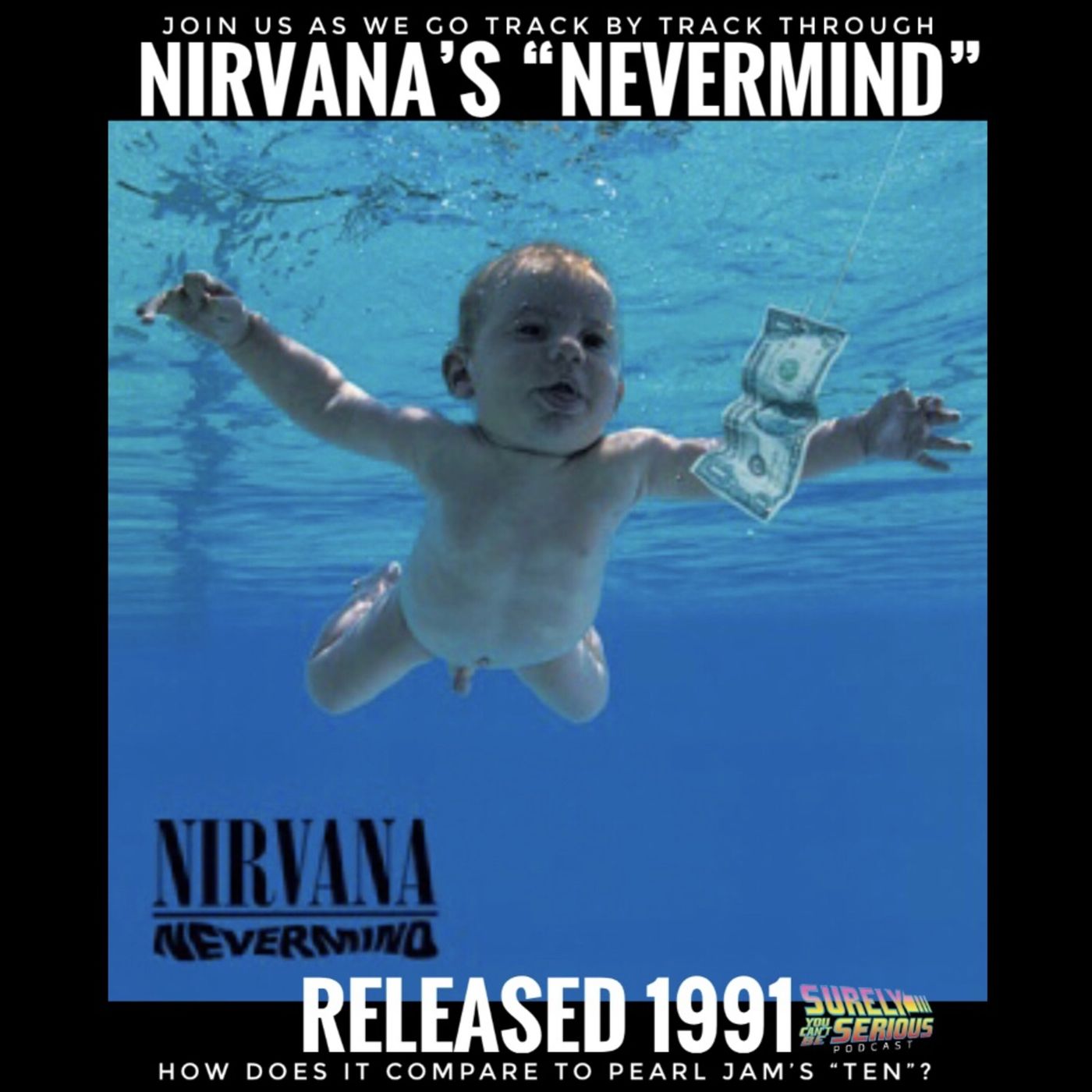
Nirvana's "Nevermind" (1991) : Track by Track!
Alternative Rock, Seattle Sound, or Grunge... Whatever you call it, in 1991, Nirvana and Pearl Jam changed the face of music. Join us in this episode as we cover the history of Nirvana and each track on the album, Nevermind.
Please Support these albums:
Nevermind (Excl. Ltd. Ed. Vinyl): https://amzn.to/2Yx5vMB
Ten (Spec. Ed. Double Vinyl): https://amzn.to/2zggpLV
Please Support these albums:
Nevermind (Excl. Ltd. Ed. Vinyl): https://amzn.to/2Yx5vMB
Ten (Spec. Ed. Double Vinyl): https://amzn.to/2zggpLV
2020-05-05
78 min
Transcript
Available Results
Generated results are saved to the knowledge database for reuse and search.
No generated results are available for this episode yet.
Extract Knowledge
Pick what you want extracted first. Model, scope, and chapter options appear after a template is selected.
Generated results for public episodes are saved to the knowledge database so they can be reused and searched later.
Transcript
<v Speaker 1>Hello everybody, and welcome to the Surely Can't Be Serious Podcast,
<v Speaker 1>discussing and debating the iconic and the forgotten of eighties
<v Speaker 1>and nineties pop culture with your co hosts James d
<v Speaker 1>Grades and Jason Collin.
<v Speaker 2>Yeah all right, let's go throw ourselves into the marsh.
<v Speaker 2>Yeah yeah, even though we're in our forties, we can
<v Speaker 2>still marsh.
<v Speaker 3>Sure it can, Sure it can. I'm gonna stage dive.
<v Speaker 2>I'm gonna punch you just for fun.
<v Speaker 3>Did you were you ever? Did you ever experience a
<v Speaker 3>much bit? No? Oh yeah? Oh man, see this is again.
<v Speaker 3>You know we talked about in Raiders and Back to
<v Speaker 3>the Future, how the slight variation our age two and
<v Speaker 3>a half years older than I am, right, but that
<v Speaker 3>slight variation can play a huge factor in certain, you know,
<v Speaker 3>spots in your life. You got to see Raiders and
<v Speaker 3>you have full recollection of it. I don't remember the
<v Speaker 3>first time I saw it. I have multiple memories of
<v Speaker 3>being involved in a mosh pit because in nineteen ninety
<v Speaker 3>one I was sixteen and you had gone to college.
<v Speaker 2>And so it was an entirely you know, and it
<v Speaker 2>was yeah, that's for sure. Yeah, somebody bumps into me
<v Speaker 2>I'm gonna have a problem. Yeah, hey man, what don't
<v Speaker 2>you to do it? What's your problem?
<v Speaker 3>Yeah?
<v Speaker 4>No, I was.
<v Speaker 3>I was involved in several moss pits in my high
<v Speaker 3>school days. That's fun. So do you Okay, we didn't
<v Speaker 3>talk about what we're talking about today.
<v Speaker 2>Let's talk about this, okay, all right.
<v Speaker 3>So today we are again approaching the subject of two
<v Speaker 3>bands that change the paradigm.
<v Speaker 2>No doubt, there's absolutely no doubt.
<v Speaker 3>As not one of the bands I like, no doubt
<v Speaker 3>a lot, but they're.
<v Speaker 2>Not speak okay, No, not no doubt, Nirvanavana and Pearl Jam.
<v Speaker 3>Yes, with there too what I would call debut albums.
<v Speaker 3>I mean, Nirvana had Bleached ten was definitely Pearl Jam's debut,
<v Speaker 3>but the albums that made them the household names.
<v Speaker 2>For sure, and they came out basically at the.
<v Speaker 3>Same time, Yeah, exact same time.
<v Speaker 2>Pro Jam preceded Nirvana by just a couple of weeks.
<v Speaker 3>Yeah, Pearl Jam came out in August of ninety one,
<v Speaker 3>and Nirvana's never Mind came out in September September nine,
<v Speaker 3>twenty fourth, Yes, ninety one, September twenty fourth. Now, the
<v Speaker 3>single Smells Like Teen Spirit was actually released a couple
<v Speaker 3>of weeks before that, so it is even closer than that, right, Yeah,
<v Speaker 3>the awareness of Nirvana probably occurred before the awareness of
<v Speaker 3>Pearl Jam, and so that's why we're tackling them first
<v Speaker 3>and then tackling Pearl Jam next week.
<v Speaker 2>Right, So this week is Nirvana's never Mind.
<v Speaker 3>Yeah, let's just talk personally. Do you remember what you
<v Speaker 3>were doing, what was going on when you when you
<v Speaker 3>heard something off of Nirvana's never Mind? Yeah, So you
<v Speaker 3>and I have.
<v Speaker 2>Talked briefly about this. But in August of ninety one,
<v Speaker 2>I left for college. Right, I graduated from high school.
<v Speaker 2>I'm a freshman at the University of Oklahoma, and I'm
<v Speaker 2>in the dorms. I don't have MTV. I've got the
<v Speaker 2>radio stations or whatever. But so Nirvana was kind of
<v Speaker 2>a slow burn for me because I didn't have access
<v Speaker 2>to it like I did when I was at home with.
<v Speaker 3>Gable for Nevermind, for smells like teen Spirit. I have
<v Speaker 3>a very specific memory. I don't remember what the field
<v Speaker 3>trip was that we were on, but we were coming home.
<v Speaker 3>I think it was like a three hour bus ride.
<v Speaker 3>Who were coming home and this girl who had been
<v Speaker 3>kind of looking at on the bus, so I didn't
<v Speaker 3>really know that well started talking to me and she's like, oh,
<v Speaker 3>have you heard this new song? And I was like,
<v Speaker 3>I think I've heard this before. Let me listen. So
<v Speaker 3>I'm listening to her headphones with her, and she's getting
<v Speaker 3>towards the end of the song and she's like, it
<v Speaker 3>sounds like he's saying bloody nail, bloody nail at the end,
<v Speaker 3>and that was you know, that's kind of Nirvana's thing
<v Speaker 3>that you don't understand what they're saying half the time.
<v Speaker 3>And so even when I hear it today, I still
<v Speaker 3>I still can sing bloody nail to the end of
<v Speaker 3>this song. That girl became a girlfriend for a while
<v Speaker 3>after that, so that was That's probably where that memory.
<v Speaker 2>Step I give you that special feeling.
<v Speaker 3>Well that it does.
<v Speaker 2>Yeah, I would argue that this album had more impact
<v Speaker 2>on pop culture than any other album since Thriller.
<v Speaker 3>Yeah, i'd say more so, I mean I would put
<v Speaker 3>it above Thriller. Wow. Yeah, I mean it was a
<v Speaker 3>it was a big, big change, a big big change.
<v Speaker 3>They're close, but yeah, I would definitely say it had
<v Speaker 3>a huge impact comparable at the very least. So that
<v Speaker 3>started off. The band started off back in eighty seven.
<v Speaker 3>Kurt Cobain had been grown up in a town called Aberdeen, Washington,
<v Speaker 3>which is near Seattle, like one hundred and so miles away,
<v Speaker 3>but couldn't really be further apart as far as psychology
<v Speaker 3>and the scene and all that. It was not a
<v Speaker 3>hip town, right, and he had what a lot of
<v Speaker 3>ds grew up with as a kind of rough life.
<v Speaker 3>His parents got divorced, he had some emotional issues that
<v Speaker 3>made it hard for him to stay at anybody's house.
<v Speaker 3>But as it turns out, those type of people connect,
<v Speaker 3>and he ended up finding a guy named Chris nova
<v Speaker 3>Selic who was also an Aberdeen guy. Actually got introduced
<v Speaker 3>to Chris through his brother Robert. Kurt had overheard Robert's
<v Speaker 3>band playing upstairs. They were really loud. Kurt asked Robert
<v Speaker 3>what was going on, and he says, Oh, that's my
<v Speaker 3>older brother, Chris. He's got a punk band. And so
<v Speaker 3>that piqued Kurt's interest because he had been playing music
<v Speaker 3>and it's you know, I listened to a thing whereas
<v Speaker 3>his guitar teacher is talking, and his guitar teacher just
<v Speaker 3>looks like, I mean, you're going to talk about Aberdeen
<v Speaker 3>being different. He looks like, you're you know, your dad's
<v Speaker 3>drinking buddy, but he's He told him, he's like, hey,
<v Speaker 3>if you want to you know, if you want to
<v Speaker 3>be big, if you want to be famous, you can't
<v Speaker 3>just do what other people are doing. You have to
<v Speaker 3>be unique and do something different. He's like, my gosh.
<v Speaker 3>He took that to heart because he came back with
<v Speaker 3>songs with chords that didn't be along together. But anyway,
<v Speaker 3>Kurt bothered Chris for a while to get him to
<v Speaker 3>join a band, gave him the a demo tape that
<v Speaker 3>he had made with a band that Kurt had started
<v Speaker 3>called Fecal Matter, and basically Chris just wasn't really interested
<v Speaker 3>and didn't listen for a few months, and then when
<v Speaker 3>he finally did listen, he's like, oh, okay, yeah we could,
<v Speaker 3>we could do a band. Yeah, this'd be all right.
<v Speaker 2>I'm not sure Nirvana gets as far if they're called
<v Speaker 2>fecal Matter, Yeah.
<v Speaker 3>No, I don't think so. And that's there are several
<v Speaker 3>interesting names that they tossed around. Fecal Matter was one
<v Speaker 3>of them, obviously, and they had started a group called
<v Speaker 3>the Sellouts, which was a credence Clearwater revival cover band.
<v Speaker 3>I just when I saw that the first time, I
<v Speaker 3>was like, Okay, that has to be a joke. There's
<v Speaker 3>no way.
<v Speaker 2>No.
<v Speaker 3>It turns out you can find recordings of covering Bad
<v Speaker 3>Moon righting. Wow yeah, wow. Yeah. But Kurt decided on
<v Speaker 3>the name Nirvana because he sounded beautiful. You know. They
<v Speaker 3>were they were pursuing punk music, and they thought, I
<v Speaker 3>want to have something that's in contrast to punk, you know.
<v Speaker 3>They didn't want to be another punk group, and so
<v Speaker 3>they picked a name that was more.
<v Speaker 2>I think that was a huge factor in their success,
<v Speaker 2>absolutely truly. Though the name Nirvana is marketable, Yeah, much
<v Speaker 2>more marketable than figal Matter the sellouts.
<v Speaker 3>Skid Row, though, was one of them that name could
<v Speaker 3>be successful.
<v Speaker 2>Skid Row for a later podcast hopefully.
<v Speaker 3>Yeah. Vana is just a great name, it really is.
<v Speaker 3>It is a great name. But then they started doing
<v Speaker 3>their own material. Kurt has a girlfriend that works while
<v Speaker 3>he stays at home and does his art and his music,
<v Speaker 3>so he gets it's a big amount of time to
<v Speaker 3>kind of develop his style. They have a few drummers
<v Speaker 3>that they have play. They have guys who sub in
<v Speaker 3>and when they ultimately end up doing well enough that
<v Speaker 3>they've got their own material and decide to do an album.
<v Speaker 3>They signed with this kind of underground album label called Subpop.
<v Speaker 3>Subpop's got its own history, which I don't have time
<v Speaker 3>to completely go into, but it is an interesting history.
<v Speaker 3>But subpop was just a couple of guys who went
<v Speaker 3>to these concerts of these bands in Seattle, and Seattle
<v Speaker 3>was this kind of unique situation where other bands really
<v Speaker 3>didn't go there to tour and there wasn't really outside
<v Speaker 3>influences coming in, so they kind of developed their own sound.
<v Speaker 3>And so you get bands like Sound Garden and mud.
<v Speaker 4>Honey and the Melvins, and they all knew each other,
<v Speaker 4>Like half of the crowd at any given concert was
<v Speaker 4>going to be other band members come to see other
<v Speaker 4>guys play, and they're very supportive and had developed their
<v Speaker 4>own sound.
<v Speaker 3>So these guys from subpop here, they're like, well, let's
<v Speaker 3>just start our own record label and we'll do it.
<v Speaker 3>And it became kind of this cult ish Hey, we're
<v Speaker 3>a member of the special club. We got some subpop albums,
<v Speaker 3>and then, in a move of marketing brilliance, they call
<v Speaker 3>a guy who's a journalist for one of the major
<v Speaker 3>music magazines in Europe and they say, hey, if you
<v Speaker 3>want to hear the Seattle scene, come on over, and
<v Speaker 3>they get the money together to fly him out there,
<v Speaker 3>give him the tour of the shows of the bands
<v Speaker 3>that they've got signed. He goes back and writes an
<v Speaker 3>article in his magazine and suddenly sub pop is the
<v Speaker 3>new coolest thing and the Seattle music is super exciting.
<v Speaker 3>Yea with sub pop. Nirvana does their first album, which
<v Speaker 3>is called Bleach. On that album, they had a drummer
<v Speaker 3>named Chad Channing, and he's not a bad drummer. But
<v Speaker 3>as our friend Arlen Bullard put it to me, if
<v Speaker 3>it wasn't for Dave Grohl, Kirk Cobain would be a
<v Speaker 3>barista in Seattle somewhere. I don't know if I'd get
<v Speaker 3>that far. But Chad Channing was good. He didn't have it.
<v Speaker 3>He didn't have a bad technique at all. He was
<v Speaker 3>a solid drummer, but he it was. Adding Dave Girl
<v Speaker 3>to the band was a step of magic.
<v Speaker 2>Oh, it's huge. So does Chad Channing lead one of
<v Speaker 2>the biggest rock bands in the world right now?
<v Speaker 3>No?
<v Speaker 2>Okay, right, Dave Gold does, yes, okay.
<v Speaker 3>And Dave Girl was this guy from Virginia who had
<v Speaker 3>he's quit high school to start playing in bands. He
<v Speaker 3>was drumming in bands and moved out to California to
<v Speaker 3>be more involved in the scene. And after Bleach and
<v Speaker 3>the tour with that album, they kind of said to Chad, hey,
<v Speaker 3>you know, you're not really meeting our standards, and so
<v Speaker 3>they had a few they went through a few other
<v Speaker 3>substitute drummers, and while they're going through that process, they're
<v Speaker 3>not really finding something that they super clicked with. But
<v Speaker 3>then they go to a concert with the lead singer
<v Speaker 3>Buzz Osborne of the Melvins. Go to a concert of
<v Speaker 3>this band called scream which is a hardcore punk band,
<v Speaker 3>and the drummer is a guy named Dave. Girl Wow
<v Speaker 3>and as it turns out, and they're like, oh, this
<v Speaker 3>guy's awesome. But then he's with another band. And then
<v Speaker 3>two weeks later, Screamed disbands and falls apart, and so
<v Speaker 3>the drummer for mud Honey he gets a call from
<v Speaker 3>Dave who's like, Hey, my band just disbanded. You have
<v Speaker 3>anybody that I can hook up with? And he says, ah,
<v Speaker 3>you know, the guys from Nirvana are looking for a drummer.
<v Speaker 3>Dave flies up, they get together, they play and it's
<v Speaker 3>magic instantly.
<v Speaker 2>Whenever Kurt Cobain gets together with Butch Vig. Later he says,
<v Speaker 2>we've got the best drummer in the world.
<v Speaker 3>YEP, and we're ready to go. Yeah. He says he
<v Speaker 3>has perfect metronome timing and he hits really hard. Okay.
<v Speaker 3>So Bleach had come out in nineteen eighty nine and
<v Speaker 3>they were touring still with Chad Channing at that time,
<v Speaker 3>but they decided they wanted to do another album. Subpop says, hey,
<v Speaker 3>you know, why don't we do an EP or something
<v Speaker 3>like that, and they're not really excited about that. But
<v Speaker 3>what ends up happening is they released this release a
<v Speaker 3>single called Slipper. Let's say he wanted to try to
<v Speaker 3>produce the most marketable candy. Basically lame as could be
<v Speaker 3>a song that he could, but that was the most
<v Speaker 3>had the most appeal to the public, and so that
<v Speaker 3>was that was what he did. They actually went to
<v Speaker 3>record that song during a recording session by a group
<v Speaker 3>called Tad, and Tad had a lunch break and the
<v Speaker 3>guys from Nirvana, including Chad Channing, come in and they
<v Speaker 3>use the equipment of the guys from Tad and John
<v Speaker 3>and Dino who's the guy who recorded Bleach for them,
<v Speaker 3>does this song. They do it over the lunch like
<v Speaker 3>Pad's sitting there eating their sandwiches, and they're in there
<v Speaker 3>for less than an hour recording the song as their singing.
<v Speaker 3>And so once that comes out, the sub Pop says, Okay, hey,
<v Speaker 3>we think you should for your next album. You should
<v Speaker 3>use Butch Vig, who's this guy out of Madison, Wisconsin,
<v Speaker 3>and he's got his own studio called Smarts Studios. The
<v Speaker 3>band's touring at that time, so they say, all right,
<v Speaker 3>well stop, we'll do an extended stay in Madison where
<v Speaker 3>we're going to have a show anyway, and we'll go
<v Speaker 3>in and we'll record our second album. And so they've
<v Speaker 3>got several songs on there that are similar to the
<v Speaker 3>songs that end up on Nevermind, and one of them, last,
<v Speaker 3>one of them makes it all the way through. But
<v Speaker 3>they had a week to record, and about five days in,
<v Speaker 3>Kurt Cobain totally kills his voice singing Lithium and said
<v Speaker 3>they can't really go on. Jonathan from Subpop flies out
<v Speaker 3>there and he's like, this sounds good. We'll come back
<v Speaker 3>in a few weeks. And re record, right, and then
<v Speaker 3>they leave on their tour and butch Vig doesn't hear
<v Speaker 3>anything for the time.
<v Speaker 2>Butch Vig was like expecting them to come back, and
<v Speaker 2>all of a sudden, it's like, well, where are they?
<v Speaker 2>I don't know, I haven't heard from him. But I
<v Speaker 2>do want to say this is I think very fortuitous
<v Speaker 2>for the band, because this is still too early. I mean,
<v Speaker 2>nineteen eighty nine nine any hair bands are still ruling
<v Speaker 2>the day. Yeah, and the world has not really tired
<v Speaker 2>of that yet. So let's talk about that for a
<v Speaker 2>second off, because we're talking about a revolution.
<v Speaker 3>Here, right, right. So what was going on at the
<v Speaker 3>time that these albums were released? Right?
<v Speaker 2>Oh?
<v Speaker 3>Yeah, So September of ninety one, you had the top charts,
<v Speaker 3>had albums like Color Me, Mad Marky, Mark Boys to Men,
<v Speaker 3>Mariah Carey, Michael Bolton, Yeah, and the heavy hitting Garth Brooks, Yeah,
<v Speaker 3>the heavy hitting songs like the metal songs that ever,
<v Speaker 3>I mean you had. It had completely changed the days.
<v Speaker 3>You know, we talked previously about Van Halen and def
<v Speaker 3>Leppard changing the way that music looked like. They made
<v Speaker 3>hard rock accessible to the general audience, right, and then
<v Speaker 3>it became what everybody wanted, and everybody was listening to
<v Speaker 3>hard rock, and the people who wanted more listening to
<v Speaker 3>heavy metal, and you had these bands like Motley Crue.
<v Speaker 2>Flappern, bon Jovi Za, Cinderella, Poison, right, and so they aren't.
<v Speaker 3>It becomes a bigger and bigger thing. People more and more,
<v Speaker 3>and so then what became at first a revolution becomes
<v Speaker 3>mainstream and you've got guys dressed in black leather, right,
<v Speaker 3>motorcycles around at strip clubs, and you're just like, this
<v Speaker 3>is this is where we are now, right well for sure,
<v Speaker 3>and so what we have with never Mind is a
<v Speaker 3>reaction to that. Now A whole lot of the guys
<v Speaker 3>who end up being huge players in the here it comes,
<v Speaker 3>here's the word and ready for it grunge grunge grunge
<v Speaker 3>scene are guys who started off as metal players. But
<v Speaker 3>of course they did because that was the most popular music.
<v Speaker 3>And if you're in a band, you're going to play
<v Speaker 3>music that styles that are popular. I mean, the idea
<v Speaker 3>is to do things that people want to listen to.
<v Speaker 2>So Fall of ninety one, for me, this is just
<v Speaker 2>post doctor feel Good, which for me, I love the
<v Speaker 2>album Huge Fan, and this is in the gap between
<v Speaker 2>hysteria and adrenalized right, No Deaf Leppard, right, and we're
<v Speaker 2>still waiting for Guns and Roses fall record right, use
<v Speaker 2>your Illusion, which does come out I think in October
<v Speaker 2>of ninety one. So it yeah, just down the road
<v Speaker 2>a little bit.
<v Speaker 3>Yeah, but there's this.
<v Speaker 2>Kind of gap and when those guys are gone and
<v Speaker 2>when they return, it's different.
<v Speaker 3>Oh yeah, it is a it is a I've said
<v Speaker 3>it before, I'll say it again. It's paradigm shift because
<v Speaker 3>you look at those guys in the leather outfits, with
<v Speaker 3>the big implanted girls and the big hair sprayed hair,
<v Speaker 3>and then all of a sudden, you got these guys
<v Speaker 3>with dirty, unwashed hair, dirty unwashed clothes, torn jeans, flannel shirts,
<v Speaker 3>and they are a completely different scene. And it's something
<v Speaker 3>that a whole generation of people were like, Yes, these
<v Speaker 3>are my people. So they recorded Bleach in thirty hours.
<v Speaker 3>It ends up being this kind of underground thing they've
<v Speaker 3>Grohl had heard and was excited when they finally called
<v Speaker 3>him to be a member of the band, and they
<v Speaker 3>released Sliver, which is getting them more fame, and then
<v Speaker 3>they say, Okay, we want to do a full album,
<v Speaker 3>and so Subpop sends them out to Madison they're recording
<v Speaker 3>with Butch Vig. When they come back, Subpop is having trouble.
<v Speaker 3>And honestly, they're a new record label by two guys
<v Speaker 3>who've never made records before, so they didn't they just
<v Speaker 3>didn't know what they were doing right. But they had
<v Speaker 3>been so good at recognizing talent that major record labels
<v Speaker 3>were starting to court them to go, hey, how would
<v Speaker 3>you like to become a subsidiary of us? And so
<v Speaker 3>what happens is the guys from Nirvana go, why would
<v Speaker 3>we want to be with a label that is a
<v Speaker 3>subsidiary of a major label instead of just going to
<v Speaker 3>the major label ourselves. So when they sign with the
<v Speaker 3>major record label, you know, they have their own producers
<v Speaker 3>they want to use. But the guys are uncomfortable with this,
<v Speaker 3>and they're like, you know, we're this is our first
<v Speaker 3>time doing a big one of these things, and we
<v Speaker 3>really don't want to get pushed around. We'd really like
<v Speaker 3>you to call but you big back and have him
<v Speaker 3>record for us.
<v Speaker 2>I heard Chris talk about this and he said that
<v Speaker 2>they were comfortable with Butch because he was patient.
<v Speaker 3>Yeah, and so the record labels can see they say, okay, yeah, well,
<v Speaker 3>we'll let Butch Big be the producer on this one.
<v Speaker 3>He's at least familiar with the music that's going to
<v Speaker 3>go on it. But we don't want it to be
<v Speaker 3>over there at Smart Studios want him to come out
<v Speaker 3>here to California, and so they end up going to
<v Speaker 3>this place called sound City. Sound City is a hole
<v Speaker 3>in the wall in the industrial district of Van Nuys, California,
<v Speaker 3>where some of the greatest albums in history have been recorded.
<v Speaker 3>You've got Fleetwood Mac, You've got Tom Petty, You've got
<v Speaker 3>the young.
<v Speaker 2>Fleetwood Max Rumors album record.
<v Speaker 3>Yeah, I mean the You know, you walk into this
<v Speaker 3>place that looks like someplace where you'd be buying spare parts,
<v Speaker 3>and there are gold albums on the wall as you
<v Speaker 3>walk in, and there is a great by the way,
<v Speaker 3>there's a great documentary on this one that was directed
<v Speaker 3>by our friend Dave Grohl, because when Sound City ultimately
<v Speaker 3>ended up up shutting down, Dave's like, I'm going to
<v Speaker 3>go buy that soundboard. It had what was called the
<v Speaker 3>Neve soundboard, which was the big reason that everybody thinks
<v Speaker 3>that these albums were so well received is how good
<v Speaker 3>it sounded. In the studio and from this soundboard that
<v Speaker 3>they have the needs need soundboard. So when it closed down,
<v Speaker 3>Dave girls like, I want that soundboard. I will buy it,
<v Speaker 3>And so he made a whole movie about sound City
<v Speaker 3>and then the process of getting the soundboard and moving
<v Speaker 3>it to his own personal studio. Cool. When they were
<v Speaker 3>going to end up recording in California for the major
<v Speaker 3>record label, the date kept getting pushed back and kept
<v Speaker 3>getting pushed back, and they were so excited to go.
<v Speaker 3>I had been practicing hard, ended up having to do shows.
<v Speaker 3>Just imagine this when you think about the sales of
<v Speaker 3>the album they followed. They had to do extra shows
<v Speaker 3>just to get enough gas money to drive down to
<v Speaker 3>California and record it.
<v Speaker 2>It's incredible. It's incredible. And once again, I think the
<v Speaker 2>pushback of the date is very fortuitous for the band
<v Speaker 2>because the world was not ready yet, not quite.
<v Speaker 3>Yet, maybe not.
<v Speaker 2>This album costs about sixty five thousand dollars to make. Yeah,
<v Speaker 2>it sounds right, which is I mean you compare that
<v Speaker 2>to what Hysteria cost. Yeah, Hysteria costs five million dollars
<v Speaker 2>to make sixty five grand to make this album. Yeah,
<v Speaker 2>and then you base that on what it sold. I
<v Speaker 2>mean right, it's incredible. David Geffn Company only expected to
<v Speaker 2>sell about two or fifty thousand copies of this album total.
<v Speaker 3>Yeah, they only when they first produced albums, and this
<v Speaker 3>was albums, tape CDs, everything, they only produced about fifty
<v Speaker 3>thousand of them. Well, and you know, the first song
<v Speaker 3>was supposed to the first song the album was supposed
<v Speaker 3>to be teen Spirit, but was because they expected it
<v Speaker 3>to be kind of laying a bass foundation and then
<v Speaker 3>they're going to release the Come As You Are and
<v Speaker 3>that was going to be the big one. They had
<v Speaker 3>no idea what it smells like.
<v Speaker 2>Hey, this is us. Get ready because we've got this
<v Speaker 2>other song called come as you Are.
<v Speaker 3>It's gonna be great, right. But interestingly, when they first started,
<v Speaker 3>the album wasn't going to be called never Mind.
<v Speaker 2>This album was originally supposed to be called Sheep. Yes,
<v Speaker 2>as in people who buy this are sheep.
<v Speaker 3>Yeah, so they we're just going to say this. They
<v Speaker 3>had a definite idea about how they wanted this album
<v Speaker 3>to sound, and it wasn't like this album defines us
<v Speaker 3>as a band. They understood they had to build the
<v Speaker 3>following first, and so their objective was to make children's songs, right.
<v Speaker 3>I mean, that's that is literally, Dave Grohl says, children's songs.
<v Speaker 3>They wanted to keep it as simple as possible, and
<v Speaker 3>they wanted to have a melody to it, and their
<v Speaker 3>formula was perfect.
<v Speaker 2>It was perfect. And I'll say this. You know, Kurt
<v Speaker 2>Cobain talks about this, and we can get into this
<v Speaker 2>later about his actual opinion of this album, but he
<v Speaker 2>had an ability to write Beatle like hooks for this album.
<v Speaker 2>Even though he loved punk, his talent really lied in
<v Speaker 2>making pop.
<v Speaker 3>Songs, right. He had grown up listening to the Beatles.
<v Speaker 3>He had musicians in his family who would give him
<v Speaker 3>Beatles albums as presence, and so he loved the Beatles,
<v Speaker 3>specifically loved John Lennon. But what he does is he
<v Speaker 3>takes this dissonant punk. He writes these very hooky melodies
<v Speaker 3>to make. I mean, his vision is to make this
<v Speaker 3>as palatable as possible to the masses. And so you
<v Speaker 3>get these poppy melodies plus these heavy, roaring guitars and
<v Speaker 3>these really hard drums, and you get the punk kind
<v Speaker 3>of dysfunctional, tormented lyrics.
<v Speaker 2>It's a great, great mixture. Okay, before we go into
<v Speaker 2>the songs. Do we want to talk about the album
<v Speaker 2>cover real quick?
<v Speaker 3>Sure? Yeah. It's kind of controversial, yeah, but it's also
<v Speaker 3>one of the most recognizable album called it is in history,
<v Speaker 3>and that's I was thinking about that as I started
<v Speaker 3>looking at that particular aspect. You don't get that anymore.
<v Speaker 3>I mean now people don't go to the record store anymore,
<v Speaker 3>you don't flip through albums, you don't have posters of
<v Speaker 3>album covers on your wall anymore.
<v Speaker 2>It is it's dead, all right, So let's talk about
<v Speaker 2>the album cover. Okay, for those of you haven't seen
<v Speaker 2>it recently, it's a baby, like a couple of months
<v Speaker 2>old baby who's actually swimming little boy. Yeah, you can
<v Speaker 2>see his little beepe Yeah, and he's swimming after a
<v Speaker 2>dollar bill that's on a hook.
<v Speaker 3>Right. The record label wanted to like do something to
<v Speaker 3>cover up or remove the penis, yes, and Kurt Cobain
<v Speaker 3>was like, no, no, And if you decide to cover
<v Speaker 3>it up, I want it to be with a sticker
<v Speaker 3>that says, if you're offended by this, you're probably a
<v Speaker 3>closet pedophilia.
<v Speaker 2>Listen. I know for sure. The Walmart in my hometown
<v Speaker 2>put the price sticker on it. I am not kidding you.
<v Speaker 3>Oh my gosh, oh my word.
<v Speaker 2>So the Little Boys Beepee was covered up by thirteen
<v Speaker 2>ninety nine, walmart I was twenty eight years old.
<v Speaker 5>Now it's crazy well by Zoomna the Zeza.
<v Speaker 3>Yeah, so you know, we're going to jump into the
<v Speaker 3>album here and we'll talk about things as we go through.
<v Speaker 3>But tell me what happened when we decided to do
<v Speaker 3>this episode and you started listening to Nevermind?
<v Speaker 2>Okay, So for me, before this episode started, I was
<v Speaker 2>obviously super familiar with smells like teen Spirit.
<v Speaker 3>Yeah.
<v Speaker 2>I knew Lithium, my New End Bloom, all the singles,
<v Speaker 2>all the singles, right, I knew Come as You Are.
<v Speaker 2>But I had not listened to the album. And part
<v Speaker 2>of the joy of doing this podcast, we really do
<v Speaker 2>do a deep dive and we do our research and
<v Speaker 2>we get into it and I listened to it, and
<v Speaker 2>this album is really, really good. I enjoyed it getting
<v Speaker 2>to know it. It makes me so happy, you know,
<v Speaker 2>It's it's one of the fun parts of the things.
<v Speaker 3>We do here. Yeah. Absolutely, As I had that experience
<v Speaker 3>with Pyromania, I did not expect to enjoy it at all,
<v Speaker 3>and I ended up being surprisingly surprised and liked it
<v Speaker 3>even better than Within Hysteria, which I had grown up with.
<v Speaker 2>That's incredible, and when we compare these two, it'll be
<v Speaker 2>interesting to see where both of us lie. But I
<v Speaker 2>found most of this album very, very listenable, very I
<v Speaker 2>mean it's hard, it's edgy, it's guitar raging guitar and
<v Speaker 2>screaming lyrics yep, but not screaming. I mean he sings them.
<v Speaker 2>It's just.
<v Speaker 3>A lot of yeah. So the guy from one of
<v Speaker 3>the guys from Sonic Youth described his voice as toxic glue,
<v Speaker 3>which is really I mean, it's like his voice captures you,
<v Speaker 3>but it's it's so gravelly and rough and then it's
<v Speaker 3>sweet at times in the right moments. Dave Girl said,
<v Speaker 3>it sounds like you're boiling nails.
<v Speaker 2>I don't know, it's so it's got so much emotion
<v Speaker 2>into it. Huh that pulls me in.
<v Speaker 3>Yeah.
<v Speaker 2>Whenever I listen to like, people are like, I hate it.
<v Speaker 2>I turned off, can't stand it. This is not that.
<v Speaker 3>No, this is the melody You're the Sheep. It's hard
<v Speaker 3>seeing I'm the sheep too, Totally the sheep on this one.
<v Speaker 3>We are we are the sheep. Why I had never
<v Speaker 3>listened to this album beginning to end. Okay, I owned ten.
<v Speaker 3>Ten was something that was I mean, that's been a
<v Speaker 3>part of my life for nearly thirty years now. But
<v Speaker 3>never mind, I knew the singles, I had never listened
<v Speaker 3>to the album. Had that same experience that you did,
<v Speaker 3>where I'm like, Okay, let's put on the headphones and
<v Speaker 3>see how this goes. And four measures into the song,
<v Speaker 3>I'm like, holy crap, but didn realize how good this was.
<v Speaker 3>And then five songs in, I'm like, holy crap, this
<v Speaker 3>is unstoppable. This is amazing. It's it is truly an
<v Speaker 3>amazing album. And for anybody who's listening who hasn't done that,
<v Speaker 3>who hasn't said, Okay, I'm just gonna sit down and
<v Speaker 3>listen to this album from beginning to end. Do it now? Yeah,
<v Speaker 3>well not now, wait till we're done, then go do it.
<v Speaker 2>I would say that this is more of a shocker
<v Speaker 2>with me knowing us, knowing you, and knowing me.
<v Speaker 3>Yeah, I was surprised.
<v Speaker 2>I wasn't expected to like it as much as I did.
<v Speaker 3>Here we go, we're jumping in.
<v Speaker 2>Let's do it.
<v Speaker 3>Let's jump in with both feet and of course save
<v Speaker 3>the best for first. Smells Like Teen Spirit.
<v Speaker 2>All right, Smells Like Teen Spirit was released. It's the
<v Speaker 2>first single off the album Yes. This single was released
<v Speaker 2>August twenty seventh, nineteen ninety one. And like we had
<v Speaker 2>talked about earlier, this was an unexpected success, right right.
<v Speaker 2>They really thought that Come As You Are was going
<v Speaker 2>to be their big mainstream hit. This is often marked
<v Speaker 2>as the spot that grunge went mainstream. So let's talk
<v Speaker 2>about this song for a second.
<v Speaker 3>Okay.
<v Speaker 2>When it starts, yes, I mean, just the great guitar
<v Speaker 2>right there, and then lean guitar, the drums just blow up,
<v Speaker 2>yes and yeah. And then as we're singing, he's talking
<v Speaker 2>about stuff I don't really understand.
<v Speaker 3>Before you get even to the words, you have that boom,
<v Speaker 3>the boom of the drums and then the boom of
<v Speaker 3>the guitar that comes in, which you're just like, holy cow,
<v Speaker 3>because you if you've listened to him from sub sub pop,
<v Speaker 3>if you've listened to him from Bleach, and you hear
<v Speaker 3>this kind of raspy, change the chain kind of guitar,
<v Speaker 3>you're like, okay, ready for another underground sound, and then boom, boom,
<v Speaker 3>and you were like what am I? What am I
<v Speaker 3>listening to? And so this this goes to the fourth
<v Speaker 3>member of the band. But Vic absolutely this is absolutely
<v Speaker 3>his baby and his kind of tribution. I mean, yes,
<v Speaker 3>it's a great song. But they had this idea of
<v Speaker 3>how they wanted it, and they wanted it bare bones,
<v Speaker 3>and butch Big was like okay, and then commenced tricking
<v Speaker 3>them into playing multiple tracks so that he could put
<v Speaker 3>it all together into a sound like no one's heard before.
<v Speaker 2>You talk about double tracking, because before I study this,
<v Speaker 2>I didn't really know what that was.
<v Speaker 3>So double tracking is basically with vocals, it's you sing,
<v Speaker 3>You sing the vocals, and then you sing the vocals again,
<v Speaker 3>and your voice because even though it you know, it's
<v Speaker 3>still your voice, you're not ever singing it the same
<v Speaker 3>way exactly twice. So it creates this chorus effect on
<v Speaker 3>your voice. And so with that poticular aspect, butch Vig
<v Speaker 3>would be like, Okay, Kurt, we're going to do a
<v Speaker 3>double track. Listen. Kurs like, I don't really like it
<v Speaker 3>just being one. He's like John Lennon did it, Okay,
<v Speaker 3>I'll do it. And he appealed to this, I mean
<v Speaker 3>because he's I mean, all of these songs I can
<v Speaker 3>hear now, knowing his love for the Beatles, I can
<v Speaker 3>listen and go, okay, yeah, I can actually hear some
<v Speaker 3>of those melodies that a lot of style of the
<v Speaker 3>Beatles finds its way in. And the bands that you're
<v Speaker 3>yelling you're talking about yell into the microphone, and those
<v Speaker 3>guys were reacting to the Beatles. I mean, they're they're still
<v Speaker 3>like trying to get away from that. But Kurt embraced it.
<v Speaker 3>And Butch, who is a pop guy anyway. By the way,
<v Speaker 3>Butch Vig is also a member of the band Garbage,
<v Speaker 3>which as a song figures heavily in Captain Marvel as
<v Speaker 3>does the Nirvana song as You Are Yeah Yeah. Before
<v Speaker 3>he does that, he's recording nevermind, convinces Kurt to double
<v Speaker 3>his voice too bad Acotagers, and he was great a
<v Speaker 3>double tracking. He would just run down a take and
<v Speaker 3>do another take and they always locked up really really well.
<v Speaker 3>And then figures out, hey, Dave can actually sing some
<v Speaker 3>harmonies here, and he can, he can do it, and
<v Speaker 3>their voices sound really good together, right right, And so
<v Speaker 3>he's like, Okay, this sounds good, but hey, if doubled
<v Speaker 3>Kurt's voice right as well, double voice right. And so
<v Speaker 3>that's how you get this really around. You know, you
<v Speaker 3>you're hearing it and you just think this is a
<v Speaker 3>raw but as it turns out, a little bit of
<v Speaker 3>production is not a bad thing. Then what happens with
<v Speaker 3>the guitars is he he records Kurt and he just
<v Speaker 3>lies to him. He's like, yeah, that that didn't come through, right,
<v Speaker 3>There's something wrong with the soundboard something, And so Kurt
<v Speaker 3>plays it on not only multiple times, but on multiple
<v Speaker 3>different guitars with different effects pedals, and Butch weaves all
<v Speaker 3>of those things together so beautifully. It's just it's amazing.
<v Speaker 2>Let me just say this. I'm not a producer, okay,
<v Speaker 2>and really I'm not even a musician. But I listened
<v Speaker 2>to Bleach, Yes, I listened to Nevermind, Yes. Butch Vig
<v Speaker 2>is hugely impactful.
<v Speaker 3>On this album, no question about it.
<v Speaker 2>It's kind of like the Muttling effect is like the
<v Speaker 2>fourth member of the band.
<v Speaker 3>He really is.
<v Speaker 2>Okay, I got something for you. I think this is
<v Speaker 2>gold nugget.
<v Speaker 3>You're ready, yeah?
<v Speaker 2>All right. So the song title is smells like teen Spirit,
<v Speaker 2>which is never said anywhere in the lyrics in the
<v Speaker 2>entire song, No, just the title teen Spirit smells none
<v Speaker 2>of it in there, Okay, so where does it come from?
<v Speaker 2>This is a great story. Kurt came up with the
<v Speaker 2>title when a friend of his name, Kathleen Hannah, who
<v Speaker 2>actually was the lead singer for the band Bikini Kill,
<v Speaker 2>wrote on his wall like graffitied his wall, Kurt smells
<v Speaker 2>like teen Spirit. What she was referring to was the
<v Speaker 2>fact that Kurt Cobain smelt like the deodorant teen Spirit, Yes,
<v Speaker 2>which his girlfriend Toby Vale at the time.
<v Speaker 3>Who was also in Bikini Kill. Yes, she's a guitarist drummer.
<v Speaker 2>So this is a reference to the fact that he
<v Speaker 2>was rolling around with his girlfriend came off smelling like
<v Speaker 2>a deodorance dick, this teen Spirit deodorant. Yeah, and Kurt
<v Speaker 2>was completely unaware of this until after the single was released.
<v Speaker 3>Yeah. Yeah, And that incredible story it is. It's fantastic.
<v Speaker 2>So you and I talked off air. This song is
<v Speaker 2>the coming together of three perfect things. And we use
<v Speaker 2>the word perfect a lot. But it had excellent production. Yes,
<v Speaker 2>it was a great song. Killer vocalization on this song, yes,
<v Speaker 2>and then the video is off the charts. Good.
<v Speaker 3>It is fantastic and the video was directed by a
<v Speaker 3>guy named Sam Bayer, and he literally was at the
<v Speaker 3>bottom of the list of guys at the record label
<v Speaker 3>was suggesting to direct the video. The way he puts
<v Speaker 3>it is my demo reel was really bad, and that's
<v Speaker 3>probably why I got the job, because they wanted somebody
<v Speaker 3>who didn't make it look like a corporate video, and
<v Speaker 3>that's what they got.
<v Speaker 2>So here's the story behind that. They shot this video
<v Speaker 2>on August seventeenth, nineteen ninety one. Two days before that,
<v Speaker 2>they had played at a club called the Roxy in Hollywood, right,
<v Speaker 2>and they passed out flyers and said, Hey, two days
<v Speaker 2>from now, we're going to be shooting a video. We
<v Speaker 2>want all of you guys to come. So these are
<v Speaker 2>all the people that were at that concert showed up
<v Speaker 2>and proceeded to trash the place.
<v Speaker 3>Well what happened was Sam Bayer is yelling at everybody
<v Speaker 3>with this megaphone, trying to get a good production on.
<v Speaker 3>He makes them sit still for hours, like I had
<v Speaker 3>the I get to be an extra part in a
<v Speaker 3>movie and we had to sit there while he did
<v Speaker 3>take after take everything. See how that could get a
<v Speaker 3>little boring, right, And so add on to that that
<v Speaker 3>I wasn't nineteen years old, and it wasn't in August
<v Speaker 3>at the you know, peak heat season. So they're frustrated there,
<v Speaker 3>and they're punk rock fans, right right.
<v Speaker 2>These are not sit down, be straight, no Chris.
<v Speaker 3>So at some point, at some point, Kurt says, why
<v Speaker 3>don't you just let them go wild? And that is
<v Speaker 3>exactly what it is. So the girls in the anarchy
<v Speaker 3>cheerleader suits with the tattoos, Kurt's idea, the goofy janitor
<v Speaker 3>dancing along with Kurt's idea, and then when he says
<v Speaker 3>let's just let them, you guys want to mash, let's
<v Speaker 3>mosh and they start playing and those kids go crazy.
<v Speaker 3>They literally started tearing up the set. They destroyed it.
<v Speaker 2>In the video, you can see Kurt gets like involved
<v Speaker 2>in and he pushed and oh yeah.
<v Speaker 3>So there's a couple of live videos out there that
<v Speaker 3>you can see. One is of the first time that
<v Speaker 3>they played Smells Like Teen Spirit in public, and it's
<v Speaker 3>my favorite part. The lyrics aren't exactly the same, it's
<v Speaker 3>definitely not that full sound that you get from the recording,
<v Speaker 3>but my favorite part is Kurt Cobain is saying Okay,
<v Speaker 3>this is a this is a song called smells like
<v Speaker 3>teen Spirit, and somebody in their crowd goes free. Yes,
<v Speaker 3>oh my god.
<v Speaker 2>That guy goes to every single concert.
<v Speaker 3>Yeah. And so before another video, before they had become
<v Speaker 3>the big things that they were, they're still you know,
<v Speaker 3>still playing for decent sized groups of people, but it
<v Speaker 3>wasn't stadium size. Is it a video where they're playing
<v Speaker 3>on in this bar, there's this bouncer you know that's
<v Speaker 3>in charge of crowd control, that is literally on the
<v Speaker 3>stage with them, like kneeling down on one knee, just
<v Speaker 3>glaring at all of these kids moshing, just ready to
<v Speaker 3>punch out whoever tries to come on stage. And if
<v Speaker 3>you watch their videos, they didn't give a crap if
<v Speaker 3>people came on this stage. He was expected. Yeah, I
<v Speaker 3>mean guys would get up there, dance around, jumping the crowd. Yeah,
<v Speaker 3>I just playing, but they would get involved too, and Kurt,
<v Speaker 3>like many musicians, would stage dive. And so in this
<v Speaker 3>video there's this heavy metal looking security guard guy glaring
<v Speaker 3>at the crowd. Kurt body dives with his guitar into
<v Speaker 3>the crowd. He's playing a little bit. But anyway, as
<v Speaker 3>they start to push Kurt back up onto the stage.
<v Speaker 3>He starts to palm his face, trying to push him away,
<v Speaker 3>which makes Kurt matt who then hits this guy in
<v Speaker 3>the head with the butt of his guitar. So, of course,
<v Speaker 3>as soon as he's back on stage, this guy is
<v Speaker 3>popping him in the face and he's going down, and
<v Speaker 3>you see Dave Grohl jump out from behind the drums
<v Speaker 3>to break up the fight. But it is to me
<v Speaker 3>it was the defining video of Hey, Heavy Metal, Screw
<v Speaker 3>You Yeah.
<v Speaker 2>In two thousand and four, Rolling Stone named it the
<v Speaker 2>ninth greatest five hundred Songs of all time. It reached
<v Speaker 2>number six on the US Hot one hundred and still
<v Speaker 2>today they're only top.
<v Speaker 3>Ten hit, and they thought it might sell fifty thousand.
<v Speaker 3>This album came out in September. By January of ninety two,
<v Speaker 3>it knocked Michael Jackson out of the top spot.
<v Speaker 2>I know that that was insane for an album that
<v Speaker 2>costs sixty five grand I don't know what dangerous cost
<v Speaker 2>to make, but to knock the king of pop, the
<v Speaker 2>iconic artist of that generation, out of the top spot. Yeah,
<v Speaker 2>three guys from nowhere Washington, right, It's incredible. I did
<v Speaker 2>want to mention this when he presented this song to
<v Speaker 2>his bandmates. Yeah, Chris called it ridiculous.
<v Speaker 3>Yes, they hated it, and he said, okay, let's do it,
<v Speaker 3>and they stood and they.
<v Speaker 2>He made him play for like an hour and a half,
<v Speaker 2>same song, again and again and again, but slowly. Chris
<v Speaker 2>played the riff slower and kind of molded that a
<v Speaker 2>little bit.
<v Speaker 3>Yep.
<v Speaker 2>They've changed the drums just to touch yep. And so
<v Speaker 2>this is the only song I never mind to credit
<v Speaker 2>all three band members as the writers.
<v Speaker 3>Right, well, that one in the hidden track.
<v Speaker 2>Oh my gosh, I can't wait to talk about that one.
<v Speaker 3>Okay, what is this song? So at this point I
<v Speaker 3>think that we have to talk about Weird Al Yankovic. Yes,
<v Speaker 3>So the guys played for Saturday Night Live nineties, early nineties.
<v Speaker 3>So Victoria Jackson is still on Saturday Night Live and
<v Speaker 3>she comes into their dressing room and she's like, Okay,
<v Speaker 3>my friend Weird Al Yankovic wants to do a parody
<v Speaker 3>of your song. Is that okay? And they're like, yeah,
<v Speaker 3>you know the Chris Novaceelic also plays the accordion, and
<v Speaker 3>so he was like, oh, I love I love Weird Yankovic.
<v Speaker 3>Of course we could do.
<v Speaker 2>That's how you know you've hit it big. Yes, okay, okay,
<v Speaker 2>so next are we done? I don't know if we
<v Speaker 2>can never fully be done with smells like teen.
<v Speaker 3>I'm starting to smell a little bit like teen spirit myself.
<v Speaker 3>All right. So here we get to song number two,
<v Speaker 3>which is about us. Okay, yeah, so in Bloom In
<v Speaker 3>Bloom is song number two, and he wrote the song
<v Speaker 3>about people who don't understand the underground music scene, and which,
<v Speaker 3>you know, you got to think, how did he know
<v Speaker 3>what was going to happen before the album was released? Well,
<v Speaker 3>he wrote this after Bleach came out. They started seeing
<v Speaker 3>a little bit of success with Bleach, and suddenly they're
<v Speaker 3>going to their concerts and there's all these extra people,
<v Speaker 3>like they've oversold whatever small venue. You know, they were
<v Speaker 3>playing to three hundred people rooms at the time, and
<v Speaker 3>then all of a sudden there's people standing in lines.
<v Speaker 3>And so this song is about all of those guys,
<v Speaker 3>those posers, if you will, who like their pretty songs. Yeah,
<v Speaker 3>who like their pretty songs and like to sing it
<v Speaker 3>along but don't know what it means. Don't know what
<v Speaker 3>it means?
<v Speaker 2>Okay, This song is awesome. If it's not Fortine Spirit,
<v Speaker 2>this is the best song now, I love it.
<v Speaker 3>This is a fantastic song and the video is hilarious.
<v Speaker 3>Yeah it is.
<v Speaker 2>Kurt mentioned that everybody was taking them to dagam seriously.
<v Speaker 2>They wanted to show their sense of humor. Yep, and
<v Speaker 2>so they have this sort of Ed Sullivan like, right.
<v Speaker 3>And do you know who the guy who Nirvana? Do
<v Speaker 3>you know that guy.
<v Speaker 2>Doug Llewellen from People's Court.
<v Speaker 1>Nice, Hello, I'm Doug Llewellen, and welcome to the People's Core.
<v Speaker 2>He's the guy who bugs everybody when they come out. Hey,
<v Speaker 2>what do you think the judge thought? I thought he
<v Speaker 2>was terrible.
<v Speaker 3>Yeah. They wanted to show everybody they had a sense
<v Speaker 3>of humor, so they dressed up like the Beach Boys
<v Speaker 3>and some Ed Sullivan show cute food. Well, this was
<v Speaker 3>actually the second video for this song. I don't know
<v Speaker 3>if you knew this. They had a different video because
<v Speaker 3>this was one of the ones that came from the
<v Speaker 3>sub pop days and it was them like walking around
<v Speaker 3>in the city and Chris Novacelic had like I don't
<v Speaker 3>know whether he had a bet with himself or somebody else,
<v Speaker 3>but Basically it was like punishment to himself. He had
<v Speaker 3>played so poorly at one of their shows that he
<v Speaker 3>shaved his head, and so he's walking around in this
<v Speaker 3>video with no hair and they're trying to intercut it
<v Speaker 3>with concert footage where he has here. It made any sense.
<v Speaker 3>So I'm really glad that they did this crazy video,
<v Speaker 3>and they had shot they shot three different versions of
<v Speaker 3>the video, some with them and dresses, and they had
<v Speaker 3>planned to do like this kind of sneak one out
<v Speaker 3>and put another video in just to throw people off.
<v Speaker 3>But what they ended up doing was just splicing all
<v Speaker 3>of those videos together.
<v Speaker 2>Videos great, it's funny, but it's it's spout and the
<v Speaker 2>song is awesome.
<v Speaker 3>Oh yeah, awesome song.
<v Speaker 2>This song was their fourth single, released November thirtieth, nineteen
<v Speaker 2>ninety two. Second track fourth single, Okay.
<v Speaker 3>So I hesitate to do this. I hesitate to look
<v Speaker 3>at the lyrics and try to offer some sort of
<v Speaker 3>interpretation because Kurt Cobain said, you know, he's talking about
<v Speaker 3>all of the ideas about the lyrics, And they hated
<v Speaker 3>doing interviews right and didn't want to talk about the
<v Speaker 3>meaning of their songs. They just wanted the songs speak
<v Speaker 3>for themselves. He finally gets fed up and he's like,
<v Speaker 3>why in the heck do journalists insist on coming up
<v Speaker 3>with a second rate Freudian evaluation of my lyrics when
<v Speaker 3>ninety percent of the time they've transcribed them incorrectly. So
<v Speaker 3>I hesitate to do what I'm about to do. But
<v Speaker 3>just in my opinion, in addition to being about obviously
<v Speaker 3>about the guys who didn't understand their music who were
<v Speaker 3>the adopters. But you know that I know is frustrating
<v Speaker 3>for him. The song starts off with sell the kids
<v Speaker 3>for food. Whether it changes moods, Spring is here again,
<v Speaker 3>reproductive glands. I think it's just kind of again. You
<v Speaker 3>can put whatever spin on you want to, but to me,
<v Speaker 3>it sounds like, hey, let's have another kid. We won't
<v Speaker 3>really care as parents. We're just gonna, you know, have
<v Speaker 3>another kid because our you know, the Spring's here and
<v Speaker 3>we're gonna have some kids and they end up being
<v Speaker 3>these jack offs that come to the concert.
<v Speaker 2>Dave Grohl actually mentioned this too. I was gonna tell
<v Speaker 2>you this quote, he said, just seeing Kurt write the
<v Speaker 2>lyrics to a song five minutes before he first sings them, Yeah,
<v Speaker 2>you just kind of find a little bit hard to
<v Speaker 2>believe that the song has a lot to say about something.
<v Speaker 2>You need syllables to fill the space, or you need
<v Speaker 2>the rhymes. That's it.
<v Speaker 3>The way that Kurt wrote music was melody comes first,
<v Speaker 3>music first, then lyrics after, and not only in chronological order,
<v Speaker 3>but in order of importance. The melody was the most
<v Speaker 3>important thing to him, and then he would, yeah, he'd
<v Speaker 3>sit down and write the lyrics five minutes before. But
<v Speaker 3>we're talking about an affected guy, a guy with some demons,
<v Speaker 3>for sure, and I think this was his very simple
<v Speaker 3>way to exercise those demons, to put pen to paper
<v Speaker 3>for these songs in Bloom.
<v Speaker 2>But yeah, great five star, great songs. All right, all right.
<v Speaker 2>The next track, third track on the album, is called
<v Speaker 2>Come as You Are. So their second single Come As
<v Speaker 2>You Are, released March second, nineteen ninety two.
<v Speaker 3>So this song comes in with this watery sound and guitar,
<v Speaker 3>very fluid sound.
<v Speaker 2>That's that's.
<v Speaker 3>Not the heavy hitting I mean, we've had s Mills
<v Speaker 3>eighteen Spirit and in Bloom just blowing up in your face.
<v Speaker 3>And then this one is a much softer, smoother, different sound.
<v Speaker 3>It starts off slow and then it's a slow burn build.
<v Speaker 3>The heavy comes in, but it takes much longer than
<v Speaker 3>the first two songs.
<v Speaker 2>You know, we talked about this off the air, but
<v Speaker 2>this song is featured in the movie Captain Marvel, and
<v Speaker 2>I've told you that sometimes when you listen to it
<v Speaker 2>in your car or through the television or something, you
<v Speaker 2>don't really feel the power of the song. Yeah, when
<v Speaker 2>I was sitting in the movie theater, I felt the
<v Speaker 2>power of this song.
<v Speaker 3>There's an idea, maybe we should start something where we
<v Speaker 3>just play music videos at the movie theater for two
<v Speaker 3>hours and let the sound system like be like a
<v Speaker 3>rock concert.
<v Speaker 2>How awesome it was great, man, I blew my head up.
<v Speaker 3>So this song. They were hesitant to release this song,
<v Speaker 3>and it was this was the one that they were
<v Speaker 3>counting on to bring them to fame. It just turned
<v Speaker 3>out that smells like teen Spirit actually brought them to fame. Well,
<v Speaker 3>I was going to mention this to you.
<v Speaker 2>Yeah, this song, the beginning of this song is very
<v Speaker 2>similar to a song called Eighties by the Killing Joke.
<v Speaker 3>Yeah, let's listen to that real quick.
<v Speaker 6>Okay, it's pretty okay, really close to that one.
<v Speaker 2>That's close.
<v Speaker 3>Yeah, And so the band Killing Joke was pretty upset
<v Speaker 3>about this.
<v Speaker 2>They were clearly they thought Nirvana handled it poorly and
<v Speaker 2>they were mad. And when you listen to it, it's
<v Speaker 2>pretty undeniable.
<v Speaker 3>So they probably were hesitant to finally copyright infringement because
<v Speaker 3>they also stole the intro music. There's a band called
<v Speaker 3>The Damned who had a song called Life Goes On
<v Speaker 3>And here's what that song sounds like.
<v Speaker 2>Wow, man, that is incredibly close.
<v Speaker 3>Yeah wow.
<v Speaker 2>Okay, Kurt Kobain could have got this motto from the
<v Speaker 2>More Hotel in Aberdeen, Washington. So the motto for this
<v Speaker 2>hotel that he stayed at sometimes when he got kicked
<v Speaker 2>out of his house was right, come as you are.
<v Speaker 3>Yeah. You know, there's a couple of stories that go
<v Speaker 3>along with this album that I want to tell. The
<v Speaker 3>first one is his mom's story. So before this album
<v Speaker 3>is released, he comes back to that and we you know,
<v Speaker 3>if you want to look at his history, he was
<v Speaker 3>in and out of his mom's house, his dad's house,
<v Speaker 3>his grandparents house, friend's houses. But you know that he's
<v Speaker 3>gone on, he's become a man now, he's in his twenties.
<v Speaker 3>But he comes back and stays with mom for a
<v Speaker 3>while before this album is released, and she says. So
<v Speaker 3>he comes down that morning in his tidy whities and
<v Speaker 3>he says, hey, I got the tape of our new album.
<v Speaker 3>You want to hear it? And she says, yeah, turn
<v Speaker 3>it up because she likes her music loud, and so
<v Speaker 3>he starts playing it for her and she starts crying,
<v Speaker 3>not out of proudness but out of fear, and she says,
<v Speaker 3>you better hold on because this is going to change everything.
<v Speaker 2>Wow, that's an incredible story.
<v Speaker 3>Yeah. Butcher Vig, Now, so before before he recorded Nevermind,
<v Speaker 3>he had done gish with the Smashing Pumpkins, which is
<v Speaker 3>not a small a small thing. I mean, he'd done
<v Speaker 3>hundreds of things, but I mean he's he's friends with
<v Speaker 3>Billy Corgan, And so after they finally mix and master
<v Speaker 3>the album, he's got a tape of it too, and
<v Speaker 3>he's having a barbecue right at his house, right Billy
<v Speaker 3>Corgan's in the backyard eat a hotdog or whatever those
<v Speaker 3>guys eat. So anyway, he takes the tape and he
<v Speaker 3>puts it in this crappy little boombox and sends it
<v Speaker 3>on the table and hit play and goes over and
<v Speaker 3>starts cooking again. And he says, all of a sudden
<v Speaker 3>he realizes that nobody's talking, and he looks around and
<v Speaker 3>everybody has migrated over to the table and are just
<v Speaker 3>sitting around this crappy little boombox entranced, and they listen
<v Speaker 3>to the whole album. It ends, tape clicks, a few
<v Speaker 3>seconds pass and someone says, can you play it again? Wow?
<v Speaker 2>That's incredible, man. Yeah. This reached number thirty two on
<v Speaker 2>the Hot one hundred, stayed on the chart for eight weeks.
<v Speaker 2>In twenty eleven, Rolling Stone named it the four hundred
<v Speaker 2>and eighteenth Greatest song.
<v Speaker 3>Of all time. So the video for Come As You
<v Speaker 3>Are is much more surreal, different than their other videos,
<v Speaker 3>same director as several of them, but it along with
<v Speaker 3>that kind of watery guitar, they have this effect where
<v Speaker 3>there's water coming down in front of it, and then
<v Speaker 3>Kurt is like swinging from a chandeliers. Water's falling on him.
<v Speaker 3>The watery effect is kind of clear to everybody, but
<v Speaker 3>it's It was another great video. And then Aberdeen, the
<v Speaker 3>guy's hometown. Now the introduction sign where it says welcome
<v Speaker 3>to Aberdeen. Underneath that announced as come as you Are.
<v Speaker 2>That is cool. Yeah, that's really cool. Yeah, all right,
<v Speaker 2>moving on to the next song.
<v Speaker 3>This song is called Breed. That gom the song bly crap.
<v Speaker 2>This song is good and it rips off with a bang,
<v Speaker 2>isn't it?
<v Speaker 3>Oh my gosh, it's a good song.
<v Speaker 2>This song was actually written in nineteen eighty nine and
<v Speaker 2>recorded in April of nineteen ninety with Subbump.
<v Speaker 3>But that's the subpop version is not what made it.
<v Speaker 2>Onto No, no, they updated it for this one.
<v Speaker 3>So this song was originally called Emotive after the anti
<v Speaker 3>diarrheal medicine.
<v Speaker 2>They were touring with our Buddi's Tad.
<v Speaker 3>Yeah, Tad, that's right, and the lead singer Tad a
<v Speaker 3>little dummy issue, so they decided to write a song
<v Speaker 3>called the Modium. But I'm glad they changed it. Breed
<v Speaker 3>is a much better title to this song. This one.
<v Speaker 3>You know, we talk about the anthem for the apathetic.
<v Speaker 3>This is apathy at it's clearest, right. I don't care,
<v Speaker 3>I don't care, I don't care, I don't care, I
<v Speaker 3>don't care if it's cold.
<v Speaker 2>Good song, not great, but very enjoyable and solid, solid,
<v Speaker 2>solid track.
<v Speaker 3>Yeah. So yeah, this is one of those ones that
<v Speaker 3>was a good new discovery for me because I hadn't
<v Speaker 3>had the album before. This is one that I was like,
<v Speaker 3>Holy crap, this is really good. I was surprised they
<v Speaker 3>didn't have this as a as a single. Honestly, I
<v Speaker 3>thought this was amazing, deserving of a single.
<v Speaker 2>But it was really good, really solid.
<v Speaker 3>Yeah all right.
<v Speaker 2>Next song, very popular song released July thirteenth, nineteen ninety two. Lithium.
<v Speaker 3>I'm So happy got to today fum my friends in
<v Speaker 3>mine head. So, lithium was this drug that they used
<v Speaker 3>to treat manic depression before, like Prozac and stuff, and
<v Speaker 3>so I think this kind of went along with some
<v Speaker 3>experiences that Kurt had had in his past. Obviously, mental
<v Speaker 3>illness is certainly a big factor there. The fun guy.
<v Speaker 2>Good song, very very popular song. This was the tenth
<v Speaker 2>most played song in the decade according to mainstream rock
<v Speaker 2>radio one hundred and twenty three thousand times during the nineties.
<v Speaker 2>Really really good song though.
<v Speaker 3>Yeah, okay. So this song is about a guy who
<v Speaker 3>is dealing with suicidal thoughts finds religated and that saves
<v Speaker 3>him from the suicidal thoughts, which goes along with that
<v Speaker 3>whole mental health thing. What plays a part in the
<v Speaker 3>song is some of Kurt's own experiences. This one was
<v Speaker 3>one that he actually wrote the song from beginning to end.
<v Speaker 3>It wasn't pieces of poetry or written five minutes before.
<v Speaker 3>He had this song when they were doing their sessions
<v Speaker 3>with which vig over at Smart Studios before they ended
<v Speaker 3>up in California, and this was the one that tore
<v Speaker 3>up his voice. This is also the one that caused
<v Speaker 3>the rift between him and Chad Channing, which led to
<v Speaker 3>them getting rid of him because he couldn't get Chad
<v Speaker 3>to get the drum right.
<v Speaker 2>This sounds awesome, man. He makes that. He takes the
<v Speaker 2>word yeah and turns it into a fist pumping scream
<v Speaker 2>your head off, but yet perfectly great chorus, great melody.
<v Speaker 2>It just sounds really good.
<v Speaker 3>It's one of those hooky melodies for sure. Yeah. Absolutely,
<v Speaker 3>And I found God that concept. He actually had stayed
<v Speaker 3>with a friend who was a Christian. Kurt Cobain accepted
<v Speaker 3>christ at that time and was a Christian for a time,
<v Speaker 3>but you know, later on was he Christianity was not
<v Speaker 3>for him. He renounced it. But he said, you know,
<v Speaker 3>if other people need God to be saved, then didn't
<v Speaker 3>they need it?
<v Speaker 2>Yeah, here's his quote on that. I thought that was
<v Speaker 2>interesting too. Lithium is a song about a guy who
<v Speaker 2>turns to religion after his girlfriend dies. It soothes him
<v Speaker 2>much like a dose of actual lithium. I've always felt
<v Speaker 2>that some people should have religion in their lives. That's fine.
<v Speaker 2>If it's going to save them, it's okay. And the
<v Speaker 2>person in Lithium needed So after Lithium we have Holly.
<v Speaker 3>Holly wants a cracker, he goes sue it all. Holly
<v Speaker 3>was another one of those songs that I had heard before,
<v Speaker 3>but when I listened to it again, I was like,
<v Speaker 3>this dark, Yeah, this is creepy, and I'm listening to
<v Speaker 3>it and I'm like, this is an interesting perspective, and
<v Speaker 3>I'm kind of thinking of this as an imaginary story.
<v Speaker 3>And then I was Todays years old when I learned
<v Speaker 3>this is based on a real event. Yeah, the guy
<v Speaker 3>kidnapped a girl after a punk rock concert whose name
<v Speaker 3>was Polly. She's fourteen, Yeah, fourteen years old, and he
<v Speaker 3>kept her captive. All things that come up in the song.
<v Speaker 3>But the thing that really spoke to Kurt about the
<v Speaker 3>song was that she decided to come on to him
<v Speaker 3>and to you know, identify with him as a person
<v Speaker 3>in order to set herself up for escape, and that
<v Speaker 3>was how she got away from him and how he
<v Speaker 3>ultimately got caught. Chris said that Kurt really that really
<v Speaker 3>stuck out to him, which I may be over analyzing
<v Speaker 3>a bit here, but isn't that kind of what they
<v Speaker 3>did with this album? Like they had their punk grunge
<v Speaker 3>sound that was underground sound, but they made an album
<v Speaker 3>that the masses could identify with so that they would
<v Speaker 3>be adopted and be able to do what they want.
<v Speaker 2>Nice. Nice, I see what you're doing there.
<v Speaker 3>Yeah, well, interesting, it seems to be.
<v Speaker 2>This song dates all the way back to nineteen eighty eight.
<v Speaker 3>Yeah, so there's a mistake in this song that they
<v Speaker 3>left in Paul's Kirk comes into early. When they listen
<v Speaker 3>to it again, they're like, I don't know, I kind
<v Speaker 3>of like that. You've heard Jason talk about accidental drip.
<v Speaker 3>An accidental drip is something that I've talked to him about,
<v Speaker 3>but I don't know that we've ever talked about it
<v Speaker 3>in an episode. But the accidental drip is when you
<v Speaker 3>are painting a picture and the picture isn't quite right,
<v Speaker 3>and then a piece of paint or a drop of
<v Speaker 3>paint falls off the brush. And hits the canvas and
<v Speaker 3>suddenly the picture comes to life just from that accidental drip.
<v Speaker 3>And so that this is one of those accidental drip moments.
<v Speaker 2>Okay, So that wraps up Side one of never Mind,
<v Speaker 2>and we've talked. I mean, I mentioned a couple of
<v Speaker 2>weeks ago in our episode on Hysteria that I thought
<v Speaker 2>the Side one of Hysteria was the best side of
<v Speaker 2>any album that we had covered up to that point. This,
<v Speaker 2>this competes with that. I mean, you've got teen Spirit,
<v Speaker 2>You've got in Bloom, you've got Come as you Are,
<v Speaker 2>breed Lithium and PAULI. So hit stop on your tape player,
<v Speaker 2>kick it out, flip it over. Now we're going to
<v Speaker 2>decide to Okay, this song, the first song on side
<v Speaker 2>two is a song called Territorial Pissing.
<v Speaker 3>Yes. And here's the point in the podcast where Jason
<v Speaker 3>and I take different positions.
<v Speaker 2>This song is garbage, so good is crap.
<v Speaker 3>A wag? If you've got, If you've got a song
<v Speaker 3>that defines what the attitude and the aggression and the
<v Speaker 3>nastiness that Nirvana brought to the rock music scene, that
<v Speaker 3>is this song. Oh it's so good. I love it.
<v Speaker 3>I love it.
<v Speaker 2>Okay, all right, this is where I become the old man.
<v Speaker 2>As soon as they start singing that attitude, I'm like, no, no, no,
<v Speaker 2>this is definitely not pop production right here. This is
<v Speaker 2>full on punk, which is not to my liking.
<v Speaker 3>Right I can't say whether it's full on punk or
<v Speaker 3>not because I've never been a punk guy, but this
<v Speaker 3>is definitely If I was going to say this is
<v Speaker 3>the punkiest song on there, yeah, I would say this
<v Speaker 3>is it.
<v Speaker 2>This is not the worst song on the album. The
<v Speaker 2>song sucks, It is not the worst song on the album. Okay,
<v Speaker 2>all right, Yeah, keep going. Gotta find a way, a
<v Speaker 2>better way for as good as I enjoy his voice
<v Speaker 2>and how he strains it kind of leans on it
<v Speaker 2>in teen spirit and stuff like that, yeah, he it
<v Speaker 2>breaks on him on this one, and it's no good
<v Speaker 2>to me.
<v Speaker 3>Yeah, because he's not doing that. He's not doing your
<v Speaker 3>hooky melody in this one there. That's true melody. Just
<v Speaker 3>because you're paranoid don't mean they're not after you. I
<v Speaker 3>had to think about that line for a long time.
<v Speaker 3>So this was not obviously not a single forum. I
<v Speaker 3>think this is probably one that their fans love, but
<v Speaker 3>probably not for the masses. Would you agree?
<v Speaker 2>Yes, this is the type where the guy next to
<v Speaker 2>you punches you in the face just because he's joying
<v Speaker 2>the concert. Yeah, I do not care for that. Please.
<v Speaker 2>Can we move on to the next song?
<v Speaker 3>Yeah, we can move on all right.
<v Speaker 2>Next song is called Drain You, says.
<v Speaker 3>This is another one. This one comes from his relationship
<v Speaker 3>with Tobey Vail yep. And the song starts off with
<v Speaker 3>one baby says to another, I'm lucky to have met you,
<v Speaker 3>and that was something that she used to say to him.
<v Speaker 3>But then shortly thereafter, it's my duty now to drain you,
<v Speaker 3>because that's kind of how he felt the breakup went.
<v Speaker 3>But it's a good one. I like it.
<v Speaker 2>It's a good song. It's a good song. Kirk Obank
<v Speaker 2>claimed that this song was the equal or better than
<v Speaker 2>teen Spirit.
<v Speaker 3>It does have that kind of pop hook to it.
<v Speaker 3>To me, it's it's got a very Allison Chains feel
<v Speaker 3>to it. The way that the harmonies are going in
<v Speaker 3>the chorus sounds a lot like Jerry Cantrell and Lane's
<v Speaker 3>Day to me. But it's just my thought. I don't
<v Speaker 3>know that I would say it's as good as well.
<v Speaker 2>No way, no way, I'm going against the Kurt on
<v Speaker 2>this one. Dave Girl actually compared this one to Bohemian Rhapsody.
<v Speaker 3>He's kind of a.
<v Speaker 2>Goofball, right, But I gotta disagree with both of them.
<v Speaker 2>This is a good song, yeah, but there is no
<v Speaker 2>way it's as good as teen spar.
<v Speaker 3>They're a little more proud of it than we are,
<v Speaker 3>I think. Okay, So next song on the album is
<v Speaker 3>Lounge Act. Another good song. Okay, So when I was
<v Speaker 3>a kid, I used to lay in bed and when
<v Speaker 3>I couldn't go to sleep, I would play with my
<v Speaker 3>voice and it sounded like That's what the beginning of
<v Speaker 3>this song is. And then you go into this really big.
<v Speaker 2>I'll rest myself.
<v Speaker 3>Well, this is probably the poppyist to me, this is
<v Speaker 3>the poppyist sounding song on the album.
<v Speaker 2>Yeah, for sure. It's got the same it's just solid guitars.
<v Speaker 2>It's a head bobber. It's a good song.
<v Speaker 6>I like it.
<v Speaker 3>Yeah, not the best song on the album, just no.
<v Speaker 3>It's a song that you cruise on through.
<v Speaker 2>This is actually the tenth most favorite song by Nirvana
<v Speaker 2>fans really, according to Rolling Stone.
<v Speaker 3>Okay, well it's a head It's yeah, I was gonna
<v Speaker 3>say it's hooky. I got it, but didn't like it.
<v Speaker 3>Didn't blow my screwed up.
<v Speaker 2>Yeah. Next one song called stay Away.
<v Speaker 3>Okay, I'm not a fan.
<v Speaker 2>Didn't like it, really didn't like this.
<v Speaker 3>One, all right. So just in case you might have
<v Speaker 3>forgotten whether Dave Girl can hit the drums hard or not,
<v Speaker 3>this song answers that question.
<v Speaker 2>That's true, fast and hard.
<v Speaker 3>Yeah, this is speedy, less hooky.
<v Speaker 2>But I mean, all these songs you can sing along to.
<v Speaker 3>This is a song where this is another one of
<v Speaker 3>the songs. I'm like, Okay, this is good. This is
<v Speaker 3>not one that I remember, but definitely a good song
<v Speaker 3>to listen to. I don't have a whole lot to
<v Speaker 3>say about it.
<v Speaker 2>It's okay, it's all right, okay, all right. Next song
<v Speaker 2>is called on a Plane stout in words, yats.
<v Speaker 3>It's okay. So this one, to me, this is this
<v Speaker 3>is what I'm dissatisfied with, because to me, this one
<v Speaker 3>almost sounds like the bands that came out after Nirvana
<v Speaker 3>that we're trying to sound like Nirvana. That's what this
<v Speaker 3>one sounds like to me.
<v Speaker 2>It is interesting. This one has a little bit of
<v Speaker 2>the you know that's stuff that you don't really expect
<v Speaker 2>Nirvana to do.
<v Speaker 3>Yeah, this one is not mine. This is not in
<v Speaker 3>my top Nirvana songs at all.
<v Speaker 4>I like it.
<v Speaker 2>I mean it's good, it's catchy, it's a pop song.
<v Speaker 2>It's a pop song.
<v Speaker 3>Yeah. Now they had a version of it on Unplugged,
<v Speaker 3>which was completely different plane.
<v Speaker 6>Dam on the plane.
<v Speaker 3>I mean, obviously Unplugged has a lot of different you
<v Speaker 3>don't have the distortion of your guitar. But they've got
<v Speaker 3>a cello playing on that one, and I enjoyed that one,
<v Speaker 3>more natural sounding song. But this is one that Kurt
<v Speaker 3>Cobain later on would say he wasn't happy with how
<v Speaker 3>it turned out on the album.
<v Speaker 2>I do think it'll be interesting once we get done
<v Speaker 2>with these songs. To talk about his response to the album.
<v Speaker 3>Yeah, he said the way we play it live, and
<v Speaker 3>it's funny because they I mean, he wrote the lyrics
<v Speaker 3>for the song like five minutes before the song was recorded,
<v Speaker 3>and so they didn't play it live until after they
<v Speaker 3>had already done the recording. But he said he liked
<v Speaker 3>the way they played it live better, had a raw
<v Speaker 3>or sound to it.
<v Speaker 2>I don't know, man, butch Vig puts out good pop songs.
<v Speaker 2>I can and he made them superstars. Dude, I will
<v Speaker 2>not and I don't not say anything bad about Butcher
<v Speaker 2>vigue with this. Just this particular song is a little
<v Speaker 2>overproduced for the songs on this album. It's still a
<v Speaker 2>Nirvana song, it's still kicks by, but it's just not
<v Speaker 2>my favorite.
<v Speaker 3>Okay.
<v Speaker 2>So let's talk about the best song on side too, Okay.
<v Speaker 2>And that song is called Something in the Way.
<v Speaker 3>So this one is beautiful.
<v Speaker 2>I love it. It's it's gorgeous.
<v Speaker 3>Yeah. And there's a Beatles song that's got the lyrics
<v Speaker 3>Something in the Way as well.
<v Speaker 6>Bridge.
<v Speaker 3>Topestrong. But this is this was a unique songs all around.
<v Speaker 2>When I listen to this song, to me, I listen
<v Speaker 2>to this song, and you put Madonna's song Secret next
<v Speaker 2>to it, I think it sounds very similar.
<v Speaker 3>Okay, we can put that to the test.
<v Speaker 2>Okay, the same since you came into this song when
<v Speaker 2>they were they were working in the studio and Kurt
<v Speaker 2>was not satisfied with how the recording was going, and
<v Speaker 2>so he went to the control room and he told
<v Speaker 2>Butch He's like, this is the way it needs to
<v Speaker 2>be said. He's like almost like a whisper.
<v Speaker 3>Yeah, he lays down like he's on the couch. Yeah,
<v Speaker 3>he's lays down on the couch. He's got a five
<v Speaker 3>string guitar.
<v Speaker 2>Butch says, okay, dude, hold on a second, just stay
<v Speaker 2>right there, don't move, and he goes and gets a
<v Speaker 2>microphone and he tells everybody, okay, everybody quiet.
<v Speaker 3>He said, go for it. Yeah, in the control room
<v Speaker 3>on the couch right, And then that's how they captured it.
<v Speaker 3>They used that as the core of the song afterwards.
<v Speaker 3>And so then Dave Groll and Chris Novacelik have to
<v Speaker 3>record to something that wasn't on a click track like
<v Speaker 3>this is the They're just going by how Kurt felt
<v Speaker 3>the rhythm was going. So this is this is a
<v Speaker 3>very soulful, spiritual kind of song, and the lyrics are
<v Speaker 3>kind of a you know, a guy under a bridge
<v Speaker 3>with no place else to go, talking to the animals.
<v Speaker 3>It's you know, there was a like people kind of
<v Speaker 3>talked about, oh, did he really live under a bridge now,
<v Speaker 3>But this again kind of captures that feeling of isolation
<v Speaker 3>and of not knowing where you belong. That guys my
<v Speaker 3>age were feeling like, you know, we were in the nineties.
<v Speaker 3>We're sixteen, seventeen years old, and we just don't know
<v Speaker 3>what the point of everything is, right, and so this
<v Speaker 3>is one of those songs that kind of captured that feeling.
<v Speaker 2>They brought in a guy to play cello on this song. Yeah,
<v Speaker 2>not many Nirvana songs you hear a cello on, not.
<v Speaker 3>On this album, that's true. Yeah, but it's so soulful
<v Speaker 3>and sweet. I love it. Whenever they were recording Dave
<v Speaker 3>and Chris's parts, Kurk kept sitting behind Dave going no quieter.
<v Speaker 2>I love this song. And this to me is a
<v Speaker 2>heavy hitter up there with Come as You Are in Lithium. Yeah,
<v Speaker 2>it's really, really, really good.
<v Speaker 3>It's beautiful. It is the It is the most beautiful
<v Speaker 3>on the album for sure. All Right, okay, we done,
<v Speaker 3>and then we have the secret track. Yeah, okay, hold on, Okay,
<v Speaker 3>that's enough of that. Yeah, okay, that's not a song.
<v Speaker 2>That's not a song. No.
<v Speaker 3>So they I mean, this is like something where they
<v Speaker 3>were just jamming, and this is a jam session and
<v Speaker 3>this is just them.
<v Speaker 2>I don't know, Okay, this is what I heard about
<v Speaker 2>this song. Okay, they were trying they were working on Lithium, yes,
<v Speaker 2>and they were having some difficulty making it work, and
<v Speaker 2>then this is just an improv jam session and it's
<v Speaker 2>frustration and I'm mad, and they just kind of went
<v Speaker 2>with it. But Big left the tape recording and he
<v Speaker 2>picked it up. Now, then they should have thrown it
<v Speaker 2>in the.
<v Speaker 3>Trash, right. Well, the the guy who did the Master,
<v Speaker 3>who masters, is saying he came in, like everybody was
<v Speaker 3>supposed to meet at a certain time, and he came
<v Speaker 3>in to do the Master and nobody was there. So
<v Speaker 3>he was like, all right, well, I guess I go
<v Speaker 3>ahead and get started working. And so he made this
<v Speaker 3>whole master, which, if you don't know what that is,
<v Speaker 3>that's creating the one piece that all of the other
<v Speaker 3>pieces come from. Right before digital really became big, you
<v Speaker 3>had to have a master to go back to so
<v Speaker 3>that you could get the cleanest sound. So he's putting
<v Speaker 3>all of these things in the master, and here's endless nameless,
<v Speaker 3>and he's like, okay, that obviously is not supposed to
<v Speaker 3>go on the album.
<v Speaker 2>Right, that is so horrible. I can tell without even
<v Speaker 2>asking anybody that doesn't belong here.
<v Speaker 3>Yeah, his name was Howie Weinberg, and so he leaves
<v Speaker 3>that off and they printed twenty thousand album CDs and
<v Speaker 3>tapes without it, Yeah, without it, And then Kirk Cobains
<v Speaker 3>finally listens to one of them and he's like, wait
<v Speaker 3>a minute, where's Endless Nameless? And so they were like,
<v Speaker 3>we told you that had to be on there, and
<v Speaker 3>he's like, okay, yeah, I thought that was a joke.
<v Speaker 2>Yeah exactly, Yeah, it's I don't know what that is.
<v Speaker 2>So they got really mad and they actually made them
<v Speaker 2>reprint the album with that on there. It was kind
<v Speaker 2>it was it's a secret track, yeah right, yeah, it
<v Speaker 2>comes all the way after Something in the Something in
<v Speaker 2>the Way Now weird Al actually has a.
<v Speaker 3>Version of this Endless Nameless.
<v Speaker 5>Yes, oh no, it's called bite Me. Okay, it's a
<v Speaker 5>secret track. I can't remember what record is on. It's
<v Speaker 5>got to be on the one that smells like it's
<v Speaker 5>got to be and it's called bite Me. Okay, we'll
<v Speaker 5>find that. So when they first when all these songs.
<v Speaker 3>Were done and they had recorded them all butch Vig
<v Speaker 3>tried to do the mix for him and they were
<v Speaker 3>neither he nor the band was happy with it. So
<v Speaker 3>they brought in this guy called Andy Wallace who had
<v Speaker 3>co produced Seasons in the abyss by Slayer, which they loved,
<v Speaker 3>and unfortunately, you know, the band, even though they said
<v Speaker 3>they loved the mixes, they would later on say, yeah,
<v Speaker 3>we didn't really like the way that that sounded. We
<v Speaker 3>you know, Kirk Cobain said it sounded closer to Motley
<v Speaker 3>Crue than a punk rock record.
<v Speaker 2>Yeah, he's a little bit embarrassed at the production of
<v Speaker 2>this one.
<v Speaker 3>Yeah.
<v Speaker 2>I mean punk as a definition as a genre.
<v Speaker 3>Yeah, is not produced. It's just like right, yeah, it's
<v Speaker 3>it's Yeah. If you want a song that it's going
<v Speaker 3>to appeal to the masses, if you want to achieve
<v Speaker 3>what you said your goal is, you want your art
<v Speaker 3>to mean something, so you want it to appeal as
<v Speaker 3>to as many people as possible so that you can
<v Speaker 3>get their attention, you don't produce a punk album right. Right.
<v Speaker 2>Once again, we've talked about this, how some movie stars
<v Speaker 2>don't watch their movies, right And for me, I mean,
<v Speaker 2>I understand creating art as you want it to be, yeah,
<v Speaker 2>but this was so impactful to me that they should
<v Speaker 2>love this album.
<v Speaker 3>Right, And you know, it's it's kind of again being
<v Speaker 3>in that situation where people are obsessing about it and
<v Speaker 3>constantly talking to you about it and constantly asking you
<v Speaker 3>questions that I can see how it would wear on
<v Speaker 3>you after a while. But he, Kurt Cobain would say, actually,
<v Speaker 3>I really I still really enjoyed playing smells like teen Spirit.
<v Speaker 3>It just became such a thing that it almost became
<v Speaker 3>embarrassing to play because of how obsessive people were about it.
<v Speaker 2>Right. I did hear Chris talk about talk about Nevermind? Yeah,
<v Speaker 2>like a twenty year later retrospective. Yes, he says, the
<v Speaker 2>best thing I've ever been associated with. Yeah, So it's
<v Speaker 2>that makes me feel good. I love I thoroughly enjoyed it. Sure,
<v Speaker 2>And the fact that he thoroughly enjoys it does make
<v Speaker 2>me feel better.
<v Speaker 3>Right, I'm sure that everybody listening to this knows what
<v Speaker 3>the history is. They produce other albums, and then in
<v Speaker 3>nineteen ninety four, Kurt Cobain commits suicide at his home
<v Speaker 3>in Washington, And there's lots of stories there that we're
<v Speaker 3>not going to go into at this time. But you know,
<v Speaker 3>kind of in doing this and looking at this, I
<v Speaker 3>almost like, if I'm watching this as a movie, I
<v Speaker 3>don't see any other ending except that he can't grow old.
<v Speaker 3>He has to be eternally youthful. He has to be
<v Speaker 3>twenty seven forever, because you can't be the voice of
<v Speaker 3>the generation. You can't you change the music the way
<v Speaker 3>that he did and continue on and still have the impact.
<v Speaker 3>I don't know, so he was. I read this about
<v Speaker 3>Michael Stipe of RAM. They were planning an album together,
<v Speaker 3>Kirk Cobain and Michael Steiper planning to do an album
<v Speaker 3>together that would have been completely different than anything they
<v Speaker 3>had done before, clean, bringing in orchestra style music, and
<v Speaker 3>I can't even I mean, can you just imagine Kirk
<v Speaker 3>Cobain with an orchestra or with strings behind him, with
<v Speaker 3>very clean but we never got that.
<v Speaker 2>Sadly, sadly, yeah, sadly.
<v Speaker 3>I remember when that happened.
<v Speaker 2>That was I mean, people held candlelight vigils and were
<v Speaker 2>crying and shocked. And if you grew up in the nineties,
<v Speaker 2>this sky was your John Lennon.
<v Speaker 3>Yeah, yeah for some folks for sure.
<v Speaker 2>So do we want to talk a little bit about
<v Speaker 2>the impact of the album. Yea, For me, it's interesting
<v Speaker 2>because it's had this huge, huge impact. It wasn't the
<v Speaker 2>best selling album of nineteen ninety two.
<v Speaker 3>Okay.
<v Speaker 2>In fact, according to Who you look at. It was
<v Speaker 2>beat out by at least three albums by Garth Brooks,
<v Speaker 2>an album by Crisscross, and an album by Billy Ray Cyrus.
<v Speaker 3>Oh my, well again you have you have folks who
<v Speaker 3>buy in at certain points. You have the early adopters,
<v Speaker 3>you've got the masses, and then you've got the the
<v Speaker 3>tag alongs or the late adopters. And yeah, I can
<v Speaker 3>see this was not a thing. Like I mean, a
<v Speaker 3>lot of our listening audience, like if they came in
<v Speaker 3>with Van Halen. I bet a lot of those guys
<v Speaker 3>are like, I don't want to listen to something about
<v Speaker 3>Nirvana right because it was it was a revolution against
<v Speaker 3>that style of music. Yeah, for sure, I love them both,
<v Speaker 3>so I'm good with it.
<v Speaker 2>The staying power, though, is really the is the factor here,
<v Speaker 2>because I mean Crisscross gone, Billy Ray Cyrus gone. Yeah,
<v Speaker 2>I mean Garth Brooks.
<v Speaker 3>Those Garth Brooks albums are kind of iconic. But yeah,
<v Speaker 3>but yeah, let me if you haven't, if you haven't
<v Speaker 3>listened to this album from beginning to end, if you
<v Speaker 3>kind of wrote off the Proper Grammer, if you wrote
<v Speaker 3>off Nirvana back in the nineties, take a listen again.
<v Speaker 3>Sincerely listen with an open mind, and I think you'll
<v Speaker 3>be impressed.
<v Speaker 2>We talked about it. Both of us sort of rediscovered
<v Speaker 2>this album and it's impressive. Yeah, it's impressive.
<v Speaker 3>And so next week we're going to move on to
<v Speaker 3>another impressive album that came out at the same time,
<v Speaker 3>which I have a whole different experience with. And I'm
<v Speaker 3>excited to talk about that one. You talked about waiting
<v Speaker 3>thirty five years. I've been waiting nearly thirty years to
<v Speaker 3>talk about this one for sure.
<v Speaker 2>Great, I can't wait.
<v Speaker 3>Yeah, so next week we'll talk about Pearl Jams ten.
<v Speaker 3>Stay tuned for that one, and you will hear our
<v Speaker 3>final judgment as to which of the grunge albums are
<v Speaker 3>the best. Stay tuned for that. And if please subscribe now,
<v Speaker 3>you know all you have to do if you're on
<v Speaker 3>your phone, you scroll down on your phone. There's a
<v Speaker 3>little subscribe button. Hit that button right now, and then
<v Speaker 3>you won't miss that next episode when it comes out.
<v Speaker 2>Thank you for listening. I hope that some of our
<v Speaker 2>Van Helen and def guys have stuck around for this one. Yeah,
<v Speaker 2>thank you for doing that. We sure appreciate you. Thank
<v Speaker 2>you so much for listening.
<v Speaker 3>See you next week, See you next week. Sart, all music, images,
<v Speaker 3>and movie clips are used for the purposes of commentary
<v Speaker 3>and education in conjunction with the fair Use agreement under
<v Speaker 3>the US copyright law.
Chapters
No chapters available.