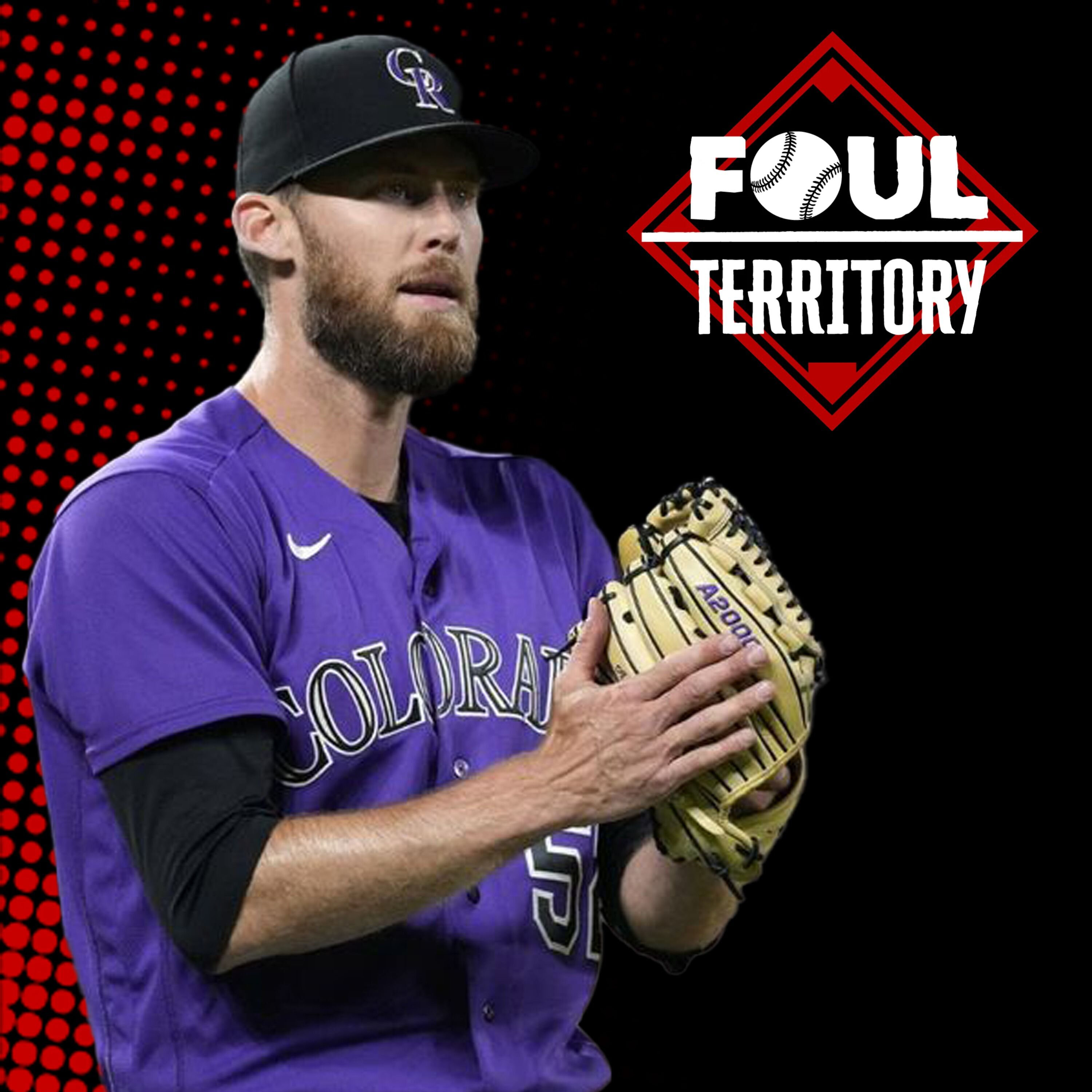
Daniel Bard talks retirement decision & mental health struggles
9-year MLB pitcher Daniel Bard joins after announcing his retirement. He reveals what went into that decision and if there was a moment when he knew it was time. Daniel also shares his incredibly unique story full of ups and downs, which included a battle with the yips.
Hosts: AJ Pierzynski, Erik Kratz, Scott Braun
Get 20% off your first Slab Pack or card purchase by going to ArenaClub.com/FOUL and use code FOUL
See omnystudio.com/listener for privacy information.
2025-08-03
23 min
Transcript
Available Results
Generated results are saved to the knowledge database for reuse and search.
No generated results are available for this episode yet.
Extract Knowledge
Pick what you want extracted first. Model, scope, and chapter options appear after a template is selected.
Generated results for public episodes are saved to the knowledge database so they can be reused and searched later.
Transcript
00:00:03
Speaker 1: Daniel Bard, longtime Big leaguer who just announced his retirement, joining us here on FT. Great to have you on the show. Thank you for the time. Congratulations on the retirement announcement. How you doing. What a run man?

00:00:16
Speaker 2: I appreciate it, guys, thank you all for having me. It's it's been kind of a crazy week getting back into dad life.

00:00:22
Speaker 3: You know.

00:00:24
Speaker 1: What went into it. So I know, you know, you signed a minor league deal with Seattle in June. You were in the Triple A affiliate there, and then at some point did you say, hey, this is time and here's why.

00:00:38
Speaker 2: Yeah. It was actually really sudden and kind of unexpected even for me. Signed the deal back around June. First, I was coming off flexer tendant surgery and my elbow and I really just wanted to kind of give it one more run and try to have some fun and make that, you know, rehab worthwhile. So got to deal with the Mariners, had a chance accept a Triple A. Threw the ball pretty well. You know, it wasn't in my peak form for sure, but it was it was enough to get out for sure. But you know, I went home from the All Star break and it would I fully intended on heading back to the team and at least getting to my next opt out date, which is about a month away. And I don't know if you guys can relate a little bit, but I just it was at that point I went to head back, get on the plane the next morning, and I was packing my bags the night before, and I just it did not feel worth it anymore. My kids needed me at home, and I still there's still an urge to play in a way, like I still love the game of baseball, which I think is a good thing. The last time I retired seven or eight years ago, you know, I was kind of burned out and really just didn't did not love the game. So this was totally different. This was getting pulled in a different direction by my family and couldn't be more happy about it.

00:02:01
Speaker 4: Doesn't that make it more relieving that that's the reason that you're going, Like you're like, wait a minute, I could still throw But you know what, maybe I'm gonna change some diapers. I'm not sure how old your kids are, but maybe I'm gonna go chase around some some kids at at you know, at their field or at their dance or their swim whatever it is yeah.

00:02:22
Speaker 2: That's that mine are a little bit older, and I think that's it was a little easier for me when they were babies. You know, you get to leave the diaper changing and now it's uh, you know, they got Little League and like you said, they got swim and gymnastics and you know, they got you know, elementary school kid problems that sometimes you need your dad for. So you know, you keep up as much as you can on the phone, but it's just not the same as being there in person.

00:02:49
Speaker 3: Daniel, Was that the moment, like what was that moment? Like did you pick up the phone right away or call and say I'm done? Or did your wife give you a big hug? Did your kids come and give you a big hug? Because every time I always say this, there's a moment for everybody, and you say, you know what, I don't want to do this anymore. As much as we all love baseball, there's just the juice isn't worth a squeeze, right, It's like, all right, my kids are in an age. So that moment was your wife crying and giving you a hug? Were your kids giving you a hug? And you called and said, you know what, No, moss.

00:03:21
Speaker 2: Oh I was the one doing most of the crying, which is not like me, but that's kind of what led to it. Was. I was packing up the night before, about eleven o'clock at night. I was supposed to get on a seven am flight back to Tacoma, and I could not. I put the kids to bed, left my daughter's room, pretty emotional because I knew I wasn't going to see him for over a month, and it just kind of hit me like a wave of emotion, like this is where I need to be. I don't need to be packing up and leaving these people right now. And it's always hard, you know, there this isn't a new thing where it's hard to hard to leave yours when you know you're not going to see them, but this was like ten times the normal emotion that I feel leaving them. And so I, my wife and I talked for probably two hours that night, just talking through it, like what does this mean? Is it going to happen? And she was just extremely supportive, and you know, she said, hey, if you want to keep going, we're here. You know, if you want to be done, we're ready for you to be home as well. So couldn't have been more supportive. She left it up to me, and I'm grateful for that. She just supported me the whole way. And yeah, so I woke up the next morning. The kids were expecting me to have already left for the airport. And see the look on their faces when I said, hey, we're done. I'm staying home from now on and just the gave me a big hug. And you know, they love supporting me. They were always there. They love being in the clubhouse. But I think they were ready. So it made it feel like the right decision.

00:05:00
Speaker 4: Before we get to your career. Did your kids say anything, because you feel like, because I know when I when I finally told my kids, I mean I told them like the whole year that I was gonna be done. It was COVID, so it was weird. But they were like no because they had just had My boys were like no, like we get to go in the clubhouse now, can't be done And they started crying about it. And then it was like, so, did your kids say anything or were they just like, cool, let's just go outside.

00:05:26
Speaker 2: More the more the latter, more than let's go outside. You know, My time in Colorado was really special getting We were there for five years. That became our second home. Denver was the clubhouse. The kids were in there two or three times a week, jumping on everybody in their lockers. So they knew everybody, from the security guys to the clubbies to the trainers. They knew everyone. Everyone knew their names. It was great. So that was home. But you know, that was that ended last year and we're moving on to a different phase. And I, you know, gave it a little bit of shot here with the Mariners and got kind of what I wanted out of it. You know, I was hoping to get back to the big leagues. But honestly, I went into it just saying, hey, I'm going to prove to myself that this rehab you know, worked, and that I got back physically, that I threw strikes, got some outs, and you know, I wasn't playing on cutting it this short. That that wasn't the plan at all. But that's just how life goes sometimes. Krats.

00:06:26
Speaker 1: If I'm new to card collecting and I'm looking for the safest, most trusted way in the game to acquire cards or to buy a card, but not go through a ton of work where I'm going to the shows, I'm going online doing auctions. I want it all in one place.

00:06:42
Speaker 2: I'm going to Arena Club.

00:06:44
Speaker 4: It's all one place. You know you're getting a good price, whether you're buying it or you're selling cards. If you're new to it, you don't want all the other crappy cards. You can get the ones that you want. You can start your collection and if you get them on Arina Club, your collection will look.

00:07:00
Speaker 1: That's right, And may I mention they also have Pokemon cards in those slab packs that we talk about every week. You can rip a pack for as low as twenty five dollars and hit on a card that's worth tens of thousands of dollars because every pack has grails that are at least twenty x the price of the pack. So get involved at arenaclub dot com slash vul use the code foul to get twenty percent off your first slab pack or card purchase.

00:07:25
Speaker 4: As the resident minor leaguer here, I have to say, and I tell people this story. In two thousand and eight, I was in my sixth season, I think in the minor leagues. You know, I still hadn't been in the big leagues yet, and I was twenty eight in Double A and freaking justin. Masterson comes in and he's starting, and he's throwing these bowling ball sinkers at ninety seven and ninety nine, and I'm like, you know what, it's okay. I can't get a hit against him, but the rest of this Portland Sea Dogs staff I can get a hit against. And then Daniel Bard comes in for like I don't know, like six seconds that you were in Portland and you were throwing ninety die miles an hour. And I remember leaving that game in Portland saying, I'm never gonna make the big leagues if these guys are constantly coming out. So I want you to know that you gave me no hope to make the big leagues back in two thousand and eight when I was still struggling to try to crack the big leagues.

00:08:22
Speaker 2: You did all right, man. I just just you know, I was trying to help you out, you know, make it look harder and make the next guy lookal easier. Now I was I remember that that which who were you with at that point?

00:08:33
Speaker 4: New Hampshire?

00:08:34
Speaker 2: Yeah, oh we played you guys a lot. Yeah, I knew I knew I played against you, I could just couldn't remember where it was. And yeah, those are some good battles, some good teams. I think there was probably six or seven big leaguers on both both of those teams. But yeah, that was one of those years where I just things were starting to click for me and I was trying to just ride the wave.

00:08:55
Speaker 4: Did you think it was going to end up being the way that it was? I mean, obviously, you know, we'll get into the things that you struggled with and stuff, But when you have that fast of an assent and it was like you were hyped up. I mean we were playing in New England, I was in New Hampshire, you were in Portland. Boston's you know, a quick cab ride down the down the coast there, Like there was never any like question you were going to be part of the Boston future. Just epic bullpen. How are those years when you were like a pick out of North Carolina and coming through the system, Like as a minor leaguer in the Boston system, you are always like you are on more on display than other teams because not other organizations, because you're just in the minor league system. From Lowell to I get it, you go down to where were they at that time, Greenville, you know, but then you're in paul Tucket, you're in Portland. Do you feel like that's you had a different experience during those years than other people? What have has prospects coming up?

00:10:03
Speaker 2: I think so. I mean this is you know, pre social media. The Internet's not what it was now so but the Red Sox fan base has always been rabbid, and they knew they know their guys, they know who's drafted high, they know who they gave money to, and there's always been a presence, you know, online of just fans that care a lot. And then they yeah, you kind of get blown up. And to say that I knew I was going to be a part of that, you know, Red Sox team in a few years, I didn't. I mean I hoped I would, and I knew I had the talent, but that was you know, we could talk about that more, but it was just it was always I felt like I had to earn it and it never felt automatic to me. And my first year in the minors was was awful. I mean I was terrible. I was the worst picture on my eight ball, team a year after being drafted in the first round, which is not a very good feeling. So I think the year you're you're referring to was that second year when they moved me to the bullpen and things start to click. But it was never never felt automatic by any means, Daniel.

00:11:06
Speaker 3: People that don't know your story don't understand what you went through. You know, leaving the game, you had the yips, right, you had the yips. You couldn't throw a strike, whatever it was. Can you explain how you came back from that, because nobody comes back from that, and you did it. I mean, it took some years, but you came back and became a very effective major league picture again.

00:11:27
Speaker 2: Yeah, I mean I describe it as there I kind of I think for the yips to happen to someone in my case in particular, I think it was there was no one event. There wasn't one day where I was like, oh, I've got it. It was a gradual thing over the course of probably a year plus, kind of a perfect storm that that set in. I think there was some physical, underlying, physical condition stuff going on. I had some tos and then you have the poor results. The villa diminishing man, getting a little little bit worse, and then you start mentally going, shoot something, something's not right. Why am I only throwing ninety two and it's not hitting the right side of the plate that I wanted to, So you start trying harder. It's this perfect storm and your body's not you know, I was. I was three years with seventy five plus appearances. I wasn't hurt, but you know, at that point, your arm's kind of hanging three years in pitching in playoff races, and you know, it kind of just the wheels fell off in that fourth year. So for me, it was like a perfect storm for it to happen, and it was kind of a perfect storm for me to get out of it. I grinded through the miners for the next five years with very little to show for it. Got a handful of innings in those five years. It wasn't much throwing a lot of bullpens on backfields down at spring training sites, a lot of extended springtime, which is not where you want to be as a you know, a four year big leaguer. But I could, I can honestly say that and trade it. Obviously it would have been nice to have those seven years a big league time in big league salary, but for what it did for me as a person, kind of resetting me, bring me back down to earth, helping me have a little more, you know, empathy for people going through different mental health issues, mental health challenges. I didn't know anything about that world going into this, and when it happened to me and I had to deal with my own stuff, it just helps you feel for people that go through all sorts of things. And the brain's a crazy thing, man, It's we still know so little about it. I mean, I've talked to every supposed YIPS expert there is out there, and there's some really smart ones, but the good ones will admit that it's they don't have it figured out. And I would say the same thing. I don't have it figured out. I don't have a magic pill or an answer, but I do know that when I retired in twenty seventeen, the two years I spent coaching, I think that was the best thing for me. Totally moved on from playing, no interest in doing it again, and I just kind of poured all my energy into being a dad. And then I took a coaching job with the Diamondbacks, and I was kind of mentoring their minor league guys. And part of that was telling my story, my ups and downs, which I had never really talked about before. You know, I'd kind of kept it all closed up. And I think that was kind of my therapy, was telling my story fifty times to a bunch of different minor leaguers and coaches and getting honestly a lot of positive response. You know, I viewed myself as a failure at that point, and I would tell my story, and you know, the response I would get was, hey, man, that's awesome. You got four years in Boston. I'd give anything to have, you know, two days in Boston. I'm like, yeah, ye, look if you look at it that way. And then other people would say, man, I can't believe you grinded through it for five years. I would have quit after a month. I was like, yeah, yeah, it might be stupidity too, but yeah, I guess I did grind. I did grind for a while, and so I started to view my own story just a lot differently and in some more positive light, and slowly, just I was playing catch with some guys, which I couldn't do for a long time, couldn't throw half the balls over their head. And I was playing catch with some players that I was coaching and started to come out good, started to feel fun again, and just kind of that second year of coaching, it kind of just got better and better. As the summer went to where I started, players started saying, hey, man, you need to play again. I'm like, I can't do that. I can't grind through that again. You have no idea what I've been through. And I kept hearing it from them, kept hearing it, and it just planted the seed that I took into that offseason and kept throwing, got my arm and actually, you know, game ready shape again and just to see what was there. And I threw a bullpen and it was ninety five for strikes and I couldn't. I couldn't believe it myself. And my wife told me at that point, She's like, well, what are you going to do? And I was like, probably go back to coaching. She was like, well, if you do that, like you're gonna this is gonna eat at you for the rest of your life, Like you know, you got the ability to throw back and then didn't do anything with it. So I was like, you're right, we got to do this. And so on my agent out of the blue, he's like, what's what's up man, He's like, I haven't heard from you in a while. I'm like, hey, man, I need you to set up a tryout. I could hear it in his voice like disbelief, like okay, okay, yeah, yeah we can. We can set that up. I think he knew that, like teams might just you know, completely laugh it off. But it worked out, and I'm thankful to the Rockies and the other other teams that showed interest. And you know, it worked out beyond my wildest dreams.

00:16:42
Speaker 4: What's the someone? You know, if someone else is going through the yips right now, maybe you don't want to use the word yips, and maybe you.

00:16:48
Speaker 2: Know I can.

00:16:50
Speaker 4: Okay, I didn't know that.

00:16:51
Speaker 2: I know some people are uncomfortable. I've lived at my last ten years.

00:16:55
Speaker 4: So what's the hardest what's the hardest part? Is it thinking everybody's going to see you throw this ball over that person's head or is it the physical? Like I am so focused on throwing there and it is not connecting. My brain and my arm are not connecting. What's which? Which is harder because when you're throwing on a side field, you say you threw thousands of bullpens without ever getting in a game you knew other people were watching.

00:17:22
Speaker 2: Yeah, I mean sometimes it was me a catcher and a pitching coach on a backfield. I still couldn't throw a strike, and it would be like a pitching coach that I loved, you know, it wasn't someone I was like scared or tried to trying to impress. When it's there, it's there, and it sucks. But yeah, there's the embarrassment is probably the worst. You know, when you do it on a bigger stage, or you're throwing a bullpen in front of teammates or coaches and you know you want to show them how good you are and it just doesn't doesn't doesn't want to happen. But that the embarrassment is rough. But it's Yeah, I think the when I'm sitting there alone and a bullpen throw into a net and I still can't make it do what I wanted to do, the frustration is just unimaginable.

00:18:10
Speaker 1: Hey, Daniel, quick question for you about your Rockies experience. I know they gave you a shot. You had a good time there. What did you notice there that was missing and how difficult it was for let's just focus on pitchers to survive the environment. I mean, really, if you look back, they had some success early in the kind of expansion years. Then there was a little run towards the end of the tenure for Dano doubt and now it's been a long time where the Rockies are really in Abyss. So what are you witnessing there last time you were around the Rockies organization?

00:18:43
Speaker 2: Yeah, I mean I learned a lot in my time there, just what it's pitching at altitude, what it means, what it does to the baseball, all the effects that it has. And I just think they were behind on figuring out analytically what the ball's doing. Differently, I think they're starting to now, but I think they were a little bit of an old school mindset, old school scouting team. And you know, I think until very recently, and I think that hurt him that you play in the most unique environment in all of baseball, and you got to be ahead of the game. You got to find a way to make that place an advantage and not a disadvantage, because every team that comes in there to play you is you should be more prepared for that environment than they are, and that's just not how it's played out the last few years. You look at the Rocky teams that have been good, and it's they dominate at home and they play you know, close to five hundred ball on the road, and that's kind of I think that's the only way they're going to have any kind of sustained success. So, you know, I know the pitching group that I was there with was working hard to figure out ways to pitch at altitude, and then you have the problem of taking what you do at altitude and then how do you pitch on the road and have success in both places. No, it's equally hard. I think for hitters, you know, they're seeing the ball move two different ways home and road, and I don't know the solution for that. I think they're starting to use more of the VLO machines and the spinball machines to see that movement, you know, when they do leave Denver. I think that's helped a little bit. You see guys like Hunter Goodman going off Mickey Moniacs having a great year there, So it can be done. It's a hard thing to sustain though. It's just a tough environment. There's so many things working against you.

00:20:36
Speaker 3: All right, Daniel, before we let you go, I will be remiss if I don't ask you. How in the world did your two thousand and six UNC team not win the National Championship? You had two first round picks and you and Andrew Miller, yead Ianetta, Rob Wooten. Let me see, Federovich, we can do this roster. Who else did you guys have? Adam Warren was on that team. Wow, I'm like, wow, this team was loaded for bear. You guys didn't win the World Series? What the heck happened? And why did Andrew Miller go to Florida? It still drives me crazy.

00:21:09
Speaker 2: I don't I don't know, but I'm glad he did. We're still good friends, and I think he wanted to get out of Gainesville. I mean, who wants to out of Florida? Florida? Right?

00:21:19
Speaker 4: Yeah?

00:21:22
Speaker 2: Anyways, now, it was we were a good team. That was That was I looked back on. That's my probably my fondest baseball memories was that that year, that run with that team, and we were I don't know if you noticed or when you look this up, but we were We were in the final, the game of the National Championship, and we lost three to two, So we were about as close as you could get without winning it. Oregon State got us two years in a row, so I still hold a special place in my heart for them.

00:21:51
Speaker 3: Oh wow, Okay, I mean I knew you guys made it far. But what mean Yes, Andrew couldn't throw a strike in that game, so he walked a couple guys, and that's.

00:21:59
Speaker 4: Why you lost.

00:22:01
Speaker 2: No, he was he was dominant that year. So I pitched the third game. I pitched into the eighth inning. He came in in relief for me, which was I think his first relief outing of the year. It was just kind of a winner, go home game and he was thrown a hundred out of the pen. So, uh, they scratched out a run. I think we made it. We made a couple of errors. I think I made an air at one point the cost us to run. So it was unfortunate. We just came down to one game. Anything can happen, true.

00:22:29
Speaker 3: I think was good that team was loaded, by the way loaded.

00:22:33
Speaker 1: Their team was.

00:22:34
Speaker 3: Yeah, what I'm saying was that the Elsbury Oregon State teams when Jacoby Elsbury.

00:22:41
Speaker 2: Elsbury, he's a year older than me, so he left. He got drafted the year before five they had Darwin Barney, uh MITCHI Cannon, who I think is coach coaching there.

00:22:52
Speaker 4: Now.

00:22:54
Speaker 2: They had to get some good team. They had some scrappy arms too, that could just great college pitchers that could just they could spin it and they could tow strikes.

00:23:01
Speaker 3: They get out, got it and well Belichick lead them to the national championship in the next year.

00:23:08
Speaker 2: I hope. So I don't if anything that win or lose is going to be entertaining. So I'm looking forward to the fall. You got your time.

00:23:17
Speaker 1: You got your time, Daniel, Daniel, this was awesome. Thank you so much for joining us. Congratulations on the retirement announcement and we'll hit you down the line.

00:23:27
Speaker 2: Awesome. Thank you guys for having me. This is fun.
Chapters
No chapters available.