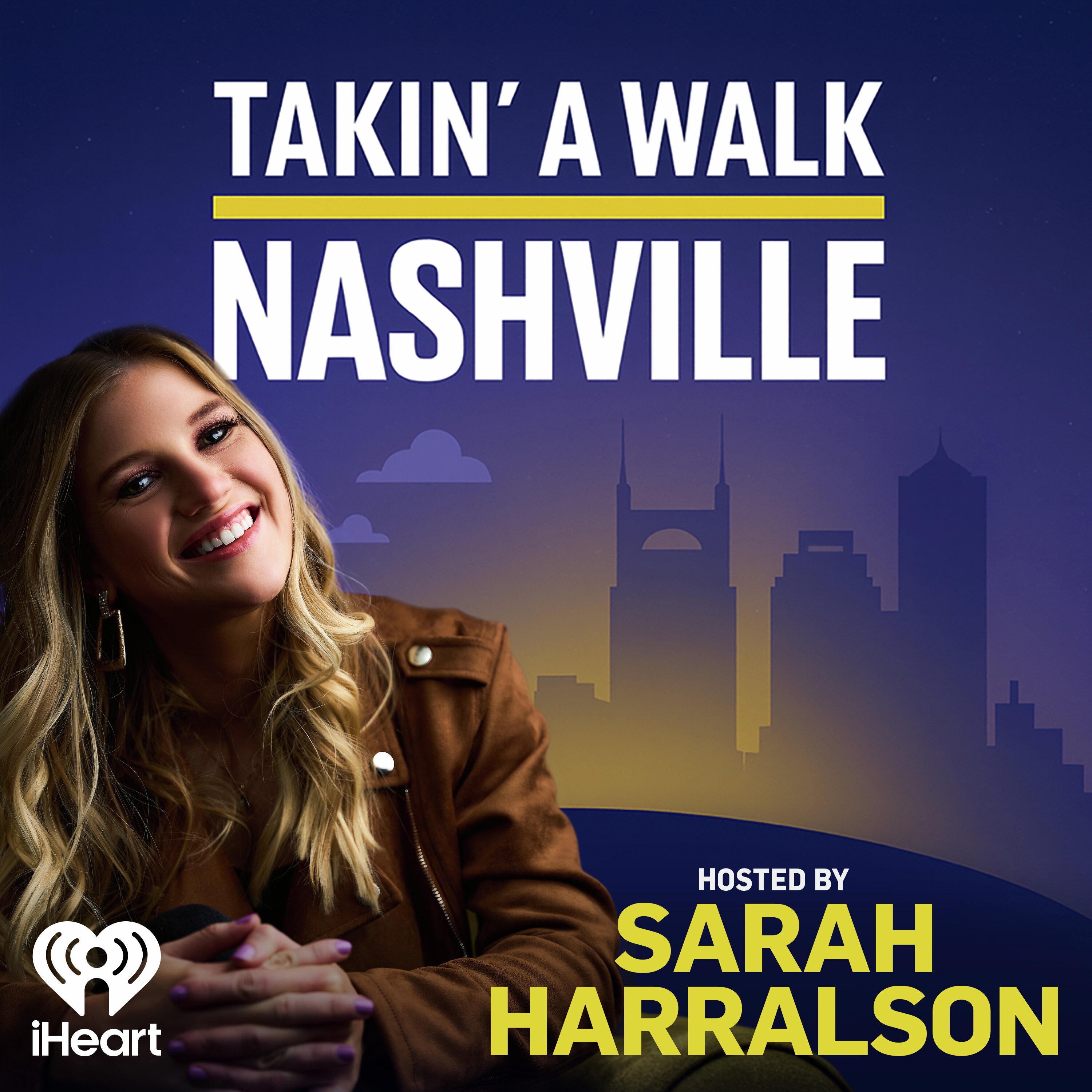
Nashville Songwriter and Podcast Host Tony Mantor discusses His Music History, Creative Journey, Collaboration and Making A Difference
Have you ever wondered how Nashville's music scene has evolved over the last three decades? Join us in this captivating episode of Takin’ A Walk Nashville as host Sarah Harralson sits down with the talented Tony Mantor, a seasoned singer-songwriter, pianist, and music producer who has witnessed firsthand the incredible transformation of Music City. With more than 30 years of experience, Tony shares his remarkable journey from the small town of Madison, Maine, to the vibrant heart of Nashville, where he initially toured with country artist Ronnie McDowell.
As we dive deep into the Nashville music history, Tony Mantor reflects on the significant shifts in the industry, particularly the transition from analog to digital recording. This evolution has not only changed how music is produced but also how artists collaborate and connect with their audiences. Tony emphasizes the importance of adapting to these changes while preserving the essence of collaboration that defines the Nashville music scene.
But that’s not all! Tony Mantor also opens up about his recent podcast endeavors, "Tony Mentor's Almost Live Nashville, his highly ranked show and including his inspiring show 'Why Not Me,' which focuses on autism awareness and has resonated with millions of listeners. He passionately discusses the importance of empathy and understanding when it comes to autism and mental health, highlighting the need for community support in the creative process. This episode underscores the significance of celebrating Nashville musicwhile addressing critical social issues that affect many.
As the conversation unfolds, Tony shares his exciting future plans, including the release of a new song and a thought-provoking book centered on autism and mental health. His mission? To educate and inspire listeners about these vital topics that often go unnoticed in the bustling world of Nashville songwriters and Nashville artist spotlight.
Don't miss this engaging episode filled with music industry insights Nashville and a heartfelt discussion that will leave you motivated to make a difference in your community. Tune in to Takin’ A Walk Nashville for an unforgettable experience that celebrates the rich tapestry of Nashville's music legacy while shining a light on emerging artists and the transformative power of music.
See omnystudio.com/listener for privacy information.
Available Results
Generated results are saved to the knowledge database for reuse and search.
Extract Knowledge
Pick what you want extracted first. Model, scope, and chapter options appear after a template is selected.
Transcript
00:00:00
Speaker 1: Taking a Walk Nashville.

00:00:02
Speaker 2: Hi, this is Sarah Harrelson, your host of Tick and Walk Nashville, and today I am back in the Russell Hotels podcast studio in East Nashville, and here with me is Tony Mantour. Tony is an established singer, songwriter, pianist, podcast host, and record charting music producer who is celebrating working in Nashville for more than thirty years. The Madison main native first arrived in Nashville as a touring sideman for country music sensation Ronnie McDowell in nineteen seventy six. Since that time, Mantor has progressed into an award winning music producer, recording and placing thirty three songs into the top forty sixteen songs into the top ten of various US major music charts. He's worked with the likes of Debbie Campbell, the daughter of Glenn Campbell, Bobby Brooks Wilson, son of Jackie Wilson, Happy Day Star, and singer Donny Moet, and many other country artists inspire to have his music make a difference in the lives of people. His recent song why Not Me has become the inspiration for launching a new podcast in twenty twenty three, also called Why Not Me, which focuses on autism awareness, acceptance, and understanding and features one on one interviews with those who have been touched by autism. Since its launch, the Why Not Me podcast has been downloaded more than nine million times worldwide. In twenty twenty four, Mantor debuted his second self produced podcast, Almost Live Nashville. It's currently number two on the Apple Podcast Music category chart and turning his attention back to the world of entertainment, music, and TV. Mantor also host the thought provoking stories with celebrity guests on this podcast, who share how they've achieved their own success.

00:02:01
Speaker 1: We'll be right back with more of the Taking a Walk Nashville podcast. Welcome to Taking a Walk Nashville with your hosts, singer songwriter Sarah Harrelson.

00:02:16
Speaker 2: So, Tony, you are a man of many talents and I'm so glad you're here on Taking a Walk Nashville today. How are you all.

00:02:22
Speaker 3: I'm doing good. Thanks for having me.

00:02:24
Speaker 2: Yeah, thanks for being here. So I want to start by talking about the beginning of your career. How did you make the move from the Northeast down to Nashville free music. I had to look up where Madison, Maine.

00:02:40
Speaker 1: Wise.

00:02:40
Speaker 2: I've been to Bar Harbor, but not in that town before.

00:02:44
Speaker 3: Yeah, bar Harbor was about an hour and a half from where I grew up. It's an interesting story. I started out just performing like anyone does, where we join the band, we go out and perform. We have our dreams, we hope that we can make it. I was a rock singer. I did more Eagles, you know, that type of music. I wasn't a country singer. And I had some friends of mine that were country songwriters. They didn't have the transportation. They wanted me to take them to Nashville. And because I didn't know what Nashville was other than country, I thought George Jones that type of thing, which I really appreciated, all the Johnny Cashes of the world and everything for what they did and how they got there. I just wasn't a country fan at that time. And I looked at him, I said, why would I want to go to Nashville as a country Sydney. I'm more on the pop and the rock side. They talked me into it. I wound up coming down and they pitched their songs around and how it all kind of fell together was we went in the studio, they got a publishing deal. We went in the studio and the piano player didn't show up. And back then you didn't have a cell phone where you could just say where are you? You know, they didn't show up, you just moved on or found someone else real quick. Because I was a piano player and they the producers found out about it, they asked me to play on it, and I'm and here I am playing in a demos situation with some of the best musicians in Nashville. So, long story short. A guy walks in and he's an independent record label. He knows everybody in the room except for me. He comes over, introduces himself to we talk, and then he says, well, what are you doing this summer? I said, well, I'm just kind of taking a few months so ought to find out what I'm gonna do. And then he's good friends with Ronnie McDowell's manager, and he goes, how would you like to go out and perform with Ronnie mcdioell. I said, who's that? And that was kind of before he became Ronnie McDowell, you know, So I wound up doing a short tour with him and then just kept my contacts growing in Nashville. And to be honest, walking into a Nashville studio with the players, the atmosphere is just so much different than New York and LA, you know, so it was worth the trip.

00:05:16
Speaker 2: And a little bit warmer winters here than that main.

00:05:20
Speaker 3: Yeah, yeah, I mean it. But actually it's as warm in Maine today as it is down here.

00:05:26
Speaker 2: Yeah, which is wild. That never happens, it really is, it really is. So you've been in Nashville for a long time and you've seen how Nashville has evolved over the decades. What's your opinion of the new Nashville now?

00:05:41
Speaker 3: Well, you know, a lot of the people that I know say they are so glad that they grew up and worked through the transition of what old Nashville is to New Nashville because we changed from two inch twenty four track tape to digital, so all that transition and then cuss the changing of the music styles to where country isn't the country that they once knew. So with that said, it's different, you know, in the fact that the dynamics have changed, but everybody still has the same dream they still have the same process. They just have to figure out how they're going to do it right. So as much as a lot of people want the old country back, it's never going to come back, you know. It's always evolving. So the only thing I don't like is that some of the iconic studios have been torn down become hotels and condos that I don't like. I mean, one of the most famous studios that Paul McCartney recorded in, it's been torn down and now you've got condos in there, you know, that I don't like. But everything else as far as the way that the transition of the music has evolved, it's just an evolution of of everything keeps turning around. And now there's a lot of nineties country that's starting to come back again. So the circle always keeps evolving. It's just a matter of you being able to accept it and grow and build and work and adapt. And that's kind of what I've tried to do.

00:07:18
Speaker 2: Yeah, I think that's important, being able to adapt. And with the evolvement of technology, more people are producing and recording at home studios or their own homes now, which has led to the closing of some major studios in Nashville and on music Row, which is sad to see. I personally love being able to get together in a studio with other people because it kind of brings out the creative side of everyone, and there's something to be said about the community aspect of recording on a studio together with other people.

00:07:51
Speaker 3: It does.

00:07:52
Speaker 2: Yeah, So how has it evolved for you as a producer. I know you said you're have adapted and accepted change with technology, but has it changed how you have been a producer for other artists?

00:08:09
Speaker 3: No, because I still stay true to my roots. I like the interaction between the players because when you have great players, you bring them into a studio to do what they do best. If you can just have a whip out there and say do what I say, then it doesn't matter. You can put them in five different places at different times and let them overdub and it's be fine. But if you give them the creative ability to work and do what they do, then you can always say, you know, I love what you're doing, but I need you to tone it back, or I need you to change this, or sometimes you just get the magic where they make a mistake, but the mistake is so damn good. Yeah that you go. You know what, No, don't change that. Let's leave it exactly the way it is. So the ability for the players to sit in that studio and talk back and forth and work out their parts and then do it is still the very best way. Then. The only thing that's changed is now I can do overdubs. I can do those type of things virtually because then I'm just telling them, Okay, this is what I want you to do to the track that's already there. And then because vocally, I have them come into my studio, we lay down the vocals, and then I bring in the background vocals. I guide them the way I want it to go there. So everything still stays the same, but we'd have adapted to bring in some of the new ways of doing things so that it can quicken up the process slightly.

00:09:41
Speaker 2: Right, And I think sometimes, especially with vocal sessions, it makes it quicker being in person instead of back and forth cutting vocals over the internet.

00:09:53
Speaker 3: Yeah, and it allows me as a producer to tell them, no, this is what I'm thinking that I need you to do. Because as much as I hate to say it, you know, because it seems like I'm throwing dars at some of the singers, but they don't know what they're doing. Sometimes, you know, they they're putting all their attention on one word in the line and it's the wrong word, you know. So you have to take and know exactly what you want this singer to sing and the emotions that you want them to put on a particular phrase or word, so that when the listener hears it, it draws them in. And sometimes when you do it virtually, you can't. You can't just do it three or four or five times in a row. I mean, I've spent an hour and a half on one word before, just getting it where it needed to be, and then after the singer heard it, they're going, you know, you put me through the grinder. But I really do like that, you know, and that's something you can't get virtually.

00:10:50
Speaker 2: Yeah, yeah, I agree. In addition to being a producer and musician, you're also an artist and songwriter. I know you mentioned you're working with Debbie Campbell right now and you have a song now with her. Correct.

00:11:04
Speaker 3: Yeah, actually I have a song out with her and Bobby Wilson, Jackie Wilson's son. It's the old song that Glenn Campbell did Shoulder or Shoulder with Tanya Tucker Wow, And so we were trying to figure out what would be a good singer to put with her because he had to have a male singer and they had to cover Glenn. But I didn't want to go country because that would seem like we're just reproducing something that's already been done. So I brought in an R and B singer in Jackie Wilson's son, Bobby, and he was able to bring his texture in there so that we still paid tribute to the original song, but we still allowed it to be their song and it turned out really good, very cool.

00:11:48
Speaker 2: Yeah, and you also have another song, why Not Me, which inspired you to start your podcast with your first podcast, why Not Me? And it's such a beautiful music video. I watched it and it has to do with awareness of autism. Do you have a personal experience with autism that made you want to write the song and start this podcast?

00:12:14
Speaker 3: Well, actually I didn't write it. A friend of mine wrote it. It started out the story of how this whole thing came together is one Saturday morning, about nine o'clock, I woke up and turned out and I went into my email and there's a song sitting there and I had recorded one of his songs with another artist I worked with a few years prior. I heard the song and I called him up. I said, man, you wrote this song for me, didn't you, Because it's about never giving up on your dreams. It doesn't matter when you do it, as long as you do it. And that's what I post on my Facebook all the time. Never give up and you'll keep working do it. So I told him, I said, you know, I'm I'm working on a and this is during COVID, so I was working on a personal project just to do for the fun of it. So I told him, I said, I'm gonna cut this song. I cut it, and I cut it with a pot flair, but I added a steel in it to give it a texture like the Eagles used to do. And then all of a sudden, I'm getting I'm getting people that want to hear something I'm doing. So I send it out to them as, oh, man, you recorded a country song. I'm going it's not country, you know, but perception is reality. So if they want to call it a country then fine. Because it was a positive song. My promoters in New York, Nashville, LA in London wanted me to release it, and I'm going, now, I'm not getting back out on the road. I'm just doing this for the fun of it. It's just enjoyment. It's something to kill time. So they talked to me in the release and it I did, and it did well. I mean, it went number two in the in the secondary charts. And I felt like, if I'm going to put it out there, I need to pay tribute to someone. So I chose to pay tribute to our first responders. So I had done a couple of years before that, I had done a charity event for a fallen officer and I just call up a couple of people, I say, hey, can you get me some pictures of police and bironmen and all that, And then before too long, it got out here and I had people wanting to be part of that video from all over the country. So I wound up putting it together. It did well. And then how the autism came about is a lady heard the song and she really liked it, and she called me up and well, she sent me an email she goes, is there any way that you could do this for us? And she was a speech therapist for autistic children. I told us I really don't know anything about autism other than I've got a couple of friends that have relatives, but they don't talk about it. So I decided to re record the song in a more contemporary pot version and create a video with autistic and special needs here in Nashville. So I call it why Not Me Nashville so that people could differentiate between why Not Me, the so called country song and why Not Me Nashville for the autism and special needs and it just blew up. It just started blowing up. And at that time, I was co hosting a podcast out of New York on Business and we were talking about the music business on my part of it, and I told my some you got to take in and at least the last five minutes, we need to talk about the video I just did for autism and special needs. So they agreed to it, and then they wanted to extend the contract, and I felt that in order to do what I wanted to do, I needed to start my.

00:15:45
Speaker 1: Own We'll be right back with more of the Taking a Walk Nashville podcast. Welcome back to Taking a Walk.

00:15:56
Speaker 3: Nashville so I started my own podcast at that time was why Not Me the World because it was about a worldwide autism podcast, and it grew and eventually I changed it and rebranded this year to why Not Me Embracing Autism and Mental Health Worldwide. So that's kind of how it all evolved and how it all happened, and it just seemed to happen all byself.

00:16:21
Speaker 2: Yeah, it's amazing. You just hit nine million downloads on the podcast, and I think it's great because you're giving awareness to these voices of autism and mental health throughout the whole world.

00:16:37
Speaker 3: Yeah, it's crazy. I mean, I mean it's shown up in podcast charts, Apple and Spotify in all kinds of countries all around the world. So it's not just the US. It's been in Canada, as men in Brazil, as men in Argentina, South Africa, I mean all several countries in Europe and because of the UK. I mean, it's just crazy.

00:16:59
Speaker 2: Yeah. And if listeners on taking a Walk Nashville I have not heard the podcast, you can check it out on iHeartMedia, Apple Podcasts, wherever you get your podcasts. But in addition to that, you also have your other podcast almost Live Nashville. How do you have a time to do two podcasts at once.

00:17:18
Speaker 3: Well, you know, it's really interesting because when I told everyone that I was going to be doing a podcast, everyone just naturally assumed that because I'm in music, I've been here for the long length of time that I've been here, that it was going to be an entertainment music podcast. Yeah, So when I did why Not Me and it was about autism, it caught everybody off guard. It's like, what's this a Well, you know, I can't do another one because I don't know that much about podcasting yet. I was just actually just learning myself. This was a little over two years ago. So once I had about a year year and a half under my belt, I decided to create almost Live Nashville and have it focused on different artists that I've known or different people I've come in contact with over the years, and just build it that way. But I decided to make it an every other week podcast rather than every week, and it just I didn't know what to expect, but it just kind of blew up on me the same way. I mean, I just reached to I haven't put it out there yet, but I just reased three million downloads on that you Know and it's you Know hitting. It's in twenty twenty different countries around the world in the top charts. I mean, it just just caught me off guard. I didn't expect it. But I've had some great, great people come on, and I've got great people lined up to come on, and it's really amazing. I have people that email me every single day wanting to be on one of the other podcasts of both. I mean, it's just I'm overwhelmed with the amount of people that want to be on it.

00:18:57
Speaker 2: Yeah, that's wonderful. Congratulations you have. You have two podcasts, you have artists, you're working with, songs that you're releasing yourself. You're doing it all right now. So what's next for you? Is it? Is it releasing more music as an artist, working with more artist as a producer.

00:19:18
Speaker 3: Well, I've got I've got a few songs that I've that I've worked on that I could release through some of the other artists. I've got another song that I recorded last year that I haven't put out yet that I'm thinking about putting out with a video for because I did. Why not me for autism? Now? I'm thinking about doing this one for the mental health side, and I have, I've I've just started working. I've been on three three chapters away from finishing a book.

00:19:52
Speaker 2: Wow, you know.

00:19:53
Speaker 3: And and the book is going to be about autism and mental health and what I've and it's basically what I've learned through the podcast, asked bring up different little stories that people have told, and it's I'm hoping that that my main focus. The music one is it's fun to do because I deal with people that I know and we talk musically, get to lap and have fun with it. But the autism and the mental health one is one that needs to be heard because people do not realize that they could be seeing a child having a meltdown in a store and they think that the parenting is bad when it's really not. It's the child having a meltdown. The parent is doing what they're trying to do, and in ten or fifteen minutes it'll subside and they'll be okay, you know. And until we learn to recognize that the difference between a meltdown and somebody just being you know, a brat, so to speak, because that's what they think they are, you know. Oh, they're being a brat and they're not. So until we learn the difference between a meltdown and just an undisciplined child, we need to have a little empathy and we need to learn. And then when you get into the mental health side, you've got ADHD, you've got bipole, you've got anxiety, schizophrenia, you've got so many different things that people walking around you don't realize what they're going through. And it's not like cerehl palsy or MS or some things like that, because you can see that, but with autism and serious mental illness and those type of situations, you can't see it, you know. So if you can't see it, then you automatically think that it's not real. So we have to learn more about it as a society so that we can take and tone it down a little bit and help the people that need the help. So that's my goal with the podcast, is because people open up their lives to me and tell me things that they probably wouldn't tell them any and they tell things that they've never told told others before because they're bearing their souls to the listener. And so it's educational and informative and heartwarming and you can laugh, you can cry right along with them, but hopefully you're learning from them. And then this book once it gets out, if it gets out, because I'm not going to self published, I'm going to take and try and get somebody to handle it. So once I get that taken care of, then I'm hoping people reading it can learn from the different things that's been told to me, so that if one or two people learn something from it, then it's a win.

00:22:40
Speaker 2: Yeah. I think it's great that you are bringing awareness to this topic through your podcast and also a book, and I'm definitely looking forward to that when it does come out. Tony, thanks again for being here with me. On taking a walk Nashville today. This is something I always ask my guests. Do you have a favorite place you like to take a walk in Nashville.

00:23:04
Speaker 3: I've always liked the Parthenon, you know, you know, going down the air Centennial Park, Yeah, Centennial Park Yeah. And cuse Music Row, you know, because you asked me earlier, what change? What changes? I haven't liked. That's one thing that's lost because Music Row used to be you could walk down sixteenth and seventeenth and you could walk into these old buildings and you'd you'd walk in to an independent label or an independent publisher, or a producer or a public you know anything. And because of everything being online now, that has kind of died, but still sixteenth and seventeenth is still nice to walk down and just look at the you know what's still left there and realize that this is the path that Elvis took, This is the path that that because if you go down in the old RCA building, you know that Elvis has signed his concrete there. You know, you can you can look at places where some of the icons of country music have been and that hopefully never goes away.

00:24:14
Speaker 2: Yeah, it is said that a lot of studios and iconic places on music Row have closed, and you know, corporate buildings and condos have been built there, but there are still some great things like RCA there. One of my first internships that in college was at Nashville Songwriters Association, and yeah, that was the time where it was easier for people to go into the buildings to drop their demo into a publisher or label, and of course they would just send them all down to NSAI to get affiliated with.

00:24:49
Speaker 3: Uh.

00:24:49
Speaker 2: So, I think that's something that's still a little bit lost from music row, so it's a little bit bittersweet. But there's been a lot of good change too.

00:24:59
Speaker 3: Oh yeah, absolutely.

00:25:00
Speaker 2: You know.

00:25:00
Speaker 3: It's you just have to adapt, You have to have to keep changing with it, because if you don't change, then you die, right, you know. So I've got a lot of friends of mine that have moved away from Nashville because they get tired of the change, and they said, well, they're getting ready to retire anyway, so they did, and I'm just not there, you know. It's like, yeah, I love doing music, I love doing working with people and telling stories and just going through the whole thing. So you just keep evolving, just keep working. And now it's just a little more selective, that's all.

00:25:34
Speaker 2: Absolutely yeah, And there's still so many creative projects to work on. I hope our listeners will trickle over to your podcast if they haven't already tuned in, listen to your music and check out the other artists that you've been producing as well.

00:25:50
Speaker 3: Yeah, yeah, that'd be great, and they can find me at Tonymantou dot com.

00:25:55
Speaker 2: Perfect. Yeah, we look forward to that. Tony. Thank you so much for being on Taking a Walk to Nashville.

00:26:00
Speaker 3: Yeah, thanks, I appreciate it's been great.

00:26:03
Speaker 1: Thanks for listening to Taking a Walk Nashville with singer songwriter Sarah Harrelson, and check out our other podcasts, Music, Save Me, Comedy, Save Me, and Taking a Walk. Available on the iHeartRadio app, Apple Podcasts, or wherever you get your podcasts