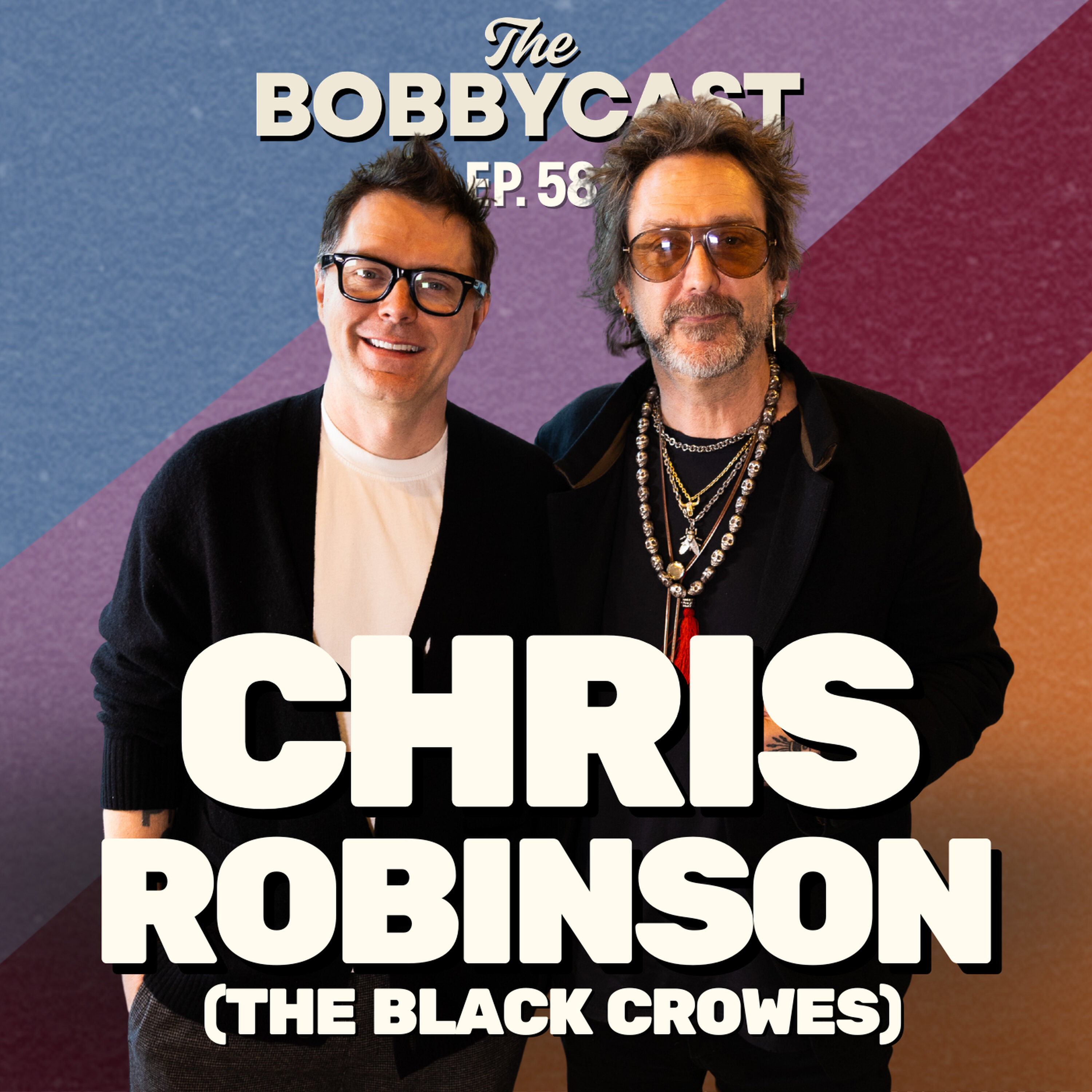
#590 - Black Crowes Lead Singer Chris Robinson on Wild 90s Stories & "She Talks to Angels
Chris Robinson sits down with Bobby to talk about the early rise of The Black Crowes, the momentum that turned them into one of the biggest rock bands of their era, and what that whole ride felt like from the inside. He shares stories from the band’s wild 90s years, reflects on the chaos and energy of that time, and opens up about the story and meaning behind “She Talks to Angels.” It’s a candid conversation about the music, the moments that shaped the band, and the memories that still stand out all these years later.
Watch The BobbyCast on Netflix!
Follow on Instagram: @TheBobbyCast
Follow on TikTok: @TheBobbyCast
See omnystudio.com/listener for privacy information.
Available Results
Generated results are saved to the knowledge database for reuse and search.
Extract Knowledge
Pick what you want extracted first. Model, scope, and chapter options appear after a template is selected.
Transcript
00:00:06
Speaker 1: You know. It's funny. Steven Tyler called me after we sold six million albums. He's like, man, are you gonna put your money away? I'm like, put my money away. I'm twenty three years old. I could care less.

00:00:21
Speaker 2: Welcome to episode five ninety of The Bobbycast. Chris Robinson, the lead singer of the Black Crows. Yeah, she talks to angels. Damn. I think if you heard the last episode, they should be in the Rock and Roll Hall of Fame. But Chris and his brother started the Black Crows in Atlanta back when they were teenagers. They were called Mister Crow's Garden, which we talked about. They changed their name. You'll hear all this. They have a brand new album out called A Pound of Feathers. It's out now. They're also back on the road for their Southern Hospitality Tour with Whiskey Myers that kicks off May seventeenth in Austin. Get tickets at the Black Crows dot com. So here he is the lead singer.

00:00:58
Speaker 1: He's more a lot of Jwely too.

00:00:59
Speaker 2: Just so you can visualize it. It's this is up on Netflix too. But here we go. Chris Robinson, the lead singer of the Black Crows. Chris, good to see you, you too, we've met before. You've been in Nashville. Massive fan that, I want to say it again, been to Nashville.

00:01:13
Speaker 1: My mom's an My eighty seven year old mom's a Nashville native. I spent a lot of time in Nashville growing up.

00:01:19
Speaker 2: Really well, I'll say again, I'm a massive fan of yours. I just want to make sure you hear that. I'm massive fan. Don't take it like I'm a sagittarian.

00:01:27
Speaker 1: I take that. I always want to hear that.

00:01:29
Speaker 2: So you a big astrology guy.

00:01:32
Speaker 1: No, a typical sagittarian. I'm only interested in sagittarius. I think it does dictate some archetype, you know, sort of aspects of who we are.

00:01:46
Speaker 2: Do you do like idiogram? Do you do all any of that? All of that just just a star wife.

00:01:52
Speaker 1: As a witch. So I let her deal with everything like a literal one pretty close. There's a witchiness to my wife that is undeniable.

00:02:02
Speaker 2: And she's a pisce and so so can you convince me astrology is real? Is there anything you can say? Because I am an I'm not a believer.

00:02:10
Speaker 1: It's like the occult everything is real that you put focus into.

00:02:14
Speaker 2: Okay, now that I can assign myself, you.

00:02:16
Speaker 1: Know what I mean?

00:02:16
Speaker 2: And that could be anything and any energy given. Yes, okay, I believe in astrology. Then it took almost no effort. You got me.

00:02:25
Speaker 1: I mean, I don't. I wouldn't. I wouldn't put it above any other thing, you know what I mean. But I, like I said, I do believe in There's like some archetypal things about people that seem to be real or I guess it just really depends on your perspective of things.

00:02:43
Speaker 2: I want to tell you a quick story just so I don't forget. Growing up, was listening to Shake Your Money Maker, which you love the record, by the way, when he was younger, listened to every song on it, knew it all by heart. My grandma raised me, and so I would listen to that record, and she just into Black Crows, which what grandma was, right, however, a cool GM well cool, okay, fair enough, this was a very Pentecostal Arkansas grandma.

00:03:11
Speaker 1: Yeah.

00:03:11
Speaker 3: Yeah.

00:03:11
Speaker 1: So as a matter of fact, no offense to your grandma. I hope that there was one of the things she hated them.

00:03:17
Speaker 2: Well, you know a little bit I think it was grinding her gears until I would play hard to handle and she was like she pulled a vinyl like an old Ice Redding. She had it because it was the B side and it was a live version on the ones that the record that she had was the live version of him performing that song, and I don't know, it kind of brought us together musically. Yeah, like that record that I loved her loving that record.

00:03:43
Speaker 1: And you guys, are you sure was Otis Redding's version not Tom Jones from the.

00:03:47
Speaker 2: I'm probably because they don't look the same, and I saw the viyl very powerful performers. I think Tom Jones's version actually is really good. I was watching Tom Jones sing live. It was a club social media because he was doing like like the voice or something over in another country.

00:04:05
Speaker 1: He was singing the English one probably.

00:04:08
Speaker 2: Or Irish or whatever it is. That guy could sing like. I never saw Tom Jones in his real element. He was always an older guy to me, and he was a character or a character by the time that I got to be older.

00:04:19
Speaker 1: Yeah, no, I mean very I mean I mean, you know, he had the TV show and he would doet with all the guests and stuff. There's amazing stuff for him. With Jerry Lee Lewis, he could waal yeah.

00:04:30
Speaker 2: Even as an older guy, like he could really go.

00:04:33
Speaker 1: And he's still It's funny. I have a friend who played guitar in his band for a while, and he was like, man, that guy is like, I mean, he's getting close to ninety, but he this was ten fifteen years ago, and he goes he's still up in the hotel room drinking whiskey, big cigar, and like, my friend was like, it's four in the morning. I'm like, Tom, I'm going to Betty. He's like, you're a He's like when a ninety year old tells you, He's like, all right, I guess I'll have another one. You know. And when I was a kid, my mom's from a big family from Nashville. Let she's the eleventh of thirteen. And I used to dance, you know. I was always a dancer. I dance. And my mom told me once that one of my cousins they were like they took me to her work and waited for Tom Jones to come on the radio because and I would and they were like, he's like a little Tom Jones.

00:05:34
Speaker 2: Do you remember that or is it before your memories.

00:05:36
Speaker 1: I don't remember. I don't remember being exploited by my mom for entertainment purposes. Oh, I would come to find out a lot about it later. No, I just it was just funny. It's just funny about music, you know. I was always was. I have many interests, I have many very varied things in my life, but music has just always been one of the main things, you know, and especially I'm dyslexic, so growing up in the Deep South in that era, I'm fifty nine, I don't know if that had something, you know what I mean. It always made music always made sense to me, even before I even attempted to not just an emotional thing, there would be some other element to it, you know what I mean. And then, and it is funny because you know, there's plenty of people, there's plenty of people in the music industry who don't even like music. It's just another job that they have, you know, there's no connection at all, visceral, cerebral anyway, you know. So it's just funny.

00:06:49
Speaker 2: Was there a lot of music in your house growing up?

00:06:52
Speaker 1: My dad? My dad had a top forty. It's funny. Phonolouxe Records in nash Field. The guy owns that he gave me one of my dad's singles last time I was in there a few months ago from when we were making the record, and my dad had a top forty hit with a record called Boom a Dip Dip in the nineteen fifty eight.

00:07:14
Speaker 2: That's wild.

00:07:15
Speaker 1: Yeah, it's on it's on streaming services, and it was kind of like my dad's. You know, he wasn't a he wasn't like a songwriter or anything, but he had a good voice and uh, the songs like Boom Dip, dip, Dip, Dip dip boomp. You know, he was on American Bandstand, Alan Freed, he did all that stuff. And then in the early sixties he that kind of didn't happen for him, and he found himself on the folk circuit, signed to ABC Paramount Records with a folk duo called the Appalachians, and they would do like those Saturday night folk hoot nannies at the Ryman and stuff. Yeah, so you know my brother, you know the guitar that Rich played she talks to Angels and wrote she Talks to Angels on was my dad's fifty three Martin d.

00:08:07
Speaker 2: Twenty eight and did you get to see any of that?

00:08:10
Speaker 1: I didn't. Well, the only bit I got to see of that coming around when I did was my dad was still involved a little bit like in the folk scene. So some of my earliest memories of music, besides him playing records and singing songs, I mean him picking up the guitar and singing around the house, is still ultimately the vision I have of my youth. But it wasn't just my dad singing, although he had a really nice picking style and he had a very good voice. It was the stories and I loved and my dad was really good about like, well this song is from Scotland from the you know, seventeenth century, and then when people came here it changed to this whether it's the Cuckoo or Shady Grove or he's a student. Oh yeah, Especially if you were going to play folk music, you know, you had to really know what it was, and it was I think it was also important that he just had the guitar out in the house, like it wasn't weird for me, but he would take me to my Some of my other earliest memories are going to hoot Nanny. It's like the first time I saw a guy play a banjo, first time I saw a guy play a pedal steel, you know, electric bass, a little drum kit, and they would share songs. You know, it's like a real hoot nanny. And as a kid, I just you know, it was. It's just magical and and and it's funny because I tell people all the time my obsession with not not making music, but listening to music. My mom, My mom. They also, between the two of them, they probably had about two hundred and fifty three hundred record you know when I was a kid, which was a lot of records for the average American household. So whether it was Mose Allison Records or Jimmy Reid Records, or my dad would have Lester Flatten Eural Scrugs and Jimmy Driftwood, Doc Watson and you know, the late sixties, early seventies. My dad loves Crosby Stills in Nash And my dad loves like Leon Russell, Mad Dogs and Englishmen sling the family Stone. I mean, that's my earliest memories or you know they have that. My dad's name was Stan Robinson and there's that slides song stand Stan in the end and I used to think they were saying Stan. I was like, he must they must be friends with my dad, they must know him, you know. And my mom's family. Funny enough, because when I'm at Arnold's in Nashville, they have the pictures up on the wall and there's the Spear family, very famous Gospels singing group. And my mom's sister, Mildred, married Ben Spear and he played on Elvis records and stuff. So some of my first I remember they were a gospel you know, the old jubilee ju you're invited to the Gospel jubi and own that rucket and that kind of stuff. But I took a tour. But the first time I was on a tour bus, I must have been six or seven, seven or eight, and we uh they had a gig done at the Holiday Inn in Daytona Beach in nineteen seventy two or something, and I remember going with them, and again like the instruments, you know, and being on a tour bus. Just funny stuff, you know that come that I remember. But it's funny that I when I went to this is years ago and I went to Arnolds and Khalil's in there, I was like that's that's my uncle. I didn't really know him very well.

00:11:59
Speaker 2: But a lot of families that grow up with the music don't want their kids to do music because they've seen the nature of the music business.

00:12:08
Speaker 1: Yeah, my father was one of well on top of him knowing about that. I mean, to all transparency, my father just thought I was talentless, you know what I mean. He he hated because rich and myself weren't. You know. Some of the first songs we ever learned were like Bob Dylan songs, so he would be appreciative of that. But then by the time, like you know, I'm listening to X and the Gun Clubs, Circle Jerks, Black Flag, you know, the Clash, the Pistols, even later, the Echo and the Bunnymen and the Cure Susie and the Banshees. I mean, they're not feeling that. My dad's not understanding of that kind of part of music.

00:13:00
Speaker 2: Happened with him and his dad though, did he was his dad and his life or grandpa. No, Because generationally, I.

00:13:06
Speaker 1: Mean, every generation mary supportive of my of my dad.

00:13:12
Speaker 2: It's like every generation hates the music that the younger generation likes.

00:13:15
Speaker 1: I think, so, I mean, I personally. I again, it's such a huge part of my life was having a record collection like that to go through. I mean, it was are you kidding? I mean, And it's funny because it'll come back around to the roots music.

00:13:33
Speaker 3: You know.

00:13:35
Speaker 1: My dad didn't like country music, though my mom loved George Jones. My dad later liked the outlaw country stuff like Jerry Jeff Walker and Willie and he liked that kind of stuff. But it was it's just weird and my dad, he passed away in twenty thirteen. My mom's still in frank But it wasn't even when I was like a little indie rocker, even when I was listening before that, when all I listened to was V one O three FM in Atlanta, you know, and I was a huge, huge Funkadelic Parliament fan. Prince, I mean my I mean, maybe Prince upset my dad more than anyone. Why is that? Because I had a poster my wall of like this, like beautiful and wearing a shower. You know. I was like Dad, you know, I I mean, I wouldn't. I don't know why I would upset you if I had been gay, but I'm not. But this is the only picture of Prince you could get. It's from the album, so it's going up on my wall, and I'm like, by the way, also like the sort of androgyny of it all. I mean, I I was like Dad, if I didn't have I makeup on, no girl would talk to me, you know what I mean. I think that's his generation. That was them. They were more fearful. As a matter of fact, I think it's one of the bad things. I mean, it is what it is, so I can't necessarily put it in a negative connotation. But I see a lot. I love a lot of young bands. I mean, we go see my wife and I have a little record label. I work with amazing kids. And but one thing is funny when you see a lot of modern music. Whereas my dad didn't want us to do that. Rich is different. They're kind of a supported rich. But I was the crazy one, you know. But this is the first couple of generations of kids whose parents were like, yeah, you can do it, get out there. We'll get you the newest guitar you can use. We'll get you a van. Well, I'll pay for a publicIt, you know what I mean. That wasn't a part of it. When we were kids. And as a matter of fact, I think part of the energy and part of the real commitment and sacrifice, if you will, was that it was something that wasn't my you know, if I had chosen to be a visual artist, I think my parents would have been more accepted if I if my life, if I had gone into my other deep interest in literature, if I had tried to write novel, if I ended up teaching French literature at a small college in the Midwest or something, they would have been happier. And I think a lot of it is where you were kind of going with the business part. Show business. You know, it's nasty, nasty people, not everyone, but enough to really make it toxic in general. Yeah, and I would I would say there's a darkness about you know, that's the faustian sort of thing.

00:16:59
Speaker 2: You know, what about like when you dance, there's an androgynous element to how you move. What did your dad think about your performance?

00:17:10
Speaker 1: Well, I think you know, by the time we make Shake your money Maker. You know, this is a funny story. So we start off as mister Crow's garden. That's why there's the e and the crows. You know, we kept the name the proper name, and we were more kind of indie rock, had a little psychedelic kind of vibes. There was a guy in Atlanta named Larry T and there's a club promoter and had a band with RuPaul. They were called the Now Explosion. Their big song on the was it the Now Explosion or we We Poll. There were two bands, Amazing and RuPaul's one of superstar RuPaul. Their song that was on the College Rado was put your hands in the air, we have your underarm hair like all this, you know, super druggy, art school gay, amazing, so cool. So happy to have been adjacent to that. But larry T is still around. Larry T was later moves to New York and I think he's in like the group was in the Heart video. Larry T was one of the best DJs ever too. Yeah, yeah, so he was in that kind of scene. But when we were kids, we there was a place called the Celebrity Club and it was on Ponts And we got a gig two sets on a Sunday afternoon. We're so we don't know what's going on, but they're not serving alcohol. What I didn't know is and so we played our set. We look like the Birds on the first Birds album. We have Vox amps and my brother's playing a teardrop vox guitar, and we're really into sixties stuff, you know, pinning our pants, you know, instead have stovepipes because you couldn't buy them. And we played two sets in between, like a really whacked out drag queen floor show, you know, like you know, and I didn't know at the time, but you could get little Dixie cups, so like kool aid or whatever it was acid. They were all on acid. We did it. They wouldn't give it to us, you know, Larry, We were little kids and they weren't. And I would have, oh my god, taking LSD at that time in my life, I told you I was probably seventeen. I still would be in the hospital. I mean later I would get far more accustomed to that experience. But my dad came to this gig, you know what I mean. So it's like here we are and we're up there, you know. We we'd written some songs, but our repertoire included like you know, we would play there she Goes Again by the Velvet underground, or we would play a big star song or you know, some kind of thing like that, and then it would be this wild, acid, southern drag queen thing and my dad was like, what are you guys doing? He just was so confused. I would give anything to like remember the look on his face, you know, to see him again, you know. So he was kind of supportive, but he didn't like My dad didn't like strange or bizarre. He didn't like things that were uncomfortable to him, and I sought them out. I never cared about your sexuality. As long as you had cool records and you were you know, you had a good heart and soul, you could be wild. I didn't care about any about your background. And you know what I mean, It was only about art. It was really art driven, and my aesthetic and my taste ran towards you know, the films. I like the books. I was reading the records. I guess in a in a simplified way, it was about counterculture, and my dad wasn't a counterculture figure.

00:21:10
Speaker 2: Did you guys? You moved down to Atlanta, right.

00:21:12
Speaker 1: I'm Atlanta native.

00:21:13
Speaker 2: I'm third generation, so yeah, I know you guys.

00:21:16
Speaker 1: My mom was from Nashville. My dad's Atlanta native as well and his dad.

00:21:20
Speaker 2: Did you stay once you guys hit? Did you guys stay in Atlanta?

00:21:23
Speaker 1: I left before we even hit. You did, not out of any not out of anything bad. I mean, I'm I think if, if, if anything that the climate in our country is teaching us right now, is that the South isn't the only place with people driven by fear and ignorance. But being from I'm a proud Atlanta. Atlanta is a really unique place in the not just in the South or America, but in the world in terms of how progressive it has been. Do you guys go to LA I moved to New York first, and how okay? How how was New York coming from where you were in Atlanta?

00:22:07
Speaker 2: Musically this was after we.

00:22:11
Speaker 1: Made it, so like we are not made it, but you know, shake your money makers out and like the when we start to do. Okay, I got a check and I was like boom. You know, I moved to UH. I had an apartment with a girl that used to dance on Club MTV and she danced in a cage at Limelight. So you know, these are showbiz things and maybe this was what my dad was worried about. I hardly think, but does.

00:22:40
Speaker 2: Your brother move with you?

00:22:41
Speaker 1: No, he stayed in Atlanta for a lot longer, you know. And again, like I said, it wasn't like I was running away from Atlanta. But I had this like innate understanding and feeling that the world was out there for me, you know. I I knew I had this weird thing. You know, a lot of bands, whether you're from Seattle, or whether you were from you know, Austin or New York whatever, not big big New York LA entertainment cities. I just knew my life I wasn't going to stay in my hometown. I knew it from even before we got in a band. I just knew that I was deeply, deeply influenced by beat literature, you know, and like millions of us on the road, Jack Kerouac was a real inspiration in terms of wow, Okay, so if I want adventure, if I want to you know, the whole idea that he says in the novel, I wanted to be with the mad people. That's what I wanted to And I wasn't copying him. That was just an all sincerity. That's I knew where my interests were. I had a wander lust that is still yet to be quenched, you know, and it's it is what it is. You know. It's caused issues in your life. It causes issues with relationships, it causes issues. It caused issues with the band or whatever. Sometimes you know that. I but that's just what it is. There's too much adventure out there, there's too much inspiration, there's too many dreams to have.

00:24:28
Speaker 2: You know, you guys recorded that whole album, the first album in Atlanta though, right, yeah, the first two actually, so so you went back to record the second album. You were living in New York, you went back down.

00:24:39
Speaker 1: Yeah. By then, the believe it or not, I can't believe a relationship with a girl who danced in a cage at Limelight didn't work out. No, I'm just kidding. Uh yeah. So you know another weird thing that I think the you know, all the parents that tell their kids they should do this. The first Black Crows tour for Shak Your money Maker was three hundred and fifty shows in eighteen months. Wow. So that's a really weird thing. And you know we were young, you know, I had just turned twenty two, twenty three, Rich was turning twenty twenty one.

00:25:17
Speaker 2: Do you forget where you are whenever you're doing You know that many shows I wasn't.

00:25:23
Speaker 1: I never was the kind of person to have to look at the setlist and go all right, you know Birmingham Element. You know, for some reason I knew where I was, even later in the super drug out stuff. I always have known where I am.

00:25:41
Speaker 3: Let's take a quick pause for a message from our sponsor, Wow, and we're back on the Bobby Cast.

00:25:55
Speaker 1: Can I ask a question about drugs?

00:25:57
Speaker 2: Yeah, because I I've never i'd drink alcohol. I've never done anything, but I would love to.

00:26:02
Speaker 1: Your grandmother would be so upset if you did.

00:26:05
Speaker 2: I know she would. I would love to. But I've come from a long line of like hyper super addiction where everybody's died.

00:26:14
Speaker 1: Right.

00:26:15
Speaker 2: I think I'd be great at it, But I think i'd want to win too. I think i'd want to be the best at it.

00:26:20
Speaker 1: Yeah, I don't. Yeah, it's weird, you know what I mean? Because I was, I was afraid of them. I mean I started drinking. I mean I had my first hangover, like adult hangover, at fifteen, But that was kind of part for the course. I think as a young guy in Atlanta, and then and then then we're musicians, and now we're with crazy people all the time, and you know, you can't how do we get this even more crazy? So many of my heroes are crazy people.

00:26:59
Speaker 2: Did you feel like it open you up made you more creative?

00:27:02
Speaker 1: No? I don't, but I I and I still don't. I still you know, my only real vice for the last forty years is cannabis. But I think cannabis adds to my Some people can get really stoned and they fall asleep or they can't concentrate. My chemistry is completely different. As a matter of fact, when I want to concentrate, I will get more of stoned. And I don't know if this is because I'm dyslexic or whatever. But I've written songs, most of the songs I've ever written. I'm completely sober. Maybe stone but not dry. I couldn't. I never did hard drugs, and you know, like to do a gig.

00:27:46
Speaker 2: I'm really curious about hallucinogenics because I think I could. That would open me up. And you and I read stories about certain people that would take them at certain times or to remove like symptoms of PTSD. I think there are a lot.

00:27:58
Speaker 1: I think that's an interesting part of it, you know what I mean. I think that you know, I'm one of these old sort of heads that I don't know. A mind blown is a mind shown is what they used to say in the Acid Revolution.

00:28:19
Speaker 2: I just don't want to get attacked by a ten foot starfish, Like I'm tripping out.

00:28:22
Speaker 1: What if the ten foot starfish is your best friend and you can cuddle up with it? Patrick Star, You're right, you know what I mean.

00:28:29
Speaker 2: I'm fine, Bob, I get it.

00:28:31
Speaker 1: I don't think it's something if any trepidation about it, I think dictates already where you are. You know, are you kidding? Man? At one time in my life, when you're a kid, you're like, Heroin's the scariest thing in the world. Well fast forward a decade and a half, and like, oh wow, you know, my kids are sixteen and twenty two. They know that I've done these things, and I did these things in the nineties. But I also I've also in the same way that I knew where I was, I also knew in a sense where without sounding funny, I knew where the line was drawn.

00:29:16
Speaker 2: That's that's not something everyone has no I read a book called I've had moments.

00:29:21
Speaker 1: By the way, Don't get me wrong, I'm not being that cool. I know that I've I've had moments that scared people around me. I've known that I've had moments where I'm like, okay, I'm pushing this. In the end of the nineties, i wake up or on Columbia Records, I've I'm so miserable and I'm so sad, I'm so lonely that our that this is where our band is, that this is what's happening. There may have been sometimes where I maybe would have really if what would have happened if I had didn't wake up, we would have you know, our catalog would have been worth more. Maybe. I mean, I hate to sound bleak, and I'm not romanticizing it, but even then, And it's funny because I think, you know, in my lyrics there's always a light at the end of the tunnel. And I've lost dear, dear friends, beautiful tortured souls. Are you kidding? Man? Like I've been telling, you know, talking about this new record, Todd Schneider passing away. My I mean, I we had such a I had such a unique and amazing friendship with him. Todd came to the studio. We were only in the studio eight days or whatever. But Todd coming down to the studio and he's like, are you cool if I hang? I'm like, I'm cool if you do whatever. It makes this last album so poignant to me that those are the last few days I got to spend with him. But let's be honest. He might have passed away from other stuff, but I don't think i'd ever hid the fact that he was a drug person. And ultimately, I think a lot of the things that happen, as tragic and horrible as they are are, are add up to drugs. Now, I'm a drug person who doesn't live that life anymore. So I will never judge anyone for that.

00:31:20
Speaker 2: I think I'm a drug person that's never done drugs. Yeah, I mean, because I judge nobody for it at all. I'm just so curious about it. Yeah, yeah, I would love to do them, are you?

00:31:28
Speaker 1: But maybe you know my brother's never done drugs, but rich also is a level of control that he needs that I have never really found. I've never really found it to be again, it's different. I'm fifty nine years old. I have responsibilities. I have a lovely I have beautiful, two beautiful kids. My their stepmom, my wife is everything. You know what I mean. We still you know, I still get a hangover every once in a while. Whatever. I'm not interested in sobriety and the way it looks, I'm not interested. I'm happy for you not you know what I mean, You've never dabbled. But I also think doing drugs and alcohol isn't an excuse for your behavior. And I take responsibility for everything I've ever done, and I can live with that.

00:32:18
Speaker 2: Did you have a point where you had to reconcile with yourself?

00:32:22
Speaker 1: No, because I don't have that same There's not a moral issue there to me. Now, if I had done something horrendous, i'd been inebriated and killed someone in a car crash, well, I mean that's a whole another level of But when I was in my height of my decadent behavior, I didn't have a driver's license for a decade, and luckily for me, in success, I had a kind of life where I always had somebody with me to drive the car or you know, to go get more drugs.

00:32:55
Speaker 2: What was it like to be famous in the nineties whenever people they had to find the videos because it was you know, MTD was massive.

00:33:03
Speaker 1: It was rock and roll fame. It wasn't celebrity fame.

00:33:06
Speaker 2: What's okay, Then we define the difference in rock and roll fame and celebrity fame.

00:33:10
Speaker 1: Well, okay, so it is a little bit different because of MTV. Right, So MTV's driving the visual part of your success. It's not like you were just famous for making records and people saw you in a magazine or they saw you in concert, or they would know you that way. So you're you know, I was I was telling somebody I remember, and you know, we have the number one album in the country. They're playing Remedy eight times a day. They've been playing we sold six million albums on Shaking money Maker. I go see Jane's addiction at Madison Square Guard and I want to wait till the lights go down. But the people I'm like, let's go to our seats, and I'm like, I don't want to go to the seats, and then they I go and like, you suck, Black will suck, you know, Like, so there's lots of people who you don't like your band who now see you on TV. With the bands they do like you know what I mean?

00:34:05
Speaker 2: Was that a game changer when MTV started showing your video?

00:34:08
Speaker 1: Of course, for anybody, no one was famous rock and roll, no one was successful without being on MTV at that time. It just didn't happen. I mean, it also worked hand in hand with radio, when rock radio drove the sales, when everyone listened to the local rock station, depending on you had more than one station, depending on what market you're in. To have big hit records on the radio and to be on MTV all the time, that's why you had People's That's why we sold millions of records.

00:34:44
Speaker 2: What about Rolling Stone?

00:34:49
Speaker 1: Maybe I'm at the very end of rolling Stone meaning something, you know, But then rolling Stone just turns into People magazine or celebrity shit like anything else. Like how are you talking about a band that is serious or a band whose music is of this kind of quality? But then you have in sync in there or some boy band shit, corporate put together pop stuff. It's not the same. Yeah, everyone's singing and dancing, but it's you know what I mean, We're out there on our own, We're living by our creative impetus, you know what I mean? It's a visceral experience. We have to be outsider people, not to be cute and do good in the audition?

00:35:35
Speaker 2: Was it weird when they would portray it was like the good looking cute because because you.

00:35:40
Speaker 1: Guy would if you can find someone portraying so.

00:35:44
Speaker 2: You got so famous, they would just be like, these are the hot guys now.

00:35:47
Speaker 1: Of No, there was a moment where we were like, oh, they're like the rock and roll boy band. I'm like what in a million years? You know what I mean? Like and hey, those guys just wanted to be in showbiz. But see the difference between rock and roll and pop music, and you see it today. You see a lot of people run their mouths like, well you don't do you do what you're told? Sunny jib. And we were trying and that was the difference. We were celebrated to be horrible and I mean I don't mean horrible to people or to whatever. I mean, we just didn't give a fuck. Really, you couldn't tell us. I mean the record company management they were always trying to tell us what to do, and we were like, I didn't how did I get here? If I did what I was told, then I would be in a boy band. Then I'd be a pop star. Then it would be a big act, which is cool too because that's showbiz, right, But we were just naive and or ignorant enough to believe that you could do it some other way. I mean, you know, I'm from Atlanta in the late eighties in our local music scene, which was looking back on it now, it was just like the days of Camelot, you know what I mean, Like we had nothing, No one cared but all the bands. And I try to explain to like younger people like you guys, like it was every day was bands and gigs and your friends and the national touring acts that would come and would be a big event. But you know, people, you know I'm seeing you go see bands now that are I don't know, black Flag. Let's take Black Flag. They I see them at an all ages show at the six eighty eight. There's three hundred people there, you know what I mean, Like it's nothing, it's the club is the size of this And so when people are like smashing and slam dancing, it was still called slam dancing at the time. It wasn't at a giant place with Rachel gets the machine or Primus up there. It was a little clandestine thing that everyone knew well that it was going on, you know, and I the big shows would be at center stage. You know. I saw pil at center stage with Peter Murphy and it's that show was seven hundred people and to us that was like an arena, you know. So it's just funny how the scale of things. You know, that you would sign with a major label, cause it I mean everyone at the bar where all the bands like, I'll never sell, I'll never But we all wanted a record deal, you know, so bad because we wanted to We wanted our records to be out there.

00:38:35
Speaker 2: Yeah, that's what a record deal does, right. Distribution like gets the records that was the to radio into stores and that's the that was the game.

00:38:42
Speaker 1: You did have them, you know, when you have nothing, they have, you know. Nineteen ninety we get the call to go open for aerosmiths, who are huge. Pump is the biggest thing in the world. They're back. They're bigger than the permanent vacation. They're up up. Uh, we're still toiling away playing we now we get back from Europe. We have our first tour bus. We have a couple new guitars, we have a crew. We made five hundred dollars a night, even in nineteen ninety. That wasn't a lot of money when you're renting a tour bus and you have all this accroutrement. You know.

00:39:23
Speaker 2: So.

00:39:24
Speaker 1: But by the way, luckily for us, you're on a major label who could put money behind you that you ended up owing. Of course, I mean we signed one of the worst record deals of all the worst record deals. You hear that story a lot. But what were we going to do not sign it?

00:39:40
Speaker 2: So it was all in advance. You had to pay everything back.

00:39:43
Speaker 1: Oh my god, you're talking about the videos. Yeah, Jesus, they were so expensive. I mean that was the one thing about or the one thing that I do appreciate about today is seemingly your financial reality is so much more more in your control.

00:40:01
Speaker 2: It's a great point because look, this show's on Netflix. We've got a couple thousand bucks a camera, gre and we can shoot fifty episodes. Yeah yeah, and it can be high as high having to go to a TV studios on a music video or more than that.

00:40:16
Speaker 1: And I've never been savvy, you know, my life and my interest in my passions are all art and as a matter of fact, that's been difficult for people because you know, there's this idea too that you're a rock star, so you should know about first off, not only is it am I incapable? It's just the most boring thing in the world. I mean, Luckily, I'm older now and we have a team, and I'm surrounded by people who are nurturing and can help. But you know, if you think we were talking about nineteen ninety one ninety two, you know it's funny. Steven Tyler called me after we sold six million albums. He's like, man, are you gonna put your money away? I'm like, put my money away? I'm twenty three years old. I could care less what am I supposed to put this away for the rest of my life? I mean, I appreciate him calling, but also who would have had time. I mean other people, clever people, wealthier people who would have had time to deal with that. I was dealing with the next album, and you know, being in this band and what I do for the Black Crows and what I've done no matter what other people want to say, is I'm the guy who had the idea to be in a band in the first place. Yes, Rich and I write the songs. Yes, it's impossible to be in a band without the material you play. And that's me and Rich. And of course Rich's influence and input is equal to mine. But how we look what, you know, naming the albums, designing stages, designing album covers, artwork, t shirts. I remember, you know, I tell the story we put on. We went to England for the first time, and we maybe still we looked a little different, but I still had jeans tucked into a cowboy boot, like guns and roses. But I went to a magical place that doesn't exist anymore called Kensington Market and I walked down there and there's a maroon pair of velvet crush velvet bell bottoms. The kay Keith Richards had a night on Excel and Main Street Era and I was like, I want those. And then I had this Indian sort of shirt. And I remember we came back and like we did this festival and people were laughing like the other bands, like a band like Warrant, who looked like the Osmonds, you know, I mean crazy, you know, they had like matching leathers. I was like, okay, all right, you guys are like Evil Knievel wasn't cool. You know, no offense to them. I'm sure they're cool people, and bless them. I'm not bagging on warrant. I mean, but when y'all are laughing at me because I look like this, and then you know, six months later, Vogue Magazine is like, that's how cool people look now, you know. I mean, us and Lenny Kravitz really were the first ones to start looking like bringing back a seventies aesthetic, you know what I mean. So, but you have to have it's about not only is it about writing, but it's about ideas and having an imagination and being able to put it. It's about an esthetic really, and we didn't in all those years. We never had a stylist. We never had someone come to the video shoot and say, well, you would look cool, and that we would have laughed at them because that's what we wanted it to be. That we wanted it to be real. You know. I remember one time when we were one of the first rock bands and I see be speaking of real. I see Be real a couple of years ago from Cyprus Hill, and he's like, were you we were in hip hop and the Black Crows, and we were the like legalized weed people. And I remember one time this guy, this guy wrote an article. He's like, you know, these guys get stone and they think that they're the first ones to do it. And I said, no, I don't think we're the first people to get stoned. I just don't know why we can't, you know what I mean, I thought that was my whole point always. You know, even by the time Shaker money Maker comes out, I mean, Southern Harmony, people are like they're retro rock. I mean, I get it. Maybe our look, but Remedy doesn't sound like the Rolling Stones. Sometimes Salvation most assuredly doesn't sound like the Faces. I mean, I think you could look at us because our influences are roots based and the rock music that we liked, whether it was The Stones, the Faces or the Band or Little Feed or whatever. I won't even get into some of the other like kind of influences. Those are records that are all inspired by the origins of rock and roll and the blues music, the country music in our case, a lot of funk music and gospel R and B music, which comes from the blues. I mean, somehow in there there's jazz music, but then somehow in there there's punk, and somehow they're in there there's indie rock, right, you know what I mean. So people always you know, one of the reasons Jimmy Page wants to play with the Black Cruses he heard us play. But the other reason is he liked that we had a lot of the same influences, even though he's a generation removed, you know, And that's been the It was funny because I wish we would have been hanging out with Guns n' Roses, you know what I mean, But we were like hanging out with Joe Cocker, you know, because or whatever. You know. The first rock stars I've eate are like Ian Hunter from Mott the Hoopel came to the Black Crow show in our first show in New York and there he is, He's standing there, and I love Mott the hoopl He's one of the great rock lyricists of all time, you know, I mean, once Bitten twice shy, incredible, incredible lyrics. And he was like, I just wanted to meet you guys. I'm like, what, you know, how cool? But I don't think if we sounded if we hadn't been true to what we were and what influenced us and how that inspired us. I don't know if I'm meeting him in the same way. You know. I tell this story the Great Ronnie Lane from The Faces is in his wheelchair with MS on his last days and there's We're opening for a band from Los Angeles called Junkyard. This is our very first tour and we're in Austin, Texas and we're not even in a dressing room. They got the dressing room. We're in the room with the ice cooler and so like, while we're getting dressed, the bar bags are filling the ice for the bar and there's a knock on the door and there's like dipshit. Security goes, hey, there's some guy in of wheelchair uder named Ronnie Lane who wants to say hello, and like, the great Ronnie Lane is here. And he came in with his girl that was you know, and he was like, I just wanted to say hello. You guys have said so many nice things about my music, and I'll remember it my whole life. I mean, those are the things to me that are the real special things, you know what I mean? That happened and they still happen. They happen all the time.

00:47:57
Speaker 4: The Bobby Cast will be right back. This is the Bobby Cast.

00:48:10
Speaker 2: The new record A Pound of Feathers. You and your brother wrote those songs. How are you writing songs differently now? Because it's got to be different.

00:48:16
Speaker 1: Right, Not really, not, to be honest, that's the one thing. I mean, it's a little bit different because.

00:48:22
Speaker 2: A little more deliberate with the writing.

00:48:24
Speaker 1: No, there's nothing deliberate about what we do. It's all spontaneous at all. And especially this record, I think Happiness Bastard's super proud of it. I love it. I was so. I think the life in it is you can feel it. But you know, when we ended up at Jay's Joyce's in Nashville for that record, we had those songs worked out, you know, a song like Rats and Clowns. We kind of had for a few months and we knew like this is the song, and this is the lyric, and this is the chorus, and blah blah blah. There were maybe some songs that weren't complete. Wanting and Waiting as an example, I didn't have that chorus, you know, I mean we had to do the beat, but the main bit that I wrote the song in Nashville, this record. We uh, you know, we knew we're you know, we knew we were getting geared up to go to the make a record. But I had told Rich, and Rich was here in La. He just moved to the East coast. I said, I want, I don't I don't want to have anything finished. I'm not going to do any lyrics until we get to Nashville, which is very different. I mean, I have shit tons of lyrics.

00:49:42
Speaker 2: I write all the time.

00:49:44
Speaker 1: I have notebooks, I have notebooks for days. I have little pieces of a postcard that I wrote something, or a match thing or whatever. But we were here in the valley where we rehearse, and U our guys said, I said, set up a drum kit, a bass amp and a guitar, and like, let's just get out there. So Rich had some ideas, some rough things, so we you know, I sit down at the drums and start to get a little vibes together and where I want the changes to go. And Rich is playing guitar and then play some bass. And one of the really cool things that really set this whole thing in motion was I was at a friend's birthday party, in the canyon and Josh Freeze, the great famous Josh Freeze, one of the best drummers of all time, was at the party and we're friends, and he was like, what are you doing? I said, Rich and Ira, he goes, can I come out? And jam I was like, but you don't have to get on a private jet to go play a stadium in South America with whatever giant ban you're in. He's like that, I'm home for a couple of weeks. I said, all right, man, if you want to. So Josh comes out. He's not on the album and he's there. None of the stuff that we did was we used, but it was this spark of like, oh I could get up off the kit a little bit, kind of told him like oh I like it like that, like this, like goa whatever. But you don't tell Josh Freeze what to do. So Rich is playing and Josh's and I went home and our mutual friend came over. I made dinner for us and I said, he goes play me that he goes. Josh said it was super fun. I said, I don't know, listen to this and it was just funky and raw and cool, you know, And he goes that should be the record shit like that, and I said, man, well, they're not going to let us get away with that. But but it's but I felt the exact same thing. So when we got to Nashville, I you know, I was like Jay. I mean, I told Jay before we got there, I said, Yo, we're coming in with nothing, and I want to keep it that way. And uh and Jay. Jay's so cool and we have a really good rapport with him. And to be honest, I think Jay likes working with us too, because we're so not together, you know what I mean. We're still wild. We're feral in the studio and I don't even remember what we started with first. It was maybe profane prophecy or it's like that or something. But Cully, our drummer, lives in Nashville. So we had Cully so I could sit down at the kit show him like kind of where I'm feeling it. And then that was it. And then Rich, you know, Rich plays all the guitars and bass. We have Cully, Eric, our keyboard player, came in at the last couple of days, and Leslie and Mackenzie, our backup singers, sing on one day and it was eight days and we wrote all these songs and it was just heaven, you know what I mean. It's one of the moments I've been lucky enough to you know, we love making records. It's one of the most satisfying things about our careers. I love records in general. I've been collecting records I was twelve years old. I mean, I'm obsessed with records. It's a problem, you know what I mean. I moved out of my parents' house in nineteen eighty seven, and all I had wear a couple of T shirts and boxes and boxes of books and records, and that's pretty much my life still. But when we got in there, it was just great, you know what I mean, Like I And it's funny. It gets back to Todd Schneider's there and he's like, what, I've never seen anything like this. You and Rich don't even say anything, And you just wrote three songs? What the fuck are that? And we have an esp We have a telepathic, weird thing. It also has to do with being brothers. It also has to do with writing many songs. But even when we were teenagers, still at mom and dads and we start writing our first songs, it's the same. We just go with where the Muse takes us and how it feels. And I believe in the Muse. I believe in the Muse, and it's full Greek myth glory. And one thing that has never changed is I've never And this gets back to the business sort of part of it. If I gave myself to something like the business or worrying about the money. I worry about money like anyone else, because I'm almost sixty years old, and I have responsibilities, and I love French food and I love I like my habitashery as well, but that if you spent your time with that, then the Muse is going to abandon me. And I really, honestly, I can only speak for myself, but I don't ever and it's problem, you know, it's a problem always being half in a dream. And I understand that. And I'm lucky to I'm lucky to have the wife that I have, you know, who will check me and when it's time to put my feet on the ground and I need to be here for her or for us for whatever, I'm there to deal. But I'm also lucky that she understands that that's where all the fruit is, you know what I mean. That's truly the garden that we've been cultivating for over forty years. And if I removed myself from it, I don't think it would be there for me the way we're talking about it, the way Rich and I can sit down in a studio in a little more than eight nine days and come up with this kind of music that personally, I feel is so vibrant and alive, music that's really representative of not only the celebration of life and how I feel, but it is also delves in you know, I'm not political person, but I'm upset and it hurts right now for me to be in this country. It hurts. And I don't care about politics. I know morally what's right and wrong, and what I see is wrong and it just breaks my heart. Racism has always broken my heart. Seeing maligned people, it's it's heartbreaking. And we and some of you know, and some of us feel that we could do better, you know, And and I get it. I get that everyone has an agenda, but I so this is we're making this record in May, this is before like these last couple of weeks. But I think you know, also I don't write anything political. Ever. I'm a poet and I and I say that knowing that you know, that's a very heavy word for me.

00:56:55
Speaker 3: Let's take a quick pause for a message from our sponsor, and we're back on the Bobby Cast.

00:57:10
Speaker 2: I've got three final questions. They are completely different questions.

00:57:15
Speaker 1: We're gonna talk about Chelsea football.

00:57:17
Speaker 2: We're not. We were talking about that beforehand, though, we were. First question, was it annoying when Black Crows, Cheryl Crow and Counting Crows all existed at the same time?

00:57:31
Speaker 1: Yeah? You throw Clint Black in there, and you got a real problem, you know what I mean. Yeah, uh, that would have been a tour right there, Clint Black, Cheryl Crow, the Counting Crows and Black Crows. Yeah. Yeah. I told Clint Black that one day. I was like, man, everyone's ripping us off, Cheryl Crow, Counting Crows. Clint Black. Our keyboard player Eddie said that one day it was so funny. Cheryl really gets an excuse own and Crows. I mean, we live in such different worlds. At the time, I was kind of annoyed. But whatever were you before?

00:58:07
Speaker 2: Counting Crows?

00:58:08
Speaker 1: Yes?

00:58:08
Speaker 2: And so how many Crows bands are there?

00:58:11
Speaker 1: Right? Like?

00:58:12
Speaker 4: That.

00:58:13
Speaker 1: Yeah, I don't. I don't know.

00:58:15
Speaker 2: I mean there's like an old R and B group called Yeah not Many is my point, Like.

00:58:18
Speaker 1: Yeah, yeah, yeah, that's funny.

00:58:20
Speaker 2: Would did you guys ever talk about all torn together as a ruse or a show?

00:58:25
Speaker 1: I think that would ultimate Crow know any of the Counting Crows people. I know Cheryl pretty well.

00:58:31
Speaker 2: I love Cheryl by the way she is.

00:58:33
Speaker 1: She is a sweet She's also sweetheart in her band. I mean, Audley Freed, Robert Kerns Stroud.

00:58:39
Speaker 2: I mean, so you're a little annoy by all the crows? Okay, good? Second question. Yeah, it's a lot of crows at once at the same time.

00:58:45
Speaker 1: It doesn't matter. I mean, let let them have some more crows. About the velveteen crows or the mayonnaise crows?

00:58:52
Speaker 2: Now, as many crows as you can get. Which one of you, guys big hits fell out of the fastest when riding it?

00:59:00
Speaker 1: She talks to angels easily. Rich came up with that guitar intro. I mean he was still at mom and Dad's house.

00:59:10
Speaker 2: How old were you guys when this happened?

00:59:12
Speaker 1: So Rich was sixteen when he wrote that riff or whatever. Maybe seventeen and you were I was nineteen twenty, so that's one of the first. But you know, it's funny. We wrote that song and then it did it. We didn't really have any way to play it. And when we meet George Draculias, who signs us and finds us and produces our first couple of records. You know, I don't think we had that middle section, but I remember the first line of this. I mean, we for the reality as we wrote the bones of that song in about twenty five minutes. Twenty minutes because I, for whatever reason, she never mentioned the word. She never mentions the word addiction, So she's hiding something and she doesn't want to talk about it again. I'm writing this song way, you know, we're talking about drugs. I never I had probably been stoned a handful of times. I definitely knew about alcohol, but I never I wasn't involved in anything like that. The subject matter would become a lot more familiar as the nineties roll on. But but you know the thing that the correlation between then and today and how I write is especially this record, I was saying, the lyrics are darker, there's a lot of stuff and there's a lot of decadent stuff in there. So, as I just told you, I'm in the only relationship that's ever had any gravity to me, you know, I mean, I'm in the only relationship that contains real, real dynamic love and passion and commitment. But who wants to hear about that? You know? So if I'm going to write a song and what really did lots of people want to hear about that? But what really dictates to me the imagery and the lyric, the poetry of the song is could be anything. In the cases she talks to angels, Rich played me something that was really melancholy, you know what I mean. So I could access like a sort of story that that was adjacent to me. I knew a girl in Atlanta who had a certain look, so I and there. I didn't know her that well. She was super brad goth chick, but maybe she was on heroin or something, which at the time would have been pretty deep. And you know what I mean, we were still kids, so I romanticized about like someone I didn't know if you know, someone loses a kid, you know what I mean. I just started, you know, I didn't I wrote one draft of the lyric too. It wasn't like I worked on it for day, you know, it just the story already came out in that form.

01:02:01
Speaker 2: You held that song for a long time then, right, yeah, pretty yeah, for a couple of years, like you knew it was good then you just were waiting for the right time.

01:02:08
Speaker 1: It was just like, how did it fit into what we were at the time?

01:02:11
Speaker 2: Did it fit into what you were.

01:02:12
Speaker 1: Or was it not good? But later, you know, I think when we start to find ourselves, Like you know, you're also talking about the era of the power ballads of all these like fucking hair metal bands and stuff. So we were to me, I didn't you know, to me, Sad Eyed Lady of the Lowlands is a ballad. To me, wild Horses is about, you know, the ballad. We loved Graham Parsons, you know, we loved the Burrito Brothers, you know, so we're not afraid of ballads. But I think we would put it more in the context of and I think the reason one of the reasons that song has lived on and has a certain I don't know mystique about it is because it comes from that kind of place.

01:02:58
Speaker 2: Do you still like playing that song?

01:03:00
Speaker 1: Yes, of course. I mean, I mean, I think I think we're so blessed to have a song like that.

01:03:07
Speaker 2: Did you ever not like playing the song? Maybe, you know, because it got so big. And I think anything that you're expected to do all the time, it doesn't matter what it is, you'd probably.

01:03:15
Speaker 1: If you're me, you're definitely hate that, you know. But that was youth too. Now I I can't imagine not playing it, you know. And we know what the other thing is. It's funny because if you're in a rock band, if we were in a certain kind of rock band, you know, I don't. You know. We get into this because we're songwriters and I meet people I will. I will go to the air you know. I will go to the airport, or walk down the street, or sit in a restaurant whatever. People share with me. There are stories of addiction and recovery, people share with me all sorts of things. But the amount of people I meet or tell me about the song songs that they play at weddings and funerals really means a lot to me because I'm the same. You know, there's certain songs I I have to put on if I'm feeling a certain way. You know something that is like an old friend, the only one who understands, you know.

01:04:18
Speaker 2: I want to ask about Whiskey Myers. So you guys are going you've torn with Whiskey.

01:04:21
Speaker 1: By the way before I forget the other stuff about writing songs is a lot like the new record. There's a lot of lyrics that are that are me, and there's a lot of lyrics that were me. But then it's like the Coen Brothers movie Barton Fink, where Barton Fink's talking to the guy who's like the Southern writer or whatever that he admires for. He goes, You've written so many things that touch the common man. But where do these come from? What's the inspiration at he says He's he goes, well Boughton. Sometimes I like to make things up.

01:04:56
Speaker 2: How do you guys end up with Whiskey Myers? You torn together? It's a co headline tour. It's gonna be an awesome show.

01:05:02
Speaker 1: Yeah, yeah, I'm super excited. You know. It's funny. My brother actually wrote some songs with Whiskey Myers a few years ago, so that's how I first hear about them, And I think we had played a show with them in Oklahoma a couple of years ago. And you know, although we are most assuredly a rock band, we because of our roots influences and because of being a Southern being Southern people. A lot of country music artists have had the Black Crows in their lives, and Whiskey Myers definitely being one, being very open and vocal about it. And they're a country band who's kind of on the outside of the Nashville thing and Texas and everything. So I think that it it. You know, it kind of fills in on both sides. You know that both bands aren't exactly what you think they are, but both bands are exactly what you feel they are. Yeah, you know, and I think that really is going to make it a really special tour.

01:06:10
Speaker 2: So the tour starts in May. I hope everybody that's watching this goes and watches a show. Both bands are awesome together. That's that's pretty crazy, that'd be it.

01:06:20
Speaker 1: Yeah, I mean, I mean, I we're very excited, and I've heard they're very excited, so we're kind of just chomping at the bit to get out there. And yeah, I mean, I want to hope things are going really well. I would love to have those. I mean, we haven't had a tour where like that since we were with Tedesky Truckspan and that tour ended up being lifelong friendships and you know, really great jams at the end of the night, you know encore kind of collapse and stuff. So I'm hoping all that stuff happens.

01:06:50
Speaker 2: Well, massive fan, I appreciate the hour. I hope the new record does exactly what you wanted to do. I always listened to the to the old stuff. It still feels fresh, and I feel like if it am out today it would still be. And also the record.

01:07:02
Speaker 1: Label with them, and you don't do drugs or don't you like it?

01:07:05
Speaker 2: Love it? Not like it?

01:07:06
Speaker 1: Love it?

01:07:06
Speaker 2: And the pubic hair that was that was troublesome.

01:07:09
Speaker 1: Yeah, yeah, your grandma wouldn't.

01:07:11
Speaker 2: No, No, I hid that one, explaining that we didn't. We hid that. We make sure she never saw that.

01:07:16
Speaker 1: And it's not about sex as much as it's about gratuitous behavior in American culture. But I don't want to dig into the semantic course. Let's just stick with the pubic hair. Chris, thank you, Thank you man

01:07:30
Speaker 4: Thanks for listening to a Bobby Cast production.