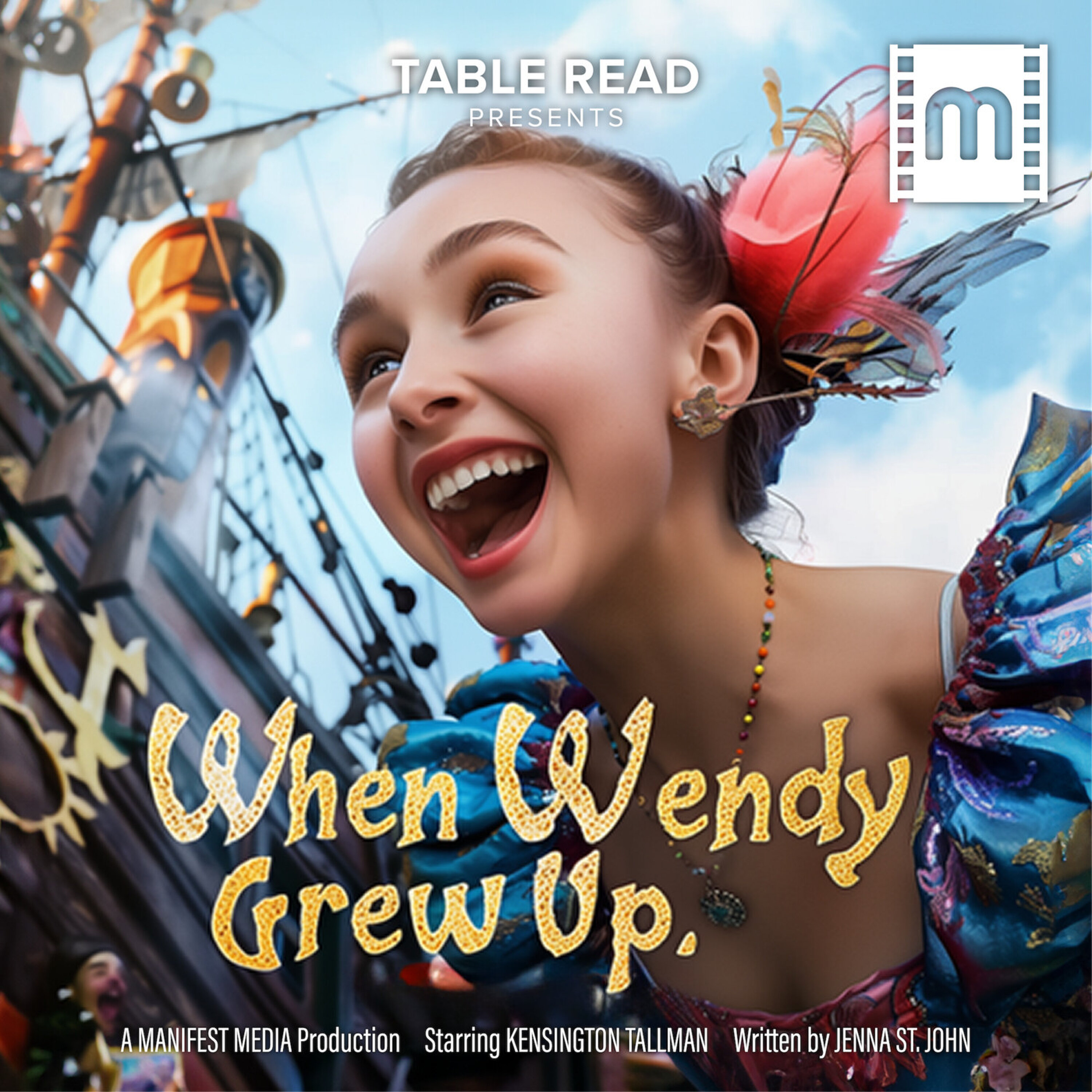
When Wendy Grew Up - Writers Room
Jenna St. John is a screenwriter to watch, and her latest script, "When Wendy Grew Up," is a testament to her talent and unique perspective. Born in Seoul, South Korea, and raised in both Korea and the United States, Jenna brings a diverse background to her writing. She fearlessly pursued her passions, transitioning from computer science to English and creative writing, and even spent time as a ballet dancer before an injury led her to focus on screenwriting full-time.
Jenna's journey is a reminder that following your heart and embracing change can lead to incredible opportunities. In "When Wendy Grew Up," she reimagines the classic Peter Pan story, delving into the complexities of growing up, family dynamics, and the search for meaning in an ever-changing world. With its blend of timeless themes and contemporary social commentary, the script promises to resonate with audiences of all ages.
As a writer, Jenna has a knack for creating authentic, relatable characters and crafting stories that both entertain and inspire. Her goal is to write female-led YA features and TV shows, and if "When Wendy Grew Up" is any indication, she's well on her way to making a significant impact in the industry.
Join us for an exclusive interview with Jenna St. John as we discuss her creative process, the inspiration behind "When Wendy Grew Up," and her journey as a screenwriter. Don't miss this opportunity to get to know a rising star in the world of storytelling.
Big thanks to Mood.com our partner in high vibes. Use code TABLEREAD20 for 20% off at Mood.com. Legal THC & CBD. Nationwide. You’re welcome.
See omnystudio.com/listener for privacy information.
Available Results
Generated results are saved to the knowledge database for reuse and search.
Extract Knowledge
Pick what you want extracted first. Model, scope, and chapter options appear after a template is selected.
Transcript
Let me record. Okay, we're now live, all right.
This is Sean Sharma, one of the co founders of
table Read Podcasts, and I am here with Jenna Saint John,
who is the writer of When Wendy Grew Up, which
is on the table readpodcast wherever you get your podcasts.
You can listen to all three acts right now, and
it's such a lovely story.
Jenna, welcome, Thank you, thanks for having me.
So we like to do these interviews with the writers
because we want to learn about these incredible stories that
obviously a lot of people have put time and energy
into helping bring it to life for table repodcast, but
no one's put more time and energy into it than
you have. So obviously with something like this, that's a
story we all grew up with what drew you to
wanting to make a story about the world of Peter
Pan and Wendy Darling.
So it's kind of a complicated answer. There wasn't like
an aha moment for me. I was familiar with the
story like everyone was. I was familiar with the novel,
and with all these adaptations coming out of Peter Pan,
which happens like every five years, they all kind of
didn't see it in my POV, which is through Wendy.
You know, Wendy from the beginning always felt like the
protagonist to me. She's the character that changes the most,
and it's really about her. I wrote when Wendy grew
up shortly into the pandemic. When the pandemic happened, everything
shut down. I had a two year old suddenly at
home with me, and I was still working. My husband
was still working, so a lot of his entertainment was
like toy story one, two, three, four, like whatever we
can do to entertain this toddler so we can get
on with life. And after a bit, it was obvious
that this was not good for him, you know. And
when you shut the screens off and you're stuck inside,
you can't go anywhere. Then suddenly your home becomes whatever
you want it to be. It became neverland. And it
was this like aha moment for me that eventually led
to writing when Wendy grew up. But this is our
responsibility to give this to our kids, give childhood to
our children. And they say, you know, kids are so resilient.
Kids are so resilient, And I didn't see that to
be entirely true. You know, I could see that my
kid wasn't doing great during the pandemic. But because kids
are so adaptable and they're so playful, I think we
just see them as resilient and you're like, oh, okay,
well that's off my shoulders. Let's just turn on Toy
Story three again. I think once you take on the
responsibility and you realize that they're resourceful and it's up
to us to bring them to Neverland, bring them to
this imaginary world. And this amazing thing happened where I
got to know my two year old because in all
this play and building forts with couch cushions, we were
talking about what he dreams about, and you know what
happens after you die, and like, there's amazing conversations with
a toddler and I got to know him and he
got to know me, and it was just beautiful. Then
I read Peter Wendy again and it was this, like, Okay,
I need to write this story from this perspective, because
this is what I believe the story is about.
That's incredible.
I actually didn't really think about that about how the
pandemic for parents, because I'm not a parent yet. That
the opportunity to actually help your children live in their
imaginations more instead of just focusing on screens and stories
that are outside of themselves, but to see what they
would do with.
Their own imaginations.
Yeah, to nurture their imaginations during that time, because I
know when I was growing up, you know, we didn't
have the kind of screens that we have today.
So coming up with all kinds of ways to get
creative in the.
House, about how to play or outside, and we'd make
forts and know the floor's lava all that, right, right,
you'd create whole worlds out of nothing. We'd pull out
sheets of paper and draw you know, castles. Member of
my elementary school, we took like we drew the we
were like in fifth or sixth grade, and we drew
the whole grounds of like the elementary school, and we
had a playground on both sides of it, and we
like named them as different kingdoms and we'd have like
there's the playground, over there is like this kingdom, and
over here is like the wild lands, and over here's
the barbarians, and you know, so, yeah, the pandemic really
created an opportunity to nurture your children's imagination.
Yeah, And to be a part of it, you know,
and if it doesn't always happen naturally, if there wasn't
anyone there for like for my two year old, there
wasn't anyone there for him to play with, so it
had to be me, you know.
Well, so for those who don't know Jenna Saint John
tell us kind of your like quick bio here, like
how did you get into writing, because didn't you also
do ballet?
I did. I was born and raised in Soul, South Korea,
part of a military family, but my mom's Korean, so
we just kind of stay there. Most military families move
every two years. Always really shy, big introvert. The exceptions
were I was a theater geek. That was only a
real time that I would open up to a big people.
You are an actor as.
Well, yes, or was an actor and then just wrote constantly.
Those were my other worlds. That was my therapy.
Were you discriminated against it all for being having like
a white parent and a Korean parent?
That was it wasn't uncommon with the military families in.
Seoul, you know, so you kind of were around others
who were in a similar situation.
Right.
We lived in the community too. We didn't live on
the military base. So it was this weird in between
phase that I was in living in Korea. I consider
myself an American, and then I moved to America here home,
and then also found out I didn't really quite fit in.
It's not like we read from your name the ethnicity, right,
So but.
I feel like everyone kind of feels that way, everyone
feels misunderstood, and so I turned to writing to understand
things better.
Do you identify as a Korean writer?
I identify as half Korean? Okay, so I feel like
any labels of I'm fully this or fully that, I'm like,
that's not all of me. That's not my whole story here.
I don't identify as a white writer either. It doesn't
seem to encompass enough of me. But yeah, so I guess.
Kore what age until I was.
Sixteen, oh okay, yeah, and then moved to the United
States where to the DC area. It was Virginia but
DC area, and then I went to college in Colorado,
not a very diverse place.
So that was we're in Colorado for Collins which university is.
At Colorado State. Okay, cool and not a very diverse place.
It was kind of the first time that I was
the the most diverse person. My diverse I'm within my
group of friends, and because I'm half Korean, I'm kind
of ethnically ambiguous, so a lot of people mistaken me
for being other races. You know.
Yeah, now that you mentioned it, I'm trying to think, like,
what else could I imagine you as, Like maybe like
Russian or like siber Versian.
I thought Allian or Italian. I've gotten Native American. I
got a lot there. I think it's still you know,
the long dark hair.
But I represented Mexico in a fashion show in Minnesota
at the age of eighteen.
Nobody knows what they were talking about with that.
Yeah, yeah, yeah, I would accept it.
You know. I feel like, yeah, you know, the late
nineties in Minnesota.
What are you going to do?
I've played a Mexican in a commercial, So there.
We go, right, Yeah, yeah.
So after I graduated. I graduated college in two thousand
and eight, and it was the recession. There's no jobs.
Anywhere within Your degree was in It.
Was in English, okay, so you know English literature.
Were you still dancing at that time?
I was always dancing, So I was dancing all through
my childhood all through college, I was dancing. I treated
it as a gym or as a hobby. In my
search for a job, looking everywhere, I was looking at Panera, Bread, Starbucks.
Nobody wanted me. I auditioned for a small company in Washington,
d C.
You could get a job at Panera or Starbucks.
No, I couldn't get a job anywhere. Why because they
were all taken. I think that's what I.
Tell myself, Because you qualified.
I also, yeah, they were all taken by I think
more qualified people that had lost their jobs in the recession.
It was a dire time to.
Work at Starbucks. You need a master's.
And I got lucky and I got a spot on
the company. And I had one foot out the door
because I knew it was only until it was only
amount of time before I was out of there. The
career of a dancer is very short, especially if you
get injured, which I was prone to injuries. And so
I started dabbling in film, you know, acting mostly, and
I wasn't really thrilled about a lot of the roles
I was auditioning for, also producing, because just acting was
not just acting. It's a very difficult job. But I
wanted my hands in more more aspects of film you're
still at I'm in Washington, d C at this point,
and there is a budding filmmaking scene in Washington, d C.
There's also a lot of industrials and commercials that are
filmed there, a lot of like docuseries, and one of the.
Biggest sag after locals, mainly because of broadcasters. We have
so many broadcasts.
It's pretty incredible. But I remember I was auditioning for
I think it was a Carmacks commercial or something, and
I just didn't care any of the jobs I was
auditioning for. I it wasn't exciting. I'd rather do theater
for free. So there was a pull there and I
decided to write The rest is history.
It was your first script that you wrote.
Oh who knows at this point something something awful and understudy.
It wasn't the understudy because.
That's how we found out Jenna as a dancer, is
because we did a table read of another one of
her Spects scripts.
Three years ago something like that.
Maybe three years that was.
Before when when you go out the Yeah, it.
Was so maybe four. Yeah, there was a dark period
of discovering how to.
Write why do you call it a dark period?
Because these are scripts will never see the light of day.
They will live in my hard drive. Maybe maybe I've
deleted all of them because you.
Don't want them to see the light of day. They
were of your developmental stone.
It was developmental. It was learning how to be a screenwriter.
I think so many people watch movies and they're like,
this is easy, I can do this. And then you
start writing and you're either on one side where you're like,
this is brilliant, isn't it and nobody else sees it
that way? Or you're like this is terrible. And I
think I went from this is really good to handing
it to somebody, probably my husband, who is my harshest critic,
and he wrote and he's like, this is not a movie.
And then I started reading the Oscar scripts and reading
Hollywood scripts, and you see how high the bar is,
and it's so high, and you're like, oh, so this
is how you write a movie. I never took a
screenwriting class. I learned everything from the masters.
From reading great scripts.
Yeah, did you read the traditional books like screenplay or
Save the Cat or story or.
I'm familiar with Staves the Cat. I'm familiar with Dan
Harmon's story Circle, and I use both of those to outline,
and they're hugely helpful. And my outlining process is extensive.
It's really it's my longest period of writing. Is outlining
really cracking the story.
The outlining is that like by page blah blah, we
need to have this and by page this we need
to have that. Or is it more like the plot points,
like laying out the plot points of the different acts,
And it's.
Both, so it will be the major beats, like this
is the inciting incident, this is the second, this is
a break into two, this is the climax, and then
this is how it ends. Then I'll break it down
every single scene in pros So I write out the
entire script interior, you know, Darling House, Wendy Room Night,
and I write the prose version of the scene, next scene,
and I do that for the entire script.
By prose, you mean kind of like writing a novel
or something.
Yeah, like writing a short story. And this is a
step that you have to do when you're being hired
to write a screenplay, and it's a it's a really
intimidating step because you have to lay out your entire movies,
so it has to be good. But it's a great
step because this is your pitch, you know, every single
step in the being hired to write a screenplay by
a studio or production company is your opportunity to be like,
let me hold your hand and let me show you
how great this movie will be. And I'm the person
to write it. Because at any point they can take
your outline or take your script and be like, great,
thank you so much for this, We're gonna have Nancy
take over. And you don't want Nancy, and.
You have no claim to any of the intellectual property
or anything.
It is because once somebody buys something, or once you're hired,
if you've pitched an idea and they're hiring you to
write an outline.
For it, yeah it's worked for hire you.
Yeah, it's now all of our movies, you know. So
it is no longer anker mine. So they have every
right to go hire Nancy. But I'm going to do
everything in my power to not let them. And one
of the ways is to really make my outline sing.
And so once I have an outline done, then I
know my story. I don't look at it again. I
go to script, and I'm usually able to go from
beginning to end write my first draft without ever looking
at my beat sheet or my.
Outline, because you've already kind of laid out all the
ingredients and now you just need to cook.
Yeah exactly.
Yeah, that's so fascinating. Thank you for sharing that with us.
So then you know, let's talk about when Wendy grew
up for a second, Like, do you have particular scenes
that really for you, like excite you that you know
that You're like, obviously you have the entire screenplay, but
are there moments, are their lines?
Are there? Are there particular scenes that you just love.
I love everything on Hook's ship after Wendy is on
it and everyone is just throwing down. I love everything
also in London before they go to Neverland, because it's
the building blocks for the rest of the world and
just really creating this family and that family dynamic. I
wanted it to echo the books and in the books,
mister Darling has pretty vicious temper and to showcase that,
but not him as a villain, but as him as
someone who hasn't he's not in touch with his emotional maturity.
Means well, and actually that for me ties into one
of my favorite moments in the script, which is when
missus Darling says is It to Michael, where she tells
him that he put his dreams away and sometimes it
will take a look at him, but then he always
puts them back in the drawer and focus.
I mean that is so sad, Yeah, and that is
so real.
Yeah, Like there's a because I can only speak about,
you know, in my home, Like my dad had all
kinds of dreams of things he wanted to accomplish, but
then he had to marry my mom.
It was an arranged.
Marriage, and it just took him off the trajectory that
he had always seen for his life. And he never
got over that, at least as far as I know,
never got over that anger and that loss of his
dream and you know, had to be a provider.
And yeah, switch gears So like that really spoke to me.
And so if he's at the table and he's like,
you know, all I do is provide for you kids,
and you can't even like listen to your mother and
do it's right, It's like you know, I that's how
I took it.
Yeah, No, it's super painful. And I think as kids,
you don't see your parents as human beings, as full
human beings anyway. And so I think we all have
these core memories from our youth of these like aha moments,
like our parents are people and they're imperfect people, or
they're people in pain, and yeah, I was trying to
capture that, capture that moment. And obviously the ending, everything
builds up to the ending there and the whole story
has to work in order for the ending to hit,
and it does.
Is there a particular but I mean, everybody can listen
to it and decide for themselves, but is there a
particular line of dialogue that you wrote that you're like
really proud of.
Oh my goodness, Oh, I don't know. That puts me
on the spot.
Yeah, yeah, it's fine if you can't, like immediately think
you had to write all of it, But if something
comes to mind, I'd love to know.
Because as a performer, as.
A as an actor, when I watched this incredible cast
bring this to life, of course I love language like
I like as an actor. I think that's been a
challenge for me when I try to put the writing
hat on, is the fact that I'm used to justifying
what's there not trying to change it. So, like I
find like editing really hard because as an actor I
would never try to go tell the writer how they
should write their thing. You know, sometimes on set, of course,
we can go to the right and be like, hey,
I really feel like I would want to say this,
or is it okay if I changed this little thing
there or whatever.
So we've done that on the show a.
Few times where I had to go to Dallas to
somebody be like, hey, what if I did this or
said that?
What do you think?
But obviously always deferring to them, So my first instinct
is not to be like, oh, this should be different.
It's like, let me justify what's there. So when I
see that text, I'm just like fully justifying and inhaling
and processing all of that that text, whereas like you're
probably more thinking about like overall story construction and all
of that, whereas like for me, I'm like, these individual
moments of human behavior like are so meaningful. So yeah,
that thing of missus darling with Michael is really rough.
You know, there's the like poor Gary never gets a chance.
You know, like I'm team Gary, you know, because you know,
did like her pinky and his pinky are like overlapping
at some point, which is like such a tender thing,
you know, from like a hundred years ago because it
was set in like the early twentieth century, right, Yeah, yeah,
So that's like the closest they could do to like,
you know, well, I mean they just met.
But I love the thing.
You know what a beautiful moment in that too, is
when the young gentleman thinks she's older than she is
from behind and goes up to talk to her, to
like ask her out, and then when she turns around,
he's like, oh, never mind, you know, like yeah, because
like she's in resisting growing up, you know, the idea
that she's growing up, And then there you have like
real evidence that you know, the world is seeing her differently.
Right. That happened to me when I was.
I can imagine for a lot of them.
Oh yeah, I'm sure, but I remember not even registering
what was happening until I revisited that memory when I
was older. Uh huh, you know, I was like, oh,
that's what happened.
Imagine, And I'm thinking from the guy's perspective, like, you know,
it took the courage to actually go up and approach
and then you realize you made you know, an error
in judgment.
I mean it's not that you tried.
You know, he excused me.
But you know, like me, I'm gonna go talk to
this girl like yikes, Like nope, right yeah, reverse course.
Well, So what do you hope people take away from
the story.
I hope it's a little ironic because I want people
to watch this eventually or to listen to it so
being tuned into media, and then turn it off and
go find Neverland for themselves or create it with their children,
whatever that version of it is, you know, the multiple
kingdoms or castle forts or hiding from dinosaurs, you know,
anything it is, and try to connect with the children
in your life or adults in your life on a
deeper level. That's what I want. That would be the
best thing is if people listen to this and felt inspired.
Hopefully if somebody listening to this and has gone through loss,
might it might give them some sense of camaraderie or
peace as well. It is heavy, it is, you know,
it's not the light Peter Pan's pretty dark, but I
think it answers it addresses things that we all deal
with as people.
Is there a particular director or studio, because you know,
part of what Table Repodcast exists to do is to
give great stories another way to be experienced by people.
Because ultimately, we hope that somebody wants to make this
into a movie, you know, and wants to contact you about,
like how do we make this movie together and buy
it or produce it with you or whatever. So, do
you have any kind of like dream directors or dream
studios that you think would be the best home.
I'm not sure about dream studios. Dream director Greta Geruik,
for sure. She's obviously able to handle budgets of varying,
varying sizes, and I just consider her so smart and thoughtful,
and I feel like a story like this she could
just connect with on a deep level. I know that
the stories that she's directed been things that she has written,
but yeah, someone like that, I think a woman you
know that could really honor Wendy's perspective, I think would
be great.
Do you have any idea what you think the budget
for a movie like this might be?
No, I you know, I write all you line producers
out there right, I don't know, you know, I look
at the similar budgets like what Hollywood does, and it's
like one hundred million dollars insane budgets. My husband does
visual effects, and he does really high quality, high end
visual effects, and he does it from our living room,
you know, working from home. Yeah, and so for me,
I feel like I'm a little out of touch because
I'm like, well, he just created an entire planet on
our home computer, so obviously, and I don't know what
he's worth.
That's funny, Okay, So a couple more questions here for you.
One is what was the experience like for you in
the studio because you were actually with us in the
studio when we recorded this, and so what was it
like for you to actually be there and experience the
actors reading it and just being part of that whole
recording process.
Initially, I was very nervous because it's my writing. I
was nervous about like is this readable? Are people's tongue
is going to get twisted left and right? And I
do a terrible job.
I made it all about me Initially with Dennis's voice
narrating it, Oh, it's like his.
Voice is butter and it was perfect. But as the
actors were also good, and it was so easy just
to get lost in it and to not stop thinking
about myself through the whole story. And it's amazing because
I've read this story, I've heard it out loud before,
over and over and over again. I still get choked
up at the end. I still do. And I'm sitting there,
I'm holding on to my chest is like my anxiety boss.
And then looking around and everyone has the same face
like they're just trying to hold it together. And that's
really incredible that just some words on a page and
actors sitting around in a circle in contemporary clothes. They
were all transported. That's just cool. That's just awesome.
Was there anything that you heard that you thought, oh,
that's interesting that they did it that way, or that
with the sound design or something like that.
Is there anything that leaps out to you that you the.
Sound design was it just elevates everything so much. I
don't know if there's any like one particular point where
I was like, oh, that's interesting. I think certain line
readings set I didn't quite catch on the day. The
actress playing Tiger Lily read it very differently from the
character in my head, and that was very interesting. It
was I think a very authentic take on the character
and how she would sound. I think in the version
of my head she was much harder and much angrier.
And the way Logan, the way Logan played her, it
was softer, but the lines were already so hard that
she really didn't need to push it. It was already there.
So I really liked her read of it. And that
was something that I only caught in the reading when
I was listening to it, yeah, rather than on the day.
And that was great.
Yeah, because we're so lucky because you've got such an
incredibly accomplished partner in Jack doing that sound design and
all that. Okay, so what other screenplays do you have?
You said you have other specscripts. What are some of
the stories that you've created in those other scripts that
the world could hear.
I have this script called The Understudy, and it's a
teen ballet supernatural intervention script. It's a body swap script
that one I'm very proud of. It's about reinventing yourself.
I have a script called Lessons and Kissing Brazilian Boys,
and it's a college travel rom com. Also, I always
try to have this a twist at the end of
my stories. You know that what you think you're The
journey that you think you're on is not the one
that you're actually on. So that one also has a
twist a soapbox, and I'm standing on that I think
is important for young people, which is to enjoy the
people in front of you instead of chasing the shiny thing.
Oh.
I have a specscript called Upstage, which is about a
young Hollywood a child actress that has a fall from grace.
She gets into some legal trouble and so she trying
to find her footing again. So she ends up joining
a regional theater who's putting on a production of the
Greek tragedy Helen. So it's kind of a fish out
of water and different a different kind of theater world. Again,
it's about reinvention. So I think so many young people's
stories are about chasing your dreams and going for it,
like going for the goal, to never give up. And
an important message that I think is missing from this
a lot of wonderful movies that are out there is
how to pivot when something doesn't work out, when a
dream can't come true for whatever reason, is to reinvent
yourself and resilience.
Is there a theme other than the twists. Is there
a theme of the kind of stories you like to tell?
Reinvention is a big theme. Ultimately, it's you're worth it.
You're the way that you are is just worth it.
You don't have to be sensational, you don't have to
be a shrading student, you don't have to be accomplished,
you don't need to be extraordinary. You are extraordinary. Is
a big theme in my work, and I think it's
aimed for a younger audience, but I think it's relevant
across ages. We're all constantly coming of age. You know,
I'm still coming of age. I still don't feel like
a grown up, and I have a hard time seeing
myself feeling like a grown up when I'm sixty. So
I think this idea that you still have time. As
long as you have time, you know, you can still
do what you can, still feel worthy, or you can
still go to rio, you can still chase your dreams,
and your dreams can change.
I think that's a lovely place to leave it.
Thank you so much for your time today and great
work on When Wendy grew Up, and thanks for letting
us tell that story with you.
Thank you