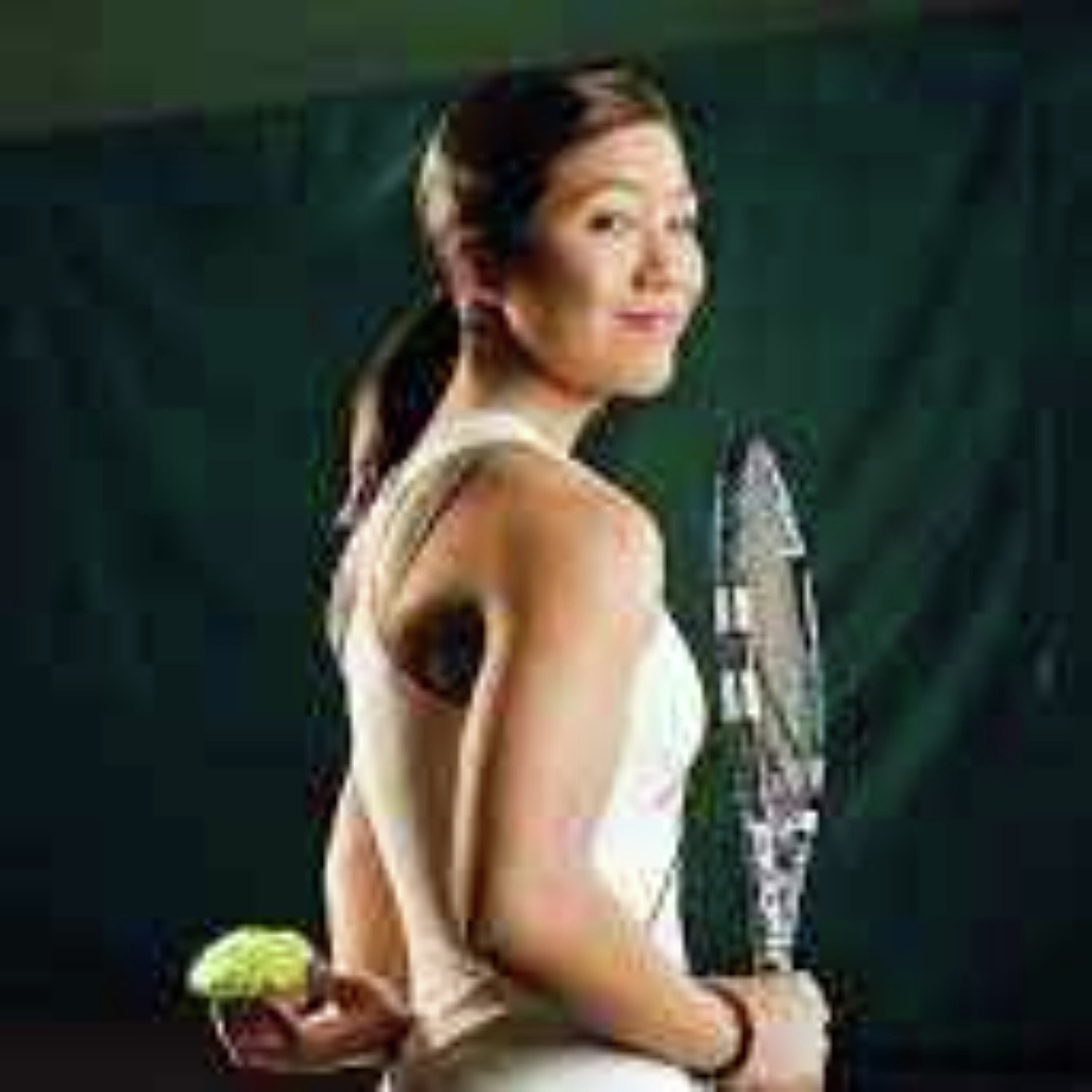
Kristie Ahn
The college standout, former WTA Player and self-professed snack fiend joins Rennae and Caitlin to talk about retirement, her work behind the scenes in tennis and we preview the Australian Open including some glaring omissions.
Hosted on Acast. See acast.com/privacy for more information.
See omnystudio.com/listener for privacy information.
2023-01-11
54 min
Transcript
Available Results
Generated results are saved to the knowledge database for reuse and search.
No generated results are available for this episode yet.
Extract Knowledge
Pick what you want extracted first. Model, scope, and chapter options appear after a template is selected.
Generated results for public episodes are saved to the knowledge database so they can be reused and searched later.
Transcript
00:00:00
Speaker 1: She's truly a box of chocolates, you realize, a box of really badly dressed chocolates, Renee.

00:00:18
Speaker 2: It's our second episode of the year. We are on the Stick. It is so nice to have you in this part.

00:00:22
Speaker 3: Of the globe.

00:00:25
Speaker 2: Oh yeah, because now you have a job that is requiring you to be in the same place at the same time five pm Eastern Power Hour on Amazon Prime Video on Demand, Now on Demand and live. Usually you're in Australia for like entirety of the winter.

00:00:40
Speaker 1: Yeah, normally I am down there and all of December pretty much getting a nice tan, although I still wear my sunscreen as it is a must in Australia because anyone who goes there knows gotta wear sunscreen. But yeah, but now I'm here. I'm here. I've been here for New Years. I was here for Christmas and I didn't go out for any of them, which was really great. But more importantly, I will be going down in a couple of days to the Strain Open. So we've got a special guest that we want to bring onto the show today. We've been trying to get this person on for a while, but now she's retired, so she's got more time. Christy on Christy, Welcome to our podcast.

00:01:17
Speaker 4: Thanks thanks for having me. I'm super excited, honored to be on here with two legends.

00:01:22
Speaker 1: So wow honored.

00:01:24
Speaker 3: One of my favorite things in getting to know you in the last couple of years is how carsarcasm.

00:01:29
Speaker 2: No, although maybe me sarcastic now, it's how devoted you are to the snacks. Snacks you are really I've not met anybody. Maybe it has more to do with your age, but you are so up on the pastry shops, the pop up shops, and I feel like, what a privilege it is to have you, a Tri State area native now in town, because anytime you recommend a place for us to meet up for coffee or pastries or noodles or whatever, it's going to be really yeah.

00:02:01
Speaker 4: I mean, I don't know if it's an age thing or if it's just like Koreans love snacks and pastries, so we're always looking for like the next you know, good thing and fusions. So wet, Where were we go today with La Cabra? Yeah, second and tenth if anyone wants to go, It has been all over my feed and I'm like this cardamom bum I like I need it.

00:02:25
Speaker 2: And it definitely did not disappoint it was Was it the best thing that you had?

00:02:31
Speaker 5: It was my favorite thing?

00:02:32
Speaker 1: Yeah, I had everything, So I approve on all of it. Anyway, Christy, let's get to the meat and potatoes, not the pastries. What have you been up to? Meat and potatoes. I to get to, like the decision making process for you. Why eventually you stopped, because I think it's always an interesting thing for people to understand about how difficult it is, but also maybe for some it's a relief, like what what did you experience when you actually decided, Okay, I'm gonna hang the rackets up. Yeah.

00:03:00
Speaker 5: So I was actually going to retire in twenty twenty.

00:03:03
Speaker 4: That was going to be my victory lap year after really good twenty nineteen, and then obviously the world went.

00:03:10
Speaker 5: You know, just stopped.

00:03:11
Speaker 4: Yeah, So I, you know, kind of just held out for twenty twenty one, hoping that it'll go back.

00:03:16
Speaker 5: To normal, and it's semi did.

00:03:18
Speaker 1: So.

00:03:18
Speaker 4: I had like a really cool Wimbledon experience playing on court one. Didn't get that experience at the US Open, wasn't qualifying, no fans, But I got to the point where I was like I want I want that closure, you know, that agasy ending. But for me, it was like the thought of waking up and going to training every day doing that the grind.

00:03:40
Speaker 5: I was like, I can't do it anymore.

00:03:42
Speaker 4: And it was like it was a feeling of when stubbsy you know this, when you've been doing this for your whole life, and all of a sudden, it's like everything you felt like you are, which is I'm a tennis player, I'm a world traveler, and it just feels like that chapter's closed, and you're like, who am I like the soul searching that you go through. And for me, I I always knew that tennis was going to be a stepping stone. Maybe this has been a little bit of a rougher transition than I thought it would be. Maybe job market, tech world going a little crazy. But I'm like, I'm enjoying my time off and I love recreationally playing tennis friends, as Caitlin knows, And yeah, you couldn't.

00:04:23
Speaker 2: Stuff yourself from coaching me, which was incredible. It was such a yeah no. I mean when I see talent, I know it, that's there. I just you know, that's a lot con asshole.

00:04:34
Speaker 1: I was going to say, when you see things that are very much need correcting.

00:04:38
Speaker 5: No, honestly, in those cases, I just leave it. I think sometimes you leave effort.

00:04:44
Speaker 4: So I was like, I'm going to say one thing, it's great, maybe it'll click.

00:04:48
Speaker 1: It did.

00:04:48
Speaker 3: It helped, It was actually transformative.

00:04:51
Speaker 1: So you're working on the fullhand. Good luck. Yeah, I've taken the backhand.

00:04:56
Speaker 3: She fixed the back and already, and she refused to fix the more hand.

00:04:59
Speaker 2: But I, like most professional tennis players, unlike most athletes who are transitioning into the next moment, you happen to have a massive brain. You were a standout college tennis player at Stanford, and you also are planning.

00:05:14
Speaker 1: What she's trying to say. But but Caitlin has a really long way of saying it is you're educated. You thought about life after tennis, which a lot of tennis players don't think about.

00:05:24
Speaker 5: So what's the next step for you going forward?

00:05:26
Speaker 1: Now?

00:05:27
Speaker 5: Yeah, that's that's a very good question.

00:05:30
Speaker 4: I think I have a couple doors that I might want to explore. Still trying to pivot into product design. It's a little bit tough right now with job market. But if that doesn't quite pan out in the next couple of months, Well we'll take a little pivot, you know. That's That's also the good thing that I'm learning is like you don't have you don't always have to like stick, like bash your head against the wall to get through it. Sometimes you just have to take a little bit of you know, searching and maneuvering and you'll get to where you're supposed to be.

00:05:59
Speaker 2: Maybe test tops that so you have, You've gotten certification. You have an interest in ux product design. That's a big flavor. You've also been traveling on the tour in support of other athletes. That seems like maybe not necessarily something you want to pursue, but something you could pursue certainly. Did you have a good experience being part of was that Corber's team last year?

00:06:21
Speaker 4: I mean I I thoroughly enjoyed it. I don't know she did, but she had good results. You know, I feel like the important thing was we we ended better than where we started great the goal of the coach exactly. It was during the grass swing, which is always you know my I'm sure your favorite time of year.

00:06:39
Speaker 5: Two steps.

00:06:40
Speaker 4: It's a very short but special time and love the grass.

00:06:44
Speaker 1: Just what did you find eye opening about coaching players.

00:06:51
Speaker 5: First of all, I don't even know if it counts as coaching. It was more just like emotional support on my hand.

00:06:56
Speaker 3: Like hype team.

00:06:57
Speaker 5: Yeah, I mean, but I think that I'm getting to part of it.

00:07:00
Speaker 2: Yeah.

00:07:00
Speaker 4: Yeah, And especially for I think female players, we always say feel good to play good. So if you can get your player to really it's such a long you know, tennis is so much travel the day to days, it just becomes such a grind.

00:07:14
Speaker 5: So I feel like when you can find.

00:07:15
Speaker 4: Little joys, keep yourself late and remember why you're even playing the sport to begin with, that's when you're gonna play a little bit better. You're gonna build on your positives and then hopefully have good results.

00:07:26
Speaker 1: Yeah. I can honestly say that all the players that I've coached now, the thing that I exison nose is one thing, and game plans and all that sort of stuff is important. But the thing that I felt like I did more than anything as a coach is work on them being in a good mental space before they walked onto the court, and whether that's in practice or you know, just a conversation before a match, so you know, for everyone out there coaching is and it's stressful because you feel like you're taking ownership of everything that you've told them. And if they play well, great, you feel good that you've maybe helped them.

00:07:57
Speaker 5: But if they play badly, like, what could have I have done differently? Yeah?

00:08:00
Speaker 4: Yeah, And everyone knows how to hit a tennis ball, especially at this level, Like anyone can beat anyone on a given week. So it's just like where's your headspace at? Yeah, So that's like the most important thing, And if you can get your player in that, that's like the golden question, right is That's why you're seeing a lot more players hiring psychologists.

00:08:18
Speaker 5: How can they be in that.

00:08:19
Speaker 4: Prime spot, at that prime peak time like and take advantage.

00:08:23
Speaker 2: Of those moments and also feel like they can be a little bit more transparent about some of the stuff that might be a struggle in terms of mental health or needing to take time off, or needing to introduce levity or have a little bit of a break in terms of the schedule when they need to go, you know, maybe return home or do something that's a little bit more decompressed, just because it feels like that helps them.

00:08:43
Speaker 1: Now, we're I think.

00:08:44
Speaker 2: In a better place as a sport generally, not only just tennis, but like this helps me perform better to know that I have like happiness, yeah, and you know, a sense of relaxation that I can introduce into a high stress environment, like we can we get on schedule.

00:08:58
Speaker 4: I think players are trying to take a little pieces of home more on the road with them, so whether that's traveling with their dog or a family member or friend, just kind of keeping it so that there's so much downtime for players. Obviously we're training all the time and playing matches, but there's a lot of downtime where you're alone with your thoughts and it gets super it gets you know, sometimes you're in dark places, so having whatever little beacon of light you can to help you.

00:09:20
Speaker 1: Out of there.

00:09:21
Speaker 2: As you want to mention before we keep moving that one of the other things that people really really know you for, in addition to being a stand out collegeate athlete, in addition to making a couple of incredible runs, is your social media presence, not only for yourself. If anyone knows doesn't know what I'm talking about, go look up wipe it down on the internet during the pandemic, but also you lent your skills to some tournaments to create content in a way that I think has been really.

00:09:46
Speaker 1: Fun to watch.

00:09:47
Speaker 3: And there's a lot of facets to you.

00:09:49
Speaker 2: Is that something you want to keep pursuing or kind of like that was fun but moving, keeping it moving or what?

00:09:54
Speaker 1: Yeah?

00:09:54
Speaker 4: I think it was a one and done, you know, here for a good time, not a long.

00:09:58
Speaker 1: Time, but season as a lifetime.

00:10:03
Speaker 4: I've always wanted to go to Germany, and Hamburg reached out to me and asked if I would run their social and I thought it was.

00:10:08
Speaker 5: A really cool opportunity.

00:10:09
Speaker 4: There's a lot of history in Hamburg, beautiful city, and it's such a great event, and it was just really fun, you know, interacting with the players on a different level. It was a combined event, so I got to work with some of the male players who I actually didn't know beforehand, but you know, some of my buddies and at Kazakina they were all there, and it was just really fun to put be able to have the manpower to put my ideas to life. We had some really great videographers and I think we put out some pretty unique content.

00:10:41
Speaker 2: One percent for me, like from a storytelling perspective. What we try to do a racket is certainly that. And I think when I see a tournament being smart and hiring somebody who has a bunch of skills like you do, but also credibility with some of the fellow athletes, like watching you and Petco create content together, it was just like, Oh, this is really smart. And I hope you know we're not going to talk about this too much today just because none of us have seen it. But the forthcoming Netflix series obviously breakpoint that is on the precipice of coming out that we're I'm sure going to have some thoughts about soon. Is just tennis needs more of that. It hasn't necessarily done a good job, in my view, at least of telling its own story. And I think when you see somebody like the Humburg Tournament reaching out to you to do that, it's encouraging and I want to say to tournament's keep doing that because it helps sure sell tickets and get viewers to tune in, but also it lives outside of the ecosism of that tournament in a way that's great and I think hopefully brings in new people who can experience.

00:11:38
Speaker 1: It before we get to like talking about Netflix and we're going to talk a bit about the Australian Open and get your thoughts etc. I want to know from your standpoint, like going to college, having that experience going on to the pro tour. I'm always interested in what players that go from that experience of feeling like you're on a team, you have support constantly around you, to being thrust in to the toua Like, what was the thing that was probably the most eye opening to you that was the most difficult to deal with? Uh.

00:12:06
Speaker 4: You go from a full fledged support system, not only like teammates, but you know, you have your medical staff, you have your coaching, you've got your best friends right there, and then all of a sudden, you're just in it alone. And even if you're like at an academy, you know that you're doing this, everyone's looking out for their own best interest, and it's like it's this feeling of like why am I doing this? Like you're going to and for me, I started out at some twenty five k's and you're like this is this is not I miss it. I feel so uncomfortable. There's nobody here watching my matches, there's no support. I can't you know, yell down to courts say go card this and that. Like it's just like you really have to know why you're playing tennis to actually like to go through it, because it's it's the transition for me was like brutal. I moved to Florida. I was out in California. I thought about staying out there, but I was like, you know, I'm going to commit to my tennis. There's you know a lot of people to hit with in Florida and a lot of academies and training and.

00:13:10
Speaker 5: I was the first week I was like why am I doing this again?

00:13:13
Speaker 4: And it was just like you really have to like remember why y Yeah?

00:13:18
Speaker 1: Literally so the motivator. Yeah, So if you were to go back or advise someoney now, because you know, one of the reasons I asked this question, and one of the reasons I love doing the podcast is to get these answers out to people that are maybe considering this, or have your parents that listen that have kids that maybe want to play professionally. What would you advise yourself going back if you were an umpire and you know, deciding how to handle this, what would you advise kids or people that are considering going pro what would you tell them about that period?

00:13:48
Speaker 4: Yeah, I think moving just because Florida is a hub doesn't necessarily mean that's like the reason why you should go there. I think going somewhere where you're going to feel like you have somewhat of a support system, whether that's family, friends, or a good academy that you feel like you have bonds and ties with. Like for me, I wanted every reason to leave Florida and go back home or go on the road, versus like feeling like every feeling like Florida was my home and I had a good group of friends and this and that. So when I actually moved back to New York or New Jersey in twenty eighteen, you know, I was like, Okay, maybe the training might not be as arduous and you know, intense as it was in Florida. But I had a lot more life balance and I was happier, which again the key to everything.

00:14:36
Speaker 1: Obviously it works. So I guess what you're saying is it did not. You know, some people could go to Florida and actually be happy. Yeah, like I Actually, for me personally, I had to move from Australia because the travel was so much, and a lot of Ozzie's moved to Florida and we had a little enclave of Ozzie players. Nicole Pratt, myself, Todd Woodbridge, Jason Stoltenberg, a lot of like Ozzie's of the same age all moved there. So, now that I think about it, yeah, we had a little village of our own. So I guess you're saying, make sure you've got a good village around you. It might be a team, might be, a team might be living like Jenny Brady moving to Germany for that period of time, she probably felt like, even though she was moving away from the States, it was like, for the first time in life, a little bit of a little bit of a team around her that she could focus on herself. That's also important, I think, is to make sure you're also focusing on yourself because it's hard to be home sometimes because all your friends want you for sure, and you don't have time for that. Yeah, you know, so there's a balance there.

00:15:29
Speaker 4: I think if I moved back home right after college, I wouldn't have made it. I think getting my same thing with staying in San Francisco in the Bay, I think that would have been a really bad decision for my tennis because I would have had too much fun, would have been socializing way too much, not focusing as much on my tennis. So I don't think moving to Florida necessarily was a bad decision for my career at the time. I just wish that there was maybe somewhat of a midway where I had more of a support system in Florida. So moving to back home in twenty eighteen, when I was older and more mature, was in a different place in my career.

00:16:05
Speaker 5: That's when I got a little bit more of it.

00:16:07
Speaker 1: You could arguably say that when you came back to the Northeast that you were a more maturer person and you knew what you wanted.

00:16:13
Speaker 5: I am not a mature well, I said that more.

00:16:17
Speaker 1: I'm a mature person, not mature. But I think what you're saying is that once you get to a certain age, you actually also understand why. I think I think what we got to in the end of this conversation is know why, know why you want to play professionally, because if you know those things, then you'll eventually hopefully find the right system around you. Everyone's different, yeah, yeah, and everyone is different. Some people need to be home to function as a good tennis player, you know, need to be around their family, and some people need to remove themselves get the hell away. And there's some players that you and I could arguably say need to get away from their parents. Yeah, please definite ask this of us. I've said that so how many times. It's not going to be surprised to any of our listeners.

00:16:59
Speaker 2: I can't imagine it's a suppresse to anybody in any corner of the world that many people, obviously us included, think the world of his potential once he moves beyond his.

00:17:10
Speaker 1: Father as a coach.

00:17:11
Speaker 2: One thing I want to touch on and then we'll keep it moving because there's so many things that we can talk about tennis wise, about who's playing Australian Open, who's looking good, and warm up tournaments, who's uh, you know, who's not there conspicuously. Before I get to that, I just want to mention you've been doing some work with the WTA in the last couple of years, the Players Council. Can you just sort of explain what that is and why they're lucky to have somebody like you who both played but also is super smart and worldly, Like, what are some of the things that you guys kind of discuss, like anything from rule changes or conditions that these players find themselves in. I just think it's really fascinating for people to understand how these governing bodies are trying to make this board better.

00:17:48
Speaker 4: Yeah, it's it's so simple, but it's so complex. There's obviously there's issues that we see on a day to day level, whether it's you know, a like we need more of this at a tournament or this was good, this wasn't good, but also just in terms of you know, we see a lot of reoccurring issues. Like one thing that we saw with the rules was some players taking advantage of medical timeouts or bathroom breaks as to and just trying to freak as we were just talking about it. But it's all within the rules, right, So it's like, how can.

00:18:22
Speaker 5: You put stronger restrictions on rules without.

00:18:28
Speaker 4: Uh putting restrictions on those extreme cases when they do happen. You know, if you put one medical time out, what happens if the player does have a very you know, what if she sprains r ankle on the court? Are you gonna just keep running the clock like that, so we want to keep There's so many different interests obviously, you know, like for TV, they want the match to go as quickly as you know, as dramatically, but as quickly as possible. But for players, you want that protection that okay, like when I go out on court, I know that if X y Z happens, like I'm still gonna be okay, Like they're going to take care of me.

00:19:00
Speaker 5: They have my best interests at heart.

00:19:02
Speaker 4: So working with different entities, working with you know, we talked to Grand Slams, we talked to tournaments, just constantly trying to put all these different heads together and figure out how can we put out the best product for everybody.

00:19:16
Speaker 2: Well, I think what I'm hopeful is that is that with you know, I have heard mixed things about the Netflix show that's coming out, but I know that the governing bodies, the ATP, the WTA, the Slam Countries, Friends America, Australia and what's the fourth Live well London have a pretty vested interest in this thing driving new fanship. And what I've heard and I am excited about is that it does more to illuminate like sort of the stakes and the interests and they're not just players. It's not just did this person win to this person lose? It's more like, how is this setting the sport up for success? How are we serving fans? How are we taking into account all these different stakes? And with seven governing bodies as opposed to one, like f one example, it's harder because you have competing interests, and I just think it's really cool that you can be at that table helping to decide things, like you know, Sethnus Tuzipas taking a much of it. Again, this is ATP, not to Beta, but him taking a bunch of medical timeouts that it's not against the rules versus hey, should the ATP have a domestic violence policy? I'm more concerned about the latter, frankly than the former, even though the former's more annoying to watch on TV, you know what I mean. And so just having this feeling like people like you are at those tables making those decisions makes me happy because it's I know you're not you know, I know you're trying to take into account a lot of difference, you know, sort of factors and interests.

00:20:37
Speaker 4: Well, and one thing for the bathroom break as well, for us as women is we have a time of the month at a one hundred percent and so everyone needs to pee. But sometimes things happen with that you're not prepared for.

00:20:47
Speaker 5: So what happens in those cases?

00:20:49
Speaker 4: Just being very you know, and you know, Wimbledon changing their policy for the undershorts is that's huge, Like, yeah, that they're actually listening to women and you know, not just thinking about their rules, but also taking into account that times are changing. That okay, like we went stricter with the all white policy, but now we're seeing that, Okay, maybe we should take a step back and realize that, like.

00:21:12
Speaker 2: The that's a disadvantage for players exactly, and it can complicate things. Yeah, no, you're totally right, and it should be an evolving, you know, an involving conversation Australian open and it's it's the stakes are incredibly high.

00:21:28
Speaker 1: Are we ready?

00:21:28
Speaker 5: Are we ready to.

00:21:29
Speaker 1: Dive into this? We're ready.

00:21:30
Speaker 3: It's gonna it's gonna happen in about ten days.

00:21:33
Speaker 4: But what what just about the Netflix real quick? Which is one point thing is that you know, I've seen everyone say we have to remember that this is not for us, it's for.

00:21:43
Speaker 5: Us the players, Yes, us, Well, us people who are already.

00:21:46
Speaker 4: In the sports, whether it's you're a tennis Twitter person or a you know, like someone who is invested in your favorite player or whatever, or a player yourself. It's this is for people who know virtually nothing about the sport. They might know the biggest names, but they maybe have never watched a match. So we're going to see a lot of themes that we've probably sick and tired of hearing, of the pressure, the intensity, and so for us it might just be like an eye roll of like, oh, yeah, we know this already, but this could be massive for people to get an interest into the sport. A lot of people don't know the mental battles that players have being out there by themselves and like the demons that we have to face. We don't have a coach sitting there like team sports, so like for.

00:22:30
Speaker 5: Them to be exposed to this, to be exposed to.

00:22:33
Speaker 4: The what goes on in the head of a player of a team for the first time, that could that can honestly be like and people, you know, some people want a gatekeep tennis and say we don't want casual fans, but like we need.

00:22:45
Speaker 5: Them, we need the sport.

00:22:47
Speaker 1: I mean, the best way to look at that is I have never sat and watched an F one race in my life, and I watched F one Drive to Survive and I was like, oh my god, I can't wait to watch this sport now. And I had zero And when I say zero interest in F one, I had zero interest in F one. And so for me, now I know the drivers, I know the teams, I know the managers, I know the you know the agents of the drivers, all because of that series. So I think the bottom line is for us, Yes, it's not fort technically for us the inside of tennis world, but it is for everybody like me at F one, like U Kitlin and F one I'm sure you as well. Christy is like, we weren't interested in F one and all of a sudden, now we're interested in F one because of this series. So hopefully that's what the audience this brings into this.

00:23:36
Speaker 2: I was having a conversation with a friend of mine named deb who wants to come on the show and actually do a netflixents when we are in a position to be able to talk about it more. Yes, step He was basically saying that he helps one of the things that gets changed in addition to your common about bringing casual fans, which we need. And I think seeing some of these scenes at early rounds and tournaments, especially tournaments that are not Grand Slams in this stadium hugely being twenty twenty five percent full, hugely important, Which is I want to push some of the commentators to be thoughtful about how they are bringing people into this board. And I don't mean talking down or making it too basic, but I do think and watching the US Open in particular, you know this past year, when I was like really frustrated at how insidery and how the same dust the anecdotes keep being brought out, especially by players people who are former players. I'm and I'm you're really good about not doing this, about making sure that people do understand what the players are going through from a perspective that you don't necessarily want to hear somebody who played tennis in the eighties professionally who's not super prepared maybe or doesn't know how to pronounce the names, And I want that to feel like there should be a little bit of pressure for them to do better, you know, like if we're going to have the same names commentating on tennis from the same couple of broadcasts and outlets, and especially if they haven't played pro tennis in thirty years, Let's try to do a little bit more fan service, especially if some of those fans who now because of Netflix's series are tuning in for the first time. Don't have you know, a familiarity with you know, a match that took place in the eighties. You know what I'm saying like that to me is don't use the phrase consolidate the break. To consolidate the break, what does that mean for somebody or or guessing is to the player's mental state as them being tense, which is like one male commentator's crutch that he's been using for the last forty years. So I'm not saying we need to fire them and replace them, although maybe we should. It's just more like, everybody, let's look alive here. If we've got a bunch of new fans coming to our sport.

00:25:35
Speaker 1: For the first time.

00:25:36
Speaker 4: Yeah, I wonder if I wonder if the world's tennis is actually ready for it, Like you just see so many more eyes eyeballs on the spot, Like it's a lot of pressure, and not just for like players, but just the you know, the infrastructure of tennis, we've been very isolated. Yeah, yeah, And I can say one of the one of the things about.

00:25:54
Speaker 2: Racket that we've found is that we have had so much of an easier time talking to people who are new and we get so much pushback from people inside the space. Who is this for? Why are you guys doing this? Why are you guys critical? Why aren't you writing glowing? And it's because any other sport has a robust media apparatus where a lot of people are asking a lot of different questions, and you know what, the players, the agents, the governing bodies, they develop some thick skin because they understand that it is just all in service of the audience growth and holding people accountable. Tennis hasn't had that, and I'm really excited at the prospect that it will start, because then we'll stop looking like these guys who are just at the thorn in the side, and be hopefully viewed as what we actually are, which is trying to grow the sport.

00:26:36
Speaker 1: What we said last week was that Tennis in general needs to get it shipped together, is what we said. That's right, So this will be an opportunity, Like you said, I think that's a really good point, Christy, that I don't know if tennis is prepared for this, you know, if we do get new eyeballs, which we will, and a growing brand after watching this this Netflix series, are you prepared to cater to those people? Necessarily your insiders, not necessarily your you know, you're just hardline tennis fans. We need you, guys to be prepared for people that actually now love tennis from watching the series, but have no idea about how to score. Yeah, right, and how can we keep that?

00:27:16
Speaker 5: Yeah?

00:27:16
Speaker 1: And how do you keep them? Yeah? So that's what we're going to send that to the WTA and ATP and I already said it last week.

00:27:22
Speaker 3: Get your shit together, Yeah, everybody can look alive.

00:27:37
Speaker 1: Australian Open. Let's go, Yeah, let's go. What do we think about? Okay, so our Chirez is out? What a bummer?

00:27:44
Speaker 5: But the goat Yeah yeah he's back.

00:27:48
Speaker 1: Yeah, he's back.

00:27:48
Speaker 2: Now eggs looking on unstoppable and he's buffed. Did you guys notice he gained like ten to fifteen pounds muscle? This guy is starting to look No, I'm serious, have you not really?

00:27:57
Speaker 1: Yeah?

00:27:57
Speaker 3: Look at look at the photos of him online look at some of his matches, like.

00:28:00
Speaker 4: I mean, he's had a he I feel like he's been training for this moment, like this is three year for a year, yeah, for two years now he's I mean in Australian Open is literally his It's yeah, this is where he I.

00:28:12
Speaker 1: Actually I think it was good for him. Also in Adelaide, he was pushed like big time. I mean, obviously look match point to seb Quarter and kudos to seb Quarter. You know, I talked about Taylor Fritz was, I feel like going to have a great year this year. I think he may even get to a final of a Grand Slam. I think he's playing well enough. I think he believes in himself more. We've talked about all the Americans, but it's amazing that we've I was and I said a year before that I thought seb was going to be the player, the best American player. He s just came out and said, hey, guys, don't forget about me. I had a tough year twenty two. It's kind of like a sophomore year for him. So I think seb Quarter, we got to give him a lot of kudos because he was literally one point away from beating Novak, I mean, less of a pussy on match point. I'm just going to say it. I thought he was really thought he really didn't go for it enough on that point. Lessons loan. When you play the greats, you got to beat them. They're I'm going to beat themselves on match point.

00:29:01
Speaker 2: Is there a more dangerous player to have a match point against than Novak Djokovic?

00:29:07
Speaker 4: You got to feel like that's like where he knows he has you, right, Yeah, and to the fear that, like this guy has match point against me, Like it's all downhill for them for here because this and and I think for him actually being down match point going into Australia and open is just proved to everybody else that he still has it.

00:29:28
Speaker 1: Yeah.

00:29:28
Speaker 4: That and like and then going three out of five like good Linker Park. Yeah yeah yeah.

00:29:33
Speaker 1: I thought Mark Lecero actually did a really he did an interesting thing on Instagram where he dissected the match point that seb Quarter had And one of the things that I looked at it from Seb's point of view, what I thought as a coach, what seb could have done, And Mark looked at it like this is why Novak's so good and there was one ball that was a bit short and Novak just took the back end and ripped it into the corner. I knew that he had seb on the run and you know, came in behind it. And those are the little things that you look for as a coach or an next player is like, oh, what are the little tiny things that win matches and lose matches? And Novak just has this amazing way. But I agree with you. I think going to the Strain Open after having a tough week, he was seven six, seven six against a guy that I never heard of, and then to beat Zeb down match points, it's like, oh, he's got everyone where he wants him now. Even though he may look like didn't win the tournament easily, it actually for me helps him going into these Strain Up. I think he's going to be almost impossible to be in Melbourne again.

00:30:22
Speaker 2: Yeah, it's tough, and you know, obviously al Karaz the world's current number one, and you can argue about how legitimate his number one is, just because you know, you want a sign that Novakdjovic couldn't play, but you know he's out and it's hard to imagine as much as we're all excited about Algarez, and I am very excited about him. It's hard to imagine that he has a career that doesn't end up looking a lot like Rafa's, where he plays incredibly physically well and has peaks, but also has valleys because again gets injured. To me, this is not going to be an unfamiliar pattern with him.

00:30:51
Speaker 1: It's crazy the injuries that he's had now over the last few months, and I just, yeah, I do think the same thing. The physicality between him is hopefully not hopefully this is yeah, I would love it.

00:31:02
Speaker 2: I think.

00:31:02
Speaker 4: I think it also speaks to I think people underestimate how much pressure and mental like toil takes into like how much it affects your body, because when you're playing free, like you're bout and obviously he's young, but when when you're playing free, you're you can do anything, but all of a sudden you start feeling a little bit more tense those like and that's also why Djokovic is so impressive to me, is just how long he's been able to play it. He plays physical tennis, right, like obviously we know Rafa to be the grinder and this and that Djokovic I mean, the dude's doing splits like the other but you can see like how well he takes care of his body and also how well he handles that mental pressure. That to me is the more impressive thing. Is like he is able to bounce back after literally anything that gets thrown.

00:31:48
Speaker 2: And that's a really interesting point. The tension doesn't manifest in his body. He's still just is gonna be like sliding into the corners thinking for it. That's a really cool way to see the manifestation of stress, or in his case, the lack of it.

00:32:00
Speaker 1: Well, I think maybe let's not forget about the fact that he lets out his stress. I mean, he's telling his brother to piss off, get away, get out, he's telling his agent like believe. So you just wonder as much as I hate to see that on court, and it's why he will never win the Sportsmanship award. Okay, it's because of moments like that. He's a great loser when he loses. His speech was amazing, he'd like even apologized to his box. All of those things are great, but that's the reason he's not going to win Sportsmanship award, because you can't by doing stuff like that. But having said that, I just wonder how much it helps him physically to actually let out all this negativity and even if it doesn't look good, whereas Rauf is always keeping it in because he never shows any negativity, never yells at anyone. And she's just wonder how much keeping all of that in which Alcoraz does kind of sort of he lets out a little bit more than Rafa, how much does that affect you? You know, I don't know. It's an interesting way of thinking about his thought about it from that perspective. Is there a similarly.

00:33:00
Speaker 2: A similar amount of anticipation or excitement for you guys coming into this On the women's side with Ego, does it feel similarly like she's definitely definitely head and shoulders the player to watch for or is it a little bit as we are used to seeing the WTA a little bit more evenly spread in terms of.

00:33:19
Speaker 4: Well, I think if this were Clay, I think she would be head and shoulders above. I think the Australian Australian courts play fast, so I think, you know, we saw Jesse Pagoula playing Sydney last week and she she's dangerous in Australia Every year she likes those Fastivarsia was also coming off a great end of twenty twenty two season, and she can play some really good ball on hardcourt.

00:33:38
Speaker 5: Sabalanka like, there's so many.

00:33:40
Speaker 3: I was so happy to see Sabolenka win.

00:33:43
Speaker 1: A tournament, especially to win one last year.

00:33:45
Speaker 2: No, and I love her so much and I always have because I really like the lunatics and watching her be able to serve this year after having gone to the depths of like not being able.

00:33:56
Speaker 1: To literally at the same tournament, same tournament she could have. Yeah, she was serving under and adelaide last year.

00:34:03
Speaker 2: She just couldn't put us together. And then what an amazing place to go to the site of your traumatic underarm mental breakdown and then come away with the trophy against a very exciting young player who had kind of the talk of the tournament like Sebalanka. To me, we all think she's overdue for a Slam, and I don't think anybody would.

00:34:22
Speaker 1: Argue with that.

00:34:22
Speaker 2: She got to get to a final f she could win one, but she's come close in a lot of semifinals, never actually made it to the final. And I think, to me, I would love for her to be dangerous this year.

00:34:32
Speaker 4: We see a lot of players who do well, you know, week or two or week or two before a slam and then fizzle. Yeah, I mean we saw it with the Scova that lost in forshround of qualifying. Obviously she had a day in between, which is also a young gun. But that's what separates the good from the gray, right to be able to perform week in week out, which is also what made EGA's twenty twenty two seasons that much more impressive, was her ability to just keep going.

00:34:56
Speaker 5: Not just on one's surface, but.

00:34:58
Speaker 4: You know, as soon as Ashbarn retired, it was like Ego was there to pick it up.

00:35:02
Speaker 1: And yeah.

00:35:03
Speaker 2: John Wortheim in his column this week had a really fun turn of phrase that I had heard before but not applied to tennis, which is that Ega got a battlefield promotion when Ash retired, and she was ready for it, you know, like she had it was.

00:35:15
Speaker 1: Like the queen back in nineteen twenty two.

00:35:18
Speaker 3: I was just ready to go in the wings.

00:35:20
Speaker 1: Given that crown, Yeah, given that grat this. So I saw her the day that she was I knew that she was going to be one when Ash pulled out.

00:35:26
Speaker 5: I think we said this already in Miami, and I said that you.

00:35:29
Speaker 1: Read she's just like I don't know, but you know, God lover, she handed like you said, she took that bat and not only ran with it, but like ran a marathon with it. It was unbelievable. Thirty seven match win streak.

00:35:39
Speaker 2: So this makes me think of two players, one of whom just merits conversation because she's won a slam and she could not be more of a lunatic, whether you like it or not. And now she can't get a servant, which is Yelena Astapenko. We double faulted the last two matches. I've watched her play double faulted on match point down to lose. And who who's this girl nowadays? Like she looks like maniac. She always has had that edge of crazy eyes, but with the outfits and the I don't know how fit she is, Like it looks she kind of what's going on with Lena. As to Pinko, I just I don't know that any of you, either of you have a good answer for that, but I just thought i'd mentioned it because I don't know.

00:36:15
Speaker 4: But I think if you look, I just I have to say, you never know what's gonna happen, because if you look at her last year, I mean she made the finals of it was either do hard, du buy and then you know, like with Austin Pinko, you just never when you think she's out, that's when.

00:36:32
Speaker 5: She comes back.

00:36:33
Speaker 1: She's truly a box of chocolates, a box of really badly dressed chocolates. Sure, okay, I mean let's just say that outfit's absolutely horrendous.

00:36:45
Speaker 2: It's it's a different level of there's maybe so bad they're good.

00:36:48
Speaker 1: She's uncoachable. I know people that have coached her, she's uncoachable. She's had the same coach. Now, I'll give him a lot of credit for in there. Yeah, but he's like what's his name, you know the Russian guys like Dates Kitchenock. I mean he's a great guy and he's so like relaxed and whatever. So he can deal with it. But she is uncoachable because there's no way you can say to her, look, just like, let's spin this in here. Let's like maybe put a little bit more spin on the forehand, Let's like be a little No, it's like hit seaball, hit ball, and that's it. And there's no game plan. B.

00:37:21
Speaker 2: Well, it's always fun to watch her, whether she's done into the middle of the net or hitting the winners from you know.

00:37:27
Speaker 1: Yeah, it's not liked on tour.

00:37:29
Speaker 3: I can't imagine she has not two other players that I want to mention. The person I think she.

00:37:34
Speaker 2: Lost to in that Doha or Dubai final was Gobin Yamgaritha.

00:37:37
Speaker 1: Who cannot win a.

00:37:38
Speaker 2: Match, doesn't seem like she can win a match, which is so tragic because I love watching her player. Maybe I'm alone in that, but I really am always rioting.

00:37:44
Speaker 1: For I'm going to give her six months before retiring, you think, so unless she starts winning matches, I don't see her.

00:37:51
Speaker 4: She has had really tough She doesn't seem to have tough every week.

00:37:56
Speaker 1: Is a tough drawing, yeah, it's for sure, But I think I mean she on text not going got a tough draw She just beats people, you know. I mean, I'm just being honest, Like Sabalinca had a tough drawer last week but got on with it.

00:38:10
Speaker 4: Yeah, but a little bit, you know a little bit, I think I think with Garvigna, what you see is when she gets a little bit of momentum, she really takes it. So for her, it's just, you know, maybe a couple tough wins under her belt and then she'll be fine.

00:38:21
Speaker 2: Somebody else we should talk about, who's leaving sort of a glaring hole at the top of the game, who cannot seem to bring herself to want to play tennis?

00:38:30
Speaker 1: Is what's the deal?

00:38:33
Speaker 5: I don't know.

00:38:35
Speaker 1: I don't know. I mean for me. I said this on my show yesterday. I said, look, it's clear that she doesn't she's not happy playing tennis. It's clear that she finds tennis to be a little bit PTSD with whatever it is, whether it be winning, a losing or press or bad press or sponsors or what. I think she is so incredibly unhappy with the world of tennis in her life in some ways that she doesn't know how to handle it, and it obviously has made her a hundred million dollar woman at least at least and going back to it with the PTSD that I think she feels, with the pressure that she feels to win and play well is almost overwhelming to her. So I said, if you are going to feel that way, take say to us the press, now, to all of the tennis. Well, I am actually stepping away from the game. Yeah, like an ash party, like an ash Bydy, Like if I am going into evolving away from the sport for a while. I may come back, I may not, but I don't want to be asked any more about tennis. For now. I am not playing tennis. I am retired from the game. Leave me alone. If I decide to come back, I will let you know in my time. I think that would be the best thing for her to do right now, and then people will stop asking her enter the tournaments. What are you doing? It's just like, oh, she stop playing anymore, like almost like she retired.

00:39:53
Speaker 3: She didn't give a reason for drying.

00:39:55
Speaker 2: And again, yeah, I don't understand that some people might think we're being unfair, but the truth is, not only is she the one hundred million dollar woman who's in all the advertisements and obviously benefiting greatly from having won four Grand Slams and being a prodigious talent, but also she's launched a sports agency which is also making her money, which also puts her firmly within the sport, and god knows, her agent isn't taking any days off. And I say that neither as a critique nor a piece of praise. I just signed on exactly. And so for me, it's like being tennis or don't be in it. But if you're going to be in it, you need to be able to answer questions. That's trans that's part of the game. That and if it is the answer, like hey, I'm actually just interested in being a business woman, then that's a good opportunity to proactively say that.

00:40:37
Speaker 5: But maybe she doesn't know, you know.

00:40:39
Speaker 4: And I obviously, like I'm not trying to say like I know what she's thinking or how she's feeling. But I think sometimes it's like obviously we see dollar signs and we're like, oh, she can just buy away all her problems, But it's like she is a person, she does a feelings, and you know, this is a type of pressure and magnitude that we can't understand. Is you know, obviously maybe steps can't.

00:41:00
Speaker 5: You know, you know, So for her, you know, for her, she knows.

00:41:04
Speaker 4: She has eyes on her. Maybe she doesn't know how she's feeling. She's trying to process all this. Maybe she will tell us one day what was happening, what is happening. But I think, you know, it sucks for the sport to not have her, you know, especially because she was so much fun to watch. She was obviously a great personality to have as well. But I think it's also like there needs to be a certain amount of just respect for me. You know. I'm not just saying it as like someone who knows her, but it's just really empathizing with someone who doesn't necessarily relish the spotlight and maybe who's trying to She's she's still young, you know, she's trying to figure.

00:41:39
Speaker 1: Out who she is.

00:41:40
Speaker 2: I agree with all that, but I will say that she and her agent have started an agency, and part of respectfully totally agree with what you're saying. If she was just a player, everything you said to me would be completely true.

00:41:53
Speaker 1: She would be kid gloves.

00:41:56
Speaker 2: She's not. She's positioning herself as being somebody who is the face of an agency that is tasked with promoting and making money with and for other players, which to me makes her part of the ecosystem in a bigger way, which is to me why she does have to If you're going to be out in front of cameras and brands, then you also have to at least be proactive in managing the dialogue, or just don't have the agency, or just be like, you know what, my agent started this and I'm along for the ride and I'm just going to piece out in the background, and he's using my name, and that's just what's what. Like, I do think that there's a little bit of an issue with just wanting to reap all the benefits but not having any of the responsibility.

00:42:34
Speaker 1: I'm I'm, I think I'm, which is random. I'm right in the middle of the like literally like sitting in between the two of you. I one hundred percent agree with you. I think that socially she is incredibly awkward and not relishes the spotlight at all. Like there's so many things that she hates about cameras, speaking, all of that sort of stuff. I agree with you that she's trying to be a business woman. She is positioning herself in that world, et cetera, which I think is all great. By the way, So I think I sit in the middle of saying what I said, I think is the best thing for her to say. Guys, I am not intending to play until I think I'm ready, and I may never be ready, And so I would like to step away from the game right now. Know that I'm not going to be playing any tournaments. Do not ask me if I'm playing tennis again, I may not come back at all. So there's my answer. I am So you want to, Steve Man, I want to, Yeah, even if she doesn't know, just saying like I don't know what I'm but just benefit. I think, for her benefit rather than all of us, Like where is she? She's lost, nobody can find Naomi.

00:43:38
Speaker 2: Here's her four hundred thousand brand obligations that she's gonna show.

00:43:41
Speaker 1: And that's fine.

00:43:42
Speaker 2: And again I'm not resenting her, like that's fine, get the bag. But if you do, and you're gonna make.

00:43:47
Speaker 1: But there's no pressure on her to turn up and do a photo shoot or sell a book, or take a photo for Vogue, or go to the Louviton store in Paris and sell her brand here. There's no pressure in that except I mean, she doesn't really relish that either, but it makes her a lot of money. What is pressure is walking under the fucking tennis court at the center court of Rolling Garros or Wimbledon or the French Open or the US Open or Arthur ash and performing in front of people that have got eyeballs on you, expecting you to win when you are not emotionally and mentally and physically prepared to play the tennis that everyone expects you to play, and then therefore have to then play. If you play like shit, have all those questions thrown at your face now, people are like, well, that's what your job is. You should deal with that. You don't have to deal with that. She don't have to deal with that. She cannot play tennis for the rest of your life and be completely happy. I want her to be happy, That's what I want.

00:44:41
Speaker 4: I think this is a really unique time in sports media that we haven't seen before. You know, before if you were a tennis player first, you were a tennis player first. And you know, when you look at the greeds of you know, Sharapova, Serena, Roger Rafa, Djokovic, we all established themselves for not just a couple of years, but you know, decades there were tennis and they paid their dues in the sport, for sure. But then you have someone like Naomi who burst into the spotlight, had an explosive couple of years, and then all of a sudden, she doesn't really need to play tennis anymore.

00:45:20
Speaker 1: So and guys, we don't have ash Buddy in our sport anymore. At twenty five, she's now pregnant, wanting to have a family because she didn't like it. She didn't love the stress, the pressure, the travel, all that sort of stuff. We're lucky that she came back the second time, and actually she did and actually proved to everybody and herself, I think more than anyone but anything. She couldn't care about what anyone else thought, except she needed to answer the questions herself, how good could I be? And I don't want to live the rest of my life thinking maybe could I have won a Grand Slam. She's already answered that for herself, which is why she could walk away from the game at the top of the game to say, Okay, everybody, remember that's how good I was. Now I don't really love it, so I'm leaving and I'm going to be happy. And nobody's like, what, oh, how dare you? And Naomi's essentially doing the same thing.

00:46:07
Speaker 2: She's not, though Ashburty, but she didn't.

00:46:11
Speaker 1: She's not a tennis academy.

00:46:13
Speaker 2: That's way different an agency. This year, you're like the agency thing for me is a really big if you if you would establish an agency, so.

00:46:22
Speaker 1: It is Ashbuddy started an agency, you would be like, I have a problem with.

00:46:25
Speaker 5: That, not at all.

00:46:26
Speaker 2: I if Ashbarty started an agency while actively telling everyone to fuck off, then I would have an issue with it. If your task is to sell the game of tennis and you are openly ambivalent, and maybe some could argue even sort of like hostile towards the tennis. I mean we recorded an interview with her last year where she told us that the press getting to talk to her was a privilege. You should have seen Billy Jeane Kings. As a matter of fact, you can see Billy Gene King's face drop. Somebody who worked their ass off to establish the sport, to get sponsors interested. To think of it as not only her primary responsibility to play in an entertainer, to perform, but also to sell the game and make sure it was the stain and healthy. To me, that was admirable. And I think if Naomi didn't start an agency, specifically an agency not task like an academy with getting people to play better tennis and then you know, God love you, good luck out there, but rather an agency that was theoretically tasked with making careers and brands and sort of the promotion of certain aspects. That to me is such a huge conflict that is so glaringly obvious that that is I think for me a lot of the heart of the issue with which which is you can't you cannot have those two things at the same time.

00:47:31
Speaker 1: You can have privacy.

00:47:32
Speaker 2: And your own ambivalence and your own ability to walk away, sure, but don't also simultaneously try to make money by being in our faces with other players, deals and other players where you're so openly sort of like honestly antagonistic about the board of tennis. And again, I don't begrudge anybody their opinion, especially having played it.

00:47:50
Speaker 4: It's not exactly an answer, but it's like, I think she wants to be more than tennis, right, Evolved isn't necessarily just I don't Regardless, I think when we talk, obviously we sot out like with Nick and ons and this and that, But I think it Evolve is trying to be bigger than tenants. Like, I understand what you're saying, but I think for me, it's like I don't see that obligation in terms of if she's gonna be running quote unquote running an agency that she necessarily has to be face of this, you know, continue to play this for I think she's I don't know.

00:48:25
Speaker 5: I like, to me, that's not such a big conflict of interest.

00:48:28
Speaker 1: I guess, I guess what we're saying here is all your listeners out there, whatever your thoughts are, this is time to sort of like tweet at us and let us know what you think, because you're the you know, you're the people that follow the sport, and it's interesting, it's an interesting conversation.

00:48:42
Speaker 5: I think it means a very complicated young woman.

00:48:45
Speaker 2: And I think the best thing that Chrissy said, I agree with you is that we've never had in a situation like this before.

00:48:51
Speaker 1: Unprecedented what we're seeing.

00:48:52
Speaker 2: Because if you're gonna if you're unhappy and you walk away, most of the times you've walked away, that's not quite what this is.

00:48:58
Speaker 1: And I think that's why it's sort of but some people love the sport but don't want the spotlight of the sport for themselves in the end, you know. And I think that's part of it as well, is that it's a lot of pressure and it's some people seek it for their own ego to keep going, keep playing, and some people don't play it for their own ego. I think Ash definitely stroked her ego enough to be able to walk away happy. I think Naomi's definitely I don't think her ego is wrapped around winning and losing tennis matches per se.

00:49:31
Speaker 5: I think her self worth is.

00:49:33
Speaker 1: But there's a difference between winning and losing to feel better about yourself as opposed to your ego. It's I think they're very different things. So Ash had a healthy ego and stroked enough to be like, all right, I'm out here now, waite. But Naomi, I think is complicated in so many different ways. I don't think her ego is. Her ego is a complicated one, and I think it's more on the social aspect of being in the spotlight that she struggles with as a tennis player. Yeah well, I think also Ash had the benefit or not benefit of having that early success as a junior and seeing how much she didn't what she didn't like, so she got the growing pains early on, stepped away from the sport, and when she came back, she knew exactly what she wanted from it who she was going to interact with, what capacity doing her dues, but no more than that she did exactly. She knew her boundaries.

00:50:26
Speaker 4: And I think with Naomi, who you know, came on as a very shy, perky little girl, and we saw her grow into a woman with the sport, but all of a sudden we don't know what her relationship with the sport is and how much you know, like if Ash had these sponsorships and all this pressure on her that Naomi did, not only as a transatlantic global woman, but also like these are things that nobody was this She's you know, the guidance right, So like.

00:50:57
Speaker 1: Ash had pretty good guidance. And also, as you said, Ash had a very she she was a very boundary oriented post.

00:51:05
Speaker 2: And as you said, one of the things that I thought was super illuminating is hearkening back to your own experience knowing with maturity and grow why where you need to be?

00:51:13
Speaker 1: What's the why? Where am I going to be most happy?

00:51:15
Speaker 2: And I think you know, for me, if Naomi had stepped away and sort of taken a beat to figure it out, sleeping on her bags of Ash, great, but it's the fact that she's here but not here, both in the presence of her business entities, but also that's this thing that has her DNA in it. This isn't her agent's agency. This is her agency, and that, to me is where I get stuck up. But look, who knows if we're going to see your play this week, this year at all. And we have an incredible cast of characters not only coming to the screens in ten days but also to the courts.

00:51:48
Speaker 1: So it's going to be a great watch. All right, Well, you gotta wrap it up. Yeah, let's wrap it up. Okay, let's let's wrap it up to this point. Who's going to win these straight up? In men's and women's Caitlin.

00:51:59
Speaker 2: Jess Pagoula that and I'm gonna Young Gun Felix.

00:52:06
Speaker 3: O j La Sam Wow. Okay, so I think it's gonna happen.

00:52:09
Speaker 2: No, but this is more like the heart than the head. Jess and Felix, that's my pick.

00:52:13
Speaker 4: Okay, Yeah, I'm gonna go with the favorite Djokovic women's side. I'm gonna I'm gonna go with Sablink. Okay, we'll go fine, I'm gonna have I would. I'm just we're gonna have her go deep. But I want this for Arena. I'm hoping those demons are you know, pushed aside and this is this is her moment.

00:52:37
Speaker 5: Courts will suit her.

00:52:38
Speaker 1: Okay, so shit, I mean, it's amazing that you can have a dominant number one like Ega but yet be a little bit unsure just going listen. I will say that that the Jess loss was a little bit of circumstance as well. I mean, and I don't want to take anything away from Jess because my god, that was one of the best matches I've ever seen her play. But Ega was coming from Brisbane. The courts are totally different up there. The condition it's more humid in Brisbane, blah blah blah, very different conditions in Sydney. So I'm not paying too much credence to her loss. Positive for Jests.

00:53:09
Speaker 5: Absolutely also different playing on a team event versus.

00:53:13
Speaker 1: Very different, especially for her being so regarded in Poland like she was the win if they last.

00:53:19
Speaker 5: She was done, you know what I mean.

00:53:21
Speaker 1: But like Massy for Argentina exactly, I'm going to say Djokovic, I think he's going to get ten and I think he's going to give the middle finger to everyone in the world after he wins, and he probably would, and I'm I'm gonna go with Eager. I'm going to go with both. The number one he's not number one, No enough is going to be number one. I'm gonna go with Djokovic and I'm going to go with Eager.

00:53:44
Speaker 5: All right, well, so there you go.

00:53:46
Speaker 1: But I would be not shocked if Hega doesn't win, and be great to see it. Sabalanca Jazz final to never been to a final, we'll see, and the straight Open has had random finalists. Look at Daniel Collins.

00:53:57
Speaker 5: She's not random.

00:53:58
Speaker 1: She is a force in Australian but to get to a final of a Slam that was a bit of a surprise. So anyway, we'll see. Thanks for joining us and Christy, thanks for joining us.

00:54:07
Speaker 5: Hey man, it's.

00:54:08
Speaker 1: Great to come back again for peat. Trees h h
Chapters
No chapters available.