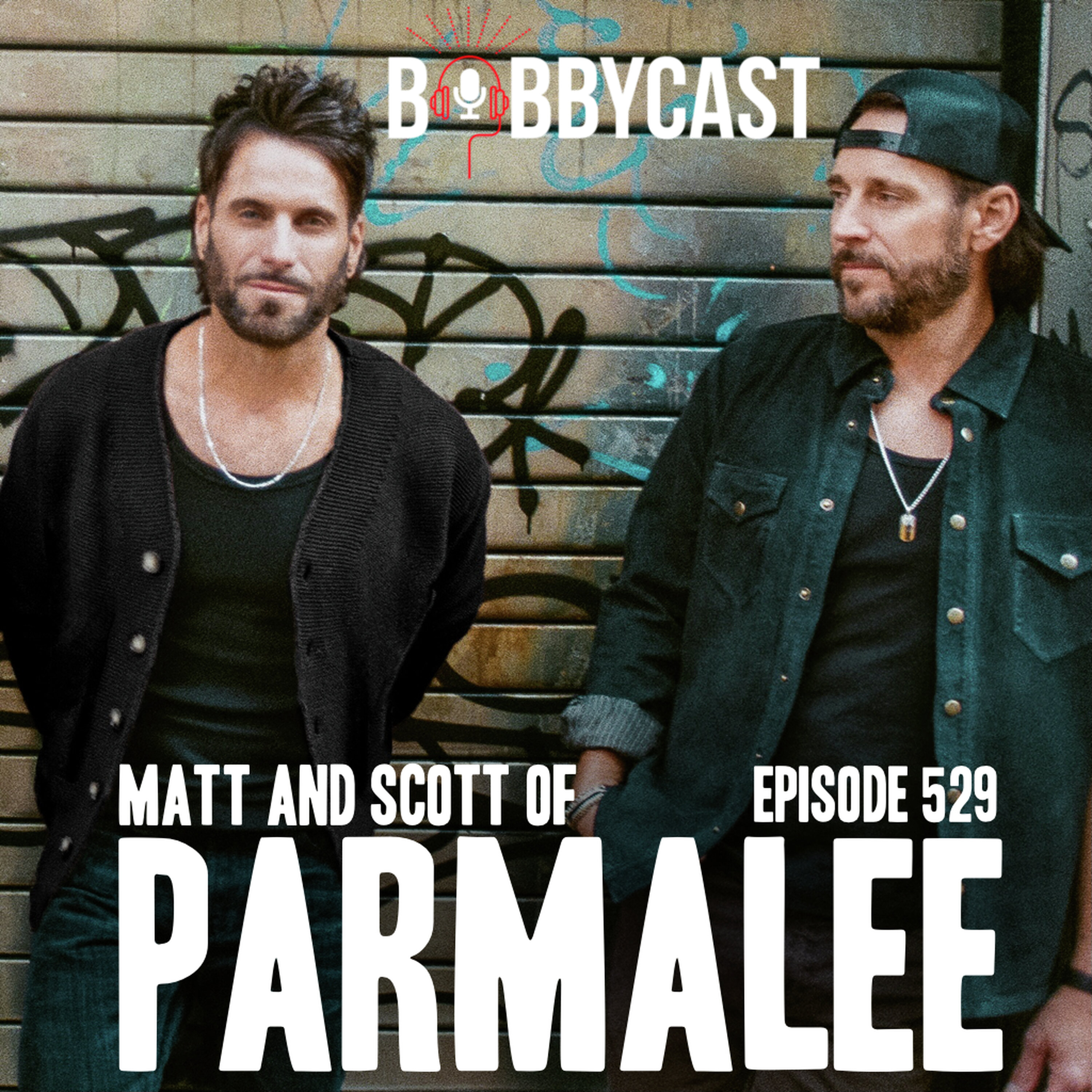
#529 - Matt & Scott on The Untold Story of Parmalee, Being Pushed as a Rock Band + Their Mom Taking Out a 2nd Mortgage to Save Their Career + Living in an RV in a Parking Lot + Getting Confused for a Famous Metal Band
On this episode of the BobbyCast, Bobby sits down with brothers Matt and Scott Thomas from the band Parmalee. Bobby kicks things off by asking the guys where the name Parmalee comes from and why they were being pushed as a rock band in the early years. Plus, after maxing out all their credit cards, the guys told the story of asking their mom for $11K, her taking out a 2nd mortgage on her house, and how she saved their career. They also talked about living in an RV in a parking lot, and a famous metal band they would get confused with.
Follow on Instagram: @TheBobbyCast
Follow on TikTok: @TheBobbyCast
Watch this Episode on Youtube
See omnystudio.com/listener for privacy information.
Available Results
Generated results are saved to the knowledge database for reuse and search.
Extract Knowledge
Pick what you want extracted first. Model, scope, and chapter options appear after a template is selected.
Transcript
00:00:06
Speaker 1: We were out with credit cards done tapped out on our buddy that was investing, and I went to my mom and I said, Mom, can we borrow eleven thousand dollars and we'll pay you back like twenty percent interests.

00:00:18
Speaker 2: I promise you will pay you back.

00:00:20
Speaker 1: And she took a second mortgage out on her home and didn't ask to hear one song crazy.

00:00:27
Speaker 3: Welcome to Episode five twenty nine with Parmale, Matt and Scott, their brothers. Matt's the lead singer. They got many, many number one songs. Carolina, I like Carolina, I w just do it anyway. They have a bunch of songs, and I was excited to talk to them just because they have a very interesting story of how they came up. And I didn't really expect to get into the shooting really at all, because we had talked about it on the Bobby Bone Show before, so I really wasn't going to go there, but something organically came up. We talked about it for a bit in a different way than I had ever heard them talk about it, and so my intention wasn't really to talk about that. It wasn't to avoid it, but you know, they weren't an RV after a show and two people came in with guns demanding cash, and all of a sudden, bullets are flying and Scott ends up in the hospital almost died. We get into all that, so parmally, I think you're gonna like this. You can follow them on Instagram at parmale Music. Check that out. You can check them out on tour August, September and October. Are those Is that an order? March, April, May, June, July, August, September. Yeah, I'm dude. I can do a lot of things, but months I can't do. I can't do in order. I can't do the numbers. Check them out on the road parmelely music dot com. And here we go. It is episode five twenty nine with Parmalee. All Right, we're here with Matt and Scott from Parmallee. One of you guys just said something. And sometimes when I've known someone for a long time, I don't ask the questions that I think a lot of people would like to know because I feel like I know the answer. So why would I ask it? What's Parmalee? Because I would have never asked that interesting And we were talking off camera yeah, So what is what is parmeal Lee.

00:02:12
Speaker 1: It's a little town in North Carolina where we started the band. Population I think two hundred and sixty four.

00:02:19
Speaker 2: Or something like that. It's about a mile from where we grew up.

00:02:22
Speaker 1: But yeah, we named it after the band, named the band after the town. Town spelled pa r m e l e, So nobody would ever be able to pronounce that.

00:02:30
Speaker 4: P A r m e E.

00:02:33
Speaker 3: So I probably if I saw that sign, I would think Parmel exactly exactly. I'd be like, Parmel four miles, don't need to stop. There ain't nothing there but Dollar General.

00:02:41
Speaker 1: They'd be looking. They had a dollar G in Parmelee. Man, it's a it's a one stoplight town.

00:02:47
Speaker 3: We got a dollar General Mountain Pine like three years ago. We don't have any stoplights. The population now is like five hundred. It was seven twenty two back in the booming days when I was there.

00:02:56
Speaker 4: Wow.

00:02:57
Speaker 3: Yeah, So my school we graduated with like forty six kids graduating class.

00:03:00
Speaker 4: Sorry, no, you're good. Were we not even? Maybe?

00:03:05
Speaker 2: We had like a five hundred.

00:03:08
Speaker 1: Students in our high school, so like one hundred and twenty five in each class, and that was made up of all the little small towns surrounding our hometown, which was twelve hundred.

00:03:17
Speaker 2: People, I think, and yeah, I mean yeah, what.

00:03:19
Speaker 3: Did people do for work their farm?

00:03:22
Speaker 1: And my granddad was a lagger, so we did that with him, mostly just agriculture, a lot of timber business, small businesses, you know, and then there was a lot of meals around.

00:03:34
Speaker 3: That's why we were a saw mill town.

00:03:35
Speaker 2: Oh you were saw milltown, okay, right?

00:03:37
Speaker 3: And when the sawmill shut down, that's why the population went from seven twenty two to five hundred because when Warehouser went out of business, there was nothing to come to Mountain Pine Forest, so it was only people who stayed and tried to find a life after the mill. Because while the mill was going, people would move there. Not a lot seven twenty two, so we're not talking about New York City, but people would move there or they would move nearby to work the mill because that thing a thousand jobs.

00:04:02
Speaker 1: Our granddad moved to a little town of Robertsonville to work, uh for warehouse, so that was it. He moved kind of close because of the meal and then we had like a lot of textile meals and things. But once it shut down in our generation was like, we're getting out of here.

00:04:17
Speaker 2: So it's kind of tough to go back. It's it really is.

00:04:20
Speaker 3: So if Parmally was a town, what was the town that you guys actually lived in or was it not a town? He's lived on a road somewhere.

00:04:27
Speaker 4: Robertsonville five minutes from you.

00:04:29
Speaker 3: Like the band name Robertsonville.

00:04:31
Speaker 4: We tried it.

00:04:33
Speaker 3: You did try it before you got the Pinally, we like, what was it?

00:04:37
Speaker 2: Small tall town?

00:04:39
Speaker 1: He rose, Well, we were slip Joint was the original name of when we were doing cover the same guys but full the same guy, slip Stilling.

00:04:49
Speaker 3: So did it not stay slip Joint because of slip Knot Yes, Oh dude, yeah, because that's what that's where my mind goes.

00:04:55
Speaker 2: We had a run in one night.

00:04:56
Speaker 1: We were playing in Fort Bragg, you know, big military base, and Slipknot just off and we're up there in our shiny shirts, you know, playing our stuff, and I mean they the soldiers just came in. Everybody was excited. They really thought Slipnot was playing.

00:05:10
Speaker 3: Oh they thought you were slipping I would have thought it was a Slipnot tribute band if I been honest, like slip joints here. I'd have been like they played the slip Knot songs right now? Yeah?

00:05:17
Speaker 2: Yeah?

00:05:18
Speaker 3: How long did that last as the band's name?

00:05:21
Speaker 2: About two and a half three years?

00:05:23
Speaker 5: Yeah, wow, yeah, well that's a significant chunk. I thought it was like two shows, no, no, that we had a CD. It was six completely different songs, and as you know it was it was a southern rock song. It was like a Chili Pepper's funk style song.

00:05:37
Speaker 2: It was like this Rey Gaye is kind of crazy song. I mean, we didn't know what we were doing.

00:05:45
Speaker 1: We were just jamming and having fun and just kind of copying the songs we loved. And but one of the songs actually got the attention because we were playing the local bar and and the guy would be our manager went to the bar and he asked the club.

00:05:58
Speaker 2: Owners, like anybody packing it out?

00:06:00
Speaker 1: And he's like, yeah, this band's slip joint gave me a CD and uh, and he came to see us and that kind of got us our first management.

00:06:06
Speaker 3: And so he was managing from Carolina. Yes, he was in Raleigh, so imagine local accidents in Carolina.

00:06:13
Speaker 1: And he had just started working with this act called SR seventy one, which was like.

00:06:18
Speaker 3: The punk band Yeah, pop punk? Mike, would they pop punk? Say so yeah, Okay, I feel like they're pop punk? Okay, yeah, I Mike's a huge punk guy. So if I don't classify the punk groups exactly as in as is, he gets a little offended. Yeah, they wrote nineteen eighty five that bloging Pursuit did yeah, did yeah.

00:06:35
Speaker 2: Yeah, but they had a song called miss right Now.

00:06:36
Speaker 1: But that was like popping off and so uh, the management company had they were happening and they found us and then we started working together and he was telling us, you guys need to go out to Nashville and co write.

00:06:48
Speaker 2: You need to start working.

00:06:49
Speaker 1: Towards this, and you know the first kind of bit of direction we had as a as a band. But up to that point we didn't know anybody.

00:06:56
Speaker 3: And you were were you covering most songs mostly covers?

00:06:59
Speaker 1: Yeah, the slip joint stuff was we do that. We have to do the ninety I mean the three hour four hour sits, but yeah, mostly covers like we were.

00:07:07
Speaker 2: Doing like Tonic and what is the Fuel?

00:07:13
Speaker 1: Songs like that that were like peppers and.

00:07:16
Speaker 3: I was watching this that's not a documentary, but this TikTok series on Sugar Ray and they were a full cover band. Yeah, but there were cover band is a weird thing to say, because they were doing songs so they could make money to live to be music. And I think at times you could just say cover band and people were like, oh, you just played other people's songs, but it's like, no, no, we played music so we can make money. Yeah, so hopefully we can make enough money and make enough music to make our own music. Yeah, that's right, But that's what Sugar Ray was like. They were doing other people's songs to make money so they could hopefully, you know, catch on somewhere.

00:07:46
Speaker 2: Yeah, we were, I.

00:07:47
Speaker 1: Mean, I don't know, we just we just were playing in the band together and we played songs we liked, and we started writing songs and then we made sure we played those songs. And when people started asking about those, we got the bug. And then one night, I remember we were at the barn in parmal Lee where we practiced, and we were all around this fire barrel that we had and we're like, all right, what are we doing here? We're going to keep doing this cover stuff or do we want to try to really do our own stuff, and we.

00:08:12
Speaker 2: All made a pact.

00:08:14
Speaker 1: And I always say, like, we went from making I think those cover gigs are like you might get like four hundred bucks or the six hundred dollars for the good ones, you know, bring your own pa menu venue stuff. And it went from that to making either zero for opening up or one hundred bucks.

00:08:28
Speaker 2: It was like the standard.

00:08:28
Speaker 1: You get one hundred dollars to go open up for whatever the band that was coming through town, and you begged to get on that slot, and you play your thirty minutes or forty five minutes or an hour sometimes.

00:08:39
Speaker 3: Did you say menuvenue? I've never heard that before, so I understand when you said it. I understood it because what early on, when I was doing comedy and comedy music, I played barbecue restaurants, and so there was a little pa and a barbecue restaurant. So when you said that, I knew. I've never heard it said like that, but I know exactly what you're talking about. That's the term for it.

00:08:57
Speaker 2: Yeah, right, it didn't make perfect stitch, right.

00:08:59
Speaker 3: No, I I've been there. I know exactly what you're talking about, but I've never heard it called a menu venue. That's interesting. So I once I'd love to hear a story from you guys, but and it's not the same. But I'll give you an example of a story from me, and you could probably give me ten versions that are better. Early on, when I was just starting to tell jokes, I would tell jokes anywhere where people were seated, you know, mostly though I wanted to do theaters where people are dedicated frontward and they everybody has their own seats, there's not a lot of turning. I need a dedicated attention because I'm speaking, and I don't need things to ruin my cadence. I need my timing to be right. But I would I played basically a cracker barrel in California, and everybody nobody's looking at me. Everybody's looking across the table, and so let's say I'm sitting across from you, but they'd be to my right, like I'm not in anyone's natural eye line, and they're like, we need you to do fifty minutes. That's a full set. And this is still pretty early on, Like yeah, sure, so I did fifty minutes at this cracker I'll call the cracker barrel, and this cracker barrel and the whole time, clank, clank, people eating, ordering, ordering, eating, all of it. I thought to myself, nobody heard a single thing. I said. It was awful. And again that's my version, and I'm sure you have one hundred of those from early on.

00:10:20
Speaker 2: Oh man, yeah, that's empty rooms.

00:10:21
Speaker 4: It was years of it. Yeah, you're right, move the seats and we would set up, bring our pa in the corner and just start jamming. And you had to start off with the easy set to start with, so it wasn't too loud, and then later on the night you got you know, roudier and routier.

00:10:36
Speaker 1: But it builds character, it builds entertainment value, it builds it also makes you tougher and you realize that, oh it's been way worse than this before.

00:10:44
Speaker 3: That's what I would do. I'd be somewhere and I'd be like, oh, yeah, I've been through way worse and I got through just fine, so this is gonna be all.

00:10:50
Speaker 4: We still do that. That's the way you can do it. Now.

00:10:52
Speaker 1: You played just about every imaginable stage, from the smallest bars, the back porches to flatbed trailers to anywhere up to you know, arenas and stadiums and things like that. So it's just it's awesome to be able to go on to venue be like, yeah, we've done a place like this before.

00:11:09
Speaker 3: Do you ever it took me a minute to get here. But feel grateful that you grew up without a whole lot because it makes it It made it easier for you to not lose anything at the beginning. Meaning it wasn't like you had a bunch of money and you're like, well, we're going to lose a bunch of money and start making own music. If you grow up broke, it ain't that hard to be broke because you've learned how to do it your whole life.

00:11:26
Speaker 2: Yeah, we talked about that the other night. It's like, I know how to live broke. We were broke most of our I mean.

00:11:31
Speaker 1: Until we got here to Nashville, until we got Carolina took off.

00:11:36
Speaker 2: You know, we're grown in broke.

00:11:37
Speaker 1: But we learned how to do it. You know how to navigate it. You know how to go to the menu and pick the cheapest thing up there. You go to the grocery store.

00:11:43
Speaker 2: And you know, you get the cheap razors or whatever you got to do.

00:11:46
Speaker 3: You know what what packets to keep ketch up mustard, yeah, and then move them up.

00:11:50
Speaker 2: Yeah.

00:11:51
Speaker 3: And I always felt because I think I resented it for for a long part of my life where I was like, man, I hate that I didn't have the resources that my friends or contemporaries had. But as I got older, I started to see the real value in it because I was able to just chase as hard as I possibly could because there was nothing to lose, and it was there was only the gain. And it sucked forever, But now I'm so grateful for it.

00:12:13
Speaker 1: Yeah, I think the only thing that I felt bad about is like I wish I could, you know, if we did had some money earlier, had a little success, we could have shared it with our parents and you know, had some more time to relax and enjoy, you know, going back home with things like that. But man, I mean we appreciate it, trust me. Every day it is not a date that I don't see the guys pulling up to the gas station by my house and if they're in it, you know, the work truck.

00:12:39
Speaker 2: You know, I'm like, we were those guys for a lot of years.

00:12:42
Speaker 3: You know. Also, being comfortable, even mildly comfortable, I think at times averts risk because you don't want to lose what has made you comfortable, even if that's a steady paycheck. And it's like, well, I gotta study paycheck. But now I'm going to kind of give it all up to go and pursue this dream where one in a million people. Yeah, I think I'm just going to stay comfortable. I can for sure see that. And again, that's just one of those things that I didn't take that I took for granted, and now I'm very appreciative of it. But I see that, and I hope this comes off as a compliment and you guys as well, that you're able to run and chase hard because if you didn't catch it, you're still where you were.

00:13:15
Speaker 2: I know, I'm just crazy.

00:13:18
Speaker 1: I was thinking about that today, man, just you know, just everything you went through.

00:13:22
Speaker 2: But I'm so thankful to be here and have what we have.

00:13:25
Speaker 1: And but I still, like I said, now, the day goes by, I don't forget about it.

00:13:30
Speaker 3: Man, Sometimes I forget about it. Yeah, sometimes you don't mind it, mind it. But when I back Toup playing pick a ball, my little speakers coming out of the ground, I'm like, yeah, I forget about.

00:13:38
Speaker 4: It for a second.

00:13:39
Speaker 1: Yeah.

00:13:39
Speaker 3: Yeah, So the band is three plus a friend, right, three family members.

00:13:45
Speaker 2: Yeah, three family members plus our best friend.

00:13:47
Speaker 4: Walk.

00:13:49
Speaker 3: What reminded me to do this was the conversation before walk me through who's in the band and how you guys are related?

00:13:54
Speaker 1: All right, So me and scottle brothers thirteen months apart. Our first cousin, Barry a few years younger than us. He's our bass player, which he was a drummer. We made him play bassic the band because we had a drummer. And then Josh Wash he was playing in like some of the rival cover bands in town, and we just liked his playing style and they were busting up, and so we got him in the Band's.

00:14:18
Speaker 4: Older, I'm older, you're older? I usually say he is, but I'm the oldest. So Josh was lucky. Sorry, look about Josh because he could play guitar and key, so we got him in the band.

00:14:30
Speaker 3: So if you're older, did you get first round pick of whatever you wanted to do in all things? Like if I were the older brother, I'd be like, I'm singing and I'm playing the lead. It doesn't seem like that's the case.

00:14:41
Speaker 4: No, we were. We played good together. I guess that's where never been in a fight, never been in the or if it was little minor stuff. So we just kind of same thing with sports, I was, I don't know, we just kind of played together, didn't we.

00:15:00
Speaker 1: Yeah, but in the band thing, I caught the bug early. He would play drums as a kid. I could started earlier that. Yeah, it's hard to learn to play guitar as as a little kid. And my dad was a guitar player, and we and you know, him and my mom divorced early, but there was a guitar around and he was beating on pots and pans. But like when I was about I think twelve, up up to that point, it was just sports, sports, sports, and we love music. But when I hit like twelve or thirteen, I really something kicked in.

00:15:31
Speaker 2: I told my dad I want to play. And so I went way deep, you know, two hours before school to.

00:15:36
Speaker 1: Get home and jam after baseball practice or whatever and just played to the night.

00:15:40
Speaker 2: And you know, he kind of caught up.

00:15:43
Speaker 4: He bought us both guitars one Christmas, and that was I mean a big deal. Even back then, getting one guitar, it was like and uh, so I got mine. It was just cool red when it looked cool when Matt got Defender, but I liked it. I looked at it. I thought it was great. But I was just looking it and sliding on the bed. He would every day before school, every day after school, all night jam on it. Once he started jamming, I could already play the drums a little. So then we started the thing, you know, jamming together. But that's how it really happened.

00:16:17
Speaker 1: The first band was called Early Times with a Z shout out to the Early Times.

00:16:22
Speaker 2: Had to put that though, oh yeah, yeah, with a Z flair.

00:16:29
Speaker 3: So just you two in the in the early day.

00:16:32
Speaker 1: We had a buddy in high school to play bass, so just me and him and and uh and I couldn't, you know, we didn't have a singer, so I said, I guess I'll just sing And didn't know what I was doing. I was just trying to imitate at my dad, you know, around him, but I was it was cool. My dad started his band back, got his guys kind of back together, and they were like just it was a little energy around town and he had his band. They were really good, and so I had a great like learning experience I go watch them practice every Tuesday and Thursday nights, and I would just study the guitar player and you know, and just go home and learn it, learn, learn it. And so we had a lot of that around, and it was just it was it was pretty cool. You'd be from a small town and he's playing with his band again and they're playing the local club called Mine in Yours and then we're the kids coming up. So we opened for them, and it was just it was cool.

00:17:20
Speaker 3: Did you feel like any of your pursuit of music was to be closer to your dad?

00:17:27
Speaker 4: Yeah, but I just.

00:17:29
Speaker 1: Probably so. But we just thought it was cool and we loved it. You know, I always loved music, so I don't know. Maybe it probably had something to do with that.

00:17:36
Speaker 4: Yeah, those first high school parties that we got to play at that that gave us the bug. It was like, oh yeah, it was like, okay, this is cool. We could only play half of this song, half of that song. It didn't matter. People went crazy. So that's where the bugs started.

00:17:53
Speaker 1: And then when I was like like fifteen and I had the hottest nineteen year old girl, eighteen years girl.

00:18:01
Speaker 2: Like all over me, I was like, I'm in on this.

00:18:04
Speaker 4: Yeah, something happened.

00:18:05
Speaker 6: Then let's take a quick pause for a message from our sponsor, and we're back on the Bobby Cast.

00:18:20
Speaker 3: What kind of music did your dad play, not himself, but in the house or like in the car? Worst favorite bands?

00:18:27
Speaker 1: I mean it was Bob Seeger, Allman Brothers, Ye Devil, McClinton.

00:18:33
Speaker 4: Yeah, like a.

00:18:35
Speaker 1: Lot of soul music, Johnny Taylor, stuff like that. There's just a lot of soul and southern soul and jam stuff.

00:18:46
Speaker 3: But my my assumption then is those are big influences on you, those bands, because they influenced your dad so much, Like that's probably what you listen to and emulated that also with like whatever, the chili pepper or whatever it was. It was like a mixture of those two things.

00:19:02
Speaker 2: Yep, because that's that's what I was learning to play.

00:19:04
Speaker 1: I was learning he was doing all those you know, classic seventies songs and whatever. He was like and then and so we were I was kind of learning those songs and learning about the songs, and but Scott turned me on to some old class rock.

00:19:17
Speaker 2: I'll never forget. We had this old record player and he's.

00:19:19
Speaker 1: Like, man, check this out, and it was Boston more than the feeling and check this guitar out this all those great songs around as well as the pop songs that were coming up that my mom was listening to on the radio that you heard all the time. And you know, and back home was a big Eastern Carolina and North and South Carolina have what they call beach music, but it's just like blue eyed soul kind of but it's really cool.

00:19:42
Speaker 2: It's very local, but.

00:19:42
Speaker 1: It's a it's a lot of blues soul based stuff back home, and country was always there. The lifestyle was country and you heard it. It was always like my grandma had the record player and was always playing country stuff and.

00:19:54
Speaker 4: Elvis was it, Yeah, Elvis two yep.

00:19:57
Speaker 3: I always said the country music growing up in Arkansas was about where I was from, but like the alternative stuff was about kind of how I felt and what like the culture was for me.

00:20:05
Speaker 2: Yea, so it was.

00:20:07
Speaker 3: And again I was also and I think we're around the same age. I was also like napster and that first generation that in college was able to download whatever I wanted, and therefore you had friends who were also able to do the same, but they would be able to tell you about stuff, and it wasn't that you had to drive the best buy, you just had to go and type it in your computer and illegally download it.

00:20:26
Speaker 1: YEP.

00:20:26
Speaker 3: I remember getting so mad when like Metallic I was trying to shut down download it. I was like, you guys don't even know what it's like. We deserve all those music for free. You're robbing us. I was so mad at bands trying to shut that down. Now, obviously I understand why that could have never sustained itself. Yeah, I was I so mad when they tried to shut Napster down because I thought we deserve that music for free.

00:20:46
Speaker 2: I'm telling you.

00:20:46
Speaker 1: Once we started getting those CDs where all these different songs on before, you could have only afford well, I could only afford maybe one CD every few months. If you could get that one and you be your favorite band, and it might be two like hit songs there, but you became fans of the band because you listened to it. But yeah, man, that was a that was a game changer.

00:21:04
Speaker 3: They also had a lot of filler on those albums back then because they could because if they had a single or two, they knew you'd buy it, and they weren't gonna do twelve awesome songs. It was like two and a half, maybe three if they thought they'd get a third single. But times were different. You'd buy a freaking record and it kind of would be awesome, awesome, suck or it wouldn't sound anything like the singles, like the Bitch. He'd buy a record and the would sound nothing like this reason you bought the record.

00:21:28
Speaker 2: Speaking of Sugar Ra, do you remember when that came out?

00:21:30
Speaker 3: It was hard.

00:21:31
Speaker 2: There's like metal core and the rest flyers up there.

00:21:34
Speaker 3: It was like us about your wings on flying and the rest of it. It was crazy. That's one of the records I'm talking about where I was like, this is not But then they switched it up obviously, and then they just embraced that new you know, beach rock whatever that ended up being with Every Morning and all that. But yeah, people don't even know, like they were expensive and then there were like two good songs on it. Yep, especially in the pop world especially. I remember that first Britney Spears record was garbage except for like three songs, and all three of those were massive hits. You have that one, Yeah, Yeah, I'm not embarrassed at all the day. But then once we were able to get napster and download whatever we wanted, we were able to get our friends tastes and sensibilities and hey, you liked it, and so therefore mine grew right. And then MTV now you're talking about t r L time for me, But when it was really popping, it was country music grows from but like alternative stuff was like how I felt, that's all sad, upset at the world. And then classic rock was was the radio. Yeah, like freaking cool ninety five. I listened to that Cool ninety cool, good times, great oldies. But back in the day for good times, great oldies, they'd play like led Zeppelin and stuff.

00:22:44
Speaker 4: Oh yeah, you know.

00:22:45
Speaker 3: It was like a classic rock oldies type thing.

00:22:47
Speaker 2: Get the Lid Out.

00:22:48
Speaker 4: That was like get the lid.

00:22:50
Speaker 3: Tuesday, Get the leadout. I was talking about it.

00:22:52
Speaker 2: I love led Zeppel. Have you seen the documentary?

00:22:54
Speaker 3: No, no, I've seen it, and I can't get my wife to watch it. I've been working on with Tom Petty when first, Oh I heard about that. Yeah, so we're on. I have a queue of things and I would like for her to watch. She has a que of things that she would like me to watch, but mostly we stay in what we both like. So I'm trying to get to watch the Tom Patty Went and then I'll move on to the led zeppel One. But I think what will interest her is that supposedly, and this was a common thing for a lot of bands, that they sold their soul to the devil. That was kind of the rumor everybody made up, like Metallic, I sold us out to the devil. Led Zeppelins hold us old of the devil. But I think if I could like get her with that like they sold us, she'd be like, I'm interested. I'm interested to know their story.

00:23:30
Speaker 1: Yeah yeah, I mean sure, I don't know if you'll know the songs. But I heard the song so much I said, I'm I'm zepped out, man. I'm like, it's hard because I just Alder in high school. You heard the Classic walk Station and my buddy loved him and it was just on all the time. But crazy thing though, you know, their first gig, according to this documentary, they took a private jet to.

00:23:48
Speaker 2: Go do it.

00:23:48
Speaker 1: It was it was how they do that because this was Jimmy Page's you know, super group. Because he was in the yard Birds, and when they busted up, and then it was like he's putting together this band and it's gonna be you know, And so.

00:23:59
Speaker 2: It was hyped up to be this big supergroup and that's what.

00:24:03
Speaker 1: But they came up with the songs and the sound, and they had Bonzo on the drums and they were just it was unbelievable that he could put that together and that quick. They come up with those songs and the sounds, and he produced all of it. He was like this classicol producer or worked in the studio, so he had all this experience and he added it to the rock and roll.

00:24:21
Speaker 2: It's just really cool. You gotta watch it.

00:24:23
Speaker 3: I always felt that Robert Plant hated that he recorded some of those songs because then he had to sing on his whole life, like in theory and on the record. But then there's a reason he doesn't sing them now he's older. It's hard to hit that and you don't want to do it halfway because those are legendary, those are iconic songs, right, so he records those, you know, he's he's up here. Oh yeah, yeah, Like your lifespan as a vocalist in that range is very limited. Yeah, and then I still hit it, have you. I mean I've seen them, Okay, I saw the they do it in DC. The I did it with the Riba Kennedy the Kennedy Center, and and everybody was playing their songs back to them like heart didn't I.

00:25:05
Speaker 2: Mean, oh yeah, yeah yeah.

00:25:07
Speaker 3: And then they ended up singing and he did. They did Stairway to Heaven and he got there a little bit, but he didn't really try. And that's a song though you can keep it, keep the tempo down. But I think that's the That's some of my friends too. I'm like, man, why'd you record it like that? Because now you've got to sing it like that the rest of your life.

00:25:22
Speaker 1: How many times do you think Stairway to Heaven has been played in the Guitar Center since.

00:25:26
Speaker 3: You know, there are those things where it's like no playing Stairway to Heaven like band from practicing Stairway to Heaven and the guitar. What was the first song you guys learned on guitar?

00:25:35
Speaker 2: Oh, man, keep your hands to yourself Georgia Satellites.

00:25:39
Speaker 3: Was that a pretty easy congression?

00:25:42
Speaker 1: Dang dang, dang good, It's just that a to e to d I mean, and that was the first we played that song with my dad at our very first live performance at the Martin County Humane Society benefit show and the high school auditorium. That was our very first time playing live, and that was how he taught me how.

00:25:59
Speaker 2: To play guitar.

00:26:00
Speaker 3: So I think the first thing I ever learned was Smoke on the Water because that same thing. Yeah, yeah, smoke on the water probably, And then you could learn if you learned anything like the standard blue stuff, you could kind of go into the George thorough good stuff because his stuff, although he definitely was super distinct, like bad to the bone, like I drink alone, Yeah, I wouldn't know about it. Yeah, like that stuff you kind of figure out pretty easy too. And I wasn't a good guitar player and I'm still not, but that stuff I could fake enough. Yeah.

00:26:32
Speaker 1: Yeah, that's the thing about kind of the bluesy stuff is you can kind of.

00:26:35
Speaker 2: Get by with it.

00:26:36
Speaker 1: It's crazy to now that I go play, like I go try to learn riffs and stuff. It's just like you heard these riffs your whole lives and you understand. But coming from like Jimmy Page, who did it originally came up with it and the.

00:26:47
Speaker 2: Way he plays it.

00:26:48
Speaker 1: I was like, how many people have been in bands and tried to play those Jimmy Page licks note for note and like he's just ripping them like it's coming off his brain. It's I'm pretty like, I'm way more appreciative now. Back then, I was like, I can play it, you know, it sounds close enough, but then put it on you know, tape or record it and have it be the one is is unique?

00:27:08
Speaker 3: What's interesting about music and especially style or and you can hear certain players because their sounds are so distinct. You can talk about Page, you can talk about even tone with guns and roses or slash, even like a Paisley and how he picks, like there are distinct things patterns or sonically. But that was so apparent late fifties, sixty seventies, eighties into the nineties, but it kind of stopped. And for the same reason the jump shots started to all be the same, and the same reason that batting stance has all started to be the same. The Internet existed and you would watch those old black and white videos of Hale Check and the Celtics. Those guys all shot weird because they didn't have YouTube to watch to see how to shoot basketball, so they all had to develop their own styles. Same thing with batting stances, like in the eighties nineties onto skalarag a wide open stance. Same thing with a guitar playing, where it wasn't versally learned because there was nothing universal that everybody could read unless you went out and bought a guitar. But then you're just reading it or you're buying a VHS off TV. So now players don't have as distinctive styles because everybody grows up knowing what everyone's style is and you kind of mimic what you can learn. And you used to not be able to do that unless you were like listening to one song over and over on a record. So it's been for these again. I compare batting stances to jump shots to guitar style. Nobody has their own because you have the ability to get everybody's and see everybody's.

00:28:38
Speaker 2: Now there's so much to learn out there now.

00:28:40
Speaker 1: You know, when we were coming up, you had to seek it out, or you had to learn a tab in the back of a guitar player magazine or rent the DVD, you know, structural DVD once YouTube is amazing, then I mean.

00:28:50
Speaker 3: Cost it's great, I love you can get it, but what it does hurt is I think creatively or just to survive, people have to create new styles because they're they don't have other ways to learn it. And so I think a lot of those iconic styles that we know in any of those areas are because it wasn't universally able to be learned, so you had to learn or figure it out your way yourself, and your way would just be so different distinct. So that's my rant on the internet.

00:29:14
Speaker 1: We all borrow from somebody, you know, in a lot of ways.

00:29:17
Speaker 3: Who do you think you borrow from? The most I can answer, I'll answer mine. Yeah, who do I think, even if I'm not doing it on purpose, because I've spent so much time watching him, it's David Letterman. Okay, I probably have stole so many mannerisms, so many that I don't even realize how much I've stolen, because I've just have consumed what I think is everything that he's ever done. Humor's are reverent, he looks odd, and that's okay. Like I think, probably I've stolen so much of David Letterman that I don't even know how much I've stolen but accidentally. Yeah, so what about you guys.

00:29:56
Speaker 1: My dad probably he won't sue you, so that's good. Yeah, yeah, I mean just the way he's saying. And but I've caught myself I can't do it like him, like, but I've heard recordings where I know what I'm doing. I'm trying to, you know, sing like him or do do those things. And probably the most I mean, like I said, he was, he was a big Greg Almond fan.

00:30:16
Speaker 3: So now you talk about harmonies. When the all my brothers sang together, that's like blood harmony but also being awesome at the same time.

00:30:26
Speaker 2: Yep, that's some cool stuff, man, just just awesome. But I was going to ask you about that.

00:30:31
Speaker 1: So how you went from so you were doing like stand up gig, but you parlayed that into the now.

00:30:37
Speaker 3: I never really did anything good, So we just worked hard or whatever. Literally, And I don't say that to be like, oh, well, give me some attention here, Like I don't have a single skill that I would say is like in the upper five percent. However, I started doing radio seventeen or eighteen, and I tried so hard to be the guy with the big voice, the tradition, Hey, everybody countdown number five. I tried that as hard as I possibly could, and it was awful. And so because I was so bad at it, and this is one of those style things. Because I was so bad at it and I couldn't do it, I was like, a screw it, I'm just going to talk like I talk. I got a southern accent. I talked too fast. Thirty percent of the time people are wondering, what did he just say? Because he that man, he speaks slow now yeh, low down. And so I did all of that, but only because I had to to survive, not because I thought it was this great strategic advantage I have. And so I was also very young, and what helped me was I came from a small town, small market, didn't know anybody. Therefore I had to develop my own style. But also I was okay to go move anywhere because it wasn't like I was leaving anything behind like we were talking about earlier, like I had nothing. I was not comfortable, but I was comfortable and with nothing. Yeah, And so I did radio. And then I always used radio, like I would go and open up for artists at comedy clubs for a little bit, and I didn't. I had like parody music that I would do, but I was like, man, I have to use other people's music. So I bought a guitar to pawn shop for fifty bucks and a poster from Walmart that showed me the chords and so yeah, but slack slap, slap slap. So I used that to make chords and I started to do you know, seven eight minutes. But I couldn't tour because of my job. So I've just slowly used radio or podcast to jump off and do all the other things, and even like moving to Nashville, like I had started syndicating my own show in Texas and spending my own money and kind of developing my because nobody wanted to spend money on me. So I was like, I'll just do it myself. Yeah, I built always yeah, and I wish they would have. It wasn't like I was like I'm gonna show them and invest my own money, but it was like, please, somebody give me money, and nobody would, so I just use my own money and that's spent. Why I get pick a ball court now because I own so much of it. But it wasn't at first, nobody was to want any money over here.

00:32:55
Speaker 2: Dude, we did the same. We put everything on credit cards.

00:32:58
Speaker 1: Yeah, we were like at one point pay and third six percent interest, just playing enough shows we could pay that bill and that we would go with it. We worked our day jobs doing construction and logging and you know, all that stuff that we had to do so we could go just play. But we were dying for somebody to give us some money. We just signed any kind of deal back then. If somebody would have same anything, you know, we'd have given it all away.

00:33:20
Speaker 3: We're lucky it didn't work that way. We were lucky that people thought we sucked, but they just didn't understand. I think what I think was they didn't understand what I was trying to do. Therefore they didn't really appreciate it. I tell myself that. But yeah, no, I would have begged for anything, any money anything.

00:33:35
Speaker 2: Oh yeah, we were man.

00:33:36
Speaker 1: We I mean we've done some sketchy things and sign management deals for like a year out in LA some guy we didn't even know. I mean, we just we were just looking for that one ray of hope that would get.

00:33:47
Speaker 2: Us to where we are now.

00:33:50
Speaker 1: Do we get us a record deal, so we could you know, pay the debts and all that, and so we would chase anything that we thought was going to be tire advantage. And if we didn't have money to pay for working with this producer or record in these songs, we just put it on credit.

00:34:02
Speaker 2: And but eventually it all worked.

00:34:04
Speaker 1: It all this led to this, which led to that, and it all it is crazy.

00:34:08
Speaker 3: And also you didn't stop. That is ninety six percent of success is not stopping because you probably had so many roadblocks where you're like, how the heck do we get past this, yet it didn't stop you. And I firmly believe that most of success is just continuing on and when you can't continue, finding a way to continue, even if it means I got to go work another job. As long as you can keep it going, I would imagine that having a bunch.

00:34:37
Speaker 2: Of yeah, yeah, I mean we did.

00:34:40
Speaker 4: We did.

00:34:40
Speaker 1: That's all we do, just kept it going, and we'd always find something. It would like a little spark and it gets pumped up and excited and and you know, ultimately what we needed we had to drive. You know, we had the determination. We just didn't have the song at first we had songs, and we were you know, we had excitement around us because we were just we were just a good time guys.

00:35:08
Speaker 2: We always have fun.

00:35:09
Speaker 3: We you know, did you think you had this song but you really didn't. But did you think you had them?

00:35:13
Speaker 1: Oh my god, yeah, I see that's the thing. We thought we had them enough. But now looking back, it's like, no, we didn't have the songs. But that was where if you had got a label deal that they could have helped you out and could have brought in a producer and he could have reached out to some.

00:35:26
Speaker 2: Of his better songwriter buddies.

00:35:28
Speaker 1: And because you realize, like you're just you're just doing this us for and if you had to start a band and you're lucky enough to have a really good singer or guitar player or.

00:35:40
Speaker 2: You know, or.

00:35:41
Speaker 1: Somebody in the band that can really write songs and understands it, like you know, that's a that's a pretty good deal. And we we really didn't. We just had to just worked it out together.

00:35:51
Speaker 4: And just we didn't know anything. Not that we still we still don't know anything.

00:35:57
Speaker 1: I mean you're still learning, but you know, you'd have had access to just some of these writers here that that were you know, around to help you out.

00:36:04
Speaker 2: I mean it had been awesome, and we did co writes. We we you know, we had people that wrote.

00:36:09
Speaker 1: Songs with us, but mostly it was just up to us four and we're just trying to figure it out.

00:36:13
Speaker 7: You know, the Bobby Cast will be right back. This is the Bobby Cast.

00:36:29
Speaker 3: Was that first song you're talking about Carolina?

00:36:31
Speaker 1: That was the that was the one that did it that that really like change. We had one song called Broken Records that really like was was a wow moment, oh, because this is kind of cool, this is like modern sound, and the people really dug it and it was it was like that one really lit a spark. That was the first like melody wise song. But we were struggling trying to figure out what was next week, gone to like California to work with. We actually worked with Nikki six in California. There's some songs with him because Peop were and they were telling us like, you guys need.

00:37:02
Speaker 2: To be in Nashville, you need to be you know you're and.

00:37:05
Speaker 1: We had like at one point in time, Jo Kobe Shattucks from proper Oach and his tour manager were managing us and and we had Mike Moushop from stains Man. They were just trying to get us. They saw something in us, but they were trying to get us a deal.

00:37:20
Speaker 4: We opened up for those guys and then they saw something. They couldn't pinpoint what it was, but we did do the harmony thing that you were talking about. It was throwing the rock guys off. Three part harmony with Matt, Josh and Berry. It was just a sound that they were It wasn't rock. They were trying, like they said, you need to go to Nashville, go to Nashville.

00:37:40
Speaker 1: It was like it wasn't They were trying to fit us in that active rock stuff, you know what was going on, which you know back in the day the bands were popular and it just nothing fit, nothing fit, and we just didn't have the song. But we wrote Carolina and I remember when I got back.

00:37:59
Speaker 8: And I listened to it and I was like, I got the guys. I said, y'all come listen to this. This is crazy, this is it, this is this is what we've been looking for. And it, you know, really did it. It's really set things off.

00:38:10
Speaker 1: And you know, we had already been in the region had had some excitement and then lost a little bit, and it was both playing the same clubs and maybe a new club would open up and you go here and you you find new fans here. But it was never like that. It was always kind of like up and down. And then that song hit and it was up for a while and nobody, even those guys couldn't None of the labels would sign us. And we did actually get one record label offer, and at that time it was like right when three sixty deals came out and anybody, our managers at the time messed it up and now that was gone.

00:38:47
Speaker 3: And who wrote that song?

00:38:49
Speaker 2: Carolina us four? Josh and Ricky?

00:38:54
Speaker 3: Did he bring something to it that you guys didn't have with you for or what element was he did?

00:39:00
Speaker 2: He really did? He brought that. Uh, he brought the bridge.

00:39:03
Speaker 1: In, which is really a strange you know, change up, but it works so well.

00:39:07
Speaker 2: Do the bridge a second?

00:39:09
Speaker 8: No matter how far I go, you know, I can't start thinking to buy her and there's nothing lied away.

00:39:15
Speaker 1: I'm feeling, oh.

00:39:18
Speaker 2: There's changes.

00:39:18
Speaker 1: And that was really something and he's and we didn't know at that time he was, you know, the musical genius.

00:39:23
Speaker 2: He is and YouTube was out there.

00:39:26
Speaker 1: We just rolled in there the crazy stories. We did a showcase, and and Charlotte and we just uh this A and R guy Kim Steven's Rest of the Soul was coming to see us. And he came to see us, and I knew he wasn't going to sign us. You know, you knew that look, and I didn't.

00:39:46
Speaker 2: We didn't get mad.

00:39:46
Speaker 1: I just went up to him after the show said, hey, man, if you sign us tomorrow, what's the first thing you do. He said, that's easy, I'd send y'all down to Atlanta to work with Rick Piotto. I was like, cool, thanks, And next day call Rick up, Amen, we're coming to see And so we had actually had three songs that we had already recorded that we wanted to that we already written we wanted to re record with him. And so we had this one song we haven't finished and we played in this demo and it was a demo Carolina. He said, sure, come on back, and so we came back. We recorded those songs and h and man, it was awesome. I always tell the story, but the uh so, So we get back about three days later to get a call from Rick and he's like, because we wrote him a check for eleven thousand dollars, that's what it was.

00:40:32
Speaker 2: But and our buddy of ours was invested.

00:40:33
Speaker 1: In the band for a few years, and and uh it was we could tell it's kind of getting to the end of it, but this is gonna be the last thing. And uh so we gave him a check and and uh got back home and he called me up.

00:40:44
Speaker 2: He's like, hey man, that check bounce.

00:40:47
Speaker 1: Seriously, He's like he was pissed, Like you guys, y'all got to come up with this eleven thousand dollars you're not getting into some music. And it's crazy, man, I mean, I don't. We were out credit cards done have tapped out on our buddy that was investing. And I went to my mom and I said, Mom, can we borrow eleven thousand dollars and we'll pay you back like twenty percent interest.

00:41:10
Speaker 2: I promise you will pay you back.

00:41:11
Speaker 1: And she took a second mortgage out on her home and loan was that money and didn't ask to hear one song. Crazy, but and we paid her well, we paid her back, you know, because that was that was way before this was two thousand and seven seven. This is two thousand and seven. So she loaned us to money. We put an EP out in two thousand and eight.

00:41:31
Speaker 2: You know, she got her.

00:41:32
Speaker 1: We paid her every time we got any money, I made sure I paid her back on her payment plan and we did and it was great. And then you know, then nothing, then nothing in crickets. You know, then we don't have we still don't have a record that. We still don't have nothing.

00:41:44
Speaker 2: We're broke as a joke day jobs, but we have the song.

00:41:47
Speaker 1: And then that's when we one of the guys that was working with us as a booking agent kind of managing with me, they had they had started this label in town called Golden Music or something, and they had signed this artist from North Carolina named Benton Blunt. And they said, hey, hey guys, we're in Nashville. We want to we want to put that song out on Benton.

00:42:09
Speaker 3: And for Bend to record it.

00:42:12
Speaker 4: Yeah, and we were like, okay, yes, somebody in Nashville is gonna record You're like.

00:42:16
Speaker 3: And also we made we get some money. Yeah.

00:42:17
Speaker 1: Yeah, he tried to try to get all our publishing on wow.

00:42:21
Speaker 2: But anyway, yeah, so so check this out.

00:42:24
Speaker 1: So you know, we were stumbling around, couldn't get a deal, and then all of a sudden, Ben's gonna put it out and uh, he records it.

00:42:30
Speaker 2: I actually did the CD.

00:42:31
Speaker 1: Art work for him for hustle. I needed money, you know, and so he puts it out and all we were told by our manager, He's like, you guys should go out to Nashville. You're you're writers on that you should go out there and just go try to write songs. And we're like, okay, well okay. And we had some friends out here that because we've been out here a little bit over the years, but any we called who we knew, shout out to Greg gallow and and uh and and they hooked us up with some co rights. We pulled our RV in the parking across from the ten roofs, you know, when it was all that ratty parking lot, and we lived there for like a month, and we who's we Me and Scott out of the band.

00:43:08
Speaker 2: All four of you lived in the RB Yeah, in that parking lot.

00:43:11
Speaker 3: Yeah.

00:43:12
Speaker 4: At that time, I was still logging in the logging business. So I would go back home for two weeks and any money I could send them or keep them out here is like stay out there, keep writing, keep writing. We got to we might have a hit song by this big country artist.

00:43:25
Speaker 1: And this is all crazy. So we're out in RV. It's the year that the town floods.

00:43:30
Speaker 4: Yep.

00:43:31
Speaker 2: We have like a couple of co writes set up, which actually was one of them was.

00:43:41
Speaker 1: With our manager David now So we met. We were out here, We didn't know anybody. We were just the town was empty because it was it was the Songwriter's Fest, so everybody's at Key West.

00:43:52
Speaker 2: The town floods.

00:43:52
Speaker 1: We're out here living in an RV, and there's a handful of rights we have, and one of them just happened to be with David Fanning and he at that time had been working with Rich and Tully and Kirk who were doing this production deal. They were in Jason Aldan's band, Jason's band. They had this production deal set up with the label Broken Bow to bring in an artist and at this time, like Thompson Square just popped off.

00:44:16
Speaker 2: And they were working with them. So we met David.

00:44:20
Speaker 1: We hit it off immediately, kind of couting the same cloth. He comes to the r V one afternoon, I think on a Sunday and we right, must have had a good time in that RV. So it's so we were just trying to get a production deal and about the same time, Benton's record label kind of folded up, so he was about Ben was actually talking to our label about getting signed off of that song. But Tina, who works with us too, I'm sorry getting too involved here, she was like, no, you She was telling Loban Ben. He's like, no, you need to hear the band that wrote the song that really did like you need to hear them.

00:45:01
Speaker 2: So she was raising the flag.

00:45:02
Speaker 1: And we were in town and so it's kind of like we got the song back and then we met David and we wrote must have had a good time, and so we went in and played for those guys David's production group, and they loved it and they were like, we want to give you all a two song production deal. So we're gonna we want you guys to come back in July and we're gonna record Carolina.

00:45:22
Speaker 2: We're gonna rerecord it.

00:45:23
Speaker 1: And we're gonna record must have had a good time on on spec. So I mean, dude, this was like hope, all of a sudden, out of.

00:45:31
Speaker 3: Nowhere, someone else investing in you. Yeah, I just yourself. Yeah, a totally different feeling. Yeah.

00:45:36
Speaker 1: We never had a deal like that where somebody was gonna take care of it all.

00:45:39
Speaker 2: So we came back in July.

00:45:40
Speaker 1: We recorded the two songs, and the idea is like, okay, guys, we have first rights at Broken Bow to get you signed. Yeah, we want you guys to kind of We're gonna bring you guys back in like October and we're gonna do like showcases.

00:45:55
Speaker 2: We're gonna play music.

00:45:56
Speaker 1: For everybody and kind of like get the buzz going. This is your and we're coming back in October. So we're like, fellas, we got to get ready for this, uh this Nashville.

00:46:06
Speaker 2: We're coming to Nashville. We're gonna returning a new leaf.

00:46:09
Speaker 1: And so we're out doing shows and we do do a Monday night gig in September.

00:46:14
Speaker 2: Boom, it's to shooting at.

00:46:16
Speaker 3: Oh in your rv uh huh wow. The timing it's like, hey, take a step forward, okay, now three steps about like that it's over.

00:46:25
Speaker 4: Yeah, kind of like it's over. Yeah it might be oh yeah.

00:46:28
Speaker 3: I never knew the timing of that.

00:46:30
Speaker 2: Oh, it was all like it just yeah, all that time.

00:46:34
Speaker 3: It was crazy whenever and so and you've told it before, but for people that haven't heard, to give me a forty five second version of the story because I'm gonna ask questions about following it. So I'd like to.

00:46:45
Speaker 4: Yeah.

00:46:45
Speaker 1: Yeah, So we're playing a show on a Monday night at a small club. Finish the show, Me and Scott onto rv H getting things ready to pack up, Josh and Barry rolling cables. We get a knock at the door, thinking that it's Barry and Josh, but it's a gun at my head. Give me a f and cats and then pushed us up in an r V and then fired the gun. Demanded money inside the r V and Scott was in the back. Just had to be in the back, had to be a concealed carrier. King of the Castle law in South Carolina, and came out and.

00:47:15
Speaker 2: You know, like took care of business.

00:47:18
Speaker 3: Uh And where were you?

00:47:21
Speaker 4: Rock Hill, South Carolina.

00:47:22
Speaker 3: That's the end of the town.

00:47:23
Speaker 2: You got no shade on rock Hills.

00:47:25
Speaker 1: Just yeah, I mean bad, wrong place, at the wrong time, wrong place. He engaged both the guys, took took out both of them, but he got shot three times in the uh in the crossfire or whatever, how to get shot?

00:47:40
Speaker 3: What's crazy? Is that? Again? You've had all these like we're talking about hurdles, obstacles, barriers, like you're finally, you're finally someone wants to invest in you now, and now you have a freaking shot.

00:47:53
Speaker 4: Oh yeah, that was the I mean, it's this unreal.

00:47:57
Speaker 3: Like what do you what is your mind? Okay, let's the per some stuff, a site that your brother at, your family. Oh yeah, like all that. Obviously that's terrible first and foremost. But whenever you're looking at the business, now do you do you guys just totally set it to the side for a while. What happens there?

00:48:13
Speaker 4: I think y'all said, y'all kind of hid it from David and the crowd.

00:48:18
Speaker 1: We didn't let Nashville know how bad, how bad off he was. He only had a five percent chance of living. That's what the doctor told us.

00:48:25
Speaker 3: What do you what do you remember? Not about the shooting, but what do you anything in the hospital at all?

00:48:30
Speaker 4: Yeah? Basically, when I, you know, woke up, I remember certain people and they took a track out and uh, the first thing I said is we're not playing any more shitty clubs, so they knew I was okay just by being funny. But they knew I was okay. Now now we do the recuperation process, so my mind was okay. And then it was just the skiddim out of the hospital and let's work on whatever we could work on. But it was pretty rough.

00:49:03
Speaker 3: The PTSD for everybody. And I want to I'll make a comparison so I can give you time to think of the answer you'd like to tell is and I'm gonna ask you about the PTSD of it a bit. So I had I got held at gunpoint at an event and pistol whip didn't get shot, but it ft me up for years because I had my house broken into at the same time. But I couldn't close my eyes. If I closed my eyes, or if it was a nighttime, if someone came behind me, nope, Like I was not built for nighttime anymore. I was not built for even closing my eyes. I would see people attacking me or a gun coming to my head. I didn't get shot, so I can't imagine no one pulled the trigger. You're even in there where they're where they're shooting. So how long and do you still deal with that at all.

00:49:47
Speaker 4: Still dealing with it. Yeah, I mean, I'll go to therapy now, I got do I try anything? I worked would actually think, Oh, Porter's call is for us musicians and touring anybody, and this uh it's free. So uh yeah, I still working on that every day. It's just like you did, you know, you just it's a little bit at a time. Work on it, work on it what you're scared of. Like I always wanted to carry the gun for a while, and then I kind of loosened up, Like now I don't have to feel like I have to have a fire arm with me all the time. I don't. I still just for getting older, and probably you too. I don't want to be in sketchy places anymore. I mean I don't want to be in dark alleys. I don't want to be in the clubs anymore late at night, you know, leaving early. I really like you said, nothing help is good after twelve.

00:50:38
Speaker 3: Wrong, Like I would be at the grocery store and someone way just making a noise behind me. And again I'm not even comparing the two because I didn't get shot and nobody pulled the trigger around me. I got pistol web that ain't the same, but it's scary.

00:50:47
Speaker 4: It's close. I mean, that's it's scary.

00:50:50
Speaker 3: But I struggled and I didn't sleep, and I still don't. I still have a door lock issue like that. I deal with that like the doors man that it's it's like I got to go through and if I don't remember every door being locked when I go to sleep, I have to go and do it again. Like I have to visually remember to where my therapist. It's like, you know what you should do, take pictures every night of every door that you locked so you don't wake up or an hour later ago. I don't know if I locked every door, and I have to get up and do it.

00:51:14
Speaker 4: And so I think you just gotta do what you gotta do, whatever makes you feel better.

00:51:18
Speaker 3: Did I got on sleeping pills for a while and it was really bad. Did any sort of alcohol or drug issues with you trying to because I did?

00:51:26
Speaker 4: It was it was kind of crazy because I'm trying to figure the story that happened, and it was I was in come for ten days. I woke up, I kind of knew where I was at, and then it was in my mind it just get well so the focus was working out, recuperate and try to get back to Nashville to get this record deal. So all of us were kind of focused on that, so I probably blocked most of it. Then we got here in yet February. That was September. I hobbled on stage in February, we did six songs, we got the record deal. We were blown away. I mean like just the greatest time of you know, the greatest thing that ever happened to us. So from that point forward, it was focused on music. All this focus. I mean, I guess drowning yourself and work. It took five years, five years because that hit must have had a good time. Hit Carolina, Hit Closed Your Eyes was next, two, three, four years of just this excitement rolling. About the fifth year we slowed down and something hit me, hit me hard. I was just sad. I had a little bit of money, my bills were paid for everything. It just came on me that do you realize what happened? Have you dealt with what happened in my mind? And it just hit me in now the dude, I was crying in the middle for no reason, sad, scared, and then I was like, Okay, you've gone five years, hadn't dealt with anything now as far as I didn't, I mean I drank normal, I didn't go into some abyss of thank goodness, I didn't go. I didn't go. But yeah, I took sleep mess. I still have problems sleeping. I'm working with therapy on that, just nightmares or whatever. It's gotten better though. The more I do therapy, the better it's getting. And uh, it's just it's just your mind. You know, you just got to work on it. And I think you know, telling people, telling you or talking about it helps it don't help me to night. I'll sleep good tonight just by talking to you about it, I really will.

00:53:33
Speaker 3: The therapy is a big deal, and I think we grew up the same that that wasn't really that wasn't a thing na And it's hard for me to talk to like people where I'm from where it's not a thing to go like you don't understand because I didn't understand nor what I have understood, right, And so it's such a big deal. It was for me through a few things, but especially that because we I tried every I don't sleep still, like I have bad issues, and I think a lot of it is rooted in security, and I'm sure so. Yeah, But I couldn't sleep for so long, and I tried everything naturally. And I've never had a drink of alcoholic. I've never used a drug, and that's from a different set of issues. But my doctor was like, you're gonna get sick if you don't sleep, and I was getting sick, and so we tried to sleep and pill and it was like I took to it too well.

00:54:24
Speaker 4: Well, we all know the sleep is where you recuperate and and if even if we're working too hard or whatever you're doing. That's what I found out. It all boils down to that good sleep to help your body in your mind.

00:54:35
Speaker 3: Sleeping water. Who knew? Yeah, the things would take for granted the most it's sleeping water breaks down.

00:54:42
Speaker 4: And I know we still do enough to sleep.

00:54:45
Speaker 3: I don't get enough water either, and I have unlimited access. I got a freaking tap. I just turn it and I still don't drink. The worst thing is I've got this ring. You know I have an ring too.

00:54:53
Speaker 4: Oh man, It really shouldn't makes you feel good or bad. Yeah, but the good night you're good in it. On bad night, you're like.

00:54:59
Speaker 3: My wife, mean me, get it. I look at my sleep I am just fascinated. Look, I have my app every morning I wake up. What are my sleep score? Do you think that you had a goal and that you were moving toward that goal before you went in helped you get out of physically that the hospital and because you were striving towards something again.

00:55:19
Speaker 4: I mean, I really do. I mean, and for all of us, you know, well, the first goal was getting well. And luckily for me, I've always enjoyed sports and working out, so I took it as a work as a as a you know, Oh my job now is to work out so I can play drums again. So it was kind of like workout first, get well, figure figure out if I could play drums again. And then once I could play, then it was hopefully we'll get a record deal. But we're gonna at least try to get a record deal. Now, once you sign a record deal, now you know that don't mean nothing. You got to have hit songs, you got to keep it rolling. We thought that was just gonna, you know, save our life. But now we know with.

00:56:03
Speaker 3: Carolina that took a while, right, was one of those Yeah, I mean all of them have.

00:56:08
Speaker 2: Yeah, but yeah, it took a year.

00:56:11
Speaker 1: It was released in February and it took till December.

00:56:15
Speaker 2: Uh when it finally.

00:56:16
Speaker 3: Did it feel slow? Or because it was your first time? That was just normal.

00:56:21
Speaker 4: Normal for us. We didn't know. We didn't I mean, we didn't know. We don't mean now you know, but I don't know now. We didn't know.

00:56:26
Speaker 2: Everything about it.

00:56:27
Speaker 1: He must have had a good time came out first, and that was like a that was like the first song that kind of connected with people, and that did well and it got us moving. And then they stopped at like thirty six or something, you know, and then Carolina came out. I do remember one one like week, I was talking with the producers and I was just freaked out. I was like, man, what if nobody like likes this like voice and nobody likes the song and you know, it was one, say, at number forty for four weeks.

00:56:52
Speaker 3: Wow, didn't they got out of forty yet? The Murky is like twenty five thirty two?

00:56:58
Speaker 1: Yeah, wow, lost his bullet were able to get it back, but I don't know anything about that.

00:57:02
Speaker 2: But once it started moving, man, it really started.

00:57:04
Speaker 3: King lost his bullet at forty, your label stuck back.

00:57:06
Speaker 2: They got back.

00:57:07
Speaker 4: Yeah, stayed at forty.

00:57:09
Speaker 1: It was bad, and you know, we're just out there, highest point of our career because we we had a song that worked, and we got this coming.

00:57:17
Speaker 2: Out and we don't know anything about the radio.

00:57:19
Speaker 1: But yeah, when it finally went, that was like Okay.

00:57:24
Speaker 3: Now it's like, oh God, can we do it again?

00:57:26
Speaker 4: Yeah?

00:57:26
Speaker 3: Yes, you probably still get that every time.

00:57:30
Speaker 4: It never goes.

00:57:32
Speaker 1: That's an ongoing saga, man, And you know, just think we're thankful we have, you know, enough to make a really fun show and that kind of stuff that you're always you're always chasing out.

00:57:43
Speaker 6: Let's take a quick pause for a message from our sponsor, and we're back on the Bobby Cast.

00:57:57
Speaker 3: Which one felt the easiest of your number ones.

00:58:02
Speaker 1: Which one felt the easiest, I will say probably take my name.

00:58:07
Speaker 2: I like it because it.

00:58:10
Speaker 1: Started working itself, and once it took off, it was just everywhere and it went on and it was just doing things we never expected. I don't think anybody could have called it. It was just it was just reacting and connecting. But just the way it was almost like a was like the Carolina Yeah, because at that point in time, our career was kind of just going down.

00:58:28
Speaker 2: We could.

00:58:29
Speaker 1: We were just we're just trying to figure out that next move to get us, you know, back on track.

00:58:35
Speaker 2: You know.

00:58:36
Speaker 1: We had Carolina and calling Close Your Eyes was like number three, We called you Miles of ten top ten. So we did good and put the second album mount and was just trying to figure out where we were and nothing really popped off.

00:58:50
Speaker 2: With Roots was great.

00:58:51
Speaker 1: It was slaty to be like they were telling us it was your career song and all the stuff and nothing. Forty spent a whole year on it and it never got past you know, thirty.

00:58:58
Speaker 4: We got lost in the label shuffle, Yeah somebody else. So we're just sending a two year.

00:59:03
Speaker 3: Yeah what Time makes such a big part of it too.

00:59:06
Speaker 4: Yeah this man and then always.

00:59:07
Speaker 1: Yeah, speaking of time, and you know, just the way we dropped out in the end of twenty nineteen, in between December twenty nineteen and March when the when the pandemic hit, that song started taking on its own life and started it went viral and like you know, TikTok top fifty global viral and all of a sudden, out of nowhere, we've got some something to look forward to something, to be excited about, something, to dig in and go one hundred percent. And then and then COVID hits, and you know, right when we're about to take off again, you know, this this thing happens.

00:59:40
Speaker 2: But it was. It worked out great for us because.

00:59:43
Speaker 1: That song was was given hope and a positive message over a bad time. I feel like it had a lot to do with it, and we had time to focus and work on it.

00:59:52
Speaker 3: You know, do you guys eat fish?

00:59:54
Speaker 2: Oh?

00:59:54
Speaker 3: Yeah, you like fish? You love fish?

00:59:57
Speaker 2: Yeah?

00:59:57
Speaker 3: What's your fishal stance on fish? Eating? Fish? I like? I like it?

01:00:01
Speaker 2: I mean yeah, I mean what kind of fish you talk about? Where's this going?

01:00:04
Speaker 3: Am I going anywhere? What's your fish take on fish?

01:00:07
Speaker 4: Okay? Uh? I eat I'll eat a little bit of sushi, but I'll eat my salmon like I like to eat. I'm just one of those guys that like red meat, chicken, fish, fish. I don't think I do either, But.

01:00:25
Speaker 2: I like fishing.

01:00:25
Speaker 3: I should eat more of it. I should eat more fish.

01:00:29
Speaker 4: I think I should too, But that's that's me. Yeah, I don't eat as much.

01:00:33
Speaker 3: I had some cod before I came down here. As my ask, I just remembered I left it out like that literally went to my head. I left it out and yeah, so my wife's probay in the kitchen right now his fishing man. Yeah, that literally popped my head and asked that question. It was like some sort of coconut flavored cod, because I can eat cod by itself.

01:00:54
Speaker 1: I mean, honestly, let's be real good old like fried Calabash style seafood out of the top of the teer for me, I mean fried shrimp, fried flounder.

01:01:03
Speaker 3: Because you guys are from like the water, but you're also from the South.

01:01:06
Speaker 4: Well, yeah's on that coast.

01:01:07
Speaker 3: That's the that's the mix. It's the South for sure, but it's also the water, which isn't like Arkansas, Mississippi South.

01:01:13
Speaker 2: Yeah, No, it's ocean.

01:01:15
Speaker 3: You guys like the beach, do you like to be I love it man.

01:01:17
Speaker 2: Yeah.

01:01:18
Speaker 3: See, I've never been a beach guy because I did grow up around a beach. Yeah, my wife loves the beach, but she grew up in Oklahoma, but they went on vacations. That's a Florida. We never went on vacations. So until I got to be of age to like do it myself, and then I was like, what, I don't have any good memories of the beach. I don't give a crab. You can't even really swim in some of it because it's cold and it's salty.

01:01:36
Speaker 2: There's like I love the beach.

01:01:38
Speaker 1: I'm not fond of sand being everywhere, but it's just the vibe when you go there and just the whole lifestyle and see the palm trees, whether it's the sound side or the ocean side.

01:01:45
Speaker 3: It's just I never like to take a short off around people either, So I didn't like that either until I was like thirty at the chest of like a twelve year old.

01:01:52
Speaker 2: You know.

01:01:52
Speaker 3: I just now got out of that. So I never been a big never been a big beach guy. We went to Turks and Kickos. Yeah, and I've only heard about that in like rap songs, and so we went down there and it's fine. My wife's like, this is amazing. I'm like, c plus, yeah, that's about it. It's about as good as it gets.

01:02:12
Speaker 4: So there last year, Yeah, and that's our first trip. It was awesome.

01:02:16
Speaker 3: You have a fun story about that. I was at a restaurant Turks and Kegos, and all these guys come in and jump in track suits, so big Michael Jordan logos on them, and big dudes, like four of them. They all walk in and it's night. It's like eight o'clock, and my wife and.

01:02:31
Speaker 2: I are there.

01:02:32
Speaker 3: I don't even know why she picked to go there, but the good thing is now I have a little money, so we where she wants to go, because I don't give a crap where we go. I don't even like vacation. I like, I like going with her and like, but I don't even like vacation. I don't know what to do with my hands, kind of like one of those things, like what do I do with my hands? I don't know what to do with just time off. I'm not comfortable in it. And so we go and these again, these dudes come in and jump in suits, and there's there's like six couples in the restaurant, maybe five total, and jump man people. They're not angry, but they're a little irritated the situation. And then all of a sudden, I see Drake walking through the restaurant and he walked up buy my wife a nice table. And I was like, oh, it's Drake, him, Drake and some girl and so they walk right past us and they put him out on the beach, like right by us, like a private table. And I was like, oh, that's cool, it'sdrake private table. Whatever. Turns out they'd come in and try to get him to close the whole restaurant kick all of us out. Oh that's why they were in and irritated because they wanted them to clear the restaurant out for Drake. And the restaurant was like no, like, nobody here gives a crab dude. We'll set you up a table at the beach. They were also like, you can just sit there's nobody in the restaurant, Like, just you can sit in there. Nobody's gonna bother you. Because it was like a nice it was a nice place, and so you had they walked through it on the beach. But the Jumpman people were not happy with that restaurant's happened. I'mmagine Drake kicks people out of restaurants all the time, Like you don't ask for that if it doesn't happen sometimes, like you get nine no's in a row, you don't ask the tenth time.

01:03:59
Speaker 2: Yeah, or you're right, you're right, you're right.

01:04:01
Speaker 3: So who's Parmally kicked out of restaurants. You guys done that before. Parmally is here. Get out of Dave and Busters.

01:04:08
Speaker 2: Definitely not.

01:04:08
Speaker 4: We have to get into the restaurant. You guys. We love going out to eat though. That's like me and he will talk about pleasure or having little money. It's nice to just go out to eat and not worry about it.

01:04:23
Speaker 3: That's like one of the two things, like the best things about not having anything and then having stuff. Number One, free clothes. I get free clothes sometimes, it's awesome. And number two is I can order whatever. It's like going to the gas station. I can have anything in there I want. Yep, that's crazy. Anything in this whole gas station I can have.

01:04:39
Speaker 4: And the same about groceries. You went to the grocery store and you had to pick and choose and whatever, and now you're like, just get what you want.

01:04:45
Speaker 3: Kids. It can happen. If it can happen for us to eat, You're honest, you it can happen for you, no doubt about. Yes, you guys, stay on the road, on the road to live.

01:04:55
Speaker 1: Oh yeah, we're leaving today to go get on a plane to go to California.

01:04:58
Speaker 2: The buses out there. Yeah, especially this time of.

01:05:02
Speaker 3: Year like festival time, fair festival time.

01:05:06
Speaker 1: Doing a lot of headline and stuff. Uh yeah, it's it's it's go time.

01:05:09
Speaker 3: All the dates up parmally music dot com. So it's Cowgirl because I'm gonna play this on our show and possibly the countdown. So give me like a sound bite just talking about Cowgirl, Like, what is this song about? Why'd you put it out that kind of thing?

01:05:26
Speaker 1: I mean, it's just about falling in love with somebody that's that's a little different, and you're you're going all in on it, just trying new things and you know, Cowgirl doing some country stuff and you just all in on it. And uh, I mean it's just fun. It's we knew after Gonna Love You was you know, deep song and everyone is something that was gonna be tempo and fun and the song just kind of checks all the marks with you played it in a honky tonk, You can play it on the boat, you can play it up in the riding the kids to soccer practice, you can play it, you know, anywhere pretty much.

01:05:57
Speaker 3: I feel like if you couldn't played anywhere, that would be bad.

01:06:01
Speaker 2: That's right.

01:06:01
Speaker 3: Don't make songs you can't play everywhere.

01:06:04
Speaker 2: We stopped pursing a long time ago for the part.

01:06:07
Speaker 3: Did you stop each?

01:06:08
Speaker 4: Okay, got it?

01:06:10
Speaker 3: I stopped probably five years ago, maybe more than that now because I didn't want to think it and write it and use it. Like I was writing books at the time and I was like writing jokes. I was like, I don't want to fall and curse. I don't want to use that as well. I was a crutch.

01:06:22
Speaker 2: There's a damn in there.

01:06:23
Speaker 3: That's okay, that's all.

01:06:24
Speaker 2: That's what I'm saying.

01:06:25
Speaker 1: But it's still it's still on it, like we let's talk about it, you know, we.

01:06:29
Speaker 3: Don't like there's a bunch of efforts and countries like yeah, I.

01:06:31
Speaker 1: Know from like we learned one time we did that you can be on stage and stay as you don't gain anything.

01:06:36
Speaker 2: But yeah you don't get Yeah, you're right, you're gonna lose.

01:06:39
Speaker 3: We could lose, yes, because there are probably some parents that brought their kids there, some ten year olds and audience.

01:06:44
Speaker 2: We got a lot of kids.

01:06:45
Speaker 4: We get a lot of kids.

01:06:46
Speaker 3: Parmer lea kids album next.

01:06:47
Speaker 2: You heard honestly, yeah, what do we call that?

01:06:50
Speaker 3: Farmer League? And then it's all farm songs, Let's go, let's rite, let's I know, I'm good, I'm good. The album fell in Love with the Cowgirl. It's been out since April. We're gonna play Calgirl on the show and do all that, But you guys go watch them live. Listen. You guys are what I point out to people whenever they have reasons not to continue. And I mean that in a good way, because you guys had like seventy two reasons to go. You know, I think this didn't work, I mean seriously, and because people get tired of me telling my story. So it's like I got a couple other versions for you, and you guys are one of those stories. So, like, I think a big part of success, the biggest part of success is continuing to show up. It's like sleeping water. It's so fundamental. You think it's got to be way more complicated than that. But if you don't do that stuff right, you can't do the other stuff right.

01:07:37
Speaker 4: That's right.

01:07:38
Speaker 3: So I do mean that in the most complimentary way possible. And I've said that outside of this, you know, and I really wasn'tnna talk about the shooting because we'vealked about that before, and I'm sure everybody asked you guys about that all the time. So I'm glad we got there because I think we got to unfold it a little bit too.

01:07:51
Speaker 4: Yeah. It's helping me too, the more we talk about it and then opened up about things. I mean, it just helps. Even you tell me your story, I'm like, oh wow, just start lady, more people here, just stuff.

01:08:02
Speaker 2: Man.

01:08:02
Speaker 3: It was like slow motion for me, like I remember that.

01:08:05
Speaker 4: Oh.

01:08:05
Speaker 3: I didn't want to get back. It's just I remember that gun. I didn't feel it. Those what's crazy. I got whipped and didn't physically feel it. I remember going, huh, wow, I just got slap with a gun. Because the guy kept being uh, what's your number? Put your coat in? I was like, I don't remember my number? Yeah, and I was like, dude, I was broke too. I was like, dude, I will give you every bit of money in here because I have none if you just don't shoot me. Yeah, He's like, what, I didn't feel it? It was crazy. What the mind, how the mind of body worked together? Because if you hit me in the head right now, I'm gonna cry and I'm gonna have a big knot. I'm gonna wind about it for three months on the podcast. I'm gonna get so much contact of it. However, I didn't feel it.

01:08:40
Speaker 4: You had a yes, you had adrenaline going. I did too, And I mean I didn't feel anything until that my stomach started burning. Hit two or three hitting me before I fit burned, burned, like they said, hot metal going through your body like somebody putting hot hot iron on you.

01:08:58
Speaker 3: Was it slow to you and your memory? Is it slow or was.

01:09:01
Speaker 4: It just it was fast? Everything happened with less than five seconds. Really, from the time I said, oh no, grab my gun, walk about as close as we are right. It all happened in this little tight area.

01:09:15
Speaker 3: Was your gun in a case or was it in a.

01:09:16
Speaker 4: Just had it under my like in my little bunk on it?

01:09:19
Speaker 3: Dude, that's crazy, you know what. I probably just ran out and cried and get out, man, I mean, you couldn't get out.

01:09:26
Speaker 4: Was blocking the door. That's the other thing.

01:09:28
Speaker 3: Do you ever watch zombie shows?

01:09:29
Speaker 4: No, dude, I'm the opposite of that. I need lighthearted. I mean I still watch like westerns and shoot them ups and all that stuff, but no zombie stuff.

01:09:40
Speaker 3: And we're watching a show now it's called Kingdom and it's zombies, and it's like South Korean, but we do English subtitles and make them speak English, which is opposite of their mouth. It's like one of those old things. So there were always a loft. But what I can do is like take my glasses off and have bad visions so it looks like their mouth matches. It's my work around of the workaround, right, And so these zombies, like if people are moving, they eat them. I would just lay there. I always think like I would just lay there and play dead. But then I wonder could I maintain the playing dead until they went by without me, without making like like a noise or something, or peeing a little bit. Yeah, anyway, uh, parmally you guys go to parmly music dot com, Instagram, Parmily Music. Thank you guys for the time. This has been awesome you I really appreciate it. And you guys check out Cowgirl.

01:10:24
Speaker 6: Thanks for listening to a Bobby Cast production.