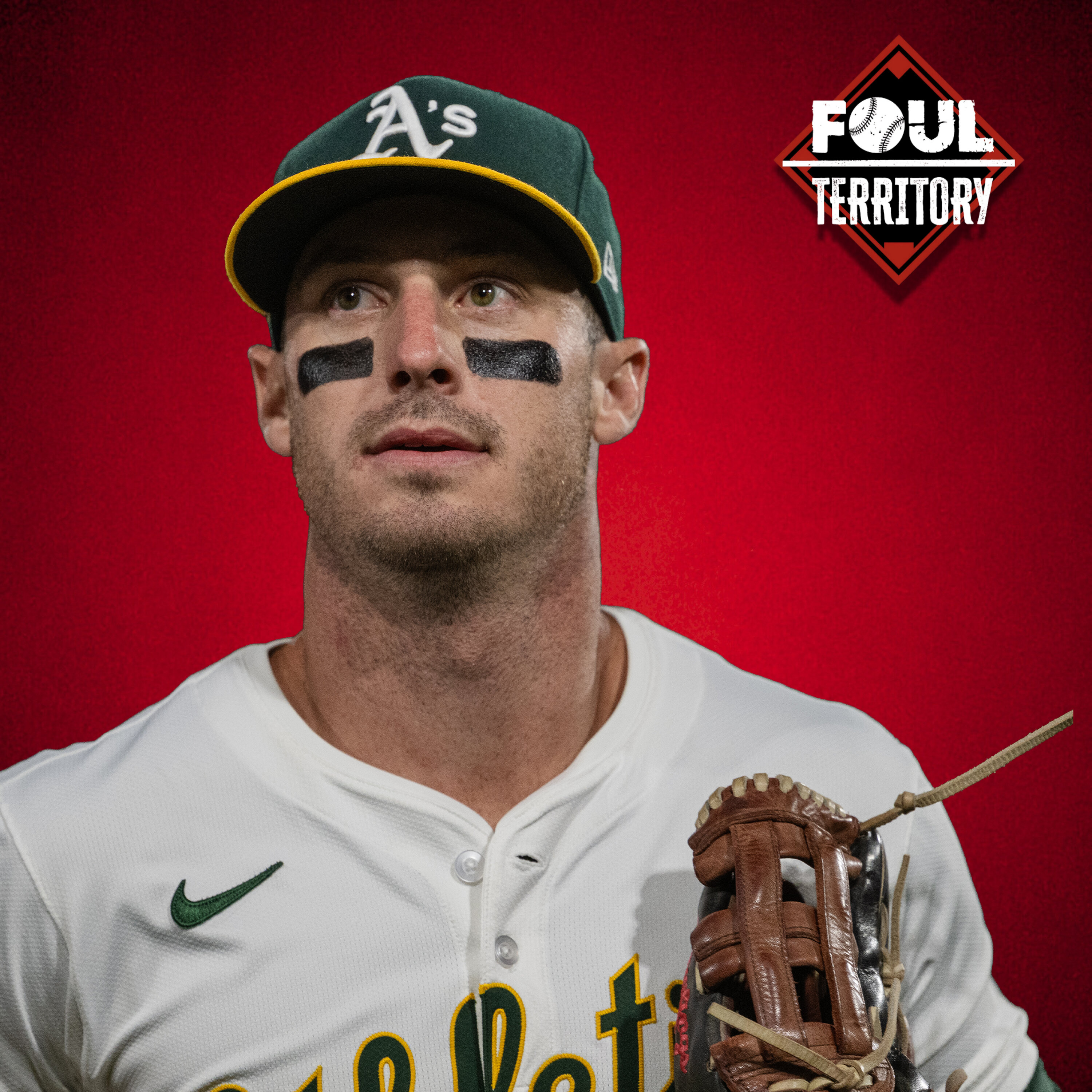
Brent Rooker weighs in on MLB salary cap and signing deadline push
A's All-Star Brent Rooker tells us about the big happenings with his club and then we get to the offseason drama, including the salary cap and signing deadline debate.
(24:39) Do you want the over or under on the Red Sox regular season wins at 87.5?
Hosts: AJ Pierzynski, Erik Kratz, Scott Braun
See omnystudio.com/listener for privacy information.
2026-01-23
27 min
Transcript
Available Results
Generated results are saved to the knowledge database for reuse and search.
No generated results are available for this episode yet.
Extract Knowledge
Pick what you want extracted first. Model, scope, and chapter options appear after a template is selected.
Generated results for public episodes are saved to the knowledge database so they can be reused and searched later.
Transcript
00:00:05
Speaker 1: All Star slugger from the A's Brent Rooker hanging out with us.

00:00:09
Speaker 2: Rook, good to see you, dude. How's the off season going, man off sea?

00:00:12
Speaker 3: It has been good.

00:00:13
Speaker 4: Been busy. He's been traveling a pretty good bit kind of all over the place, a couple of teammate weddings, uh, Sacramento trip, things like that. So it's been busy, but it's been a good one.

00:00:22
Speaker 2: Wait before you go, look at his backdrop in ours. That's very so almost identical.

00:00:27
Speaker 5: But yeah, well more minds bar over here before we get before we get into a whole bunch of stuff your off season. Did you hear what Eric Kratz said about people from that go to school in Mississippi yesterday? He said that there's never been any hitters that are any good from Mississippi.

00:00:41
Speaker 6: That's what he said.

00:00:42
Speaker 3: And I said, pal.

00:00:43
Speaker 5: Merrow Clark Rookery, that.

00:00:48
Speaker 4: Might be true in one school in Mississippi, but definitely not our school in Mississippi.

00:00:52
Speaker 1: Hold, let Kratz defend himself. Then Rook can decide, you know, because AJ likes to all.

00:00:57
Speaker 4: Right, what was this?

00:00:59
Speaker 3: Historically?

00:01:00
Speaker 7: Historically high school hitters from Mississippi do not pan out in the big leagues. Scouts have told me that for years, and it was something that I never never really thought of. And then AJ, being the media mobile that he is, skewed my words and started bringing up everybody from old Mississippi State and Mississippi University and all of those schools.

00:01:29
Speaker 4: So you're saying, like kids from Mississippi who get drafted out of high school, not they go to college. Okay, what's a more specific group of people that can't speak as higher as as informed on as the college thing.

00:01:42
Speaker 5: But no, no, no, If I defended you, Rook, you were one of the first names I brought up about being from guys from Mississippi that could rank. You were like school in Mississippi, so it counts.

00:01:57
Speaker 4: Doesn't get went to school Missippi. It's fair, doesn't count.

00:02:01
Speaker 1: Also, krat said this was coming from a scout. It wasn't like crats just sat there.

00:02:05
Speaker 6: I didn't hear that.

00:02:06
Speaker 4: I know.

00:02:10
Speaker 7: AJ's misremembered. And before we get into anything, I love that you have the headphones on rope for everybody listening. You don't even need to see what Brent Rooker looks like. He just looks like every high school kid right now when you walk into a high school headphones on.

00:02:27
Speaker 4: During school hours.

00:02:29
Speaker 7: That's between classes they walked, they put their headphones on. Then during school they put their headphones around their neck.

00:02:35
Speaker 3: It's the new thing. So your hip your hip rope, so they.

00:02:38
Speaker 2: Don't talk to each other.

00:02:39
Speaker 4: I didn't know what you're saying. Am I lagging?

00:02:44
Speaker 2: Like?

00:02:44
Speaker 4: Am I behind lagging?

00:02:47
Speaker 6: I don't know, miss that, missip, the internet gotcha?

00:02:51
Speaker 4: I don't know.

00:02:56
Speaker 2: Let's see. That's why I'm like, I don't know what to do about that.

00:03:01
Speaker 5: You know, we had Vinnie on and Vinnie's Internet was fine, So maybe it's a coorehouse.

00:03:05
Speaker 3: Is too big.

00:03:06
Speaker 4: Maybe it could be. It could definitely be my house.

00:03:09
Speaker 7: It could be your silver slugger is getting in the way. It's like the frequency with the silver Slugger and all your awards and everything BENNI does.

00:03:17
Speaker 4: BENNI doesn't have one of those to mess up his connection, so.

00:03:20
Speaker 3: He doesn't as.

00:03:24
Speaker 5: Fine, and we won't let it, but we aren't allowed to show it because Scott. It embarrasses Scott that I have when he doesn't, so he made me take it off set.

00:03:33
Speaker 2: I actually want it on set.

00:03:34
Speaker 1: Todd Fraser puts his home run Derby Trophy next to me every day when I'm with him.

00:03:39
Speaker 2: We should put it right here.

00:03:40
Speaker 1: How do you trick the A's into thinking it's the summertime so that they're good the whole season?

00:03:46
Speaker 4: Uh? That Yeah, back to the answer, I think that's had a lot to do with an experience and having so many young guys. So I mean, theoretically we should be more experienced. We have more guys with some full seasons than to their belts, and so we shouldn't really necessarily have that same learning curve that we've had the past few years. And you know, figing match the second half we've had in the last two years and doing that in the first half and the second half this year, then we're gonna be in a good spot.

00:04:09
Speaker 2: Okay, that was better, little better.

00:04:13
Speaker 4: A little better. We'll take a little better.

00:04:15
Speaker 2: Yeah.

00:04:15
Speaker 5: And then one be question was, since you were the first guy of the A's to sign their extension, do you feel like the veteran because now they're starting to sign a bunch of guys to extensions, So were you were you.

00:04:26
Speaker 6: Like looking at any children. I'm gonna show you the.

00:04:28
Speaker 4: Way I feel like I feel like the veteran just because I'm the oldest guy, almost the oldest guy in the locker room. We do. We got we got Jeff now soon I'm not. I'm not the oldest hitter anymore, which is a little a little relieving for me. But yeah, I mean compared to the rest of our lineup, I am a old, salty seasoned vet, which is a little unique, you know, for our team, because I mean, I know I'm old, but like, I'm not that crazy old yet. I'm getting there, but not yet.

00:04:54
Speaker 2: Did you hear they almost got Nolan Ironado?

00:04:58
Speaker 4: I did hear that they didn't have any I know, that would have been that would have been that would have been something to get No. One in Sacramento, So obviously it would have been exciting. But we like our internal options. So I think we're I think we're in a good spot rosterwise.

00:05:14
Speaker 2: Okay, uh, what do you think about the off season deals so far?

00:05:18
Speaker 1: Some of these big stars taking some of the shorter turn deals, and you know, some people claiming the players are are not happy about it, Like what's been going on Dodgers adding guys whatever. I mean, I know you don't speak for everyone, but you are part of a union.

00:05:33
Speaker 4: So what do you think, Yeah, I think the I think the shift to the shorter term high AV deals is interesting. I think it's obviously great for players, great for the guys getting them. It's it's maximizing value, which I think is awesome and exactly what we wanted to do as players. It's a little bit different than I think the kind of what fre agencies looked like in the past. When you know, guys get the free agency they they they've historically kind of wanted the cash in on the eight, ten, twelve year deals, but shifting it to the shorter term, higher AAV deals is interesting to me. And and if you know as a as as a player, if that's what those individual guys feel like is best for them and making their best decision and kind of betting on themselves to be able to get back in the market, I think it's awesome.

00:06:19
Speaker 5: Agreed, especially the young guys, right, the young the Bobashefs, the guys that are fairly young, they get their opt outs and all that. It gives the I always say it gives the player a little bit of power, right, like, oh I have I have, but I can.

00:06:32
Speaker 4: Get it's It's yeah, I like the the betting on yourself again. I mean, Kyle is what twenty seven, he gets to get back in the market theoretically at thirty one and kind of redo it all over again, which I think is an awesome way to kind of maximize earning power and maximize your leverage to to get you know, a couple of different bites at the apple there. So I think it's I think it's great, all.

00:06:55
Speaker 5: Right, Rok, So explain that I fight this with fans, and I fight this with all the time.

00:07:01
Speaker 6: Salary cap, salary caps. It's all you hear, salary caps, salary caps, salary cap, and.

00:07:07
Speaker 5: I always fight for the players. Listen, if salary caps are so great, why does the NBA, the NHL, the NFL have.

00:07:12
Speaker 6: Work stoppages too?

00:07:13
Speaker 3: Right?

00:07:14
Speaker 5: If salary cap is wonderful, the cure all, why do the Kansas City Chiefs go to like every Super Bowl? They're like, oh, at a whole parody? Right, the Patriots won all those Super Bowls, the Chiefs from the Super Bowl every year? So can you give us the players thoughts?

00:07:27
Speaker 6: I don't.

00:07:27
Speaker 5: You don't have to give the thought on this cap, but just when you talk to other players, some thoughts that they're talking about.

00:07:33
Speaker 4: Yeah, I mean, I think you just hit on some major points, right. It's not like a salary cap inherently offers this parody, inherently levels the playing field. Because you look at the NFL and the NBA and you name, I mean, the Patriots did their thing when on their run, the Chiefs did the same thing. You look at the NBA, the Warriors dominated for so many years, and those are in two leagues with caps, right, So it's not like you just install a cap and oh, all of a sudden, now the playing fields level. Now there's going to be a different World Series winner every year, is going to be different teams than the playoffs every year. That's that's not how it works. It's just it's a way for owners to increase their leverage. And it doesn't exactly what it says it's going to do. It decreases salaries, It doesn't offer any answers to the questions and the issues that exist in the league. And I think it's kind of seen as this, like you said, this fix all thing that, Oh, you just install a salar gap and all the problems are done, they're solved, And that's just that couldn't be further from the truth on a number of different levels.

00:08:29
Speaker 7: What do you think the league would look like if every owner wanted to win as badly as every other owner, Like if as badly as the players, I'm sorry, not as every other owner as badly as the players. What do you think the league would look like? Would it raise the level of competition in the level of viewership?

00:08:49
Speaker 4: Yeah, I think so. I think. You know, you look at the sport and the league as a whole right now, and viewership is up, attendance is up, revenue is up, Jersey sales are up. All these different things are up, and there's still room to improve, which is exciting. And we know that that way to improve is the teams that you know, the historically and in the past few several years that haven't been willing to spend, that those teams become willing to spend and put their best foot forward to put a competitive team on the field. And when that starts to happen, when you see payrolls at the bottom start to start to climb and start to get higher and higher and kind of closer to that you know that middle ground, you're going to see the revenues continue to climb, and the attendance and the viewership and TV contracts and things like that are just going to follow suits. So we're in a great spot right now in terms of in terms of visibility, in terms of revenue and all that type stuff. But the exciting thing for us is we know with with a few changes that that should come from those teams at the bottom half or in the bottom of the payroll. If those teams become willing to spend a little bit more and try a little harder to put consistently competitive teams and good products out there, that everything is just going to continue to climb and we leve where we're at.

00:09:58
Speaker 7: Fans have been clamoring for a signing deadline or a trading deadline in the off season.

00:10:07
Speaker 3: What do you feel that my.

00:10:09
Speaker 5: Fans have been clamoring for one? Eric Krautz wants to trade deadline in the off season in.

00:10:16
Speaker 7: January manipulating, Okay, don't represent the fans. Ownership has been leaking to different outlets that there should be a signing deadline.

00:10:29
Speaker 4: Yep.

00:10:30
Speaker 7: How does that? How is that seen from players from a player's side, and how is that you know, combat it against?

00:10:38
Speaker 3: And what is what what what do you have to say about that?

00:10:42
Speaker 4: Is all I gotta I think. I think the thing that a lot of these issues have in common is fans look at them and they only see how they're going to affect the top earners in the league. And the thought may be, okay, so we put in a sign deadline, like is Kyle Tucker still gonna get his fifty sixty million dollars? Like absolutely he is, because he is the top one person in the league. He is an All Star every year. He's that guy. How that signing deadline is gonna affect guys? Is that middle class of free agent that exists, the guys that get one year between you know, five, six, seven, eight million dollars. It's gonna be the night before the signing deadline and an owner is gonna call him, or a GM's gonna call him, or Whatever's all right, I know you're worth seven, but here's one for three and it's either sign it or you don't have a job, or you have to take this penalty and not be eligible for the postseason, or whatever it is. And it just puts leverage in the hands of the people who don't need any more leverage, right, you work your whole life to get the free agency. You work, you grind to the minor leagues, you put your six years the service time in the big leagues, you get to free agency, you kind of finally get that that time to maximize your earning potential to pick where you play. And now you're gonna put restrictions on that. And you're gonna say, Okay, I know this is you're now. Look, you've you've you've achieved this accomplishment getting agency, which is very, very difficult to do. Now you're looking for the opportunity to take care of your family, to set your family up. But we're gonna put more restrictions on that to make sure that maybe you don't get every dollar you deserve, despite how despite having gotten to this point, which is so difficult. And I think when you put more leverage in the hands of people who don't need the leverage and who don't deserve that leverage, it becomes a variouslippery slope.

00:12:22
Speaker 5: Okay, yeah, I hate this idea, and who ever said this? And then trade deadline in the off season, signing deadline like no, because again, what happens if you don't sign like let's say.

00:12:31
Speaker 6: You're Brent Rook or you're a free agent.

00:12:34
Speaker 5: January first is the free agent deadline to sign, and nobody gives you an offer you want. They say, sign this one year, one million dollars. Think how many players you get? Why would I play?

00:12:43
Speaker 2: Oh?

00:12:43
Speaker 3: Then I have to set out to July and.

00:12:45
Speaker 6: Then maybe get another offer like this. It's it's ridiculous to me.

00:12:52
Speaker 4: Yeah, I completely agree. And it's like, Okay, so you complain that whatever in November December is boring because no one's signing. Set the deadline January first, whatever you want, and everyone's done by January first, and then there's January it's boring. So it's like, no matter what you do, there's going to be a slow time. That's just how it works. And I think I just think it's it just I think the big thing is it takes you guys know it, Like it's so difficult to get the free agency in our league that once you do that, like that is your time to dictate what's happening, and you shouldn't have anything or any kind of restrictions placed on that to take that right away from you as a player.

00:13:30
Speaker 2: It takes a decade on average.

00:13:35
Speaker 6: Yeah, it takes forever.

00:13:36
Speaker 5: Yeah, yeah, unless you're one of those guys that gets up there like nineteen, like Juan Soto or something like that. Yeah, it takes you about ten years on average to get to where you have.

00:13:45
Speaker 6: Any power at all.

00:13:46
Speaker 5: And that's why again I love the short term deals where players actually have some power.

00:13:50
Speaker 3: Like I had a.

00:13:50
Speaker 6: Really good yet I drop down and get more money.

00:13:53
Speaker 5: Whereas you know, most teams, as you know, want club options where they control it and say, oh, well, you know, they might throw You know, dude, we have a club aufer for twenty five million, but you get one million if we don't pick it up.

00:14:05
Speaker 6: It drives me.

00:14:06
Speaker 5: Anyways, I hate talking about this because we're gonna have a year of this rook and you're gonna have to answer questions. And you've been awesome about answering this question. So one more on the stupid CBA that I have to know. Would you like it? I always say this if owners actually showed the real books, okay, because I tell people all the time and they, again, people don't outside of baseball don't understand this. Teams say, oh, well we have a payroll of one hundred million. These are all arbitrary numbers, fake numbers. Okay, we only made fifty million last year off our TV deal in ticket sales, so we lost fifty million. What about your concessions? What about your merch what about your parking?

00:14:41
Speaker 6: What about this?

00:14:42
Speaker 5: That's all in a different company, but it all goes to the same pot for the owners. But they say, oh, we lost fifty million, and oh yeah, by the way, there was about I don't know seven hundred million in revenue sharing luxury taxes that was sent down to other teams. Where does that money go? I'd also love to see the books on that, but we don't have time for all this.

00:14:58
Speaker 3: So would you be okay?

00:14:59
Speaker 5: As a player, every owner said, here's every dollar that I made under every company that I owned.

00:15:04
Speaker 6: Would that make you feel better?

00:15:05
Speaker 4: Because it made me feel better for sure. I mean some transparency. He's always appreciated in negotiations, right. So it's it's just difficult when you know you have a lot of teams and and and people like you, like you kind of said, like, you know, we were losing money, We're not or generating enough revenue to sustain this payroll or whatever it is. But then they refuse to kind of open that up and and let us see that for ourselves. I think it's it comes across as a little disingenuous, It comes across a little dishonest, and it would be a way to probably take some steps toward each other in a negotiation process if we could get some some more transparency when it comes to that subject. So I think you're exactly right.

00:15:44
Speaker 7: A lot was made about Rob Manford going into the Phillies and Bryce Harper kind of standing up to him. Did he come and talk to you guys in Sacramento or did he visit you guys on.

00:15:53
Speaker 4: The road He gave me Sacramento. Yeah, Rob came to see us when we were at home towards towards the end.

00:15:59
Speaker 3: And how did that go?

00:16:00
Speaker 7: How did that conversation go? From your viewpoint, but also from a lot of the younger players on the roster that don't necessarily have as much dirt in or cleats as say the Phillies team, where it was a little bit more of an uprising.

00:16:14
Speaker 4: Yeah, I would assume ours was a little quieter, obviously, with so many young guys in our clubhouse who are still kind of learning about these things and figuring how the system works and how the business works. And you know, they came away with questions that they communicated to to Sevy and to Jeffrey Springs and to myself and to guys who have been around for a little bit longer. But you know, my main takeaway from the meeting was, I just think it's interesting how the first in the first ten to fifteen minutes of the meeting is kind of spent telling us that exactly what I talked about at the beginning of this interview, Like, hey, guys, attendance was was way. Viewership's way up, revenue's way merch sales his way up. All these things are way up. The business of the league is thriving, it's booming, but hey, here's why the system isn't working. And it's like, okay, well, those two things seem to be a little contradictory, Like you just you just told us how great we're doing and how much money the league and teams and players are making. But now you're telling us if the system is broken and it's not working, and that just kind of seems to not really mesh in my mind. It doesn't early gel. It seems like a like I said, like a contradictory message, and that was kind of my main takeaway is like, Okay, well, you know, from from your guys perspective, from the league's perspective, if everything is going so well, then why is there this complaint that, oh, we have to change everything, we have to tear the system down and rebuild it. Like that doesn't seem to be the case at all, based on these facts and the numbers that you're giving us.

00:17:35
Speaker 6: True. True, I agree.

00:17:37
Speaker 5: Speaking of merch sales, I know you've been to the new site of Las Vegas, right the new stadium that you guys are going to have in a couple of years. It looks amazing. Hopefully it comes out like the renderings. But I know you saw this, and I just have to ask this. Have you thought of a nickname for the Las Vegas baseball team when athletics since they can't get a trademark, have you guys talked about like what could be that, like the Lost Vegas Strippers or like the Las Vegas Strips or something, you know, like something if they can't get this.

00:18:06
Speaker 4: I think we're pretty confident that the athletics thing is going to work out. I think I love that.

00:18:13
Speaker 5: I love the strippers, because you guys are gonna be able to strip, and then you could be like, honey, I'm going to the strippers to see the strippers, and your wife would never get mad. I'm gonna go play with the strippers.

00:18:23
Speaker 4: Could be a real, uh, real good out of Joe free card there for a lot of people on No. I think, uh, I think, I think we feel pretty good that the athletics is going to work out.

00:18:34
Speaker 7: Somebody does Frankie his name does out of context, so he takes clips and he just got like thirty seconds of content. By how many times a j said over the place. It definitely is one of the things we talked about. One of the things we talked about earlier in the show was the Brewers. You know they got rid of Freddy Peralta, and we're talking about going all in or missing the playoff. Yes, as a player, would you like to see the front office go all in to make that last move? It might cause you because you're on a longer term contract, maybe a couple losing seasons later in your contract, go all in and give it everything you have for that one season, that one shot at a world series.

00:19:25
Speaker 4: Yeah, I mean, I think so I think the interesting thing about what you just said is, you know, winning cultures breed breed winning, Right, So if you go all in and for one year and you say, okay, here we're going for right now, and then you make the playoffs, you make a playoff run, that is going to breed more winning down the road because you're create a winning culture. You're creating a clubhouse and an environment. A franchise it expects to get back to the playoffs, it expects to make these runs. And I think that can't be understated as well as how much just kind of that commitment and that dedication to winning is going to create future winning opportunities and winning seasons down the road, just from like I said, a culture and an expectation perspective.

00:20:04
Speaker 5: Brent, how confident are you in the athletics this year taking that next step? I know you've put out quotes you guys are gonna be much comfortable in Sacramento, much more comfortable to travel everything. So how much and we talked about this a little bit earlier, that you think guys are ready for the next step. So how confident are you that the athletics can compete in a division that's pretty tough.

00:20:23
Speaker 4: Yeah, a really tough division. But I love where we're at. I think we have people talk about the offense and talk about the hitters we have and talk about Nick Kurtz and talking about Jacob Wilson, Tyler Soda Sherman, Lawrence Bouler and all these guys, and I think that is obviously very well justified and people should be talking about that. But we've got some really really exciting young arms too. I think Luis Morales showed frontline stuff last year at times, and I think he's still so young and developing that he's going to be really good. You know, Perkins same way, had a great year when he was healthy, through the ball really well. And you kind of couple those guys up with some veterans, with Sevy and with Jeffrey, who can teach those guys how to go out there and do their thing at the major league level. I think it's super exciting. And then I think, I think adding Jeff to our lineup. Getting Jeff McNeil and there is going to be huge for us, and it makes the lineup deeper, it makes us more well rounded, versatile. He can play all over the place, plays great defense, and I think when you throw him in Jacob Wilson the same lineup and just being like, all right, look here, here's two guys that you're like, you're not gonna punch out, like, they're gonna grind, they're gonna foul pitches off, they're gonna put the ball in play. And you put that in the same lineup with guys who can hit homers left and right. I think it makes us very dangerous. And I think we're an exciting team, and I think inside our clubhouse there's a lot of confidence that we can go out there and and and do some damage this here, So we're excited about it.

00:21:42
Speaker 6: Nice, nice, All right, Before before we let you go, I have to ask you.

00:21:45
Speaker 5: On Saturday night, I have to go up on the stage and present Drake Baldwin with his National League Rookie of the Year.

00:21:52
Speaker 4: Yeah, okay.

00:21:53
Speaker 5: Now somewhere sitting next to me will be Nick Kurt m Is there a story that.

00:21:59
Speaker 3: I need to ask him?

00:22:00
Speaker 6: Well?

00:22:00
Speaker 5: And when I see him that we can obviously tell on the air that I need to go up to him and say, hey, Nick, I heard this happened or rook said this.

00:22:11
Speaker 4: Oh I'm thinking nothing comes to mind. I don't think he's a pretty laid back guy. I mean he's he's not like he wasn't like an abrasive rookie who got who had a tough time. You know. He he kept throw himself a little bit. He did his work, and he was he was a he was a good young player. I'll say that. So nothing comes to mind. If anything comes to mind, specifically that I can't stay live, also, I'll shoot you a text about it. But no, I wish I wish Kurt said more. But he's just kind of a great, great dude and just and just does the right stuff too often where it's a little bit annoying, but you're gonna enjoy being around him. You're gonna enjoy being around him. I'll say that he's a good song.

00:22:56
Speaker 3: I know this.

00:22:57
Speaker 6: He won the introduction battle. Do you know who's introducing him?

00:23:00
Speaker 5: No, I don't know if I'm allowed to say it, but she was a tall blonde pitcher from softball Jenny Finch.

00:23:07
Speaker 6: Okay, yes, he's definitely he definitely want to.

00:23:10
Speaker 3: Introduction Jenny Finch and a J Perzinski.

00:23:15
Speaker 2: Yeah that's a great dude.

00:23:19
Speaker 4: Yeah, have you been have you?

00:23:21
Speaker 2: Have you been?

00:23:21
Speaker 4: Around him. I think you're going to be shocked at how big he is. He's gigantic. It's always he's like surprisingly large.

00:23:27
Speaker 6: No, because we've had him on the show.

00:23:29
Speaker 5: But unfortunately, I've never done an Oakland game Sacramento game. Yeah, I actually have. I take them back, I have. I've never done one at their home ball. I've done one in Toronto, which is the weirdest thing of life.

00:23:39
Speaker 4: Time.

00:23:40
Speaker 5: So I've no in the last I don't know the last time Sacramento was on Fox, but it's probably hasn't been.

00:23:46
Speaker 3: He is he Adam? I beg to go there every year. Can I go to Sacramento?

00:23:50
Speaker 4: Please? I don't think I've ever met Adam, but probably not. But Kirks is like, uh, he's huge, but his head is tiny, so he kind of like I think people don't realize how big he is because his head so small on TV and it doesn't do it justice how big.

00:24:04
Speaker 6: So if I walked in to him beetlejuice, you might get a little langeah.

00:24:08
Speaker 4: A little tiny head. You should make fun of that.

00:24:10
Speaker 2: You might not know what beetlejuice is.

00:24:12
Speaker 1: It just came out of yeah, oh yeah, right right, Well, Rook This was great, man, great catching up with you. Will catch it actually spring training. Perhaps you'll be out in Arizona.

00:24:24
Speaker 4: Quick in Arizona.

00:24:26
Speaker 2: Yes, thanks Brook, good to see you, dude.

00:24:29
Speaker 4: Sounds good, guys, appreciate it. Sorry for all the technical trouble. I'm glad we figured it out somewhat.

00:24:34
Speaker 2: It was great. So appreciate you. Man. Than thank you.

00:24:45
Speaker 1: We just go round and round futures regular season wins for the Red Sox. The number, every number for the good teams is around the same number. Eighty seven and a half for the Red Sox over under.

00:25:00
Speaker 5: M I'm staying away from this one. I'd just like to see him get one more bat.

00:25:07
Speaker 2: They're looking to get one.

00:25:08
Speaker 3: I love their pitching.

00:25:12
Speaker 1: I mean, everybody in the Al East can't win ninety games under.

00:25:17
Speaker 6: Krauts is going under.

00:25:18
Speaker 7: Overrat's going under Today January twenty second, we are weeks away from spring training starting. They're gonna get another bat. Okay, then I might change it to over. But last year they hung around a five hundred team.

00:25:38
Speaker 3: They hung around.

00:25:39
Speaker 7: They had a few spurts here and there is Roman. If they don't get another bat, I have a hard time taking the over just because that's saying Roman Anthony, who everyone has said is going to be a superstar, like a generational superstar, and I just can't bet on that going into the season. Gark O, it's gonna be awesome. Ranger Suarez, I love his I love his repertoire in Fenway in the American League East. He doesn't seem phased by big games, so he's gonna have big games all the time. I think they won eighty nine games last year and without Bregman. I can find two games that they would have lost without Bregman.

00:26:22
Speaker 6: So, by the way, it's right, what is it?

00:26:28
Speaker 5: Ron Hair run rent Hand, Oh.

00:26:32
Speaker 1: Not Ranger Suarez. But he said Rangers, okay, So Rangers okay.

00:26:38
Speaker 7: The g is silent. Yes, I've been I've been saying it wrong the whole time. Row had limits.

00:26:47
Speaker 2: Yes, asked him.

00:26:50
Speaker 1: I heard, he said no, But we can try again this year. We shall see nas shucks. Bet MGM players will receive in any sport odds boost token if they log into the betmgm app or on venmgm dot com to use that token at a wager made up bets from any sports to your bet slip activate that token if you win with the token extra winnings in unrestricted bonus dollars. Gambling problem or concern, there's help. Call one eight hundred Gambler
Chapters
No chapters available.