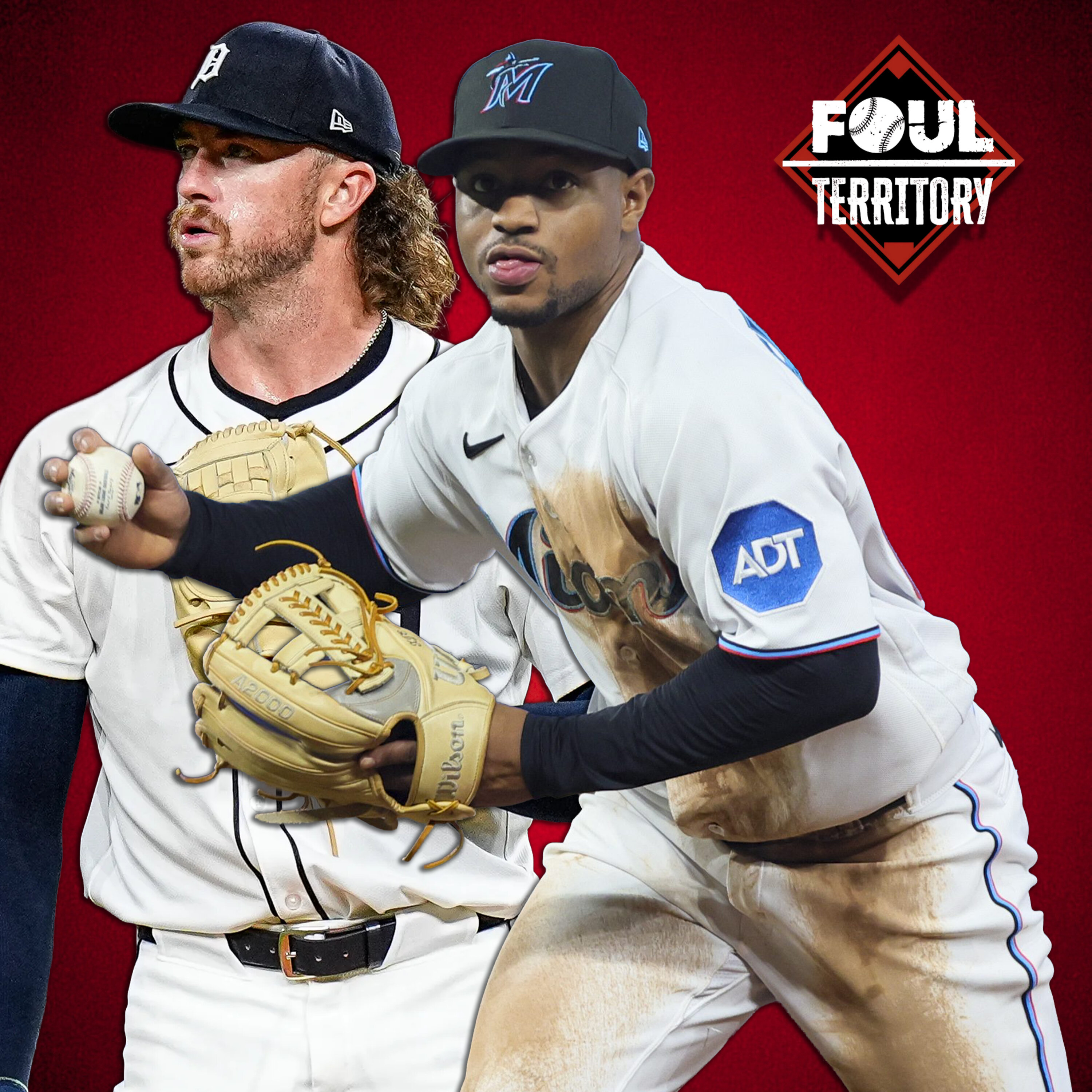
Speedster Xavier Edwards and SP Chris Paddack join FT @Marlins camp
Miami second baseman Xavier Edwards drops a few names to watch this season and eloquently explains how his style of play benefits teams.
(13:27) New Marlins starting pitcher Chris Paddack confirms whether he’ll be starting or relieving this season. He also discusses the free agency process, the importance of returning to Miami, and what he’s been working on this offseason.
Hosts: AJ Pierzynski, Erik Kratz, Scott Braun
Fish on First is now part of the FT Network! Subscribe to the show for all-access and unfiltered Marlins content.
See omnystudio.com/listener for privacy information.
Available Results
Generated results are saved to the knowledge database for reuse and search.
Extract Knowledge
Pick what you want extracted first. Model, scope, and chapter options appear after a template is selected.
Transcript
00:00:08
Speaker 1: More from Marlin's camp.

00:00:09
Speaker 2: Let's talk to Xavier Edwards right now, Second Basement for Miami.

00:00:13
Speaker 1: Xavier, great to have you on the show. We appreciate the time.

00:00:15
Speaker 2: How's camp going for you and how are some of the new faces looking there?

00:00:20
Speaker 3: Yeah?

00:00:20
Speaker 4: It Kemp's going great, you know, excited to be here.

00:00:22
Speaker 5: I think all of us are kind of, you know, right at the midway point, we're kind of ready to get going with the season, kind of get on our way. But yeah, it's been good so far, and a lot of new guys look really good.

00:00:31
Speaker 4: It's some of the new staff that we got. We're get to know them and they've been really good this far, so they're really excited.

00:00:35
Speaker 6: Do they come to you for answers? You're kind of like one of the veterans on this team now today? Does the new people come to you and say, Zaber what you got on Miami for us?

00:00:43
Speaker 7: Uh?

00:00:44
Speaker 4: Now?

00:00:44
Speaker 5: I mean I think that's kind of a advantage I guess that I have that all of us are so young that you know, sure, I'm I've been in the league a little bit longer than them, but I haven't been league that long. You know, I'm not in arbitration yet you know, either Stours, So I think we're all kind of in the same with the same boat or litle bolt. You know, we're young guys just trying to, you know, make a name for ourselves, and I hope our team win. So I think it's kind of an advanced where as we don't have any uh you know, quote unquote salty vets or anything like that. So we kind of just be ourselves and you know, feed off each other and learn from each other.

00:01:13
Speaker 6: So it's good group the salty vets to make the world go around. Okay, just remember that.

00:01:16
Speaker 4: Yeah, some clubhouses they might, but in Ours, I don't know.

00:01:19
Speaker 3: If I do.

00:01:20
Speaker 6: Before we get too deep into the marlins, I have a question for You're born in New York Long Island. You guys know that's right, right, But you moved to Florida. When did you move to Florida?

00:01:28
Speaker 4: When I was five?

00:01:29
Speaker 7: So which one do you claim?

00:01:30
Speaker 4: Florida? Yeah, Florida, Florida.

00:01:32
Speaker 6: I was born on Long Island. I moved here when I was too but I use Long Island when I need it. Yeah, this is one of those.

00:01:37
Speaker 5: Grand New York you need it, But that's right. Other than that, it's like a Florida boy through and through.

00:01:41
Speaker 6: So you're you're born from You're from North Broward, which is close to Miami.

00:01:46
Speaker 4: It's in between. So like I'm from Palm Beach County.

00:01:48
Speaker 5: I'm from Wellington, like thirty five minutes from here, and then now I live in boy and Beach. But yeah, my wife's from actually Miami, born and raised Miami, so kind of spent a lot of time between Miami and Palm Beach.

00:01:58
Speaker 4: Kind of my parents are in Palm Beach, so kid, yeah, something like that.

00:02:01
Speaker 5: You know, I've got a little bit a little bit of both, you know, an hour away but not too far, so as close as you can get without being from Miami for sure.

00:02:08
Speaker 8: Hex Can you be a leader because when we played together, you were like twelve years old and you were quiet, and how much have you had to not adapt? But like how much have you had to change based on your success in the big leagues and then like ooh, other guys coming to you and being like, hey, I need to know how this goes or I need to know how that goes, because now that you're in the ripe old age of twenty five.

00:02:38
Speaker 5: I mean it's not really I don't I think I can be a leader without you know, standing in front of the whole clubhouse and speaking. You know, that's not really my thing, but really just kind of lead by example, you know, try to be you know, at the right place at the right time, do the right things, kind of show the younger guys just you know, where to be what to do. But besides that, you know, I'm I'm just like them. You know, I'm not gonna you know, go trip them or you know, try to play my seniority over them. I think, you know, we're teammates. We need, you know, everyone on our forty men, even some guys that aren't on it, you know, win you know, meaningful games at the end of the year, and you know it starts with everybody. So making everyone feel comfortable, you know, we know want anyone to feel like they can't come up to you know, myself or anybody else on our team. You know that we want to be you know, as open of a book as we can be. And you know, I like to be approachable, you know. I know it was like to get an older clubouts as a younger player and not feel comfortable asking people things or not, you know, not knowing where to be. So you know, I never want people to feel like that around me. And you know, my parents raise me that way to kind of treat people the way you want to be treated. So that's what I'm trying to do. When you played with them, so I played with them one USA, So I don't think, Yeah, I don't think anyone's really you know, crust the USA, right, we were there for like, I mean it was kind of one. It was like almost like four weeks. Yeah, you know, he's happy to be there. I think it was on the tail end of his career. A great teammate, great leader. He is someone who's vocal. So he could get in front of the clubhouse and give us a good.

00:03:52
Speaker 7: Speech or give me, give me your best speech.

00:03:54
Speaker 4: Tell us young guys, you want me to give it?

00:03:56
Speaker 3: You want to give it? Gave me?

00:03:58
Speaker 7: What did he say to you guys? Should he get up there and give like the miracle speech? No, he's our moments.

00:04:04
Speaker 5: He's a professional. You know what you need to do. You get yourself fad for the game, you know, take pride and we're in USA. Cross your chest, you know some of the of the sorts.

00:04:11
Speaker 3: Okay, just checking I did I did cry, right, X.

00:04:15
Speaker 8: I cried when I when I talked at the end after we got after we got beat by Mexico.

00:04:20
Speaker 5: Yeah, yeah, you did cry. That was a meaningful moment for you on the back end of your career. But yeah, it was great to be a teammate with him.

00:04:28
Speaker 8: That was the apex of my career. X. That was the apex. Like my career was just going all the way till that point and then I just quit and then it went out nice.

00:04:40
Speaker 4: All right, X.

00:04:41
Speaker 2: Let's get back to the team for a moment here. Uh So, heading into this season, can you give us a name or two that you think is going to take the next step, one of your teammates that you saw maybe start to really show things at the end of last year, or even somebody that in camp has been very impressive that hasn't even cracked the bigs yet.

00:05:00
Speaker 5: Think Liam Hicks has looked really really good behind the dish. No, usually the first two weeks he's got Oh no, he's got now. But yeah, when I saw him playing a few days ago, he looked really really good, you know, throwing the ball well, playing good defense in the ball really well. So off the really good start the spring only two man, I'll go, I'll go Graham Polly. I know he hasn't been throwing that much, but I think he looks really good as well. I mean also Norby. You know, I guess they're kind of bowing out a third base. But I think they're both gonna be a big part of our team, and they both look really good to spring. You know, working on different things, but definitely both gonna be a big parts work team.

00:05:36
Speaker 1: Okay, I've got a little trivia question for our guys.

00:05:40
Speaker 2: Uh Kratz and AJ Xavier led the league against a certain pitch this year or last year? I should say, do you guys know what pitch it is? And X do you know what pitch it is? If you do hold back on it for a moment.

00:05:54
Speaker 4: I got a guess.

00:05:55
Speaker 6: Okay, crats be like a knuckleball or something like like a fastball either.

00:06:04
Speaker 1: X, do you know what it is?

00:06:06
Speaker 4: My guess is a cutter.

00:06:08
Speaker 2: No, I have you down as eleven for twenty six last year against sweepers. That's for twenty three best in baseball minimum of whatever thirty plate appearances. Do you remember hitting sweepers good last year? I mean, I guess not as much as cutters.

00:06:22
Speaker 5: Maybe I couldn't remember hitting a single sweeper, you know, so hard, right handed, so hard. Sweepers, sliders, curveballs, you know, they're all this more or less the same thing. Some guys actually sweep some of them back up. Who knows what a sweeper is anymore? For that sweeper slide, backup slider.

00:06:43
Speaker 1: We haven't talked about that in a while.

00:06:45
Speaker 2: Actually, right where AJ was on his front saying, we're not going to give this pitch a new name, but it kind of went out. The pitch name won out. So what what would be your key to hitting off speed? You know, how do you get yourself hitting off speed the way that you do? And really being one of the few guys in the league X that still has a batting average at a spot where twenty years ago we'd be like, oh, this guy, this guy can hit. Nowadays, you know, the league average has plummeted, and yet you're one of those guys who, you.

00:07:11
Speaker 1: Know, I think has a chance to hit three hundred plus this year.

00:07:13
Speaker 5: Right, Yeah, you're not probaly myself on on average, and that's that's really important to me. Just kind of hitter I've been my whole life. You know, my dad kind of agree that in me at an early age. You know, getting on base obviously on base percentage, but you know, having a high batting average.

00:07:27
Speaker 3: He goes with that.

00:07:27
Speaker 4: If you can walk a bit, so that's been important for me.

00:07:31
Speaker 5: And then hitting on the off speed front, you know, keeping your way back, you know, try not to lunch, you know, doing your best to stay to the big part of the field.

00:07:38
Speaker 4: I would say, is how you.

00:07:40
Speaker 5: Stay on more pitches than not, you know, not selling out to one in particular.

00:07:44
Speaker 4: You know, if you, in theory hit a.

00:07:46
Speaker 5: Fast ball the other way, you should be able to stay on an off street pitch a little bit better. So you know, there's some give and take the hitting, you know, the nuance of it. But let's see, for have you.

00:07:53
Speaker 7: A little fast guy, dude, Yes, for you don't have to.

00:07:57
Speaker 6: You can get those field I can come back, hit the six hopper in the hold of the short sometimes.

00:08:02
Speaker 4: Yeah. The shortstops got good arms.

00:08:03
Speaker 7: Now they have good arms back in the day, Yeah it did.

00:08:07
Speaker 5: I don't know, I don't know if they're as big, but they had some good arms. Shifting now yeah, different game a little bit, Yeah, not that different. It's not that different, but it's a little.

00:08:18
Speaker 7: Different because like you can stay back and.

00:08:22
Speaker 4: I can shoot him and through the six sols.

00:08:23
Speaker 5: Sometimes sometimes it's goodliner at the middle if they're not standing there, they're kind of standing there last time. Now you should be hit all the time when you're younger, right, not anymore? Got the guy starting behind second base?

00:08:34
Speaker 8: The last one from me. You mentioned you're not arbitration Olsen, yet everybody as a player knows you start making money and arbitration, free agency, all that stuff.

00:08:44
Speaker 1: You don't.

00:08:44
Speaker 8: You lack what the game calls.

00:08:46
Speaker 3: Oh, just he.

00:08:47
Speaker 8: Doesn't have a ton of power. I've seen you hit some dingers. I've seen you hit the ball in the gaps and run. You see Luis or Eyes go through his free agency a guy who is a batting title champion. To me, I think you have chance to be a batting title champion. Like to me, do you look at that and go day like the game doesn't really like my style or you're like it's okay, I'm just gonna go out and be me. Or do you try to maybe incorporate something that would enable you to have more power so you don't get into a spot like Luis Rais had this offseason.

00:09:21
Speaker 5: Uh, it's a great question. I think me and Loui are just so different players. I love Lee, I love playing with them. I mean his back to ball skills speak for themselves. On his ability to put the ball where the defenders not also speak for itself. But I think we're different hitters. We're different players, you know, different defenders. So I think I'd like to think that plays into the equation to some extent. You know, your overall war and you know what position you're going to play and that kind of thing. You're versatility and I switch hit. He just hits lefties, So I'd like to think that plays into the fact. So not really compare our games to each other or kind of what his freuency situation was like to what mine will potentially be like. But no, I I think that there's a blend. You know, there's a mix of you know, taking your shot two oh's and three ones, you know, when your leverage counts, and and then also knowing with two strikes that what kind of hitter I've been in my career and what the hitter I want to continue to be, you know, shorten up use a two strike approach, you know, put the ball in play, because that's better than a strikeout. You know, baseball hasn't changed that much, regardless of the computers and the technology behind the game.

00:10:23
Speaker 4: Like, putting the ball in play is.

00:10:26
Speaker 5: Maybe not always, but a lot of the time is going to be better than not putting the ball in play. And it gives our team a chance. It gives me a chance to get on base and do something for the team, versus walking back to du Gut gives me no chance.

00:10:37
Speaker 4: So I understand that.

00:10:38
Speaker 5: But I understand also where the game is and what is valued, and I think there's room for both so to take my chances, but also not forget who I am as a hitter.

00:10:46
Speaker 6: By the way, so what you just said is awesome about everything. You understand all that, But how do you explain that to teams though, Because what's valued is is strike it out. Its power, right, But your your strengths are speed on base and play right, taking the extra base, putting pressure on the team. How do you how do you explain to a team that that's that's good? Because I think it's great. I remember, as a catcher, I'd much rather face a dude he might hit forty and strike out two hundred times. And a guy like you that we used to call you fleas, Like if you're a flee, I hate those little fleas.

00:11:14
Speaker 4: Right long at bats get.

00:11:16
Speaker 6: Off first, I'm like, he's gonna steal now, I can't throw it away. My pitcher's gonna get in his head. He's gonna try to speed up. Then the next guy's gonna hang a slider too, because he's trying to be quick.

00:11:27
Speaker 7: Like, there's so much value in what you do, but how do how do you get teams to understand that?

00:11:33
Speaker 5: The short answer is war, Really the short answers war. You know, that's kind of the end all be all right now in baseball, And luckily, there's a lot of ways to increase your war, you know, taking the extra base you get war points for that, you know, making defensive plays and getting on base, scoring runs, all things that help win games. Now it's quantified, you know, like it wasn't before, but now it is. So that's a short answer, long answer. I think if you just watch winning plays winning baseball, Like, yes, every team has guys who can hit the ball of the ballpark, but they all they don't have nine guys in the lineup that can just all slug slug slug, and there's no move the runner over, there's no small wall, there's no taking extra base, no ringing the bases right way. I think the best teams have a blend of that, and I think it's important. Like, you know, the Blue Jays were you know, an inch or a couple of inches away from winning a World Series, and I feel like they had a lot of that. They were different than the Dodgers, but they had power, you know, power of Valadi and and some of the other bats that they have. But they also guys have put the ball in play and put pressure on the defense. You know it almost one more series. So if it can get them there, every other team in the league. It's the proof is in the putting. You know that the successes. It leaves clues. And I think that winning shows up winning teams. And there's things that I think you can't teach.

00:12:48
Speaker 3: You real quick. Do you have your phone in your back? Bug?

00:12:51
Speaker 6: Like I got a single, so my war just went up point one?

00:12:56
Speaker 4: Think about it. You don't look at it.

00:12:58
Speaker 5: Yeah, every once in a while you might check get out or whatever, but not too off a I try to just play. I think baseball goes better when you just play it. It's a game at the end of the day.

00:13:06
Speaker 3: Agreed.

00:13:07
Speaker 2: Yeah, great call there, and yeah, er any Clement a good example of what he did in the playoffs for the Blue Jays. I mean, they wouldn't be where they were without him last year in October, X, thanks for joining us.

00:13:18
Speaker 1: Great insight, man, and good luck this season.

00:13:21
Speaker 4: Yeah, thanks for having me, appreciate it.

00:13:27
Speaker 2: Next up on the guest list, it's Chris Paddock joining us, freshly signed with them Marlins a couple of weeks ago. Chris, great to have you on man, It's good to see you, and congrats on the deal. It was pretty recent. So how is the off season leading up to this?

00:13:41
Speaker 9: Yeah, first and foremost, thanks for having me man. I love watching y'all show. But this is you know, can't get much better. Seventy five eighty degrees in Jupiter, Florida. You know, kind of a surreal moment for me this offseason. This is a full circle opportunity for me. The team that gave me the first first chance out of high school back in twenty fifteen, the Miami Marlins, And what an honor to be able to come back for the twenty twenty sixth season to represent them in a big league uniform.

00:14:12
Speaker 6: What does that mean to you? I mean it means you must have done something right and that you were only here your time.

00:14:16
Speaker 3: It means I'm getting old man, Well.

00:14:18
Speaker 6: Yeah, but still, what does it mean to be able to come back to a team. I know it's different people here and everything, but at one time when you were drafted because you were a high pick, you were like, I'm gonna be a Marlin for life.

00:14:28
Speaker 7: I'm gonna be there forever.

00:14:30
Speaker 9: And now it's us later, you're back, you know, on my way, you know, this offseason obviously free agent. You know, whenever I made that decision to sign with the Marlins, I drove from Texas. You know, it's roughly about twenty hour drive. You have a lot of time to yourself to think. And I really took in this moment of hey man, the last time you were headed to the East side of Florida, were you were a nineteen year old kid out of high school chasing his dreams. You know, just just really telling myself, don't forget that moment. You know how much I enjoyed the game, how much you know, how hard I work to get to that moment and to kind of make this a full circle opportunity for me of showing this organization why they draft me in the first place, because you know, like you said, I wasn't here very very fall in that first go around with with the Marlins. Got traded in twenty sixteen to the Padres for Fernando Rodney and being a young kid, and I had no idea. I didn't know if that was a good thing a bad thing at the time. But here we are twenty twenty six, eleven years later and really excited to be in Miami this year.

00:15:42
Speaker 6: You mentioned the weather here in Jubiter. Now you know when you go to Miami, it's gonna be about June July, and you come in and your you know, your big leather coat and your cowboy boots. It's gonna be hot. R You might have to make a judge cowboy boy boots is short.

00:15:56
Speaker 3: I might. I'm gonna have to have like a seb too, if I if I bring out the George, because it's gonna be hot.

00:16:01
Speaker 6: When you start walking, you're gonna get a little bit sweat going just walking it from the parking.

00:16:05
Speaker 9: Lot I'll sacrifice to look good. Okay, I can make that sacrifice.

00:16:09
Speaker 7: I'm just warning you now, you've got a long time to go.

00:16:11
Speaker 3: Absolutely, what if you.

00:16:13
Speaker 8: Told if some people always ask like, would you rather know what was ahead? Or would you rather have the journey and not understand, not know what's going to happen? If you talk to that nineteen year old kid and told them all the things you'd go through, do you think that nineteen year old kid would still have done exactly what you've done?

00:16:34
Speaker 9: Man, I would say, you know, I've loved my journey so far in my baseball career. You know, it hasn't been the prettiest journey, you know, from injuries to kind of be in the spotlight my rookie season, to kind of being on rock bottom with performance stuff and all the things in between. But I've learned a lot about myself as a as a grown man, not just on the baseball field, but outside the baseball field as well. And I think that that's the beauty of this game, right. We're human beings at the end of the day. And I think that nineteen year old kid, you know, I would say, hey, go enjoy the journey, you know, everybody has their own path. Right at a nineteen year old kid, you work hard, you try, and you know, separate yourself from the group in front of you all these things. But when you get to this level, man, everybody is just as good, if not better, and their path was a little different of how they got there. So that for me, man, it's it is a special moment for me this year. I'm considered one of the veterans in the clubhouse, one of the leaders in the clubhouse already, and you know, I'm excited for that opportunity to share my knowledge and help some of these younger guys that we have in the rotation all the way through the position player side as well, because coming up, man, I had I had some awesome mentors and teammates uh as A as a twenty three year old kid making my major league debut debut over there in San Diego with haw As Manny, you know Craig Stammon, which is a surreal moment that he's he's a manager and was a teammate of mine, uh Ian Kinsler, guys that I looked up to at a young age and was able to sit in the same locker room as those guys. They were a leader for me at one point, and now I get to pass the baton off and be a leader in a clubhouse, and and I'm super excited for that opportunity.

00:18:31
Speaker 6: Have they talked to you starting relieving because you've kind of done both. You obviously were a starter for a long time. You kind of relieved last year at the end. Have they talked to you about which side they're leaning towards with you? We'll be a starter, were a starter? Is that what you prefer? Obviously I've done that pretty much your whole life, right, Yeah, it's you.

00:18:46
Speaker 9: Know the when I got traded over Detroit last season towards the end, you know that performance just wasn't backing it up. You look at their rotation, you know I had I had a gap to fill there and and you know Aj over there called it pitching chaos when it when it comes September, man, y'all know how important those games are. It comes down to half a game, one game, whatever it is. And there they thought that the best fit for me was going to be coming out of the bullpen, and I was, I was. I accepted that, right, I couldn't. I didn't have something to back it up. You know, I had a five and a half era. My biggest goal last year was to stay healthy, to show thirty teams that you know, the injuries are behind me. I'm ready to get the ball and I'm ready to pitch. And then in twenty three, coming back from Tommy John, I came out of the bullpen with the Twins, so I was I was already familiar with it. You know, I wasn't just getting thrown to the wolves. And mentally that was important for me of knowing that I can do that already. H and I, you know, shook AJ's hand and I said, hey, man, you know, if you need me out of the bullpen, I'll be ready to go. But you know, talking to the coaches here, talking with the front office early offseason, I will be a starter and excited to be behind Sandy and Uri and learn from those guys.

00:20:04
Speaker 8: Which do you like better? Obviously he came up as a starter, But which do you like better? Starting or relieving? Like there, we just talked to Tyler Phillips. That dude's like, man, he's he's high on relieving. He loves it.

00:20:16
Speaker 9: Yeah, uh, you know, I don't slap myself in the face by any means, maybe try. Uh you know, I don't wear the cool glasses. You know, I feel like I'm not I'm I'm too I'm not weird enough to be a bullpen guy yet. Maybe maybe on the back end of my career, but me personally, I really do enjoy starting, you know. That's That's what I've done most of my career. Uh, you know, I've had I've had a couple bullpen outings, you know, in twenty three, like I said earlier, with the Twins coming to out of playoffs and then last year with Detroit of just you know, having that role of going into September with the pitching chaos that they called it over there. But uh, you know, I think I was born to be a starter and I have a lot to show for this this upcoming season.

00:21:08
Speaker 1: Hey, Chris, question for you.

00:21:11
Speaker 2: Can you go over some of the changes you made, I know last year some pitch mixed changes and then curious if Detroy tried to change you again once you got there, because I'm always curious about the balance, right you. You want to adapt and evolve in play your strengths and take tips from teams, but it's also your career. So what was that journey like over the past year or so.

00:21:34
Speaker 9: Uh, you know, it's it's been. It's been a lot of a lot of things for me. You know, most of my career, I've I've been a north South guy. I feel like I still am a North South guy. Fastballs at the top, change up underneath. But I'm starting to learn that these hitters, man, they're so good and they get paid the big bucks to swing the bat right. Well, this if a hitter's comfortable knowing that Chris Baddick's throwing strikes and that he can eliminate pitches, whether it's my breaking ball, whether it's a slider, curveball, and only focused north South. Now they're fifty to fifty right. If they guess right and I make a mistake, you know, it's usually gonna cost me. So not necessarily performance base that we're changing anything. When I went over to Detroit, it was them, you know, saying that they love my arsenal, they love kind of what I bring to the table.

00:22:30
Speaker 3: You know.

00:22:30
Speaker 9: Unfortunately I just didn't click over there with not being able to put together some good starts for them. That's why I got moved out to the bullpen. That's why I was off the playoff rosters, you know, so that hurt and I went into the off season, you know, excited to see what teams wanted me for the new opportunity of being my you know, this my first free agent year and coming over here.

00:22:53
Speaker 2: Man.

00:22:54
Speaker 9: You know, some of the media asked me a couple of days ago when I got done pitching, what's one thing that you've enjoyed being a Marlin? And it's not necessarily for me. It's the small things and this this coaching staff man, they believe in me. They've told me that from day one, and I feel like as athletes, sometimes we need that reassurance sometimes, you know, sometimes this is a game of failure. We take home our thoughts, we're away from our families. You know, sometimes it's just us. So it's important to have some coaches, some teammates that believe in you to remind you who you are and what you're capable of.

00:23:33
Speaker 3: And that's exactly what this group has done. You know.

00:23:36
Speaker 9: The guys in the locker room have have welcomed me with open arms. They're excited for me to be a part of this group. And we're hungry, man. We do have a young staff from top to bottom, and I'm here to contribute anyway I can. You know, like I said earlier, I don't have all the answers, but I knew I do know a thing or two and I'm excited to learn from them. And we hop on the horse and we all ride together. Are you okay with them calling pitches from the dugout? Have they talk to you about that? Because we had We had Clayton and I asked him about that. Yeah, so can you still shake them off?

00:24:08
Speaker 3: Are you okay?

00:24:09
Speaker 5: Hey?

00:24:09
Speaker 7: You know, I don't really think so.

00:24:11
Speaker 9: So, you know what, I had my zoom call with the Marlins early off season. You know, these are these are the conversations, right I had my agent on the phone call with me of just answering these questions or asking these questions that we needed answers to, especially at this level. And one of those things was that got brought up was the pitch design bullpens, which is basically you're throwing a bullpen on the game mound, hitters are swinging. You got all the electronics that you need as far as track man data all that.

00:24:44
Speaker 3: That was a.

00:24:44
Speaker 9: Conversation that I would love to bring up to you in a little bit. But to answer your question, uh, you know, Rob calls the pictures from the dugout and uh, I tell him he gets to play MLB the show every day, you know, the live the live version.

00:24:58
Speaker 6: There's one him. What's that It ain't a video game that it go. It doesn't go where you want it.

00:25:03
Speaker 9: And it's it's not his runs, it's mine, you know, That's what I tell uh. But he gets to play THEMLB the Show every day. Make it fun.

00:25:09
Speaker 3: Right.

00:25:11
Speaker 9: But on a serious note, we do have the ability to shake off. My last outing I shook off on a three to two is to get to the pitch that I wanted we execute it got to swing a miss. But for me personally, right, there's there's a lot of stuff that I've taken in the last couple of years out to the mountain, whether it's good or bad, and my head does never. You know, when you're on that island alone, man, you can work on the mental toughness, all the you know, your breath work, all the things. When you're on that island alone, man, you blackout.

00:25:44
Speaker 2: Uh.

00:25:45
Speaker 9: And sometimes we overthink, we overprocess things, we forget, you know, runners on second and third two outs. We forget the situation because the game speeds up. If if rob calling pictures from the dugout on looking at the cheat sheet that they have, trusting his eyes, trusting our catchers, trust you know, just the games in front of him. And if that takes a little bit of stress off my shoulders and I can just execute whatever's been called, I think we're going to be in a really good spot, becaus just not shake the catcher call every bit, you know, you look at or the or the pitching coach to the coach and the dugout now right, I mean, Mark Burley, Criselle, don't shake. They don't have to think then, And I think for me, you know, we do our homework during the week. You at the end of the day, you're trying to compete with whoever's in the box. But sometimes we catch ourselves giving them too much credit and then you're not really competing. You already lost that battle. Right So at the end of the day, if I hear fastball, if I hear a change of if I hear curveball, sweep or slider, whatever, Okay, it's like, okay, let me execute right here. I know who's on base. I know the situation, I know who I'm facing, I know what count it is. I'm able to slow it down because I've already that that that's already handled for me from the dugout. And then the second thing, and this is this is talking for me, not talking for the team. You know, everybody has their own mixture reviews on it, but the pitches on bullpens man are gonna It's gonna change my career. It's going to change my season this year. I know that's a bold statement because we haven't even started the season yet, but I truly am excited to see what that can do for me as an individual, because sometimes four or five days in between starts is too much time. You know, you come off a bad outing. What do we want to do. We want to get back out there, right we come off of good outing. We want to we want to keep those tools sharpened. And that's exactly what that is for. You get to sharpen your tools, you get to compete against your teammates, you get live reads, you get live feedback. The only con that I have with that is you have to manage the volume. At the end of the day, I got to be ready to pitch day five or day six, because that that truly doesn't that doesn't go in the back of a baseball card. You know that day five or day six, whenever Skip gives me the ball said, it's your day, that's what matters. So if I can manage the volume all season, that right there is going to be able to sharpen my tools. I'm able to get those live reads, live feedback, reading swings, and being able to work those stressful situations that happen in game to strike execution, runners on base get out of it. You know whatever that looks like, right me and Rob Colin pitches, Hey man, we're not on the same page. Let's use that to work on some things. And I think it's a full circle opportunity for me as an individual. Like I said, I know, different starters, different bullpen guys have their own reviews on it, but I truly am excited to take that into the twenty twenty sixth season.

00:28:40
Speaker 3: Well we look forward to it, right.

00:28:42
Speaker 2: Yeah, Chris, great stuff man, always great to catch up with your good.

00:28:45
Speaker 7: Luck this season.

00:28:46
Speaker 2: We'll catch at some point during this season. Yeah, exactly, A j that's what you did buying the plate right just all right here. It comes exactly where I want. Chris, good stuff, man, really appreciate it. We'll talk to you during the season, okay.

00:28:57
Speaker 3: Yeah, thanks you guys for having me. I appreciate

00:29:01
Speaker 4: Fe