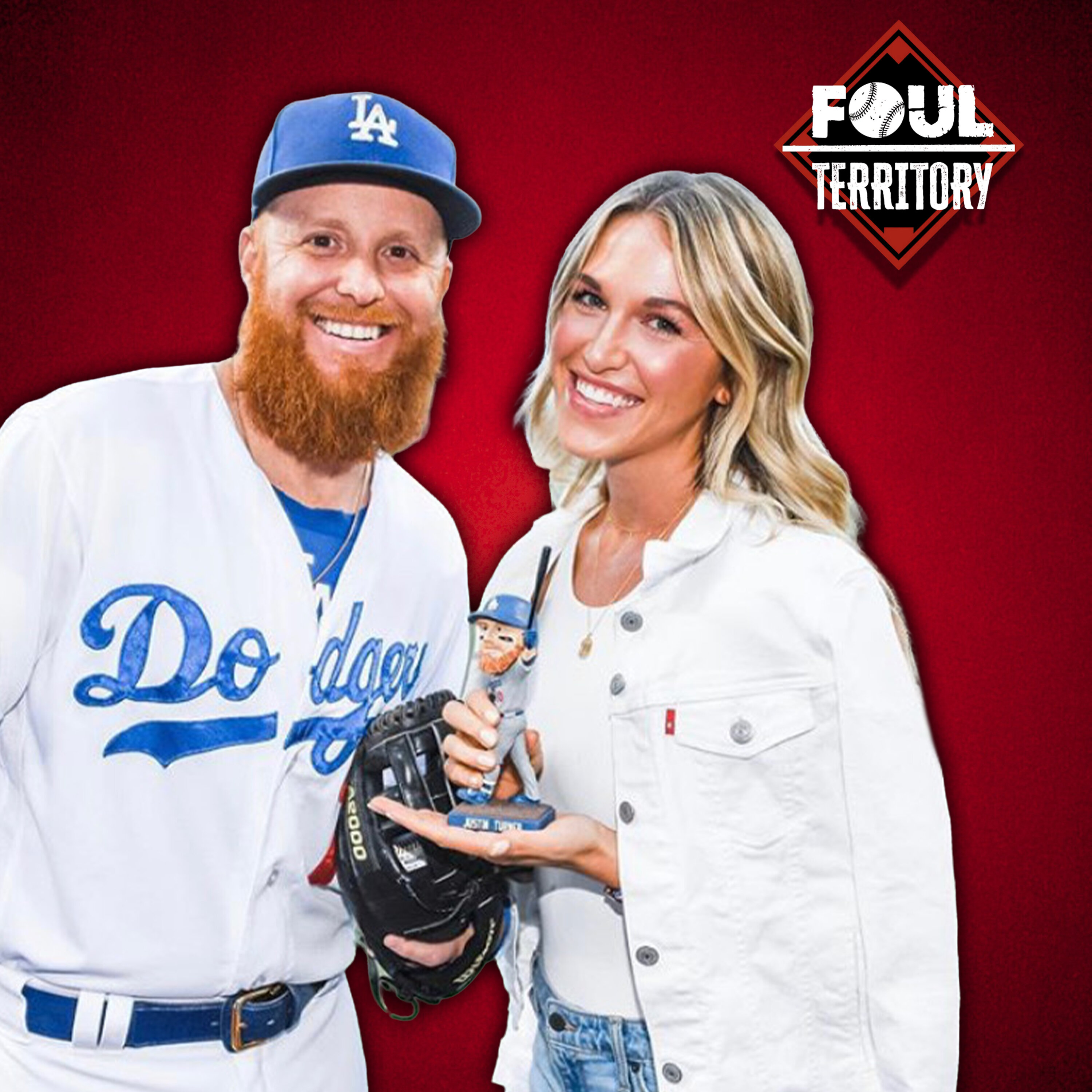
Saves are getting devalued + Justin Turner’s wife Kourtney joins
Host of the “Holding Kourt” podcast and wife of Justin Turner, Kourtney Turner, joined FT to discuss her husband’s decision to play in a different country and how she’s adapting to him being away. She also goes into how she started her podcast and what the goal of their foundation is.
(15:49) As MLB bullpens keep evolving, is the sport devaluing the save stat?
Hosts: Pierzynski, Kratz, Rizzo
Check out the BRAND NEW items over at the FT Shop!
See omnystudio.com/listener for privacy information.
2026-05-03
27 min
Transcript
Available Results
Generated results are saved to the knowledge database for reuse and search.
No generated results are available for this episode yet.
Extract Knowledge
Pick what you want extracted first. Model, scope, and chapter options appear after a template is selected.
Generated results for public episodes are saved to the knowledge database so they can be reused and searched later.
Transcript
00:00:05
Speaker 1: Corney. Turner is the host of the Holding Court podcast. Court with a Kay joins us now. She is a podcaster, She is a mother, She is uh wears a lot of hats, one of which is the wife of longtime Major League baseball player Justin Turner.

00:00:19
Speaker 2: Court.

00:00:20
Speaker 1: Always a pleasure to see you, and it's not like you have anything going on. When we were texting yesterday, you were talking about being in the middle of a move, two dogs, a toddler, and a rental home going through renovations. What's that been like for you?

00:00:34
Speaker 3: I know we've been now in four different places in eleven days. So it's all for the love of the game, right We just have to make it through, and it'll all be worth it.

00:00:45
Speaker 2: Loving the game.

00:00:46
Speaker 4: Loving the game and being tortured by the game are two different things, Courtney, You should know that more than anybody.

00:00:52
Speaker 5: Right right now.

00:00:53
Speaker 3: Justin should be very grateful he has a supportive spouse going through all this.

00:00:57
Speaker 5: But yeah, so.

00:01:02
Speaker 1: Tell us about that Justin is now playing in Tijuana for the Toros there in Mexico. How did that come about, Court, Because Justin obviously has had such a tremendous Major League baseball career. I had the pleasure of starting to get to cover him and you guys in twenty fourteen, and he's gone on to have a hell of a career. He didn't have to continue to play, but obviously this is something very important to him. How did this decision come up of him wanting to extend it in a completely different league, in a completely different country.

00:01:29
Speaker 5: Yeah, it's definitely different, for sure.

00:01:33
Speaker 3: I think the focus this off season he wanted to keep playing, and I think it was just about getting an opportunity to play somewhere, and we didn't really know where that would be or what that would look like. And then as spring training was winding down and the MLB season was starting, he realized, Okay, I'm probably going to have to start looking elsewhere for opportunities. And I was fully on board, and you know, talking about Japan or Korea or playing in Mexico, whatever it was going to look like. I was all for it because I think after last season he thought he still had something left in the tank and he wasn't done, it was unfinished.

00:02:07
Speaker 5: So I was all on board and seeing where it would take us.

00:02:11
Speaker 3: So it's been definitely a transition, but it's been incredible I've We've had a lot of warm welcomes with teams, but I don't think we've ever had a bigger red carpet rolled out for him as we've had in Tijuana for sure.

00:02:26
Speaker 4: All Right, Corney, you got to keep it one hundred because I think my wife is going to watch this. Plenty of wives are going to watch this. When he told you Tijuana is where I'm going to go play, were you like, I'm really busy in April. We're gonna make it down there? Like but if he had said, Hey, we're gonna we're I'm gonna go to San Diego, you have been like, I love San Diego in April for a wife. Is there a home place where you're like, you know what, We're totally fine, I'll visit you in Chicago Or is it one I'm going wherever you're going.

00:03:03
Speaker 5: Maybe I'm just built different.

00:03:04
Speaker 3: I know how much he loves this game, and if this was his opportunity this season, then I was all in. And he left a few days before me, and then I packed everything up and got us down here and we were there for his debut, and I honestly wouldn't have it any other way.

00:03:19
Speaker 5: There's difficult stuff, but I.

00:03:22
Speaker 3: Know he's happiest on the baseball field, and so wherever and whatever that was going to look like this season, I was all in. So I know a lot of other wives would have probably said, I'll see you when I see you. And there's some wives on this team that you know aren't making that move and coming down here.

00:03:37
Speaker 5: But I don't know. I just part of me thrives in the chaos. I love it. I love you know.

00:03:43
Speaker 3: I think I'm the most productive when things are, you know, up in the air and a little crazy.

00:03:48
Speaker 5: But I'm I just know that he wants to be here, so that's important to me. If it's important to him.

00:03:54
Speaker 4: What does that look like you said, pack everything up? What does that look like for you guys at this stage of your life, pack it up and move down there? And also from a player's standpoint, how much do you think you being there supporting him helps him play better.

00:04:10
Speaker 3: I always say that, you know, if we handle everything at home, then the guys can just worry about everything at the field, And I try to, you know, even with the renovations going on in the rental that we're in right now, I'm trying to not you know, you don't want to text him all day long and say, oh my gosh, this is happening, This is happening, this is happening. He has enough going on there, So just trying to handle as much as I can at home and make sure that he's good to go for the game.

00:04:37
Speaker 5: That's kind of my role right.

00:04:38
Speaker 2: Now, Courtney.

00:04:40
Speaker 4: Is there a time where you where it'll come to You might say, I mean, he's forty one years, always playing in Tijuana. Hey, it's time to stop. Because I know when my wife and I was at the end of my career, she said, I'll never tell you to stop playing because if you don't feel it, then you'll resent me forever.

00:04:55
Speaker 2: So is there ever a point where you're going to say, man, I'm just tired of this.

00:05:01
Speaker 3: No. I think he'll make that decision. And I also think even when his playing days are over, he's going to find his way into a dugout or somewhere near the field. So I don't think we'll ever be away from it. It'll just look a little different. But yeah, that's really not my decision to make. And I think he still feels like he brings value and he can contribute, and he actually for not having a spring training and I think maybe Opening Night was the first live ABE he's had since October. It's actually doing pretty well, so I think he still got it too. So we're just enjoying the ride and making memories, especially now having our son with us and seeing how much he loves being around it. It's just takes it to another level. So I think that makes it worth it too, Like seeing him enjoy it. I think if it was difficult in that sense and you know, having to drag him to games and all that, but so far he's adjusting really well and we're enjoying it.

00:05:58
Speaker 1: Nothing makes me more irritated than when and we just identify, Oh, she's the wife of Justin Turner, she's the wife of now Aaron Judge or whatever it is. You're so much more than just Justin Turner's wife, not that that's not an important role obviously as a mother now of Bo and Justin's wife. But you have your own podcast. You're doing a lot of your own thing, and you have been way before you met Justin. So tell me more about the podcast in terms of how that got started, why you wanted to do that, and maybe you know some of your favorite guests and somebody perhaps you'd hope to get on.

00:06:33
Speaker 5: Yeah, that started through COVID.

00:06:34
Speaker 3: This season shut down, and Justin actually got me all the equipment for Valentine's Day that year, in lieu of flowers and chocolates and all that.

00:06:42
Speaker 5: He got me a podcast set up.

00:06:44
Speaker 3: I was kind of, you know, kicking the can and delaying it and not really starting it. And this season shut down, and one night I came downstairs in our condo in Arizona and he said, you want to have a podcast, let's go, and we set it up and hit record and didn't really know.

00:06:58
Speaker 5: What it was going to be about.

00:07:00
Speaker 3: I just knew that I wanted to have a podcast. And I think what's fun about it is I've been able to have different baseball wives on there and kind of just shine a different light on them. Like you said, obviously what's under me right now, it's his wife of Justin Turner, and that's kind of what happens with baseball wives too. But it's fun to share their side of it. They do have their own things going on, you know. I just had Sarah Garver on, she's a veterinarian. I had Kara bieber On, and she's an entrepreneur. She just started her own company. So I think, for one, showing what they have going on, but then I also think it adds a good layer for fans to just see these guys as humans, and I think no one can offer a better perspective of a player than their spouse and kind of shining light on them and their day to day and just making people I guess reminded that at the end of the day, they're humans, They're not just players and robots and all that.

00:07:56
Speaker 5: So it's been fun.

00:07:58
Speaker 3: It's been six years now, and I'm still surprised when people say yes and they want to come on, because I think someone asking people to come on a podcast is like asking for a ride to the airport, and you know, you feel a little guilt you're putting people on there.

00:08:11
Speaker 5: But yeah, it's been fun for sure.

00:08:15
Speaker 4: All Right, Well, who do you admire as far as a wife that you haven't talked to from afar? Like, because like, who's who's the show hey of wives? Right now, I'm not saying show Hay's wife. I'm saying all players look at show Hey, and they're like, holy crap, this dude's amazing, like he's he hits, he pitches. Who is the wife that is the show Hay of the wives?

00:08:38
Speaker 5: Well, wouldn't it be Showy's wife? No, I don't know.

00:08:42
Speaker 2: I don't know. I don't know if she's that. I don't know what you what you girls think of?

00:08:47
Speaker 3: Yeah, I think it's wild the I don't know if it's like the Taylor Swift effect.

00:08:51
Speaker 5: Or what it is.

00:08:52
Speaker 3: But there's definitely like an increased interest in in wives of professional athletes and Kylie Kelcey and all of that.

00:08:58
Speaker 5: But I don't know.

00:09:00
Speaker 3: I try to ask everyone I want to have Mookie's wife on. I think she is incredible. She's doing a lot on her own. Like you said too, I think she would be fun.

00:09:11
Speaker 5: I don't know.

00:09:12
Speaker 3: I kind of just get a little courage sometimes at night and just text everyone and say, hey, you know, I don't want to bother you, and it can be as long as you want it to be. I can you know, you can have final say on anything. I can give you the outline before and try to make it as easy as possible. But like I said, I'm always surprised when when people say yes and they want to come.

00:09:30
Speaker 1: On see Carrera nine point fifty one in our chat had to comment about you guys, and I wanted to bring this up too, because it says the Turner's Foundation is awesome and has really set the standard for Dodgers players outreach into the community. Shout out to the Turner family. And I do think that that's a huge piece of this because even after Justin left LA in terms of playing for the Dodgers, you guys were still very active in JT's Foundation and in LA specifically.

00:10:00
Speaker 5: Why.

00:10:00
Speaker 1: I know that obviously he's from there, you're from Indiana, he's from southern California, But why is that so important for you guys to continue to have that outreach, you know, in the in the Dream Center there and with veterans in particular, and everything that you guys do in the community there.

00:10:17
Speaker 3: Yeah, we always said we didn't want to do anything that was just a one off, you know. When we decided to partner with the Children's Hospital LA and the Dream Center and Operation Men through UCLA and those different organizations, we wanted to plant roots and we wanted to be invested in the community and not just you know, write a check and say okay, here, I hope this helps and not stay invested, because I feel like oftentimes that does happen, where you know, some things become just a quick donation and a photo op and then you're done. So I think it was important to us and then especially you know, justin winning the Roberto Clemente Award, like with that comes such a responsibility, I think, And you know a lot of people might have said, Okay, you know you you receive this great honor for your philanthropy, all right, like you can you know you've been recognized. But now I think that just made us want to hit the ground running more. And you know, we've been invested in LA for a long time and it's it's obviously where Justin's from and a huge part of his career, but we also continue to do things in other cities as well and try to leave our mark there too.

00:11:19
Speaker 4: What is harder going to a new team as the new wife or trying to make a girlfriend who just started dating one of your husband's teammates feel welcome on to a team.

00:11:36
Speaker 2: I don't.

00:11:36
Speaker 3: I feel like probably the second one. It's it's hard. I always say it's like changing high schools, right, It's going to a new team, especially later in Justin's career, it felt like, you know, I was like, hey, kids, what's you know, what's.

00:11:51
Speaker 5: Going around here?

00:11:52
Speaker 3: But you know, you try to make everyone full welcome and that was the hard part of the transition and going in new teams. You know, I felt like I was this betteran wife in LA and then I go to a new team and you kind of have to figure out that dynamic and you know who's kind of you know, in charge I guess, or who's the leader of the wives there. But yeah, I definitely think it's important to make the girls feel welcome too, for.

00:12:14
Speaker 1: Sure, Courtney, do you think Justin will manage one day? Is that something that he has set his eyes set on, because I you know, when any dugout that he's been in, or any clubhouse that he's been in, I know, with the exception of a couple of teams or aren't captains, but Justin was, and Dave Roberts said that he was the glue to that team and he's been that in other organizations. Do you see him managing.

00:12:38
Speaker 5: I do, I really do.

00:12:40
Speaker 3: I think it will be more nerve wracking than his playing days for me though, because I think I think it's a tough job because if things are going good, not everyone looks to the manager, But then if there's a decision that doesn't pan out, I think it falls back on the manager. So I'll have to stay off Twitter and all the comments for that one. But I think so, I really do. I think he has such a good understanding of the game. I think he has good feel I think he does a.

00:13:06
Speaker 5: Really good job.

00:13:07
Speaker 3: I'm always in awe when he goes to these new teams and then I see him in the dugout, you know, the first of the second game of the season, and he's already meshing so well, and he just has that ability to reach I think every single guy there, and I think that's what makes him so special. So yeah, I one thousand percent see him managing one day.

00:13:26
Speaker 4: Justin's gone through so many different transactions in his career. What's the one that hurt the most for you? The one that you were like, that's tough, like that one? That one is? That one gets me every time I think about it. But also in the moment, it was really tough.

00:13:43
Speaker 3: I think leaving LA for sure was a shock and definitely unexpected for us. But I think Once you get that first one out of the way, it definitely becomes a little easier and you're reminded it's a business, and you know, there's a lot of changes. I think another one for me he was leaving Boston and not going back to Boston because I think that was such a special season for him, you know, to have that big of a career change, and then I think he had like statistically his best season and we just had a lot of fun there and I feel like it was such a good fit for him. And then to not go back there, that one got me so left my part of my heart in Boston for sure.

00:14:26
Speaker 1: I'll be thankful you're not in Boston right now. Court has her podcast. Check it out, guys, don't forget you can check her out on court with Holding Court on YouTube, wherever you get your podcast, checker out there. We appreciate you as always. Best of luck to JT. Give Bo a hug from us, and thank you Courtney, thanks for the time. Good to see you as always.

00:14:45
Speaker 5: Thank you, good to see you. Let's have a.

00:14:55
Speaker 1: Conversation about the importance of the save statistic as the Bullpens keep evolving and there's more guys, at the back end of a bullpen that can throw that ninth inning, those coveted and most difficult three outs. Do you think the stat, the safe stat eka will start with you is devalued at this point because there's no longer for every team a bona fide closer, no longer one guy that gets that call.

00:15:22
Speaker 2: Uh uh.

00:15:22
Speaker 4: I think some of the teams have it. I mean we look what the Dodgers did. They went out and got Edwin Diz Why because Tanner Scott, the guy they had gotten before, wasn't closing games down for him. Dave Roberts had to do his magic last year bringing in starters to throw in the bullpen. Is the actual save stat devalued? Yes, That's what the Rays have wanted to do forever. That's what any team that wants to keep a value for a player that's reaching arbitration, they want to keep it down. Look at the small market teams that lop guys up that are getting saves. You know what you want to become? Our close will lock you up for your assumed value, because the game has a set value for what a save is. I know guys that have gone too, that have gone to arbitration and have been told, well, you don't have as many saves as that person did, but I had three. I had twice as many strikeouts. So yes, it's being devalued, but it's being devalued on purpose. And I truly believe in the fact that what teams say, yes, three outs are three outs, and sometimes it's more important to have your better pitcher throw in the eighth inning because that's the better spot in the lineup. But I also know the human side of the ninth inning, and we've had numerous closers on here that the ninth inning is different, and I know, as a hitter, I'm facing a pitcher completely different, completely different type of situation, different mindset. They're going to approach me differently as a hitter in the ninth inning. It's just it's how it has been, it's how it will always be, because the game is played by humans and not by robots.

00:17:05
Speaker 1: AJA. In two thousand and eight, Francisco Rodriguez had sixty two saves that set a high water mark at that point. I mean that long gone are the days right that we're ever going to see anything like that. I mean even I mean, what's a high amount of saves now because there's so many guys that are just a part of a revolving door at the back end.

00:17:25
Speaker 2: Disagree, disagree. Not a good team. I think we'll get there. Not on good teams.

00:17:28
Speaker 4: If the Dodgers had Edwin Diaz, he'd have a bunch of saves. Mason Miller's racking up saves, but Mason Miller's racking up saves. The thing is, you have to be on a good team, and you have to have an organization that understands that.

00:17:41
Speaker 2: I don't care what the numbers say.

00:17:43
Speaker 4: Analytically, you have to have roles in your bullpen, and the good teams have that guy in the ninth inning that will lock down the ninth inning, and then you can figure out the eighth to seventh and at the sixth if you have to right. And that's when guys go down there, excuse me, and they know Mario and Rivera has the ninth, Jeff Nelson has the eighth, Mike Stanton has the seven. Blah blah blah, whoever you want to throw out there, if it makes teams better when they know they have that hammer in the ninth inning, ask any manager, asked Terry Francona asked Steven Vode, who has you know, had class and now he has Kate Smith in the back end right, ask these these managers that are super successful. Pat Murphy has McGill at the back end, right, and he before that he had Devin Williams who was lights out. That makes your job so much easier as a manager, because you know, you really only have to cover eight innings. And most of these teams that are really good that have a hammer in the night, they have a pretty good eighth inning guy too, and usually a lefty somewhere that could get you through the seven. So those are the teams that are really good, and those are the teams. So are they undervaluing it? Of course they are because these front offices, as we've said, are don't value human beings and they don't value saves. Because also it's a way, as Kraut's kind of said, to keep salaries done. If we don't have a guy that gets sixty saves, we don't have to pay him for sixty saves. Talk to relievers, they'd be like, well, holds are just as valuable as saves. No, I still want a guy that can go out there and get me the three outs of the ninth inning. That is that, to me is invaluable. Kenley Jansen, He's been doing it forever, right, he can do it. We know this guy can do it. I mean, Mason Miller, we know he can do it. Why do you think the Braves went out and got Robert Suarez when they already had Iglesias because then they had the eighth and the ninth locked up.

00:19:23
Speaker 2: That's a huge advantage.

00:19:24
Speaker 4: Trust me, as a player, I'd look down there and when we were playing these the two thousand and one Mariners, You're like Arthur Rose, Jeff Nelson and Suzaki. Crap, we're playing basically a five inning game, and we better be ahead after five inches because I don't want to see them dudes coming in.

00:19:37
Speaker 1: Yeah, because you're working your way backwards basically. All right, So let me ask you. E k Aj mentioned Kenley Jansen. I mean he's an active obviously an active closer for the Tigers. There's two other guys in that same bullpen that can close games as well. Is that do you consider Kenley a guy for the Hall of Fame if he gets to five hundred saves? Because if this stat is considered to be devalue in today's game. Is ken Lee ah Hall of Famer if he makes it to five hundred.

00:20:05
Speaker 4: Yes, because of how he compares to the rest of the game and the rest of the closers in history. I think Kimberrell was on his way. Obviously, it's kind of been a little bit derailed here recently, but he was on his way. But both of those guys are so rare in the sense that they both came up and were closing almost immediately. I think, you know, part way through the year of their first full year of service, they were closing, and they've been closing ever since. The one thing, too, with a closer is there is a psyche about what happens in the ninth thing. There is a psyche about you give up a game winning home run. Just the other day, Kenley Jansen just gave up, gave up the I think it was last night Matt Olsen hit a game winning walk off homer against him. As a closer, you got to come back out the next night, whether it's the next night or the next time you're back out there, and forget about that, use that fuel whatever it is. You have to be willing to go out there. That's why Yankee fans remember roll this Chapman because he gave up big home runs. That's why Astro fans remember Brad Liz because they gave up a big home run. Like those guys are in those spots, and then they continue to stay as closers because they're able to bounce back, and they lose their closing role when they don't bounce back, when they let that psyche get to them. And that's that doesn't happen in any other spot. You're always saying, Okay, well, I like this guy against these three hitters, no matter what the situation is. Why because analytically, oh, it's all red. That means he's not gonna do He's they're not gonna do well against him. This is the matchup we want or green, whatever the number is in the matchup chart, and it's not the same if you bring let's say you bring Ryan Stanick out to open the game. Ryan Stanick opens the game against the three best hitters in the lineup, he gives up a run. There's very little psyche for Ryan Stanick going, holy cow, I totally.

00:22:13
Speaker 2: Blew that game.

00:22:15
Speaker 4: Now you bring in Ryan Stannick to close the game because Ryan Stanick's done both. He's closed and opened, and he's facing those same three hitters and he blows the game by giving up the exact same run way, different psyche, and it takes a different type of person to bounce back and to make that make it not happen again.

00:22:36
Speaker 1: We had a conversation, guys with Jim Boden just moments ago about the value of relievers. Aja, you've talked about it too. I mean there's a shirt a long time ago that said, you know, relievers need love to I mean, there's so many guys in the bullpen that are just kind of overlooked. And Ryan Walker, the Giants reliever, had a kind of conversation he said, maybe leverage index needs to be more valuable in terms of compensation negotiations. What is your take on that in terms of because you had mentioned too, like a guy might come into the game in the eighth just based on where the lineup is that they're going to be facing. I mean, what is your what's your opinion on that? If that matters in terms of a leverage index.

00:23:14
Speaker 2: Ninth inning is always the toughest.

00:23:15
Speaker 4: I don't care who I mean, I understand there could be a bigger bats in the eighth inning. I understand that, but that's usually why good teams have an eighth inning guy and a ninth inning guy, right. I know you can't get the saving the ninth without the eighth inning guys. But I'm sorry, there's a different there's a different feeling kind of what Kratz said about the ninth inning.

00:23:32
Speaker 2: I mean, I played with Joe Nathan, I played with Bobby Jenks.

00:23:34
Speaker 4: I played with some really good you know, Rob n was on a team I was on. He was hurt, but he was around. I mean, there's there are some guys I played with that legitimately. You know, Trevor Rosenthal was another one. Uh, you know these guys. It's a different breed of person for the ninth inning. And that's why people just say, oh, you can throw anyone in the ninth inning. I completely disagree, because you almost have to be I don't want to say a little bit nuts to be the closer, but you gotta be a little bit nuts to be the closer because you have to want all the pressure, and you also have to understand if you do blow it, everyone looks at you like, gosh, that dude just blew the game and be able to get over it for the next day. So I think ninth inning is the most valuable. Listen to the other guys make value, yes, and we've seen reliever salaries go up.

00:24:19
Speaker 2: But for me, if you.

00:24:20
Speaker 4: Haven't, most most good teams and I'm gonna take the Dodgers from last year out because they were lucky that they had enough arms to cover it and enough offense to cover it. Most good teams and really good teams have a guy in the ninth inning that is a lockdown guy. And if they don't, when they say closer by committee, that means you don't have anybody that can pitch the ninth in and you're looking for that guy. Every team's looking for that guy. The Blue Jays just moved Jeff Hoffman out of it and they moved Varlin into it. Like AJ mentioned a ton of closers that he played with, I play with Jonathan Paplebah. He's a little nuts in the head, like there's a little but there's a method to his men. There's a method to getting up for that ninth inning and knowing in the seventh inning he starts that routine to be able to be ready when they're winning. I played with Waye Davis in one of the greatest seasons I've ever seen a reliever have. He didn't give up an extra base hit until August. He's a little nuts, like he's a little crazy.

00:25:18
Speaker 2: Josh Hater.

00:25:19
Speaker 4: I remember he was like, hey, brother, he goes, I walked into regular field, He goes, I just feel like I can throw harder. And I came in the seventh. It wasn't quite there, he goes, But man, when I came in in the ninth, man, it was really coming out of my arm. It was coming out of my hand really good. Like those are guys, Those are actual human beings telling you how they feel about the situation in the ninth different than how they felt about the situation in the seventh or eighth inning. And if front offices recognize that, that's the difference in really good teams and teams that are.

00:25:53
Speaker 1: Like, oh, we're hanging around.

00:25:55
Speaker 2: We almost tried fifty four percent.

00:26:00
Speaker 1: Because you guys both said the same thing that I wanted to ask you about in terms of personality of closers, because I kind of like enclosers, and also catchers and goalies all you guys all have to be a little bit off, all of you. Let me ask you, though, Aj the personality of a closer, I mean you guys. Well, Kratz had mentioned papal Bond, who I adore. I think he's a trip. You never know what's going to come out of his mouth. But do closers tend to have the same type of personality?

00:26:35
Speaker 2: Uh no all the time.

00:26:36
Speaker 4: I mean, Joe Nathan was not like the other guys that I that I played with, Eddie Guardado did, was not like Bobby Jenks, and was not like some of the other guys you've seen.

00:26:45
Speaker 2: So so everyone is different.

00:26:47
Speaker 4: I mean it just but at the end of the day, they all have this mentality of I can get the three outs in the night no matter what my stuff is, and if I don't get it today, I'll get it tomorrow. That's it almost almost like a I would say, like an intelligent dumb guy. Where they have because because everybody looks at Pap and I'm gonna use them as an example, everybody.

00:27:09
Speaker 2: Looks at me.

00:27:10
Speaker 1: Oh.

00:27:10
Speaker 4: All he did was just rare back and throw the ball. We had plenty of conversations about him needing to be able to throw the four quadrants of the zone and how and how that helps him to be able to attack different kinds of hitters in big situations. But like Aja said, you give it up when you give it when you give it up, you gotta be able to have You got to be that dumb guy and be like, I kind of forgot that I gave it up yesterday. Why because you have so much supreme confidence in who you are as a pitcher that you're going to get it today.

00:27:43
Speaker 1: Be a goldfish, like Ted Lasso says, right, you got to be a goldfish. You just they don't have a memory. Just wash it off.
Chapters
No chapters available.