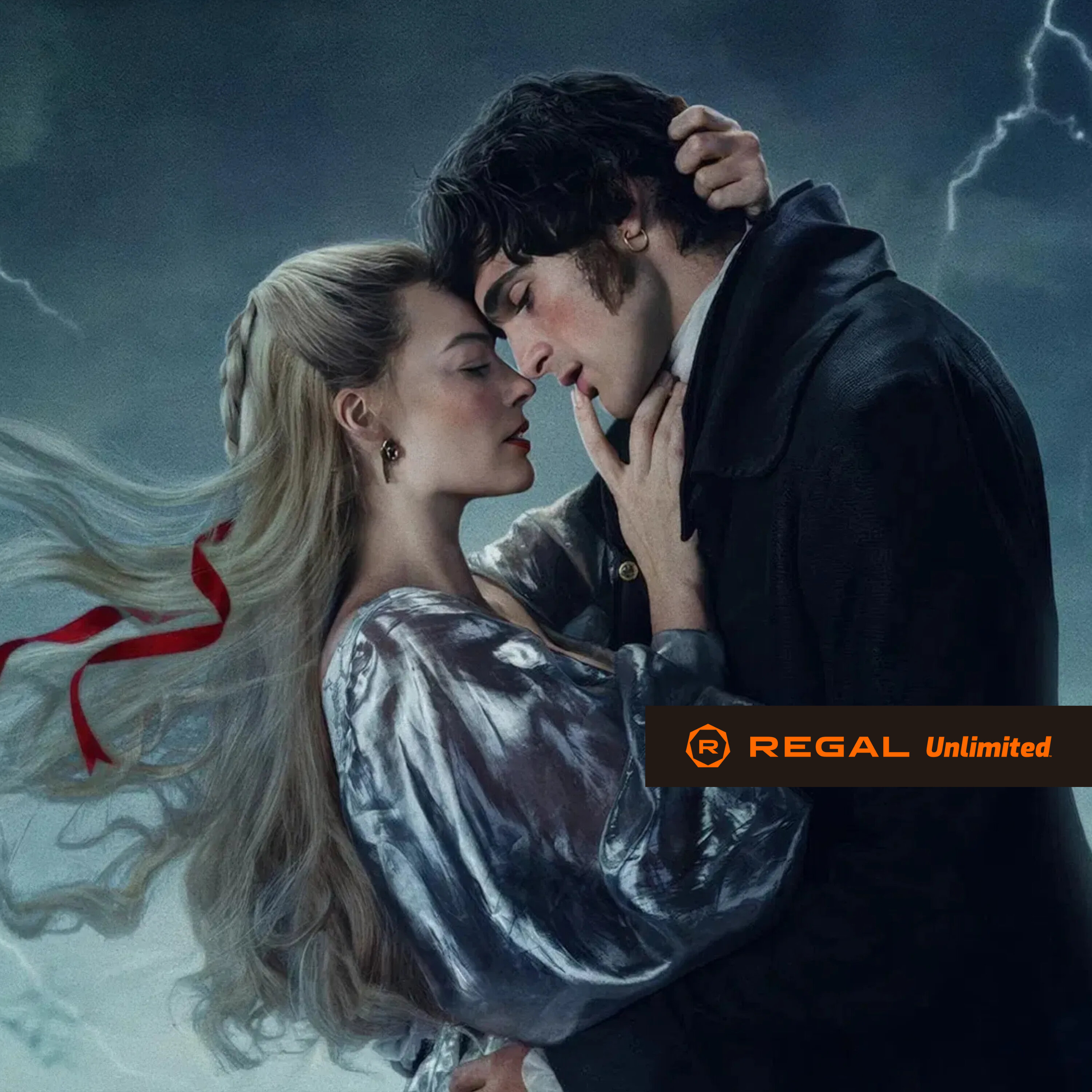
Wuthering Heights Review, How Green Was My Valley | #1053
Emerald Fennell follows up her earlier provocations with one aimed at lovers of literature, "WUTHERING HEIGHTS." Marya E. Gates ("Cinema Her Way") joins Adam and Josh to unpack it all. Then, a Pantheon Project review of John Ford’s Best Picture-winning HOW GREEN WAS MY VALLEY, and listeners advocate for the best '90s movie soundtrack.
This episode is presented by Regal Unlimited, the all-you-can-watch movie subscription pass that pays for itself in just two visits.
(Timecodes/chapters may not be precise with ads.)
Intro (00:00:00-00:02:12)
Wuthering Heights with Marya E. Gates (00:02:13-00:48:41)
Filmspotting Family (00:48:42-00:52:32)
Robert Duvall, Frederick Wiseman (00:52:33-01:01:56)
Next Week, Notes (01:01:57-01:05:16)
Polls (01:05:17-01:19:39)
How Green Was My Valley (01:19:40-01:52:17)
Credits / New Releases (01:52:18-01:55:51)
Notes/Links:
-Filmspotting Pantheon
https://www.filmspotting.net/pantheon
Feedback:
-Email us at feedback@filmspotting.net
-Ask Us Anything and we might answer your question in bonus content.
Support:
-Join the Filmspotting Family for bonus episodes and archive access.
https://filmspottingfamily.com
-T-shirts and more available at the Filmspotting Shop.
https://www.filmspotting.net/shop
Follow:
https://youtube.com/filmspotting
https://instagram.com/filmspotting
https://letterboxd.com/filmspotting
https://facebook.com/filmspotting
https://twitter.com/filmspotting
https://instagram.com/larsenonfilm
https://letterboxd.com/larsenonfilm
https://facebook.com/larsenonfilm
https://bsky.app/profile/larsenonfilm.bsky.social
See omnystudio.com/listener for privacy information.
Available Results
Generated results are saved to the knowledge database for reuse and search.
Extract Knowledge
Pick what you want extracted first. Model, scope, and chapter options appear after a template is selected.
Transcript
00:00:21
Speaker 1: Film Spotting is presented by Regal Unlimited, the all you can watch movie subscription pass that pays for itself in just two visits. See any standard two D movie anytime with no blackoutdates or restrictions. Sign up now on the Regal app or at the link in our description and use code film spot twenty six to receive fifteen percent off.

00:00:45
Speaker 2: What kind of a show you guys putting on here today?

00:00:48
Speaker 3: You're not interested in art? Now? No, Look, we're going to do this thing. We're going to have a conversation.

00:00:55
Speaker 1: From Chicago. This is film Spotting.

00:00:57
Speaker 2: I'm Josh Larson and I'm Adam Kempinard Kiss me, let's both be tunned.

00:01:07
Speaker 1: Director Emerald Fanel follows up her earlier provocations promising Young Woman and Saltburn with one directed at lovers of literature Wuthering Heights.

00:01:18
Speaker 2: I like those air quotes you made their Josh Mariah Gates will join us for that review, plus John Ford's Best Picture winning How Green Was My Valley? That more ahead on film Spotting. Welcome to Film Spotting. Later in the show, an eighty fifth anniversary review of How Green Was My Valley? John Ford's Best Picture winning film it's the eighty fourth anniversary of it taking the best picture Oscar over Citizen Kane. Neither of those reasons are why we're talking about it, though, Josh.

00:01:55
Speaker 1: How dare How Green Was My Valley? Do that steal that Oscar from Citizen I.

00:02:00
Speaker 2: Know, I know, but it's part of our pantheon project. Over the next three weeks we will be talking about three films that are vying for that valhalla a place in the Film Spotting pantheon. We nominated nine films on our last show. How Green Was My Valley is the first one up, A lind spot for Me. Also later Listener's Way In and Boy do they on their favorite nineties movies soundtracks? We really struck a chord with this one, Josh.

00:02:32
Speaker 1: We tapped that nostalgia well, is what we yes.

00:02:35
Speaker 4: Indeed.

00:02:36
Speaker 2: A quick reminder, Film Spotting is now available as a video podcast. Please like, share, subscribe, whatever they say. You can watch the show on YouTube, YouTube dot com slash film spotting. If you're not there already. For a link to video episodes all of our episodes, you can go to film spotting dot net slash episodes. First up, Wuthering Heights.

00:02:57
Speaker 4: What should you do here, Cliff, Well, if you were rich, I.

00:03:01
Speaker 3: Suppose and do all Richmond doing live in a big house. It wan be cruel to my servants.

00:03:12
Speaker 2: Tech a wife. We are so pleased to be joined now by Mariah E.

00:03:18
Speaker 4: Gates. Mariah, thank you.

00:03:20
Speaker 2: It's been a little bit and we are eager to talk to you about Wuthering Heights, which we will get to in a moment, but also your book, which came out last year. We've been planning this to have you on and how how has that been?

00:03:35
Speaker 4: I know you were on tour.

00:03:36
Speaker 3: You know it's been. It's been ups and downs. It actually I was thinking about this. It celebrates its one year of pub anniversary on February twenty ninth, which is the Leap Day. Therefore, does it actually celebrate or do I have to celebrate every four years?

00:03:52
Speaker 5: I don't I'm confised.

00:03:54
Speaker 3: You know. I went on a bit of a tour and wait, you know, I had a screenings at MoMA and a Cammy Museum which was really cool, and vidiots and Miranda July I told a sold out audience that it was one of the best design books she'd ever seen, So that was really nice.

00:04:11
Speaker 2: I meant, just for the record. I meant to hold it up here on the video.

00:04:15
Speaker 4: But I loved it.

00:04:15
Speaker 5: I totally forgot to bring it I left my office, so I love.

00:04:20
Speaker 4: To show it off.

00:04:21
Speaker 2: Makes me feel very learned in my office.

00:04:23
Speaker 3: Yeah, and in December it got listed on citan Sound's ten Best Film Books of the Year, so that was unexpected and a really nice sort of capper for the year. So for really good things, it's it's for sale and a lot of random places too.

00:04:37
Speaker 5: Someone was at the Brilliant Film Festival.

00:04:39
Speaker 3: I went to a bookstore in Berlin and it was there next to like, you know, all these other really big like Gonder Bison and stuff.

00:04:47
Speaker 5: So I feel, you know, it feels.

00:04:50
Speaker 2: Good cinema per way visionary female directors, and I want to make sure I nail it here. Visionary female directors in their own words, You didn't talk to.

00:05:01
Speaker 5: These visionary female.

00:05:04
Speaker 2: Nineteen women, you interviewed them, Alis and Andrews, Jane Campion a favorite here on film spotting, Mary L.

00:05:10
Speaker 3: Heller, Julie Dash, mayor of New York.

00:05:17
Speaker 2: New York, which I did just learn for the first time about three weeks ago. That was that was interesting new information.

00:05:25
Speaker 3: He tells a little story about him in my interview with her, if anyone really is interesting.

00:05:30
Speaker 1: So there's a tease, Marina, kind of a it's.

00:05:32
Speaker 3: A post, it's a post nine to eleven, sort of what it was like to be a teenager in New York at that time. It's kind of it's kind of a bittersweet story, but it's it's good.

00:05:41
Speaker 1: I just want to recommend the book as well, Mariah. I mean, it's it's not only full of those great interviews, but it's gorgeous. It looks amazing, and and it prompted I know, we had hoped to talk about it. We didn't get a chance to, but I did end up watching Love and Basketball because that's what we had discussed, and it was one that I just needed, you know, sometimes when we watched so many movies, you need a little nudge, like put this one to the top of the line. And your book was that for Love and Basketball for me, which I ended up you know, really adoring. So yeah, so the other readers will have experiences like that picking up your book and like, Okay, I got to check this one out.

00:06:17
Speaker 2: Not only that, not only did I watch Love and Basketball for the same reason, and and really like love and basketball. But in my Sport and Film class last semester, one of the two essay topics I gave Layton the semester was a comparison of a League of their own and love in Basketball nice and I wanted the students to examine the final choices that the characters make in those movies so that that paid off for me your book and prodding me to finally see that film paid off in an academic setting.

00:06:48
Speaker 3: For use it for readers who love a little bit of guidance. On the back of the book, there's actually a checklist and so you can like physically check off the movies as you watch them if you're not like a letterboxed person. But I think it's fun that the designer, her name is Kaylee, and she she came up with that. She's like, I love I love something tactile in a book, and I was like, if you have the budget for it, let's do it. So she's a real genius, I think. And it's been really rewarding to here's stories like that. I've had a few people reach out here in Chicago. I played a thirty five millimeter print with Bright Star very selfishly because I never got seen on the big screen and I wanted to see it, and as several hundred people showed up, but we actually sold out. The bookseller did not bring enough books to that screening, which quite felt good. But I've since then had several younger centophiles. I hate to admit that I am now a middle aged but I am, and several much younger centophiles have reached out and said, like, coming to that screening sort of changed their life, Like that movie changed their life. And I'm like, yes, that movie will change their life. But if that was particularly rewarding to hear that, being able to get that programs in the music box, being so gracious in tracking out thirty five millimeter print for me got like a whole new generation to come to that movie.

00:08:05
Speaker 5: And I hope the.

00:08:05
Speaker 3: Book will do that for several films, whether you get see it on the big screen or not.

00:08:10
Speaker 5: Yeah, that's great the goal.

00:08:12
Speaker 1: All right, Well, I guess we've gathered here to also talk about a new film from a woman director, Wuthering Heights, So let's jump in to that, and you know what, let's talk about adaptations here. I think there's no way around that topic when it comes to a formative novel like Wathering Heights, which you know has been frequently translated to the big screen. It's a classic teen read, but I think it's also a book that people return to throughout their lives, at least judging by my own experience and honestly by the age range from undergrads to midlifers in the sold out University Town theater where I saw it, so it is hard to separate book from movie. In the case of Wathering Heights, Emily Bronte's eighteen forty seven novel centers on two souls who are locked in this lifelong struggle in which friendship, jealousy, rivalry and romance all merge amidst the moody Yorkshire Moors. Writer director Emerald Fanel She of Saltburn and Promising Young Woman, is the latest filmmaker to take on the tale, with Margot Robbie and Jacob Alordi as her Catherine and Heathcliffe. Now, despite its literary lineage, I wanted to start a conversation in a way that allows us to talk about this Weathering Heights both as an adaptation and as its own independent work of art. So let me propose two questions for you both to consider about Finelle's film in relation to the book. What did she do to it? And what did she do with it? So the first question takes the novel into account, it perhaps takes it into account as this standard bearer that the movie has to be measured against. But the second, the second, disregards the novel and is only concerned with what's on the screen. Feel free, You guys can answer either question, or if you want to, you can answer both. But I am curious what does Fanelle's Weathering Heights do to the novel? And what does it do with the novel? Mariah as our guests, do you mind if we start with you?

00:10:13
Speaker 3: Yeah, So this was a novel I read, like you said first, when I was thirteen. I had no guidance. I was just really into like Hawthorn and all kinds of stuff, reading things I should not have been reading without any help. And so to your answer of what it does to the novel, I actually kind of answers both. This answers I think well answered both questions with one story one. I then obviously watched the nineteen thirty nine version, and when I first saw that movie, I hated it because it butchers the novel, like rips it to pieces, throws out all kinds of characters, makes it a romance.

00:10:49
Speaker 5: I was like, this is stupid. It was really against it.

00:10:52
Speaker 3: And then you know, then I got older and I was like, oh, you know what, this is its own thing, and actually it's one of the great Hollywood romances. Should Wuthering Heights be one of the great Hollywood romances? Is a whole other question that you put over to the side, right, But that's really what it does. And I think what this film does is and I think Fanelle has said this in a few of her interviews trying to like te people up for what she was doing is she's trying to capture what it felt like to read the book for the first time. It sounds to me like she also read it without any guidance, without any analysis of what it's trying to do in terms of race and class and like the inbred sort of disgusting landed gentry versus new money society and England and all of that that.

00:11:41
Speaker 5: It does really well.

00:11:42
Speaker 3: Instead, she captures for me what it felt like to read it and be thirteen and be like, wow, this is horrible because you know, and I remember reading the book. I don't remember thinking about class or race or anything. I just remember thinking this is violent and strange and a little erotic, and I'm confused, and I feel like the book, I feel like her movie captures that feeling.

00:12:06
Speaker 5: Is that the greatest way to adapt in a book?

00:12:09
Speaker 3: I don't know, Like I can't answer that adaption and takes so many different forms, but for me, and I think Vanella and I are the same age, so it feels like I feel like I have a affinity for her films because we're about the same age, because she loved boz Lehman, because she takes bos Lehman kind of style and puts it on everything, which also, I don't know if that's you know, folly or not, but I vibe with it. For me, when I watched this a week and a half ago, I felt like I was thirteen again and I was reading it and I was romanticizing Heathcliffe when I shouldn't have, and I was empathizing with Kathy even though she's really selfish and makes stupid decisions based on fear as opposed to like thinking it through. So for me, it's a film rooted in feeling and rooting not just rooted in the feeling of the characters, but the feeling of reading a book that you don't understand. I think it's purposeful that it's not, as you know, to the letter as some of the other adaptations, although I would argue having I haven't seen as many as Bilga Abiri, who wrote for Vulture he watched thirty two adaptations, which is crazy. I have not seen thirty two adaptations, but I've seen several, and I do think all the ones I've seen did similar changes throughout. Characters ended it, you know, halfway through the book, so you know, I don't know. I guess a lot of the conversation that's happening, I feel is a little too pandemic in terms of what an adaptation owes to a book, because I, quite frankly to your second question, I don't know how much it owes. I know that I am guilty of sometimes getting mad at an adaptation because it didn't bring what I wanted from a book, and so I understand that reaction. You know, when the Pride and Prejudice came out in two thousand and five, I hated it.

00:13:54
Speaker 5: I actually haven't rewatched it. I probably should.

00:13:56
Speaker 3: I probably like it better now than when I was nineteen and thought it was a bad adaptation.

00:14:02
Speaker 5: Does that answer your question?

00:14:04
Speaker 1: Absolutely? Okay, Yeah, thank you very much. I'm sure we can dive into some of those thoughts more in detail, but first, yeah, I want to hear what Adam has to say.

00:14:13
Speaker 2: She certainly has a more informed answer than me, because somehow never assigned Wuthering Heights one of those classics. I was never as and then bad English major. I never never sought it out on my own. Now, you may recall Josh that Andrea Arnold's film adaptation of Weathering Heights because our twenty twelve Golden Brick winner. Yeah, and it beat out we had. We had different criteria then, but it beat out some pretty formidable movies like Oslo August thirty first from Yoakim Treer and Once upon a Time in Anatolia. So you know, we really swooned for Weathering Heights then, though I don't know if we really swooned necessarily over its romanticism. I don't remember. That's the thing. We'll have to go back, and that's how I wanted to go back. Yeah, it was harsher Harsher adaptation. Yeah, Harsher in terms of certainly how it it reflected or how it portrayed the environment and the landscape. Now one can of worms we could open up, and I can only open it up because I, again don't know the source material well enough. I know that Andrea Arnold's version didn't change the race of Heathcliff, and knowing knowing the Arnold version, I'm not totally sure I understand why why Finnell made that.

00:15:33
Speaker 3: There's another there's another great article about that. I think it was also Vulture, where it's not actually agreed among literary scholars whether it.

00:15:44
Speaker 5: Was he black, Irish?

00:15:45
Speaker 3: Was he? You know? I also want to point out, and I feel very strongly this should be pointed out anytime that Arnold version is discussed. The actor that they cast is Heathcliff. His voice was dubbed over. They didn't tell him that. They didn't actually talk about this. It wasn't talked about until he got into legal troubles afterwards. His life was basically ruined by doing this movie because they took him, you know, he was a non professional.

00:16:09
Speaker 1: It's the adult, Mariah, this is the adult the adult actor James house.

00:16:13
Speaker 5: He never did.

00:16:13
Speaker 3: Yeah, he never did anything else. It was like a traumatic experience for him. So on one hand, like, I'm glad she tried to do what, you know, some scholars say is what Heathcliffe was. But at the same time, I don't know that that that production handled it with care. How they did the casting. They you know, they didn't even tell the guy they took his voice away until he saw it publicly, which is really shitty.

00:16:39
Speaker 1: Because I remember, as much as I'd liked the movie, one of my reservations was the performance of the adult Heathcliff. So, yeah, it's itaground.

00:16:49
Speaker 3: Yeah, it's something I remember reading when the film came out, and then I shoved it away because, as you know, we watched a lot of movies, you forget things. And then I looked it up again because I was rewatching bits that it's on Criterion Channel, and I wanted to have some you know, some counterpoints, you know, with the finel and look at other adaptations. And I actually think he gives a great physical performance, and I truly I wish I would know what his audible performance was, because the physical performance is is quite something, and to know all of that what happened afterwards with the actor and how he's like disappeared, like there's no updates after.

00:17:29
Speaker 5: The legal troubles happened.

00:17:30
Speaker 3: It's it's kind of it's difficult and then and then it as you know, layers of like people have been pointing to that film as like a better way to do it, and like is that a better way to do it? If then your manner, you know, sort of ended up not being great for the performer in the film. I don't know, And Arnold doesn't like talking about the film, and I imagine this is probably why there's not enough there's not enough information out there to know was it her choice to dub him? Were she strong armed into dubbing him? Like you know, that would definitely be an interesting like if someone can investigate that. But I also don't want to like re up something that would like hurt that man over again, you know what I mean.

00:18:09
Speaker 5: So I guess I guess what I.

00:18:11
Speaker 3: Find fascinating about this discussion not to hijack is there's so many different interpretations of what Heathcliffe could be, of course, you know, and it's I think if you discuss it and then hold up one film as the best way to do it. You have to look at it holistically of like not just the what's on film, but this baggage that comes with the film. And I don't think a lot of people are doing that. It feels very bad faith discussion to sort of throw Fanel under the bus, which you could throw under the bus, that's fine, it's just if you are going to do that, I feel like you need to have the whole picture.

00:18:47
Speaker 2: Yeah, And I don't have that whole picture though. What I've also heard people people suggest, and I think this was certainly part of what I remember from the Arnold version, is regardless of what you say specifically about race and what Heathcliff's race exactly, should be depicted as this sense of Heathcliff as the other. Yes, I think that comes through stronger at least in no I agree with Arnold's version, whereas here it's it's just purely for me a class distinction, and that maybe isn't quite as strong or as complex is it is it could be. In terms of this adaptation question, I know, Josh, you're at this point really tired of hearing my doctrine, and some listeners probably are too. But it goes to answering my question or your question. And it's ironic here I argue right that if you're customarily reviewing movies and are thinking of reading the book before seeing the movie, you should see the movie first because one, you won't be doing the movie the disservice of comparing it the whole time, which is kind of what Mariah said, she's maybe even count on it.

00:19:53
Speaker 4: Can't help, but do it.

00:19:54
Speaker 2: We're human, we cannot help, but do it. And then two, if you really like the movie, or just even just like the movie, it's quite possible you'll like the book even more because it will expand the universe. You'll have richer and or more characters, richer and or more world building, et cetera. The movie, by its nature has to contract, and as a viewer, you're thinking about what's lost when you could be thinking about reading the book what's gained.

00:20:24
Speaker 4: That's my theory.

00:20:25
Speaker 3: You know what's interesting going off that one of my favorite movies slash books is The English Patient. I watched the movie first, then I read the book, then I read the script. When I was in film school, I read I did all three. And in the book, Catherine, the character played by Christin Scott Thomas. She's like a minor character and in the movie she's such a big character.

00:20:47
Speaker 5: She got nominated for Best Actress.

00:20:48
Speaker 3: You know so and I read, and I think it's in the intro for the script maybe like I had the printed book. Anthony Maghella said. What he did is he read the book. He was so enamored with it. He immediately got the rights. Then he left the book home, went to the coast, wrote the script based on what he remembered, and so so he wanted to make a film based on his impression of reading the book, which I think is similar to what exactly, which I think is similar to the appro I think.

00:21:16
Speaker 2: I'm very pro yeah, generally, and and sure there are always going to be exceptions to what I just said. I probably think about For me, the text book example would be my favorite movie maybe and the first case where I ever did this, which is the World according to Garp And you take a two hour movie and then go to the Irving novel, and of course it's going to expand. So with Wuthering Heights, having not read the book first, I should be blissfully unaware of anything.

00:21:44
Speaker 4: That would be lacking.

00:21:46
Speaker 2: Yet the whole time I'm watching it, I was distracted thinking about everything I could only assume the book has to provide, thus offering the more rewarding experience. I was still comparing it to the book, even though I've never seen it. But I just felt like the movie was begging me to compare it to the book. And I actually do really want to read the book.

00:22:08
Speaker 3: Now.

00:22:08
Speaker 2: I guess I'll give Finell credit for that, but not to expand, but to fill in blanks I feel like I need, and I'll just give you three major ones. And it's it's not really because I was confused in the sense of I didn't follow it. I mean I mean confused in a in an engaging in a really rewarding way. The brutality or the bruteness of Heathcliffe, the depths of his nefariousness that I don't think Fanelle can can quite put her finger on, and then accordingly, I don't think a Lordie can quite portray. I just can only assume that has to be clearer and more complex in the book, the revenge element Heathcliff vowing to make Kathy suffer for his in his mind, having to leave Wuthering Heights, that is introduced and then so quickly discarded. Here I could be wrong. I just have to imagine is more interesting and deeper in the book. The entirety of the character of Isabella, but specifically her psychology and the nature of the relationship between her.

00:23:11
Speaker 5: And Heathcliffe has some of the biggest like.

00:23:17
Speaker 4: I have seen I have seen.

00:23:20
Speaker 2: On Instagram. I have seen some conflict over this character and what Fanelle has done to Isabella. And I know that some argue hers is a feminist story of empowerment and that Fanell completely defanged her by turning her into this simpering submissive, and others counter that actually she's making her own choices and this is one of Fanell's more provocative alterations. I don't know about any of that beyond two things. Here's the two things.

00:23:48
Speaker 4: I'll tell you.

00:23:49
Speaker 2: I didn't get enough to see her character as anything more than provocation. But but Allie and Oliver delivers a line reading and everyone listening to this right now who has seen the movie has to immediately know the line I'm referring to that I'll argue actually is the most provocative moment the film has to offer in terms of it being a line and being a moment that knocks me as a viewer, knocked me completely off my bearings because it simultaneously seemed wrong on every human level, imaginable but also kind of erotic.

00:24:33
Speaker 4: And I don't think the movie.

00:24:35
Speaker 2: I don't think the movie, for all it pretends to be, has nearly nearly enough of those kinds of moments.

00:24:44
Speaker 3: Well, I would say, I feel like Isabella at the quote turn that happens. I think she lays it out really well. She starts with her misinterpretation of Romeo and Juliet. She then literally dresses Kathy up like she's a doll. She literally makes a doll. She like tortures the doll. I feel like the evolution of her is really well laid out. I saw some of the takes where felt they said they felt like it wasn't I disagreed. I felt like that of all the characters and all their motivations, that one the line is the clearest.

00:25:17
Speaker 1: For me. I think, okay, well, I would yeah. For Isabella, who you know, we should note to very small presence in the novel. So it is interesting that she's expanded to the degree she is here, but yet at the same time she represents to me, the not inexplicable but unfathomable, unfathomable madness that is maybe the quality of the novel where you it's not illogical, but it's just unfathomable, Like you can like, why how is this person thinking this way and making the decisions they are Again in the novel, it never strikes you as illogical. It's just like this is a mind that has suffered a lot of abuse. Yeah, maybe is dealing with a level of mental illness. And this can apply to multiple characters and Wuthering Nights, by the way, and I do think this vision of Isabella captures that maybe better to your point, Adam, than like this Heathcliff might I would say, you know, if I were to go back and answer those two questions I posed. First of all, Mariah, I had a very similar thought to you, is that I think this is not a movie about what Wuthering Heights really is. It may be a movie about what we thought Wathering Heights was when we read it as teenagers. Yeah, because definitely as as and I think you know you mentioned more being maybe confused and needed some guidance, but there is It's not ridiculous that teenagers can read that book and find it romantic. I don't think that's the point of the book, but I think it's in there. I think Bronte laces it with that. This is part of the confusion, is why this shouldn't be romantic, But I'm finding it romantic. That's part of what makes it such. You know, a book that people return to because they can't wrap their minds around it. And so I don't want to hold that against a movie that is leaning into the romanticism to a degree. So I would say, what did she do to the book? Yes, I think she softened it. I think she romanticized it. And this is despite all the s and m because I'm sorry, that's not as disturbing as what Bronte conceived in the novel. But I think the romanticism Adam does flatten to your concerns, some things that you noticed just as a narrative. And then for me, what did she do with it? Here's what I think we've got here. I think we've got a pseudo period softcore romantic tragedy. And you know what, that's an intriguing enough of an experiment for me that I think it's a movie that is worth considering, maybe even aside from its connections to the original novel, I think it's, you know, is this Finelle offering something. It's frustrating because for me, she's still not a vital filmmaker three films in, but a continually interesting one, which is not a backhanded compliment. I mean she's trying different things in different ways and providing different perspectives on material that's familiar that she skews in her own way.

00:28:34
Speaker 3: I also do think to sort of what she brings from the novel, I don't know that's quite the question. But one layer that I really enjoyed from it that I haven't seen a lot of discussion on is that there are, in my opinion, some layers of the classism and specifically the even though she doesn't get into the second half of the book, specifically the way that both forms of being rich in this period in England are disease in that if you are a landed gentry, he holds onto that to so with such a tight grip, even though he's like not really tending to his land, that it is this fallow, horrible rocky, like everyone's miserable and there's blood everywhere, right and then the new money guy who made his mon money and velvet, meaning he made his money in enslaved labor. His entire house is like is like a big version of the Dollhouse, but within it there's like all this, all the human reminders of the human toil that.

00:29:36
Speaker 5: Brought him that.

00:29:37
Speaker 3: The hands on the fireplace, the skin room, like, all of those things are visual representations of the themes of upper crust England being a rotten, horrible place that makes people rotten, horrible people. I just think she does it instead of through dialogue or through action, she does it through the world that she's built. And I find that really fascinating. It was really effective for me because the two contrasts seem like contrasts, but they're not really contrast They're just different forms of rock.

00:30:07
Speaker 1: I'm glad you made that connection, Mariah with the production design because the hands from the fireplace, the mantle leading all the way up and proceeding onto the ceiling, I think is one of the more striking visuals in the film. And yeah, the bedroom wall that seems to be made of flesh that you know, I was also thinking though a lot of this struck me, as you know, nineties era Tim Burton production design, which you know I'm partial to, but it seemed.

00:30:36
Speaker 4: A little.

00:30:38
Speaker 1: Here, hit or miss or random, like why do part of Weathering Heights look like this old ramshackle falling apart a state and then other parts look like you know, bo Elch put it together for a sleepy hollow And there was an inconsistency there to me. But you're you're drawing a thread that's allowing me to see some ideas behind some of those production design choices. Because this is a movie that's throwing its production design in your face, it's throwing its costumes in your face. It wants to be anachronistic, blazingly, blaringly. So we have the Charlie XCX songs, and some of that I found more successful than others. I mean, Finelle, if nothing else is she's striking me as a very eagerly outrageous direct yeah, which, as I said before, is to her credit in some ways, and in some ways it's like, Okay, you know you don't you don't have to try this hard to get me.

00:31:38
Speaker 4: Well right now, Josh.

00:31:39
Speaker 2: In addition to seeing Wuthering Heights on the big screen, if you haven't caught up with it already, you might still want to catch up with the new one from Sam Raimi, Send Help, starring Dylan O'Brien and Rachel McAdams, or opening this weekend on an Imax screen epic the seventies Elvis Concert that boz Lherman has assembled in the way only boz Lherman, can you know? The film that I've heard is really fantastic and that we are doing ourselves a disservice by not having seen yet is Pillion, the film featuring Alexander Scarsgard. So we're we're gonna mark that and put that one away to catch up with here at some point. We could see that at a Regal cinema, along with Crime one oh one. Chris Hemsworth, Mark Ruffalo in that film. Our friends Scott Tobias and Keith Phipps at the Reveal just gave that a very positive three and a half out of five star review. All sorts of options to see right now at Regal cinemas, and you might just be able to see some of those movies for free with Regal Unlimited, because it's the all you can watch movie subscription pass that pays for itself in just two visits. Right now, Regal is offering our listeners endless movies for less. If you sign up for Regal Unlimited and you use the code film Spot twenty five film Spot two five, you get ten percent off a three month subscription. Regal Unlimited is the only truly limitless movie subscription pass. You can see any standard two D movie anytime with no blockout dates or restrictions. And with Regal Unlimited you won't just save money on tickets, you'll also save on snacks. Members get ten percent off all non alcoholic concessions. Sign up now in the Regal app or at the link in the description and use that code again, it's film Spot twenty five to get your discount.

00:33:30
Speaker 3: I think through all three of her films, you can really see that her like root Filmmaker is boz Lherman for better or for worse, like she's yeah, that is her that is and like his films are are similarly like hollow pop quote hollow pop interpretations of in you know two cases, Great America or great you know literature, Great Gatsby and really and Julia and and does he take everything from those things? No? Does he take what he thinks is interesting. Yes, are they probably made for teenagers? I think so. One of the I don't want to call it failing, because all critical discourse is important. But one of the things that I think people generally don't give her credit for is that she's making these films specifically aimed at that sort of teenage pop sensibility. And that's not to say that there aren't teenagers who like, are into lit theory and are like looking for a perfect adaptation with all.

00:34:30
Speaker 5: Of the themes.

00:34:31
Speaker 3: But I would say your average teenager is not or they're not there yet, or they're on their way there, and maybe this leads them. They're like, I don't know how many people in nineteen ninety six went to see Romeo and Juliet because they read it in ninth grade, you know English. They went because they wanted to see Leo looking hot, you know what I mean, and he nailed it right. So but maybe they watched it and went, huh, I should read this and it added something. I don't know.

00:35:00
Speaker 1: So here's the question though about her movies. Like we've talked about you read Weathering Heights as a teenager, you're confused but kind of excited by it. Yeah, you read it in your twenties or thirties and you're like, oh, this is way weirder, And I ever thought, are we going to Are the teenagers who are watching this film now going to revisit it? That's a question fifteen years or or will they at that point where it's will it seemed kind of thin to them?

00:35:26
Speaker 3: Yeah, I guess the question here really is and it's the same question you could give to Frankenstein, right, is are people reading in general? Because you know, especially in the United States, literacy rates are so low. You basically read what you're forced to read in high school and if you're not a major in college, most American adults read maybe one book a year. So the question is is kind of almost a moot point in that no one's reading anything, Like, they're not reading the people we meet on vacation either, you know, just because they watch that movie.

00:36:05
Speaker 5: So I guess it's like a layer of.

00:36:08
Speaker 3: Could it maybe more likely this will get people to read Wuthering Heights than if they didn't see the movie because they're not reading it regardless, that's fair.

00:36:18
Speaker 5: It's not the best logic. No, it's kind of a bleak, but it's a question about the audience.

00:36:24
Speaker 4: Maybe maybe this will go there a little bit.

00:36:28
Speaker 2: And and Josh back to you as well on I mean, I want to say the production design, the boldness of some of those choices, that's the reason to see the movie. And I for the most part went with the musical elements, the score and the song choices I liked. I liked the needle drops that we get here. But the the moment, for example, when Kathy goes to find Heathcliff when he's returned and she knows he's at Wuthering Heights and she's looking for him and it's too foggy to find him, and then she she turns away.

00:37:04
Speaker 4: The swing so the camera the camera's.

00:37:06
Speaker 5: Looking over her shoulder shot and.

00:37:08
Speaker 2: He emerges out of the fog. You know that that's that's an incredible moment. You know, credit to Emerald Fanel and to Lina Sangrin the cinematographer, for giving us a shot like that. And and you mentioned the the walls that that she is she is put in a room where if you just think about the ingenuity of that, she's put in a room where the wall, the design of the walls are the color of her skin down to the moles, the freckles or whatever, so that it's it's it's as if she truly blends in with her surroundings, removing all sense of her identity completely, and and and so that then we get a moment where we actually have those shots near the end with with leeches, and they're they're not only on her body, but on on her body on the wall. That is some beautiful and troubling, you know, imagery. And that's that's something I really respect that this movie gives us. And you were mentioning too, the lack of consistency, which I like in terms of some of the visual choices. You're right, we'll get we'll get moments that feel like they're completely out of a of a Tim Burton movie. Sometimes the more fantastical ones where all of a sudden, we've got that bright red, demonic red background where there's nothing about veris similitude right, It's it could be taken out of a graphic novel all of a sudden, and it's reflecting more of a of a psychological reality than any kind.

00:38:36
Speaker 3: Of accational thinking about the scene where the sky is red.

00:38:40
Speaker 4: The sky's red.

00:38:41
Speaker 3: Those Yeah, so I think, and now I don't. I don't know her relationship to this movie, but I think that's an homage to when Rhet shows up and Gone with the Wind. It's almost exactly the same Red. He's on a horse, he saves her, right, And I have the exact same relationships to Gone with the Wind that I have to Withering Heights. I watched God with the Wind when I was six. Did I know anything about slavery at that point in my life?

00:39:05
Speaker 2: No?

00:39:05
Speaker 3: I did not.

00:39:06
Speaker 5: Did I know that this.

00:39:07
Speaker 3: Movie was this book and this movie we're romanticizing Anti Elleen South in a way that's actually kind of disturbing.

00:39:12
Speaker 5: No I did not.

00:39:13
Speaker 3: Did I know that Rhet Butler, you know, forcing Scarlett to sleep with him was actually spousal rate?

00:39:19
Speaker 5: No I did not.

00:39:20
Speaker 3: Did I find Red Butler incredibly hot and want to like think about him?

00:39:25
Speaker 5: Yes?

00:39:25
Speaker 3: And was he in my head when I was reading the Byronic novels and the Bronte things and thinking the exact same thing. Yes, And so part of me wonders if she's evoking some of these imageries specifically to remind us that when we're young, we're stupid, and we romanticize abuse. I don't actually think she's trying to romanticize abuse. I think she's trying to remind us that abuse can see romantic, especially.

00:39:48
Speaker 5: When we're young. I don't know if that lands.

00:39:50
Speaker 3: I don't know if that's an.

00:39:56
Speaker 2: Homage like that could be absolutely what she's going for. That is also a striking color that is employed quite a bit throughout the film in many scenes. But here's where I am at least going to go, and I'm going to go there partly because it gets back to what you're saying, specifically about audiences and being a certain age when you're considering this material. If that's the endeavor here, if that's the project, okay, yeah, And there's nothing more subjective than what I'm about to articulate. But then again, everything we're doing here is subjective. Okay, Josh, this whole If this whole project is about trying to heighten how romantic it is, then my question is, why isn't it more romantic? I think this is a profoundly unsexy movie, and I think it wants to be. It wants it seems to want to push buttons. It wants to be transgressive, it wants to be deviantly sexy at times, and and I just the whole time I was worrying, how can a movie that that seems to want so badly to titillate and and to arouse be as tame as this movie is. I don't think there's heat between Kathy and Heathcliff those glances when he's working in the stable before they become lovers. I don't think that when they become lovers. Now, there's one moment, I'll give you the one moment that's genuinely hot in this film, But when they become lovers, the most vanilla love scenes you could imagine, I would argue, And the scene that I would say has to do the most heavy lifting on this front, or maybe I'll say harness the most, especially because it comes so early in the film and it should tell us something about her. Kathy's sexual awakening as a character is the scene where she is acting as a voyeur, where she is watching and listening to two characters in the barn, engaging in as you said in S and M. But in this moment, it's not just her watching or listening. She's also got Heathcliff on top of her from behind, holding her mouth shut. And there are so many layers to this that I think could feel to a view or could make you feel uncomfortable in the best way, uncomfortable in the way you want to feel. Uncomfortable as a viewer in the theater in this moment, tantalizing, teasing, taunting, everything, everything Kathy is feeling in that moment. And I can remember exactly how that scene is shot and edited in my mind, and it seems so everything the opposite of what I just described. And maybe maybe Mariah, maybe your explanation is the best one, which is that even though this is an R rated movie, not a PG thirteen movie, which would better explain it to me, Maybe maybe this is this is entry level.

00:43:04
Speaker 3: S and M So okay, my count I have two counters. Counter one. I think that you could interpret that scene as what it's like to read a book when you're thirteen and you are viewing sex and sexuality through through a lens and through a very small keyhole, and you still don't understand it, which is kind of how Kathy is learning about sex herself. Right. So then if you follow that through and you could choose to interpret it this way, you don't have to then the sex scenes aren't all that sexy because it's again what you picture at thirteen. Like what I pictured sex well was when I was thirteen, and what it turned out to be did not align at all. But Clough pures like those those imageries of like being in a carriage, being in the grass, like that's that's what you picture when you're thirteen and you've read nothing but like.

00:43:58
Speaker 5: Hawthorn and that's true and sucked it.

00:44:01
Speaker 3: And you don't actually like I you know, I'm from the generation where if I wanted to watch porn, I would have to like find a VHS of it right this younger generation. So I don't know if it works with the younger generation because they've had access to like porn and quote what sex looks like a lot more than millennials did. But I do think that she makes films from a millennial perspective.

00:44:21
Speaker 2: Okay, And yeah, I do just want to clarify when I say sexy, I mean more in this case what I was saying about being uncomfortable when you're that age, when you take in things that you're not ready to take in, Yeah, it makes it makes you feel naughty and that naughtiness, right, can feel makes you feel different things, all right, and and that that sometimes converge on sexiness, even though it's not what we would think of now as perhaps sexy.

00:44:49
Speaker 3: The other counter I want us to make is, I do think and perhaps this is a short girl thing. Eryl Fanella is also short. I'm putting this out there, this scene where you know, she gets she's thinking about it, and she's watched with the dough and then she goes and she masturbates, and then he follows her and then he stands.

00:45:07
Speaker 5: His head is over her head.

00:45:09
Speaker 3: It's the best use of Drake jag Oulery's height as an erotic image that I've ever seen, one of the best uses of a man's height as an erotic image that I've ever seen. And then he like picks her up by your courses at the moment I don't think you could do.

00:45:24
Speaker 2: Yeah, that he didn't pick her up with one hand by the waist, wit is like is incredible.

00:45:30
Speaker 3: So incredible, and it's and it really uses like it uses his height as as like the tall, dark, handsome exactly whatever one pictures. But I think specifically what short girls tend to picture.

00:45:44
Speaker 1: Are you guys telling me, are you guys telling me Jacob Alordi is tall? I didn't get that sense at all from this movie. That's fascinating. So I can offer to this is a sexy or not?

00:45:56
Speaker 3: You're joking, but I think, I truly think she likes filming with him because she's a short girl and two short girls. There's nothing sexier than a six foot four guy a short girl's segment.

00:46:08
Speaker 1: I will, I will take your word for it.

00:46:09
Speaker 5: It really right.

00:46:10
Speaker 1: I'm not going to debate you on that. I can offer some some research from my theater viewing to the sexy question, and it's another scene involving alority. All I can tell tell you is small theater we were at. I think it only has like maybe sixty maybe seventy five seats. I think I was one of before the lights went down, maybe five men.

00:46:34
Speaker 5: Wow.

00:46:35
Speaker 1: The scene with Isabella and Heathcliff where he's I guess proposing and he repeats, do you want me to stop? I don't know if I've been in a quieter theater. Yeah, after a hushed intake of breath in quite a long time. So just throwing that into our you know, how sexy is this movie? Evidence?

00:46:59
Speaker 4: Not involving Kathy in Heathcliffs.

00:47:02
Speaker 3: Notably fascinating scene because.

00:47:03
Speaker 1: I think to Mariah's point about, you know, your experience of this, this whole story, which is heated and confusing and not right in many ways. I mean, you know, one of the more disturbing things is the way it does make second ruality violent and violent sexual and and this isn't the first time.

00:47:26
Speaker 4: Of done this.

00:47:28
Speaker 1: Yeah yeah, so so that's definitely our play here as well.

00:47:33
Speaker 3: And and that scene, I think what's so unnerving, especially for modern audiences about that scene is he's technically asking for her consent, right, and we're not one hundred Instead of being a rapist or whatever he is, right, he is like over and over asking for her consent, and it's still it's not one hundred percent clear. I think Finelle and Oliver make it leave room for ambiguity as to whether she really is consenting or if she's just like ah sure, you know. Like because his height is again that's where his height is then subverted, because it's no longer sexy and now a.

00:48:10
Speaker 5: Little bit threatening. That's interesting, I think.

00:48:14
Speaker 1: I mean it goes back to my theory. I think that Isabella wrote and Heathcliff relationship is more evocative of what the book is about out Yeah, and the Catherine Heathcliff.

00:48:23
Speaker 3: I also I liked that you said that because one of the threads that the film kind of drops, because almost every film drops the second half of the book is sort of the inherited.

00:48:35
Speaker 5: Trauma, right, but what as a whole generation?

00:48:38
Speaker 3: Yeah, where I think she brings that in, she folds it in just a little. Here is the way that she presents their childhoods where Heathcliff is presented to Kathy as a pet, right and Isabella in the book she's his sister, but here she's Edgar's ward and in a sense she is kept as a pet who or you know, pampered, and then has presented Kathy as her own sort of pet. She's as a doll really because she's dressing her. She's So it's not quite the same compounded generational rot that the novel does, But I do think that's a reflection of those themes it in folded into the first half. I think she's I think Vanella is absolutely trying to get as much of that second half in there as she can while still ending it. It was the clemactic scene that almost every movie ends with.

00:49:34
Speaker 2: Yeah, well, I think it's a reflection of possibly what Emerald Fanell was going for with this film. That we have a range of reactions to this movie.

00:49:40
Speaker 4: Yeah, here channel, I do.

00:49:43
Speaker 3: Think, I do think. I can't remember which one.

00:49:45
Speaker 2: Did.

00:49:46
Speaker 3: You said it that she's an interesting filmmaker. Is that what you said, Josh you?

00:49:50
Speaker 1: Yeah? Yeah, I mean I haven't been like, I haven't been bowled over by anything she's done, but I'm continually intrigued.

00:49:57
Speaker 3: I yeah, I think her strongest suit is that she throws everything, all her ideas, she just throws them all out there. Doesn't all work. I don't know, but I think there's value in a filmmaker who one is getting people to see her films, like Sulburn Normy. As we're talking about Selburn, I remember I went to a film festival. Oh, it was Refocused. I was at Refocus. When I came out and I was shopping at one of the little shops and someone asked why I was in town. I said I was here at the festival and they were like, oh, you know, I saw a movie every really liked. And I don't really watch many movies and it was Saltburn, and that was not the movie I was expecting this person to mention. So, you know, I think there's some things to be said for a filmmaker who one gets people to just actually discuss film instead of come and go, and two gets average people a little excited. There's I think there's value in that, especially in the ecosystem where films are treated like commodities and not like art.

00:50:51
Speaker 5: That's worth discussing.

00:50:53
Speaker 2: Wuthering Heights is currently out in wide release. People are seeing it, people are discussing it. If you see it and would like to discuss it with us, agreed, disagree with any of our takes, we would love to hear from you feedback film spotting dot net. We thank Mariah for her candor for her insights always.

00:51:11
Speaker 4: It was fun as always.

00:51:12
Speaker 5: Thanks for having me.

00:51:18
Speaker 1: Outam Our film Spotting family members are the ones who keep this show going, so we want to give thanks to a couple of them here really quickly. Thank you to family plus member Ryan Sailor from Bakersfield, California and family member Ava Isabelle in Puerto Rico for supporting the show. Ryan shared this with us. I've listened for a number of years now. At the time, I was looking for a film podcast and someone on Reddit said you guys were the best, so I tuned in for an end of the year episode and the rest is history. We also heard this from Ava been listening to you guys for about ten years. Started during the Boyhood Versus Birdman award battle. So is that back when we were pairing Oscar nominees against each other, Adam, I think she.

00:52:05
Speaker 2: Just means more in the larger discourse. I don't know that we really battled about it though. You I think you were more pro Birdman than Boyhood.

00:52:15
Speaker 4: I nice.

00:52:16
Speaker 1: Actually, that's why I was curious. I'm pro bo to be sure. But well, I think I've rated Boyhood higher.

00:52:24
Speaker 2: So okay, I think Birdman brought a knife to that gunfight. But we will move on. Ava's favorite show segment, the top five. How about this? Sam must be so happy. The top five back to back movies. We did Josh twenty fifteen, episode five fifty nine. So best director back to back movies? Coppola, Nolan Spielberg, Ridley, Scott Tarantino. No, I can't think of any off the top of my head that would have made that list, but yeah, that's what we were doing. Just any two movies back to back from any filmmaker.

00:52:58
Speaker 1: Any two back to back. So so is Sam's note here asking us would we add anyone? Oh gosh no, I think I mean, it's got to be Gerweig right in terms of back to back.

00:53:10
Speaker 4: Okay, thank you, you're right. Thank you for actually doing the.

00:53:12
Speaker 2: Thinking Ladybird, Ladybird, then Little Women, that's that's my number one.

00:53:17
Speaker 1: And then Barbie for me. I mean it's it's like, yeah, so not bad at all.

00:53:22
Speaker 2: Okay, not bad, You're right, Ryan says, the anniversary revisit of Taxi Driver somehow gave me even more to appreciate about one of the greatest and most prescient films ever made. So Ryan's thinking of the seven from seventy six review we did episode eight sixteen.

00:53:38
Speaker 1: We also like to ask our new family members for a movie that they credit with making them a cinophile. Ava Saiding Glorious Bastards, and Ryan said it's my all time favorite for a reason. I saw the Expectations Versus Reality sequence from Five Hundred Days of Summer as a budding centophile in high school and immediately blossomed.

00:53:57
Speaker 2: Okay, thank you, Ava and Ryan for being family members and for all of those years of listening. You can follow Ava on letterboxed at Ava Is Afraid and Ryan Is at Ryan Love's film. In addition to keeping us doing what we're doing, membership does come with perks. You get to listen early in d free, you get our weekly newsletter, you get exclusive opportunities like being part of the Film Spotting Family discord, and you get monthly bonus shows. Just before we sat down to record this very episode, we taped a segment with producer Sam February's bonus episode, blind Spotting. We do that every February and August. We're making this a habit. Apparently for the second Blind Spotting in a row, we talked about a Kurrasawo film that none of.

00:54:42
Speaker 4: Us have seen.

00:54:44
Speaker 2: Drunken Angel. Turned out to be a pretty good, pretty good conversation. Who would have thunk it?

00:54:49
Speaker 1: Yeah? I don't think any family members are going to complain that they get more Kurasawa talk, So that was a good one.

00:54:55
Speaker 2: More information about joining the Film Spotting Family is available at Filmspotting Family dot com and of course, if you'd like to rate or review us, We love getting positive ratings and reviews. You can do that at Apple Podcasts or Spotify.

00:55:11
Speaker 3: I don't know why.

00:55:11
Speaker 2: I wondered after this part of Texas Drunk and you took me in and pitted me and him strike nah, marry me? Why? Why did dead him?

00:55:21
Speaker 1: Reason that happened?

00:55:24
Speaker 2: And Sonny dad had died in the war.

00:55:28
Speaker 3: My daughter killed an automobile acts why.

00:55:31
Speaker 2: See, I don't trust happens.

00:55:33
Speaker 3: I never did. I never.

00:55:34
Speaker 4: Wait.

00:55:36
Speaker 2: It was just about a year ago, exactly, Josh, that we got word about Gene Hackman passing away, and now another Titan, one of the greats, Robert Duval Hackman. He was born in January nineteen thirty in San Bernardino, California. A year later, January nineteen thirty one, Duval was born just about two hours south in San Diego. They both passed away at ninety five.

00:56:01
Speaker 1: Yeah, And for those who might be curious, Sam did a little research on this. Apparently they only appeared in two films together, so the conversation Duval uncredited there and then. I don't think any of us would have guessed this. In nineteen ninety three's Geronimo, an American Legend, that one, directed by Walter Hill, and yeah, both Hackman and Duval in it.

00:56:23
Speaker 2: How about that auspicious start to Duval's career nineteen sixty two, To Kill a Mockingbird. Yes, he was Boo Radley. That was his first film appearance, a seven time Oscar nominee one for Best Actor in eighty four for Tender Mercies. And we probably remember him best as Tom Hagen and The Godfather, but Kill Gore, Colonel Kilgore and Apocalypse. Now Frank Hackett in Network the Great Santini, He is the Great Santini and I've never seen it, but maybe now I'm going to have to correct that. Josh Gus McCrae in Lonesome Dove on TV. I know in addition to Lonesome Dove, I surely do have some Robert Duval blind spots. And we're going to have to set a date, I'm guessing, and start our homework to prepare for a Robert Duval Top five.

00:57:13
Speaker 1: Absolutely, and you know, to the Hackman point, we've been doing way too many of these within the last year. For me, the place I got a start is tender Mercies. Have never seen tender Mercies.

00:57:24
Speaker 2: I haven't either, And about a musician, I love movies about musicians, even though it's not about a real musician.

00:57:30
Speaker 1: Still, I'm sure I have more beyond that, but that's probably where it starts. So yeah, we will get to that list for sure fairly soon.

00:57:38
Speaker 4: Here.

00:57:38
Speaker 2: Yeah, the same day, the same day we lost Robert Duval. I was gonna say one of the heavyweights, but maybe the heavyweight of documentary filmmaking Frederick Wiseman. He was ninety six, so I mean, both of these men lived very long and very fruitful lives. But Wiseman's someone I discovered early in my film student career watching High School in the nineteen sixties or the film came out in the nineteen sixties. But of course he made Ticket Follies and Hospital and Welfare and Central Park and recently, I don't know if I had it in my top ten or it was an honorable mention, but I'm probably going to butcher the French. But in the twenty twenties they made Menu Plaizer Lettroig Grow, which was about a French restaurant, and of course he's all about He's all about showing you how institutions and systems operate, and it's it seems like it's needed now more than ever, Josh, So it's a big loss.

00:58:38
Speaker 1: Oh yeah, that context you know you just threw in there at the end actually is very telling and is why we probably should do a Wiseman marathon. I know we're in the midst of having family members I believe vote on our marathon pretty soon. Yeah, options, And we obviously did not throw this in because this just this news just came out, But I could use a marathon. You sound like you're pretty good on Wiseman. I've only seen one, there's why so many though, No, there's so many, but you've seen more than me. I've seen one. I saw in Jackson Heights at the Toronto Film Festival that year, really and was so you know, new of his reputation, but it was one of those cases where you're late to scene some with a reputation and yet you are still kind of floored by what I think. It made my top ten that year. So yeah, I don't know that it will happen a marathon, but as many people are probably going to embark on at least seeing one of his films. You know, this has been going around on social media. Do you have of the ones you've seen Adam a starting place you'd recommend.

00:59:44
Speaker 2: I mean, it's the place I started, and I would say it it still feels like it's essential. It is the one that I feel like film students are most often shown, but it's also early in his career. It feels like Wiseman at a point where he's obviously still figuring it out to some extent as a filmmaker, but he's he's pushed the medium a little bit past what he was doing with Tittcut follies, and that would be high school. High School is the one I would tell people to definitely start with. Yeah, there's so much though the Wiseman has made and chronicled over his life. I mean, talk about someone who is who has told the story. Obviously he's told other stories too, but has really I think chronicled American life in all its forms through institutions.

01:00:32
Speaker 4: It's Wiseman.

01:00:34
Speaker 1: Yeah, my perception. And again, I've seen probably as much Ken Burns as I've seen Wiseman, but he almost seems like a parallel and maybe a different approach to the American story than what you get in something from Ken Burns.

01:00:47
Speaker 2: Yeah, I think that's that's definitely fair. So well, we'll see if we do ever embark on that Wiseman marathon. The only the only problem with Wiseman films, and this isn't true with movies like High School, but progressively the movies do become considerably longer.

01:01:02
Speaker 1: Oh they're massive. Yeah, they're massive.

01:01:05
Speaker 2: You can get three, four, five, six hours. So that makes it a little bit prohibitive with our marathons. But you did mention the marathons, and we haven't thrown this out to the family yet. The family is going to get the entire Film Spotting Advisory Board call. They'll hear that audio, so they'll hear us discuss these, they'll get to vote on these, they'll get to deliberate on the options. But we might as well go ahead and throw this out to everybody.

01:01:30
Speaker 4: Now.

01:01:30
Speaker 2: We did narrow it down after that Advisory Board call, and between the three of us, we narrowed it down to four options for our twenty twenty six marathon that we feel really good about. I think as a group, and based on what I'm seeing in the discord, our family members also feel really good about. And those four options are what we're calling for now. The actress's studio effectively method actresses of the fifties and sixties, So films of Joe Anne Woodward, Marilyn Monroe, Lee Remick, Geraldine Page, think of those performers. Brazilian cinema, which was a recommendation of one of our advisory board members, so much to dig into their over several decades. Josh your why don't you go ahead and say what it is? Briefly, your your top pick of dissident cinema.

01:02:28
Speaker 1: Yeah, dissident cinema just films that are critiquing or pushing back against government to abuse overreach. You know, other countries around the world have been living with this throughout their history, and in the US it's been something that certain populations have lived with throughout the United States history, but all of us increasingly are and so it seemed topical to me to look back at films not only set in the US. I think it was helpful Adam from the film's spoty advisory board meeting to expand this and say, if you were going to do a marathon like this, let's make it global, and so let's look at you know, obviously European wrestling with this around the time of World War Two, but even speaking to the Brazilian question, South American or or perhaps you know, Korean concern and tackling these issues films. So that's where we'd go with the dissonant cinema option.

01:03:26
Speaker 2: Yeah, and the fourth option post war Japanese cinema. But beyond Kurasawa and Ozu, And look, we still have Ozu and Kurasawa blind spots, but we have seen a fair number of films by those masters. How do we get outside that realm a little bit? We watched a Mizoguchi film as part of a recent marathon, Sancho the Bailiff, and we both loved it. But you Getsu is an all timer or regarded as an all timer, that would be part of this marathon, maybe even the first film in the marathon Floating Clouds by Nurusei, Kinoshita, Kobayashi, Teshugahara, some of these other very well known, very highly regarded Japanese filmmakers, but not the ones who usually get mentioned first or second. That that's who we'd be covering.

01:04:16
Speaker 1: Yeah, it's a great bunch. And again just a reminder, you know, film spotting family member is get to vote and actually determine where we land. So if you're not a member of the Familyfilmspotting Family dot Com, sign up and get a chance to be a part of decisions like.

01:04:32
Speaker 2: This next week here on Film Spotting. Something we haven't had on the show in a while, and it's not for a lack of opportunity or really a lack of interest. It's really just a lack of time, and I finally had the time. We're going to share my conversation with documentary director Morgan Neville, really one of our most well known documentarians. Won't You Be My Neighbor? Was the Mister Rogers documentary from twenty eight, Twenty Feet from Stardom twenty thirteen was the Oscar Winner be Anthony Bourdain documentary Roadrunner from twenty twenty one. I spoke to him about his new film, Paul McCartney Man on the Run, and I was interested in talking to Nevill because we're interested in documentary as a form, we're interested in music, but also we're very interested in Paul McCartney. Turns out, after interviewing him, we're also interested in the bass as an instrument. We both play, so we had a lot in common. We had a really fun conversation. I wish we had a chance actually to talk a little bit longer, but you'll hear that conversation where we'll dig into his movie, which, as you may have gleaned from the title, Man on the Run, it's a look just at that period right after the Beatles split up until John Lennon's death, where he made solo albums, created wings and put out all of those albums and also of course married Linda McCartney and started a family. And it's a lot that the movie chronicles, So look forward to that next week on the show my conversation with him, we will also have our top five Catherine o'haric characters, speaking of again great great performers who have recently passed away unfortunately, but we will. We will have some fun paying tribute to her next week.

01:06:23
Speaker 1: Absolutely. If you want to keep up with all our future episodes, you can find those listed at film spotting dot net. Adam Last Call. I want to give out a last call because a Copenhagen meetup is probably going to happen. I've heard from three listeners who are interested.

01:06:40
Speaker 2: Yeah, I was going to say at least three emails.

01:06:42
Speaker 1: It's three emails and they'll tell me how to say if it is a Copenhagen. Copenhagen, I'm going to say it's Hagen.

01:06:47
Speaker 2: Probably okay, you'd like to say Hagen, I say Hagen, Tomato Tomato.

01:06:51
Speaker 1: We'll get that verified by the listeners. We're circling right now. Haven't heard back from all three of them Saturday, March seven. So if this is the first you're hearing of it and you are in the area, go ahead and send an email to feedback at filmspotting dot net or find me on social Larsen on film Larsen with an e. All right, Adam, Next Picture Show, how about this? We touched briefly on the Romeo and Juliet references in the new Wuthering Heights. Well, our sister podcast, the Next Picture Show looking at Cinemas Present via its pass, they were way ahead of us. They are right now having part one of their Pop Classics pairing, and they're talking about Boz Luhrman's Romeo and Juliet from nineteen ninety six. Mariah Gates brought that up and Luhreman's influence on Emerald Fanell as well, and then of course after that their next episode, the following episode, they will get to Wuthering Heights itself. New episodes of the Next Picture Show drop every Tuesday and you can find them wherever you get your podcasts. You know what they put on French fries in Holland instead of catchup, get the mayonnames. I've seen him, do it man, if you found him in his shit.

01:08:03
Speaker 2: Yeah, it is time for poll results. A couple of weeks ago, in anticipation of our thirtieth anniversary review of Trainspotting, we asked you. We thought it was a simple question, choose life, choose a nineties move the soundtrack. The options were clueless, dazed and confused, the Crow, pulp fiction, Boz Luhrman's Romeo and Juliet. There it is again, reality bites, singles, train Spotting where you could go other and write it in. And I don't want to spoil the results here, Josh, But other did Other did better than it usually does in these polls.

01:08:46
Speaker 1: Oh yeah, absolutely and understandably. I mean, as we discussed when we first laid out this poll, so many options and so many personal experiences of the soundtracks of this time, speaking of which I'm going to read the results Adam and express. You know how I feel about them based on whether I own the CD so okay, last place Reality Bites three percent hurts. Hurts, I had Reality Bites, listen to it quite a bit clueless four percent didn't have that one so fine singles nine percent didn't have that either. The Crow didn't have that loved hearing producer Saam's affection for the Crows soundtrack ten percent. Boz Luerman's Romeo and Juliet also at ten percent, so a tie there. Dazed and Confused twelve percent that whole bunch I did not own, so that's fine that they're at the end here other did place with thirteen percent. And here are some of the writings. Reservoir Dogs, Jackie Brown, Rushmore, Judgment, Knight, crookln Empire Records, Until the End of the World, Natural Born Killers, Mal Rats, Sleepless in Seattle, Lost Highway, Boogie Nights, Magnolia, Pump up the Volume, Gross point blank, and ten Things I Hate about You. I think this is Sam's note here. Given the plethora of other writings, how did no one write in so I married an ax murder? Can you name a billiond adam on the so I Married an axe Murderer? Soundtrack.

01:10:16
Speaker 2: No, I cannot sorry, Elastica, I've known it.

01:10:21
Speaker 1: The band is that, Yeah, that's definitely it us a nineties band. Okay, all right, So let's get to the top here where things were pretty tight. In second place, sixteen percent of the vote was Train Spotting, but that meant pulp fiction won this poll with twenty four percent of the vote.

01:10:39
Speaker 4: That feels right.

01:10:40
Speaker 2: It feels right that those two were at the top, and to have all those options and for pulp fiction to take a quarter of the votes, that's pretty impressive. And we're going to share Troy Taylor here. This is a response that Sam actually shared in the Film Spotting newsletter a little while back.

01:10:56
Speaker 4: It's a good one for people alive during the nineties.

01:10:58
Speaker 2: Our choice is going to be heavily influenced by the soundtrack we happened to choose in the CD store with our limited music funds. You might have wanted to listen to all these soundtracks, but you couldn't buy them all. So whichever one you settled on will be the one you listened to, which will make it the one you're most attached to. For me, that would be Romeo and Juliet. All these soundtrack choices are solid, But this is the soundtrack I bought, so when it comes on, I'm whisked back. Today is driving in My Black ninety five money Carlow with Friends as an immortal young adult, and that's what makes it the superior soundtrack.

01:11:30
Speaker 1: Substitute in eighty nine Honda Accord that I bought from my parents, Troy, and you're you're speaking my language, you know that.

01:11:37
Speaker 2: Yeah, all of us had a Black Money Carlo.

01:11:40
Speaker 1: Yeah, really, but I did have you hit you hit the button in the headlights like popped.

01:11:45
Speaker 4: Up, you know, ooh, pretty cool, Okay.

01:11:48
Speaker 1: Scott g Wade in of course, any young movie buff in the nineties had to have that pulp fiction CD. Yeah, it's true, Scott, but it's truly cool cinema fans. We're already on board with Tarantino song selection skills because we'd been playing the Reservoir Dogs soundtrack on repeat for the previous two years, not to mention watching the VHS of the movie itself at least once per week. I love Scott pulling in the you know, just waiting in the background while everyone talks about how much they like this album and then jumping in like well, have you heard their first album?

01:12:21
Speaker 4: Know what?

01:12:21
Speaker 3: Though?

01:12:21
Speaker 2: He's right, I like and liked Reservoir Dogs soundtrack better. I liked it better than Pulp Fiction. I swear to god, I listened to it way more often than Pulp Fiction.

01:12:32
Speaker 4: Little Green Bag, Off the Off the.

01:12:35
Speaker 2: Jem, look at the skin bag, I got magic Carpet Ride, Oh for love, stuck in the middle with you, Harvest Moon, You've got coconut, Come on, Harry Nilson's coconut at the end.

01:12:47
Speaker 1: That's all great at him, But have you ever listened to the soundtrack for Tarantino's short film he made that was never distributed that I don't believe the best soundtrack of all time?

01:12:58
Speaker 2: So you know, well, Jefferson's gonna one up everybody, even you. Pulp Fiction isn't the best Tarantino soundtrack of the decade. It's the Jackie Brown soundtrack. I still own it on tape, even though I no longer own a tape deck.

01:13:12
Speaker 1: Considering Jackie Brown is the best Tarantino film, I think Jefferson is on something. Now here's Nicole Novak going with Trainspotting because it was the film that made me a cinophile. In the soundtrack made me a lover of britpop. I saw the movie with a group of friends and half of us exited the theater with our minds blown, me and the other half wondering what they had just sat there. I immediately went out and bought the soundtrack on CD. It's a No Skips iconic collection of music that to this day immediately transports me back to the exact spot in the movie where it's played Choose life, Choose train spotting. And I think Nicole has she has really nailed something with the no Skips idea. I mean, if you get a soundtrack that's no Skips, that's yeah, that's top notch. It's kind of like I remember when we used to buy CDs, back to Troy's point about spending your money, because like it was this you just had to make an actual purchase. You couldn't stream it. And I remember thinking, if I get five songs I love on this album, that was that was a good investment.

01:14:15
Speaker 4: I think that's the right number.

01:14:16
Speaker 1: You're right, Yeah, you get a No Skips You're doing great.

01:14:20
Speaker 4: Yeah, that's prema. Well, you're right.

01:14:21
Speaker 2: Sean muldoon is going to expand on Nicole's thoughts look, guys, you often joke about the deeply flawed poles, but this might be your most flawed one yet, not because the options are bad or you're missing a clear winner, but because Trainspotting is so far and away the only right winner. Trainspotting is the one movie on this list where the film felt like it was the defining document of a cultural and musical moment. As Britpop took over the UK, everyone abroad was trying to find a way to capitalize on it, whether it was the re emergence of Bond with GoldenEye, or Tony Blair's New Labor, or the commercialized version of britpop via The Spice Girls. Danny Boyle was the one filmmaker who understood the working class backgrounds and themes of artists like Pulp and Oasis that captured the kind of heatedness to gratitude of those bands, that understood the musical influences of on the movement that was happening Bowie New Order, and found the perfect novel to adapt for that moment. Plus nay, many of those movies listed that have a scene so singularly built around its music as train Spotting's opening of lust for Life are closing of born slippy, like, come on, guy, what are we doing here? And what's funny here is? I could give them one for sure, and you know what it is, it's stuck in the middle with you from Reservoir Dogs.

01:15:31
Speaker 1: I suppose I think Sean has a very strong thesis there. Here's Jonathan Anderson in Denver. As far as licensed needle drop soundtrack albums, there is no better than the Crow Oh Sam support here, thank you. I will not be accepting questions at this time, Okay, Jim McMahon, I went with singles in this flawed poll, with the flawed reasoning that it's very much of its early nineties era as opposed to a crate dive. I got it a month before I went off to college and proudly tacked the long box up on my wall, which now feels like the most on the nose early nineties thing I could have done. Oh my gosh, Jim, mm hmm my flashbacks. I'm having intense flashbacks of which year was it. Yeah, sophomore year college. The entire wall against my bad was just cut out long box covers taped as wallpaper.

01:16:32
Speaker 4: Okay, I forgot about your singles.

01:16:34
Speaker 2: I think I said this when we announced this pull singles in Pulp Fiction I think are the only two on this list that I owned. So I love the singles love Patrick says. I chose Romeo and Juliet because of how well the music works within the movie. I don't know if I've ever listened to it on my own, but to hear Garbages number one, Crush, the Cardigan's Love Fool and Desiree's Kissing You within the movie was and is sublime. Baz can be a lot for me with this one his best. I never tire of it.

01:17:02
Speaker 1: Here's Julio Olivera. I hate that my beloved Reality Bites is getting slaughtered. Yeah, I know, Julio, Come on my Sharona and Lisa Loebe stay in one disc. I also owned, probably still owned pulp Fiction Clueless and Train Spotting, but none of them got as much play as the Reality Bites. Disc.

01:17:19
Speaker 2: A few more here, They're all so good. Peter Ralston and Brisbane, Australia. I was in the supermarket when I heard there would be a poll on nineties movie soundtracks and did my best not to punch the air. I thought I was alone in my appreciation of ninety soundtracks, they outnumber all other decades soundtracks combined at our house. The soundtrack I voted for was the CD I played so much I wore it out. Until the End of the World. Yes, the one that would always prompt someone to stop the conversation abruptly and ask, what are we listening to?

01:17:46
Speaker 4: This is great, so great.

01:17:48
Speaker 2: It was the music they would play for years at the Warana Cinema up in Townsville, in that cool red velvet curtain space before the movie came on Sweet Oblivion from start to finish and Josh, you're so cool because I know you love this one, and this is a Vim Vendors movie. Not only have I not heard the soundtrack, I've never seen the movie.

01:18:06
Speaker 1: I mean, it's just yeah, I listed when we first talked about this poll, like Depeche Mode, em Talking Heads, Lou Reed and the mood. It's like all the songs, you know, you can get these soundtracks where they're going in different places, each song right capturing different scenes. To me, when I think of Until the End of the World, it's just this sort of apocalyptic mood that every song captures in its own way. From my commenting list, so okay, hard to argue with. It's all right, where are we at here? We were, yes, just bombarded with feedback, Darren Let's go to Darin. Natural Born Killers is the first title that comes to mind when I think of ninety soundtracks. Not only did it bring Patti Smith, Leonard Cohen, and nine inch Nails into my seventeen year old taste, it also managed to have Patsy Klein, noosrut Fete, Ali Khan, and Jane's addiction somehow makes sense within a ten minute span. So many of these ninety soundtracks, yes, I owned every single one of those listed here incorporated dialogue from the movie. But I can't hear the Cowboy Junkies Sweet Jane without also hearing Woody Harrelson's Mickey announced the whole World's coming to an end. Mal and You Belong to Me Maybe one of my favorite Bob songs, even though I'm pretty sure I've only heard it with Mickey and Mallory talking through it. I forgot about that detail. Yeah, the dialog thing, Yeah.

01:19:29
Speaker 2: The last two here, Michael. The Empire Record soundtrack is so great it couldn't be contained on the official soundtrack release. So I burned a CD with over a dozen songs in the movie that weren't included on the official soundtrack. It's also an album that reflects the diversity of music tastes of the characters. Ethan Embry's Mark, for instance, is more into punk and thrash metal, so you get an eclectic mix. You've got the Gin Blossoms, the Cranberry's Toad, the Wet Sprocket Guar, Coyote Shivers, and of course the fictional Rex Manning. It's full of bangers.

01:19:59
Speaker 1: Oh Man Jin Blossoms.

01:20:01
Speaker 4: Wow.

01:20:01
Speaker 1: Okay. Last comment, Maxwell Fletcher, I just had to throw a vote in for the underseen Spike Lee Jem Crooklin. The semi autobiographical movie centers on growing up in nineteen seventies Brooklyn, and the double disc soundtrack is absolutely overflowing with some of the best R and B from that time. The staple singers Stevie Wonder, the Stylistics, James Brown, Slide In, the Family Stone, the Jbs. The list just keeps going. I was probably eleven or twelve when I saw the movie, and the NonStop bangers hooked me immediately. It doesn't hurt that this coming of Age movie is vibrant, sweet tender, and I think it's one of Spike's best. I'm probably the only one with this write in, but perhaps it will prompt a few folks out there to seek it out if nothing else. Your ears well, thank you, yeah, thank you, Maxwell. I think I think that might be the one I'm going to next after this.

01:20:50
Speaker 2: Actually, yeah, I can see that. I'm glad to be reminded of how good that is as well. We think everyone who voted and who left a comment, sorry if we didn't get to you. It is time for a new pole, though it's not really a new pole. I think we started this maybe last year, maybe even the year before. It's a ballot. We're looking for your official Academy of Film Spotting Listeners Best Picture ballot. Our Oscar special is coming up. So you've got ten nominees and your job is to make sure that you've watched them all and then rank. Rather than just giving you a poll where you can only select one option, we're giving you a survey where you can drag and rank them, tell us the order, submit your ballot.

01:21:31
Speaker 1: Look at that technology. So that's the Academy of Film Spotting Listeners Best Picture. That's the AFLBB.

01:21:39
Speaker 4: Yes, let's go with that.

01:21:41
Speaker 2: Officially, we're not going to list them all. You know him or can look them up in two weeks on our Oscar special. We'll probably share our picks when we get to Best Picture, our exact order, but we'll talk about who will win. More importantly, who should win, who should have been nominated Michael Phillips, He typically joins us, I guess I should harass him about that and make sure that he's available.

01:22:04
Speaker 4: Haven't done that?

01:22:04
Speaker 3: Ye?

01:22:05
Speaker 4: Come on, yeah, I haven't done that yet.

01:22:07
Speaker 2: You can submit your ballot and leave a comment at film spotting dot net results and your feedback on that show in a couple of weeks.

01:22:17
Speaker 1: I am packing my belongings in the show my mother used.

01:22:20
Speaker 3: To wear and she went to the market, and I'm going for my vene. This time I shall never return. I am leaving behind me my fifty years of memory.

01:22:32
Speaker 2: The Pantheon project officially commences last week. Me You producer Sam nominated nine films for the Film Spotting Pantheon. Six of them have been reviewed have been discussed in depth by You and Me on the show The Battle of Algiers. Harlan County, USA, The Best Years of our Lives, Cleo from five to seven, Stopped Making Sense, and a Boss Kiristami's Close Up. It's a good list to be eligible. There are three others that still need reviews. Akira Kurosaw was Raschamon. It was part of a marathon, but you weren't part of that marathon, Josh. That was a long time ago. Kelly Reikert's Meek's Cut Off reviewed here on this show, but also before your Time and now the film were about to talk about your wild card choice, Josh. A movie John Ford's How Green Was My Valley from nineteen forty one that not only has never been reviewed in any form here on the show, a movie that I've never seen until now.

01:23:36
Speaker 1: I just wanted to do you a favor, Adam. I wanted to give you an excuse to knock out a blind spot, a John Ford blind spot, noeless. So this film is set in a coal mining community in rural Wales at the turn of the twentieth century. It won five Oscars, including Ford's second consecutive for Best Director. He had won for the Grapes of Breath a year earlier. So yeah, I think we have to start with your first impressions, Adam, And I don't know. Maybe some good context is just what your understanding or perception of the movie was before watching it, and then what you made of the actual film itself.

01:24:16
Speaker 2: Well, I don't know at what point it exactly was, but I certainly in more recent years came to recognize that it it was a film that is widely admired. But prior to that, it was kind of a punchline. Or that's that's how I thought of it, right, Citizen Kane got beat by How Green Was My Valley? The name even is part of it. The name sounds so paint right and so unassuming. If the Academy was going to screw up, if the Academy was going to get something that monumentally wrong, it would be for a movie or over a movie called How Green Was My Valley? Just really wrong, right, just so just so misguided. Well, you know what, it isn't Citizen Kane. But it doesn't matter, because it's still a pretty great film.

01:25:12
Speaker 4: Yes that I'm.

01:25:12
Speaker 2: Really grateful I saw, and and I hate to pile on the movie we talked about originally here, but I'm watching this back to back with Wuthering Heights, and I'm thinking about it in relation to that film, because they're both based on novels. They're both really tied to place. They're intimate in that way, yet quite large in scale when you consider the number of characters and all the story elements, everything that happens to all these characters, the complexity of what has to be conveyed about these people and their relationships and their needs and their desires. And one of those films I came away starving for more, and the other one, this one, my plate somehow was full what I think forward and the screenwriter Philip Dunn. This is my best explanation anyway, But the fact is it's one of those movies that I, immediately after watching it, felt like I can't wait to watch again. And I know we say that, or you can't say there about any really good film, but it really was one of those cases where I felt like I have to go back and watch it and figure out figure out how they're doing this, how they're these elements of classical Hollywood filmmaking, but then also the ways that john Ford is applying his own techniques and doing things very different than a lot of classical Hollywood filmmakers would do. How is he pulling off everything I just described the complexity of all that and making it look easy. But for me, what I'm going to argue anyway, is that what I think he and the screenwriter here, Philip Dunn, understood adapting the material. What I think the director of photography here, because he's a key collaborator in this Arthur Miller is his name, obviously Richard Llewellen must have portrayed this in the novel. Is the extent to which life, all of life, really, but especially in this village and in small villages like this one, are driven by ritual.

01:27:27
Speaker 4: Family. Family is ritual.

01:27:29
Speaker 2: How you get clean after work and prepare for dinner, how you eat dinner. Everyone has a prescribed role and routine. What weekends are like in the Morgan home church is ritual. What you get dressed to wear, where you sit, how you pray, work, work of course at the coal mine is ritual. And even if you're not going to work in the coal mine, if you're one of the wives who stays home, you have your ritual. You have your routine where you put the boots out, and the lunch, the breakfast you prepare, and the lunch you prepare. But it's all routine, right, ritual up the hill, down the hill, down the mine, up the mine, clock in, clock out. At the end of the week, you get in line, you get paid. You sing songs on the way up the hill, you sing songs down the hill, you sing songs at church, you sing songs at weddings. And what the movie reckons with then, of course, and this goes back to the title and the opening narration, is what happens when those rituals are disrupted and eventually are discarded forever, as they ultimately, inevitably always are going to be that loss. And I think I think it's not just in the material. What I'm arguing, Josh, is that it's not just in the material, clearly it is. I think it's how acutely Forward shows it, how he draws our attention to it. It's in the deep focus, the use of the depth of field, and the takes aren't exceptionally long, like he's not drawing your attention to a bunch of ostentatious takes right, or the camera's doing a lot of movement, But the takes are long enough that we we sit with these characters, we observe, we see the landscape here again, the depth of the landscape around the village, the village itself. I felt like I knew the topography of this entire place, like I knew where everyone lived, ever in relation to each other, right the distance between the coal mine and Evore's home and the Morgan home. I knew the landscape of the Morgan house. And more importantly than within all of that, it was about watching human behavior, and watching the human behavior in all those spaces, within all of those rituals. And I think that's what I just kept coming back to and what I kept being so moved by. It was just even like the physicality in the gestures and the repetition of those things, and the repetition of certain phrases, it just seemed to so understand and capture the rhythms of life. And and it's one of those cases where and lots of people have said this, and I've said it here on the show too, Right, I think it's I think it is a universal truth that the more specific something is, the more general it is, the more universal it is. And the more specific this movie is in capturing what life was like at this time for these people in this specific place, the more it felt applicable to me in my own life, even even though I can't relate in any direct way to these characters who are working every day in a coal mine. Nevertheless I felt it, you know, I felt what these characters were going through, and I felt like I could relate to it in my own in my own life.

01:31:07
Speaker 1: I think that, you know, your discussion of richual just opened up for me why I responded to this movie initially the first time I saw maybe I don't know, six years ago, now so deeply as I did, which, Yeah, I'm going to give the back of my brain a little time to process and then i'll express. But I want to go in another direction right now, because part of that ritual you mentioned was the songs, and that stood out to me the first time, and this time I thought, I think by the third time, characters were actively singing in character. These aren't like we have moments where we hear the characters singing kind of on the soundtrack, right, but there are so many moments where characters on the screen are actively singing, which is part of the ritual you discussed. And by the second or third one on this Viewing at them, I was like, I'm going to count these because I'm just curious how many we have. And so this comes. This ranges from what you said coming home from the Minds to a wedding where the people are singing at the wedding that night, at the wedding party, the Morgan father doing his walking the line drunken song and singing on the way to church. I mean, there's just singing throughout this movie. Just over under guests for me are there. I'm gonna put the over under it. Six songs where characters are actively singing in a scene.

01:32:55
Speaker 4: I mean, I will go over. That feels like it has to be over.

01:32:59
Speaker 1: Yeah, I think if I may have missed one or two, but it was ten, to my account, ten times where this is a central element of a sequence. And I think that speaks to a couple of things. I think it speaks to the ritual aspect, which you astutely pointed out. I think it also speaks to one of the general themes of this movie, which is the individual versus the community. And notice that all of these songs are group songs. There are no solos, so every one of these is the community of some sort singing together. The compositions in this picture and the emphasis on communal compositions. So when the mine workers are reading that notice that's posted about their wages being reduced, and it's not just one guy reading it and then turning around and shouting, hey, our wages, it's like forty men. They're coal dusted hats in the frame, all looking at the sign, right. And you can have the many times guests come to the Morgan's house. This is the central family. We haven't given much of the plot, but it basically centers around one family in this town of I don't know, maybe six brothers. I think it might be in one sister, and it's through the perspective of the youngest brother, Hugh, all the times that people gather in their home, and then of course the church scenes congregants at church. There was a striking moment on this view at them that was a contrast to this, to this, all these communal shots. And remember when the brothers this is talk of a union for me, and the father of this family is against it because he's a traditionalist, many reasons he doesn't approve of this. The sons, the grown sons are all in favor, and they have a dinner argument over the dinner table, and the sons stand up in one by one leave and there is a single shot of the father, Morgan, by himself, and then we cut to a shot of all alone Hugh, the youngest son, who's our perspective, and the father says to him, yes, my son, I know you are there, And just that emphasizes that the importance of community, because the father wants to desperately hold on to the one person who is still with him. Individualism, even to the father in holding his perspective, is not as valuable as communal agreement is. And ritual is a part of that. As you said, ritual holds that together. And I think, Adam, as you know, why should this movie affect me so much. It's in another country, in another time. From the research I've done, it may not even be that accurate to what it's what it was like to mine in a Welsh village at that time. Right. The author apparently did not come from that background. And sure you know this is what.

01:36:02
Speaker 4: I've totally romanticized.

01:36:03
Speaker 1: Yeah, romanticized, thank you. But I come from a family who for three generations had the same rituals tied to these things, and my generation is when that has been broken, and it's been broken for reasons, a whole bunch of reasons. I don't need to get into. They're not all negative reasons. They're good reasons, they're necessary reasons, they're practical reasons, they're cultural reasons, they're political reasons. I mean, you know, I'm not trying to draw a stark line. I'm not saying it didn't need to happen, but it happened. And so I look back at a movie like this and it's like, Wow, this is the sort of stuff that's been lost now. I will also say what I like about this movie is it's not purely nostalgic. It's not just glamorizing that. It is also recognizing the difficulties the losses that happen within those rituals. So, to go back to your early response about your perception of this movie, you could see why it was considered corny, and some elements might be corny. It's very sincere, but I don't think it's naive.

01:37:18
Speaker 4: No.

01:37:18
Speaker 1: I think it's also a very wh eyed movie about the losses that come even to a community that tries to stay together through ritual, So I think it's I think it's pretty sophisticated on that front.

01:37:33
Speaker 2: I agree, because it understands that it can't hold, that it can't hold. It's impossible that no matter how hard you try, that it will fade, that these rituals and that the family unit will will eventually have to disband. The things you cling to as the touchstones of your youth will fade. And in that way, I don't think it is I don't think it is naive.

01:38:01
Speaker 4: And Josh, I'll.

01:38:02
Speaker 2: Say too to your point, even you know, I'll just say this generally because I think I can say it somewhat from my own experience, but also other families that I know. If even if you're someone who has overall, if you think back on your childhood and you don't necessarily think about it like it was all sunshine and road is maybe the family was mostly dysfunctional.

01:38:24
Speaker 4: It wasn't.

01:38:25
Speaker 2: Let's just say it wasn't. The Morgan household for the most part, right right where you know, everybody seems to have gotten along with each other great and and there's there's just pure, pure love and for the most part it seems bliss in this home when when those people when you get together, what are the things you reminisce about, and what do you talk about and think about fondly? You think about You think about the rituals. You think about dinners, You think about the Saturday mornings. You think about the things that you remember that we did as a unit that were always the same, Yeah, that were consistent.

01:39:05
Speaker 4: Right.

01:39:06
Speaker 2: Remember when Dad always did this?

01:39:08
Speaker 1: Yeah?

01:39:08
Speaker 2: Remember when Sheila whoever always would do this. Right. Those are the things you you remember, Those are the things you think about. I think it's really it's really poignant. In this movie, for example, there are two points. It's where two of the older brother the two oldest in the family, who to your point earlier, are at odds with their their father, and they at these two moments say to their dad and one time he obliges him, one time he doesn't. But they say to him, you know, dad, would you read us a verse from from the Bible?

01:39:44
Speaker 4: And they don't.

01:39:45
Speaker 2: I think it's pretty clear at this point, like they're not believers. One of them is definitely not a believer. We know that for sure, based on something he said earlier in the movie. They're not even believers.

01:39:55
Speaker 4: It's not.

01:39:56
Speaker 2: It's not because they they want to be comforted by the word of God in that moment. They they want to be comforted by their father. They want to be comforted by the ritual of their dad getting the book out and reading to them. That's what's important.

01:40:12
Speaker 1: To them and to him. Right, It's that's offering to him.

01:40:17
Speaker 4: That's it. You're right, right, So you're right.

01:40:19
Speaker 2: The ritual matters to the them even more maybe to the parents, right in that in that instance, especially at the end of the film. But to go to your point too about singing, Right, so then you think about not only the consistency of ritual and routine, but then how important, how striking in this film are then the discrepancies or the deviations from it. Yes, the moment when there should be singing and there isn't when on Horrid gets married, Yes, yeah, and on Hard gets married and she walks out of the church and nobody is singing, and and and the father has to say to die Bondo and all the men standing outside, who would normally be rejoicing and all be in unison singing, you know, greeting them as they come out of the church. He has to say to him something like, what you can't you can't greet my daughter with the song? My daughter's wedding doesn't doesn't deserve a song. Is there be no singing for my daughter's wedding? Dabundo. It's very somber, and it is right, and it's It isn't explicitly stated, but I think it's pretty clear that a couple of things. One, I think they have a general idea that on Horrid, based on her demeanor and her her overall appearance, this isn't a marriage of love that she she this is. This doesn't seem like like like Evor and Bronwin's wedding. This doesn't seem like a marriage where they are they are actually in love with each other, even though Evre seems like a bit of a you know, I don't know, maybe not the most exciting man. They are in love with each other, we should.

01:42:10
Speaker 1: Say, just for plot, for those who haven't seen it, she's marrying the coal miners owner, the coal the coal mine owner's son, so.

01:42:18
Speaker 2: Basically up in class, up in class. So that's the thing. Part of it is, I think they have picked up on the fact that even on Horrid's not happy, but beyond that, and more significantly, that she's marrying up in class, that there is a distrust right and a mistrust generally around the land the coal mines owner and then appropriately his son as well, and so they're not singing. So when there are deviations from the ritual that that also has a power. But Ford's camera he captures that, the screenplay captures that makes note of that. We then as viewers are drawn to that, and it again has a real power. And I don't want to keep I don't want to keep this last time I'll do it. I don't want to keep killing Weathering Heights. But which movie felt to me more appropriate as a Valentine's Day watch? I have to be honest. I know that there's romance and Weathering Heights. That is, obviously the romance is more requited than it is here. But Josh, I'm just telling you point blank, I am not exaggerating when I say that I think there's there's more romantic tension and more heat in any one of Marino Harre's stolen glances at Walter Pigeon the Reverend in Town than there is between Margot, Robbie and Jacob Elordi at any point in Wuthering Heights.

01:43:39
Speaker 1: The hot reverend there he is.

01:43:42
Speaker 2: They're yearning for each other, Josh. It is so chaste and so sexy, and part of it is again how how the camera works too, when when they get really close to each other, and then how the camera backs away and sometimes and shows us how it gives, you know, sort of a room for them to be near each other and maybe even shows a little bit of reverence for them in that in that moment. It's probably so sexy though, because it's so chaste, Like, I don't think there's there's ever really a doubt with these characters that discretion and duty will rule the day. Sure, and that just made me want them to be together even more. Honestly, parts of parts of them looking at each other, that took my breath away.

01:44:28
Speaker 1: Yeah, Ohara and Pigeon are so good in this. And it's the in the mood for love principle rights, it's the reticence, the which you know, we didn't get into this in We're Bothering Heights, and honestly like that, it's it's hard to really compare these two films, but it is the whole Catherine Heathcliff get it on montage, which is entirely imposed on you know, doesn't happen in the book, let's just say. But even independent of that is is yes, like not a lot of heat. But here I agree with you, partly in the performance, partly in the filmmaking in terms of and Harden and Ohia's character and that scene you were talking about where they're not singing or they're reluctantly singing after her wedding. You know, we've been talking a lot about thematic and resonance in this movie, but in terms of the visuals, the sequence, the shot I think of is when she's walking out of the church with her new husband that she and everyone else in the village disapproves of, and her wedding veil is literally trying to escape like the wind. It's this long veil is like pulling it off her head. And it's the way I read it is like, if you're not going to get out of this marriage, I am right. And yeah, just that visual touch. I mean, this movie is gorgeous, we have to say. And I was trying to figure out I wish I had found I ran out of time to do more research how did Ford get these shots of As you said, topographically, we know where everything is, but we even have a sense beyond it, of the hills beyond this village. And I did find that this came from an article on the TC website by Frank Miller that basically there was a plot near Malibu that they turned into many acres into this Welsh mining village. Okay, so it's all in California. They chose to shot in black and white because if they'd done color, it would not have matched the lushness of the greenery of Wales. What I couldn't find is, I don't think there are matte paintings involved for those backdrops, But I couldn't find how they got in this location that depth of what is beyond this village. It doesn't have the claustrophobia and the quaintness. Maybe this is why it resonates universally, is because this is a film that it takes a place entirely except for maybe the scenes where young Hugh goes off to school to another town, otherwise entirely in this village. But we do still have a sense of the wider world beyond. And maybe how it's how there. They're contained, yes within it, you know, yes, and just pictorially. I don't know how they managed to do that, but it's it's just a gorgeous picture.

01:47:33
Speaker 4: No it is.

01:47:34
Speaker 2: And there there are so many moments that we could just say, let's look at this and try to decipher or diagram exactly how they did it. Maybe the shot Josh that I remember most though, that I want to go back and really break down. How about the church sequence with the deacons when they cast out the woman who's gotten pregnant and had a baby out of wedlock. The way Ford shoots that scene when that woman gets called up, he's using a little bit of a high angle, and so the diagonal provides this this like steepness and severity to it. And you're already in church and then and then there's there's shadows, and the way the way everyone in church is facing her and she already seems so small. Then yeah, the perspective right, there's like a focal length and the perspective of her having to walk towards the deacons, the use of shadows there, everything it is. It's harrowing. It's harrowing, and it's just a it's just a shot. I don't think the camera moves, you know, but it's just all in the framing and the lighting. And there's so many moments like that. And you know, Greg Tolan, everybody thinks of Toland and Citizen Kane, and rightfully so. But just like with Kine, there are a bunch of ceiling shots in this movie too, famously with Kane, but constantly the Morgan House, right like emphasizing the structure, emphasizing the foundation of it all, like the authenticity of it all, that this isn't a set, that this shouldn't feel like a set, that this should feel like this real place, existing in this real place, and it it's convincing however they did it, it's convincing.

01:49:22
Speaker 1: Yeah. And that church sequence with the woman who is shamed, there's also an incredible insert close up of one of the deacons' fingers actively pointing. And I don't know if we get hardly any close ups or insert shots in this movie. It's mostly, as I said, communal group shots or even more expansive of the scenery so that jumps out at you. And that whole sequence too. I think, you know, this movie is probably regarded as you know, maybe pious in some sense, but it's actually pretty sophisticated in its treatment of religious life. It's exposing it as incredibly hypocritical in that sequence, and at the same time it has room for it to be foundational in positive ways for some of the characters. So I mean, how about where else are you going to get a theological debate about unions? We have like the I think it's another deacon who says unions are the work of the devil. And then you have pigeons pastor basically blessing their union but saying, you know, it's not whether or not unions are right, it's how do you conduct your union in are you going to do it justly.

01:50:41
Speaker 2: While lacking out for your fellow man and those in need?

01:50:44
Speaker 1: And yes, eggs exactly so. And then oh my gosh, in terms of imagery, I don't want to spoil this because there may be people who hopefully are listening to this and encouraged to check how green was my value out? But two sequences. Let's say where the elevator going down to the mines rises up to the ground level, and in both cases we're awaiting, we're worrying about someone who's been injured or possibly killed, and in both of those instances are evocations of the Pieta image, you know, Mary holding Jesus body, And even though it's used twice, I feel like it's not overdone because it's so beautifully composed, and in each instance I think as well composed in a way that is specific to the characters who are in the composition. So again I'm treading around spoilers, but the way characters are positioned matters because of who the character is and their relationships to each other. Those are just just beautifully beautiful visual but also thematically evocative moments in the movie.

01:51:59
Speaker 2: Yeah, those are the kind of choices you see throughout the entire film.

01:52:03
Speaker 4: They all matter.

01:52:04
Speaker 2: This is why this movie is still significant and still absolutely worth seeing. And we've talked about a few of the performances. I don't know that I have qualms with anybody's performance here. I certainly think that Pigeon's very good, and Marin O'Hara is kind of a revelation, and I love watching the Morgan patriarch and matriarch here, you know, played by us Donald Crisp And I want to make sure O Sarah all Good is as Beth Morgan.

01:52:30
Speaker 1: So good.

01:52:32
Speaker 2: They are so good together right again, that they just there's a comfort that immediately makes you believe them as as the head of this family.

01:52:42
Speaker 1: Right, They've been together, They've been together for one hundred years.

01:52:45
Speaker 2: They've been together since the beginning of time, Josh, since since Adam and Eve.

01:52:50
Speaker 4: They've been together.

01:52:51
Speaker 2: And that that said, that said, it was one of those cases where I'm looking at the young Hugh Morgan here and I'm going, man, this kid looks so familiar. You know, I know this face. Of course I know this face, but I don't know how I know him. And so at one point I had to get my phone out it was bugging me too much, and I google the cast, and of course it's Roddy McDowell.

01:53:12
Speaker 3: Yeah.

01:53:12
Speaker 4: You watch you watch his performances Hugh Morgan.

01:53:14
Speaker 2: And I only know Roddy McDowell from a few a few performances, a few of his famous performances here and there. I don't really have an opinion of him as an actor. You watch him here as Hugh Morgan and you go, oh, okay, I get it, Like I understand why he was a child star who became an actor, right. He became a major player for I don't know how what period of time, but you understand it.

01:53:36
Speaker 4: You see the talent in his performance.

01:53:39
Speaker 1: And well, he's carry a lot. He has to carry a lot, because yes, this character is this goes back to what I was saying about it being nostalgic but not naive. Is in this face that we see a lot of because he's watching the adults and he's watching the change and in voiceover commenting on it, but not all that much. But this movie is also about growing up and into an awareness of the brokenness of the world, and you see that awareness down on Roddy McDowell's face as these scenes continue. So yeah, that's I think all. I agree with you. All the performances are strong and would definitely include his.

01:54:20
Speaker 2: Great art to our pantheon project. How Green was My Valley? Available VOD on most platforms. In two weeks, we'll get to Kira Kurrasawa's Rashomon. That one is available on HBO, Max, the Criterion Channel, and a few free ad supported streamers also VOD, so you have lots of options if you have not seen that film Rashomon, and even if you have, you know probably worth taking another look at Maybe It's changed Who Knows. For more on the Pantheon, visit filmspotting dot net slash Pantheon Josh.

01:54:53
Speaker 4: That is our show.

01:54:54
Speaker 1: If you would like to connect with us on social media, you can find Adam and the show on Instagram, Facebook, letterbox, and YouTube. He's at film Spotting. I'm at all those places as well. You can find me at Larson on film. We are independently produced and listeners supported. You can support the show by joining the film Spotting Family and you can do that at film spottingfamily dot com. Listen early and ad free. You'll also get a weekly newsletter, monthly bonus episodes, and access to the entire show archive. For show t shirts and other merch go to film spotting dot net slash.

01:55:29
Speaker 2: Shop in the film Spotting Archive. I don't recommend. I don't know why we're saying this, because I don't recommend any but anybody go back and listen to these. But we do have conversations myself and Film Spotting producer co fander Sam van Halgren talking about Stagecoach from john Ford, the Searchers and my darling Clementine. They were all part of the very first film spotting marathon Westerns in two thousand and five Western Western a week.

01:55:56
Speaker 4: Josh, guess how many we watched?

01:55:58
Speaker 2: There were eight eight eight Western part of a marathon, all right, Yeah, And I think after that maybe we started to realize eight was a little bit too ambitious. But I can say the marathons, the fact that we've now done fifty plus of these, we can attribute it back to really john Ford, not just Westerns, but john Ford in a lot of ways, like the fact that we felt so ignor about Ford as this master and had not seen Actually I had seen stagecoach in school, but I hadn't seen the searchers. I hadn't seen my darling, Clementine, and we had to fix that. In limited release, you can see Kokuho, Japan's second highest grossing film of twenty twenty five. It's a three hour biopic about the master of the art of kabuki out wide. Then a lot of buzz Luhrman talk on this show epic. This is Elvis Presley in concert long loss newly restored footage of Elvis in concert during his seventies Vegas residency, assembled by Luerman, presented in Imax. You could also see yeah, I know. I mean, I actually I really do want to see it, but I don't know that I'm gonna have an IMAX opportunity. Glenn Powell and Margaret Qualley are in How to Make a Killing. This is a remake of nineteen forty nine's Alec Guinness starring KindHearts and Coronets. Now I didn't know that, but I've seen that film that was part of another film Spotting marathon at one.

01:57:19
Speaker 1: And it's pretty good. And ask me reconsidering my exposure to the trailer of How to Make a Kilt?

01:57:25
Speaker 2: Right, Okay, I know me too. The Andrew Kevin Walker scripted Psycho Killer is also out streaming vod You can see Morgan Nevill's Paul McCartney Man on the Run. That's on Prime Video, and I would say if you have any interest in it at all, especially if you're a Beatles fan or Paul McCartney fan, specifically watch it because you can hear my interview with Morgan Neville about that film next week on the show. And we will also pay tribute to Katherine o'harow with our top five Catherine O'Hara characters.

01:57:53
Speaker 1: Film Spotting is produced by Golden Joe to So and Sam van Halgren. Without Sam and Golden Joe, this show wouldn't go. Our production assistant is Sophie Kempinar. Special thanks to everyone at Wbeazy Chicago. More information is available at wez dot org for film spotting, I'm Josh Larson.

01:58:11
Speaker 2: And I'm Adam Kempinar. Thanks for listening.

01:58:14
Speaker 3: This conversation can serve no purpose anymore.

01:58:18
Speaker 1: The Vine

01:58:22
Speaker 4: Lay everything