Mycorrhizal Harvesting, Sky Island Extirpations
In this episode we talk about how we are explicitly NOT condoning it, how to harvest mycorrhizae from soil duff, what is "KNR" and what "IMO"s are, the paucity of study concerning mushroom diversity in the Davis Mountains and how some species there might be eventually extirpated due to the drying climate, the fungal genus Tarzetta, and more. The episode is polished off by a 40 question botany quiz.
If the ads are bumming you out, then stop whining about having to hit the fast forward button and join the Crime Pays Patreon, where you'll never have to hit the fast forward button again... https://www.patreon.com/c/CrimePaysButBotanyDoesnt
If the ads are bumming you out, then stop whining about having to hit the fast forward button and join the Crime Pays Patreon, where you'll never have to hit the fast forward button again... https://www.patreon.com/c/CrimePaysButBotanyDoesnt
2024-12-10
82 min
Transcript
Available Results
Generated results are saved to the knowledge database for reuse and search.
No generated results are available for this episode yet.
Extract Knowledge
Pick what you want extracted first. Model, scope, and chapter options appear after a template is selected.
Generated results for public episodes are saved to the knowledge database so they can be reused and searched later.
Transcript
<v Speaker 1>You know, I want to apologize. I want to apologize
<v Speaker 1>because last the last podcast episode, I made a mistake.
<v Speaker 1>I was I was trying to be funny. I thought
<v Speaker 1>it would be funny, and uh it was. You know,
<v Speaker 1>it was damaging. People were misled, feelings were hurt, and
<v Speaker 1>I just I just want to take accountability. I want
<v Speaker 1>to take accountability. Last episode of the podcast, I said
<v Speaker 1>that Adam Black, who's a dear friend of mine, is
<v Speaker 1>a botanist with the Bartlett Tree Research Laboratories. I said
<v Speaker 1>that he was a permaculture activist and that was cruel
<v Speaker 1>and I'm sorry. Nobody wants to be called that. Nobody
<v Speaker 1>wants to be Nobody wants to be associated with that.
<v Speaker 1>Nobody wants that. Okay, talking about, you know, planting fruit
<v Speaker 1>trees in the park as if they're the first person
<v Speaker 1>to think of that idea, talking about saving the honeybees,
<v Speaker 1>c the bees, save the honeybees, Okay, I you know,
<v Speaker 1>I uh, I accused him of being all that. I
<v Speaker 1>accuse him of, you know, writing the same angry rants
<v Speaker 1>against Monsanto that you've heard probably five hundred times. You know,
<v Speaker 1>I'm not defending Monstanto. Fuck them, you know more CEOs
<v Speaker 1>dot com hashtag more CEOs. All I'm saying. All I'm
<v Speaker 1>saying is that it was a cruel joke, and I
<v Speaker 1>want to take accountability for it. I want to offer
<v Speaker 1>a formal apology to you, Adam Black. You are not
<v Speaker 1>a permaculture activist, and I'm sorry for implying that you were. Okay,
<v Speaker 1>hashtag save the Honeybees, welcome to the pays a body.
<v Speaker 1>He doesn't podcast. They caught the CEO killer. They caught
<v Speaker 1>him Luigi Mangione, and I'm not condoning what he did.
<v Speaker 1>I'm not saying it needs to happen more often. I'm
<v Speaker 1>not saying that health insurance companies are some of the
<v Speaker 1>most disreputable shitbag companies and one of the most disreputable
<v Speaker 1>shitbag industries next to family law and ambulance chasing. I'm
<v Speaker 1>not saying any of that, Okay. I'm just saying, goddamn,
<v Speaker 1>I looked at this man, and he's handsome, Okay. And
<v Speaker 1>I'm straight for the most part, a little by curious
<v Speaker 1>phase in my twenties thirties. Okay, I tried to be gay,
<v Speaker 1>God knows I tried. Didn't work. Truly is a genetic thing. Seems.
<v Speaker 1>But you know, he's a handsome man. I'm just being honest.
<v Speaker 1>I'm just being I'm just being fucking honest. He's a
<v Speaker 1>handsome looking guy. He's a fellow Italian. And I'm not
<v Speaker 1>saying that like it fills me with a sense of
<v Speaker 1>pride either looking at his his ethnic background. And I'm
<v Speaker 1>not saying that what he did was right. I'm just
<v Speaker 1>saying it was a fucking brilliant you know, it was
<v Speaker 1>really you had to be smart to pull that off, really,
<v Speaker 1>without any government backing, without the backing of any foreign entity,
<v Speaker 1>without without any private mercenary group, just all just a
<v Speaker 1>one man banned, a one man banded folks. It takes,
<v Speaker 1>it takes thought, it takes it takes engineering. And I
<v Speaker 1>think he was an engineer, wasn't he. Now? I know
<v Speaker 1>people are getting upset, people are I saw someone accuse
<v Speaker 1>him of being a fascist. But somebody's you know, somebody's
<v Speaker 1>twenty two year old kids with no fucking fartswiff of
<v Speaker 1>life experience will call anything fascist that doesn't one hundred
<v Speaker 1>percent of line with our ideals. He posted a Peter
<v Speaker 1>Teele thing. That's kind of weird. I think that's kind
<v Speaker 1>of fucking weird. It doesn't really align with the whole
<v Speaker 1>you know, whack and CEOs bit. Peter tele is kind
<v Speaker 1>of a sleeze. You never know, who knows, who knows
<v Speaker 1>what he meant by. It's given me the benefit of that. Do wing.
<v Speaker 1>You just fucking settled down, all right, don't be so
<v Speaker 1>quick to judge, all right. And again I'm not condoning
<v Speaker 1>what he did. I'm just saying he's a handsome man,
<v Speaker 1>handsome young man, and he's he's probably he's very smart.
<v Speaker 1>He seems very very smart, brilliant, brilliant mind, all right,
<v Speaker 1>And I'm not saying that I hope he gets off either.
<v Speaker 1>I would never say anything like that. Murder. I would
<v Speaker 1>never condone homicide. Murder's wrong. But if he got off,
<v Speaker 1>if he did get if he does get I don't
<v Speaker 1>know where this is gonna go. This is day one,
<v Speaker 1>right when we know who he is. But if he
<v Speaker 1>does get off, I'm just saying this is a this
<v Speaker 1>is a moment of unification for the country, for both
<v Speaker 1>the right and the left, because if there's one thing
<v Speaker 1>a lot of people can get behind, and if you can't,
<v Speaker 1>you really gotta you really gotta fucking question they're Uh,
<v Speaker 1>you gotta question anyone who's sticking up for health insurance companies.
<v Speaker 1>You really gotta really wonder what's up with them. And
<v Speaker 1>I'm no, you know, I'm not anyone to bully anyone
<v Speaker 1>into believing anything through shame or through uh you know,
<v Speaker 1>social acceptance or shunning. But you really got to wonder
<v Speaker 1>why someone would defend a health insurance company. You could,
<v Speaker 1>I use again, we're not for murder. We understand not
<v Speaker 1>wanting murder people. We we understand being anti homicide. But
<v Speaker 1>why the fuck would you stand up for a health
<v Speaker 1>insurance company. Huh. You can say, I don't condone what
<v Speaker 1>he did, but these fucking health insurance companies and you
<v Speaker 1>just deflect and you start talking about how that you know,
<v Speaker 1>the health insurance companies are fucking rotten. That's all, well, okay, anyway,
<v Speaker 1>let's talk about some other things that happened. I just
<v Speaker 1>wanted to give you a brief breakdown on events and say,
<v Speaker 1>you know, the man's handsome, and he's brilliant, and he's
<v Speaker 1>got a whole life ahead of been a lot of potential,
<v Speaker 1>and I hope he I hope best of luck to him,
<v Speaker 1>Best of luck to you, Luigi. Did I say Luca
<v Speaker 1>or Luigi? I don't know. Fucking Luigi Mangi own he's
<v Speaker 1>being persecuted because he's said, okay, let's talk about our
<v Speaker 1>buttoid Michael Rise, I was just up in the Davis Mountains,
<v Speaker 1>which is all entirely private. I think it's Nature Conservancy land.
<v Speaker 1>Davis Mountains is in West Texas, beautiful West Texas, you know,
<v Speaker 1>where ninety six percent of the land, if not more,
<v Speaker 1>is locked up in some sort of feudalistic medieval state,
<v Speaker 1>you know, remnant of like I don't know, circa thirteen forty, right,
<v Speaker 1>You've got an overlord in the general populace is completely
<v Speaker 1>sealed off from accessing any of this land. It's just
<v Speaker 1>you know, it's the just natural tech the State of Affairs.
<v Speaker 1>But uh, Davis Mountains, it's owned by the Nature Conservancy
<v Speaker 1>Mount Livermore. And I really would have loved to know
<v Speaker 1>more what the native name was fake and not not
<v Speaker 1>in any way to these college kids, you know, with
<v Speaker 1>all the with all the goofy accoutre mass you know,
<v Speaker 1>not because they fetishized indigenous people. Because I'm curious about
<v Speaker 1>you know, it was probably a cooler group of people
<v Speaker 1>to hang out with than who's there now, which is
<v Speaker 1>the kind of person that's gonna get mad at you
<v Speaker 1>if you're even like on a public road. Just so
<v Speaker 1>fucking the amount of paranoia out here drives me fucking nuts.
<v Speaker 1>You know you're if you're in Mexico members in. I
<v Speaker 1>was in Baja California Servans with my friend Pete and
<v Speaker 1>we were looking forevery what the fuck we were looking for?
<v Speaker 1>It was like twenty fifteen way down there, down down
<v Speaker 1>south did by cobbadeed how many how many frap boys
<v Speaker 1>have gotten alcohol poisoning? Cabo? How many rich kids have
<v Speaker 1>gotten alcohol poisoning? Okay, it doesn't matter. But we we
<v Speaker 1>were in this uh wash with conglomerate rock walls probably
<v Speaker 1>I don't know, thirty feet high. What is it for
<v Speaker 1>the Europeans and the Australians and uh anybody in South America?
<v Speaker 1>What is it? Because you guys go by meters? What
<v Speaker 1>was it like? Seven nine meters nine meters tall? Beautiful
<v Speaker 1>fucking area, lofas sirius everywhere, tons of cool of gaves
<v Speaker 1>and this guy, I guess we were trespassed. I don't
<v Speaker 1>know we were, but this guy comes out and he
<v Speaker 1>asks us what the fuck we're doing. And we tell him,
<v Speaker 1>and then for the next three hours he's hanging out
<v Speaker 1>with us looking at He's showing us where he found
<v Speaker 1>some whale fossils. We're looking at plants. Great fucking guy.
<v Speaker 1>He took a liking to Jack, especially. You know, this
<v Speaker 1>is Jack's old now, but at the time Jack was
<v Speaker 1>a spry little pup. Not a pup, but it fucking
<v Speaker 1>you know, he was like eight, No, he was six.
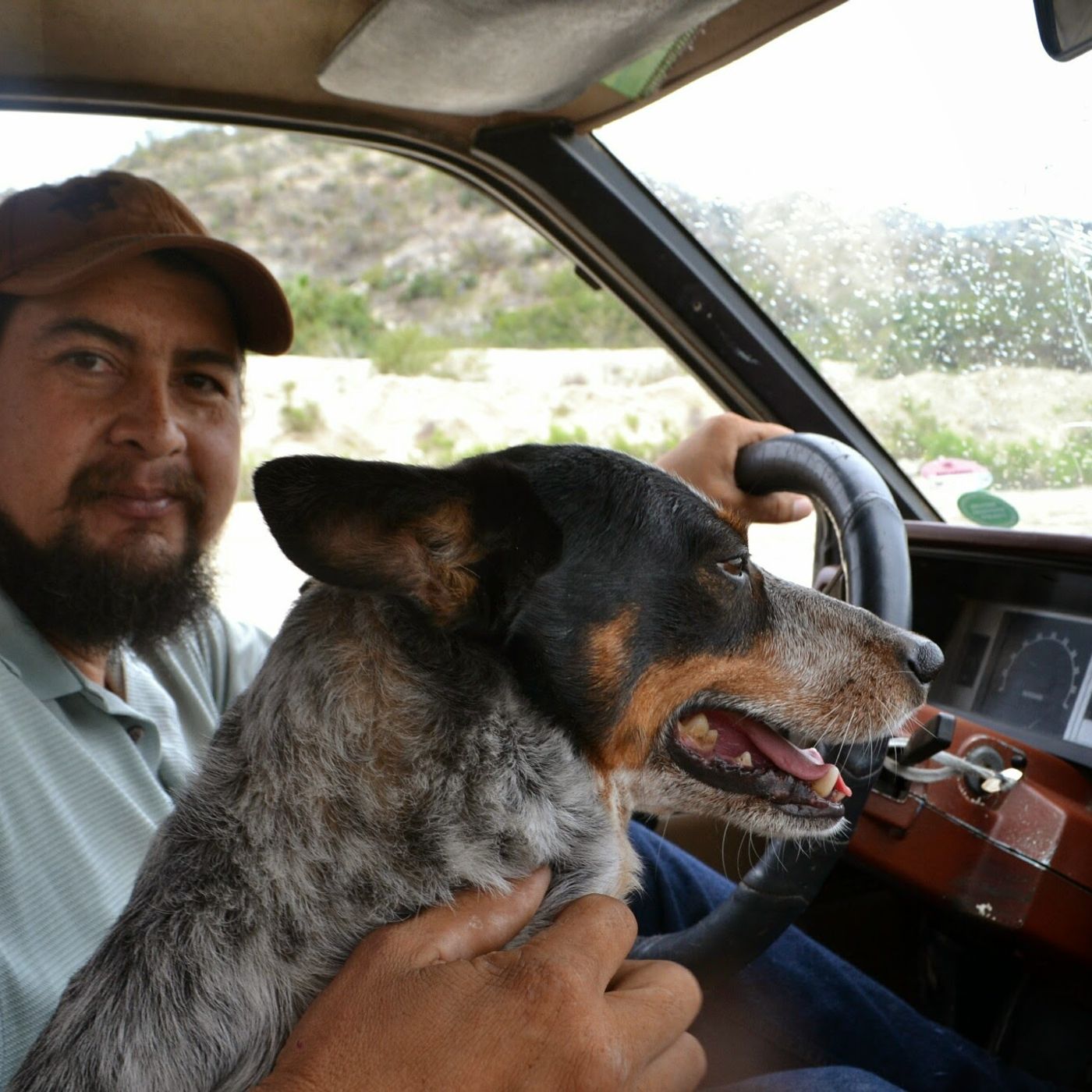
<v Speaker 1>But anyway, I got a picture of this guy and
<v Speaker 1>Jack had a great time. We were trespassing land. That's
<v Speaker 1>how we met yesterday with Adam Black. We were coming
<v Speaker 1>down I was coming down this fucking public road, Colleen
<v Speaker 1>Canyon Trail. You should go trespass on it. If you
<v Speaker 1>get the wild hair up your ass. Look it up
<v Speaker 1>on Google Maps. Goes to some beautiful areas Quirkus Hypo
<v Speaker 1>lucoides up at the top Quirkus Rugosa, beautiful fucking oak
<v Speaker 1>mostly Mexican, very very small population in the Davis Mountains
<v Speaker 1>that will probably be extinct in two decades. And it's
<v Speaker 1>just too dry up there. Whole forest looked like shit,
<v Speaker 1>by the way, lots of die back on all the plants,
<v Speaker 1>tons of madrone backers, big o'lovii. Anyway, that's what I
<v Speaker 1>was I forgot what I was saying. I was talking
<v Speaker 1>about what I would have I would have loved to
<v Speaker 1>know what fucking Mount Livermore was called before it was
<v Speaker 1>called Mount Livermore. I would have loved to know the
<v Speaker 1>native name. No, you know what, That's what I hated
<v Speaker 1>because I I really, I do have a strong interest
<v Speaker 1>in these cultures that were here before, and it's but
<v Speaker 1>they've been so fetishized by so much bullshit on social
<v Speaker 1>media among people whose ideas I agree with, but who
<v Speaker 1>tend to be some of the most obnoxious people one
<v Speaker 1>could interact with, you know, just it's it's it's spoiled
<v Speaker 1>it for me. It's I feel I feel like I'm
<v Speaker 1>becoming part of a cliche by saying this, but I'll
<v Speaker 1>say it anyway. A lot of cool uh history, uh
<v Speaker 1>native history around the Mountain Livermore area. There was a
<v Speaker 1>cache of arrowheads found up there, like all neatly arranged.
<v Speaker 1>You could read. You could go check it out in
<v Speaker 1>the Big Bend Museum museum at a Big Bend in Alpine, Texas.
<v Speaker 1>A lot of cool pictographs and it's just a fucking
<v Speaker 1>cool area. It's a sky island in in the middle
<v Speaker 1>of a very dry area, right, sky island in the
<v Speaker 1>middle of the desert. Same thing that cheer cowers are,
<v Speaker 1>same thing you get in Sonora, same thing that the
<v Speaker 1>Cheeos Mountains are. There were relics, their little refugia for these.
<v Speaker 1>The fucking Cheesos Mountains have cypresses in them. It's the
<v Speaker 1>only Texas population of quote Arizona cypress, the genus Hespero ciprus,
<v Speaker 1>not Mounta Zumas Cypress taxodium. Same family, quite distantly related though,
<v Speaker 1>you know I'm talking about the genus Hespero Cyprus. There's
<v Speaker 1>a disjunct population on the north end, on the north slope,
<v Speaker 1>very steep cliff of the Cook Range in h Deming,
<v Speaker 1>New Mexico as well. And then it's this the Cheesos population,
<v Speaker 1>the Cook Range population. And then you get a couple
<v Speaker 1>in Arizona, get Capressus or Hyspera Ciprus glabor it's in
<v Speaker 1>Hyspera Cyprus. Now you know the genus Capressus is primarily
<v Speaker 1>Old World, doesn't doesn't surprise me. At the fucking Atlantic Ocean,
<v Speaker 1>which I'm writing a whole book about the Atlantic and
<v Speaker 1>Pacific oceans have set, you know, separated the basically the
<v Speaker 1>entire ecosystem of North America from the entire eco system
<v Speaker 1>of Asia and Europe. Not just the ecosystem, but the
<v Speaker 1>whole all the lineages of plants, not just the genus
<v Speaker 1>and the species, but the whole lineage that something might
<v Speaker 1>be a part of. Right, Because most most bird migratory
<v Speaker 1>flight paths are north and south. There are not very
<v Speaker 1>few go across oceans east west. I don't think any
<v Speaker 1>go across the oceans east west. Maybe a little bit
<v Speaker 1>up in Newfoundland. That's that's from up from Newfoundland. There's
<v Speaker 1>a migration path, migratory path that goes from like Newfoundland
<v Speaker 1>east to Europe. But that's way up at the high
<v Speaker 1>latitudes anyway. So me and Adam Black are coming down.
<v Speaker 1>We're coming down this uh Colleen Canyon trail. I'm just
<v Speaker 1>blowing it up, right, because I watch you to go
<v Speaker 1>up there. So all private guys, a fucking lunatic, He'll stop.
<v Speaker 1>You just be nice, talk to them, talk to them,
<v Speaker 1>put on a glue on mustache, put on some shit
<v Speaker 1>that's gonna you know, culturally signify, right, because we're monkeys, right,
<v Speaker 1>We're trying to signify to the other tribe that we're
<v Speaker 1>part of them. We're a fucking Trump hat. I don't know.
<v Speaker 1>Fuck get a black rifle, coffee hat, some right wing shit.
<v Speaker 1>So this guy, you know, maybe it could help you
<v Speaker 1>get a little magnet for the side of your truck
<v Speaker 1>that says you're a kind of I don't fucking know.
<v Speaker 1>Talk to the guy, Tell him you're going up there
<v Speaker 1>to get some duff. You want to get some stuff.
<v Speaker 1>You're trying to get some micro riizel duff from the
<v Speaker 1>Madrones that grow up there, and you just want to
<v Speaker 1>You're just trying to inoculate some Madrones. That's all I'm
<v Speaker 1>trying to do, buddy. I'm not trying to This is
<v Speaker 1>a public road. I'm not trying to step in anybody's toes.
<v Speaker 1>I'm not trying to come, you know, sniff on your
<v Speaker 1>dogs or what. I don't I don't know. I don't
<v Speaker 1>know what people get paranoid about, but everyone in this
<v Speaker 1>state is fucking paranoid all the time. It happens you're
<v Speaker 1>in a public road stop next to someone's property and
<v Speaker 1>they come sniff on you, and I get it. You know,
<v Speaker 1>I get it, maybe you want to know what's going on,
<v Speaker 1>but I just to always assume the worst. Like, does
<v Speaker 1>it ever occur to people that maybe someone's harmless, Maybe
<v Speaker 1>someone is just looking. Maybe someone is just checking out
<v Speaker 1>the land. Maybe somebody is an interest in snakes or
<v Speaker 1>rocks or fucking plants. Maybe they're not trying to look
<v Speaker 1>for they're not scouting away to break into your house
<v Speaker 1>and steal your gun, cash or your mrs or something.
<v Speaker 1>I don't know. Anyway, this guy stopped and Adham just,
<v Speaker 1>you know, he really just he talked to him, he
<v Speaker 1>soothed him. He name dropped a guy we knew that
<v Speaker 1>lived nearby who wasn't home so he couldn't get up
<v Speaker 1>and look for this orchid and other stuff. And then, uh,
<v Speaker 1>you know, I was I was just hanging out in
<v Speaker 1>the back because you know, I think I look the
<v Speaker 1>most suspect. I think if he thinks anyone's gonna be
<v Speaker 1>you know, some goddamn tree hugger or whatever. I don't
<v Speaker 1>don't know what they think. I don't know, I don't
<v Speaker 1>know what their breadth of human experiences with the demographics
<v Speaker 1>in North America, but I'm sure I would probably defy it.
<v Speaker 1>But I'm just trying to hide out on the back,
<v Speaker 1>maintain a low pro let Adam do the talking. Adam
<v Speaker 1>is very calm, non confrontational, right, lukewarm to everybody, certainly
<v Speaker 1>not Chili. You know what I think of like people
<v Speaker 1>that I I can't think of so many friends of
<v Speaker 1>mine that I would not want with me in that situation.
<v Speaker 1>I love them the death, but they make it hot,
<v Speaker 1>you know, they just they they look like criminals. Heart
<v Speaker 1>of gold, but they look like criminals, especially to someone.
<v Speaker 1>You know. Remember at a square community like that, right,
<v Speaker 1>the guy had a little broom mustache and a Jesus
<v Speaker 1>camo hat. I need a fucking Jesus head. She'd get
<v Speaker 1>one of those. It's all about the costume. Man. I
<v Speaker 1>don't give a fuck. I'm not trying to impress anybody, right,
<v Speaker 1>I'm forty years old. I'm not trying to impress anybodymore.
<v Speaker 1>I want to. I just want to not get fucking
<v Speaker 1>harassed and be able to look at cool stuff and
<v Speaker 1>plants and study and learn and get my little bag
<v Speaker 1>of leaf duff from the base of the arbutis the
<v Speaker 1>madrone so I can inoculate the seedlings I have here.
<v Speaker 1>Have you heard about Korean natural farming? Damon Tai told
<v Speaker 1>me about this. It's actually pretty cool. It's about using
<v Speaker 1>the natural soil microbes. Is that what it is? Korean
<v Speaker 1>natural farming KNF. He used the when Damon told me
<v Speaker 1>about it, he used the He used the abbreviation for it.
<v Speaker 1>Was like, oh, yeah, kay, And I'm thinking I would
<v Speaker 1>know what that means. I don't know what the fuck
<v Speaker 1>that means, Korean natural far Let's see what the Wikipedia
<v Speaker 1>says about it. Korean natural farming. It's basically inorganic farming
<v Speaker 1>method that uses indigenous micro organisms. I amos ooh, I
<v Speaker 1>amos indigenous micro organisms. Another abbreviation the fucking acronyms man,
<v Speaker 1>why so many? Anyway, what Korean natural farming is, at
<v Speaker 1>least the part that I took from it that I
<v Speaker 1>paid attention to, because I'll be honest with you, I
<v Speaker 1>lost attention after a while. But what it consists of
<v Speaker 1>is going out finding a patch of some native scrub,
<v Speaker 1>some or trees or whatever native plant life, finding where
<v Speaker 1>it's densest and where there's a good layer of duff,
<v Speaker 1>especially if you're in a woodland. The fucking duff in
<v Speaker 1>these mountains was great. It was just all oak leaf duff.
<v Speaker 1>It was rich. Sadly, probably part of the reason it
<v Speaker 1>was rich because a lot there was a lot of
<v Speaker 1>dieback due to drought, you know, because the climate's changing
<v Speaker 1>like that. I guarantee you at Quircus rugosa is not
<v Speaker 1>going to be there in twenty years, because I don't
<v Speaker 1>see precipitation regimes getting better in Texas anytime soon, at
<v Speaker 1>least not in these desert mountains. Continue drying is what
<v Speaker 1>the models predict. Davis Mountain's got barely any rain this season,
<v Speaker 1>and some rains was to come in the summer. So anyway,
<v Speaker 1>Korean natural farming, you take this box, you go find
<v Speaker 1>out where the plants are. You take a box. You
<v Speaker 1>fill that box with cooked brown rice. You may put
<v Speaker 1>some paper towels at the bottom. Maybe you could use
<v Speaker 1>a little bit of wet cardboard in there too. You're
<v Speaker 1>basically creating a substrate to attract the iMOS, the indigenous
<v Speaker 1>microorganisms out of fungi to micro rhizo fungi, beneficial bacterial
<v Speaker 1>to good shits, and get them to come into your
<v Speaker 1>little box. By a box, I would you could do
<v Speaker 1>like ten inch by ten inch, right, you dig a
<v Speaker 1>hole for the box ten inch by ten inch square
<v Speaker 1>by maybe three inches wide or not wide tall, excuse
<v Speaker 1>me not to be about three inches four inches tall,
<v Speaker 1>and you set us in the ground, you dig out,
<v Speaker 1>you bring a trial with you and dig a little
<v Speaker 1>indentation for the box right in the duff. You want
<v Speaker 1>that rich duff. It's got to be the rich duff.
<v Speaker 1>Can't just be barren soil. You're looking for a relatively
<v Speaker 1>you know, because good a good patch of native plants
<v Speaker 1>created its own humidity, its own micro climate. That's what
<v Speaker 1>plants do. When people were you know, for instance, trying
<v Speaker 1>to inoculate mulch with Silassa by Lena I, the psychoactive
<v Speaker 1>mushroom or silasa by cyan essence in the Bay era.
<v Speaker 1>You look for, you know, a good patch of mulsh
<v Speaker 1>that was beneath alike canopy of some hideous horticultural garbage, right,
<v Speaker 1>because that's where those things grow best. They grow most
<v Speaker 1>beds in human land, you know, human landscaping, and plants
<v Speaker 1>create their own little humid microclimate. You know, you got
<v Speaker 1>more plant covered area, it's going to be more humidity
<v Speaker 1>in that little area. Then there will be outside of
<v Speaker 1>it just on a sidewalk or some so you look
<v Speaker 1>for where those plants are, right, some native plants, and
<v Speaker 1>whatever little scrubby patch of habitat you have left around you,
<v Speaker 1>maybe even if it's in a park or something. You
<v Speaker 1>dig out a little hole. You set the box with
<v Speaker 1>the brown rice and the paper towels and all that
<v Speaker 1>shit in the hole. You leave it for five or
<v Speaker 1>six days. Hopefully nobody comes and you know, takes the
<v Speaker 1>shit in it, or steals it or messes with it.
<v Speaker 1>I don't know how many tweakers you have living around
<v Speaker 1>you where you live. I don't know how many you know,
<v Speaker 1>negative Nancy Karens, you know, might go out there and
<v Speaker 1>try to clean it up. You want to cover it up,
<v Speaker 1>cover it with the leaves and the moulch in the debris,
<v Speaker 1>and after five six days shit I would leave it
<v Speaker 1>there a week hopefully it's it's you know, you get
<v Speaker 1>some rain, it's been humid enough. If it's super dry,
<v Speaker 1>obviously not going to attract a lot of stuff. And
<v Speaker 1>after a week you go, you get that box, you
<v Speaker 1>excavate it, take it back, and that's gonna be your
<v Speaker 1>collection box where you got all these living organisms. Now,
<v Speaker 1>all the the iMOS the indigenous micro organ Hopefully you
<v Speaker 1>got a bunch of native fungi and bacteria. But you're
<v Speaker 1>basically cultivating this life, this microbial life in the soil
<v Speaker 1>because when the microrhizal fungi will associate with plants, they
<v Speaker 1>act as a protection, right like bouncers against the pathogenic fungi,
<v Speaker 1>right because why would they let another fungal species compromise
<v Speaker 1>their food source. So you take this stuff home, this box,
<v Speaker 1>all right, and you put it in a mixing bowl,
<v Speaker 1>mix it one to one with some brown sugar. You
<v Speaker 1>don't want processed sugar. You don't want the white shit. Okay,
<v Speaker 1>no whitey and that sugar. This is what you're doing now,
<v Speaker 1>are supposedly sending it into a state of dormancy one
<v Speaker 1>to one ratio brown sugar to this brown rice that's
<v Speaker 1>been inoculated with all these microorganisms. And then you put
<v Speaker 1>it in a jar, fill about three quarters the way up. Okay,
<v Speaker 1>tie you like a us to paper tolerant with a
<v Speaker 1>rubber band. Some what the what the sugar is going
<v Speaker 1>to do is send it, supposedly, send it into a
<v Speaker 1>state of dormancy, pull water out of it, dry it
<v Speaker 1>out and it's gonna, you know, have a longer shelf life.
<v Speaker 1>You could also presumably, uh, you know, just directly throw
<v Speaker 1>it in the ground. Throw it on the ground, uh
<v Speaker 1>you know, in the soil at your yard. Put a
<v Speaker 1>piece of cardboard over it, right, water it broader to
<v Speaker 1>the top of the cardboard. Because most most you know,
<v Speaker 1>water out the tap out of the hoe is going
<v Speaker 1>to have chlorine in it. It's not really good. Most
<v Speaker 1>most water at the tap is probably not going to
<v Speaker 1>be ideal for cultivating fungi. And uh, anyway, you just
<v Speaker 1>throw mulch on there, give it food to eat. You're
<v Speaker 1>basically giving it food that you've super shared it with
<v Speaker 1>the brown rice. Throw a little brown sugar in there
<v Speaker 1>as well, and uh and then you know, just basically
<v Speaker 1>get it going. But do you want more duff? You
<v Speaker 1>want stuff for it to eat? Right? I would probably
<v Speaker 1>fuck around a couple of times with it, you know,
<v Speaker 1>just see just see what you could do, See if
<v Speaker 1>you can end up if it takes off, you can
<v Speaker 1>lift up the cardboard in a week and see if
<v Speaker 1>it's if you see my celium, if you see some
<v Speaker 1>heifel strands, and that's what I was seeing at uh
<v Speaker 1>in the Davis Mountains yesterday. I was seeing just tons
<v Speaker 1>of my celium. It's in a video. Put it in
<v Speaker 1>a video, too, big chunks of my celium. No idea
<v Speaker 1>what species I was thinking about? Since since the Davis
<v Speaker 1>Mountains basically are a sky island, what that means is
<v Speaker 1>there an island, a high altitude island sound by much
<v Speaker 1>lower elevation deserts. So a lot of these things that
<v Speaker 1>can grow in these sky islands are completely isolated from
<v Speaker 1>any other populations of these things unless there's I presumably
<v Speaker 1>there's birds occasionally flying in between different sky islands different
<v Speaker 1>mountain ranges in West Texas. But are they how much?
<v Speaker 1>What are they bringing with them though? Huh? Suitcase full
<v Speaker 1>of my celium and hypfeed? Probably not. I'd love to
<v Speaker 1>know what fungi grow in the Davis Mountains. You'd have
<v Speaker 1>to go there after, you know, a steady amount of rain.
<v Speaker 1>It had rained when we were there. It was nice
<v Speaker 1>and cool and moist, but it was a very light
<v Speaker 1>rain and was the first one in months. We need
<v Speaker 1>heavy rain bring out some of those mushrooms, seawood species.
<v Speaker 1>Are there probably tons of micro risers, There's tons of pines,
<v Speaker 1>tons of oaks. Hypo lucoids quirkus hype lucoids is a
<v Speaker 1>fucking gorgeous So I've seen that what near the Kent
<v Speaker 1>Observatory in Arizona. Is that what it is? Kent? I
<v Speaker 1>don't know another sky island, but it makes me wonder,
<v Speaker 1>you know what, what's gonna happen to some of these
<v Speaker 1>these mountain ranges. And it's just it's a fucking travesty
<v Speaker 1>too that no one can get in there and study.
<v Speaker 1>I mean, you know, Nature Conservancy lets people in like
<v Speaker 1>three days a year, and I guess you can contact
<v Speaker 1>them and see, but you know, fuck Nature Conservancy. Honestly,
<v Speaker 1>I'm glad they exist and they own stuff. I'm you know,
<v Speaker 1>it's not owned by some mean honky like a lot
<v Speaker 1>of stuff and in West Texas is but they're you know,
<v Speaker 1>they don't. I don't know they're they're they just sent
<v Speaker 1>me too much junkman I donated to them once. They
<v Speaker 1>easily outspent whatever I donated to them and sending me
<v Speaker 1>junk mail asking for more money. I trespassed there once
<v Speaker 1>in twenty fourteen looking for piness. I think it was pseudostrobis,
<v Speaker 1>and I got some cones and uh and then dipped
<v Speaker 1>out and I wasn't caught, which was nice. But it's
<v Speaker 1>you know, it's such a grave crime here. It's just
<v Speaker 1>it's looked down up it's like such a fucking you
<v Speaker 1>feel like you're like breaking into the Swiss bank. It's like,
<v Speaker 1>Jesus christ Man, I just want to go look at
<v Speaker 1>some fucking rocks and trees. You know. It's just anyway,
<v Speaker 1>but great habitat up there, lots of cool stuff. Saw
<v Speaker 1>Pakara Milla lobata. That's a rare one. Saw that back
<v Speaker 1>risk big o'lovi. I I saw an Agritina. I think
<v Speaker 1>I saw Brokelly astrom to, all these members of is
<v Speaker 1>Stevia tribe of ASTRACI saw a weird a Kino sirius
<v Speaker 1>up there too, that's I think is a local endemic.
<v Speaker 1>Saw Pelea rdiana. I saw, you know, one of those
<v Speaker 1>cool kylanthoid ferns, those desert ferns I saw. I think
<v Speaker 1>it was Meriaptorus oria as well. Pinus sombroidies, the pinion pine,
<v Speaker 1>the non pinion pine, the non limestone pinion pine. It's
<v Speaker 1>got a much different habit and form than a Pinus ramota,
<v Speaker 1>which grows on limestone and reportedly grows with peyote in
<v Speaker 1>Presidio County in a couple spots, also on private property,
<v Speaker 1>this one owned by some rich freak who doesn't like
<v Speaker 1>letting people on, very very protective of his three hundred
<v Speaker 1>thousand acres or whatever massive amount he owns. But God,
<v Speaker 1>I would love to collect mushrooms ectomicael rhizal mushrooms coming
<v Speaker 1>up at the base of madrones, get them sequenced, and
<v Speaker 1>just create a list of what that tree grows with.
<v Speaker 1>And I guess supposedly the ones in Texas, the madrones
<v Speaker 1>in Texas are considered a different variety. Sure, I'll take that.
<v Speaker 1>Because most of the population of Arbutus hollapensus is in Mexico.
<v Speaker 1>I would accept that the ones in Texas are different.
<v Speaker 1>It makes sense there are ecotypes. It would make sense
<v Speaker 1>there's a different ecotype, a more droughted adapted ecotype of
<v Speaker 1>this species, because the habitat in West Texas is not
<v Speaker 1>like the habitat in Central Mexico. In Central Mexico, you'll
<v Speaker 1>see these trees growing at eight thousand, nine thousand feet,
<v Speaker 1>very wet forests forced to get a lot more rain
<v Speaker 1>than do these areas where They grow from the Edwards
<v Speaker 1>Plateau just west of Austin all the way out to
<v Speaker 1>the Chizos Mountains, the Guadalupe Mountains, various sky islands like
<v Speaker 1>the Davis Mountains. Saw that madrona out on a road
<v Speaker 1>in Picos County, the middle of fucking nowhere too, like
<v Speaker 1>Limestone Canyon, only two trees left. They looked like shit.
<v Speaker 1>They were both experiencing a lot of die back and
<v Speaker 1>basically a desert. The whole area is basically already desert,
<v Speaker 1>already higher desert, but still desert. But remember they got
<v Speaker 1>those are buttoid micro riise, so they associate with Ecto
<v Speaker 1>micro rhizel fungi. But instead of forming a heart take net,
<v Speaker 1>just that sheath over the roots Ecto as opposed to
<v Speaker 1>end though the Acto micro rhizel species a lot of
<v Speaker 1>city of my seats. There's a couple of asking my
<v Speaker 1>seats too, actually penetrate the cortex the cells and the
<v Speaker 1>cortex of the roots. So they behave endo Michael Risley
<v Speaker 1>that they're basically ecto Michael Riseley, that behave endo, Michael Risley,
<v Speaker 1>and I would love to know what fucking species are
<v Speaker 1>growing with the madrones in West Texas, And all you'd
<v Speaker 1>have to do is be there at the right time
<v Speaker 1>and make some collections and I naturalist observations, and then
<v Speaker 1>you know, fungi are a lot easier to sequence the
<v Speaker 1>DNA sequence and plants, and so you could just you know, collect,
<v Speaker 1>make some collections, sequence them, make some notes, put it
<v Speaker 1>on a naturalists, put it in the notes on a naturalists.
<v Speaker 1>The fun thing to write a paper m what ecto,
<v Speaker 1>Michael Ryzel Fungi grow with madrones because I noticed that
<v Speaker 1>too when I was when I was with Alan Rockefeller
<v Speaker 1>and Jordan Jacobs and bah we saw a relative of
<v Speaker 1>Ma drones or nithostafalos opposite of Folio, another ar buttoid plant,
<v Speaker 1>one of my favorite, probably my favorite, most favorite plant
<v Speaker 1>in that clade, that evolutionary group. And in baj some
<v Speaker 1>of those things get you know, twenty feet tall. We
<v Speaker 1>saw twenty foot tall or Nithos staflos opposite of Folio
<v Speaker 1>twenty foot tall or Nithos staffalos. Most were a lot
<v Speaker 1>shorter than that, growing in you know, chaparral on very
<v Speaker 1>steep slopes. But this was the only Michael Rhizel shrub
<v Speaker 1>out of all the ones that were growing at the
<v Speaker 1>especially this one location right on a road cut, like
<v Speaker 1>the trail was cut in to this side of this slope,
<v Speaker 1>very steep slope. Was what the fuck was? It was
<v Speaker 1>just it was, you know, like an hour south of
<v Speaker 1>Ensnata maybe not even really cool area, giant coast live
<v Speaker 1>oaks at the at the base of his canyon, and
<v Speaker 1>you know, you go three hours south of there and
<v Speaker 1>it's desert. There's a giant fucking cactae everywhere, you know, Pakaserius,
<v Speaker 1>pringly eye, boot jump trees, Pulcheria columnars, et cetera. But
<v Speaker 1>at this one spot it was Ornio staflos and a
<v Speaker 1>couple other shrub species that there was a se and
<v Speaker 1>not this made probably malosmalorina, which is a really common
<v Speaker 1>member of Anacardi a c it's a relative of sumac.
<v Speaker 1>There and we're at this road cut and so we
<v Speaker 1>got a clear view the Orneo staffoloats. The ground level
<v Speaker 1>was like at at our heads because of the way
<v Speaker 1>this road cut and how steep the slope was. And
<v Speaker 1>so we saw all these fungal species tarzeeda species of
<v Speaker 1>Cultricia the genus Tarzeeda. What is that that's an asco
<v Speaker 1>my seed i. Think I got some unnaturalist observations. February
<v Speaker 1>twenty third, twenty twenty four. Tarzzeeda t A r z
<v Speaker 1>E T t E tt A. Excuse me, which is
<v Speaker 1>Michael Rhyzel. It's a micro rhyzel fungus. Is that right?
<v Speaker 1>Asco my Cota, Yeah, it is asco my seed. Tarzeeda
<v Speaker 1>is micae hyzel. I should let me check that. Yes.
<v Speaker 1>The genus Tarzeeda forms ecto micro hyizel associations with both
<v Speaker 1>gymnosperms and angiosperms, forms a Ectomichael rysea with trees such
<v Speaker 1>as Vegas Slvadica corcus, the glassy on Pinus, Monacola corlis. Oh, anyway,
<v Speaker 1>Tarzeeda and Caltricia lactarius, those are all micae rhyzol Lactarius rufulus.
<v Speaker 1>We saw a species in the genus Rusola, which of
<v Speaker 1>course is ectomycro ryzel. All these things were like right
<v Speaker 1>at our eye level. We were looking at the roots,
<v Speaker 1>fucking fucking amazing. Where was it that was near u
<v Speaker 1>Las cagnatis, near Rancho Cognon, Buena Vista, Rancho Cagnon. So
<v Speaker 1>I'm curious what is Ectomichael ryiselin these madrones. I love
<v Speaker 1>just piecing to get like put like pieces to a puzzle,
<v Speaker 1>putting together pieces of the ecosystem, seeing what relates to what?
<v Speaker 1>What is? What else? Is apara trophic there? What's what
<v Speaker 1>are the decomposers? What's breaking stuff down? Well? How much?
<v Speaker 1>What is the mushroom diversity that's been found in the
<v Speaker 1>Davis Mountains, in the whole county and in all of
<v Speaker 1>jeff Davis County. There's only three observations of the genus Russola,
<v Speaker 1>fucking criminal. No observations of Tarzeeda, the genus Tarzetah. There's
<v Speaker 1>a rousla I kids see that, you know. There's Quirkus
<v Speaker 1>hype leucoides, that beautiful oak, and Pinus sombroides cones all
<v Speaker 1>over the ground on the Duff So so there's a
<v Speaker 1>russela there, and none of them are identified the species.
<v Speaker 1>More God, there's so much understudied stuff out there. Drives
<v Speaker 1>me fucking nuts, you know. And it's another reason it's understudied.
<v Speaker 1>It's because it's all private land and all these fucking
<v Speaker 1>fucks are paranoid. Actually that's not true. There was a
<v Speaker 1>nice There was a nice man who was gonna let
<v Speaker 1>us on his land. He just wasn't home. I thought
<v Speaker 1>we got an amanita too. We got an amanita there.
<v Speaker 1>Those are Michael Rizel, Ecto Micae Riiseel. There's a tulastoma.
<v Speaker 1>There's uh Luco coprinus. I think that's the common one though,
<v Speaker 1>Dacryo pinax. God, there's still put there for a lot
<v Speaker 1>of these. There's only one observation of zero zero camelis.
<v Speaker 1>It's Bullatasi. It's Ecto Michael Riiseel as well. Again there's
<v Speaker 1>there's a dearth. There's a paucity of observations of fungie
<v Speaker 1>in the Davis Mountains. So the thing to do is, hopefully,
<v Speaker 1>whenever they get a good rain, get people up there.
<v Speaker 1>You need to because a lot of this stuff probably
<v Speaker 1>won't be here in twenty or thirty years. The climate's drying.
<v Speaker 1>Wonder if the Madrones will still be in the Davis
<v Speaker 1>Mountains in twenty or thirty years. It's gonna get so
<v Speaker 1>much drier. You know, this is a cleansing event. This
<v Speaker 1>is going to extirpate some tree species and probably some
<v Speaker 1>fungal species from these mountains, or at least severely reduce
<v Speaker 1>their range. So get in catalog. And while it's here before,
<v Speaker 1>it's not here anymore. All the models for climate change
<v Speaker 1>show it just getting drier, and it is dry. There's
<v Speaker 1>trees dying all throughout. All the major towns are fucking
<v Speaker 1>Marfa Alpine, a lot of drought and die back. Anyway,
<v Speaker 1>in other news, I think I talked about this well.
<v Speaker 1>First off, we got to talk about the fucking Ethiopian
<v Speaker 1>wolves pollinating Kniphofia, which is a relative of Alofia. You
<v Speaker 1>spell the k n i p h o f i a.
<v Speaker 1>How many species? At least? How many species on inet
<v Speaker 1>niffo fe uh oh, there's quite a few. It's quite
<v Speaker 1>species rich. How many variations on the theme. I've seen
<v Speaker 1>Niphofias sarmentosa in South Africa, but this was in Ethiopia.
<v Speaker 1>But I guess these tourists, I don't know where they
<v Speaker 1>You could hear the whisper in the background where they
<v Speaker 1>were they Dutch? Did they have that funny accent? I'm fuck,
<v Speaker 1>I'm sorry. I didn't mean that. I'm not trying to
<v Speaker 1>make fun of anybody's accent, least of all me, especially
<v Speaker 1>me with this nasally Midwest. You know, everybody in the
<v Speaker 1>Midwest just uh sixty four species center of diversity. Where
<v Speaker 1>is the center of the diversity for I don't know.
<v Speaker 1>Somewhere on the African continent, but they're popular in gardens.
<v Speaker 1>But the is this Ethiopian wolf, which is fucking cute.
<v Speaker 1>I love canids. I like I like cats too, just
<v Speaker 1>just wild ones, not feral ones. Yeah, I mean I
<v Speaker 1>even if you've got a cat and you're keeping it,
<v Speaker 1>you know, you get little ramps and shit for it
<v Speaker 1>in your house. I like that too, a pett it.
<v Speaker 1>We're rubber gloves and pettit, you know. So I don't
<v Speaker 1>break out in hives. But it's just when they're feral,
<v Speaker 1>you know. It's when they're feral, that's when they're fertilizer.
<v Speaker 1>They're better off as fertilizer anyway. So this wolf was
<v Speaker 1>licking at these inflorescences in Niphofia. I had like fifteen
<v Speaker 1>different people sent it to me, probably more, but you know,
<v Speaker 1>some some budding pollination biologists out there pollination syndrome for
<v Speaker 1>this plant. It's interesting. It probably evolved with bird pollination
<v Speaker 1>like most of them did. But you know, it'll take
<v Speaker 1>what it can get. It's an opportunist and probably a
<v Speaker 1>lot of nectar in those flowers too, and those individual
<v Speaker 1>tiny tube flowers, as you would expect with most plants
<v Speaker 1>that produce flowers that are pollinated by birds. So anyway,
<v Speaker 1>I thought that was pretty fucking interesting. It's probably not
<v Speaker 1>the dominant pollinator. It hasn't it's not the pollinator it's
<v Speaker 1>evolved with. But again, you take it when you can
<v Speaker 1>get it. Probably dominant pollinator for that Niphobia species as birds.
<v Speaker 1>But this wolf uh is no doubt doing it too,
<v Speaker 1>literally going from one plant to another, licking the inflorescences.
<v Speaker 1>It was very cute. On that note. I was just
<v Speaker 1>feeding a little gray fox in my town out here
<v Speaker 1>in West Texas. They say't not supposed to do that.
<v Speaker 1>But the thing, there's fucking Sonic Burger here, all right.
<v Speaker 1>I've never eaten Sonic Burger and it's fucking gross. But
<v Speaker 1>I'm sure their employees are not throwing, you know. I'm
<v Speaker 1>sure I'm sure a couple of those those you know,
<v Speaker 1>curly fries or whatever the fuck, they're feeding people like
<v Speaker 1>pigs at a trough over there at Sonic Burger. I'm
<v Speaker 1>sure some of those curly fries are making their way
<v Speaker 1>to the pavement to the asphalt, all right, and this
<v Speaker 1>fox is going to eat the So what is what
<v Speaker 1>is the harm in giving it a little bit of kibble?
<v Speaker 1>High quality kibble too, right, maybe paperoni once in a while.
<v Speaker 1>I don't think that's that I don't think that's that bad.
<v Speaker 1>These things are literally living in people's yards in bushes.
<v Speaker 1>We have a lot of senior citizens in this town,
<v Speaker 1>you know who, don't you know, that's a spot to live.
<v Speaker 1>If you're gonna if you're gonna squat in someone's backyard
<v Speaker 1>and you're a gray fox, you want to pick the
<v Speaker 1>seniors right, because they're not gonna shoot you. They'll probably
<v Speaker 1>appreciate you. They're pretty docile, right, they may not even
<v Speaker 1>notice you. They might even know you're there. If I
<v Speaker 1>make it to that age, I won't even know where
<v Speaker 1>I am anymore. Half the time I'll be fucking probably
<v Speaker 1>popping pills or something, which I don't do that shit now.
<v Speaker 1>I'm basically sober now occasional, pretty occasional, except for the
<v Speaker 1>occasional psychedelic. But you know, when you're that old, fuck it,
<v Speaker 1>what do you got to lose? Right? Just start, you know,
<v Speaker 1>start doing rails a blow fucking just kidding I'm just kidding.
<v Speaker 1>Cocaine's a horrible drug, makes people way more obnoxious than
<v Speaker 1>alcohol does, but not by much. Alcohol is pretty fucking
<v Speaker 1>annoying too. What a fucking stupid poison. No offense anyway,
<v Speaker 1>But I was, Yeah, I was feeding this thing and
<v Speaker 1>just watching it go to town. I've got a beef
<v Speaker 1>with the deer. I fucking hate him. I really do.
<v Speaker 1>They nibble everything down. I've been planting stuff all around town.
<v Speaker 1>I've got to put chicken wire up over everything. I
<v Speaker 1>saw them go for some uh oh god, I forget
<v Speaker 1>the name of the yucca species, but they were trying
<v Speaker 1>to eat leaves of this yuka. It didn't work because
<v Speaker 1>the leaves have the consistency of plastic. It was one
<v Speaker 1>of the non it was one of the spineless yukas,
<v Speaker 1>one of the Mexican ones with very thin leaves, and
<v Speaker 1>they were trying to eat it. Fucking idiots, man. And
<v Speaker 1>you know there's there's way too many of them. There's
<v Speaker 1>no mountain lions because I'm sure you know somebody would
<v Speaker 1>call the cops on it and they'd shoot it. But
<v Speaker 1>you got to start taking them out. You got to
<v Speaker 1>start taking out the deer. It's for you know, it's
<v Speaker 1>for the good at the whole ecosystem. You got to
<v Speaker 1>be a disturbance regime that takes out a couple deer
<v Speaker 1>every once in a while. Right, call your friend, have
<v Speaker 1>her come over, have her go dump a body with
<v Speaker 1>you south of town. Have call your friend, the same
<v Speaker 1>friend who's who's saved your ass so many times. Have
<v Speaker 1>her come over at eleven thirty at night. Field dressed
<v Speaker 1>the thing, gut it, dump the guts out in the
<v Speaker 1>little gut back. Then you go take them to U
<v Speaker 1>somewhere so the vultures can eat them, maybe even a fox.
<v Speaker 1>I bet the fox would love to eat some deer guts.
<v Speaker 1>And uh, when you're done, you put the skull in
<v Speaker 1>a pike in front of your you know, your front yard,
<v Speaker 1>so all the deer friends notice, stay away and not
<v Speaker 1>go for your Cotinus abovedas you just plant through your
<v Speaker 1>arbutus or any of that. Just start popping these things, man,
<v Speaker 1>I'm serious. You know you don't even need a suppressor.
<v Speaker 1>I bet you could take one of them out with
<v Speaker 1>a pellet gun if you got it in a fucking cranium.
<v Speaker 1>Is it? Is it? The advertise the advertiser is gonna.
<v Speaker 1>I mean, I'm basically advocating poaching deer, shooting deer out
<v Speaker 1>of season. But seriously, they're they're they're a fucking scourge. Man.
<v Speaker 1>It's awful. You know, they don't even care. They're not
<v Speaker 1>even freaked out by people anymore. I'd one go for
<v Speaker 1>the dog. The other day, I beamed it in the
<v Speaker 1>head with a pole. They're just they're they're bad, and
<v Speaker 1>it's on. It's real beef. Now, it's real beef. Right.
<v Speaker 1>You think they're cute, You go, you try and deal
<v Speaker 1>with this ship, watch them destroy your hard work. They
<v Speaker 1>stink too. Why it doesn't bother me so much, but
<v Speaker 1>they all look like shit. They're gonna, you know, if
<v Speaker 1>if the population gets too big, they're gonna get sick.
<v Speaker 1>They're gonna start. It's not good. You don't want that.
<v Speaker 1>You go to take them out, Start taking them out. Okay,
<v Speaker 1>Now I'm gonna give you guys a final exam, the
<v Speaker 1>same final exam I gave to my students. It's forty
<v Speaker 1>three questions. This is easy, this is nothing, but this
<v Speaker 1>is an intro class. Remember, Okay, Okay, So we'll start
<v Speaker 1>with the first question. The majority of plants on Earth
<v Speaker 1>or in eighty eight percent are what A marsies B
<v Speaker 1>ferns CE, angiosperms D gymnose sperms. You know this one.
<v Speaker 1>You gotta know this one, right. It's Angie's from fucking
<v Speaker 1>flowering plants. Question two. If separate sex organs are found
<v Speaker 1>on separate plants, making the individual plant produce either male
<v Speaker 1>staminate or female pistolate in parentheses flowers, but never both,
<v Speaker 1>this is called being what a monoecious B, dioecious C
<v Speaker 1>bisexual D having perfect flowers. It's fucking dioecious. How many
<v Speaker 1>times have I talked about this in the podcast? Of course?
<v Speaker 1>Right all the time. I Question three? Unlike animals, plant
<v Speaker 1>cells have a membrane bound nuclei B mitochondria see a
<v Speaker 1>cell wall or vacuols? What a plant cells have that?
<v Speaker 1>Animals don't a cell wall? All right, I got a
<v Speaker 1>cell wall, They got the membraneto, but they have a
<v Speaker 1>cell wall, right, They gotta cell membrane and a cell wall.
<v Speaker 1>Animals just have a cell membrane. Which of these is
<v Speaker 1>true about photosynthesis? During photosynthesis, water is split first, then
<v Speaker 1>carbon dioxide is fixed. The oxygen from water leaves the
<v Speaker 1>plant and carbon dioxide has bonded with hydrogen to build glucose.
<v Speaker 1>That's question A. During photos and this is carbon dioxide
<v Speaker 1>is split and the oxygen leaves the plant while water
<v Speaker 1>is incorporated to build glucose molecules. That doesn't make any sense,
<v Speaker 1>does it? Fuck? No, See, during photosynthesis, water and carbon
<v Speaker 1>dioxide all come together to form glucose. Nope, that's not
<v Speaker 1>it either. Question five. Oh, that's just to tell you
<v Speaker 1>the answer that was question It was a. It was a.
<v Speaker 1>During photosynthesis, water is split first, right, then carbon dioxide
<v Speaker 1>is fixed and the oxygen from water leaves the plant.
<v Speaker 1>Carbon dioxide is biohydrogen to build glucose. Remember, now you
<v Speaker 1>get the light reactions, you get the Calvin cycle and
<v Speaker 1>the light reactions. Where water is split, you've got photosystem two,
<v Speaker 1>then photosystem one. Photosystem two counterintuitively comes before photosystem one
<v Speaker 1>because it was discovered after photosystem one was but it
<v Speaker 1>comes before it, which is counterintuitive. And then of course
<v Speaker 1>you get that once that water molecule has split, those
<v Speaker 1>electrons are used to generate ATP and d NA DPH
<v Speaker 1>and then that is used to fix quote fix carbon dioxide. Okay,
<v Speaker 1>which plant family has a single outlier one species in
<v Speaker 1>equatorial Africa, but is otherwise native entirely to the America's
<v Speaker 1>a coffee family, rubyac b orchid family or kid ac
<v Speaker 1>see legum family Fabaesi or d Bermeliad family bromeliac and
<v Speaker 1>this is also known as being restricted to the New
<v Speaker 1>World except for one species, it would be Bermeleiad family.
<v Speaker 1>It's got a species of Piccarnia in equatorial western Africa,
<v Speaker 1>but other than that, all Bromeliads are native. From fucking
<v Speaker 1>pineapples to Spanish moss to quote bal moss our native
<v Speaker 1>to the Americas, just like the cactus family. Same thing
<v Speaker 1>with the cactus family Ripsolis basifa, which is an epiphyte,
<v Speaker 1>grows in Africa, probably the result of bird dispersal. God
<v Speaker 1>knows how long ago, could be debris raft two. I
<v Speaker 1>guess maybe like some fruits. It doesn't make sense. I
<v Speaker 1>don't know who the fuck knows, But otherwise all cacti
<v Speaker 1>are native to the Americas. To the quote new World,
<v Speaker 1>I can't believe I had someone give me shit for
<v Speaker 1>saying New World once. Shouldn't say New World. The fucking God,
<v Speaker 1>Jesus Christ, oh my God, just do you abandon the
<v Speaker 1>working class, you take up these identity politics, start parroting
<v Speaker 1>all this dumb shit policing people. Nobody likes it. Oh God, anyway,
<v Speaker 1>you tell I have trauma, I do. I lived in
<v Speaker 1>a Bay Area too long. I think that's really what
<v Speaker 1>it was. You know, none of that is what happened otherwise.
<v Speaker 1>It is question number seven. It is most the only
<v Speaker 1>wind pollinated plants that cause seasonal allergies. True or false? True? Right,
<v Speaker 1>Because if you're a wind pilant, if you're an insect
<v Speaker 1>pollinated plant, you're not just dumping pollen out onto the
<v Speaker 1>out onto the wind currents. That doesn't make any sense.
<v Speaker 1>Windborn pollen is it requires a completely different set of
<v Speaker 1>stamens not included in a flower. They've got to be
<v Speaker 1>dangling out. If you look at an ambrosia, the ragweeds,
<v Speaker 1>which is is a genus in the sunflower family, right,
<v Speaker 1>those in most plants in the sun family, they've got
<v Speaker 1>fused anther tubes. The individual florets have anthers that are
<v Speaker 1>facing inward and fused into a tube. But in the
<v Speaker 1>case of Ambrosia, since most of them are wind pollinated,
<v Speaker 1>you can literally see on some of those ambrosia flowers,
<v Speaker 1>and they'll always be on a spike, or the capitula
<v Speaker 1>will the flower heads. They're tiny little flower heads. They're
<v Speaker 1>normally pendent on a spike. A lot of wind borne
<v Speaker 1>flowers are pendent of course too, so that they're hanging
<v Speaker 1>in the wind and they can get hit. If you
<v Speaker 1>look on an ambrosia, those anthers are pendant on that
<v Speaker 1>spike of flower heads, the individual flowers inside the flower heads,
<v Speaker 1>and they're actually exerted, that is poking out those capitula
<v Speaker 1>a little bit. It's wild to see, and you can
<v Speaker 1>tap them in the pollen you'll get, you know, clouds
<v Speaker 1>of pollen come off. If you tap a fucking daisy
<v Speaker 1>or a sunflower, you're not gonna get clouds of pollen
<v Speaker 1>coming off. Right, you tap a box celder, you'll see
<v Speaker 1>the same thing. A lot of grass species wind pollinated.
<v Speaker 1>If the if they're producing the same same time as
<v Speaker 1>you're there, you know you'll see it, clouds of yellow
<v Speaker 1>pollen coming off. That's how there's no you're not going
<v Speaker 1>to come in contact with pollen on on non non
<v Speaker 1>wind pollinated plants. Okay, questionnaight, who's the godfather of modern genetics?
<v Speaker 1>Hopefully you know this one. Gregor Mendel, Gregor fucking Mendel.
<v Speaker 1>You know the whole, the whole p flower thing, Purple flowers,
<v Speaker 1>white flowers, all that learned that there were recessive trades,
<v Speaker 1>dominant traits. I apologize a lot of you probably know
<v Speaker 1>these already. These are my questions for first year bodany students.
<v Speaker 1>What's the genus of southern beaches that have distributions across
<v Speaker 1>different continents? A distribution that is a relict of the
<v Speaker 1>break about a super continent Antwana? A not the Vegas
<v Speaker 1>b acer maples, C. Pinus pines, D. Corcus oaks. It's
<v Speaker 1>a not the Vegas question ten. Why do invasive What
<v Speaker 1>do invasive plants lack that prevents them from forming monocultures
<v Speaker 1>in the ecosystems where they are native? What do they
<v Speaker 1>lack in their arrivalries? Their arrival ecosystems AC dispersers, B pollinators, C.
<v Speaker 1>Herbiphores or D ecological checks and balances such as pathogenic
<v Speaker 1>fungi or insects. It's D question eleven. The sporophyte generation
<v Speaker 1>is dominant in all the following lineages except A ferns, B.
<v Speaker 1>Bryophytes c angiosperms, D gendal sperms, B bryophytes, the mosses.
<v Speaker 1>The sporophyte in most of all the bryophytes except the hornwortz,
<v Speaker 1>is not photosynthetic. It's just a little looks like a
<v Speaker 1>little semaphore. So when you're looking at a moss, you're
<v Speaker 1>looking at a haploid organism. It's only got half the
<v Speaker 1>set of chromosomes. It's the gametophyte versus the sporophyte, which
<v Speaker 1>is diploid. It's got both copies of chromosomes, or yeah,
<v Speaker 1>both copies of chromosomes. Excuse me, like humans do. It's
<v Speaker 1>got the full set, right, whereas the cometophyte is haploid.
<v Speaker 1>So you know, and why happloid? Why diploid? Two haploid
<v Speaker 1>halves come together to form a whole. To form a
<v Speaker 1>new phenotype, a new individual that's not a clone of
<v Speaker 1>the parent, you need one set of chromosomes from one
<v Speaker 1>parent and one set of chromosomes from the other. Two
<v Speaker 1>haploid halves come together to form a diploid hole. Question twelve.
<v Speaker 1>The blank is responsible for secondary growth in all flowering
<v Speaker 1>plants except monocuts. The vascular cambium. Right, that's that ring.
<v Speaker 1>That's what where you get secondary growth. That's where you
<v Speaker 1>get lateral growth instead of just up and down. Palm
<v Speaker 1>trees don't have a vascular cambium. That's why they only
<v Speaker 1>get taller, not wider. Some monocots can form anomalist secondary growth.
<v Speaker 1>They basically have evolved something that's kind of analogous to
<v Speaker 1>a vascular cambium, something that's kind of analogous to secondary growth.
<v Speaker 1>Most monocots, all of them, basically don't except for a
<v Speaker 1>few that a few exceptions that have evolved at secondarily.
<v Speaker 1>But if you look at the plumbing and a monocot,
<v Speaker 1>like in a palmstime, it's scattered or a corn stem,
<v Speaker 1>it's scattered throughout the whole thing. It's not just you know,
<v Speaker 1>whereas if you look at an oak tree, you see
<v Speaker 1>those tree rings, those tree rings, those rings, that's the
<v Speaker 1>xylum that is part of the vascular cambium. The floam
<v Speaker 1>is on the other side of the vascular cambium. The
<v Speaker 1>floames what's you know, taking a sugar and a nutrient's everywhere,
<v Speaker 1>and the xylum is what's pumping the water up, not
<v Speaker 1>pumping it's passive. Transport, but taking water from the roots
<v Speaker 1>via evappo transporation through leafs. The mat it so tree
<v Speaker 1>rings are xylum, which is half of what the vascular
<v Speaker 1>cambium is. The other half is floam, of course, and
<v Speaker 1>that's why palm trees don't have tree rings. They've got
<v Speaker 1>scattered vascular bundles through the whole fucking trunk. Okay, which
<v Speaker 1>of the following is the female? Yeah, you guys, notice one,
<v Speaker 1>it's the pistol female reproductive structure, and just perms. That's
<v Speaker 1>an easy one. These are for the intro for the students,
<v Speaker 1>you know. Question fourteen, What is the term for a
<v Speaker 1>gradual change in accepted norms and expectations for the environment
<v Speaker 1>across human generations? Where each successive generation thinks that the
<v Speaker 1>landscape that it's inheriting is normal, but as an actuality
<v Speaker 1>heavily degraded ecological ruins. Is it a shifting baseline syndrome
<v Speaker 1>b artificial selection, CE biological evolution that doesn't make any
<v Speaker 1>fucking sense, or D climate change? It's shifting baselines. You
<v Speaker 1>go out to your little nature preserve, take a fucking
<v Speaker 1>hike through whatever you know, and you think that what
<v Speaker 1>you're looking at is what it's always looked like. That's nature.
<v Speaker 1>That's great. And you have no idea that ninety percent
<v Speaker 1>of the species that grew there, that walked around there,
<v Speaker 1>that were present there one hundred and fifty years ago,
<v Speaker 1>are all gone, and what you're looking at is a
<v Speaker 1>very small portion of what historically lived and grew there
<v Speaker 1>for thousands, tens of thousands, hundreds of years. Same thing
<v Speaker 1>with the ocean, you know, you see these these deserts
<v Speaker 1>underwater where there used to be the fish diversity was insane.
<v Speaker 1>They were coral reefs or they were. It's just the
<v Speaker 1>fucking reduction in biodiversity. It's so it's depressing. If someone
<v Speaker 1>asked me how I cope with it, I don't know.
<v Speaker 1>I have like a simmering contempt for so much. I
<v Speaker 1>don't know, but I use a lot of humor. I
<v Speaker 1>try to be somewhat of a nihilist, maybe of an
<v Speaker 1>eco catastrophist, you know, people I look to uh inspiration
<v Speaker 1>and hope from non human entities. I don't know. Geologic
<v Speaker 1>timescale always helps that. That helps a lot, you know,
<v Speaker 1>having an idea of what it was like. You know,
<v Speaker 1>I'm sure the fucking KT extinction was pretty depressing. The
<v Speaker 1>first you know, few thousand years after the KT extension
<v Speaker 1>were probably pretty bleak. But then look what happened. All
<v Speaker 1>the mammalian diversity took off, the angiosperm diversity took off,
<v Speaker 1>really got going. After a lot of those coniferous forests
<v Speaker 1>were wiped out. They just couldn't cope. So, uh, I
<v Speaker 1>don't know, I just I don't. I try not to
<v Speaker 1>go into this, this whole you know, this whole idea
<v Speaker 1>that I you know, I can't wait till the planet
<v Speaker 1>wipes this out or we should just be wiped out,
<v Speaker 1>like we're a scourge because I like people. I like
<v Speaker 1>I think there's hope, not in the current status of things,
<v Speaker 1>not with eight billion people, not with you know, the
<v Speaker 1>complete void of leadership at the top, and these fucking
<v Speaker 1>especially these companies running everything and buying politicians, and how
<v Speaker 1>disconnected ninety eight percent of the populace is, especially in
<v Speaker 1>the first world, you know, where they could make the
<v Speaker 1>most impact from nature. You know, we're ninety percent of
<v Speaker 1>the populace in first world countries is completely disconnected from
<v Speaker 1>quote unquote nature. The rest of the living world, the
<v Speaker 1>living world, the real world, the world as it existed
<v Speaker 1>for the vast majority of its its existence, and so
<v Speaker 1>you know, we just we we think that everything that
<v Speaker 1>we do is so special and that's all that matters.
<v Speaker 1>And it's just complete anthropocentrism, with no regard for any
<v Speaker 1>other living thing, no context for any other living you know.
<v Speaker 1>There was a fucking Reagan quote. I forgot about this.
<v Speaker 1>Karl se mentioned it in his book The Demon Haunted World,
<v Speaker 1>which she should really get a hold of. If you
<v Speaker 1>haven't yet, you can pirate a copy online, like with
<v Speaker 1>you know, using a torrent of the audiobook Demon Haunted World.
<v Speaker 1>Science is a candle in the dark. There was a
<v Speaker 1>fucking quote. I thought I hated Reagan enough already. I didn't,
<v Speaker 1>really didn't. There's a Reagan quote, why should we subsidize
<v Speaker 1>intellectual curiosity? Ronald Reagan campaign speech, nineteen eighty He's setting
<v Speaker 1>you up, He's setting up the country to be full
<v Speaker 1>of dummies. He was already doing it. Why should we
<v Speaker 1>subsidize intellectual curiosity? This is the same guy that created
<v Speaker 1>a cult around business. Business is the highest achievement one
<v Speaker 1>can reach for in life. Master in business. What is
<v Speaker 1>that song Terminal Preppy by Dead Kennedy's Remember when I
<v Speaker 1>first heard that, when I was like twelve, Business the
<v Speaker 1>fucking business? Really? God, what the they imagine? The shit
<v Speaker 1>that I don't know? I don't even need to go
<v Speaker 1>into it. I've ranted too much. But business. And beneath that,
<v Speaker 1>there's a quote. This is from that same exert. I
<v Speaker 1>think it was chapter twenty something out of this this
<v Speaker 1>Sagan book. This is George Washington quote. There is nothing
<v Speaker 1>which can better deserve our patronage than the promotion of
<v Speaker 1>science and literature. Knowledge is in every country the surest
<v Speaker 1>basis of public happiness. There's beef. You can have beefs
<v Speaker 1>with George Washington. Did he own slaves? I'm sure he
<v Speaker 1>fucking did? But how do you go from that? But still,
<v Speaker 1>how do you go from that to Reagan? Why should
<v Speaker 1>we subsidize intellectual curiosity? Jesus Christ? Why should we subsidize
<v Speaker 1>being smart? Why should we subsidize intellect? Fucking moron? God,
<v Speaker 1>just dumb as a fucking brick. And here we are,
<v Speaker 1>here we are. Let's see the Department of Government efficiency?
<v Speaker 1>Is that what it is? Douge doje the vek Ramaswami, God,
<v Speaker 1>that guy's a fucking lecher. And elon elon, elon, elon, elon.
<v Speaker 1>Okay uh anyway, let's get back to the test over here.
<v Speaker 1>Let's see which biographical distribution describes when a tropical species
<v Speaker 1>or family is distributed globally all around the world at
<v Speaker 1>low latitudes. A boreal distribution, p pantropical distribution, CE, temperate
<v Speaker 1>distribution or d amphi tropical distribution pan tropical. Is that
<v Speaker 1>the same? What is it? Is it when you're being
<v Speaker 1>pan sexual? Does that mean you fuck anything? If you're
<v Speaker 1>pan tropical, you'll grow in the tropics anywhere, You'll do
<v Speaker 1>it anywhere. Man, you don't care, you don't get shit.
<v Speaker 1>You get in there, you grow. I don't care if
<v Speaker 1>it's tropical Southeast Asia, I don't care. If it's uh,
<v Speaker 1>you know, islands, any Indian ocean. I don't care where.
<v Speaker 1>I don't care. If it's you know, islands off the
<v Speaker 1>coast of Ecuador, I'll get it in. Why does that happen?
<v Speaker 1>I think because basically a uniform distribution or a uniform climate,
<v Speaker 1>you know, high humidity, heat, basically like that year round
<v Speaker 1>at the equator or in the tropics. The tropics have
<v Speaker 1>a dry season. Two Oceanic dispersal A lot of a
<v Speaker 1>lot of those plants produce big seeds that can float.
<v Speaker 1>I don't know, but it's the thing. Pantropical distribution. Maybe
<v Speaker 1>not for a species, but certainly for a family. Certain
<v Speaker 1>families are very common in the tropics and not very
<v Speaker 1>common at higher latitudes. Maybe they only have a couple
<v Speaker 1>species at higher latitudes. Okay, what type of distribution occurs
<v Speaker 1>when a species or claying this a comparable latitudes on
<v Speaker 1>both sides of the equator. Boy, I'm really making them
<v Speaker 1>thick here but not in the tropics. A bipolar distribution,
<v Speaker 1>b amphotropical distribution see unipolar distribution. That doesn't make any
<v Speaker 1>fucking sense, or d pantropical distribution. We already talked about pantropical.
<v Speaker 1>It's not that it's got to be amphotropical. You get
<v Speaker 1>a lot of You got a lot of plants that
<v Speaker 1>grow in California, also growing in Chile. Not just same genera,
<v Speaker 1>but same fucking species as well. A lot of the
<v Speaker 1>popcorn flowers and baragi and ac uh, some penstamen, some
<v Speaker 1>polmonyac some flocks, some facilia, quite quite a few. In
<v Speaker 1>Celia is another one, another genus. A lot of diversity
<v Speaker 1>up north in California and you got one or two
<v Speaker 1>species in Chile like in Cilia canescence. Okay uh, Let's
<v Speaker 1>see what do we refer to as the distribution of
<v Speaker 1>a plant family, genus, or species when it occurs naturally
<v Speaker 1>a region with our human transport, it's native distribution. Two
<v Speaker 1>major components of the plant vastmara system are xylemin FLOWM.
<v Speaker 1>Of the three ground tissues found in plants, this is
<v Speaker 1>a fun one which one consists of cells that are
<v Speaker 1>debt at maturity. Remember the three ground tissues parent chyma,
<v Speaker 1>colon chyma, and sclaring chyma. Sclaring chyma is a harder
<v Speaker 1>tissue and it's debt it maturity like cactus spines are
<v Speaker 1>sclaring kyma. Okay. Question twenty one, Which of the following
<v Speaker 1>best defines invasive species? Invasive plant species or plants that
<v Speaker 1>are very aggressive and come to dominate an ecosystem. A
<v Speaker 1>B tend to smother and out compete native plants because
<v Speaker 1>they did not evolve in or anywhere near the ecosystems
<v Speaker 1>where they are considered invasive, and no other element than
<v Speaker 1>the ecosystem keeps them in check. That's B or C.
<v Speaker 1>Although they are not natives. Still benefits some pollinators and
<v Speaker 1>the spersors. All these are true, but B is the
<v Speaker 1>most in depth, hitting the nail on the head answer.
<v Speaker 1>You know, I really hate when someone, when you know,
<v Speaker 1>someone points out that like a fucking invasive plant, a
<v Speaker 1>scourge you know, feeds like a They saw a fucking
<v Speaker 1>b like a native b pollinating it, and they figure
<v Speaker 1>it must be good for the the natives, that the
<v Speaker 1>native plants that evolved there can do all that and more. Buddy,
<v Speaker 1>there's no invasive plant that does a better job that
<v Speaker 1>I know of. If you know of one, email me.
<v Speaker 1>There's no invasive plant that does a better job, performs
<v Speaker 1>any ecosystem service better than a native that could be
<v Speaker 1>there instead. So it makes sense. You know, for millions
<v Speaker 1>of years they weren't there, the ecosystem was doing fine.
<v Speaker 1>So uh, you know, there's normally some cons that outweigh
<v Speaker 1>those pros. Okay, Question twenty two. What is considered the
<v Speaker 1>largest barrier to c dispersal that have kept ecosystems and
<v Speaker 1>plant just distributions physically separate and isolated the longest on
<v Speaker 1>the order of millions of years. A deserts B, ocean C,
<v Speaker 1>forest D, mountains B oceans right. Entire lineages of plants
<v Speaker 1>can sometimes be restricted to continents with only maybe one
<v Speaker 1>or two outlying disjunct species or genera. So in the way,
<v Speaker 1>the continent is kind of itself its own ecosystem. And meanwhile,
<v Speaker 1>a genus will be widespread across the continent, different species
<v Speaker 1>in each ecological niche from swamp to desert to fucking
<v Speaker 1>alpine zone. Whatever. Genus Areogonum is a great example, all
<v Speaker 1>across North America, different species, different variations on the genus
<v Speaker 1>Areogonum all throughout North America. But it's all throughout North America.
<v Speaker 1>I don't believe there are any native Areogonum to anywhere
<v Speaker 1>besides North America. Certainly nowhere else besides North and South America.
<v Speaker 1>Is there an area agonym in South America? I doubt it.
<v Speaker 1>You never know, though, who knows? All right, Let's see
<v Speaker 1>what is the significance of Hawaiian silver stort alliance and
<v Speaker 1>plant speciation. A. It proves that plant species and islands
<v Speaker 1>do not undergo a speciation. That's idiotic. Islands are isolated places.
<v Speaker 1>Isolation causes speciation, so that's not it. B It highlights
<v Speaker 1>the lack of adaptation and island plant species. See it
<v Speaker 1>demonstrates how plants can evolve into new species when isolated
<v Speaker 1>on islands. That's the answer. Remember Hawaiian silver sorts, These
<v Speaker 1>six foot tall monocollis fucking monocarpic as well. Plants. They
<v Speaker 1>flower once and then die growing on top of Hawaiian volcanoes.
<v Speaker 1>Their ancestors are these you know, tiny little things known
<v Speaker 1>as tarweeds, specifically the genus car Christia. And what was
<v Speaker 1>the other one? It was a mania I think, I
<v Speaker 1>don't know. It was one of the presentations they did.
<v Speaker 1>But these things that grow in California, one of them
<v Speaker 1>made it to the Hawaiian islands six million years ago,
<v Speaker 1>probably in the feathers of a bird or something. And
<v Speaker 1>and now six million years later you get these giant plants.
<v Speaker 1>The genus Echium did the same thing in Europe. Echium
<v Speaker 1>is a small plant, it's like a three feet tall,
<v Speaker 1>you know, orbaceous perennial. But one of them, one of them,
<v Speaker 1>maybe maybe it happened twice, I don't know, one or
<v Speaker 1>two times that made it to the Canary Islands over
<v Speaker 1>there off the coast of Spain and Morocco. And now
<v Speaker 1>there are these fucking huge uh six foot seven foot
<v Speaker 1>tall plants right that bear an astonishing resemblance to silver swords.
<v Speaker 1>Great example of convergent evolution. When you get to an island,
<v Speaker 1>there's no herbivores, there's no sense in casting you know,
<v Speaker 1>leaves far well, we'll get to this later, but there's
<v Speaker 1>no herbivores especially. It's the big probably one of the
<v Speaker 1>most profound differences. It's why plants can get big as
<v Speaker 1>hell when they get to islands, whereas animals it's the opposite.
<v Speaker 1>Animals tend to get smaller due to not as many
<v Speaker 1>resources being available on islands. This depends how big the
<v Speaker 1>island is. Let's see why do plants and deserts off
<v Speaker 1>and have adaptations like hairy leaves and reduced leaf surface
<v Speaker 1>A to mitigate moisture loss through leaf stomata. B to
<v Speaker 1>adapt to extreme temperatures and desert climates. C to reflect
<v Speaker 1>more sun in exposed environments. Well, hair would do that,
<v Speaker 1>but reduced leaf size is going to reflect more sun.
<v Speaker 1>D to camouflage from herbivores and desert regions. That doesn't
<v Speaker 1>make any fucking sense. It's a to mitigate moisture loss
<v Speaker 1>through leaf to mauta. Those hairs and the reduced service
<v Speaker 1>area mitigate the amount of moisture they can be lost
<v Speaker 1>through leaves. Hairs especially act like a windbreak, reducing airflow
<v Speaker 1>against the surface of a leaf. The airflow, of course,
<v Speaker 1>will pull moisture out of leaf. Just like if you're
<v Speaker 1>trying to dry a bunch of rags in your garage
<v Speaker 1>and don't want to use the dryer because you're cheap
<v Speaker 1>and you hate the fucking power company more CEOs dot com.
<v Speaker 1>You hate the power company, You're gonna put You're gonna
<v Speaker 1>hamm on a dry and rack. But if they're gonna
<v Speaker 1>dry a lot quicker if you put a fan on them,
<v Speaker 1>because there's airflow across of them, across them. It's not
<v Speaker 1>just hanging out to dry. It's the airflow too, that
<v Speaker 1>does it. What are ecotypes? Question twenty eight? What are ecotypes?
<v Speaker 1>A different species within the same genus adapted to very
<v Speaker 1>climate conditions. Different species Nope, same species b different populations?
<v Speaker 1>Are the same species adapted to specific environmental conditions in
<v Speaker 1>different regions? See different plant species sharing the same environment
<v Speaker 1>d different varieties of plants from different plant families. That
<v Speaker 1>doesn't make any sense that sounds idiotic. It's b different
<v Speaker 1>populations are the same species adapted to specific environmental conditions
<v Speaker 1>in different regions. That's what ecotypes are. The same plant
<v Speaker 1>might occur at sea level, same plant species, and they
<v Speaker 1>might have an ecotype that looks slightly different, grows more
<v Speaker 1>matted and more prostrate closer to the ground, doesn't get
<v Speaker 1>as tall, that grows at you know, elevations at nine
<v Speaker 1>thousand feet in the Sierra Nevada. But it's technically the
<v Speaker 1>same species. Well, they eventually turn into different species. They could,
<v Speaker 1>I'm sure they could. The populations are different. But ecotypes
<v Speaker 1>are basically different populations, differing populations of the same species
<v Speaker 1>that look morphologically different and are adapted to specific environmental
<v Speaker 1>conditions in different regions. Or right question thirty. Evolutionarily speaking,
<v Speaker 1>when a lineage of plants gets dispersed to an island
<v Speaker 1>from the mainland over time I mean millions of years,
<v Speaker 1>it tends to a evolve a smaller, more compact form,
<v Speaker 1>better defenses, and smaller seeds capable of long distance dispersal.
<v Speaker 1>What good is long distance dispersal going to do you
<v Speaker 1>if you're growing on an island in the middle of
<v Speaker 1>the fucking ocean. There's gonna be selection against it, because
<v Speaker 1>any seed that you produce that makes it out to
<v Speaker 1>the middle of the ocean is not gonna get it.
<v Speaker 1>It's not gonna get a chance to germinate, and it's
<v Speaker 1>just gonna just gonna sink. Right, there's no point, there's
<v Speaker 1>nowhere to go. Why would you evolve a smaller, more
<v Speaker 1>compact form You don't have to deal with diminished resources.
<v Speaker 1>Islands are generally milder climates because they're surrounded entirely by
<v Speaker 1>bodies of water and receive more moisture in the form
<v Speaker 1>of fog and rain. Generally speaking, not all islands, but
<v Speaker 1>not all islands receive a lot of rain, but most
<v Speaker 1>would certainly receive a lot more fog, and the ocean
<v Speaker 1>has a moderating effects that they don't get too hot.
<v Speaker 1>So what and you're making food from the sun, so
<v Speaker 1>what's why would you evolve a smaller form. You're not
<v Speaker 1>going to You're gonna get bigger and better defenses. Most
<v Speaker 1>islands don't have an abundance of herbivores on them. They
<v Speaker 1>just they wouldn't be able to survive. There's not enough
<v Speaker 1>resources for them to eat. They're too the population is
<v Speaker 1>too volatile. It would be at the whims of you know,
<v Speaker 1>it's only got so much land, right, the population could
<v Speaker 1>get knocked out too easily. So there's not gonna be
<v Speaker 1>a lot of herbivore diversity on islands, So why would
<v Speaker 1>you evolve defenses? So it's probably not a answer be
<v Speaker 1>evolutionary speaking, when a lineage of plants get dispersed to
<v Speaker 1>an island from the mainland, it tends to answer be
<v Speaker 1>evolve a bigger form, larger seeds, and seeds that are
<v Speaker 1>incapable of long distance dispersal. It sounds pretty good. That
<v Speaker 1>sounds pretty good. You're gonna evolve large, But there's a
<v Speaker 1>benefit in evolving larger seeds. You're sending the seed off
<v Speaker 1>with that endose sperm, that triploid endose sperm, which is
<v Speaker 1>gonna act like a lunch box. Right, You're sending the
<v Speaker 1>seed off with a lunch box, more food for it
<v Speaker 1>to use when it's getting going. It's beneficial. The cost,
<v Speaker 1>of course, is that you're not gonna there's not long
<v Speaker 1>asn't dispersal. You're not gonna be able to disperse your
<v Speaker 1>seed as far. But you don't need to because you're
<v Speaker 1>growing on an island anyway, there's no point where you're
<v Speaker 1>gonna go. You're gonna cast your seeds out into the arch,
<v Speaker 1>and we already cover this. Man, Come on, you can
<v Speaker 1>evolve a bigger form because again you're making food from
<v Speaker 1>the sun. So the only limitations on you are gonna
<v Speaker 1>be water, which is not Islands are generally not except
<v Speaker 1>for the island of Socotra, of course, are generally not
<v Speaker 1>too water stressed, and they don't get too hot. They're
<v Speaker 1>moderated by the ocean. The ocean is a moderating effect
<v Speaker 1>on them. That's why coastal areas are always generally cooler
<v Speaker 1>than inland. All right, question thirty four, we're skipping a
<v Speaker 1>few that you probably already know what type of rock
<v Speaker 1>forms primarily through the evaporation of seawater. You got four
<v Speaker 1>possible answers here, limestone, granite, basalt, and gypsum. Limestone, granite, basalt,
<v Speaker 1>and gypsum well, granite basalt are igneous rocks. Limestone has
<v Speaker 1>nothing to do with evaporation. It's got to be gypsum,
<v Speaker 1>which is what it is. Gypsum forms in shallow coastal environments.
<v Speaker 1>There's sulfate, sulfate ions in ocean water. Gypsum is calcium sulfate.
<v Speaker 1>You form a brine in like a little lagoon or something,
<v Speaker 1>an estuary. Then that estuary gets cut off from the
<v Speaker 1>ocean by like a sandbar, say, and slowly evaporates and
<v Speaker 1>forms a layer at the bottom. And then later that
<v Speaker 1>sandbar breaks and more water comes in and inundates it again,
<v Speaker 1>and then again the sand bar forms and it you
<v Speaker 1>basically evaporate. You're like you're putting water in a pan
<v Speaker 1>evaporate of evaporating it, and then just accumulating layers of
<v Speaker 1>that evaporate evaporite. Excuse me discuss the reasons why gypsum
<v Speaker 1>is abundant in deserts compared to areas with higher rainfall.
<v Speaker 1>It's because it's water soluble, and if rainfalls too high,
<v Speaker 1>it just goes away. Just weather's too easily. It dissolves
<v Speaker 1>too easily. So you need that heat, that high evaporation
<v Speaker 1>rate in the low rainfall for gypsum to persist long
<v Speaker 1>at the surface. Why why the fuck were talking about gypsum?
<v Speaker 1>Why are we talking about Because the Chihuahua Desert has
<v Speaker 1>a ton of gypsum exposures in it, as does the
<v Speaker 1>Mediterranean region, and gypsum is one of those rocks like
<v Speaker 1>serpentine or limestone or sand where you get endemic plants,
<v Speaker 1>you get plants restricted to a certain soil type. You
<v Speaker 1>get gypsum endemics literally causes speciation if it's there long enough,
<v Speaker 1>causes speciation in populations of plants that grow by it,
<v Speaker 1>lineages of plants that grow by it. There's the list
<v Speaker 1>of Chihuahua desert gypsum endemics is dozens long. Geohintonia mexicana
<v Speaker 1>down there in the wave of Laone cool gypsumendemic cactus
<v Speaker 1>as tikim hintonii. Another gypsmandemic cactus Nama carnosa up there
<v Speaker 1>in the Texas New Mexico order town Sendia gypsy Phila.
<v Speaker 1>Up there round Albuquerque gyps some beds north of Albuquerque,
<v Speaker 1>tons of mend Celia's Facilia's other shits. There's a Selaginella Gypsophila.
<v Speaker 1>Really cool looking silage anyway, Let's see question thirty eight.
<v Speaker 1>Serpentine is an ultramafic rock whose presence on the surface
<v Speaker 1>of the Earth is directly associated with what geologic phenomenon.
<v Speaker 1>A transformed faults B C floor spreading centers, C subduction
<v Speaker 1>zones or d volcanism C subduction zones, when a piece
<v Speaker 1>of oceanic crust is diving back into the mantle, being
<v Speaker 1>recycled back into the mantle after its roughly two hundred
<v Speaker 1>year lifespan from which it was originally berthed at a
<v Speaker 1>sea floor spreading center, and as it goes back down,
<v Speaker 1>you get that peridotite, which is a deep it's a
<v Speaker 1>mantle rock. You don't often get it ever exposed on
<v Speaker 1>the surface, and is that peridotite is hydrated with water
<v Speaker 1>and subjected to compression depth and increased temperatures. It's literally
<v Speaker 1>cooked into serpentine serpentonite. It's an ultramafic rock. So the
<v Speaker 1>subduction zone is what's responsible for forming it and also
<v Speaker 1>for spattering it onto the edge of the continent like
<v Speaker 1>a little bit of speckling putty. Okay. Question thirty nine.
<v Speaker 1>Passive transport via capillary actions and capillary action caused by
<v Speaker 1>a apple. Transporration of water from leaves occurs in the
<v Speaker 1>xylum Xylem is passive transport, whereas flowm is active transport.
<v Speaker 1>Question forty. Serpenthanite and ultramafic rocks are stressful for plants
<v Speaker 1>to grow in because A they both contain high levels
<v Speaker 1>of nickel, magnesium, and iron and low levels of essential nutrients.
<v Speaker 1>B they weather to red absorbing more sunlight and making
<v Speaker 1>the service temperatures the ground hotter. See they don't hold
<v Speaker 1>water well. D they both form a hard crust that
<v Speaker 1>sees have trouble germinating on. It's a serpentanide and ultramafic
<v Speaker 1>rocks contain high levels of nickel, magnesium, and iron and
<v Speaker 1>low levels of essential nutrients. When a spores is only
<v Speaker 1>half the set of chromosomes as a sporophyte that it
<v Speaker 1>came from, it is called being blank haploid. Two haploid
<v Speaker 1>halves come together to form a diploid whole and a
<v Speaker 1>new phenotypic individual. Okay, let's see question forty two of
<v Speaker 1>these possible answers. Which is necessary for the process of
<v Speaker 1>evolution via natural selection A micorrhizo fungi. B Phenotypic change
<v Speaker 1>within a population see photosynthetics sporophytes doesn't fucking it making
<v Speaker 1>it D dispersal It's B. Phenotypic change within a population
<v Speaker 1>is the raw material that natural selection has to play with.
<v Speaker 1>Some phenotypes might be better adapted to a certain stress
<v Speaker 1>that pops up over time, like a new geology that's
<v Speaker 1>present or uh of fucking colder winters or drier summers,
<v Speaker 1>et cetera. Certain phenotypes might be better than others at
<v Speaker 1>dealing with that, and so the environment will start to
<v Speaker 1>cull the ones that are not as good at surviving
<v Speaker 1>any given stress. Remember, there's no there's only the strong survivor.
<v Speaker 1>It's not a it's not a strength. It's fitness to
<v Speaker 1>a given set of conditions. And that condition, that condition
<v Speaker 1>could be anything humans can cause natural selection, or I
<v Speaker 1>guess it would be inadvert natural selection. Right, if you're
<v Speaker 1>spraying glyphosate constantly over a farm field that you're eventually
<v Speaker 1>gonna select for the phenotypes of a weedy species that
<v Speaker 1>you don't want, that the farmer doesn't want growing there,
<v Speaker 1>You're gonna select for the phenotypes that are glyphosate resistant.
<v Speaker 1>Those phenotypes would still be there even if you weren't
<v Speaker 1>spraying glyphisate. They would probably pop up, but nothing would
<v Speaker 1>be selecting for them, and so they would not come
<v Speaker 1>to dominate the population. But now, since you're spraying glyphistate,
<v Speaker 1>you're knocking out everything that doesn't have any glyphistate resistance,
<v Speaker 1>and so the only the phenotypes that have glycisate resistance
<v Speaker 1>are gonna be left over. They're gonna breed insects if
<v Speaker 1>there's any left in the fucking deserted, polluted, you know, monoculture,
<v Speaker 1>fucking shit, old non nutritive crop that you're you know,
<v Speaker 1>field that you're breeding. Insects are gonna pollinate those glyphisate
<v Speaker 1>resistant plants, and then soon you're gonna have more glyphasate
<v Speaker 1>resistant you know, seeds are gonna germinate from those. Probably
<v Speaker 1>half will have the mutation for glepos resistance, half won't,
<v Speaker 1>and so on and so on, until after a few
<v Speaker 1>generations you've bred a huge population of glycosate resistant plants.
<v Speaker 1>Same thing happened with mosquitoes in the spring of DDT
<v Speaker 1>in southern France, and like the nineteen fifties, it worked
<v Speaker 1>for a while and then they just ended up breeding
<v Speaker 1>a DDT resistant mosquito. It's just good old natural selection, buddy.
<v Speaker 1>It's all it is. It's all, it's all what's going on, right,
<v Speaker 1>Phenotypic change is the raw material, all right, Question forty three,
<v Speaker 1>last one, and then we're gonna we're gonna say goodbye.
<v Speaker 1>Serpentine geological landscapes are interesting from a botanical perspective because
<v Speaker 1>these landscapes A often have lots of plants that are
<v Speaker 1>common at lower elevations. That doesn't really make any sense.
<v Speaker 1>B often contain a high diversity of plants and many
<v Speaker 1>different kinds of plant species. If you look at a
<v Speaker 1>serpentine landscape like near neu Idria or or you know
<v Speaker 1>San Benito County or some of the cool serpentine landscapes
<v Speaker 1>in Napa County, there's not a lot of fucking diversity there.
<v Speaker 1>They're barren right except for a handful of plants. So
<v Speaker 1>it's probably not that they don't contain a high diversity
<v Speaker 1>of plants. C can cause the evolution of new plant
<v Speaker 1>species or d. Serpentine geological landscapes create lush, green, nutrient
<v Speaker 1>rich landscapes, which leads to more plant that's idiotic. They're
<v Speaker 1>not lush green, they're very stressful. So it's se serpentine
<v Speaker 1>can literally cause literally cause the evolution of new plant species.
<v Speaker 1>So anyway, that's the test that so I got for
<v Speaker 1>you today. Hopefully you enjoyed that. Did you get something
<v Speaker 1>out of that? I don't fucking know. Probably half you
<v Speaker 1>aren't even listening more. I can't blame you. Probably know
<v Speaker 1>what it's stuff already. I don't know. God, my publisher's
<v Speaker 1>fucking me. I could say that now. And this book
<v Speaker 1>is probably never gonna fucking come out, probably until twenty
<v Speaker 1>twenty six. The other book I'm working on I actually
<v Speaker 1>feel pretty good about. It's all just writing, and that
<v Speaker 1>should be out the next year. It's about plants that
<v Speaker 1>anthropic plants, plants that the colonize anthropic environments, thriving in
<v Speaker 1>our shit, as well as the human relationships to the
<v Speaker 1>rest of the biosphere my analysis of it, and also
<v Speaker 1>that all the tacky garbage that gets planted in human landscaping.
<v Speaker 1>Let's see, was that all I think? That's all I
<v Speaker 1>got anyway? All right, well, enjoy that till next time.
<v Speaker 1>If you want to email me Crime Price at botany
<v Speaker 1>doesn't at gmail dot com, keep it short or I
<v Speaker 1>probably won't respond. All right, Uh, take it easy, to
<v Speaker 1>go fuck it by
Chapters
No chapters available.