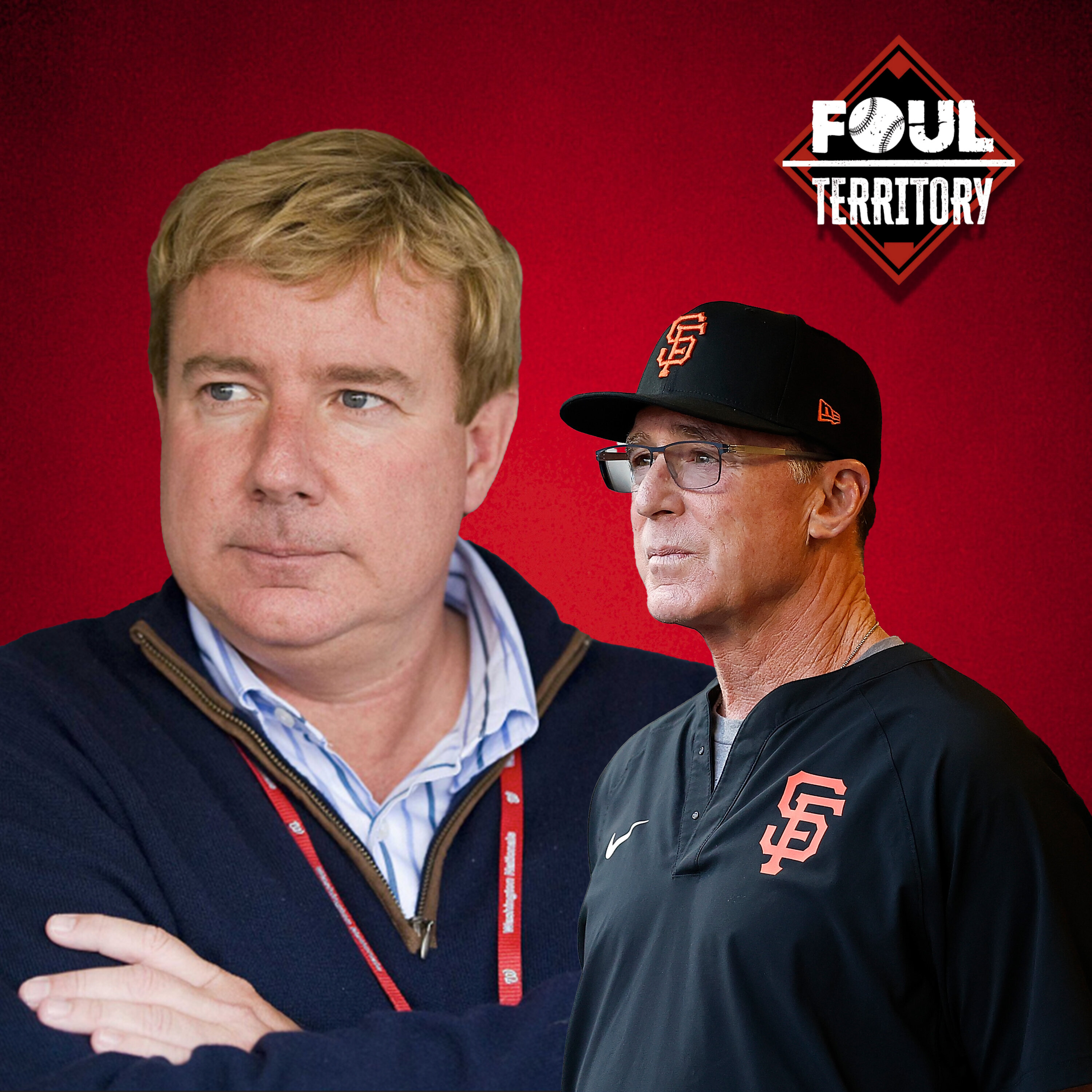
Front Office Unfiltered w/Jim Bowden: Manager firings, Game 163 rant, Mets meltdown, Reds open lane
FT Resident GM Jim Bowden reacts to Bob Melvin’s dismissal and answers whether other teams will change managers. Plus, Jim drops his thoughts on missing the ole Game 163 era and the slow-burning disaster of the New York Mets.
Hosts: AJ Pierzynski, Erik Kratz, Scott Braun
Go to OmahaSteaks.com to get 50% off sitewide, plus an extra 20% off select favorites and more limited-time deals during their Early Black Friday Sale. Use Promo Code FOUL at checkout for an extra $35 off.
See omnystudio.com/listener for privacy information.
2025-09-29
21 min
Transcript
Available Results
Generated results are saved to the knowledge database for reuse and search.
No generated results are available for this episode yet.
Extract Knowledge
Pick what you want extracted first. Model, scope, and chapter options appear after a template is selected.
Generated results for public episodes are saved to the knowledge database so they can be reused and searched later.
Transcript
00:00:09
Speaker 1: Here comes resident GM Jim Bowden on FT and it is let's call it JB manager movement Monday. I don't know, I'm just making stuff up on the fly here, but great to have you on. And let's start with Bob Melvin being fired by Buster Posey. Do you think it was the right move and what do you think's next for the Giants?

00:00:29
Speaker 2: Yeah? I think it was the right move.

00:00:30
Speaker 3: I mean, look, you know, Bob Melvin basically had the Giants as a five hundred team last year, five hundred team again this year. Buster Posey in the offseason went out and signed Willia Domas, gave him the big money, and Damas ended up hitting the thirty homers.

00:00:44
Speaker 2: Giants got off to a good start. Buster went out.

00:00:46
Speaker 3: There and got Rafael Devers in June to continue to try to improve the offense here, and the team kind of sputtered it at the end of the day. I think Buster's sitting up there looking at his team saying, if the Reds made the playoffs, we could have made the playoffs. And so I think there's that aspect of it. Although look, Bob Melvin's had a great career. He was executive the year in both leagues. Did a great job with the Athletics when he was there. So look, I understand his long career. I'm not taking anything away from him. But here's the most important part of that firing. Right when you head of baseball operations, you want to have a manager in that seat that you get along with, that you respect, that is on the same page with you, and you'd like to have your guy in there if it works out. Now, sometimes you inherit a manager and it works and it's fine and you can go on and win. That happens quite a bit as well. But I think if you're Buster posey, you want your guy in there. I think that's the case. And so you know, I think for him, he's got a couple of options. Number One, he could see if Bruce Bouchie wants to come back. A lot of rumors around San Francisco that that's a possibility, But he.

00:01:51
Speaker 2: Is seventy years old.

00:01:52
Speaker 3: So does Buster want to do that and just try to go for it in the next couple of years, or the other idea is Buster ends up higher a younger manager that can be the long term solution with him building a team together, which is probably the right decision at this point, just because I think the Dodgers and Padres their window of winning is going to continue the next couple of years, and I think the Giants are a few years away of being where they want to get to. But the firing I think was kind of expected, at least from my perspective.

00:02:21
Speaker 4: Did bou Mel do bad enough? Had Buster been the one hiring him, and let's say this was his second year of a three year contract and Buster I brought him in? Did he do bad enough with this roster the way I was constructed to deserve to be fired. I get it what you're saying. You bring in your own guy, he wasn't your guy.

00:02:41
Speaker 3: Yeah, No, I don't think so. I mean, I think this team was around a five hundred team. I think is what you're trying.

00:02:45
Speaker 2: To get at. But I think there's more to it than that.

00:02:48
Speaker 3: You know, when you're sitting in the seat, it's not just about wins and losses, right, It's about you know, you're getting the most out of the players that you have, but you're developing the guys you need to develop. And then the other thing is, you know, when you're sitting up there in the box, Unfortunately for a manager. GMS are absolutely watching every single pitch, every single decision that a manager makes, first guessing everything that they do. It's difficult to sit in that seat. So I think it's sometimes it's more important than that. And the other thing is different manager styles work with different teams. You know, I don't spend enough time in the Giants clubhouse to really get the vibe if Bob was the right guy for that particular team. But you know, there are some teams that need a different voice to to reach the potential you want them to be at.

00:03:35
Speaker 2: And I'm not saying that.

00:03:36
Speaker 3: Was just the reason here, but I think if you're running baseball ops, make sure you have the guy in that seat that you want in that seat, because at the end of the day, you're both gonna win or you're both gonna fail together. And if you're not on the same page, if you're not watching and seeing the game and watching the development the same way, it can.

00:03:53
Speaker 2: Be frustrating and difficult.

00:03:55
Speaker 3: So look, a lot of times managers get fired mostly because of the players. I think we all get that. To answer your question, clearly, was this about a five hundred team?

00:04:05
Speaker 2: Yes?

00:04:06
Speaker 3: Do I think another manager would have won more games, maybe two or three at the most, but that's about it.

00:04:13
Speaker 4: Two or three gets you in the playoffs, but that's not gonna be my next question. My next question is you look at a guy like Buster Posey, he was a superstar from the jump, can he, and this is just your opinion, work with somebody, a younger manager like you said, to build this up who's not a superstar, because if that's the case, you almost have to go to somebody who's managed before. You almost have to go to somebody who's got that pedigree of winning at other places. And then you come in and the expectation of winning is on Buster Posey putting that down to his manager, who then puts it down to the players.

00:04:56
Speaker 2: Yeah.

00:04:57
Speaker 3: Eric, great points all the way across the board. And so I would say for Buster it would probably be just because of his inexperience in the front office. Do I think it would be beneficial to bring in a manager that has won before? I mean I would say yes, only because with my young experience when I had the job, I needed to go get someone that had won. I hired Davey Johnson, who had won ninety games five different times. He came in and together we finished in first place two years in a row and made it to the LCS.

00:05:30
Speaker 2: I go back and I look at that higher.

00:05:32
Speaker 3: That was huge, not just for the Reds, but it was huge for me personally at the time. Do I think it would benefit Buster to bring in Bruce Bochi, who he knows, who he won three World championships with. Yeah, for the short term, I think it would be great. At the same time, I think I trust that Buster Posey knows this game so well, has learned it so well that if he wanted to bring in an inexperienced manager that had a significant back in the game that he believed in, I think that can work too.

00:06:07
Speaker 5: Hey, Jim, is there another move that should be made somewhere else? This is the first one we see Don Kelly get extended, which is the most Pirates move of all time, and get the guy we know. We don't need to go outside the organization and listen, Don Kelly did a great job while he was there for the second half, and yes they improved. But is there another organization that needs to make a move out there that you can see besides the Giants that Tory Lavello had some interesting comments the other day about what he does, and I was saying he should be the one to let go, But it's just a different way managers are chosen now. So is there a team out there you think that could make a move and say, hey, this team could help this move could help us be a better team next year.

00:06:44
Speaker 3: I think the Baltimore Orioles could make a change, and I think it could be significant. I think they've done things a certain way, and I think for Michaelias to hire a GM under him and to get the right manager to run that organization, I think is huge. Someone that isn't in bred in that organization, that isn't in love with their own players, I think would be helpful. So I would say the Oriels. You know, I don't know what Brian Snitker is going to do in Atlanta, but I think we're all kind of watching and seeing if he's going to retire. Same thing with Bruce Bochi in Texas, and I think if he does retire or does go back to San Francisco, I think Skip Schumacher will end up taking that position. But I would say those were the biggest teams that I'm kind of watching right now.

00:07:30
Speaker 4: All the playoff teams just pop champagne, so they got a bunch of crap in their locker that smells like champagne. Is there any manager that smells like champagne that goes into the GM's office and gets fired of the managers that are there right now if something goes haywire and wrong here, is there anybody in your mind that could be fired?

00:07:54
Speaker 3: I don't think so, not this particular year. I don't think there's anyone out there. And we don't have Georgia m Steinbrenner getting that anymore, So.

00:08:01
Speaker 2: Yeah, I don't think so.

00:08:02
Speaker 3: I think the media in the big markets will ask for their managers to be fired if they don't win, if they don't win the World Series, and that's just normal. But I personally don't believe that any of the playoff teams that start tomorrow.

00:08:15
Speaker 2: I don't think any of those managers will end up losing their jobs. AJ. Let's talk steaks.

00:08:21
Speaker 1: Omaha steaks to be precise, big big discounts will tell you about coming up in just a sec on the website. But also every steak is perfectly aged to maximize tenderness and handcuf by Master Butcher's in America's heartland. It's been around since nineteen seventeen.

00:08:36
Speaker 2: They know what they're doing, absolutely, they know what they're doing.

00:08:39
Speaker 6: It's they come prepackaged, perfect sizes, portion size. You can get any kind of cut you want, any kind of meat you want, and it all comes out delicious. You can freeze it, you can though it right away. There's hamburgers, there's steaks, there's chicken, there's pork chops. There's everything you could ever want, and it comes out delicious every time.

00:08:57
Speaker 1: Stay big with Omaha Steaks. Visit Maha Steaks dot com for fifty percent off site wide and an extra twenty percent off select favorites during their early Black Friday sale, and for an extra thirty five dollars off, use promo code foul at checkout terms. Apply seasite for details. That's fifty percent off at Omaha Steaks dot Com. Promo code foul at checkout terms. Apply seasite for details.

00:09:20
Speaker 2: So JB.

00:09:21
Speaker 1: I listened to your Front Office show, as you know on Sirius every week, and you had John Mozzelock on and he's stepping down.

00:09:28
Speaker 2: He's had a great run with the Cardinals.

00:09:30
Speaker 1: Check the track record and He's done a lot with that team for a long period of time. I know it wasn't as good lately. Heim Bloom takes over. The part that I thought stood out to me was that he mentioned he's going to take a little time and then we'll see what happens. I thought that he was semi retiring, but from the conversation, it sounds like he's open to stepping into another front office role, whether it be next year or in the future. Did you get that inclination or know any info about that?

00:09:55
Speaker 2: Oh? Yeah, Scott.

00:09:56
Speaker 3: I mean, look, I think this was pre planned because the Cardinals were going to move on, and I think the DeWitt family was very respectful because of what you just talked about. John Moseylac won a world championship in twenty eleven. He finished with a winning record in thirteen or fourteen years.

00:10:11
Speaker 2: I mean, he had some success.

00:10:14
Speaker 3: And I think the DeWitt family wanted to respect him, and instead of firing, they allowed him to go out on his own terms.

00:10:19
Speaker 2: And this was the.

00:10:20
Speaker 3: Last year, and so they did it in a respectful way. You know, we're going to transfer it to hind Bloom.

00:10:24
Speaker 2: He's going to take over.

00:10:26
Speaker 3: He'll walk away, but at no time did Mo. And I talked him in spring training with his designer socks and his vest that he always wears, it was very clear to me that, you know, he was planning to take a little time off, maybe travel, be with the kids, and then try to get right back into it.

00:10:39
Speaker 2: So although he wasn't.

00:10:41
Speaker 3: Fired, I think it was clear that ownership wanted to move on. And look, I would say something because look, Mo did a great job in his career there, Mike Grizzo did a good job in Washington. But there is, without a doubt, something significantly different in baseball.

00:10:54
Speaker 2: And most said it in that interview if you heard it Scott where he said we.

00:10:59
Speaker 3: Used to get in in a year that we now get in a day to make decisions and all aspects of the of baseball, And that is true. And what we're finding is there are a lot of very successful gms that have won world championships, like Mike Rizzo and John moos Alock, that don't stay up with twenty twenty five. They're not ready for twenty twenty six or twenty seven, and they're getting beat. And I think that's the most important thing going forward is look, you could do this job at age eighty if you wanted to, or seventy, as Bruce Bochi is doing.

00:11:32
Speaker 2: You can do the job at any age. But you have to stay.

00:11:35
Speaker 3: Up with what's tomorrow and not live with what was yesterday, because this game is totally different in how you how you make decisions.

00:11:42
Speaker 2: So for Mo, yeah, it was probably time. Like for Mike Rizzo, it was probably time.

00:11:46
Speaker 3: You know, you look at how their organizations have been the last five to seven years.

00:11:50
Speaker 2: Time for a change. And that's okay.

00:11:53
Speaker 4: Something that should be today is three baseball games. In my opinion, there should be three game one sixty three. It's one of the more memorable games that I played in my career. Aj SETI lost one, I won, want like it is something that I think should be in baseball. One. What is your opinion? Two? Is there really a legitimate reason that Major League Baseball got rid of those?

00:12:18
Speaker 2: Yeah?

00:12:19
Speaker 3: So I am with you Eric one hundred percent on this one. And one of my favorite memories of my career as at GM was nineteen ninety nine Mets Reds in Cincinnati. We lost to Al Lder's slider was completely nasty that day. That one game one sixty three was one of the most amazing games that I've ever been a part of and enjoyed. And just that suicidal moment winn or go home, Just the whole feeling of it. The entire season comes down to those nine innings. There's nothing like it. And can you imagine how fun it would be today Red's Mets again, one sixty three. Oh my god, Toronto Yankees for the division, Cleveland Detroit for the division. I wanted it so bad. I didn't want a tiebreaker. I wanted them to decide today and then to add on to that, then I would have had an off day tomorrow, and then I want one wild card game. I don't need two out of three. I really don't. I don't think it proves the point of why we do it. Just have one game and then we'll go to the next series after that. But yeah, I'm not a big fan of the tiebreaker. To be honest with you, I would have loved three to one sixty threes. That would have been great to the game, in my opinion.

00:13:27
Speaker 2: I'm with you, JB.

00:13:29
Speaker 1: The other thing, if we're really just picking at things, I feel like this happens all the time now as we get the Friday off, which bothers me because that's a prime time to take advantage when you know, football starts to compete with you on Saturdays and Sundays, And it just bothers me that we don't have Friday playoff action. So if I were commissioner for a day, I would do a little tinkering. But anyway, let's get to the teams that don't get to play in that game one sixty three on the National League side. I will start with the Mets because of the payroll, because of the slow bird to the finish line here and then really falling apart down the stretch. How shocked are you that this happened? And if you were running the team, how would you fix this?

00:14:09
Speaker 2: Yeah?

00:14:10
Speaker 3: So for me, Scott, this one is pretty simple, right. I think in March when we looked at the Mets were what was our biggest concern?

00:14:16
Speaker 2: It was starting pitching.

00:14:18
Speaker 3: You know, you've got Soto, you live in, you got Alonzo, you got Vente, you got enough offense, right you do defensively, you're gonna be good enough. The biggest question is gonna be Hou's the rotation.

00:14:27
Speaker 2: And then they.

00:14:28
Speaker 3: Started off really hot and you got the June, you were actually leading the league in the era. But I remember all the years I was a GM, I would watch the Braves and sometimes they were playing five hundred and late May. Sometimes they had a two game lead in June or July, or they'd be a couple of games out. But we always looked at them and we said, wait till August and September when all the starting pitchers get the starts twenty five to thirty two, because Maddox, Glavin, Smoltz, Avery Nagel, whoever is on the mound, they're gonna blow the rest of us out and.

00:14:58
Speaker 2: They're just gonna win. That's what they did.

00:15:00
Speaker 3: And so I kept looking at the Mets the whole year, going Okay, so what's gonna happen with the starting pitching when we get to twenty five to thirty two. Well, I mean all the questions we had were answered, Like Senga came back from the injury, and then I couldn't quite do it. Sean and Iya came back from the injury, then couldn't quite do it. Clay Holmes went from a reliever to a starter, and then he had a big hiccup come August, which is expected for a guy that's going from the bullpen to the rotation, and I.

00:15:27
Speaker 2: Kind of look at this as, yeah, it was expected.

00:15:29
Speaker 3: And then when you take a deep breath today and you look back over one hundred and sixty two games and you look at the three teams that won the division in the National League, Milwaukee Brewers starting rotation finished within the are of three five six, The Dodgers starting rotation finished at three sixty nine, and the Phillies at three to five to three.

00:15:48
Speaker 2: The Mets finished at four to one.

00:15:49
Speaker 4: Three.

00:15:50
Speaker 2: There you go. That's it, Goodbye, time to go home. That's it. You got to build the rotation.

00:15:56
Speaker 4: Now.

00:15:56
Speaker 2: The good news is Nolan McLain has shown he could be the ace the team next year.

00:16:01
Speaker 3: Code I Sega could get healthy, come back and be the guy that we thought he would be.

00:16:07
Speaker 2: But at the end of the.

00:16:08
Speaker 3: Day, you gotta build a starting rotation, and I know it doesn't always work.

00:16:12
Speaker 2: Right. The Yankees went and signed Max Freed. It worked. He's pitching Game one, he was an ace.

00:16:17
Speaker 3: Diamondbacks went and got Corbin Burns and they didn't make the playoffs because he got Tommy John surgery. So I understand David Sterns' position is he didn't want that risk, but he didn't build a good enough starting rotation to beat the Phillies. And I think if we all look back in March, I think almost all of us picked the Phillies to win because we looked at their starting rotation and.

00:16:38
Speaker 2: Said, you know what, it's just better than the Braves. It's better than the Mets. That's where it's gonna be, and that's where it ended up.

00:16:45
Speaker 4: This might be David. When you were talking about this, you were saying, David Stearns is going to do what David Stearns does, but with Steve Cohen money. Is there a chance we see David Sterns making this? It's like morphed super expensive AAV type of contracts for pitchers. That's going to start pushing the AAV up for starting pitchers because he hates the five plus year contracts for pitchers.

00:17:16
Speaker 3: Sure, yeah, I mean probably makes a run at Shane Bieber overpays him right, probably gets him on a shorter term.

00:17:23
Speaker 2: Yeah. I don't think he's.

00:17:24
Speaker 3: Gonna I think he's not gonna get in on the seven eight year deals, but those short term big AAV.

00:17:29
Speaker 2: I think he's gonna have to go back to it. Look, I know they're a.

00:17:32
Speaker 3: Little gun shy because the sures are of Erlanders signings didn't work out. They were also older pitchers at the time when they did that. But I think the good news for the Mets, and let's keep this in mind because the great work that David Sterns is doing is down below, right. I think ESPN recently ranked the Mets the number one farm system in baseball. Don't ignore what they're doing down below, because that's how you win. That's how you can suctend, you know, have success over and over again. So they're building that strong. They might be building it strong enough that they can trade some prospects to some small market teams to go grab some of very young, controllable starting pitchers, a team like the White Sox or the Athletics that are developing starters. Perhaps the Mets can do a three for one, four for one kind of deals. Do that, then go to free agency, get a guy like Bieber. Maybe you spend the money on a Frambervaldez a Bieber. Then you trade from the farm system and you get Shane Smith from the White Sox, just as an example.

00:18:34
Speaker 2: But you will see.

00:18:35
Speaker 3: David Stearns having to adjust because Steve Cohen. We saw his letter to the Mets fan base today. You know, he's embarrassed. And he spent more money than any owner in a history of baseball on this team. And he can hit over a billion dollars last year and he's going home and the Reds are going to play the Dodgers.

00:18:53
Speaker 2: That's pretty embarrassing.

00:18:54
Speaker 3: So that means everyone has to adjust, and you have to adjust by doing things right. And by the way, it should start with Peter because they disrespected him last offseason.

00:19:03
Speaker 2: He agreed to a one year deal.

00:19:04
Speaker 3: He opted out today or said he was going to opt out today. And by the way, you're not going to get him on a one year deal against to stop it. Okay, he's going to get his five year deal at thirty years old. He deserves to get it. All he does is play one hundred and sixty two games every frigging year. This is the second year that he's done it.

00:19:20
Speaker 2: Every year.

00:19:20
Speaker 3: He hits around forty home runs every single year. Yes, he's a blow average defender first base, but he comes with energy. He handles the New York market great. He's a great teammate, and the Nets need to take care of him and then go get all that starting pitching. And if they don't, by the way, he's not going to go back to New York on a short term deal, and I think that would be a mistake by Steve Cohen and David Stearns.

00:19:42
Speaker 2: I'm with you.

00:19:43
Speaker 1: I think he's a franchise player that you need to keep and let him retire. As I met. There's value there too, which they know it's short term in long term value. Last one here, we gotta finish with the Cincinnati Reds getting their way into October Baseball. Last time the Reds won a postseason series, JB.

00:20:01
Speaker 2: Was Yeah, nineteen ninety.

00:20:04
Speaker 3: Five, we get it to the NLCS. I was actually the GM back then. And by the way, they're not going to win a series here either, So I'll be able to say that again next year as well. But let's give Terry Francona Scotty all the credit in the world, right, I mean, he's a future Hall of Fame manager for a reason.

00:20:19
Speaker 2: How did he get that lineup into the playoffs? Look, I know they have good young starting pitching. I like it.

00:20:25
Speaker 3: I'm a big la Daia Cruz fan. I love the development of Marte. You know, he shows you flashes.

00:20:33
Speaker 2: TJ. Friedel, you know, gets this team going. I love his energy.

00:20:36
Speaker 3: Steers a really good you know extra player here can play all over the field.

00:20:40
Speaker 2: But at the end of the day, has this line up in the playoffs come on? Really?

00:20:44
Speaker 3: So anyway, I'm looking forward to the series. Anyway, we all know anything can happen in baseball. The Rockies did not go oh in one sixty two for a reason. The White Sox didn't go oh in one sixty two for a reason. So perhaps maybe we can have a miracle and something can happen on the mound. Dodgers haven't treated him great over the years. Nick Lodolo will pitch Game two of this series, and Ludolo's had success. Remember that game in July when he punched out eleven Dodgers and five in the third inning. So he has had some success against his lineup, which is good to watch. I'm glad the Reds are there. I'm happy for Terry Francona, Nick Krawl, Brad Meter. I love all three of those guys. How they got here, I have no idea, but I'm really happy for the Queen City, Scottie.

00:21:26
Speaker 4: That's right, that's right.

00:21:27
Speaker 1: As ken Rosenthal said, it's the Wildcard presented by, or brought to you by, the New York Mets. That third wildcard spot. But hey, look the Reds. They had some big games down the stretch here.

00:21:37
Speaker 2: JB. Goods, enjoy the Wildcard round.

00:21:40
Speaker 1: I know you getting fired up for this time of year, so do I.

00:21:42
Speaker 2: Thanks for stopping the Bible see.

00:21:44
Speaker 5: This, dude.

00:21:45
Speaker 2: Thanks Scott, Thanks AJ, Thanks Eric. Appreciate you guys,
Chapters
No chapters available.