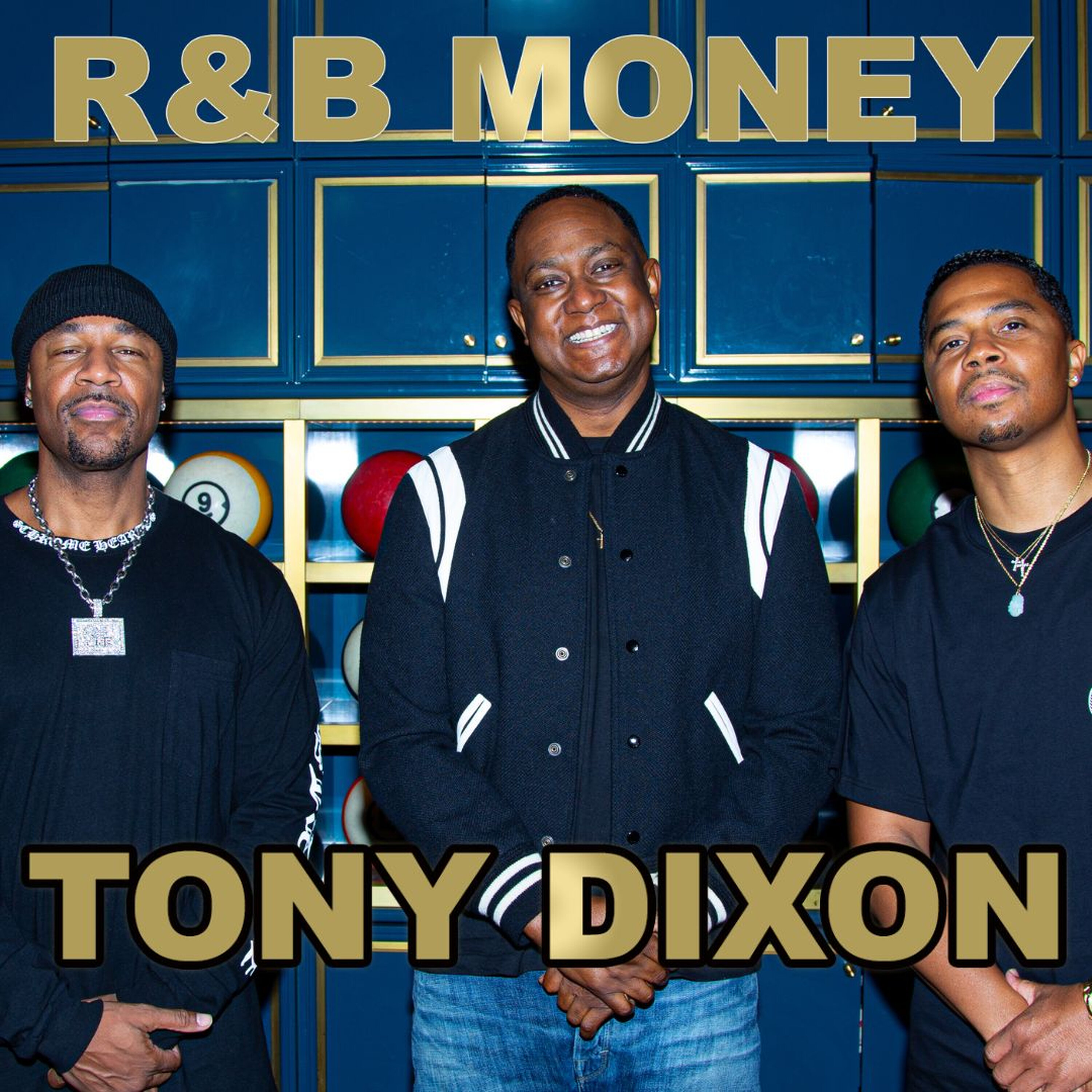
Tony Dixon
Tony Dixon (aka Antonio Dixon)—songwriter, producer, and vocal architect—sits with Tank & J. Valentine to break down how modern R&B records come together: chord language, pocket, and vocal production that lives on repeat. Tony walks through the making of Kehlani’s “out the window”—from concept to arrangement to the performance choices that make it land—plus the collaboration habits and taste that keep him in the room for career records.
See omnystudio.com/listener for privacy information.
2026-01-14
128 min
Transcript
Available Results
Generated results are saved to the knowledge database for reuse and search.
No generated results are available for this episode yet.
Extract Knowledge
Pick what you want extracted first. Model, scope, and chapter options appear after a template is selected.
Generated results for public episodes are saved to the knowledge database so they can be reused and searched later.
Transcript
00:00:01
Speaker 1: R and D Money. Thanks. We are the authorities on R and D, Ladies and gentlemen.

00:00:18
Speaker 2: My name is Tank and this is the R and B Money Podcast, the authority on all things are indeed, get out now, get out, go, get through the chopper.

00:00:36
Speaker 3: My friend is here and now ye done a lot of work together, a lot a lot of work, a lot of good times. What studio outside of studio? Hey ball following lifting weights, Hey, ladies and gentlemen. He is a family member. I'm trying to do a really cool introduction. But this is this, This is my nigga. You know, listen, we thought all that out to.

00:01:06
Speaker 2: My friend and your friend, y'all, mister Tony Dixon, my dog, my dog, sir.

00:01:17
Speaker 1: You niggas know what this is. Yeah, are you feeling, brother? I'm great man. You know I love being with y'all. Brother.

00:01:22
Speaker 2: I mean, you know, well, we always talk off the microphone, you know, we always working party, you know, outside of the camera work. We thought it was important that the people, you know, people got to see it.

00:01:38
Speaker 1: And feel it and know what it is like you saying what it is.

00:01:41
Speaker 2: You know what I'm saying. You don't do a whole lot of talking. You know, you don't do a whole lot of uh, propagating, imaginate.

00:01:54
Speaker 1: It works somehow. Uh, it's it's it's.

00:01:58
Speaker 4: Not getting promoting and it's.

00:02:02
Speaker 1: All roller one propagating.

00:02:04
Speaker 4: Yeah, as he reads it off, the problem, I don't know.

00:02:10
Speaker 2: You don't do none of that, none of that. You just get to the chicken.

00:02:14
Speaker 4: What the work itself, the work what they say, the work sell itself, and Tony Dixon, you are a product of work selling itself.

00:02:24
Speaker 2: They ain't have to say, you ain't have to say nothing to be in these rooms, in these sessions, in these places, they say, well, why don't we get Tony Dixon?

00:02:32
Speaker 1: Yeah, thank you, brother, because he can do X y z an x x t u v W. You know he can't spell propagating, propagated, propagate the words I need n E y sandwich which which there's gonna be your time.

00:03:03
Speaker 4: Whatever twenty five plus years yeah, man of getting that phone call, Yes, sir, yes, sir man, congratulations.

00:03:11
Speaker 1: Thank you Bro, Thank you man. I make a conscious effort to always do my best to give God credit worse to Bro. And I know people more talented than me, more gifted than me, people that I assume would be doing this longer and all those things. And I always make sure that I give him credit for everything. The rooms he's put me in, the friends he's given me, you know, because some of the things I've gotten to do. You can't script this stuff, bro, like you couldn't. I couldn't have imagined in my wild streams that I get to work with some of the people I've worked with and built the friendships and relationships that I've gotten because of this thing called music. Bro.

00:03:44
Speaker 4: We're gonna talk about all that today, Yeah, on today, on today, today, He's gonna talk about it, Bro, because you have been instrumental in our lives and our careers. Thank you, me and this man, bro like you. We can't tell our story without Tony.

00:04:00
Speaker 1: Thank you. Man. It does it doesn't.

00:04:01
Speaker 4: It does not happen without you know what I'm saying, Like nigga, i'mna kick it off.

00:04:06
Speaker 1: She worked trouble, man, Yes, sir, thank you.

00:04:12
Speaker 4: They run up on me about all the time when a young nigga run up on me and said, man, my mom ain't gonna believe this man.

00:04:20
Speaker 2: You she worked in trouble, yes, sir, you know, yes, you worked in trouble.

00:04:25
Speaker 1: I don't know how to even make some Yeah, but bro.

00:04:30
Speaker 4: Like the things that you have been a part of in our lives, man, are really special.

00:04:34
Speaker 1: And I just wanted to get I want to start there.

00:04:36
Speaker 4: We're gonna get back to there, but let's let's let's get let's start this thing off in Denver, Yes, sir, because one you one of the only niggas I know from Denver.

00:04:45
Speaker 1: You and Big John. Yeah, like two people I know from Denver. Chauncey. Yeah, Chauncey is my dog. We've been for instance, we were fourteen years old. No way, Yeah, I'm no Chancey most of my life. Man. That's wow. Okay, okay, yeah, so I have so do all the black people on DIN know each other? No, there's way more than you think. That's the problem. Like, no, no, no, I went to Denver oncet. I just said, I didn't. I didn't. I didn't know. Oh yeah, there was a lot.

00:05:11
Speaker 2: I went to Denver one time and did the show and they were getting active.

00:05:15
Speaker 1: Yeah. I was like, wow, it was so violent. Yeah.

00:05:18
Speaker 4: Yeah, shout out to my brother. And I grew with Lenny Walls. He got drafted that my first time. I was like, oh yeah, it's real. And y'all have a papa doz.

00:05:28
Speaker 1: No question, I'll be back, no question. This place is this is a good place. Yeah, we get active, Yeah, yeah, it's yeah, man, it's Denver actually was really important actually too. There's so many people in Denver that actually were important to me even getting here and getting they were instrumental in my career even happened. And a lot of people don't know that. I'd love to kind of shout out is where you as? Yeah, but like Big John was, he's my first publisher. But I know Big John since I was fourteen, back in the day. People from Denver and I used to dance back then. So hold on, hold on, here we go with this ship.

00:06:04
Speaker 2: There we go, Here we go. You're always trying to step into turning the CB. Everybody trying to friend in fringe on my man. You know what I'm saying, my footwork, you know, yeah.

00:06:15
Speaker 1: That was a problem. Whatever problem, you know whatever. Okay, but you know what three niggas Smith smile, Yes, sir, I ain't gonna forget my niggas. Don't know he could say to the R and B he was an R and B group. Want anybody know that?

00:06:35
Speaker 4: No know, now, Okay, get back to the storm work though, So back to your footwork.

00:06:39
Speaker 1: Yeah, I was a problem. There's that's my mom has the footage locked up in her the crib. But yeah, mama, we need that, we needed We definitely need to refer to this stuff. Man. Yeah, I used to in the pod. Yeah, I used to dance quite a bit. And I've done stuff where I got to do stuff with hammer and all kinds of stuff. Back then ship with no Hammer cut it off, Tony Dixon and m c heaven cut it off. What did you do with him? I danced for what bro Like we opened for his tour. It was bro it goes deep, Bro. We did some stuff back there. What's the name of the dance crew? Is it a dance crew? It was my best friend William at the time. It was Romeo on ecstasy, see propagating. He didn't want to tell us that. He didn't want to tell us about Romeo and ecstasy. Whoa that was me and I had it written in the back of my head like this it's a whole thing. Yeah, I have to find I'm going to find out this man was a stripper type. Oh my gosh. Yeah, so yeah, I used to dance and we don't get past the dancing. No. Yeah, So I danced, and that was kind of my intro to music. But it was I didn't know that producing was something that you do as a career, and you know, I just thought it was a cool hobby. Fast forward, I kind of I really got into the music side of it, or creating music off of something that was considered really a tragedy. I lost my father. My father passed in a car accident, and I didn't For me, it was that blurry part of life where you don't know what you want to do and become the man of the house and all these things. And it just so happened that my uncle had some keyboards that he would bring to the house because he ended up moving in with us and help him take care of me and my brother. And I once I found that in Sonic EPs sixteen plus, you couldn't yeah, bro, you could not tear me away from that thing. So I did it all the time, all day. It was times where I'd get up in the morning and I'd start creating and I look up and it was dark and you just you know, and anybody that doesn't you know, you've been through that stage. It's like you just do it and you lose all sense of time and everything grow. And so I did it all the time, and I got really good, really fast, only because that's all I did. There were days I wouldn't eat. Yeah, say, I didn't know it, didn't miss it. Yeah, Like my.

00:09:04
Speaker 2: Mom would come back, I guess, come back from work.

00:09:08
Speaker 1: I guess, yeah, what say same? I didn't know. I didn't know.

00:09:12
Speaker 2: I was up so early in my headphones and in making these beats, and my mom would come in, come in in the evening like, yes, you eat, Yeah, let me eating a minute.

00:09:25
Speaker 1: Yeah, I don't know what time is it, Yeah, eight o'clock. Same, you don't say. I was like, I was like one hundred and fifty pounds. Yeah, I'm just making beats yep, saying same, constant creativity. I had to have it. Yeah that's it, dude.

00:09:45
Speaker 2: I'd wake up because I'm I sleep next to my my my keyboard saying, so I would hear something in the middle of the night.

00:09:55
Speaker 1: Yep, let me go. Yeah that's wow. Same. Same. And I did it all the time. It was nerves. Yeah, I didn't care and did not care. That's always that's all we do, and you get to it. It was just addictive, man, and the fact that any emotion you was feeling, if you couldn't communicate it, you could create it. Yeah. And you know, if it was frustration, you could take it out on the keyboard. If love and drums bring frustration, yeah, let me take it out on whatever it. And and so I just I did it all the time. And same thing with like learning chords and stuff, because I started on drums in church, so that wasn't even my first keyboard wasn't my first instrument. But I once when I did it all the time, I pull out my chords and I learned chord note by note, and then you realize that, especially in commercial music, one chord kind of leads to another, and then you start realizing that a bunch of songs kind of have similar chords and chord progressions, and you just start building your own thing. But I think you have to kind of start with music. You have to start with imitation first, and then you go into who were you in the beginning, Oh, I was Jane Lewis in l A and Face Yeah all day. So that's a great Yeah, Yeah, that's how I learned. I would just take any of their records and I would just and it was great for me as a producer because it taught me how to dissect the music. I would listen, you know, you create the music or whatever, and it's it's one thing to learn the chords chords, but it's another thing to like pick up the nuances of the music, like what is that sound underneath there that I don't quite understand what that is? Or that that lead sound? Oh, that's what that is. And yeah, and so I learned to I just learned how to dissect music like that man. And so I did it again, Like I said, I did it all the time, and it just became the thing that I just fell in love with and you couldn't pull me away from it. And it was like the woman that was just going to stick with me the rest of my life, you know what I mean. So that's that's what I did, bro.

00:11:48
Speaker 2: But it soundly you could sample, Yeah, that's that's how I got sample. So on mine, I couldn't sample. Oh, so I had to, like I had to try to doctor the sounds that were in it to try and fit, you know, kind of fit into the space sonically that I needed it too.

00:12:08
Speaker 1: I wanted because my first was.

00:12:10
Speaker 2: Davante Okay, yeah, uh huh, and then his baby face and then it's timberling.

00:12:15
Speaker 1: Yeah, yeah, got it. So it's like I wasn't saying yeah.

00:12:21
Speaker 2: But what I could do is I knew just how to manipulate the drums just a little bit and tweak them frequencies just to make the snare sound like and and I and I only had nine tracks.

00:12:32
Speaker 1: Do you have some of those beasts? I'm sure he does.

00:12:35
Speaker 2: I have the keyboard sitting at the house I still have with the sounds and.

00:12:38
Speaker 1: Everything and everything. Yeah, everything I already knew. Yeah, you know he's got it. He still has iPod, Yes he does. Yes, sir. You on the other hand, yeah, you know what I mean. The only thing I care.

00:12:51
Speaker 4: I know you got about one hundred storages that you never went back to from a.

00:12:54
Speaker 2: Sentimental standpoint, you know, I'm not like super sentimental in terms of holding things right. But the only thing I kept it was that keyboard. That's the first one. First one, Ye have myboard and my first It's like it's like, yeah, my mama was paying a note for me because sometimes my church gigs wouldn't wouldn't.

00:13:12
Speaker 1: Cover the note. So how much were those keyboards back then? Thirteen? Yeah, teenager got it? Yeah in church too.

00:13:22
Speaker 2: I get the church with it was a p V D P M four while everybody else was playing.

00:13:26
Speaker 1: Cord you know what I'm saying? On next level? And I was and it was like, what's that? Yeah? I was like, this said, and you carrying that around church? Church?

00:13:36
Speaker 2: I got a p V what's my other keyboard? X P eighty yep, I remember the XP eight and.

00:13:45
Speaker 1: A double tears stand. Oh you was one of them, okay, am oh.

00:13:55
Speaker 2: And I was carrying a PV AMP picked three hundred and I'm carrying.

00:14:00
Speaker 1: All of it in one one one rock. Have you seen the viral video of him? Yes, of course she isn't playing the piano. Yeah, I said it to him. I was like, is this He's having the time of his life. No worries in the world, have no idea of being stolen.

00:14:15
Speaker 5: From it didn't even matters for the Lord.

00:14:21
Speaker 1: For the Lord, So I thought, when we already that was your last time.

00:14:43
Speaker 4: They didn't rob my nigga out.

00:14:45
Speaker 1: They put the hands and they tried o.

00:15:00
Speaker 4: Okay, so you're in the room. Yes, sir, you're perfecting your craft. Yes, sir, you're obviously playing in church in your mind. When does it click for you that says, oh, I can make this a career for myself in Denver?

00:15:17
Speaker 1: Or does it? Does it? Does that start in Denver? No, it actually starts when I got to college. So I went to Hampton. Come on, man, my brother graduated.

00:15:26
Speaker 2: Ye man, Yes, sir, you've done so much that I haven't done, so much better than.

00:15:37
Speaker 1: I didn't know. You were this good. God, we're good. This Yeah, So fast forward, I get to by the grace of God, I get to Hampton and I take all my gear with me, and that's when I realized this could be a real thing. And the reason is because in Virginia at that time, especially Teddy was it. So Teddy Roley was the guy. He was God. Everybody wanted to be around him, and and so for me, I got to meet him first. He was the first, my first real big intro to the industry because Black Street and Guy and then used to rehearse at our music hall, and so I got word that he was around and he'd be there at night and you know, rehearsing. So I stuck it out one night and great place to rehearse college, right, you know what I mean? You know what I mean? So yeah, it was that. So yeah, So that's when I realized it's like, okay, me watching him made me see like this could actually be a viable career. Because my mindset at the time was really when I was when I was at Hampton, was I'm gonna do everything I have to do to please my mom. My mother was really adamant about me going to an HBCU, and because of all she had been through it, that was my whole thing was if I got to graduate to make her happy, So let me know that, that's all'm gonna do. And so and I lived that way to this day. My mother, I do whatever I have to do to make sure she's happy. So so that's how I was thinking at the time. And so my degree I was actually going to school for business management, had nothing to do with music. But I like, while I was in school, I started seeing Teddy and those guys around and that you know, through him, I got to meet who ended up being the Neptunes and Davante and Timbling. All those guys were out there because everybody was in Virginia at the time, and everybody was pretty much centered around Teddy. I met Rodney Jerkins back then too, because he was sixteen and they were calling him like the sixteen year old blah blah blah. So but that's when I realized that this could be a serious career. And so I was like, Okay, now I got to figure out a way to make sure that I can do this for real, for real, and I took it a lot more seriously, and so it went from just creating demos and you know, just working on beats whatever, and now it's like I got to learn how to really write songs and create songs and not just shopping beats to people. Because to realize, even then, my whole thing was I never wanted to have to be the type of creative that had to rely on somebody else to get stuff done. Yeah, you know, that was that was the worst thing to me. Like, I know, I'm not a singer and all those other things, but it was like, Okay, if I want a guitar player and I can't afford a guitar player, I can't find one that does what I hear in my head, Well let me figure it out on a keyboard, kind of like what you were doing. You know, if I need to figure out how to I wanted a bassline, let me figure this thing out. If I want a chord, let me figure it out. And then I would want to write songs, and nobody around me was writing what I heard in my head. So it's like, let me figure that out and just dissecting and create it myself. And so God and his wisdom decided that this was the path I needed to make sure that I could do everything and create my longevity that I wanted anyway, because you know that, like the reality is in this in this industry, you have to be able to pivot where you need it. Boy, yeah, you know, better figure it out, bro like. And so it's like if whatever, when you get to that moment where what you feel like you're doing isn't hot, you better figure out how to make it work so you can continue to work. And so that's what I did. I learned a little bit of everything. If it was engineering, if it was mixing, if it was musicianship, if it was vocal producing, if it was writing. I wanted to make sure I could do everything so I could pull it out of my tool belt whenever I needed it. And that's kind of how I just developed my career that way. Just let me do everything. So were you still dancing? No, I gave that up. I definitely gave it. Definitely. That's all your before. And wow, it didn't look like wow wow wow. It didn't look like I could look like oh wow wow. Okay, so I took a twist twist on my running. Well, well, I would get back to the music, right because I Hampton.

00:20:02
Speaker 4: What I realized when you said Hampton too, is that so many times of people I personally know that went to Hampton, Chris Henderson.

00:20:08
Speaker 1: Yeah, and we were the same time. Yeah, we were the same time.

00:20:12
Speaker 4: Yeah, like I know that they went to Hampton as well. So you guys were all there at the same.

00:20:16
Speaker 1: Same time, the same time, and we we kind of became the campus producers, you know, because anybody that can sing on campus would come to us and beating, can you do do the female voice? Because you're doing it, you're doing it. Come on, man, don't don't do it. Don't do this so nice? That is so nice, so nice. Can you tell how many EPs you've done? It's none of y'all I do this, so glad you're heard. I did called the Quiet so you know who a demo k is of course, my god. So he went to Hampton to okay, yeah, okay, and so I did his I did his his music drop for his radio show at Hampton back in the day, Quiet Storm. Yeah yeah about yeah, I have I have the music. I did his music for his show Quiet Storm on one O three and all of that, and then led to that's so nice. Of course nice. So yeah it was. It was crazy. Hampton was great, man, I it was. It was nothing.

00:21:32
Speaker 4: Niggas is like the cheat code too, Like I can play because there's always a young lady who wants to sit next to you while you play the piano and tell you how talented you are.

00:21:42
Speaker 1: But I watched you niggas.

00:21:45
Speaker 2: Man, it's that's just what the lot of Lord said this up.

00:21:49
Speaker 1: I didn't. I didn't do it. It's not my fault. The Lord told my fingers no. But won't this nigga can saying.

00:22:01
Speaker 2: So it's like, when did it become or a discovery on a pro level.

00:22:25
Speaker 1: So again, like shortly after that, after getting out of school, I moved back to Denver. Because you're trying to figure life out and don't know what to do or whatever. But I knew my my goal was like to get out here to get it in LA because I just knew you had to be here in order to get access to it. I ended up basically taking a slight kind of turn or I ended up going to moving to Chicago, and so I lived in Chicago for a couple of years. I was newly married at the time, and so I wanted to, you know, my goal was to get into the industry. And I met a guy by name of Percy Baty, who a lot of people in the music industry know as a gospel legend. I believe I can fly right. Yeah he should did yeah and a lot of stuff at the times of community Choir. And that's why I know him from initially. Yeah, that was him. Yeah, Percy, he's like my big bro man. So I met him literally out here at the NAM show one year that came out for one of the you know the na Yeah you lost, but I'm gonna go. You should go. I'm ana go though, Yeah it's fire. So this particular when I met him and that same thing, played him some records and he was like man, I'm thinking about putting this team together. You want to move to Chicago? Was like absolutely, let's go one conversation. Yeah, because you know that's the thing, Like, if, especially coming from Denver, nobody does what I did. I didn't have a blueprint, Nobody I knew did what I was trying to do. And if there was anybody that I felt like had access to getting me closer to this injury industry, I was like, yeah, there was no question. I'm gonna figure it out. There was no no doubt. So Percy was like, Yo, why don't you know consider moving to Chicago. We're gonna put this team together. I would love to work with you and develop. I was like absolutely. And I knew that he had worked with our Kelly and that you know stuff at the time, So I was like anything again to get close to the industry and to do this on a professional level. I wanted to do it. So end up moving out there and then again, by by God's divine timing, end up meeting Smoky Norfl That's how we met. Just ended up meeting smoking because Smokey was also being courted by Percy do the same thing. Same with Kevin Randolph you guys know, yes, Yeah, So I met all of them at the same time. He was basically putting a team of producers and writers together in Chicago. And so turns out Smokey had just gotten married at the same time that I did, and so and we randomly moved out, like way out to the outskirts of Chicago. We both were in the suburbs. Money make that money last, can't stretch it out, And so we ended up. But he became my brother man and we did everything together, and like when it came to creating music, and he was an assistant pastor at the time with this other church, and so I started going to his church and Percy was the music director there and the whole thing. Yeah, so we we you know, we got access to everything and production wise and music and saying with you know, me and R. Kelly and working with him and that whole thing, and so it was amazing, bro. But that's when I was like, Okay, I actually can do this for real and I'm getting paid to do it.

00:25:21
Speaker 4: Yeah, this is going to be And he was going from the church to the church to the church.

00:25:25
Speaker 1: Yeah what was the first place, Oh, God might have been Marvin Sap. Yeah song by Marvin Sap. I can't eve remember the name of that song, Won't Let Go. I think it's what it was called.

00:25:36
Speaker 4: Yeah, Yeah, and you did that when you're in Chicago.

00:25:39
Speaker 1: I did that in Chicago. I did that in Chicago. And so and going from there, I started working. You know, I find out that Smokey's like this incredible singer. Because I didn't know. He didn't sing around me like that. I was just like, this dude's cool, and he's like, you know, family to me. And so, come to find out this dude is incredible, and I'm like, who's saying like this? Yeah, I had no clue. And so and I heard him one Sunday and he's tearing the roof off the church. This is before a record deal and before people knew him and all that other stuff. And I'm like, bro, you didn't ever tell me. He was just like, it is what I do. And so, long story short, we both kind of were going through our frustrations with the industry and things not kind of working out the way we wanted to, and he came to me and he was like, bro, let's just start creating some music. Let's see where it goes, you know, we're both frustrated and trying to figure it out, and that's what we did. So literally the beginnings of what ended up being I Need You Now for that whole album, we started in my apartment in Chicago, and so we even recording that. He didn't have a record deal at the time, so we flew back to Denver to a friend of mine's crib on a buddy pass to record that stuff, which that I do have the footage too, So we recorded that. We recorded one of the songs I ended up doing a song called It's All About You. We recorded that in my friend's studio in Denver. Again, we flew on a buddy pass to go and record it, and the same with still got to say thank you. That's like my family singing. They're a choiring that zone. So I called my cousins and literally anybody I knew in Denver that saying. I was like, yo, I got this kid smoking awful. Let's let's work. So that's that and it's still with on the album. All those same people on that album. That's when I realized, like, Okay, I can do this for real. But my mindset was also the frustration I had with Chicago was it had the most incredible musicians, but I didn't want to be limited to the church culture. I kind of felt like for me, where what I heard and work? Because coming from Denver, you're you're fed all kinds of music. Denver doesn't have a sound or anything like that. So I got everything. But I also knew that because that's what I wanted to do. All I wanted to do was all kinds of music, and I didn't want to be limited to just doing gospel, or limited to doing R and B, or limited to doing anything. I was like, I just wanted to do good music or what was good to me, And so that's really what stim me steered me to move to LA was like, Okay, well, now that you've gotten your placements, you've gotten a little bit of where you've gotten access. Let's just try to figure out a way to take it up. So how long do you stay in Chicago? Only about two years? I was only there about two guys, and so from there, while we're like, after we record it, Smokey goes and gets a record deal. So I find out after I leave, I Need You Now does what it does? The album takes off he's incredible and all the other things. But took tie back to we were talking about Denver. So Silas White, who's a great friend of mine from Denver to Yeah, yeah, I didn't need it. Yeah, I was gonna name him for you to help you out. We're gonna have a Denver education today. Yeah. So I talked to Silas and Damien. Again, I've known Damien since I was a teenager and he was in a group. But he had another good friend of mine, a guy named Anthony Nance, who is an incredible producer and somewhere yeah. Yeah. So all of those were guys that I grew up around and watching and you know, studying, because they were the ones who were really tied to the closest I had seen tied to the industry, the industry. Yeah, you know. And so but when I met with I was talking with Silas about my frustrations with Chicago, and he was like, man, you should just come out to La see what you can do. And at the time he was managing, he was handling road management for Brian me yea yeah, and so he was like, you should just come out here. I'll connect you with Brian. You guys can work and let's just see what can happen. Same thing, same mentality I had with Chicago was to move to l A. I was like, absolutely immediate, I'm out. I'm out, And so for me, I had to I was now married, so I had to deal with the commitment of making sure I had a responsibility for my wife, and then also wanted to make sure I was still doing this career that I loved. So I took a I was working a temp job in Westwood. What were you doing? I was an account manager for this insurance company. Yeah, it was. It was a means to an end. Bro. It was the work. It's worse, but it paid the bills. And so what I would do is even before she moved out to LA I was making sure that I would I would do my job and then sometimes at night I would sleep in my car to save money to make sure that I could. You know, we had the deposit for an apartment and all the things. I was on it. All I was grinding, bro and so, and even when I would get a hotel or whatever, I would go stay at the motel right by the Airport's been thirty dollars a night just to change and clean and go back to work. And then I would go from work where I get off at like three o'clock and then I drive from like Westwood all the way to Glendale where Brian's studio was at the time, and I would do that five days a week, and I work with Brian, I'd get to work with Anthony, I'd work with whoever. Just again, get me in this industry. Let me figure it out. Let me figure it out. Because at this point in early twenty five, twenty six, yeah, so it was like, let me figure it out, and the Mayora's sending money home. Literally wow. Yeah. I was like I wanted to make sure that I could, you know, I wanted to make sure I handle my responsibility. But I knew beyond the shadow of doubt that I was going to do this no matter what. And so that's what I did. Man, I did it all the time. And that's when I kind of really got introduced to the idea of publishing. It's like, okay, well, let me figure out a way to God this job first, and the gospel not pay per up, you know what.

00:31:20
Speaker 4: Let me you know, I'm just going I'm gonna mind my secular business, see, because I'm gonna run down on you by my publishing. It does, it does, Okay, okay, okay, it does, it does.

00:31:35
Speaker 1: Yeah, it just didn't for me at the time, but yeah, definitely can. But that was my thing. Man. I just wanted to make sure I could do this thing all the time. And so again, Big John at the time when I was growing up, was a DJ in Denver. A lot of people don't know that, yeah he was. He was like the kid Capria Denver. Every party he put me through, I was dancing. You can check, you can credit check that way, but yeah, sure, but I would show up and perform. You know, I either perform or I get to be at his parties and stuff like that. And so by then I found out Big John is this big publishing guy and I'm like, he's what But yeah, I find out, you know, all these important things he's doing in the industry, and so I reconnect with him and I'm have the whole spill like this is what I want to do, same thing, Play me some music. I played him some stuff. He ends up getting my first publishing deal, and my goal at the time was like, Okay, let me get a publishing deal that's equivalent to what I'm making a salad job. If I can do that, quit I quit, literally I quit. And that's what my My first publishing deal was fifty thousand dollars. I was like, and that first check came, Look here, I don't need a letter of reference. I won't see y'all ever again. I'm out peace. And so I knew it the day. And back then they used to give you half up front and then the month the rest of the monthly stipend. So you get it, yes, yes, get neither. I never get my m d r C was met. That's when you got George and you got your rest. Yeah.

00:33:06
Speaker 2: But once the m d r C was met for that first term, you got the back and the front of the new one.

00:33:12
Speaker 1: You got the OI, you got that OI killing Yeah. Yeah. I think John just knew how irresponsible I was back then, so he made sure that he looked Yeah, John, Yeah, Yeah. I think John was part of my first one. Am I right? Yeah A Jody Yeah, was.

00:33:33
Speaker 2: My first and so they they had to change the rules. He was a real changer for me and R.

00:33:41
Speaker 1: Kelly. Why because through those deals, because.

00:33:44
Speaker 2: We could get it all off on one album, got it and so that's where the thresholds as on this dude, you got to sell this many for this many to count. Then you sell this many and then this many will count.

00:33:57
Speaker 1: Got it? I was running. They said, look at your champ. We're gonna and what it used to be got us. Oh my god, I got to say, you got us?

00:34:09
Speaker 4: So do you go when you do your when you do your publishing deal. You're already writing and producing with Priming Knight at this point.

00:34:18
Speaker 1: So are you so? Just so for people to understand how this business works and how it used to work, especially when you first come on though, are you just are you a session musician? Yeah? Are you a drum programmer? All the above. You're not a producer, I'm not a producers. Yeah, he's a producer. And honestly, I did not care right at that time. My whole thing was I'm in the room, and I also knew that I knew that my time was gonna come and eventually the gift I had would showcase when it was necessary. But I also knew I was also I was always self aware, so I understood if a major artist came in and there was decisions to be made, and I wouldn't know what to do. Then I'm not ready, you know what I'm saying.

00:35:03
Speaker 4: Yeah, yeah, And at that time, that's production, that's production decision making.

00:35:07
Speaker 1: That's all it is. It's decision making. It's about you choosing. You have infinite choices, and let's narrow this thing down and let me go ahead and commit to a decision that works for this record. And at the time, I didn't know that. I was just like, you know, I just knew whoever came in the room, and I was excited that they got in the room or I'm in the room with them. But it's like when it came time for those those game time decisions, it's like, I want to make sure I'm making the right one and I want to make sure that I'm okay with my decisions. And you know, if there's changes that have to be made, am I really cool with that? And I'm okay and I'm okay with things not working out or we having to go back and do it again. I really wasn't ready. I thought I was, but I really wasn't, you know. So that's what that era taught me, was like, this is how you get ready for real, Like you have access to all the celebrities and all that stuff, but make sure when you're in the room that you can deliver on the dime, because that's what you have to do. You know, you got to be able to come in and show improve right on the on the spot.

00:36:06
Speaker 4: So when you do the when you do your your in my ideal with Big John, you don't have any pipeline.

00:36:13
Speaker 1: No, he did a one song deal for me. Literally, my deal was for one song. My mdr C was one song. Oh yeah, he loved you. Yeah, one song, Yeah, dollars And again it's it's a god thing. You can't I can't script that. I wouldn't have known that at the time, you know what I mean, But it was, it was that was what I needed. It was this is how I can quickly get through my deal. It's not gonna overwhelm me. It's not going to be in a I'm not gonna be in a situation where I'm in debt to them forever. Right, all things he could have done if you really want to sure, you know what I mean, get to your point. He looked out man, and he made sure he got me right where I was and and helped mentor me through that phase and that's how I met Harol Lily, who was literally my second session in LA after sign with him. Me and Hill became close friends right after that, and Warren Campbell and Rodney and all the things.

00:37:06
Speaker 4: Yeah, it all happened, right, because then the publishing deal solidified you. It solidified me and this is my new writer, yeah and them I yeah, other than oh, this is this guy who just came from Denver, right or this guy that just he was out of Chicago right now. It's and that's the thing that people don't understand, especially those sessions were not easy to get into. No bro, like major sessions that are literally four major recording artists. It's just not an easy feat. And having a publishing deal solidified you.

00:37:38
Speaker 1: They did people be like, oh, okay, oh big John's Ideyeah, yeah, at least got it. Yeah yeah, yeah, And that's how it Yeah, that's exactly how it happened, man, And so I did it. And my my goal for John was again I knew how important he had become, and my goal was to make sure I made him proud, made sure I wanted to make sure that he looked like his decision wasn't even a gamble. It was just like he just happened to see it ahead. He knew it, and that's why I told him that. I was like, I just want to make sure you know that that's real vision. Yeah, because I will give you fifty thousand if I knew she's gonna turn it too. It worked out. It worked out. So how long are you working with Brian? So that lasted probably about two or three years. And that's how I got access to Justin Timberlake. So we were working on the in Sync project and so he had me doing stuff for him and he wants to shake hands. Yeah, shake my hands.

00:38:35
Speaker 4: I know what that. You wasn't known that in sink? Yeah he got his plack do I don't have mine?

00:38:45
Speaker 1: Whatever? But whatever, you sure did your.

00:38:52
Speaker 2: TV broke we didn't, you know, justifyed tour and that's when I met just This is fair, that makes sense. He was like, I love your music, You're dope, And so I got that.

00:39:07
Speaker 1: Did that solidify you? I think so? But yeah, so that's you know, work with Brian because you know, back back then he was he was a standard. Everybody wanted Brian McKnight. Yeah, literally, so I got you know, I ended up getting access to working with Justin, we did a lot of stuff that ultimately, again to your point, I really wasn't ready as a producer, but that's what led to the Justified project because he came to me after we did the Ensign stuff and he and I created a cool bond and he was like, you know, with me and him and Anthony at the time, Anthony Nancy, he was like, why don't we all get together and let's create some stuff and see where this goes. I was like absolutely, So we started creating records for him, and at the time, he was dating Brittany, so I got access to Brittany. So that's how that worked. And then he was like, Okay, I got the session coming up with these guys called the Underdogs that I've heard about. Will you come to the session with me? Same thing. Absolutely, let's go, so go, and you know, ultimately they ended up with the record cast stilling my brain on that project. Yeah, yeah, I was at that session, so I got to meet them, and that's how we built the relationship and so on and so forth. Everything was just like, you know, just connecting, just connected.

00:40:19
Speaker 4: So from from from that introduction, it comes back around and y'all do could would have for Brian.

00:40:27
Speaker 1: Yeah, okay, yeah, so that's how literally, so that was your first underdog record. Yeah right, yeah, that's my first underdog record. So I'm working with, you know, with Damon and Harvey, and everything's going really well. I'm starting to get activated how they work and so on and so forth, and Silence is still working with Brian, and I still have a relationship with Brian. So it's like, yo, let's let's bring this back over here and get this particular sound and let's work on Brian stuff. And so that's what happened. We ended up doing Shuita could A Wooder and a lot of other records at the time. But that's really what started to build my relationship with them and my confidence too in regarding to in regards to okay, I now understand how to make the right decisions and how to you know, make sure that my stuff sonically is up to par with the radio and all those those things. And so that was really that that was that part of school for me. It's like, Okay, I can do this, and I'm not I'm not just a writer. I'm not just Big John's writer. Now it's like, okay, I can actually produce a record. Let me finish some stuff out. And so I just built my confidence that way. And you know, and and it's not just gospel or whatever. You know, it's like, right, no, I'm having some commercial success. You figure this thing out. I feel like.

00:41:45
Speaker 2: During during this journey or getting up to this point, you know, we gotta we should we should we should talk equipment because you know, there were there were progressions, and there were changes in terms of what you were starting to use to produce. Can you just kind of take me through those progressions as you are in Sonic and then when you finally get to get to.

00:42:10
Speaker 1: LA and you work with Brian, what are you using there?

00:42:12
Speaker 2: And then when you finally get to the Underdogs and what are you using there? Can you take me through those progressions?

00:42:17
Speaker 1: Yeah? Absolutely. So when I started, like you said, I had the EPs sixteen plus and I had a TS twelve were my first two keyboards. And then fast forward, I ended up saving enough money to get an NPC three thousand and the Core Trinity or the Nord Lead. Yeah. Yeah, yeah. I was a problem in the streets. Yeah yeah, So it went to it went from that to you know, now, same thing. I got my double tiers and my whole thing, and I got my little set up. And so that's really what I carried all the way up through meeting up with Damon Harvey. So I brought an MPC over there. They had they were on the same thing, and I was like, Okay, this is works, this works or whatever. But I was like, I ended up building a relationship with the guys that in Sonic. I mean, uh AT Emagic Igic made logic from them from them show. Yeah, So I built a relationship with the guys from uh E Magic at the time, and they had this program called Logic and I'm pretty sure you got me my logic yeah yeah, yeah, yeah yeah. So that's how that's how I got introduced to logic. And I was like, I already knew how to work pro tools because of those sessions I had already been doing because that's kind of like the industry standard for studios. But once they showed me and gave me access to Logic, I was like, Okay, I'm gonna figure this same thing. I'm gonna figure it out. And so I spent all my time just learning how it works and realizing that okay, I can actually create everything I want quickly, quickly, very quickly and instant recall, which is the problem you have with having the equipment, because with the equipment, if you have hardware, if you if I if like you came to Steel and said I need you to pull that record back up. Well, now I got to go back and remember what sounds were used and the media and yeah, and so you was a lot of time just trying to remember. If you didn't chart it out or write it out, you're just you know, dealing with a lot and if you've tweaked the sound and then't save it, you know. So for me, that was all that was my logical side saying no pun intended, but that was me saying, okay, like this is how I can I can be more efficient in what I do, especially now because we're starting to do a lot of records back to back, and I wanted to make sure that I understood I don't have that's not the part I want to have to focus on. I want to focus on creating. And so that's what made me get into logic, was like, okay again, when you came into the studio, it was like, if we're going to work with Tank, I got to make sure if he likes a particular idea, I can pull it up right away because I know him. I know how quickly you wrote. I know how quickly ideas came to you. I don't have time to be doing this, yeah, to sort it out while you're trying to create. If you already got the idea in your head. I want to be able to go, and I want you to be able to go. So that's what it to me. What the equipment thing was is like, figure out a way to get out of the way so that the creator can a way to get out of the way. Yeah, so the creative can do what you do. Man. Like I don't know if y'all have gotten to see this guy work, but like it's unreal to watch Tank do what he does in the studio because he doesn't write stuff down. There's only a couple of people I know, the dude you and R Kelly didn't do the same. But like there's only a few, but like they would get in and have the idea in their head and just go in the booth and knock it out. And when I realized that level of skill, I was like, Yo, the only way I can keep up with you is to make sure that I'm giving you what you need when you need it, as quickly as you need it. Again, let me get out of the way. If he's got the idea in his head, let's let him record so that you know, by the time you get into booth, if the equipment gets in the way of the creation process, then you could lose the idea, or it could go you know, you can lose the energy, something else could happen, whatever. And I just never wanted to be that how long So once you get into this logic thing, how long does it take? Or you know what?

00:46:04
Speaker 2: What spawns the damon? And Harvey saying, yeah, we got to do what he doing. Whatever he's doing, exactly what I just said. I don't remember artists or whatever, but I remember a particular I do remember artists coming in and exactly what I said would happened.

00:46:21
Speaker 1: An artists would come in and I'd have three or four ideas that I could pull up right away, right, yeah, how'd you Yeah, And I'm like, yeah, well you can do this, and I'm like okay, and they they were like, well, but that was the whole thing at the time. Well, the drums don't slap as hard is that? And I'm like, okay, fine, let me sample those drums, give me that stuff that you have in the NPC. Let's make some kits out of it and watch how I work. And that's what I would do. So I made kits for the stuff that we had and I was like, now pull it up and see how quickly you can work. And it just became and then it clicked for them. It's like, oh, oh, you can everything you want to do in hardware, you can do in dah if you just take the time to learn it, to learn it and execute it. And it's just gotten better and better. Now there's there's no line between hardware, and unless you just have to be a tactile learner and you like to turn knobs and all that other stuff, then that's fine. But no artists and no nobody on the radio, there's nobody can tell what you use to create anything. Now it can literally be done on the laptop. So it's I'm just grateful I stuck with it because it to me, it made sense because it's like, again, I got to get out of the way and I got to see what you do and watch you, you know, do what you and I got to participate, so I'm not spending my time learning chords or figuring something out, Like no, I get to sit with Tank and we can vibe and talk and create and write and so on and so forth, and sitting with the same thing. Like we just sitting and write and creating. Like the one thing we could all say that when we got to create the we never had technical difficulty to getting in the way period ever. Anything we could think of we could do and could get it done really fast. It was it was.

00:47:55
Speaker 4: It was really cool for me, man, Like I had met you. Actually before I met Tank, I met you. I come by the studio one day. I forgot where well I think, yeah, I think it was I forgot where it was. But by this time it was after I had left the first time. And but you know, that was still my guys, and I'm pulling up on them and I was like, yeah, that nigga talented, the quiet niggas really talented over and I'm listening to the music and this is around you know those you know that justified and sync and all that had happened for you, and I'm just paying attention, and I'm just like the tony nigga talented man, thank you, and I would you know drop By, you know what I mean, just cool listening to music. Damn it like, man, come back, y'all work with you, gotta work with this, yeah, work with this again.

00:48:48
Speaker 1: I'm like, oh, one day, I don't know. And then my decision, like when it was fully like okay, I'm I'm rocking, is when it was over on Kowanga at the Edmins Towers. And at this point he was there, yes, and Eric was there, yes, and Little Steve was there, and now it was like it was a problem these niggas. It's cold on top of what already we had established with Damon Harvey.

00:49:18
Speaker 4: It was like, for lack of a better term, it was votron, no question. It was literally R and B voutron at this point. It was it was really what I considered to be at that time was the R and B version of the hit Man, right, which the Hitman did R and B. Yeah, absolutely, but we focused on R and B, you know what I mean? And I just know, I like everyone in here can write and produce, and most niggas can sing, most niggas can play.

00:49:48
Speaker 1: There were no holes, you know, what I'm saying, like they were just And let me tell you the part to me that was more important than that. There was no egos either, No, because all of us we like each other. We liked each other. It was whoever had the best idea of the day. It was never like I had to have If Tank showed up with the record, if you showed up, whatever, it's like, yo, let's do it whatever. That record, except for Steve was Steve. I'm on that.

00:50:15
Speaker 2: I need that, and you're doing something without me.

00:50:24
Speaker 1: I can smell it. A lead singer, Yes, yeah, it.

00:50:32
Speaker 2: Was like you ain't leading, no room for a little Steve. If you hurt two third person, ain't room with little Steve.

00:50:38
Speaker 1: That's so true, bro, Like, oh my god, Yes, but yeah that was That was it, man, because yes, everybody was talented, but everybody also came in as a team player. Yeah, and so it was not about trying. It was about all of us winning. And to me, there's nothing like That's what I enjoyed most about that experience is that it was to me, it would have been no good for a record for me to shine and not be able to share it with him, Yeah, or to go to an Award show and not be able to Yo, what are we wearing? Or you know what I mean, because we all I.

00:51:12
Speaker 4: Look at that as like I look at Damon as like a general manager. He knew how to put the right people in the room, no questions, right, Yeah, and then then Harvey was a great coach, no question right. So looking at it in that structure, I'm like, oh, the niggas that were put in that room, because there were a lot of people who came Yeah, who came by, is.

00:51:34
Speaker 1: What I'll say.

00:51:35
Speaker 4: But the guys who like the core team of guys who worked for years together just really loved each other and really knew how to get the best out of each other musically, Like you.

00:51:48
Speaker 1: Know, no question, I already knew when I.

00:51:49
Speaker 4: Would get there, Like, Okay, if I got a certain idea, I'm gonna go in Tony room, I'm gonna go on Eric, I'm gonna go find tank A. You know what, I'm gonna start this dice game on the pool table.

00:52:05
Speaker 1: You know what I mean. Like it was just certain. It was just certain.

00:52:07
Speaker 4: It was just certain things where it's just where musically you could you couldn't go wrong in any room.

00:52:15
Speaker 1: You couldn't go wrong in any wrong. Yeah, yeah, you couldn't, man. And it was it was like it was such a wee thing.

00:52:20
Speaker 2: It was like, yes, very much. When something would start, it would be like it was like this, what y'all doing?

00:52:26
Speaker 1: Yeah, what y'all doing? Get here? And then now you got seven niggas in a little let me get in there.

00:52:35
Speaker 2: Literally, but it was like that was it was welcomed, no question. It was do you y'all hear something? You hear someone on this?

00:52:43
Speaker 1: What do you think? Every time? Every time? Every time?

00:52:45
Speaker 2: And I think that was the that was the like you said, that was the gift.

00:52:52
Speaker 1: We can we can all say like historically speaking, that's why I'm glad. I'm grateful I kind of get to show this part of my story. But like what most of what I intended to happen in every particular place I went was not why God had me go mmm, youe know what I'm saying. And so maybe what from from Chicago to Hampton to Denver, being born and raised in Denver, to being with Damon and Harvey to working with y'all, like my intention may have been, Okay, well, I'm gonna go ahead and be this producer that gets to, you know, finally get to stand on my own this and the other. But I built brotherhoods. I got to build relationships. I've we created some incredible music, and it became therapy. It became you know, because all of us was going through stuff, but we would all get to sit and talk about it or write songs about it. And I wasn't really going through nothing. I was. I was. I was ordering white teas and air Force ones for everybody. But hey, hey, push yours. I got somebody that's gonna come and get the money they bring us back fine and white teas. Man, don't worry about man, that's I get it. Man. Yeah, you was hustling. Yeah, man, you know I was some You feel me back here. Man, you know, lose and go lose, don't do it. You canna walk away smileing just like that does I'm telling you you like that? All right? Yeah, nobody's gonna be gone as a gift, a gift for the foolish. You go lose with a smile. Man, were just having a good time.

00:54:34
Speaker 4: Because the other thing that I realized, and at this point, right, I'm not even a manager. At this point, I had never managed before at this point, but I realized time needed to be managed around there because I will walk in the studio and I'm like, oh, it's three or four maybe artists waiting, waiting impatiently. So yeah, niggas might want to play video games a little bit, nigga, But we had to like start finding some ship for niggas to do, because to get in that.

00:55:07
Speaker 1: Main room, oh yeah, could take three four days for an artist. So we had to find some activities. And I just knew some activities the bridge. Let's just have a good time to slip on the twenty four hours and get some hoo fings.

00:55:28
Speaker 4: You know, all of that, bro, all of it, bro, And I think when I when I look back at the time, man, it just it really it really did build a brotherhood, no question, it built a brotherhood.

00:55:38
Speaker 1: But let's let's let's talk about the records. Though.

00:55:40
Speaker 4: We talked about the brotherhood the records, though, Bro, we spoke about it earlier man, for me, which was a later time actually after the second time I left, right when I go do my deal and they asked me who I want to work with, and you know, me and Larry went through all you know, the producers, and and I said, listen, I'm I'm going back to the underdogs. I'm going listen, give me two weeks, give me, oh, we give me whatever it is. But my budget, it's a part that's allocated toward going back to the underdogs and fucking with my pots and and.

00:56:23
Speaker 1: And it felt good for me to go back and work with y'all. You know what I mean, It.

00:56:31
Speaker 4: Really did, because I want to say, this was even before you do the Sex, Love and Pain album.

00:56:36
Speaker 1: Yeah, yeah, my deal was.

00:56:38
Speaker 4: My deal was before that, and I'm like, I just gotta go work with my guys. And the records that we came up with man like incredible.

00:56:47
Speaker 1: I was.

00:56:47
Speaker 4: I was really excited because I had worked with everybody on that album too, but I was just like, I'm going to end it with my guys. And coming up when she worked in Trouble bro and and should Have Been with You, which me and Larry argue to this day about which record is better.

00:57:04
Speaker 1: Yeah, they're both really good. I listened to should Have Been with You the other day. I was like, God, yeah, yeah, this.

00:57:13
Speaker 4: Nigga Harvey got me singing what they I'm like, ain't I get a headache?

00:57:18
Speaker 1: Trying to hit those notes right now. But I was just like, man, it's the music that we were able to create together. Bro. Was was really special, Like O Marion, come come on, come on, what we got bro? I remember weekend, Yes, Sir Stark, Sir All Star week and three people met up at the building look at each other like that, get her done, to get her done, get a head start yeah, And there came yeah, oh and I'm trying. I'm trying to.

00:57:54
Speaker 2: I was like, listen, that was therapy for me me too. That session right there got got my my mental mm hmmm and my spiritual back into the game.

00:58:11
Speaker 1: Wow. Wow, I didn't know that I was cooked. Bro, I get it. I get it. I couldn't.

00:58:19
Speaker 2: I couldn't land nothing, nothing felt right, nothing sounded right. It was because of everything I was going through personally. Everything that I was going through personally had knocked me completely off my track. And that weekend, those two songs.

00:58:34
Speaker 1: Wow, that's got me back and got me back in bros like myself. I felt like I felt better than myself, you know what I mean? Because then.

00:58:47
Speaker 2: That's during the transition of coming, coming, getting to the underdogs and to work with you guys. But now starting to learn so many new things, you know what I mean? So, oh oh, the old track is the last track I did on the NPC with my equipment and transferring all of that stuff into logic and having Harvey and Tony look at me this. You gotta cut it out, bro, you got you got n now you gotta I got your sounds, I got everything for you. You gotta move Yeah, And that was I'm like, okay, okay, So now I'm now I'm really I'm on a new learning curve, you know what I'm saying. Now I'm starting to I'm starting to grow in a different way because I'm in a completely different space I've never been in. I've been around guys who've worked on computers made music in the computer, but I've never done it myself. So now I'm starting to I'm starting to really need to be in his room. And what are you doing right there? How did you drag that it's supposed to comand for that? What's this?

01:00:02
Speaker 1: What's that? And how do you set up you how do you set up your power ball? To make sure? Oh ship, that's crazy. Okay. I'm running from room to room like like a kid in a candy store, trying to learn all of these things. Yeah, but the way you I remember very specifically you came in with that tank smile like I got one. He came with that. He was like, I got what. You got to sit down. That's what we did. We sat down and I remember you playing us the chorus to Oh, and I was like, yeah, he's got the singles. He got to sing Oh. He did. He did before anybody heard it.

01:00:39
Speaker 2: I said I got I said, I got you. I got your record, no question, gonna take you from a boy to a man.

01:00:44
Speaker 4: And that's the thing when you can write a record that it's personal.

01:00:48
Speaker 1: Yeah yeah for an artist, Yeah it's here. And I clicked Yeah for sure. It was like I met my long lost little brother. Yeah yeah. And it was just like it was he hoop, Yeah, he super cool. He sing. He looked like me, he like hopefully not like you're gonna stop messing me on my knees. You know what I'm saying so correct.

01:01:18
Speaker 2: So it was all of that, and I'm looking at and I'm watching him and I'm just listening and I'm listening to him sing, and I'm like I'm like, nah, yeah, first you're in the wrong key. I said, let's get you out of yeah, the stratisfy Yeah, and put you in mansong Yeah yeah yeah, put you right here. Your son needs to be called. Oh yeah you're Mario yea Marion. Yeah your word playing on that the girl, Oh yeah, he said he's tank do.

01:01:54
Speaker 1: Weekend. Bro.

01:01:55
Speaker 2: I can't say it enough that we can change everything for me, life changing.

01:02:00
Speaker 1: We can't remember yesterday. And then my first track track.

01:02:03
Speaker 2: Yeah on on Logic that like real placement from Logic naked.

01:02:11
Speaker 1: Yeah. Wow, see I'm telling you. I was like, yeah him logic, Yeah, yeah, I am logic. Yeah. But again, it's just like every other instrument or anything you've learned. Once you got through the muscle memory part and the technical side of it and you were able to get out of the way, yes, and get back to creating, then you were unstoppable. And it's not it had nothing to do with your gift. It was just let me go ahead and get out of the way so I can create just more. By the NPC, yeah you did swore by the When you fall in love with something, especially something that's been good to you, yeah, you've had success with it.

01:02:49
Speaker 4: Yeah, we have to keep talking about it because it keeps coming. This AI think right, like we have to figure out how to utilize it.

01:03:06
Speaker 1: Says it's not going anywhere. You know. Listen, I'm really an old nigga in music years, right, I'm about a thousand years old when it comes to music. And so I remember two inch days. I remember you know what I mean, the machine, the machines bro.

01:03:24
Speaker 4: So you couldn't have told the producers of yesteryear what this was going to become.

01:03:33
Speaker 1: Are the writers and you know what I mean. So it's like it was the same argument back then when it was over to pro tools. This is where's my master?

01:03:42
Speaker 2: Right, So certain guys were like, well, I'm gonna still run my protus through the board.

01:03:48
Speaker 1: Right, yes, right, yes, I remember, no, right, I get it.

01:03:52
Speaker 2: It was there they just and now it's like you got world renowned mix engineers, sound crafters that are completely in the box.

01:04:06
Speaker 1: In the box. Yeah. The one thing I've learned about, especially surviving in today's industry, is our goal has to be able to make better music faster. Period. We don't have a choice. Now, whether you choose to use AI as a tool or not, that's up to you. But the reality is is the consumption is so quick that we have to create music that again, we have to make great music faster. And to me, you got to figure out the tool that get you out of the way the quickest so that you can do the music that you want to do. And if you're a hyper creative like me and like both of us are, it's like all three of us are, it's like you have to figure out ways to get out of the way. And for some people, this is my only issue with AI has to do with the verbiage. I think the reality is is that we have to stop saying that I wrote something when you didn't write it. Right what I'm saying, I agree, Yeah, if you can't say, you can't say you wrote something that you prompted. But there they have been pretended since the beginning of time. There's that that's very trures people taking credit. There's names on projects that should not be there.

01:05:16
Speaker 2: Very very dum and this right here, it's no different, very true, very true.

01:05:22
Speaker 1: It's just not an actual person. That's very true. Credit. And I still think that nothing can replace human ingenuity and creativity. So if you choose to want to use that as your thing, fine, But I guarantee there's nothing like getting us in the room together to create music.

01:05:42
Speaker 2: I will ever tell the artists standpoint, like when I walk up, walk up on you and sing in your face.

01:05:47
Speaker 1: Yeah, you be walking up on people. It's hot, breath of these cities on you. Oh my god. Yeah, you know what I'm talking about. Get out of there.

01:06:01
Speaker 2: Man, you sold five heart beats a hundred thousand times.

01:06:06
Speaker 1: Yeah. Put that body on her, got up on her. You know, I do that, and I do that and walk up on her. That's nice. Squirrem that takes nice, That takes nice. That was so nice.

01:06:25
Speaker 4: Another record I have to bring up. If I don't while you're here, I deal the crucify me.

01:06:30
Speaker 1: Yeah. How could you? Ah yeah, how could you? How could you? What a great record? Man? I got a couple of days too. Yeah. Yeah, yeah. He was hanging out and Rancho Coogle magket I heard that record. Yeah. That was also the problem with having that level of talent in a small space at a small amount time. You never knew the day. An incredible light change you to do that, you had to be there.

01:07:04
Speaker 4: Okay, I'll say with my schedule, actually know before we get to dischedules, that record, though I never forget. Us were all in there right and everybody's you know, and I had this moment where I thought of what Babyface had told me years ago. He was like, every song has to have something that makes you remember it something. It could be ridiculous, it could be you know what I mean. And I learned that from him, from him writing Drew Hill when he says swallow you like Reese's Pieces, got it, come on, girl, you know I needed And I thought it was the worst ever, but then I realized, like, no, it's actually the greatest because it's it's so relatable. He's comparing her. A woman loves to be compared to something, something, you know, especially something sweet.

01:07:53
Speaker 5: Was that his verse Drew Hill, Yeah, yeah.

01:08:06
Speaker 1: I love that jazz The second motherfucker old Blood, Old Blood.

01:08:10
Speaker 4: But I remembered that, and while we're in there right, I'm like, and I told the story before, you know. You know, at that time, that was a thing like Comma Suture was the thing. Everybody was talking about it the last twelve.

01:08:25
Speaker 1: I'm gonna see Indian style in it for twelve and it was like all the conversations like yeah, yeah, I just put the ghetto comes and you nailed it, and Hardy was like, man, what is that?

01:08:41
Speaker 2: Man?

01:08:41
Speaker 1: What is that? Buddy? That buddy ghetto conversation? Yeah, it's the version man, just about a little kool aid on him. Man, you know what we gotta do?

01:08:57
Speaker 4: But record bro, it was, and it was the song that floated around the floor, Yeah, where niggas was like, nigga, y'all heard, how could you? Yeah you heard?

01:09:07
Speaker 1: Yeah?

01:09:08
Speaker 4: Yeah, and it would just get played for everyone who walked up in that nigga. Once Mario got hold of it, it was over. There was another record that Becoming a Man.

01:09:19
Speaker 1: Yeah, yeah, yeah, this is a crazy thing about even doing how could You? And naked and own all that other stuff. I feel sorry for those artists because they had, like you demoed, Oh, Eric, demo? Could you like if I'm an artist and I can't step up? Like that had to be intimidating, like well, you know they killed it though, and yeah they did. What you're saying makes sense.

01:09:44
Speaker 2: And the beauty in that was you had a guy like Harvey, Yeah who could He could get you the artists, He could get you there to that level, get you there.

01:09:55
Speaker 1: I used to love when he said this, I got it. Yeah, yeah, I I gotta think of another I trust you, Yeah, I trust you, and he would get it. We gotta tech people. Yeah yeah, okay, yeah, I told him this repeatedly. I think he's an amazing finisher of a record. Yeah, that's how I learned. So I knew how to produce. I knew how to produce. That wasn't a problem. Yeah.

01:10:18
Speaker 2: But the extra gloss at the end, yeah yeah, yeah, yeah yeah that finished the buff Yeah at the end.

01:10:28
Speaker 1: Yeah. Yeah, that man, and you thank you. Listen, what are you doing?

01:10:35
Speaker 6: Oh?

01:10:35
Speaker 2: I took the vocals from the game and I brought him in here and then now then the logic, it's just going to go through and just find more pieces that would add to it, like in certain parts like yeah, running my room, I need the.

01:10:45
Speaker 1: Vocals like I learned that I learned from I learned from them, the how to edit the breaths. Yeah, oh, in your in your pro touls. Yeah yeah, got you. Because I'm like, okay, I get it. We can clean it up. But now it feels computerized.

01:11:05
Speaker 4: Yeah, okay, So now I just gotta I gotta, I gotta, I gotta figure out where the breath almost feels almost like an inflection, or it feels like an ad live in a sense.

01:11:17
Speaker 1: Yes, yes, right, it.

01:11:20
Speaker 4: Was just a little intricate things like that that a lot of people didn't understand about production, especially in logic and protus and really learning how to we're.

01:11:29
Speaker 1: Also learning from not just producers but engineer engineer. Yeah right, yeah. I remember certain things like when you cut a record and it ended with an S, and then making sure that the all harmonies didn't have an S on it, because then you'd hear yeah and all that little stuff. Okay, no, we got the sea, we have the S on the one. We don't need everybody and little stuff like that, or you know, the t's and the p's and all that stuff that were pop But that's that's all a part of producing that you start to learn that takes your stuff from here to to again commercially ready and yeah and getting out again, getting out of the way, man, Like is this song it would make the sheene matter, But it's in the details. And to me, that's the biggest issue that a lot of producers now have to learn in order to elevate their music. To me, is really start to dive back into the details of the record, not just the fact that you got a great loop or you got a great you know, a great hook or whatever like. Start to look into the details as to why these songs stick.

01:12:30
Speaker 2: Because what happens with the dolls is that you can get lazy because you can do it so fast and it sounds so good, AI, and so you think you're done right right, when when there's all there's always just a little more to do always.

01:12:45
Speaker 1: And that was the thing I learned also about from from from Kenny, from Babyface, was I learned the difference between a great song and a copyright. H and a copyright for those who don't know, a copyright is that record that pays you the rest of your life. That's that thing becomes your signature song, your signature sound that you know you've got. Of course a bunch of them, you've got yours. So anytime you get a call or demanded to perform somewhere, there's these particular songs that are used, and that's what a copyright is.

01:13:13
Speaker 4: Now we we have one, and I'm glad you're here because we can jump in now we had one. It was a record called The Injured Reserve. Yeh, I are right, Tank, just another song, and you know, I was like, listen, I'm going to write this for Tank.

01:13:33
Speaker 1: Sure, did you know what? I know? All the rest of you niggas is trying to cut it. Y'all want to sing it? No? Mm hm you know what, guys? No, Yeah, because I'm gonna be on this new Tank album. Me and Tony Dixon, sure are, we're gonna be on this album. We're gonna kill it. And Tank like y'all gonna be on this album, kill it. And then we wasn't on that album, killed it. I just want to bring it up because you here, it wasn't my fault. I get it. I get it. We don't understand the industry. Now I get it. I'm the only nigga from the Underdogs that was not on Sex Loving Pain. I loved your record. I get it. The powers that be Okay, Okay. At that time, I was trying to get back. I get I'm doing it. I got to do. Y'all don't want to find I.

01:14:35
Speaker 2: Didn't have a position. It's fine, it's system. It hurt a little bit, just so you know, just but weary.

01:14:42
Speaker 1: You don't get your reserve. Yeah, it's cool. It don't it. Don't mess with the rest of the ship you got, But what about change? What about what about my friend? Right? Oh?

01:15:01
Speaker 3: Ship?

01:15:03
Speaker 1: You sure? Yeah, yeah, we won't need that one. And then it just never went on to nobody else. No, no, but the record, it's crazy. Yeah, I love that record to this day, to this day, we just might have to look at that one again.

01:15:18
Speaker 2: We just might have to just yeah, just because you know what I'm saying, go out there on the court, blow a hamstrings. Yeah, love that record too.

01:15:36
Speaker 1: That's one of my favorite records of personally that you know everybody has there.

01:15:39
Speaker 2: It takes me back to a time. That record has a a time stamp on it. Yeah, And when I hear that record, when I hear those scores.

01:15:47
Speaker 1: I'm like, yeah, that was a time. Yes, it was such a time. Yeah, to be young man and this is a crazy thing. So just like you said, the old Weekend was therapy for you, Heartbreaker was a therapy for me because that was my story. No, no, no, yeah, Heartbreaker was our story. It was that's right, that's right. We yes, your niggas was going, oh my gosh, and that song was done like Breaker was so period. I cried They played wedding song yeah, telling me that this shoot allergies is crazy? Yeah, you know me? So yeah, I was cooked. And then I heard Heartbreak. I was like this, yeah, nigga, y'all in my business. I don't even know you. Niggas like that was me too, you didn't know other niggas was going through no idea? Yeah yeah, yeah I was.

01:16:57
Speaker 2: I was y'all kill bro y'all killed me, and I said Jesus right, yeah, yeah, that was one of my vocal mentors.

01:17:04
Speaker 1: I'm like, oh you eating? Yeah, all right, here we go. Yeah and you did here we go, Yeah you did.

01:17:12
Speaker 2: I used to do heartbreacord concert boy. I could just slow that thing down and free falled boy.

01:17:17
Speaker 1: Yeah yeah that sh that was one for me. That was one for me, and another one that stuck out that made me feel like I had to arrived. This is I'll say this more as a songwriter. With four minutes, kay, and I can kind of tell you why so you did that? Yeah, thank you, thank you. But four minutes we were literally at Clyde Davis's bungalow and he was on the phone yelling at some program director about some particular record that Jay records. Wasn't you know that they weren't promoting whatever? And he goes, I'm sick of this. You said you got four minutes to tell a story. You got four minutes, you got four minutes to tell a good story. And I've done this time and time with you guys again. So he's going off and cussing this program director out, and that stuck with me, and I was like, you got four minutes to tell a story. So I remember writing that concept down. That's one of the things I always did because my vocal problems with what you guys did. So the way I would usually deliver would be concepts. I usually start with a concept or a title or something. And so what I would do is I'd like, okay, I remember I had that as a list of one of my titles, and I remembered, okay. As a producer and as a writer, how can I make this song interesting? I want to obviously, I want to make sure it's exactly four minutes. I'm gonna take a second hand and make that the metronome. And I told I remember when I told her Von, I was like, look, I was like, you got four minutes to win your girl back. What are you gonna say? That's how we started the song. I was like, you got four minutes to win your girl back? What do you do? I was like, you walk in the door, you see her packing. I created the whole scene for him. I was you see your girl packing. You see your girl packing. You don't know why she's packing. You also know you ain't clean. So what are you going to to do? We don't know what she knows, what she doesn't know, But what are you going to do? And so when he starts the song, part of me stumbling over my works. That's literally how it starts is let's make this scene of you got four minutes to win her back? How do you win her back? And so that's the whole concept of that song. And then again at the end, I'm out of time, but you don't know whether you want her back or not? Because yeah, So that's when that song came out, like I actually, And that's and that's truly the joy of songwriting. Yes, yes, yeah, you know what I mean. Being able to fully paint the picture.

01:19:29
Speaker 4: Yeah, Being able to fully paint a picture and tell a story where someone can close their eyes and see what you're saying, right, right. That's when you know that you're doing the right thing as a songwriter.

01:19:41
Speaker 1: In my opinion, I agree when someone goes Bro, I was there, I'm like, youn't no, nigga. When I heard that song, I was there.

01:19:49
Speaker 4: It was with you, nigga, I'm like, oh shit, we did something right. Yeah, really did something right. So, speaking of doing things right, Bro, your next steps too right. Because being a part of something that we were all part of, like the Underdogs, which was such a force in the business, sometimes it's tough after Yeah, sometimes it's tough to really transition into what you're going to do on your own or with someone else, you know what I mean. Because the other thing that I've noticed about.

01:20:24
Speaker 1: You is that.

01:20:27
Speaker 4: You are the epitome of the collaborative effort, and I think you embraced that. You've never had an issue with that. I've never had a conversation with you where you were having a me me me I moment. You're just always like, yeah, and we did this, and then we did that, and and I helped in this, you know what I mean.

01:20:46
Speaker 1: But it was for you, it was you. A better way to put it, Bro, Like if anybody was.

01:20:52
Speaker 4: An underdog, you are an underdog because you always worked with someone or sometimes under somebody else's they were doing their thing in the background.

01:21:02
Speaker 1: Yeah.

01:21:03
Speaker 4: Yeah, And I think that's why personally, me and I know Tank as well, we've always screamed your name so loud.

01:21:09
Speaker 1: Yeah, and I appreciate that more than you know, because.

01:21:12
Speaker 4: You've never screamed your no, and then other people didn't. In my opinion, I'll just be real about it, like, and I'm that if the shoe fit wear right. But to me, you've always been a part of so much dope music, so many dope situations. Man, Like after the underdogs like you and Eric, Yeah, I decide we're going to do our thing.

01:21:37
Speaker 1: Yeah, you know what I mean.

01:21:38
Speaker 4: And the success that y'all have, can you start leading leading us to like, you know, just you and Eric babyface, you know what I'm saying. Just give us some history in that because this is your time. As Tank would say, so that's why you here.

01:21:54
Speaker 1: My dogs. But man, I appreciate you all. But yeah, I so toward the end of the underdog error for me personally, I felt like there were areas I wanted to go to creatively that weren't necessarily everybody's collective idea at the time, which is fine, but also I wanted to make sure that, like like you said, that the business was always handled fairly, and that the relationships were maintained and all of these things. And so the only way I could have any sort of control over that was to make sure that I went and did my own thing. And you know, because no matter what situation you're in, if you haven't officially partnered with somebody, then you have to deal with the fact that this is under their rules and this is what they choose to do. And it's okay, you know, so you decide whether or not you want to play by their rules or not. And so for me, that was just how that was my decision. It was like, okay, well, we let's figure out a way to do this thing on our own. And Eric and I had already built a great relationship anyway, so it was like, well, let's just go ahead and do it. And so we did, and we created some music together that was great. We did. I want to be for Chris, Yes, yeah, called you back in on that. I said, he sure did. He was like, I mean we need a bridge. Good good. He was so quick, so quick, and killed it too, man like, yeah, so we did I want to be here the ball, I'm like, yeah, yeah, you know that's my Yeah, I'm on that. Little Steve was like I'm on that right, yeah man. And you know, from that and getting to work with A. Kelly again and doing Religious and got to work with Mary Mary and did some stuff on the Christmas project and then working with Eric and his brother that said Cold Transition, yeah Kelly Religious to you know what. Yeah, but it goes back to I wanted to do I want to do more? When was when was remember finally, yes, finally for Tony? Yes, yeah, that was a Libra album. Yeah, yeah, I did finally supposed to be and Hate You and yeah, supposed to be. That was me and kry Kerry Hilston and Jay. That's how I met JQ and carry that. They worked on that record as well, so cook it yeah man, that was again that was how I even how I built my relationship with Tony was making sure I had some stuff that I felt fit her. Finally was one of those records where I started thinking conceptually, what can she do? This interesting? So like all the verses have old titles, other songs in it, and I think Kimberly Johnson is singing the demo of that, and she co wrote it with us as well, and so, but I wanted to make sure my whole thing was always do what it is that my gift is. If okay, if I'm not going to be the singer, I got to make sure that I give them some sort of direction, give an artist or a writer direction or whatever, so that you know, they have some sort of different perspective on the song. To me, we all write the same five songs, right, but the way you look at it can be interpreted completely different by where your creative space is and where your head is. So, for example, if we walk in this room, and you can look around this room and say, okay, this is a you know, it's a fly room. It's got this, that and the other. But me, as a creative I may go and say, okay, well, let's look at the detail of that seat, or look at the pictures and the frame of that wall, or let me check out the lighting or whatever. And that's what we do is creative as writers. Okay, we're going to tell that story of heartbreak, but how do you tell that story in a way that maybe hasn't been told. Let's get into the nuances of it that are a little different than someone else, or you know, you're please don't goes or whatever, She's worth the trouble? All these records, it is like, let's try to figure out a way to come up with a different perspective and a different detailed point of view that makes people go, oh crap, Yeah it is heartbreak, but maybe I don't have to look at it that way, right, or you know, why is she worth the trouble? Oh? Yeah, you know what? You know what ed no? Edits? So how do you how do you get to baby face? So so yeah, so Kenny, we'll have to reinde back to the under Kenny. Yeah yeah, babyface Ken. Yeah. But so it started during the underdog era. So we did an entire album with him that was actually unreleased, and so again we were in the Edmonds Towers, which was his building at the time, and so we got to work on an entire project for him that and that's how I really built my relationship with him. This had to maybe two thousand and six something like that, And just sitting with him, obviously I knew who he was, and again I told you. He was one of my blueprints. So it was that. But then fast forward, we had been working, we got we had a group that we had gotten signed to Interscope I Square, Yeah, and y'all called us. Yeah, same thing. That's what I'm talking abou about relationships. Yeah, that's it's about relationship again. So so, but we were also at that particular time back in his studio at Brandon's Way, and so his other studio he had like five don't get it twisted, but being around him or him getting to see me work again, he got to see how, you know, how I operated, and we just happened to be down the same musical street, if you want to call it that. He also knew that I was the type of person I would work until it got done, you know, whatever, however long it took, whatever we had to do to figure it out, it was going to get done. And so he pulls me aside after watching how things were going and how how it worked, and he was just like, what do you think about us working together? And I was like, absolutely, you know, but but to be fair, I also was concerned about that in the beginning because he was already who he was and at this point to what you were saying before. I wanted to make sure I could establish my name, but I also wanted to make sure that I had the community and the relationship. So I was I asked him, I was like, how do we figure out a way to balance this, because I don't want it to be where every record we do is going to say produced by Babyface and I had not you know, I had everything to do with it, but yeah, you know, and so I just and he was very accommodating and welcoming and all that, but I also told him too, like I'm not going to be that person that's a mucher. I'm not going to be. I want to make sure that any environment I'm in, I'm going to bring value. So whatever it is that I need to do to make your job easier again to get out of the way, you tell me what that is, I'm going to do that. And in return, all I ask is that you make sure that I have the freedom to do what I need to do to establish my name. And that's literally what we did. And so from that point on it was he was, of course okay with it. But the very first thing we did together was Beyonce therely the first thing we did. We got a call a week later to go to New York. Niggas just like that.

01:29:04
Speaker 4: The first thing that I do with Kenny, with Kennedy Kennedy with Kenny. It's a young lady named Have you heard of her?

01:29:10
Speaker 1: Yeah? You know you might have. Yeah, So it's it's whatever. I've been to a stadium or two. Yeah, yeah, the whole thing is crazy. But yeah. So we got a call not even a week after he and I had solidified our partnership and go to New York. And at this particular time, the first person that I thought, because Kenny asked me like, who do you want to bring in as a writer as a top liner to you know, bring bring it home or whatever. And so I hit JQ and I was like, so I hit Q and I told him and I was like, we I got this opportunity. I can't tell you what it is. Yeah, just hop on a plane and come. We got you. Just come. And so he did and we got to New York and she was It was an amazing session that we had with her. We got to spend a couple of weeks with her, and the way she did it was she had went out Quad the entire studio Quad Studios, and so she had one room where she cut vocals, one room where we could create the demos, and then she had another room where Dream was at and writing on whatever other records she had for him. And so she came in and talked and talked with us, and she was like she was telling us at the time what her goal, what her goal was for this project. I think the only record she played us at the time that stuck was Girls Run the World. And so at that time I remember her tenguing and said she was really into felt and like African rhythms and that kind of thing, and that was bopping or whatever. But the reason we got to work with her was because she was like, I want to make sure we had a classic R and B song or some songs for this project. And so I was like, you call the right people, We do that right, And so so we sat and created for her and she heard the song and so we're writing it. Kenny demo's the record, same thing. So he's demoing the record and then she comes back in and she she's bopping and doing her thing, and she called Tat and she's like yo, and he comes in and they're bopping, and so we're like excited to see, you know, the reaction. And because again, just like any team, you still got to build chemistry and learn how people work and all those things, and so Kenny and I were just learning each other really in that space, like but it was again proof that we're in the right place and this is the right time for us to be doing what we're doing together. And so, you know, she loves the record, takes the file, goes in the room, goes to cut it. We start writing something else and we're writing another record. She comes in, loves it, cuts it. So we're like, oh, shoot, we're you know, we're onto something. So that's literally what happened from that was getting to work with her and dealing with that whole experience and what came of it was the best thing I never had. And we had another record that went on her international record called Dreaming, But yeah, the best thing I never had was the original version of that was a completely different production initially where we were kind of looking at like it was more of a mid tempo. It was kind of nineties driven, like, yeah, we used like the drums from like the show from Dougie Fresh's the show, and it was it was more of a mid tempo. Yeah. Well, I'm glad y'all chose this one. And that's one of my favorite Beyonce records. Thank you. That record is I can't hear it the other way, Thank you man. And but that goes and even with that, when it goes back to me bringing what I could bring to the table at the time, I remember having that title of that song in my notes as a as a concept for a song. Yeah, And we just sat down one day. It was like, and I throw it out there, what do you think of this title? What do you mean by that? And I remember sitting we were sitting with her and we were joking like I think I made a joke like the guy that she did in high school's got to be laughing or bragging everybody about yea, and everybody's like, yeah, right, you know what I mean. And she literally was like I died that bullet and we were like hold on. And so we go in and we write the song, and we took some of the things that our conversations. As you all know, you take the conversation, you write the song. And that's what happened. So we wrote that song and it was where she was at. She loved the story, and we cut that one and yeah, and so that that kind of started to solidify he and I's relationship when it came to the workspace, and like, it was if you want to say advanced class right in my walk, then I got to say, that's what it was. Man, it was I didn't know that the smallest word change in a verse could completely change the meaning of what you said, just by changing maybe one word yep. And that's what I learned from him, Like it's literally one word that you could be like, oh wow, I didn't think about it that way. But again, it's the details. He would do that. Sometimes we would do three, four, five, and six rewrites of a record just to get to that right one. But it was because of the detail that he would in his time, that he would put into it. And then you forget, Like to me, he's again he's Kenny because he's my friend. But then then he get behind that booth and he's like, oh yeah, no, he's baby face. He grabbed that guitar. He's like, oh no, he's baby face. He's yeah flipped. That gets herd the wrong way.

01:34:13
Speaker 4: He flipped that boy, or it's like, wait, so you're not you ain't Kenny at all, Okay, your whole new nigga.

01:34:19
Speaker 1: Yeah yeah he really is superman. Yeah you really superman. And so and I wanted to learn the other thing I wanted to learn from him was about he in LA's process in regards to artists selection and song selection for artists, because to me, The Face is the last big motown we've ever had, and it was really important for me to understand their thought process as to why they would pick you know, Tony versus her entire you know, with her and her sisters, or pick Pink out of a group or whoever it is that they signed. And then all of these people still have careers that have lasted as long as they have. And so that's what I would ask him, and he would always tell me like, you know, we're looking two three albums down the road, and you know, we're looking for and this, that and the other and all the things.

01:35:01
Speaker 4: And so I was like, oh, he's very gracious with his information, no question. If you know him and you can have a real conversation with him. He is not he's not a gatekeeper of information. He's going to tell you something. Yeah, you know what I mean to help you, to really help you, and and just even and seeing you guys pay it forward. Yeah, right with something that is now people are really truly finding out about is a Leon Thomas and a Chris Riddick time.

01:35:27
Speaker 1: Most people don't know.

01:35:29
Speaker 4: Yeah, how that you know, how that transpired and how you guys were very instrumental. Yeah, with the whole Ariana Grande and that whole thing, and now them being the faces of where we're at in R and B music.

01:35:43
Speaker 1: No question, no question it. If there's anything I would hope people that are interested in the business would get out of this is how important relationship is. Yeah, relationship will take you places your talent won't. It will keep you in places that your talent won't. And so for me, the one thing that I always did my best to do was make sure that when my name got out there, you couldn't say anything negative about me. You couldn't say that I did you dirty, You couldn't say that I handled things sideways. You couldn't say you know, you couldn't say anything about my integrity. And that's how my relationship with Chris came, you know, with Chris Aleon. I met Chris at sixteen years old, and Neil Pogan is the one who actually introduced him to me. And Nil was a Grammy Award winning engineer, friend, whole thing. But he called me and was like, Yo, I got this kid. He's you know, he's a little rough arounder their edges. But I told him there was nobody else in LA I wanted him to meet other than you, and how would you feel about be interested in mentoring him? And so I met with Chris and he brings me some beats and you know, the whole thing. And I remember telling him what I felt he needed to improve on. And literally six months later he came back and everything I asked him to do he had done. And I was like, you got the attitude I had, let's do it. And so brought him in and he brought Leon in, and again Leon had a relationship with Arianna from the show. So he's like, Yo, they're trying to figure out this Ariana thing. What do you what should we do about it? Bring her here and that's her debut out, that's her debut album. So she came over and actually the song we did Baby I was one of the things we did in the Beyonce session, so that was a carry over that she didn't take. And so we had a record that we felt fit Ari and she cut that record and then it turned into why don't you guys do the whole thing? And so that's how we did it. We took one song, turned into six and and all of that. But it also gave Chris the confidence and gave Leon the confidence because that was the other thing. We gave them the space to grow and we just became guardrail.

01:37:48
Speaker 4: Y'ah could have easily big boy the situation and took their tags off the song like their tags are on the song.

01:37:54
Speaker 1: But experience taught me that that's not the right way to handle to handle producers. Yeah, yeah, I wanted them. I wanted them to have their space to be able to create, and I knew it was going to be paid forward. I didn't know how, but I also knew that them having the freedom to get confident and again they had Kenyanized Guardrails, so we were going to make sure that nothing was going to get out too far and to let you know, but and the business was fair, so it's not like they had to worry about that. They could just create, you know what I mean. And so when we sat and created the music, they again they got their tag in the record and all that, and it doesn't make what I got to do any less credible or any less important, you know what I mean. And they got to shine the way that they needed to shine and create the confidence that they needed. And so fast forward, look at where they are now. It's you know, I'm nothing but proud of them and have nothing but great things to say about them. Both Chris is still and Leone they both are like my little brothers, man, and it has our relationship is now spend like it is with you guys. It's outside of music. If we never did music, we could hang outright, But if we do music, the byproduct is there's gonna be some good music coming out, you know what I mean? Speaking of that, Yeah, well it's a really great song. As they would say back in the day, it's burning up the airways, old music business, burning up the airways.

01:39:22
Speaker 4: Yeah, man, that you've done with Chris Riddick time. Yes, Yeah, it's called out the Window, Yeah yeah, by the fabulous Ka Lani Ka Lannie. Yes, it not Klin. It's yes, respect it yeah again, it's relationship. You know, Chris brought kay Lannie to Kenny and I when she was fourteen fifteen, and he knew even back then what to do with her.

01:39:53
Speaker 1: Yeah, we weren't in a space where we had any sort of leverage to actually do anything for her. And that's the other thing that's great about Kenny. Kenny's not when egos not in the way. If there's a better place for them or better home, yeah, fine, we'll figure out way for us to work together. But it doesn't have to be got to sign them and lock them down and all that other. No. And so that's how our relationship with Kayle Lonnie was built, was way back when she was fourteen. But Chris has always known how to deal with her, how to understand what she wanted to do musically. He always was a go getter. And what he did was he took this place and he's actually elevated her to a place of you know, she's always been this talented, she's always been good, but now the music is like now she's just coming into her plateau moment where it's like she's peaking and out the window was a byproduct of that, she literally said, I want to do the album that I grew up on, and so she gave us a lot of points of references to what that was. And to me, I give her nothing but the utmost respecting kudos because I've heard that a lot of times before. But then artists get a lot of artists have gotten scared to follow through. They say, yeah, they don't follow through, And whether it be because they feel like it's too dated or whatever their mindset is, you never know. But whatever, but she decided I'm committed to this and I'm gonna go ham at it and I'm gonna do I'm gonna do my best job to do that, and she's winning. And I think this is gonna be, my opinion, is going to be where music is coming back to, especially our genre of R and B is coming back to. It's not just about the classic sense of the music, but it's about the vulnerability, it's about the honesty. It's about again giving some interesting details to walking into the room again, like out the window is an interesting concept folded, it's an interesting concept. It's you know. And so now we're just creating new soundtracks for those same five Love song stories, but it all is centered around relationship, and the relationships has done nothing but been paid forward and come back to me one hundredfold. So yeah, now you you.

01:42:00
Speaker 4: You are an example, bro, Thank you man, that you can be a good guy and great things can happen for you.

01:42:05
Speaker 1: Thank you man. You know what I mean. I've met a lot of people in this business.

01:42:08
Speaker 4: I work with a lot of people, and you are someone that when I when I just think of like all the good people in this business and which for me, like I don't have those Oh it's oh the business is is nasty. The business is the business, right, but the people that are really good people and they stand out to me and I and I've been blessed enough to meet a lot of people that are that, and you are at the.

01:42:30
Speaker 1: Top of that list. Bro, Thank you man. Thank y'all both man. I say the same thing about both of y'all two, Like, there's the great thing about you, guys is what's said when you're not around. You know what I mean, And to me, that is the test the true testament of our relationship and our friendship and our brotherhood. Like I can go out and nobody can say anything bad about y'all. Yeah, and if they choose to get ready to, they got to look at me because they know it's not gonna fly with me, you know. I mean, and I know you feel the same. But then they can't even if they want to do they what are they gonna hate on? They're gonna hate on the truth, right, you know what I mean? Or or they just hate because they want to hate, But they can't hate on how you guys operate, how you guys treat people, the type of music you and your talent like. And to me, that's what built our bond. Like it's just like, yeah, the music matters, but the music is only as good as the people that make it. Yeah, period, you know. And so when people look at what we've gotten to do, and you know, even the endeavors you guys have created and the platform you created and all the other things that you guys are getting to do, it's all based on your relationships. But everybody has to go back and say, well, they's some good dudes. Yeah, you know what I mean A lot, bro, It's everything lot, It's literally everything, Like there's nothing you guys. That's why there's nothing you can't do. It's not just that you're that talented. But your name is good in this streets, like your credit is good, you know what I mean, Like got to have good credit, got to have great credit anywhere. Get along, bro, because you're gonna need it. You're gonna do this thing that don't need it, especially his business facts facts. I want to touch you on one thing before we before we get to yes, sir, to get to my piano. Way before, way before guys were figuring out the camera had value.

01:44:29
Speaker 2: Oh yeah, yeah, because I know a lot of guys use their cameras for evil.

01:44:35
Speaker 1: Yeah. I take pictures of you, girl, come over while so nice eleven he turned the camera on and the clothes come off. Get some good photos of you. About one am. Trainers and photographers, trainers and don't work. Yeah, train you about two thirty.

01:45:00
Speaker 2: Yeah, that's when your mules are. Really you went into photography for real, like like we hired you. Yeah, yeah, you weren't it was an Instagram model photography. You were photography.

01:45:33
Speaker 1: Yeah, yeah, it became It was another passion that I found. Man. It was one of those lulls in the industry where you get frustrated and life happens and you're just trying to figure out some other way to feed that creative bug that I had. And I always enjoyed going to like you know, galleries and stuff like that and looking at cool pictures and all that. But the thing that really triggered it for me was I went to Raphael c studio one time and he had this book that he had gotten from Paris. And if you know Raffia, know he has like the rarest of everything. Yeah, that's just what he does. And so nigga, Yeah, just a rare nigga. He is, he just he but that's what he does. And so he had this book and it was this motown book and it had like some of the most incredible candids and pictures that I've ever seen of that era that and you rarely see anywhere. And I was like, man, nobody's done that in our era, Like we don't have that kind of stuff as memoir anymore of like you know, the studio sessions and the writing and Michael being in the room with Stevie and so on and so forth, and so I was like, that was the first thing for me, was like maybe I'll start with that. Let me just go ahead and start creating my own coffee table book, not even to sell it, just for me, you know, because the thing that has happened with my career is you got I got so engulfed in it that some of it became a blur because you start moving so much, you always think about the next thing, and you start you stop reflecting and start looking at the memories and the things that we've gotten to accomplish. And so I said, maybe that's what I want to do. Let me go ahead and make coffee table And so I started there and then it went from that to I dove into it the way I dove into music. I just did it all the time, like almost took a year off of music, where I studied lighting, I studied retouching. I went and I went to classes, I did portfolio building, I did the whole thing. And I purposely didn't tell anybody in that world that I did music because I wanted to make sure that it was respected for what it was, not for who I knew, or who I can bring or any of that stuff. It needed to be that if it was going to be validated, it was going to be because it was actually just good work. And so that's what I did. I dove into it, and I did it all the time, and I spent a bunch of money on a bunch of a gear and the whole thing. And then I started getting calls and getting hired, and you guys hired me and so many others, and it was like it turned into a whole other medium of a whole other business that I've created now that I still do and I still love it. You did, what's the magazine? It was rolling out, rolling out magazine? Yeah, magazine. Yeah, yeah like that. Yeah. Yeah. They told me you was coming to us, like, don't tell them what I was like, don't tell the coming, don't go yeah yeah yeah, man, ok, yeah, yeah, I'm not worried. Yeah, renaissance.

01:48:14
Speaker 2: Man, if you got the camera, I know you know everything about that mother exactly, research exactly.

01:48:20
Speaker 1: And that's that's what I did. Man. I learned it. I fell in love with it, and I wanted to I'm sure it goes into a much deeper psychological thing for me, but it was like, again, so much of my life, from losing my father up to the day makes you go like wow, like so many great things have happened, and we don't document this stuff. We don't have memories a lot of times anymore, and everybody so quick to put it on social media and all this other stuff. But to me, it's like, I remember all the great sessions we had that we don't have pictures of. You know, some incredible things. I remember us going paintball on the stay at your house and don't have pictures.

01:48:55
Speaker 4: For those camera photographer too late, I sure did. Fuck yeah, trust the pictures. I got our boot.

01:49:03
Speaker 1: It's glory, Ashy.

01:49:05
Speaker 4: It's like a picture like all of us with money, like doing a little money thing and you can barely make they're gonna tell you.

01:49:14
Speaker 1: Yea yeah. So that was that's that's how the photography part came in, man, and I just thought that was now it was and it is. Thank you, absolutely bro, thank you ship. Here you go.

01:49:54
Speaker 2: I feel like we've been connected for a long time, so I don't really have to say much. You feel what the fuck I'm trying to get.

01:50:07
Speaker 1: Right there? If I do that? Yeah, Tony Nerds, your top FU, your top fun, come on down top far, your tough fun, R beasingers.

01:50:39
Speaker 6: You starring me song we got to do before you go around this show show. Everybody wants to know how your top Yeah, hurrah, top.

01:51:08
Speaker 1: Top five. Oh this nigga get closer to Randy Watson and Jock Man. They can't mess with you on that piano. Bro Im trying to hate on this little piano too. Yeah, they don't know humble beginning. Yeah, they don't know your top five R and B singer. All right, I'm gonna start with Michael, Come on, Michael, Michael Jackson, Michael, and then I'm gonna go with Stevie. I like Steve. Yeah. Then I'm gonna go D'Angelo. Okay, okay, now now now now you're dribbling, yeah yeah, yeah, yeah, okay, Yeah. Then I'm gonna go Charlie Wilson longevity man like still songs, exactly the same, Prestine. I have him on the record right now. It's just he cold, he just cold, like it's it's amazing, Uncle Uncle Charlie. Then my last one was kind of tough, but I'm gonna go ahead and commit to I'm saying Whitney Houston. Yeah yeah, yeah, great commitment. Yeah. The voice, yeah, the voice, the voice, she just she's just a monster man record. She might be the Chris best vocal of all time. Yeah, I agree. Agree, didn't Luther? Luther? All right? Luthor was clean. Yeah, Yeah, there you go. You got it, got it. You ain't gotta saything else. Yeah, I understand, Yeah, I agree, I understand. Yeah, Chrispy goes to Whitney. Yeah. Yeah. To me, the epitome of a great singer is not just your technical ability, but do I believe you when you sing? Yes? Every word? Yeah, I gotta believe everything you say and all of them when you when they sang it, you believe it. And and I got through audible. I got the Brandy in there. Yeah, why not? Because she's the lineage of Whitney. So Brandy just cold, she just you know, nasty. Yeah. Okay, yeah, your top five R and B songs, Okay, they got a lot of songs in your head. Yeah, I got a lot of songs. I'm gonna go way back and then bring it back. So bring it up. Joy inside my tiers, Stevie Wonder, Jesus Christ. Yeah, that's an album cut right after this and she Lovely. For those who ain't heard it, you are crazy that song for whatever reason, when he sings it, I believe it. He That's that's my favorite Stevie Wonder song. Then I'm gonna go tell me if you still care SOS band mm m.

01:54:24
Speaker 6: Yeah.

01:54:25
Speaker 1: Every time that song comes on still yeah you stop, so you stop stop. We gotta we gotta make that record, no question. I just so recently I just got to work with jam and Lewis. That's we'll go down. But anyway, yes, loss and I got to ask them. I asked him about that song and the whole process, because again I nerd it out. From that point, I was, yo, y'all, did my my favorites the track? Yes to that? Got it for right now done and bring it to me done? Bring it to me done, I promise you done. But yeah, tell me if you still care. It was one of the I'm a singer verse on there, as you said, Jay's gonna sing a verse on as you should shout out. Little Let's bring a little Steve Russell in to help. Right here we go, problem solve, problem solve man, need that tomorrow done, done done? Then I'm gonna go. This is kind of a slash because it's the same artist untitled how does It Feel? And Lady D'Angelo both of those why not? Why not? Why not? Cold? I don't think there's How does it feel? I don't think there's a sexier record anybody.

01:55:48
Speaker 2: I don't think there's a better song ever in the six eighth time signature period.

01:55:53
Speaker 1: Then how does it feel? Completely agree?

01:55:58
Speaker 2: Untitled changed my life me two Well, lady, it was the start. Lady in Brown Sugar was the start of the change. Because I got the cassette, I got that, I was sad, I was I was all laying Yeah yeah, D'Angelo.

01:56:15
Speaker 1: Yeah.

01:56:16
Speaker 2: Then the title came out, gone that ship wasn't fair. Untitled is dis respectful. That song is so cold right now off the top. Let me just say it for a minute. What are y'all doing in there?

01:56:35
Speaker 1: Yeah? Being talented? Yeah, yeah, and that's I think, I think.

01:56:41
Speaker 2: I think that's what you can get lost in in just the new age process of making music.

01:56:53
Speaker 1: It's the cats. Yeah, I forget about the cats, can't. That's what Tis Martins.

01:56:58
Speaker 2: Taras Smart said, don't forget about the cat the cats, this guy and this guy and this guy.

01:57:05
Speaker 1: Yeah, because that do something different to a record. Think about what it did for us musically. That's my point. It's why we are. That's why we are. We are for sure It's not that I couldn't do it myself and you couldn't do it by yourself, but when we all together. Yeah, period, I didn't even know I was a cat You a cat bro? I didn't even know. Yeah, later I was like, I'm a brother, Slick, You're definitely a cat bro. Was that two and one or one? When you touch me? Brandy? Disrespectful? Disrespectful? That always disrespectful. You can't be you can't be anyone within the community of what we do, and that song not be a standout period, period, period, on every level, in every production, writing, vocals. It's one of those perfect songs period. No holes that you call none. Yeah, song is incredible. You talk about execution, she killed it. Do I believe her? Absolutely. I'm still listening to the track like, yeah, yeah, it can stand up today. Who is this? Yeah? The song is cold Rodney's Master Monster. Yeah, that's another one for me. It's just like, oh, then I gotta go another jam In Lewis, Can you stand the ring again? Architects architects like you look at if you to me, a great song has the three elements. So you got the lyric, you got the melody, and you got the music right, and if you can separate all three of those and still have something memorable, or you still got an incredible body of work. To me, you've got the best song that you can have. So if you read the lyrics or can you stand the rain? To somebody, it's still going to affect them. If you hum it, everybody's gonna run the perfect day. I know I can count on you. Know that I can count on you like you can literally just say that that's not possible. Tell me, can you weather the storm? Because I need somebody stand by me. I don't know about you. When it's tough, she won't run. She will always be right there for me.

01:59:32
Speaker 2: He sunny motherfucking days. Everybody loves them. But huh, but tell me, baby, can you stand the rain?

01:59:52
Speaker 1: Sorry? Sad fix? Why not? That's a great fire. Yeah and a half, Yeah, five and a half. Jimmy Jim and Terry architects man. Yeah, builders of worlds and the greatest guys. Yeah, it's so nice. Yeah, the builders of worlds. They are true cats, bro man bro Yeah, true cats. They are, They're lions, they are. I'm a cat, yeah, the different type of cat, big cats, Yeah, big big cat records, big big cat records, and you get rid of flight times.

02:00:35
Speaker 5: Man.

02:00:36
Speaker 1: All right, let's make your vulture on brother.

02:00:38
Speaker 2: Yes, they're a perfect super R and B artist where you can get the vocal, uh, the performance style, styling, the passion of the artists, who's producing and writing for this artist, artist, and who's going to shoot the cover?

02:00:49
Speaker 1: Here we go. Here we call the vocal Michael Michael Jackson, performance style, James Brown, Jesus James. Without James, everybody else is wipe out. Yeah. Yeah, styling Janet Janet jack The reason I say fly is hell fly, super fly, superfly. She's every era of Janet. We have a style that is attached to that. Yeah, And to me, that's what a lot of artists don't have anymore. We can. The red hair is velvet rope, the black and white is eighteen forty. Say it has kept that going? There you go, she's kept that going. She has, she has talk about it. But I gotta go with Jennet. Yeah, I gotta go on the style. I like the explanation to ye. Yeah, your attention to detail, the passion of the artist. Chris Brown mm hm to do what he's done as much as long as he's done it and go as hard as he does. You can't tell me he's not passionate. All does. I don't either. It's amazing to watch.

02:01:55
Speaker 4: Less passionate people would have folded, no question, there's no folding.

02:02:00
Speaker 1: Chris, Chris Brown, give me let at all. The blackest Nast's how you know what he is.

02:02:11
Speaker 2: That's how you know Christe. Don't let me call Maurice Brown.

02:02:19
Speaker 1: Brown more Brown come through this from problem he used to us the BLEG liquor. You got that from Brow more Brown standing right outside of the liquor. Don't come on.

02:02:33
Speaker 2: Come on, if you know a couple of let me get a shot. Come on, come on now, come on. Now you know more Brown, You know what Brown? More Brown needed nigga that past.

02:02:43
Speaker 1: Yeah, I gotta go. Chris Man, who's writing and producing for this artist, Babyface mm hmm, because he's gonna figure it out. Absolutely is gonna figure it out. Yeah, he's gonna figure it out. You gotta let him do what he does. I would say all of us work with him, But yes, baby, thank you, let me be. Let let us. Yeah, the baby Face is writing it. I'm shooting it. Yeah, I'm shooting that coming. I'm shooting that. I'm shoot let's go. Yeah, my name is on that bad boy. Ain't gonna let Jonathan, Man, you do we love it? John?

02:03:20
Speaker 2: Sorry, okay, but yeah, yam, I like that note, Yeah, I like it. Ain't saying no nicks. Hey, I ain't saying no names. Ain't saying no names. I ain't saying no names.

02:03:36
Speaker 1: We was we used what you did. Don't say she ain't saying no name. He been party is tequila. Oh my god, you gotta make that.

02:04:16
Speaker 3: Clip that.

02:04:18
Speaker 1: Oh my gosh, this is great.

02:04:22
Speaker 4: So we we we got here, man, Okay, we got to this. We got to this point, man, very important part of the show. Will you tell us a story? Okay, funnier, fucked up? Are funny and fucked up?

02:04:37
Speaker 1: Okay? But the only rude to the game. You can't say no names? Okay? All right. So I was in the studios particular day and there were this particular person who came to the studio and brought a crew of some other celebrities with him to the studio, and the goal was to show how great they were in the studio, this particular person, and so he decides, you know what, let's go out to eat. So he pulls out all the stops for all of us to go out to eat, and we go to this expensive Chinese restaurant or whatever, and he, you know, he's fitting the bill, he's taking care of everybody. He's showing this is the life, you know what I mean. It's where we go and having a great time and eating and all this other stuff. And everybody goes to plot the money. Now you know your money's no good? Here da da da, I got it. I got it. Yeah, yeah, you know it's good. Were good? Were good? So we you know, I'm like, okay, this is cool. That's cool. We get back to the studio. He goes watch this. He calls his credit card company. I did not uh, I see a charge on my credit card for nine hundred and SOMEI dollars and it's not men, move these charges, please, thank you. And I sat there like this, Oh man, what that is great? Yeah? You know, this is how you get him? So how you get him. I gotta feel this, figga, but I ain't saying no. Next.

02:06:28
Speaker 2: Oh this is great. Shy, hen't be giving nigga ship. Welcome to the music business.

02:06:36
Speaker 1: Oh man, that's great, thats great. That sounds great. Yeah, this was not my charge. This is not my charge. He made him an accomplished Come tell me, watch this, stay with me, watch this. This has been great, bro. We appreciate you, brother.

02:07:00
Speaker 2: We appreciate you allowing us to get you know, to just get some of our conversations and that and our interaction as brothers.

02:07:11
Speaker 1: On tape.

02:07:11
Speaker 2: Thank you and on the channel for all the world to see, man, because we feel like if anybody deserves it, you deserve it.

02:07:18
Speaker 1: Thank you, Thank you. You deserve people to know and understand who and what you are. Yes, sir, Thank y'all. I really appreciate y'all. I love y'all. Y'all know that I love you too. Brother.

02:07:29
Speaker 2: So we are we we are appreciative that first for the brotherhood, that we that we have something that we've created that we can yeah, throw something back your way.

02:07:40
Speaker 1: Thank you, so many things, Thank you many. More important than all of this, the thing that I value more than anything. I can call both y'all, my brothers and my friends. That's it, sir. I appreciate you all that be at my house in my kitchen in center rolls with gmen.

02:07:59
Speaker 2: Sorry, sorry man, shake you cook a little bit man. He made me an impossible burger one that I'm still thinking about.

02:08:06
Speaker 1: That thing he had one like it since right. We love you, brother, appreciate.

02:08:16
Speaker 2: My name is Tank Valentine and this is the R and VY Money Podcast, the authority on all things R and B. And this has been our brother, our loved one. The also mister Tom Dixon.

02:08:31
Speaker 1: Thankyll appreciate man,
Chapters
No chapters available.