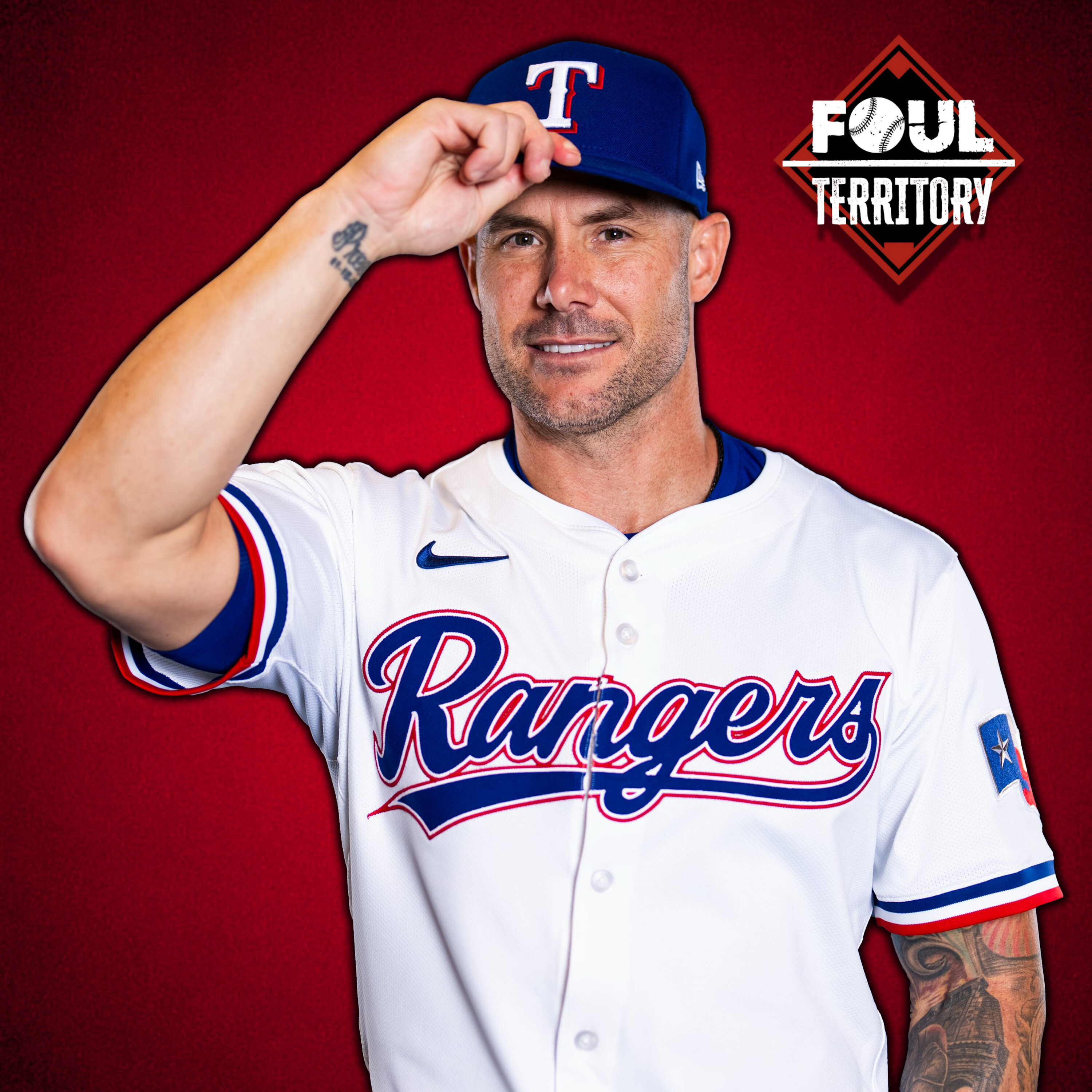
Skip Schumaker: Rangers offensive identity, Manager interview process
New Rangers manager Skip Schumaker hopped on FT and discussed his new role. He talked about finding the team's offensive identity, how to develop a strong clubhouse environment, what's the plan for Evan Carter, and why the managerial hiring process is so long and drawn out.
Hosts: AJ Pierzynski, Erik Kratz, Kyle Glaser
See omnystudio.com/listener for privacy information.
2025-11-13
19 min
Transcript
Available Results
Generated results are saved to the knowledge database for reuse and search.
No generated results are available for this episode yet.
Extract Knowledge
Pick what you want extracted first. Model, scope, and chapter options appear after a template is selected.
Generated results for public episodes are saved to the knowledge database so they can be reused and searched later.
Transcript
00:00:04
Speaker 1: All right, we are pleased to be joined now by new Rangers manager and the pride of UC Santa Barbara, Skip Schumacher, Skip, thank you so much for joining us. You are now in your first off season as a Rangers manager. Got to ask, how's it been so far?

00:00:19
Speaker 2: Hey, guys, it's been great. The pride of Santa Barbara. I'm not sure. I mean, you got Michael Young, you got Jim Rome, I mean, you got some dudes over there, but a part of Santa Barbara culture. I'll take that. But so far, so good. You know, it's first week or so, first month or so. Was kind of drinking out of a fire hose as you see an actual hose behind me. But but yeah, it was a lot early on. But with all the zoom calls and meeting people, even though I was there for a year and getting to know the organization, there was still a lot to do. And but you know, grateful for it.

00:00:56
Speaker 3: Skip.

00:00:57
Speaker 4: Hold up, pride to Santa Barbara. You got TCU gearon. You're not in the Cardinals anymore with Matt Carpenter. You don't have to suck up to him anymore.

00:01:05
Speaker 2: Okay, no, no, no, it's National Signing Day. It's National Signing Day today. My son signed, yeah to TCU. So yeah, so we were just at his high school, all the family there celebrating my son, Brody, and so that's why I'm all decked out. I'm usually not like this, I promise, but that's that's why I'm all tcu'ed out.

00:01:25
Speaker 4: Okay, Well, congratulations to you Anderson.

00:01:28
Speaker 3: Well, I mean thank you to interrupt AJ here and I'm gonna have to bring on a pick that you sent me say congratulations since he signed today. But what is this? What is this? And then we'll get into your big league crap, because this is the important stuff this picture. What does this picture mean? Besides the fact that I let get to look at your caves all the time on my phone, I get to check him out. What does this picture mean for you? Because when guys become managers, this is the stuff that you give up. This is a picture of you and your son in Japan after he the final out.

00:02:00
Speaker 2: Am I right, that's right, that's right.

00:02:04
Speaker 3: Okay, What what does it mean? What does it mean? Because managers lose a lot. Any coaches in the big leagues lose a lot. They lose opportunities to go and be with their kids like that. So one, what did that mean to watch your son win that? And what does it mean to take on the responsibility? And now you don't get to see very many of his games at the horn purple Frogs or whatever they're called.

00:02:30
Speaker 2: Yeah, I horn Frogs, yes, but I I didn't get to see one high school baseball game the first couple of years. And that as you know, you guys all have kids. You want to feel like you're present with your family and your kids. And missing out on some really special moments, you know, it takes a toll on you. It's the kids aren't affected as much as you think, but I definitely wore that. You know, I'm every single game, you know, when you're facetiming my wife taking up bats and it's just not the same as being, you know, in real life watching these at bats or ground balls or whatever it is. So when Brody made the USA team, there was no way I was missing out on it. You know, when you a couple of years ago, when I was no longer the manager with the Marlins, and see why and and Ross gave me the opportunity to be the special advisor with the Texas Rangers. You know, they allowed me to play catch up with my family. I got. I didn't miss any soccer games with my daughter, I didn't miss any baseball games with my son. And fast forward, you know, come July and August, all of a sudden, he makes this USA team and you know we're in Okinawa as a family watching Brody play for Team USA. It was a moment I will never forget an experience. I'm so grateful that the Texas Rangers allowed me to have with my son, and it just filled my cup. I'll be honest with you, I just it made it all worth it. All the stuff that it's happened in the last couple of years worth it. And uh now I'm ready to rock and get back into the one sixty two grind and very very grateful for all this that happened.

00:04:16
Speaker 1: Skip, You're inheriting a team that was the best offense in baseball in twenty twenty three and that carried them to a World Series championship, the first in Rangers franchise history. The last two years, the offense has regressed a little bit. Now there is a lot of young talent. You have Evan Carter, you have Wya at Langford. You also have great veterans like Corey Seeger and Marcus Simeon coming into this year. You've talked a little bit about wanting this team to find its real offensive identity. What are your overall thoughts about this team's offense and where you think there can be some growth.

00:04:47
Speaker 2: Yeah, we need to find ways where we're not just so predictable and easy to get out, you know, one through nine. I think you know, you need to have power in your lineup. You need to be able to have guys that have contacts, you need to have guys that you know have speed, and you know, up and down. I just don't think you should be one way, and you have to be creative in scoring runs. It's hard to score runs in this league. And I do believe in the value of the ball put in play, but I also love a three run home run. So I just we just have to find ways to win today and whatever that means. So I just don't think we should be one way up and down the lineup. We do have a lot of slug We have some really good hitters. We had some guys that honestly just had some really tough years that if they were just you know who they were the last year. I think, you know, you'd see a much different offense and and I think that's what we're looking forward is having a number of guys having some bounce back years. Skip.

00:05:47
Speaker 4: Well, then that leads me to this, what did you learn last year while you were there? You've managed before and now you just got to sit back and watch Boach? Did you help Boach? Were you in the meetings with the organization? Because what did you learn while sitting back? And then everyone kind of it said, oh, Skip Schumacher, he's the manager in waiting.

00:06:06
Speaker 3: Well, boom, here you are.

00:06:07
Speaker 4: Boachie retires, goes back to the Giants, and Skip Schumacher is now the manager of the Rangers.

00:06:13
Speaker 2: Yeah. I definitely wasn't helping Boach. I don't think he was looking to me for any help, that's for sure. Although I will tell you that Boach was very open wanted me, you know, around as much as I wanted to be around, and I'm very grateful for that. You know, I've been around a lot of rookie managers in my career, either playing for or definitely on the coaching side as a bench coach. So I had you know, Andy Green was a rookie manager, Ollie Marmol was a rookie manager. Jase Tingler was a rookie manager. So I got to learn from a lot of rookie managers and they're all great, but you know, I never got a Bruce Bochie to sit back and learn from. It also afforded me to learn the system in a way a lot of you know, managers don't get to do. You know, when you're in an interview process for a week or ten days of an interview process, you're getting the best version of a lot of these guys in the room, in front office and scouts and that kind of deal. But what I got is I got to learn how the front office reacts in wins and losses. I got to understand what the coaching staff, how they reacted wins and losses, how they developed. I got to learn the farm system. I got to learn, you know, who the farm director was. So all of that was huge for me to get a head start in this thing, which you know, a lot of guys you know, don't get the opportunity to do. And not in no way did I think I was, you know, just next in line by any means I was just trying to be still relevant in the game, just in case I got a chance to, you know, interview for another team, you know, in the next season.

00:07:48
Speaker 3: From an outsider's view here on the show, we talked about it before Kevin Palar even came on, talked about just looks like they're little rangers, just kind of waiting for something to happen. You were inside there, You were inside the organization. When you hear something like what Kevin Polar said, it just seems like, you know what, we showed up. Some guys didn't show up till you know, we were on the line stretching before the game. When you hear that, going into it as a manager and what you saw, can you change that environment? Do you have to talk to certain guys and say if that was the case, do you have to go to certain guys and be like, hey, I need you to be more energetic, because I think Corey siegeruld be like, well, I'll just go and diet homers and I'll just do what I do. Can you change that as a manager, because if you look at your last job with the Marlins, you got a lot out of not that much, and I think that can happen with the Rangers too.

00:08:44
Speaker 2: Yeah, I think you know, whatever it was said, you know, by Polar and a couple guys, I wasn't in there for one sixty two I will, so that's not for me to tell you exactly, you know, what went on. I don't think that's fair for me. I think if you ask, you know, somebody on the coaching st after the front office, I think they would have a different viewpoint of exactly what was happening inside that clubhouse. I do think that you have some really good players in that clubhouse that were frustrated on how their season was going. And you know, a number of guys would react differently on on you know, you know Kratzi and aj you guys have been in clubhouses and you know, when it's not going well, you know, you you do a little bit stuff differently than you're used to try to get back on track, and probably aren't the nicest person all the time to be around. And I think, you know, a lot of this is it's a lot of individualized stuff is happening in today's game of you know, trying to get yourself ready for today's game, whatever that means you don't see a ton of guys taking VP a lot anymore, you know, very rarely did you see, you know, some of the best players in the game taking batting practice at five o'clock. It just doesn't happen. It's more of a ramp up to today's game. There are guys that need to be out there every single day to keep getting better. And the last thing, So I don't think it's a Texas Rangers thing. I think it's a lot of what the game is nowadays. If guys are trying to figure out how they can be the best version of themselves tonight and whatever it means for them to get ready. I will tell you that the best players never think that they have arrived. They are still trying to adapt and get better. Our best players are still trying to figure out how to get better, whatever that means to them stay healthy and to get better. And the young guys, you know, I don't think you can let them just you know, run, you know, let the prisoners run the asylum. I think they still have to develop and still work. So I think it's a combination of things. And you know, when I get into spring training, I think we'll figure out all the dynamic out. But part of my last week or last month, i should say, is getting in front of all these players and talking with them and get one on one time and figure out exactly what happened and what way wrong and try to get it right next year.

00:11:04
Speaker 1: Skip back in twenty twenty three, Evan Carter came up and took the worldwide storm. Seems to starting outfield spot was hitting either third or cleanup in every game of the World Series. Looked like he was going to be the runaway winner for American League Work of the Year in twenty four and be a cornerstone of the Rangers moving forward. It hasn't worked out that way twenty twenty four and especially last year he struggled with injuries. The production has not been as hoped. When you have a young player like this again he's still only twenty three years old, who has been at the top, and then also have the struggles he's had, how do you approach working with him to get back to ultimately what he showed he could be when he first came up.

00:11:42
Speaker 2: Yeah, I think you hit it. The nail on the head is he's been hurt and when he's healthy he is a really really good player. You see what he can do in the outfield. His defense is as good as anybody's in center field and in the corners. He can really run the bases. He's a left handed bat that not only can hit for power, but hits for average, and we really missed his bat the last couple of years. If we get him, you know, just to be okay against lefties and still be really really good against righty's, you have an all star player. And I think everybody in our organization feels like Evan is an All Star type caliber player that is going to help us win another World Series one day, and trying to figure out how to get him on the field. You know, one hundred and fifty games plus is going to be the goal. He's still young, he's still developing. You know, he only had a handful of bats in the minor leagues before he got called up in that World Series run, So he is not a finished product. He knows that it's a big offseason for him to make sure he gets his body right and be ready to play. You know, one hundred and fifty plus games.

00:12:44
Speaker 4: All right, So I gotta ask Skip, how do you handle this as a manager in a new organization, right, you have some guys that I've told this story Robin Ventura when he came to the White Sox, he didn't call one person. He went to spring training with a fresh leag Didn't you have guys like Alex Korra right to try to control every little thing that happens, and they fly around the country and they fly around the world just because they want frequent flyer miles out. Okay, but how do you handle this? Do you call the veterans? I mean, you were around last year, so you call the veterans. You go around? Because I know other managers that fly around and meet with their guys in the offseason. Are you that kind of manager or are you a hands off until we get the spring training thing?

00:13:23
Speaker 2: Yeah, I've already met with a handful of guys one on one where there's lunch at their house, dinner, coffee. I just had lunch yesterday with the at the younger guy on our pitching staff that lives close to me here in Orange County, California. So yeah, I've met with the majority of the guys already one on one, and the guys that I haven't met with yet, I plan to meet with. But I have called just about everybody trying to knock out the forty man roster of just the phone call and just check in and kind of player plans this offseason and see what they're they're doing. But I have to start building this really these relationships, AJ like I I can't start it in spring training and try to figure out who these guys are and what they've been doing and just hope that you know our relationship, you know, some somehow forms in spring training a couple hours a day. I just don't think that is what the players want nowadays. It's I think players want to know where they stand and where I'm what I'm thinking, and kind of meeting some of the new staff members I think is important. So I am definitely the I'm not traveling around the world, but I'm definitely trying to get some one on one time, whether it's just a couple hours or you know, over a dinner, whatever it is, I am trying to get some FaceTime.

00:14:41
Speaker 3: AJ badly wants to be a manager, so he needs to know what the process is because we hear there's like.

00:14:50
Speaker 4: I don't want to be a manager. Take your hat off. Look at all this there and it's not great. Take your hat off.

00:14:56
Speaker 2: Yeah, it's gone quickly, exactly.

00:15:01
Speaker 3: It doesn't matter. But the process, the interview process, like we hear there's sometimes eight nine hour days. Like do they give you like a bathroom break because, like, I mean, you got to get snacks. Do they like are they evaluating you as you're eating? Because like your eye candy. But nobody can look at somebody for eight hours, Like that's just that's too much. Like what does that process look like?

00:15:26
Speaker 2: Yeah, I think you know, even I was, you know, with the organization in the last seven eight months, and even my interview process was lengthy. And I think that's what every organization is trying to do, is trying to figure you out. The R and D has an hour or so with you, The training staff has an hour or so with you. You have the front office, you have the coaching staff, you have you know, ownership, whatever it is. You have these hour or so pockets that you are you know, getting questioned on. And I think it's such a co laborative type of position that they have to make sure that that you are the guy ready to you know, to take on a lot of different responsibilities in the organization. Yes, there's bathroom breaks and dinners and lunches and all that stuff mixed in, and you have some fun too. And I think that the healthiest ones are the most organic ones that you can interviews, you can have. I think the ones that are just rifling off question after question, that's when it's like, you know, you feel like your your head is spinning, you don't know which way to turn, and you're forgetting people's names and it's a disaster. But I think, you know, I think every single department gets an hour or so with you to see, you know, how well versed you are, what you need to learn more about the organization and if you're you know, honestly willing to work with others.

00:16:51
Speaker 4: Okay, I got to ask because you brought it up. You said, the trainers get an hour with you. I played in Texas what is Lucky and Jamie Reid asking you for an hour?

00:16:59
Speaker 3: Because I mean, what are they raoul?

00:17:01
Speaker 4: Like the massage guy, what you're saying, Hey, do you like next massages? Or like what are they are.

00:17:06
Speaker 1: You going to handle injury reports?

00:17:09
Speaker 3: Like, I mean, what are they doing?

00:17:12
Speaker 1: Yeah?

00:17:13
Speaker 2: So I don't it's not the entire training staff so you know the massage there, this is not in there. That's pretty funny. That would be amazing if that happened. But I uh, but I do think the you know, trying to figure out how the S and C staff you know, works with the training staff works with the hitters and the pitchers, and you know, just trying to figure out how this whole thing works, right, because the last thing you want to do is have guys, you know, getting stuff from you know, some really good places. Tread is a great place, drive line is a great place, and you know, we want to you know, make sure that you know, we have relationships with you know, those types of facilities as well and guys that are working there as well. But we also want to have a lot of stuff in house for the players and you know, as you know, biomechanics is is real in our world, and making sure that we're all on the same page if they go to the trainer or the S and C staff that you know they're aligned with you know, the pitching in our in our hitting side.

00:18:08
Speaker 3: All right, you're making the lineup? Is that part of the negotiations. Are you guys talking about that? Like how does that go down? Is that went, Hey, Skip, do you have any questions for us?

00:18:22
Speaker 2: I'm pretty confident that I'm making the lineup, that's for sure. That's not to say I'm not gonna ask the hitting coach what they've been seeing, but I feel like it's definitely a staff conversation after the games and if guys need a blow and you know how that works, cratsy, like sometimes I don't see everything, and if guys are grinding in the cage and there's stuff going on at home or whatever and they need a day, then they need a day. But you know, I'm very grateful that See why is you know the president too. I mean he's, you know, an All Star World Series champion pitcher, so he has some feel and I'm grateful that he, you know, gives me, you know, full reign of you know what I what I think the lineup should be and how it should be constructed. Am I gonna take some projections? Of course? I mean it's data, and you want to see some recency. You want to see, you know, guys what they've done against another guy you know before as far as like you know, there are bats against another picture. All of that is real. But if you know Corey Seeger doesn't have good numbers against a pitcher. There's a good chance I'm probably gonna put him in the lineup still, so I think there's some feel to this, to this thing as well.

00:19:34
Speaker 1: Skip, thank you so much for joining us. We really really appreciate it, and best of luck your first full season as the Rangers manager.

00:19:41
Speaker 2: All Right, big fan of big fan of your show. Guys, thanks for having me on
Chapters
No chapters available.