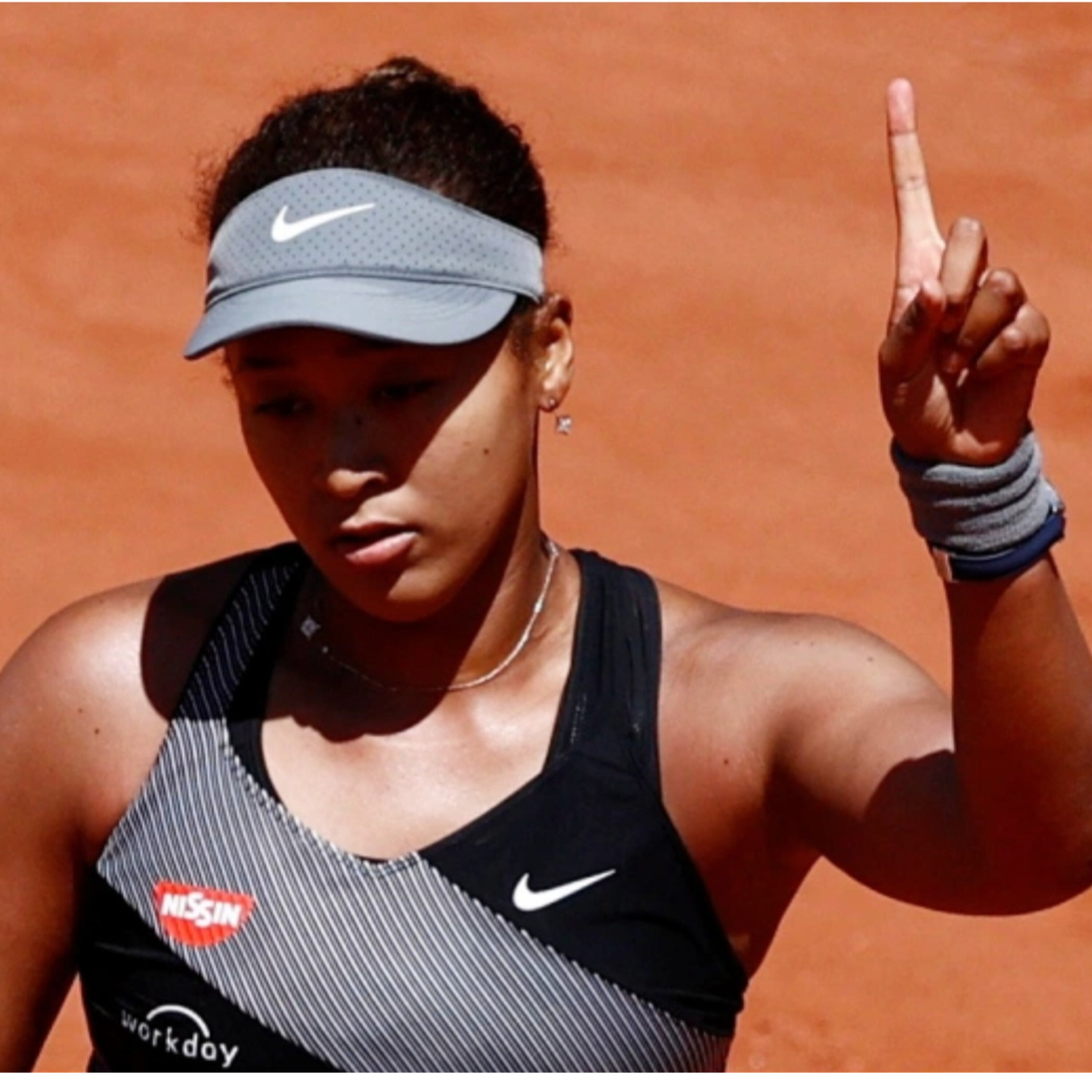
L'affaire D'Osaka
A special short pod this morning explaining how we got from notes App to a nuclear standoff in the tennis versus Naomi Osaka debacle.
Hosted on Acast. See acast.com/privacy for more information.
See omnystudio.com/listener for privacy information.
2021-06-01
21 min
Transcript
Available Results
Generated results are saved to the knowledge database for reuse and search.
No generated results are available for this episode yet.
Extract Knowledge
Pick what you want extracted first. Model, scope, and chapter options appear after a template is selected.
Generated results for public episodes are saved to the knowledge database so they can be reused and searched later.
Transcript
00:00:15
Speaker 1: So Rene, let's get right into it. We have had a number of developments.

00:00:19
Speaker 2: There has been a large seismic change in the since forty ideas ago.

00:00:24
Speaker 3: It's crazy, I.

00:00:26
Speaker 1: Have to say, on the face of it.

00:00:27
Speaker 4: You know, obviously we're going to talk mostly in this very short twenty minute episode about the goings on of the Osaka Dibaco La fer de Soca. But I have to say, on the face of it, my opinions haven't changed. I still think the media is being totally ridiculous about this. And now we have an added player in the mix, which is the federations.

00:00:50
Speaker 1: The Slam countries have come down.

00:00:52
Speaker 4: They issued her basically a severe warning, telling her if she were to keep this up, she would get fined increasing amounts or worse, the implication being a possible default. And then she called her bluff and was like, bye.

00:01:04
Speaker 1: So what is going on?

00:01:07
Speaker 4: How dumb are these bodies for weighing in and turning a lateral molehill into a mountain. In my opinion, that's the only way I could read this, because my thoughts on Naomi haven't really changed. My thoughts on what the rest of the tennis ecosystem could have done or should have done are myriad, but generally mired in disappointment. This was such an unforced error by almost everyone involved, maybe including Nami Osaka too, but unforced errors are rife in this situation, and it's just sort of sad to see.

00:01:38
Speaker 2: This is why you and I good together, I think in a lot of ways, because we do.

00:01:43
Speaker 3: We agree a lot, but we disagree.

00:01:46
Speaker 2: We don't disagree vehemently often, but we do disagree at times. Listen, from the get go, Naomi is the one that needs to Naomi has to take responsibility for the start of this, Okay, by putting out those statement before the tournament started was and I think, and as she now agrees, because she said it in her statements, there was a mistake. Putting out that statement before the tournament was a mistake. I think if there could be a do over, the do over would have been talking to the federation about this privately, to try and allow them to work with her somehow behind the scenes.

00:02:26
Speaker 3: Because to put it out publicly, and.

00:02:30
Speaker 2: Particularly the French, let's face it, and they don't like to be told what to do, all right, I mean, they're notoriously probably the most difficult federation. I mean Look, they announced that they were changing the dates of the French Open last year without even consulting the ATP of WTA.

00:02:45
Speaker 3: They were just like, we're going to have it now.

00:02:47
Speaker 2: So you know, players were like, what the f their federations were like or what the f But the French were like, you know what I mean. So I think from I've spoken to someone up very high up in another federation that called me just to sort of gather some information, gather some different thoughts from players, from past players.

00:03:11
Speaker 3: From media.

00:03:13
Speaker 2: And you know, the word on the street was she did not go to the federation at all to discuss this.

00:03:18
Speaker 3: She just blanket statement put that out.

00:03:20
Speaker 2: And you can imagine that they especially going through Look, the federations are struggling, They've got no fans from the stands, they're not.

00:03:26
Speaker 3: Getting any money. They're really bleeding money big time, and this is a blow to them.

00:03:30
Speaker 2: She's the biggest name outside of Serena in the women's straw. For her to sort of make a statement of like, look, I'm struggling, but I'm not going to do any press was not a great idea. And I'm sure if she could do it again, she would do it again and then they could work with her a little bit behind the scenes.

00:03:45
Speaker 3: But as soon as that happened, then they got.

00:03:47
Speaker 2: Their you know, their gills out and they you know, puffing their chests up and like, how dare you? So the flip side of it, Caitlin and we talked about this yesterday, is it's not fair for one player not to do press, okay, because when you think about Serena, when you think about all the other top women players.

00:04:05
Speaker 3: They all have to go to press and it's.

00:04:07
Speaker 2: About a good i'd say hour at least, you know, between going to the press conference, going to the individual TVs. They've got to walk themselves over to the Tennis channel, They've got to go to the French Federation TV, They've got to go to you know, Wow Wow for Naomi or Eurosport. There's all a lot of different rights holders that every single player has to appear at. Believe me because I know how it works, because they have to wait for them often because oh they can't they're not coming to ESPN because they're still at Eurosport or whatever.

00:04:36
Speaker 3: So it is a long process.

00:04:37
Speaker 2: After these top players win a match or lose that they have to go and appear at these places, so it does take a lot of time out of a top players to day. So Naomi not doing the press is really it is a disadvantage for the top other top players because they are going to do all of those and so rather than go back to the hotel, relax and chill out and get away from all.

00:04:58
Speaker 3: The stress, all these other players have to deal with it.

00:05:00
Speaker 2: So for the federations, they're putting it, you know, they're putting their their their flag in the sand, saying this is the line. It's not fair for everybody else and you should not be getting preferential treatment. Having said that, yes, it was a complete shit show once they only put that out and you know, let's face it, the French Federation weren't having anything about it.

00:05:22
Speaker 3: The French Federation.

00:05:23
Speaker 2: I think the tournament director of French Oven made a real bad decision coming out and being so forceful the way he.

00:05:29
Speaker 3: Was at the beginning.

00:05:30
Speaker 2: I think he could have handled that a lot better. And in the end, you know, Naomi is struggling.

00:05:36
Speaker 3: That is the bottom line. Naomi is struggling whether or not some people believe her. The players, as we talked.

00:05:42
Speaker 2: About, aren't exactly supportive of her. Although it was really nice to see a lot of them get on her Twitter and on her Facebook story, on her Instagram and sort of support her really vehemently. Venus and Sloan Coco. I don't know who else is written in that sense. I haven't looked, but it was really nice to see him step up and sort of let her know that they.

00:06:03
Speaker 3: Were supportive of her. So this is this.

00:06:08
Speaker 2: Is a big moment for the federations to do better with the press and make sure that the right people are in those rooms, and to also be as supportive as possible at times for the players.

00:06:17
Speaker 4: I want to talk about this from this perspective.

00:06:19
Speaker 1: I think you know.

00:06:20
Speaker 4: Your read on this is as I think empathetic and outward facing as somebody who's been in the tennis world for decades that I've heard. I also want to just bring up that for the most part, the larger body of people for whom Naomi resonates and who she speaks to and who she can bring into the sport, younger people, international people, people of color, women basically have unilaterally decided that tennis has shot itself in the foot and losing under any circumstances. The second biggest name, let's call it after Serena in the Certainly women's ecosystem is insane and I can't help but macro agree with that. I mean, I'm not taking issue with any of the micro points that you're making. I think a very very smart response on the part of the French, which if they are capable of having a measured, thoughtful response, the past has not proven so, but a very thoughtful response would have been like, Look, the finds are.

00:07:27
Speaker 1: Set up for this very reason.

00:07:28
Speaker 4: You're right, it's an advantage for her to be able to have an extra hour to herself and whatever attendant you know, tough questioning or mental you know, sort of strain that puts on her. So the finds are set up for a reason. But obviously this can't continue because we don't want to set a precedent.

00:07:41
Speaker 1: So let's sit down.

00:07:42
Speaker 4: Let's decide as for SLAM Nations to sit down maybe with her team and some other folks around the ecosystem, people like you who've been on both sides of this, and figure out what are the sort of granular things like the things we spoke about the other day, that could make the press better, that could make the press a little bit more reflective of the modern cultural conversation that perhaps would be have a little bit more patience.

00:08:04
Speaker 1: You know.

00:08:04
Speaker 4: I was really disappointed to see a lot of folks in the tennis media basically asking for receipts, saying well, how could she be?

00:08:10
Speaker 1: You know, what is this mental illness? What is this? You know? And it's like, it's not your business, is what it is.

00:08:15
Speaker 4: You know, if a person is telling you they're they're not in a good place, then your first instinct should be empathy and to believe them, not asking for, you know, a doctor's diagnosis.

00:08:26
Speaker 1: You know.

00:08:26
Speaker 4: So I just want to sort of say, the articles that are being written about this outside of our world are one thousand percent in condemnation of the tennis world in a way that I have a hard time not being empathetic with too.

00:08:40
Speaker 1: You know, Like, I.

00:08:41
Speaker 4: Understand what a spot she's put she's put these folks in again, whether she intended to or not. I truly think, especially now that we've had some more clarifying statements from her and then her sister on her.

00:08:49
Speaker 1: Behalf, that she might chance she was literally just sort of saying like, hey, I'm not going to do this.

00:08:54
Speaker 4: Here's a heads up out of politeness, you know, don't I don't actually think she was trying to make a huge political statement. But even if she, you know, again, we could have this conversation and why not use it as an opportunity to bring some of the more archaic parts of the tennis world into modernity, whether they like it or not. You know, that's the conversation that I hope we continue to have because I think it's really really necessary. But now it's sort of turned into like Tennis versus Naomi Osaka and pick aside, and it's sort of like, oh god, this is so interesting for our sport. It's great for our sport to have this kind of massive, massive lens. She's been treading on Twitter for four days. You know, author Roxane Gay is weighing in, Ava Duvorney is weighing in, you know, cultural figures, Land titans of other industries and other thought spaces are now sort of having some thoughts about tennis, which I think, again not hugely positive that we have the attention and the sort of dynamics here at play that mean we can you know, hopefully ultimately retain folks and keep them engaged in the game and keep them going further. But I can't help but think the literal worst thing to do is to call her bluff and to escalate this to such a degree instead of saying, okay, you know what, we don't love the initial notes app in a very millennial way that you announced this. It is it is very millennial to sort of do this, yeah, you know, to sort of like, you know, not have a high level meeting with your agent and you know, behind the scenes back channel just be like, oh, here's a notes app like bloop.

00:10:20
Speaker 1: You know.

00:10:20
Speaker 4: On the other hand, like the federation had every choice, not only the French Federation, but the other Slam country is enjoining with us to say, hey, listen, we have these finds in place for a reason. We'll just give her these fines. We'll have to obviously work out something long term, so let's sit down with some folks and figure out what it is she's objecting to and how we can in fact make this less onerous, because you know, to imply that press is such a disadvantage to do is also sort of problematic. It shouldn't be so problematic to do. Of course, you know, players want every minute of their day to be there to be their own tennis players or individual athletes in an individual sport.

00:10:54
Speaker 1: And I get why.

00:10:55
Speaker 4: You know, it's an opportunity cost to spend a minute doing this thing when you could be spending a minute doing that thing. On the other hand, one hopes that they are so bought in. And I love when Billy Jean King sat down with us and talked about how she would love any new players to the tour to get media training to understand the activist history of especially the Women's Tour, and the way to advocate for yourself for change for others, and the way to talk to the media. Perhaps it isn't so so combative, and the media has a lot to answer for. But I also think if Billy Jean's idea was implemented, where you get that kind of like boot camp when you first join the tour, you know a dialogue could be created early and so you know, Okay, these tours ultimately have our backs or should and here's how we can work together with them to bring up issues and to make things go forward. So I think there's a lot of things that could happen out of this. It's just dumb to me that the worst possible things have happened, and now you've basically got you know, two nuclear armed countries pointing nukes at each other instead of what happened, which is like some you know Camp David esque back channel diplomacy.

00:11:59
Speaker 3: Yeah.

00:12:00
Speaker 2: Well, first of all, the w t A does do some media training, does do you know when the when the young players come on, they do this, they call them rookie hours, So they do go through a lot of the what they need to do, what their expectations are. You know, this is where you get help. This is where you and we do have a psychologist that does work at the w t A. The w t A is heads and shoulders above the ATP when it comes to their medical staff and the implementations of various things, so there definitely.

00:12:34
Speaker 3: Is places for them to go.

00:12:36
Speaker 2: One of my very closest friends is the head of that department, and I know that over the last thirty years she has really worked to try and get get things like that implemented. Because she has only ever cared about the health and safety of the tennis players. She has had to buckheads with many tennis hierarchies about you know, so pushing back on them and making sure that.

00:13:02
Speaker 3: The players are absolutely taken care of.

00:13:04
Speaker 2: So this is sad in that respect because I know that the WTA, for example, is probably better than most associations when it comes to the health and well being of the players. The flip side of that is that Naomi didn't reach out and hasn't been reaching out to the WTA or the Grand Slams.

00:13:21
Speaker 3: She kind of went and did this on her own.

00:13:23
Speaker 2: I was a little bit like, as you said, very millennial thing to do, to sort of say, okay, well this is how I feel. I'm just going to put it out there and then bloop, as she said, push send, you know, and then hope for the best. And as I said, it was a it was a big mistake on her behalf. I think she would probably do it differently. I think she would definitely do it differently.

00:13:41
Speaker 4: Now said she would, you know, I don't. I really don't think she intended for this to happen. I think you no, I would have There's absolutely no.

00:13:49
Speaker 1: Differently had she anticipated what was going to happen.

00:13:52
Speaker 2: Yeah, I don't think Naomi is that type of person to you know, sit down and go the hell Am I going to screw the French Federation let's do this. She's not that type of person. I think that she is incredibly socially awkward. I think she is. She struggles on a massive scale when it talks to public. When it comes to public speaking, she has from day one, everybody just thought, man, she's.

00:14:16
Speaker 3: Rude or whatever. It's not. It's just it's just how she is.

00:14:19
Speaker 2: She doesn't like to talk to many people at all, cap when she's not out there. I mean, I see all the players, I'm in the locker rooms, I'm around these players.

00:14:29
Speaker 3: She's not jovial. She's not running around chatting to everyone. She has small, little micro relationships.

00:14:35
Speaker 2: With you know, people like Eager and you know a couple of other players, so she'll talk to them, but it's not like this running dialogue.

00:14:42
Speaker 3: She's no, you know, Ash Barty, just.

00:14:44
Speaker 1: The of the players a lounge.

00:14:47
Speaker 3: No, she'd rather be That's.

00:14:48
Speaker 4: Great, and we want that spectrum of players and spectrum of personalities. That's what makes tenus cool. And I would also say, despite having not a natural ease with public speaking and talking to the media, and she's spoken about this because you know, I think she she felt it as a teen, you know, coming out of the tour and immediately being plunked down in front of microphones and strangers. You know, I think to her massive credit. When she does speak, she speaks so thoughtfully that perhaps that's why it takes something out of her, because she is struggling to ask to answer somebody's question in a way that that does mean she's kind of taking on their premise or their question or their idea. And you know, I think it would be a lot easier if her she was like, nah, next skip, you know, And that maybe that comes with age, Maybe that comes with experience. Maybe it just comes with a personality type to be like, oh, I'm going to defend my boundary here and I'm not going to take on you know what, Like you were talking about with Novak Djokovic being asked about nic curious where he was like, I'm not answering any curious questions. So you can ask him and I'm gonna be like, next, I'm not interested in answering that.

00:15:47
Speaker 3: Move on, you know.

00:15:48
Speaker 4: And I think that that maybe is a learned skill. But one thing I do want to talk about since I brought up Novak Djokovic is.

00:15:54
Speaker 3: I have been so.

00:15:56
Speaker 1: Impressed.

00:15:57
Speaker 4: It's been impressed upon me how amazing having a joint labor union for the players could be. We've talked about it in the context of you know, prize money, We've talked about it in the context of scheduling, and now we have an opportunity again to say, hey, where are you ptpa. You guys said you were going to be a ball about player advocacy, like, let's go and if not, you guys, then maybe some kind of joint tour could sort of tackle this and say, hey, listen, we're going to advocate on.

00:16:28
Speaker 1: Behalf of our our body of players.

00:16:30
Speaker 4: We're going to do whatever we feel makes their experience the best and gives the audience the best performing performance of tennis on the court. And maybe sometimes that means changing press obligations. But let's work together and let's figure out collectively as a body, who and how we want to empower and change, you know, the system to be a little bit more beneficial and musually beneficial. Understanding of course, that tennis media exists largely to trumpet the sport. These are all stars because of the tennis media, largely, not only because of their results on the court, which is not to take away anything from their results on the court. But you know, you can't always go see a tennis front of in a person and having the contact and having the storylines and having the media around it is an advertisement for the game. And I don't want to downplay that because I think it's absolutely true that said, what about a player union, Like, let's go, Novak, get on the stake.

00:17:20
Speaker 1: We have so many we have so many tasks for you, and you said you want to do it, So let's go.

00:17:25
Speaker 3: If there was ever a time, this is it.

00:17:28
Speaker 2: And I'll be interested because obviously he's playing today will be interested to hear. I'm sure I suspect he'll be asked about this in the postmatch interview about that, And you know, this is a perfect opportunity. Wouldn't have been a great opportunity for a player union to come in and mediate this a little bit.

00:17:49
Speaker 3: I know that the majority of players.

00:17:51
Speaker 2: Were not supportive of Naomi in a situation so so, but that's okay because of the fact that if you had a player's union, you could as said, sit down as a group and say how to Okay, but legitimately, let's talk to her and let's try and do the right thing by her, but also let her know that this is the this is the this is the sand, this is a line in the stand that we all are going to support her on, and this is the sand line in the sand we're not going.

00:18:16
Speaker 3: To support on.

00:18:17
Speaker 2: And that's how you create a dialogue with all the players. That's how you create a dialogue with the tournaments. And yeah, I don't know, Caitlin, I mean, is this maybe the watershed moment we were waiting for for the actual PTPA to actually embody and bring the women into the.

00:18:33
Speaker 3: Conversation a little bit.

00:18:35
Speaker 2: Remember that, I don't know, remember them, Remember the women, because if there is no bigger story than what just happened with Naomi Osaka. Okay, So we have had some seriously controversial moments in tennis so last two months, and Novak was one of those people with the default.

00:18:50
Speaker 3: And now Naomi.

00:18:51
Speaker 2: I mean, those are two biggest stories in tennas over there.

00:18:55
Speaker 1: You know, Novak and Novak skip press after that, just both of that.

00:19:00
Speaker 4: During the tournament, which again I kind of get why he would get pressed, but like you know, this is obviously something he didn't feel like it was additive, He didn't feel like doing it, and so I want hope that he might be sympathetic as the self appointed leader of the put.

00:19:12
Speaker 3: Ball players are, for sure, all players are. I mean the amount of times I mean I've seen.

00:19:18
Speaker 2: As we've seen, because we get stuff sent to us on Twitter, people sending, you know, very bad interviews okay, and questions us two players that are very bad, and you know, it's it's a time.

00:19:31
Speaker 3: It's hopefully it's a time for.

00:19:33
Speaker 2: The federations and the associations and hopefully players union to get together and make tennis better in every sense of the word.

00:19:41
Speaker 3: And we are going to lose Naomi Osaka probably until.

00:19:44
Speaker 2: The hard courts to the US Open series time, because I would go and say right now on record, there is no chance she's going to be at Wimbledon, and that that is a major.

00:19:57
Speaker 3: Loss to our sport, to our sponsors, to.

00:20:02
Speaker 2: Our TV rights people, to her and everything well, and in the end ultimately to her because she is obviously struggling with something. She has said she has gone through a lot of bouts of depression and a lot of anxiety, and so let's hope she can get herself together and she can get the support she needs, and we'll be here for her.

00:20:21
Speaker 4: All right, Well, let's be sure to check in often because I think now that things are so fast moving, people might need to hear from us on a regular basis.

00:20:30
Speaker 3: I don't know.

00:20:30
Speaker 1: Sorry people, Sorry, apologies in advance. All right, until soon, Renee, thank you for the thoughts this morning. Let's continue to watch one unfold. And that's it for this episode of the Racket Magazine podcast. Thanks for listening. Our host is Renee Stubbs.

00:20:48
Speaker 5: Our co host and producer is me Caitlin Thompson. Music by internationally renowned DJ Stretch Armstrong.

00:20:54
Speaker 1: Thanks to Tim or Jerry and then the team at acast.

00:20:57
Speaker 5: Find us at racketmag dot com, slash podcast and subscribe to us as any of your favorite podcatchers
Chapters
No chapters available.