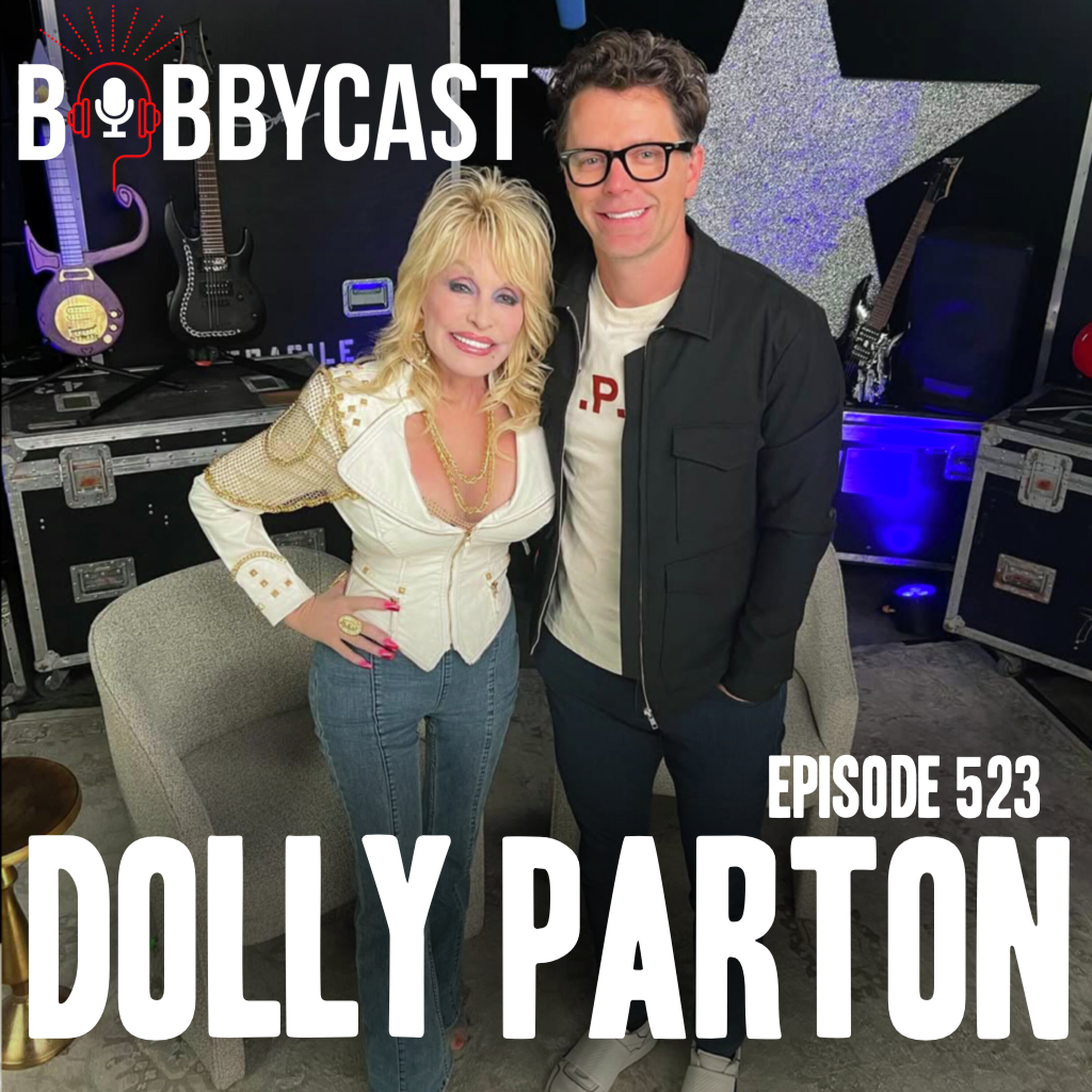
#523 - Dolly Parton on Writing "Jolene" and I Will Always Love You" on the Same Day + The Making of Her 'Rockstar' Album
On this episode of the BobbyCast, Bobby sat down with the legendary, Dolly Parton. Dolly talks about what her home was like growing up, being married to someone who wanted to be out of the spotlight and she gives Bobby marriage advice. Bobby asks Dolly about her Rock & Roll Hall of Fame nomination and why she didn't think she was worthy. Dolly then shares some of the behind-the-scenes of the making of her rock album, Rockstar. Finally, Bobby replays the interview from when Dolly was on the Bobby Bones Show and she talked about writing "Jolene" and " I Will Always Love You" in the same day!
Follow on Instagram: @TheBobbyCast
Follow on TikTok: @TheBobbyCast
See omnystudio.com/listener for privacy information.
Available Results
Generated results are saved to the knowledge database for reuse and search.
Extract Knowledge
Pick what you want extracted first. Model, scope, and chapter options appear after a template is selected.
Transcript
00:00:02
Speaker 1: Ladies and gentlemen. We are experiencing technical difficulties.

00:00:07
Speaker 2: This is the Bobby Cast. Welcome to episode five twenty three. She's a living legend. She's a country queen. She's a philanthropist. She is a rock star.

00:00:25
Speaker 3: I mean, she's in the Rock and Roll Hall of Fame because she said no to it, didn't she end up saying yes to it?

00:00:31
Speaker 4: Yeah, but she wanted to do a rock album in order to get in. She's like, I feel like I need to do a rock album to get into it.

00:00:37
Speaker 2: So is she in then now?

00:00:38
Speaker 4: Yeah?

00:00:39
Speaker 3: Okay, because I know she said no, don't vote for me, and then she said, Okay, I'll do that rock album.

00:00:45
Speaker 4: And then I'll go in.

00:00:46
Speaker 3: But I don't know if she was put in then because I never got to vote for her, and I'm a voting member. Let's see, unless it was before. So I sat down with her, and I sat down with her. This has been a bit because she agreed to be in My comedy special which aired on CMT, and it was really cool that she agreed to do it, and she voiced the opening of it, she voiced the closing of it. We did some interview segments in the middle that was kind of about what I was talking about in my comedy special. And so I went and sat with her, and I just haven't put it out because I had used it for that and I didn't kind of want to get it mixed up, and she was so kind to do it. But I had this, you know, basically half hour with her that I thought was really cool.

00:01:31
Speaker 2: What do you have?

00:01:32
Speaker 3: She was inducted in twenty twenty two, the year before. Yeah, I started voting before. My votes really were instrumental. And who made the Rock and Roll Hall of Fame? So you weren't with us when we recorded this.

00:01:44
Speaker 2: I was there for this one.

00:01:46
Speaker 4: Yeah you can, yeah, Scoop Steve.

00:01:49
Speaker 3: Oh good, it's in her big warehouse. Awesome makes me feel better than because I don't remember really. I remember going and doing it, but my mind was on. I got to get to certain places because I know all I want to use it in special, So I don't even know what we really talked about.

00:02:05
Speaker 4: That whole thing is fascinating just going in there and seeing like how much they do out of that location and like, oh, you mean her facility, she's like a weal old machine.

00:02:12
Speaker 2: Yeah, it's a facility.

00:02:13
Speaker 4: With.

00:02:14
Speaker 3: It's weird to say multiple rooms, but this building is so big, it's like multiple areas that feel like different warehouses that they do different. If it's like Home Shopping Network, if it's like shooting a TV show, if it's what we did. We set up for a full interview with a full set.

00:02:27
Speaker 4: Yeah, it's like I've never been on a movie studio a lot, but that's what it felt like.

00:02:30
Speaker 2: It kind of feel like that. So I did this. It was Dollie and I a one on one.

00:02:35
Speaker 3: We talked about and you'll hear the roots, the artists who inspired her, the drive that she still has, which is crazy. She's done at all, yet she still has the drive. She gives me marriage advice. Her and her husband were married for fifty nine years. Sadly KRLDI and her husband passed away back in March, so always thinking about Dolly and her family. But that was recorded a while ago, way before that happened. So we're talking about it and you're like, man, Bob's kind of not even addressing that he died.

00:03:02
Speaker 2: This is way before that. Dolly's a busy lady.

00:03:05
Speaker 3: She got a new book that came out called Star of the Show My life on stage, but that doesn't come out to November, right, Yeah?

00:03:10
Speaker 2: This year, yeah, okay, the Country.

00:03:12
Speaker 3: Music Hall of Fame and Museum will debut Dolly Parton Journey of a Seeker, and that is already out because I saw her doing the press conference for it is out. She also partnered with Good American to launch Joe Leane's for Sure a gene Right, Joe Lene's that's the greatest name. I bet she's written so many songs. You can probably do so many products just off the twist of the song names Dollywood's fortieth anniversary, which, by the way, I saw was just voted the number one theme park again in America.

00:03:39
Speaker 4: Oh yeah, I've never been of you.

00:03:41
Speaker 3: No, I've never been. My wife is asked to go like three times. It's not like I get to say yes or no. But we've made like we'll both suggest somewhere to go for vacation, and that's been on her list three times in a row.

00:03:52
Speaker 2: We have not done it.

00:03:53
Speaker 4: Honestly, it was seeing a name number one that maybe want to go for the first time, like Man, which could really.

00:03:57
Speaker 2: Be good Man.

00:03:58
Speaker 3: We are really influenced. So this is my conversation with you. One and the only Dolly parton.

00:04:07
Speaker 5: Dolly, I Love You. I want to leave with that.

00:04:11
Speaker 6: Set that the.

00:04:14
Speaker 3: Yeah, especially now I think we've been there we all love you, so a question.

00:04:19
Speaker 5: I want to set it up first.

00:04:20
Speaker 3: I have a story that I do in my act where I talk about people that show up whenever you really can't. They're to offer you something but nothing in return.

00:04:29
Speaker 5: And I talk about Lionel.

00:04:30
Speaker 3: Richie and how I was freaking out one day because Ryan secrets he got sick and had to miss Idol, so I had to go host it with like four minutes before the show starts. He's never missed an episode and here I am. And it's not that I can't host the show. But the stage direction is such a big part about it. And I talked about how Lionel gets up, walks all the way across the arena, he's got to get back to his seat too, and just gives me this real hey man, hands on the shoulders.

00:04:55
Speaker 5: You can do this. The commodorees did this. He didn't have to do that.

00:04:58
Speaker 3: Like Lionel Richie's is famous, nice as cool as could be. He didn't have to do that. And so I talk about how amazing it is when people will give to you when they want nothing in return. And so when I say a story like that to you, who comes to mind that did not have to be there for you?

00:05:12
Speaker 5: But was there?

00:05:14
Speaker 6: Well, so many people. I actually have more than one in my early days, my uncle Bill, who's the one that took me around because he saw my great potential and he would take me around to shows and things, and even when my daddy didn't even want me to go, you know, getting out in the world. Like my uncle Bill used to bring me down to Nashville in the early days. So he was definitely one of the people that didn't have to do it. He just saw that that was my dream of my bazare. But there are many people like in the business. Mini Pearl. When I first came to Nashville, she called me over one day and she said, Dolly, you're a right pretty girl. And it seemed like you got, you know, a lot of talent because I've heard some of your songs. She said, But don't let anybody ever tell you that you need to be this way or you need to be that way. You just be you. And she said, and don't let none of these old hairy legged boys try to make you believe that you're not as good as they are, because you can be whatever you want to be. And she didn't have to do that. But she saw that I was about to do my number and she did not want me to get caught up, and like some of the girls were just kind of do whatever they needed to do to get a break, but she saw something else in me. But she just said, don't do it. You just be you and believe in your talent and believe in yourself.

00:06:37
Speaker 5: Why do you think she did that because.

00:06:39
Speaker 6: She's a good person. Like you said, people that are good tend to do good things. And I think that was probably Lioneld's good heart that saw that he had been in that spot before, and she probably had in her own time and in her own way, been in that spot.

00:06:58
Speaker 3: We went to Italy, my wife and I and I'm from a real time market, so I never went out of the country until I started to have some success.

00:07:04
Speaker 5: So now that we'll older get to do some cool stuff.

00:07:07
Speaker 3: And we go and they would have Italian music on these places, but eight so early because my schedule is pretty early, and they would turn on American music everywhere we went, and three of the four places they turned on your music when we walked in. They assume every American, and it's probably right, loves Dolly Parton.

00:07:24
Speaker 6: Well, I'm sure every American don't. Yeah, I'm sure there's a lot of people that slapped me upside of here, but I don't want to hear about them. It's a great confident. But see, I've been at this a long time, and I've been famous in Europe for years and years and years because of the songs that I used to sing and write, like cod of mini colors, and people related to that. They knew that I was brought up in a family of twelve children, you know, kind of a mountain Cinderella's story, and people related to my music, and so therefore they related to me. And then when I got to being on TV and stuff, people felt like they you know, like they knew me. So it wasn't uncommon. A lot of my music was playing more overseas than it did here for a long time, you know, from my early records. But it's nice to be loved by anybody anywhere.

00:08:16
Speaker 3: I was impasta your music, though, That's what everywhere most places we went, it was you playing over the top or in a pasta.

00:08:21
Speaker 6: And all, what does that make you happy? Was you trying to get out of the country.

00:08:24
Speaker 3: No, it made me feel like I was at home, which is great set on my show. I have a couch and a couple of lamps, and really that's it because when I grew up in this we grew up in a nine hundred square foot house in Arkansas.

00:08:36
Speaker 5: I never had a bedroom.

00:08:37
Speaker 3: My whole life, I saw on the couch and so my closet was underneath my couch and it was literally everything was on the couch. Never had a bedroom, and so that was what it was like though for me, growing up in its small house with a lot of people around. Your story similar ish you're from a small town in Tennessee.

00:08:56
Speaker 5: What was home like for you growing up?

00:08:58
Speaker 6: Well, home was like full. There was a lot of kids we had. Mama had one kid on her and one kid in her as long as I can remember, one on her hip and want to grow in in But we lived in the in the house you know where we and we didn't have running water unless we'd run and get it, and you know, we just kind of washed in a wash pan. And people said, how in the world did you take a bath that many people in the house because there were six boys and six girls in my family ultimately, I mean after we were all there and after Mama had them all. But people say, how did you take a bath? How did you have any privacy? I said, well, we had a little screen, you know, a little sheet mamo tile on a string over there, and then we'd washed up as far as possible, and we'd washed down as far as possible, and when the boys cleared the room, we washed possible. That. Yes, yes, well it's basically is like that because it was about your privacy because you knew when you could, you know you had The girls had to do their thing, the boys had to do their things the moment. Make sure you know that we cared about such things as privacy and decency and all that. But when you're growing up, it's just natural growing up like we did. You learn the rules and you go by them.

00:10:19
Speaker 3: When you have all those brothers and sisters, you have to somehow get attention for yourse. I mean you're born into an environment of everybody even indirectly seeking attention.

00:10:29
Speaker 5: You got a couple of parents, twelve.

00:10:31
Speaker 3: Kids, I mean, is that where this performance gene came from.

00:10:36
Speaker 6: Yeah, well, my mother's people were all very musical, so music was always a part of our family. My grandpa was a preacher. He also played piano and played guitar, so my people were the ones that sang at funerals and weddings and shindigs and anything around locally. Some of my relatives somebody was always playing. But when I was young, my uncle Bill and my uncle Lewis, well both you know, they paid attention to me. My uncle Lewis gave me my first little Martin baby Martin guitar because he saw how serious I was. When everybody would come bring their instruments, we'd sit on the porch and sing. Well, I learned play that little guitar, and that's when my uncle Bill saw the great potential. But I when I was like when I learned to play when I was like seven. So I started writing some serious songs. And then Mama was fascinated with how I could rhyme and write songs about stuff I never lived, but I'd hear them talk about people in the war, somebody see somebody, this just those old world songs that he used to sing. So I would write all these songs and when people would come to the house, Mama say write and get your guitar. I want you just to hear what this little thing is wrote, you know. And so I would get my guitar and I would sing those songs. And so I saw right away that I was getting more attention because I was. I have a sister and two brothers older, so I was fourth one down, and then I was eight younger, so I didn't get a lot of tension, but I saw I could get it. And I was one of those kids that needed a lot of attention. And I knew Mom and Daddy loved us all the same, but we didn't get picked up unless we was getting our butt busted or you know, or sick or something. So that guitar and my music was my first entrance into getting the attention that I needed. And I'm still at it.

00:12:21
Speaker 5: Yeah, I was gonna ask you still crave it?

00:12:23
Speaker 3: I do?

00:12:23
Speaker 6: I think that's uh, But I crave it now because it fulfills what I feel is my true gift. You know, I love to write songs, and I've written tons and tons of songs through the years, but it's uh, I don't know that it's well, I guess it is about attention. I just love doing it and I just want to I want people to see that I can do it. I want them to appreciate what I am doing, that I have written these songs that I hope were good. I think we're good, but that's for somebody else to judge. But then when they do judge me, you know, and I get I get the I colle age from all that, then I I feel like I've done something great and so and I do craze that. So I guess I guess attention is the best word for it, don't you guess?

00:13:11
Speaker 5: Yeah.

00:13:11
Speaker 3: I think I just was seeking love, Like I think that was it for me where I would go, okay, well, I get a lot of love growing up because I don't have parents really, and so I would go and perform or be funny and people would go like that.

00:13:22
Speaker 5: I would be like, wow, I'm liked.

00:13:25
Speaker 3: And so it didn't start working with me with girls until probably my twenties. Yeah, and then I just got married a couple of years ago. I've been married two years, so thank you never been married two years in so what's But it's difficult.

00:13:38
Speaker 5: Because I already kind of had my ways wired. It was forty when I got married.

00:13:41
Speaker 6: Well, yeah, does she have her ways?

00:13:42
Speaker 5: Word?

00:13:43
Speaker 3: Yeah? I mean I feel like I'm way more wired though, oh are you?

00:13:47
Speaker 6: Yeah.

00:13:47
Speaker 3: I'm almost twelve years older than her, so it's not a crazy difference, but it's enough of a difference to where like she still got some landing room to where I am who I am.

00:13:58
Speaker 5: I'm trying to not be that way.

00:13:59
Speaker 6: But no, don't you not be let her change? Don't you change.

00:14:03
Speaker 5: I've never heard anyone advice, Jane. I've never heard anyone advise that. Okay, well, well you can't change. This is the greatest segment. Give me more advice like that.

00:14:11
Speaker 6: You know what, I've been with my husband for fifty nine years. He knew who I was when he met me, and I knew who he was, and but we kind of I was only eighteen when we met and he was twenty one, so we kind of grew up together, you know, we kind of learned each other as we went. But I saw who he was early on. He saw who I was, and he saw right away that I was going to change much. But I was able to adapt. I think that word is better about adapting than it is change. You got to adapt to certain things because you can't just have it all your way.

00:14:49
Speaker 3: I'm gonna take her that clip though of you saying she needs to change, Well, she cut the rest of it.

00:14:52
Speaker 5: Alex, Well, I don't think you need to.

00:14:55
Speaker 6: I don't know what he's like at home. I ain't her, but I like him. But don't don't change.

00:15:04
Speaker 3: That similarity that I think. Your husband not known for being a super public guy. My wife does not like to be in the spotlight.

00:15:11
Speaker 6: Oh my husband hates it. He don't, he never was.

00:15:13
Speaker 5: So how do you what was that balance?

00:15:16
Speaker 3: Because we struggle with that now because I, again, I need it to be successful.

00:15:21
Speaker 5: She does not want it at all. How did you guys do that much?

00:15:24
Speaker 6: Well, my husband was a homebody and he's very he's very quiet, and he didn't want to do anything but be at home. He's a homebody. He's a cancer. You know, if you go by the signs, I'm capital and he's cancer. Those are compatible signs if you go, if you put any faith in that, But if you don't, and I don't to that degree. But he was. He loved being who he was and loved being left alone to do it.

00:15:50
Speaker 7: And I loved you who.

00:15:51
Speaker 6: It wasn't being left alone to do it, and so we just found ways things that we did like together and things that we enjoyed doing that was us. So maybe you be you and let her be her, and then you got to find some new things so you can you can be us, you can be you know who you are, because that's that's the key of just trying to find that. You can't just you can't just make somebody be what you want them to be.

00:16:17
Speaker 5: They are who they trying.

00:16:18
Speaker 3: To make her be what I want to be. But she's also very strong herself.

00:16:22
Speaker 6: That's what I'm saying. You can't make anybody change. You've just got to make them want to do some things different or be willing to and if not, it won't last. And you couldn't live with me and my husband.

00:16:37
Speaker 3: Well I will use this in court when I show up your house and you guys try to pick me out.

00:16:43
Speaker 5: Yeah.

00:16:43
Speaker 6: So, uh but it's not easy, uh no matter we've been together all these years. But like I said, sobody says, how do you you know? How do you how do what do you attribute your your long marriage? I said, well, I stay gone, So maybe that's your answer.

00:16:56
Speaker 5: Do you guys have it?

00:16:58
Speaker 3: Just an example about my wife and I usually don't work three weekends in a row meeting. I'll work all week doing the radio show or shooting TV, and I'll tour. But I really try hard not to do three in a row for sure, carve out that weekend, like we try to set these.

00:17:11
Speaker 5: Little bench marks and pillars. Did you guys have any of that in your relationship early on?

00:17:15
Speaker 3: So you didn't get lost because my time management skills are not great to do personal and private.

00:17:20
Speaker 6: Well, I hadn't become a star when I met my husband, and I just came here to be one and he knew that and so he went with it. But did she not know that about you?

00:17:27
Speaker 5: She did? I think though?

00:17:28
Speaker 3: When we we dated pre COVID for six eight months or so, long distance, then COVID and COVID, I'm home all the time.

00:17:36
Speaker 6: Well, that's when you get to know some you know each other. Yeah, you don't know somebody too, you have to live.

00:17:41
Speaker 5: With him, You got a pooper close to them, you know what I mean?

00:17:43
Speaker 6: That's so well, that's when you know who you really are.

00:17:48
Speaker 5: And that's how I knew I loved her. But then once work opened up. I'm gone again, and it's like I'm and so I kind of tricked. I kind of hit her with the ropo dope. I tricked her. I was like, look how home I am, and then I'm gone all the time.

00:17:59
Speaker 6: Don't you blame her faults on COVID? So you both of you have to take the blame.

00:18:03
Speaker 5: Oh, it's all me. I've also learned that. So she said, right, it's all yes, I've learned. It's all mean, it's not all you. I take it.

00:18:11
Speaker 3: I have to apologize for what she doesn't, for what I do in her dreams.

00:18:14
Speaker 5: That's the thing. Now, Like he says about dream, something bad in her dream, then I have.

00:18:18
Speaker 6: I better take a long or I will say too bad.

00:18:23
Speaker 3: Well you about fame, Like, what is it fame? H?

00:18:31
Speaker 6: Well, I guess the word fame is after you. I think that word must have been invented after people were already stars. Had to be because I think fame and success are not necessarily the same words, and successful and success are not the same words. You can't you can be a success, but not successful if you're not, if you don't know how to enjoy it, if you can't enjoy it, if you don't appreciate it, if it doesn't work for you and make you happy, because that's that is you know, money as that whoever said it? Money can make a man, you know, I mean, man can make money, but money cannot make a man. It's the same. You know, it's like you've got to But fame, I guess that just means you've made it and there you are, just like a star. But it's like that movie ron Stone. There was a line in it that always laughed at a star is just a big ball of gas, you know, And that's kind of what it is if you look at it like that. So it's what I guess what you tag it too. I feel like I'm famous meaning everybody. I think fame means that everybody knows who you are. You know, you're famous because everybody knows your name and you you know they'll see you on TV. But that still doesn't should not make you a different person?

00:19:46
Speaker 5: Or does it make you more of who you kind of really are?

00:19:50
Speaker 3: Since you have access and since you have resources, does fame success make.

00:19:56
Speaker 5: You more of who you originally are? And word you think?

00:19:59
Speaker 6: I think so? I'd like to think so. In my case, it does because I've never been a diva. I've never you know, I'm thankful that I'm successful. I always wanted to have money. I wrote a song called Sacrifice, and it says I was going to be rich no matter how much it took. See, I was going to be rich no matter how much it costs. And I was going to win no matter how much I lost, you know, And that to me, those two lines. You know, it's like if you're willing to sacrifice all through the years, I kept my eye on the prize, you know, and you ask if it's worth the sacrifice, but you don't. You know, it's like an empty or full you know. I've carried my pail, but you don't drink the water, if you don't dig the well. You know, it's like all those things. I think that I'm the same person I always was. I'm just more relaxed now. I'm more comfortacause I can afford it to be That's what you were saying. I can afford to be myself. Just like when I started cutting, I had to wait. I never could make money big money sing and I love bluegrass. And so when I did my bluegrass that and I said I had to get rich in order to sing like you know, and it's like you kind of you know, you can look at things like that, but I guess everybody has their own version of what they think fame and stardom is. I'm a celebrity. But all those words like celebrity, star, you know, and fame, they're just words to tag the people that hopefully that have become successful and what they're best at. And if you're like I said, if you're a true success, that means you should be able to enjoy it.

00:21:36
Speaker 5: Do you enjoy it? Yeah?

00:21:39
Speaker 6: Well, when I quit being able to enjoy it, I'm gonna quit altogether.

00:21:43
Speaker 4: Now.

00:21:43
Speaker 6: There are times I get stressed out because there's so much you have to do that you just get you know, you're just burnt out, you just beat. Then you think all kinds of things, well and you know, maybe it's time, you know, maybe I should do this and do that. But I mean, you're up the next more to think about something you want to go do. You can't help it. If that's who you are. You know, I suck my song. I wrote a song called whatever you are, be that, whatever you do, do that, because anything else is just an act. So whoever you are, be that. So if you're a comedian, be that, if you're a DJ, be that. You know, whatever you are, that's true to you, and that's how you express yourself. We don't have to make ourselves over or allow somebody else to make us over. We need to be who we are and find ways to make that work force.

00:22:34
Speaker 3: I found that if I lie or fabricate a story, it's not that I'm too good for I just can't remember it all the time, so I try not to.

00:22:40
Speaker 5: So I don't.

00:22:40
Speaker 3: I just try to tell the truth and be as honest as I can, not because I'm too good to lie, because I would love to lie and remember it because this is more entertaining, but I can't remember.

00:22:48
Speaker 5: It, so I stay honest. With you.

00:22:52
Speaker 3: I feel like that's been a big part of who you are, is just honesty.

00:22:55
Speaker 5: At all costs. Was that always the idea with you?

00:22:59
Speaker 6: Well, I don't know. I don't think about it like that. I always say all my lives are true. No, it's like I think, sometimes you have to make excuses that might turn out you like a lot of people might say that that's a lie, but usually it's it's an excuse you have to make. You have to bend the true mostly to spare someone else's feelings for myself. Well, I'm not saying a lot, is okay. I'm just saying sometimes when you.

00:23:29
Speaker 3: Say I come to your house, that's a lie. Say and come to your house and live with you and your husband.

00:23:35
Speaker 5: That's a little that's a lie, right, that's my point.

00:23:37
Speaker 6: Yes, but my good heart would allow you to if you needed to.

00:23:43
Speaker 5: Okay, if you needed.

00:23:44
Speaker 6: To come, of course I was saying it to be funny, but my good heart would welcome you into my house. So that, I guess that's when you're successful, if you appreciate what you've got and be able to help somebody else with it.

00:24:00
Speaker 3: The album rock Star and the book Behind the Scenes, like they are both so new, meaning you put new songs on an album.

00:24:11
Speaker 5: You didn't have to do that.

00:24:11
Speaker 3: You could have just done these amazing songs with these amazing artists and do your version of it. Same thing with the book. It is a book of something you've never released before. Your fashion and fashion. You have created fashion for so many people, So why keep on pushing as hard as you do?

00:24:30
Speaker 5: Oh?

00:24:31
Speaker 6: Why I'm not pushing, That's just I want to leave things. Like we were talking earlierfore, we went on the air about working so hard, but you know, I feel like I got to make hay while the sunshine. I'm seventy seven years old and I've done a lot in my time, and I'm thankful for every bit of it. But there's stuff out there that I want to have my hands on to be part of my legacy. I want to be part of all these things that I know somebody's going to cash in on when I'm dead. So why not make it right? Why not do do it? And why not do it great? Well? Certainly with the book. You know, I had a book called Song Teller, and it was all about my songwriting, Why I wrote songs, How was feet on winning wrote song? What has bore them? What period of you know in my life I was in? And so this one is the behind the scenes, and it's about who can tell my story better than me. I know those feelings, I know those thoughts. I know the pain and the sorrow and the joy and the fun of all of it, and the people and the jerks and the you know, everything that has to do with my life. Nobody can guess that you might guess at it, but you're not going to know. So I'm doing that because I want to get as much stuff out as I can, with as much quality as i can, so it don't just get counterfeited when I'm dead and gone and I've got my next book is going to be Giving Star of the Show. It's like a three, you know, the song Teller, uh, behind the scenes, and the UH the one I'm calling the Star of the Show, which is the name of one of my songs, And it's about my life on the road, the musicians, the travel, the hotels, the craziness and all this stuff. So I want to tell those stories. I don't want somebody else to tell them. But anyway, getting back to what you're saying, I'm the kind of person I have to be busy and I can tell and you're the same way. I got a lot of energy, and if I didn't use that to be creative, I'd just turn that in on myself and that'd be dangerous, or I'd turn it in on somebody else that would be worse. So I think that if you're creative and you have these thoughts, you have to just keep on doing it, and you know it's like, I can't even imagine just quitting. That's why I say I'll never retire. I might have to quit if my husband got sick and I need to be with him, and if I needed if I was ill. You know, it would have to be a serious illness. You know, i'd have to you know, I'd still be writing if my right arm worked. You know, if my arms work, I could still write. But I just want to do everything I can because it won't always be this way. I won't always have this opportunity. And God's been good to me and people are being good to me, and I get scared sometimes when everybody tries to put me on some sort of a pedestal. I think, God, don't put me up there. All you can do is to knock me off. You know, I'm not all that, you know. I talk about things like I'm not an angel. I just play one on TV and that's the truth. So I'm a lot of things. But when I try to be mostly is a good person and try to be creative and try to be good to others.

00:27:30
Speaker 5: Final three questions.

00:27:32
Speaker 3: I have a lot of people that will be watching this, and they're watching because they want to laugh and have a good time, but hopefully to be inspired to just you know, commit to being better.

00:27:42
Speaker 5: If it's a mom, if it's a dad.

00:27:43
Speaker 3: Or a better fireman, or a bank or work at a bank, and it's just committing to it. And a lot of people have trouble just committing to it because of the fear of failure. And I have to imagine that someone that has all these successes, as yourself, has had a fair share of pretty big failures too.

00:28:01
Speaker 5: Well.

00:28:01
Speaker 6: We all have failures, but you don't look at it like that if you're a smart person. Because even just like when I had my variety show years ago, it was entitled to be going to be this or that, and I got a ton of money for it, which they had to pay before it anyway, even though it didn't last. But you know, I was disappointed that it didn't work. But it didn't work for all the reasons I knew it wasn't going to work when we started it. I wasn't me. I couldn't be me. They were trying to revamp the old variety shows, and I'm you know, I'm just a one kind of person. I'm just me. And if we can work off of me, I can make it successful. But if I try to go outside of my comfort zone, I never can make it work. But I learned so much about that show. Learn you learned what you should. Not look at it like a failure, but as a stepping stone. I learned so much from that of what not to do, what not to allow to appen next time, that even in other shows I've done since then that I've produced or worked in, I've learned from that. So everything is something you can learn from. It's just a stepping stone. And so I'm even you know, I really am almost glad that it didn't work because I didn't want to continue. I was under stress with it because I wasn't happy doing that. So as it was, I could have still been on there if they'll let me know, do more of what you know who I am. But we all have those things in our lives, and we're all you know, it takes a while to overcome it. You know, you're embarrassed by certain things and all that, But if you're the right kind of talent and the right kind of person, you'll just take that as a good lesson, which, by the way, I'm going to do a comedy album one these days. Since you were having a comedy show. That's gonna be one of my next things. People have always said.

00:29:56
Speaker 3: Your songs are super funny and witty, like even the ones you don't mean to be funny. Yeah, Like, what what do you think the most clever line, the most clever couple of rhyming line that you have in your song the top of your head?

00:30:07
Speaker 7: I just think that one.

00:30:08
Speaker 6: I just said, you know, I was going to be rich no matter how how much it costs, and I was gonna I was gonna win no matter how much I lost. Or one of my favorite lines in the songs I've written is a cup of ambition. You know. I get excited about those those kinds of things. I don't know. I can't think right off the top of my head, but a lot of my songs are have a lot of comedy. But I don't want to do a stand up comedy album some day because I like being.

00:30:37
Speaker 5: Funny me too. I just wish I was, well, you are funny.

00:30:42
Speaker 6: I want to say you are funny and you are good, and you were capable of so many things and you are so like I.

00:30:49
Speaker 3: Start crying, this is not about me.

00:30:55
Speaker 5: I don't like comedy.

00:30:56
Speaker 6: Let me just say a lot of those people that watch this, uh you know, they'll be all over the world, all over the country. But you we think of you as like a local boy. And here in Nashville. I mean, you're just fantastic on the radio. Everybody does love the Gold Show. I mean it's like we get up to do it, you know, Amy and all the all the people you have on the show. But and then when you go out and do some of these shows like American Idol and just you just have a spirit and an energy and a and a little I don't know, You've just got magic somehow. And I think you're good, and I think you are to just be allowed to be good.

00:31:37
Speaker 5: I don't need any more questions after that. I think we're to end on that.

00:31:39
Speaker 3: And I'm not even going to play any other other interview, just that last segment over and over.

00:31:43
Speaker 6: Well, we like you. You're a local boy to us.

00:31:46
Speaker 5: Thank you very much. You're the best.

00:31:48
Speaker 3: Thank you for the time and the inspiration to so many and for letting me find your enjoy here.

00:31:55
Speaker 6: You got to come to mind Carl's house, and he's got to give you permission.

00:31:58
Speaker 5: You told me at the beginning had her mission. All right, thank you guys. Back to you guys, there's nobody there. I'm just pointing, Okay, you hang tight.

00:32:09
Speaker 1: The Bobby Cast will be right back. Wow, And we're back on the Bobby Cast.

00:32:19
Speaker 2: So, as you can tell, Dolly is still on it. Super funny.

00:32:22
Speaker 3: So in this next part of the interview, we talked about her album rock Star and how the album came together because, as we talked about earlier, she wasn't gonna accept being a member of the Rock and Roll Hall of Fame until she did a rock album, which I get it, but rock and roll Hall of Fame now is not really about quote unquote rock music.

00:32:37
Speaker 2: Yeah, but to her it was, Yep, it was.

00:32:40
Speaker 3: And now I respected the fact that she wanted to do this and there were people.

00:32:44
Speaker 2: I'll let her talk about it.

00:32:45
Speaker 3: So she shared a few stories, and you know, I was talked about the songs and how she asked certain artists to come and sing on the album.

00:32:50
Speaker 2: So here is that with Dolly parton the.

00:32:53
Speaker 3: Songs that you chose to do, because there are just so many great songs in the world, period, but you chose some of my family songs of all time. And I was just talking to you about I Don't let the Song go down on Me? Like, why did you pick these songs specifically for this album?

00:33:07
Speaker 6: Well, I picked song that I love, and I picked songs that my husband loved because he's the real rock and roller and he was a big inspiration for doing the album. But I picked this don't let the Song go down on Me because I love l John. I love his singing and I love his songs, and every time we get together, we were always singing together and it sounded good, and so I thought, well, I'm doing this song on the album in hopes that he'll sing with me. So of course he said he would, and so that this is a highlight on the album for me because I love how he sound and that's just such a good song.

00:33:39
Speaker 3: The first time you guys sang together where how like, that's just such a collision of awesomeness.

00:33:45
Speaker 6: You know what we were the first time we ever did sing together. We were behind stage, actually he did. I did a song, the song Imagine years ago. I was on one of my albums, and he sang it with me on the CMA Awards. He played Vianna and I sing it, and so backstage, though we were singing all these great old country songs. He knew them, he knew every country song in the world, those great songs like behind Closed Doors, especially Love that Make the World Go Away and all that. So we'd start singing and we just sounded so good together, and we said, you know what, we got to do an album together someday, and we never got around to that, and we're both too overstarted now talk. But but I thought, when I did this song, I'm going to see if he'll sing it with me, and he just was so nice, jumped right at the chance, and I thought it turned out pretty good.

00:34:37
Speaker 3: With this album being a rock record and it's called rock Star, I'm friends with the president of the Rock and Roll Hall of Fame, and there was we want Dolly, and then it was Dolly says she's not not really deserving to be because she didn't do rock music. And then now, I mean, to me, the Rock and Roll of Fame was just if you do awesome music, like rock and roll is so just synonymous with great, great music, doesn't matter of the format. To me, how much of that was true to where you were, like, I just don't think I deserve to be in how much that was kind of made up.

00:35:06
Speaker 6: No, it was not made up because I hate controversy of any kind. I don't like to be in anything that said, oh they do this and you know in a bad way. But when they said they were going to put me in the Rock and Roll Hall of Fame, I thought, why not rock and Roll Hall of Fame? Because I know so many people like meat Loaf and some of the greatest artists of all times, and you know, almost to the point, you know, almost since they get almost bitter about the fact that some of the greatest artists have never been in the Rock and Roll Hall of Fame. And I thought that you voted on that, and I thought, I am not taking votes away from people for them to put me in the Hall of Fame just because I was having a hot streak at the time of the other things. And I didn't feel right about it, and so I said, no, I didn't. I thought other people, because I spent my life in country, anything they give me in country, I'll take it. Oh well, you know, I thought, I don't feel I deserve it because I spent my life. But anyway, when they explain what it was and that it's people's music that's that's influenced other things. When I had a better understanding, I understand more why, but I just didn't feel right about it still. So I'm like my daddy, I don't want nothing that's you know that I don't earn. So when they put me in anyhow, I thought, well, I'd always thought about doing a rock album. I thought Thimmon's everything, and I ain't want to miss out on Timon, so I thought, well, I'm going to do it. So I naked it there that night. I said I want to think about doing rock and roll album. Any of you want to join me, and a lot of them be yeah, But no it was sincere. I wasn't making it up for attention.

00:36:38
Speaker 3: But was this album really because you've mentioned your husband too being a big factor on the songs or a picked for it? But was this album? Did it derive from you going? Well, now I got to do a rock album.

00:36:49
Speaker 6: Kind of I felt like I needed to earn that title, And now I feel like that this album is good enough. Think OF's some of my best work. I chose great song and I also chose great artists to sing with me, and now I feel like I at least earned the fact that I'm in the rubble ro all of FAMI and if somebody sees my name and I say, oh yeah, did you ever hear that?

00:37:08
Speaker 5: Rock a rock star?

00:37:12
Speaker 6: And that was the title was just tongue in cheek. I just kind of like, here, I am seventy seven years old, I'm going to be a rock story.

00:37:19
Speaker 5: You know.

00:37:20
Speaker 6: It was just I thought, well, long not, I'll leave that from my legacy.

00:37:23
Speaker 5: What was the first track you cut, because that's at least the first one you knew you wanted to cut.

00:37:28
Speaker 6: Well, I think the first one I cut was a song of mine because I wanted to get comfortable. It was more country flavored. It was my Blue Tears I did with Simon Levon. I wrote that song when I was young kid, and I'd recorded a couple of times, even within the Trillo album Lending in Me, and so I did that one just to kind of get, you know, get my stuff going. And then we started cutting songs like Satisfaction. I think that was the second one, and then we just really went on with some of those hard ash.

00:38:03
Speaker 5: The real rock, right real rock.

00:38:04
Speaker 3: What about Simon made you go to him first to say, hey, do the song with me because you wrote that by yourself, right.

00:38:09
Speaker 6: I wrote that by myself, and I wrote that years ago. But I thought this song was so pretty and I wanted to add more to it. But I was the reason I picked Simon is because, uh he was on the rock and roll Uh he went in the Rock and Roll Hall of Fame with Deran Duran that night. Same night I did. Same reason. I picked Pat Benatar and Rob Helford. You know, they were all there that night and I got a chance to talk to all of them, but that one, I just thought it would make just a beautiful song. I just pictured that song about going off to war, you know, like all the war going on and the you know that lovers and husbands going off the war, and the girls singing you know, my blue tears, and I just pictured that as a movie theme almost. And I just thought Simon's voice was so beautiful because it was old world and I did some harmonies that world top harmonies with myself, but he's got that really beautiful, high pitched voice, and I thought he was perfect than any one.

00:39:07
Speaker 3: Whenever you're singing some of these songs that other artists made famous, we talked about Elton John but sting every breath you take, Steve Perry Journey, open arms.

00:39:16
Speaker 5: Do you have pressure?

00:39:17
Speaker 3: Do you put it on yourself when you're singing a song and then you're asking the original.

00:39:20
Speaker 5: Artist to get on it with.

00:39:21
Speaker 3: You deserve a standard that has to hit before you'll send it off.

00:39:23
Speaker 6: Well, you know what. I talked about this on different things. I hate to ask anybody to do anything. Anybody asked me to sing on anything, I nearly ninety nine percent of the time I will, and if it don't, it's just cause I can't make the time to do it or something. But I just listened to the songs and I think, who would be great on it? I actually recorded the whole album and had not thought of putting anybody on it. Then after I got the album recorded, then I started thinking, wouldn't it be great if I could get some of these artists. So it was hard for me to ask them because I didn't. It wasn't that I thought they'd say no so much as because I know we're professional and they would if they could. And you know, I just had trouble doing it. But I thought, well, it'd be worth it because it'd be great if I'm going to do the rock album. To really make it something special, I mostly called the people, you know, I wrote a note through my management because my manager knowed everybody else's manager, so we did a lot of it through their managers, so I didn't have to put myself nor them on a total spot. But I wrote that. I wrote the note myself saying what I wanted to say to them. Then I thought, well, if they get back to me, they can just say they can't or whatever, and they won't have to be. But my heart was open to it and to them, and I was really honored that so many of them wanted to do it.

00:40:45
Speaker 3: I picture, there's a meme or like a beautiful mind where he's doing, you know, there's connecting all the dots and the ropes in that movie. You doing this with songs and all these artists because it's so many great artists, and you're going, well, Debbie Harry sounds really good on this one, but what because she's so good?

00:41:01
Speaker 5: Like, how did that process come?

00:41:03
Speaker 6: Well? Actually, when I recorded all those songs, I thought about all those people that were still living and still productive. Some of them went and heard from in a long time, you know, like Steve Perry, who was always one of my favorite singers ever. And some people say, I don't think you'll get him because he don't work that much anymore, and this and this and this. Well, when I got in touch with him, he'd called me right back and he said, I've been a fame for years. I used to watch you on the Border Wagner Show, and my family loved you, so I knew you. So they all had their own kind of story and their own kind same with Rob Halford when we were standing there at the Rock and Roll Hall of Fame, he was saying how his whole family grew up on my little color of many colors, and he was naming songs down from Dover off of albums that you'd have to really know my history and know me to know some of the songs. And so we just made some we just made personal connections. And then when I called about singing on it, they.

00:42:02
Speaker 5: Were all in the book behind the scenes.

00:42:05
Speaker 3: It's interesting to me because something that you're so known for and celebrated for, we now understand that as being normal. However, you're the one that had to kind of create these these new highways people to drive down and I would assume that it always wasn't so easy. When people were just celebrating you for your fashion, people had to be like, wow, what is she wearing at times where now again we look at it and go, that's dolly, She's set the standard for everybody else. But when you're ground, when you just wanted to breaking around on new things, there's a lot of criticism or there's a lot of just judgment on you. Yeah, couldn't have been so easy all the time.

00:42:38
Speaker 6: It wasn't. But I chose to be myself even still some things would embarrass me something for my feelings, but not enough to help me, you know, because I always just wore things that I was comforable with. I didn't have the money to be fashionable, you know, back in the in the days, and but I just what I was comfortable with when I felt my personality, and it was a country girl's idea of glam, you know, my backwoods barbie look, so to speak. But it really was, you know, when I wrote the song backwards Barbie, you know it's like, I'm just a backwards Barbie. Too much makeup, too much hair, but don't be food by thinking that the goods are not all there. You know, don't let these false outlashes lead you to believe that I'm as silly as I look, because there's a lot to me kind of ideas. So, but I just felt if I had anything worth having, people would see it in time. If my songs were worth singing and recording, people would find them in time. So I felt it was more important that I pleased myself and that I'd be happy within myself, and that i'd be mostly be comfortable in my own skin, as I say, no matter how far I've stretched it or but certainly I need to be comfortable in my own clothes and in my own self. So if I'm comfortable, everybody around me is comfortable.

00:43:58
Speaker 3: Final question I have free Dolly. I want to go back to the Grand Ole Opry. You're thirteen or fourteen years old, the first time you play it?

00:44:05
Speaker 5: Do you have Do you have a memory of that?

00:44:07
Speaker 3: And then the Tale of the Three Standing Ovations? Can you remember them? I just my first night flight the opera. It's all a blur. When I was doing comedy of the opera, it's all a blur, and I don't remember it that well.

00:44:18
Speaker 5: Can you remember that? That seems like such a big moment.

00:44:21
Speaker 6: Well, I remember even the very first time that I sang on the radio when I was ten years old, and that's when I got addicted to that feeling of that audience where it gave me confidence, and that same thing. You know, it gives you confidence, it makes you feel like you're doing something right. And I always say that was a lot of that was not because I was good. It was because I was young, because I was little back then. But that's just like a shot of adrenaline, and that just gives you encouragement. That just gives you more. You know, it's like fuel to the flight, as they say. But I remember all all of the things the same thing, the same way I feel now when I'm out there in the audience, I mean, and with the audience out there when I'm out on stage. Now, you never get over that feeling because it's like a oh, you know, it's like a great feeling. You feel like you've done something right, you feel like you've done something good. So you're proud of yourself and you're proud of them, you know, for making you feel good and that you feel like, well, they've made me believe that. You know that I'm worth what they've paid to come to see me, because you know, the fans are everything. We all want to think we're good at what we do. But if we didn't have that following, if we didn't have those people that believed in us to the point of bond records and all that, we wouldn't have them. So there's something to be said about when people react in that way. It makes you feel good, and it makes you feel proud, and it makes you feel like that you've done something right and something good.

00:45:52
Speaker 1: The Bobby Cast will be right back. Welcome back to the cast.

00:46:01
Speaker 3: One more thing I wanted to play just because I love this story, and this is from the Bobby Bone Show, But this is Dolly talking to us about writing Joline, I Will Always Love You same day. Yes, that's a very fortuitous financial day. She made a lot of money that day. I've never made near that amount of money one day that she made write those two songs one day. So here's Dolly talking about that.

00:46:29
Speaker 8: Do you feel like in your heart you're a songwriter or an artist first?

00:46:32
Speaker 6: I'm a songwriter first, And because I've been asked that more than one time. If you had to just stop everything and just do one thing. What would that be? And I said, I probably choose to write because I love that, not just songs, but but poems and jokes and stories and you know, coming up with I'm a creative person, but I love it all.

00:46:53
Speaker 7: I would never want to, you know.

00:46:55
Speaker 6: To separate it because I need all the other elements to you know, make the writing, make sensor, have an outlet for that.

00:47:01
Speaker 7: But I just love to write. That's my personal time.

00:47:04
Speaker 6: To write is my therapist, it's my friend, it's my god time, it's my you know, it's feeling like I'm leaving something in the world you know today that you know or for tomorrow that wasn't there, you know, yesterday. And so I'm not necessarily a great writer. I've got I say I've I've written at least five thousand songs. I got probably five good ones. But it's important to I think, to express yourself, you know, like that.

00:47:27
Speaker 3: And I just enjoy that you started as a songwriter, like right before you kind of got signed as a recording artist.

00:47:34
Speaker 7: Well, yes, I did.

00:47:35
Speaker 6: I got on salary for when I was trying to get a record deal too, and when I first came to Nashville, I started writing for me and my when I was just a little kid, sending songs back and forth to Nashville in the mail. And so I wanted to sing too. I wanted to be a star. I wanted to be uh, to travel the world. I wanted to be rich and famous like we all do. But it was more about the art with me always, you know, I wanted to I wanted to make good money, but I wanted people to hear my songs, and I just wanted to get out there and perform.

00:48:04
Speaker 8: What was the first song that someone sang that you wrote?

00:48:07
Speaker 2: Do you remember?

00:48:07
Speaker 6: Yes, the first record I won with my uncle Bill Owens, who's the one that kind of helped me get around.

00:48:14
Speaker 7: He was my mother's brother.

00:48:15
Speaker 6: He played guitar and he was a writer singer, but he saw my great desire and he's the one that would take me around to sing.

00:48:24
Speaker 7: So we wrote a song.

00:48:25
Speaker 6: Together on different trips back and forth to Nashville when I was young and we were trying to get record deals or songs recorded, and we wrote a song called put It Off until Tomorrow.

00:48:35
Speaker 7: That was the song that was the b of my Song of.

00:48:37
Speaker 6: The Year that year nineteen and sixty six. I guess maybe sixty five or sixty six Bill Phillips on Deck of Records.

00:48:45
Speaker 7: So I felt like I'd made it.

00:48:47
Speaker 3: Then another that was a huge deal, right to have someone to sing your song.

00:48:54
Speaker 6: Yes, And actually, what's so funny that is kind of what got me started as a singer. Well, because they were trying when I first came to Nashville. I was young, and so Fred Foster and different people that I would go to talk to with Monument Records, and they thought since I was young, I should do more like rockabilly or more pop things. And I kept saying, I'm a country singer. I don't know that world, and I'm not you know, I'm not comfortable with that. But they when I sent this song out as a songwriter, my uncle Bill and I, I didn't have my name on it. I just was singing the harmony on it, and so Bill Phillips and the Deck of Record said, who is the girl singing the harmony on that? And Bill Phillips said, I want that girl to sing the harmony. So I'm singing harmony on Bill Phillips record. And that's when my name wasn't on the record, and people were calling through the radio station. Who's the girl singer, Who's the girl singer?

00:49:48
Speaker 7: And so that's how I went to the record label.

00:49:51
Speaker 6: And said, see, I told you.

00:49:54
Speaker 7: So, let me sing country. And that's kind of how that got started.

00:49:59
Speaker 3: So many emails like cite you as their biggest influence, like the women that come in here, like Kelsey Ballerini. I saw Carly Pierce just tweet that she's listening to you. Laura and Lena messaged me. And so you coming up in an industry that was really really male driven at the time like that for you had to be quite the shock right to go into all men.

00:50:20
Speaker 6: You know, it really wasn't and I people ask me that all the time. That didn't seem that a big of a deal to me because I have six brothers and I'm very close to my uncles and my dad, and so I understand and love me and I understand the you know and all the personalities. And I just knew that I had the goods. I knew I had the songs, and I always felt like I had something to give. So I would just go in like a look, kind of like with a business attitude. But when they had flirt with me, I took it as a compliment because I knew I wasn't going to let it get out of hand, because you know, if I, if I didn't kick their butts.

00:50:54
Speaker 7: I had six brothers.

00:50:57
Speaker 8: So the six brothers, that that kind of set you up.

00:51:01
Speaker 6: I know every you know, I know the nature of men, and I know all the personalities. But I really think that helped me a lot, because I think it could have been a lot worse for me had I not. You know, I was so dumb too, I probably didn't even know sometimes when things were maybe out of kilter, because I also had such confidence in myself that I would always know when something didn't seem right, and I would, you know, I'm read nick enough to know how to put a halt to that if I didn't want to do it. Like I said, I never slept with anybody I didn't want to. Nobody ever forced me.

00:51:32
Speaker 7: To do it.

00:51:32
Speaker 6: I didn't have to do it for a deal that was like that was just our own personal deal that that happened.

00:51:39
Speaker 3: Tell me about this, because depending when you grew up, the song.

00:51:46
Speaker 2: Happens in many versions.

00:51:48
Speaker 8: And I feel like now this version's back, like this.

00:51:50
Speaker 3: Is the one that people know again because you wrote the song how long.

00:51:56
Speaker 7: Ago in nineteen seventy two.

00:51:58
Speaker 6: I think I wrote it at the same time I wrote Joelene.

00:52:01
Speaker 7: That was a good writing day, Yeah, I believe.

00:52:06
Speaker 6: So it was writing that writing period of time because I remember all my paperwork and like they came out pretty close, you know, at the same time.

00:52:13
Speaker 7: So everybody said.

00:52:14
Speaker 6: Boy, you what was you taking? That was a good That was a good writing day.

00:52:18
Speaker 7: But it was.

00:52:19
Speaker 6: But that song, you know, came from a very serious place. And everybody's always heard the story. When I was working with the Porta Wagoner Show and we were I was trying to get out, go out on my own, and it was taking a big honk out of his show and the fact that we had one of those love hate relationships and it was just hard to move on, and so he wasn't listening to anything I had to say. So I went home and wrote that song, took it back the next morning and said, sit down, I need you to hear something. So I sang it and he was grinding, so he said, okay, you can go, uh, providing I can produce that record. So he did, and so that's how it came about. But it was only when Whitney record that, it became like such a worldwide hit, and so that's just I always love Whitney Houston.

00:53:06
Speaker 2: How did they approach you for that?

00:53:08
Speaker 7: Well, that's a funny thing.

00:53:10
Speaker 6: Kevin Costner was producing or directing and I imagine producing also the Bodyguard.

00:53:17
Speaker 7: Movie, and he was in it.

00:53:19
Speaker 6: And so they had a song that was going to be the theme, and just before they got ready to do the movie, someone else covered the song they were going to use, so they had to find another song, and his secretary or his assistant somebody said, there's a Dolly Partner song I love I Will Always Love You. I think it would just fit this, and he said, oh yeah, I love that song. So they contacted me about using it. I said absolutely, and so I sent it and I hadn't heard anything more about it until I heard it going driving from my office to my house in Brentwood.

00:53:53
Speaker 7: I heard.

00:53:54
Speaker 6: I didn't know if they had ever used it or anything. And so I just heard Whitney saying if I did the acapella part, and it was just it wasn't ringing Tratha.

00:54:04
Speaker 7: It was weird. That's you know.

00:54:06
Speaker 6: Something caught my attension. And it was only when She went into the course of it that I will always lovey that I realized what I was listening to, and it was so overwhelming. I almost wrecked. I just pulled off just the greatness and the bigness and the fact that that was my song and it was just so out of nowhere. And I have to honestly say, that was one of the biggest thrills and one of the most overwhelming feelings I've ever had about anything in my life.

00:54:31
Speaker 8: Well, you've always been so kind to me, so well, we love you.

00:54:34
Speaker 6: Everybody loves the bone, That's true. Did you ever hear a song of mine called these Old Bones I have? Well, you need to play that, just that part that these old bones will tell you a story. These old bones are never lie.

00:54:47
Speaker 7: Yeah, you heard her?

00:54:48
Speaker 2: I heard her. Are you HEARDing financially?

00:54:51
Speaker 7: I mean, how many people have enough song about her? Old bones?

00:54:56
Speaker 2: Fair enough?

00:55:01
Speaker 3: Thank you guys for listening to this With Dolly, she continues to redefine what it is to be an artist, a storyteller, a cultural icon.

00:55:07
Speaker 2: We're so grateful for the time. I'm so grateful for the time.

00:55:10
Speaker 3: I've been grateful to work with Dolly in many capacities at this point, if it's philanthropy, if it's entertainment, if whatever it is, I've just been very lucky to know Dolly, so I feel lucky.

00:55:20
Speaker 2: I hope you feel lucky. Thanks for listening, and if you.

00:55:23
Speaker 3: Enjoyed this episode, please follow the Bobby Cast. That helps us so much rate and review. I know people say that crap and you're like, I'm not gonna do that, but it does help. And if you know a Dolly fan, please send him this hit a little button that goes share and send them the link or wherever you listen to this, so yeah, go get it.

00:55:42
Speaker 2: That's awesome.

00:55:43
Speaker 3: Thank you Dolly, You're an inspiration. And that is all for this week on the Bobbycast.

00:55:56
Speaker 1: Thanks for listening to a Bobby Cast production.