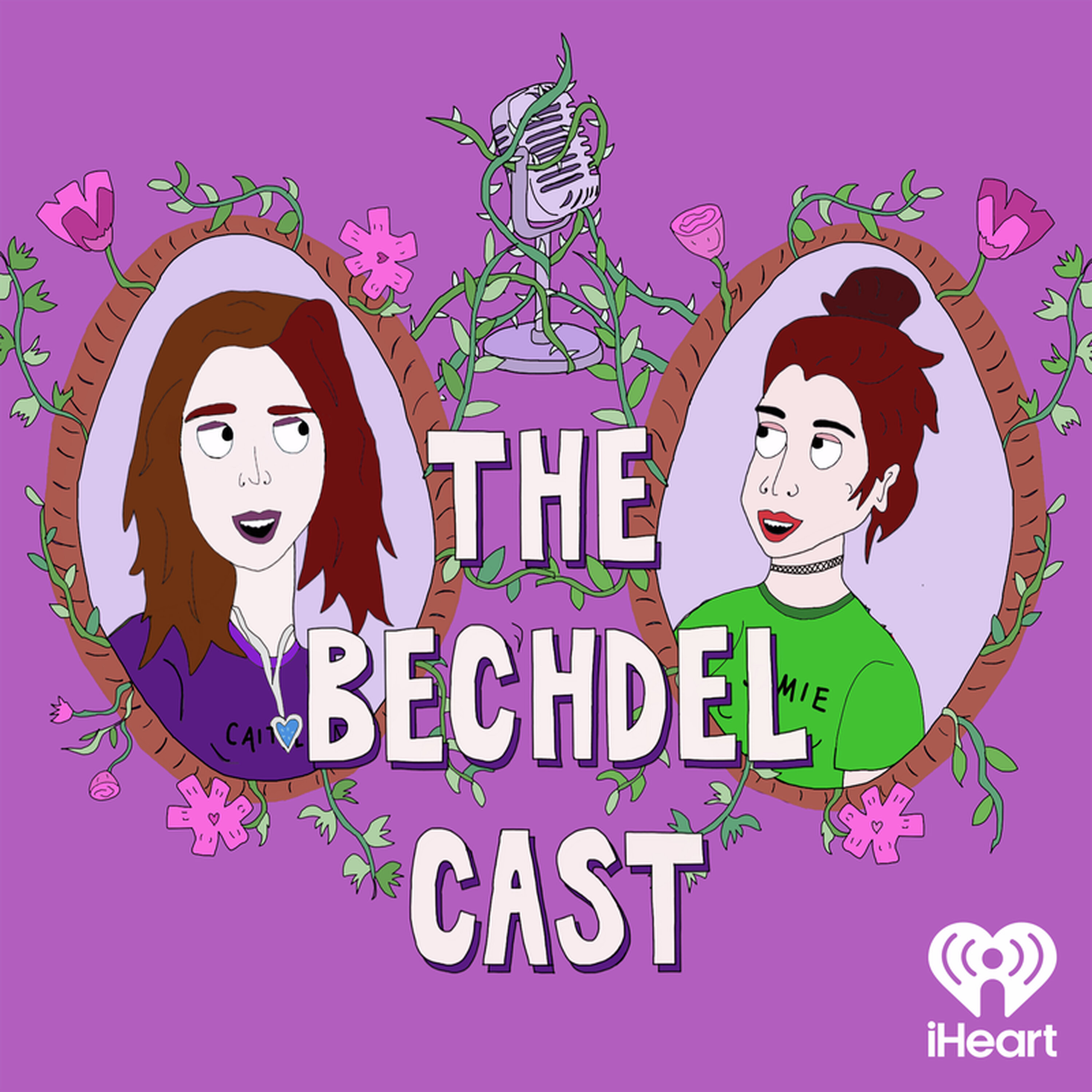
Selena with Mala Muñoz
Caitlin, Jamie, and special guest Mala Muñoz discuss Selena (1997). Anything for Selenas!
(This episode contains spoilers)
For Bechdel bonuses, sign up for our Patreon at patreon.com/bechdelcast.
Follow @mala_munoz on Twitter. While you're there, you should also follow @BechdelCast, @caitlindurante and @jamieloftusHELP
Learn more about your ad-choices at https://www.iheartpodcastnetwork.com
See omnystudio.com/listener for privacy information.
2021-01-28
100 min
Transcript
Available Results
Generated results are saved to the knowledge database for reuse and search.
No generated results are available for this episode yet.
Extract Knowledge
Pick what you want extracted first. Model, scope, and chapter options appear after a template is selected.
Generated results for public episodes are saved to the knowledge database so they can be reused and searched later.
Transcript
00:00:00
Speaker 1: On the Beck dol Cast, the questions asked if movies have women and them, are all their discussions just boyfriends and husbands, or do they have individualism the patriarchy zef in best start changing it with the beck Del Cast. Welcome to the Bechdel Cast. My name is Jamie Loftus, my name is Caitlin Darante, and today is a much requested episode that we're excited to bring you. But first, it is our sacred duty, our soul and duty, our only duty in this lifetime to tell you what the podcast is about, which we don't always remember to do. I thought you were going to say that, like it's our sacred duty to to sing, since we've been doing that a week lately, we have been singing quite a bit, I feel like, because I mean, if you've clicked on the episode, you know, I just it would not be you know, I can imitate a Disney orchestra, but I can't be Selina. So I'm it's best if we know. Although I have heard I mean when when Selena songs come up at karaoke, they always are the most spirited performance as whether they are good or really bad. Um, but yes, it's our those our sacred duty to pod in this life. Yeah when in our podcast, it is a podcast where we examine movies from an intersectional feminist lens. That's true, and what we've noticed is that a lot of movies do a very bad job. Hold on, no, it's true. Um, And we use the Bechtel tests simply as a jumping off point to inspire a much larger conversation. And the Bechtel Test, of course, is a media metric created by queer cartoonist Alison Becktel, sometimes called the Bechtel Wallace Test and by our standards because there's some different renditions of the test, but the one that we use is two people with names of any marginalized gender speak to each other about something other than a man for at least two lines of dialogue. You think it would happen, but you think it would happen more than it does. But today is I'm really excited. It has been a much requested episode that I think we've gotten another spike in request recently because of the recent TV adaptation which I also watched, and I'm interested to talk about. UM. So let's bring our guests into the mix. Yes, let's do it. She is a writer and the co host and co producer of the podcast Locator Radio. It's Malomnios. Hello, Hi, welcome, thank you, thank you for having me. I'm extremely excited to talk about this movie, and I mean the Bechdel test in general, but like even the invitation, I had never thought of this before in relation to Selena the movie, Like it had never occurred to me to apply this metric to the film. So I've never talked about this before in relation to the film. Um, so I'm excited. I'm excited too. Well, part of it is like when we cover biopics, which we haven't done a whole ton of, but we've done some. Sometimes there's kind of like just a trickier conversation around doing a biopic because it's a story about a real life person versus like a completely fictional character. So like you know, sometimes like the conversations that we tend to have get a little trickier when it's a biopic. But you know, Bectal test does apply to Selena. And yeah, for sure, Yeah, it was interesting. I will first, Um, I guess let's talk about what our personal histories with this movie. And I guess, well, let's extend that to Selena in in general. You know, I identify as Chicana. I'm Mexican American born in ninety two in l A County and raised by two Mexican Americans. Right. Um, my father identifies as Chicano, and he's from California. He's from Bakersfield, and my mom is from l A. Um, depending how do you count. I'm like third or fourth generation Mexican American. And so I found Selina by way of just existing and being raised in that house and via my kind of like I really connected with her because she's also like a second third gen Mexican American raised by Mexican Americans. And she also had a very public sort of relationship with her learning of the Spanish language and her music was around. You know. The movie came out in the nineties. She was murdered in the nineties, and she was um twenty two, and I grew up with her, you know, as a nineties baby. So the film is one of those movies that there are periods of time where it's just I have memories of the movie just being on, like on repeat, eat in the house, you know, like somebody left the DVD in and then it just keeps closing. The next time on TV, it's back on the movie. And then when you're you're walking with the kitchen, you stop and you stand because it's playing, and it's just a cycle. For so, you know, very much, just in my life and as an adult, getting really into the sort of fandom of Selena, especially here in l A who among us has not donned a Selena costume for Halloween or for a karaoke night, a Selena Oaky night at east Side Love. You know what, I'm the bi monthly like anniversaries and celebrations, the countless fan accounts and Facebook and Instagram and YouTube pages and channels about her, the Selena impersonators, the shows, the Coma Left Lord festival, you know that anything for Selena's this, that, that, that, that, all of it. I'm in it. I go to the party's the Selena techno Cumbia. I love the drag queens, have the merch um. It's it's all things all Selena all the time. Hell yeah, yeah, I love it. And she has such iconic looks that like, yeah, replicating all the looks, yeah, all the highwaisted pants, all the crops, the red lips, the hair, all of it, because she was dawning looks that were like they're easy for for like a girl who looks like her or who's somewhere in that that range. You know, it's like, we can, we can wear these looks and like really rock them, and they're accessible. She wasn't serving Kylie Jenner, you know, she was serving Selena keepinning up from Corpus Christie and inaccessible. And and that's why so many women today continue to replicate her aesthetic because it's like, oh, yeah, this is ours, we can rock this, this is easy. We do this anyways. We would have done this regardless. You know. A friend of the pod, uh, Danny Fernandez has done some incredible Selena looks over the years. Truly, concur I agree, shout out Danny, Danny another iconic Kanda. We love it, We love Jamie. What about you your history and relationship? Um I I've known Selena's music since I was really young. I didn't know uh any like I guess specific details of her life. I kind of just knew the general overview of her life. But when I was little. I just remember this the other day, By when I was little, I did uh like ballet Dance to Dreaming of You, and it was like a herd of little girls in pink dresses, just like flailing around. And so I remember learning a little bit about Selena, because that would have been maybe like five years after she died. I was um and and then I didn't learn more about her life and kind of the fan culture around her life until kind of a couple of years ago where another friend of the pod uh Melissa Lozada Oliva, who's an incredible poet and writes about Selena pretty extensively, And it was just through interacting with her work and just talking with her that I learned more about Selena's life. So as far as the movie goes, I'd seen it in like bits and pieces over the years, but I hadn't really like sat with it um before a couple of weeks ago to get ready for this show what About You, Caitlin. I admittedly had never seen this movie and only had a general understanding or general sense of Selena. I knew her as an icon, and I knew just the tragic story of her murder, but I I didn't know a whole lot. And it wasn't until I saw this movie that I was like, oh my gosh, she was amazing. And now I I was like, I'm gonna listen to Selena songs on Spotify and so now I and I have like Komala Floor stuck in my head right at this very moment, like so yeah, I uh in a in a short time now have become a pretty big fan, all thanks to Selena the movie. And I also watched the series on Netflix to kind of prepare for this episode and did a bunch of reading and yeah, listen to a bunch of our music and yeah, so that's uh, that's kind of where I'm at. Well, I wanted to ask you before we kind of just jump into the meat of the movie. So I found this and Kyl found it as well. This amazing interview you did with Vice around the time that the series was coming out. And I mean there were certainly a lot of takes on the series, um, but you you spoke like really in depth about where Latin X representation is at in Hollywood right now, and so I kind of wanted to start before we jump into the hyper details of the movie, just talking a little bit about that because Selena is such, you know, such a huge figure. But you know, you're you're saying that there should be absolutely more figures in the Latino community represented, So, um, yeah, I just would like to kind of open that up. Yeah, So I want to start by saying that I have been talking about Selena a lot recently online because um of Selena the series, right, So it brought up a lot of conversations a new and what folks in the creative space have pointed out and in the fandom have pointed out is that there's been a lot of activity around Selena in the past few years. The Matt Cosmetics line, the Ever twenty one line, the series, I feel like more Selena like impersonators and tribute artists and bands more than ever, and a lot of activity from the fandom on the internet. So she has this enduring legacy that has had like a spike. And so with the series, there were so many things going on with the series, and I have been putting out like I g t V videos to give my actions and my reviews of even the promo material, the trailer they put out like in at this point and then one itself. So I've been like really kind of just digging in and um, so all that to say, you know, sometimes when women criticize things and analyze things and give opinions on things like TV shows and pop culture icons. Um, you know, I experienced a lot of online I'm a hater. I just am mad that they didn't cast me as Selena. I'm a relationship with my father, i am a traitor to the Latin community, and I'm tearing us all down. You know, the list goes on very chill, very chill reactions to having an opinion, very about a television show about So that being said, I love Selena, and I recognize that when somebody like Selena a huge talent of just boundless, you know, potential cut way too short. I'm talking about somebody like this, like she was so amazing and so talented and so gifted, but also such a professional. She was going places and an icon like her, we can expect to see her everywhere forever. Tattoos, people have Selena rooms in their houses. I've been to to Selena super Fan like a house in Texas. Uh. I went down there with the podcast to like do a speaking engagement in South Texas, and the woman who was hosting us, she took us to her house real quick and she had a Selena room not in common build with merch you know what I mean, So not unlike Marilyn Monroe or Elvis Presley, you know, or Tina Turner, any icon of this status. We're going to see her on on all kinds of products and on TV and in film and commercials forever. It's to be expected. There's nothing wrong wrong on some level with it, and it's almost speaks to how legendary she truly is. At the same time, at the same time, there are so like few examples of her level of talent, but there are more people and more figures who possessed and possess her level of talent in the Latin X and the Latin American space, and I would love to learn about them as well and see more of those figures as well, and have that magnitude of you know, social awareness and appreciation for their work and talent as well from Black artists from Latin America, Indigenous artists from Latin America, and US Latin X artists from a lot of different ethnic and cultural backgrounds. And as a Mexican American, I want to apply like a lens that complicates Mexi centrism and that allows us to say, yes, this is great, also we can we want more, right, you know. So that's that's kind of where my take on the Selena and representation because I don't think that this is necessarily a celebration of like more representation. M it's kind of a rehashing of something that we've seen, and it's not as though it's undeserved. And of course you'd want to highlight a figure like Selena in movies and TV and stuff, but there's just so few stories with Latin X characters in mainstream American media that we should see stories about people with more just kind of average lives who didn't rise to superstardom, because I mean, just so many different people with so many different experiences deserve to have their story told, and you know, we just need to see a wider scope of Latin X stories in general. Yeah, I mean, how many different kinds of white families do you see on TV? And in movies like a ba jillion they make them up like there it is, it's always so yeah, like it it is like just some bare minimum ship and it's always really frustrating, especially when it's a cultural figure who's so like who is as amazing as Selena is. It's like, it's not knocking Selena to say that there should be more like that's that's part of what she was fighting for. Yeah. Um, So it's really interesting to also see how like people shut down criticism. In my experience talking about Selena recently, the number of men specifically and including queer men, which I think is really important to talk about in fandom circles because we all like love and appreciate a queer fan base because queer fans have the best taste, and really it's true, like true europe queer icon, it's because your fan base has taste and you're really delivering something of high quality, and that's what gives an artist staying power and lasting power. Like in the pop culture space pointbling period, if you're a diva, like, you're not a diva unless you have queer fan base, and that's true. Queens dressing up as you like you haven't done it right. So but there is can still be a toxic masculinity among your men, among gay men in particular, and so you know within the Latin X space that queer macheese will exist and that queer misogyny exists, and it for me came out in these ways that a number of queer men and straight men, Latin X men, Mexican American cheka woman telling me as a Latino community, we must uplift like everything Latin or everything Mexican or the or they Netflix, They're going to think that we don't know how to support each other. They're never gonna give us anything ever. Again, I'm like, you guys are still fucking dramatic. First of all, she has a feature as the fucking series and it's the number one show on Netflix. Kenna Bitch Rant on her own Instagram page, Lord under the Bags were all Latinos to support all of it, and I'm like, look, you know how many motherfuckers have a Spanish surname. You think I'm a community with everybody with the Spanish last name? Absolutely not. Also, that's what you're advocating for, is like? More so like, what's the problem people are addicted to being mad? Um? Yeah, okay, should we talk about the movie and recap it? Let's do it? Okay, so um, obviously this is a biopic about Selena Kentonia, the iconic Tejano music musician. We open in media rez to get very film school and everybody. Um was that me again? Um into the midst of things? Okay, Um, I think something I don't know. I don't know Latin. Okay, But we opened that way on Selena about to play the huge show that she plays at the Houston Astrodome. Um, she's at the height of her career. It's February, only about a month before she would be murdered. So we see her playing this show, and then we cut to her father, Abraham, as a young man and member of a group called Lost Dinos, who get screwed out of doing a gig by a racist club owner who didn't know that the Dinos were Mexican. So they go and try to play at a club where the clientele is mostly Mexican, thinking that they'll fit in, but the crowd there doesn't like the Dinos, kind of like white barbershop quartet style of music. So, um, there's a bit of backlash there. Then we cut to twenty years later, to nineteen one now, and Abraham is now Edward Jim's almost Uh, we need to talk more about him on this show. Another character actor icon for the ages. The first major thing I saw him and I think was Battlestar Galactica and what I grew up watching Stand and Deliver from substitute teachers. That was my Edward James. Almost like any time a teacher is sick, there would be like a twenty two year old substitute that's like, um, here's a movie about math, like inspired, Yeah, and I loved it. I was like I could. I could probably recite Stand and Deliver from memory at Easter LA Community College. And I don't know if they still do this. They probably still do. They offer this summer math program for kids called the High Miss Galanthan Math Program, and I was, yeah, it was, it was. I mean, I mean it was. It's cool. It's a great community resource. I went to the Highest Glantha math program every s as a kid. I was. It was so like, it's just yes, Edward and him are everywhere. That's that's so cool. He made math sexy. I'm not easy to do, not easy to do, so true icon. I want to say, and and Edward not Edward, um hemislanta. I want to say he was Bolivian. Let me check, yes, yeah, Bolivian American educator. Yeah, oh god, that was like l A l A used to feel so far away and abstract to me. So I was like, oh, yeah, it's like whatever happens in Standing Deliver, that's what l A is like. It's a bit of a dramatization, but there. Yes, um okay, so we got we have Edward James almost. He now has a family including his wife Marcella played by Constance Marie, a young son, a b and two daughters, Suzette and of course Selina, who I think is eight or nine when we first meet her as a child, and Abraham's discovers that Selena can sing very very well, so he basically makes his family start like form a band with a B on bass, Suzette on drums, and Selena as the singer. And the kids are reluctant at first, but then they keep with it and they start playing as Selena I Loostina's at the restaurant that Abraham opens up, and Selena discovers that she loves performing. Uh. Then Abraham teaches her to sing in Spanish and they have a conversation about their identities as Mexican Americans. But then the family restaurant has to close down after a few months because of the Reagan era economic recession that was an iconic I love when there This movie I feel like does pretty well with the fact that it's like at times of period piece. But I love when in a period piece someone just like drops like a hot vocabulary word to remind you what year it is where it was like they're they're like, why is the why is the restaurant closing? And someone responds Reaganomics. I was like, right, it is the eighties, right, Reaganomics. Great line. Yeah, So the family has to move to leave their home and move into an uncle's house, which is when Abraham starts trying to kind of ramp up their like music careers and book gigs for Selena I Loostino's and get them more exposure to see if they might be able to kind of earn money this way, and Marcella expresses concerns about, you know, people making only space for men in Tahano music, which is the type of music that they are now playing, and she's worried that Selena, because she's a girl, won't be able to get very far. But then we cut two nine and Selena is now Jennifer Lopez, and the band is really good and they are pretty well established Tejano musicians with a following and people love Selena. Uh. Then we get this fun scene where their tour bus, Big Bertha, gets stuck and these two guys stopped to help and it fox their car all up, but they don't even care because they love Selena so much and they're just like, I'm gonna hang this as a shrine on the wall of my garage. Iconic love that scene. Then Chris Pettrez played by John Cita, gets brought into the band as a guitarist and Selena thinks he's cute because he's cute, that's favorite. John Cita as Chris Press specifically, is just like like in the film Universe, Jazz Cram Dela Crown for me. Yeah, I love him. It's so and they're like their chemistry is so good, and you're like it's sometimes I'm like, oh, this this romance is taking up too much space in the media, But this this one, Caleb and I were both like, no, it's beautiful. I texted Jamie this morning and I was like, I'm obsessed with Chris and Selena, Like their scenes are scenes that that I rewind and rewatch, like, you know, like, no, I need to rewatch the scene where she told him he's a dumb idiate after he trashes the hotel room. I must must replay. Yes, it's so like, it's so it's I don't know, it should tip over into super melodrama, but it somehow doesn't. Where John Cita So I love when Selena goes up to him and he's like, I'm no good for you. Like he's just like I'm a bad boy. You don't understand, and she's like, shut the funk up, like perfect, you're not that tough. I love this music you spent You've spent a lot of hours rehearsing in practicing music, Like please, I love it. So uh, Selena thinks he's cute, and then they flirt a little bit. They go out for pizza, they start to like each other, and then they kiss on the bus, but more like because it's danger and someone I forget which character walks in on them and it's like, oh my god, I'm so sorry, but he I think it's Pete. Yeah, so they get caught, but like the real threat is getting caught by Abraham, which doesn't happen yet. Meanwhile, they get booked for a gig in Monterrey, Mexico, and there's a concern about whether or not the band who has made up of Mexican Americans will be able to play to a Mexican crowd. Um. This is also when we get the trouble with Chris where he and and so Lena are having to sneak around. There's that whole you know, trashing the hotel room scene. Abraham thinks he's a punk. Uh. He's like, I'm no good for you, and she's like shut up and kiss me um, and he immediately was like okay. And so they keep seeing each other in secret, and then it turns and then they do the gig in Mexico and it turns out the crowds there love Selena. So now Selena and Chris have gotten closer. They are in love. They want to get married. But this is when Abraham finds out about the relationship and he fires Chris, but Selena is like, I still want to be with you. We have to get married to like show my dad that this is serious. So they elope and Abraham finds out about it, and he's really upset at first, but then he comes around and then that scene where he's like, hi, son, welcome to the family. I'm just the ultimate mark of approval, kind of acceptance into a American home. Did you bring your guitar? Did you bring her guitar? When the Texan accents sneak out, I love it. Um. So the band is all this while they're they're blowing up. Record sales are really good. They're nominated for a Grammy. Selena starts working on a crossover English language album. Selena opens a boutique because she's always been interested in fashion design, and this is when we meet Yolanda Salvidar, who is played by Lupe ante Veros, who handles Selena's businesses and also as the president of her fan club. Then we get another fun scene where Selena and I'm a little unclear on this character's name. She calls her Reenie, but then I couldn't find her on IMDb as that name. Who she she goes to them all with, Yeah, I'm not entirely sure who the person is to Selena exactly, but she's in the movie from like pretty early on, Mala, do you know so? I think so. I think they're supposed to be friends. I don't know if she had a real life friend like this I don't know how many like girlfriends Selena had like in real life, honestly, Um, it's honest. It's the like, an enduring friend is not necessarily somebody that comes up a lot in like the fans spaces. I don't see a lot of that, like the bandmates, you see the family, you see Chris, you see the backup dancers, you know, um, and in retellings and in writings and in readings, and I don't She's not somebody that's in real life. Stands out to me. However, the actress that played the friend in the movie played the mother Marcella in Selena the series. Oh, I didn't pick up on that either. Incredible because she's in the scene where like they first mate Chris and they're like, what like watching him audition basically, So like she's in a fair number of scenes and stuff, but they like don't really draw that much attention to her. So I wasn't exactly sure who she was like to Selena or even what her name was. In my notes, I referred to her as a friend who's over the house a lot, which I can relate with. I was that friend, yeah, And it's you know, I'm sure because they I mean, it's not like she didn't have friends. Well I don't know. I don't know, but it's possible that she had there was somebody that a family member or a friend of the family or a neighbor that was there all the time or definitely possible, But I don't. I wish maybe this is actually a really great line of inquiry, like I want to I want to know more now, I'd be interesting because if they if they did add her, I mean, I'm always happy in I mean, we'll talk about it. But like one of one of the things about this movie is I wish that we saw Selena talking to women in her life who weren't just her mom a little bit more so whenever that character came in, it was like, oh, it would be cool to know, you know a little what the context for this person is, because we don't see Selena talking to women, you know, about her dreams very much, so when she does, it's like, well, who is this? Like yeah, right, In any case, a friend who's over at the house a lot and Selena um go to the mall in l a shortly before the Grammys to buy address for this friend, and they go into this store where a white lady is racist to them. But meanwhile everyone at the mall figures out that Selena is there, and there are a bunch of like retail and restaurant workers and then also just shoppers who are huge fans of Selena, and they rush to see her. And then the racist lady looks like a fool. She deserves, she very much deserves. And then the Selena is like, actually, we don't want your dress and screw you. Jayla really delivers that line. It's really very cathartic. Okay, So then we see them at the Grammys. Selena wins a Grammy. Things are going great until the family starts to notice some discrepancies with the finances of Selena's businesses and they realize that Yolanda is probably behind it, but Yolanda denies it. Um then we cut back to that scene at the very beginning from the Houston Astrodome, which kind of sort of morphs into the murder of Selena by Yolanda. And Selena has been shot, She's rushed to the hospital, she dies, her family mourns, her fans mourn. There are vigils with huge crowds of all of Selena's supporters, and then we get a montage of footage of the real Selena Quitania and that kind of closes out the movie. So that is the story. Let's take a quick break and then we'll come back to discuss where where to begin. I guess one thing that stood out to me that I just I didn't know. I didn't I knew nothing about the production history of this movie. I didn't realize how soon after Selena's death this movie was shot and released. It was very, very um quick. Yeah, I just, um, that's just kind of a rogue observation. I didn't realize it was, you know, basically two years after Yeah, because she was murdered in and just thinking about what it takes to get a movie greenlit and up and running and written and cast and all these things. I feel like it was almost it was like right after she was murdered, they got into talks about it and they got started. I could assume it appeared I read that, um, there were a lot of like non official biographies like in the works right after her death, and the Kingtonia family was just like, all right, we gotta if people are gonna try to make movies that might misrepresent Selena's story, like let's just nip this in the bud and like be a part of doing this ourselves. Because Abraham Kingtonia is one of the executive producers of this movie, so they kind of this is the one they signed off on, and there's a lot of conversations with the director, Gregory Nova, and he came in and talked too many members of the family and just like basically got Selena's whole life story and um then adapted it to this screenplay and this movie. So yeah, but I think that was kind of why it all happened so quickly, because there was other productions like maybe about to like mess the story up, so they were let's let's do it right before they do it wrong. Yeah. Yeah, And I want to say it was m I want to liot this up now, but it was either the director, Gregory Nava or one of the producers Sparsa, who had a teenage daughter who at the time before Selena's death was a Selena fan and who was really into Selena, and his daughter was sort of one of the catalyst behind she went like like turning Selena's life and death into a story. I don't know, a fact check can be done, but it's either either a Sparta or Nava who had a teen daughter who was a Selena fan. And I think that's important to talk about two because her fandom also inspired and influenced and kind of asked for the films to sort of memorialize her, and I think it is sort of there is a sort of timeline around like a major event having to do with the celebrity and end of keeping that momentum, going to put her story to as many people as possible, and because I think on on the one hand it's like shrewd business, but on the other hand, it's like no, she we do. We do want people to know about her and what happened to her, and we also want people to hear her music. And what I love about the film is it's such a concert film. And what I didn't realize was that growing up I was watching on beaches and DVD on you know, just TV screens, and a couple of years ago at the I want to say the Hungarian American Cultural Center, there was this event where they rent out of this big vintage theater from like what the thirties or something with the huge screen and the seats and stuff, and they played Selena the Selena the Movie on the big screen, and they interviewed Constance Marie and a few other people from the film, and Um, I never realized, No, this movie was meant to be watched on the big screen as and as if you were at a concert, because you're in from the perspective of the audience for so much of it, and so much of it is recreating the sound in the space when she was performing, you know, So, yeah, that's amazing. I like, I I also really appreciate how I don't know, I feel like in most biopics they cut off the song, they're like all right, you know, but they they let it go. And I feel like having the context of her passing away pretty recently is also like, I don't know, I mean, I it seems like almost like a healing thing as well, to to be showing all of the music and like really meticulously recreating those scenes. I was also impressed by, um, the fact that the family was so involved in this production, and also, you know, don't like they they do come off as flawed characters still, I feel like that's a kind of common biopic fumble where the subjects were either you know, at least living, if not actually involved, where sometimes they're like, well I don't mention that, but right, yeah, I mean I I don't know how exactly faithful everything was here. I'm sure you know a lot more than I do. Malla, and and the way the series portrays it is also very different in like a different tone, uh where sometimes I'm like, I don't I think Abraham is being very manipulative, but then the TV show goes like boeing and I'm like, oh, I'm supposed to be laughing. Um ut, very stut observation. Yes, real strange, um but at least at least you know, in this one you have Edward James almost who gives Abraham's negative quality like they shine through in his performance, which, um yeah, I don't know. I was impressed, you know two years later that there was some nuance to how the family was depicted. My goodness. So I in my conversations about Selena and Selena the series, Abraham is so important and comes up so much because I mean, again, like culturally on a very culturally specific way, like a family like Selena's family, and being that she worked with her family and they spent so many hours and so many years of her life from her most formative years starting when she was like ten, rehearsing, touring and on the bus together and working. And that's a lot of hours and a lot of time to with your family. We're already super claustrophobic as a people, and they want they keep us in the house for as long as they possibly. They keep us in the womb for as long as possible, and they keep us possible having three or four generations in a house and people stay until they get married. And that's the desire and the expectation. Very normal, you know. Um, the idea of like not being surrounded by family at all times for some of us, for a lot of us, is is very foreign, is very different. So on the one hand, it's like, I wonder if even applying the like the beck told test to Selena specifically is even a fair metric, if it's even relevant on a very specific level. Because she was murdered when she was twenty two, she spent so much of her life with her family. How much time did she spend alone? How much time did she spend with non family? Probably not that much. You know, she had to Elope like she had to Elope and Abraham and to productions, Abraham being an official producer on Selena the movie, an sling of the series, presents himself as a complex and flawed person. Oh very much so. And there's a certain level of self awareness amongst Mexican dads. They know that they could be a little tough and harsh and a little being very generous. Um. They know how they are. They know they know themselves, you know, and they'll talk about it. They own it. But we're not complicating the tension and the impact that that has. It's not enough to be self aware sometimes, what's the impact and what's the tension. Maria Gutsia as a journalist from South Texas and she just put out a podcast called Anything for Selena. Yes, And the second episode is all about this daughter father Mexican American relationship and really dives into that complexity with Abraham and you hear from him and he speaks and it's it's amazing, honestly to hear that's so cool. Yeah, I listened to the first episode and realm like really enjoying it. Yeah, I was curious about Yeah, how I mean, starting yeah with with Abraham's character. I don't know. I mean my feeling as far as the Bechdel test goes for this, I feel like, I don't know. It's it is complicated whenever it's a biopic, because you're not going to like add in new characters unless that friend truly is fictional. But like you're not going to add in new characters just to have the movie past the Bechtel test. But there were like small things where I was like, well, I wish that, you know, like Susan's right there and her mom's right there, like there's so much more, but like she does, But it felt to me like there was way more of an emphasis on the father daughter relationship than it was on the mother daughter relationship. And maybe that you know, again, when you're adapting a person's whole life and like yeah, yeah, you don't have that much time. You have to kind of figure out what's maybe what are the biggest opportunities for tension in a story, and like what are the most kind of dramatic moments, because those are going to be the things you want to showcase in a cinematic story. But I'm still just like I'd like to see more interactions with Selena and her mother, even if you know, the ones with Abraham or maybe more wrought with tension. Yeah, I don't know. Yeah, I like to believe because we don't. We never hear from Marcella, we never hear from mom, and like notoriously historically, even in um, you know, nineties accounts of the aftermath of Selena's murder, and Maria Garcia talks about this on her podcast as well, and this sort of archival footage is brought in um from journalists and such that Marcella's just is not around and she's not public and she doesn't make statements, and the same was sort of true when Selena was performing. And I think one thing with the movie being a concert film is Selena had a particular relationship to her father Visa via music, you know, and didn't share with her mom. Um. And I wonder if, like I always wonder, and again coming from a culturally specific place, well, if we had scenes with Selena and her mom, how much of it would be about not the music right and how much of it would be about Selena's specific hopes, dreams, wants, desires, um, how much would it be Selena really going to mom is a confidante, to bounce off of each other, you know, and to kind of recover from their time with Abraham, which is so much of mother daughter Mexican American dynamics. Is like we're being to each other about dad, right or mom is is it's okay? You know how your dad is like, it'll be fine, let him cool off. And how many of those scenes again Abraham as producer, because Marcella is not the producer, Abraham, how many of those scenes are we going to be allowed to see? Or does he even know about? How much? To even knowledge? It could have been a ship talking absolute party every single night. You never know. That's really, That's really I never I never picked up on the fact that it seems like in UM and then on Selina the series, is it Abraham and Suzette who are involved? Is ab involved in the series? It's it's Abraham, A, b and Susette are all in. Marcella is not so much not enough titled public written about way anyways? Right? I mean, I will say, as far as how Marcella is portrayed in this movie, I do like any scene that she and Selena have together. I really like like the I like that she is, So I mean, I don't know if I feel like, for the little screen time she has comparatively like you do kind of get a feeling for what the push and pull in her life is of, Like she um doesn't want to upset her husband, but that doesn't stop her from telling him how she feels about stuff, even though she doesn't necessarily have the final say. I like that she, you know, is able to like speak openly with Selena and be like, yeah, this is bullshit, but let's navigate it how we can and then let's the I feel like the maybe maybe the last like meaty scene we have with them is when Selena is saying that she wants to have a baby and she like has these so those are like I feel like, yeah, it is with when Selena is talking to women that you get to know her the best, and when she's talking to Abraham the plot is being moved forward basically, Yeah, because I love those moments where it's like when she talks to a friend who's over a lot about um about how she's interested in fashion and like this is a whole other side of herself that she um like wants to get into and and then when she talks to her mom, she's talking more about like what her goals are personally, and you know, I want to get married, I want to have a kid on top of a career, and I really like those I just I just wish that there was like a little bit more of that. I don't know, I mean, you only have so much time in a biopic, But in those moments, I was like, oh, yeah, she's like two, Like she's interested in a lot of different stuff. She's like hasn't fully figured herself out. And it's such a like an interesting phase of life to hear people talk to each other about. So I just wish there was like a little bit more of it. But yeah, I got two hours. Yeah I will say that I think maybe, and I honestly would have to go back and watch like again again, like with a very fine tooth comb. But I want to say maybe the only scene with only women talking to each other about another woman is this scene at Selena's fashion show where Yolanda is talking to the other Senoras about giving Selena a gift. Yes, yeah, but it's sucked up because it's like sinister because you want to and I don't think those other ladies again, I'd have to go back and look and listened to how Yolanda addresses those senoras. But I don't know if they're named. You know, um, I want to say no and this and this and if so. It was like a quick exchange. I mean the things as far as the Bechtel test goes, I mean there were a few. One of the things that made me laugh because I like that technically passes two lines of dialogue is when Selena is uh stealing Susette's chips. That passes the PacTel test. We did it, chips passes, That works ower There are definitely moments, but yeah, I mean as far as Selena is usually talking to her mom about either her dad or Chris. But there are some exceptions, but but usually it's Dad or Chris because those are kind of the two relationships that are the engine of the movie. Yeah, given the most focus. And I wonder, like this movie was written and directed by a man, Gregory Nava, and I wonder if it had been approached differently or for a woman was telling the story, if she would have given more focus to Selena's relationships with other women in her life. I don't know. Food food forgot, but it's it's a sort of similar set up with the series or you have again you know Q Productions Abraham and A. B. Susette is involved in as well. But you know, Abraham is a very strong force. He is in his family, and he's the head of the house, and he's the head of two productions, and he's in charge and in control of the estate and all things Selena. He just quite simply is and always has been. And the showrunners and the men who um you know owned and founded the production studio and who who made the series. You know, their men there their latin x they're latinos. And I know that the writer's room, I know they boast like you know, a very heavy like woman in LGBT writer's room. But you know, uh, we're in l A and we hear things, and people gossip and people chatted and people have are working on you know what I mean, Like people work on things, and people know people who work on things, and then we all talk about it. The talk of the talk of the town is um that the incredibly talented writer's room you know wrote essentially wrote a script and that you know, good old Abraham, who is my favorite. I do love Abraham, but we all have complicated relationships with these men, and um, good old Abraham. I guess reviewed the script and didn't like a lot of things and and sent it back and said, rewrite it. And then they did it, and and now we have what we have, right, And so I'm not shocked, you know, at all by the gender dynamics. I think it's very much to be expected. And I just and again, and I know our dads can do a lot for us, and they really want to. They really do have the best of intentions. They want to believe that they can provide everything, that they understand everything that they've got to cover, that they're in control. There's an issue, they can handle it. They know their kids super super well. But again, in a family like Selena's, for her to Elope is no small feet. It's not a minor thing to talk about. It's not a just oh okay, now, that's like a huge, like huge, like nuclear bomb level deal like in a house like hers and a family like hers in the culture and at the time, like, no, this is not something to just skim over and kind of forget happened. There. There was a there was years intention and build up and unhappiness and and distress leading up to that decision for her, honestly, because it's one of those things that like, oh, my God, wouldn't dream of it, dear Lord, even my sanity and my life and my safety and my peace too much like I feel to not to to go off and get married against your father's express wishes, and to not have your mom and your family there and they don't know, and it's in secret and it's not part of your religious tradition with family, and no, no, no no, no, no no. So I know that there are just things that our dads cannot do for us, cannot provide for us, and will never understand about us. I would never I love my dad, super involved, super supportive to this day. I would never ever ever want my dad to tell my life story. Are you kidding me? How? No? I'm a grown woman. He can't. And I feel similarly about Selina. She was, She was a grown woman. She was super sexy, super sexy, and she knew it. She was a bad bitch and she knew it. She was hell confident. She was a sex symbol and she fucking knew it. I hate hearing interviews and descriptions from you know, her living family, but also from people who who created media about her. She was so sweet. She was so nice. She was so sweet, she was so nice. She was nice girl nice. She just nice, nice girl, nice, super nice girl. She's a sucking baddie. She's a bad bit. She was a genius's out. She knew it. She fucking knew it, dude, you know what I mean. She loved her man and she was all about her man. She was all about her dude. And they were sharing a bus. They were on a tiny little bus, all these people, you know, it was no, she wasn't and again accounts she wasn't hiding her relationship. She she was openly affectionate. That was her boo, that was her man, that was her dude. Like, fuck you, you you know what I mean. And it was a big fuck you when she went and eloped and she said, nope, I'm making my own decision. And for somebody who didn't have a traditional high school graduation, didn't have traditional markers of like adolescence and adulthood. Because she was neighboring and working and earning money and being a celeb at such a young age, I consider her eloping being her like, this is my mark of official and treat into adulthood and womanhood. And I'm taking my man's last name, you know what I mean, Like you love you guys, But enough right that. But that seemed to like the scene where she's just telling Chris like we're we're doing this, and because it's like he's well aware of what the risk is there. It's like a risk to her career, risk to the family, risk to everything. And I it's so I hadn't really considered I mean, first of all, the idea that your dad would be overseeing the biopic and the TV series of your life absolutely horrifying and of course, and it's gonna and I never thought of it that way. Of like, of course her like, her sexuality is going to be inherently played down because her dad, like it would be weird if he was like, no, include all the sex you want, like that's the year two. So I'd never consider it that way. That that totally and so it's like we are I don't know it. It makes me so curious because it's like if if your family are the main people in your life and they are also the ones carrying your legacy to an extent, you're you're this mythic figure because there are parts that either your family is like, oh, I don't like that's weird to think about, like my daughter like being sexually confident. I don't want to think about that. Or there's just like these kind of elements that will just become more of a miss than than who she was. That's like damn, yep, yep, I have to go on a walk. Let's process, let's process. Um. I always need therapy after I talked about Selena every time, always, it always sends me into spiral um. But now I think about, Look, I've been podcasting for four years. I've me and like my co host Yosa for look at Thought our radio. We've gotten like Forbes features and l A times like you know, write ups and in print and Cosmo, and we throw parties. And my parents have been to my events and like, I been doing this and it's I'm doing it at a level where I feel like it's a big deal. My dad still refers to my podcast as of vlogs. Oh my god, our dads are just going to get things wrong intention because they don't like us, not because our dads are going to get things wrong, and there's so many things our dads don't fucking knowing everything with her daddy, Are you kidding me? Right? Like I mean, and you even see that in the movie that her dad co signed that she didn't tell everything to her dad, Like, yeah, I thank you for kind of contextualizing the I mean, it's like the movie tells you that the eloping is a fuck you. But even in the context of yeah, just how how controlled and regimented her life was of like her asserting herself in any like in any way that had an actual impact in And also like I don't know, at least as far as the movie goes, it's like, oh she is. She's like asserting herself as the breadwinner of the family too, because it's like, what are you gonna do? Fire me? I'm Selina. You can't fire me, so you're just going to have to deal with my decision. She's so cool. She's so cool. She's super cool. And I feel like, you know, we do a disservice when we don't like point these things out, because I want that part of her to be remembered, or at least I want us to think about it or ask about it. I want us to want to know more you know about about her internal life, and it's I like, I mean the same there's I don't know. I mean as far as how the movie is like Rights Selena, I do, I mean, she's she is actively voicing her opinion at every step, and sometimes her opinion gets steamrolled. But that was what was happening in her life, it seemed like. But I really liked how just the way that it was written, there's really no point where she doesn't say what she's thinking about something, even when sometimes she's trying to protect someone's feelings or trying to kind of negotiate. Yeah, Like she says what's on her mind, and she chooses her I guess chooses her battles in terms of like when she's going to do the funk you. But I don't know, I felt like a pretty well rounded as far as like something You're dead would sign off on a pretty like well rounded portrait of like how active and outspoken she was, even when she didn't, you know, win that particular battle. Yeah, And I almost feel like the proximity to her death allowed for there were enough people around who knew her and who remembered her and how she was and the way that she spoke that I don't think that they could have I don't think it could have been written any other way. Honestly. That's one of my big gripes with Selee the series is we're over twenty years away from her death at this point and her murder at this point. I mean, watching Selena the series, she has very little screen time, very few lines, very quiet hers like an episode where they around the bus and they keep telling her to shut up, you know. And I hate that fucking word now because I used it like six times and remember that I and you know, And there's multiple scenes like that throughout the series. There in restaurant somewhere and Abe made some slick sucking comment about my sister can't even talk, you know, what do you expect from her? And it read is very bitter and it is very jealous and it's very um. I felt like this time around, with cleaning the series so far away from her. You know, Aby has his own illustrious career, and I mean that in Kumbia and as a producer and with the Gumbia Kings, and he is a legend in his own right. He is a very talented songwriter and and her fusion with her brother really brought their music to life. However, maybe is also a fucking mess. Dude, Like, he's a mess and he his his career. He's not a legend the way that she's a legend. She was the star. People showed up for her. She was the headliner. It was her and it's always been her and it's still her. So for the series, it read very like they muted her. They toned her down in every way, and um, she has practically no lines. So I appreciate that. In the movie, yeah, you get a sense for her personality and her opinions and her feelings. And I appreciate that because she wasn't a shrinking violet. She wasn't a wallflower, you know, her dad wasn't wasn't designing her costumes and doing her choreography from her. That was from her. She was doing that. You know. She was a creative genius. And so I'm happy that that that part is there. Yeah. The yeah, this series, I mean, I know this is not a podcast about the series, but uh, the series was so confusing to me as I'm like, do you have all this extra time, this would be all the all of our like mini grapes here of like, oh, it would have been cool to know like a little more about her dreams and a little more about this. And it's like, all of a sudden, you have ten hours to do that, but where was it? Yeah? Why not capitalize on opportunities to showcase Selena more? Yeah, I do appreciate in the movie that we just get this well rounded character because Selena in real life, like real life people are are well rounded people. Because we talk so much on this podcast about fictional characters in movies, fictional women are usually written to be just so flat and one dimensional and just don't feel like real people. So you know, I do when you adapt a real person onto the screen and you do it well, you get those nuances of their character and you get those all those dimensions because you see you see Selena being sexy, and you see her being playful, you see her being smart, you see her being a very talented musician. You see her learning and grow and just like the whole what you experience in life as a person, you know, we see her go through. And one of the things I especially liked about the character, and I anytime there's a head of roal romance in a movie, I'm usually just like my default is just like okay, this in But like I loved the way the romance develops in this movie because like you actually see like the common ground that they share, and like you see them flirting in like a cute way. The scene when they're at like eating pizza together and like he's like trying to be all tough with his hot so it's like a start of cringe, but it's so cute. It's cute. And then he's like dumping like cholula all over his pizza, and then she's just like, Okay, good luck with that, Like I know that's gonna go horribly for you, and it does, and then they just like laugh about it and they're oh, I just like yeah, the whole the whole relationship. I just liked how they chose to approach that and just like and especially because you see Selena and I'm not exactly sure this how accurate this was to her real life, but like she's kind of the one to initiate that relationship, Like she's the one who like kind of approaches him and says like, oh, hey, your haircuts really nice, and hey, do you want to go get some pizza with me? And like she's kind of calling the shots in a way that you don't often see women doing in media. It's all about like, oh, women have to you know, were expected to just sort of like sit idly by while the man pursues them. And I was like, yeah, go get it, Selena, Like I love that. I love it. I love it because she she you know, and again, she was the star and was already established in a name. And I think that genuinely, Chris Perez was intimidated entering into the family and entering into the band, you know, I think that genuinely. And she was the princess and the queen, you know, and the apple of everybody's eye, the center of attention. And I not that Chris Perez is like, you know, doesn't have a backbone, or didn't approach or didn't shoot his shot, because I also believe that, you know, they noticed each other. I think she knew that was her man's like, you know, for at first site day one, She's like, No, that's that's all me, that's my that's my man. Out of the way. Yeah, I do believe that that was probably true of her real life dynamic with him, that I was having the same like kind of brain because because you know, it's like, oh, every movie is gonna you know, shoehorn in ahead of a romance, but that's like it's not shoehorn in it. It's like that relationship if it works the way I mean also it obviously worked in real life, but like the way it's written is so cool, and it's like, why don't people just write relationships like this more frequently, where like the relationship means more to her than just this like abstract and like I'm a straight lady, so I have to want to get married right now. Like that's not what that relationship meant to her exclusively, Like she did want to marry him, but it also was like that relationship was like how she was kind of taking control of her life a little bit, and like he was supportive and he wasn't, Like I mean, it's it seems like there were people in Selena's family and in her life who were kind of like threatened by her being the center of attention and Chris wasn't. And he was like, no, I like to work with you, and I'm not threatened by you being you know, yourself, and so it was like, I don't know. I guess you just don't see healthy relationships on screen a lot, because I was like, oh, this is a partnership where they are both like, you know, they're growing as people through I'm like getting emotional. Yeah, but they're they're like they're like growing together and you you know why they like each other and they just compliment each other and so and when it's written like that, then I don't know, I have no problem with it. You're like, oh, this isn't just like I need to marry because of the because the movie is about to end. Like, that's not what it is at all. Right, It's beautiful. It's beautiful, and I put Selena and Chris on part this. It's like some Romeo and Juliette levels of like legendary tragic romance. Honestly, and here's here's something too. You know, it really is very telling that it's no secret that there is a super tumultuous, unhealthy dynamic between the King Funnias and Chris Perez. You know, that unhealthy dynamic, the keeping him out an arm's length and not wanting him to be with Selena romantically, that kind of possessiveness. Abraham talks about it in his own way, and it's always been out there and it's sort of always been acknowledged. You know that he never trusted Chris. You never liked Chris. He's a bum musician from the streets on from the streets. I know, bum musicians from the streets. When I see one that that that that that that that you're young, you're beautiful, and you're rich, of course he's gonna love you. He's gonna take you away and make you stop performing, and he's gonna take you from your family and all these things, right, And you know, Chris is the ultimate gentleman and has never said anything bad about the family. But uh, we all know, because it's a matter of a very kind of public conversation that there has been litigation the Kingthenias are very litigious. You know, a ton of people. I mean, it's it was actually hilarious how many text messages I got from my friends and people who are in the creative space in the fandom and have their own businesses, And I didn't even realize how many of them have gotten cease and desist letters from the Kienias for creating Selena fand Merge. I mean, I'm like, I knew a certain number of people had gotten cease and desists, like Selena impersonators and tribute artists that I've seen perform in the end, that I know and that I know of, but then people that I didn't even realize how how far it had gone. And this is just I'm one person in my little you know sphere here in outlet. But Chris, having written his book you Know to Selena with Love, he wanted to do his own series about Selena, and the Kienias have been extremely litigious with him and have shut things down and have been really not nice um historically and continenuously. So it's this battle over which of the men in her life gets to tell her story and gets to control her narrative and her dad. It's it's her dad, and her dad does Oh that's a frustrating because it's I mean, it's I mean, you you you can never have a full picture of a person, but it's like it sounds like Chris knew a lot of parts of Selena, like in a lot of sides of her personality that her dad would never like you just can't. Right. That makes me sad. I hope that he's able to someday, because well, he does say in the movie, I don't know how to let you go, and it's like, well, try a little bit, literally, try try it all for a little bit, for one day, for one minute, make anny attempt at all. Uh, let's take another quick break and then we will come right back and we're back. Uh. Speaking of Abraham, the scenes the scenes with Abraham in this movie that I thought were pretty effective, both in just like the themes of Selena's life and also to contextualize I mean, and I'm sure that it's maybe a little bit overly generous to him, but the just contextualizing where he's coming from was I felt like it was pretty clear that to an extent, he's like projecting his dreams onto his daughter, which is not a I don't know if if I were a parent that had been like, oh, I wasn't able to achieve my dreams, so now you're going to I would not be excited to see that on screen because it doesn't It's not the best look in the world. And I liked that there were a few scenes with them together where he was talking about being Mexican American and how that factored into what he wanted for Selena. So I wanted to talk about those scenes and your opinions on those scenes well, because they were they were um as far as like Abraham Selena scenes that were like definitely stuck out to me. Yeah, I really love all those scenes in the movie as well, because I think that's one of the things that the movie does really really well is delve into that very classic, very now well known conversation about bi cultural identity and neither aki nida yeah right, neither from here nor from there, um that Mexican Americans and Chicanos have talked about, written about. It really engaged with for some time now as far as understanding our identity development and our place like racially and culturally in the United States. And I think it's a very sort of accessible and relatable conversation that a lot of our parents have had with us in one way or another, depending on you know, when your family got here, if your family immigrated at all, right, or if you are one of those families that has been here for generations on generations on generations in the American Southwest. And I also do think that there is a ton of very relatable conversations where yeah, you can see the projection happening, where you know, Abraham is like, it is very clear that this is a passion of his And in some of the dialogue in the movie, like in her conversation with Chris where he's talking about how his parents wanted him to be a doctor, so he became a musician. If you are my family and my dad would have loved you. We hated rehearsing, right, um in rehearsing, And I keep talking about this podcast Anything for Selena by um Maria Garcia. But this brings up another piece where even as a child, Selena was doing these press junkets and she was doing interviews, and um Maria Garcia play some of Selena's interviews, and she has a lot of interviews online you can watch as an adult, but even as a kid, some of her audio where people ask her, she gets asked all over the place, you know how she feels about having performed for so many years and spending so much of her childhood on a bus, and spending so much of her childhood with her family and on stage and working. And they asked her what do you like about performing? Why do you like it? And a very young Selena says it's good money, you know, you know, and older Selena says, um, I'm I know. I didn't have a traditional childhood. Yes, I did school by mail, but it was for a good reason. It was for a good cause because I was supporting my family. And so her real life interviews you hear a lot of her talking about this as a job and working towards a greater good and doing something that is going to benefit and support her family financially, and and in the film you have these little snippets of that as well. So I think that that's an interesting piece of it too, And just to zoom out a little bit and kind of just look at the grand scope of American Hollywood, main stream cinema, Like those conversations between Selena and Abraham. There's one when she's a young girl and he's like, you should learn how to sing in Spanish because your Mexican and that's beautiful and you know, never forget who you are. And like just that initial conversation about identity, which the ground work is laid for that in a very early scene where Abraham is a part of Lostinos and he's like, well, I like to sing do op, but I can't do that in like Tahano club because that's not the type of music they want to hear. But I can't do it at a white club because everyone's racist. So like just this like push and pull of his identity. And then like he's like, well, I want to make sure Selena like understands her roots and like is is that's a part of her cultural identity and stuff like that. And then there's that scene later on in the bus where he's saying how exhausting it is to be a Mexican American because you know, you have to be twice as perfect as everyone else. You have to speak Spanish perfectly, you have to speak English perfectly. And just this again, the whole push and pull of identity and the fact that that conversation gets had Like most mainstream American movies like don't feature a conversation like that, So just to have that be present in this movie, I was just like that was that was a very powerful thing to hear and too just have in the movie. Yeah, yeah, super powerful, And it's a really good reminder without explicitly saying it it's a reminder that like Abraham was a Mexican American, like born in the fifties in South Texas and was growing up in a like during the times of racial segregation, like probably attended racially segregated schools. His family was probably only allowed to buy and live in certain neighborhoods, and they probably you know, did racialized work. My dad was born in nine in Bakersville, California. Segregation was still a thing, signs on storefront windows, dogs or Mexicans allowed. He picked cotton and grapes in the fields. He was a child laborer, you know, like multiple generations of farm workers in the family. And and it's important to recognize that Selena is a general one generation removed from that as the daughter, so she is the product of somebody who survived that's sort of very specific South Texas anti Mexican racism. Doing what she's doing and crossing over into Mexico and it's like a reclamation, you know. And this is how we're going to be successful, is by appealing to our people and not necessarily white people, because it wasn't white folks filling the Houston Astrodome and buying her records and bringing her to stardom. It's it's there was a point being proven as well, like no, we we can also do this by being ourselves, which gets talked about in the movie too. Was like her mother being like women are not successful into Hanno music, like this is a male dominated genre, just you know, saying like I'm not so sure this is going to work out because patriarchy, and like, against all odds, Selena transcends that and becomes a hugely popular star in that genre and also then crosses over with her English album and like appeals to a wider audience and just yeah, the other the I love I love that scene where there on the bus and and the scene we were just talking about, and I especially love I just I don't know, I feel like it's really rare to see like a scene written where different generations are interacting in kind of a realistic way, because it's like the younger person is always going to be like yeah, I get it, but like shut up, like there and I just I just, I just I loved how Abraham's kids are interacting with him in that scene because they clearly like they know he's right, they're taking what he's saying seriously, but they're still like okay, but shut up, Like I just I don't know the way that the generational divide is made clear and that that seems hit. It was really good when she's like a good thing we have like tortillas and minuto to like keep our strength up, like well we used for this oppression, giving him ship the way anyone gives their dad ship when he goes on about or like I don't know, knowing the words to your dad's speech, you can probably right like here we go. God he's given before. And I love those moments with her in a b I love those moments that they have throughout the film where it's like, okay, you know how Dad is, like you know Dad, I got it. I'll handle Dad. You know Dad. Dad is very strong. Dad is a force. But they also have their power in their way like as siblings or is or in relation to their mom or in relation to each other. It's like, yeah, Dad has been and bad, but we also know which or his strings in which are his buttons, and just we know how to work with Dad. Just chill, it's fine, we'll do it. We'll get it done. And I love at Yeah, I wanted to ask what your thoughts because I believe you've spoken about this as well in the same article that we were referencing earlier, just the general kind of whitewashing of the casting of Selena and sort of your thoughts on the actors who have been chosen to play her, because to be clear, even though Jennifer Lopez and the actor who's cast as Selena for the series, Christian Seratos, uh, they are both Latina women, there is still an element of erasure happening here. Yeah, it's been so interesting, like um, having this conversation like in one on the internet, because literally everyone we can weigh in, and that is both a terrible and wonderful thing. So going back to the very real, historic, well documented, well understood, well known history of racism that her family experienced as brown people, as people of color, as people of Mexican and which meaning for them indigenous descent, right, it was a fact of their reality that they were non white, racialized people and impacted by that historically. In talking about the whitewashing, that is really important to me because it's not a separate or imagined part of her story. It's very integral and the whitewashing is very subtle, and it's multifaceted because it's not just about the skin color of the actresses. It's all about the It's also about the featurism, right with facial features, especially Selena's like nose and lips and her indigenous features. And I hate feeling like I'm kind of like, you know, breaking her up into body parts and things. But this is what happens. And nowhere is that more obvious than in the casting where the casting has brought us with Slaris to the point where speaking of compartmentalizing and breaking her down to body parts, they hired an actress that are so thin unfortunately for the character that she was attempting to realize on screen that she's wearing extremely obvious button hit padding. You know, that is super obvious and a superclown looked clownish right in its appearance, and it's very weird and bad. Bad costume, bad costume, not a good way. And we've all rocked a Selena costume, and a lot of us can rock a very convincing Selena and and and the butt padding is very insulting because I consider that part of the futurism and part of the whitewashing, and you can see over time how you have Selena, who's someone very undeniably brown and of Native descent, and then j Loo has a much slimmer nose and a much smaller like button nose, and she's just a wee bit lighter. And then the actress now cast per Selena the series, her nose is even more slender and she's even lighter than j Lo, and I acknowledge that Selena was a technically, you know, a light brown, a light skinned woman, but brown nonetheless, And again it was brown and Mexican people who are filling the seats and going to her shows and supporting her and seeing themselves into her, not white people, not factually actually factually right. And in watching like Selena the series, in real life, Selena, besides her costumes, she didn't stand out glaringly from the demographic of her crowd. She looked like her crowd. You see now like Selena series, and she looks very foreign and different from her crowd. It looks like Madonna doing her crossover tour in Mexico, you know, it looks like Reeba doing her crossover tour in Mexico. And some of those scenes, right, which is jarring and noticeable. I think that another place where whitewashing has happened with casting is with the dancing and the lack of dancing in the series. Right. I think one of the amazing things about the movie is that they were able to find an actress and a performer in j Lo who could execute the dancing, the Columbia and the disco and all the other influences, you know, that the hand influences and everything else that Selena brought into her movement. And I think that's one of the great victories and great successes of the film, is casting a dancer who could execute and bring the music, the style, and the culture and the flavor to life. Um. It's one of the pieces that is missing from the series. Yeah, and I know that there's been a lot written about it, but it was it. It does seem like, in general, this series almost regresses from the problems that were already you know, well publicized and when well talked about when the movie's casting was released. You know, there was pretty significant backlash when j Low's casting was announced in the first place. Um, for many of the reasons you describe. But then instead of course correcting years later, making not even the same mistake, you know, kind of an escalated version of the same mistake. And what I want to push against is this notion that well Selena was white. I've literally seen people tweet this. I've seen people write this and like send tweet and it's the most preposterous, a historical, ridiculous thing I have ever gained to read in my life because just the lie, the inaccuracy, and there's so much video photo documentation of Selena it's really not up for to day, it's really that. So then to see the rewriting of history, well, this is what she looked like, and this is what this what she looked like. It it's like, that's not what she looks like, and it's important to remember what she looks like because we really haven't had another one since her. And part of it is like we have our pop stars, but they're very white looking Latin people, super white looking Latin people, and it's even as light skinned to Selina was. That's how colorist and white supremacist Hollywood and Mexican media is that they couldn't even prop up another brown skin girl like the real thing. You know, we keep it j low and whiter always and we just got a Yalizza Barrisio recently, you know, in the last couple few years. Um So, the the indigenous and brown representation, even within the Mexican communities for women on screen is just not there, and it's a crying shame and it's sucked up. And I also blame the men in their involvement because I think they have very whitewashed um beauty standard goggles that they look through. Absolutely. Yeah, well that's a a problem that we talk about a lot, just kind of adhering to Western beauty standards, and Hollywood has as a terrible history of whitewashing or erasing I mean again kind of zooming out a little bit. As far as Latin X representation in mainstream American movies, the representation has either been non existent or they're but full of reductive stereotypes or whitewashed with I think pretty commonly white actors playing in like British people from England playing Miss Katherine Zeta, right, yeah, our favorite Mexican crews are other favorite Mexican Yeah, so just like European people playing Latin X characters. I have a just a quick list here of some examples. Ben Affle plays a real life Mexican American man Antonio J. Mendez and Argo Umize I have not seen Argo um Al Pacino plays a Puerto Rican character in Carlt's Way. Juliette Binoche plays uh Maria Segovia, a real life Chilean woman in the movie The thirty Three. Jennifer Connelly plays a real life Salvadorian woman in Beautiful Mind. Alicia Nash Charlton Heston god This plays a Mexican character in Touch of Evil um Unfortunately, our King Alfred Molina has trade a real life Mexican artist, Diego Rivera, of course in Frida. Like there's a lot of these examples. It's just all too common. And to see a version of this happening in the casting of projects about Lena, where they are erasing real life Selena's indigenous roots and features is like there's just no excuse for it. And the racism in the casting and in Latin American media is like, does a couple of things so it will replace like what we would refer to as a mess pisa, right, like I would be a mestiza, Selena be messisa like of indigenous and European and honestly for many Mexicans that we don't always acknowledge or talk about. There's there's also a lot of Afro Indigenous and Afro Missisa heritage and communities out there. I've seen people tweet that Selena was white. I've also seen people tweet that Selena looks Afro Indigenous to them, you know, and that a light skinned black actress could have played Selena um And it's so it's extremely interesting to see the range of how we interpret her today. But what happens is the racism as such that even a light skin Latina mestiza like Selena gets cast by like non Mexican and super white looking people. And then you have a ton of Afro Latinos historically acting in Hollywood. The racism is such that they never are cast as Latino characters ever, and they're not acknowledged and celebrated as Latin Latino actors and actresses. Gina Torres has is you know, uh after Latino actors, and she has been very vocal historically about her racier and exclusion from Latin American media spaces, and so she plays like black American characters a lot of after Latino actors musicians are embraced in black Hollywood and playing Black American African American characters, but Latin media's against so racists that they're not even seen or recognized at all anywhere. The space is not even present for them, right, And so it's it's this is how the whitewashing is done of real life POC. You know, they're just getting replaced with white people are being rejected from the space completely. They cannot pass as wid or they were not you know, light enough, or if they were black in real life m O levels level. I mean, there was even I I saw in it may have been from scholarly journal Wikipedia, but that there were white actresses in the running to play Selena in in nineties seven, like and that Hollywood was like, well you should you know, here's j Lo is not white, as if that is as if that is a representation, when like, it's just so maddening. But it did seem like from what I was able to find that at least in the early stages of production, there were white actresses in the running to to play Selena, which is just yeah, and the question that I always have, and especially when we're talking about real life people, you know, casting as a choice, a lot of people weighing on and if we can choose to go lighter and dinner and more euro why aren't Why can't we choose to go darker and more indigenous? Why can't we go browner? Why can't we go fuller? Figured? These choices are made, but it's always in the same direction, and it's problematic. And look, there are so many Selena tribute artists who are of appropriate age. And I don't like to judge actresses based on their age, because if you can act, you connect and you can overcome age in a lot of ways on screen, but also when you're playing like a literal fifteen year old and you're thirty, like things happen with that, with with it on screen, just things happen with that, you know. And um, I have that group with Selena the series and and even with Selena the movie. You know, the girls are out there, the South Texas girls are out there, and I want to come back to Selena was exceptionally talented, but she wasn't exceptional as far as her look. There's a lot of beautiful girls who look like Selena. A lot of beautiful girls who look like Selena and they're out there, so you know, I want that to be part of the narrative to that these are choices that are made, but not for lack of options exactly. Hell yeah, Is there was there anything else, um that either of you wanted to hit on? I think that that's about everything I have. I have a couple of really quick things. One we see a makeover montage, but this time it's a man over. I love the hair cutting bats unsceen love it the cutting of the like punk bracelets off with like wire cutters or whatever. That is good. Love that because we always talk about you know, makeover montages being reserved mostly for women and that being done too like better appeal to a man um. Now I feel like that. Yeah, this for Selena, it's it's the total opposite where that's like one of the few areas of self expression that she gets to, you know, really curate for herself. She doesn't need a makeover. She's like she's got the instinct, like she's got the style. Yeah right right. Um. I also just wanted to shout out Suzette for kind of breaking barriers as a woman drummer, which I wish got touched on in the movie a little bit more. They do. Like there's a couple moments where Suzette as a child is like, girls don't play drums, and she's like really resentful that she got stuck with the drums until she realized she was a pioneer. Right. Um, but yeah, I just I love you know, women as drummers representation, absolutely, I agree. And and being you know, like a plus size girl and they plus size the actress and I appreciate they They were really um excellent with that casting choice. I think as Susette she was great. Yeah, I wish she was I wish she had more to do. And I loved all her girls and her hats. I loved all her also iconic looks that Suzette is delivering. Should talk about those as well. Uh. And I think my final just little thing was um, women eating on screen representation. You have that scene where the pizza She's like, I can eat a whole medium pizza by myself and I love Pepperoni, and I I scarf to Rito's, and that you actually see her eat and not just like talk because sometimes we'll have there will be seen. Like I always think of there's something about Mary, where Cameron Diaz is like, I love going to the baseball game and having a corn dog and drinking a bunch of beers. She's saying this while at lunch with her girlfriends. They all have salads in front of them, and none of the characters even eat the salad. That's just like, I think, maybe the most um iconic, least feminist moments committed to film. That is, like, I'm not like other girls. I'm starving like the horrible, horrible, horrible, horrible right she was, And I mean I think about it too. She probably ate a lot, because that's a lot of calories, a lot of performing, letter rehearsing, probably constantly eating. Love that for her. She eats the chips, she steals susettees Dorito's. That's feminist. Yeah, is there anything else you wanted to touch on? Mala? No, I think that was very thorough. I think we got all I think we got all of it. I feel great about what we've done here today. Yeah. Well, with that in mind, does this movie pass the Bechdel Test? Yes? Yeah, another win, another another win. Yeah, we have we do see, even though I wish there were more than we do. See scenes where Selena and Suzette talked to each other about you know, music or other things that aren't a man Selena and her mother Marcella, which brings us to our nipple scale, which is our metric where we rate a movie from zero to five nipples based on an intersectional feminist examination of the movie, and based on I wasn't quite sure where I would land. I think like we need, I like needed our conversation to happen to to really, um make me figure out what my rating was going to be. I want to rate it highly. But we also, you know, so many good points were brought up about there needs to be more Latin X representation in mainstream Hollywood media that is not about the same person over and over again. Um, there just needs to be a wider scope of stories and people being explored. The white washing of Selena in the casting. But then you know, at the same time, there's a lot of things that I think we're handled really well, the conversations about identity, the the relations the romantic relationship. But then kind of like on the flip side of that, I'm just like, well, I wish there hadn't been so much focus on Selena's relationships with these two men in her life, her father and and Chris, and that it wasn't so filtered through the lens of like Abraham king Toniaz. I wish like we could explore other kind of people's perspectives of her life, so it wasn't just like filtered through his kind of control and lens. So I don't know. I'm well, I think I'm going to give it a four nipples, and I will give two of them to Selena. I will give one to Suzette, and I will give one to Suzette's drum. Set'll go, I'll go for as well. Um, I think that there there are certainly, I mean, I don't know. Especially, I think that I'm coming from a slightly biased place, having like watched the movie in a series pretty close together and greatly preferring the movie to this series. But even even I mean, all things considered, I think that the discussion about colorism should continue to be had, and as it pertains to this movie and to the casting of Selena in particular, because it's like how we curate and present our icons over the course of years does make a huge, huge, huge difference, And I feel like that's you know, just something that is always going to warrant further discussion, um, especially because an icon is so kind of malleable, and and you should you know, as time goes on, you should be getting better at representing them, not worse. Um. But in terms of how um Selena is written and kind of honored in this movie. You know, I'm not a Selena expert, but but as far as she's presented, I mean, she's amazing. She is like extremely motivated. She is navigating her identity, whether that means culturally or as a woman, or just as a fucking person who wants some control over their own life. And yeah, I mean I'm always going to wish that you get the other sides of her. And um, I don't know that the telling this that her legacy is still kind of a tug of war between two male figures in her life is like, I mean, that's always going to be the thing, right, is Like you just wish that she she could have lived to tell her own story. But as as far as this adaptation goes, like, I feel like it's you get more of a sense of her like spirit and her life and the complications of who she was. And I love it, and I've watched it more times than I needed to to get ready, I watched it four times. It's just because it's a really good movie. On top of everything we've talked about, it's just a goodass movie. So um so yeah, I'll give it four nipples, uh two to Selena and complete the set, and then I'll give one to Marcella, and then I'll give one to a friend that's at the house a lot. She I love it. I think I wanna. I mean, because it's Selena. I want I always want to give a perfect score, a plus five stars, you know, so just off of her name. Off the strength of her name and her legacy alone made the film good because the source material was so good. It's hard to funk up excellent source material, right to funk up excellent source material, which is part of my gripe. But the movie right like it was true to the material, so it was good. So I want to give it five. I want to give five nipples and I want to get I want to give three nipples to Selena. Yeah yeah, I'm gonna give t nipples to Selena though, because I want to give one to Marcella because she doesn't get enough. I want to susatte and I want to honestly give a nipple to Chris Perez because I think that Chris Perez was like an advocate for her and still is and like very on her side in an empowering sort of way. Because I think he as he as a musician, could appreciate the artist that she was and the individual that she was. So I want to give Chris a little shout out because they give him a hard time. M I love it, Chris, I mean even the way the movie shows him. Chris Perez male feminist certified daddy. Yeah yeah, well mama, thank you so much for being here. This has been incredible. Yeah, this was fun. Thank you for having me and let me know what gress out. I can't wait to hear it. Oh my gosh. Yeah, and come back anytime. Okay, I have you back. Um, where can people check out your stuff? Follow you online, check out your podcast? Tell us everything? Oh my god. So if you want to leten to my podcast, Um, I'm one half of lookal Radio a Radiola, which is just a very extra way of saying a podcast posted with my good friend and co producer Thesa FM. So you can find look at what our radio across streaming platforms were online. Follow us on Instagram, on Twitter, TikTok look at Underscore radio. If you want to follow me as an individual, I'm at Mala Underscore monos on all socials and I'm also not only fans, so subscribe to my only fans awesome. You can check us out on Twitter and Instagram at bechtel Cast. You can subscribe to our patreon ak Matreon. It's five dollars a month and it gets you access to two bonus episodes every single month. Imagine imagine that plus the entire back catalog, which is somewhere around like seventy or eighty episodes. Now, so too many, There's a lot. I'd say, actually not enough, but there you go. Okay, so that is that is the half full energy we do need to be bringing. I was like still living going how you can also get us smirch on t felic dot com, slash the back Pelcast indeed, and um, you know. To close out, I would just like to say bitty bitty bum bum bye bye bye baby, bye bye
Chapters
No chapters available.