Bugonia Review, Die My Love, The Mastermind, It Was Just an Accident
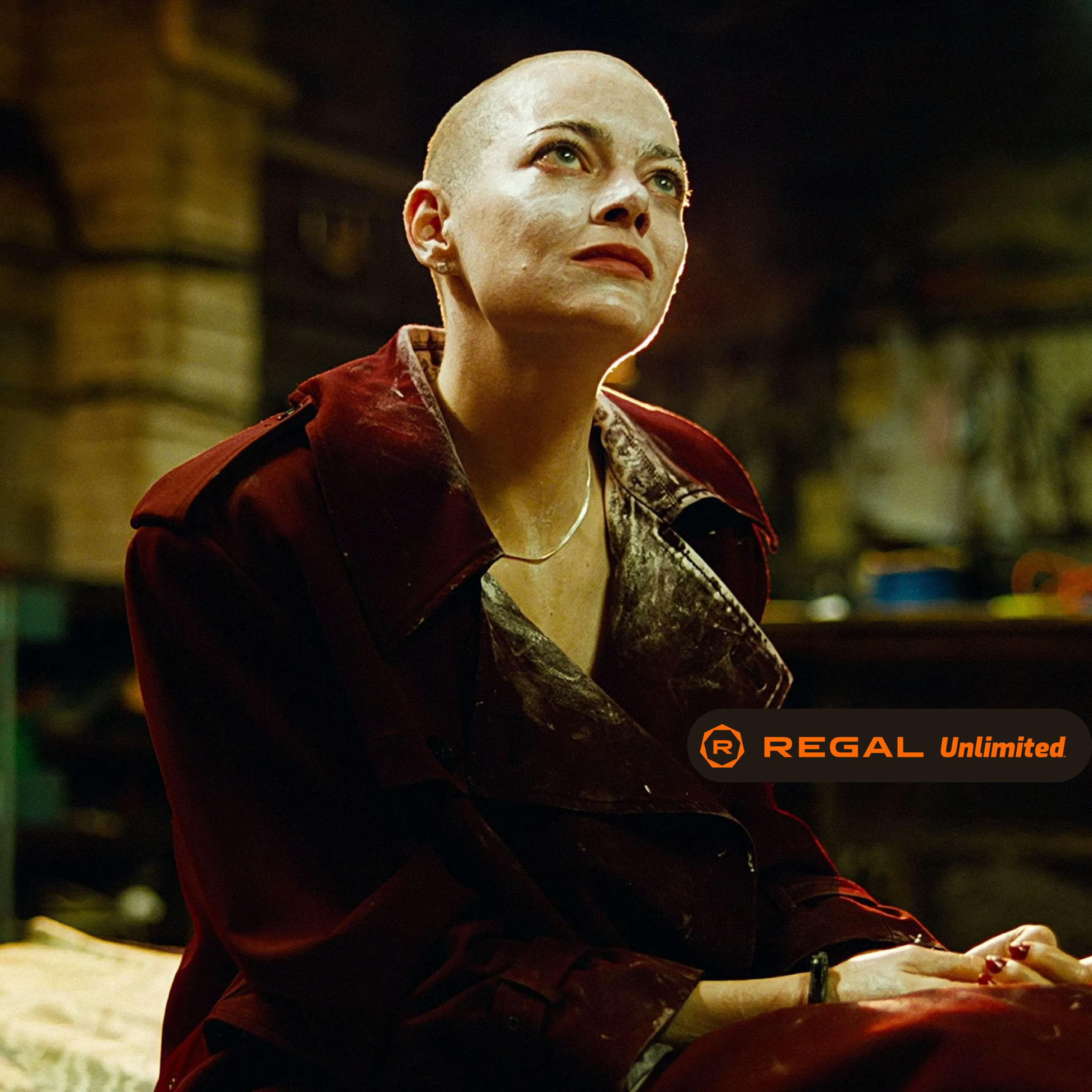
For their fourth film together, Yorgos Lanthimos and Emma Stone get weird and go bald in BUGONIA with Jesse Plemons as Stone’s conspiracy-obsessed kidnapper. Adam and Josh discuss, along with reviews of Lynne Ramsay’s DIE MY LOVE starring Jennifer Lawrence, Kelly Reichardt’s THE MASTERMIND with Josh O’Connor, and film-of-the-year candidate IT WAS JUST AN ACCIDENT, the latest from Jafar Panahi.
This episode is presented by Regal Unlimited, the all-you-can-watch movie subscription pass that pays for itself in just two visits.
(Timecodes and chapter starts may not be precise with ads.)
Intro (00:00:00-00:02:36)
Bugonia (00:02:37-00:30:40)
Die My Love (00:30:41-00:48:44)
Filmspotting Family (00:48:45-00:51:48)
The Mastermind (00:51:49-01:14:08)
Mastermind Prize (01:14:09-01:17:49)
It Was Just an Accident (01:17:50-01:34:18)
Next Week / Notes (01:34:19-01:45:55)
Polls (01:45:56-01:56:08)
Credits / New Releases (01:56:09-02:00:04)
Links:
-Poll: Actor/Director Duos Since 2000
-Siskel & Ebert at 50: Lone Star with Adam and Michael
-Fear Not! (50% Off + Free Shipping; code CONFSHIP, select Media Mail)
https://wipfandstock.com/9781666738520/fear-not/
-London Meetup w/Josh on Dec. 11
https://forms.gle/rUcgUKicTddzwFBs5
RSVP:
Feedback:
-Email us at feedback@filmspotting.net.
-Ask Us Anything and we might answer your question in bonus content.
Support:
-Join the Filmspotting Family for bonus episodes and archive access.
http://filmspottingfamily.com
-T-shirts and more available at the Filmspotting Shop.
https://www.filmspotting.net/shop
Follow:
https://www.instagram.com/filmspotting
https://letterboxd.com/filmspotting
https://facebook.com/filmspotting
https://twitter.com/filmspotting
https://letterboxd.com/larsenonfilm
https://www.instagram.com/larsenonfilm
https://bsky.app/profile/larsenonfilm.bsky.social
Learn more about your ad choices. Visit megaphone.fm/adchoices
See omnystudio.com/listener for privacy information.
Available Results
Generated results are saved to the knowledge database for reuse and search.
Extract Knowledge
Pick what you want extracted first. Model, scope, and chapter options appear after a template is selected.
Transcript
00:00:00
Speaker 1: This episode is brought to you by Peloton break through the busiest time of year with the brand new Peloton Cross Training tread Plus powered by Peloton Iq. With real time guidance and endless ways to move, you can personalize your workouts and train with confidence, helping you reach your goals in less time. Let yourself run, lift, sculpt, push and go. Explore the new Peloton Cross Training tread Plus at one peloton dot com.

00:00:26
Speaker 2: Film Spotting is presented by Regal Unlimited, the all you can watch movie subscription paths that pays for itself in just two visits. Sign up now in the Regal app or at the link in the show description and use code film Spot twenty five. That's film Spot twenty five to receive your discount.

00:00:45
Speaker 3: What kind of a show you guys putting on here today?

00:00:48
Speaker 4: You're not interested in armed?

00:00:49
Speaker 3: Now?

00:00:49
Speaker 4: Well, look we're going to do this thing. We're going to have a conversation from Chicago. This is Film Spotting celebrating our twentieth year.

00:00:58
Speaker 3: I'm Josh Larson and I'm Adam Kempinar.

00:01:01
Speaker 5: Welcome to the headquarters of your Human Resistance.

00:01:05
Speaker 4: Where's my hair?

00:01:07
Speaker 5: Your hair has been destroyed to prevent you from contacting your ship?

00:01:12
Speaker 4: What ship? Your mother?

00:01:15
Speaker 3: Shit?

00:01:17
Speaker 5: Okay.

00:01:18
Speaker 4: Emma Stone is back with Bogonia, her fourth collaboration with director Your Goo Slanthymos. This time she's been kidnapped, shaved bald, and is maybe an alien.

00:01:29
Speaker 2: Plus Jennifer Lawrence and Robert Pattinson in Lynn Ramsay's Die My Love, Kelly rekerds The Mastermind starring Josh O'Connor, and the latest from Iran's Jafar Panahi. It was just an accident. It's all ahead on Film Spotting. Welcome to Film Spotting, a lot of heavy hitters on this week's show. Josh Emma Stone, Jesse Plemons, Jennifer Lawrence, Robert Pattinson, Kelly Reiker, Jaffar Panahi.

00:01:58
Speaker 3: A big show. Some might say huge even it's huge.

00:02:02
Speaker 4: It's major stars, yeah, major directors. I cannot wait to dig into all these titles.

00:02:07
Speaker 2: We will dig into Die My Love. That's Lynn Ramsey's film The Stars Lawrence and Pattinson, Kelly Reikert's seventy set heist movie The Mastermind with Josh O'Connor, and Panahi's It Was Just an Accident.

00:02:19
Speaker 3: Can't wait to dig in to.

00:02:21
Speaker 2: That one digging an appropriate word to use for it was just an indeed, it turns out also poll results, what is Robert Zemeckis's second best film? We will finally quench the world's thirst for the answer to that one. Listeners tell us and we will have a new poll about actor director Duos. A quick reminder watch like subscribe. Film Spotting is now available as a video podcast. If you're a Spotify listener, you can toggle between video and audio. You can also watch the show on YouTube for a link to video episodes. Good Filmspotting dot net slash episodes.

00:02:58
Speaker 4: Comments are welcome as well. I don't know if you noticed, Adam, but yes, last show, some production design commentary on my setup. Here a bit of appreciation for you know, adding to what was a pretty sparse backdrop. I think it's still sparse, but you know it got the plant a couple more books. We're getting there, slowly but surely, indeed. But first, Bogonia, can.

00:03:19
Speaker 5: We have a dialogue?

00:03:20
Speaker 4: Please don't call them dialogue. This is in death of a salesman. Okay?

00:03:24
Speaker 3: Can we talk please?

00:03:26
Speaker 4: Or are you just going to need to talk?

00:03:28
Speaker 2: Yes?

00:03:28
Speaker 5: Okay, because I know exactly what you're going to say, You're going to say that I'm in some kind of Internet induced auto hypnotic feedback loop and gatekeepers and norms and all that weak hegemonic horse shit. But that is precisely the limptic rhetoric that you've been instructed to counter the human insurgency.

00:03:47
Speaker 4: With a simple question for you right at the start here, Adam, when it comes to Bogonia, have we been here before? Surprise, surprise, But the last fifteen years or so haven't convinced Greek director Yorgos Lanthemos to discover a newfound faith in humanity, at least since two thousand and nine's Dog Tooth and through the likes of the Lobster, the Favorite Poor Things and kinds of Kindness, Lanthemos has put the human species on trial. In almost every case, we've been found guilty. Bogonia, his latest feels to me like something of a final verdict. Now, those last three movies I mentioned featured Emma Stone, as does Bogonia. She plays Michelle Fuller, the highly optimized CEO of a pharmaceutical giant. Kidnapped from her luxury home one day, Michelle finds herself in the basement of disenfranchised minimum wage worker Teddy Gattz played by Jesse Plemmons, who is another kinds of kindness that also alongside helping sort of is Teddy's cousin Don, played by Aidan Delvis. Teddy makes a bizarre claim that Michelle belongs to an alien race of Andramaedons who are manipulating the forces of business and politics in order to covertly turn humanity into a subservient species. They're also killing all the bees. His demand an audience with the Andromaedon Emperor. Now, the context and characters are different this time around, but it seems to me Lanthemos His aim is the same mirthful misanthropy. But maybe I'm painting his films with too broad a brush. Or even if I'm not, and you agree with that reading of his filmography, maybe you don't mind another exercise in that vein with some of the same faces. So did Bogonia offer you anything new, Adam? Did it even need to?

00:05:49
Speaker 2: Well, I am not going to earn any points, Josh, because I don't have mirthful in my notes here, but I do have the word misanthropy, So maybe we have a similar take. When it comes to the latest from mister Lanthemos. I am more curious for your answer to your own question because I thought and I could be wrong here, and you can enlighten me as I turn it back over to you here. At some point, I feel like I'm a little bit more of the Lanthemos apologist than you are.

00:06:19
Speaker 3: Again, I could be wrong.

00:06:20
Speaker 2: I feel like I've been higher on a few of his films than you have been, and I don't know if it's really me feeling like I need anything new, especially after only two films, where maybe you can see a bit of a pattern developing, and in terms of the performances, I think what Stone is doing here is very different from what she's doing in kinds of Kindness, and I think what Plemons is doing here has way more humanity to him than what he's doing in kinds of kindness. But this is two films in a row that I am not high on very much, being all in, and I do this only to provide a little bit of context and even to show that it's not really as if it's just a recent trend. The two films of his that I put in the top tier are Dog Tooth, and Poor Things. And Poor Things just came out in twenty twenty three. Both of those movies made my top ten films of their respective years. I actually think they made my top five films of their respective years. That's how much I like those movies. But I walked out of begoonya Josh thinking along the same lines as your setup. I guess I'm I'm trying to determine what it is with these last two that is keeping me at a distance, because I don't believe it has anything to do with Plemons, who I think is a remarkable actor, or Stone, who I think is a remarkable actress who obviously was also in The Favorite and Poor Things. I don't know that I have landed on the answer, and maybe you can help me get to one, especially as I am just a few days removed from seeing Pogonia. But the best I can offer right now is that all of those other movies, while certainly driven by concept, we're also story first and point second, and these last two films strike me as point first and story second. And more importantly, you suggested that the human species has been on trial all along and has lost the case, and there may be some truth to that, but for me, that point may be that human beings are intolerable, insignificant, and unnecessary. I guess I prefer my misanthropy more clever and less insincere. I just felt like this film ultimately had a shallowness to it. And before anyone says, well, what do you want.

00:08:56
Speaker 3: From the movies? Do you just want reassurance and comfort?

00:09:00
Speaker 2: No? I've praised many deeply misanthropic films over the years on this show, but they left me with more to consider at the end, and they were certainly a lot funnier, which I think a movie like this needs to be, and I think this movie is trying to be at times, especially if you're going to put characters through the ringer as emotionally and as physically as this one does, and if it's going to pay off non spoilers, but if it's going to pay off with the joke that this movie ultimately does, which felt to me like the bad tag to a Saturday Live skit, How did you feel?

00:09:44
Speaker 4: Yeah, I'm with you on the ending, which is, you know, a twist of sorts, but it is absolutely a joke for me at Undercut. It not only reinforced the misanthropy of his filmography, but it also undercut what was interesting for a while to me about Bogonia. That was a bit of a divergence, and I will talk about that without going into detail about the twist at the end. I don't think we want to spoil that, but to me it did feel a little insincere is maybe a good word. It was a deflating joke, is how I experienced it. And I understand what you're saying about idea and concept first maybe being an issue with this film, and certainly I think with kinds of kindness, because as you know, a triptich, you had to get the nugget of each story right away in this essential short film, and that just tends to be a feature of the form. Is that the the notion, the hook is going to be at the forefront. Now. I will also say, though my favorite Lanthemo's film, The Lobster, I think is absolutely concept first.

00:10:52
Speaker 3: I mean it's it's just.

00:10:54
Speaker 4: All about this basic idea that are illegal, Yes, singles are illegal in the Lobster, and so they have to go to this hotel find a partner, and if they don't, they're turned into an animal. Their choice at the end. It starts with that and does to your point, I think what you meant is it raises up all sorts of provocative ideas from that concept. I don't think we get that here. And I also like what you said about you know, films that have a discussed in humanity, They're not out of bounds for either of us. To your point, we have talked about those and found worthwhile things to discuss and to appreciate about them. So that's not the critique I'm making either. Lanthemos has been a filmmaker that I from Dog tooth on was incredibly excited about his work, and again the Lobster maybe being the high point, but it's been diminishing returns for me, especially even since Poor Things. I would say, though, I think that has a little different spin on the misanthropy. I think he's offering a vision of a different way of living for humanity at the end of that movie. Worth noting that it's a book adaptation, so it's not purely coming from necessarily his worldview quite as much as some of these others might be. Now, I think for me, when it comes to Begonia, I was on board with this because of the performances and some other the creative elements we'll get to. But the way Teddy's wild theory about the aliens was working for me as a rebuttal to this misanthropy we've been talking about, to this hatred of humanity, this despising of humanity, and it was doing it this way. The more we learn about Teddy, we gather that his life has been one of limited resources. There's been opioid addiction I gathered in his family in the past, and he's been exploited at the hands of corporations. Now, rather than helplessly despair over human culpability over that and blame humans, he finds it easier to blame aliens, to just glob onto this conspiracy, because it's better that the aliens are killing the bees, Adam, than that we are as people. There's something maybe that would make Teddy's brain crack in a different way. And I also thought this was becoming interesting because as something of an explainer of sorts about the current political state in America, I was thinking of Bogoonia as it was going on along these lines. Next to twenty twenty five movies like Eddington or one battle after another. Again, interesting, this is a little different from what I found in other Lanthemost films. Let's see where this goes. But then the more we find out about Teddy, and I'm not going to detail it, I think we fall back into familiar Lanthemos territory. I think we do that before the twist, when we realize what Teddy is actually involved in beyond his theory. I'll just say that. And I think at that point we're just in this worldview of humans being detestable and worthless, and the twist for me just to put too fine of a point on it. So I don't know that I'm entirely negative on Bogonia, yet I hope to find a place to land in our conversation because the performances I think are very good, and as I said, some of the filmmaking here is as well as you're always going to get with Lanthy Mouse. But it's definitely it's definitely in that lower tier for me at this point.

00:14:18
Speaker 2: Yeah, I think we had almost an identical reaction to this film. I like it more than Kinds of Kindness, though it is in that lower tier, and it's because of some of the performances. It is because of some of the ideas, and it is because it has more story to it, which I responded to than something like Kinds of Kindness. And I want to say, just to clarify, I was acknowledging that a lot of his films are concept driven, and I tend to respond to those concepts. Like The Lobster, I would say that's a high concept film. I would say Dog Tooth is a high concept film. But those films, even with that high concept, they still put the story first as opposed to some kind of moral that we're supposed to take away.

00:15:02
Speaker 3: From the movie.

00:15:02
Speaker 2: And I feel like there's a very clear moral to take away from this film. I think it's less clear with Kinds of Kindness, but I think it's getting at a similar idea about human beings and human nature, and I find that less interesting than going along for the ride, so to speak, of the storytelling. And so it's really about the storytelling more than anything that I found interesting here up to a point, and I can tell you here where it started to dissipate for me my interest in the film. And it ties back to some extent as well to the misanthropy idea. But first I do also want to acknowledge what you're saying. There already was this sense building, and then it comes to a crescendo right before, right before actually the moment I'm going to speak to, where you realize, oh, this movie is getting into current events in a way that you don't expect from this movie based on what you think it's about, based on what you expect from your ghost Lanthemos movie. It is reckoning with our divided country and our divided sense of humanity right now in a way that is very raw and I think will provoke some questions. I think what you're getting at and I agree with is by the end of the movie, it it maybe does or maybe undoes, not only some of the goodwill that those questions in gender, but it actually starts to make you ask some different questions that aren't aren't as interesting as the questions that are in the middle of this film, right that you actually do, yeah, yeah, that you you really should be and want to be reckoning with. But part of the misanthropy of the film, and maybe that's the last time we'll use.

00:16:58
Speaker 3: That word here.

00:17:00
Speaker 2: Is the moment when so the comic Stavros, who I've never seen in a film before, plays a police officer, and there's a complete contrivance in the movie, and you can say the screenplay sets it up earlier in the film. I'm not gonna spoil anything here, but you could say the screenplay sets it up that he might show up. But it's still completely contrived, and I'm shaking my head the entire time in the theater watching it. But there's a moment where he shows up. Beyond the contrivance of it, Josh, there's something that character admits, and in that moment, taking in that information, there's a generous there's a generous reading of what the screenplay has him admit. That is, he's confessing something that's appropriate to the movie and its themes in terms of some of these corporate sins, sins that hurt deeply, hurt people, that scar people, that traumatize people, and you look for forgiveness, easy forgiveness with apologies and hope that that somehow makes everything better. That would be the generous reading. And then there's the not so generous reading, which is the movie just piling on this sense of suffering onto both characters in the scene to some extent, but especially the character that the police officer is talking too, and it's reducing that character's erratic behavior to his trauma, and it's making it seem like it's just another bit of pain that he is acting on behalf of, almost like he can't control himself. And that's that's where that was more evidence for me of where this movie's heart or lack thereof lied.

00:19:07
Speaker 4: Yeah, it starts to psychologize him. There's another element to the story that gives that psychological background to Teddy as well that I think plays into into what you're talking about now. I do want to say I think Plemmons is fantastic here, as he was in Kinds of Kindness. I thought, you know, he's playing three different characters in that film, but he did bring to my mind he was the best thing about that movie, and there were, among those three films moments where he did bring a real humanity here. I think he's doing that as much as he can in a much less interesting character than Plemmons has been able to play in the past. Let's just I'll put it that way. This is not as richly written as some of the other characters Plemmons has had to play. When it comes to Plemons, I think we're learning it doesn't matter. I mean, this is someone and this is where the role actually fits him. I don't know if we have a truer believer as an actor right now, in the sense that he brings such conviction to the person that he's playing. And yes, of course you should say obvious, that's what acting is. But when you see it at the level of what Plemons is doing it it makes other people look like fakers.

00:20:22
Speaker 3: Incrowdly what it is.

00:20:25
Speaker 5: She's a D two the best I've seen.

00:20:30
Speaker 4: How can you tell she is an alien?

00:20:33
Speaker 5: Well, the signs are obvious. They did a hell of a job on it. But the tells are there, narrow feet, then cuticles slip over by.

00:20:48
Speaker 4: You just not for a second doubt not only who he is, but the depth of the belief of what Teddy believes, which I really do think comes from that conviction that Plemons brings as an actor. So this is, in some way, even though it's not the richest role, really fitting role for him and he you know, I think it's more of the screen time than stone. This is really Teddy's movie in a lot of ways. Now, as far as Stone goes, you know, you're right that I'm glad you pointed that out. This is very different than what she's been doing in her other films with Lanthemos. You know, it's I don't know if she could push the envelope much further than she did im poor things. But yet this is not some sort of glamour role. I mean, the shaved head is one thing, but also how about that Teddy forces her to cover herself in lotion? This is this is also she can't communicate with, you know, her fellow aliens, supposedly, and she essentially comes off looking like you know, no s Feratu's little sister or something like that. And yet Stone is managing as this, you know, corporate power woman holding such corporate power to throw a lot of this back in Teddy's face and debate him in terms of logic, and those eyes of hers looking like this are just given more insistence and have more of an effect on you. So I did. One of the things that carried me through the movie was there back and forth the two of them, when it becomes this negotiation of a sort and an exchange of power, even though Teddy mostly holds the power because Stone is so commanding you get the sense that that could flip at any moment, and so there is a tension in the movie that did keep me invested, even when I started to feel like it was thematically unraveling.

00:22:36
Speaker 2: Mm hm, Stavros Halkius, that's his last name. Wanted to make sure I got that out there. I agree everything you said. I can't say it any better about Plemmon's Stone. I like what she does with her voice here. It feels like she lowers it actually just a little bit in her register to give herself even more command.

00:22:56
Speaker 3: And there are there are a couple of.

00:22:58
Speaker 2: Line deliveries, and I didn't write the lines down, but if you've seen the movie, you probably know which lines I'm referring to. One's dramatic and one's comic that I feel like only Emma Stone could nail with the precision that she nails them, like they have the exact effect, you know, those lines, those responses need to have, Like her timing is just perfect, and the tension between them that you're referring to, it's absolutely there. But I think there's really effective tension that she brings as well, just in terms of her characterization. The way she portrays that character, where she understands that that character, as written, is going to bring with it certain baggage and that we're going to have certain expectations, and it would be very easy for her to go just a little bit, to push it a little bit too far and make her this obnoxious stereotype, the evil CEO. And there are some elements of that there, but only some elements. I don't think she pushes it too far, and that tension is in. Of course, we have some sympathy for her because she's been kidnapped and she's being wildly mistreated, but we're not sure exactly how we feel about her for most of the runtime of this film how genuine she actually is, and I think that that comes through in her performance. So I do think Stone and Plemings here are big reasons why you should see the movie. I do want to touch on and I will do this again, I promise you, without spoiling anything about the film. But the very end of the film is another reason. Not the ending I referred to earlier, Josh, not the reveal, if you will, but the actual coda of the film. There is a closing sequence of shots and I did see that. One of our friends, one of my dear friends associated with the show, Sam Smith, and we usually see eye to eye on a lot of things. He said he gave the film an extra half star just because of this sequence. And I guess he's gonna have to explain to me what I'm getting so wrong here. There is this closing sequence and we get a montage of shots. They're very artistically framed, They're very detailed in their staging. They clearly required very intricate set up, some quite extravagant, others more mundane. And that's the point that juxtaposition, and the entire time I watched the shots, and the point seems to be that there are so many of them that it goes on and on. It's not just three or four shots, and oh, we get the point. It's giving us this panoply of views. And the whole time I watched it, I just was thinking to what end?

00:25:53
Speaker 3: To what end?

00:25:54
Speaker 2: It was the movie in a nutshell, very stylish, and it must have been both provocative and amusing to someone, to someone or a lot of people associated with putting it together, and it just couldn't have landed with more of a thud for.

00:26:16
Speaker 4: Me literal overkill, I think, is how you might be able to describe that. And I did want to note quickly before we wrap up here, as I was talking about, you know, poor Things being an adaptation of a novel, how much does it fit with Lanthemos's other films? Should note that Bogonia itself is based on a two thousand and three South Korean film, So Save the Green Planet, so again not coming purely entirely from Yorgos Lanthemos, but as I said at the start, I found it to fit quite nicely into the worldview that most of his movies have presented.

00:26:54
Speaker 2: Sure, and written by let's be clear, written by Will Tracy, who also wrote the menu, So Lanthemos. I'm trying to look this up now, did he actually take a writing credit on it? Or is it only written by Will Tracy? I'm trying to get that before.

00:27:10
Speaker 3: We jump here.

00:27:11
Speaker 4: At IMDb it's yes, Will Tracy, So.

00:27:15
Speaker 2: It's just Will Tracy. So absolutely we can't. We can't give all the credit or the blame to Lanthemos for this film. This is clearly the vision as well of Will Tracy, and based on some of his other credits including what I know about the menu, because it's a film I still haven't seen. Actually, this seems consistent with his worldview as well. We have talked about this film quite a bit and we still haven't gotten to maybe the performance. I think that's the most interesting in the film and one that I have a lot I think to say about. Maybe more accurately, I would say I have a lot of questions about that I'm still very much working through. And that's aiden Delbis as Don the partner in crime, literally the partner in crime to Jesse Plemmons's Teddy, And part of the fun of this movie for me, honestly was seeing them as a modern day version of Pacino and John Cazally in Dog Day Afternoon, trying to pull off a crime that they seem to be too inept to pull off, and that it seems like the dynamic is of course that that sal and in this case Don are in that role of being a little bit manipulated by the person who's in charge. And I was thinking about that dynamic the entire time. There's a lot to say about the casting of Delvis, who is someone who is neurodivergent, who describes himself as autistic, and you clearly see you clearly see that that is the case with his performance.

00:28:51
Speaker 4: What I thought was especially interesting about that performance is a moment where, yes, we are to understand that Don is, you know, not entirely following maybe what Teddy is up to. He's definitely subservient to Teddy. But Don is also incredibly perceptive on that point I was talking out before, and that's Teddy as I see it, choosing conspiracy over the reality of human fallibility. And Don, at one point, after Teddy has been ranting about something I think, looks at him and says, I wish I could fix everything that's been done to you. And I think that's so crucial because he recognizes at some level that this is not about aliens at all, right, it really is about the human problem. And Don expresses some sympathy and empathy that Teddy himself perhaps does not quite fully understand.

00:29:45
Speaker 2: And that supports where I think I've come around to in terms of the casting of someone who's autistic for this role and the approach to the character that way, Because while this is not an area of expertise for me, my understanding is that sometimes the perception of people with autism is that they don't have empathy because they don't express empathy the way we do. And while that's often the case, that's obscuring the fact that they can feel empathy at a greater level than sometimes you or I might, Josh, and so I actually think that that's what you see come through. And we can point to exhibit A, B, and C with that character, with the Dawn character throughout this movie, where he seems to be exhibiting a greater sense of empathy and compassion certainly then Teddy does. And that line right there that you mentioned is maybe exhibit a of it.

00:30:49
Speaker 4: Yeah, and certainly in his relationship's relationship, how he treats Michelle, we should say who is Yes, he's hostage, but it's very different than the way Teddy does. Yes.

00:30:59
Speaker 2: Pegunia is current lay out in wide release. If you see it and agree or disagree with our takes, and I feel like we're going to get some disagreement, Josh, and we would welcome that you can email us feedback at filmspotting dot net. We may share some of that feedback on a future show.

00:31:17
Speaker 3: Next up.

00:31:18
Speaker 2: Jennifer Lawrence and Robert Pattinson in Lynn Ramseys Die My Love.

00:31:23
Speaker 4: Cheryl have mentioned that you're a writer.

00:31:26
Speaker 3: I don't do that anymore. Stuck for inspiration, I'm stuck between wanting to do something and not wanting to do.

00:31:36
Speaker 4: Anything at all.

00:31:38
Speaker 2: Die My Love is Lynn Ramsey's first feature since twenty seventeen's You Were Never Really Here, with Joaquin Phoenix as a traumatized vet who hunts down missing girls. The new film stars Jennifer Lawrence and what feels like the former Oscar winner's first role of significance since Aronofsky's Mother in twenty seventeen. Or maybe I'm just saying that because we haven't reviewed a Lawrence starring film.

00:32:00
Speaker 3: That long, though.

00:32:00
Speaker 2: I think I gave some love to the indie film Causeway, which she's very good in, and she was in the twenty twenty three comedy No Hard Feelings that may have got a little bit of attention on the show. There's a couple others sprinkled in there here. She plays Grace, a writer and young mother who is descending into madness. Her husband is played by Pattinson Josh before we get into the film itself. I don't know if you have any thoughts on Lawrence in respect to Emma Stone, because those are two actors about the same age, both Oscar winners, both have juggled franchised and studio work with O tour driven projects. Both are gifted comic and dramatic actors. And we almost went with a poll this week. In fact, that was your preferred poll this week, pitting the two against each other. We thought, we being myself and producer Sam, that it would just be too much of a runaway for Stone really based on the output, so much output and generally acclaimed output from Stone compared to Lawrence in recent years. But if anybody I know would vote for Lawrence, I think it would be you. So maybe some thoughts on Lawrence v.

00:33:18
Speaker 3: Stone.

00:33:18
Speaker 2: And also is it Lawrence in her performance that Carrie die my love for you? Because she really is what carries this film. This film is a showcase for her. As much as Ramsey's visuals may be at the four and as much as we may look at the the marketing of this film or anything that we've seen in terms of the trailers thinking of it as a two hander with Pattinson and Lawrence, it's really Lawrence's movie.

00:33:48
Speaker 4: Yeah, I was lobbying for that poll, because you know, as we've said here, poles are pain and for me at least, having to choose between the two of them would be quite difficult. I'm glad it didn't win out because now i'd have to give you an answer. If it's not an official poll, I'm not gonna tell you it. It is maybe something that I'll say this and it relates to your description of what you appreciate it. I appreciate about Stone in Bogonia and calling out a couple of lines and her delivery, and I do think if there's a distinction between the two. And this isn't to say one is quote unquote better than the other, but perhaps it's that that crisp nailing a line to perfection that Emma Stone can do. And I think of Lawrence, and maybe it's because of Die My Love. Here we'll get into it as more of a physical performer and maybe less about the line deliveries. Now, both of them can do both of those things, but just when I think of them and what pops out first. But maybe I am clouded, as I said, with Die My Love, because this is such a performance about Jennifer Lawrence's nonverbal choices in a role that is somewhat familiar. Yes, the Aronofsky mother comparisons are fitting here, and you know any sort of other film that exploring a woman who is pregnant or a young mother and struggling with that experience. So she makes this her own a somewhat familiar part by these nonverbal choices. And I'll just name a few, and even people who have only seen the trailer are going to recognize a few of them. The way she drops down in her kitchen, her torso forward, like this lifeless rag doll. It's repeated. It's such a for me, like a visceral response to life, that it's repeated by Ramsey in a vision sequence as well. Later but even more mundane touches. How about when she's walking around the house and kicking at this loaded laundry basket with this idle manner that it's almost like someone like a kid would kick a piece of roadkill along the side of the road, just her choice of doing it that way. How About the scene where she's been nursing her son in the middle of the night, her husband's asleep, it's all quiet, and she just gets up and starts wandering around. And one breast is still exposed. It's just like again, this notion of being in a space but not really in a space, and Lawrence captures that by how she, as an actor, inhabits the space. So it's it's a gripping performance that I agree with you as I think you were suggesting. Carries this movie is the reason to see this movie, and it's one that's maybe more about the inhabiting of a body than necessarily delivering words and sanctimonious means that you think you're morally superior to other people.

00:36:50
Speaker 3: Don who is your book going on Away?

00:36:54
Speaker 4: Your great American novel? The main character is about to batter her husband to death with a Hammer's you can't read?

00:37:01
Speaker 3: So maybe I spend time pants writing. Maybe i'd write something.

00:37:09
Speaker 2: Maybe my hands are down my pants because you put your everywhere except there a whole. I think you make a really good case there for the distinction between Lawrence and Stone, though I also think about Stone as a physical actress, maybe not as physical, but as a physical actress, And so maybe for me the distinction is a little bit more about Stone being cerebral, a bit more cerebral, versus Lawrence feeling more like an instinctual actress, and that that instinct that the way she inhabits her body, which is I think where you're getting that physicality from, that's certainly on display here in.

00:38:00
Speaker 3: In this role.

00:38:00
Speaker 2: And that instinct too comes from the fact that most of the movie quite honestly, most of the movies in exaggeration, but only a slight one.

00:38:08
Speaker 3: Josh.

00:38:08
Speaker 2: It feels like most of the movie she's on all fours, crawling around her kitchen or crawling around the grass. Right this movie, a lot of the imagery is animalistic imagery. She's on the prow quite often in this movie. I have to say, it's funny how this happens, somehow, the coincidences and the way things align, and I always pointed out, but I can't help it. Randomly, we watched these films and Begonia and it was just an accident, which we're going to talk about later, having common abductions by seemingly incompetent kidnappers, cases of mistaken identities. This weekend I also saw Die My Love, and before that, I saw If I had legs, I'd Kick You, the Mary Bronstein film. So I saw two movies about moms and how did Mariah Gates and I put it a year or so ago. Moms going through it more than going through it. These are moms losing it right, moms absolutely losing it. And the movies even use some of the same imagery, some of the same abstract imagery, like the I like the Bronstein film a lot more than I like Die My Love. Something unique happened, at least unique for me. I can't remember another time this has happened. I saw the trailer for Die I Love for the first time the next day after I saw the movie. I saw it before I watched Pegonia, and it actually, watching the trailer actually captured my exact experience with the movie. Unlike trailers that try to summarize what the movie is about and capture the narrative, if you will, watching the Dime I Love trailer actually for me felt EXAs exactly like what it felt like to watch the movie. The elliptical form, the visual and stylistic propulsion of it, the absence of story or meaning really, unless you're driving meaning from the style. It was as if Josh the Die My Love bottle had been distilled into a potent shot. And I don't mean that as a cheap shot, like just watch the trailer. It's a glorified trailer. No, of course, the movie justifies itself. Ramsey's too good of a filmmaker, and Lawrence and Pattinson are too good as performers.

00:40:37
Speaker 3: But I didn't.

00:40:38
Speaker 2: I didn't derive any more pleasure or more meaning necessarily from the movie. Its narrative never catches up to its elusive, occasionally unsettling imagery.

00:40:52
Speaker 3: It didn't. It didn't for me.

00:40:54
Speaker 4: It does go somewhere that the trailer doesn't, and we won't spoil that, but it goes somewhere that I would say again, Ramsey another filmmaker interested in bleakness, like Yurgo slanthemos Is. They're different in many ways, but I think they share that in common. And this is decidedly bleak also because we're giving context for these directors' careers. In this case, she's adapting a novel from twenty twelve, so and working with co screenwriters Alice Birch and Walsh. But it did fit nicely with a lot of her other pictures. For me, rat Ketcher, Marvern Keller, you were never really here, and we need to talk about Kevin Adam. I struggled with Lynn Ramsey's films, and I felt I owed it to her before seeing Die My Love, and especially her being a Scottish director, and I was ashamed to run into people here in Scotland and say that I haven't seen all of her movies. So I've been playing a little catch up and did watch rat Ketcher and Marvern Caller, and I got to say, I'm glad I saw Marvern Caller. I think it's my favorite of hers, though it is not a film I'm hugely enamored with rat Catcher. I found quite distressing in its obsession with miserableism, and I think you can see that in some other choices she makes as a filmmaker. Now, I think Die My Love is maybe my second favorite film of hers, after Marverne Caller, because well two things. It has a bit of a focus. I actually thought narratively in choosing this story of a woman's particular experience with postpartum depression, a severe case, that gave the movie a specificity and a locale and a focus and something other than just pure misery to consider, and so I did appreciate that about it, and I think Marvern Caller does as well in this character played by Samantha Morton. I won't get into the plot, but I read that as an exploration of Greek, okay, and so these were some more specific things that the misery could be hung on. So I did appreciate that about Die My Love, but it did not win me over really to become someone who is as enthusiastic about Ramsey's work as I know so many people are. So I'm a bit disappointed in that. Also, maybe a bit disappointed in that Pattinson wasn't used a.

00:43:22
Speaker 3: Little bit more.

00:43:23
Speaker 4: I'm fine with him being second Banana. I think he's the generous sort of actor who is good, is good at that, and I think he's he's good here, but maybe he's too good to do it here. By that, I mean when you have someone of this caliber, it can be a bit distracting when they're not given a little more to do, even though they shouldn't be in this particular movie. Did you follow that? Does that make any sense at all?

00:43:47
Speaker 3: It makes perfect sense.

00:43:48
Speaker 2: Too good to do it here is a perfect summation, Josh, because besides working with Ramsey, which I can understand why an actor would want to do that, and working with Lawrence, which I can understand why an actor would want to do that. I am still a little bit mystified about what drew him to this character, who I think has very little to do except express slightly different variations on concern, confusion, and dismay at his wife's behavior. There's very minimal development, and there's just minimal to this character. As I said, this movie is a showcase for Lawrence, so I watching it really felt like Pattinson was wasted as a performer, and I think Lawrence to some extent is wasted too, because I think she's working very hard with very little on the page, and I think there are moments where the actress and director are in perfect sync, even the opening sequence. I really enjoyed the introduction, this static take, this long take Lawrence and Pattinson arriving at the house that they're moving into camera, just sitting there as they move about the space. It felt so appropriate them trying to get comfortable within it and they never really are, And just how it brought me into the world and introduced me to those characters while also showing me that something is just kind of off. The vividness, the two vividness of the colors and the lens felt like it was just subtly elongating the frame vertically a little bit, And so it's reality, but it's also a hyper sort of reality. I thought that all worked really well, But Josh, go ahead and jump in.

00:45:37
Speaker 4: I was just going to add because I agree with you about that observation about that opening set piece, and part of it for me was a brilliant piece of set design, production design. You see three layers of wallpaper because you're looking from a back room into other rooms out the front door, and it was distressing for me to notice. It's something like a floral pattern, but each room has a different one, and it was so disorient and it captured exactly what you're talking about. So I just wanted to throw that in.

00:46:03
Speaker 2: No, and that is like the entire film, disorienting by design. And to go back to my point about the trailer, it all feels like a memory inside a dream, something emanating almost from within her characters, from within Grace's fractured psyche, except the narrative isn't framed that way, so there's this constant disassociation with reality.

00:46:31
Speaker 3: As a viewer.

00:46:33
Speaker 2: I was watching this film thinking for a while what state are we in, what literal state are we in? What decade is it? Forget what year is it? And you mentioned postpartum depression, absolutely true, but also the way that's handled is also something that didn't feel like it was being treated like in any reality or like in any reality within the modern day. So that added to that further state of disassociation for me, that further state of confusion, and you almost wondered actually whether or not the movie wanted to suggest that there was there was unstableness with her character that predates the postpartum depression, because it's treating of its treatment of postpartum depression felt so abstract, like so much of the film otherwise did. To me, I found it hard to grasp in a way that I understand to some extent the movies trying to be, but also I thought, here again I thought was too elusive. And also some of the imagery, some of that imagery is really compelling, and then some of it felt overdone, all of the animalistic on the prowl imagery that don't worry Darling esque trapped in a cage, trapped in an aquarium, reliance on glass and her behind it, and going up to it. I had a hard time, as much as I wanted to get on the wave link with this film, because of some of the imagery that was really vivid, and because of the performers. I had a hard time getting on the wavelink with Die my Love.

00:48:08
Speaker 4: This can be a tricky thing when it comes to imagery and using symbolism in movies, and Ramsey is absolutely a gifted eye. You can see that right away in rat Catcher. You know knows how to capture arresting imagery. At the same time, you can see a shot that just jumps out at you and feels like a thud, and another person might find it very deeply resonant. I do find in her work that you get both. You'll get some thuds there with the resonance, and in this case, you know there's something interesting going on where a lot of the daytime scenes are very vivid in a way you described, and then she chooses this monochrome for the nighttime scenes that I think are also used for potential visions at times. That's where the movie is sort of playing games with as but one of those visions. I gotta say, if if an argument between this couple is she's complaining they don't have sex enough, and then that night she looks out into the yard and a stallion is racing past. For me, that's a bit of a thud. I gotta say dime.

00:49:19
Speaker 2: I love currently playing in wide release. If you see it, we would love to hear your feedback that email as always feedback at filmspotting dot net.

00:49:27
Speaker 4: Adam, let's take a quick minute to thank a Film Spotting family member for being part of the family. We want to thank Carston, who is in Cologne, Germany. Carston's been listening. Carson's been listening longer than I have, to be honest with you. He started during the Maddie Ballgame era and his favorite segment from Film Spotting. He wanted to share, Well, this does come from my time. It was the Apoo trilogy that we did during our satuge Rey marathon. We did ask Carston which review we got wrong. He gave this reply. We're gonna have to kind of figure out what he's saying here, Adam. Before Sunrise amongst the greatest films ever. So is he's suggesting I love before Sunrise? I mean, come on, I am all in on before Sunrise. But I'm not the one who has it on his top ton of all time? So is that a complaint about your placement?

00:50:22
Speaker 2: Yeah, that's that's what it seems like. And I am now not inclined to read or to further thank Carston.

00:50:31
Speaker 3: Were just stop there?

00:50:33
Speaker 2: Wow? No, I guess I will thank Carston for being a family member for all of those years of support, despite apparently my silly opinions about movies like that one from Richard Link later. In addition to keeping us doing what we're doing, family membership comes with perks. You get to listen early in ad free, you get our weekly newsletter. You get exclusive opportunities like being part of the film Spotting Family Discord. You get monthly bonus show like you get to hear the entire Tom Cruise draft with family members zat Cook. You get to listen to that draft and then vote for the winner. And you get to make sure that Josh finishes last in that Tom Cruise draft.

00:51:14
Speaker 4: By design as I designed it.

00:51:16
Speaker 3: There you go.

00:51:18
Speaker 2: November's bonus will be an ask us Anything That means you get to ask us well anything.

00:51:24
Speaker 3: We may not answer it.

00:51:26
Speaker 2: We don't answer anything, but it's called ask us Anything, and it's not exclusive to family members. The show is exclusive to family members, but we might answer a question from anybody, So you can send us a question feedback at filmspotting dot net. Put ask us anything in the subject line that will be November's bonus show. If you like to learn more about joining the film Spotting Family, you can learn more at Filmspottingfamily dot com. And I know this seems kind of silly to do after all these years, but we really like to maintain that very high score we have at Apple and Spotify. I think on Spotify still after hundreds, not as many as Apple because Apple goes back twenty years, but after several hundred reviews we still have a five I think, and the Apple rating is four point six or seven Josh, so pretty high high score on both platforms, and those reviews do help us reach new listeners. So if you have not ever taken the time to rate us or to write a nice little comment, hey, maybe take the time to do it.

00:52:30
Speaker 4: Why not.

00:52:33
Speaker 2: Movies you might be able to check out for free right now as a regal unlimited member. Marty Supreme number nine on Alison Wilmore's list an eleven through twenty pick for me incredible performance from Timothy shallow May that is playing right now at Regal. And we've talked a little bit about some of these picks. We've highlighted some of these repertory movies, the limited engagements. Josh that Regal has been shown at some of their theaters, and I'm looking at rgmovies dot com and they have a limited engagement right now for It's what is it? It's fortieth anniversary. It's thirtieth, Okay, only thirty years. Shouldn't age it like that thirtieth anniversary of a movie. I somehow I can't believe I've been admitting this. I have somehow never seen this film, despite the fact that it stars two incredible actresses, including one who I've always claimed to be a huge, huge fan of. And I may have to rectify this now by seeing it on the big screen, getting a chance to see it on the big screen at a Regal cinema. Sense and Sensibility.

00:53:46
Speaker 4: Angling way to do it.

00:53:48
Speaker 2: Great director too, Kate Winslett, the actress I'm referring to, the great Emma Thompson. Never seen Sense and Sensibility. And if you're like me, maybe you're embarrassed about it like me. You can check that out now at Regal Cinemas and maybe see it for free with that Regal Unlimited membership. Regal Unlimited is the all you can watch movie subscription pass that pays for itself in just two visits, and Regal is offering film spotting listeners endless movies for less. All you have to do is sign up using the code film Spot twenty five. That's film Spot twenty five, and you'll get ten percent off a three month subscription. It is the only truly limitless movie subscription pass, and you don't just save money on tickets, you also save on snacks. You get ten percent off all non alcoholic concessions. You can see any standard two D movie anytime, no blockout, dates or restrictions. We encourage you to sign up now in the Regal app, or just click the link in this show description and use that code film Spot twenty five to receive your discount. You don't look like cops, say James.

00:55:02
Speaker 3: We've been told that you're mixed up in this robbery.

00:55:06
Speaker 4: I sure don't know how you got down this, fore you got the wrong idea. I'm afraid you got some bad information.

00:55:13
Speaker 2: You're listening to film spotting. Kelly Reikert is back. Josh The Mastermind stars Josh O'Connor as not much of a mastermind, in fact, not much of anything at all.

00:55:24
Speaker 3: O'Connor's JB.

00:55:25
Speaker 2: Mooney is an unemployed carpenter, a husband and father I guess in name, and he is a schemer. It's nineteen seventy western Massachusetts. Mooney decides to try and pull off an art heist. Also in the film a lot of Tim Hope, Davis, John Magaro, and Gabby Hoffman. Reikert's previous film was showing up said in Portland, Oregon in the art scene there here we are on the complete opposite side of the country, but art is obviously still in the mix. For Reikert, what did you think of The Mastermind?

00:55:57
Speaker 4: Let's keep the acting talk going here on this show at I mean Josh O'Connor. You know, I don't think his performance here is going to get as much attention as you know others that have been taking place in this breakout run. He's been on definitely Challengers, probably even something like the upcoming Wake Up dead Man the Knives out film. The trailer I have seen for that, and I think there are you know, livelier moments for O'Connor in that trailer than you get in almost all of the Mastermind. But man, did I think this was an incredible performance. And I think it's partly incredible because he's playing someone who doesn't want a lot of attention, So how do you do that and still be able to hold the audience in your thrall? And O'Connor pulls this off. I mean, he's this guy he's playing is sort of maddening. I at least found him maddening because he is, in personality, I think, naturally unassertive, especially with his family. That's just his nature. But then he's also oh consumed with this plan to pull off this robbery, this daytime robbery at this museum, so that's where his attention is, and he's kind of laying low. Yet I was riveted by the way O'Connor gives us this portrait of unraveling self delusion, and he's doing it by balancing that outer reticence with this inner confidence that this guy has even though he probably shouldn't. And then as things go wrong and the walls start closing in on him, O'Connor brings these two qualities together so that outer reticence and the inner confidence start to meet where they're going to like conflict, and then we see within him what the result is.

00:57:45
Speaker 2: Just hear me out.

00:57:49
Speaker 4: It's a big life changing opportunity for me.

00:57:52
Speaker 3: But I don't have to run a workspace and purchase tools, which I.

00:57:55
Speaker 2: Don't have.

00:57:57
Speaker 4: That sort of thing.

00:57:58
Speaker 3: And this is real, It's real.

00:58:04
Speaker 4: I love this movie. I'm so glad we have this on the show because we were both mixed and to negative on the other two films, and I think this is just fantastic. I'm hoping you feel the same way so that we can throw some praise around for this segment.

00:58:18
Speaker 2: Definitely praise and definitely more praise than the previous two films that we've talked about. But I feel like this is a movie I need to see again before I'm ready to put it up in the upper tier of Reiker films. And look, I don't think I've been negative on a Reiker film, so she's one of those filmmakers where that means something to say it belongs in the top tier. I really do like O'Connor's performance in this film, but also think it's casual, appropriately casual and laconic to the point of disinterested, almost it And that's create, as I said, because that's how the character is, and he almost does I think you were touching on this. He almost does want to be by design. He wants to be overlooked, he wants to be ignored, but he also, of course wants to pull off something.

00:59:15
Speaker 3: He wants to achieve something.

00:59:16
Speaker 2: He has a certain ambition, but he needs to he needs to also fly under the radar and not be seen. And that's the interesting tension with that character. But it is also then a very subtle performance. I'm more interested Josh in his character that I am.

00:59:37
Speaker 3: The performance.

00:59:38
Speaker 2: For me, this film is a quiet evisceration of entitlement. And I wonder if you see the movie similarly the way I would like to turn it around and frame it to you. And there's a scene in the movie involving the art that I think in caps lates this question as I'm going to pose it to you. I don't think or I can't recall a Reikert movie. Maybe there is one, but I don't recall a reiker movie where I've ever felt as if Reikert, the filmmaker, the writer, director doesn't like, doesn't admire her protagonist. And I wonder how you feel about that question as it applies to JB.

01:00:34
Speaker 4: Mooney?

01:00:35
Speaker 2: Do you think that Reikert? And then, of course, as it applies to us, then as a viewer, what do you think about how Reikert feels about Mooney? Does the filmmaker here have any admiration, any morsel of respect or is this a character who might be unique in her filmography where she's used as a vessel to tell a different kind of story and to have us consider a different kind of point she's using as that vessel, a character who has perhaps not a single redeeming quality.

01:01:17
Speaker 4: Hmm, well, my answer would be I think it's a continuum if you look across her films, and there certainly are there are those lead characters where she is at one with. I think of Michelle Williams and Wendy and Lucy. I think of maybe a couple characters in Certain Women, And this is Michelle Williams. Is gonna meeks cut off? I would say, And now let's look at Michelle Williams and showing up this deeply unlikable artist I think is on the other end of the continuum. I think maybe the Echo Warriors slash Terrorists of Night Moves are on the other end of the continuum where she is conflicted about them, And you're probably right. I would put JB at the far end of that continuum. But there was a very notable touch to me in this movie that even if he is at that far end, I don't think he's entirely meant to be eviscerated or taken down. After he's miraculously successfully pulled off this heist and gotten the paintings into his house, he's home alone. You know, his wife is at work, the kids are at school. He's unpacking them. This is to do with one of these Arthur Dove paintings. He hangs it. Okay, that was my wall above the couch, and right there we've been told he's a former art student, and right there you understand there's something else going on with this guy.

01:02:45
Speaker 1: Overall.

01:02:45
Speaker 4: I take your point, but I think it is more nuanced, and I do want to hear more about, which I'm assuming you're going to get to. I want to hear more about this entitlements idea, because I'm guessing it's related to something else I want to touch on.

01:02:57
Speaker 2: Well first, I'll say on your continuum or this spectrum. I agree that it's on a spectrum. But conflicted is good, conflicted is human. I expect Kelly Riker to write characters who she has conflicted feelings about, who have nuances to them and depth, And yes, of course, if she has characters who are doing or committing acts of eco terrorism, she probably personally may have conflicted feelings about that, right, and she may feel a certain way about some of Michelle Williams. Her character's abrasiveness in showing up that she may feel is completely absurd and she would never in her own life treat someone that way. Or maybe I don't know. I've interviewed her three times, but I would never speculate about who she is Apart from that. Maybe that's exactly how Kelly Reiker is as an artist, and she sees herself one to one in that character, and that's why she wrote that character, right, And so there could be a lot of layers to that, which is why I find this character so fascinating though, because I can't find in him much conflict that brings that brings about any case for him being good. He's not evil, He's certainly not evil. And yes, of course I think he has basic human decency when it comes to taking care of his kids and having feelings for his wife. But that's a relatively low bar. And that scene you mentioned, Josh is the scene I was alluding to earlier. That is at the crux of it. For me, It's the one that I've been wrestling with because depending on how you interpret it, it determines how you view his character and maybe how you answer this question. And you gave me your reading, and you gave me your answer, and I have decided I see it differently. It's that scene where as you said, he is he stolen the art. He has it in his house, everybody leaves, he gets it out, he is looking at it in the room. He's sort of just getting it out, letting it breathe if you will. And then what does he do. He gets it out and he puts it on his wall. He frames it on his wall and he looks at it, and in that moment you could read it. And I certainly considered this like he is that art student, that former art student. He's an appreciator of art, he's someone who you may believe is going to the museum every day, not just because he's casing the joint, but because he deeply appreciates the art. And here he just wants to feel what it's like to take it off that wall and to be able to see it in his own living room, to see what that painting looks like on his wall, to feel that and in some way that's noble might be too strong of a word, but something close to noble. There's the other side that, though, which is the entitlement side, the notion that he feels as if he's entitled to take. Obviously, he feels like he's entitled to take it, but lots of people steal things and have a reason to steal things. He feels as if he can take that painting. And it's not just because he came up with this this whole heist concept and he's gonna fend he's going to move it through his fence and he's going to collect money for it. No, he also believes that he should be able to put that on his wall, that that his house, his his little museum. He should get to feel what that's like to see it on his wall and deprive everyone else of that experience. His experience is more important and should be primary over anyone else's experience. And the thing is that's consistent with his character throughout the movie. He obviously puts his feelings and his desires ahead of his children, ahead of his wife, ahead of his mother and father. The entire film, he uses those around him when it comes to getting what he needs for that heist to be pulled off. He certainly depends on other people later. Depends is not the right word. He exploits or uses other people later just so he can survive. He accepts no responsibility or accountability at any point in the movie. And moreover, Josh, what cued me into this is Reikert throughout the film is constantly showing us the setting really is what matters. She shows us and make sure we hear that all around him on the TV, in the bars, in the newspapers, on the radio, the entire world is happening around him. Real people are having real problems, real wars are happening. All the people who are not as privileged as him are really struggling. And because of his position in life, because of the certain privileges that he has been born with. He gets to continue on with his selveistic existence. And I think that feels to me like what this movie's about.

01:08:29
Speaker 4: Ultimately, I do want to get back to the Vietnam War background, the protests about it. I think that's key to the movie. And you're right, they're continual throughout on the radio, on television. He runs into an actual protest on the streets right at one point. I don't share the same reading of him. I can understand it. I do think we are given other details about him. However, there's a conversation early on where they're having dinner with his parents and the whole families together with his parents, and his dad is asking him basically, we learned his dad as a judge, like business questions, basically like get your act together, somebody else your age is, you know, making money?

01:09:07
Speaker 1: So Kip's father today, he said, Kip has projects all over time.

01:09:12
Speaker 5: He spends all his time balancing books, scheduling on the phone.

01:09:16
Speaker 3: It's an idiotic way to spend your time.

01:09:18
Speaker 5: Well, you seem to have a good amount of time on your hands.

01:09:21
Speaker 4: And we've learned that JB, as far as we can tell, just sits around all day, his wife goes to work, kids go to school, and I think that's related to He's entitlement is part of this absolutely, but he's also you know, he has an artistic spirit and he can't quite bring himself to be a part of the money machinery right now. He doesn't have to. He's privileged in a way, and that connects to your entitlement, but it also speaks to he's maybe not in his mind made for that, and maybe he should be. It's time to support his family. But I think it speaks to something other than solipsism, is that there was a kernel of appreciation for art, which I think is that's why I read the scene differently with the painting over the couch. But I do think the entitlement thing is related to Reikert's filmography in general and what I thought she might be doing with JB Here as a character. And I just want to reiterate, I think you were so fascinated by this character because of the performance. I think if you put a lot of other people in this performance, none of these ideas were debating would have sparked quite as much. So I think it's I think he's well written and just beautifully performed. But if you look at Kelly Reikert's films, her movies poke at the American project. Almost all of her movies poke at the American project. Now you can say she's poking at manifest destiny in Meek's cutoff in First Cow, notably the period pieces, the distinct period pieces further back, she's poking at capitalism and something like Wendy and Lucy and Night moves right and JB to me, entitlements a part of this. So we're circling the same ideas here. He is a particularly American fraud. And here is where the Vietnam War protests in the background are so crucial. Just like that debacle, which was a projection of American dominance that utterly failed. It failed the Vietnamese, it failed the American soldiers who were sent to fight there. JB is oblivious to his own failings and missteps. As you said, he never takes responsibility, even when he has to go on the run. It's almost he carries himself like why is this happening to me? Like what's going on here? It's like there's like some sort of injustice is too strong of a word, but annoyance. It's because JB is this, this characterization, this person that is holding up as Reiker's films, I would argue, tend to see the American project as inherently a fraud in so many ways. And in this character, in this story, which is loosely based on an actual theft in this time period, she's found a compelling way to move that project forward a little bit more.

01:12:23
Speaker 2: Yeah, I think he can expose and he does American exceptionalism, expose it for the myth, the fraud that it is by not being an admirable anti hero, but by embodying an exceptionalism, which is what his character does in this movie. And I know the moment you're referring to earlier, Josh, and I read that scene initially the same way. That's very early in the film. That's the moment when we meet his parents and you feel like, oh, that's the dad, that's the krusty dad who's comparing his artistically minded son to the guy who's more commerce oriented and the son is more artistically inclined and that's not really fair. And and we're gonna we're gonna see that this guy is actually is better than his dad. Is giving him credit for the problem is that that's not what the movie bears out. The movie bears out that he is the fraud that you called him, and that that is the con.

01:13:27
Speaker 3: That is exactly what JB.

01:13:29
Speaker 2: Mooney, what he says to his dad is exactly what he wants his dad to believe, exactly the line of bs that he sells everybody. It's that, well, that's that's not the work that I do. My work's more meaningful. No, you don't do work. He doesn't do any work. It's an excuse to not do any work at all. That's the problem with this guy. There's I don't think there's anything redeeming about him at all, and that's what makes me fascinating.

01:13:56
Speaker 4: I think it can be both. I mean I think like Reiker would only be interested in a character who is both. So there's a kernel of that. So for me, con is going a little too a little too far. I mean, yes, he has to be involved in a con to pull off a heist to a degree, but if anyone, he's just conning himself more than anything else. I do think there's a kernel of artistic interest and expression. He's just never been able to follow through on that, so I think he's being genuine to a degree when he's having that conversation. We should say the dad because he's very good and does have a few crucial scenes played by Bill camp here. I do want to call out one other thing, which is, maybe for all the praise I've given O'Connor, my favorite thing about The Mastermind, and that is Rob Masurich's audacious score. And at first I thought it was just going to add something fine with you there, because when we first hear it, the opening scene is JB and his family that are at this museum and he's doing a practice, not even a heist, but he's going to steal a little figuring and there's an insert shot of his finger lifting the last of the case that this figuring is in. And if I'm remembering correctly, the instant we see his finger is when is the first time we hear this score, And it's this jazzy riff that reminds you of Ocean's eleven. Right. Fun. Great, that's you know, enjoying that, But that fizziness quickly fades in the movie, and that's when this score becomes brilliant because the sequence that JB. Is driving to the museum on the day of the heist, and then all during this extended theft sequence, the score strips down to be only percussion, so we get these antsy poking like snaps and snares, and then it reappears later in certain moments of the film, brilliantly used by Riker, brilliantly composed, just bringing about this anxiousness and despair. And I'm sure there have been other instan stances of you know, percussion only jazz scores here and there that I'm not thinking of, But man, did this feel fresh and just so fitting for what this movie was trying to do.

01:16:10
Speaker 2: I'm so glad you called it out for me. One of the highlights of the year, and certainly one of the highlights of the year when it comes to the use of music in a film. Not one of my highlights of the year. The Alenaheim character, the wife in this film. You want to talk about a character who feels completely on the fringes and has absolutely no role in this movie. I didn't really understand how that character was portrayed or depicted because I didn't feel like there was anything to portray.

01:16:41
Speaker 3: I don't know how you felt, Josh.

01:16:43
Speaker 4: Yeah, I was trying to figure out if that was a matter of performance or being underwritten. Of course, we know from Licorice Pizza Alanaheim is very capable of being a captivating screen presence, probably just a scene or two more between the two two of them, or even perhaps her alone with the kids. The two kids are incredible by the way, brothers Jasper Thompson and Sterling Thompson. But yeah, I'd agree probably that alnaheim character not a strength of the film.

01:17:14
Speaker 2: The Mastermind out in limited release. We have a Mastermind prize to give away. A prize pack courtesy of our partner movie. It features items from the film's fictional Framingham Museum of Art. So you can take the art and just like JB. Mooney, you can frame it at your house or apartment and I won't judge you for it.

01:17:38
Speaker 3: How about that.

01:17:39
Speaker 2: For a chance to win, all listeners had to do was send in an email with their favorite Kelly Reiker character. We're going to feature some of the responses here, Josh, and then we will announce the randomly chosen winner. Why don't you start us off?

01:17:54
Speaker 4: Michael Powell was brief King Lou choosing character from First Kyle of Good Choice. Here's Matt b and Durham, North Carolina. I'm going to maybe go a little bit off the beaten path with my pick, but my favorite Kelly Reker character is the one played by Lily Gladstone and Certain Women, just credited as the Rancher. I find her absolutely fascinating, and that's probably mostly due to Gladstone's performance. We don't really know much about her character other than that she lives this solitary, repetitive life and then suddenly finds a human connection with the character of the lawyer played by Kristen Stewart. Certain Women is probably pretty low in my record film rankings, but Gladstone's character is probably the one I think about most often. Well said, yeah, I mean talk about building a full life out of only a couple of scenes and few words. Man, Gladstone is incredible. There Here is Jeremy Kinney from Lansing, Michigan. I was shocked Adam wouldn't suggest it, so I will Lucy such a good dog, you know.

01:18:51
Speaker 2: Jeremy may have me pegged here incorrectly. There are two people associated with the show who are dog guys, and I'm not one. Of those two, I don't own a dog, so if anybody would be Josh, who would go Lucy?

01:19:05
Speaker 4: I was gonna say, have you come around and gotten a dog and haven't told Sam or me?

01:19:11
Speaker 3: But you told Jeremy no, though that is a bit unfair to me.

01:19:15
Speaker 2: I did have my dog Ellie for sixteen years, but she passed. She passed in twenty twenty one, and we have not replaced Ellie.

01:19:23
Speaker 3: Tom.

01:19:24
Speaker 2: Sticking with that theme, my favorite Kelly Reker character is Cookie from First Cow. Since choosing the cow would probably be cheating, well.

01:19:33
Speaker 4: Here we go from Damien, I'm going to go with Cookie from First Cow. So some agreement there.

01:19:38
Speaker 2: Another one, Anthony says Will Oldham's Kurt from Old Joyce such a pinpoint performance of a faded man. I love this. Anthony says, I care about him deeply. We should all care about our favorite film characters deeply.

01:19:52
Speaker 4: Josh, very very sweet. Let's close it out with Michael Shaw. So glad that you're such fans officionados of Kelly ry work. One of my favorite filmmakers, without question. Very tough question, but here it goes. Number one Kurt played by Will Oldham and Old joy Number two, Wendy Michelle Williams and Wendy and Lucia. Number three Josh played by Jesse Eisenberg in Night Moves. I will second guess the hell out of these choices, but that's where they're landing right at this moment. Thank you, thank you, thank you for film spotting and all the best.

01:20:22
Speaker 3: Thank you.

01:20:23
Speaker 2: Finally, we do have our winner, Adam Graff, Portland, Maine, who says, my favorite character is Jamie in Certain Women. Well, I guess the rancher has a name, because Adam's calling her Jamie. That's the character played by Lily Gladstone. Because that was my first introduction to Gladstone, and she portrayed that deep feminine strength and complex interiority that she has perfected in many roles. Congratulations, Adam. We think everyone who entered. We will contact movie and we will get that prize pack off to you soon.

01:21:04
Speaker 3: It's the other Mura, No, I'm Not Quandred.

01:21:12
Speaker 4: Iranian director Jafar Panahi has spent most of the last decade and a half making non films like No Bears, Taxi and This Is Not a Film as a condition of his status as a political prisoner. His latest it was just an accident was made without getting permission from the Iranian government. The French co production premiered at this year's can Film Festival, where it won the Palondor. It's the story of an Azerbaijani auto mechanic, once imprisoned by Iranian authorities, who thinks he recognizes one of his former torturers, Adam. These non films of Panahi's that I mentioned, they were acts of protest, but they are also very much films and often very good. I think at least one of them made a Top ten of the year list for you. This is Panahi making a quote unquote real movie. Again. What did you think of him back in this form?

01:22:08
Speaker 2: Give me Panahi real films, Give me Panahi fake films. Give me Panahi real films with fake films inside them, like The Mirror, which was my favorite film from our Iranian cinema. Marathon? Was that a marathon? I think just before you joined the show.

01:22:26
Speaker 4: No, why did you do that one with me introduction to marathon?

01:22:31
Speaker 2: I couldn't remember. Wonderful marathon and one that was so influential for me because I don't think I was gonna say I don't think I had seen any of those films, any of those filmmakers. But there was a marathon that preceded that one where I saw Taste of Cherry and Maybe Maybe Someone Like You, which was a Kistami film, but also that may have come out later. Nevertheless, the point is I had seen at least one Kiristami film, but that marathon introduced me to close Up and Mack Malboff and Panahi and Farhadi, and that was a huge one that for me is one of those top five or certainly top ten discoveries when it comes to this show in the legacy of this show, for me, all those films that you mention Taxi I think Taxi, I know was in my top ten of that year. I think No Bears was also in my top ten of that year, or certainly my eleven through twenty. This is not a film got considered and was given a very positive review on this show. And I had forgotten Josh that this movie it was just an accident, won the palm door. I understand why this might be the film of the year. This might be the film of the year for me.

01:23:54
Speaker 3: I woke up.

01:23:54
Speaker 2: Here are the circumstances I had to wake up this morning to watch this movie. The only way I was going to get it in before my day commenced at all my other responsibilities and then recording the show was if I got up at five thirty and watched it. And I don't normally get up at five thirty, and I had forty other things on my mind that I could have been doing instead of watching this movie, so I wasn't exactly in the best mindset.

01:24:24
Speaker 4: Now.

01:24:24
Speaker 2: I was excited because it was a Panahi film, so it wasn't exactly like I was going to work in the coal mine, but I was still a little bit dismayed. And by the end of this film, I was well. I was engrossed throughout, but by the end, I think the only way I can describe it is I was shook. And that was before the actual coda of the film, which to me even more shook somehow. And of course we're not going to spoil either of these things. Everyone needs to experience both of these moments and these sequences for yourself. But just when I didn't think the movie could end anymore perfectly, Panahi gives us a more perfect ending. And I'm not exaggerating when I say shook. I was, I was, I was emotional, I was in a I was in a different state as I as I began my day because of this movie, and and in a good way, in a troubling way, because this movie is heavy. This this is a movie that is is going to make you, make you reckon with a few different a few different ideas, but it's an experience. And and about that, I just want to say, this is a movie that you know, it is a reckoning. Characters are reckoning with with their past and who they are and what they believe and what they stand for. And you know, we were even we were even talking earlier about how Bogoonnia is a movie that feels like it's it's of our time. This movie even feels like it's of our time in America right now. Oddly enough, right I don't know if you made the same connection, because just to get slightly political for a second, just to make this point, you have someone like Gavin Newsom right now talking about how we can't play by the old set of rules. We have to play by the new set of rules that the Republicans are playing by. And I'm inclined to agree with him, because how are we going to fight back or make any progress if the old rules don't exist, if the other team is ignoring that. The flip side to that is, well, then we're behaving just like them. Who are we and what's our identity if we're if we're behaving just like them. And this movie, in a completely different part of the world, with completely different stakes and political traumas to deal with, is posing a similar question. And this these characters are dealing with those those conundrums, those moral conundrums. You know, you know that the movie can only end a certain way. The characters are going to have to face a decision or or not. And it's such a it's such a surprise still how it ends, and so heavy and effective how it ends. And then, as I said, the the coda on top of it, I just I'm not sure. I'm not sure movies are going to get much better than this one for me this year.

01:27:47
Speaker 4: I can totally understand how someone could say this is the movie of the year. And it is largely in my mind because of that topicality that you're talking about. Obviously, I mean, you opened the you know, the American resonance. I'm going to go there but I need to, out of my own good conscience, because this is a conscience rattling film, to pay attention to the reality that it comes out of, and that's the political reality of people in Iran who have been enduring this for many, many, many years. It is notable that the main character here, Vahid, has been arrested for quote, collusion and propaganda against the regime end quote, and that's very similar to the charge that Panahi himself has been given has spent time in prison for. And this is a reality for people on the ground in Iran right now, and I want to make sure that we are all aware of that before leaping to the American implications, which I think, to your point are severe and immediate, and I can foresee unless something changes significantly, I can see a near future where our filmmakers, our American filmmakers, the filmmakers that we've been talking about on this show and praising their work their provocations, are going to be facing similar situations. I can see a future where everyday citizens are facing similar situations like Vahid is. And so maybe that is why the urgency here to this it was just an accident. No longer felt like a window into another world across the ocean to me watching it right now. And if people are thinking I'm being an alarmist, I'm going to once again ask you where a Chicago show to find a reliable news source and learn what's been happening in Chicago, which is outrageous now to get back to it was just an accident. I refer to this as conscience rattling because it is not just a simple political statement. It is about the difficulties that you were talking about, Adam. When you know something horrible has been done to you, how do you respond? What if you have any option you could have at your disposal? And it's not just Veheed this falls to It's very crucial that throughout the course of this day he meets with former associates, colleagues, others who had been arrested and tortured by this same man, and this debate ensues about what should be done. Let's let's not get ahead of ourselves for much of this movie, and we're not going to say where the answer is. We and Vahid don't know if this man is actually the person. And I think that is so crucial, Adam, right, because it's about the thirst for vengeance and victory overrides. At some point, does it even matter if this guy was the man who tortured them? Some of them argue or at least suggest or at least give you the impression that no, it doesn't matter. It's just an ava new for us to get revenge, and so the complications here are are endless. I think if there's any moral clarity. One of the former colleagues of Vahid's is a bride to be and the bride groom, who is not has not had this experience as these other others have. The bridegroom played by Majid, but Panahi says something to them at one point, it's going to be the end of you all, and we could you know in the in the moment, you think maybe he's worried about they're going to get caught, right because there's still work, they're still living under this regime. But I think he means it in a moral sense and just one of the This is a very subtly made film, but one of the visual date details that Panahi includes it goes back to this bride to be played by Hadis Puck Batten and she's in her bridal gown for the entirety of this day, and just notice as the day goes on and they moved different places, the white purity of that fabric gets dingier and dingier and dingier until we arrive where the movie arrives. It's hard to say much more about a lot of this without getting into where things go, and I don't think we should do that, but I will share that I had a similar reaction to you with that coda. I'm honestly still processing, like I don't know that it matters what that coda means politically as much as it matters what it means emotionally, and agreed, Yeah, this is a remarkable a remarkable movie for Iran and for the US.

01:32:38
Speaker 2: I was constantly aware of the dress and how dirty it was getting throughout the day, and that line I interpreted it the same way that you did, that this was going to take these characters to a place that they could perhaps never come back, and that was that was about who they are, and that was about their their moral choices spiritually, perhaps they were never going to be able to come back from where this might take them. The character that I think is also really fascinating in this film, of course, is the photographer Shiva played by Mariam Afshari, because she has another very insightful line. It's a it's a bit of a jab at vashid. But she says to him at one point, as he's finally starting to get his wits about him, Oh, this this makes a lot of sense. You you act hastily, you you respond out of vengeance, and then you get sensible.

01:33:39
Speaker 3: But that that is what a lot of us do. Now.

01:33:43
Speaker 2: Of course, I can't imagine and have never been in a situation like this character is responding to where he would feel this type of thirst for revenge. Defiably, in this moment, where you could feel that desire to act and not perhaps be able to control yourself, it could be justified. But she is pointing out that as the day goes on, and as he does calm down, and as he does begin to consider the ramifications and the ramifications of getting more people involved and where it might take them literally but also spiritually, then he does have to consider the sensibility of all this. And that's the questions that this movie is asking. And what I love I think maybe what I'm trying to express that I love so much about this movie is it's one of those films. And I swear this isn't a shot. I hadn't thought of it until just now. This isn't a shot at films like the Catherine Bigelow movie we talked about a couple weeks ago. But I love that this is a movie that is fundamentally about asking those questions, asking big moral and ethical questions, but it also has clarity. It has clarity, it has conclusions there it leaves open some interpretation, Josh. At the end, as you've said, as you noted, you can still process the ending. We could talk about how what we think is happening exactly at the end, and we can also before that coda, we can talk about how we feel about the decision the characters make. We can talk about that. Like, there's still stuff to interpret, but within that, I believe there's also clarity in what we see the characters do. And so that for me is a sweet spot that I think not a lot of films.

01:35:47
Speaker 5: Hint.

01:35:47
Speaker 4: Yeah, there's there's absolute clarity in the cost I would say in this movie. And I do want to say real quickly too, since we've been talking about performance so much on this show. That lead performance here by Vahid MOBISERI has a few other credits I've noticed, I don't you know, not a ton very very natural here, and I love how he he gives us those qualities. We expect that this is a guy who's obsessed and driven once he makes this choice to actually pursue this suspect, but also throughout he manages on his face to show that this is also a person at the same time completely bewildered by his own actions. And you have to I just think that's however he's communicating that as a performer is very impressive for one thing, but also it's crucial to these larger questions you are just talking about, right, this bewilderment that you've found yourself in a place like these characters have found themselves.

01:36:49
Speaker 2: Yeah, Like to some extent, he is out of control. And it's only later upon reflection he can see how out of control he is, and that he's driven by what you see in his performance. And I think I may have called the character vasheet earlier. If I did, I apologize Vahead. What you see in theheat is that is pain. Pain is driving this character. It's not purely anger. It's not just that he wants revenge. It's pain, and that undercurrent is what drives this movie and part of what makes it special. It was just an accident. Is currently playing in limited release.

01:37:29
Speaker 4: It's the biggest show in the country.

01:37:34
Speaker 3: Our Birthright.

01:37:35
Speaker 2: Next week on the Show Edgar Wright's remake of the nineteen eighty seven classic, Yeah you heard me, Arnold Schwarzenegger starring The Running Man. Josh, did you watch the original Running Man in nineteen eighty seven? Have you revisited it or visited it?

01:37:53
Speaker 4: Adam? Time is running out for me to see the original Running Man. I may have to rely on your expertise on this one. I missed it in eighty seven and am seen the new one tomorrow night. I don't know if I can justify a screening of the original in the next what twenty hours?

01:38:14
Speaker 3: Okay?

01:38:15
Speaker 2: I think you need to read Mary Shelley's Frankenstein again instead. That's more possible, actually, also more Richard linklater nouvelle vagg his film about the making of Gadars Breathless that comes to Netflix this weekend. Or you could watch Breathless again, Josh, to prepare for that. We will talk about that film next week. Also, Train Dreams is on the Dock at I've seen that film and I'm looking forward to that coming to Netflix. For a current show schedule, visitfilmspotting dot Net slash episodes. We did want to take a moment to acknowledge the passing of Diane Ladd eighty nine years old, three time Oscar nominee.

01:38:57
Speaker 3: Josh.

01:38:57
Speaker 2: Of course, I think of her first and foremost as Wow, what a character, What a character she plays. I don't even know how to refer to her exactly. I just think of her as as the Wizard of Oz inspired character that she plays, the mom to her actual daughter, Laura Dern, that character in David Lynch's Wild at Heart from nineteen ninety. But of course there's other great performances as you look over that filmography.

01:39:27
Speaker 4: Yeah, before that in Martin Scorsese's Alice Doesn't Live Here Anymore. That was in seventy four, just after a Whild at Heart. In nineteen ninety one, she was in Rambling Rose. I'm assuming this note I have here this is producer Sam's opinion. Rambling Rose, a movie literally about how every man falls in love with Laura Dern. Okay, directed by Martha Coolidge that one feature and yeah Dern and Robert Duval, but Diane Ladd also in Chinatown, I had accessions Lynch again with England Empire that one all so with Dern, also with DRN and Alexander Payne, Citizen Ruth and of course Christmas Vacation.

01:40:05
Speaker 2: Yes Rip two Diane Ladd. A reminder if you are in the Chicago area, on November twenty fifth, as part of the Chicago Film Office in Chicago Department of Cultural Affairs their celebration of fifty years of Siskel and Ebert, we will have a screening of John Sale's Lone Star. Afterwards, myself and Michael Phillips will be recording a post screening conversation.

01:40:32
Speaker 3: It is free.

01:40:33
Speaker 2: It is at the Claudia Cassidy Theater. As I said free, but seating is first come, first seated. There is a link to RSVP in the notes for this show. I'm very much looking forward to revisiting on a screen bigger than my television Josh, that great John Sales film and talking about it with Michael afterwards.

01:40:55
Speaker 4: If you are not in the Chicago area but you are in the London area, you can join me at a film spotting meetup we have planned. This is going to be Thursday, December eleven. We have a time and place seven pm on December eleven. We're going to be at the Cafe at Cinemas two and three at the Barbican. So I've been to London before, have never yet been to the Barbican Center. This is a massive arts complex I understand that features music performances, theater there exhibits and of course a cinema. I came to know it because, sadly for Chicago, Rebecca Fons, who did such a wonderful job directing the programming at the Gene Sisco Film Center, recently moved to the Barbican to help with the front film programming there. So wanted to check that out and wanted to take the opportunity to meet up with some film spotting listeners who are in London and abouts. I'll leave those details I mentioned in the show notes, along with an RSVP form, which is always nice so we know who to expect. Another quick note I wanted to share here, Adam, you were kind enough in the setup for our Frankenstein review to give me a plug for my book Fear Not a Christian appreciation of horror movies. I didn't know this was happening, but the publisher let me know. Apparently they have a sale going on for not through November thirty. You could get the book for fifty percent off, not bad, even better free shipping, and you know, when they've cut that much off the price, you don't want to have to pay more for the shipping than you do for the book. So this is kind of a nice bonus that you get both there again through November thirty. You need to use code con f ship. I'll share that in the show notes for this episode as well.

01:42:46
Speaker 2: So did my setup work? I mean, did we move any copies? Because of that?

01:42:51
Speaker 4: I'll give you the quarterly report, Adam.

01:42:54
Speaker 2: You better so Barbican been there many a time, or at least you know it was back in the day when I spent a se semester in London and Rebecca fonds being at the Barbican, as you noted, bad for Chicago, but good for London and good for film spotting listeners in London and film spotting. Because after that was announced and I congratulated Rebecca on that. One of the first things that Rebecca and I started texting about was the inevitable film spotting live show at the Barbican.

01:43:27
Speaker 4: I'll scout it out. You know what it looks like.

01:43:29
Speaker 2: Don't have a date, don't have a plan, but yes, Rebecca is in. Surely we're in. We're gonna have to up the budget because we're flying across the pond. But at some point there will be a live show in London, so get ready for that. Isn't it funny, Josh? How we can go? I don't remember the last time we had a correction on the show. That doesn't mean we haven't said something that was incorrect, just that we didn't catch it and no one else called us out on anything. And then inevitably, when you hear something that you go, oh, that was wrong. I should acknowledge that there's always another one. You haven't had a correction in months or a year, and then all of a sudden, you have two. So I was listening to parts of the show last week and I was like, how did I say that incorrectly? That defeats the entire point of what I was trying to say. I was talking about Peter Hujar's Day, and I said that in the movie Peter says that women take better pictures than men. No, he says that women take better pictures of men than men. And that's a different that's a different thing entirely, And that goes with the point I was trying to make, which is, as he said that, I was watching the movie thinking, well, in this experiment, is it then notable that she's getting audio of him? And is she getting better audio of him? Because it's a woman capturing audio of a man as if it was a man capturing audio of another man. So I just wanted to clarify. I mean, I knew that, and somehow I just sped through it set it in correctly.

01:45:10
Speaker 4: And what's so strange, and maybe this goes to like doing the show together for so many years, is when you mentioned this correction, I was like, well, no, that that's exactly what he said. It's like, somehow, as you're talking, I know where you're going and in my mind I hear the correct version and missed that it had gone the other way.

01:45:31
Speaker 2: So well, I appreciate that. And of course what's funny about this is I know this is one of those corrections. It's sort of like only people who maybe were involved with the making of the film would know it's wrong, but still the point mattered to me, and I don't like getting that wrong, so I wanted to correct it. A more egregious air actually is one that Joe Nielsen caught here. It doesn't change the point at all that I was trying to make, but it is a factual air. Joe Nielsen, in the film Spotting Family Discord, pointed out that when I was noting that we do get the actual mention of the line you're the monster. Someone says to doctor Frankenstein, and Frankenstein, you're the monster. I suggested that it was the monster, the creature who says that to him. But it wasn't Josh. It's his brother. It's his brother who says that to him after the monster has been there in the bedroom or whatever the night of the wedding. So thank you Joe for pointing that out. The brother, not the creature. Jacob ALORDI would.

01:46:38
Speaker 4: Never, no, no, he would not. All right, with all that taken care of, A quick word about our sister podcast, The Next Picture Show looking at cinema's present via its past, and an important word. I mean, we always like to let listeners know what they're up to over there. It is part two of their Impaired Visions pairing, so they're looking at at Radu Judah's new one, Dracula. This is going to be paired with Fellini's eight and a half. That's what they talked about previously. But the real news here, Adam, is that this is going to be episode number four ninety nine, which means that next week's is number five hundred. Just an incredible accomplishment. We want to take a moment to congratulate Scott and Tasha and Genevieve and Keith number five hundred. It's going to be a special one off review of of course, the show's namesake, The Last Picture Show. They'll probably have some anniversary celebration and maybe some trivia going on as well.

01:47:41
Speaker 3: Love it.

01:47:42
Speaker 2: New episodes of The Next Picture Show drop every Tuesday wherever you get your podcasts, and I don't want to spoil any of that anniversary trivia, but knowing that five hundred was ahead, I was looking through the Gmail last night, Josh, and it was fun to go down memory lane because it was right after the announcement came that the dissolve was being dissolved, and it made me mad, and I loved their movie of the Week feature, and I said, there has to be a podcast in this, and I called Sam and I bantered it about with him, and then I don't remember who I called first, whether it was Tasha or Keith or Genevieve, but I floated it out there and we started talking about it, and then the email started and it's funny to look at and they were interested. And what happens in the emails is is they started talking and they recorded a demo. Is that there were some early names for the show that were not the Next Picture Show. So I'm not going to spoil those because maybe those are going to trivia questions on episode five hundred. But it's pretty funny including it turns out I had my own Sean Parker moment and didn't realize I had a Sean Parker moment. So we'll save that. I promise I'll rub it at some point.

01:49:05
Speaker 5: Drink, I don't want the drink.

01:49:08
Speaker 2: Don't I don't do.

01:49:10
Speaker 1: I don't do.

01:49:11
Speaker 5: I don't.

01:49:12
Speaker 3: You don't I do, don't I do?

01:49:14
Speaker 5: You don't What I say I do.

01:49:17
Speaker 2: That means I do.

01:49:25
Speaker 3: The long awaited pull results are here.

01:49:27
Speaker 2: A couple of weeks ago, we asked you to choose the second best Robert Zemeckis movie. His first best, Yes, back to the Future, was the subject of a Sacred Cow review on that same episode. Josh, please tell us the nominees for second best Zamechas Back to the Future.

01:49:43
Speaker 4: Too, Castaway, Contact, Forrest Gump, who framed Roger Rabbit, and you could have chosen other.

01:49:51
Speaker 2: I don't think in the history of the show we've ever done it this way. I can't throw myself off this way. You have to do the results as well.

01:50:01
Speaker 4: Math is involved, and you generally do better with that than I. But yeah, I've gotten used to this over the year. So here we go. Other last place three percent, back to the Future two seven percent, Castaway received ten percent. Little bit of a jump here For the top three, seventeen percent of the vote went to Contact. Nineteen percent of the vote went to Forrest Gump, which means, with forty three percent of the vote, who framed Roger Rabbit is decisively never to be debated again, as it is on a weekly basis. The second best Robert Zamecha's film.

01:50:40
Speaker 2: Okay, here's Timothy May Zamecha's didn't make a less than excellent movie for the first twenty five years of his career, and his late period has several underrated gems. I think people get tripped up on the satirical or cutting elements of his movies because he also wants you to care about the characters, which is a tricky mix that's not going to work for all viewers. But big, ambitious Hollywood storytelling can and should contain these sorts of contradictions. His closest cousin is probably Capra, another filmmaker who's assumed small sea conservatism is belied by a deep distrust of institutions of power and wealth present in most of his work. That's what makes Roger Rabbit his magnum opus. It's a technically astonishing movie about the human or tune cost of groundbreaking innovation, a simultaneous celebration and condemnation of Hollywood's role in creating the American century, the sentimentality and the cynicism in perfect balance. He makes a stronger case than that movie deserves.

01:51:34
Speaker 4: Ah wow, Okay, sorry, I'm just gonna set that aside because I'm I love this Capra comp I'm gonna have to give that some ore thought. Yeah, tithy, thank you, thank you for that. All right, but for now, let's move on to Anthony Reich. Who Framed Roger Rabbit is a masterpiece. I do not get why neither Sam or Adam like it, but Josh must like it, as he likes all films with the word rabbit in the title. Having given true and a half out of four stars to rabbit Proof Fence, Jojo Rabbit, Rabbit Hole, and Wallace and Gromit Curse of the wear Rabbit, one can only logically assume he has given Who Framed Roger Rabbit three and a half out of four stars two. I mean, well, first of all, Roger Rabbit is four and a half out of five. But Anthony, I think I have to retire. I think Anthony has has broken the code. My stick is over.

01:52:33
Speaker 2: Yeah, it's done. You do have a stick. You're that predictable. Wow, I'm pro rabbit.

01:52:41
Speaker 3: I don't even own a rabbit. Yeah, okay, oh oh.

01:52:45
Speaker 4: Don't don't get me into my childhood pet rabbit story, Adam, things will take a very sad turn. Poor hoppy rip hoppy.

01:52:56
Speaker 2: I think I think these lopsided pull results demanded sake cow review for Roger Rabbit, it's head and shoulders, ears and tails above back to the Future. Now, even Josh rabbit obsessed king won't abide that.

01:53:11
Speaker 4: No, no, it's not It's not better than back to the Future. And we're not doing it because you know, even Adam's skepticism about back to the Future, it's just gonna get amped up to intolerable degrees with who framed Roger Rabbit. We have to keep Adam away from who framed Roger Rabbit for everyone's sake.

01:53:32
Speaker 3: Edwin Arnden is next.

01:53:34
Speaker 4: We love to hate on Forrest Gump, but it's Forrest Gump. Okay, okay, sure, how to take that? Edwin?

01:53:42
Speaker 2: Here's Jack a bit more detail. When I put together my best of the two thousands list, Castaway came in at number two behind There will be Blood. Zamechas often walks the line between trailblazing and gimmickry, but the Maroon Island segment of Castaway is decidedly in the former category. Few films have so viscfully wrecked and with the indispensability of human connection, are confronted in such stark terms, how lost we would become in its sudden and utter absence. Castaways should be considered among the great works of American naturalism, alongside Stephen Crane's Open Boat. Instead, it's trailing, the one about the cartoon rabbit. Josh Stupid is as stupid does. Indeed, our listeners are on a heater man.

01:54:26
Speaker 4: Just to imagine if Castaway, instead of the volleyball, it was a rabbit. Oh, now you're cooking all right, here's John Huntsinger. The deeply flawed description is frequently overused, but it certainly applies here, with Romancing the Stone inexplicably left off the list.

01:54:44
Speaker 2: You know what, he might be right, because I think that would probably be my favorite film of the bunch.

01:54:50
Speaker 3: Thank you.

01:54:50
Speaker 2: John Danny Cox says, I'm probably lying to myself by not going with Roger Rabbit, but I absolutely love his debut film, I Want to Hold Your Hand. It's a coming age story that blends the real life event of the Beatles appearing on The Ed Sullivan Show with a fictional coming of age story akindo American graffiti. It is not only funny, but technically inventive and has the same heart. That's a mechasan Gail brought to all of their early films, including Back to the Future. It's seemingly only available on the physical Criterion release, but very worth tracking down. Haven't seen it.

01:55:21
Speaker 4: Josh, I have not as well. I'm I'm unfortunately not a Zamechas completist, and yeah, I want to hold your hand. Is a reason why.

01:55:30
Speaker 2: Here is our new deeply flawed film spotting poll. Earlier we reviewed Bogonia, the fourth collaboration between Yorghostlanthemos and Emma Stone. How does that duo compare though with some other actor director pairings we've had this century. Here is how we're phrasing this one, Pole, and you're far too many options that we are giving you. Oh my god, Josh, this one went off the rails and I knew it was going off the rails, and I sidebarred it. I took it out of the slack channel. I side barred it to the private Adam and Sam channel.

01:56:06
Speaker 4: Just for your sake, Adam, you don't have to get me anything for Christmas this year. That is the best gift. And you're now possibly understanding why I originally lobbied for the Stone versus Lawrence Pole. But you chose this, Let's do it.

01:56:23
Speaker 2: I don't know that. You don't think I don't know that. And also, here's what you're gonna love the most. There was a point in this process this morning where I said, Sam, I think you should go back to Stone versus Lawrence. But I go, Joshua, right, just go back to Stone v.

01:56:43
Speaker 3: Lawrence.

01:56:44
Speaker 4: Let's do it. Let's get into it.

01:56:46
Speaker 2: He was, he was too deep. He was, he was too deep down the rabbit hole. And and here we are. Okay, so you're you're gonna be reading options for days. I'll read this shorter question. Only one actor director duo can continue making movies together. Choose the criteria. I guess it's not a short poll question. The criteria is their first collaboration had to have come out the year two thousand or later. Oh, there's another stipulation, minimum two films. But that's it, Josh, there's no more stipulations. There's no more criteria two thousand or later, minimum two films. Read all of the options, Josh.

01:57:29
Speaker 4: Why do we have nine options? Okay, I'm just gonna do it.

01:57:35
Speaker 3: Hey, hey, Ryan Kugler, the blackjack dealer.

01:57:37
Speaker 2: You know when the dealer goes like this, just steps away from the table, that's me, okay.

01:57:44
Speaker 4: Ryan Coogler or Michael B. Jordan four films, Sophia Coppola, Kirsten Dunks three films. Yes, we want to make clear The Virgin Suicides is a two thousand film. Gretig Gerwig ands Sir Shavronan two films. Jordan Peel and Daniel Yeah two films. Your Ghost, Lanthemos and Emmastone are a part of this poll. Four films. Christopher Nolan, Killean Murphy six films, Paul Thomas Anderson and Joaquin Phoenix two films together. Kelly Rerikert, Michelle Williams four films. Wes Anderson and Ray Fines made this list with only well one film in one project. We're calling, Oh my gosh, this is just like opening up a whole other. Yeah, okay, do you need to know? You need to know? Is that's an option? I'm not going down this path. Other you can choose, because because nine options are not enough, there's not enough you can choose other.

01:58:43
Speaker 2: No, you're not getting my pick to play the game. You're choosing not to play the game. Your protests.

01:58:48
Speaker 3: You know who I choose staining in protest.

01:58:51
Speaker 4: I've thought about it. I think I am going to choose Jennifer Lawrence.

01:58:54
Speaker 2: Jennifer Lawrence, I knew you were going to say that fair enough, and you know what I'm I'm going to save my answer for later. How about that? We would love to hear your vote. We'd love to hear your comments on this deeply flawed poll, and we'll share the results in a couple of weeks. How about that. That's the end of our show. God bless you.

01:59:16
Speaker 4: Sam. You can always weigh in on our polls via social media as well. Let us know what you're thinking there. You can find Adam and the show on Instagram, Facebook, letterbox, YouTube. He's at film spotting, I'm at all those places as Larsen on film We are independently produced and listeners supported. You can support the show by joining the film Spotting Family, and you can do it at filmspottingfamily dot com. That way you can listen early. You'll also be able to listen without any ads. What's more, you'll get a weekly newsletter from Sam, which I promise you is not always about these interminable polls. Lots of good stuff in those newsletters. You also get monthly bonus episodes and access to the Hire Show archive. Now for show t shirts another merch you can just go to film spotting dot net slash shop.

02:00:07
Speaker 2: A few highlights in the film Spotting archive relevant to this week's show. We have reviewed six your Ghos Lanthymos movies going back to Alps No Thus speaking of Sean Parker dropped the favorite and poor Things, we put it back in the feed. This week we talked about Lynn Ramsey's You Were Never Really Here, and some listeners would probably like to forget that. We reviewed twenty eleven's we Need to talk About Kevin. We're not going to talk about Kevin Kelly Reiker. Three interviews, Certain Women, first Cow and Showing Up and reviews going all the way back to Meek's Cutoff. And I mentioned Panahi Josh nineteen ninety seven is the Mirror in two thousand and six is off Side that was part of our Contemporary Iranian Cinema Marathon in twenty twelve, one of your first and no Panahi films outside of that marathon, but many appearances, I thought there were multiple appearances on Top ten list only has twenty fifteen's Taxi listed, But I do know I was a big fan of those other films streaming out this weekend, Richard Linklater's Nouvelle Vague on Netflix and Peter Hujar's Day, which I recommended last week, is playing at the Cisco Film Center in Chicago. Yoakum Triers Sentiment of Value is playing in Chicago and is coming to theaters near nearer to us Josh a little later this month. We plan to talk about it here soon on the show. In wide release, Wow, I have missed this one completely, but it seems that director Osgood Perkins has his third film in two years coming out after Long Legs and The Monkey Keeper. Have you heard about this one?

02:01:41
Speaker 4: I did hear he had another movie coming. I saw Long Legs, didn't get to the Monkey and now I'm going to be two behind. So yeah, man, this guy's cranking them ountain.

02:01:51
Speaker 2: How about the third installment of the Now You See Me trilogy. I don't know what we call it, but yes, there's a now that's what that's what we're going with. Jesse Eisenberg, Woody Harrelson. I haven't seen any of these films. I know some people think they're very fun, and I like the cast. I should probably watch one at some point, but it will not be next week because instead we are going to talk about Edgar Wrights The Running Man, the remake with Glenn Powell. We will also talk about link Later's Nouvelle Vague and Train Dreams starring Joel Edgerton. I'm sure we'll get up to other related hijinks.

02:02:28
Speaker 4: Film Spotting is produced by Golden Joe Desso and Sam van Holgren. Without Sam and Golden Joe, this show wouldn't go. Our production assistant is Sophie Kempinar. Special thanks to everyone at wb EASY Chicago. You can find more information at WBEAZ dot org. For film Spotting, I'm Josh Larson.

02:02:48
Speaker 2: And I'm Adam Kempinar. Thanks for listening and watching. This conversation can serve no purpose anymore but Burne. Film Spotting is listeners supported. Join the film Spotting Family at film Spotting family dot com and get access to ad free episodes, monthly bonus shows, our weekly newsletter, and, for the first time, all in one place, the entire film Spotting archive going back to two thousand and five. That's a film Spotting Family dot com Panically