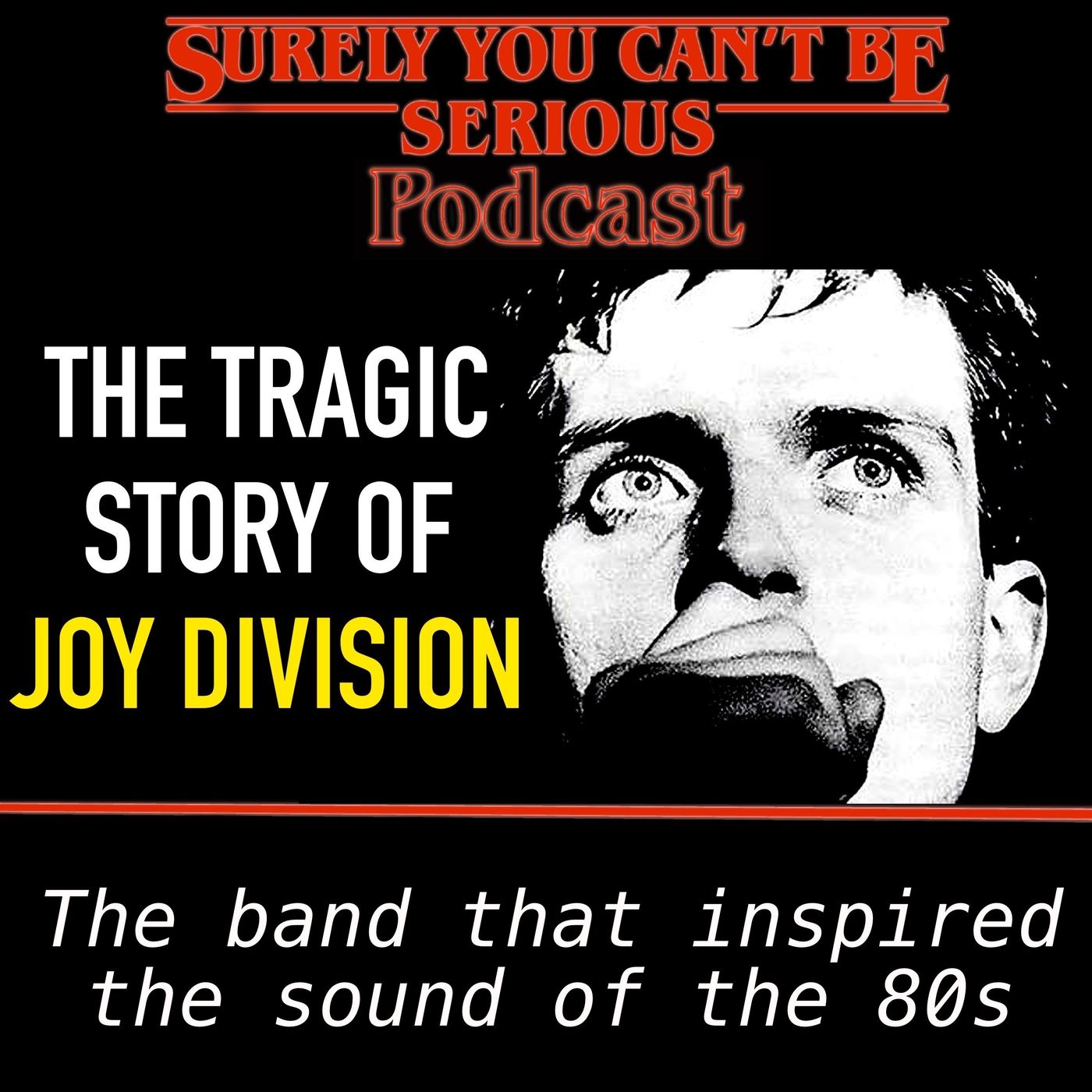
Stranger Things Soundtrack: Season 1 Episode 4: The Tragic Story of Joy Division
In this episode of the Soundtrack of Stranger Things we examine the artists and songs from Episode 4. This time we deep dive into the history of Joy Division, their impact on songs of the 80s and their tragic ending. You may not know much about these guys but, trust us, your friends, the story is amazing! Also friends don't lie.
2022-11-01
40 min
Transcript
Available Results
Generated results are saved to the knowledge database for reuse and search.
No generated results are available for this episode yet.
Extract Knowledge
Pick what you want extracted first. Model, scope, and chapter options appear after a template is selected.
Generated results for public episodes are saved to the knowledge database so they can be reused and searched later.
Transcript
<v Speaker 1>Hello, Shirley fans. For the last three years, Jason and
<v Speaker 1>I have been bringing you the stories behind all of
<v Speaker 1>your favorite movies from the eighties. But today we begin
<v Speaker 1>a new series.
<v Speaker 2>In twenty sixteen, the Duffer Brothers introduced the world to
<v Speaker 2>Stranger Things. This show not only changed the way we
<v Speaker 2>all watch television, but surprisingly also truly impacted the music
<v Speaker 2>we listened to, from Africa to running up that Hill.
<v Speaker 2>Stranger Things has brought back songs of our past and
<v Speaker 2>introduced them to a whole new generation.
<v Speaker 1>So The Shirley You Can't Be Serious Podcasts begins a
<v Speaker 1>new series bringing you the stories behind the songs of
<v Speaker 1>Stranger Things.
<v Speaker 2>Hey, everybody, welcome back to the Shirley Can't Be Serious podcast. Today,
<v Speaker 2>d we are diving into episode four of season one
<v Speaker 2>of Stranger Things and the music involved in this episode.
<v Speaker 1>Yeah, we can't fail to mention our executive producer for
<v Speaker 1>this episode. That is your friend who pointed you out
<v Speaker 1>to the Chick fil A worker on our last episode,
<v Speaker 1>mister Blaine Peterson. Mister Blaine Peterson.
<v Speaker 2>As I was standing in Chick fil A, the manager
<v Speaker 2>came out to me and said, are you the celebrity
<v Speaker 2>Jason Colvin and I was so confused and he had
<v Speaker 2>just gone through the drive throughs well.
<v Speaker 1>And now he is our Patreon subscriber, he will be
<v Speaker 1>able to listen to all of our super secret episodes
<v Speaker 1>where we go through the one hit wonders of the
<v Speaker 1>eighties and beyond. So if you, dear listener, are interested
<v Speaker 1>in becoming a Patreon subscriber, just go to patreon dot
<v Speaker 1>com slash Shirley podcast s U R E L Y
<v Speaker 1>Podcast for as little as five bucks per month.
<v Speaker 2>Photo is a month and you get all of our
<v Speaker 2>bonus material over there. We've got some great episodes one
<v Speaker 2>hit wonders that we've done the seventies, we've done the eighties,
<v Speaker 2>we've done the nineties, and they're.
<v Speaker 1>A lot of fun. They're a little bit shorter and
<v Speaker 1>they're kind.
<v Speaker 2>Of bite sized little snackies if you.
<v Speaker 1>Yeah, but still the in depth stuff that you expect
<v Speaker 1>from the Shirley guys. Right and if you go up
<v Speaker 1>in tears, we have other prizes and gifts that come
<v Speaker 1>along with being a higher monthly subscriber, So feel free
<v Speaker 1>to do whatever you can if that is outside of
<v Speaker 1>your price range. Right now, don't forget to go and
<v Speaker 1>leave us a five star rating on the podcast app
<v Speaker 1>and a friendly review, and if you do that, you'll
<v Speaker 1>be entered into a contest to win a custom engraved
<v Speaker 1>Tumblr for no charge at all. Just fill something out
<v Speaker 1>telling us how awesome we are.
<v Speaker 2>That's right, we're ready to give away some more tumblrs.
<v Speaker 2>It's been a while since we're giving away tumblrs. So
<v Speaker 2>give us a good review, five stars. You know, maybe
<v Speaker 2>we'll send you a tumbler before we get started. D.
<v Speaker 2>The last episode, we talked about David Bowie and how
<v Speaker 2>he became friends with John Lennon.
<v Speaker 1>Yeah, those two guys wrote a song together called Fame,
<v Speaker 1>which I mentioned was the number one song the day
<v Speaker 1>that I was born in nineteen seventy five.
<v Speaker 2>That's exactly right, David Bowie's first number one hit, by
<v Speaker 2>the way, Well, I came across an image on the
<v Speaker 2>internet I was going to tell you about. So it's
<v Speaker 2>John Lennon and Yoko Ono. Yeah, and let me tell
<v Speaker 2>you something. They needed to use the serious twenty code.
<v Speaker 1>Because they we're out of control. D. The mid seventies
<v Speaker 1>was a time for a lot of hair and not
<v Speaker 1>a lot of groom. Man, My gosh, now is not
<v Speaker 1>the seventies, ladies and gentlemen. Now is the time where
<v Speaker 1>you need to look good. I saw the picture that
<v Speaker 1>you're talking about, and it was a throwback to our
<v Speaker 1>Appetite for Destruction episode because I thought, welcome to the jungle, guys.
<v Speaker 1>You don't want to jungle down there. You don't want
<v Speaker 1>to be John Lennon, Harry or Yoko Oh no Harry
<v Speaker 1>for that matter. Sure, you want to be nice and
<v Speaker 1>trim looking for your lady.
<v Speaker 2>Manscape dot Com has these wonderful products. They make it easy.
<v Speaker 2>It's completely safe around the very sensitive areas. It's good stuff.
<v Speaker 2>We're giving you twenty percent off. Go right now and
<v Speaker 2>buy this for Christmas.
<v Speaker 1>It's great. Please go to manscape dot com. Use that
<v Speaker 1>code serious twenty because that's how they know we sent you,
<v Speaker 1>and you will get not only a discount, but you'll
<v Speaker 1>help us out in the process. That's right. All you
<v Speaker 1>need is love. But Manscape doesn't hurt.
<v Speaker 2>Wack it all?
<v Speaker 1>Right? Are we ready to jump into the songs of
<v Speaker 1>season one, episode four of Stranger Things. We're ready, We're ready.
<v Speaker 1>Let's go. So only two songs in this episode, yeah two.
<v Speaker 1>The first song that you hear is so monumental. It
<v Speaker 1>is by such an influential band, and I have to say,
<v Speaker 1>I'm so glad that we are doing this because had
<v Speaker 1>we not done this, Joy Division would just have been
<v Speaker 1>this band that I've heard of and that's all. But wow,
<v Speaker 1>what an incredible story, what an legacy, an influence that
<v Speaker 1>they've had over countless bands. Our friend James Buckley said,
<v Speaker 1>there weren't a whole lot of people that listened to
<v Speaker 1>Joy Division or bought that first album, but the ones
<v Speaker 1>that did all started a band. I know.
<v Speaker 2>That's a great quote, right, Yeah. I thought it was
<v Speaker 2>funny how you called James Buckley, And unbeknownst to me,
<v Speaker 2>I called James Buckley and I was like asking him.
<v Speaker 2>I was hitting him up on Joy Division because I
<v Speaker 2>didn't know who they were, right, And I'm like, so
<v Speaker 2>and so, how did.
<v Speaker 1>You find them?
<v Speaker 2>And you know, if it's they're not on MTV, I
<v Speaker 2>don't know how anybody finds anything. But so he's like, well,
<v Speaker 2>when I was talking to D I told him about this,
<v Speaker 2>I'm like, wait, D calls you already.
<v Speaker 1>Yeah, we're both tapping the James Buckley Well is the truth.
<v Speaker 2>Here's the way he got involved with him, or how
<v Speaker 2>you found them. I thought this was interesting. He had
<v Speaker 2>read a rock magazine where the guys from Faith No
<v Speaker 2>More credited Joy Divisions being an influence on them. So
<v Speaker 2>if you've ever heard or like Faith No More, Joy
<v Speaker 2>Division's kind of their musical family.
<v Speaker 1>It was incredible because I didn't beat around the bush.
<v Speaker 1>I didn't do small talk. I'm like, hey, I'm listening
<v Speaker 1>to Joy Division and I need to know where the
<v Speaker 1>love is. I need you to help me understand the
<v Speaker 1>love because I liked the music. But the Ian Curtis's
<v Speaker 1>voice is not my taste, right weird, It's a little
<v Speaker 1>bit strange. But I asked him that question. I mean,
<v Speaker 1>he didn't hesitate. It was boom, Well, here's what happened,
<v Speaker 1>and went right into it. And then afterwards he texted
<v Speaker 1>me he said, I just laughingly told my wife you
<v Speaker 1>called to ask me about Joy Division, and she said,
<v Speaker 1>you've been preparing your whole life at this moment. It
<v Speaker 1>was seamless. He was ready. He was ready for oral
<v Speaker 1>arguments right then. Right there.
<v Speaker 2>I like, how when you said I didn't beat around
<v Speaker 2>the bush, I was ready to jump right into another
<v Speaker 2>Manscape ad. But we'll hang on for that for next time.
<v Speaker 1>Yeah, so let's talk about Manchester circa nineteen seventy four.
<v Speaker 1>So okay, So Manchester now has some soccer teams, a
<v Speaker 1>couple of Manchester United, Manchester City. My kid's a man
<v Speaker 1>City fan, and it's a place that people know. Back
<v Speaker 1>in the seventies it was like Detroit without Motown. Just
<v Speaker 1>not good at all, not a good music scene. They
<v Speaker 1>talked about how the only interesting act around was Gary Glitter,
<v Speaker 1>and if you know the Gary Glitter story, that's a
<v Speaker 1>word that's almost not safe to say. Yes, you know
<v Speaker 1>you've heard his music at the football game, but you
<v Speaker 1>haven't heard that story. And someday we will come back
<v Speaker 1>that story. We will come back with the Gary Glitter story,
<v Speaker 1>but not today. All right.
<v Speaker 2>When you started talking about Manchester United, I thought it
<v Speaker 2>was going to turn into a soccer podcast. I was
<v Speaker 2>going to tag in David Wright and check out because
<v Speaker 2>I know nothing about soccer and less about Manchester.
<v Speaker 1>So keep going, all right. So Manchester in the seventies
<v Speaker 1>has no good music, has a lot of poor, blue
<v Speaker 1>collar son of a gun guys out on their luck.
<v Speaker 1>Until June fourth, nineteen seventy six. Yes, on June fourth,
<v Speaker 1>nineteen seventy six, there is a double concert in the
<v Speaker 1>Free Trade Hall in Manchester by none other than The
<v Speaker 1>sex Pistols, the punk band of all punk bands of
<v Speaker 1>the seventies, I mean, the trendsetters, the torch Carriers, whatever
<v Speaker 1>you want to call them. These guys were there and
<v Speaker 1>it's kind of like the Joy Division album, Like, not
<v Speaker 1>a whole lot of people were there, but everybody that
<v Speaker 1>was there started a band. Yeah.
<v Speaker 2>We talked on our ninety days in the nineties about
<v Speaker 2>concerts that we'd like to time travel and go see. Yeah,
<v Speaker 2>this apparently was such a huge people who saw it
<v Speaker 2>created a band that started change the world.
<v Speaker 1>Well, here's kind of the impression that I got is that,
<v Speaker 1>you know, if you're listening to Deep Purple or led
<v Speaker 1>Zeppelin back in that day, you're like, those guys are incredible.
<v Speaker 1>I can't do that. But if you go watch the
<v Speaker 1>sex Pistols and you're a seventeen year old kid, you're like,
<v Speaker 1>I could do that, and these guys are I mean,
<v Speaker 1>they're a huge bill. The crowd is going crazy for
<v Speaker 1>these guys, and so there were a ton of guys
<v Speaker 1>in the audience that thought, I can do this, we
<v Speaker 1>can form a band. I can find people and we
<v Speaker 1>can form a band. And also in the audience was
<v Speaker 1>this reporter named Tony Wilson, and Tony was from Manchester.
<v Speaker 1>He had gone and gone to Cambridge and was an
<v Speaker 1>educated guy, but he was into sex, drugs and rock
<v Speaker 1>and roll. But he was kind of the yuppie guy
<v Speaker 1>for that scene. And so he was on He had
<v Speaker 1>these little news bits that he's on those kind of
<v Speaker 1>like Kamakazi articles like it would show him hang lighting
<v Speaker 1>throwback to our first episode him hang lighting. And fortunately
<v Speaker 1>he wasn't on a tall cliff, but he was in
<v Speaker 1>front of aire fence and so he immediately went to
<v Speaker 1>the Barbara fence, did an interview on like some karate people,
<v Speaker 1>and immediately was taken down to the mat, you know,
<v Speaker 1>like Hi, I'm oh, and there it is. He's down
<v Speaker 1>like that.
<v Speaker 2>Yeah.
<v Speaker 1>He was a lot of fun. But he was one
<v Speaker 1>of the guys who was at that Sex Pistols concert
<v Speaker 1>in seventy six. So some of the other guys that
<v Speaker 1>were there Ian Curtis, Bernard Sumner and Peter.
<v Speaker 2>Hook by the way, yeah, before you go any further, yeah,
<v Speaker 2>Peter Hook. Immediately I'm like if Peter Pan and Captain
<v Speaker 2>Hook had a child, they would name it Peter Hook.
<v Speaker 1>Yes, thank you, thank you for being here for all
<v Speaker 1>of our preschool listeners. We can keep on spiking the football, Peter.
<v Speaker 1>That is a great name. This is a very memorable name,
<v Speaker 1>Peter Hook. Keep going. So Tony Wilson decides he's going
<v Speaker 1>to form a record label. He enlists some help from
<v Speaker 1>some other people and they put together this record label
<v Speaker 1>called the Factory. Right, by this time, these guys who
<v Speaker 1>have seen the Sex Pistols play have put together their
<v Speaker 1>own bands, and by now we're going to have this
<v Speaker 1>big contest in Manchester to figure out who's the best
<v Speaker 1>of these bands. And it's like seventeen different bands, and
<v Speaker 1>the last band to be slated in this contest was
<v Speaker 1>the Negatives, and the guys from Joy Division were upset.
<v Speaker 1>They were like, we were supposed to be the last act,
<v Speaker 1>not these guys, because the last act is really kind
<v Speaker 1>of a key spot in a competition. You want to
<v Speaker 1>be the finale, right, And so they start arguing with
<v Speaker 1>the guys from the Negatives, they're arguing with the staff.
<v Speaker 1>They're saying, we're supposed to be last, not these guys.
<v Speaker 1>And at some point finally, like Ian Curtis is this
<v Speaker 1>very mild mannered, artsy kind of guy. But he's not
<v Speaker 1>small like you look at him. He's definitely a head
<v Speaker 1>taller than the rest of the guys in the band.
<v Speaker 1>Apparently he kicked down the door to the Negatives dressing
<v Speaker 1>room and said we're playing last, or I'm going to
<v Speaker 1>cut your effing head off, and they said, okay, you
<v Speaker 1>go last, and that led to them getting signed with
<v Speaker 1>Tony Wilson's new record label, and they were the driving
<v Speaker 1>force behind that record label. That's interesting. Their original name
<v Speaker 1>was Warsaw.
<v Speaker 2>It's a throwback to David Bowie's song Warzawa. Throwback to
<v Speaker 2>David Bowie that we covered are.
<v Speaker 1>In the last episode. He's going to come up again.
<v Speaker 1>He's going to come up again and it's not in
<v Speaker 1>a good way, but just put a pin in that
<v Speaker 1>put a pin in David Bowie. But yes, they were
<v Speaker 1>highly influenced by David Bowie and they were not what
<v Speaker 1>you would call punk. They were inspired by the punk
<v Speaker 1>but these guys had moved into an area of music
<v Speaker 1>that later on we would dub it post punk.
<v Speaker 2>Yeah, you know, you talked about how these three guys
<v Speaker 2>who formed Joy Division were at that concert.
<v Speaker 1>I thought it was interesting.
<v Speaker 2>The next day, like after that concert, they're like, we
<v Speaker 2>got to do this, Like we're doing this. One guy
<v Speaker 2>borrowed thirty five pounds from his mother to buy a guitar.
<v Speaker 2>The other guy's like, well, you know, he's been mollen
<v Speaker 2>lawns or whatever, and he went and bought a guitar.
<v Speaker 2>Like they just spark something in them that like this
<v Speaker 2>is happening. So they placed an ad in the Virgin
<v Speaker 2>record shop that they all go in and out of.
<v Speaker 2>Ian curaged response to that, and they're like, hey, yeah,
<v Speaker 2>we've seen you round. We know you don't audition him
<v Speaker 2>doesn't know if he can sing. They're like, yeah you okay,
<v Speaker 2>come on, it doesn't matter if you can sing.
<v Speaker 1>We're playing punk. Let's do it. Yeah, can you breathe?
<v Speaker 1>He said that as long as we go along with people,
<v Speaker 1>then it was cool. Right. So they went through a
<v Speaker 1>few drummers. This is the great story. I was gonna say.
<v Speaker 1>I think it was their third drummer, but you tell
<v Speaker 1>me the story, okay. So here's the deal.
<v Speaker 2>Joy Division has a band debuts May twenty ninth, nineteen
<v Speaker 2>seventy seven. In June of nineteen seventy seven. They decide
<v Speaker 2>we're going to replace our drummer. Okay, so they bring
<v Speaker 2>in this guy named Steve Brotherdale. Well, after a few gigs,
<v Speaker 2>they decide that they don't like him. This guy is
<v Speaker 2>not fitting. He's just a pain in the butt and
<v Speaker 2>we don't like him. What's his name, Steve Brotherdale, not
<v Speaker 2>David Covered. That's where that's where my head went.
<v Speaker 1>Steve Brotherdale.
<v Speaker 2>So while they're driving, they're all in a car and
<v Speaker 2>they decide we're going to fire this guy.
<v Speaker 1>Yeah.
<v Speaker 2>So they they pull over and one guy's like, hey, Steve,
<v Speaker 2>I think we got a flat tire. Will you step
<v Speaker 2>out and check on it? So Steve gets out of
<v Speaker 2>the car and when he gets out of the car
<v Speaker 2>they drive off.
<v Speaker 1>They're like, re readier, that's fantastic. That is fantastic.
<v Speaker 2>Yeah, you know, sometimes you got to take the problem
<v Speaker 2>from the side, you know.
<v Speaker 1>So finally they end up with their third drummer who sticks,
<v Speaker 1>and that's Steven Morris. And by that time they call
<v Speaker 1>him sticks or because that's a great nickname for drummer.
<v Speaker 1>It's perfect, perfect really anyway, Steven Morris sticks, but the
<v Speaker 1>band name doesn't. They got to get rid of warsaw right,
<v Speaker 1>and so they go with a different name, Joy Division,
<v Speaker 1>very happy sounding name. It's happy sounding. Yeah. Yeah.
<v Speaker 2>So they get this from a nineteen fifty five novel
<v Speaker 2>called House of Dolls, and Joy Division refers to this
<v Speaker 2>special section of prostitutes or prisoners from the Auschwitz war
<v Speaker 2>camp in Nazi Germany, where the Nazi soldiers would go
<v Speaker 2>to have a good time. So they would keep woman
<v Speaker 2>prisoners on the side as the quote unquote Joy Division,
<v Speaker 2>so not so happy, no, not so happy. Basically sex
<v Speaker 2>slaves for the soldiers, and they would also use these
<v Speaker 2>women for favored prisoners.
<v Speaker 1>Wow. Horrible, Yeah, Joy Division. Okay, so that's less happy. Yeah,
<v Speaker 1>it's a good punk name, right, Yeah, it's it's Nirvana, right,
<v Speaker 1>but it's not but whole surfers, it's not Nirvana. That's
<v Speaker 1>buzz I mean, it's it's something that you hear and
<v Speaker 1>it sounds nice, but then when you find out the history,
<v Speaker 1>you're like, ooh, this is unpleasant.
<v Speaker 2>So January twenty fifth, nineteen seventy eight, Joy Division plays
<v Speaker 2>its first gig and they sort of, you know, work
<v Speaker 2>their way around, they begin their climb.
<v Speaker 1>Yeah.
<v Speaker 2>When nineteen seventy nine rolls around they record their very
<v Speaker 2>first album.
<v Speaker 1>Yeah, so this is this is huge because this is
<v Speaker 1>Tony Wilson's concept, the Factory, And I say concept because
<v Speaker 1>it started out as actually a club and then ultimately
<v Speaker 1>that transitioned into a record label. And it was kind
<v Speaker 1>of neat how he did stuff like the contract that
<v Speaker 1>he signed with the Joy Division guys he signed in
<v Speaker 1>his own blood, like let you no kidding, because it
<v Speaker 1>was like on a napkin, And basically the idea was,
<v Speaker 1>I'm as the record label guy, I'm not going to
<v Speaker 1>own your music. I'm not going to influence your music.
<v Speaker 1>That is your call. Wow, you are the one who
<v Speaker 1>was in charge of that. I'm not going to own it.
<v Speaker 1>I'm just going to be the one that's in charge
<v Speaker 1>of the business side of things, and what's on the
<v Speaker 1>business side of things, I'm in charge of, not you.
<v Speaker 1>And so listen to some of the bands that he
<v Speaker 1>was the manager of, they're like, yeah, this sounds really
<v Speaker 1>open minded. But a lot of the times that meant
<v Speaker 1>when it got to something that we weren't happy about,
<v Speaker 1>he said, well, you know what you can do. That
<v Speaker 1>was a nice way to say it's going to be
<v Speaker 1>this way or you can go off because you aren't
<v Speaker 1>connected to me. You don't have to you don't have
<v Speaker 1>to stay here. You can go you can go somewhere
<v Speaker 1>else and do something else if you want to. Now,
<v Speaker 1>Joy Division was a different I mean, they still had
<v Speaker 1>the same contract, but they were the bread and butter
<v Speaker 1>of the Factory record label. So now that they've decided
<v Speaker 1>to record the album, they have to have a producer.
<v Speaker 1>And so the guy that they get to come be
<v Speaker 1>their producer is a guy named Martin Hannett. Okay, he
<v Speaker 1>had gone by the name Martin Zero before, and he
<v Speaker 1>was he had produced one record. But you know why
<v Speaker 1>he was important to these guys, No, because he was
<v Speaker 1>in Manchester. He was like the only record producer in Manchester.
<v Speaker 1>But he had produced the buzzcocks first EP called Spiral Scratch.
<v Speaker 1>And so they're like, Okay, Martin, you're going to be
<v Speaker 1>our producer. We've got Joy Division over here because they
<v Speaker 1>are the most talented band that we have. Let's put
<v Speaker 1>this record together. Okay, now here's here's where a bit
<v Speaker 1>of magic happens. Okay, Division didn't really sound like Joy
<v Speaker 1>Division until Martin Hannett put his fingers into their pie right,
<v Speaker 1>and people would talk about how difficult it was to
<v Speaker 1>work with Martin Hannett. Like he said, I saw one
<v Speaker 1>guy who was like, it didn't matter how long a
<v Speaker 1>bean been together, four weeks, forty years. Within three days
<v Speaker 1>of working with Martin Hannett, he had everybody at each
<v Speaker 1>other's throat. That was what he thought was the way
<v Speaker 1>to produce record was to get everybody. Matt and the
<v Speaker 1>guy he wanted to make the maddest was the drummer,
<v Speaker 1>because the matter he is, the harder he hits the drums. Okay,
<v Speaker 1>I can see that. There's a movie that's come out
<v Speaker 1>that details the rise and fall of Factory Records called
<v Speaker 1>I think it's like twenty four Hour Party Machine or
<v Speaker 1>something like that. But Andy Sarkis plays the part of
<v Speaker 1>Martin Hannett, and he's awesome. He's so good as just
<v Speaker 1>this total jerk face guy, but he's a guy who
<v Speaker 1>knows what he is doing, and so he takes these guys.
<v Speaker 1>He takes Joy Division, who has this standard rock beat,
<v Speaker 1>the two and four rock beat, and he's like, we're
<v Speaker 1>not doing that. We're doing a disco beat. And they're
<v Speaker 1>like what. He's like, Wow, No, we're doing a disco
<v Speaker 1>beat on this one, and he used loops that we've
<v Speaker 1>talked about before, which was rare in the seventies. He
<v Speaker 1>was doing all kinds of these innovative things with echoes
<v Speaker 1>and ambient sound, and he is the one that made
<v Speaker 1>them sound and they hated it. They hated the way
<v Speaker 1>they sounded for that first LP, but it made them
<v Speaker 1>who they are and it made them relevant. They became
<v Speaker 1>like the definitive post punk band in the late seventies.
<v Speaker 1>It's incredible. It's incredible. So he treated it like he
<v Speaker 1>owned the factory and the band members were the drones. Right.
<v Speaker 1>But he was inspired by a few things that we've
<v Speaker 1>talked about before, right, Yeah, Okay. Number one crowdrock. Yes,
<v Speaker 1>we keep talking about crowdrock. Yeah, so we mentioned it
<v Speaker 1>and dearly list. If you're not familiar with us talking
<v Speaker 1>about it, it was on one of our Patreon episodes.
<v Speaker 1>But Keith Forcey, the guy who wrote Don't You Forget
<v Speaker 1>About Me, was a prominent kroud rock guy who worked
<v Speaker 1>with Giorgio Moroder. After that, worked with Donna Summer, which
<v Speaker 1>we'll talk a little bit about New Order after this,
<v Speaker 1>and Donna Summer was a big factor in that right,
<v Speaker 1>So he's inspired by Kroud Rock, He's inspired by Brian Eno,
<v Speaker 1>who of course is working with David Bowie at that
<v Speaker 1>point and they're making Low and he rose with that
<v Speaker 1>ambient sound and then Key his idol that we talked
<v Speaker 1>about on our Dirty Dancing episode, Mister Phil Spector. Oh yeah,
<v Speaker 1>that all makes sense. He totally wanted to be the
<v Speaker 1>Phil Spector of the post punk scene and he I
<v Speaker 1>think achieved it. Can you know what?
<v Speaker 2>We keep coming in contact with Phil Spector and Georgio
<v Speaker 2>Moroder is all over the place, right, this is the
<v Speaker 2>guy that gave us the top Gun soundtrack.
<v Speaker 1>Yeah, the Never Ending Store sort I mean, yes, yeah,
<v Speaker 1>it's all over the place, all over the place.
<v Speaker 2>So Joy Division starts to tour Europe in early nineteen eighty.
<v Speaker 1>Well, here's the problem.
<v Speaker 2>They start to realize Ian Curtis has got epilepsy.
<v Speaker 1>And this was kind of a big big deal anyway,
<v Speaker 1>but it was a bigger deal for him because in
<v Speaker 1>his past he'd actually worked in a hospital with epileptic patients.
<v Speaker 1>Like Joy Division has a song called She's out of Control,
<v Speaker 1>and people thought, well, he's talking about his condition. No,
<v Speaker 1>he was actually talking about a female patient. At the
<v Speaker 1>place that he worked, who he had seen go into
<v Speaker 1>these epileptic fits, and now he's getting the news, Hey,
<v Speaker 1>you have this, and you can't be around loud music,
<v Speaker 1>you can't do drugs, you can't stay up late, you
<v Speaker 1>can't drink. The doctor's like, oh, by the way, what
<v Speaker 1>do you do And he's like, oh, I'm a librarian.
<v Speaker 1>Oh wow, because you can't.
<v Speaker 2>You know, what do you say to that, Right, I'm
<v Speaker 2>a rock musician who you know, we crank it up
<v Speaker 2>and have lights everywhere.
<v Speaker 1>Right.
<v Speaker 2>In fact, he had special conditions, like they couldn't shoot
<v Speaker 2>the lights at him, yeah, or he'd have a seizure.
<v Speaker 1>Yeah. No, they literally like, guys, the background crew turned
<v Speaker 1>on the strobes at one point during one of their
<v Speaker 1>concerts and I mean he flat out fell backwards into
<v Speaker 1>the drums. Yeah he did. He did.
<v Speaker 2>He had two grandma seizures in early nineteen eighty. Yeah,
<v Speaker 2>and we actually talked about the grandma seizure that Tina
<v Speaker 2>Marie experienced during the top Gun episode. And a grandma
<v Speaker 2>seizure if you don't know, that's like laying on the
<v Speaker 2>ground shaking, you have no sort of awareness, can't do anything.
<v Speaker 1>You know, right, And if you've seen any videos of
<v Speaker 1>Ian Curtis performing, he has this very unique dancing style
<v Speaker 1>which looks like an epileptic seizure. I mean, his eyes
<v Speaker 1>are big, his face is kind of like dumbfounded, and
<v Speaker 1>he's throwing his arms around like a fit. And so
<v Speaker 1>I could see how somebody was like, oh, it's just
<v Speaker 1>his way of dancing when he's having these seizures.
<v Speaker 2>He would have seizures on stage and people think, oh,
<v Speaker 2>look at it, man, he's really passionate.
<v Speaker 1>He's really into it right now. It's crazy. Yeah. So anyway, he.
<v Speaker 2>You know, the lack of sleep, the long hours, you know,
<v Speaker 2>the seizures on stage. It was embarrass Yeah, he was
<v Speaker 2>embarrassed and ashamed.
<v Speaker 1>And he had also at this point fallen in love
<v Speaker 1>with this Belgian journalist named Anika Nore and she actually
<v Speaker 1>later on went and formed the Belgian arm of the factory.
<v Speaker 1>So that's kind of a weird coincidence, okay, but he
<v Speaker 1>had developed deep feelings for her. She would later on
<v Speaker 1>say it was all platonic. I guess we should say
<v Speaker 1>he was married at the time. Yeah, he's a different woman.
<v Speaker 1>His wife did not believe it was platonic.
<v Speaker 2>Let's back up just a second. He got married at
<v Speaker 2>nineteen and worked for the government, had a boring life. Yeah,
<v Speaker 2>he and his wife, you know, struggled to make it.
<v Speaker 1>Yeah.
<v Speaker 2>And then on the side, he's a punk rocker, right,
<v Speaker 2>you know, he aspired to be a musician, and then
<v Speaker 2>when he finally achieves it, falls in love with another woman.
<v Speaker 2>But he doesn't want to give up his wife and
<v Speaker 2>feels guilty. And I don't want to give up my girlfriend.
<v Speaker 2>I don't want to give up my wife. I kind
<v Speaker 2>of want to have both.
<v Speaker 1>And yeah, and she gives I mean, she files for divorce,
<v Speaker 1>and she gives him an ultimatum and says, you cannot
<v Speaker 1>have any more contact with her. If you have more
<v Speaker 1>contact with her, we're done. And that's it. I'm just
<v Speaker 1>there's no other way about this. You have to sever
<v Speaker 1>all contact with her. Then, on top of all of
<v Speaker 1>those other stressors, the epilepsy, the unrequited love or love affair,
<v Speaker 1>whatever it might have been. Sure, they also find out
<v Speaker 1>they're about to go to North America for a tour
<v Speaker 1>of the United States, Right, big deal. Yeah, and the
<v Speaker 1>rest of the band is elated. It's two big problems.
<v Speaker 1>Number One, he's worried about how the crowds are going
<v Speaker 1>to treat him if he's going to have an epileptic
<v Speaker 1>seizure on stage, because Americans are not the nicest people
<v Speaker 1>in concerts, right, I mean we've talked about Prince and
<v Speaker 1>what people did when he appeared. Yeah, and he's worried
<v Speaker 1>about that. And he's also deathly afraid of flying, like
<v Speaker 1>he had literally talked about how do I get there
<v Speaker 1>by boat? Can I just take a boat over to America? Wow?
<v Speaker 1>But anyway, all of those things are coming down hard
<v Speaker 1>upon his head.
<v Speaker 2>So he had attempted suicide when he was sixteen years
<v Speaker 2>old by overdosing on medication that he guy's hands, they.
<v Speaker 1>Actually pumped his stomach.
<v Speaker 2>Well, all these stressors start to kind of rear their
<v Speaker 2>ugly head, and people around him think, yeah, he's stressed out,
<v Speaker 2>but he's not really in danger, right, right.
<v Speaker 1>I mean you listen to people talk about him, they're
<v Speaker 1>like everybody thinks, you know, who doesn't know him and
<v Speaker 1>knows what happened, thinks he's this kind of dark, moody guy,
<v Speaker 1>and he wasn't. He's a guy who cut up and
<v Speaker 1>joked and playpool and drank with the boys. He's just
<v Speaker 1>a regular bloke, is the thing you hear most often.
<v Speaker 1>But like so many regular blokes, people didn't know the
<v Speaker 1>demons that he was truly dealing with. Yeah.
<v Speaker 2>So he was talking to his wife and he said,
<v Speaker 2>please stay with me tonight, and she felt like she
<v Speaker 2>had to stay with him or else. Who knows what
<v Speaker 2>would have happened, right, Well, she stayed with him, and
<v Speaker 2>then he told her to go away, don't come back. Yeah,
<v Speaker 2>And then while she was gone, on April seventh, nineteen eighty,
<v Speaker 2>he hanged himself.
<v Speaker 1>Yeah, early morning hours. So according to Tony Wilson, before
<v Speaker 1>he did this, he did two things. He watched a
<v Speaker 1>movie and he listened to an album. The movie he
<v Speaker 1>watched is a movie called strosek Okay. It's by Vernon
<v Speaker 1>harzok Okay, famous director, but one of his earlier seventies movies.
<v Speaker 1>I took a look at this movie. So here's the
<v Speaker 1>plot line of the movie. Musician gets out of jail,
<v Speaker 1>starts dating a prostitute, gets beaten severely. The prostitute leaves
<v Speaker 1>in a car and never comes back, and then he
<v Speaker 1>goes and kills himself. Does that sound familiar at all?
<v Speaker 1>Sounds like the Reagan You story. It sounds like the
<v Speaker 1>Reagan you story, except that the Reagan You thing didn't happen,
<v Speaker 1>wouldn't happen for another decade. Yeah, like another yeah, yeah.
<v Speaker 1>So I was like, oh my gosh, wow, and I
<v Speaker 1>was just like, whoa, this is nuts. Then the album
<v Speaker 1>that he listened to we talked about in our last episode.
<v Speaker 1>It was the one that David Bowie produced for Iggy
<v Speaker 1>Pop call The Idiot, which you think, okay, so weird coincidence? Sure?
<v Speaker 1>The album The Idiot got its title from a Russian novel.
<v Speaker 1>It's about an epileptic prince and there's an attempted suicide.
<v Speaker 2>What in the book get out of Town?
<v Speaker 1>Where are you going to get that information? I don't
<v Speaker 1>know what the deal is with the songs that they're
<v Speaker 1>picking for the Stranger Things, But why is it that
<v Speaker 1>suicide seems to run a thread through all of them.
<v Speaker 1>That's just it's weird. It's crazy. It is very, very weird.
<v Speaker 2>This season alone, just on this series, we've talked about murder,
<v Speaker 2>We've talked about suicide, We've talked about kidnapping, hangt hang
<v Speaker 2>two of them, I know, right? And Christmas songs?
<v Speaker 1>Yeah, and Christmas songs.
<v Speaker 2>Right, Hey, we got blocked on Facebook because we were
<v Speaker 2>talking about these. They were like, hey, we're going to
<v Speaker 2>talk about suicide and murder, drugs LSD and they're like, nope.
<v Speaker 1>The zecond bery shut us down. Yeah they did hard.
<v Speaker 1>We look to Facebook jail over this stranger things. It's
<v Speaker 1>not us, all right, Blame Nora Felder exactly, exactly. Okay,
<v Speaker 1>So he commits suicide, right, I mean literally, they're supposed
<v Speaker 1>to fly out the next next day, the next day,
<v Speaker 1>and so their world is coming to a crashing halt.
<v Speaker 1>Their lead singer is dead. They have to go to
<v Speaker 1>North America to tour. How are they going to do it?
<v Speaker 1>Are you really going to start a new band? Yes
<v Speaker 1>you are, Yes you are. Boys and girls, ladies and gentlemen.
<v Speaker 1>We're going to talk about it in just a second.
<v Speaker 1>But I hate to say it. We've gone this far
<v Speaker 1>and we have not yet said what the song I
<v Speaker 1>know or where it appears in the episode. So the
<v Speaker 1>Joy Division song that we're going to talk about is Atmosphere.
<v Speaker 1>The Atmosphere was not on one of their two albums
<v Speaker 1>that the band released. It came out as a single
<v Speaker 1>after Unknown Pleasures, but before closer, and it came out
<v Speaker 1>exactly two months before Ian Curtis hanged himself interesting March eighteenth. Now,
<v Speaker 1>obviously record stores get it earlier than that, Okay. I
<v Speaker 1>mentioned in one of our episodes recently that James Buckley
<v Speaker 1>pointed out that it would not be the last mention
<v Speaker 1>of suicide or John Peel. John Peele played this song
<v Speaker 1>for the first time on his show on March eleventh,
<v Speaker 1>a week before its release nineteen eighty. The next day
<v Speaker 1>he played the B side, which is Dead Souls, which
<v Speaker 1>is also a fantastic song and one that I will
<v Speaker 1>talk about in our next episode a little bit. If
<v Speaker 1>you don't know Dead Souls from Joy Division, if you've
<v Speaker 1>seen the movie The Crow Nine inch Nails covers that song,
<v Speaker 1>it's the scene where Eric Draven is running from rooftop
<v Speaker 1>to rooftop and it is it's intense, and it's awesome,
<v Speaker 1>and it's a great cover of that song. It's entrancing,
<v Speaker 1>it's beautiful. And I will say now for our listeners
<v Speaker 1>the same thing that I say. It said to James
<v Speaker 1>when I called them to ask him what the appeal
<v Speaker 1>of Joy Division was. I don't really like this guy's voice.
<v Speaker 2>Yeah, you and I talked about this, and he's been
<v Speaker 2>dead and buried for forty two years now, so yeah,
<v Speaker 2>we can kind.
<v Speaker 1>Of discuss it now soon. Right.
<v Speaker 2>It's interesting, it's deep, it's kind of nasally, but it
<v Speaker 2>sounds it's not it's not my taste.
<v Speaker 1>Even though it's not my taste, I find myself singing
<v Speaker 1>the song in that voice, like I'm wandering around throughout
<v Speaker 1>my day and I'll just be I'll just start singing
<v Speaker 1>the lyrics to that song. It's just it's not a
<v Speaker 1>pretty voice to listen to, but it does something that hooks.
<v Speaker 1>It hooks you in and the music is awesome. I
<v Speaker 1>love it very It sets the tone. Yeah, so I
<v Speaker 1>don't think we mentioned it, but this song comes in
<v Speaker 1>at three minutes and fifty two seconds into the episode.
<v Speaker 1>As you recall, the end of the last episode is
<v Speaker 1>when they discovered what appeared to be the body of
<v Speaker 1>Will Byers, and this one, the name of this episode
<v Speaker 1>is the Body, because it's all this question of is
<v Speaker 1>this really the body? Right? But the beginning of the
<v Speaker 1>episode is obvious, this kind of you know, like you've
<v Speaker 1>been hitting the head muted in shock, ambient noise going
<v Speaker 1>on for the first nearly four minutes, as Jim is
<v Speaker 1>trying to tell Joyce that they've found Will's body and
<v Speaker 1>that she's got to understand that he's really dead, and
<v Speaker 1>he understands why she's acting the way she is and
<v Speaker 1>believes he's still alive. And he went through the same
<v Speaker 1>thing with his daughter. And then he leaves, and that's
<v Speaker 1>when this song thumps in and what a crazy like.
<v Speaker 1>I don't even understand the meaning of the scene. But
<v Speaker 1>she's going out to the shed and she's getting in
<v Speaker 1>an axe, right, and what's going to happen we don't know,
<v Speaker 1>but this music playing in the background of that scene,
<v Speaker 1>it intensifies it. It's magnificent, perfect, perfect song for that moment.
<v Speaker 1>It's great.
<v Speaker 2>It's great, And is the body Will is not Will?
<v Speaker 1>We're not sure spoiler alert, it's not. Well. Well, the
<v Speaker 1>actor has been in all of the following seasons. I
<v Speaker 1>think everybody can guess that one, right. Yes, So we
<v Speaker 1>both like the song. Yeah, not real high on his voice,
<v Speaker 1>but still the music. I'll listen to this. Here's the thing.
<v Speaker 2>Yeah, and we're gonna just briefly touch on this. Once
<v Speaker 2>Ian Curtis dies, the rest of the group pulls themselves
<v Speaker 2>together and says, I guess we need a new singer.
<v Speaker 2>Let's change the name and move on to something else,
<v Speaker 2>and they become New Order.
<v Speaker 1>Yeah, and we will be talking about them on our
<v Speaker 1>next episode, right, so hold that thought till next time.
<v Speaker 1>Stick a pin and we got some fun stuff for
<v Speaker 1>you for New Order. I will just tell you they
<v Speaker 1>did after his death, which, like I said, it was
<v Speaker 1>only two months later, they re released this song and
<v Speaker 1>they changed the B side from Dead Souls understandable sure
<v Speaker 1>to She's Lost Control, which is still I mean, that's
<v Speaker 1>the song that everybody's like, did he write this about himself?
<v Speaker 1>Because Sezure song? Right, yeah, it's the Seizure song. So
<v Speaker 1>I can understand why you don't want Dead Souls as
<v Speaker 1>your B side on the two month old single that
<v Speaker 1>the guy just killed himself. But why'd they pick other
<v Speaker 1>than it's it's also probably a single worthy song, right yeah?
<v Speaker 1>I don't know.
<v Speaker 2>Interesting short lived joy Division makes a big impact, starts
<v Speaker 2>a lot of bands, yeah, impacts the eighties really yeah, okay.
<v Speaker 1>Real quick. There is actually a music video for this song,
<v Speaker 1>as you know that. No, I haven't seen it. Yeah,
<v Speaker 1>it's weird. It's very weird. It didn't get released. They
<v Speaker 1>filmed it early on, but it didn't get released until
<v Speaker 1>this song was re released back in nineteen eighty eight.
<v Speaker 1>And it's like bizar, it's black and white. It's got
<v Speaker 1>these hooded cloaked very strange video, but it fits the
<v Speaker 1>tone of the song for sure. Okay, So this song
<v Speaker 1>reached the top of the UK Indie chart in October
<v Speaker 1>of nineteen eighty hit the number two spot on that
<v Speaker 1>same chart when they re released it in nineteen eighty eight. Okay,
<v Speaker 1>So you mentioned John Peel's BBC radio program Listen to
<v Speaker 1>This Little Nugget. In two thousand, the song Atmosphere was
<v Speaker 1>voted greatest song of the millennium by his listeners. It's
<v Speaker 1>good they use this song. I talked about the movie
<v Speaker 1>that they had made about Tony Wilson, the record label journalist,
<v Speaker 1>a guy called twenty four Hour Party. People use this
<v Speaker 1>song right after the scene where Ian Curtis commits suicide.
<v Speaker 1>They use this song at the end of his biopic,
<v Speaker 1>which was called Control. And then when Tony Wilson, the
<v Speaker 1>real person, actually died, they played it at aneral. So
<v Speaker 1>this I think for Joy Division fans, this is it
<v Speaker 1>this is the one top of the list song for sure.
<v Speaker 1>Cool awesome, all right, that does it for the song
<v Speaker 1>that's at the very beginning. There's only one other song
<v Speaker 1>in this episode for us to talk about, and that
<v Speaker 1>is Color Dreams by The Deep. Have you heard of
<v Speaker 1>The Deep? Never? No? And there's a reason for that.
<v Speaker 1>This is the only album they made and they only
<v Speaker 1>got together to make the album. They didn't tour as
<v Speaker 1>a group. And this song comes in in the episode.
<v Speaker 1>What was our time signature on them? Time signature thirty
<v Speaker 1>four minutes and three seconds. Right, So it's the scene
<v Speaker 1>where Popper is talking to the state trooper who found
<v Speaker 1>Will's supposed body. So they're in a bar having a drink.
<v Speaker 1>He's questioning the guy, acting like a good guy until
<v Speaker 1>he calls him out on the line and the guy's like,
<v Speaker 1>you know, thanks for running the game, dick. And then
<v Speaker 1>the next scene, Hopper has beaten the crap out of
<v Speaker 1>the guy in the alley to get information from him,
<v Speaker 1>and that's when we find out it was this app right,
<v Speaker 1>the song that's playing, Color Dreams. You can't hear it,
<v Speaker 1>I mean you can hear a little twinkling of it,
<v Speaker 1>but not only are both of the guys talking throughout
<v Speaker 1>the scene, but you've got the game playing throughout the scene.
<v Speaker 1>So you've got announcing going on, two guys talking, and
<v Speaker 1>in the very limited background you can hear the jukebox
<v Speaker 1>playing this song. Now, this song was by the Deep
<v Speaker 1>You got who are founder of the Deepest Rusty Evans,
<v Speaker 1>Rusty Evans, world.
<v Speaker 2>Famous, Rusty Evans rock star extraordinary.
<v Speaker 1>The only guy who really had a career before they
<v Speaker 1>made this album, right, And basically what happened was he
<v Speaker 1>was just kind of of a folk music guy, like
<v Speaker 1>almost rockabilly stuff. Yes, and he says to his buddy
<v Speaker 1>Marcus Barkin, yes, hey, let's go record a psychedelic album.
<v Speaker 1>And the guy's like, what right, And so for twelve
<v Speaker 1>hundred bucks, they get some other musicians around and they
<v Speaker 1>go to this place to record this album. But it's
<v Speaker 1>important in musical history because it is the first album
<v Speaker 1>that has the word psychedelic in the title.
<v Speaker 2>Okay, so this is a series of bad decisions in
<v Speaker 2>my opinion. Okay, So one guy who can play guitar
<v Speaker 2>and can sing goes to his buddies says, hey, let's
<v Speaker 2>produce this psychedelic album.
<v Speaker 1>Nobody knows what that means yet.
<v Speaker 2>It's literally the first album with the word psychedelic in
<v Speaker 2>the title, and he's like, yeah, it's gonna be great
<v Speaker 2>psychedelic moods. Psychedelic moods, that's right. Yeah, So we're gonna
<v Speaker 2>drive from New York to Philadelphia. We'll write music on
<v Speaker 2>the way, we'll figure it out as we go. They
<v Speaker 2>go twelve hundred bucks, which that's cheap, even for cheap
<v Speaker 2>albums back then. Yeah, they spend four days on it.
<v Speaker 2>One of the session guys they bring in to play
<v Speaker 2>the he quits midstream and it's supposed to be kind
<v Speaker 2>of like an LSD trip. Is the idea of the psychogetry,
<v Speaker 2>So I wonder what they used for inspiration for that.
<v Speaker 2>Just imagine that you're like, Okay, we're gonna we're getting
<v Speaker 2>hired for like a three day gig. Okay, oh we
<v Speaker 2>got to drop acid and then we play this sounds
<v Speaker 2>like a great idea, Yeah, sure, Well it worked for
<v Speaker 2>people who were doing stuff later on, it did. It's
<v Speaker 2>not as though that wasn't unsuccessful, right, But in this
<v Speaker 2>particular instance, it was not successful. They would later go on.
<v Speaker 2>I think maybe a couple of the guys played together again.
<v Speaker 1>They changed their name. The next album was called Psychedelic
<v Speaker 1>Soul with ps ou L. How funny is that? And
<v Speaker 1>it's clever. Yeah, And so they were, you know, again,
<v Speaker 1>an unsuccessful album. They they were doing stuff that nobody
<v Speaker 1>was interested in. And that's probably how this song ended
<v Speaker 1>up in the background of a Stranger Things episode. It
<v Speaker 1>was cheap, nobody cared, so you can get it cheap.
<v Speaker 2>That's very true, and that's why it's it's in there.
<v Speaker 2>But the producer, Mark Burkin, when they got done with it,
<v Speaker 2>he sent it to the publisher for the Beatles.
<v Speaker 1>Oh okay, named Dick James.
<v Speaker 2>Yeah, and Dick James is like, yeah, you know, uh,
<v Speaker 2>I'll pay you guys to distribute this, and they're like,
<v Speaker 2>no way, man, this is.
<v Speaker 1>Going to be a hit. We don't need your help.
<v Speaker 2>I mean, I know you're with the Beatles and everything,
<v Speaker 2>but we got this right.
<v Speaker 1>Yeah what that's great.
<v Speaker 2>This goes along with the decisions to write songs and
<v Speaker 2>sleep in the studio and all that stuff.
<v Speaker 1>Yeah, right, could have been much bigger. Okay, So I
<v Speaker 1>told you I had a special little nugget on this one. Yes,
<v Speaker 1>I'm ready, You're ready, Yes, Okay, so Marcus Sparkin, the producer,
<v Speaker 1>the guy who Rusty Evans talked into doing this right.
<v Speaker 1>He would go on to be the music supervisor in
<v Speaker 1>a show that you know and love that The first
<v Speaker 1>season was directed by Richard Donner, which we talked about
<v Speaker 1>in our Lethal Weapon episode Stopping was the musical director
<v Speaker 1>for the Banana Splits Adventure hour. That is mind blowing.
<v Speaker 1>There you go. I'd like to have at least one
<v Speaker 1>interesting thing to say about the song. But anyway, so
<v Speaker 1>boys and girls, ladies and gentlemen, go ahead.
<v Speaker 2>I was just gonna say one banana, two banana, three,
<v Speaker 2>banana four. Yeah, I love the Banana Splits.
<v Speaker 1>Yeah, this is a little before my time. You're older
<v Speaker 1>than me.
<v Speaker 2>I mean I watched this in my underrews at my
<v Speaker 2>grandma's house.
<v Speaker 1>So there's a metal picture. I don't need incredible unders everyone. Okay, guys,
<v Speaker 1>that does it for this episode. We are taking a
<v Speaker 1>bit of a break. We got some catching up to
<v Speaker 1>do and we want to do a re release. This
<v Speaker 1>month is the month two years ago that we lost
<v Speaker 1>dear Eddie van Halen, so we are bringing you a
<v Speaker 1>return of our three original episodes on Van Halen and
<v Speaker 1>Van Hagar. That will be over the next three weeks,
<v Speaker 1>and then we'll be back with you for more exciting stuff.
<v Speaker 2>You know, we haven't done a great job of explaining
<v Speaker 2>ourselves because I've had more than I've had four or
<v Speaker 2>five or six. People say, are you guys gonna do
<v Speaker 2>like the entire run of Stranger Things. No, we're just
<v Speaker 2>going through season one. So this is episode four.
<v Speaker 1>Put a cap on this.
<v Speaker 2>We'll do five, six, seven, and eight, and then we'll
<v Speaker 2>be back into our regular rotation per season four.
<v Speaker 1>There you go. How about that season four of us?
<v Speaker 1>Four of us not a strange not Strange Things. That's right,
<v Speaker 1>because why would we skip two and three. We've been
<v Speaker 1>doing this for three years. It's crazy. It's awesome. Yeap,
<v Speaker 1>love you guys. Thank you so much for the support.
<v Speaker 1>We will see you next week, Tay. Guys,
Chapters
No chapters available.