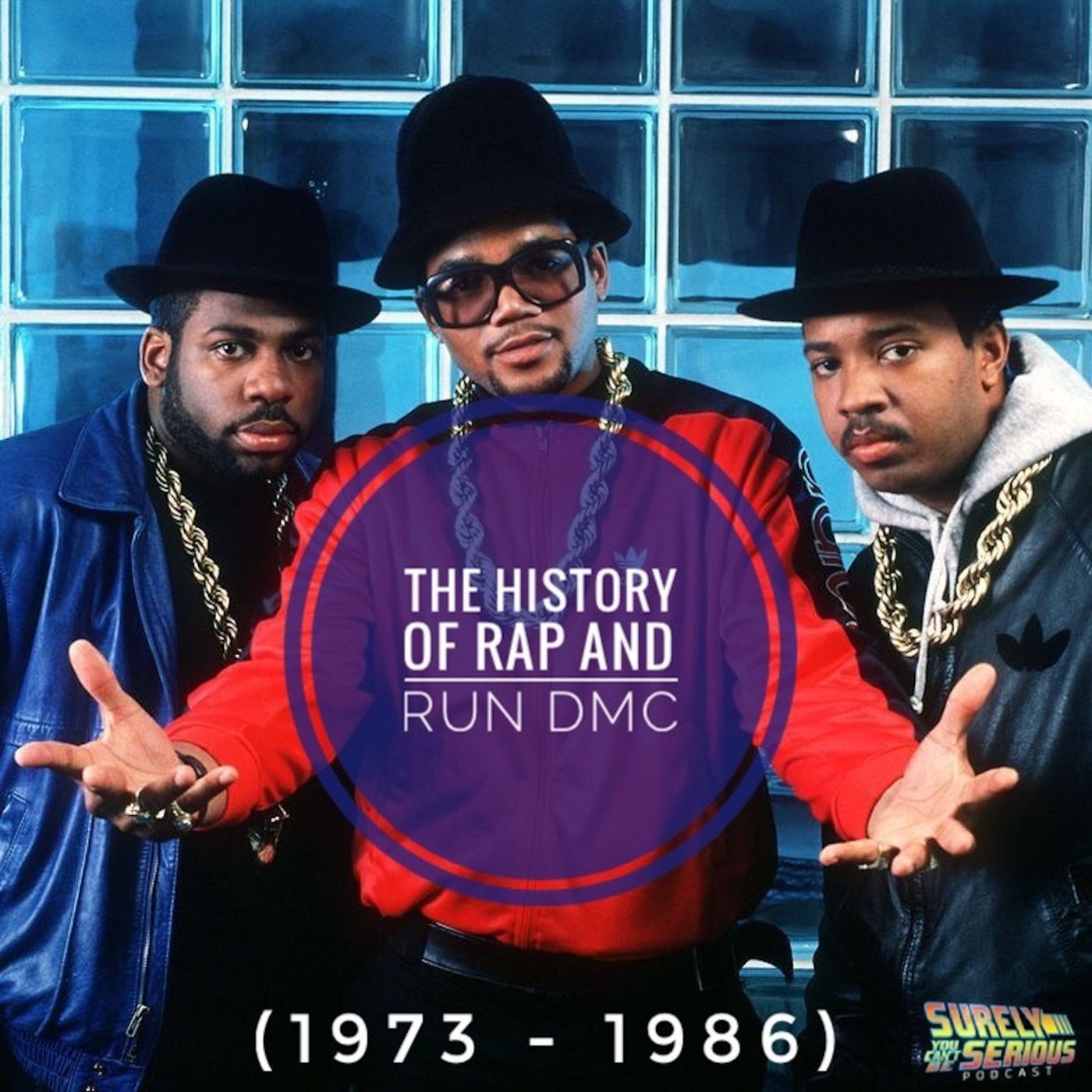
History of Rap and Run DMC 1973-1986 (feat. Def Dave)
Now put your hands in the air! And wave ‘em like you just don’t care! Join us today as we discuss the History of Hip hop and Run DMC with our special guest, hip hop guru, David Wright aka Def Dave. Learn the exact moment that rap was born and how three young men brought it into the mainstream scene!You can check out Dave's books here: www.galahadsdoom.com
2021-12-07
86 min
Transcript
Available Results
Generated results are saved to the knowledge database for reuse and search.
No generated results are available for this episode yet.
Extract Knowledge
Pick what you want extracted first. Model, scope, and chapter options appear after a template is selected.
Generated results for public episodes are saved to the knowledge database so they can be reused and searched later.
Transcript
<v Speaker 1>This is a podcast from Minute Media.
<v Speaker 2>Hey everybody, welcome back to the Shirley You Can't Be
<v Speaker 2>Serious podcast this week as we dive into run DMC
<v Speaker 2>in our two part hip hop episode, d you Okay?
<v Speaker 3>I don't know, man.
<v Speaker 1>I'm feeling pretty bad, but not bad meaning bad, bad
<v Speaker 1>meaning good.
<v Speaker 4>It's so tricky. Yeah, welcome back, everybody.
<v Speaker 1>We are in the second album of our two album
<v Speaker 1>Comparison from nineteen eighty six, the two albums that brought
<v Speaker 1>the New School of hip hop to the forefront of mainstream.
<v Speaker 5>These are the trend centers. These are the trail blazing albums.
<v Speaker 1>For hip hop, and we've got with us today our
<v Speaker 1>friend mister David Wright, otherwise known as Deaf Dave.
<v Speaker 4>How you doing, Dave?
<v Speaker 3>Do it great?
<v Speaker 4>David?
<v Speaker 3>Deaf Dave. My pronouns are the Lord of Lyrics, the
<v Speaker 3>Duke of discussion, and the son of Byford.
<v Speaker 5>That's awesome, Davin. We're so glad to have you back.
<v Speaker 5>You are a hip hop expert, and that's why we
<v Speaker 5>invited you here. The lyrics and the rhymes are just
<v Speaker 5>going to start falling out of your mouth as soon
<v Speaker 5>as we get going here.
<v Speaker 3>I will say I'm an expert on wrap from the
<v Speaker 3>eighties for sure, and I'm fascinated by the history of
<v Speaker 3>how it all got started in the seventies, so I'm
<v Speaker 3>excited to be able to talk about it with you.
<v Speaker 5>Okay, So in this episode, we're going to do a
<v Speaker 5>little bit on the history of rap. We'll do a
<v Speaker 5>little bit about the beginnings and the origins of Run
<v Speaker 5>DMC and where they got started and how they got going.
<v Speaker 5>And then in our next episode we'll go track by
<v Speaker 5>track through the Raising Hell album.
<v Speaker 1>Yeah, we're midway through this series of episodes. If you
<v Speaker 1>have not caught our Beastie Boys episode, go back two
<v Speaker 1>episodes and hear the story of the Beastie Boys from
<v Speaker 1>way back in history, and then listen to our epic
<v Speaker 1>track by track coverage of Licensed to Ill.
<v Speaker 5>That's right, And at the end of the track by
<v Speaker 5>track on Raising Hell, all three of us are going
<v Speaker 5>to give our final judgment on which album we feel
<v Speaker 5>is the superior album of nineteen eighty six. It's going
<v Speaker 5>to be amazing, all right. Well, Dave get us started
<v Speaker 5>on the history of rap and what we need to
<v Speaker 5>know before we can make our final judgment.
<v Speaker 4>Here.
<v Speaker 3>Well, I'm going to pick up the story in the
<v Speaker 3>twentieth century. This time, I'm not going to take you
<v Speaker 3>back to the eighteen hundreds, Okay did the birth of
<v Speaker 3>hip hop? And the story we're telling today is a
<v Speaker 3>tale of two Jamaicas. On April sixteenth, nineteen fifty five,
<v Speaker 3>in Kingston, Jamaica, Keith and Neddie Campbell gave birth to
<v Speaker 3>the first of their six children, a little boy named Clive.
<v Speaker 3>A little over two years later, in October of nineteen
<v Speaker 3>fifty seven, in Jamaica, Queens, Daniel and Evalynn Simmons gave
<v Speaker 3>birth to their second son, Russell. Now Daniel and Evelyn
<v Speaker 3>each held a pair of degrees from Howard University, and
<v Speaker 3>they had moved to Queens when Daniel had gotten a
<v Speaker 3>job as a public school administrator, and just a few
<v Speaker 3>years later, in nineteen sixty four, they moved to the
<v Speaker 3>slightly better neighborhood neighboring neighborhood of Hollis, Queens, and just
<v Speaker 3>a couple of weeks later, in November of nineteen sixty four,
<v Speaker 3>they gave birth to their third son, Joseph Simmons. So
<v Speaker 3>that's where the tale of two Jamaica's begins. But the
<v Speaker 3>Simmons family doesn't really come into play for another ten
<v Speaker 3>years or so. But in nineteen sixty seven, the Campbell
<v Speaker 3>family moved from Kingston, Jamaica to the Bronx and they
<v Speaker 3>moved into a tenement building called Sedgwick Towers.
<v Speaker 5>So, just for the record, in nineteen sixty four, that
<v Speaker 5>was Joseph's first Christmas in hallis is that what you're saying?
<v Speaker 3>That is exactly right? Okay? Okay, good, good, okay. But
<v Speaker 3>if you go back to the Campbell family, in nineteen
<v Speaker 3>sixty seven, the Campbell's moved from Kingston, Jamaica to the
<v Speaker 3>Bronx to a tenement building called Sedgwick Towers. And this
<v Speaker 3>is when young Clive, the first of their children, was
<v Speaker 3>twelve years old. When Clive was in high school, he'd
<v Speaker 3>only grown up to be about five foot eight, but
<v Speaker 3>he had turned into real sturdy guys. He was buff,
<v Speaker 3>he was strong, and he was physically dominant on the
<v Speaker 3>basketball court. And because of his physical strength, his basketball
<v Speaker 3>teammates gave him the nickname of Hercules. A couple of
<v Speaker 3>years later, one of his sisters, named Cindy, she needed
<v Speaker 3>some extra money for clothes, so they tried to figure
<v Speaker 3>out a way to raise a little bit of money,
<v Speaker 3>and Clive remembered when he was living in Jamaica, they
<v Speaker 3>have dance halls in Jamaica. I don't know if it's
<v Speaker 3>traditional to Jamaica or if it's just kind of traditional
<v Speaker 3>to maybe like the equivalent of their party scene. And
<v Speaker 3>so he borrowed his dad's sound system, set it up
<v Speaker 3>in the community room of this tenement building, and they
<v Speaker 3>decided to throw a party to raise money so Cindy
<v Speaker 3>can get some clothes and with you. So far, it
<v Speaker 3>was a huge success, but it was enough fun that
<v Speaker 3>they kept doing it and kept doing it, and the
<v Speaker 3>reputation of these parties began to grow, and the crowd
<v Speaker 3>started to get bigger, and so the nickname that his
<v Speaker 3>basketball teammates had given him and started calling himself DJ
<v Speaker 3>Cool Hirk okay. So that is probably right there, why
<v Speaker 3>we have the tradition of rappers and DJs giving themselves nicknames.
<v Speaker 4>Okay.
<v Speaker 3>And in nineteen seventy two he discovered this is what
<v Speaker 3>I love about the history of hip hop is that
<v Speaker 3>the origins are very specific and they're very known. In
<v Speaker 3>nineteen seventy two, he came up with the idea of
<v Speaker 3>setting up two turntables at the same time so that
<v Speaker 3>he can cut quickly between two records. This had never
<v Speaker 3>really been done before, and what he had learned from
<v Speaker 3>studying the crowd was that the favorite part of any
<v Speaker 3>song they played was when it broke down into like
<v Speaker 3>a percussion break in the middle of the song. So
<v Speaker 3>he decided, what if I only played the percussion breaks,
<v Speaker 3>only played the beats from these breaks. And what he
<v Speaker 3>did was he what he would queue up the percussion breaks,
<v Speaker 3>the break beats on each turntable and when it would
<v Speaker 3>and when the break would come to an end on one,
<v Speaker 3>he'd play the other turntable. Okay, by doing this he
<v Speaker 3>could extend the good part. What he discovered was have
<v Speaker 3>two copies of the same record, and by queuing the
<v Speaker 3>beginning of the breakup and have it ready to go
<v Speaker 3>by the time it's ending on the other record, he
<v Speaker 3>can go back and forth. He could extend that break
<v Speaker 3>beat as they called it, indefinitely. This is what DJ
<v Speaker 3>cool Hirk was famous for. He came up with a
<v Speaker 3>routine that would cut between three different records, and the
<v Speaker 3>very first Merry Go Round routine he came up with
<v Speaker 3>included turn it up and set it Loose by James Brown,
<v Speaker 3>Bongo Rock by the Incredible Bongo Band, and the Mexican
<v Speaker 3>by Babe Ruth. These all three had these percussion breaks
<v Speaker 3>in them, and he would just rotate between the three
<v Speaker 3>of them and keep them going for a long time,
<v Speaker 3>and the crowd would just go nuts and go nuts
<v Speaker 3>and go nuts. This was the very beginning of what
<v Speaker 3>became hip.
<v Speaker 4>Hop awesome awesome Okay.
<v Speaker 3>So by playing these extended breakbeats, the crowd would jump
<v Speaker 3>in and start dancing. And the longer that he kept
<v Speaker 3>this thing going, the more they would dance and the
<v Speaker 3>crazier their dance moves would get. And so these people
<v Speaker 3>that were dancing during these breaks, these were the breakdancers.
<v Speaker 3>This is how you get the term breakdancing.
<v Speaker 5>The break okay, Yeah, I get it, I get it.
<v Speaker 4>Okay, I love it.
<v Speaker 3>He had a regular group of guys who were like
<v Speaker 3>particularly acrobatic and inventive on the dance floor. He called
<v Speaker 3>them his break boys, which became bee boys. So that's
<v Speaker 3>why any hip hopper is now known as a bee boy.
<v Speaker 3>So now you're coming between twin records, between two turntables,
<v Speaker 3>you've got breakdancers and you've got bee boys.
<v Speaker 5>Wow.
<v Speaker 1>So in nineteen seventy four, there was a movie that
<v Speaker 1>came out called Earthquake.
<v Speaker 4>Are you familiar with it? No?
<v Speaker 3>I don't know this, okay.
<v Speaker 1>So the movie came out called Earthquake in nineteen seventy four,
<v Speaker 1>which is for that movie, they created something called the
<v Speaker 1>sin surround sound. It was specifically to give the audience
<v Speaker 1>an enhanced experience that they could actually feel the earthquake,
<v Speaker 1>and they had to use special speakers. They designed and
<v Speaker 1>created special speakers for this, and all of the DJs
<v Speaker 1>who were now playing in not just the gymnasium or whatever,
<v Speaker 1>but also playing in the park, said, if we can
<v Speaker 1>recreate these speakers, we can have the loudest speakers around.
<v Speaker 1>And so they reverse engineered it, figured out how to
<v Speaker 1>make the earthquake speakers, and that's how they got the
<v Speaker 1>name earthquake speakers.
<v Speaker 4>Wow.
<v Speaker 1>And then they would have dancers who were like dancing
<v Speaker 1>on top of the speakers, and I've seen it. They
<v Speaker 1>will stop the music and say, hey, get off the speakers.
<v Speaker 3>So in Jamaica, there's this tradition called dance hall toasting,
<v Speaker 3>which is very similar to what we would know is rapping,
<v Speaker 3>where someone is taking a microphone and speaking over some
<v Speaker 3>music that's playing back with the purpose of exciting the
<v Speaker 3>crowd and entertaining them. And so something cool Hirk added
<v Speaker 3>to his routine with all this break dancing going on
<v Speaker 3>with the Bee Boys is that he started encouraging the
<v Speaker 3>crowd and hyping them up by grabbing a mic and
<v Speaker 3>starting to give real simple rhymes that was on beat
<v Speaker 3>with the with the braakelop that he was playing. But
<v Speaker 3>what he soon found out, because you know, keep in mind,
<v Speaker 3>all he had was two turntables. He didn't have a
<v Speaker 3>modern system with a with a fade, a crossfader, or
<v Speaker 3>switch or a mix or anything. He was kind of
<v Speaker 3>doing all this manually and trying to stay on time
<v Speaker 3>with it all, and it was a little too much
<v Speaker 3>to try to add the toasting. So what he did
<v Speaker 3>is he delegated that to a friend of his and
<v Speaker 3>that is how Coke Larocke became history's first MC. And
<v Speaker 3>so in the Jamaican toasting halls, they were no master
<v Speaker 3>of ceremonies. So Coke LaRock is the name of the
<v Speaker 3>first MC in hip hop. Now we mentioned Scottlarock in
<v Speaker 3>the BC Boys episodes, and fans of eighties rap may
<v Speaker 3>recognize the name Scottlarock from Boogie Down Productions. Both those
<v Speaker 3>guys know their history because both of those names are
<v Speaker 3>an homage to Coke LaRock, the very first rapper. This
<v Speaker 3>is all happening at Sedgwick Towers. This is right there
<v Speaker 3>at Herk's home, and all this innovation is happening within
<v Speaker 3>seventy two and seventy three. As a matter of fact,
<v Speaker 3>according to the PBS documentary series History Detectives, they were
<v Speaker 3>able to pinpoint the exact birth of Rap. It was
<v Speaker 3>on August eleventh, nineteen seventy three, in the community room
<v Speaker 3>of Sedgwick Towers at fifteen twenty Sedgwick Avenue. Right there
<v Speaker 3>in the community room, two turntables, extending the break, dancing
<v Speaker 3>with wrapping on the microphone. August eleventh, nineteen seventy three,
<v Speaker 3>Rap is born, and it's all from DJ Cool Hurt.
<v Speaker 5>Go Tosh, Hey, every time every time you say two turntables,
<v Speaker 5>I'm like and a microphone. He wanted to say two
<v Speaker 5>turntables and a microphone.
<v Speaker 3>As it turns out, Cool Hurt would not keep up
<v Speaker 3>with all the innovations that would quickly come in the
<v Speaker 3>following decade. But he is known as the originator. As
<v Speaker 3>a matter of fact, he never put out any recorded
<v Speaker 3>material until twenty nineteen he did his first album, Really
<v Speaker 3>Yes Wow. But he's always been known and recognized and
<v Speaker 3>respected as the originator of rap. As a matter of fact,
<v Speaker 3>in the year two thousand and seven, the state of
<v Speaker 3>New York officially decoplared the Sedgewick Building to be the
<v Speaker 3>birthplace of hip hop, and it has since been nominated
<v Speaker 3>for inclusion on the National Registry of Historic Places.
<v Speaker 5>That's fantastic.
<v Speaker 3>So I'd mentioned that he did not really keep up
<v Speaker 3>with the innovators that would come. But what happened was
<v Speaker 3>here we are seventy three going into seventy four, and
<v Speaker 3>his parties were growing. They were growing in size, and
<v Speaker 3>they were growing in reputation. He began to gain status
<v Speaker 3>just through like his name being whispered on the streets.
<v Speaker 3>And you have to understand that in the seventies, especially
<v Speaker 3>the first half of the seventies, the Bronx was a
<v Speaker 3>scary place. In nineteen seventy three, there was a member
<v Speaker 3>of the Black Spades gang whose name was Lance Taylor,
<v Speaker 3>and he went to his first cool Hirk party and
<v Speaker 3>while there he had this vision of what he could
<v Speaker 3>do to make the Bronx a safer place. Now, it
<v Speaker 3>would be a couple of years before he was able
<v Speaker 3>to realize this vision. In the meantime, there was this
<v Speaker 3>kid named Joseph Sadler who had been born in Barbados
<v Speaker 3>but had moved to the Bronx and he had become
<v Speaker 3>a regular attendee at Hirk's parties, and as a matter
<v Speaker 3>of fact, Hrk had kind of taken him under his
<v Speaker 3>wing as sort of an acolyte. And Joseph Sadler had
<v Speaker 3>been to a vocational high school and he was able
<v Speaker 3>to take some of his mechanical electrical engineering skills that
<v Speaker 3>he had learned there, and he built the very first
<v Speaker 3>Q monitor, which you could add to the system of
<v Speaker 3>the two turntables as a way to preview the entrance
<v Speaker 3>point of your next record, so he could be more
<v Speaker 3>precise with that. That was an innovation that allowed for
<v Speaker 3>more precision in the DJ's routine. So this innovation gave
<v Speaker 3>him the edge over cool hert this with this Q
<v Speaker 3>monitor added to the system, so he went out and
<v Speaker 3>began throwing his own parties under the name of Grandmaster Flash.
<v Speaker 5>Oh wow, that's awesome.
<v Speaker 3>So this is a period of intense creation and innovation.
<v Speaker 3>This is all brand new, so a lot of people
<v Speaker 3>are jumping the board with this idea and they're trying
<v Speaker 3>new themes. Grandmaster Flash had his own disciple, his own apprentice,
<v Speaker 3>whose name was Theodore Livingston. So Theodore was just trying
<v Speaker 3>to learn how to do all this stuff. He was
<v Speaker 3>learning it from Grandmaster Flash. And one day he was
<v Speaker 3>up in his bedroom working with two turntables, just practicing,
<v Speaker 3>trying to figure it out.
<v Speaker 4>And.
<v Speaker 3>His mom busted in and said, what's that noise? And
<v Speaker 3>so it kind of scared him. He kind of jumped in.
<v Speaker 3>He put his hand down on the record to stop
<v Speaker 3>it because he had talked to his mom, and when
<v Speaker 3>he put his hand down on it, it kind of
<v Speaker 3>slipped under the needle and then made this cool little
<v Speaker 3>zipping sound, and he goes, WHOA, what was that? And
<v Speaker 3>then he did it again, and he went back and
<v Speaker 3>forth a few more times, and then he started doing
<v Speaker 3>it in rhythm, and that is how scratching. The technique
<v Speaker 3>of scratching was invented by accident because Theodore Livingstone's mother
<v Speaker 3>scared him.
<v Speaker 5>You're bringing it strong, tonight, man, you are.
<v Speaker 3>And so Theodore Livingstone is now better known as Grand
<v Speaker 3>Wizard Theodore.
<v Speaker 4>Yeah.
<v Speaker 3>So he's one of the big names from the seventies
<v Speaker 3>and he's credited with inventing scratching.
<v Speaker 4>Wow.
<v Speaker 3>So nineteen seventy five, Colhirk is still throwing his parties
<v Speaker 3>and Lance Taylor, if you remember Lance Taylor, he had
<v Speaker 3>had that vision in nineteen seventy three of how to
<v Speaker 3>make the Bronx a safer place. He had been running
<v Speaker 3>with the Black Space, which is one of the more
<v Speaker 3>violent gangs in the Bronx. But by nineteen seventy five
<v Speaker 3>Lance had begun djaying and he quickly earned the reputation
<v Speaker 3>for playing ultra rare break beats. Okay, so that's what
<v Speaker 3>they called these percussion breaks that they were always looking for,
<v Speaker 3>because that's just the part they wanted. They wanted that part,
<v Speaker 3>nothing else. They could just play that. Well. It quickly
<v Speaker 3>got to the point where everybody was familiar with the
<v Speaker 3>common ones, and so he was looking for more obscure
<v Speaker 3>records to reveal beats that no one had heard before.
<v Speaker 3>And so he specialized in finding the most obscure songs,
<v Speaker 3>primarily from funk and soul, but from a wider ray
<v Speaker 3>so with his heightened influence that he had from running
<v Speaker 3>these parties, Lance Taylor was able to successfully realize his
<v Speaker 3>vision of how to make the bron It's a safer place.
<v Speaker 3>And he basically co opted the Black Spades and turned
<v Speaker 3>them into He renamed them the Zulu Nation, and he
<v Speaker 3>began to call himself Africa Bambada. And he used hip
<v Speaker 3>hop and wrap and creative expression as a way to
<v Speaker 3>channel the kids on the street, channel their energy in
<v Speaker 3>a positive way in order to move them away from
<v Speaker 3>crime and away from violence and just steer them into
<v Speaker 3>these creative outlets. Africa Bambada he created basically that DJ
<v Speaker 3>virtue of crate digging, where you just go looking for
<v Speaker 3>the most obscure record that's going to have a cool
<v Speaker 3>beat that no one's heard before.
<v Speaker 4>Which is how he happened to be able to hear
<v Speaker 4>Cookie Puss. Is that right? It has to be right? Probably?
<v Speaker 4>So I mean talk about an obscure album. Yeah, three
<v Speaker 4>white kids from Brooklyn, Yeah, yo, I.
<v Speaker 5>Want to talk to Cookie Puss Man Cookie Puss.
<v Speaker 3>Okay, So those are the three giants Cool Herk, Grandmaster
<v Speaker 3>Flash and Africa Bambada. They are the giants of hip
<v Speaker 3>hop if you're gonna have a mount Rushmore. Those are
<v Speaker 3>three of the faces right there. Okay, But what this
<v Speaker 3>created in the seventies was this breakbeat culture, this DJ
<v Speaker 3>party culture. There was something new. It was just kind
<v Speaker 3>of had had risen, kind of grassroots, and people were
<v Speaker 3>sneaking recorders into these parties and making these bootleg mixtapes
<v Speaker 3>and they were selling them on the street, and the
<v Speaker 3>DJs usually they didn't know anything about it, but they
<v Speaker 3>were selling these mixtapes on the street, and these served
<v Speaker 3>to kind of spread the gospel, and so kids outside
<v Speaker 3>of Manhattan, outside the Brons and the other Burroughs, these
<v Speaker 3>mixtapes kind of made their way out to the suburbs,
<v Speaker 3>and so this idea was catching on and it was
<v Speaker 3>all just organic. And I just find all that very
<v Speaker 3>cool that there was this new way of playing records
<v Speaker 3>that basically turned the DJ into the star into the entertainer,
<v Speaker 3>where it was all based on taking pre existing material
<v Speaker 3>and remixing it in a new way. So it's basically
<v Speaker 3>editing for entertainment. It's live looping, live editing for entertainment.
<v Speaker 3>I've always found that extremely fascinating and I have to
<v Speaker 3>say it impacted me professionally impacted my career because I'm
<v Speaker 3>a professional video producer, I'm a video editor, and that
<v Speaker 3>charge I get from taking different material, raw material and
<v Speaker 3>crafting something new out of it is the same thing
<v Speaker 3>that interested me about hip hop and about these early
<v Speaker 3>days in the Bronx in the seventies with so much
<v Speaker 3>innovation and creativity going on all at the same time. Okay,
<v Speaker 3>so these were still largely house parties or block parties,
<v Speaker 3>but the scene was getting too big. This was something
<v Speaker 3>new and something different, and so what was happening is
<v Speaker 3>in the cold months, they were actually starting to book venue.
<v Speaker 3>They would rent out clubs or rent out these venues
<v Speaker 3>to throw their parties, which now these were coming events
<v Speaker 3>that needed to be promoted. In the summertime, they would
<v Speaker 3>just go out to the park and they could they
<v Speaker 3>could plug their turntables up to the telephone pole and
<v Speaker 3>just start doing their thing and the crowd would gather
<v Speaker 3>and so these it created as a snowball effect of
<v Speaker 3>so many people trying to learn the secrets of this
<v Speaker 3>of this new trade, and so you had all these
<v Speaker 3>DJs coming up. One of the more prominent DJs of
<v Speaker 3>the seventies from this new breed of DJ was someone
<v Speaker 3>known as DJ Hollywood. And so you have to understand
<v Speaker 3>that at this time rapping right MC's were they were
<v Speaker 3>strictly in a supporting role that the DJ was the
<v Speaker 3>clear star and the MC was really more like a
<v Speaker 3>hype man. He wasn't really trying to perform a song.
<v Speaker 3>He was just trying to get the crowd going. So
<v Speaker 3>it was very simplistic party rhymes, you know, like throw
<v Speaker 3>your hands in the air, wave them like you just
<v Speaker 3>don't care, and it was nothing more complicated than that,
<v Speaker 3>like on and on until the break of dawn. Well
<v Speaker 3>that was this DJ named DJ Hollywood, in the vein
<v Speaker 3>of rapping like that, he came up with the rhyme
<v Speaker 3>he was in dinner.
<v Speaker 5>Wait wait wait rapping like this and like this and.
<v Speaker 4>Like that, like this is like that is like this,
<v Speaker 4>please do that lots and lots.
<v Speaker 5>Okay, I got you.
<v Speaker 3>Keep going okay. So so it was DJ Hollywood who,
<v Speaker 3>in the vein of doing these type of simplistic improvised rhymes,
<v Speaker 3>he came up with the rhyme hip hop hip to
<v Speaker 3>the hippity hip hip hopping you don't stop rocking, the
<v Speaker 3>Baine Bain boogie s hit up, jump the bullget to
<v Speaker 3>the rhythm of the boogeity beat, and that caught on,
<v Speaker 3>so that hip hop hippie to the hippity hip hop. Finally,
<v Speaker 3>this movement, this new culture had a name, and it
<v Speaker 3>was called hip hop and it came from DJ Hollywood's
<v Speaker 3>improvised rhyme that night.
<v Speaker 5>Nice, nice, great dude, you're hitting grand slam after grand slam.
<v Speaker 4>Keep going.
<v Speaker 3>So this initial period from nineteen seventy three at Sedgwick
<v Speaker 3>Towers up through about seventy eight, nineteen seventy eight, this
<v Speaker 3>era was hip hop one point zero. This was the
<v Speaker 3>original scene. This was the grassroots, organic creation of something new,
<v Speaker 3>and it all started in the Bronx.
<v Speaker 1>Well, you talked about DJ Hollywood and it was around
<v Speaker 1>this time he talked about seventy eight. Is around seventy seven.
<v Speaker 1>He had a close friend named Eddie Chiba, and this
<v Speaker 1>is kind of where your two Jamaica's meet because Eddie
<v Speaker 1>Chiba DJ Hollywood. They would influence each other's styles, grow
<v Speaker 1>from each other, and one night, a guy who you
<v Speaker 1>had mentioned earlier, who was born in Jamaica Queen's, happened
<v Speaker 1>to have dropped out of college and be trying to
<v Speaker 1>look for something to do, and he came across Eddie
<v Speaker 1>Chiba and he said, this is what I want to
<v Speaker 1>do for the rest of my life.
<v Speaker 3>That was Russell Simmons. That's like the Blues Brothers having
<v Speaker 3>that moment in the church where the light hits them
<v Speaker 3>in the doing part will Yeah. So what had happened
<v Speaker 3>was in nineteen seventy five, Russell Simmons was out of
<v Speaker 3>high school and he had got busted for smoking pot
<v Speaker 3>and his dad said, nope, you're going to college, and
<v Speaker 3>he kicked him out and he went over to Harlem
<v Speaker 3>and he enrolled at City College of New York. While there,
<v Speaker 3>he met a friend named He made friends with a
<v Speaker 3>guy named Rudy Toppin, and Rudy was into party promotion.
<v Speaker 3>He was plugged into this new breed, a DJ type
<v Speaker 3>of party scene, and he was one of these guys
<v Speaker 3>that was going around promoting these club events that had
<v Speaker 3>started growing out of these house parties, and so he
<v Speaker 3>brought Russell along to help him out. And so this
<v Speaker 3>was Russell's first hustle. He was into party promoting. And
<v Speaker 3>by the way, it was during this time Rudy observed
<v Speaker 3>Russell's high energy work ethic and gave him the nickname
<v Speaker 3>of Rush. So Russ has the nickname of rush Okay.
<v Speaker 3>And so there was this one night in nineteen seventy
<v Speaker 3>seven at the Charles where they walk in and Eddie
<v Speaker 3>Chiba is wrapping over a looped break or looped intro
<v Speaker 3>to flashlight by Parliament. Just keep your bonds down the up.
<v Speaker 5>We're gonna do a little like an eel.
<v Speaker 4>We continue you all with the news this time.
<v Speaker 3>For you to be real. This was the I see
<v Speaker 3>the light moment. And in that moment Russ had he
<v Speaker 3>got hit up beside the head and he said, this
<v Speaker 3>is the future, this is my future. This is something real.
<v Speaker 3>And his first instinct was how am I going to
<v Speaker 3>make money off of it? Yeah, he recognized before anybody else.
<v Speaker 3>He recognized that this was marketable and that people could
<v Speaker 3>get paid.
<v Speaker 5>Uh huh.
<v Speaker 3>The people that were there in the one point oh stage,
<v Speaker 3>they were just there. It was a new way to party,
<v Speaker 3>you know. It was just the DJ playing records at
<v Speaker 3>a club. He was just putting a twist on it.
<v Speaker 3>But Russell was the first person to see that this
<v Speaker 3>could be monetized and that this could be marketed. He
<v Speaker 3>was the first businessman, the visionary that could turn this
<v Speaker 3>all into something viable. He decided he was going to
<v Speaker 3>get into his own promoter. He quit working with Rudy
<v Speaker 3>and he started promoting his own He was friends with
<v Speaker 3>the program director at the college radio station the college
<v Speaker 3>where he was attending. The program director's name was Curtis Walker,
<v Speaker 3>and so they began promoting their own events. So you
<v Speaker 3>have to understand that Russell was the visionary who took
<v Speaker 3>hip hop from these ad hoc parties to like organized
<v Speaker 3>concerts and ticketed events and that kind of thing. He
<v Speaker 3>was kind of the trailblazer in kind of finding places
<v Speaker 3>that would take these acts, and then a circuit developed
<v Speaker 3>where you could just kind of make you could just
<v Speaker 3>make the rounds booking your act. And one of these
<v Speaker 3>other promoters during this same time, one of his competing
<v Speaker 3>promoters was a guy by the name of Junior Raimes.
<v Speaker 3>Now you probably haven't heard of Junior Rames, but you've
<v Speaker 3>heard of his brother, actor Ving Raims.
<v Speaker 4>Wow.
<v Speaker 5>Nice, that is a nice nugget right there.
<v Speaker 3>So they were booking all these events, and they were
<v Speaker 3>developing this circuit and they were promoting parties. Russell was
<v Speaker 3>the businessman. But Curtis Walker was the star. He was
<v Speaker 3>the rapper on stage that people were coming to see.
<v Speaker 3>And he went by the name of Curtis Blows. You
<v Speaker 3>know where he got blow from? Cocaine?
<v Speaker 1>Right, Wait a minute, what edie eddie Chiba? Chiba is
<v Speaker 1>another name for marijuana. And they're like, well, Curtis Walker,
<v Speaker 1>that's no good. What do we got a drug that's
<v Speaker 1>better than marijuana? About Curtis Blow?
<v Speaker 3>Wait? Keeping on. The first MC ever was coke LaRock,
<v Speaker 3>so this was working the first party. The first party
<v Speaker 3>that Russell threw on his own was eight hundred people
<v Speaker 3>showed up for it and it only held six hundred people.
<v Speaker 3>He was flushed with cash. He made the money. He
<v Speaker 3>was happy. He was thrilled to death. So he and
<v Speaker 3>Curtis were in business and he would go home. Russell
<v Speaker 3>would go home to Queen's. He'd come in with stacks
<v Speaker 3>of cash late at night, which made a huge impression
<v Speaker 3>on his little brother, Joseph. Little Joey was about thirteen
<v Speaker 3>years old and he was amazed that big bro was
<v Speaker 3>coming in with stacks of cash and all these stories
<v Speaker 3>about working in the clubs with these rappers and DJs
<v Speaker 3>that Joey was listening to on mixtapes that people were
<v Speaker 3>passing around at school. So by nineteen seventy eight, Curtis
<v Speaker 3>Blow needed a DJ, and Russ knew exactly who to
<v Speaker 3>come to for the job because his little brother Joey,
<v Speaker 3>who was just thirteen, had been chomping into bit for
<v Speaker 3>months to be able to join him, and he was
<v Speaker 3>learning and practicing at home, but how to work the turntables,
<v Speaker 3>and so finally they tapped him to be the DJ
<v Speaker 3>for Curtis Blow. So with Run DMC. Whenever you hear
<v Speaker 3>him referred to as DJ Run, you might wonder what
<v Speaker 3>he's not the DJ? So what is his name? DJ Run?
<v Speaker 3>It's because he started out as Curtis Blow's DJ in
<v Speaker 3>nineteen seventy eight.
<v Speaker 5>As a thirteen year old.
<v Speaker 3>As a thirteen year old, his first night on stage
<v Speaker 3>ever in his life. He's thirteen years old and he's
<v Speaker 3>on stage with Curtis Blow and brand Master Flash.
<v Speaker 4>That's incredible man, son of Curtis Blow, son of Curtis Blow.
<v Speaker 5>I heard that he got the name Run because he
<v Speaker 5>was a fast worker.
<v Speaker 4>Is that is that?
<v Speaker 3>It was just like his big brother Rush. Run had
<v Speaker 3>a high energy personality, and work rate, and they say
<v Speaker 3>he was always running off at the mouth.
<v Speaker 5>There you go. Yeah, she's about right.
<v Speaker 3>So he was a DJ. Run He was billed as
<v Speaker 3>the son of Curtis Blow, and they spent several years
<v Speaker 3>doing this act and Run would rap, he would take
<v Speaker 3>his turn on the microphone. And so he was still
<v Speaker 3>a kid who's in junior high and he was spending
<v Speaker 3>his weekends at the clubs for me. So here we
<v Speaker 3>are in nineteen seventy nine, and there was a writer
<v Speaker 3>by the name of Rocky Ford who had just written
<v Speaker 3>a piece.
<v Speaker 5>For Billboard, Rocky Ford. That's the one where Rocky Gates
<v Speaker 5>on the Russian.
<v Speaker 4>Killed Apollo.
<v Speaker 5>I must break you Rocky Ford.
<v Speaker 3>Okay, Rocky Ford had just written a story for Billboard
<v Speaker 3>on this new breakbeat culture that had taken over, taken
<v Speaker 3>root in the Bronx. And he was taking the train
<v Speaker 3>through New York when a flyer for a Rush promotions
<v Speaker 3>party caught his eye. It just caught his eye. He
<v Speaker 3>just noticed it when he got off the train. He
<v Speaker 3>saw a little kid hustling around, running around putting up
<v Speaker 3>flyers for parties. And it also had the Rush name
<v Speaker 3>on it, and so this inspired him He's always looking
<v Speaker 3>for his next story to write. So he decided he
<v Speaker 3>would write a story about who this promoter was, because
<v Speaker 3>he appeared to be a big deal. First of all,
<v Speaker 3>the little kid he saw tacking up posters in a hurry,
<v Speaker 3>that was Joseph Simmons putting up flyers for his big brother.
<v Speaker 3>But he was able to track him down at his
<v Speaker 3>offices and met with him, and he was inspired to
<v Speaker 3>write this story because Russia Entertainment appeared to be the
<v Speaker 3>biggest mover and shaker, you know, on the scene. And
<v Speaker 3>so they met and there was an exchange of ideas.
<v Speaker 3>So Rocky got his interview with Russell. But in exchange,
<v Speaker 3>he taught Russell about the music business and how the
<v Speaker 3>music industry works and how the record business works, and
<v Speaker 3>so that became That was obviously a very important step
<v Speaker 3>in Russell's life. But Russell had a vision for his
<v Speaker 3>life and for his future. He believed in it, and
<v Speaker 3>he had he was at a point where he had
<v Speaker 3>to prove it to his dad. He had to prove
<v Speaker 3>that I'm not making a mistake and this this is
<v Speaker 3>something legit and viable. And so he went all out
<v Speaker 3>promoting this one big party in Harlem. This was going
<v Speaker 3>to be the show that proved it all to his dad.
<v Speaker 3>And guess how many people showed up? Nobody? Nobody, his
<v Speaker 3>worst failure as a promoter. Literally zero people showed up.
<v Speaker 5>Oh my gosh, that's terrible.
<v Speaker 3>He had rented the venue, he had paid for the advertising,
<v Speaker 3>and nobody showed up. It broke him. Russell's career was dead.
<v Speaker 3>He didn't know what he was going to tell his dad,
<v Speaker 3>right because it was the end of the line. He
<v Speaker 3>had a great idea. It lasted a couple of years
<v Speaker 3>with Curtis Blow, but it was over. He didn't know
<v Speaker 3>what to tell his dad, So he called his mom,
<v Speaker 3>and his mom, who had also had a good job
<v Speaker 3>high up in New York City parks and rec gave
<v Speaker 3>him two thousand dollars. And it's only because of that
<v Speaker 3>two thousand dollars that he was able to continue. And
<v Speaker 3>so with that money, he decided he was no longer
<v Speaker 3>going to go into party promotion and that instead he
<v Speaker 3>would move into artist management. And so, with this decision made,
<v Speaker 3>he went back to Rocky Ford, the Billboard writer who
<v Speaker 3>had told him about the music business, and told him
<v Speaker 3>what he wanted to do, and Rocky had already been
<v Speaker 3>talking with an ad executive Billboard Magazine named JB. Moore,
<v Speaker 3>and they had decided they were going to do something
<v Speaker 3>that had never been done before. They were going to
<v Speaker 3>produce a rap record. And then and they looked at
<v Speaker 3>russ and they're like, well, maybe maybe Russe's our guy.
<v Speaker 3>Nobody in hip hop was thinking about making their own record.
<v Speaker 3>They were taking other people's records and playing them and
<v Speaker 3>dancing to them, and that's all it was. But Russell
<v Speaker 3>and Rocky and JB. Moore decided they were gonna make
<v Speaker 3>a record, and this is kind of cool. The rapper
<v Speaker 3>they had in mind for their record was Eddie Chiba. Well,
<v Speaker 3>Russell has Curtis Blow as his one and only client. Well,
<v Speaker 3>Russell wants in on that, but they want Eddie Chiba.
<v Speaker 3>So Russell takes them to a show where both Eddie
<v Speaker 3>Chiba and Curtis Blow are performing on the bill and
<v Speaker 3>it's and it's all on Curtis Blow's shoulders. It's like,
<v Speaker 3>this is on you, buddy, this is your chance, Uh,
<v Speaker 3>put on the performance of your life. These guys want
<v Speaker 3>to make a record. You've got to blow Eddie Chiba
<v Speaker 3>off the stage. Step up make it happen, so like
<v Speaker 3>some kind of movie moment with everything on the line.
<v Speaker 3>Kurt Blow takes the stage that night, and you can
<v Speaker 3>hear the theme music playing in the background, and he
<v Speaker 3>blows Eddie Chiba out of the sky. And that is
<v Speaker 3>why today most people have probably heard of Curtis Blow,
<v Speaker 3>but most people have probably not heard of Eddie Chiba.
<v Speaker 3>They still haven't made their money, right, Russ is still broke.
<v Speaker 3>He's living on this He's squeezing by on this money
<v Speaker 3>that his mom gave him. But he's already pioneered organizing
<v Speaker 3>hip hop into organized shows. He's already pioneered a circuit
<v Speaker 3>of venues for performers. And he maybe he didn't realize
<v Speaker 3>it yet, but he had already pioneered the idea of
<v Speaker 3>managing a representing rappers, and now he was ready to
<v Speaker 3>pioneer the producing of actual rap records. Now, their idea,
<v Speaker 3>Rocky Ford and JB. Moore's idea was to do a
<v Speaker 3>novelty song. They decided they would do a song about
<v Speaker 3>Santa Claus and they wanted to make it a rap record.
<v Speaker 3>Now that's a million miles away from all this vital, energetic,
<v Speaker 3>creative awesome stuff happening in the clubs, but they're trying
<v Speaker 3>to find a way to present it to the public.
<v Speaker 3>So it's this nice little novelty comedy record about Santa Claus.
<v Speaker 3>But then something went wrong on the way to the studio.
<v Speaker 3>Somebody beat him to the punch hit.
<v Speaker 4>You don't stop the record to the band man.
<v Speaker 5>Rhythm.
<v Speaker 3>So Rapper's Delight was a massive hit for a group
<v Speaker 3>called the sugar Hill Gang. This record blew up and
<v Speaker 3>it's considered the first rap record in history. It was massive.
<v Speaker 3>Everybody had this record. It sold fourteen million units this
<v Speaker 3>one song.
<v Speaker 4>Wow.
<v Speaker 3>Yeah, here's the problem. Guess how many people had heard
<v Speaker 3>of the sugar Hill Gang before that record came out?
<v Speaker 5>See nobody, right, nobody.
<v Speaker 3>Guess how many gigs they had performed in the clubs?
<v Speaker 4>Zero?
<v Speaker 3>Zero? Had they even existed before? No. They were purely
<v Speaker 3>a creation of the record label. They were a studio act.
<v Speaker 3>They were absolutely fake. They were not authentic. They didn't
<v Speaker 3>come from the scene. They didn't come from the clubs.
<v Speaker 3>As a matter of fact. They stole well known routines
<v Speaker 3>from other people and put it into their song.
<v Speaker 4>They were a boy band. They were new kids on
<v Speaker 4>the block. Wow. Wow.
<v Speaker 3>So everybody in America right is loving this song. It
<v Speaker 3>blew up. But everybody in the Bronx, everybody around the
<v Speaker 3>New York area that knew what real hip hop was like,
<v Speaker 3>they hated these guys. They hated them. They were posers,
<v Speaker 3>they were fake. Russell hated them not because they were fake,
<v Speaker 3>He hated them because they beat him to the punch.
<v Speaker 3>And they got their record out first, so they pushed forward. Russell,
<v Speaker 3>Ford and more pushed forward with their plan, and in
<v Speaker 3>time for Christmas in nineteen seventy nine, they released Curtis
<v Speaker 3>Blow's Christmas Rapping Hey, the second ever wrap record. Now,
<v Speaker 3>that music was performed by a couple of session players
<v Speaker 3>named Larry Smith who was playing bass. Trevor Gale was
<v Speaker 3>a was the man on the drums, and the guitarist
<v Speaker 3>was a guy named Eddie Martinez.
<v Speaker 1>Larry Smith is the name I recognize. Isn't Larry the
<v Speaker 1>one that produced the first two run DMC albums?
<v Speaker 3>Yes? Okay, Okay, So now they have their record. Okay,
<v Speaker 3>they have Christmas Rapping, but how do they get it out?
<v Speaker 3>They need a label. So Russ pulls off this ingenious scam.
<v Speaker 3>First of all, he sends copies out to these key
<v Speaker 3>influential DJs around the city.
<v Speaker 4>Uh huh.
<v Speaker 3>Then he writes up a bunch of fake orders for
<v Speaker 3>Christmas rapping and sends it to PolyGram, Like he has
<v Speaker 3>a PolyGram Records order sheet to fill out, and he
<v Speaker 3>just fills it out though he's fake names. Everybody requesting
<v Speaker 3>Christmas rapping from PolyGram. They get all these and they don't.
<v Speaker 3>They're like, number one, we don't have it. Number two,
<v Speaker 3>what is it? We don't know what this record is.
<v Speaker 3>But they they fell exactly into Russell's plans. It made
<v Speaker 3>them curious and they're like, well, clearly there's a demand
<v Speaker 3>for this record. Look how many people want it. Brilliant
<v Speaker 3>And so they tracked down the producer and said, hey,
<v Speaker 3>we need to sign you want to we want to
<v Speaker 3>distribute this record, And that's how they got the record
<v Speaker 3>deal for Christmas Wrapping.
<v Speaker 4>That is the Fadeaway Swish if ever there was.
<v Speaker 5>That's genius, man. This guy is a marketing genius.
<v Speaker 3>He combined street hustle with college education and a visionary
<v Speaker 3>business sense and trick. He's tricky, and he tricked PolyGram
<v Speaker 3>Records into signing Curtis blow Now Curtis Blow becomes the
<v Speaker 3>first rapper in history signed to a major record label.
<v Speaker 3>It quickly follow that up in January of nineteen eighty
<v Speaker 3>with his second song, The Breaks. Now The Breaks is
<v Speaker 3>a record that anticipated what Grandmaster Flash would do a
<v Speaker 3>few years later with the Message, which is basically rapping
<v Speaker 3>about how hard life can be in the city. But
<v Speaker 3>with these two records, there were both hit records, and
<v Speaker 3>so Curtis Blow at this point seventy nine eighty, he
<v Speaker 3>becomes rap's first official star. Hey it's everybody if you've
<v Speaker 3>got and with these hit songs, he has to hit
<v Speaker 3>the road, and so he hits the road with DJ Run.
<v Speaker 3>What they learned here was that rapp was very economical, right.
<v Speaker 3>All you needed was a record player and a microphone.
<v Speaker 3>There's a very little overhead. These shows cost basically nothing
<v Speaker 3>to put on, so they were making a lot of money.
<v Speaker 3>It was very profitable. But with every show, Joseph Simmons
<v Speaker 3>he would take his turn on the microphone. So he
<v Speaker 3>was fourteen, fifteen years old and he was rapping every
<v Speaker 3>night in front of Curtis Blow's crowds. So it was
<v Speaker 3>during this time of Curtis Blow's success early on his
<v Speaker 3>PolyGram's career, and he's on the road a lot with
<v Speaker 3>Joseph Simmons as his DJ. Russ is growing his client list.
<v Speaker 3>He's got more than just Curtis Blow. Now he's signing
<v Speaker 3>up several acts, one of which is Doctor Jekyl and
<v Speaker 3>Mister Hyde. And in nineteen eighty one they had a
<v Speaker 3>song called Genius Rap. This proved to be their biggest hit,
<v Speaker 3>and Doctor Dericklin Mister Hyde. Even though they appear in
<v Speaker 3>Crush Groove the movie, they never really had a big
<v Speaker 3>rapping career, although Doctor Jekyl also known as Andre Harrel,
<v Speaker 3>would go on to be a huge record executive and
<v Speaker 3>eventually end up being the CEO of Motown in the nineties. Okay,
<v Speaker 3>Nice started off nineteen eighty one with Genius Rap that
<v Speaker 3>they had landed with a small indie label that had
<v Speaker 3>just opened in eighty one but had lost all their
<v Speaker 3>money and nothing had hit. It was called Profile Records,
<v Speaker 3>and they took Genius Rap and they got a hit
<v Speaker 3>out of it, and Genius Rap saved Profile Records. And
<v Speaker 3>that'll prove important in a few minutes.
<v Speaker 1>So while all this stuff is going on, while you know,
<v Speaker 1>run is being introduced, as the son of Curtis Blow.
<v Speaker 1>Kids around the Bronx are just I mean, each of
<v Speaker 1>those Burroughs is kind of a world in and of itself, right,
<v Speaker 1>And so they're they're getting they're getting these mixtapes in,
<v Speaker 1>but everybody's falling in love with this new style of music.
<v Speaker 1>And there's this kid named Darryl who is a big
<v Speaker 1>comic book fan, Like he obsesses over comic book huge, yes,
<v Speaker 1>like that's all he does. He's he's an introvert. He's
<v Speaker 1>got big, thick glasses. He kind of gets picked on
<v Speaker 1>at school, and so all he wants to do is
<v Speaker 1>go home and read his comic books until he starts
<v Speaker 1>hearing this music. And he and his older brother really
<v Speaker 1>fall in love with this music. And they say, man,
<v Speaker 1>where can we Where can we get some money so
<v Speaker 1>that we can get our own turntables.
<v Speaker 4>And his brother's like, well, why don't we sell your
<v Speaker 4>comic books. He's like, but I like my comic books.
<v Speaker 4>And he's like, well, yeah, we'll sell the old ones
<v Speaker 4>that you've read already.
<v Speaker 1>He's like, okay, I'll keep the good ones. Well, we'll
<v Speaker 1>sell my old comic books. And they sell it. They
<v Speaker 1>buy the turntable and then big brother says, now, don't
<v Speaker 1>you touch this when I'm not.
<v Speaker 5>So he tries to.
<v Speaker 4>Emulate the guys.
<v Speaker 1>And you know, before he was trying to emulate the superheroes,
<v Speaker 1>he would have his you know, he'd have his playtime
<v Speaker 1>emulating the superheroes. Now he is trying to write poetry,
<v Speaker 1>trying to write raps so he can emulate those guys
<v Speaker 1>from the other boroughs who are now doing this music
<v Speaker 1>that is brand new and on the scene.
<v Speaker 3>So Daryl and Joseph had been going to the same
<v Speaker 3>elementary school since kindergarten, but because Daryl's birthday was in May,
<v Speaker 3>he was actually one grade ahead of Joseph, so they
<v Speaker 3>were never in the same grade or same class in
<v Speaker 3>elementary school. So although they had gone to school there together,
<v Speaker 3>they weren't really friends. But at this point at high
<v Speaker 3>school age, as it happens with Ron on the road
<v Speaker 3>with Curtis blow a lot, they both end up joining
<v Speaker 3>a local basketball league. They ended up on the same
<v Speaker 3>team and they renew their acquaintance. They recognize each other
<v Speaker 3>from elementary school, and so that this is where they
<v Speaker 3>really became friends, was playing basketball together. So yes, Daryl
<v Speaker 3>was an inter he liked to stay at home, but
<v Speaker 3>he had discovered this music, and he discovered that his
<v Speaker 3>friend Joe was a part of the scene, was actually
<v Speaker 3>in Manhattan in the Bronx, playing to these clubs, and
<v Speaker 3>he's on some of these mixtapes that he's listening to me,
<v Speaker 3>and it blew them away.
<v Speaker 1>Both Darryl and Joe liked to play basketball, right, and
<v Speaker 1>in these burrows there's really just especially in the Bronx,
<v Speaker 1>there's one basketball goal that you can go and play on,
<v Speaker 1>and a friend of theirs decides, Hey, I'm going to
<v Speaker 1>slam dunk on this goal and he breaks the goal,
<v Speaker 1>and so now they're without a goal to play on,
<v Speaker 1>and Darryl and Joe are like, well, what are we
<v Speaker 1>going to do? And Darryl says, hey, why don't you
<v Speaker 1>come over to my house. I've got a basketball goal
<v Speaker 1>at my house. We'll play over there, right, And so
<v Speaker 1>they go over to Daryl's house and they play basketball,
<v Speaker 1>they work up a sweat. Joe's thirsty, He's like, hey, man,
<v Speaker 1>can we get a drink water? And Daryl's like, man,
<v Speaker 1>I'm not really supposed to have people in the house.
<v Speaker 1>No company, no company. When the parents aren't here. He's like, man,
<v Speaker 1>I'm dying thirst here, Like all right, come on, he
<v Speaker 1>come in. And when he comes in, Joe sees the
<v Speaker 1>turntables that the comic book Money had bought and he's like, whoa,
<v Speaker 1>what have you got going here? And he's like, oh,
<v Speaker 1>you know, yeah, I'm my brother and I got these
<v Speaker 1>and I do this a little bit, So you just
<v Speaker 1>do the turntables, you just do the DJ and Darrel's like, oh, yeah, yeah,
<v Speaker 1>I do it.
<v Speaker 4>That's all I do.
<v Speaker 1>But sure enough, Joe finds his notebook and he starts
<v Speaker 1>reading through. He's like, did you write this? Did you
<v Speaker 1>write these rhymes? And Daryl's like yeah, and he's like, listen, listen,
<v Speaker 1>my brother. When I graduate, is gonna let me record
<v Speaker 1>a record. When that happens, I want you to record
<v Speaker 1>with me. I want you to be the guy who
<v Speaker 1>records with me on that record. And Daryl's like, yeah, okay, whatever,
<v Speaker 1>your brother, Yeah whatever. It's only later that he finds
<v Speaker 1>out who Darryl's It's only later that he finds out
<v Speaker 1>who Joe's brother really is.
<v Speaker 3>Yeah, so Darryl was a homebody, he was an introvert.
<v Speaker 3>He's probably a nerd. And he he was his parents
<v Speaker 3>were in particularly his mother were overly protective of them.
<v Speaker 3>So here he is living in Hollis Queen's and he's
<v Speaker 3>going to a private school for high school. So he's
<v Speaker 3>wearing a uniform and he's wearing these big, thick glasses,
<v Speaker 3>so he's prime target for bullies. And he's got to
<v Speaker 3>walk the city blocks to get to his house, and
<v Speaker 3>so he's used to hiding his glasses, Like when he's
<v Speaker 3>coming up on people on the street, he takes his
<v Speaker 3>glasses off, puts him in his pocket, and tries to
<v Speaker 3>get by them without any trouble. And when he's in
<v Speaker 3>the house, he's he's he's content to just stay there
<v Speaker 3>and read and look out the window. So after this happens,
<v Speaker 3>and Joe's like, you've got some good rhymes. You need
<v Speaker 3>to come with us, you know, I'm going to these shows.
<v Speaker 3>Joseph was always trying to get Daryl to come with them,
<v Speaker 3>and Daryl would wanted to go, but his his his
<v Speaker 3>his mom would let him leave Queens. So it's like
<v Speaker 3>he asked his mom please, but she still said no.
<v Speaker 3>So he was all upset in Paludy looking out the
<v Speaker 3>window while his friend Joe's off in the Bronx somewhere
<v Speaker 3>rapping on stage, and He's sitting there just reading his
<v Speaker 3>comic books. So here's the thing about Darryl. He was
<v Speaker 3>really shy and he would never imagine himself rapping in public.
<v Speaker 3>And what would happen is they had set up their
<v Speaker 3>turntables in the attic, and so they called their attic
<v Speaker 3>space the lab, and Darryl and Joe would spend all
<v Speaker 3>their time every day in the lab just messing around,
<v Speaker 3>scratching on records, writing rhymes, rapping back and forth. And
<v Speaker 3>they just did this every day for a long time.
<v Speaker 3>And this is where they developed their rapid fire exchange,
<v Speaker 3>switching between lines, switching words within a line, that kind
<v Speaker 3>of thing. This is where they developed that real tight
<v Speaker 3>ability to perform together. And it was during this time
<v Speaker 3>that Darryl came up with his first name for himself,
<v Speaker 3>which was Grandmaster get High, and then later he would
<v Speaker 3>soon change his name to Easy Deep. But what was amazing,
<v Speaker 3>what blew Joe out of the water and made him
<v Speaker 3>a big believer in Darryl, was that this meek, mild
<v Speaker 3>mannered Clark Kent, who didn't want to get picked on,
<v Speaker 3>would go up in the lab and come up with
<v Speaker 3>the most vicious, tough guy rhymes that could just blow
<v Speaker 3>anybody off the street. When he was rapping, he transformed
<v Speaker 3>into the Superman version of himself. But Joe couldn't get
<v Speaker 3>him to perform anywhere. So across the street or nearby
<v Speaker 3>you had two what they called it two fifths part
<v Speaker 3>It was on two hundred and fifth Street, and this
<v Speaker 3>was the park that was the scene for all the
<v Speaker 3>parties in the Hollists that were going on. So these
<v Speaker 3>dj these kids that were figuring out how to be
<v Speaker 3>a DJ by listening to these mixtapes or maybe going
<v Speaker 3>to a club show in the Bronx, they'd come back
<v Speaker 3>and they'd try these things. They were hooking up their
<v Speaker 3>turntables in two Fists Park and throwing their own parties,
<v Speaker 3>And so there was a competition among DJs to see
<v Speaker 3>who could draw the biggest crowd and who can keep
<v Speaker 3>the party going the best. And at this time, the
<v Speaker 3>best DJ in Hollis playing at two Fist Park was
<v Speaker 3>a guy named Jazzy Jace who was a member of
<v Speaker 3>the two Fists Down crew. And so every once in
<v Speaker 3>a while Joe could get Darryl out of his house.
<v Speaker 3>He wasn't allowed to leave Queen's. But they'd go down
<v Speaker 3>to the park when the parties were going on, especially
<v Speaker 3>when Jazzy Jase was on the turntables, and all these
<v Speaker 3>kids were just eager to get on the mic and wrap.
<v Speaker 3>They wanted to wrap, they wanted to wrap. Joe was
<v Speaker 3>bringing his own microphone. He's like, just just plug it in,
<v Speaker 3>just let me wrap. He would, he'd blow everybody away.
<v Speaker 3>But this is the scene that kind of created that
<v Speaker 3>competition among rappers. You were no longer just praising the DJ,
<v Speaker 3>but you were also trying to convince people how good
<v Speaker 3>you were and that you were and you were the
<v Speaker 3>best person on the microphone. And there was this scene
<v Speaker 3>where DJ Run really honed his skills. But there's his
<v Speaker 3>friend Darryl hanging in the back of the crowd, not
<v Speaker 3>saying a word. Now, Joe knows what Daryl's got inside him,
<v Speaker 3>but nobody else knows. So Jazzy Jace, whose real name
<v Speaker 3>is Jason Mizel, he was like the tough guy. He
<v Speaker 3>was a street guy, Okay. Darryl and Joe were both stable,
<v Speaker 3>loving homes, comfortable middle class existence, good normal, safe lives,
<v Speaker 3>and they were considered by the guys in the park
<v Speaker 3>to be right, and Jason was somebody who was hard.
<v Speaker 3>He was a tough guy. He was from the streets.
<v Speaker 3>He was the kind of guy that was friends with everybody.
<v Speaker 3>He was friends with the straight A students and the nerds,
<v Speaker 3>but he's also friends with the guys on the corner
<v Speaker 3>dealing drugs, the tough guys that you wanted to stay
<v Speaker 3>away from. He got to be friends with them too.
<v Speaker 3>So Jason had cred and so, and he knew Joe
<v Speaker 3>from school. They were in the same grade together at school.
<v Speaker 3>So when Daryl and Joe would come over to the park,
<v Speaker 3>Jason was the guy looking out for him. Nobody messed
<v Speaker 3>with Daryl and Joe because Jason said so. And if
<v Speaker 3>jed he Jason doesn't want you messing with those guys,
<v Speaker 3>then you know they must be cool. During this time
<v Speaker 3>in the early eighties that Joseph is continuing to bug
<v Speaker 3>Russell to make a record. He wants to make a record,
<v Speaker 3>He wants to make a record, and Russell keeps putting
<v Speaker 3>him off. But in nineteen eighty two, Larry Smith and
<v Speaker 3>Trevor Gale and Eddie Martinez, the three guys who had
<v Speaker 3>helped perform the music, the session players who had performed
<v Speaker 3>on Christmas Rapping. They formed their own band called Orange
<v Speaker 3>Crush and that's crush spelled with a K, and they
<v Speaker 3>were signed by Rushman and the biggest song they put
<v Speaker 3>out was called Action. It was sung by Alison Williams,
<v Speaker 3>who was also a rush client. But what's significant about
<v Speaker 3>it is that it had a beat that Russ particularly
<v Speaker 3>really liked. So in eighty two, sugar Hill Records run
<v Speaker 3>at the top of the business was collapsing because they
<v Speaker 3>had signed a bunch of acts after the success of
<v Speaker 3>Rappers Delight, such as Grandmaster Flash and the Furious Five
<v Speaker 3>and Melle Mail and all these kind of guys, and
<v Speaker 3>so during this time CBS Right Columbia Records approached sugar
<v Speaker 3>Hill for a for a like to be their partner
<v Speaker 3>for distribution. There was a major label coming around wanting
<v Speaker 3>to sign them up, but then Columbia ended up backing
<v Speaker 3>out of that. They were kind of scared off by
<v Speaker 3>some shady business practices they were seeing, and this would
<v Speaker 3>later be a factor in them wanting to sign Deaf
<v Speaker 3>Jam because they were still looking for a rap label,
<v Speaker 3>but they didn't want to be in business with sugar Hill,
<v Speaker 3>but they did. Sugar Hill did sign a major distribution
<v Speaker 3>deal with m Records. The problem was that deal was
<v Speaker 3>broken by a guy from the mob, and very quickly
<v Speaker 3>that relationship with MCA Records started to fall apart and
<v Speaker 3>they were in legal trouble and they would find themselves
<v Speaker 3>in litigation in court. And this is why sugar Hill
<v Speaker 3>kind of fell off the map. It created a space
<v Speaker 3>in the market for somebody else to step up, and
<v Speaker 3>so this is the landscape or inn. When Trevor Gale,
<v Speaker 3>the drummer for Orange Crush, comes to Russ and says,
<v Speaker 3>I've written a rap song. I want to make a
<v Speaker 3>record out of it. Well, Russ didn't care about. He
<v Speaker 3>didn't care about this guy's a little okay, great, you
<v Speaker 3>wrote some rhymes whatever. He's like, okay, sure, you know what.
<v Speaker 3>Joey has been bugging me to record a record, So
<v Speaker 3>I'm gonna go talk to Joey. He can wrap this
<v Speaker 3>for you. But Joey's like, cool, I want to do it.
<v Speaker 3>Let me bring my friend Daryl. Russell says, no, I
<v Speaker 3>don't like Daryl. So what are you talking about, Russ? Oh?
<v Speaker 3>Nothing in Daryl. They gave him any confidence that he
<v Speaker 3>could be a recording star. He was like, he didn't
<v Speaker 3>like his style, he didn't like his voice, he didn't
<v Speaker 3>like his mannerism, his personality. It was too withdrawn. We're
<v Speaker 3>not using Darryl. You can get over it. So Joseph
<v Speaker 3>doesn't like that, but they record anyway. They do a
<v Speaker 3>demo of a song called street Kid, and it is
<v Speaker 3>a solo DJ run song that they record, and they
<v Speaker 3>proceed to then shop around to record labels to find
<v Speaker 3>somebody who will take care of for him, and nobody
<v Speaker 3>buys it, nobody wants it. So they're dead in the water,
<v Speaker 3>and Joseph is dejected and he feels like, that's it.
<v Speaker 3>I had my shot. Now I'm not gonna be a rapper.
<v Speaker 3>I'm not gonna be I'm not gonna be making a record,
<v Speaker 3>so I gotta find something else to do.
<v Speaker 4>Meanwhile, Daryl has enrolled at Saint John's University.
<v Speaker 3>So by this time it's the fall of nineteen eighty two.
<v Speaker 3>They seemed like they had a good run. It was fun,
<v Speaker 3>but you gotta get on with life. And so Daryl
<v Speaker 3>and Joe and Jason all end up enrolling at different
<v Speaker 3>college in the fall of eighty two, Darryl is at
<v Speaker 3>Saint John's University studying to be a business major, and
<v Speaker 3>Joe he is enrolled at LaGuardia Community College to study
<v Speaker 3>mortuary science.
<v Speaker 4>Wow.
<v Speaker 3>Wow, I guess he decided that if he was going
<v Speaker 3>to slay all suckers who perpetrate, so he's going to
<v Speaker 3>class to be a mortician. Okay, bummed out about his
<v Speaker 3>record falling flat. At this time, there's a hit song
<v Speaker 3>by Grandmaster of Flash and the Furious Five called The Message.
<v Speaker 3>It's like a jungle Sometimes it makes me mind to
<v Speaker 3>how I keep them going on. So this song was
<v Speaker 3>a huge hit, and it painted a bleak story of
<v Speaker 3>life in New York City, and Run was inspired to
<v Speaker 3>do something similar. So he came up with the idea
<v Speaker 3>of a song called It's Like That, which just tells
<v Speaker 3>the story of how times can be tough. And so
<v Speaker 3>he calls up his friend Daryl and says, I want
<v Speaker 3>to I have this idea for a song like kind
<v Speaker 3>of like the Message. It's gonna be called It's Like That.
<v Speaker 3>Let's see what we can do with this. Okay, And
<v Speaker 3>so Darryl daydreaming in English class at Saint John's University
<v Speaker 3>writes the lyrics to It's like that. It shows it
<v Speaker 3>to Joe. Joe loves it. They take it to Russ.
<v Speaker 3>Russ looks at it and says, this is great. I
<v Speaker 3>want to record this right away. Considering that they had
<v Speaker 3>tried this solo song street Kid with Joe and it
<v Speaker 3>had gone nowhere, he finally relents and says, okay, fine,
<v Speaker 3>Darryl can be on the record with you. And so
<v Speaker 3>they recruit Larry Smith from Orange Crush to be the
<v Speaker 3>producer on the session, and they go into the studio
<v Speaker 3>and Darryl and Joe record It's like that. They record
<v Speaker 3>the song, and now they need to find a record
<v Speaker 3>label that'll carry it, and they shop it around again,
<v Speaker 3>no biers. They shop it around to majors, nobody's interested.
<v Speaker 3>They can't find anybody that will buy it, and Russell's
<v Speaker 3>could desperate at this point, you know, he's trying to
<v Speaker 3>place this record for his brother. He remembers that Genius
<v Speaker 3>Wrap by Doctor Jekyl and mister Hyde had saved Profile Records. Yeah,
<v Speaker 3>so he calls them up and this is a struggling, small, tiny,
<v Speaker 3>little independent record label and stead that he had this
<v Speaker 3>record for him and he said, I want this much
<v Speaker 3>money for it, and Profile Records said, no, we'll take
<v Speaker 3>it for half that much money, and Russell, with no
<v Speaker 3>other choices, said fine, we'll take the deal. And so
<v Speaker 3>that cut rate deal, Profile Records released It's like that,
<v Speaker 3>and so that original twelve inch immediately took off boom.
<v Speaker 3>It ended up selling like twenty thousand copies of just
<v Speaker 3>this twelve inch. Now they needed it very quickly. They
<v Speaker 3>needed a B side for this single, so they had
<v Speaker 3>to come up with something fast. So what they did
<v Speaker 3>is they turned to the rhymes that they had had
<v Speaker 3>for a long time. These were rhymes they had come
<v Speaker 3>up with in the park and in the attic in
<v Speaker 3>their lab that they had had for a while. They
<v Speaker 3>just dug through the notebook find some old words, and
<v Speaker 3>then for the track, they went back to Larry Smith
<v Speaker 3>and Russell said, hey, you know that beat from Action
<v Speaker 3>that I like so much, I want to reuse that.
<v Speaker 3>Let's use the groove that Orange Crush had on Action.
<v Speaker 3>And so Sucker MC's used the Orange Crush groove, and
<v Speaker 3>so they subtitled the song Crush Groove Won because it's
<v Speaker 3>the same beat that Orange Crush had used on Action.
<v Speaker 4>Which is where you get the name for the movie later.
<v Speaker 3>On, exactly. And so this song was called Sucker MC's
<v Speaker 3>and this song where It's Like That was the A
<v Speaker 3>side and blew up and was a hit on the radio.
<v Speaker 3>It was the B side that blew up on the
<v Speaker 3>clubs of the club scene because this was something brand new.
<v Speaker 3>This was something that nobody else was doing. It was
<v Speaker 3>nothing but beat, scratch and rhymes. These were those battle
<v Speaker 3>rhymes that Ron had to come up with in the
<v Speaker 3>park in order to stay on the mic and not
<v Speaker 3>let anybody else have it. And he put it all
<v Speaker 3>in this record at a time when other people are
<v Speaker 3>putting in softer sounds and trying to be more musical.
<v Speaker 3>They're just coming straight from the street, just the beat,
<v Speaker 3>just the rhymes. And this record single handedly took rap
<v Speaker 3>from this original breakbeat culture and introduced the drum machine
<v Speaker 3>as the sound of choice and define the sound of
<v Speaker 3>rap for the rest of the decade. So they put
<v Speaker 3>out It's Like That with the B side of Sucker
<v Speaker 3>MC's and it's huge. They now have a reason to
<v Speaker 3>go on the road and perform. This song would end
<v Speaker 3>up cracking the top twenty of the Black Singles Chart.
<v Speaker 3>And peak at number fifteen. So it was in April
<v Speaker 3>of nineteen eighty three that Joseph Simmons had his moment
<v Speaker 3>where he's walking down the hallways at LaGuardia Community College,
<v Speaker 3>I guess getting ready to go work on a cadaver
<v Speaker 3>or something, and he hears it's like that out of
<v Speaker 3>the radio that somebody else has in the hallway there,
<v Speaker 3>and he has that moment where he just goes nuts.
<v Speaker 3>He's like, that's my song. That's my song, that's my song.
<v Speaker 5>That's awesome.
<v Speaker 3>Over at Saint John's University, Darryl turned in his official
<v Speaker 3>notice for leave of absence, and he proudly says that
<v Speaker 3>he's been absent ever since. So here we are in
<v Speaker 3>the spring of eighty three and it's time for run
<v Speaker 3>DMC to perform for the first time. Now, imagine Daryl McDaniels.
<v Speaker 3>He's only performed in the attic when he's drunk, and
<v Speaker 3>he's supposed to get out on stage in front of everybody.
<v Speaker 3>But here's the thing Joe had been telling Jazzy Jase,
<v Speaker 3>Hey man, when my brother's gonna make a record for me,
<v Speaker 3>When I do, you're gonna be my DJ. You're gonna
<v Speaker 3>be my DJ, and Jason's like, yeah, whatever whatever. Finally
<v Speaker 3>they have a record and they've got a gig and
<v Speaker 3>he's like, hey, be ready, we're gonna come get you.
<v Speaker 3>And so so Jason's had nothing to do with creation
<v Speaker 3>of these songs, but he's gonna be the guy that's
<v Speaker 3>on stage with them as the DJ. Just like the
<v Speaker 3>BC Boys had to bring in DJ Double R, they
<v Speaker 3>needed to bring in somebody to be their DJ. Jaysey,
<v Speaker 3>Jason was going to be their guy.
<v Speaker 1>He's not like super complex in what he does with
<v Speaker 1>the tune turntables. He's not, you know, flamboyant or anything,
<v Speaker 1>but he is like clockwork precision on what he does.
<v Speaker 1>He is simple, but he does not make mistakes. He
<v Speaker 1>is a metronome of timing and he's reliable.
<v Speaker 3>That's exactly right. I've seen them in concert three different times,
<v Speaker 3>and what strikes me about Jason Mizel is that he
<v Speaker 3>is controlling the show. It might not be obvious from
<v Speaker 3>the crowd what he's doing, but he's running the stage shows.
<v Speaker 3>He's controlling the flow of everything that's going on in
<v Speaker 3>their act. And so this is the guy they wanted
<v Speaker 3>for their very first gig, as it turns out they
<v Speaker 3>forgot to pick him up. They left from Manhattan without him.
<v Speaker 3>Russ had found a second gig from earlier in the
<v Speaker 3>same day, and they had to hurry up and get
<v Speaker 3>over there, and they left Jason behind, and so Run
<v Speaker 3>and Deep go for their first day ever of gigs,
<v Speaker 3>and they've got two in one day. And Jason's back
<v Speaker 3>at the park and Queen's like, that was my shot.
<v Speaker 3>You know, He's in tears. He's like, I can't believe
<v Speaker 3>I messed up. He's probably glad that he did not go,
<v Speaker 3>because those gigs were a complete disaster. The first gig
<v Speaker 3>proved to be an office party with a bunch of
<v Speaker 3>stiff suits. I have absolutely no idea what rap was.
<v Speaker 3>It was like under fluorescent lights, you know, in the
<v Speaker 3>middle of the afternoon, right And to make matters worse,
<v Speaker 3>Daryl and Joe had to share a single microphone. When
<v Speaker 3>you think about what they do, where they're switching lines
<v Speaker 3>back and forth real quickly, they had to like huddle
<v Speaker 3>like cheek the cheek, real close to each other awkwardly
<v Speaker 3>around this one mic to a bunch of people that
<v Speaker 3>had no idea what they were doing. And it was
<v Speaker 3>it fell completely flat. It was. It was dumb and
<v Speaker 3>it was terrible. That night, they went to the legendary
<v Speaker 3>disco Fever, one of the top clubs for this whole
<v Speaker 3>scene to perform. It's like that and Sucker MC's the
<v Speaker 3>only two songs they have, and they've been on the radio.
<v Speaker 3>And they get out there and they don't have their
<v Speaker 3>look figured out yet. They're wearing their daddy's suits, suit.
<v Speaker 1>Jackets, plaid Like imagine Bob Ucker and his plaid sports jacket.
<v Speaker 1>That's what these guys were wearing at their first show.
<v Speaker 1>They were not cool men in black. They were out
<v Speaker 1>of this world crazy.
<v Speaker 3>So the club and this is a hardcore you know,
<v Speaker 3>this is a club in the Bronx, and they're laughing
<v Speaker 3>at them and they find out they're from Queens. Oh
<v Speaker 3>forget it, get these queens people out of here. And
<v Speaker 3>they're laughing at these guys. Well, what is this like,
<v Speaker 3>wear your daddy's clothes day? It was his career day.
<v Speaker 3>What are you doing? So it was humiliating. It was
<v Speaker 3>a complete disaster, and Darryl in particular just wanted to
<v Speaker 3>crawl under a rock. He was like, I quit, I'm done,
<v Speaker 3>I can't do this, you know, there's no way. Well,
<v Speaker 3>luckily for all of us, they were able to talk
<v Speaker 3>him into persisting. But that first day of gigs was
<v Speaker 3>a complete disaster.
<v Speaker 4>Wow.
<v Speaker 3>But they did go on the road and they began
<v Speaker 3>hustling every day planned. They began driving outside of New
<v Speaker 3>York City and they were they were lining up more
<v Speaker 3>and more gigs, and they had Jason with them. And
<v Speaker 3>it was at these shows, in a moment of an
<v Speaker 3>improvised rhyme, that de renamed him. Instead of Jazzy Jase,
<v Speaker 3>he was known as jam Master J jam Master J.
<v Speaker 3>And by this time Darryl McDaniels, who had been going
<v Speaker 3>by easy D, had come up with the name DMC.
<v Speaker 3>By playing with his last name of Daryl mac Daryl McDaniels,
<v Speaker 3>he came up with DMC. He decided that it would
<v Speaker 3>stand for Devastating Mike Controller YEP, and Russell agreed to
<v Speaker 3>it because his favorite car was from the DeLorean Motor Company. Yes,
<v Speaker 3>are you telling.
<v Speaker 5>Me that you built a time machine of a Delaureate.
<v Speaker 3>It was during the It's Like That recording session that
<v Speaker 3>Russell informed them that their name was going to be
<v Speaker 3>run DMC. Okay told them, that's your name.
<v Speaker 5>Okay, so I've got a story about how they got
<v Speaker 5>their name. So you talked about how he was playing
<v Speaker 5>with the letters from their last name, and of course
<v Speaker 5>Run gets his name from way back from DJ Run
<v Speaker 5>and so Russell says, you guys are going to be
<v Speaker 5>called Run DMC and they're like, no, that's terrible, No,
<v Speaker 5>we're ruined. This is horrible. They wanted to be called
<v Speaker 5>like the the Treacherous Tussome or the Dynamic Duo or
<v Speaker 5>the Gruesome Tussom. They had all this uh you know
<v Speaker 5>the people that they looked at for Yeah, numbers in
<v Speaker 5>the names. Yeah, well you had.
<v Speaker 3>Yeah.
<v Speaker 5>All the guys before them had these long, elaborate, cool.
<v Speaker 3>Names, The Furious by four, the Treacher's three Cold Crush Brothers.
<v Speaker 5>Yes, and Russell's like, nope, you guys are run DMC.
<v Speaker 3>Yeah. They hated it because it broke from the naming
<v Speaker 3>conventions of the time. They thought it sounded stupid, like
<v Speaker 3>what is that. It served them well, though, because they
<v Speaker 3>had such a new sound and a new look that
<v Speaker 3>that new type of name just only further served to
<v Speaker 3>really establish them as something.
<v Speaker 5>New, that's a really cool name. And in fact, just
<v Speaker 5>to go along with that, their logo is phenomenal. You
<v Speaker 5>showed me a shirt this week where you were out
<v Speaker 5>shopping and found that shirt and like hipsters wear it.
<v Speaker 5>Now they have it as onesies and stuff like that,
<v Speaker 5>and it's really cool. And he actually said I heard
<v Speaker 5>Daryl McDaniel say that somebody told him that the three
<v Speaker 5>most effective logos out there were Coca Cola, McDonald's, and
<v Speaker 5>Run DMC.
<v Speaker 3>I believe it. By the fall of the eighty three,
<v Speaker 3>Run DMC had found themselves as the opening act for
<v Speaker 3>a variety of headliners, including Cameo, Midnight Star, and The Gap.
<v Speaker 5>Band Okay wait wait wait, wait wait wait. Cameo, famous
<v Speaker 5>for the song word up.
<v Speaker 3>Yes.
<v Speaker 5>The Gap Band I know is from Oklahoma City and
<v Speaker 5>their song is you Dropped a Bomb on Me? Yes, okay?
<v Speaker 4>And what was the other one?
<v Speaker 5>Midnight Star Midnight Star, I got nothing.
<v Speaker 3>No parking on the dance floor, oh okay okay? And
<v Speaker 3>uh freakazoid there it.
<v Speaker 5>Is there it is okay, yeah, okay cool okay.
<v Speaker 3>Also, and this is weird enough, Run DMC only had
<v Speaker 3>one single out of this time. As far as anybody
<v Speaker 3>knew they were, they could have just been a one
<v Speaker 3>hit wonder, right, here. In the fall of eighty three,
<v Speaker 3>there was actually an episode of The Jeffersons that featured
<v Speaker 3>run DMC's one and only song It's like that, and
<v Speaker 3>it was performed on that episode by all people, by
<v Speaker 3>Sister Sledge.
<v Speaker 4>Wow, so wonderful. I am confident. I think I probably
<v Speaker 4>watched every episode of The Jeffersons. I think I probably that.
<v Speaker 5>That's interesting.
<v Speaker 1>I was break dancing at the time, so I probably
<v Speaker 1>I bet I was wise enough to go, why is
<v Speaker 1>this girl group singing my rap song right now?
<v Speaker 4>Yeah? But they didn't do half that job.
<v Speaker 3>So as eighty three is rolling into eighty four, Run
<v Speaker 3>DMC is staying on the road playing shows, and Russell
<v Speaker 3>and Larry Smith go back into the studio to work
<v Speaker 3>on more material. The first thing they do is come
<v Speaker 3>out with another two sided single that follows the same
<v Speaker 3>pattern as It's like that in suckerham Ce's which is
<v Speaker 3>a song called hard Times, which again follows that the
<v Speaker 3>message template of talking about how tough things can be right.
<v Speaker 3>And on the b side was a song called jam
<v Speaker 3>Master Jay Dam.
<v Speaker 5>That's the jay Ron d I heard about this. So
<v Speaker 5>Darryl McDaniels talks about this too. He said, they had
<v Speaker 5>to write a song called jam Master Jay. They had
<v Speaker 5>to have some way of introducing him as part of
<v Speaker 5>the band. Okay, it's a three part band. You have Ron,
<v Speaker 5>you have DMC, and everybody in the crowd is going, Okay,
<v Speaker 5>I get it. He's run, he's the MC. Who in
<v Speaker 5>the hell is that? And so they had to use
<v Speaker 5>that song as a way to introduce him and sort
<v Speaker 5>of unite him as that third member of the band.
<v Speaker 3>Not only did they do that with the song, but
<v Speaker 3>they would go on to sample this song throughout the
<v Speaker 3>rest of their careers because this is the part where
<v Speaker 3>he goes run DMC and jam Master J and he's
<v Speaker 3>cutting on RUNT and all his future records, and in
<v Speaker 3>their live shows, jam Master J is the first one
<v Speaker 3>on stage and he's he's cutting on these names that
<v Speaker 3>are mentioned on this song. It's jam Master J record
<v Speaker 3>on the turntable that he's using to bring the act
<v Speaker 3>out on stage and to hype the crowd. So that
<v Speaker 3>song is significant for that reason. As a matter of fact,
<v Speaker 3>there's a lyric in that song that goes, we're five,
<v Speaker 3>not four, not three, just two two MC's with the
<v Speaker 3>claim to fame. Okay, when Daryl says, we're not five,
<v Speaker 3>We're not four, or not three, just two. He's calling
<v Speaker 3>out his competition. He is specifically referencing the Furious five,
<v Speaker 3>the Funky for the treacherous three. And so this was
<v Speaker 3>another example of just these battle rhymes, its confrontational, aggressive
<v Speaker 3>nature that Run DMC was bringing to the records. The
<v Speaker 3>A side record, Hard Times was actually a Curtis Blow song.
<v Speaker 3>He had recorded a version earlier. So this came out
<v Speaker 3>and it also did well, but it began to create
<v Speaker 3>a split between Russell and Larry. So Russell was all
<v Speaker 3>about beat only, just give me the beat, nothing but
<v Speaker 3>the beat, and Larry Smith, who had a long career
<v Speaker 3>as a session player, he was trying to bring more
<v Speaker 3>musicality to these records, and whenever he would introduce musical
<v Speaker 3>or melodic elements, Russell would get mad and say, you're
<v Speaker 3>just trying to soften the sound. I don't want to soften.
<v Speaker 3>So then one day they're in the studio. Now you
<v Speaker 3>have to understand, Larry is somebody that been playing bands
<v Speaker 3>for years, including rock music, and they take Run In
<v Speaker 3>Darryl to the studio to record a song that they've
<v Speaker 3>got ready. But they have to wait for the recording
<v Speaker 3>booths to come open, because inside is the hard rock
<v Speaker 3>called Riot. And Riot is busy recording a song and
<v Speaker 3>they're banging away and wailing away on their guitars, and
<v Speaker 3>the guys sitting out in the lobby can't help, but
<v Speaker 3>hear it, and Larry's grooven to it, and Russ is like,
<v Speaker 3>you know what, we can be loud too, And so
<v Speaker 3>after Daryl and Joe recorded their parts that day, Russ said,
<v Speaker 3>why don't we try to add some guitar. The way
<v Speaker 3>Riot was doing this was after the Run Indeed recorded
<v Speaker 3>their raps, and so Larry calls up his friend Eddie Martinez,
<v Speaker 3>who had played guitar on Christmas rapping and had been
<v Speaker 3>an orange crush with him. They said, can you come
<v Speaker 3>over here and lay down some guitar tracks for us?
<v Speaker 3>So Eddie Martinez did that, and this became the first
<v Speaker 3>rock rap fusion known as rock box Boy Something Ron Wow,
<v Speaker 3>lawns drum kind of God back droling, I'm drum got
<v Speaker 3>it you flit to the fawn my name We talked
<v Speaker 3>the Simmons one of my middle days one and when
<v Speaker 3>I'm rocking all.
<v Speaker 4>We got it one.
<v Speaker 5>I mean everybody credits Walk This Way as being the
<v Speaker 5>first rock rap combination. It's not. It's right here, this
<v Speaker 5>is rock Box.
<v Speaker 1>Yeah, and it's this is the first one that's on MTV.
<v Speaker 1>This is the first rap song on MTV.
<v Speaker 3>That's right. So it run DMC were the group that
<v Speaker 3>pioneered introducing rock and roll sounds to rap, but it
<v Speaker 3>was not Well this Way, it was rock Box.
<v Speaker 4>Now.
<v Speaker 3>Eddie Martinez is a name that you've mentioned before on
<v Speaker 3>your show because he would. He was a career session player.
<v Speaker 3>He played for a lot of big guys like David
<v Speaker 3>Lee Roth and Mick Jagger and all these people. But
<v Speaker 3>he's perhaps most famously known for playing the guitar part
<v Speaker 3>in Robert Palmer's Addicted to Love.
<v Speaker 4>Wow Wow. Mentioned that I love Addicted to Love.
<v Speaker 3>Yeah, yeah, So the guitar player on Addicted to Love
<v Speaker 3>is the same guy wailing away on rock Box.
<v Speaker 4>That is awesome.
<v Speaker 5>That is a great nugget, right there, man.
<v Speaker 4>Yeah.
<v Speaker 1>Another great nugget is one of the three of us
<v Speaker 1>is actually dressed up as Robert Palmer on Halloween with
<v Speaker 1>his wife, one of the dancing guitarists.
<v Speaker 5>My wife and I dressed up as the Addicted to
<v Speaker 5>Love video. So I had a black tie and a
<v Speaker 5>white suit or a white shirt, and she had her
<v Speaker 5>hair slipped back and all the makeup on.
<v Speaker 4>It was awesome. Yep.
<v Speaker 3>And this was coming at a time when like the
<v Speaker 3>Furious Five and Mellie mel and Zulu Nation, they were
<v Speaker 3>all wearing these elaborate costumes, almost like the Village people, right,
<v Speaker 3>a lot of studded leather and headdresses and just kind
<v Speaker 3>of just crazy like disco flamboyant costumes. And run DMC
<v Speaker 3>are just wearing their street clothes, right, They're in leather suits.
<v Speaker 3>So they're in Adidas track suits, and they've got they've
<v Speaker 3>got their their stetson hats whatever you call those fedoras.
<v Speaker 3>This came straight from from Jason Mizell's personal fashion sense.
<v Speaker 3>This is how he dressed, and they just kind of
<v Speaker 3>adopted that look and they said, look, we're just going
<v Speaker 3>to be real. This was coming from Russell, just be real.
<v Speaker 3>And so this new look and this new sound, this
<v Speaker 3>new aggressive sound, this firmly established the new school of
<v Speaker 3>hip hop. This was hip hop three point zero with
<v Speaker 3>run DMC. And with this album, we now moved into
<v Speaker 3>a different era. We kind of leave the seventies and
<v Speaker 3>the early eighties behind. We're moving into the mid eighties
<v Speaker 3>where run DMC is going to reign supreme suddenly with
<v Speaker 3>this album. Everybody that came before them looks old and
<v Speaker 3>corny and obsolete, and that includes sugar Hill Records. So
<v Speaker 3>there's a space in the marketplace for a new label
<v Speaker 3>to step up. Well, this is the summer of nineteen
<v Speaker 3>eighty four, and we've already talked about it. At this point,
<v Speaker 3>Russell has already met Rick Rubin and that summer they
<v Speaker 3>established deaf Jam Records as their label. And immediately Russ
<v Speaker 3>wants to get run DMC signed to deaf Jam and
<v Speaker 3>he can't do it. Profile Records realize they just had
<v Speaker 3>a winning lottery ticket land in their lap and they
<v Speaker 3>are not letting go of run DMC. So and so ironically, Russell,
<v Speaker 3>who ended up leading the biggest rap label in history,
<v Speaker 3>whose brother was in the biggest rap act in history,
<v Speaker 3>he never had his brother on his own on his label. Wow, Wow,
<v Speaker 3>Run DMC never recorded for deaf Jam.
<v Speaker 5>That's insane. I did not know that. I just figured
<v Speaker 5>that was a lock.
<v Speaker 3>What happened though, In the fall of eighty four, there
<v Speaker 3>was a concert promoter down in Florida. His name was
<v Speaker 3>Ricky Walker. He was somebody that had managed tours before
<v Speaker 3>for the Commodores and for the Jacksons. He just had
<v Speaker 3>this idea that he can get a bunch of rap
<v Speaker 3>acts together and some of these breakdancers that were in
<v Speaker 3>the movies that were coming out and put together a
<v Speaker 3>packaged tour. So he went to sugar Hill Records, but
<v Speaker 3>they were having tough times and they couldn't come to terms.
<v Speaker 3>So because sugar Hill he couldn't come to agreement with them,
<v Speaker 3>he approached Rush Entertainment, Rush Management, who then agreed to
<v Speaker 3>provide all of the talent, and so they put together
<v Speaker 3>a tour that was called the Fresh Fest. It had
<v Speaker 3>Curtis blow Houdini run DMC, and the Fat Boys were
<v Speaker 3>a group not managed by Rush, but were being produced
<v Speaker 3>by Curtis.
<v Speaker 5>Okay, so just a minute ago you were mentioning jam
<v Speaker 5>Master j being sort of in charge of their fashion,
<v Speaker 5>and they dressed in their street clothes and it was
<v Speaker 5>the jogging suits and this and that I believe, correct
<v Speaker 5>me if I'm wrong, But the non shoelace bearing Adidas
<v Speaker 5>was part of that fashion.
<v Speaker 4>Is that correct?
<v Speaker 3>Yes?
<v Speaker 5>And the reason why those shoes didn't have shoelaces is
<v Speaker 5>because when you went to jail, they took your shoelaces away.
<v Speaker 4>Huh.
<v Speaker 5>It's kind of similar to the modern day guys who
<v Speaker 5>don't wear belts and they wear their pants down low
<v Speaker 5>because they take your belt away when you go to jail.
<v Speaker 4>We run DMC was non fellon shoes.
<v Speaker 5>Well, and that's the thing is they said, my Adidas
<v Speaker 5>only brings good news.
<v Speaker 3>Right, excellent, that's good stuff.
<v Speaker 5>Okay.
<v Speaker 3>So the Fresh Past was hugely successful. It toured in
<v Speaker 3>at the end of eighty four. It made three point
<v Speaker 3>five million dollars in just twenty seven dates, and it
<v Speaker 3>succeeded in taking rap out of the Bronx and taking
<v Speaker 3>it across the country. Okay, But and this was during
<v Speaker 3>a time when Russ was trying to get run DMC
<v Speaker 3>to deaf Jam. They had Deft Jam had just signed
<v Speaker 3>their big deal with Columbia Records and got their six
<v Speaker 3>hundred thousand dollars that we talked about, and he wanted
<v Speaker 3>to bring run DMC over and he couldn't do it,
<v Speaker 3>and Profile wouldn't let him go and run DMC needed cash,
<v Speaker 3>so they ended up rushing their next studio album. They
<v Speaker 3>got back together with Larry Smith and they went back
<v Speaker 3>in the studio without really having a clear vision of
<v Speaker 3>what they wanted to do, and they didn't have all
<v Speaker 3>their material ready, but they had to get an album
<v Speaker 3>out because they needed money. What we ended up with
<v Speaker 3>was the album King of Rock, which they will say
<v Speaker 3>that is their weakest of their early albums, and the
<v Speaker 3>reason why is that they just didn't have a clear
<v Speaker 3>centered vision and so you see a little bit of
<v Speaker 3>Ruben's influence on the King of Rock album. There's a
<v Speaker 3>song called can You Rocket Like This that was actually
<v Speaker 3>written by ll COOLJ that was due to Ruben's influence.
<v Speaker 3>There's a single the album called jam Master Jammin that
<v Speaker 3>Rubin actually played guitar on for the single version, and
<v Speaker 3>their title track was called King of Rock, and that
<v Speaker 3>was definitely under the influence of Rick Rubin and it
<v Speaker 3>was their second attempt to maild rock and roll with rap.
<v Speaker 3>It was kind of the thematic sequel to rock Box.
<v Speaker 3>It's called King of Rock. It is awesome. It's one
<v Speaker 3>of their best songs. I absolutely love King of Rock.
<v Speaker 3>I'm the King oh Rock, Ohio to call me Sia
<v Speaker 3>to pock King you must sue Sia.
<v Speaker 5>I'll don't stop rock and tell I retile.
<v Speaker 4>Have you seen the King of Rock video?
<v Speaker 5>Yes, if you watched if you watched MTV in nineteen
<v Speaker 5>eighty five, you saw the King of Rock video.
<v Speaker 3>So run DMC was the first rap group to have
<v Speaker 3>a video played on MTV. It was rock Box. They
<v Speaker 3>were back the very next year with King of Rock.
<v Speaker 3>And I remember seeing this video very clearly. It's got
<v Speaker 3>the uh, it's got Bud Melman in it. That the
<v Speaker 3>old guy, yes guy, he.
<v Speaker 5>Was hilarious from the David Letterman Show.
<v Speaker 3>So nineteen eighty five, you know, that's also the year
<v Speaker 3>of We Are the World by USA for Africa, and
<v Speaker 3>it became this massive, massive project to fight starvation in
<v Speaker 3>Africa and in Ethiopia. Yes, this led Bob Geldoff to
<v Speaker 3>the idea of organizing Live AID. Live AI took place
<v Speaker 3>in July of nineteen eighty five. That probably deserves its
<v Speaker 3>own episode from you, as this enormous project, two simultaneous
<v Speaker 3>concerts in London and Philadelphia on the same day. It
<v Speaker 3>was like the Woodstock of the eighties. Yes, place on
<v Speaker 3>July thirteenth, and they were booking all these guys at
<v Speaker 3>the press conference in the week's leading up to this
<v Speaker 3>massive event that people could hardly get their brains around
<v Speaker 3>how big this was going to be. It began to
<v Speaker 3>dawn on people that they hardly had any black artists
<v Speaker 3>at all anywhere in the lineup, and they didn't have
<v Speaker 3>any rappers. And they started catching a little bit of
<v Speaker 3>pr heat, and they were trying to say that they
<v Speaker 3>were reaching out to black artists and that nobody was
<v Speaker 3>accepting them. That turned out that wasn't true. They were
<v Speaker 3>just kind of trying to cover for themselves. Muscle Rush
<v Speaker 3>management reached out to Live Aid and said, Hey, what
<v Speaker 3>about my guys. I've got two albums and on the
<v Speaker 3>Top two hundred list, I've got five singles and the
<v Speaker 3>and the Top twenty the black singles, I've got videos
<v Speaker 3>and heavy rotation on MTV. How about you booked my
<v Speaker 3>guys on your show. They said, sorry, we don't have
<v Speaker 3>any room. We're booked up solid. Well, that was a
<v Speaker 3>problem because they found out later that after run DMC
<v Speaker 3>had been told that, only then did the Beach Boys,
<v Speaker 3>Madonna and Tina Turner get offered spots on the bill.
<v Speaker 4>The Beach Boys, okay, okay, don't, don't don't.
<v Speaker 5>I know that's your thing, right, don't.
<v Speaker 3>Distract me on the Beach Boys, We'll be here tomorrow.
<v Speaker 5>I'm sorry. But in nineteen eighty five, Madonna makes sense,
<v Speaker 5>Tina Turner makes sense, FADMC makes sense.
<v Speaker 3>And the Beach Boys Okay, all right, okay boys always
<v Speaker 3>makes sense.
<v Speaker 4>Okay, okay, okay.
<v Speaker 3>So with increasing negative publicity they really started backtracking, and
<v Speaker 3>finally they went to run DMC and offered them a
<v Speaker 3>spot on the bill. So we want you to play
<v Speaker 3>at Live A. So did run DMC play Live aid, Yes,
<v Speaker 3>they did. Did anybody see them? Essentially?
<v Speaker 5>No.
<v Speaker 3>They came on at ten fifteen in the morning on
<v Speaker 3>the Philadelphia stage and they played about a twelve minute set.
<v Speaker 3>They played two songs, they played King of Rock and
<v Speaker 3>they played jam Master Jamming. So the way this ef
<v Speaker 3>it worked they would alternate between London and Philadelphia.
<v Speaker 4>Okay.
<v Speaker 3>So it started with a on the Philadelphia stage. Just
<v Speaker 3>before run DMC went on was a reunion performance by
<v Speaker 3>Black Sabbath at ten o'clock in the morning. Okay, only
<v Speaker 3>might be.
<v Speaker 5>Got them early.
<v Speaker 3>So when that was over, they cut to shar Day
<v Speaker 3>playing on the London stage and so while she's playing
<v Speaker 3>the stage getting set back up for.
<v Speaker 4>Philadelphia, h okay, keep going Okay.
<v Speaker 3>So it goes from Black Sabbath and Philly straight to
<v Speaker 3>Charde in London. They come back to Philly and it's
<v Speaker 3>run Dmcay, Okay, Run DMC gets part of one song
<v Speaker 3>out and then they cut away from them and the
<v Speaker 3>rest of their performance is not televised. And the reason
<v Speaker 3>why is they're doing this big introduction in London for
<v Speaker 3>Steam and so Sting gets all the airtime and run
<v Speaker 3>DMC basically gets cut out of the broadcast. But they
<v Speaker 3>did step on stage at Live Aid and the poor
<v Speaker 3>got paid.
<v Speaker 5>There you go, hey, that's that's better than a kick
<v Speaker 5>in the vans.
<v Speaker 3>Just a couple of weeks after Live Aid they appeared
<v Speaker 3>on Dick Clark's American Bandstand and that was followed shortly
<v Speaker 3>thereafter by Freshfest eighty five, where they restaged the concert
<v Speaker 3>tour from the year before with the same talent lineup,
<v Speaker 3>this time twice as many cities and they made twice
<v Speaker 3>as much money. It was hugely successful in getting hip
<v Speaker 3>hop out to the messes, but this time among the
<v Speaker 3>breakdancers it included the twelve year old son of the
<v Speaker 3>tour manager little boy by the name of Jermaine Duprie
<v Speaker 3>that you may have heard of. Okay, So speeding through
<v Speaker 3>nineteen eighty five, The Crush Groove movie comes out in October,
<v Speaker 3>and during this time Russ is trying to capitalize on
<v Speaker 3>run DMC's popularity and he actually approaches The Cosby Show
<v Speaker 3>to try to get run DMC booked on an episode
<v Speaker 3>of The Cosby Show, and Bill Cosby said, you can
<v Speaker 3>have a coke in the smile and get out of here.
<v Speaker 3>We don't want that kind of music on my show,
<v Speaker 3>and so they were turned down.
<v Speaker 5>For those who don't remember, The Cosby Show was a
<v Speaker 5>humongous thing. If they could have landed The Cosby Show,
<v Speaker 5>that would have been they would have been handed the
<v Speaker 5>keys to the kingdom. I mean, that was a hugely
<v Speaker 5>popular show.
<v Speaker 3>Well, as it turns out, Malcolm Jamal Warner was a
<v Speaker 3>huge run DMC fan.
<v Speaker 4>Is that right? Okay?
<v Speaker 3>Pil the guy playing Theo Huxable on The Cosby Show.
<v Speaker 3>And at the same time, NBC was running a program
<v Speaker 3>called Friday Night Videos. Yes, and so even though Bill
<v Speaker 3>Cosby didn't want that kind of music on his show,
<v Speaker 3>they at the time that the Crush Groove movie came out,
<v Speaker 3>Malcolm Jamal Warner and Lisa Bonnet reprised their Cosby Show
<v Speaker 3>characters from the set of The Cosby Show recorded a
<v Speaker 3>segment in character for Friday Night Videos where they introduced
<v Speaker 3>run DMC's next music video and they played the King
<v Speaker 3>of Rock clip. Not there, not their video that had
<v Speaker 3>been all over MTV, but the clip from the Crush
<v Speaker 3>Groove movie which was coming out at the same time. Okay,
<v Speaker 3>so they got they ran in the round around uh
<v Speaker 3>around Bill Cosby there. So basically as soon as the
<v Speaker 3>Fresh Fest was over, there was another opportunity to work
<v Speaker 3>on a couple of other charity songs. This was at
<v Speaker 3>a time when apartheid in South Africa was kind of
<v Speaker 3>at its worst and there was a growing sentiment among
<v Speaker 3>entertainers for a boycott for playing there at Sun City
<v Speaker 3>was this huge resort for the white people in South
<v Speaker 3>Africa where they would pay enormous amounts of money for
<v Speaker 3>entertainers to come play. But it was getting to the
<v Speaker 3>point where like you could not in good conscience do
<v Speaker 3>that because of the apartheid that was going on, the
<v Speaker 3>racial discrimination that was in South Africa and so a
<v Speaker 3>musician you may have heard of by the name of
<v Speaker 3>Stephen van Zandt decided to record a record to bring
<v Speaker 3>attention to this situation.
<v Speaker 4>He had a pretty big part of an album in
<v Speaker 4>nineteen eighty four.
<v Speaker 3>He's from Bruce Bringsteen's East Street band, Yep, Yep. He
<v Speaker 3>was very political and he was able to rally all
<v Speaker 3>these artists together to make this record. You got like
<v Speaker 3>fifty of them, more than fifty of them, but first
<v Speaker 3>among them was run DMC and so they put this
<v Speaker 3>song out and it was a huge success, and it
<v Speaker 3>was a huge success that did a lot to bring
<v Speaker 3>attention to what was going on in South Africa. At
<v Speaker 3>the time that they were approached, Darryl and Joe knew
<v Speaker 3>nothing about any of it, and so they learned all
<v Speaker 3>about it and they so of course they supported this
<v Speaker 3>project and the song was called sun City, and New
<v Speaker 3>York Times ended up naming it the single of the
<v Speaker 3>Year for nineteen eighty five. Wow. At the same time,
<v Speaker 3>January of eighty six is just around the corner and
<v Speaker 3>it's going to be the first ever MLK holiday, and
<v Speaker 3>Martin Luther King's son Dexter King, decided he wanted to
<v Speaker 3>produce a rap record to teach kids about his father
<v Speaker 3>and the work he had done. And so he approached
<v Speaker 3>run DMC and Curtis Blow and new addition, Lebarge Lisa Lisa.
<v Speaker 3>All these artists collaborated on a song called King Holiday.
<v Speaker 3>Fellow creation wasn't and they wanted to get it out
<v Speaker 3>in tom for the middle of January for the first
<v Speaker 3>first iteration of this Holiday That's coming around. But the
<v Speaker 3>record label would not give them the money for a
<v Speaker 3>music video. So guess who came to the rescue and
<v Speaker 3>provided his own money to make sure the music video happened.
<v Speaker 3>Prints WHOA. He'd been unable to participate in the record
<v Speaker 3>because he was busy filming Under the Cherry Moon, but
<v Speaker 3>he came back and provided the money and allowed this
<v Speaker 3>music video to be made.
<v Speaker 4>That's awesome. Let me just make a comment.
<v Speaker 5>I can't let that go without saying Under the Cherry
<v Speaker 5>Moon is one of the worst movies of the nineteen eighties.
<v Speaker 5>Purple Rain, awesome, Under the Cherry Moon not awesome.
<v Speaker 3>Keep going, okay. So that gets us to nineteen eighty six,
<v Speaker 3>and it is these early months of nineteen eighty six
<v Speaker 3>where they begin working on their next album that will
<v Speaker 3>be raising Hell. At this point, Larry Smith is out
<v Speaker 3>of the picture, and Rick Rubin, who had worked on
<v Speaker 3>King of Rock and Kenny Rocky Like This and jam
<v Speaker 3>Master Jammin, he took over as the producer for this
<v Speaker 3>new project. The table was set for run DMC. This
<v Speaker 3>was their career making moment. They knew that everything had
<v Speaker 3>lined up for this to be the album to put
<v Speaker 3>them over the top. Okay, because they had unprecedented visibility.
<v Speaker 3>They had live a they had an American bandstand, they had
<v Speaker 3>been on these charity songs that had gotten a lot
<v Speaker 3>of play. They had appeared on TV shows, they were
<v Speaker 3>in a movie. Okay, everybody knew who they were. At
<v Speaker 3>the same time, Ll cool Jay's first album had come out,
<v Speaker 3>so that's that. Ello Cooljay's first album is called Radio.
<v Speaker 3>It was also produced by Rick Rubin, so there's actually
<v Speaker 3>a hip hop trilogy by Ruben and Radio was the
<v Speaker 3>first one to be released. Wow, and it came out.
<v Speaker 3>It was huge. There were several hits from it, and
<v Speaker 3>this created an immense competition between Ron and ll cool J.
<v Speaker 3>They really had this contentious relationship that was very combative
<v Speaker 3>and they are trying to out wrap each other. They
<v Speaker 3>would have these freestyle rhyming battles backstage and Run would
<v Speaker 3>get mad at ll thinking he was trying to cop
<v Speaker 3>his style and all this kind of stuff. The album
<v Speaker 3>had come out, it was huge, and so Run was like,
<v Speaker 3>I gotta be better than LLL. This was the moment
<v Speaker 3>all eyes were on Run DMC. They were never going
<v Speaker 3>to have the table set for them, and the competition
<v Speaker 3>was fierce, so they had to come with a grand slam.
<v Speaker 3>They didn't like the way King of Rock had turned out,
<v Speaker 3>and so they were determined to make sure that the
<v Speaker 3>next album would be the best it could possibly be.
<v Speaker 3>And with that attitude, they went into the studios with
<v Speaker 3>Rick Rubin and started laying down tracks for what would
<v Speaker 3>prove to be their greatest album in their career and
<v Speaker 3>one of the greatest ever in the history of rap.
<v Speaker 4>So are we ready to jump in track by track?
<v Speaker 5>Next week?
<v Speaker 3>Oh?
<v Speaker 4>Next week?
<v Speaker 5>What we're gonna go? Track by track? We'll go through
<v Speaker 5>each of these songs from Raising Hell and we will
<v Speaker 5>talk again with Deaf Dave.
<v Speaker 1>Dear listeners, if you have been with us this long,
<v Speaker 1>please don't forget to hit that follow button in the face.
<v Speaker 1>Make sure to check us out on Facebook and Twitter,
<v Speaker 1>and if you want to send us an email, you
<v Speaker 1>can hit us at Shirleypodcast at gmail dot com. Thank
<v Speaker 1>you so much for listening, Dave. It has been awesome
<v Speaker 1>to hear these stories.
<v Speaker 4>Thank you so much.
<v Speaker 3>Thanks for having me on. I love talking about this stuff.
<v Speaker 1>We will be back with Deaf Dave next week and
<v Speaker 1>go through Raisin Hell track by track.
<v Speaker 4>See you then.
<v Speaker 3>Peter Pi pick Papa rock Me nimble what nimble any
<v Speaker 3>what quick dam
Chapters
No chapters available.