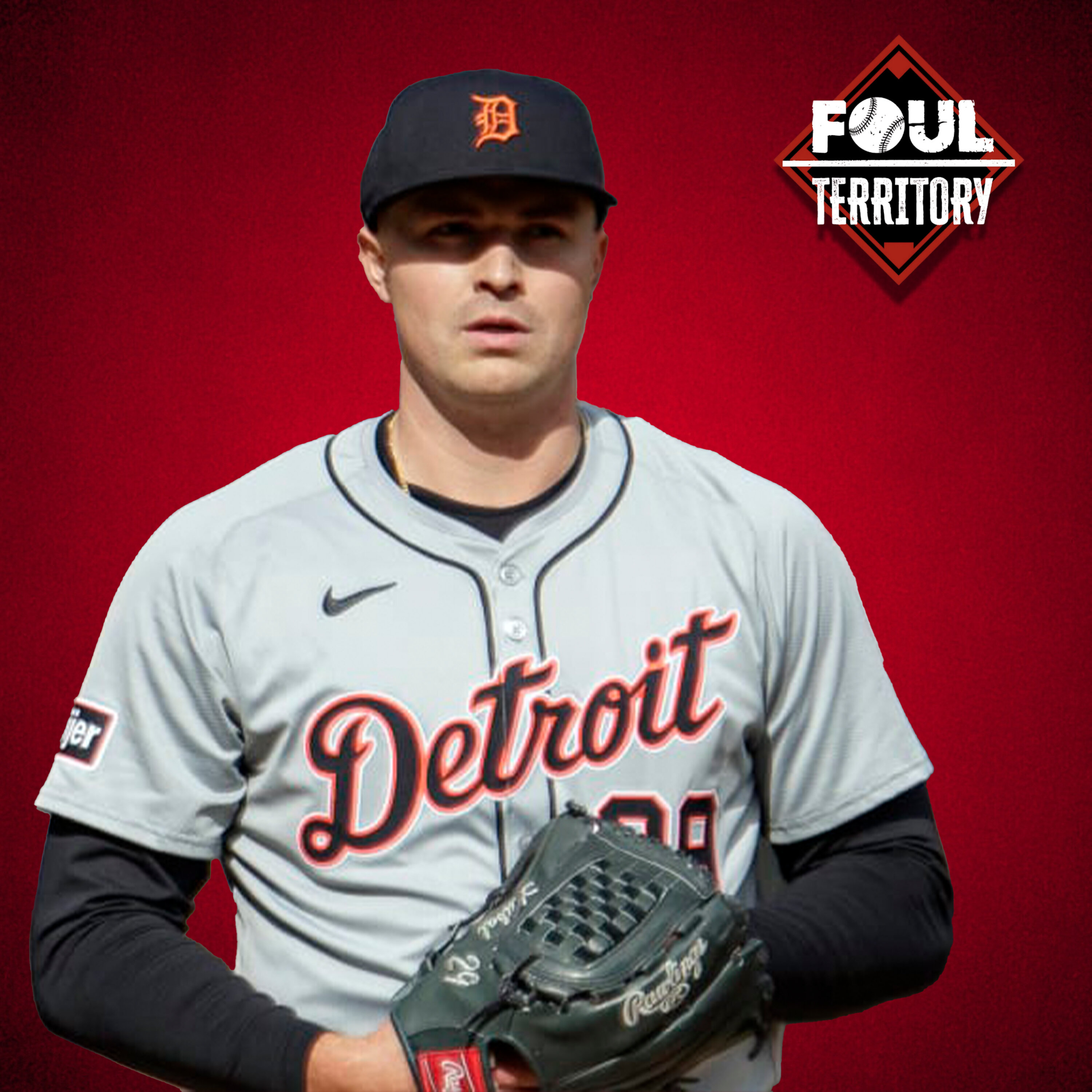
Southpaws dominate 2025 + Cody Stavenhagen assesses Tigers season
Tiger Territory host Cody Stavenhagen evaluates Detroit’s season and answers whether they will truly try to keep Tarik Skubal. He also reacts to POBO Scott Harris’ comments about the trade deadline and reveals what the Tigers need to fix after their ALDS loss.
Go to OmahaSteaks.com to get 50% off sitewide, plus an extra 20% off select favorites and more limited-time deals during their Early Black Friday Sale. Use Promo Code FOUL at checkout for an extra $35 off.
(15:23) 2025 is the year of the southpaw, with left-handed starters dominating more than ever. What changed?
Hosts: Kevin Pillar, Erik Kratz, Scott Braun
See omnystudio.com/listener for privacy information.
Available Results
Generated results are saved to the knowledge database for reuse and search.
Extract Knowledge
Pick what you want extracted first. Model, scope, and chapter options appear after a template is selected.
Transcript
00:00:04
Speaker 1: Here we go.

00:00:04
Speaker 2: Cody Stavenagan joining us right now, Tiger Territory host and reporter for the Athletic covering the Detroit Tigers. So that game happened over the weekend, and now we put this team to bed in the twenty twenty five season. Nice and simple to start, Cody, how do you evaluate twenty twenty five for the Tigers?

00:00:23
Speaker 1: I wish that were nice and simple. Scott Harris and aj Hinch talk today for the post mortem press conference. I think Harris kind of agreed it felt like multiple seasons in one. There were some big emotional swings. There was a lot to like, there was a lot to not like at all. I don't know how to feel about it. You know, in the big picture, hey, you made the playoffs, you made the alds, you still have a good farm system. At the same time, at points this year it felt like you were destined for something a little bigger and you just didn't get there. So there's something some things feel good about, and there's a little hints of regret as well.

00:01:01
Speaker 3: All Right, tough hitting question right out the gate. Do they have the finances to keep Schooble or do they gotta trade them with one year left.

00:01:10
Speaker 1: Yeah, personally, I think that's looking at the question the wrong way. I think they have the finances. There's no reason to believe they don't. I'm not sure the Tigers are going to run a luxury tax team anytime soon, but they're still middle of the pack in payroll. Trek School's a Scott Bars client. They could offer him one billion dollars and Scott Boys might say, Hey, you know what, Trek's gonna set a record for starting pitching. We're gonna go ahead and take this free agency. See if anyone wants to beat you. I think the Tigers have to be aware of that fact. They are aware of that fact, and so thus I do think they have to look long and hard at trading trading him. Scott Harris today talking about it, basically said I'm not going to comment, which I think tells you that everything is on the table, including the possibility of a trade.

00:01:55
Speaker 4: All right, Cody. Part of his press conference, he talked about the trade deadline. Absolutely Cratered struggled, and we're here today talking about because the Tigers didn't ultimately move on in the playoffs. Do you agree with what he said at the trade deadline? About how they went after guys and it would have taken prospects, and that guy that they went after, not naming names, didn't do good. So we can kind of insinuate and know who he's talking about. Do you believe him, agree with him? Or was he kind of skirting around the fact that there was other areas that they could have made moves to help bolster this team.

00:02:31
Speaker 1: Yeah, I think some of both. I think Scott's big picture view of the deadline is not at all wrong. Every year, there are a lot of moves that get made that look great at the time, and then those players don't produce, especially if we're talking about relief pitchers, and in two months sample, it can be really hard to get that right. At the same time, executives are paid to get those difficult decisions right. Seemed like maybe there's some hinting about the idea of Auhanium Suarez, who obviously didn't have a good first half home against the Tigers in the DS, but sitting below one hundred in the playoffs. I get that. I don't think the Tigers should have traded Max Clark or Kevin McGonagall or even Troy Melton at the same time. You know, Ryan Helsley didn't pitch well in the second half, David Bednar did. The two starters they acquired, Charlie Morton Chris Paddock were terrible. Meryl Kelly was was pretty good after the deadline. So like his point is right, and we will never know fully what deals were on the table. I think Scott's big point today was that the deals, the other deals they could have made and did not. They're still glad they didn't make those moves. We don't know exactly what those deals are. Part you're dealing with the market, but as an executive, you're also tasked with trying to create a market. I think it's hard to look at the deadline and how this season ended and not wish he would have done a little bit more. But that doesn't mean like Scott still has a point in the way he's framing it. Sometimes it is easy to overrate and overvalue deadline acquisitions. One point I've been trying to force for a while. The reason there was so much focus on the deadline is because some other decisions went wrong for the Tigers this year, moves they made back in the offseason. Alex Cobb, John Brebia the pair that with some injuries and their pitching was thin, and then there was a pressure to add at the deadline when you lose, when you fall short in the Alds when your bullpen was pretty thin. I don't think you can say, hey, we got everything right. But if he believes that, you know, he's glad they didn't make these other hypothetical trades, then I do believe him on that.

00:04:33
Speaker 3: Yeah, on that note, do you believe they're kicking themselves over not kind of outbidding the Red Sox to get Alex Bregman because that would have obviously solved a lot of issues.

00:04:43
Speaker 1: Yeah, I think that's a fair question. And when we talk about payroll, that is worth bringing up. There was so much made like the Tigers did make a competitive offer to Alex Bregman, they were willing to go six years, which in the winner, none of us, myself included, thought they were. And then it kind of begs the question, well, if you were willing to goes six years, why didn't this deal get done? You know, why not kick up the AAV a little bit more if you're if you're already in that territory. We'll see if Alex Bregman opts out. I think it'll be fascinating if he does, because he again checks pretty much every box the Tigers need. But he's another year older, another year of his prime or close to his prime is gone. So are you going to be willing to go five or six years again? It's even riskier than it was last time around. If they didn't want to do it, I would kind of understand. Uh, which gets back to like the way to avoid all this would have been to get the deal done last winter.

00:05:39
Speaker 2: Coldy, I want to go back to the postseason. Let's rewind. So the season ends weirdly, but they make it into the playoffs, partially because the Astros crumbled down the stretch. The Guardians were flying high, Tigers weren't, weren't and the Tigers beat them. Cool, okay, made to DS. Now they take the Mariners to a fifth game and they fall. So let's go to that point. What did you learn about the Tigers in that series and how can they fix it going into the next season. Are there more holes in the lineup than we think? Is there too much platooning and scheming going on?

00:06:15
Speaker 1: Or do you go okay?

00:06:16
Speaker 2: I mean they took a team that might make it to the World Series, to a fifth game here and a fifteenth inning.

00:06:22
Speaker 1: Yeah, I mean they played better. They regained parts of their identity in October. They also had a lot of flaws show up. To your point, the lineup I think has some holes in it. I think that is the biggest and most difficult question for the Tigers this winter. Because you have this core of homegrown position players. You're going to bring back everyone except Glaber Torres. Well, Glaber Torres, although he struggled down the stretch. Turns out he was playing through a hernia. Was your best consistent quality at bat? Was one of your best bat to ball on base guys. You have some good hitters Riley Green, Spencer Torkelsen, Carrie Carpenter, others. We have a lot of swing and miss, some chase tendencies. Asked Scott Harris about that today. He talked about, Hey, we're going to do some batpathwork. We're on approach like that's all good. I think that can only help you so much. Now they have drafted and developed differently under Harris. Some of the guys rising through the system, like Kevin McGonagall, have better bat to ball, contact oriented profiles that bodes well for their future. But I'm not sure there's one big fix coming in twenty twenty six. And unless you're willing to move on from young players who you still feel pretty good about, it's hard to know exactly how you were going to reshape this lineup. I think the Tigers are weighing these same questions, and that's why there's some hard decisions ahead. But that's what stood out. That's why they lost the DS. They pitched pretty well, they struck out too much. They didn't have good quality at bats with runners on base. Those of us who had watched the Tigers all year saw that for all of September, really for the bulk of the second half, and it was heightened. I think when you're facing elite pitching like that was a line players started using, well, we're facing the best pitching in the world, and you were, and it's not easy to hit Luis Castillo or whoever else it might be. But that's the challenge, and that's the challenge of winning in the playoffs, and the Tigers in their lineup didn't quite have enough. That's part of why they platooned so much. I think if you handed Aj Hinch the lineup he had in Houston and said which one would you like? He would take? You were down Alvarez and Alex Bregman and Kyle Tucker and all of those guys who you don't necessarily have to platoon as much. That's why there's not one easy solution. But overall they need a little bit more in the lineup.

00:08:36
Speaker 2: KP. We both love Omaha Steaks. My latest order six private reserve filet mignons. It sounds bougie because it is. They were fantastic and also one and a half pounds of jumbo cooked shrimp with a big initial discount and then an additional thirty five bucks off with the code foul. You have been a long time Omaha Steaks guy too.

00:08:59
Speaker 1: Yeah.

00:08:59
Speaker 3: Back in call I would always order steaks. I'd put them in my freezer. And that's the reason I bulked up is because I always had fresh steaks in my freezer, ready to.

00:09:08
Speaker 2: Go, delicious, protein, Get after it. Okay, it is the best in the biz. If you're ordering steaks online, you can say big with Omaha Steaks. Visit Omaha Steaks dot com for fifty percent off site wide and an extra twenty percent off select favorite during their early Black Friday sale and for an extra thirty five dollars off, use promo code foul at checkout. Terms apply see site for details. That's fifty percent off at Omaha steaks dot com promo code foul at checkout.

00:09:37
Speaker 4: I can't and maybe this is a cop out, but you just said you can't really get rid of some of the guys that you have because they're so young. Can't we say some of this learning process is because they're so young, or do you feel like the way that they're used, Nobody in this lineup that's platooned is gonna be able to make that like major leap and jump that they need to make, which they know which players normally make at this point in their career. I know they're all different ages, but I'm saying that at this point in their career, you get to that two three years in the big leagues, that's when you start to really hit your prime. So they aren't they just primed for a progression and not a regression.

00:10:19
Speaker 1: I think that's the hope. I think the argument against that look no further than Riley Green, who's a great young hitter, a really talented player, he hit thirty six home runs. This year, he achieved like his ultimate power ceiling and Riley Green's first three years, his walker rates went up, his strikeout rates went down. That changed in a big way this year and he struck out more than two hundred times. Was that because he was chasing too much power? I don't know. The chase rate was also through the roof, so it wasn't just the swing and missing in the zone he was chasing. He was selecting bad pitches. So that's kind of always like the fallacy, or at least the risk in player development and betting on young hitters is it's not always linear. It's not always this perfect regression. And then sometimes the profiles of players who swing and miss, although they can make incremental gains, if this is still someone who's prone to chasing or prone to whipping, can you really expect that to have a drastic change. I'm not sure. I don't think the Tigers should have abandoned Rightley Green by any means, or really any of their young hitters, But I think that's just what makes it hard if that If that makes any sense.

00:11:26
Speaker 2: Yeah, absolutely, Cody, a lot to discuss, a lot to digest, here over the offseason. But now the Tigers have time, and I will say it was a fun rollercoaster ride where krats. Let's bring crats on. Actually for the closing line, what did you say about the Tigers last night on our postgame show when we were talking about the Blue Jays and the Mariners.

00:11:49
Speaker 4: Maybe the Tigers they would have never scored, like we would still be playing, we'd be in like inning thirty six just because they weren't willing to They weren't willing they got they get six guys on the leadoff innings, they weren't willing to move them over. They weren't willing to do things in the game that said, you know what, I just don't got it. And I go back to like mayat bats, there were sometimes where there's a dude on the mound, there's a runner on third and one out, and I'm like, good chance, I probably am not getting a hit against this guy. And I'm the most falsely confident person in myself in the world. I'm like, maybe I need to put a bunt down. Like they just seemed like there was things that were indicative to the fact that the Tigers were not going to score a run in that game. No matter who the Mariners threw out there, they might have brought Randy Johnson and each Row back to pitch.

00:12:43
Speaker 1: You're kind of right, Cratsy, like it did feel like that at a time. So again, does these guys getting a year older change that or does there have to be a bigger shift and either approach or personnel.

00:12:56
Speaker 4: I think it changes it. I think it changes it because you get you get smarter. Cap He would agree with me. You might not get physically better. Dylan Dayler is not going to throw the ball harder or hit it farther as he gets older, but you get smarter, and you're like, I am sick and tired of swinging at the slider down in a way, And then I'm sick and tired of watching the eight other guys swing at the slider down in a way. Besides Kerry Carpenter, he can hit a slider, but everyone else is like, this has got to be the fastball. No, not the fastball.

00:13:27
Speaker 2: Hey, last one for you, Cody. I know they just officially made a J. Hinch's contract extension a thing, so I think we originally found out about it maybe a month ago. I'm assuming they love him and want him there for a long period of time.

00:13:46
Speaker 1: Yeah, this is actually the second contract extension he's got in a couple of years, which is which is interesting. They have not released the exact terms of the deal. It was believed his first Tiger's contract went through twenty twenty five, but he was extended in twenty twenty three for unknown length of years, and you just got another extension. Maybe fair to assume that's going to have a handsome raise for AJ. Don't know how long he's under contract now, but sounds like it's going to be a long time. AJ is a great manager, a tremendous tactician. Maybe it wasn't perfect when the lights were on and every decision is scrutinized a little more in the playoffs, but he's well regarded for a reason, and I think it's a good thing he's going to be sticking around in Detroit for a while. The interesting aspect there is it does seem like Craig Councils, where a managers are starting to get longer contracts, a little more power and control. But it's still rare to see managers with these long term deals, maybe under contract longer than their executives, and you do kind of wonder what does that look like five six years down the line, what does that look like if something goes wrong? But aj Hinch has been a big part of the Tigers, you know, emerging from a rebuilding a postseason team, and it's a positive sign that they've taken proactive steps to lock them up.

00:15:03
Speaker 2: Cody, great Stuff. Really enjoyed your coverage, both of course writing wise with The Athletic and on Tiger Territory, listening to many of your episodes with Kieren Steckley and Austin Jackson on some select episodes as well. Rest up, but we'll still be listening to Tiger Territory in the offseason.

00:15:20
Speaker 1: Thanks man, it sounds good. Thanks guys, appreciate it.

00:15:25
Speaker 2: And then we wanted to get to this article for a while, Year of the South pot inside the surge of MLB's dominant and historic left handed pitching. It's in The Athletic, written by Stephen Nes, but of course it applies here in the postseason, as five of the top seven starting pitching eras in baseball this year belonged to left handed starters. How many starts do left handed pitchers make up in baseball. We're down to about a quarter of starts the er discrepancy this year. As we're looking at some of the top starters in the sport, and how many any of them are left handed? Three seven to three ERA for lefties four to three to zero for raise. It's the greatest differential since ERA became an official stat in nineteen thirteen. And it's not even close how much of a difference it is by adjusted era. It's the most dominant left handed season in the modern era. You're looking at other year comparisons and they're from like way back. Some of the years you're looking at us like, oh the next closest, like nineteen twenty four. It's that crazy, And they went over reasons. But let's start there, KP. Why is left handed pitching getting more scarce but more dominant.

00:16:37
Speaker 3: I don't have the answer to that, but I do want to flip this table right now because as a right handed platoon hitter, who is the person who gets short changed the most.

00:16:44
Speaker 1: In this game?

00:16:45
Speaker 3: You need quality right handed hitters to face these guys. I know ninety percent of the pitchers are right handed and they're not going to play. But as you showed those steps. All five of those guys that were on those that leaderboard started playoff games, and if you're trying to win playoff games, pay right handed plute tune hitters more money. That's it.

00:17:03
Speaker 2: Nice, nice, Not where I thought we were going, but I'll take it. I'll take it. We got holding on that one for a while.

00:17:08
Speaker 3: I've been holding on that one for a while because it is the job. It's the job because you don't play a majority of the time. But if you're facing the best pitching is coming from the left side, you need to be able to counter those guys, because god knows, lefties aren't facing lefties. So you got to throw on a guy like me off the bench who's expected to play once a month or once every couple of days, once a week. But usually you're getting the best pitchers in the game. You're getting the Blake snows to Christopher Sanchez, the trek scoobles that, the abbots of the world, and you want me to go on and hit them, and I'm the least paid guy on your bench. Start valuing the right handed platoon bat a little bit more because we're seeing this flux of left handed pitching being dominating so you need to be able to counter that.

00:17:53
Speaker 4: Mike drop.

00:17:55
Speaker 3: Kratzy follow that.

00:17:57
Speaker 4: Oh, I'm just like, that is one hundred percent right if and I think the biggest key was if you want to win in the playoffs, because all of a sudden in the playoffs, you're like, well, well we'll stack our We'll stack our lineup with a bunch of writings, and these writings are like, all right, well, I've got thirty seven days in the big leagues. I've got a year and a half in the big leagues. You have to you have to be able to have that veteran guy that it's okay if he doesn't play for a little while. Justin Turner, we just talked about it was so how did do Sharma like you have to give You have to give these guys there's value in that, And teams are like, no, actually, there's no value in it, and we're not going to pay for it, And they get bounced out out before the playoffs even start.

00:18:45
Speaker 2: Usually, how much of it has to do with the exposure and that being a continued limitation with their being less left handed pitching, and also the way that the attack plan goes these days, you know this boring. In the article talks about how the plan used to be more about four seamers away and breakers, and there's good quotes in here too from some notable big leaguers. Let's say i'll pick out Alex Bregman. Early on in his career, he said, lefty is attacked with fastballs and change ups away. Now they're coming up and in really good four seam fastballs in. So it's lefties getting better against lefties, which is already a problem. It's left handed pitchers getting better against right handed hitters. Is that what you're seeing KP to solve? Why it's such a problem for bats to be able to solve left handed pitching, and why it's becoming such a hot commodity.

00:19:38
Speaker 3: Again, they're evolving, like you said, I mean you weren't seeing also the high velocity from the lefties. It was maybe one guy you would see through really hard. But now they've just learned how to do different stuff. Like Bregman said, it used to be kind of this fastball way, change up off attack. Now you have guys that just constantly shove cutters in. They'll throw the four team up and in, then they'll throw the change of away you know, they've gotten better at using all four quadrants of the plate. It used to be kind of predictable. You were gonna get a fastball change up guy, where you would get a fastball slider guy. Now most of these guys have all four pitches, so it makes it really hard to cover an entire part of the plate.

00:20:17
Speaker 4: Yeah, the lefties, the lefties were I mean, think about when I first got caught up to the big leies. On our team. We had Zach Duke, Paul Mahome, and I remember Carlos Lee was playing for the Astros who were still in the National League, and he was like, he was like, hey, where is all the He said, where is all the guys who throw eighty six? He said, Now everybody throws hard and his teammate goes, he goes, wait till he play the Pirates. They got a bunch of guys that throw slow, like those lefties used to get opportunities to come up. And I'm not saying those guys weren't good. It was just that they don't have the stuff that guys have now. Before it was like left hand, let me say, can you pitch yep, you have a pulseals So you can pitch now it's like you're left handed, it's cool. But if you don't throw ninety five, like, sorry, we can't really use you.

00:21:16
Speaker 2: Last legs thirty seconds here. I know AJ wanted to talk about this too, but he's not here today. He talked about left he's thrown BP or anything else that can try to counter this and get you prepared. Is there way to prepare better for this?

00:21:30
Speaker 3: I mean that's a good start. Left handed BP thrower wouldn't hurt. Okay, also pay right handed hitters a little bit more of the platoon guys. That would help.

00:21:41
Speaker 2: Okay, there you go. Well, anyone else have thoughts let us know. But really good article and it's pretty long, but it was fascinating. I got through it in a few minutes. You could compete the rolic could numbers in there if you want to check it out. Good job, Bye Steven Nesbit.