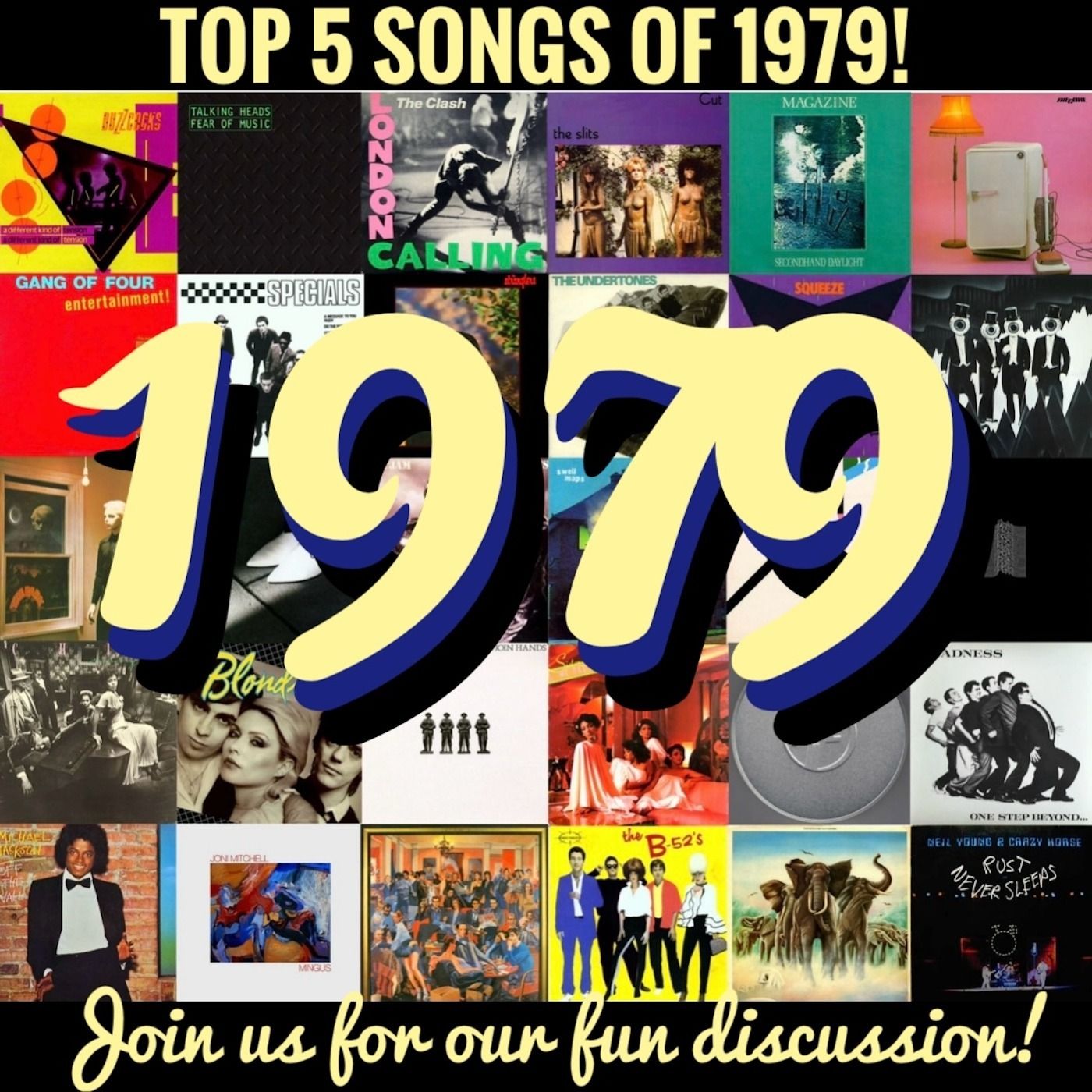
Top 5 Songs of 1979!
Get ready for a nostalgic trip down memory lane as hosts Jason and Dee take you back to the incredible year of 1979! In this fun and engaging episode, they each countdown their top 5 songs of the year, complete with intriguing clues and captivating stories behind each hit. Try to guess the songs before they reveal them, and enjoy the rich tapestry of memories and music history that shaped an unforgettable era. With some honorable mentions thrown in for good measure, this episode is a must-listen for music lovers and anyone who cherishes the golden hits of the late '70s. Dust off your disco shoes, crank up the volume, and join Jason and Dee for a celebration of the best tunes of 1979!
2024-07-09
63 min
Transcript
Available Results
Generated results are saved to the knowledge database for reuse and search.
No generated results are available for this episode yet.
Extract Knowledge
Pick what you want extracted first. Model, scope, and chapter options appear after a template is selected.
Generated results for public episodes are saved to the knowledge database so they can be reused and searched later.
Transcript
<v Speaker 1>What's up everyone?
<v Speaker 2>This is Dirk Smith, longtime fan of one of the
<v Speaker 2>more radical podcasts out there. It's Surely you Can't Be Serious?
<v Speaker 3>Hello everybody, Welcome back to the Shureley You Can't Be
<v Speaker 3>Serious podcast. Today we are going through our top five
<v Speaker 3>of nineteen seventy nine, plus two honorable mentions. We've been
<v Speaker 3>working on this all day. How do you feel about it?
<v Speaker 1>Well, sometimes you get in those positions where you're like, hey,
<v Speaker 1>we're going to record an episode today and they were like, oh, wait,
<v Speaker 1>no we're not. And so it's scramble as pivot right, alter,
<v Speaker 1>fade back, shoot, And I'm hoping that we score with
<v Speaker 1>this one because we literally put this together in maybe
<v Speaker 1>the last four or five hours.
<v Speaker 3>Yeah, we did nineteen seventy nine. How old are you
<v Speaker 3>in nineteen seventy nine?
<v Speaker 1>I turned four in nineteen seven in October of seventy nine.
<v Speaker 3>Okay, so I turned six in nineteen seventy nine. I
<v Speaker 3>do remember some of these songs playing on the radio
<v Speaker 3>while I'm riding around with my parents or my uncle Mike, grandparents,
<v Speaker 3>that type of thing.
<v Speaker 1>Yep.
<v Speaker 3>So I'm excited to jump into this because I have
<v Speaker 3>great nostalgic memories of a lot of these songs, and
<v Speaker 3>they're awesome songs. So you've already said you've got a
<v Speaker 3>whole list of babies over there.
<v Speaker 1>I got some babies that I couldn't figure out how
<v Speaker 1>to kill, and so I'm honestly hoping you have them
<v Speaker 1>so that I can just mark them off my list
<v Speaker 1>and hopefully talk about other songs, all the songs that
<v Speaker 1>I love from nineteen seventy nine, which is again an
<v Speaker 1>amazing year. If you haven't heard our nineteen seventy eight
<v Speaker 1>Top five, go back and check that one out. That
<v Speaker 1>is one of my favorite episodes of all time. I
<v Speaker 1>was blown away by how many great songs were in
<v Speaker 1>nineteen seventy eight, But again I was having to kill
<v Speaker 1>babies in that situation. I mean, I had fifty songs
<v Speaker 1>that I was choosing from, and so I killed some babies,
<v Speaker 1>and some of the time that I did it, I
<v Speaker 1>was like, wait a minute, this came out in seventy eight,
<v Speaker 1>but it was kind of bigger in seventy nine, So
<v Speaker 1>I'm just gonna push it off to seventy nine and
<v Speaker 1>now over here still with a baby to kill. Okay, Jason,
<v Speaker 1>Before we get rolling for those listeners that we have
<v Speaker 1>that this is their first episode to hear our top
<v Speaker 1>five list. Here are a couple of the things that
<v Speaker 1>you need to know. Number One, if we've ever covered
<v Speaker 1>the album before in one of our prior episodes, we're
<v Speaker 1>not going to bring up a song from that album.
<v Speaker 3>Right.
<v Speaker 1>Also, if we plan to cover the album within the
<v Speaker 1>next year, we're not going to be pulling songs from
<v Speaker 1>that album either. So Pink Floyd the Wall is off
<v Speaker 1>the table, super Tramp Breakfast in America is off the table,
<v Speaker 1>and those are two huge songs.
<v Speaker 3>Well, we did the Patreon episode on September by Earth
<v Speaker 3>Wind and Fire.
<v Speaker 1>That's right, another huge song from nineteen seventy nine.
<v Speaker 3>It absolutely would have made my list, but it is
<v Speaker 3>not eligible because we have already covered it.
<v Speaker 1>Yep, guys, if you haven't tuned into our Patreon page,
<v Speaker 1>please go check it out. You can sign up and
<v Speaker 1>look at all of the songs that we've covered for
<v Speaker 1>absolutely free, and then if you decide, hey, I do
<v Speaker 1>want to hear that episode, you can join our Patreon
<v Speaker 1>for as little as five bucks a month. Just go
<v Speaker 1>to patreon dot com, Backslash Surely Podcast and you can
<v Speaker 1>take a look at our catalog of incredibly fun Patreon
<v Speaker 1>episodes where we usually do one hit Wonders or other
<v Speaker 1>kind of uniquer novel song.
<v Speaker 3>They're fun, yeah, fun, Great, we'll see you over there.
<v Speaker 4>All right.
<v Speaker 3>So here's a couple of things from nineteen seventy nine,
<v Speaker 3>just to get our footing. In nineteen seventy nine, Okay,
<v Speaker 3>you have ESPN, the Happy Meal, and the Susan B.
<v Speaker 3>Anthony Dollar all come out. In nineteen seventy nine, you
<v Speaker 3>have the Iran hostage crisis, you have the Three Mile
<v Speaker 3>Island incident, and then the Steelers beat my beloved Cowboys
<v Speaker 3>in the Super Bowl thirty five thirty one.
<v Speaker 1>Yeah, and I love it. As we're sitting here and
<v Speaker 1>I'm trying to cram for this episode, Jason goes, did
<v Speaker 1>you know in nineteen seventy nine the first robot murder occurred?
<v Speaker 1>I was like, robot murder. He's like, yes, a robot
<v Speaker 1>killed a human being for the first time in nineteen
<v Speaker 1>seventy nine. I was like, what do you have more?
<v Speaker 1>And he said nope. And I'm like, dang, I'll have
<v Speaker 1>to research that last.
<v Speaker 3>Oh, how crazy is that?
<v Speaker 1>I gotta find that story out.
<v Speaker 3>Wow, I thought that was against the robot code.
<v Speaker 1>I'm just wondering if it was a place called Westworld.
<v Speaker 4>I know.
<v Speaker 1>Right, Okay, Okay, enough about seventy nine. Let's jump into
<v Speaker 1>the music. Here we go, starting off number five, Jason
<v Speaker 1>on go first.
<v Speaker 3>Five all right, ded My first song was released in
<v Speaker 3>September of nineteen seventy nine and hits number one on
<v Speaker 3>Casey's Top forty December eighth, nineteen seventy nine. Okay, okay,
<v Speaker 3>very end of nineteen seventy nine. It's the only number
<v Speaker 3>one hit in the US for this band, although they
<v Speaker 3>did have another one reached number three, which you're very
<v Speaker 3>familiar with, all right, And it's the only song to
<v Speaker 3>chart in the UK. This song wasn't even supposed to
<v Speaker 3>be on the album. I love when these things pop up, right, yeah,
<v Speaker 3>all right. So the lead singer of this band wants
<v Speaker 3>to give a gift to his wife, okay, and so
<v Speaker 3>he writes a song for her. It's one of those
<v Speaker 3>deals where it's kind of cheesy, kind of corny. Plays
<v Speaker 3>it for the band and they're like, no, we like it.
<v Speaker 3>It needs to go on the album.
<v Speaker 1>Well, it's just a little too early for Metallica, So
<v Speaker 1>it's not nothing else matters.
<v Speaker 3>That's right, That's right.
<v Speaker 1>Okay.
<v Speaker 3>So here's the interesting thing about this song. Yeah, it
<v Speaker 3>is written for this guy's now wife. But you know
<v Speaker 3>how a lot of times when you write a song
<v Speaker 3>for your girlfriend, oh Sherry for instance, right, and then
<v Speaker 3>a few years down the road, you're like, I freaking
<v Speaker 3>hate that woman, you know. Right, Well, this guy was
<v Speaker 3>smart enough not to use her actual name. Okay, yeah,
<v Speaker 3>all right, you have any guesses so far?
<v Speaker 1>Well, I was thinking about Journey even before you said,
<v Speaker 1>Steve Perry, is it a Journey song?
<v Speaker 3>This is not a Journey song.
<v Speaker 1>Okay, keep going. Okay.
<v Speaker 3>So here's the deal. Even though he did the smart
<v Speaker 3>thing and not use her actual name in this song
<v Speaker 3>or for the title of this song, it would have
<v Speaker 3>mattered because they are high school sweethearts. They've been dating
<v Speaker 3>since nineteen sixty four, they got married in nineteen seventy
<v Speaker 3>and are still together today.
<v Speaker 1>Wow. Okay, right, yeah, okay, I'm so intrigued. How many
<v Speaker 1>more so?
<v Speaker 3>The lead singer of this band left in nineteen eighty
<v Speaker 3>four after perhaps their second biggest song of all time. Okay, okay,
<v Speaker 3>he did have one big hit in nineteen eighty four,
<v Speaker 3>maybe on the fringe of what you might know. The
<v Speaker 3>song is called Desert Moon.
<v Speaker 1>Ringing the Bell for Me so far?
<v Speaker 3>All right, Okay, here's my last best hint. Okay, the
<v Speaker 3>name of this band is named after a river in Hades,
<v Speaker 3>so that's Styx, and the song has to be Lady,
<v Speaker 3>not Lady Dang. Okay you're burning hot though, Okay, you're scorching.
<v Speaker 1>Yeah. I was like, I was like, man, I thought
<v Speaker 1>it was little river band that had Lady in nineteen
<v Speaker 1>seventy nine. Yeah, so Styx's Lady I think actually came
<v Speaker 1>out of like seventy four. Maybe. Okay, so it's sticks,
<v Speaker 1>but I don't know what the song is.
<v Speaker 3>It is Styx, and this song is called Babes Sing.
<v Speaker 4>You know, it's like it you know it?
<v Speaker 1>Oh, great choice, know it's you babe. Man, I don't
<v Speaker 1>even know. That didn't even appear on my radar. I
<v Speaker 1>don't even know how I missed it. I guess said
<v Speaker 1>December seventy nine. Maybe it was just I'm looking too
<v Speaker 1>early in the year or something. But wow, fantastic song,
<v Speaker 1>great one, great one, Thank you.
<v Speaker 3>It's a makeout hit from nineteen seventy nine when we
<v Speaker 3>were running aund around to where we didn't care about
<v Speaker 3>making out.
<v Speaker 1>Uh huh.
<v Speaker 3>I remember rolling around it with my uncle listening to
<v Speaker 3>this song. He liked this song a lot.
<v Speaker 1>Yeah, that's awesome.
<v Speaker 3>All right, to your number five?
<v Speaker 1>All right, okay, my number five. The music was written
<v Speaker 1>by the same guy who wrote the music for The
<v Speaker 1>Boys of Summer and Heart of the Matter.
<v Speaker 3>So those are both Don henleyheads yep, okay, okay.
<v Speaker 1>He wrote it at his house using a four track recorder,
<v Speaker 1>and he was the guitar player for this band. His
<v Speaker 1>name's Mike Campbell. So Mike Campbell writes the song, the
<v Speaker 1>music for this song on his four track. He takes
<v Speaker 1>it in and the lead singer is like, got it.
<v Speaker 1>He is in a mood because of what's been going
<v Speaker 1>on with him and his record company and their record company.
<v Speaker 1>What happened was that same year that they're trying to
<v Speaker 1>put together this album, ABC Records, who was their record label,
<v Speaker 1>tried to sell the band's contract to MCA without asking
<v Speaker 1>the band about it, okay, and so he was just
<v Speaker 1>kind of furious about this, you know, the treatment of
<v Speaker 1>the record company. And so the anger and the angst
<v Speaker 1>behind this song come from that experience. With the record company.
<v Speaker 1>So he listens to this music that Mike Campbell has written,
<v Speaker 1>he writes the lyrics like right over what he's written like,
<v Speaker 1>he doesn't change the arrangement, doesn't know, doesn't add a verse,
<v Speaker 1>or of course he writes it right over. But the
<v Speaker 1>problem was that when they got in the studio and
<v Speaker 1>they tried to record it as a band, they couldn't
<v Speaker 1>get it right. And they've tried it like one hundred
<v Speaker 1>times and couldn't get it right, to the point that
<v Speaker 1>Mike Campbell walked out of the studio and left for
<v Speaker 1>two days, just didn't talk to anybody for two days,
<v Speaker 1>just left, came back.
<v Speaker 3>Have we talked about this song before?
<v Speaker 1>No, okay, we've talked about this band before. Actually we
<v Speaker 1>talked about this band in our last top five nineteen
<v Speaker 1>eighty nine. Okay, that's a little bit of a hint
<v Speaker 1>for you, and keep going. So he came back, they regrouped,
<v Speaker 1>and they nailed it. The name of the album is
<v Speaker 1>called Damn the Torpedoes. That album reached number two, was
<v Speaker 1>at number two for seven weeks, held off every single
<v Speaker 1>week of that seven weeks by Pink Floyd's The Wall.
<v Speaker 1>When they recorded this song. A receptionist in the recording
<v Speaker 1>studio came in heard it and said, that's a hit.
<v Speaker 1>That's a hit. The band performed it for the first
<v Speaker 1>time for their first performance on Saturday Night Live in
<v Speaker 1>nineteen seventy nine. Then when they did Live AID a
<v Speaker 1>decade later, they closed out their set with this song
<v Speaker 1>and they were supposed to appear on the MERV Griffin
<v Speaker 1>Show in person, and they didn't want to appear in person,
<v Speaker 1>so they said, can we just like make a video?
<v Speaker 1>And this was nineteen seventy nine, so they thought this
<v Speaker 1>will be one time that this video shows. Well. Then
<v Speaker 1>of course two years later MTV happens and MTV is
<v Speaker 1>looking for videos by American bands, and so this one,
<v Speaker 1>even though it's a couple of years later, gets some
<v Speaker 1>heavy rotation. So this song, because of the year and
<v Speaker 1>because of what was going on in Iran, has some
<v Speaker 1>import You got it yet? Okay? So Mike Campbell is
<v Speaker 1>the guitarist for a group called the Heartbreakers.
<v Speaker 3>This refugee you got it.
<v Speaker 5>Somehow?
<v Speaker 3>Some classic rock staple.
<v Speaker 1>Man Man, this one. I couldn't get enough of this
<v Speaker 1>when I was a little kid. I just I wanted
<v Speaker 1>this over and over. You don't have to live like
<v Speaker 1>a refugee as such a catchy hook?
<v Speaker 4>It is?
<v Speaker 1>It just you'll sing it all day long.
<v Speaker 3>Gosh, we've got to cover full Moon fever.
<v Speaker 1>Oh man, oh heck yeah.
<v Speaker 3>Tom Patty, Okay, gone too soon? Love it? Great call,
<v Speaker 3>great call?
<v Speaker 1>Okay, thanks?
<v Speaker 3>Number four, number four.
<v Speaker 4>Four.
<v Speaker 3>All right, I think I'm gonna surprise you with this one.
<v Speaker 3>This song, although released in November of nineteen seventy eight,
<v Speaker 3>it peaks out in March of seventy nine. So I'm
<v Speaker 3>going best fit in nineteen seventy nine. Okay, okay, it
<v Speaker 3>hits number sixteen, although I have a really hard time
<v Speaker 3>believing that there are fifteen better songs than this.
<v Speaker 1>Did you look up there?
<v Speaker 4>I did not?
<v Speaker 3>I did not. Okay, all right, so listen to this.
<v Speaker 3>This song was written by Dan Schlitz.
<v Speaker 1>I've got it you keep going though, because I got it,
<v Speaker 1>you got it, I got it. Here is definitely on
<v Speaker 1>my radar.
<v Speaker 3>Keep on going, all right?
<v Speaker 6>All right?
<v Speaker 3>So this song was written by Dan Schlitz in nineteen
<v Speaker 3>seventy six. He shopped it around for a couple of
<v Speaker 3>years in Nashville before it being recorded by Bobby Bain
<v Speaker 3>at the urging of Shell Silverstein, which we talked about.
<v Speaker 3>I light in the attic, the giving tree where the
<v Speaker 3>sidewalk ends all of.
<v Speaker 1>Those Playboy magazine.
<v Speaker 3>Right, yes, Okay, well it didn't do anything, so Johnny
<v Speaker 3>Cash takes a hack at it. It's on Gone Girl, right,
<v Speaker 3>nothing major.
<v Speaker 1>I just got to say, because I know what this is.
<v Speaker 1>When you said Don Slitz, I was like, I know this.
<v Speaker 1>He's working as a computer operator at Vanderbilt University, like
<v Speaker 1>at the graveyard shift. He writes this song. Yeah, and
<v Speaker 1>he goes and meets with his mentor, guy named Bobdill,
<v Speaker 1>who was a songwriter. Yep, and he writes it on
<v Speaker 1>the walk home, except for the last verse.
<v Speaker 3>The last verse comes to him. He says, quote, something
<v Speaker 3>more than me wrote that song. I'm convinced of that.
<v Speaker 3>I really have no idea where that song came from.
<v Speaker 3>Months later, it came to me that it was inspired
<v Speaker 3>by and possibly a gift from my father. His dad
<v Speaker 3>died in nineteen seventy six. Got it from heaven above.
<v Speaker 3>Did you know that this song inspired the name of
<v Speaker 3>a professional football team? I did, not a USFL team.
<v Speaker 3>If you'll remember, in nineteen eighty three, the USFL Wow.
<v Speaker 1>You know, the people who are listening right now both
<v Speaker 1>know that we know that we both know it, But
<v Speaker 1>I don't think that they know what it is yet.
<v Speaker 6>Right?
<v Speaker 3>How about this hint? Yes, this was played on The
<v Speaker 3>Muppet Show despite having references to cigarettes and whiskey.
<v Speaker 1>Wow, this won't be the first time in this episode
<v Speaker 1>that the Muppet Show comes out all right, very good?
<v Speaker 3>Okay, So this hit number one on the country charts
<v Speaker 3>and inspired a movie. And if I say the words, you.
<v Speaker 1>Got to know one to hold them and no one
<v Speaker 1>to fold them.
<v Speaker 3>This is The Gambler by Kenny Rogers.
<v Speaker 5>Please right, you got to know lending to hold them, no,
<v Speaker 5>when to fold, no, when the love, when the run.
<v Speaker 3>You never count your money.
<v Speaker 1>When you're sitting at the table.
<v Speaker 4>There'll be time and of count.
<v Speaker 1>When thats done. I mean, this song is so freaking iconic,
<v Speaker 1>so timeless. There is no generation I think since it's
<v Speaker 1>been released that doesn't love this song. It was the
<v Speaker 1>beginning of the country crossover.
<v Speaker 3>That's right, it really was.
<v Speaker 1>I mean at that time there were not songs that
<v Speaker 1>were crossing over into the mainstream charts from the country,
<v Speaker 1>but this one was. And yeah, inspired the nineteen eighty movie,
<v Speaker 1>which was the highest rated TV film for that year
<v Speaker 1>and then spawned four more sequels made for TV sequels after.
<v Speaker 3>That probably gave us six Pack starring Kenny Rogers, Diane Lane,
<v Speaker 3>and Anthony Michael Hall. In nineteen eighty.
<v Speaker 1>Three, Fantastic won the Grammy four Best Male Vocal and
<v Speaker 1>Best Country Song, which means it launched Kenny Rogers kind
<v Speaker 1>of the enduring career. At that point, he went to
<v Speaker 1>the stratosphere.
<v Speaker 5>When you send the table, There'll be time enough come when.
<v Speaker 1>You got no, and it launched Don Schiltz's career as well.
<v Speaker 1>He could quit his job as the graveyard shift computer
<v Speaker 1>operator in Vanderbilt and becoming full time songwriter. He would
<v Speaker 1>go on to who write several songs, including on the
<v Speaker 1>Other Hand by Randy Travis.
<v Speaker 3>Huh.
<v Speaker 1>On the other hand, Yeah, there's a Golden Band. Yep.
<v Speaker 1>I'm not a country guy, but there are some songs
<v Speaker 1>that just they meet you. This one, however, I bet
<v Speaker 1>you don't know this one. This song entered the UK
<v Speaker 1>charts in two thousand and seven. The Gambler Yes Here's Why.
<v Speaker 1>There was a guy named Matt Stevens who was the
<v Speaker 1>prop forward for the Rugby World Cup and he would
<v Speaker 1>get his acoustic guitar out and play this song in
<v Speaker 1>the dressing room before every game. And so England sort
<v Speaker 1>of adopted it as their unofficial theme song for their
<v Speaker 1>rugby team, and through that it hits the UK charts
<v Speaker 1>in the year two thousand and seven. Nice great song.
<v Speaker 3>Love it all right, d Let's talk about your number four.
<v Speaker 1>Okay, my number four was written and sung the time
<v Speaker 1>by a Swamper. Okay, you know who the Swampers are. No, well,
<v Speaker 1>they're mentioned by Leonard Skinnyard in Sweet Home, Alabama.
<v Speaker 3>Okay, I have heard that reference.
<v Speaker 1>Yes, so the Swampers are the Southern equivalent of the
<v Speaker 1>Wrecking Crew, if you will. They are the studio musicians
<v Speaker 1>who would play at Muscle Shoals. The Muscle Shoals Rhythm
<v Speaker 1>Section was their official name, but we talked.
<v Speaker 3>About that on our Wham Yep.
<v Speaker 1>George Michael went to record Whisper Over and was disappointed,
<v Speaker 1>surprisingly because it was an amazing place. But yeah, check
<v Speaker 1>that one. There is a documentary out there called Muscle
<v Speaker 1>Shoals that is absolutely fantastic. You would be, I mean,
<v Speaker 1>you got You've got so many incredible songs that have
<v Speaker 1>been done with these guys Wreitha, Franklin, many many others.
<v Speaker 1>Leonard Skynyrd obviously. But anyway, George Jackson, one of the
<v Speaker 1>members of the Swampers, and a guy named Thomas Jones
<v Speaker 1>wrote this song and they literally they had nothing to
<v Speaker 1>do one day and they just recorded a demo in
<v Speaker 1>their studio B because they had nothing else to do.
<v Speaker 1>The guy they had singing, George Jackson, was black guy,
<v Speaker 1>and they said, this doesn't have the right feel. This
<v Speaker 1>is more like a rock and roll kind of song,
<v Speaker 1>and his voice just doesn't sound right. So they got
<v Speaker 1>a guest artist to come in and record the vocals
<v Speaker 1>and they're like, wow, this really sounds like another guy
<v Speaker 1>we know. And when they gave it to that guy,
<v Speaker 1>that's when it became a hit. But before that happened,
<v Speaker 1>before they gave it to the singer who made it
<v Speaker 1>a hit, they were recording it and this guy named
<v Speaker 1>Forrest McDonald shows up in the parking lot like he's
<v Speaker 1>in his parents car, and he walks up and he's like, hey,
<v Speaker 1>just you know, interested in the studio. You know, I'm
<v Speaker 1>play guitar a little bit and was wondering, you know,
<v Speaker 1>if I can see what it's like to do or
<v Speaker 1>recording in a studio or whatever. And they're like, well,
<v Speaker 1>we're working on this song. You want to come in,
<v Speaker 1>And so he comes in. He lays down the lead
<v Speaker 1>guitar for the demo and they're like, well it was
<v Speaker 1>great man, thanks a bunch, and he goes gets in
<v Speaker 1>the car with his parents and he leaves like he's
<v Speaker 1>he is a guy from Hollywood, like he was playing
<v Speaker 1>with Van Halen on the Sunset Strip. Was not a
<v Speaker 1>studio musician. But they've got again, got this demo and
<v Speaker 1>they're like, wait.
<v Speaker 3>Wait, this guy just appears out of the blue and
<v Speaker 3>lays down the lead guitar.
<v Speaker 1>Yes, that's exactly what happened.
<v Speaker 3>Like he walked out of the heavens exactly.
<v Speaker 1>Okay, his parents sat in the car with the air
<v Speaker 1>conditioner on while he walked in and laid down a
<v Speaker 1>lead guitar track on one of the most iconic songs of
<v Speaker 1>all time.
<v Speaker 3>What okay, So keep going.
<v Speaker 1>So they have this song, they give it to this
<v Speaker 1>artist and he changes everything except for the course of
<v Speaker 1>the song, like which is the title of the song
<v Speaker 1>as well. He's like that part's great. He changes everything,
<v Speaker 1>but this is the way he puts He's like, I
<v Speaker 1>was feeling really generous that day, so it didn't take
<v Speaker 1>any songwriting credit, despite the fact that it changed all
<v Speaker 1>of the lyrics and he gave them all the songwriting
<v Speaker 1>credit to George Jackson and Thomas Jones. Okay, he has
<v Speaker 1>gone on to say, that was the dumbest thing I
<v Speaker 1>have ever done.
<v Speaker 3>That's a huge mistake, if it's as big as you're saying.
<v Speaker 1>Huge mistake. So the singer comes in, he tries to
<v Speaker 1>record it with the muscle shoals rhythm section. It doesn't
<v Speaker 1>sound as good. Okay. He tries to bring in his
<v Speaker 1>own band, it still doesn't sound as good. So finally
<v Speaker 1>they're just like, well, let's just take the voice off
<v Speaker 1>the demo and put this singer's voice on the demo
<v Speaker 1>and use that, and that is the song that we
<v Speaker 1>have today.
<v Speaker 3>Ooh okay.
<v Speaker 1>In the song, the singer changed some of the lyrics
<v Speaker 1>because he wanted to express his distaste for disco, which
<v Speaker 1>had been popular but was fading in popularity at that moment.
<v Speaker 1>Right for me, I can kind of remember hearing the
<v Speaker 1>song in my young youth in the seventies, but really
<v Speaker 1>it came back to life in full force in nineteen
<v Speaker 1>eighty three because of a Tom Cruise movie where he
<v Speaker 1>performed the song in his underwear.
<v Speaker 3>Oh, this is Bob Seger old time rock and roll.
<v Speaker 5>Just take those old records off show, still listen to
<v Speaker 5>base Today's music got.
<v Speaker 6>The same sound.
<v Speaker 3>I mean this to me is nineteen eighty three Tom Cruise,
<v Speaker 3>Risky Business, all that stuff. That's great. Okay, yes, Bob Seger.
<v Speaker 1>Bob Seger rewrote the lyrics, didn't take any credit, and
<v Speaker 1>so he gets none of the royalty rights for this song.
<v Speaker 1>Has no call on whether the song gets used or not,
<v Speaker 1>although he did say he liked how it was used
<v Speaker 1>in Risky Business. He just thought it was kind of
<v Speaker 1>cool that Tom's standing around his underwear to this.
<v Speaker 3>Now good job.
<v Speaker 1>Sadly it's now being used in Catford commercials. But that's
<v Speaker 1>the twenty first century for you. By the way, the
<v Speaker 1>guitarist name was for Forrest McDonald. He did go on
<v Speaker 1>to have a decent career as a guitarist in studio recording.
<v Speaker 3>So he wasn't an angel.
<v Speaker 1>Wasn't an angel. He was actually a real person.
<v Speaker 3>Okay, all right, to my number three number three three, okay,
<v Speaker 3>So this song was released in June of nineteen seventy nine.
<v Speaker 3>It peaks out at number sixteen October of nineteen seventy nine.
<v Speaker 3>This song is about a woman who's cheating on her boyfriend.
<v Speaker 3>The boyfriend happens to be the narrator of this song,
<v Speaker 3>and at the end of the song, she discovers that
<v Speaker 3>her boyfriend is cheating too. And it's not the Pina Colada.
<v Speaker 4>I can see a.
<v Speaker 1>Nikolada song, but that's it can't be what it is?
<v Speaker 1>All right, all right, keep going.
<v Speaker 3>Stay with me on this Okay. The writer of this song,
<v Speaker 3>who we talked about a little bit during our nineteen
<v Speaker 3>eighty four episode, says that this is a true story
<v Speaker 3>that he watched through the window as his girlfriend got
<v Speaker 3>out of a corvette and gave the driver a long,
<v Speaker 3>loving kiss. Oh why the song was almost called I
<v Speaker 3>Freaking Hate Corvette drivers. Okay, I do think if you
<v Speaker 3>play the song Nothing Can Change This Love by Sam Cook,
<v Speaker 3>you will get a hint of this song.
<v Speaker 1>Well, I'm not familiar with the Sam Cook songs.
<v Speaker 3>You play this song from Sam Cook and see if
<v Speaker 3>you happen to recognize it.
<v Speaker 1>Okay, yeah, bog a million, Okay, So I had a
<v Speaker 1>song in my head that I was wondering about, and
<v Speaker 1>that song sounds like it is this journey.
<v Speaker 3>This is journey.
<v Speaker 1>Is this loving touch and squeezing.
<v Speaker 3>It is loving touching squeezing it. Good job you figured
<v Speaker 3>it out.
<v Speaker 7>Yeah said we try love him, touch him speezevam job.
<v Speaker 3>Excellent job. So here's the deal. Steve Perry calls this
<v Speaker 3>song love justice because true story discovered his girlfriend cheating
<v Speaker 3>on him. Well, guess what I'm cheating two now the
<v Speaker 3>end of the song. I know I've told you this
<v Speaker 3>story before. I was on a ski trip one time,
<v Speaker 3>back before cell phones when all you can do is
<v Speaker 3>look out the car and play cassettes and count cows
<v Speaker 3>and stuff like that. So me and my college buddies
<v Speaker 3>we counted the nas at the end of this song.
<v Speaker 1>That's right.
<v Speaker 3>No, no, there's twenty two nas perverse and it repeats
<v Speaker 3>seven times. That's one fifty four nas. But here's the thing.
<v Speaker 3>It never once occurred to me that maybe the non
<v Speaker 3>nana nas are like a child playground going and manh yeah,
<v Speaker 3>that never occurred to me until I started thinking about
<v Speaker 3>the nos. The nas, The nas love a touch and
<v Speaker 3>squeezing by journey. Okay, all righty to your number three?
<v Speaker 1>Okay, my number three. This band had had some songs
<v Speaker 1>before this, but this was their first song without any strings.
<v Speaker 3>Okay.
<v Speaker 1>They recorded this song without their string section, and they're
<v Speaker 1>like any of these guys, and they fired them. So
<v Speaker 1>by the time this song is recorded and done, there's
<v Speaker 1>only four members left of this band. This is this
<v Speaker 1>band's highest charting song. The singer of this song actually
<v Speaker 1>came up with the rhythm by looping some other sounds together. Okay,
<v Speaker 1>And even though he did that, he still counts in
<v Speaker 1>at the beginning of the song. He still goes one, two, three, four,
<v Speaker 1>even there's no drummer, no to like he's already got
<v Speaker 1>the rhythm, okay, because he just liked how the count
<v Speaker 1>in sounded, even though it's already on like a drum loop. Okay,
<v Speaker 1>all right. So this song has been used as theme
<v Speaker 1>song for Astronauts. In nineteen seventy nine, when the song
<v Speaker 1>came out, the band, as kind of a tongue in
<v Speaker 1>cheek joke, dedicated it to Skylab because Skylab was at
<v Speaker 1>that point falling to Earth.
<v Speaker 3>Okay, I remember that.
<v Speaker 1>And so this song has a part in it where
<v Speaker 1>it's got a word. Now. I always thought, listening to
<v Speaker 1>the song that the word was the name Bruce, and
<v Speaker 1>I thought they were singing to Bruce Springsteen, right, Bruce.
<v Speaker 1>And I'm apparently not the only one because there are
<v Speaker 1>so many people that thought that this word was Bruce
<v Speaker 1>that they started singing that word instead of the word
<v Speaker 1>that they use, which is Bruce.
<v Speaker 3>What and the word groose.
<v Speaker 1>If you're wondering, you know, since that is the lyric
<v Speaker 1>that is the song, what that word means. It doesn't
<v Speaker 1>mean anything what. It is just a placeholder, scatty lyric
<v Speaker 1>that he threw in there and then, like Maurice White
<v Speaker 1>with body.
<v Speaker 3>Yeah, yeah, he did not.
<v Speaker 1>Let the lyric get in the way of the groove,
<v Speaker 1>and he kept the word groose to. This song is
<v Speaker 1>about a girl who thinks she's too good for the
<v Speaker 1>guy she's with. She feels like he is bringing her down.
<v Speaker 3>This is e l O, don't bring me down.
<v Speaker 5>Poos.
<v Speaker 1>So I'm not sure if they shortened their name because
<v Speaker 1>Electric Light Orchestra was very long to say, or because
<v Speaker 1>they fired their string section and they were no longer
<v Speaker 1>an orchestra. Okay, yeah, that's good.
<v Speaker 3>That's a good clue, Yeah, Ello, yell, I love that song.
<v Speaker 3>Don't Bring Me Down.
<v Speaker 1>I got I've got two traveling Wilbury so far.
<v Speaker 3>In this way? Wow, I didn't even think about that.
<v Speaker 1>And Tom Patty, I don't think I have a number one.
<v Speaker 1>George Harrison my campbell too. My campbell was that's three.
<v Speaker 1>I got three.
<v Speaker 3>That dang right on to my number two.
<v Speaker 1>I guess so okay, two alight.
<v Speaker 3>I'm gonna dance around this one for a little bit
<v Speaker 3>because I don't want you to get it right off
<v Speaker 3>the bat.
<v Speaker 1>Okay.
<v Speaker 3>This was released in September of nineteen seventy eight. It
<v Speaker 3>does peak out at number five in January of nineteen
<v Speaker 3>seventy nine. When it peaks out at number five, the
<v Speaker 3>four songs in front of it easily could have been
<v Speaker 3>considered for this list. Number four is you Don't Bring
<v Speaker 3>Me Flowers? Love it Barbistro in Okay. Number three is
<v Speaker 3>My Life by Billy Joel. Almost made my list. Maybe
<v Speaker 3>it'll be on yours. We'll see. Number two is La
<v Speaker 3>Freak by Chic one of your favorites. Love it, and
<v Speaker 3>number one is Too Much Heaven by the Beegis that's huge?
<v Speaker 1>Yeah, we covered that one.
<v Speaker 3>Now, then this song was written by a person that
<v Speaker 3>we've already talked about, okay, and was inspired by when
<v Speaker 3>he was in high school. At the time, they didn't
<v Speaker 3>have call waiting, and so he was sitting at a
<v Speaker 3>dinner table with his parents and the phone rings, and
<v Speaker 3>then the operator would interrupt and say these three words.
<v Speaker 3>You have another phone call. And then they got a
<v Speaker 3>third phone call, all for this guy named David, because
<v Speaker 3>it was multiple girls calling the house to speak with
<v Speaker 3>him at the same time.
<v Speaker 1>So this guy named David. Yes, he also included his
<v Speaker 1>middle name whenever he no. Okay, so it is not
<v Speaker 1>davidly Roth.
<v Speaker 3>The subject of this is about love, but it really
<v Speaker 3>is about what love.
<v Speaker 1>Is not, okay.
<v Speaker 3>So, for example, it's not in the way that you
<v Speaker 3>hold me. It's not in the way that you say
<v Speaker 3>you care.
<v Speaker 1>You're doing such a good job of not singing the
<v Speaker 1>lyrics that I know, but keep going.
<v Speaker 3>It's not the way that you treat my friends. It's
<v Speaker 3>not the way you'll stay to the end. It's not
<v Speaker 3>the way you look or the things that you say
<v Speaker 3>that you'll do. Here's your last hint. They knew this
<v Speaker 3>was going to be a hit, and so they talked
<v Speaker 3>to their guitarists. They said, you got to bring it, man,
<v Speaker 3>this is a great song. We need a killer guitar solo.
<v Speaker 3>And when he played the guitar solo, the band was
<v Speaker 3>jumping up and down in the control room because he
<v Speaker 3>freaking slays it.
<v Speaker 1>Okay, I didn't want to interrupt you. Okay, hold the
<v Speaker 1>line by Toto.
<v Speaker 4>That's it.
<v Speaker 3>Bobby Kimball's sweaty, cocaine fueled vocals on this so freaking awesome.
<v Speaker 3>I love this song.
<v Speaker 1>Yeah, it's fantastic. So so David must be David.
<v Speaker 3>It was his last name, David Page.
<v Speaker 1>I was like, that's not Porch, it's Page, gotcha, Okay, yeah,
<v Speaker 1>David Page. Wow. I would not have guessed that David
<v Speaker 1>Page was a big heartbreaker, but you know, I only
<v Speaker 1>saw him in his later years.
<v Speaker 3>You can sing and play the keys.
<v Speaker 1>Yeah, that's true. And boy did Steve Luke atter bring
<v Speaker 1>it when he did that guitar iconic song, great one.
<v Speaker 3>Go back to our total episodes, which aren't we think
<v Speaker 3>are some of our best episodes. Yeah, that's great, great,
<v Speaker 3>all right, you're number two, sir, all right, number two.
<v Speaker 3>When the singer sang this song, she was in a backbrace. Okay.
<v Speaker 1>She had been an accident and been like rehabbing for
<v Speaker 1>six months before she sang it. Oh, Okay, So before
<v Speaker 1>I get there, I'll tell you about the songwriter. The songwriter,
<v Speaker 1>his name is Dino Ferrabs. Good old Dino, good old
<v Speaker 1>Dino Ferrabs.
<v Speaker 3>Okay.
<v Speaker 1>Now, a lot of people put a lot of meaning
<v Speaker 1>behind this song. Different groups have adopted this song because
<v Speaker 1>it is such an anthem of a song.
<v Speaker 3>Okay.
<v Speaker 1>But he says, this song came about when I got
<v Speaker 1>fired from writing for Motown Records. Okay. He had been
<v Speaker 1>writing for them as a staff writer for seven years
<v Speaker 1>and they fired him. And so he was sitting on
<v Speaker 1>his bed, didn't know what he was going to do,
<v Speaker 1>didn't know if he was going to make it. He
<v Speaker 1>turned on the TV and he heard his song being
<v Speaker 1>performed by Rare Earth for this movie called Generations. Okay,
<v Speaker 1>he said it was an omen. I knew I was
<v Speaker 1>going to make it. Now he's not Dono nobody. He
<v Speaker 1>wrote for Rare Earth a song that you know called
<v Speaker 1>I Just Want to Celebrate. Yeah, I do know that song.
<v Speaker 1>So the guy with that credit got fired from Motown. Well,
<v Speaker 1>another guy who had worked for Motown named Freddy Parron
<v Speaker 1>had also left them, and these guys got together with
<v Speaker 1>Deno Ferbris. Now Freddy Parrin was also no slouch.
<v Speaker 3>I recognize his name.
<v Speaker 1>Wrote ABC and I Want You Back by the Jackson five. Huh.
<v Speaker 1>They got together, they did well. They wrote the Peaches
<v Speaker 1>and Herb song Reunited.
<v Speaker 3>Reunited and it feels so good.
<v Speaker 1>That's the one. And then they had this song and
<v Speaker 1>they didn't know who to give it to. They had
<v Speaker 1>tried it a couple of times, couldn't figure out how
<v Speaker 1>to give it to, and eventually they just said, Okay,
<v Speaker 1>the next diva that comes along that we get the
<v Speaker 1>opportunity to record with, we're going to give her this song.
<v Speaker 1>And as it turns out, this singer's production company, her
<v Speaker 1>record company called and said, hey, we're looking for help
<v Speaker 1>on the production of her version of this song called Substitute,
<v Speaker 1>which was a Righteous Brother song that she's now covering. Okay, okay,
<v Speaker 1>and so they said, well, we've got this other song.
<v Speaker 1>She agreed to put their song on as the side
<v Speaker 1>B to this Righteous Brother's Substitute song.
<v Speaker 3>Okay.
<v Speaker 1>Now, once they were done recording the two songs, there
<v Speaker 1>wasn't anybody in the studio that thought that the Righteous
<v Speaker 1>Brothers song was better. Right, everybody said that is the
<v Speaker 1>superior song. We should make that one the A side
<v Speaker 1>and substitute the B side. But the record company president
<v Speaker 1>said no, We said, this is a side that's B side,
<v Speaker 1>and that's the way we're releasing it, and that's the
<v Speaker 1>way it got released.
<v Speaker 3>Interesting. Okay, I love this. But because the world is
<v Speaker 3>not stupid, right, Aya, Jay's.
<v Speaker 1>Started playing this song at discos. Radio stations started playing
<v Speaker 1>this song as a single, and it got so much
<v Speaker 1>popularity that eventually the record label said, okay, let's do
<v Speaker 1>it again and we'll flip it this time. So eventually
<v Speaker 1>this song was released as the A side. It reached
<v Speaker 1>number one in March of nineteen seventy nine. It won
<v Speaker 1>the Grammy. It is the only song, by the way,
<v Speaker 1>that has won a Grammy for Best Disco Record, because
<v Speaker 1>it was the first time and the last time that
<v Speaker 1>the Grammy's ever had that as a category. Okay, so
<v Speaker 1>this is a full on disco song. V H one
<v Speaker 1>said that this was the number one dance song of
<v Speaker 1>all time.
<v Speaker 3>Wow.
<v Speaker 1>So the rest of what the songwriter Diino Feribus said
<v Speaker 1>when he was jumping up and down on the bed
<v Speaker 1>was I'm going to make it. I will be a songwriter.
<v Speaker 1>I will survive.
<v Speaker 8>Your mind keep thinking I could never live without you, Bama.
<v Speaker 9>So but then I've spent so many nights thinking how
<v Speaker 9>you're getting wrong?
<v Speaker 3>And I was wrong?
<v Speaker 4>Did I learn how to get it?
<v Speaker 3>This is Gloria gaynor I will survive.
<v Speaker 1>So not only did Freddy Parrin write this song produce
<v Speaker 1>this song, he also is the guy playing the piano
<v Speaker 1>at that intro.
<v Speaker 3>Nice this is a karaoke al timer, absolutely.
<v Speaker 1>Sure, weren't you in.
<v Speaker 9>One trying to hurt him good bye didn't.
<v Speaker 3>Play?
<v Speaker 1>And this one. I remember watching the movie In and
<v Speaker 1>Out Yes, where Kevin Klein is trying to decide whether
<v Speaker 1>he's gay or not, and like, the answer to the
<v Speaker 1>question is if you hear the song and start dancing,
<v Speaker 1>you must be gay. And I have to say, then,
<v Speaker 1>by golly, I'm gay, and so is everyone else in
<v Speaker 1>the world, because if you can hear this song and
<v Speaker 1>not start dancing, then you must be dead.
<v Speaker 3>Well you're there, ladies and gentlemen. I do agree, though
<v Speaker 3>this is a I mean disco Maybe it's got to
<v Speaker 3>be the Pinnacle Discus song.
<v Speaker 1>Of all the time, right, Absolutely fantastic, And here's another
<v Speaker 1>tidbit for you. Forty years later, Luria Gaynor would again
<v Speaker 1>win a Grammy or Best Roots Gospel Album in twenty nineteen.
<v Speaker 3>Good for her.
<v Speaker 1>She has since become a Christian and attributes as added
<v Speaker 1>lyrics to the song to profess her faith as well.
<v Speaker 3>Interesting, Yeah, okay, very good, good for her. We're under
<v Speaker 3>our honorable mentions. Already, here we are. And there's a
<v Speaker 3>story I'm dying to tell you. But and I don't
<v Speaker 3>want you to steal it from me, but I'm gonna
<v Speaker 3>I'm gonna duck and dodge one more song and hope
<v Speaker 3>that you don't have it. Okay, all right, all right,
<v Speaker 3>so your first, my ferrible mention, my first honorable mention.
<v Speaker 1>We'll go back and forth. Okay, all right.
<v Speaker 3>So this song was written by the singer of this
<v Speaker 3>song and Kenny Loggins. Okay, Kenny Loggins, world famous for
<v Speaker 3>a million soundtrack songs like Footloose and danger Zone. All right,
<v Speaker 3>playing with the boys.
<v Speaker 1>This is well before all of those, that's right, Okay,
<v Speaker 1>This is back on your mam and don't dance.
<v Speaker 3>And right after Loggins on Usina, welcome to a corner.
<v Speaker 1>Yeah, okay, this.
<v Speaker 3>Is the same time as right before I'm all right
<v Speaker 3>and all this stuff for Caddyshack.
<v Speaker 1>Yeah, that's right, all right.
<v Speaker 3>So this song reaches number one in April of nineteen
<v Speaker 3>seventy nine. It's declared the Song of the Year and
<v Speaker 3>Record of the Year in nineteen eighty and is in
<v Speaker 3>the Grammy Hall of Fame. Okay, all right, Yeah, So
<v Speaker 3>here's the interesting thing about this song. I think the
<v Speaker 3>first eight months of nineteen seventy nine, if you just
<v Speaker 3>looked at the number one hits the first eight months,
<v Speaker 3>very few of them are non disco songs, right right.
<v Speaker 3>This is one of those non disco songs.
<v Speaker 1>Okay.
<v Speaker 3>Here's the other interesting thing. Kenny Loggins released this song
<v Speaker 3>in nineteen seventy eight, five months before the now more
<v Speaker 3>famous version has been released, and it really didn't do anything.
<v Speaker 3>So basically, the two writers of the song each released
<v Speaker 3>a version, one you know well and one you've probably
<v Speaker 3>never heard. Now listen to this. It was produced by
<v Speaker 3>Ted Templeman. Does that ring a bell to you?
<v Speaker 1>Sure? Ted Templetman was the producer for Van Halen.
<v Speaker 3>Okay, So here's the deal. He cut up the masters
<v Speaker 3>because he didn't like the way the drums sounded and
<v Speaker 3>literally took scissors to the master tape, to the horror
<v Speaker 3>of the band, and frankenstein them together to get a
<v Speaker 3>working track. This song haunted him like he just never
<v Speaker 3>felt like it was right okay, And so finally he
<v Speaker 3>just got so frustrated with it. He cut it and
<v Speaker 3>he pasted it, and he worked on it, and he
<v Speaker 3>couldn't really get it and just didn't really like it
<v Speaker 3>and never really satisfied him. This is all templeament, Ted Templeman.
<v Speaker 3>He plays it for the Warner Brothers executives and he
<v Speaker 3>Ted Templeman says, I think we just should just trash it.
<v Speaker 3>It's just not working, And they say, are you freaking crazy?
<v Speaker 3>This song is great?
<v Speaker 1>So this is a solo artist that sings this song.
<v Speaker 3>No, it's a it's a band.
<v Speaker 1>Is it the Doobie Brothers, Yes it is, Okay, keep going.
<v Speaker 3>Michael McDonald and Kenny Loggins write this song. They based
<v Speaker 3>this song on the four season's songs Sherry and Walk
<v Speaker 3>Like a Man, which we talked about a little bit
<v Speaker 3>in our Billy Joel Innocent Man episode. Yes here's a
<v Speaker 3>funny story for you, Okay, Michael Jackson is on a
<v Speaker 3>phone call with Elizabeth Taylor. It's already funny, and he
<v Speaker 3>knows he's being filmed. Okay, right, he's being videotape for
<v Speaker 3>some documentary or some stupid thing. But he tells Elizabeth
<v Speaker 3>Taylor that he sang backup vocals on this song.
<v Speaker 1>Michael Jackson sang backup vocals.
<v Speaker 3>Well, he told Elizabeth Taylor that he did. Turns out
<v Speaker 3>he was joking, but Entertainment Tonight brought that it was
<v Speaker 3>like a lead story and ended up with egg on
<v Speaker 3>their face because he was totally telling a lie and
<v Speaker 3>was a total joke.
<v Speaker 1>Oh my gosh, this is fantastic.
<v Speaker 3>Do you have any idea what the song is?
<v Speaker 1>Is this what a fool believes?
<v Speaker 6>It is what a fool believes.
<v Speaker 1>Michael McDonald has such a distinctive voice, and I never
<v Speaker 1>really think of him when I think of the Doobie
<v Speaker 1>Brothers because I think of their other music. Right, but
<v Speaker 1>have you seen the have you seen the s CTV?
<v Speaker 1>Rick moranis pretending to be Michael McDonald bit where like
<v Speaker 1>he's running around the studio.
<v Speaker 3>It's so funny. He keeps leaving that he runs.
<v Speaker 1>Back in and so Michael McDonald tells his story. He's like, Okay,
<v Speaker 1>so the first time that I saw that on TV,
<v Speaker 1>I'd been hanging out with one of the Doobie brother
<v Speaker 1>like the lead guitarist for the Doobie Brothers, and he
<v Speaker 1>said he had just bought like the best weed he'd
<v Speaker 1>ever had, and we both smoke this joint. And then
<v Speaker 1>I leave his hotel room and I go to my
<v Speaker 1>hotel room. Pat Simmons, I think is guitarist. I go
<v Speaker 1>to my hotel room. I turn on the TV and
<v Speaker 1>I see me. He was like, am I really watching
<v Speaker 1>this right now? Or is this the drug?
<v Speaker 3>Wow? Yeah, that keyboard is so hypnotic at the beginning.
<v Speaker 3>It's just a great toe tapper number one hit nineteen
<v Speaker 3>seventy nine. Okay, the honorable mention.
<v Speaker 1>All right, My honorable mention is where I got thrown
<v Speaker 1>off the track last time with Bruce Springsteen, when I
<v Speaker 1>threw you off the track. Sorry about that, Okay. This
<v Speaker 1>is the song that was written by Bruce Springsteen. He
<v Speaker 1>wrote it for Elvis.
<v Speaker 3>Is this man for Man?
<v Speaker 1>No?
<v Speaker 3>Ok.
<v Speaker 1>He wrote this song for Elvis, who is his hero.
<v Speaker 1>He sent it to him in nineteen seventy seven. Unfortunately,
<v Speaker 1>also in nineteen seventy seven he died. Yes, so Elvis
<v Speaker 1>obviously did not record the song. It probably would have
<v Speaker 1>been a great song for Elvis to record it, okay,
<v Speaker 1>very much his sound all right. So at the time,
<v Speaker 1>Bruce Springsteen couldn't record it because he's in this big
<v Speaker 1>fight with his record label and he's not recording any
<v Speaker 1>new albums, right, and so he's thinking, Okay, maybe I
<v Speaker 1>can give it to a friend of mine. So he
<v Speaker 1>gives it to his friend named Robert Gordon. Robert Gordon
<v Speaker 1>releases it and it doesn't really do anything, okay, and
<v Speaker 1>then the group that does the song that you and
<v Speaker 1>I know, their producer says, hey, this is a good
<v Speaker 1>song for you guys. Now. The difference is they're a
<v Speaker 1>female group, and it's because they're a female group that
<v Speaker 1>this song moves from being less predatory because it's talking
<v Speaker 1>about how you keep saying these things like you don't
<v Speaker 1>want me, but I don't believe you a liar because
<v Speaker 1>when we kiss.
<v Speaker 3>Oh you got it yet?
<v Speaker 1>No bye.
<v Speaker 4>Oh.
<v Speaker 3>We talked about this the other day. You dropped this nugget.
<v Speaker 3>This is the pointer Sisters Fire, We talked about this
<v Speaker 3>on our Beverly Hills Cops soundtrack.
<v Speaker 1>Yes we did now this. They obviously had a lot
<v Speaker 1>of success with a couple of the songs on Beverly
<v Speaker 1>Hills cop soundtrack By.
<v Speaker 9>Day that night They're taking me home. You say you
<v Speaker 9>want to stay, I say I wanna be alone.
<v Speaker 1>But this is their most successful song, went to number two.
<v Speaker 3>Number two. This is a great song. I love it.
<v Speaker 1>Okay, what's your other honor.
<v Speaker 3>Other honorable mention. I've been hanging on to this one. Okay, yep.
<v Speaker 3>So the song was released July of nineteen seventy nine,
<v Speaker 3>reached number one October of nineteen seventy nine. Okay, this
<v Speaker 3>was actually kind of a landmark release in the disco era.
<v Speaker 3>I'm not ready to give it up just yet.
<v Speaker 1>Here you go.
<v Speaker 3>The birth of this song comes from when the singer
<v Speaker 3>of this song was acting in a movie in nineteen
<v Speaker 3>seventy eight. He was already the singer of a famous
<v Speaker 3>band and was interested in maybe going solo. So he
<v Speaker 3>approaches the film's musical director and asks him, thinking about
<v Speaker 3>quitting this band, thinking about going solo, do you know
<v Speaker 3>any producers who might be interested in producing my record?
<v Speaker 3>And this guy says, how about me and changes pop
<v Speaker 3>culture history.
<v Speaker 1>Okay, I got an idea.
<v Speaker 3>The lyrics of this song, although unconfirmed, I believe is
<v Speaker 3>inspired by the movie Star Wars.
<v Speaker 1>Oh.
<v Speaker 3>Okay, and I'm going to read the lyrics to you
<v Speaker 3>because you've heard him a million times but maybe haven't
<v Speaker 3>really heard them. Okay, Hey, yeah, Thunk says, keep on
<v Speaker 3>with the Force, don't stop till you get enough.
<v Speaker 1>There's the lyric. That's the don't stop telling you good enough?
<v Speaker 1>Is Michael Jackson.
<v Speaker 3>That's it. That's what I thought it was with the
<v Speaker 3>Force with the Force?
<v Speaker 1>Yeah, interesting, how about that? Yeah? I mean, well that
<v Speaker 1>it's the right time, the right time to be doing
<v Speaker 1>that kind of thing. So the movie had to be
<v Speaker 1>The Wiz. The Wiz and Quincy Jones, I'm guessing was
<v Speaker 1>the music record That's a Whiz.
<v Speaker 3>That is how Quincy Jones and Michael Jackson got together.
<v Speaker 1>Wow, that's a great one.
<v Speaker 3>By the way, this is the first song to feature
<v Speaker 3>Michael with all the squeals and the screams and the
<v Speaker 3>and all that goes to use that quite a little
<v Speaker 3>bit throughout the eighties.
<v Speaker 1>He so was. I was hanging out with friends, the
<v Speaker 1>people I've known for a few years now talking to
<v Speaker 1>this girl. You remember Chris Hancock that did the intro
<v Speaker 1>for us for the Brian Adams, Yeah, I did. Okaynans
<v Speaker 1>Canadian Chris married a Hispanic girl from la Her name's Victoria,
<v Speaker 1>but she goes by Dulce and her dad was like
<v Speaker 1>ran a market there. Like he was a guy, an
<v Speaker 1>immigrant who had come over and he pulled himself up
<v Speaker 1>by his bootstraps and all this other stuff. And she's
<v Speaker 1>mentioned that she like new Dimebag Daryl and guy from Panthera,
<v Speaker 1>the guy from pant Area, and she's mentioned a couple
<v Speaker 1>other people, and then just off handedly the other night,
<v Speaker 1>she's like, oh, I remember, you know, like I had
<v Speaker 1>been in this video for the Damon Waynes or the
<v Speaker 1>you know, the Keenan ninety free Wayne Show. I'm like,
<v Speaker 1>you're in a Keenan Ivory Waynes. She's like, oh yeah,
<v Speaker 1>just in the audience and a deal she goes but
<v Speaker 1>like it through that, I like I got to meet
<v Speaker 1>this and have dinner with this the record producer. I
<v Speaker 1>can't remember what his name is. He's a black guy
<v Speaker 1>and like Russell Simmons. She's like, no, I think his
<v Speaker 1>daughter is an actress. Are you talking about Quincy Jones.
<v Speaker 3>She's like, yeah, Quincy. I'm like, you think, what.
<v Speaker 1>Who his daughter?
<v Speaker 9>What?
<v Speaker 7>Thriller?
<v Speaker 6>What?
<v Speaker 1>And oh I had no idea he did all these
<v Speaker 1>I'm like, oh my gosh, yeah, she had no idea.
<v Speaker 1>It's great. Wow, it was great.
<v Speaker 3>It's great because she probably acted like a normal human being.
<v Speaker 3>Where I would be on the floor, I would it.
<v Speaker 1>Would be a pile of gear I would Okay, so
<v Speaker 1>we're onto my second honorable Yes, all right, I'm not
<v Speaker 1>gonna dwell on this one very long. I will tell
<v Speaker 1>you that this was the seventh top forty hit for
<v Speaker 1>this particular artist. I will tell you that a lyric
<v Speaker 1>in the song is probably referring to the comedian Richard
<v Speaker 1>Lewis Okay because he bought a ticket for the West Coast,
<v Speaker 1>gave him the stand up routine in La Okay. And
<v Speaker 1>if you haven't got it from that, all, I'm going
<v Speaker 1>to say Tom Hanks and drag and Peter's Sclerey, don't
<v Speaker 1>forget Peter.
<v Speaker 3>Scalarre, no doubt, no doubt, and Buddies. Yes, I didn't
<v Speaker 3>know this was hong was written about Richard Lewis.
<v Speaker 1>The line in the song closes shop, moved out, bought
<v Speaker 1>a ticket for the West Coast. He gives him The
<v Speaker 1>stand of routine in la is widely underestoed to be
<v Speaker 1>about Richard Davis.
<v Speaker 3>Yes, so this song is My Life by Billy Joel.
<v Speaker 8>Got a call from No Manuise to do you say
<v Speaker 8>love the American Way?
<v Speaker 1>I love it. And if you don't attribute this success
<v Speaker 1>of that show to this song, you need to pay
<v Speaker 1>attention to how long that intro is, because very few
<v Speaker 1>TV sitcom intros back in nineteen eighty were as long
<v Speaker 1>as this one. And it's because they played this song. Now,
<v Speaker 1>they didn't have Billy Joel as the lead singer on
<v Speaker 1>this one. They had somebody else singing the song from
<v Speaker 1>Sounded like Guy. And then I guess when they released
<v Speaker 1>the DVD set of Bosom Buddies in the nineties, they
<v Speaker 1>couldn't use this song because they no longer had the
<v Speaker 1>licensing rights for it. So they've got some other lame
<v Speaker 1>o song playing instead of this song. Why even bother?
<v Speaker 1>Why even bother?
<v Speaker 3>Right, return to Cinder, and here's a.
<v Speaker 1>Little bit of tid bit of trivia that you probably
<v Speaker 1>don't know. Those guys singing the high pitch chorus in
<v Speaker 1>the back. That is Peter Seterra and Donic Dakis of Chicago.
<v Speaker 3>Ah right, that is cool. Love that song. I love it.
<v Speaker 3>That's probably my first or second out.
<v Speaker 1>Of this list.
<v Speaker 3>Yeah, I had it circled and it just didn't quite
<v Speaker 3>make the cover.
<v Speaker 1>I love it.
<v Speaker 3>Great song.
<v Speaker 1>So I've got one new discovery that I've got to
<v Speaker 1>throw in here. Okay, all right, you usually got I
<v Speaker 1>usually want to go this. I'm like, oh hey, this
<v Speaker 1>is a good song. Now this one's a little bit
<v Speaker 1>different for me. This song was written by the lead
<v Speaker 1>singer for this band, a producer named Vinnie Pinicche, and
<v Speaker 1>Desmond Child, and as a matter of fact, it is
<v Speaker 1>Desmond Child's first hit. And Desmond Child said, this was
<v Speaker 1>not a time in history that people were bringing in
<v Speaker 1>outside songwriters, like the lead singer would write a song,
<v Speaker 1>the guitarist, the bass player, somebody that would write a song.
<v Speaker 1>They didn't bring somebody from the outside. But because disco
<v Speaker 1>was so popular at this time, this rock band literally said,
<v Speaker 1>let's show everybody how easy it is to write a
<v Speaker 1>disco song. Well, it came back and bit him in
<v Speaker 1>the ass because it's one of their most popular songs.
<v Speaker 1>To this day. Desmond Child refers it to it as
<v Speaker 1>a ginormous hit, million copies sold. The bass player, who
<v Speaker 1>has to sing the high pitched background parts, hates this song.
<v Speaker 1>Hates it with the fashion and this is a band
<v Speaker 1>that I have publicly said I do not like. But
<v Speaker 1>here's how it's a new discovery for me. The New
<v Speaker 1>Fall Guy movie has a cover of this song and
<v Speaker 1>then also like they it's one of those ones where
<v Speaker 1>they take the cover of the song and then the
<v Speaker 1>composer like makes it big and epic sound. Yeah. I've
<v Speaker 1>been listening to it every morning at the gym, every morning.
<v Speaker 4>This is this has.
<v Speaker 3>Gotta be I was made for Lemon. I kiss. There's Gene.
<v Speaker 1>There's Gene singing along.
<v Speaker 3>I don't think that's Gene. I think that's Paul Man.
<v Speaker 1>No, it's Gene doing the do doo doos. Okay, Okay, okay,
<v Speaker 1>So Paul Guy, it is worth the watch, Okay. I
<v Speaker 1>mean you love the show and you still haven't seen
<v Speaker 1>it yet, right I have not? Okay, definitely worth a
<v Speaker 1>watch for you. The karaoke scene alone is worth it.
<v Speaker 1>But I just wanted to play for you the kind
<v Speaker 1>of this is like, this kind of epic moment in
<v Speaker 1>the movie. And here's how they redid the song. This
<v Speaker 1>is the cover is by a band called Young Blood,
<v Speaker 1>and then the composer for the movie is dominiclu Lewis.
<v Speaker 1>But this is how they redo it.
<v Speaker 4>Because a girl, I was made for you, Girl, you
<v Speaker 4>made for me.
<v Speaker 9>I was made for lo any you baby, you will
<v Speaker 9>made for love and.
<v Speaker 7>Can't get a love your baby?
<v Speaker 4>Can you get love?
<v Speaker 3>The friend?
<v Speaker 1>It does. It's a great scene in the movie.
<v Speaker 3>All right, so maybe we've got a chance of making
<v Speaker 3>you a kiss fan here.
<v Speaker 1>I don't know if I'd go that far, but yeah, okay,
<v Speaker 1>so there you go. That was my sort of new
<v Speaker 1>discovery for the nineteen seventy nine years.
<v Speaker 3>Okay, so just a couple of my first outs, I mean,
<v Speaker 3>My Life was a first out. Heart of Glass by
<v Speaker 3>Blondie was a first out. In the City by the
<v Speaker 3>Eagles is a great song.
<v Speaker 1>It almost made my last. There were there were several
<v Speaker 1>Eagles songs that were babies I had to kill.
<v Speaker 3>Yeah, for sure. Let me play this song for you
<v Speaker 3>and see if you recognize it. This was kind of
<v Speaker 3>one that I flew under my radar, and then when
<v Speaker 3>I heard it again, I was like, man.
<v Speaker 8>You packed the morning, a hot stir it up and
<v Speaker 8>a hot struggle for something to say.
<v Speaker 3>You love to.
<v Speaker 2>Lay without closing the door.
<v Speaker 7>I didn't stand in your way.
<v Speaker 1>Recognize it? Yeah, yeah, yeah, I just am trying to
<v Speaker 1>remember what the name of the song is in the
<v Speaker 1>artist did I miss you more just when I needed
<v Speaker 1>you most? That's great?
<v Speaker 3>Who is that Randy Van Warmer?
<v Speaker 1>Yeah, that's I mean, I don't know him from anything else.
<v Speaker 1>That's a great. That is a great. It's a sweet song,
<v Speaker 1>your discovery. Yeah, yep, Okay, here we are. We've waited
<v Speaker 1>all this time. We are to your number one one.
<v Speaker 1>All right.
<v Speaker 3>I'm scared that this is your number one too, because
<v Speaker 3>I just like, this is such a great song, Like
<v Speaker 3>it is undeniably great. Okay, don't think it's gonna be okay,
<v Speaker 3>all right. So this song was released in July of
<v Speaker 3>nineteen seventy nine, peaked at number forty seven, didn't even
<v Speaker 3>make the top forty, but is rock iconic. Here's the
<v Speaker 3>quote by the guy who wrote the song. Okay, I
<v Speaker 3>love this quote. He said, you know, during the time
<v Speaker 3>of writing these songs, he said, we went through hundreds
<v Speaker 3>of riffs every day, and we would write them down,
<v Speaker 3>we work on them, but this one we thought it's
<v Speaker 3>really good. It stuck out like a dog's balls.
<v Speaker 1>We definitely do not have this day number one.
<v Speaker 3>So okay, all right, So this is the first song
<v Speaker 3>by this band to chart in America. It was originally
<v Speaker 3>supposed to be produced by the brothers in this band.
<v Speaker 3>They had an older brother who had a little bit
<v Speaker 3>of success in the music industry, became a producer produced
<v Speaker 3>their first few albums. But the record company said, we
<v Speaker 3>want you guys to go a little bit more mainstream.
<v Speaker 3>We want you to produce a little bit more radio
<v Speaker 3>friendly hits. So they brought in another producer and his
<v Speaker 3>name was Eddie Kramer. They worked it with him a
<v Speaker 3>little bit and it did not work. So they went
<v Speaker 3>to the record company and they said, you got to
<v Speaker 3>get rid of this guy. It's not working. So they
<v Speaker 3>bring in maybe the greatest producer of all time, mister Lega,
<v Speaker 3>and his meticulous, hard working style went really well with
<v Speaker 3>the band, who is blue collar and hardworking and ready
<v Speaker 3>to hash out every note. So I know what it
<v Speaker 3>is as a person of faith, I was a little
<v Speaker 3>bit concerned about the title of this song, but It's
<v Speaker 3>about a highway in Australia where there are no stop signs,
<v Speaker 3>no speed limit and nobody slows down.
<v Speaker 1>So this song is Highway to Hell by a CDC.
<v Speaker 4>You got it.
<v Speaker 3>One of the last times we hear Von Scott stuck
<v Speaker 3>out like a dog's falls.
<v Speaker 1>You gotta love those Irish Australian immigrants, man, yep, Bonnie's got.
<v Speaker 3>Love this song.
<v Speaker 1>Man.
<v Speaker 3>It is a instant turn it up to eleven, put
<v Speaker 3>another plate on as we're pump and iron. Great song.
<v Speaker 1>Well, this is fantastic because I can't think that my
<v Speaker 1>song could be any different than your song. But there
<v Speaker 1>is a connection between the two.
<v Speaker 3>Okay, all right, all right, And I was wrong.
<v Speaker 1>I was wrong. I didn't think the song was top forty.
<v Speaker 1>He actually at number three. It actually hit number three,
<v Speaker 1>so it's actually a pretty big song. Okay. But the
<v Speaker 1>inspiration for this song starts back in nineteen twenty four,
<v Speaker 1>where there's a contest and the underdog beats the older
<v Speaker 1>statesman of this competition in a huge surprise, and it's
<v Speaker 1>one where like it's nineteen twenty four, so it's basically
<v Speaker 1>whoever gets the most claps wins. Well when this younger
<v Speaker 1>guy called low Stokes finishes his performance. He thinks he's
<v Speaker 1>lost because nobody clapped. But what has happened is they're
<v Speaker 1>all struck dumb by how incredible his performance is. And
<v Speaker 1>the guy he beats is a guy named John Carson.
<v Speaker 1>And so there's a poet named Stephen Vincent Binney that
<v Speaker 1>reads a news article about this competition, and so he
<v Speaker 1>writes a rather long poem. He's a Pulitzer Prize winning poet.
<v Speaker 1>He writes a long poem called the Mountain Whipper Will.
<v Speaker 3>I'm not even I don't even have it encircled yet.
<v Speaker 1>No. So this poem is then read by the lead
<v Speaker 1>singer of this band when he was in high school.
<v Speaker 1>Now he goes on to have a musical career. He's
<v Speaker 1>the lead singer. He also plays an instrument for the band,
<v Speaker 1>and the band is named after him. It's his band,
<v Speaker 1>that's what it's called, right, yeah. And so they are
<v Speaker 1>recording their album called Million Mile Reflections. They have all
<v Speaker 1>the songs that they're going to do, and all of
<v Speaker 1>this sudden they go, wait, we don't have a song
<v Speaker 1>with your instrument in it. Okay, got it yet? Have you?
<v Speaker 3>I'm not even close?
<v Speaker 1>Okay, This song was in Urban Cowboy, played at Mickey
<v Speaker 1>Gilly's restaurant or bar or whatever. This song I Told
<v Speaker 1>You would Come Back Up Again was in The Muppet Show,
<v Speaker 1>played out by Love a Clue and his jug Huggers.
<v Speaker 3>Love It Glue and his jug Huggers.
<v Speaker 1>They had to change a lyric to the song because
<v Speaker 1>it was the Muppet Show. Yeah, they changed son of
<v Speaker 1>a bitched, son of a Gun, And since that time,
<v Speaker 1>the lead singer of this band also changes that. I
<v Speaker 1>actually saw him perform this many years ago. He was
<v Speaker 1>at the Billy Graham Revival and he played this song
<v Speaker 1>because it's his most popular song.
<v Speaker 3>Oh yeah.
<v Speaker 1>And so to give you a little bit more information
<v Speaker 1>that I think will just probably give it away. That
<v Speaker 1>contest back in nineteen twenty four was the Atlanta Fiddler's Convention.
<v Speaker 3>I got it you ahead, yil Son. This is double
<v Speaker 3>Windown Georgia.
<v Speaker 1>The Devil went down to Georgia. He was looking for
<v Speaker 1>a soula steel.
<v Speaker 3>He was in a band because he was way behind,
<v Speaker 3>and he was willing to make a deal when he
<v Speaker 3>came up. And you're right there, totally connected.
<v Speaker 1>There you go, that's funny.
<v Speaker 3>This is Charlie Daniels Band.
<v Speaker 1>The Charlie Daniels Band. Yes, sir, oh, I love it.
<v Speaker 1>Another one of those songs that just almost wasn't there.
<v Speaker 1>It was they finished the album, they went, wait, we
<v Speaker 1>don't have a fiddle song, and so they went away
<v Speaker 1>for two days, came back. He had thought about this
<v Speaker 1>poem that he read, which, by the way, lying from
<v Speaker 1>the poem, listen to my fiddle, Kingdom, come, Kingdom, Come Johnny.
<v Speaker 4>Here, rising up your bowel and play your fiddle hard.
<v Speaker 1>Because Hailsbrokeclus in Georgia. The devil deals and hard. And
<v Speaker 1>if you and you get the shining fiddle nat of
<v Speaker 1>Gold and you lose, the devil gets your soul. It's
<v Speaker 1>a great one.
<v Speaker 4>Wow.
<v Speaker 1>They put it on the album and it is by
<v Speaker 1>far they are known for that song.
<v Speaker 3>If you ask me, name a Charlie Daniels song that's
<v Speaker 3>yellow one down in Georgia.
<v Speaker 1>Yeah, this is just one of those songs that is.
<v Speaker 1>I mean, I've been playing this song with my family
<v Speaker 1>in the car on long ride vacations for the last
<v Speaker 1>twenty two years.
<v Speaker 4>Yeah, I love it.
<v Speaker 3>Great, great one man has a great one, epic epic
<v Speaker 3>song truly.
<v Speaker 4>All right, Well that's the.
<v Speaker 3>End of our episode.
<v Speaker 4>What what do you think?
<v Speaker 3>How do we do? Which ones do we hit on?
<v Speaker 3>Which ones did we miss on? We'd love to hear
<v Speaker 3>from you. I hit us up on Facebook, hit us
<v Speaker 3>up on Twitter, shoot us an email at Trileypodcast at
<v Speaker 3>gmail dot com. All right, guys, join us here next
<v Speaker 3>week we're gonna have another great episode. We'll see back here.
<v Speaker 9>I was tired of my lad.
<v Speaker 3>We've been together too long, not a going out recods.
<v Speaker 1>That's the problem is I led you in. I tricked
<v Speaker 1>to you at the beginning. I had Bruce Springsteen, but
<v Speaker 1>it was because I thought that Bruce was Bruce. That's
<v Speaker 1>what happened. Oh all right, don't.
<v Speaker 3>I couldnot let go of that in that old time.
<v Speaker 1>What was this I
Chapters
No chapters available.