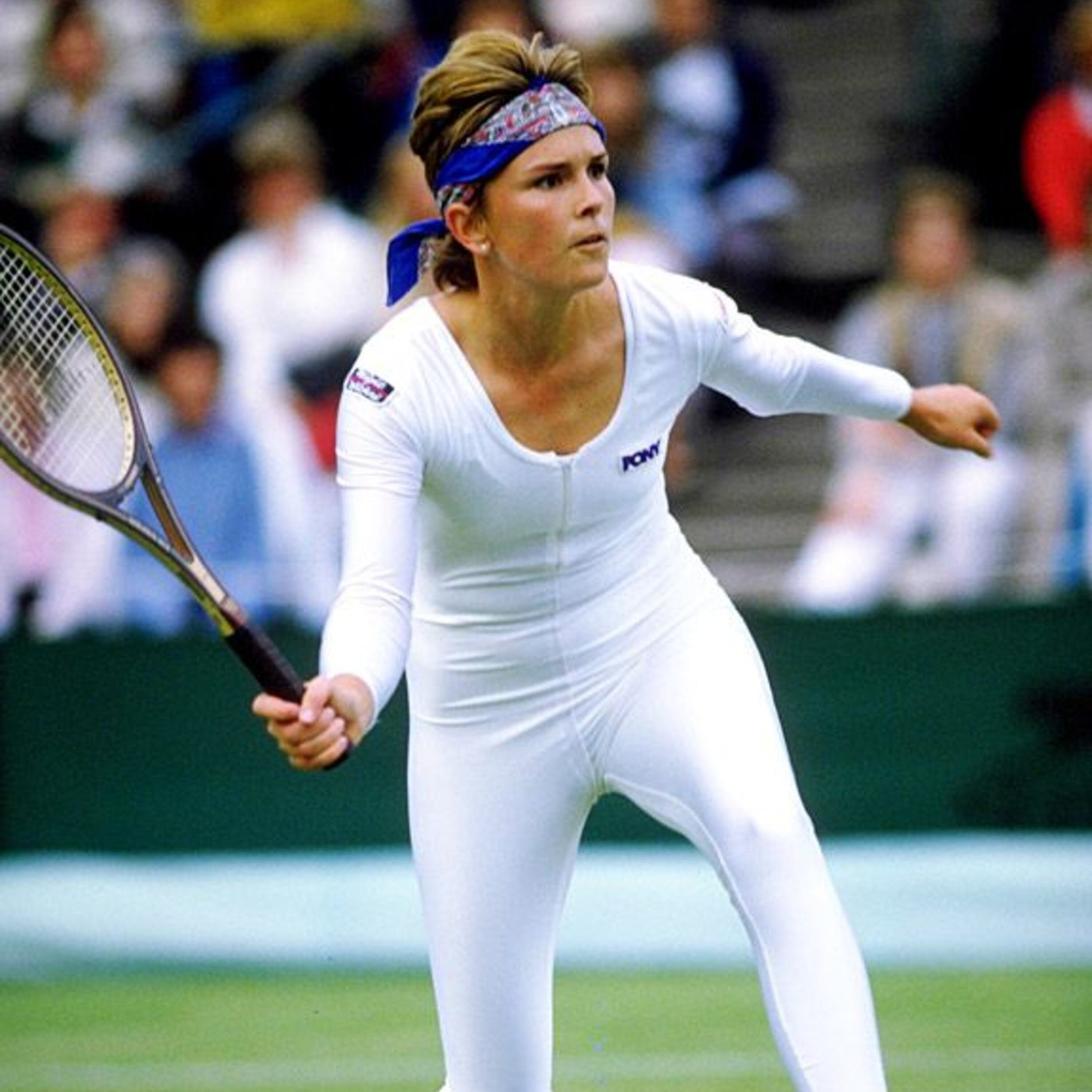
Anne White
The Emmy-nominated filmmaker and former Top 20 player talks about her journey from West Virginia to Wimbledon, being one of Nick Nick Bollettieri's first recruits, and of course, that famous (or is it infamous?) bodysuit.
Hosted on Acast. See acast.com/privacy for more information.
See omnystudio.com/listener for privacy information.
2020-07-13
59 min
Transcript
Available Results
Generated results are saved to the knowledge database for reuse and search.
No generated results are available for this episode yet.
Extract Knowledge
Pick what you want extracted first. Model, scope, and chapter options appear after a template is selected.
Generated results for public episodes are saved to the knowledge database so they can be reused and searched later.
Transcript
00:00:04
Speaker 1: This episode of the Racket Magazine podcast is brought to you by Sergio Chucchini, offering iconic tracksuits, classic Polos, and the new Young Line sneaker. Originally designed in the mid nineteen eighties.

00:00:15
Speaker 2: It's our favorite.

00:00:15
Speaker 3: Spring silhouette and it's back.

00:00:17
Speaker 1: You can get it now at Sergiotuccini dot com and follow them on Instagram at Sergio Tacchini Underscore Official. For updates, Enter the promo code racket Bag at checkout and you'll get thirty percent off your order.

00:00:33
Speaker 4: So it was a joke one day to him, I said, can you imagine a white Boddy suit and woman, wouldn't that be funny?

00:00:50
Speaker 5: Renee?

00:00:51
Speaker 3: Here we are in New York.

00:00:52
Speaker 5: We are not in London.

00:00:53
Speaker 6: I know.

00:00:54
Speaker 5: It's really really sad. It's so sad that yesterday I actually go on the comte and I ordered myself a twenty twenty Wimbled in Town because clearly you've seen my house and my apartment and I have every town from nineteen eighty nine, from the first time that I ever played at Wimbling. So this is the first time in what is that thirty one thirty two years that I will not be in London. And it's so sad. Obviously have an amazing amount of memories from there, but twenty twenty is definitely not a good year.

00:01:27
Speaker 7: Cool Tennis twenty twenty is really kicking our asses. However, it's given us a chance to look back. I think big make some changes.

00:01:36
Speaker 5: Hopefully.

00:01:37
Speaker 7: There's some really intense conversations happening at some of the organizational levels, some of the you know, governing body levels, about what we want this sport.

00:01:44
Speaker 5: To look like when it comes back.

00:01:45
Speaker 7: And that's not just in terms of safety, which is obviously the case, but you know, making a more equitable sport, making a sport that is a little bit less elitist, that's a little bit more welcoming, you know. I think from what I've heard, those are conversations that are happening. Obviously, we talked to Katrina Adams about some of this stuff, you know, and one thing we are going to do this week is look back a little bit because we have a phenomenal guest who made Wimbledon history, and before we get to her, I want to hear a little bit about some of your favorite stories at Wimbledon. It seems like of all the Grand Slams, certainly despite the fact that you're an Australian, the Wimbledon experience was one that is extremely close to your heart.

00:02:21
Speaker 5: Tell us some of your favorite stuff. Yeah, I mean, listen, growing up in Australia, we obviously to watch Wimbledon, we'd have to get up at like one, two, three, four o'clock in the morning. I mean that was just how it was because of the time difference. So every single night I would get up and watch either one match or some of the match. I'll never forget my mom just like tapping me on the shoulder and be like when you know bogs On. You know, when I was a really young kid, I was obsessed with you Beyond book and Evon Guligon Coli. Those are my two like favorites, and then of course Christy and Martina. Like even if you're not a tennis byer, everyone would watch Wimbledon. Yeah. I used to watch it with my grandparents.

00:02:57
Speaker 7: And the NBC theme music that was so Yeah, it was such an indelible part of my mornings. And then the Championship weekend watching Boris Becker when in eighty five, I think it was was one of the seminal and I think it was the first tennis match I remember on TV at Wimbledon and just thinking, Wow, this is so amazing.

00:03:15
Speaker 5: I'm watching history, you know. When I when I obviously had an opportunity to go and play there, it was like that. It was a you know, it was amazing, you know, but very different to what I ended up you know, being experiencing there obviously. But I had to go to qualifying the first year I went eighty nine and I had to take a train like thirty minutes to Wimbledon, and then I had to get a transportation from Wimbledon to Roehampton. I mean, I there was no luxury in having to qualify for Wimbledon for me. It was just like and I wasn't complaining about any of it. Like, and I remember my last round of qualifying. I remember my first match. I played Barbara Rittena from Germany. The German fed Cutcher. Very yeah. I think it was the first time I ever dove on a court. That was in that match, and she's talks about it, She's like remember that. I was like, yeah, I could. I couldn't even believe I did that. And then the last match was against Jennifer Sandtrock from the United States, and she was lefty and it rained in the middle of the match. I won the first set. She double folded as it was raining on the first set point, and you know, had to come back, and I just kept thinking, of my god, I'm one set away from qualifying for Wimbledon, and it was just insane for me to even think about it. And then I went back out and we won the I won the match and I had a fourhand volley to win the match. It was the most nervous open court for hand bollie I've ever hit in my life. And I remember when I hit it in I just thought, oh my god, like, this is the greatest moment of my life. And obviously then to go and play there and get your badge and walk through those gates as a competitor is just amazing. And then obviously, you know, winning the doubles there twice, you know, one and O four with Lisa Raymond and with Kara Black.

00:04:53
Speaker 7: I mean, they're just dreams that you just can't imagine. I mean, and let's not forget that you won the Legend thanks was in twenty eighteen Demon's.

00:05:00
Speaker 5: I actually won the Legends twice.

00:05:02
Speaker 7: Oh sorry, so when I saw, yeah, that's Kim clusters. You and she partnered up and you hit a daving valley. I did unbelievable valley. I think the comment Peter jumped out of his chair. It's one of the best examples of a daving valley that you hit two years ago in an amazing.

00:05:20
Speaker 5: I almost broke my hand because I landed on the racket.

00:05:23
Speaker 2: Oh I've done.

00:05:24
Speaker 5: I have had more dives at Wimbledon, and I had one around the net post playing against Barbara Schettes and Barbara started laughing with her asshof because she's like, this is legends and what are you doing? You know, but I just can't help it. I mean when I would dive on hardcore, so for me on grass, it just comes naturally. Actually, actually one of my best dives at Wimbledon was against him, playing mixed against her back on move, playing full time, so I don't know. I was playing with Marcello Mellow and he basically looked at me and turned around. He started bowing. He was like, that was amazing. But you know I know that, like Sam Stows is always like I wish I could dive once, and I'm like, listen, no, you either can do it, well, you can't those you can practiceta and if you try and do it when you don't know how to do it, you can really hurt yourself.

00:06:06
Speaker 7: Well, there's something really special about obviously my experience.

00:06:09
Speaker 5: That there has been both as a spectator and as a journalist.

00:06:11
Speaker 7: But I would encourage anybody who might be on the fence about going, or.

00:06:15
Speaker 5: Maybe is thinking about making it, you know, making the trip. Wimbledon on TV and Wimbledon in Lore.

00:06:20
Speaker 7: Is really fancy and it's e laite, and we talk a lot about the tea and the breakfast woman and the cream and the strawberries and all the traditions and that's all the trips and the pens cups. But in person, the experience is actually remarkably democratic. It's a remarkably open institution. The first time I ever went was a spectator. I queued up, I paid twenty pounds for my ticket. I spent one of the most wonderful days in my life just roaming from court to Cork. And it's beautiful and it's manicured, but it's not a place that feels exclusion, stuffy or stuffy. It's really open and fun.

00:06:49
Speaker 5: Well, you know, some of us though, ok I managed to squeeze that way into the Royal Box a couple of times. We're getting there. So tell me about the Royal Box.

00:06:56
Speaker 7: Experience, because for people who don't know, there's a special seating area in center quote. You can be a guest of the Royal family sitting in the Royal Backs and to get this is a huge honor their souvenirs involved. There's a wedding room. Tell us what it involves and how you even get invaded.

00:07:11
Speaker 5: Well, you have to be invited by the Chairman of the All England Club. And I have been asked since I've gone back to do the Legends as they call it, the Ladies Invitational. They really nicely ask a lot of the competitors that they're playing in the Ladies Invitational where they're doing television and various things, and they often ask us to go to Women's semi finals day or women's quarter finals day. So they invite not all, but most of the competitors of the Ladies Invitational and a lot of us are working and we can't fit it into our schedule. But I managed to fit it into my schedule every time they asked sure, Actually the first time they ever asked me, I had to say no, And I said to Phil, I said to Phil Brook, who's the one that asked me. I went to him immediately the next I said, please, please please invite me back, please, you know, personally to say no.

00:08:02
Speaker 1: That that was.

00:08:03
Speaker 5: But it's just, I mean, it is so typically English and so I mean, don't take this around super pompous, but it is exactly the way it should be. I mean they have, you know, lunch at a certain time, then you watch the match. Then you don't have tea afterwards, you have your little SCons and your little you know, finger sandwiches and tea, and it's just it's just amazing.

00:08:25
Speaker 7: They give you a little souvenir bag they do full of goodies which you have gifted to me at least one of the ones you've got.

00:08:31
Speaker 5: So thank you for that. I still you this. Yeah, it's just it's just an honor.

00:08:34
Speaker 7: But there's also royals in the box all times, not all the time, but you know, Keate Middleton will show up obviously, William come when I went to I mean.

00:08:42
Speaker 5: David Beckham, come on, David Beckham, he's basically a royal. Maggie Maggie, the actress Maggie Smith.

00:08:50
Speaker 4: Yes.

00:08:51
Speaker 5: When I was there last year, Phoebe waller Bridge was.

00:08:53
Speaker 4: Yeah.

00:08:54
Speaker 7: She was the day be for me, like four hundred, like extremely far away, like telephoto lens photos made her look like just basically a blob, but she was. I was just happy to around her. I was like, it's a Phebe dollar Bridge. Trust me, she's in there.

00:09:06
Speaker 5: You can't. I think she went the day before I did, so I was super bud. She was watching the Vica Hall up match, which I thought was gonna be more of a barn burner but didn't turn out.

00:09:15
Speaker 7: But you know, Phoebe was there so that you were fine. Tell me before we get to introducing our guests. Who's spectacular and a super interesting woman in a couple of very very different ways. The last thing I want to ask you about is the skirt.

00:09:28
Speaker 5: Tell me about this the skirt. Well, you know. So I was playing the Ladies Invitational with Kim Cleister's and we were playing against uh Conchita Martinez and Andrea Jaeger, and we were up pretty comfortably in the match and Kim started talking to the crowd. We try and interact a little bit. We try and have some fun with the ladies. Ladies invitation. Some of the ladies have as much fun. She was subberteam a little bit too. Seriously, not going to mention any name.

00:10:01
Speaker 7: The Kim Kleister is being in the Leader's invitation is embarrassing. I mean she's a current player basically, and she's playing against Andrea Yeager, which three kids.

00:10:10
Speaker 5: Okay, okay, I think that is a yeah. So anyway, so Kim and I are playing and she turns around to the crowd at one stage and says, where do you want me to serve it? And they said, you know, they're yelling all things. So she says, okay, so someone said down the team, so she literally legit hits like a one ten serve down the ace. And then she turns around again to the crowd and she says, what do you want this one? And they said, you know whatever, And sure enough, bang one oh five wherever out wide ace and I'm like having a blast with us, And she runs over to the people that suggest to this, who've got a pins right, but she runs over to high five them. I run over it also to high five her and them, but instead of high fiving them, I actually took their pins, took a swig of it, gave it back. I mean, we're trying to have fun, right. Then she says again, where do you want it?

00:10:57
Speaker 4: Right?

00:10:58
Speaker 5: Sure enough out white bang. Why she's three legit aces and I mean really good, yeah, on demand, on demand. And then she gets up to the line and some guy yells out to the body. God is sir. Now, But I'm like, you can't ace someone to the body. No, it's actually doesn't work because it will touch their body. But that's a dick thing to do. Well, But the point is that we're like, we're trying to hit the n ax. So she stops and looks up. She goes to the body and I'm like what And then so Conchita then goes, oh, what don't you take it to the body or something. Then Kim and I go, yeah, why don't you get out of the we have a piece of Just keep in mind, we have no idea who yelled out to the body the person, We have no idea. So Kanchi goes, why don't you So he stands up and this guy is a big dude. Yeah okay, So he stands up, comes down on the court, which keep in mind. This is oneblan like, it's not something that happens. I mean at any other Grand Slam, you could see this happening, because every other Grand Slam is not because they're very protective of the grass, are very protective of safety.

00:12:01
Speaker 7: Yeah always plebeian does that get to walk on all.

00:12:04
Speaker 5: The things that we didn't take into consideration. But also it is very easy to get on the courts at one you can just step over it. So he comes onto the court. He's got like blue pants on and a green shirt, and so of course Kim is now laughing, and then she looks at him and she goes, wait, I love that he's wearing no white. And then all of a sudden, her little head ticks over and she goes wait. So she runs over and grabs an extra skirt out of her bag and her own bag out of her own bag, runs over, gives it to him and puts it over his legs like she's putting it on her three year ol. That's what she said, And she's dying laughing. She falls over anyway, God love him. He pulls them.

00:12:42
Speaker 3: Up and they go on.

00:12:44
Speaker 5: So now I'm like, oh, this is not satisfactory because now you've got a yellow you've got a green shirt on. So I run and get my I have a white top. It's a long sleeve and it's spandex, so I know it's going to expand. So he goes.

00:12:57
Speaker 2: He looks at me, he goes, no.

00:12:58
Speaker 5: Way, and I go put it on. So he puts it on. Yes, now he's in a white skirt and my white top. And the commentator, which is the best part of this on YouTube, he goes, that's a man at Wembledon in a skirt receiving served from Kim plaisters. I mean, it's a hilarious right, So God love and he plays the ball back and we have super fun. We take photos. I mean, it goes viral. It was on the Jimmy Kimmel shows and review, It was on.

00:13:26
Speaker 7: Lots of shows, and the Queen herself did not come down and said no.

00:13:32
Speaker 5: But I will say that the club wasn't super happy the next day. I believe that, but I will tell you that they did just post it on their Woden website, so maybe they've forgiven us. I blamed it all on Kim because I keep inviting Kim back forever. But the great story in the end was that he kept Kim so Kick skirt and we found out his name was Chris I believe, and he kept the skirt and when he went home, he decided he to sell it as an option item and all the money would go to help him provide monetary help for FAMI families with children with cancer so they could fly. He was from northern I think it's from Ireland maybe, and he used to fly them to London and then Feeler, who are Kim sponsor, said whatever you get will match. That's amazing, and then they flew him when Kim got inducted into the Hall of Fame, so he flew him to Newport Beach and they did a bit of an interview and Kim signed it. I said, can you sign it for him? Yet? No problem. So we all kind of worked together to get it done and they raised I think I can't remember exactly, but I want to say maybe twelve thirteen thousand dollars in total. And he kept the foundation going and he's been doing he and he got really in shape he started away and yeah, so it was an amazing story. In the end, some people were like, oh, you guys did accent.

00:14:53
Speaker 7: You could fit into your spirit at something well, probably not, but it.

00:14:59
Speaker 5: Ended up being a that's so cool. I didn't know the end of the sturge. Yeah, we raised a lot of money, and yeah it was fantastic and he had a blast and he was such a good sport. So yeah, there's some great things that can happen.

00:15:09
Speaker 7: Sometimes if anybody hasn't seen it, they absolutely have to search Forard on YouTube. It is hilarious. And let's introduce this week's gest. We take this episode a while ago because we were lucky enough speaking of all white, speaking of all white, and her name is Anne White, we have the inimitable and White whose story, personal narrative is just amazing. West Virginia to Wimbledon. I mean that kind of sums it up right. West Virginia Phenom goes to study with Nick Bolterry, one of the first makes a film about it. This film is nominated for Emmys. It is widely considered to be one of the greatest tennis films ever made. Called Love Meme zero about the Nick Nick Nick who refers to himself constantly in the third person. We talk a lot about that, how that film came to be Her journey obviously from West Virginia to Wimbledon and then on to the Beverly Hills Tennis Club where that she's director of Tennis. But most notably, and tying back to what we were just discussing about, the dress code of women and white or famously the onesie, the original bodysuit, all white, head to toe, long sleeve, pony shoes, headband. She looked amazing in it. It is one of the most indelible images iconic of tennis full style.

00:16:28
Speaker 5: The story behind it was so fascinating and so great, and I did not know any of the backstory of how it happened and how it turned out. But you know, Anne was a great player, and then this also to happen, and also to hear her thoughts about it was really interesting to me.

00:16:45
Speaker 8: Overall.

00:16:45
Speaker 7: I love Anne's approach to tennis so much because I think turning her life into being an advocate for tennis and pulling juniors in and getting more people engaged, you know, is something that obviously we were really interested in a racket so it was really cool to hear her story, hear what she's doing now. But also, of course, as you said, hear this like amazingly insane story. And I never connected with the image because there's always a story behind the image. And a lot of people talked about that bodysuit controversy with Serena a couple of years ago. Well guess what there was this one before that turns out women in bodysuits on professional tennis courts huge problem, but also an amazing opportunity for comedy and all the rest of it.

00:17:25
Speaker 5: I cannot wait for someone to bring it until then.

00:17:28
Speaker 8: All right, enjoy this interview with Anne White.

00:17:46
Speaker 9: You are a storyteller, You're a WTA singles and doubles veteran, You're somebody who now runs a club. But your personal story is not something I think a lot of people know. So let's start there. Are you, your West Virginia? You get a rocket into your hand? Where does that story start? That story starts with the Charleston Tennis Club and.

00:18:09
Speaker 4: I my mom was playing in a weekly doubles game and I was in horseback riding, lessons in swimming, in ballet, which I did not like, and I was don't It's sort of in trouble because I charged a lot of candy at the club and my mom made me come to her.

00:18:26
Speaker 6: Tennis games and I had to sit and watch her play.

00:18:29
Speaker 4: And my two friends were in a little clinic on the courts below and they were Ana and in nan or you can play tennis. Well, So that went on all yeah, and I just begged my mom to put me in the class because they kept harassing me and I hated it. And finally she just was tired of me bothering her and she and she put me in the class.

00:18:52
Speaker 6: And then.

00:18:54
Speaker 4: Two days later the head pro came up and said, your daughter can actually hit the ball over the fence and moving or put the nine year old.

00:19:01
Speaker 6: So it was just I was five and a half.

00:19:04
Speaker 3: Oh shit, wait a second, So were you you are? For people who don't know you were public seeing pictures of him, you were very tall.

00:19:11
Speaker 6: Yeah, I wasn't you know, I wasn't that tall.

00:19:13
Speaker 2: No, she was five. Okay, I don't know.

00:19:16
Speaker 5: I don't know.

00:19:17
Speaker 3: Maybe I don't know.

00:19:19
Speaker 6: I wasn't. My dad.

00:19:20
Speaker 4: My dad was a basketball player. He was captain of the w basketball team right before Jerry West came on. He helped recruit Jerry and so he always had a ball in my hand when I was little.

00:19:30
Speaker 6: And I'm the oldest child, and so he.

00:19:32
Speaker 4: Was always tossing balls with me, and so I had I just established really good hand eye coordination from a very young age, and and.

00:19:39
Speaker 6: So you took to it immediately.

00:19:40
Speaker 3: The hand eye you could make contact.

00:19:42
Speaker 4: Yeah, and then let's go hit a hit on the wall and okay, hell hit on the wall.

00:19:46
Speaker 6: The OCD kicked in at a very early age.

00:19:48
Speaker 4: And then you could be near the snack bar and get the candy.

00:19:52
Speaker 5: Yeah.

00:19:53
Speaker 6: That was an early thing.

00:19:54
Speaker 5: Who was just basically told every parent just if they want their kid to be a tennis player, just carry around swim fish.

00:20:00
Speaker 6: Yeah, just like throw it out them like dogs in mountain dew. Yeah.

00:20:05
Speaker 4: Yeah.

00:20:05
Speaker 2: I have to say mine was Fanta back then.

00:20:08
Speaker 6: Yeah, phanto. Yeah.

00:20:09
Speaker 3: I used to share a Doctor Pepper with my.

00:20:11
Speaker 9: Dad whenever we would finish it set, and it was the thing I look forward to.

00:20:15
Speaker 3: I like Doctor Pepperton.

00:20:16
Speaker 6: Yeah. But so you've had a natural affinity.

00:20:19
Speaker 3: It got serious was tennis. I mean obviously there was.

00:20:21
Speaker 9: A club, there was some infrastructure, but was there much of a junior scene when it There was a little bit of a program.

00:20:28
Speaker 4: And my mom, mother is was a school teacher and very organized and she saw that I was getting good, and there were local tournaments, and the next thing I knew, I was going to Ohio and Michigan and playing in these regionals. And then next thing I knew, I was nine years old playing in the twelve and Internationals and Little Rock Arkansas.

00:20:47
Speaker 3: And then next thing you knew.

00:20:49
Speaker 9: I mean once that timespan a year, two years, three years, that's amazing.

00:20:53
Speaker 5: Wait, I want to more importantly, I want to know what happened once you started playing and then those people that were making fun of you, what you did to them?

00:21:00
Speaker 2: Would you play them or did you beat them?

00:21:01
Speaker 5: Because I looked for the minutia little comic stories like basically, how did you pay them back?

00:21:08
Speaker 4: Well, they went into they went into swimming, horseback riding.

00:21:13
Speaker 6: They quickly got.

00:21:15
Speaker 4: Out of tennis, and then you know, I stuck with tennis. I think, I just, you know, I like the I did. I did play high school basketball as well, because my dad always had me playing basketball.

00:21:26
Speaker 3: Family.

00:21:27
Speaker 4: Yeah, so I was just you know, into sports and loved you know, hitting the ball, and and then you know, as a kid, you'd look at the map and you'd say, oh my gosh, we get to go to Arkansas or we get to go to Toronto, and my mom would get in her woody wagon and drive us when we go.

00:21:42
Speaker 6: And it was like an adventure to go do a lot of woody wagon.

00:21:45
Speaker 3: I know exactly the best. It was the best.

00:21:47
Speaker 2: The Brady Bunch Club.

00:21:48
Speaker 6: Yeah, they had the big wood pan yah and three seats. My brother had the far back. I was in the middle, and we had a whole system, and you know it was.

00:21:55
Speaker 3: It was like a whole family adventure.

00:21:57
Speaker 2: Yeah.

00:21:57
Speaker 4: And then you know, if I got to the finals, the deal was you and my dad says, okay, you get to the finals, I'll fly in.

00:22:02
Speaker 6: So I love my father.

00:22:04
Speaker 4: He was, you know, my sports hero, and so I always wanted to do my best and get to the finals.

00:22:08
Speaker 6: So my dad would fly in and then he drive home with us. Wow.

00:22:11
Speaker 9: So a very big part of your story, and we're going to get to some of that a little later, but a very big part of your story is your experience in sort of the junior tennis machine, because at some point, and this is still true today, it's probably more true now than it was. When you start to show promise, you kind of outgrow your local club, you outgrow your local coaches, you get plucked and you get put in a real tennis machine. What happened to get that for you? How did you get to the voluntary you know, universe? How did it sort of transcend from Okay, this is really good but it's a family affair to oh wow, I have some real promise and this this is something I need to focus on, almost in a twenty four to seven kind of capacity.

00:22:55
Speaker 4: Well, I think, you know, I was really fortunate that in Charleston, West Virginia, the National sixteen tournament was played at my club. It was and still is the nicest tennis club in West Virginia. And so when I was nine years old, I was a ball girl for you know, Chris Everard and Marina Rodondo and you know all this. So I got to see really good tennis at a young age and really look up to them and oh, maybe I can get as good.

00:23:19
Speaker 6: And then, you know, I kept getting better and better and better.

00:23:22
Speaker 4: And then when I was fourteen, I finally got to play at my home club in the National sixteens and Nick was there. And at this point he approached my parents and said, I'm going to start this little academy in Florida.

00:23:36
Speaker 6: Before he started.

00:23:37
Speaker 4: I was the first out of state student nickpology. There were there was me at about eight locals. The Dipalmers were there, Mike Dipalmer's kids.

00:23:46
Speaker 3: And so he recruited.

00:23:48
Speaker 4: He recruited me, and he said to my parents, you know, come down and take a visit. And so we flew down and we looked and I saw that beach in that water, and I'm like, okay, I'm in.

00:23:56
Speaker 6: I'm in, you know. And so then I I lived with a family.

00:24:01
Speaker 4: I was fortunate I didn't have to live with that hotel because I wouldn't have made it.

00:24:04
Speaker 6: I know, I wouldn't have made it.

00:24:05
Speaker 4: I was spoiled because I it was tough. I mean it was really tough. I had home cooked meals every night. I had a really loving family that took care of me. And you know, in the hotel it was tough. You know, they were kids, two to four kids in a room, and weekends, you know, you had to do your homework.

00:24:24
Speaker 6: I mean, there was really not a lot.

00:24:26
Speaker 4: Of TLC going around, and I was I was spoiled in certain ways.

00:24:32
Speaker 9: Yeah, And for people who don't know this, before Nick Volty built what became the Voltary Academy and is now a MG academy. He was running this out of a kind of rough around the Edges Tennis Club. So this wasn't exactly a facility sort of set up to take in kids.

00:24:49
Speaker 6: Even local Paris insign releases. I mean, it was like the wild West. They sent kids down there.

00:24:55
Speaker 2: He got a second hand bus.

00:24:57
Speaker 6: He was busting kids around.

00:24:58
Speaker 4: My parents gave me a light blue Chevy money Carlo I was driving kids in the car. I mean, it was it was crazy, but it was, you know, a wonderful time.

00:25:08
Speaker 6: We all worked really hard. The pros were great.

00:25:10
Speaker 4: You had, you know, two or three kids from one pro and they worked us hard, and you.

00:25:15
Speaker 6: Know, it was just it was a really fun time.

00:25:17
Speaker 3: Yeah, it sounds kind of wild.

00:25:19
Speaker 6: Oh oh wow.

00:25:21
Speaker 5: Who were some of the people that were there, like in pivotal times one or two years that you were like God, thank god they were here, or God, I hate them, or you know, like which ones you know, players do you remember because we all grew up in sort of academy like atmos Well not everybody, but some of us have, and so there's certain people that were always pushing you or pushing your buttons or thank God, they were there, like do you remember well too?

00:25:44
Speaker 4: I mean I started sophomore second semester of my sophomore year, and then a couple months later, Jimmy Arias came down.

00:25:52
Speaker 6: So then Jimmy moved into Nick's house.

00:25:55
Speaker 4: And then shortly after that, Polancomb came down, and so Paul was there.

00:26:00
Speaker 6: Low Oriah was there, was who.

00:26:02
Speaker 4: Was a lot of fun and didn't speak a lot of English at the time, and he was a character.

00:26:07
Speaker 6: And then Kathleen Morvac came down.

00:26:10
Speaker 4: Then Pam Cassal came down, and then when I left, then I went to USC to college. And then I remember, you know, going back to Florida from time to time and people be, oh, it's getting big now, so and so it's coming. Then Christine came down, so you know, slowly more and more kids were coming. And you know, back then, you had Port Washington in New York, which was kind of an academy.

00:26:31
Speaker 6: You had Hotman's and then.

00:26:33
Speaker 4: You had people that were with Landscorp out West, but you really didn't have I mean, you had you know, Chris Everts dad in Miami, and you had a group of kids that came out of there, but there you know, there weren't really like it is today where everybody has an academy and all that.

00:26:48
Speaker 6: And Nick was smart.

00:26:49
Speaker 4: He took all these kids that were from cold climates and said, hey, if you can practice three to four hours a day instead of three to four hours a week, and sure enough, like anything you put that kind of time in, there's going to be improvement, You're going to get better.

00:27:02
Speaker 6: And he put us all against each other and created.

00:27:05
Speaker 4: All this tension and competition and yeah, and everybody got really good.

00:27:08
Speaker 2: Who was the person you hated the most?

00:27:10
Speaker 6: Party? I didn't. I didn't.

00:27:14
Speaker 2: Who was the.

00:27:14
Speaker 5: Person that you played against? You like, god, if I can beat her, and no, I'm going to be good.

00:27:22
Speaker 10: You know.

00:27:23
Speaker 4: I You know, there are a few people that I played in juniors that I never beat, like Tracy Austin and Pam you know, and juniors I'd lost in three sets to both of them, and I never quite beat them in singles. But you know, I was always setting my own standards for for really wanting to be as good as I could be.

00:27:41
Speaker 6: And I didn't really really dislike.

00:27:43
Speaker 11: People, It's just I wanted to, Well, you're a good diplomat for the job you're currently doing well, you're not.

00:27:54
Speaker 9: But I want to talk a little bit about college tennis, because obviously it was a different time you played it. You see, getting a springboard from the NCAA level into the pro level. It's kind of happening here and there now again. But there was a time when I was growing up watching your tapriotes. Your Hingus's college wasn't even remotely on the map. But for you that was a stepping stone. And was it an obvious one or did you kind of think, well, let me cool my heels here for a little bit and maybe I'll try to go pro immediately. What was your thing about that?

00:28:25
Speaker 4: Oddly enough, my parents and Nick had they set up all night and they had a huge argument, really all night, and Nick was insistent that I turned pro. He didn't want me to go to college, and my parents put their foot down and said, you know, we want her to go to school. And I'm so glad I did because it is brutal out there. And I made some of the best friends of my life to this day.

00:28:50
Speaker 6: At USC, I joined a sorority.

00:28:52
Speaker 4: I had fun, and you know, freshman year we were undefeated and national champs, and I had to grow up a little bit.

00:28:58
Speaker 6: I mean, I'd let a sheltered life life and traveled and all that. But I mean, you know how it is, Renee.

00:29:03
Speaker 4: I mean, you're not You're not making a ton of decisions for yourself and learning about the real real world out there.

00:29:08
Speaker 6: And you know, I went out to Los Angeles.

00:29:10
Speaker 4: I mean now I say to my parents and I'm like, oh my god, you sent me the Knicks. You send me to sc which isn't the worst take. I'm like, yeah, I'm like, what are you all thinking. They're like where you wanted to go. And I was like, oh my goodness, yeah, totally.

00:29:21
Speaker 2: They probably like they're fun.

00:29:22
Speaker 6: You turned out just yeah, totally, so totally.

00:29:25
Speaker 9: But did you feel like you gained friendship experience did your tennis game improve?

00:29:30
Speaker 3: Because I would imagine that was probably Nick's counterpoint, right.

00:29:33
Speaker 6: You're gonna yeah, not at the next level.

00:29:37
Speaker 4: I was playing some pro tournaments and you know, my ranking was I only remember I was still an amateur and I was having fun. I mean I never really thought, oh, I want to be a pro tennis player. I always just sort of, oh my gosh, I may then get a college scholarship. Wow, I can get to California. I mean, I was like, my whole thing was, I don't want to be cold. I want to go where it's for you know, it's Florida or California. And so then when I started some pro tournaments, like my freshmen and sophomore year in college, all of a sudden, I'm thirty five in the world on the pro circuit and I'm still in college.

00:30:07
Speaker 6: And then I'm g was calling and all that, and then it was like, wow, maybe I am going to go to Wimbledon. You know this is gonna happen, But you know.

00:30:15
Speaker 4: For me, it seemed so far away and so like, you know, outside the realm of conception.

00:30:22
Speaker 6: Yeah, like yeah, I think some people don't realize that.

00:30:24
Speaker 5: There are some players that certainly, you know, at the age of five, they're getting told they'ren to win Woblon and some of them actually do believe that, and actually that happens.

00:30:33
Speaker 2: You know, talk about Serena saying she want to be another one in the world, and this is when she was like ten. And I mean, there are people that really set their sights on that is it. But I would.

00:30:42
Speaker 5: Say the majority of players, their aspirations are to play at Wimbledon or at a French Open or at a Grand Slam, and then there's thinking how well can I do? And then if it actually does happen where you win a Slam in singles or doubles, you just like, holy shit, I can't believe actually happened to me. Yeah, and not like I can't believe it like I'm not good enough, Like wow, I cannot believe if I look back to twenty years ago when I was ten and you said you're definitely gonna win, I know for fact, you'd be like really like it's so you can't conceptualize that as a kid. So but some do and some manifest it and they are incredible.

00:31:21
Speaker 4: And I just think it's more realistic that, you know, I knew that, Well, you're you're normal.

00:31:26
Speaker 5: That's a normal, but that's a normal reaction.

00:31:29
Speaker 6: Yeah.

00:31:30
Speaker 4: And also I also didn't train as I could have trained. I was gifted, you know, it was a good athlete because of the hand eye thing, and.

00:31:40
Speaker 6: And I just and I didn't want to sacrifice everything in my life.

00:31:42
Speaker 4: I really I just saw what it took and what those and I just thought, that's not me, you know, I want to do other things.

00:31:48
Speaker 6: Do you want to have interesting?

00:31:49
Speaker 10: Yeah?

00:31:49
Speaker 9: And I you know, so flash forward we're at You're on the tour. You got those calls from IAMG, you got the calls from the agents. You are thirty five in the world but still playing into the wa TWNA. Was there a moment where you sort of said, Okay, now I got to dive in. Now I gotta plunge in. Yeah, I owe it to myself to just see what this is That was that how it felt.

00:32:10
Speaker 4: It Well, it was just like this is you know, this is you know you're up and this is this is this is the time because I seeing other players that had stayed in school and not taken that that chance and then their ranking dropped and then they finished school and then you realize it's like, look, I got to catch that train. If I only catch that train, I'm not going to get to where I.

00:32:30
Speaker 6: Need to go.

00:32:31
Speaker 2: And so.

00:32:33
Speaker 4: You know, that's that was the decision I made and didn't start out well at all, I mean, and once I got out there, it was like whoa, you know, this is for real?

00:32:40
Speaker 6: Now this is.

00:32:51
Speaker 1: This episode of the Racket Magazine podcast is brought to you by Sergio Tacchini, revitalizing and disrupting the status quo since nineteen sixty six. Follow them on Instagram at Sergia Tikini Underscore Official and go to Sergia Tichini dot com for more. Enter the promo code racket mag at checkout and you'll get thirty off your order.

00:33:18
Speaker 9: So how how long did it take you to get your footing under you?

00:33:23
Speaker 6: Couple of years?

00:33:24
Speaker 4: Every years, you know, to really understand you know, you know how you pick your tournaments, you know how you travel and what surfaces. I mean, you know there's a lot that you know, it's a whole science to figure out how pap when you need to.

00:33:38
Speaker 9: It's just it's not just heading balls. Yeah, yeah, And did you feel like I mean, obviously we have to talk about the bodysuit.

00:33:46
Speaker 3: It's a bold, ballsy thing. How much can you tell us about it?

00:33:50
Speaker 9: How what there is an iconic image that will accompany this podcast episode. Let's talk about and white bodysuit Wimbledon as much as you want to say, get us, get us the full picture?

00:34:04
Speaker 6: All right?

00:34:04
Speaker 4: Well, I was dating Ian Hamilton, who was the head the global marketing ahead of Nike, and he gave me these paneled tights. I have on tights right now because I love them. I'm five to eleven and tall. To keep my legs warm, and he gave me these tights. It was in nineteen eighty five, and they kept my legs warm, and so it was a joke one day to him. I said, can you imagine a white body super Wimbledon. Wouldn't that be funny? And it was your idea. Yeah, he said, oh, yeah, that would be great.

00:34:34
Speaker 6: Well, everybody go nuts there.

00:34:35
Speaker 2: They would hate that.

00:34:36
Speaker 6: That would just be you know. So I didn't really think anything of it.

00:34:40
Speaker 4: And then we went to the French Open and we met a guy named Carlo Grippa who was ahead of Nike Italy and he's a real character. He'd been in the Olympics for track and field himself, so he was an athlete. And and I really explained because Ian had given me the tights during the winter circuit when it was cold. We're playing in like Chicago and Boston and places like that. You're tall, you know exactly what we're talking about. And I really and I really liked how they made my.

00:35:08
Speaker 6: Legs feel warmer and possibly prevent injury and all that. And in circular. So anyhow, Carlos and I'll get it made. I'll get it made, and oh, I take that back. I jumped forward a little bit. Ian went.

00:35:21
Speaker 4: I was in a contract with Pony, so before we met Carlo, he went to Nike to tell them, you know, my great idea, so I thought.

00:35:30
Speaker 6: And you want to buy her contract out? And they just kind of left and said no thanks.

00:35:35
Speaker 4: And then so then we went to the Friends Open and met Carlo and then he was you know, contraband I'll.

00:35:41
Speaker 6: Get it made. I'll get it made. And so he got it made and then send it.

00:35:47
Speaker 4: Oh, he says, I'll send it to your flat in London and blah blah blah blah blah.

00:35:50
Speaker 6: Well it rained the first three days.

00:35:52
Speaker 4: I was playing Shriver the first round and we were scheduled the first day and then it didn't show up till Thursday morning.

00:35:58
Speaker 6: I didn't play till Thursday. Oh my god.

00:36:01
Speaker 2: It was Destiny.

00:36:03
Speaker 3: Shows up in your room and you're like, well, I guess I gotta go.

00:36:06
Speaker 6: Yeah, it came.

00:36:08
Speaker 5: It was the first thought though, when it did come and you hadn't played a first round where you're liked.

00:36:14
Speaker 2: Were you were like, fuck, I'm really going to do this.

00:36:18
Speaker 4: Well, when I put one suit on, I was definitely not going to do it because it was so sheer.

00:36:21
Speaker 6: I was like, I can't do it. He sent to think he had made two.

00:36:24
Speaker 4: And one was sleeveless and then the other one was long sleeve, and there was no way I could wear just one.

00:36:30
Speaker 6: So I had two suits on.

00:36:32
Speaker 3: You've wore two simultaneous bodysuits.

00:36:34
Speaker 6: Yeah, No, it.

00:36:35
Speaker 5: Was actually, Yeah, how great would have been if you've gotten hot you just stripped off one. They think you go naked and they're like, well, well calm down, all in unclock got the one underneath.

00:36:47
Speaker 3: Controversial.

00:36:48
Speaker 6: They weren't put you on the wall forever. So then a dear friend of mine, were they hot with the two on?

00:36:59
Speaker 3: No?

00:37:00
Speaker 6: Because it was cooler today. We didn't start till seven o'clock at night. It's always often cold at wimbled Yeah. And then you know, because it stayed light late, we didn't start till like seven, yeah, and so it was freezing. It doesn't take much for you know, I don't like being cold at all.

00:37:14
Speaker 9: You know, fifty two it was cold, so you didn't feel impeded, he felt if you weren't self conscious.

00:37:20
Speaker 6: I mean it's a well yeah, hold on, hold on.

00:37:23
Speaker 12: So you put the two suits on in your in your room and you're like, no, no, I changed in the shower in the at wimbled yeah, in the middle of locker room, and I had Robin White and Mary Lou Daniels, two of my freaking doubles partners.

00:37:36
Speaker 6: They were on the they're on the stunt, they were on the lookout. So I was in the shower and they were laughing. They were like, oh, you've done it now wait to go.

00:37:44
Speaker 2: Yea wait wait, So you get changed in the shower.

00:37:47
Speaker 4: Yeah, then I put a track put a tracksuit on over the top pants as well.

00:37:51
Speaker 6: Oh yeah, so you got pants on the top on. So nobody knows what nobody and Ian walked me to the court.

00:37:55
Speaker 4: So once I got out of the locker room, he saw that I got to the court and nobody really knew.

00:38:00
Speaker 3: And so then here we are.

00:38:02
Speaker 6: You're like, slowly no. Then we warmed up.

00:38:05
Speaker 3: You didn't you didn't worked up in your suit.

00:38:06
Speaker 6: I worked up in the tracks. Then at that point I thought my heart might explode. I'm like, I've really done it. I'm gonna have a heart attack. And die right.

00:38:14
Speaker 4: Heart was beating when you're playing Pam, Yeah yeah, and Pam, Pam, you know, Pam and I go way back to junior or so she she was not thrilled. So so then so then the the Empire said prepare to play, and so I went over and I took off the suit and then literally this guy he turned purple and I thought we were the paddles out to revive him and me with the heart attack.

00:38:42
Speaker 3: Wait, were there like audible gas?

00:38:43
Speaker 6: Well, people were like, well yeah, and they just go. And then she served the first game, and I shank.

00:38:53
Speaker 5: Wait, wait, wait, wait, wait before she started though, because this is my So you take the suit off and you walk back and does she say anything?

00:38:59
Speaker 6: Does PAMs just like gave me a look.

00:39:02
Speaker 13: Click yeah, and two big chicks out there six feet just three totally slugfest.

00:39:13
Speaker 2: Okay, wait, so she looks at you. She walks back to SEB.

00:39:15
Speaker 4: And You're like, oh, yeah, here we go, and Mary Lowin and Robin are laughing. I can see them over in the sands of blacks so high, you know, and I'm just oh my god. So anyhow, then she serves the first game, and I'm I shank balls.

00:39:29
Speaker 6: I mean, I just I can't barely hit the ball. I was so nervous. And then I court, do you remember the score?

00:39:35
Speaker 9: Two?

00:39:35
Speaker 4: And then the rule is once you play one point, they can't make you change close, which I found out.

00:39:43
Speaker 6: Wow, I can't believe they didn't get out there sooner. Yeah, So then I lost the first set bad.

00:39:47
Speaker 4: I didn't play well the first set, and then the second set, I came back, was down two match points and I came back in a tiebreaker seven.

00:39:54
Speaker 6: Six, and I was on the fly. I was playing so well, and then all of a sudden, they look and we're losing the light. I mean, it sits down and I'm like, dang.

00:40:03
Speaker 4: And Alan Mills walks up and he talks to the empire and he said match is being called due to darkness. We zoom tomorrow morning at eleven o'clock. And then he says to me, and he says, we need to.

00:40:15
Speaker 6: Have to take a little walk to the office. So you're the princes, and here we go. I'm going to be kicked out of Wimbledon. I'm gonna be fine.

00:40:22
Speaker 4: And then the serious trouble and I love Allan, Yeah, and he was very nice and we walked and then he said, we have to ask you not to wear that again, and it's not suitable attire in the is England club. And I told him, you know, a fashion of function and you know all you know my uh my whole spiel for selling the bodysuit, and uh he's at the end.

00:40:43
Speaker 6: He said, you understand, and I said, yes, I do.

00:40:46
Speaker 4: So the next day then it was even cooler. The next morning we played and I lost six three and the third and just in a skirt and a top, solime.

00:40:55
Speaker 3: It on Alan Alan you could have you were all old there.

00:40:58
Speaker 6: And also the later rule.

00:41:00
Speaker 9: Yeah, the like you'll say, two glorious sets, well, one glorious sets and two technical sets in an outfit that hadn't been seen until three years ago at the Front Shoe Open, which also caused controversy.

00:41:13
Speaker 3: So it's just meant to be.

00:41:15
Speaker 6: We'll have to bring it back somehow.

00:41:18
Speaker 5: It's time.

00:41:18
Speaker 6: It's time Capsule collection.

00:41:21
Speaker 2: Yeah, I think I think the racket racket.

00:41:23
Speaker 11: I think, you know, no pressure, but I think we're gonna have a business chat after this.

00:41:30
Speaker 2: We need to have people tweet us, ride us and let us know.

00:41:33
Speaker 3: Yeah, would you guys would buy the bodysuit. Let's let us know, we'll put some into production. So I want to fast.

00:41:40
Speaker 9: Forward a little bit because you had an incredible career.

00:41:45
Speaker 2: You play a second.

00:41:46
Speaker 6: Wait but before this, okay, after this, I.

00:41:49
Speaker 5: Mean it was controversial and it was a huge story.

00:41:52
Speaker 2: I mean everybody heard about it.

00:41:54
Speaker 5: It was like a big deal if you bring this up, like to anyone that go, oh the white bodies, right, I mean, anyone who knows anything about tennis.

00:42:02
Speaker 2: What was it like like after the match?

00:42:04
Speaker 5: And because you know, obviously it's not social media, can you imagine now becase holy ship? Like you'd be a mean, you know you're a give give may you probably are, but like, did you feel like it it changed anything about you?

00:42:21
Speaker 6: Like, yeah, it did.

00:42:22
Speaker 4: It actually did because I had been gotten a little complacent, and it.

00:42:28
Speaker 6: Made me train harder.

00:42:30
Speaker 4: And I was like, you know what, get into the you know, because I I thought, wow, you know, my bbituary has already been written. Now I better do something. And and and I just you know, I wanted to, you know, have a little stronger career and and and play a little better.

00:42:45
Speaker 12: And I thought because you were morennoticed, well you know, and and also I didn't want to just be the girl that dude.

00:42:52
Speaker 4: I mean, I had a pretty good junior career and good collegiate career and then you know, it was in the sixties and I wanted to you know, I thought, realistically, I can get in the top twenty. I mean, I thought I can get in the top twenty, and I did. I got to nineteen, and I wanted to win a tournament singles, and I said, you know, everyone said, oh, you're you're a double's player, You'll never want a tournament singles. And then like you watch, and so I started training with John Lloyd a little bit and working out with this trainer and running the perimeter UCLA and really pushing myself hard, which I hadn't done.

00:43:22
Speaker 6: And six weeks later, I wont tournament singles.

00:43:24
Speaker 5: So that was.

00:43:25
Speaker 6: Yeah, that was a year, that last year that I played.

00:43:28
Speaker 5: You know, do you regret that, like looking back on it, like, there's certain things about my career, certainly in singles, that I do regret, and one of them was not working harder when I was younger. Yeah, I worked very hard, but it took I'm talking about twenty.

00:43:40
Speaker 3: Four to twenty five is when I really started to push myself.

00:43:43
Speaker 5: A lot in singles, but prior to that, I relied on my talent and I was kind of having too much fun and people. I wanted people to like me, and I was just whatever, you know, as opposed to But I was always a good doublesplayer, but singles, I do regret that about my career, you know, do you regret it a little bit looking.

00:43:59
Speaker 2: Back on.

00:44:01
Speaker 6: You know, I my game was limited.

00:44:03
Speaker 4: You know, I had a weak backhand, you know, I mean I started out with the two handed growing up. Then I went to a one hander and went back to the head and just like me have a good, good drop shot, and so I had a weakness in my game, and you know, I was I really wanted to win a tournament.

00:44:24
Speaker 6: And then I also saw.

00:44:25
Speaker 4: What happens when you you you past your prime and then people are playing qualifying And I never played qualifying at wimbledonner and I didn't want to be that person.

00:44:35
Speaker 6: You know, that was not the way I wanted to go out.

00:44:37
Speaker 4: And so I felt pretty darn good that, you know, I got to top twenty.

00:44:43
Speaker 6: And the only regret that I really really have is Wimbledon.

00:44:50
Speaker 4: I think it was eighty four and I had got into the finals of the Birmingham tournament and lost to Pam and then I first round, I had two match points against a qualifier, the Swedish girl in Carlson or something like that, and I lost and she went out to quarters. And that was my opportunity where I really ungrasped was I was a strong player and I could have gotten to the quarters because I didn't get in the final light there, I mean the final light club in the French in the US Open, but only got to the quarters at Wimbledon.

00:45:20
Speaker 6: So that I'm kind of bummed about. But other than that, I mean, I'm just grateful.

00:45:24
Speaker 4: I look back on it now and I'm like, oh my god, I can't believe I did all that, you know.

00:45:28
Speaker 9: So especially because you made such a concerted effort to do okay with the goals, especially top twenty when a single surtament. I mean, that's what's always remarkable to me is just you know, how much could we do when we just decide. I read about these women who marathon who are sort of amateur marathon or was like, I'm going to qualify one of them. Just qualified for the Olympics, just because you don't think it's in your conception and your ability to do that.

00:45:49
Speaker 3: And then all of a sudden, when it becomes.

00:45:51
Speaker 9: Something that is a goal, you're amazed how much your body responds.

00:45:56
Speaker 3: Shifting a little bit. When we first met, and you.

00:45:59
Speaker 9: Were gracious enough to have you at the club, and I want to get to that in a minute.

00:46:02
Speaker 10: And your game is you hit me up the court. Obviously you walked away from the game for a time. You had a moment where you didn't have you you sort of needed to put the rackets down business.

00:46:15
Speaker 9: What what was it that sort of your time away kind of gave to you and what brought you back?

00:46:23
Speaker 4: I just seemed I was just started traveling.

00:46:26
Speaker 6: I just didn't want to do it anymore.

00:46:27
Speaker 4: I mean, I just felt like I didn't know the difference between a Wednesday and a Saturday.

00:46:31
Speaker 6: And I got as good as I was going to get.

00:46:32
Speaker 4: I mean, I realized that I'm only going to get any better, and I didn't want to be that person, as I said earlier.

00:46:38
Speaker 6: So and then I had an other interest.

00:46:40
Speaker 4: So you know, I worked for Ralph Lauren in New York and la and then got in the watch business.

00:46:46
Speaker 6: And I love time pieces. And antique cameras and that sort of thing.

00:46:49
Speaker 4: So I worked for Cartier and you're the culture and the wholesale watch business.

00:46:53
Speaker 2: How did you get into the all of that?

00:46:54
Speaker 9: Look?

00:46:55
Speaker 4: I was called by Headhunter for something else and then they said, well what would you like to do and I said, well, I like watches and they said, oh, well the Cardia person is coming. And so one thing led to another.

00:47:07
Speaker 5: And is that from your connections with tennis or is that business isn't through tennis?

00:47:12
Speaker 4: Was just through ahead Hunter. They went to me for some some tan working for some tan lotion or whatever.

00:47:17
Speaker 2: So did they know you because you were fullmer tennis mode?

00:47:20
Speaker 6: Not at all. This is someone they just called out of the blue, because I think.

00:47:23
Speaker 4: Yeah, so I you know, I'd gone to work, like I said, for Ralph Lauren in New York and LA and then ended up working.

00:47:30
Speaker 6: For Cartier and.

00:47:33
Speaker 4: Yego La Culture and then I traveled one hundred and fifty then I was born.

00:47:38
Speaker 6: You were traveling one hundred and fifty thousand miles a year. Wow.

00:47:41
Speaker 4: Working for Yego Culture for ten years and I hit the wall. I just I hit the wall, and I was like because of tennis and this, I felt like a gypsy. I'm like, you know what, you know, this is enough and I and I just didn't want to be at the airport anymore. And so I took time off and did some other things.

00:47:58
Speaker 6: And then.

00:48:01
Speaker 4: Was my parents have a home in Florida on one book key because they bought a home years ago because I was down there for my tennis and it was right across from the colony, and that's the beach I walk. And I had lunch with Nick because he came to my dad's seventy fifth birthday and we stayed in touch obviously all these years. And then I went saw the IMG Academy and we had lunch and I said, you know, holy shit, Nick, I said, somebody needs to do a movie on you.

00:48:27
Speaker 6: I said, let me, let me, let me go back to LA and see what I could do.

00:48:31
Speaker 4: So one of my dear friends is Jill Mazerski, who's done a bunch of films, and I spoke to her about Nick, and she said, great, let's see what we can do.

00:48:38
Speaker 6: Let's see what we can do.

00:48:39
Speaker 4: And then one thing led to another and we found a great director and we're able to pull this together and we're shut down twice, which almost almost didn't happen, and then spent three and a half years really and I was very passionate about it because of my time that I spent with Nick and I see what's happened to and also because I feel strongly that American Tenants, except for the Williams Sisters, was in.

00:49:05
Speaker 6: Its heyday with when Nick.

00:49:07
Speaker 4: When Nick had all the players there and it was KOOKI is all get out. But he created that drive and that passion and that intensity, and it was.

00:49:16
Speaker 6: Almost too many academies now, oh for sure.

00:49:19
Speaker 4: And there's something about Nick that is so unique that it will never happen again. I mean, it was like that perfect just a storm, a perfect recipe of everything coming together at the right time. And I wanted to get that story out and really tell how this all came together and what.

00:49:37
Speaker 6: All he did. And so I put the movie together.

00:49:41
Speaker 4: And then we happened to have all our meetings at the Beverly Hills Tennis Club and then the president of the club is my ear nose and throat doctor, and he said, oh.

00:49:53
Speaker 6: Russell's leaving.

00:49:53
Speaker 4: Russell since had been the pro for seventeen years, and Russell was leaving, would you what do you think? And I said, we'll shoot of a hanging around Nick for three and a half years.

00:50:01
Speaker 6: I mean, let me see.

00:50:02
Speaker 4: So I never ever thought i would be doing what I'm doing now, and I've never had so much fun. I mean, I worked with so many great kids and it's just a blast. And the club is just a you know, was started by Graucho Marx and Charlie Chaplin ninety years ago because they didn't let them in La Tennis Club, so they started their own club. It's a great club, and it's it's a cute little throwback club and wonderful people. And you know, hopefully I'm helping some people with their tennis games.

00:50:28
Speaker 6: And I take these kids that've had two matches this.

00:50:31
Speaker 4: Past weekend with the kids team, they're like, you know, three, nine and eleven, and they'll come off the going, hey, I got bagel and I got bagel, and you know, I mean, it's it's it's a lot of fun and keeps me fairly fit and fairly well.

00:50:45
Speaker 9: Let me ask you a more question about love being zero, which is amazing.

00:50:49
Speaker 3: If anybody hasn't seen it, who's listening to this?

00:50:52
Speaker 9: Nominated for an Emmy, you had accolade, after accolade, you got shut down. You almost didn't happen. This basically, as far as I can understand, that came together because.

00:51:02
Speaker 3: Literally your force of will. What for people like us who know.

00:51:08
Speaker 7: Some of the story about Nick I trained a voluntary for a little bit when I was a junior. For those of us in the world, it captured something really amazing about that time. But what I love about it is it talks to everybody and what do you think The response and the accolades.

00:51:22
Speaker 9: It's gotten from people who haven't spent a lot of time in our world.

00:51:26
Speaker 3: Means you know what, what what does that feel like? And how did that kind of take form?

00:51:30
Speaker 6: Well? I know Nick.

00:51:32
Speaker 4: You know Nick's character, and he said people stop him all the time, now said Nick, we loved your movie.

00:51:37
Speaker 6: You loved your movie.

00:51:39
Speaker 4: You know.

00:51:39
Speaker 6: I think he was.

00:51:42
Speaker 4: Very honest and authentic, and it was it was difficult some of the stuff that he went through, but he got to really speak his mind and and and he was confronted with some bad choices.

00:51:57
Speaker 6: That he made, you know, And.

00:52:00
Speaker 3: Did he seem to understand that?

00:52:02
Speaker 1: Yeah?

00:52:02
Speaker 6: I think he did. And no, no, I think he did.

00:52:07
Speaker 4: I mean at the end, you know when he tears up a little bit about what what happened with Andre and you know it's but you know, as you know, the coach player relationship is walking the tight wire and at any moment you can get yanked either way. And it's a tough dance. And I think Nick never charged me a penny.

00:52:31
Speaker 6: Wow.

00:52:31
Speaker 4: For two and a half years, my parents paid to live with the family, but Nick never charged me. I was one of many, many, many students, great students that he had during the course of the film, going to dinner parties or.

00:52:44
Speaker 6: Talking to various people all across the country.

00:52:47
Speaker 4: There wasn't anyone that I that I didn't encounter that hadn't had their child go to Voltaarity.

00:52:52
Speaker 5: I think state looking back on it for him as a business obviously, as a business proposition, that's he made his mistakes based on idealism.

00:53:03
Speaker 6: Yeah, it's interesting, not on prasticality, oh for sure.

00:53:08
Speaker 5: I mean Nick was a great motivator, coach, terrible businessman, you know.

00:53:14
Speaker 2: What I mean.

00:53:14
Speaker 5: Like if he could go back fifty years, you know, forty years and say all right, this is how we're going to do this again. Well, yeah, you're going to you're going to run the tennis, but you need someone to run your business.

00:53:26
Speaker 4: But you know, he was a pioneer, always wanted to one of the first to do that, and I think it wasn't even a business model. Yeah, and so I think also, you know, Nick has no review mirror. I mean, I think he does a little bit now, but he really didn't then. It was just onto the next player, and that's who he was on too, the next and on to the next. And yet there's this huge heart that wants to help every kid and let me help you, let me and he just didn't think.

00:53:49
Speaker 6: It through, you know, clearly, that's what I mean. But yet at the end of the day.

00:53:55
Speaker 4: As a coach and a teacher, there's a unique bond that all of us have that that went to next that you know, knew that.

00:54:02
Speaker 6: It was a cookie cookie thing, but yet it was like very magical.

00:54:06
Speaker 4: I mean, you know, like, are you and Jimmy areas Like do you see Jimmy.

00:54:11
Speaker 3: You have a probably very intense bond because of.

00:54:14
Speaker 6: This, right. I also, were there there anybody that went to next? I mean we just kind of go, oh my gosh.

00:54:19
Speaker 5: You know, there was a lot I mean even like Anne Grossman, who's here coaching. You know, she went there with during Andre's time and those guys and they were like fourteen and thirteen years of age, and here comes Backer and w was in there.

00:54:32
Speaker 6: All of the players that came through.

00:54:34
Speaker 2: I mean, that's the one thing about now is that I think there are.

00:54:37
Speaker 5: Too many academies because you you dilute, right whereas Nick, everyone went there, so everyone's pushing themselves. So one of the things that Nick had to decide was who's he going to choose, you know, and that became his downfall.

00:54:54
Speaker 6: In a lot of ways.

00:54:54
Speaker 3: Yeah, that's a good point. You know, there were so many looks I had the play favorites.

00:54:59
Speaker 5: Yeah, I loved Nick to death. I mean, you know, anytime he walks by.

00:55:03
Speaker 2: Me, he says, hey, coach.

00:55:05
Speaker 6: You know, he just has a passion that is unmistakable.

00:55:08
Speaker 5: But I think that looking back on it, boy, if you just had someone organizing this better, it could have been so much.

00:55:13
Speaker 4: I mean, it was like the circus that came to him. You know, it was just this Nick's doing this. Oh my god, boy, he just did that. And you know, I mean it was just like I said, Paris and sent releases. I mean, it was just a crazy time. And that's why I felt that it needed to be explained and documented because it gave birth now to you know, the IMG Academy, which is a whole different thing, a professionalization, and I would have lasted about two hours there.

00:55:40
Speaker 6: I'm not so sure that that would have been the right environment for me.

00:55:44
Speaker 4: And I think, you know, you look at and this is just my little opinion here, but Lansdorp or Sigura or Hopman and these kooky guys, the kids, there's something magical that happens that gets these kids. It's motivated and you get these cookie cutter places.

00:56:03
Speaker 6: And I'll tell you.

00:56:05
Speaker 2: What it is.

00:56:06
Speaker 6: It's passion, period, that's it.

00:56:09
Speaker 2: It's a passion for teaching.

00:56:11
Speaker 5: Nick was a terrible businessman, but he loved to help kids and he loved to make them better tennis players. And he had that Italian passion that was just like never ending. And that's you know Lansdorf. Look, you talk about all those great coaches.

00:56:23
Speaker 6: I mean Lansdore great technique. I think.

00:56:28
Speaker 5: The passion of that technique, yes, like NonStop, that's how you're going to.

00:56:32
Speaker 2: Hit it, That's how you're going to hit it.

00:56:33
Speaker 5: That's how that was his vision, you know, NonStop, even you know the I think that's the most important thing with coaching, And people always ask me, well, what do I tell my kid?

00:56:41
Speaker 2: I'm like, find a passionate coach.

00:56:43
Speaker 5: It's the most important thing you can teach your young children because they have to be instilled with that passion. And I think Nick gave that to people. You can attest to this more than I can.

00:56:52
Speaker 2: But it's like waking up and going, if.

00:56:55
Speaker 5: I can't have the same passion as Nick, then I might as well just leave.

00:56:58
Speaker 4: Yeah right, I mean yeah, I mean, you know, I mean I have to say I'm very passionate. You know, work with the kids team. You know, we're the beating of season. I say, okay, you know what's our goal? You want to play in your high school team or you're junior high team.

00:57:11
Speaker 6: You know, we're smart. Start with the small goals.

00:57:13
Speaker 4: But you know they show up to practice all the time, they have their uniform, they're out there playing and you know, I mean, yeah, no, I am trying to make your point that it's just like you know, you you can't you know, do things.

00:57:25
Speaker 6: There's no B team, there's no junior varsity.

00:57:27
Speaker 4: You know, you go, you're all in one hundred percent, and I think for any of us that have played at that level, that's what takes you know, and you don't just because you stop doing that. You have to find a place for that in your life, whether it's you know, teaching or playing with super great cameras or.

00:57:46
Speaker 6: You know whatever make you got it and try to find.

00:57:48
Speaker 4: Yeah, You've got to find and that's sort of one of the keys to having a fulfilling life, I think. I mean that's a good You've got an energy, Yeah, you've got a child and yeah, no, no.

00:57:57
Speaker 9: I mean for me, it's about convenience community around this sport that I love to make them love it as much as I do, so we can widen the tent and make the sport healthy because I want people to feel and understand how cool it is. Last question for you, were we were going to test out the idea listeners let us know and White Body Suit Reducts twenty twenty one, another film a TV show?

00:58:22
Speaker 3: What do you think what's next for you?

00:58:24
Speaker 4: That I've got a couple of ideas I'm working on, but nothing you know that The film was three and a half years and a huge chunk of my childhood and you know, completely passionate project and so thrilled with what happened.

00:58:40
Speaker 6: But you know, I'm I'm all in the club now. I'm loving club life.

00:58:43
Speaker 4: It's full circle and back to we don't quite have the candy snack bar that we just to have.

00:58:48
Speaker 6: The Charleston Tennis Club.

00:58:50
Speaker 2: Yeah, we've eaten that. The food is fantastic.

00:58:52
Speaker 6: Yeah, well, thank you. They have great ice. We're waiting, but now I'm having having fun at the club.

00:58:58
Speaker 4: And you know, I've got a couple of little projects that I'm working on at doing my super eight little videos for Finn and White.

00:59:04
Speaker 3: Thank you so much for thanks for coming by. I love those stories.

00:59:11
Speaker 1: And that's it for this episode of the Racket Magazine podcast.

00:59:14
Speaker 3: Thanks for listening.

00:59:15
Speaker 1: Our host is Renee Stubbs.

00:59:17
Speaker 3: Our co host and producer is me Caitlin Thompson.

00:59:20
Speaker 1: Music by internationally renowned DJ Stretch Armstrong. Thanks to Tim or Jerring and the team at ACAST. Find us at racketmag dot com, slash podcast, and subscribe to us at any of your favorite podcasters
Chapters
No chapters available.