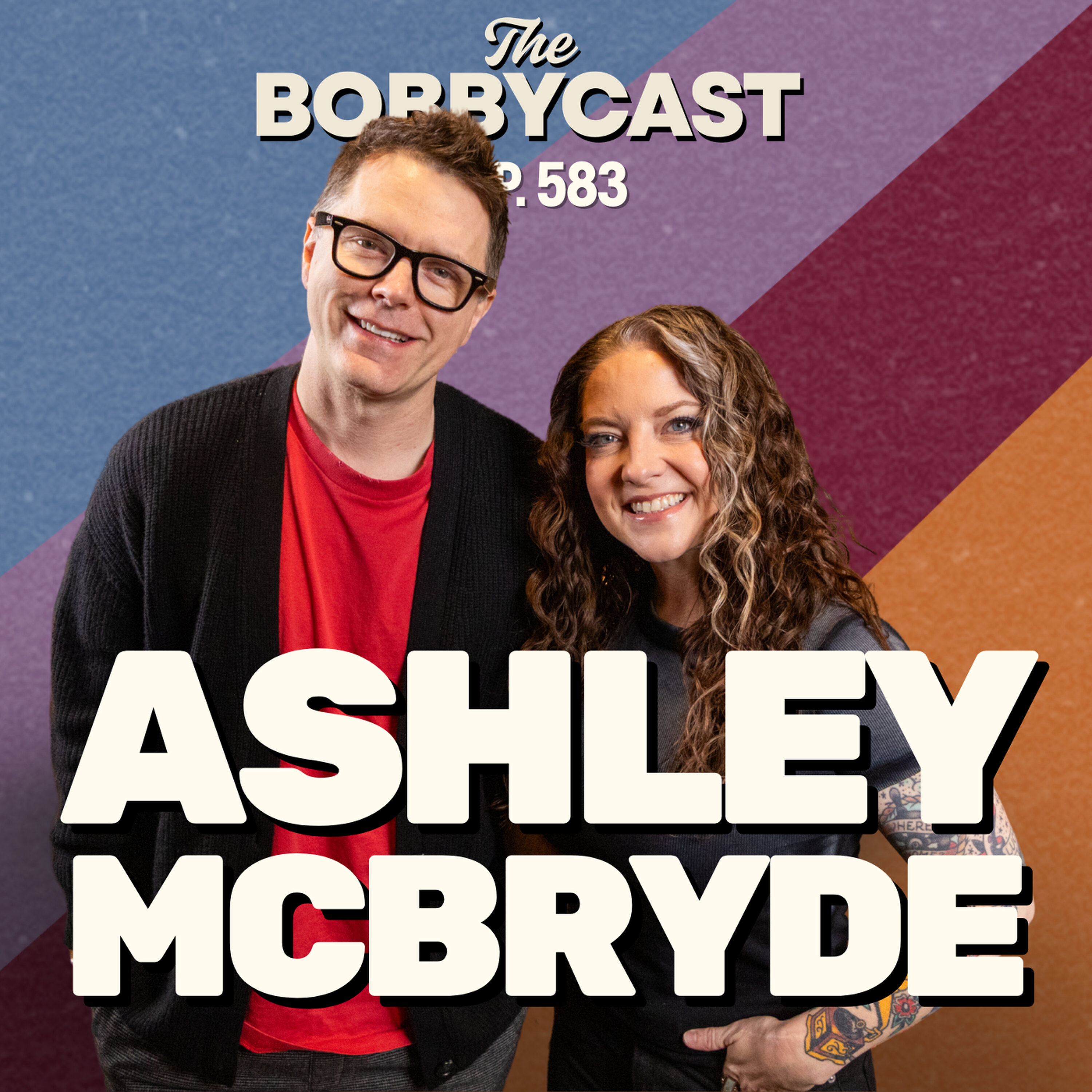
#583 - Ashley McBryde on Rehab after Almost Dying, Recovery & Opening a NA Bar on Broadway
Country music star Ashley McBryde sits down with Bobby and gets real about the lyrics that forced her to admit she wasn’t okay and the moments that followed when her drinking went from “after the show” to off the rails. She walks him through the intervention-style wake-up call, what it felt like to actually stay in rehab, and the tools she had to learn just to be around alcohol again. Plus, Ashley talks about the identity shift from being the whiskey-drinking badass to making sober music, why she believes stage choices can hurt more than just one person, and how her new N/A bar on Broadway has turned into an unexpected safe space—especially when fans walk in having no idea she might be there.
Watch The BobbyCast on Netflix!
Follow on Instagram: @TheBobbyCast
Follow on TikTok: @TheBobbyCast
See omnystudio.com/listener for privacy information.
Available Results
Generated results are saved to the knowledge database for reuse and search.
Extract Knowledge
Pick what you want extracted first. Model, scope, and chapter options appear after a template is selected.
Transcript
00:00:06
Speaker 1: I'm here and technically I can leave, but we're far enough out in the middle of nowhere that I wouldn't know what direction to go.

00:00:13
Speaker 2: Hi, I'm Ashley. I'm evidently a drunk.

00:00:19
Speaker 3: I'm a big fan of our next guest, Ashley McBride. She's a Grammy, CMA and ACM Award winner, so she has all the awards. She's a member of the Grand ol Opry. She is one of the most respected songwriters in Nashville. You're gonna love Ashley McBride if you didn't know her. If you already know where, you're gonna love her even more. From Girl Going Nowhere to One Night's Standards, both Jams to light On in the Kitchen. She's built a career on telling it exactly like it is. She's got a brand new album on the way. She's already dropped some new songs what If We Don't in Arkansas Mud. She's also headlining her Redemption residency up at Chiefs in Nashville, where it's a non alcoholic redemption bar. She's hit in the road Eric Church. As you can tell, I'm a massive fan here. She is fellow Arkans and Ashley McBride Ashley, good to see you, Good to see you. I was listening to your song Arkansaw Mud, and I don't pay attention to a lot of words. I'm so much a melody guy. Even like some of the songs that I've known my whole life, I don't even think I know the words of them yet. But I was listening and the first line, just from memory, I think is percocet adderall nicotine, alcohol, throwing dishes down the hall. Bad mistakes. I've tried them all, is that? Is that?

00:01:35
Speaker 2: Right?

00:01:35
Speaker 3: Yeah?

00:01:35
Speaker 2: Bad decisions, try them all.

00:01:38
Speaker 3: I love that.

00:01:38
Speaker 2: Thank you.

00:01:39
Speaker 3: Yeah, that was really good.

00:01:40
Speaker 2: Thank you.

00:01:41
Speaker 3: So I don't know talk about that song and that lyric because because I don't know, is that real?

00:01:46
Speaker 2: Yeah? Oh yeah, oh yeah.

00:01:48
Speaker 1: And I think it when we were making the video for it, and we were talking about we need to get footage of how I used to be after shows, after events, after like because when it went off the rails, it went off the.

00:02:04
Speaker 2: Rails in a big way.

00:02:07
Speaker 1: So, and as I've had to say over the last three years, I'm a drunk. And if you find yourself wanting to be like, no, you're not, that's how good I am at it. I've had people say I really saw you as much of a drinker, and so now I can say, if you were around me prior to three years, nine months, six weeks, and however many days ago, I was drunk.

00:02:33
Speaker 2: Sorry, I am sorry.

00:02:36
Speaker 3: Who did notice?

00:02:39
Speaker 1: When we were in professional settings? Like luckily, I did not embarrass my organization. I did not embarrass my genre. Everyone that was around me, tour managers, glam wardrobe, band, entire crew.

00:02:53
Speaker 2: Everybody knows.

00:02:55
Speaker 1: And I would do different things to get a handle on it, or to make myself believe I was getting a handle on it. You know, there's no drinking before shows. I'm totally fine with that. At one point I was having to drink before meet and greets because I was so anxious.

00:03:09
Speaker 2: So it's got some tools to learn now.

00:03:11
Speaker 1: I was like, I don't want to drink all day, all night, and then it was maybe just.

00:03:15
Speaker 2: After shows that I would drink.

00:03:18
Speaker 1: But for some reason, my brain was like, you didn't drink till after a show, and now you have to drink as much as humanly possible. And so everybody that I work with, everybody that was close with, not even my parents knew the extent of it. And when we wrote Arkansas Mud and we're putting it on this record, I'm looking at it, we're going to make the video. I was like, well, I don't want anybody to think that when I say I'm made of Arkansas mud, that that means alcoholic. It was not being the most true, the most real to myself that caused me to put the wrong things in its place percocet and adderall and nicotine and alcohol. And I'm not a mean drunk Luckily, I'm, you know, a pretty jovial person to be around. And I couldn't throw a ball from here to the broadside of a barn, but I can smash a whiskey glass right next to your head. Evidently, she plays in alleg of her own. So I think writing that lyric felt good, and it didn't.

00:04:23
Speaker 2: It's not.

00:04:24
Speaker 1: It could sound like it's from a glorifying place, but that's just me admitting it. I did.

00:04:29
Speaker 2: I tried it.

00:04:29
Speaker 1: All and it didn't work. And thankfully, because of where I'm from and the people that I come from and the area that I come from, we're made of really stout stuff and we can We're one of the most self reliant groups of people that I've encountered ar kansins are and and to think that anything could control in Arkansa, especially me joan of Arkansas bigger than, larger than life, runs faster than you don't run faster than anybody. To think that that was in control really pissed me off.

00:05:06
Speaker 3: So when you had and I saw the video, like you said, you're recreating, Yeah, was that triggering for you at all?

00:05:13
Speaker 2: Like third tak ish, you know?

00:05:15
Speaker 1: And we were having we were trying to be lighthearted about it, because everybody in the filming crew, everybody at Warner is, everybody at Keprime, everybody's in the know. When I went away, it was not because I got up and said, hey, guys, I think I have a problem.

00:05:30
Speaker 2: I should go away.

00:05:32
Speaker 1: It was intervention style, and so everybody knows that there's a chance that this is really really hard on us. But we had We did good kind of lighthearted blocked it a couple times, and by the time we filmed it for real, that's when you those bottles are full of apple cider, vinegar, sweet tea water. I have no idea what's in what the bottle. I didn't feel them, So those reactions are real. And then the farther into it, I got being like looking in that mirror and then grabbing a bottle and then pouring it, and then drinking the bottle, and then drinking the drink and then being like, bigger bottle, bigger glass.

00:06:07
Speaker 2: Poor too, poor one for you, I'll drink it too.

00:06:09
Speaker 1: And then the faster I got into that, and the more it got on my face and kind of everywhere. I don't know what exactly, I'm not a neuroscientist, but something clicked and went, oh, no, we're doing We're off the rails.

00:06:26
Speaker 2: So very last take. I'd be happy to send you the clip.

00:06:30
Speaker 1: As I was drinking and like, you know, throwing the trash can behind me, being silly, all of that stuff, I looked into the mirror and then got scared, and then for some reason I started just kind of picking up on the set. I've already kicked stuff off the bed and kicked stuff off the nightstand. I started picking up and then I started crying. And then I got in the bed. That's a prop bed, and I got in it and cried, and nobody said cut, and nobody moved, and then finally Brandon said okay, cut, and I tried to make light of it. And I sat up and I said, oh, it's just like the real drunk me. And I looked over in my team, especially sweet Dana, who was she's the glam artist best friend assistant team and if I tear up, forgive me just crocodile tears.

00:07:16
Speaker 2: I was like, oh no, I hurt her again. Oh do we have a tissue.

00:07:21
Speaker 1: I didn't realize that that would be it'll stop, it always stops. That was tough, and what we follow that with is tough because we shot them one right after the other. So I messed up my makeup and did all that stuff and then we shot the bottle tells me so immediately, same same bedroom, same prop bed.

00:07:46
Speaker 3: Do you mind some Arkansas tissue?

00:07:48
Speaker 2: Which is to yeah, no, I would love that. I'm surprised I don't have a handkerchief in my pocket.

00:07:54
Speaker 3: And for those thinking that I'm insulting Arkansas, I also am from Arkansas.

00:07:58
Speaker 2: That is correct.

00:08:00
Speaker 3: Yeah, I want to ask for a napkin at home. That means a paper towel.

00:08:02
Speaker 2: That, yeah, towel is everything.

00:08:04
Speaker 3: Yes, that's interesting, this is a viva.

00:08:08
Speaker 2: This is a really nice paper towel.

00:08:11
Speaker 3: And I definitely didn't.

00:08:12
Speaker 2: It's gotta be some kind of record going from everything into tearing up.

00:08:15
Speaker 3: I really didn't plan to jump in this hard is quick. I was just listening to the song and I was like, I really enjoy that lyric at the beginning, and I knew what you were trying to establish by it, and so I just because I was listen to it again right before you came in. But you're talking about that whenever you went in, because I had to put my mom and rehab a couple of times before she died, and it's never a fun thing. It was always a terrible thing. But she never stayed. She left every time. Yeah, because she had the ability to do that. She I check her in, but she's an.

00:08:45
Speaker 2: Adult, technically, I had the ability to leave.

00:08:49
Speaker 3: Did you ever want to?

00:08:51
Speaker 1: I kept being like, I can't do I can't do this, Like I don't know where I am.

00:08:57
Speaker 2: I can't.

00:08:58
Speaker 1: Oh my god, I have to do this. I mean, I'm gonna do it. They got me here, I'm gonna do it. But I just kept being like, there's no way of doing this for thirty days.

00:09:07
Speaker 2: That's insane. I don't live under a bridge. It didn't hurt anybody and.

00:09:13
Speaker 1: Now I can hear my other self going, oh kid, sit down and shut up and put your seat belt on.

00:09:19
Speaker 3: Why do you think you stayed?

00:09:24
Speaker 2: I was gonna die.

00:09:25
Speaker 1: Yeah, that's I mean, that's the reason I had to go there intervention style. God, I wish we gave an award for who cries the most often. I woke up at another artist's house, another female artist. And if I told you who, you would not be shocked, of course. And I woke up in a bed that's not mine, in pajamas that aren't mine, and I.

00:09:53
Speaker 2: Was like, oh my god, that must have been a doozy.

00:09:55
Speaker 1: I'm thirsty. I don't know where I am and I don't know where water is. Go find water. And when I went to find water, I found a living room and.

00:10:08
Speaker 2: In that living room was.

00:10:09
Speaker 1: My team, Dana and John Pete's in my day to day and I said, I looked at them, and that artist was also on the couch, and I said, okay, I don't know where my boots are, but I need my boots. And they said, we need you to stop, and I said, I need me to stop too. And that was when I found out that she took me to her house that night after we'd been out to make sure I didn't die, but I didn't.

00:10:44
Speaker 3: Was there a point not? Was there? At what point later did you appreciate how hard it was even for them to do that for you.

00:10:52
Speaker 1: There's so much that I look at now and all during the process, and it was I say, but I'm gonna use that in kind of a loose term.

00:11:03
Speaker 2: I'd be at treatment and people would say, oh, I really like.

00:11:05
Speaker 1: Those shoes, and I'd go, thanks, they're not mine, and oh, cute pajamas, and I was like, my clothes aren't even here yet.

00:11:13
Speaker 2: And when I think.

00:11:14
Speaker 1: About Dana and Blakely having to go shopping and find me clothes and having to go through my stuff and to decide whether to tell my family that I cannot. I cannot fathom or make up for how much I put them through. And that's another reason to stay, is I didn't die, and I have the chance right now, and yeah, yeah, I'm hurting me whatever, and I'm hurting them. And if this goes any farther, this is really really ugly. This is like they'll have to make a movie about it bad. So I just buckled down and decided, well, I'm here and technically I can leave, but we're far enough out in the middle of nowhere that I wouldn't know what direction to go. Hi, I'm Ashley. I'm evidently a drunk.

00:12:17
Speaker 3: Evidently you had to have that version first, right, I did.

00:12:21
Speaker 1: And when I was like, I don't you know, filling out different than you know? They give you a worksheet and can you list this and that? And they're like how much do you drink? And I'm like, out of time the same as everyone else. I just drink two glasses out of time having to go through that to illustrate to myself. And at the you know, at first you're like, okay, I'll fill out the worksheet, but whatever, Like again, I do my job. I do my job well, no one is hurt. I pay my bills. I think I'm okay. And then as you are filling out those worksheets and doing those talks and everything, you go, oh, I'm not okay.

00:13:00
Speaker 2: Oh my gosh, what a pos.

00:13:04
Speaker 1: And oh my god, that's me, how terrifying, and oh my god, that's me, how sad and all of that just looking at at everything that you did and accomplished and while being that ill, and what else could you have accomplished if you hadn't been drunk.

00:13:26
Speaker 3: How raw did it feel coming out?

00:13:29
Speaker 2: Oh my god?

00:13:30
Speaker 1: And when I left, I went to a couple of my practitioners and therapists and I said, Okay, when I leave here, and I left on a Wednesday, Tuesday, when I leave here, you need me to never ever ever encounter alcohol again. I will leave here at noon, I will be around alcohol. By ten pm, I will be in the bus. I've already fixed it at this time to where one of my buses there is no alcohol. The other bus you can have alcohol on it. And I said, I'm not going to drink. I know that I won't, and you don't know me well enough to know that. If I've made a decision, that's it. I need you to give me the tools to be around it tomorrow. It is our entire industry. Yeah, it's one of the most loved and celebrated things about our industry. I built a career on it. It was literally before I ever popped on the scene, dubbed the whiskey drinking badass. So now I need you to give me the tools to not do it. And then all of the fear comes in. Are you any good not drunk.

00:14:39
Speaker 3: That was my next question, because you did so much, not because of you drinking, but while drinking. I had the same feelings about therapy, like, if I get really right, am I gonna be able to do this? Fix this?

00:14:49
Speaker 2: Am I even interesting?

00:14:50
Speaker 3: Yes?

00:14:51
Speaker 1: Yeah?

00:14:51
Speaker 3: Yeah?

00:14:51
Speaker 2: Am I still funny? Do I write stupid songs? I can't write sober records? Who buys sober records? I don't buy sober records?

00:15:00
Speaker 1: All of that, And then you think about you just name an artist and you hear those voices go in.

00:15:04
Speaker 2: They're liked the.

00:15:05
Speaker 1: Better when you use cocade or like it was awesome until he quit drinking vodka, like and all of that negativity that our brains are trained to scan for to keep us safe. It scans for enhance it to your confirmation bias.

00:15:20
Speaker 3: You just said, what are brains scanned for? Okay, so you're learning stuff, like I'm learning stuff because that doesn't sound like that's just something you thought of.

00:15:26
Speaker 1: No, yeah, I had to learn about why the things happen, how the habits form, why, what that is, what a reticular activating system is, what is confirmation bias? What is experiential bias? And it's over intellectualizing, which is a way to avoid feelings. And I also know that which I just over intellectualized. But it helps me understand too. Instead of being like I'm angry or whatever, I can say I'm noticing I have anger, and then I can immediately try to trace it back and then be like, that's because my experiential bias, says be based on X, Y, Z oh. So I am having that feeling, but I'm having that feeling based on this experience, not this experience. So it helps me to nerd out about it.

00:16:13
Speaker 3: A lot of what you're saying and a lot of what you've been through is obviously going to help so many people in so many ways, but just on an intimate level with me and you, even you telling that story, how it helps me is so I went through the process with my mom a couple of times. She died in her forties from drugs and alcohol. Put her in so sorry, put her in a couple of times she would get out, But I always wondered if she knew that I was doing it out of pure love. Yeah, Like I really wondered if she knew it, and I think she did. But hearing you talk about that and you understanding and knowing that they did that out of pure love, even as uncomfortable as it was for everybody.

00:16:48
Speaker 2: Yeah, they basically didn't knock me over the head and put me in the car.

00:16:50
Speaker 3: And that's what I had to do. And I just wondered, And at first I was like, there's to send me away.

00:16:56
Speaker 2: I'm too much trouble though, They're just gonna send me away. That doesn't last long.

00:17:00
Speaker 1: That doesn't last long when you can stop being like I'm uncomfortable because of someone else and you just even consider that you're the reason you're so miserable, and then you can look at it and go, oh.

00:17:11
Speaker 2: My god, they love me so much. I'm so sorry.

00:17:14
Speaker 3: Yeah, you telling that story makes me feel like maybe she understood that.

00:17:18
Speaker 1: Yeah, I would say chances are very good. And I didn't make a sober record, but I did make a record about being a drunk and almost.

00:17:31
Speaker 2: Dying and not dying.

00:17:36
Speaker 3: Last question about it, because I just it just triggers so many things inside of me, because this is something personally that I've dealt with too my whole life on a different level, in a different way, like did you ever not want to live? Instead of getting.

00:17:48
Speaker 2: Sober part of why they had to take me there, because.

00:17:52
Speaker 3: I think that is what we were dealing with to it in my family.

00:17:55
Speaker 1: I think also thinking it'd be much easier than trying to quit. And the more the more times I would allow myself to be that drunk, the scarier, the darker it got faster, and it wasn't six drinks and then it was three drinks in and pretty soon that becomes one.

00:18:20
Speaker 2: And that's a scary place to be. It's a scary spot.

00:18:28
Speaker 3: I know you did it for you, but so many people are going to look at this, hear this, use this for their own journeys. And again, I can appreciate you talking about this because I didn't expect to have who knew if we even went here in this conversation, but this has helped me even so, I appreciate you being yeah.

00:18:44
Speaker 1: And I didn't want to talk about it at all when I first quit drinking, because I didn't want it to look like it was performative. Sure, especially when nobody knew how bad it was. They're like, oh, she must be suffering for ratings right now, because she's suddenly like I'm gonna be so And I thought, if I screw it up. That's the first thing we're gonna wait for is for me to screw it up if I talk about it. So I went to tell us several hundred days in to at least be able to say I'm this far into it, and that was three years ago.

00:19:12
Speaker 3: You know what, I liked that video because you have a na bar which is non alcoholic, and that there's a video of people coming in. I think they were touring and you were playing on stage. Yeah, and they had no idea that you were going to be playing on stage. That was the greatest TikTok because you got to watch these people, they're obviously fans of yours, come into your bar. And in Nashville there's music everywhere, and so of course someone's going to be playing in your bar because that's just what it was. And they slowly, I don't think some of them realized it.

00:19:39
Speaker 1: For a man, was it a hoodie like I wasn't like a woman of country music.

00:19:44
Speaker 2: I was a chick with a guitar.

00:19:45
Speaker 3: Video.

00:19:46
Speaker 1: I'm so glad you enjoyed it. It was so much fun for me to find out that there's coffee tours and so that's early in the morning. They're coming through, they're having their coffee and walking through Redemption and being able to just go play. And I was able to just ask, Yeah, there's like thirty of them. I'm like, what song do you want to hear? It's anything mine? Barbara Mandrel, Paula Abdul, I don't care.

00:20:09
Speaker 3: Whoever thought of that concept? Like a plus to them. Yeah, that was a really great video. What do you think about the bar I'm a big in a guy. I've never tasted alcohol for the reasons that we talked about, like, Hey, I do want I do worry though that someone's going to put alcohol on my drink all the time. Yeah, do you worry about that?

00:20:26
Speaker 1: I Luckily I've got Dani slog and hoop and if there is anything given to me that she did not make or I did not make, then she'll drink it and say Okay, this is safe or not. And and lots of people on my team would do that. And in Redemption, we help help you distinguish that with clear straws for every drink if it has alcohol and it's got a black straw, which saved my butt the other.

00:20:50
Speaker 2: Day at Chiefs.

00:20:51
Speaker 1: I'm the kind of person that if there's like seven drinks on that table, and it's after a show.

00:20:56
Speaker 2: They're all watered down. Like, I'm just thirsty. I'm just gonna I'll drink your drink. I don't care.

00:21:00
Speaker 1: I went to grab a cup and one of the guys was like, that's got a black straw. I was like, oh, you just saved your life, because we would have had a blast for about three hours, I'm told, And I think it's awesome.

00:21:13
Speaker 2: I've made the joke. I didn't know not drinking came.

00:21:15
Speaker 1: With a bar, but it's wonderful and it's the only place on Broadway where you can order anything on the menu. It already comes without alcohol, and you're welcome to put alcohol in it if you'd like to. Our bartenders are happy to do that for you. But everything you order Martine McBride, there's.

00:21:33
Speaker 3: No alcohol in that funny name.

00:21:35
Speaker 2: I had to pass it by her first. I didn't want to hurt it by it.

00:21:38
Speaker 1: Yeah, and it's okay. Nobody's gonna give you guff either way. Nobody's going to be like, I think it's weird for you to not drink. No one's going to think it's weird for you to drink. Alcohol, and the stage only holds one person plus one player.

00:21:53
Speaker 2: If you really you can put two people on it if you really squeezed it on there.

00:21:58
Speaker 1: But it's that way for reason, because you can hear every type of music an well. You can hear everything from the radio right anywhere you go on Broadway. You can hear the old years, the fresh Top forty. And we didn't have a spot where a kid like me in two thousand and five had just moved to town. I want to play on Broadway. I want to figure out how this works, but I won't have a spot to learn it.

00:22:24
Speaker 2: And now we do.

00:22:25
Speaker 1: And you can go and hear somebody who has written hits, or you can go and hear somebody who just moved to town today. And it's wonderful and charming. And my brother was the one that pointed it out to me. He said, when I was still living in Nashville and i'd take people on dates, I'd want to go hear interesting music. I just woul didn't want a bunch of drunk people slobbery all over us all the time. He's like, we can only go to the coffee place like so many times. So now there's a place you can go and hear music and experience community and hanging out.

00:22:57
Speaker 2: It's just that you say something stupid, you get to be anxious about it now, not tomorrow.

00:23:04
Speaker 4: Let's take a quick pause for a message from our sponsor, and we're back on the Bobby Cast.

00:23:18
Speaker 3: When you first moved to town, how do you do that? Do you go and ask people at bars? Can I play? How do you do? Move to town?

00:23:27
Speaker 1: I needed first to have place to sleep, so on campus at Arkansas State, I walked up to my most favorite mentoring professor and said, I'm dropping out right now, and he said, good, you should, that's where you want to be go, So I left. I called my friend Jenny, who worked at the time. It was called Sure Storage, and I think it's called something else now, but it's the kind of storage building that's got like the lighthouse looking thing on it. There was one in Donaldson and she worked there and lived there. So that was where I lived.

00:23:59
Speaker 3: How do you live there?

00:24:00
Speaker 1: There's an apartment like connected to the office, so as you can imagine aaty bitty living space. But I could crash there until I could get a place, and then I know I have one friend who lives here, and I'm like, what bars do you hang out at? And she's like, damn aguinnis And I'm like, cool, what's the bartender's name whatever?

00:24:19
Speaker 3: Peyton?

00:24:19
Speaker 1: All right, cool, can you introduce me? And then what are the bars do you hang out at? Oh, Winterers, losers, who's your favorite bartender at it? And just go start talking to people. Do the same thing that I'd been doing in Oklahoma and in Arkansas, I mean Kentucky, and do all of those things, but just do it here. And that's how I found out that everyone plays for free here. At the time they did, there was no base pay.

00:24:41
Speaker 3: It was all tips, all tips. So do you go, hey, I'd love to play for a couple hours.

00:24:47
Speaker 1: Yeah, do you have anything any slots that need filled? And they're like, yeah, Patio, there's nobody there from.

00:24:54
Speaker 3: Six to eight on a Tuesday.

00:24:56
Speaker 2: So you're like, okay, cool, I'll take that slot.

00:24:58
Speaker 1: And then you try to get people, or you try to get people that are walking down to Moumbrian to come into Dan mcguinnis, and then you go to the Writer's Nights, You go to Guinness Girls in Dan mcguinnis, and you go to.

00:25:09
Speaker 2: Rusting nail out in Hermitage and you.

00:25:10
Speaker 1: Meet those songwriters and you find out who plays where and gig swap and just start trying to I mean, it's just boots on the ground, same thing I did in Memphis.

00:25:23
Speaker 3: It feels like you build a community in the community together kind of figures out where everybody can go. Yeah, but you have to build that community too, because you know, it almost felt like college to you go to college. You know, I didn't know anybody, made a friend, that friend knew somebody mm hmm. Then we kind of had a group and the group looked out for each other. It kind of sounds like what it's like to move here to Nashville is like you have a spot or two, but then you in those spots until you meet other people and you're sharing information. Does it feel competitive when you first move here?

00:25:53
Speaker 1: I think when you're first moving here and you're bumping into the people that are doing kind of the same thing you're doing, trying to get their feet under them, I think it's a we get farther together feeling. And you go to the Commodore and you play the Writer's Night, and then you talk to the guy that just sang and You're like, Hey, what other writers nights do you like? And he's like, Oh, I really love the one that's at blah blah blah Tavern at blah blah blah Street. When is that That's on Tuesdays from nine to ten? And you're like, okay, cool, what's the open mic?

00:26:19
Speaker 2: Who's the host?

00:26:20
Speaker 1: And then you go to that writer's night and you meet the same type of people and you're like, where do you like to play?

00:26:25
Speaker 2: And they're like, Oh, I like to play at the.

00:26:27
Speaker 1: Mexican Restaurant in Nolansville on Saturdays from six to eight, And you're like, who do I talk to you about that? I think we're so willing to give the information around because we all know that we're here to do the same thing. It was sort of like playing the bar circuit. If I ran into you and you played four to eight and I'm playing eight to midnight. We aren't in competition with each other because we are the same animal, and we are both in this bar playing songs that we love to play to keep the lights on in our house. There's no competition involved.

00:27:01
Speaker 3: That feels very supportive. Is there a stage when it starts to feel a bit competitive. Absolutely, what stage is there immediately as soon as you get any momentum at all, because that's what everybody's compeling form.

00:27:13
Speaker 1: Yes, and especially being a chick. And I'm not being like they'll play more women. We all know what the climate is. But we know that in country music we are only allowed to celebrate and promote and get behind one at a time.

00:27:33
Speaker 2: Even if there's ten of us, we know only one of.

00:27:36
Speaker 1: These girls is getting the stool at the bar, and that's when it starts to get gross and caddy. But if you're lucky, then you've created relationships and earned respect in your community so that it's not just caddy. How do I explain that? Miranda used to say it to me. I want you to challenge me. I want you to make me a better performer. I want to make you a better performer. This is how we sharpen our edges. We challenge each other, we show up for each other. This is the way it should be. And I completely agree. Now when it comes down to it, if there's only room, if there's only one parachute, you're gonna cut my throat. I know that, and you know I'm gonna cut yours. It's nothing personal, It's just that only one of us gets the parachute.

00:28:27
Speaker 3: Did you have times where you felt momentum?

00:28:29
Speaker 4: Oh?

00:28:29
Speaker 3: Yeah, and then regression?

00:28:30
Speaker 1: Oh gosh, yes, everything was going, I mean just skyrocketing.

00:28:36
Speaker 2: I was like, oh my god. And then the great separation happened COVID.

00:28:41
Speaker 1: Yeah, and then so the Never Will record, which still is the only country music album that was nominated for the ACM, the CMA, and the Recording Academy as Best Album of the Year.

00:28:54
Speaker 2: And we're all like, we're so excited, and then it was like, we'll be doing it from your couch.

00:29:00
Speaker 1: That was when a bunch of us saw a lot of lost momentum.

00:29:03
Speaker 2: Not that we didn't keep our feet moving. We did.

00:29:06
Speaker 1: But then after that time ended, when things picked back up, it picks back up on whatever shiny bright new not on Wait, I've been doing all the heavy lifting over here and carried it through a pandemic.

00:29:21
Speaker 2: What's up? And they're like, what, I don't know. This guy has a hat, like what So there was a little bit of a skirt.

00:29:31
Speaker 3: Whenever the pandemic happened, And I'm just going for a memory. I think you were one of the first people that I saw that was like, I'm playing live on this thing. Yeah, like at the very beginning.

00:29:39
Speaker 2: You're just stick on your couch. I want you.

00:29:41
Speaker 3: Before everybody started doing it. I remember seeing you go, I'm just going to play the shows live.

00:29:44
Speaker 2: Yeah, we'll just play them on my couch. I don't care.

00:29:47
Speaker 1: You don't have anything else to do. I don't have anything else to do. We don't know how long it's going to be this way. Let's do something that we can look back on and go, what a scary time. But oh my gosh, that was so much fun and I was I don't remember how many lives I did a week, but it was fun.

00:30:05
Speaker 2: It was it was fun to do, and it kept me from despair.

00:30:10
Speaker 1: It did not keep me from tipping the drinking problem completely over the edge, but it kept me from losing hope, because despair is really really dangerous, because you may not get back from that if you allow yourself to be in the depths of we haven't worked in however long, and we never will again. If you allow that belief to set in, man, that's a that's a tough mudpit to climb out of. I've kept my guitars in their flight cases in the hallway by my front door.

00:30:40
Speaker 3: For what reason?

00:30:41
Speaker 1: Because I will be putting them back on the bus. They need to stay visible so that I can put them back in a plane, back in a bus. They're going to be used.

00:30:50
Speaker 3: A little bit of a mind trick there. Yes, this new record, when's it coming out?

00:30:58
Speaker 2: Summer? That's what they tell me.

00:31:00
Speaker 3: I could say, you're just gonna just a broad just when it gets warmer, looked on your phone and I know it might be there. Would you always do eleven tracks?

00:31:10
Speaker 2: It seems to work out that way.

00:31:11
Speaker 3: But is that a thing like if it's more than eleven, it's bad luck.

00:31:14
Speaker 1: I love the number eleven, okay, But it's not like if it was a ten track record, it.

00:31:18
Speaker 2: Would be a ten track record. I wouldn't be like, well we whatever this song is, what's it called? Paper Rose? Put that on there? Wouldn't. I can't do that.

00:31:26
Speaker 1: But it seems like, and do we have twelve for this one? I think it almost ended up as twelve.

00:31:32
Speaker 3: I think I thought eleven because I just saw that it was eleven. Yeah, am I am? I right on that.

00:31:36
Speaker 2: It's eleven on every record, okay?

00:31:39
Speaker 1: Is Lindyville is even Lindyville eleven tracks because we took out one of the songs that was written for Lindyville and make eleven and then put in a Linda Ronstadt song.

00:31:51
Speaker 2: So I don't know if that one that one might be twelve.

00:31:54
Speaker 3: Superstition.

00:31:56
Speaker 1: I think maybe once we did it two or three times that I was like, Okay, it probably should be eleven. But again for this record, I was like, if it's fourteen, it's fourteen. If it's ten, it's ten.

00:32:06
Speaker 3: How many did you record?

00:32:09
Speaker 2: Everything we cut stayed on this record?

00:32:12
Speaker 3: Wow? So you were very precious then with what you cut. So how many did you ride that you considered cutting?

00:32:19
Speaker 1: Everything's always in the pile at the beginning. But I wanted to do something a little different on this record because I knew that there were I knew I wanted Rattlesnake Preacher, I knew I wanted water in the River. I knew I wanted cres So because I had been guided away, suggested away from cutting those three specific songs from the get go, why because nobody cares about that sound whatever, it's swampy, it's bluesy, it's been done. And I was like, but that's what I sound like, and they're like, whatever, we will delightfully gently suggest that you not do that.

00:32:53
Speaker 2: So I was like, I want to do that, but I don't have to balance that out.

00:32:57
Speaker 1: And luckily my bread and butter is songs like lie on in the Kitchen, and so the acoustic fingerpicky stuff, I've got plenty of it we can choose from, but I knew to balance it out. Really, to round that out, I was going to need to call my publishers. When I first got my publishing deal in twenty fourteen, I was sitting here in these rooms writing these songs, and some of them were terrible and some of them were very good. And I would say to my co writers, man, every artist is a songwriter. So nobody's going to cut our songs because nobody will listen to them because they aren't a writer. They aren't a producer that's a writer. They're not an artist that's a writer. They're not a track guy that's a writer. And if somebody would just listen to my songs, they would cut them. So here I am twenty twenty five, twenty twenty six going I'm the thing that I bitched about because I'm always on the road. I don't take time to go to writers nights and hear things. I don't call and ask what's going on in the writing world.

00:33:55
Speaker 2: Shame on me.

00:33:57
Speaker 1: Just like every song I write, I'm not the best voy four something that someone else wrote is my story is for my voice, and I've not been listening. So I asked my publishers to go song hunting.

00:34:11
Speaker 3: Is that a conversation with your ego?

00:34:13
Speaker 1: Yeah, especially because that's what I'm a songwriter first.

00:34:16
Speaker 3: Yeah, because I think you write awesome songs and for you to go, maybe I'd like to hear some other songs.

00:34:23
Speaker 2: I what if I'm missing out on magic And it's okay? And it's not a marriage proposal. It's a pitch meeting and you play me a bunch of songs and I don't take any of them.

00:34:33
Speaker 3: Fine, I I go. The first time that happened, the first pitch meeting where they're playing you songs? Were you already opened to it?

00:34:38
Speaker 1: There was only one pitch meeting for this record, really, and I think they played me twelve or fifteen. It took five.

00:34:48
Speaker 2: Wow, So you were ready two more than I would cut today if I had room for them.

00:34:51
Speaker 3: Yeah, then you were ready then psychologically.

00:34:54
Speaker 1: Emotionally, and a new kind of what I was looking for, especially since I know what the ingredients already are and I need to balance out the chick rock with a Southern accent, things about trains and things about whatever, and I need to.

00:35:10
Speaker 2: Balance this out.

00:35:12
Speaker 1: And so I knew when I heard the ingredient, I yes, I think I need that. And even those well, I wound up taking five sixty seven songs and then going home and living with those and being able to go these five they do the correct job. They help me tell this story. They feel natural in my bones when I sing them. And then the other two that I had on hold, I'll cut those as soon as I get a chance. That the songwriters are magic, They're just magic.

00:35:43
Speaker 3: It feels like a new version that you have to like introduce yourself to because you've always been that person.

00:35:49
Speaker 2: Always been the songwriter.

00:35:50
Speaker 3: Yeah, and so now. But I think you have to be comfortable with yourself as a songwriter to listen to other songs. Like there's no way I should say there's no because to do anything in the creative world, you have to be insecure. I'm tacked that to the wall. But I think there's a security in your songwriting now within you. This is me just saying you can tell if I'm wrong that you now can listen to other songs because you're confident with who you are as a songwriter.

00:36:15
Speaker 2: Yeah, we know I can write a song.

00:36:16
Speaker 3: Yeah, it doesn't make you feel less than to write somebody else's song because you know you can write a song. Right.

00:36:21
Speaker 1: Yeah, I would say I feel good about the songs that I've written, that I've put out, that I continue to write. And I just knew I was missing out on magic.

00:36:33
Speaker 3: What's a magic song that you heard?

00:36:37
Speaker 2: Wild? The co writers on that are MICHAELA. Lynn, Jeremy Spielman, and Matteresa Berg.

00:36:43
Speaker 3: What about that song stuck you?

00:36:47
Speaker 2: The melody?

00:36:48
Speaker 1: We haven't heard a melody like this since remember the Chicks record Home, the song Home Maya Sharp's a writer on that that melody where you're like, what the it's not a traditional country melody. This was brave in that direction and brave that it made sense, not defiantly like here's a weird chord. And when it did that, I was like, Oh, I'm interested. And then lyrically, there's a phrase and it's a question in the chorus, and it's do the razor wire white picket fences keep you from running for miles? And then your picture in your brain? For me, it's my mom my sister, my aunt's, my grandmother's razor wire white picket fences.

00:37:34
Speaker 2: Is it everything you wanted it to be? Or is it a trap?

00:37:38
Speaker 1: And am I the representation of what's on the other side of that fence that did not get trapped, that lives her life as a vagabond, and that just goes from town to town. So when I heard that phrase in that song, that was magic to me.

00:37:55
Speaker 2: And oh, there's a song, oh that she asks in the first first where do you go when you're dreaming? You with the far away stair? Do you ever take me with you? And you go there? And I knew who she was singing to. She was singing to me, the little me in my bedroom playing my guitar, just knowing that I'm going to be a star someday and imagining what I would look like and what I would walk like, and what I would wear. And I would be in like cool jeans and like.

00:38:26
Speaker 5: A ripped up leather jacket and white T shirt and I would just be so cool and I would walk so cool that it looks like I'm animated, or I look like I came off of a video game.

00:38:36
Speaker 2: I'm that cool.

00:38:38
Speaker 1: That's who this song is written to, is that little girl. And when I hear it and I take this in and I'm getting ready to sing it, then I realized, while I'm cutting it with my band, those little boys are who are performing this song with me right now that dreamt of what they would be like when we grow up. Oh my god, that thing exists still very much in all of us, and they've been napping in some cases, and we can wake that up. This song does that, and it's not because it's my voice. You could sing it and it would wake everything up too. And then realizing that, oh my god, that's the gun of the whole thing of the live show is that's who I bring on to the stage and that's the you that I want to sing to, the part of you that dreamt who you would be, and people like me and people like you, I am what I want to be when I grow up.

00:39:28
Speaker 3: That's funny say that. I was just thinking. I had a thought the other day that I finally think young me would think I'm cool. Just now, yes, just now, Like I think eight year old me would be like, that guy's cool.

00:39:39
Speaker 1: That guy's got it going on. Yeah, she would think I'm so dope. She would love my leather jacket. And adult me plays an electric guitar, which I was not allowed to have when I was little. I could play the acoustic guitar. But electric guitars make you lazy, which is not true. They help you learn scales real fast and get a grasp on.

00:40:03
Speaker 3: Lead, but that's true. I have a niece that's learning guitar right now, and she's learning on an electric, And I said, man, I wish you wouldn't learn on an electric.

00:40:10
Speaker 1: For your strength, in your dexterity, you really should start out on acoustic, but you should start to work I think electric in so that you don't get married to only rhythm, you don't get married to only cowboy chords. It's going to be way easier on her hands to learn bar chords in different formations on an electric, which hopefully will encourage her to play above the fourth fret, you know, which I didn't have I do now, but but it was me being like, it's still I have to be like e f shirt g shirt Bay and my guitar players like, see is right there, and I'm like, hang on, f sharp gee.

00:40:48
Speaker 3: Did you ever have a moment where you're like, I now deserve a really nice guitar. Did you ever get your first, like really nice guitar?

00:40:54
Speaker 1: Definitely when I have a Santa Cruz that I bought when I was sixteen in Mountain View, Arkansas at Signal Hill Music Store, which was very expensive for me at the time, and I paid it. We made a deal the shop and my parents that I would send money every month to I was paid off. It was my first version of right but you got it right. It's my first version of like a car note. I had a guitar note and I learned great lessons on that and I loved that guitar. It's an incredible instrument. And then as I'm playing in bars and everything, things start happening to Hug and beers get spilled on him and he gets bumped into stuff and this case isn't sturdy enough, and then I'm like, am I going to get I think at one point I played a tailor because the electronics were great in it. And then when I was like I need a nice guitar, and I knew I wanted a J forty five because there's such a workhorse, and I'm a bluegrass girl from the word goes so Martin, of course, But I knew that a J forty five cuts through well in a PA and cuts through well in a band setting, and you could build a house with it and then play a show with it. It's really hard to damage them. And that's Dinah that you usually see me play at the opry, And boy does she have some dings from me trying to build a house with her. And I didn't know how to save up. I didn't know how to get a nice guitar at first, So I learned what songs to play to make more tips so I could save up.

00:42:33
Speaker 2: And buy a new guitar.

00:42:35
Speaker 1: No one handed me a thing, not my pa, not how to run it, not the truck I was driving, not the topper that kept most of the water off of it. And I would get that at the bar.

00:42:47
Speaker 2: Is there your husband's truck. No, it's your husband's.

00:42:52
Speaker 3: Truck, isn't it? Well for me, I would resent having to do everything for so long until I then later got to a point where then I understood how to do everything, and I was so grateful that I knew how to do everything. Yes, for two reasons. One, I was grateful because I knew how to do it just in case anything ever went wrong. And then two, I actually appreciated the people that were doing it, yes, because I had done it before.

00:43:17
Speaker 2: So I can wire my own pedal board.

00:43:19
Speaker 1: I mean, I don't know if I could do it today because it's been so long since I've had to set my own up. But knowing that if something goes wrong, I can troubleshoot it was really comforting. And like you said, now when somebody sets something up for me, I appreciate, especially if something goes wrong on my current pedal board, I have. All I can do is turn something on and turn something off. The knowledge that surrounds how pedals have progressed, and how all of the things, how power supplies have progressed, and all that there's not eighty wires another there's one. I don't know how this works. I have such an appreciation and I was offended a little bit at first when I wasn't setting up my MIC stant how's it going to be right? And a bandmate said, well, it's going to be right, because that's his job. He knows where your mouth is according to his height. And I'm like, but I can.

00:44:10
Speaker 2: Set I've been set up my own stuff for twenty years.

00:44:13
Speaker 3: I do it.

00:44:14
Speaker 1: Myself, and what's posed to me by the bandmate is that's right, and maybe you've earned your right to have someone else do it for you.

00:44:23
Speaker 2: And I was like, I mean, gross, but thanks.

00:44:31
Speaker 6: The Bobby Cast will be right back. This is the Bobby Cast.

00:44:45
Speaker 3: What I found so interesting about Nashville and just touring is you're at whatever level and you're moving up, but now you've got to spend more money when you get up. But now you have a song, Well, now you got to spend more. It's always this game of you're having and the more money you're making, more more money has to be invested into. So it's almost never like just straight you just get all this extra money, because it mostly turns into well, now we got to get trucks. Oh, now we need multiple buses.

00:45:14
Speaker 2: And I was like, oh my gosh, the truck. And then I was like, oh my god, I truck. We have to have how small of a lighting grade can we use?

00:45:23
Speaker 3: Yeah, that's a crazy part of the touring here is that it just keeps costing more money, and yeah, I never see success in making it. But you have to then spend more money, Yeah, make this or at least feel like the show is bigger.

00:45:33
Speaker 2: Yeah.

00:45:34
Speaker 1: And then the more equipment you have, the more hands it takes to run that equipment. That's more mouths to be responsible for making sure that they eat and their family eats. And then then there's the pressure is now we have to have enough success to keep enough growth, to keep growing because everything will keep costing more and asking more of us and being the woman behind the ship's wheel and going it's this way, knowing how many people are hungry.

00:46:09
Speaker 3: If you're wrong, I'm gonna put that pressure on your celf phone.

00:46:12
Speaker 1: Absolutely, I will, Sirpa it everywhere with me, and it helps me make great decisions, especially now that I'm not a drunk, well a drunk living a sober life.

00:46:24
Speaker 3: Have you felt different creatively since you've stopped drinking.

00:46:27
Speaker 2: Yeah, I think so.

00:46:30
Speaker 1: I was really really worried, and I'm sure that there were some real turns that I wrote, and there were some times where Anger kept trying to be a co writer, and those don't make very valuable songs I don't understand where you're s and also nobody cares if you're mad to where you're like, well, I can't write that because I don't drink anymore. And then you're mad at that. Well now you're okay. Well now the song is shot, so stop try it again. As an adult, it's okay to access.

00:47:03
Speaker 2: Anger, it's okay to use it as a tool.

00:47:05
Speaker 1: It's not okay to let it drive the car. Then I had to re meet myself as a writer. I've been drinking since I was twelve. Oh that's sorry, mom. My friend Blair's sister gave me a bottle of Crown Royal when I was twelve, so technically twelve, but I've been drinking there. There isn't anything where alcohol wasn't already just part of the recipe. So extracting that and then learning how to create without that element, it's a learning curve. And getting out of getting it out of my way, I was able to re meet myself. And then I found out that the quirkiness, like the stuff that's in Lindyville and things like that, there was more of it that was really me, that wasn't saus to me, that wasn't pickled me. Those were moments where actual me was writing the song and then being like, oh gosh, this gives me hope. Follow that and things that are very heartfelt, and I had more colors to color with and I just didn't know. It's like you came in and just pulled a sheet off of this giant easel and paint set, and I was like, there's more blues than this. And after I re met myself and decided that when I'm angry or I think something, that feeling that something is missing that's never going to leave, that part of your brain is still over here going you still want that, And you're like, no, I don't.

00:48:42
Speaker 2: You're an idiot. You have to make room for that feeling.

00:48:45
Speaker 1: Whether it shows up a sadness or anger or frustration or whatever, you're going to have to look at it and go there is room for you. May I continue writing my song?

00:48:55
Speaker 3: Now, when you look back at your body of work, is there a concept to look back on and go, man, that was awesome.

00:49:03
Speaker 2: Oh, I'm so. I'm so proud of our records.

00:49:08
Speaker 3: Like a songwriting a song a concept where you look you're like, man, that not just the lyrics. But the idea behind the song that you just it feels still feel so original.

00:49:20
Speaker 2: Stone Stone's a tough one.

00:49:24
Speaker 1: But I still think that if anyone else had been in the room, if any other two people besides Nicolat Hayford and myself had tried to write a song about the fact that both of us have lost our siblings, I think we did the right thing by saying stone, that we were cut from the same stone, and then talking about you know, especially since we'd both lost a brother, instead of saying only saying I miss you so much and I'm so sad you're gone and I'm so angry You're God you're gone, saying the different things that you learned from that sibling, about the role in ones and the throwing ones and that way. There was all of those feelings in there, but I didn't have to spell it out. Nobody had to feed that to you. Us making those references give you the feeling. And then when you're like, oh, yeah, she's talking about rocks. And then to end that with we were cut from the same stone, and you're like, oh, well they wrote the tart of that. Really really proud of that one. That's tough, though, it's hard to play.

00:50:23
Speaker 3: That song live really. Yeah, even if you played one hundred times, you still feel it.

00:50:27
Speaker 2: I have played it live three times.

00:50:32
Speaker 3: Ever, Oh you haven't played it much because of that.

00:50:34
Speaker 1: Wow. We tried at full band one time, like different rooms, you know how you'll get to a theater and like that, you're like, oh my gosh, this theater really needs to hear whatever, Like this theater be perfect for like Chicago the Musical or whatever. We got in one and I said this room wants stone and it did. And we tried it in soundcheck, try to rehearsal. And when we got to the bridge where I say, there's a lot of things that should be written in one, but your name ain't one of them, Quinn Hill plays a military cadence on his snare drum.

00:51:10
Speaker 2: And I lost it, Like.

00:51:15
Speaker 1: You know how, I start to cry and then you're like, you'll get it together and I can get through this line. There was no It was like slobber bah cry, And then I was after just I was like and I was like, okay, we're not.

00:51:27
Speaker 2: Doing that one. What a power though?

00:51:31
Speaker 1: If that's not magical or witchcraft, what is to conjure a feeling like that and we wrote the song. I know what's in it, and for those words and sounds to still create that emotion. That's like the coolest thing being a songwriter. Being a creative is the coolest thing I could ever hope for anyone to experience.

00:51:55
Speaker 3: What's the coolest thing about me in a country star?

00:52:01
Speaker 1: The coolest thing about being a country star? He means something simple, like having institutions like the gran ol Opry to lean on. I think the most valuable thing for us as country stars is knowing. Compared to other genres, maybe we're more accessible. If I want to go to Lucinda Williams and say your record's changed my life, I may have that opportunity. It's never painted to look such a way that you may never reach or speak to or you totally can. And that's what we're for. We're not here to be a mythical creature. We're here because regular stuff happens and somebody needs it to rhyme.

00:52:54
Speaker 3: In people that to you.

00:52:56
Speaker 1: Yeah, yeah, especially grown up in the bluegrass world. The best, the best flat picker you've ever seen in your life, you can go talk to him. That's how I learned to play guitar. Going to bluegrass festivals when I was little with a little guitar and I was terrible and I only knew a chord and being able to go to those guys and be like, how do you make when you do your hand this way? How do you make this sound? Instead of just this strum having access? I think that's I think being a star, and it not meaning in any way better than. Sometimes it's louder than, sometimes it's more sparkly than, and sometimes it's more traveled than, but it's never better than. And that's not the point of our genre.

00:53:42
Speaker 3: I guess what I meant wasn't than you. I mean the people now get to do that to you? Where you got to do that to yeah people?

00:53:50
Speaker 2: Yeah, I just experienced that the other night at the Opry.

00:53:52
Speaker 1: What happened during our set a young girl and her mom came to the very very front during lot on in the kitchen saying every single word both of them. And I even mentioned to the audience, I can't I can't look at that. When that happens, I will cry, you know me, and I thought it was such a great moment. Well, we stayed a little bit late after the Opry. They came to kick us out. The tours are starting. We're like, oh, I gotta leave. Guitars are on our backs. We're walking out. And the after the Opry tour came through and a group of people went and we're.

00:54:24
Speaker 2: Like, oh, good night, guys.

00:54:25
Speaker 1: And then this group stopped and in that group was that young girl and her parents.

00:54:31
Speaker 2: And I was starstruck. I was like, oh, my gosh, you're the girl from the front row. I tried to throw you a pick. I couldn't. I went over your head.

00:54:37
Speaker 1: And she came and introduced herself, and she's so well spoken, and she said, my name is Sawyer June, and my family and I grow and harvest pecans and I would love to give you a bag of pecans, and I love pecans. And we chit chatted, and everybody that has to do with the tour is being so nice and calm while we have this minute to talk. And she gave me a sticker and I signed a sticker for her. And I don't have my I think I still have, but I don't have my extensions in and I'm in a leather jacket, and I don't look like a woman of country music. I look like the check I thought I was gonna be when I grew up. And her mom says, she sings too, And I said, oh, okay, do you sing?

00:55:13
Speaker 2: She said, yeah, I sing.

00:55:15
Speaker 1: I really loved to sing Bible in a forty four and I had I had two guitars right there as we were getting ready to leave, and I said, let's get a guitar out.

00:55:22
Speaker 2: You and I should sing together.

00:55:24
Speaker 1: No way, and you know, like coming in the artist entrance where it's just like concrete floor. So we sat on the rug and I played, and she sang, and I sang harmony with her.

00:55:34
Speaker 2: Bobby. She looked me in the eye the whole song, and in her eyes it looked like a forest fire, and it was just magical. And the way she shaped her vowels was so itsself.

00:55:48
Speaker 1: It wasn't put on, And there was no like a young child actor Broadway vibrato. This was a young girl who sounds the way she sounds at her age, and she knows every word, and she has worked out when her breaths are in the song compared to where mine would be. And she's not thrown off by this grown woman singing harmonies with her or the whole tour, singing the last chorus with us, and at the end of us singing together, she said, who it's going to cheer me up with her a little pouty lip. She said, you're my favorite singer and you always will be, and.

00:56:23
Speaker 2: I said same. It was so magic.

00:56:27
Speaker 1: We posted it on socials and people are commenting about how good she sounds, which is true, and how lovely of a moment this says, which is true, and how I changed her life, which might be true.

00:56:37
Speaker 2: But she changed mine. She's proof that I am what I want to be. I saw the spark in her eyes. It is there, and I put more wood on the fire. And we might watch her walk across the opery stage someday.

00:56:54
Speaker 1: I hope I do. I hope I will see her do that. That's the whole point of anything we do is to make more of it. If we don't make more of it, we're the last. I don't know if she's ten or twelve. She also plays guitar. By the way I looked her, I looked her videos up and it reminds me of me. And when I was little, I was twelve, my mom had some friends. They were in a band called the Cluster Pluckers. Fantastic musicianship in that band, and we knew a couple of the players, and we came to Nashville for Spigma to go to the Bluegrass Convention and they worked on the Opry campus and Mom said, well, can we come say hi and blah blah blah.

00:57:37
Speaker 2: So we did.

00:57:37
Speaker 1: We went and saw them walked around to do whatever, and she said, is there any chance that we can get in the Opry house and let Ashley see the stage? And Richard said, sure, no problem. So he went to an office, grabbed a guitar on the back. You remember white out pins. On the back of the guitar, it's written please don't steal me. I'm cheap in white outpin and he took me to the stage and I stood in the circle at twelve years old, with this much understanding of what is happening to me right now, and I sang Peach Pick and Time in Georgia because it was my favorite song at the time. And that moment for me at twelve is this moment sitting in the floor at the Opry for herd.

00:58:19
Speaker 2: I paid it forward. I did the right thing. It's the circle of life, like it's happening. We're creating new ones and we're appreciating the old ones, and we're here and I'm an aper, remember and this is crazy and I'm not drunk and I can remember it. And that's magic. That is magic.

00:58:36
Speaker 1: And if it doesn't make you tear up, call your mom, Call your mom.

00:58:43
Speaker 4: Let's take a quick pause for a message from our sponsor, and we're back on the Bobby Cast.

00:58:59
Speaker 3: One of my favorite things about being able to do this, especially in a long form, you know, spoken back and forth, is that people get to bring music they appreciate. Yeah, and so we just kind of say, hey, if there's if there's like a record that influenced you so much, feel free to bring it by and donate it to our you know, influenced collection. We have a whole collection of it here. And so you mentioned Lucinda Williams, Yes, would you mind picking that album up, showing it to the camera, and then just telling me why this matters to you so much?

00:59:26
Speaker 1: Car Wheels on a gravel Road top to bottom, the most perfect listen I've ever encountered, nineteen ninety eight. Some of the things that I loved about Lucinda from the get go was and I didn't know anything about her. I just a friend of mine gave me a burned CD of.

00:59:48
Speaker 2: This, totally pirated.

00:59:50
Speaker 1: I've bought enough copies since then to make up for that. And I put it in and I heard the car Wheels on a gravel Road, which is.

00:59:58
Speaker 2: Tracked to and I thought, well, that's really cool.

01:00:01
Speaker 1: And then I heard song three, too Cool to be Forgotten, and I thought, what an interesting concept.

01:00:10
Speaker 2: Too cool to be forgotten?

01:00:11
Speaker 1: Hey, Hey, And there's a part of the song where she says June Bug versus Hurricane. She says it over and over, June Bug versus Hurricane, and I'm like, yeah, that's the life I want to live. Is number one, I would be too Cool to be Forgotten, And the music business is June Bug versus Hurricane. This like, come on, that makes me want to be a june Bug. There isn't anything I could skip on this record. From the very first listen Drunken Angel. If you're tuning in and you've never heard that song, please listen to it that it's amazing. She never tries to be anything she isn't and sometimes she doesn't say a complete syllable, but that's because You didn't need all of the syllables in that word for you to feel the way she wanted you to feel. And you know what she was singing about.

01:01:01
Speaker 2: You get it well.

01:01:02
Speaker 1: Even if she throws something away, like in I Can't Let Go when she says.

01:01:06
Speaker 2: I feel like I've been shot and devin fah down nim fat down is not a word.

01:01:12
Speaker 1: You know exactly how she feels, and those words that she said if and oh my god, the very less track on this record, Jackson moves Me to tears and I would sing it. I mean, you could just pick me three other artists to sing it with right now. We could sing it acapella, four part harmony, and just I would be completely happy. Over the years, when people have said one record, you listen one record the rest of your life.

01:01:37
Speaker 2: It's car Wheel's on a gravel road.

01:01:38
Speaker 3: What did you learn from that record?

01:01:41
Speaker 2: Oh? Wow?

01:01:43
Speaker 1: Actually I learned to play harmonica because of this record, because of Drunken Angel. It had a harmonica part that I wanted to play. I put Can't Let Go in my show. Joy is on this record, and the entire song is you took My Joy and I want it back right and I'm gonna go to different locations. I'm gonna go to West Memphis and look for my joy. You gotta look for my joy. And I was like, as repetitive as that song is, it's never it doesn't ever feel repetitive.

01:02:11
Speaker 2: It feels it.

01:02:12
Speaker 1: Doesn't feel boring. It feels like you're starting to feel the way she feels. By the third verse, you're feeling the way she felt when she started writing it down.

01:02:22
Speaker 2: You took my jaw. I won't it back.

01:02:25
Speaker 1: And then by the time she gets down far enough in the song, she's not even saying back anymore. She's just saying nah, and that kind of frustration. I was like, oh, okay, repetition isn't always mundane. And I had the chance to meet Lucinda Williams, who played a show at Skydeck last summer two summers ago. And I am a at the time of a forty year old woman. I am grown as I can be, and it was all I could do to keep my jaw from hitting myself in the stomach. I was just like, miss Lucinda, it's very nice to meet you. And my face is like shaky, and You're like, you know how it is when you meet somebody and they ask you to sign something in their handshakes.

01:03:06
Speaker 2: That's how I was.

01:03:07
Speaker 1: And I know she noticed because I heard her band make comments about it later. And yes, I'm a fan of music. That's how That's how I got here.

01:03:19
Speaker 3: New album comes out this summer. Yeah, we're dead set on loving tracks.

01:03:24
Speaker 2: I'm dead set on it, okay, just.

01:03:26
Speaker 3: Making sure, Yeah, man, I just I just love your generosity with the stories and just you being you like I've always loved it. So I don't know, that's just what I want to say to you.

01:03:40
Speaker 1: I love sitting and talking to you, plus seeing another arcans and where the two that made it.

01:03:45
Speaker 2: I know, I know. And when I met Maiestis, I was like, oh my.

01:03:49
Speaker 3: God, yeah, I'm same with May Like I was instantly drawn because there's just like yeah, you said away earlier, like when you come from where we come from, you kind of have to learn to do it yourself. Yeah, you have to be it. And so even with May, like we would sit and talk and like she's got it. She's got to figure out which direction to point it sometimes, but she's got it. And so it's funny you mentioned May. I love may Uh and you're just the best. So thank you for spending time with me. Again. I always really really just value the time.

01:04:23
Speaker 2: Thank you. I do too, I love it so much.

01:04:25
Speaker 1: And I know when we do like events and red carpets and all that, all we ever get to do is wave at each other.

01:04:29
Speaker 3: But I just know in my heart it's more than just a way the.

01:04:32
Speaker 2: Same and I've got your back.

01:04:33
Speaker 3: Yeah, same, yeah, same. Uh Okay, that's that's that's amazing. When the record comes out and you know, in the summertime we'll do something again and make sure everybody knows. We have to remind people one hundred times over and over again. But Arkisa's mudd that song. That song is awesome.

01:04:47
Speaker 2: Thank you.

01:04:47
Speaker 3: And initially I was like, okay, it's Goma State and let me just hear it because I know you represent as well. But I told you that first line. I was like, oh, she's going hard. I like the whole beginning of it too, where it's just a build just to music, just a music, and you don't guys so good. You don't have many extended intros anymore in songs because everybody's you know, But I think that now is what makes them stand out so much. Especially when they're good.

01:05:08
Speaker 1: And if we were to hit you right in the face with bombbine.

01:05:13
Speaker 3: It'd still be good.

01:05:14
Speaker 2: But it might be a little it.

01:05:15
Speaker 1: Might have too many teeth, and you might be like, ah, I agree, I love it, I love it. I'm so glad that you my guys are so good. And with John Osborne, and yes, with.

01:05:25
Speaker 2: Him, there's a magic thing.

01:05:27
Speaker 1: That happens when when John Osborne and I are in the same room with each other, and putting him in charge of my band, guys is incredible.

01:05:35
Speaker 3: Did you ever just grab a guitar and be like, no, like this?

01:05:38
Speaker 2: Sometimes he would grab a Mandolins, a guitar star.

01:05:41
Speaker 1: Oh yeah. And when we were cutting, I want to say it was wild. It might have been behind bars. He started dismantling the front of the piano while Wesley was playing it and moving more microphones over there. He's like, just keep playing and he's just taking stuff off because he wanted to get the mic closer to the felt on the hammers. And I think in my band the Three Arkansas and I want we should.

01:06:03
Speaker 2: Look it up. That might be the Federal.

01:06:04
Speaker 3: That's the limit. Yeah, thank you. I will end with that. You're awesome. I'll end with that instead.

01:06:13
Speaker 1: Uh.

01:06:13
Speaker 3: There she is, Ashtony Bride.

01:06:15
Speaker 6: Thanks for listening to a Bobby Cast production