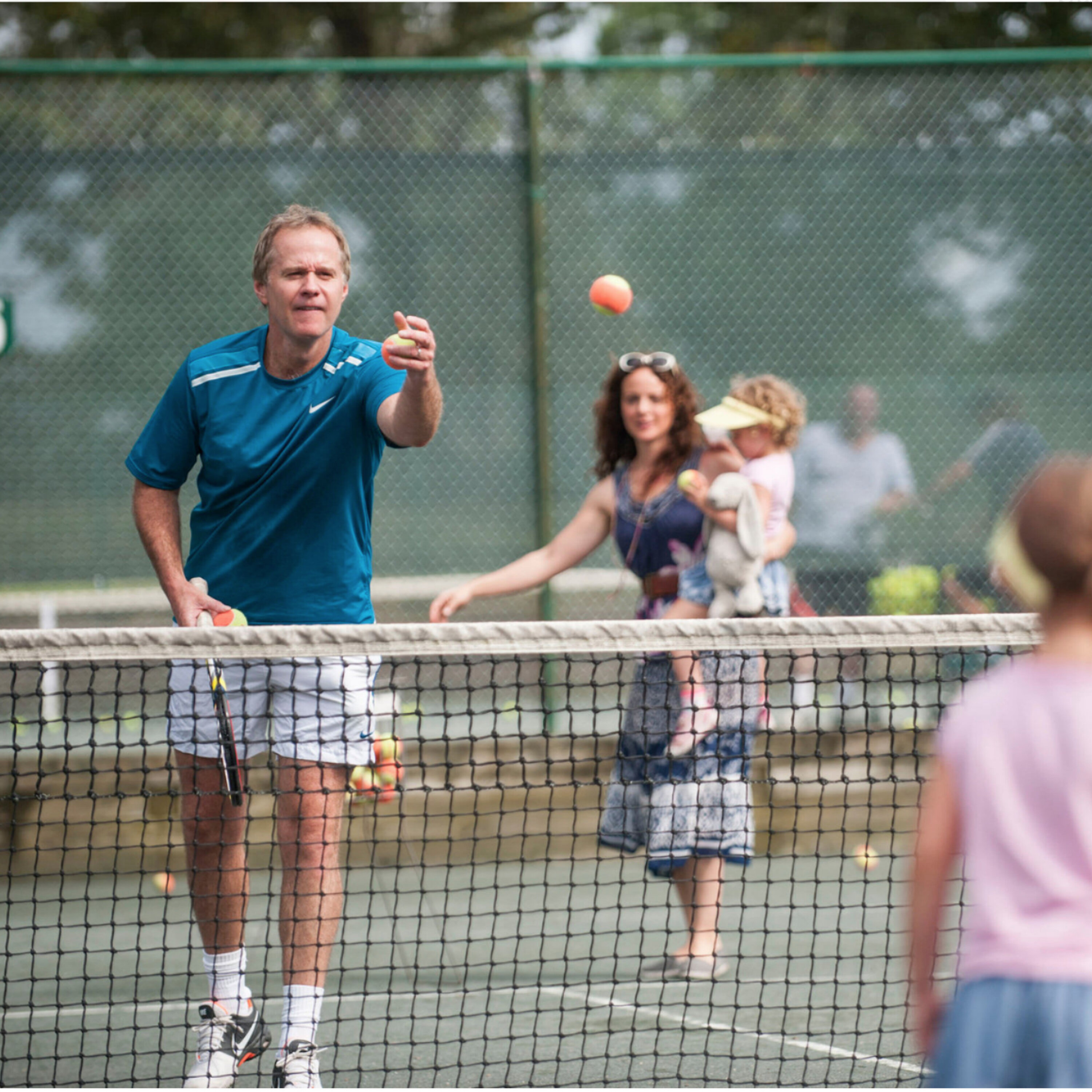
Patrick McEnroe
There are few voices in tennis better suited to give a snapshot of the ever-evolving sport than celebrated player, broadcast analyst and junior coach Patrick McEnroe. Patrick talks the best—and worst—matches of his career, the future of tennis coaching (and parenting) and the time Roger Federer was his ballboy.
Hosted on Acast. See acast.com/privacy for more information.
See omnystudio.com/listener for privacy information.
2019-06-21
51 min
Transcript
Available Results
Generated results are saved to the knowledge database for reuse and search.
No generated results are available for this episode yet.
Extract Knowledge
Pick what you want extracted first. Model, scope, and chapter options appear after a template is selected.
Generated results for public episodes are saved to the knowledge database so they can be reused and searched later.
Transcript
00:00:00
Speaker 1: And I like you a lot. You seems like a very nice person. It's the most asinine argument of all time, the most They'll be a smoothie, yep you made Yep, made it with some spinach, some fruit, some protein nuts. You know, I didn't quite get around to that. I'm penciling that in for if I get home before I pick up my daughter and take her to tennis.

00:00:43
Speaker 2: We like our podcast guests unshaven. It keeps it real.

00:00:45
Speaker 1: I figured that, you know, we could, we'd probably survive, you'd be you'd be okay with that.

00:00:49
Speaker 2: Well, I'm gonna take We're gonna do a photo shoot after this.

00:00:52
Speaker 1: I thought we keep it rough and tumble.

00:00:55
Speaker 2: We interviewed Billy King on Friend Wow.

00:00:58
Speaker 3: Yeah, Mary Corilla, Mary Corilla my personal here a journalist for me, Mary Carilla.

00:01:03
Speaker 2: That's Kim Cloisters made us cry.

00:01:05
Speaker 4: Kim Clesis was talked so much. We had episode one and two.

00:01:09
Speaker 2: Yeah.

00:01:11
Speaker 4: Well we would have talked for three days with Billy, but she had.

00:01:14
Speaker 1: To go to go. Yeah, it was a lot of hair.

00:01:17
Speaker 4: Alana was out at a meeting, so but she had specifically left a post it note on the table to say cut off at.

00:01:26
Speaker 2: It it's pretty stressed.

00:01:28
Speaker 4: Yeah, so we were a bit stressed everything because you know, Billy likes to talk, which can go on.

00:01:32
Speaker 3: But I did cry a little bit, and Renee did not give me as much shit as she could have because.

00:01:37
Speaker 4: I because we were under the gun.

00:01:39
Speaker 3: Well. Also, unlike both of you, did not play pro tennis. I played D one college tennis and it.

00:01:43
Speaker 4: Was a very as did Patrick.

00:01:45
Speaker 3: Where'd you play University Missouri? You played at Dan Stanford, Yeah, I heard of it. Congratulations on the women's national championship.

00:01:52
Speaker 1: I watched. I watched the final few matches. Yeah.

00:01:55
Speaker 3: I was one of the voters this year, so I got to vote on who was ranked what for Yeah, really.

00:02:01
Speaker 1: I mean for the team, for the seeding or for the individual and the team seed team rankings.

00:02:06
Speaker 3: Yeah, and Stanford came out on top. I thought they were going to lose to Georgia in the final, but they had a great last match.

00:02:11
Speaker 1: Listen, I don't know much about it other than I root for the cardinal. The cardinal.

00:02:15
Speaker 3: Well college tennis, you know, obviously for me was extremely meaningful, and I think for a lot of people I assume who come through you know, who whose path you intersect.

00:02:24
Speaker 1: With absolutely juniors parents, go to college is probably the biggest goal.

00:02:29
Speaker 3: And I think that's a good place to start, just given how much you have personally been involved in not only playing, broadcasting, commentating, but also as the owner, as the runner, as a former ust A leader, getting our juniors, getting our juniors sort of positioned for the best success. Let's start there, like, what's sort of been your philosophy?

00:02:49
Speaker 2: How do you how do you.

00:02:51
Speaker 1: Well that night? You know, it's I think about it from a lot of different levels, because when I worked for the USTA, you were sort of looking for players that you at least thought could be professionals. I mean that was sort of the mission statement. So obviously running into a lot of parents at national tournaments, et cetera, you know, most of those parents, I think, understand that it's unlikely their kid's going to be a professional player, so they talk a lot about college. So that sort of got me, you know, thinking more about how the system is set up to help kids, you know, get to college and play in college. So there's always been controversy even in the men's I was reading somewhere the men's team final of the twelve singles players playing for the two schools, there was one American out of the twelve singles players. So that's always been controversial, especially when I was there. There seemed to be a lot more controversy when I was running player development there is now because now all these things are still happening. But I don't hear anybody taking any shit for it the way I did. But I took that as a badge of honor because I felt that, you know, my my role at the time was to at least try to shake things up a little bit and make some make some changes to help sort of our pipeline, because obviously our goal was not to getting kids in college is a goal for the parent, which it should be, but the goal for USTA Player Development is getting players into the top one hundred, you know, the men's and women's game. So the so the goals are a little bit different. H that being said, obviously most of the players that came through the program or you went to play in college. But I feel pretty good about the fact that we put some changes in place in regards to how we coach kids and think and how we train kids. Maybe more importantly so when you see you know, TAFO and Fritz and Riley Opelka, and you know, kids like that that are you know, at least on at least to me, they're they're succeeding as professional players. Now, whether they become you know, Grand Slam champions, I think is another issue. And to me that's I'm not sure any governing body can affect that.

00:05:00
Speaker 2: That's tough.

00:05:00
Speaker 1: That's a tough one. But yeah, I think to me, that's the goal career. Yeah, we always said our goal was to get as many players in the top hundred as we as we could. On the women's side, we were always very lucky as a country and I think we still are because we have better athletes generally playing tennis that are young girls rather than young boys.

00:05:20
Speaker 4: Do you see that because of the fact that tennis is such a big sport for women, I mean it is really the you know, global money making money making.

00:05:30
Speaker 1: I think you just hit the nail on the head. I think the fact that if you're a young if you're a parent and you have a young kid who's you know, six, seven, eight years old, and you can tell that you're you know, you can usually tell if your kid is pretty athletic. You know, tennis is one of the very few sports as a female you can make a lot of money. I mean, obviously you could go play in the in the Olympics, in basketball and volleyball, you know, these great sports that are obviously a way to get into college as well, but you can't really make you know, a huge living doing those sport where it's maybe golf would be the other one as a as a female you can make a lot of money. Obviously, gymnast can go to UH the Olympics and then become.

00:06:07
Speaker 3: Professionals, but a sustainable, sustainable career similar to so.

00:06:12
Speaker 1: I always felt like when we were working with the program in the player development that the women's side was not as difficult because we had just better athletes playing. I mean when I first went to the USTA, our training center at the time was in Boca with WRE. We shared it with the Evert Academy. You know, Madison Keys was there, Sloan Stevens was there. Shout the shout out to Chrissy for her the work they did with Madison Keys. So there were you know, a lot just a lot more numbers generally a lot more bet you know, better player with more to work with. I think and so I think it was always going to be more difficult, uh to me on the men's side, because the men's side, you're dealing with uh, the top athletes from other countries, generally speaking in the America. I remember calling UH my head of men's coaching at the time. One year. It was Jay Berger, whose son is now a great professional golfer. And Jay was worked with me and Davis Cup for many years, and so he was running men's tennis and you know, junior tennis at the time. And one summer I called him and he was at the nationals, the boys twelve nationals, twelves and fourteens I think it was, and I said, well, you know, Jay, how's it going. You know, what do you see because I see a lot of parents with rolexes, and so to me, it was you know, if if you went you know, if you went to a national tournament in the twelves or the fourteens and you went to the girls tournament, you would see a lot more diversity. Yeah, you would see a lot more African Americans, you see a lot more Asians, you'd see Indian you know, you see white kids. You'd see all different backgards and when you went to a boys you basically, you know, maybe not only but yeah, obviously I'm obviously generalizing to some extent, but I think that was that's sort of how it felt a little bit, like you can get really good at tennis as a young kid, if you are reasonably athletic, you take a lot of you know, hit a lot of balls, whether you hit against the wall or you hit with the coach, or you play a lot, you can get pretty good. But whether or not you can become a pro, it's a whole nother deal. You sort of need. You need all that too at a young age, but then you also need the athleticism and physical ability, which we were seeing a lot more with the types of athletes that were coming to girls tennis.

00:08:33
Speaker 4: I think it's so interesting because when you look at Francis, for example, I think he's a perfect example of someone that given him not living literally at the tennis courts and his dad doing what he was doing in Washington, he probably would not have ever been exposed to tennis, for example, and he probably would have gone into soccer football. I mean, because this Francis would have been a great athlete no matter what sport he chose. I mean, he's just a specimen, right right, But it was tennis. He was exposed to tennis from a really young and so tennis is what he got into. His strokes are not I mean anything you would never teach. The serve you would probably not really teach. I mean, this is a kid that you would look at, maybe at thirteen and fourteen and be like, no chance, But then you go, wait a second, No, he's the perfect kid that you should be looking at because of the athleticism, because he's and he's willingness, he's not entitled. Dad didn't have a rolics, you know. So those are the kids that you need to tap into. But how do you do that? How do you pull them away from basketball? And I mean Kamal Murray, for example, has started this, you know, amazing tennis facility in the South side of Chicago, you know, and you're trying to get young black and brown kids to play tennis. And I mean I think on the women's side as well. I mean, Venus and Serena can take certainly about because they're going to bring the Madison Keys of Sloan Stevens and show them that there's that path. Plus women's tennis is so popular, but with the man they need that they need, the Francis could really change the sport in some way at least maybe in this country a vital Yeah.

00:09:59
Speaker 1: I I think he's a great kid. I've known him since he was a teenager, seeing him progress, So he's he's got a joy about him and a passion for the game, which I think is really probably the most important thing. And watching now working with kids in our academy, and just you know, seeing him day after day. So we we also have a scholarship program of you know for kids that are from the from the inner city that get exposed to tennis. And then it's one thing to get exposed to tennis and and and show an interest and a proclivity to be decent at it, but then to actually get really good at it takes an extraordinary amount of time and effort, you know, from everybody involved, and obviously including the kid and the and the parent parents or parent depending on the situation. So for Francis, you know, I look at him and I see someone who who really loves tennis, loves to be out there, as Renee says rightly, So I mean he's got a physique that if you would probably just picked him off the playground, you know, he would have been a center field or something. Yeah, you know where defense of back and football, which you know, those guys got to be incredible athletes. So we're lucky we got him in tennis as and lucky as it as it turned out that his dad was at that Junior College park, the Junior Champions Center there and he developed well. But he was again you know, they developed him. But when we were at the USTA, you know, he was certainly one of our top kids. So we tried, I think making the overall program better, getting more training out there, working with some of those private academies is something we really tried to do.

00:11:32
Speaker 3: Let's double down that just because you know right now you refer to the academy. You're talking about the McEnroe Academy, which is part of the sport time sort of called.

00:11:39
Speaker 4: John McNay Academy, And I can tell you I'm going to say a lot of the mc and roe in the future. I'm just saying that, you know, from my standpoint.

00:11:49
Speaker 3: At a beautiful facility here in New York on Randall's Island, but you and I have hit there. I hit there all the time I played out there. It's a great facility, Clay and I see. I saw Venus there a cople weeks ago.

00:11:59
Speaker 1: Serena was there just right before she went to Rome. She was there for a couple of days.

00:12:02
Speaker 2: Beautiful place.

00:12:03
Speaker 3: Tell me, you know, just because at one point you and her brother were coaching on opposite sides of the fence, him at the private academy and you running USCA player development. Now that you're both at the private side of things, you know, you mentioned scholarships, you mentioned some of the systemic stuff. What are some things that you can do now that you couldn't do when you were running us STALL.

00:12:22
Speaker 1: I mean for me personally, it's very fulfilling because I can really get involved with the kids and the parents and the coaches. You know, I was and actually be on the court. You know, most of my time there is actually spent on the court, which at the USCA I rarely did that. You know, My job was mostly administrative and political and sort of overseeing the whole program. So that part of it I really enjoy, you know, actually trying literally working with kids and being on the court, helping run the group programs for the for the for the coaches, and for the after school kids. So that's really the meat of the of the academy is the kids that come after school. Now we do have a all home school program. John's sort of philosophically been against that, you know, his in his life. But you know, the times have changed, the world has changed, and you know, kids are just playing more and kids are are are are doing more to get to this level. So we fight. We don't, I wouldn't say we fight about it, but we disagree still quite a bit on how to produce players. Yeah. Healthy, it is, actually, and we're actually getting along grade we enjoy it. Yeah, I enjoy that part of it. And now, you know, I'm not gonna say I'm totally coming around to his side, but I starting to see the method to his madness a little more. Yeah, I'm starting to see that, you know, he maybe gets it a little more than I thought when it comes to, uh, you know, just getting kids to actually play tennis as opposed to doing drills and you know, technique and all that, which I still think is probably more important than it's ever been because the bar has just been raised by all these players that their technique is great, and their athleticism is great, and their ability to actually play the game.

00:14:01
Speaker 3: So we're kind of talking about the balance between sort of the like innate match readiness or competitiveness as opposed to like, you know.

00:14:08
Speaker 1: Like John would say, like, you know, it's stupid to do a cross court drill. Why would you ever do that? You would never do that in a match, you know. So you know, meanwhile, Bjorn Borg and Giermo Vilas you know, the probably did it for six hours, right, Yeah, so we we had Rafi on the doll and you know, joke all these guys. So we uh, we sort of go back and forth. But I think there's a there's a balance obviously running in at a private academy which is got a for profit side, and then we've got a you know, a scholarship side. So kind of finding the balance between those things is not easy either because the club has to stay in business and the club has to run and get get people to pay to come, which many people do and pay a lot of money to come. So obviously tennis and it is New York and you're dealing with that that market, so it's sort of a unique market when it comes to us.

00:15:00
Speaker 3: I mean, speaking personally, what I love so much about living in New York and playing I mean, you grew up here, queens.

00:15:07
Speaker 2: Playing here now is not easy. It's very, very difficult.

00:15:10
Speaker 4: I don't know. I wandered on to the West Side Highway courts yesterday at four o'clock.

00:15:13
Speaker 2: I played twice.

00:15:15
Speaker 1: Wow, that's pretty good.

00:15:16
Speaker 4: No, But I mean, just you know, I don't have a real job, so I understand more flexibility. But post five pm time is.

00:15:21
Speaker 1: A little bit.

00:15:22
Speaker 2: It's a little different, but generally spaces at a premium and my.

00:15:26
Speaker 1: Guesses, you're not up like it's seven in the morning when.

00:15:30
Speaker 4: You know, unless I got to change the car.

00:15:32
Speaker 2: I've tried to get her up, Adam, Yeah, that yeah.

00:15:35
Speaker 4: Caitlyn always was trying to get me to hit at like eight. I'm like, dude, and then you know, and then leave for me brand who you know.

00:15:41
Speaker 1: We I'm friends with tennis player too.

00:15:44
Speaker 4: She's a very good tennis player. She's like, hey, you want to hit at seven? I'm like, is that a question or is this literally happened the other day? She's like, you do you want to come and work out at six forty five at the gym, and I said, I looked at her like with this face, and she goes or drinks on Saturday night.

00:15:58
Speaker 1: I go, yeah, second place, Yeah that'd be much.

00:16:01
Speaker 4: Well, you know, most tennis players don't usually do a lot before nine, I mean other than you kids.

00:16:06
Speaker 1: I remember going to Spain when my first tournaments, I played in Madrid, and I remember getting there and I was all gung ho, you know, it's going to play. And this was it was a smaller tournament at that time, wasn't like the Madrid Open. And so I went to all the guys, you know, it's the only American there, all the Spanish guys in the European guys. I said, hey, anyone want to you know, can we practice? Anyone to practice tomorrow? Because I was still on like jet like me, you know, like nine or ten. They looked at me like I was, what do you what are you crazy? There's nobody's gonna be there before twelve, you know, So I fil I slowly got used into that European you know, Spanish mentality. We practiced from about twelve one o'clock on because we're not going to bed until about three.

00:16:43
Speaker 4: You're saying you want to get an adull. If you get you want to get, America might have a chance to win at least one.

00:16:49
Speaker 1: At least a couple of games. Maybe.

00:16:50
Speaker 4: Actually, you know, I want to talk about that with you, because what's your thought, presless on I mean, we're totally tangenting off what we were talking about. But five set men's tennis.

00:16:59
Speaker 1: And I'm a little torn by that because I do you know, I like the epic matches that have been five setters, but I mean there's also been epic matches that are two out of three. I do think that when the rules of tennis were made, that somebody was smart enough to think that best of five. You know, tennis is a game of skill number one. Skill is the most important aspect of tennis. Okay, you could be the fittest person on the planet, but if you can't time the ball, you have no chance. So but I do think that fitness is a part of it as well, and I think that going five sets is a little more of a challenge in that respect than two out of three. Now that being said, you know, the Olympics, for example, was two out of three, and there were some of the great matches of all time in the Olympics, and I did not. My daughter, who's a reasonable junior tennis player, you just turned thirteen at one point, said to me in the last you know, eighteen months, Dad, how come men play best to five and women play best to three? Now, what would my answer be to that? There's no answer. I mean, it's like, because that's the way it's always been tradition is not a great answer. No, it's not satisfying to me. In fact, so to me, it's like, I guess because you know, when they made the rules, women were weaker, or you know, they thought I mean that's basically why yeah, something they couldn't handle it.

00:18:25
Speaker 4: You know, I don't want seven I don't want a seven hour was.

00:18:30
Speaker 1: You don't need to say and a half hours of women. So I mean, I think I think if we could I think, if we could all start from scratch, I think two out of three would be the best way to go. I'm not sure that's going to happen. Yeah, meat loaf one of my dad's favorites here. Yeah, so I think that two out of three would be great. I don't see it happening because I think that this Grand Slabs would just say, you know, this isn't going to happen. So, but I do think that best of five is now is not if you played best two out of three, the better player is going to win, you know, ninety four percent of the time. If it's best of five is at ninety four point five percent.

00:19:10
Speaker 2: I mean, somebody tell me the worst player who's more fit? I mean, I'm sure that.

00:19:13
Speaker 3: Well.

00:19:13
Speaker 1: I used to love playing best of five because I felt I could beat better players because I was fitter. So I would look forward like at my level, I was like a decent player, but I always felt I would I could do better in Grand Slams because I was fitter.

00:19:26
Speaker 3: Renee has a very similar thought process when we talk about coaching on court coaching, which is just she felt like, and I totally agree with her, even though I'm kind of pro on court coaching because I think it's a better experience for the fan. But I think her point was like, well, I'm mentally fitter, so if I wat I had.

00:19:40
Speaker 4: Time, there's no chance in God's given earth that I am mentally fitter than anyone. I was mentally smarter than, like tactically smarter than a lot of players, So you sort of took by by allowing a coach to come down and talk to a really dumb player. And there's a lot of really dumb players that hit the ball exceptionally well. I mean, Mary Piace wants to me on double score, Okay, Stubsy, tell me what to do because I'm the dumbest best player you've ever played with, literally verbatim, you know, because she gave her a game plan and she could, you know, execute, it's so beautiful, but she wasn't run. Yeah, it was a bit harder for her to work out what to do. But I didn't have the strokes of Mary piss but I actually had a decent mind for tennis. So you took away of strength for me by bringing a coach down to be able to tell a player. So originally that's why I didn't like it. Now, working in TV, we love it because we can hear. So I think now it's time to just throw the spanner and the works and let's have on court coaching at all times.

00:20:36
Speaker 3: You know what. The reason I brought that up to kind of tie together what we were just talking about with five satters back to sort of the conversation we were having before about academies in the UXCA, which is you know, you are a very unique person in the sense that you have I wouldn't say equal accomplishments. I mean your your accomplishments on the tennis quart are pretty profound, but you have had a ton of experience in the coaching and sort of administrative side, certainly the broadcasting and journalistic side, and also the player and so from that perspective, and your parent of children who play tennis, so girls too, which is really not it's not an insignificant fact because they're the ones who most often bump up against the sort of I would say worst parts of our sport, which shows some of these traditions that are a little hide bound.

00:21:17
Speaker 2: So I'm curious to see.

00:21:18
Speaker 3: You know, we can talk about it in a number of different ways. Maybe it's five sads, but it's coaching. Maybe it's you know, the way tournaments sort of reward Grand Slam points as opposed to emphasizing the day in, day out of the tour. But how much does tradition sort of generally hurt tennis as opposed to help.

00:21:32
Speaker 1: But do you think I think it hurts it in getting Some of these things change quickly I think things take time for any changes to happen. I do think that. I mean, part of the beauty of Wimbledon is the tradition of the event and the you know, the walking out on the court and all those things that make it unique and make it special. And so certainly there's an argument that well, best of five is unique to the majors. You know, Well it didn't know. It wasn't always unique to the majors. There used to be plenty of tour events that they played best of five and finals.

00:22:01
Speaker 3: You know.

00:22:01
Speaker 1: In Bosl, Switzerland, I played the final against Wayne Ferreira, you know, and we played best if I. By the way, Roger Feeder was my ball boy. Yeah, and one time I was interviewing him after he won Cincinnati and I was doing I was doing the court side for CBS at the time, and so I went to talk to him.

00:22:18
Speaker 2: You know.

00:22:18
Speaker 1: Uh, the match took like forty nine minutes the final, so I said, Rogers, and we got a little time to kill, you know, once we come back from commercials. So you know, I might probably ask you a few more questions, no problem, because he goes, oh, you know, I ball boyd for you. No, he literally says to me, we're sitting in there after he's just won the title. Yeah the first time you yeah, like the first time, like you know, I knew him, but it was like we were just kind of sitting there shooting the breeze for you know, shooting for ninety seconds. And he says, you know, I ballboyd for you. I said no, because yeah, you were at Basil because he was that's where he was from. Yeah, And I said, oh, are you're rooting for me in the final? He goes, no, I wasn't because Wayne Ferrara was South Africa. Africa. Yeah, but there's actually somebody when somebody actually sent me years ago, there's actually a shot picture a picture of him of me like walking to the changeover something or serve, and he's he's actually running across picking up the ball. I'm like, I got to this. I need to still shot. I need that. Always a question again, tradition, Yeah, so I think there's a lot of I mean, traditions are good things. I do, like shaking things. As I said, I mean, to me, best of five sets and coaching are just because because because that's the way it's always been. That doesn't mean it's right.

00:23:38
Speaker 4: Do you also think that. I mean, I don't know if this would happen, but if if you made it best of three in slams, maybe you have the finally best of five, or.

00:23:47
Speaker 1: Maybe the quarters on or something, you could do.

00:23:49
Speaker 4: Something like that. But I also think that men, I think we might see a few more of them playing doubles if that was the case.

00:23:55
Speaker 1: I disagree with that. I don't think they would. I think it would be nice used to think that they would, but I think there's too much on the line at the majors for them to do that. And it's not even physically, it's just just too much. It's scheduling. Yea, they're not gonna want to their day off, you know, the between the semis and the finals. They're gonna want to have their routine. Maybe they had a tough three setter, they could have a tough three set match. It's like an you know, not as tough a four set match. So I don't think that would happen. But I don't think that's the reason why it should be considered to go to best two at of three.

00:24:27
Speaker 4: I just think that mine is entertainment time.

00:24:29
Speaker 1: I mean entertainment time yeah, exactly, you and I and we sit.

00:24:34
Speaker 4: There in the green room sometimes at Wimbledon, waiting to go and do some work, and you know, it's like, oh my god. Sometimes we sit there and I'm like, I cannot believe this match is still going or it's like and my biggest problem with it is and I'm gonna get so much. I get so much. So many people who are so polarized by this. But I've seen top players tank sets. I saw I won't mention the name, but I know in a final of a Grand Slam at the French Open, I saw a player tank the fourth set because he got down a break and he just didn't even try. He didn't try to win back the fourth set and just to get it into the fifth set. And for me, that's not what tennis should be about. It should be every single point should matter. It certainly wasn't rougher because we know that even if it was down five love, he'd still be trying. But I've seen players tanks since.

00:25:18
Speaker 1: Yes, either way, that's not true. He would he would throw it if you were I've seen him. I've seen the doll give points away. But I mean, that's my I have a I don't think that has anything to me that doesn't have That's not a good enough argument for getting rid of best of five, because if I win the first set six to one and I'm down you know, four oh thirty eleve, I might tank a couple of points to save, you know, for the third set. So I don't to me, I don't know if it was best to three, you would never do that, because you might I might do that if I were down five zero, well five. I mean, I know what you're saying.

00:25:50
Speaker 4: You know what I'm saying.

00:25:50
Speaker 1: I think it's to me what you said, the entertainment value is more important. The entertainment meaning it's you know, a lot of times you're watching, you know, and just Djokovic at the US Open, you know it's six one six one three h yeah, and it's just like when is this?

00:26:08
Speaker 2: Yeah?

00:26:08
Speaker 1: I mean, how is this good for anybody? Where you could bring it? But the problem with tennis is that, you know, we're so sad and like we've got two matches at night. We had a men's and a women's. Oh, we gotta have the women first this time, or else it's unfair. Oh, we gotta have the men's second. Whatever, it's too it's not fair for the men.

00:26:23
Speaker 3: You know.

00:26:23
Speaker 1: Then during the day we need three matches on center court. So I think you have to look at like the whole way the scheduling is is put out there because now in the second week of Majors, there's not that much product for the fans, right, Okay, so that's part of it. The first week, it's you know, there's so many matches, so two out of three no problem. In the second week, you know, if we have a two out of three set match and it's one night match and people are paying five hundred and twenty five dollars for their seat and it's you know six two six one, yeah, you know, so it's like you the whole nature.

00:26:55
Speaker 2: Of the maybe they would watch the doubles.

00:26:58
Speaker 1: Probably not the will probably not watch doubles.

00:27:01
Speaker 2: Distinct anti doubles.

00:27:03
Speaker 1: Accomplished doubles, well, yeah, I was much better in doubles, but people don't care about doubles.

00:27:08
Speaker 2: I mean, yeah, I think they could.

00:27:09
Speaker 4: I mean, we saw the final of the mixed doubles at the un.

00:27:11
Speaker 1: Not really, I mean I think they could if it was williams Is and you know Fetter, you know, like in the Labor Cup. We did that yeah because it's Yeah, because it's quick and it's the best players play. So now if the stubbs these argument argument that gets let's get the singles players to play more doubles in the majors, there's only one way that's going to happen. Well, there's two ways, money and points. Yeah, period, end of story. That's the only way. I mean, you're playing for three three and a half million dollars in singles and you're playing for you know, two point fifty for the double, which is good care whatever it is, it's good, but it doesn't compare to what the men's is and how many people are paying to go see the doubles final. That's the other.

00:27:51
Speaker 2: Problem that argument.

00:27:52
Speaker 3: I feel like it's sort of a circular issue where it's like, well, you know, the men saw more tickets own the women. You're like, well, not always, and also the combined events do better, but more like if you market and you promote, and also keeping in mind people.

00:28:04
Speaker 1: That's totals no market and promote. We've been talking about that for fifty years.

00:28:09
Speaker 2: And I think more people play doubles, more people want to watch.

00:28:11
Speaker 1: Nobody plays nobody plays football. He plays Who plays the NFL football?

00:28:16
Speaker 2: No longer anybody letting their kids?

00:28:17
Speaker 1: Okay, but who watches NFL football? Everybody? Well, so the idea that people play doubles it means they want to watch doubles is and I like you a lot. He seems like a very nice person. It's the most asine argument of all time. That's why we like you. Yeah, it just makes absolutely no sense.

00:28:34
Speaker 3: Yeah, I mean because I love to see it marketed and promoted, and to see I mean you you may.

00:28:39
Speaker 1: Brian Brothers are marketed and promoted. I mean, they're great for doubles people, but people still don't watch them on TV. Yeah, I mean, if they're playing the doll and Fetter, people might watch the Goky.

00:28:49
Speaker 4: I do you think? I do think it does come down to just visibility though, you know, I mean it really does.

00:28:55
Speaker 1: So if you put if you put mahoot and airs her bear, who's who's her? That people that people care if they're on TV more nobody cares. I think if you put give me some of the doubles, the women women's doubles teams, give me some of the top.

00:29:10
Speaker 4: That's part of the problem because.

00:29:13
Speaker 1: If you're marketing. Okay, so she's a nice person matter, so if we if we market her like people are gonna care.

00:29:20
Speaker 2: No, no, no, I'm not talking about marketing the doubles players. I'm talking about marketing doubles as a vibe.

00:29:24
Speaker 1: Just you're so wrong. You're wasting time, wasting you need to think of other things. Coaching, scheduling. Two out of three. I like that discussion.

00:29:36
Speaker 2: Labor Cup.

00:29:36
Speaker 1: I mean they're great about Cup is longer any any team, any team event. You can get the interests like we got in Labor Cup and and in in Davis Cup. You know where the people come together is awesome. I love the Hopman Cup and to me that was one of the great things this year.

00:29:54
Speaker 2: But what were they watching?

00:29:55
Speaker 1: What about watching watching Federating and Serena.

00:29:58
Speaker 2: Yeah, but they're watching doubles.

00:30:00
Speaker 4: But they were watching it.

00:30:01
Speaker 2: Sure, but I think those both can veteran.

00:30:03
Speaker 1: Serena, that's what they're watching. Yeah, they're not watching who did Benchic and Tiafa? We love both of them. There's great, great young talents, but nobody's watching.

00:30:12
Speaker 4: Well, you've got the two greatest players of all time on the court together. We've never had that playing again.

00:30:16
Speaker 1: But I do think.

00:30:17
Speaker 3: My mother in law called me, who doesn't know if the look about tennis? She said, is Roger Feeder playing against Serena Williams. And I was like, it's a little more complicated than what you just said, but in essence.

00:30:24
Speaker 1: Yet right, that's what's happened.

00:30:25
Speaker 4: What do you think of Billy Jean's idea, because we spoke to Billy and Billy said that college tennis should be like a team tennis format and have them all on one court and have them going at it rather than her biggest problem is, you've got eight courts going on, how are you going to be focused.

00:30:38
Speaker 1: I'm not I'm not opposed to that at all. I think it's like it would be.

00:30:41
Speaker 4: The third biggest sport in college if we did that. Well.

00:30:44
Speaker 1: I love her optimism, but I don't think that's a crazy ideas. Yeah, I know some of them are coming around. People are finally coming around to so I think tennis. One of the great things about tennis is that men and women can play together, yeah, you know, and can compete in an equal playing field. So there's no other sport that really has that. I mean golf, okay, but but tennis sort though, Patrick game. It's really hard game. Yes, incredibly, I don't.

00:31:08
Speaker 2: Know, difficult, but I'm glad.

00:31:09
Speaker 4: At least arguing.

00:31:12
Speaker 1: Something thirty one minutes and we agree.

00:31:14
Speaker 4: All my golfing friends that are like, you know, it's not a sport until they're running into John Daily is playing golf. It's a game.

00:31:20
Speaker 1: Okay, it's just but no, you got to be pretty pretty darn towns.

00:31:24
Speaker 4: It's a bloody no.

00:31:25
Speaker 2: You've got to be herded darts too. But I'm just saying it's not a sport. It's a game, thank you.

00:31:29
Speaker 1: College tennis is awesome. It's been through a lot of changes, it continues to go through them. So I would look at that, well, let me it's a fun idea.

00:31:37
Speaker 3: Let me ask you maybe a less controversial question than us are now profound rift over double Well, I think we'll get through it in a relationship.

00:31:45
Speaker 1: I think we'll be fine.

00:31:46
Speaker 3: But we'll talk about college tennis just for a little bit. Stanford Cardinal, Missouri Tiger what uh nothing for reason?

00:31:54
Speaker 1: Too good?

00:31:54
Speaker 2: Too good?

00:31:55
Speaker 1: God, Yeah, just.

00:31:55
Speaker 2: Straight to the pros.

00:31:57
Speaker 3: You're talking about how many many players are not American. These are scholarships being awarded to kids. I too had a team that was ninety percent not American born. I mean, in some ways it was great. I have a friend Bulgaria now and I've visited, you know. On the other hand, you know, it does sort of speak to getting American interests, getting sort of you know, where do you net out on that?

00:32:19
Speaker 4: What has changed?

00:32:20
Speaker 1: Yeah, so this one's tough. I think that the American way, in the American spirit, is to allow people from all backgrounds and countries right into this country, despite some of the current political environment we're in, but.

00:32:33
Speaker 4: In generally changing.

00:32:34
Speaker 1: Yeah, in general, that's sort of been the American way. So if you're going to say, you know, we need to put a put a cap on the amount of the number of scholarships per team, I think that would be probably a reasonable you know, bargaining tool, I mean, a reasonable way to go because I do think that having you know, an entire lineup of foreign players is you know, as an American it's hard to see. At the same time, you know, you might have the orchestra band of you know, the violinists or might all be foreign. Yeah, you know, in a college orchestra or something, or a ballet you know, ballet.

00:33:14
Speaker 2: School less scholarships at SICK But yes.

00:33:16
Speaker 1: Yeah, so I think that there's some merit to to looking at. Obviously, when I was at the USCA, I mean, it just got pounded. I was going to say, well, there's nothing the USDA can do about it, I mean other than put some pressure excuse me on the on the NCAA A. But the NCAA is running a multi billion dollar company. They could just cap it, maybe have uh you know, you know, maybe three three per team something like that, or at least.

00:33:39
Speaker 4: You have the quotera is three Americans on your team, you know what I mean?

00:33:43
Speaker 2: Or quota Yeah, I mean, because it does, it does.

00:33:46
Speaker 3: We had a piece on it in the magazine, a couple of a neutral but I mean just sort of kind of talk through, you know, some of the some of the intricacies of having this conversation. But I remember it very well, thinking to myself, well, if I had not had any you know, as a kid growing up mostly in America, you know, maybe I would have gotten to a better school.

00:34:03
Speaker 2: But I shouldn't have.

00:34:04
Speaker 1: Do we know if other college sports have that, Do they have quotas? Because I know that I've seen the numbers those other tennis is I think at the moment one of the highest percentage of foreign players going to set On.

00:34:14
Speaker 3: I don't see a lot of baseball teams, football.

00:34:16
Speaker 1: Team basketball, you know, but imagine for a second if you could that you know, seventy percent of the Duke and North Carolina basketball teams were farm Imagine that just so you know, like if it were soccer for example, you know, and and Europe didn't have a professional system the way they have, so you're basically a professional soccer player, you know at twelve, yeah, or thirteen you go to one of the clubs.

00:34:41
Speaker 2: Would still be the product it is?

00:34:43
Speaker 1: Yeah, I mean that's the thing. I mean, I think it. I think it. I think it still would be popular because you know, the NBA is getting more and more foreign players. But I think that because you can still kind of go to the team part of it. You can still say, you know, I'm still going to root for Stanford, even if they've got a couple of foreign players on your team. I'm still rooting for stay effort. I'm not really rooting for the individual, it's other team. But the other other sports, I don't think UH have the same kind of numbers At tennis. Some have them. Some are pretty close because I remember seeing some stats and there's a few sports that have quite an influx of foreigny.

00:35:16
Speaker 4: I had to guess swimming. Hey, I want I want to ask you because you know we have your limited time because you know you've got to be a dad today to pick up my daughter. You're going to come back in the city do something for ESPN. What's your favorite memory like tennis match.

00:35:36
Speaker 1: My me me personally that I played.

00:35:38
Speaker 4: Yeah, yeah, you did play Patricks.

00:35:40
Speaker 1: I did play a few good matches.

00:35:42
Speaker 3: Uh.

00:35:42
Speaker 1: You know I I probably the most believe it or not, Uh, probably the most proud of a match that I lost, which was Di Boris Becker at the court of the US Open, because you know I had beaten them in a major in Australia before. Actually I lost to them in this means the Australian, which was my best performance in a Grand Slam, but when I played him at the US Open. I've been working for a time with a new coach named Dicky Herps, who was now a great buddy of mine the years later and his last name is Herbs Herbs at h R. Bay. Yeah, so anyway, he he, he sort of helped me get like, you know, I was a fifty to seventy player kind of thing, and so he said, you know, he he inspired me and helped me become like a top thirty player, you know, and maybe even arguably for a time playing even at a higher level. So I played Becker and the Quarters of the Open, and I was playing as you know, as well as I could play, I thought. And I lost the first two sets. You know, it was like six four seven, you know, close, but I was playing really well. And then I remember sitting down in the change room and beginning there's I said, I said, what the what the F I'm not going to curse even though it's a podcast, okay, I said, I said, I'm playing. I said, I might as well try to do what my coach has been telling me to do, which is, you know, play play, play with a little more, play bigger. For me, I was a counterpuncher, so you know, play bigger, try to hit a little bigger, try to yeah, go for it a little more. So I was like, screw it. I mean what I got to lose. I'm down two sets left. So I started going for it, and I win the third set, and you know, crowds going crazy. It's an afternoon to the night, you know. For me, the best experience because I was a local kid and I was finally, like, you know, having a good US Open and I ended up losing this four set tiebreak, but I believe I had a set point or two to get it to a fifth, you know, And so I just remember saying, you know, that was if I maybe started the match like that. Yeah, who knows, you know, even though Becker was playing at the top of his games. Yeah, I said, you know, maybe I could have won it, but at least I at least I did it.

00:37:48
Speaker 4: Why didn't you listen to your coach then?

00:37:50
Speaker 1: I mean, come on, well I did listen. It just took me a little while. Maybe I need them to come out in the change over.

00:37:54
Speaker 3: It.

00:37:55
Speaker 1: So you're playing well, but you're you know, you're you're still losing me. Yeah, so that's to get the coaches out there, well.

00:38:02
Speaker 3: Did I mean that's what's so great about tennis, right, We're all confronting our own mental interior at all times, usually by ourselves. Did you take that away from that match, Like, Okay, I'm gonna go. I can find this place of aggression right.

00:38:15
Speaker 1: You know, I certainly tried. I mean I wasn't in that you know, that natural of a player in that way. So but it was you know, it's just a great experience to be able to see that the work, you know, it paid off. And uh, you know, tennis, like you said, is tennis is tough because you you you can play great, and you just play someone that's just better. Yeah, you know that's just physically better than you.

00:38:35
Speaker 4: Okay, worst moment like toughest loss.

00:38:39
Speaker 1: Well, obviously the loss of Connors was the toughest loss. When I was up two sets and you know, love three, love forty. But who remembers the details?

00:38:45
Speaker 4: I mean, yeah, a story about it.

00:38:47
Speaker 1: Yeah, so yeah, so that was, uh, you know, the one that people remember and I remembered. It was certainly a gutting loss. At the same time, I did learn from it. You know, I came back and won a lot of matches, and I was down two sets to love in my career with nobody knows about, but I know about, you know, so that was uh. You know, people still come up to me and say, how was that that match? And I was rooting for you, I said, but you were awfully quiet. Because I didn't hear anybody. Yeah, right, that was pretty much.

00:39:19
Speaker 4: Did he say anything to you at the net money?

00:39:20
Speaker 1: But you like, you know Jimmy again. No, Actually I got along well with Jimmy. Actually, he and I were, you know, we used to practice together quite a bit, and I think he did that more to probably piss off John spin. Well, he lit more spin on the for him, the more slight, but he could drive through it a little better than me.

00:39:38
Speaker 2: But he had more antagonistic relationship with your brothers.

00:39:41
Speaker 1: Oh yeah, I think he was. Yeah, I think he liked to practice with me because it was maybe pissed John off, you know. Yeah, so it was another way to get under his skin. But but you know he had My game was more similar to Jimmy's game than it was to my brother's game. Nobody could play like John, So my game was, you know, a very poor man's version of the way Jimmy played, you know, try to take it early and better back hand.

00:40:03
Speaker 2: Yes, but you guys were rally players, rally players.

00:40:08
Speaker 1: Big huge serves, right, Yeah, so I think it was always good for me to practice with him.

00:40:12
Speaker 3: Yeah, that's interesting because I mean, pretty universally to this day, people you know, like, oh, you know everyone's byguns, by guns, and then it's like, well Jimmy Connor is still out there like Ret.

00:40:21
Speaker 2: And Old Wrung turn the screws.

00:40:24
Speaker 4: Yeah, yeah, although those personalities, I mean, what do you I mean if Nick Kurios was playing.

00:40:30
Speaker 1: Back then, well, if Nick Currius was playing back then, he I don't think he'd get away with a lot of the stuff he gets away with because those guys wouldn't put up with it, you know, in a way, probably would go up to it. In a way, it probably would have been better for him because he'd probably have to get his act together and and and and buckle down, as they say in your country, you buckle down. But in fact, I for some reason this morning before I came, I had I turned on some Australian oh and they were just blasting it was this woman was she was horrendous. She was saying, you know, oh, because the Greeks coddle their kids, And I'm like, can you say this on television? Like she was actually said it was like a national show. What are we talking about about? It was Australian like talk show and they were they were brutalizing Curios for his behavior.

00:41:18
Speaker 4: We have a lot of PC in Australia.

00:41:20
Speaker 1: I've seen sports shows, but I happen to like Nick Kurios as a person, you know, having spent some time with him in David and Labor Cup, and you know, he he he, he took up the wrong sport because he's really a team guy.

00:41:36
Speaker 4: Well you say that, but I'm my god, is he a great tennis player?

00:41:39
Speaker 1: He could be a great tennis player. He's not a great tennis player because he doesn't have all the whole package. So he's got a lot of great skill and he has a lot of physical ability, but he is not a great tennis player.

00:41:51
Speaker 4: Compare him a little bit because I mean, obviously no one knows John like you. But I mean, I mean John was obviously so famously remembered for his you know, out personal the court too, but he was such a great player. Compare those two a little bit, Like obviously, you know the John's results were incredible from the age of seventeen eighteen nineteen, I mean, he was winning slams. Like, is there any comparison just because there's they were both so volatile on the court.

00:42:16
Speaker 1: That's to me, that would be where it would stop. Yeah, because when you look at the competitor that John was and still is in fact at sixty. You know, I played with him the other day. He's pissed if he loses, you know, a baseline game. But John had a way of using his volatility to his advantage. You know, people thought he used it to the disadvantage of his opponent, which you know happened I think a few times, but generally he did it because he was pissed at himself and he wanted to play better. Yeah, you know, Kyrios kind of does it as a way out, you know, to get out of this situation. And you know, whatever you could analyze, you know, psychoanalyze why he does it. At the end of the day, it is what it is, you know, he does, That's what it is. Yeah, and John was in addition to they actually they both have great tennis under IQs. You know, Curios understands the game extremely well, but he doesn't if he's extremely lazy when it comes to how he when he gets to the net. You know, he stands straight up and he you know, he doesn't use his legs. I mean, you know, so he just you know, John, if you look at the way he played and his shot selection, et cetera. You know, was impeccable.

00:43:24
Speaker 4: He hated and this is what I say about great players. He hated losing more than he loved winning. I think you've got to hate losing more than you because everybody loves to win.

00:43:32
Speaker 1: No, I would agree with that, And but I think also he just had a very natural competitive side. And uh, he also liked to put on a show in a way that was you know, curios puts on a show just because he doesn't Maybe he doesn't think the tennis is enough for some reason.

00:43:50
Speaker 2: I get.

00:43:51
Speaker 3: I think it's similar to what you were saying. I mean, again, it's easy to but I think he does it because it's a way out, because it's a way of making it not about the tennis, which is I think something.

00:43:59
Speaker 1: Yeah, I mean I think if he if I think if he tried his ass off all the time and then he did between the legs and some of that stuff, like everybody would really love it, would be into it. You problem, But the problem is he just doesn't know how to balance it.

00:44:15
Speaker 4: If they were best of three at Grand Slams, do you think he would contend? Really?

00:44:19
Speaker 2: No, I don't you think this would be no matter what, no situation.

00:44:23
Speaker 1: Chance, because it's just not he's mentally strong enough. Yeah, physical is one part of it, for sure. And if it were lightning fast indoors or grass every tournament, then he would have a he would have a shot.

00:44:38
Speaker 2: But you think the problem it would persist.

00:44:41
Speaker 1: Absolutely absolutely. I mean he knows he can't hang for five sets. I mean, so that's that's like a gimme. So that's too easy to say he's not going to do it. But I still don't believe in a physical two out of three set match against those top guys that he could handle it.

00:44:54
Speaker 3: Yeah, let's go, just because we only have one or two questions left. But I want to get to you know, turning all of your life to experience your ideas into now the next generation for yourself.

00:45:05
Speaker 2: You have kids. You mentioned your daughter plays.

00:45:07
Speaker 4: What she's trying to say? Are you a nightmare tennis parent?

00:45:10
Speaker 1: Probably my daughter would say so, but no I don't think so.

00:45:13
Speaker 2: No, I'm prettyder no, no, no, no, I'm pretty calm.

00:45:16
Speaker 4: Have you met Patrick?

00:45:17
Speaker 1: Yeah, No, I'm pretty you know it's no, he is not. It is hard sometimes to watch, but at the same time. It's nice to watch him, you know, want to do something that's number one. So my other daughters are into dance and ballet and they love it, you know, So as long as they're doing something they love. If you know, my dad said to me years ago, if you don't want to, you know, I'll still love you tomorrow if you decide not to play tennis. I'm not sure if I really believe that, but with my dad. But but that's I mean, that is the truth. I mean, that's I think that's the way you have to look at it. So as long as she wants to do it and she's enjoying it, I think what I've realized through this process with her and and even working at the academy is how freaking hard it is to get good at tennis. That's what I really realized. And I realized that it's, uh, you know, the amount of time and repetitions that it takes. And for me, yeah, and for me, it was mostly hitting against the wall, you know, And that sort of brings me back to those memories. And then I look at not just my daughter, yeah, but then I look at I look at these kids, and I say, how could they miss that shot, like that's such an easy shot, like a short ball high in the fore And I'm like, actually, that's not an easy shot, Like they never they've never done that because they're just sitting at the baseline the same form. So that's a whole different shot.

00:46:30
Speaker 2: And do you think it's harder to get good at tennis than it was when you were kid?

00:46:34
Speaker 1: Because no, I don't think it's harder, but I think that it's No, I think it's uh, it's it's I think that is. I think that because the way our society is set up, everybody is programmed. So you know, even at our academy, it's like you come in for your two hours, you get your one hour lesson. You know, you got to get to your your tutor, you got to get to your dance class, you got to get to your homework. And so when you know, I think in our day, you know, I would just go to the club and hang around the club, and I'd go and find somebody to play. Was relatively instructor exactly. And my parents weren't worried about me. They weren't. We got to go pick up Patrick. You know, they call the neighbors, they send him home. I was at my tricycle, I mean, hitting on the wall. I didn't have a So I think that's you know, I think the whole society has changed, so that sort of that free time, that creativity time, that alone time is harder to find.

00:47:26
Speaker 4: Two things I want to get across before we have to let you even go and pick up your kids.

00:47:28
Speaker 1: Thank you.

00:47:29
Speaker 4: But one thing. First of all, I want to put this on the record. Patrick is the greatest dat Like literally I work with him at ESPN and we sit around a lot. We sit around a lot waiting for matches to end, and he takes every opportunity to FaceTime.

00:47:42
Speaker 1: His girls are the best.

00:47:43
Speaker 4: And when I tell you, who becomes like girls rule, he becomes the cutest dude. And he doesn't care who's around. He's like, hey, what do you call your daughters?

00:47:52
Speaker 1: Well there, I'll go by their nicknames, v Juju and Dies.

00:47:54
Speaker 4: Yeah, He's like he died. I mean, it's amazing, like, and he doesn't care who's around. He's he's the greatest dad. But I watched an HBO Real Sports the other day. I don't know if you saw it about Norway, and they had this incredible run at the Winter Olympics, right, they won more Olympics. I didn't see it interesting than ever in Winter Olympics. And one of the things that they stress in Norway and you know how they are they're like, oh, we don't do that. You know, literally, from six or seven till twelve, they don't rank, they don't time, they don't do anything that would make the kids feel lesser or more. Then so they're like, we just want them out.

00:48:33
Speaker 1: They're playing or sleeping and they're probably doing it by themselves and they're creating.

00:48:37
Speaker 4: And they get if they want to slide down the skis backwards, they are allowed to do that. It's basically having fun from six to twelve. So there's no ranking. He says, well, but you know, do you put it? Who's fuss He goes, No, it's not allowed. It's literally a government mandate which is that you're not allowed to rank kids in sports up until twelve. I think that's lovely, it's amazing. And then look look at I mean, Norway's the size of man, right, and it's like they're producing these world champions.

00:49:02
Speaker 1: Weather's good.

00:49:04
Speaker 4: But you know, so player in the world is from Norway, you know, so it's not like they're just winter sports. These are great.

00:49:12
Speaker 1: I came across an article recently interesting it is, well I hope ties into that, which is from Roger Feeder's mom, and apparently when they used to go and play, you know, before he went away to sort of train at thirteen, you know, she used to take him on the court and all he would do was just like mess around. Yeah, but he would do all these different shots. Yeah, you know, so he would be he would be creative.

00:49:34
Speaker 4: He would just having community tennis the whole mark of his game.

00:49:37
Speaker 1: Yeah, I mean, yeah, creating and also you know, being able to maneuver the racket and control the ball. And you know, once he figured out how to control his game and his talent, you know, that's when he when he became the greatest player ever. But uh again, it's that that that freedom, you know, the freedom to go out and enjoy the game, really have the you know, that's why he's still playing at his level, because he loves it.

00:50:01
Speaker 2: I want to play for my kid if he ever becomes good Corona champion.

00:50:07
Speaker 3: I don't know.

00:50:08
Speaker 2: I don't think he's got a lot of potential, to be honest, it's a professional. But I want him to love it because thank you for Patrick, I feel very seen anyway.

00:50:17
Speaker 1: Well, I really appreciate you guys having me.

00:50:20
Speaker 4: Thank you, and we don't get unfortunately for the Wreck Magazine podcast, we often have to do it on the road because we're traveling like you. But it's nice to have our local New Yorkers come into the studio.

00:50:33
Speaker 1: And you used to live right near here. I used to live on Lafayette Street.

00:50:36
Speaker 4: And then his wife was not his wife of Melissa. He's an amazing broad singer.

00:50:41
Speaker 1: And she's she's dealing with the burbs, which.

00:50:44
Speaker 4: He has to go to the burbs in Bronzeville.

00:50:46
Speaker 1: Yeah, but she's doing well there. We're doing good.

00:50:47
Speaker 3: Well. Listen, Patrick mcknrow, it's been a pleasure. Thank you for coming and come back anytime.

00:50:51
Speaker 1: I appreciate thanks about it.

00:50:53
Speaker 4: Thanks peedback Wimbledon.

00:50:56
Speaker 3: All right, and that's it for this episode of the Racket Magazine Podcast. Thanks for listening. Our host is Renee Stubbs. Our co host and producer is me Caitlin Thompson. Music by internationally renowned DJ Stretch Armstrong. Thanks to Tim Or Jerry and then the team at ACAST. Find us at racketmag dot com, slash podcast, and subscribe to us at any of your favorite podcatchers.
Chapters
No chapters available.