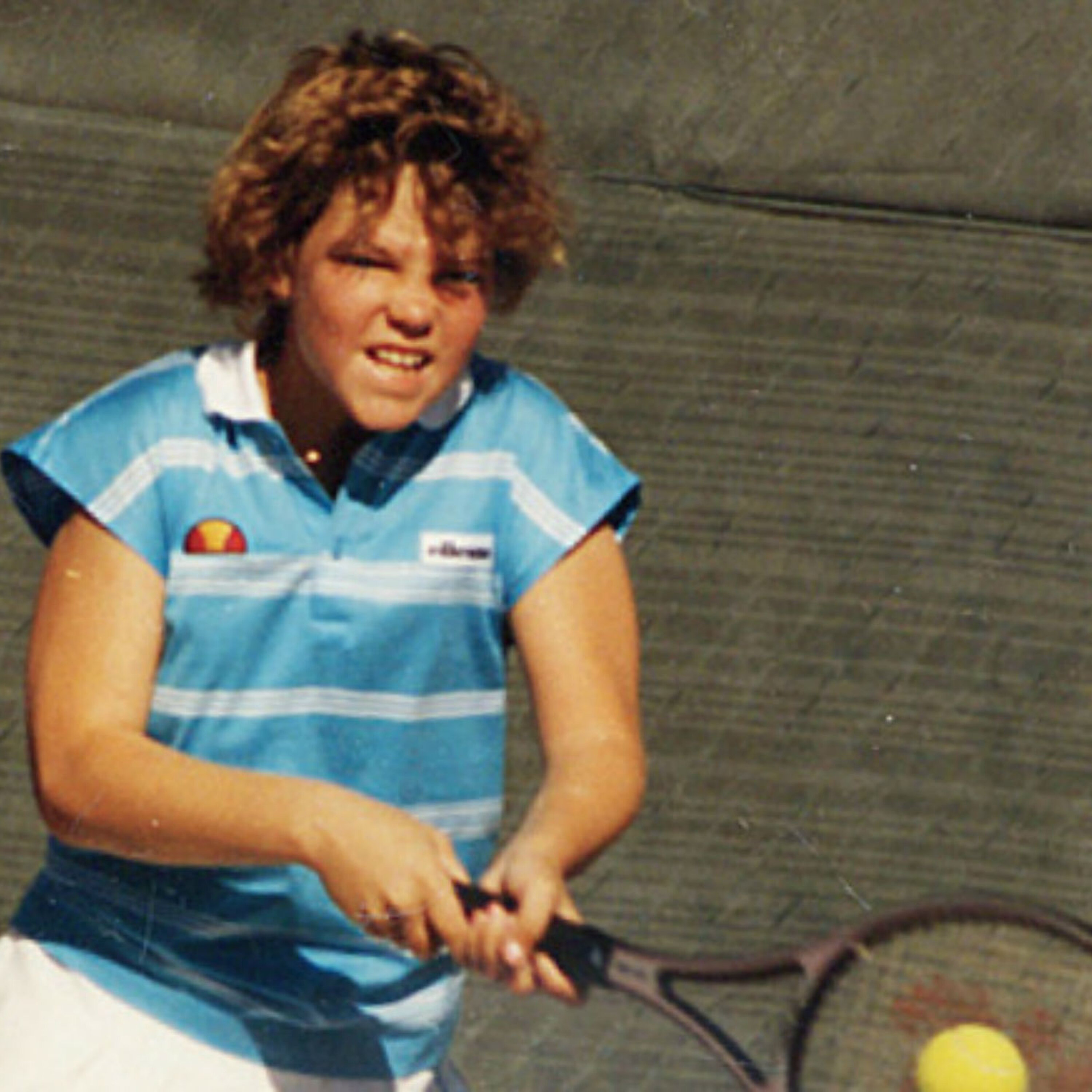
Lindsay Davenport
The grand slam champion, former World Number 1, analyst and current coach of Madison Keys joins the podcast to talk about kids, knees, butts and some of the greatest tennis lore you've ever heard.
Hosted on Acast. See acast.com/privacy for more information.
See omnystudio.com/listener for privacy information.
2018-11-05
57 min
Transcript
Available Results
Generated results are saved to the knowledge database for reuse and search.
No generated results are available for this episode yet.
Extract Knowledge
Pick what you want extracted first. Model, scope, and chapter options appear after a template is selected.
Generated results for public episodes are saved to the knowledge database so they can be reused and searched later.
Transcript
00:00:00
Speaker 1: And then Steph walks by any kind of like pinches her on the butt as she walks by.

00:00:16
Speaker 2: Hello, Renette, Hello Caitlin.

00:00:18
Speaker 3: How are you.

00:00:18
Speaker 4: I'm very very good, actually, any particular reason for that or no?

00:00:23
Speaker 3: I mean, yes, the enthusiasm is not normal. I'm usually just very good.

00:00:27
Speaker 2: But the year is kind of over as.

00:00:29
Speaker 5: Far as a lot of work is concerned.

00:00:31
Speaker 3: So I've been on the road, I feel like for about five months, which I.

00:00:35
Speaker 1: Think I have been.

00:00:36
Speaker 3: I've been to Asian back twice in a month. I have just watched the New York Marathon, so I feel like I've sort of run that. So it's just I had a great burger today.

00:00:46
Speaker 2: So you know, life is good.

00:00:48
Speaker 1: It's gone pretty well.

00:00:49
Speaker 4: You were very recently in Oklahoma City where you finally track down one of the players coaches analysts Supercars who I've been begging you to get on the show, Lindsay Davenport.

00:01:02
Speaker 3: I did, yes, Lindsay, and I did a charity event fundraiser in Oklahoma City for the Oklahoma City Tennis Facility. Actually, so to help you know, some of the underprivileged kids there do what we love, which is played tennis and have a lifetime of tennis. So it was really fun and raise a lot of money and thanks to Lindsay being there. So yeah, and then I grabbed her and I said, Linday, we had about an hour up our sleeve in the day. We were very full day, and I said, perfect time lends for you to do the podcast. She was going to do it for me in Singapore and then instead I grabbed in Oklahoma and it was great.

00:01:34
Speaker 1: It was great.

00:01:34
Speaker 4: You guys have in a lot of ways, sort of similar careers. You played at some of the same time. You talk a little bit about playing each other. You've had excellent careers. You more story than her in the commentating booth. That's something that she's been doing the last couple of years. And now you're both coaches, which is great because you talk about all of those things.

00:01:53
Speaker 3: Yeah, it is funny that our lives, our careers were paralleled for a long time, except hers was.

00:01:58
Speaker 1: Way better than mine. I was gonna make you say that. I mean, I'm glad that you sort of said that.

00:02:03
Speaker 3: You know, we had parallel careers, which is the biggest load of shot I've ever heard. But she won a lot more than I did and was an incredible singles player obviously world number one for many many years and a year number one. And yeah, we played against each other once at the austra And Open, and we played against each other in doubles a few times. But overall, I've known Lindsay for a long long time. And yeah, both doing coaching and a lot of commentating. She's one of the best commentators in the game, that's for sure.

00:02:27
Speaker 2: She really do enjoy listening.

00:02:29
Speaker 4: You both are so technical, which is why like listening to both of you. You guys really help those of us good or not, on the couches really understand what we're watching, which I think is the best possible thing that a commentator could do. And but you both do it really well. Lindsay is so funny. She's dropping f palms. She's a mom of four, and she's so cool. She seems much more of the relaxed Californian vibe than you would get when you grew up watching her like I did just watching her play like the greatest Wimbledon final of all time, for example, she's pretty chill and funny.

00:03:00
Speaker 3: Well, yeah, she's a southern cowgirl. But yeah, i'll tell you what. One of the things that she was concerned about when I asked to do the pod, was You're like, Oh, I'm not I'm not funny. I want to be funny. Like you know, I'm like, wait till you hear some of the stories that she tells.

00:03:13
Speaker 1: They're hilarious. You're not gonna believe that.

00:03:14
Speaker 4: All right, before we go, we should mention our illustrious fashion correspondent. You and I have had the great privilege of hanging out with her while she works on her off season book. Can we Is she ever coming back to the podcast?

00:03:27
Speaker 3: You know, the Fashion Correspondent has taken a little time off and it's kind of a little bit annoying actually, although she is actually quite close to me right now in New York City, and I think we might have to demand some further correspondence from her when it comes to any fashion when it comes to New York.

00:03:48
Speaker 1: I'll let that.

00:03:49
Speaker 4: I'll let that silence speak for itself. When she asked me if she could be the fashion correspondent, I said, only if you're going to do it on a regular basis, And you know, I'll let that speak for itself. All right. We'll have to get around when she's back into town giving us a full report on New York City and the Upstate Writer's Retreat in which she finds yourself. But until then, I guess you're gonna have to listen to this Lindsay Davenport interview and laugh here asks.

00:04:08
Speaker 5: Exactly enjoyed, everybody.

00:04:10
Speaker 2: It's a beauty.

00:04:19
Speaker 3: Hi, everybody, Lindsay Davenport is joining me for this episode of the Racket Magazine.

00:04:24
Speaker 1: From Oklahoma City.

00:04:26
Speaker 3: From Oklahoma City, where we are attending an event to fundraise some money for the Ogahama City Tennis Center.

00:04:35
Speaker 2: So Lin's, first of all, thanks for joining me. I haven't really thought about what.

00:04:39
Speaker 3: I'm going to talk to you about, but I figured that between the tour of us, we have enough history we'll be able to get treat this without a lot.

00:04:45
Speaker 1: Of twenty what is it twenty six, twenty seven years. My first appro trum I played was nineteen ninety one, So ninety one ninety two, I'm sure we would have met for the four time. My first one I played was there Speer Terminent La Costa, so I was fifteen. I had won the Nationals that summer in the eighteens, and they gave me a wildcard into qualities in San Diego. So played down there fifteen.

00:05:08
Speaker 5: God, what year was that?

00:05:10
Speaker 1: Ninety one?

00:05:11
Speaker 2: Yeah, so I was, Yeah, I was already playing out there. I was not long out there.

00:05:14
Speaker 5: Eighty nine.

00:05:15
Speaker 2: I think it was my first wimbleder. Ninety nine had been my first US Open.

00:05:18
Speaker 3: But basically, what I'm saying and what you were both saying, what we're both saying, is that we're both old.

00:05:22
Speaker 5: And we've known each other along.

00:05:23
Speaker 1: We played a really long time ago we did.

00:05:26
Speaker 2: I actually played you once in singles, right, is that it at.

00:05:30
Speaker 1: The Australian Open. Was that the only Yeah? I think that was the only time. Yeah, you stopped shortly after, Yeah, not long.

00:05:35
Speaker 3: After, a couple of years maybe after that. Yeah, it was probably losing to you that threw me into retirement.

00:05:41
Speaker 5: Joking.

00:05:42
Speaker 1: I remember that match.

00:05:43
Speaker 2: I was so freaking nervous playing you because it was a big stage for me.

00:05:46
Speaker 3: Senecor ninety six, No what year it might have been something like that, ninety six or seven. It was a year I was playing pretty decently in singles and I had won my first round and then I played you, and I was shitting myself and rather on rud Live arena and actually started playing really well, and I thought, oh my god, am I actually winning this set? And then I kind of reality really quickly, and you killed me. I want to know you come from a family of volleyballs, really, how'd you get into tennis?

00:06:15
Speaker 2: And why?

00:06:16
Speaker 1: It was a little bit by luck. You know, my dad was a volleyball player. He met my mom playing volleyball both. I had two older sisters they both played volleyball. So I think in my family it was when as soon as I got old enough, it was just going to play volleyball. I spent all my weekends at junior tournaments, which my mom ran. I spent weeknights at college volleyball matches, which my dad was then officiating. So it was kind of our whole family's life revolved around volleyball. But you know, it was five or six and at those times, and spent even now, you don't start volleyball more to you or organized volleyball tier nine to ten. Even getting older, so it was okay, what are we gonna do with Lindsay Until then, I like to be active, so tried swimming. My hair turned green. I used to be. I was a blonde when I was little. Uh yeah, yeah, I'll show you photos of when I was little total toe head, turned my hair green. I tried soccer and I got kicked in the shin and had to get stitches. I can't find the scar, and so I told my mom I never wanted to play soccer again. And so then it was like, oh yeah. So then it was like, okay, there's a tennis clinic after school started in kindergarten, and then just kind of kept going with the tennis. Wanted to always play, played against the garage, and at the time my parents really liked it because.

00:07:35
Speaker 2: His sisters played against the garage.

00:07:38
Speaker 5: Yeah.

00:07:38
Speaker 1: I would come home and hit against the garage. Yeah, that was my version of the wall.

00:07:41
Speaker 3: Don't you think that that Like most parents and even kids to this day, I don't realize like how important it is to hit against a wall.

00:07:47
Speaker 1: And at the club that we had, my mom was playing a little recreationally, there was also a wall, so you know, back then, I mean we never had a babysitter. I mean, I had two older sisters, and you just seemed like in that era maybe more you followed your parents everywhere and it was okay, we're going to the club. Mom has a tennis match. And I would just go against the wall, and they had one at the club. I would then come home and hit against the garage and you just play and play and play. And that's kind of just started this whole process of where I separated myself from my family in a different sport.

00:08:18
Speaker 3: Yeah, that's I think it's so interesting why people end up where they are.

00:08:22
Speaker 5: Right playing a sport.

00:08:24
Speaker 1: You have everyone and I feel like that in tennis too, there's everybody has this weird different story of how they started. I love the Williams sisters with Richard seeing it on TV, it was like, that's what I want my daughters to do. Capriot. I remember telling a story how her dad was super into it when she was little, had her doing sit ups at a really young age and started having her play young and other players get into it accidentally, like myself, and so I always find it fascinating to see the origin of why a player started playing. Something draws all of us crazy people to the sport and we're all a little bit off and want to hit the same ball like a thousand times every afternoon. But I think that's what kind of brings us at the end of the day altogether.

00:09:05
Speaker 3: What do you think is it about like a tennis or do you have a lot of parents come to you and go, how do I get my.

00:09:11
Speaker 2: Kid to you know, what sports should I pick for them?

00:09:14
Speaker 5: Or whatever?

00:09:15
Speaker 3: Do you think that with tennis it is such an individual sport you have to sort of you have to have that personality where you're okay being alone a.

00:09:22
Speaker 1: Little bit totally or a little most most players are a little bit of a loaner or they're they're not uncomfortable or afraid to be alone. Anyone who's really good. There's rare exceptions. I mean, Andre talked about it in his book. Most players love it because to want to get out there by yourself, and especially at the ages between like what do you think thirteen and sixteen, thirteen and seventeen had time? Especially for I feel like for girls who maybe are getting more social or they start getting into other things, or like why would I want to go be on a tennis court by myself with maybe getting yelled at hitting the same ball a thousand times ites.

00:10:00
Speaker 3: I think earlier like eight nine, ten, to be around on the kids on the tennis score oh.

00:10:05
Speaker 1: Yeah, oh my gosh, Well you have to be you have to be, but there comes a point when when you want to get better, it becomes a little bit more focused to just that player individually, and that's when you see a lot of I feel like a lot of teenage girls drop out. It's not that much fun. So I feel one thing off topic is trying to get it more fun throughout this whole junior process. I mean, we start the kids at seven years old, eight years old playing a tournament match like a pro would play a tournament match, and you're like, oh, what's the score? Don't And it's like, okay, let's just rethink the whole junior philosophy again another story, but have it more fun. We'd keep more people in the sport.

00:10:41
Speaker 5: Who were you like pus growing up in juniors.

00:10:45
Speaker 1: In the juniors, Oh that's funny. So I remember playing a junior tournament in Fullerton. I was telling my husband this the other day, and I was in the twelve and unders. My dad who six ' eight, He was really big and loud, and he really took me to like a few tournaments because you would get so loud and he would like get frustrated at me, but not like in a crazy tennis parent way, like oh, my gosh, how do you miss that? And I could hear him like three foots down. Yeah, he was really loud. So it didn't take me long to turn around and just be like, you're not taking me anymore. But he We're at this one tournament in Fullerton, it's big Southern cal tournament, and he yelled at me to come over and watch Debbie Graham. Debbie Graham is also six foot two, played a big game. I think she had already signed with Stanford. She was like, you know, one of the top players in the eighteens, and he was like, you need to watch her play. I don't know if I was. I don't know how many years between debiane I'm pretty sure I was in the twelve nine. Yeah, the biggest, big serve and played a big style of tennis. Now I'm almost six ' three. I was always really tall for my age, so it was nice. I mean, my dad was like, here is another really tall girl. Look at how well she's doing and how she plays. But funny I always say, is I was coming through kind of making that transition. I mean I grew up with Chris and Martina. They played completely different styles. For me, it really took Jennifer my same age. We're both born in seventy six. She broke through in the pro level at thirteen fourteen. She was a bigger hitter. Mona Casellis was a bigger hitter. Those girls. For me, when they started breaking through and being successful, that gave me more hope. Okay, somebody other players that are hitting hard at this level it's not about making every ball or it's not about running everything down. It became more Okay, their hitters, they can make it.

00:12:28
Speaker 3: How yep, God, you were, I mean for me and still to this day, I think you are possibly the purest hitter of the tennis ball I've ever seen. Like literally, I remember I think you and I played doubles at one time and you hit oh my actually was in the aldi, so you know, we had a bit of an excuse. But if you actually framed a fullhand and you went, oh my god, I don't think I've ever done that. I mean, but it's actually true. I mean for me, that's all I did on my fuehand was pretty much frame it. So I needed to, like, you know, let you know that it's normal.

00:13:00
Speaker 2: But like.

00:13:02
Speaker 3: If you had to describe yourself, like what made you a great player, Like, what's something that people probably don't realize?

00:13:11
Speaker 5: Like, I have my thoughts, but.

00:13:14
Speaker 1: That's interesting. Uh, I don't love to self analyze. But I mean, obviously hit the ball well. I think I was pretty aware of my weaknesses, which I think you have to be as a player, and knew that maybe covering the court and movement wasn't wasn't a strength. So how do you then take that away? Got to hit your targets. You've got to hit the ball well. I mean, I grew up with Robert Lansdorp, who was like a second father to me from the ages of eight to about fourteen or fifteen, and we'd just spend hours sitting the same shot, and it would be if I did not hit this tiny little target on the court, you know, I'd have to do it for hours until I could hit it time and time again. And so I think it really taught me about placement. I don't know, you know, I didn't grow with a tremendous amount of self confidence. I've always been a little bit insecure. It sometimes puzzles me, I think, I really, yeah, it puzzles to you why you were so good? Yeah, yeah, I don't know I liked playing. I think I took into tactic account tactics more than people maybe thought, Yeah I know that about you.

00:14:21
Speaker 2: Yeah, but you were a really great student of the game, which makes.

00:14:23
Speaker 5: You a great commentaor.

00:14:24
Speaker 1: Now we'll see, but uh, it just.

00:14:27
Speaker 5: We don't need to see.

00:14:28
Speaker 1: We saw I saw anyways, So would I would try and go out there actually with a really good understanding of my opponent and what if things were happening maybe before the match, why that would be the case, try to make those adjustments where I wanted to serve, and I tried to think more than maybe it appeared, But I don't know. Everything happened much bigger and better than I ever dreamed. I was always too scared to dream like, oh I'd be a Grand Slam champion. It's like, oh I like playing, Oh I hope I can go to college. And so I was always I wish I grew up with a lot of fear and kind of doubt, and I wish I hope I can change that in my kids. And I wish I mean, we were talking earlier today, what you could go back and tell your younger self and immediately thought, Wow, it's it's Okay, you can, you can believe in yourself, you can dare to dream big. You don't have to be so concerned of worst case scenarios.

00:15:17
Speaker 3: Okay, So I want to then go back to just discussing that if you could go back, do you think.

00:15:26
Speaker 5: You should have won more?

00:15:28
Speaker 1: You know, people say that, and it's funny.

00:15:29
Speaker 2: It took my I'm talking about I'm talking about Grand Slam. No, I know, I know for sure.

00:15:34
Speaker 1: How many toonents did you in WTS fifty five and only three majors? And then you see other players I think Muga Rutha, I'm gonna get this wrong, has like two majors and only six titles or seven whatever it is. Yeah.

00:15:44
Speaker 2: Oh, there's some players that have one major and know other tournaments.

00:15:46
Speaker 1: Yeah, so it's a weird combination. I don't know. My husband when we when he started to get me know, he's like, Jesus, it's a fucking miracle. You wont any I so negative and like, I mean, I would go out like worried I wasn't gonna get the game, and you'd be like in the beginnings, like what are you talking about? You're ranked two right now? Like what do you mean?

00:16:05
Speaker 2: And I believe that was that a defense mechanism.

00:16:08
Speaker 1: I don't know. I felt real, absolutely real, and the anxiety about it all. But I mean, you look at the numbers and you look at the opportunities. Sure I definitely could have should have, but like at the end of the day, I mean I couldn't believe that I could even win three. And that's that was my biggest weakness, was the mental part of it and accepting that or giving into I should be great or do better or whatever.

00:16:35
Speaker 3: Okay, so take me back to the moment that you ran up to that ball at the US Open.

00:16:40
Speaker 1: That was my first yeah, you know, and of course, like and now we're getting in, we have to get off my topics, but not like.

00:16:46
Speaker 3: It's the Racket magazine podcast with Lindsay dinneh, let's talk about other people.

00:16:51
Speaker 1: But truly, I mean, I guarantee you going through my mind is you cannot lose this match. Having match point, it's like totally of course. And so I think, you know, for me, I remember watching that point a couple of years ago and it was like I made like ten shots, which never was the case. It was normally trying to get control of the point. But I was like, okay, I'm not going to miss it was the most emotional one to win their one because I never really thought that that was gonna happen for me. My family had kind of been fractured. My parents had gotten divorced the year before. Everyone was kind of all over the map emotionally about that. We came from a very tight family. My sisters flew in the night before for whatever reason. Back then, I played the Semis Friday. This the final was Saturday. It wasn't like I had a day off. I didn't have time to think, which was probably good totally, but and I didn't know my sisters were flying in on the Red Eyes with their husbands, and all of a sudden, I remember walking out on the court and the box was like full, and it was like, oh my gosh. And then I you know, everybody was there, which was obviously really nice. It was my mom's birthday. But I literally I won and cried like I didn't smile, couldn't believe it. I was like it was overwhelming to me.

00:18:03
Speaker 5: And can you explain that?

00:18:05
Speaker 2: Why you?

00:18:06
Speaker 3: Because you know, I actually had someone ask me one time why did people cry?

00:18:10
Speaker 5: And I'm like, oh, my God.

00:18:11
Speaker 1: It's just every single emotion comes out like I cannot believe it. Everything was Yeah, it's hard to explain. I mean I cried now seeing people win their first I always feel like the first is the biggest and everyone dreams of that and you see it. I mean we saw three times this year on the Women's Tour, and I cried every single time because you you know what they go through. It's everybody's dream. When I got the trophy, it was from a Usta President and j No, it was Harry, Harry Marmion and he looked at me and I saw he had tears coming down his eyes, and so that made me cry more, and he gave me a hug, and it's like, I've never been a happier to give us to anybody. You know, you get to know these people well, and I almost I had a superstition also that I would never put a trophy over my head unless it was a Grand Slam one. So for my family and my team, as soon as I did that, they were crying. I started crying again. Just all these things kind of came through and I remember raising the trophy above my head, grin, I can't believe I get to do this, so a lot of little things. I look back now and wish I could have just laughed my ass off, but it didn't happen like that.

00:19:17
Speaker 3: Yeah, but that's who you were, and that describes you and what you were going through as well. I mean, you talk about it was a tough year for you, your family, and you know, maybe all the self doubts that you have about yourself. I think it's really interesting that people have no idea about things like this, like the things that the secret demons.

00:19:32
Speaker 1: That you find you. Yeah, every player has them. But and then also you have to remember, you know, in a team sport, if someone's going through something, you have teammates that kind of shield you and protect you and maybe take over at certain points when they know you're really struggling. In this sport, people go through an awful lot. I mean, it's life fucking happens. And yet you know then they're out there playing poorly and we're like, oh, they're not hitting their forehand that well, But you actually have no idea what's going on off the court. You have no idea what they're going through on a personal level day in and day out. They can't hide you have to face it, and I think sometimes we lose that, like that personal emotional touch with people and what they're going through. I mean, nobody really knows what was happening to Novak for all those months. You know, you guess and you wonder, but and then you hear years later and it's like, wow, I can't believe a person could play through whatever. Yeah, is it one.

00:20:24
Speaker 2: Match that shit, there's plenty. I'm sure that you wish you could go back and change, But.

00:20:29
Speaker 3: Is it one match that you that if you could redo completely?

00:20:35
Speaker 1: I mean I lost the Wimbledon final and O five and had match point. To lose a Grand Slam final and have match point is pretty brutal. Yeah, there's not something I would change on that point. Particular wasn't but you know that one when you're that close, I.

00:20:49
Speaker 5: Know what you would have changed.

00:20:50
Speaker 2: You've told me you would have tried to hit it to him.

00:20:52
Speaker 1: No, No, you know, surprisingly I lost them. I feel like I lost the match more. At four two, i'd been up, I was up a break, and I think I had a game point to hold her two, to go up five to two. I feel like that's those Sometimes the crucial moments are a game or two before Hingus and I talked about it. Hingus had some match points maybe in an Australian Open final, Yeah, and she was like, I go, yeah, it was tough. I also really wanted to win one married and that I was married in two thousand and five. Lost the Australian Open final and then the Wimbledon final. Having match point was tough, you know. And I give shit. I mean, Hall, everything that she had to go through till she won her first it's rough. You'd almost rather lose in the semis, to be honest and not be as close.

00:21:35
Speaker 3: I not get it. I have to say, though, having known you so long and known sort of the arc of your career and knowing you as personally, I.

00:21:45
Speaker 2: Still I've told you this that the match that you lost against Venus was actually I think.

00:21:50
Speaker 3: One of your greatest matches, because I think you would be the first to admit that a lot of some of your matches that you lost in Grand Slam level you kind of mentally shut down.

00:22:01
Speaker 1: Yea, it was it was your defense. I didn't lose a lot of matches also playing well and tried my ass off from first point to last point, and maybe that's why it hurt even more.

00:22:12
Speaker 3: That was the first really big match that I saw you never give up. Yeah, Like, there was never a moment where you were like, ah, you know, give the hand flick or you know, kind of kind of mentally shut down, right. I mean, listen, everybody has their defense mechanism you seekis off, we see, you know, everybody deals with it. But that was one match that I remember thinking that the reason it had to hurt at the time was because you felt like you did everything you could.

00:22:38
Speaker 1: Yeah, but I also think it's probably one of the proudest for sure, But you'd still rather still rather have four three. Okay, let's get into gas.

00:22:47
Speaker 3: Wait, okay, so then let's come because going back to the first Wimbledon title you want, yeah, okay, tell us that story.

00:22:55
Speaker 1: Well, it was a crazy, crazy Wimbledon. First of all, it rained all the time. Everyone was backed up days, there was there was not a roof on Center Cord. There was no plans, so you know, and I was getting kind of lucky with the schedule. I was first on. I would get doubles and mixed and mixed, and so I was scheduled.

00:23:13
Speaker 2: You were lucky, Well, I had no choice.

00:23:15
Speaker 1: Yes, So I was always scheduled first. For instance, I remember around to sixteen day, I believe I was the only match on the whole schedule to finish, and then it rained for like two straight days, you know, so little things like that were kind of happening. But so I was in doubles and in mixed, and I think we were on like the second Wednesday, maybe maybe even Thursday. And at this point, I think I'm in the quarters of singles, the quarters of doubles, and the third round of mixed, and we were supposed to play Stephie and McEnroe, and I was playing with Todd Woodbridge, and my coach was like, listen, you have like trying to convince me you have a chance here to win the singles. You're still in doubles, We're coming into Friday, the weather still sucks, like you got to get out of the mix. And it was like, oh God, wood Bridge, he's gonna kill me, Like I feel so bad. And then they're trying to get us to go play on center court. Anyways, it was kind of a mess. So I'm like, okay, I'll pull out of the mixed. I literally go and Todd is warming up out on his match to play men's doubles three out of five sets, and I'm like, oh god, I'm gonna wait. So then the referee at the time, Alan Mills, calls me into his office and there's Stephie standing in the referee's office, you know, like tapping her foot, hand on hip, like, so, what's what's gonna happen. I'm like, well, I'm gonna pull out, but hold on. Todd's on the court. It's only three to two in the first and she's like, yeah, but we gotta play. I gotta go out and play. And the winners were already waiting, so that the referees like, can we're gonna pull you out now? And I'm like, I have to tell Todd. They're like, He's like, I have to play this match. Stephie's still in singles, Venus was still in singles. The winner played.

00:24:50
Speaker 3: I think, just help me for one second, the fact that you and Stephie and Venus are still in singles and doubles and mix.

00:24:57
Speaker 1: Yeah, can we just like think about that for a second. Yeah, Steffie was playing McEnroe too, Venus was still in she was playing with Justin So I'm like they wanted to play that match badly. So I'm like okay, you know, I'm like, okay, fine, go on and play. Well, the story goes. Todd's now in the second set, and you can see the scoreboard from that back court. It was like court ten and up now on center court that scoreboard you could see it was McEnroe Versus. Give will stop Venus. He's like, oh great, so that's how we found out. I pulled out on him in the mix. Was not happy after I'd sent a note to the locker room apologizing. I tried to explain, and you know, Todd, he's a good sport about it now, but he has not forgotten and he's not happy with me. So that was like one thing that happened. I actually felt bad about that. Then it rained so much. The final was actually on a Sunday, and the men's final was right behind us. More rain was coming. They're doing everything they can to finish this. I was in the singles and doubles final women's singles twelve noon doubles to follow immediately on court one. Andre and Pete were in that final July fourth, right after the women's final, So it was like kind of a hustle out there. I do remember I won the first set, and it was three all in the second set, I believe when the rain came and we had a pretty short rain delay, maybe like thirty forty minutes, and I remember that's right when I had just begun to start panicking. I'm like, oh my god, I'm getting clothes. I'm getting clothes. That rain delay really helped me a lot. I remember my coach Robert like just really subtly, just saying like and it's weird, like people say things, Oh you got this, you can do it, and that wasn't his way. And I remember him just looking at me. He was like, you gotta breathe. You can win this. And that's all kind of and we tucked a little strategy, but like real calmly like and I remember like kind of resetting like Okay, I can win this. I can go out and do it. Ended up winning. Same thing, like super emotional crying. None of my family was there. My mom was working a volleyball tournament in the States, and I went down to my seat and I was like in shock, I couldn't believe it, trying to catch my breath and I'm like, oh, I'm going to go to the box, Like, isn't that what you do here? And I start to walk and I felt like a hand on the back of my shirt kind of pulled me back. Yes, and he's like, no, you know, no trophy here exactly. Well, and we're hustling. This trophy is not in a bad way. But he's like, I think the Duchess was already down on the court. He's like, you're too late now, so just sit here, Like, okay, no problem. We do this trophy ceremony obviously awesome. We're coming off the court and as you know, Bud Collins rest his soul would interview us as you were walking off the court. Well, they put We walked off the court together, Steph and I and they pulled her aside first and right there waiting we're Pete and Andre ready to come on the court. So it was kind of like nerve wracking anyways, like I was the ball of adrenaline because I'd won. They're waiting to come out. Steph is getting interviewed by Bud, and remember standing there and Pete, who I had grown up with in the same town he was a little bit older, came walking over to me a couple of feet and was like like, that's so great, congratulations, I'm really happy for you. And I remember going, oh my gosh, thank you so much. And I remember Andre not saying word no problem. They're getting ready to play a women's men's final, right then Steph finished this.

00:28:13
Speaker 2: She's unusual because he's usual. Of course, it's usually the guy that's always like, well done.

00:28:18
Speaker 3: Of course, it feelosophical and congratulations, and he's all of a sudden.

00:28:22
Speaker 1: He's like, length, yeah, a little bit, yeah for sure. But again it's a lot going on right there, Like as you walk on the center court. No, I definitely remember, like it's like that awkward do I say something? No, okay, whatever? And then Steph walks by and he kind of like pinches her on the butt as she walks by, and I remember I remember going, that's weird. And then I did my interview with Bud. Didn't you know the guys go out to go play. Didn't think anything of it, And it comes out like two or three weeks later at a tournament LaCosta and Martine Hingkis is like, hundred, I guess he's here, Like I heard he went to Stephie's room. I'm like, what is going on? And then of course that was open, it like comes out that they're dating, and the rest is like tennis legend history. But I remember standing there at the entrance to Center Court being like.

00:29:08
Speaker 2: That, Oh my goodness, what is going on.

00:29:10
Speaker 1: I forgot about it immediately until like about two months later, I was like, oh, I get it. Do you remember? Do you remember? Actually this is from me to know.

00:29:18
Speaker 5: But did Steffie laugh.

00:29:19
Speaker 1: Or was she like? No? She was kind of busy. She lost, and she had just told Bud Collins and NBC that she would never be back at Wimbledon. So I think for her by she wasn't didn't really know if she was retiring right then she played one more tournament, retired and that was the end. But she had just made this announcement that she would never be back at Wimbledon and then had lost and kind of walked off, and I think she was kind of she didn't stop. The rest is no, she kept walking, but still.

00:29:46
Speaker 2: The ass pins she was the beginning of.

00:29:49
Speaker 1: It made sense two months later at the Open, when they kind of were then known to be dating.

00:29:54
Speaker 3: That is such a great story, and you know the greatest thing about that. There's only three people, maybe four. Maybe Peyton was watching.

00:29:59
Speaker 1: I wonder if he picked up on that, maybe knew about that.

00:30:04
Speaker 5: That moment and you're one of those.

00:30:06
Speaker 1: That's so cool went over in my head for a little while.

00:30:17
Speaker 2: All right.

00:30:17
Speaker 3: So so you win there, you win in Australia, and I just want to take a little bit.

00:30:23
Speaker 5: Of credit here.

00:30:24
Speaker 1: Yeah you did, because we joked about it the whole tournament ingots had won how many doubles and how.

00:30:29
Speaker 3: Many won three doubles tournaments yea and three singles in a row in Australia. Never lost a match in Australia ever, in singles or doubles. And you had lost to her in doubles a couple of.

00:30:40
Speaker 1: Times, lesa one time, I'm sure, and she beat everyone.

00:30:44
Speaker 5: She beat me a couple of times.

00:30:46
Speaker 3: And then Lisa and I won our first Grand Slam in two thousand, beating Martina Hingers in the final. And after we won that match, you were to play her the following day singles.

00:30:56
Speaker 1: And I have to say, hold on. In ninety nine I lost semi finals in Australia. I lost it Kancheetah. One year I lost to Maresmo the next year. I was I think favored to win both of them. Martina then went on to beat them easily in the previous finals. Yes, I had beaten Jennifer in two thousand in the Semis and I remember going like, finally, like get through to get to play her in an Australian Open final. And then you guys played the doubles final Friday. We did, yeah, and we won.

00:31:22
Speaker 3: Yes, it was the first match she lost in Australia, and I'm pretty certain that it's it helped bring her confidence level down to the point.

00:31:31
Speaker 1: That it allowed you then to win. You know, that's definitely you get some credit. I'll give you some credit there. That match, I almost had one of the biggest chokes of history though. I was up six to one, five to one, and it got back to five all, and I'll never forget this point. It was love fifteen at five all, and at this point my mind is like, I can't believe this just fucking happened. I cannot believe it. We were there were Yeah, I hit one shot at love fifteen. I hit a backhand up the line, either for a winner or she maybe touched it. And I remember that that point kind of settled me back down again, but I was starting to like definitely spiral.

00:32:03
Speaker 5: Yeah, yeah, what a great natch.

00:32:05
Speaker 2: God, did you want every Grand Slam that you want was in straight sets?

00:32:09
Speaker 1: Yeah?

00:32:09
Speaker 4: Yeah.

00:32:09
Speaker 5: When you were good, you were good.

00:32:10
Speaker 1: Yeah, and then when things would start to go awride my problem solving skills weren't weren't perfect, had to be going perfect.

00:32:18
Speaker 2: You also said to me yesterday that you lost how many doubles finals?

00:32:21
Speaker 1: I think I lost? I won three Grand Slam I think I lost the finals eleven times. That's just first of.

00:32:26
Speaker 3: All, I want to say, how unreal it is that you played so many singles and doubles Grand Slams like that.

00:32:32
Speaker 2: Nobody does that anymore.

00:32:34
Speaker 1: Yeah, it was. It was so great for me, like to learn how to play on a break point in a huge match, right, or how to take a short played the back end, yes, outside, and you know, stuff like that, And so the doubles definitely helped set me up for single success. I think that's missing so much now. You know, these players get into the position for the first time. They some of them are freezing where I feel like if you have been there in doubles or had a little bit of a experience with it, it kind of would help. I mean it shows too.

00:33:03
Speaker 3: I mean you look at someone like a Sam Stozer, who you would not think would win a Grand.

00:33:07
Speaker 5: Slam and single, right.

00:33:08
Speaker 3: I mean she was a great singles player when she played well, but she had multiple doubles Grand Slam victories before she won her singles, and she also had obviously results in finals and things.

00:33:18
Speaker 2: But I definitely think that that helped her.

00:33:22
Speaker 3: Victoria Azarenka won mixed doubles Grand Slams before she won singles Grand slams.

00:33:25
Speaker 2: I mean, there's no doubt that for some people it really would help.

00:33:28
Speaker 5: Yeah, they did that, I agree.

00:33:30
Speaker 2: Or okay, so cut to.

00:33:33
Speaker 3: What was the catalyst for you to pull the plug and retire, because it's such a hard thing to do.

00:33:39
Speaker 1: It's usually when you were still playing. Yeah, I thought, you know, I had my son in two thousand and seven, and I don't know why, when I was like seven months pregnant. I waited till that point to think.

00:33:49
Speaker 3: Did you consciously like go and try and have a baby, Yes, you were, like how old were you.

00:33:55
Speaker 2: When that happens?

00:33:56
Speaker 1: So well, I had him when I was thirty one, Okay, so yeah. I mean John and I at that point have been together eight years, and it was like I wanted a baby and he obviously was fine with wanted one too.

00:34:09
Speaker 2: I say, did he have a choice.

00:34:11
Speaker 1: Yeah. No, So I really thought I'd be done. And then kind of like when I was like seven months pregnant, I thought, Okay, I think I'm gonna want to play again. I really miss it, and it was no problem. He was great with it. Played a year. My knee was not great. During that period. I had gone to Germany and got stem cells from my back to try and from my bone marrow to try and come back. Wanted to play the Olympics. It was like a couple of things in there. I never played well in the Grand Slam stage, which I was a little bummed about. Played the US Open in a way. My knee was not good, and one match I kind of numbed it up to try and play. Was trying to figure out how to get through it. Came home and it was like, okay, we're gonna I'm gonna take the fall off. I was tired, getting tough traveling with then a fourteen fifteen month old boy. My husband couldn't travel all the time, so it was away from him. So it was just kind of like a weird feeling, and I went I was gonna go get my knee operated on, had had everything done, and the day before it's like, okay, we need you to come in and do some tests, you know, like the standard stuff. I said, okay, And so then late that night I got a call from my doctor. It was my friend and it was his cell phone, like, oh Hi, He's like, so you're supposed to come in first thing tomorrow, but I can't operate tomorrow. I said, oh, okay, what's going on. He's like, well, your blood test shows you're pregnant.

00:35:24
Speaker 5: Oh my god.

00:35:25
Speaker 1: Well that was number two and that was not that one. We had not been planning. Yes, So then well it was you did well. So it was kind of a nice segue because I don't know if I would have come back from another surgery. I had had foot surgery. I'd had a really bad knee injury at the end of two thousand and one. So it kind of just worked out perfectly, and that there was little Lauren after that, a perfect little Lauren. Yeah, ye.

00:35:50
Speaker 2: Wit.

00:35:51
Speaker 3: I wanted to There's so many things that we could talk about but because you're such a what what gave you the.

00:35:56
Speaker 5: Impudence to want to do commentary?

00:36:00
Speaker 1: It's funny. So that fall, actually you know you're pregnant, you don't say anything. For the first two months. Tennis Channel in Los Angeles had heard that I wasn't playing in the fall, and they asked if I just wanted to come in and do some stuff, and it was local and so kind of just it started that way. It started the Fall of Awight when I was pregnant quietly with my second not and excuse me, Yeah, the Fall of a eight, and it just kind of grew from there. I really have liked it. Listen, I'm not shy of like I love the sport given me everything. I mean, I met my husband through it. He played, We loved playing with our kids. I loved watching it like I was a total nerd and fanatic about it.

00:36:39
Speaker 2: You werenis you know you were an analyst when you play.

00:36:43
Speaker 1: I loved it.

00:36:43
Speaker 4: Yeah.

00:36:43
Speaker 1: I liked trying to figure matches out even when I wasn't playing. It was hard for me because if someone didn't play my game style, it didn't matter to me if Amanda coats or beat Kancheetah Martinez. I could never play like Amanda Coats or but it, you know, stuff like that. I would get really into like will they how will they in this match? So I don't know. Some players, they they're either they don't really love it, but they're so good at it they keep doing it, or they're afraid to admit it. I don't know. I loved it. I was happy. I'm I feel like I'm lucky to still be involved in it.

00:37:13
Speaker 5: Yeah, and you're very very good. I mean no, I mean seriously.

00:37:17
Speaker 1: There's listen.

00:37:19
Speaker 3: I'm working television as well, so I appreciate people that are good. And you are very good analysts, and that's important. People appreciate that about you know, some X players and don't really analyze that great, you know, but you do so.

00:37:32
Speaker 1: They I know you're giving me the d edit bad. No, I'm giving you the edit that out, but go on, go on.

00:37:37
Speaker 3: No, I'm not any people are texting you, jesus.

00:37:41
Speaker 2: No, I'm just it's just a missed informational call.

00:37:44
Speaker 1: Okay.

00:37:45
Speaker 3: So wait, one thing I did forget about, Lindsay is the importance of the Olympics to you. Yeah, and maybe what people don't know about you is after you won your gold medal in Atlanta, Atlanta? Yeah you you you really?

00:38:00
Speaker 5: What do you embraced that?

00:38:01
Speaker 2: Mom?

00:38:02
Speaker 1: I don't get it. What oh my tattoo? Yeah that's funny. Yeah, no, you know. My dad was an Olympian. I always say the Olympics in oh excuse me, and eighty four were in Los Angeles. I was eight years old and my dad, who he once He had a horrible accident in the early seventies and has not been able to bend Disney since. So that took him out of being active. He then segued into being an official. So, first of all, I grew up with an official in a sporting in a sport in my family, it was like nailed into us how you treat officials. I would see my dad get yelled at.

00:38:38
Speaker 5: Interesting.

00:38:38
Speaker 1: Yeah, and he was big and strong and tough. But it's not easy when you're like five or six and you're watching your dad get absolutely abused at times. And he one time I was in the juniors, his loud voice arguing with an official and he's yelling down three you know, two courts later, shut up, lanting like go play. I mean, he was he was tough, but not necessarily about tennis. And I come up with the Gordy. He's like, you know, every question and officials. I never knew that. That's why you never really came. Not really A couple of times I did. One time I wrote an apology note to the official. Yeah, like never definitely happened. I mean I did argue, and but there was times that it would really it would really hit home. So anyways, so in the eighty four Olympics, my dad was the referee for representing the Americas for volleyball. My mom was working there too, so they literally worked those whole two weeks. I never really saw them. I have a sister sixteen years older. Took me around to like every event, you know, and I saw everything. I remember opening ceremonies she took me to and was explaining who lights the torch all this stuff, and it really became like ingrained in me. I was like, Wow, have my dad played in this? This is amazing. Even when I just made the team, it was And you have to remember the US. We had Monica, Jennifer, Mary, Joe, Gigi. We had really strong teams. This was even before Venus and Serena, right, before they started breaking through. Only three singles players made it, so even just making the team was a huge accomplishment. And then I won similar my family flew in it was it was pretty awesome. So yeah, shortly after I got like a tattoo on my on my back with the Olympic rings. Yeah, still there.

00:40:11
Speaker 5: And actually I had more tattoos.

00:40:12
Speaker 2: And people realize actually you and I were together when.

00:40:15
Speaker 1: You go through my initials. Yeah, those two things mean the world to me. I mean, as time passes, it's you, it's the Olympics. But and a lot of has happened in my life, but the oly winning the Olympic medal and having my kids or it's been amazing. I don't regret either of those tattoos.

00:40:31
Speaker 3: Yeah, well I was there for the watching you with your face like im like I think i'd get the writing a little different. But oh well, okay, so you've had some amazing rivalries.

00:40:42
Speaker 1: I got to play everyone starting in ninety one, I played Nevertelova and singles before she retired, played Graf all through the nineties there with Venus and Serena, you know, through the bulk of their career while they're playing actually ten years since I stopped so for a period of their career. Kim just hingus amazing, amazing players. I mean even you go like a Rancha Kenchetah, it's been I was pretty lucky to play across. I mean I played it as a Ranka in Monica Doubles Monica all the time. It was you know, is Jennifer of.

00:41:16
Speaker 2: All of those players, what was the one that you actually like?

00:41:20
Speaker 3: Not only it wasn't about winning Elzy, it was just I really like this mess Stephie.

00:41:25
Speaker 1: I loved it. Yeah, And you know I ended up why because I did way better than I thought I could. I don't know. I think that the final record, and I'm going to get this wrong, was like six and four for Graft, But I won some big matches. We had really close ones that she won. I really loved to play her. Yeah, And why the slice didn't bother me too much. I could hit at times hard enough to where she couldn't just run me around the court with the forehand. And I don't know, it's like one person. I just never got negative when I played some players.

00:41:58
Speaker 2: I think it was what you were get, what was coming at you.

00:42:00
Speaker 1: What was coming at me? The reputation her history was like, oh, I can't act like a baby out here, and so it kind of forced me to kind of my shoulders up.

00:42:09
Speaker 5: In the end, like just maybe a total respect.

00:42:11
Speaker 1: As well totally what she of course, Yeah, it's so interesting. Yeah, And I thought obviously the world of her, and it would be like, Okay, it's no shame if I lose too. And two first that I played, I think I lost six to zero. I remember being overwhelmed, and then I think I lost seven to six, and then after that match was like, oh okay, I can I can do Okay.

00:42:28
Speaker 3: So it's so fascinating to me that I think it's gonna be great for people to know the insecurities that players feel even though they're great.

00:42:34
Speaker 1: Yeah, right book.

00:42:37
Speaker 5: Dominant?

00:42:38
Speaker 1: Yeah no, And I was always a great junior player. Like you, you are what you are, and you try and fake it, and you should try and portray being strong and everything else, but essentially it comes down to you know who you naturally are inside, and sometimes it's hard to overcome. Sometimes players can sometimes you fight through it, but you know, I didn't grow up believing that I was going to be great, and I never had that self confidence instilled in me.

00:43:05
Speaker 3: Do you, now doing a little bit of coaching with Madison, do you see yourself as someone that can go God, I have so much to offer somebody because I was great and I know how to win. But I also know what it's like to be a little bit insecure about myself.

00:43:21
Speaker 1: So yeah, for sure, it's very hard for me to get close to many people, and so for me to have like a significant relationship, I have to be able to completely open up and be myself. And there's not many people who I'm comfortable doing that with. I mean, who knows why With Madison? I mean, I met her when she was eighteen nineteen and we just kind of developed this amazing bond and whatever. I mean, we don't even have roles now. It's like it's just like where every day goes by, we exchange some kind of communication or whatever, and so I feel like I can help her because I'm not scared to speak out or But that wudn't be the case with anybody. I don't know how to say that, but like a junior player or somebody that I just meet, it would probably be more. Oh no, you can you know more on the surface, where if I really get to know someone and really like them and any question, Yeah you're gonna do it.

00:44:15
Speaker 2: You're gonna do it.

00:44:16
Speaker 1: And so she I mean, we I've tried to help her through many things, and there's so many things that have gone on off the court that she's never talked about that she's had to overcome. And so, yeah, people know about surgeries or this, but she's a lot tougher than people give her credit for, and she's had to overcome a lot, and she has a lot of self doubt also, and she's doing a nice job of kind of trying to overcome that. In this age, it's a lot tougher to play also than when we.

00:44:39
Speaker 3: Play, absolutely, especially with social media, and she's exact great trying to you know, the anti bullying.

00:44:44
Speaker 1: Exactly with her fearlessly girl. And she has another I don't know when this is going to come out, she's got another huge event coming up.

00:44:51
Speaker 2: Yeah, but she I did that event for her last year.

00:44:53
Speaker 1: Yeah. I think the world of her. She's just great, and she's you know, she's navigating a difficult career. It's not so easy.

00:45:00
Speaker 3: It's not especially someone so good, and there's a lot of expectation on her shoulder.

00:45:03
Speaker 5: But she'll get there. She'll win us a line, There's no doubt about it. She's so close, all right.

00:45:07
Speaker 1: Something some fun like stories from Okay, doubles matches, doubles. Okay, there's one kind of crazy story that you know I haven't told much. I mean you would know the story. It's not doubles, but the end of the year in two thousand and one, and I didn't even make a slam final that year, but everyone at the top was kind of doing so well, like every all the points were kind of spread out.

00:45:29
Speaker 4: Yeah.

00:45:30
Speaker 1: So it was right after nine to eleven and had to go play in Europe. Starts off in Fielderstad, quick court, played well, won the tournament, and then I'm like so scared. No, no, I was so scared to go to Zurich. We and we had tickets and we're like, okay, we're gonna drive Desserik. A lot of people did, Okay, So we drive to Zurich, end up playing well. It's like getting towards the end of the week, and then there's one week off there's and then the WTA Championships were immunie that year. So my coach is like, do you want to have a week off now that you're doing so well on Zurich, it's kind of hard to go all the way back home. There's a tournament in Lynz next week, and I go, and this is how we decide. I go, how far is Linz? I don't want to fly. I think we could drive it in t double day. I go, okay, well let's go to Linz. Then so I end up winning Zurich, two tournaments, go on to Lynz, drive the six hours over two days. Whatever we did, I can't remember, go to Linz, win Linz. It was kind of like this crazy run. So I've won three tournaments in a row, now going in the WTA finals, and now all of a sudden, I have a chance to finish the year one. Kind of crazy. How it all came about certain players depended on their results. Anyways, I find myself on semi final day. If I win, I finished the year one. If I lose, I don't whatever reason. I'm playing Kim cleisters four all on the third and I have break point and I hit a backhand return line and I'm sure I shanked it late because I could doubt I would step in at that stage for a winner and Kim bounces a racket and the chair umpire goes over old out and I was like, like, so it's not my game now I didn't break serve. I'm like what I argued with Annlessarah Ulrich for forever. I love that you remember her forever. Well that's what I wrote the apology to it. So yelling arguing with her. Whatever I lose the next two point Kim's hold, I spend the next whole change over arguing at four or five now down in the third so much so the supervisor came out and was like you gotta like yeah, and like, which is exactly or the supervisor could have done too. They came out and were like you you've got to like let it go. Yeah. Anyway, So then we get to a tie break in the third set. I am up five to one in the tie break in the third she hits a drop shot. I run up to it. I get to back in in the court and my knee gives out. Ye, she misses the pass. I was on the ground. So I'm now up six to one in the break or six to two whatever it was, holding my knee, crying like oh my god. I can't walk, walk back, lose the next point. I don't know. I make one serve, I win the match, and I do not smile. I put my head down, walked the net, shake her hand. I've now finished the year one, put my rack in my bag. I walked off the court. I didn't play again for an eight or nine months.

00:48:07
Speaker 3: Yeah, it's like they had to get an exhibition match.

00:48:10
Speaker 1: Yeh final couldn't play the final.

00:48:12
Speaker 2: I think had gone out the night before and was hungover totally and they made her play.

00:48:16
Speaker 1: Yep, I mean it was I knew immediately. They were like, oh, if you play, if you didn't play, they took away like money between the semis and finals. They deducted like fifty percent. And I remember John, my boyfriend, was like, can you just go out there and fake a set? I go, dude, I cannot.

00:48:31
Speaker 2: There is there a funny story?

00:48:32
Speaker 1: I didn't play again until, like you said, I.

00:48:35
Speaker 3: Mean, everyone just one Like Darren k Hill told a hilarious one about his Well, you have to listen to the podcast, But what is there one story that you remember?

00:48:44
Speaker 1: Oh my gosh, there's like a lot of funny things happen. You kind of forget some I remember one year at Wimbledon. I don't think it was ninety nine. I think it was the year before. I was playing Florencia Labot lefty from Argentina, which was okay on grass, I mean, but not great to play lefty, and we were playing on Monday. And I remember on maybe starting Saturday night, like I didn't feel great and you know, not like nerves like I was like, oh, I don't feel right. And Sunday like I practiced a little bit, but I wasn't feeling well at all, but didn't go to the trainers for whatever reason. And so my coach Robert was like, Okay, let me see if I can find you something. And again more things were open, yes in the nineties and the eighties, but not everything was open on Sunday in Wimbledon village. So he came back and gave me this medicine for my stomach, like didn't think anything of it, took it and probably took more than I was supposed to. And then we were at dinner and I was like, oh my god, I feel horrible, and like ran out to use the potty or whatever. Anyways, get back and I start reading it.

00:49:49
Speaker 5: Four kids.

00:49:52
Speaker 1: At the time, No go back and start reading it and it's milk of magnesia, which was like a diuretic, and I like, literally all night you have no idea, Like there was nothing left in my body. I had to play like burst on and I remember like when I'm like, I, dude, I think you gave me like a like something you're not supposed to. It's like a laxative or something like. I was like, oh my god, and I'm like, I feel so like I have no energy. I feel like I have nothing. And I remember I was up six two five love and then I lost two games and I swear I felt like I'd played like four hours it was, and he was laughing so hard at me, and I was like, I can't believe this. I'm like that. That was like you have to go to the bathroom in the middle. I think I did, which I think that might have been one of the few times I took a bathroom break. It was like we laughed for hours and hours after. But it was like so stressed playing that match because I knew before the match, I was like, oh my god, I have I have nothing left. Literally, oh my god, I can't even oh who that was that was I remember that one. I remember being like so crazy.

00:50:55
Speaker 3: You know, there was one story one time with me the Francis is a disgusting But now we were talking about poopy. I was before a doubles match with Lisa and Lisa. You know Lisa, she was always so prepared, right, she had the.

00:51:07
Speaker 2: Two of this and the two of that, and the skirts and the you know soup.

00:51:10
Speaker 1: Everything's packed really well.

00:51:12
Speaker 3: And it was outside talking to my fitness trainer and okay, I mean it's kind of gross, but you know when you got a little gas and you're like, I've gotta right and I was no, everyone was down wind. It was fine. I was like, no one was he I was talking to him. He wouldn't have smelled it was. And so I was like, I'm just gonna fight. And anyway, I didn't fight. I something else happened and I was like, I looked at him and I went, Dave, I gotta go, and he goes, okay, I'm gotta get ready for my match, and so I run.

00:51:42
Speaker 5: I didn't run because I had.

00:51:43
Speaker 2: Stuff that I didn't want.

00:51:45
Speaker 1: This is too much.

00:51:46
Speaker 3: And I went to the locker room and I literally walked up to Lisa, and I go, do you have an extra pair of tennis pants?

00:51:50
Speaker 5: Because remember.

00:51:52
Speaker 1: Pants?

00:51:53
Speaker 2: I go, do you have an extra pair.

00:51:54
Speaker 5: Of tennis pants?

00:51:55
Speaker 2: She goes, yeah, why, and I go, I just shipped my pants. That's a true story anyway.

00:52:03
Speaker 1: Anyway, sorry I had to give that topic. Well you're shitting your pants? Yeah literally, no, no, not literally for me, literally for you. But it was like all night, been like during the match. No, no, it wasn't perfect. All right.

00:52:20
Speaker 3: So another funny story that you were telling me today was you have four children.

00:52:25
Speaker 1: Oh gosh, yeah, so four kids. I always knew I wanted to name if I had a boy Jagger. I don't know why. It just was I'm not like a Mick Jagger fan. I like the Stones, but that was always kind of I don't know, I thought it sounded great. So John kind of went along with that. And so the second one came and he was like, oh, I get to choose this one. I was like no, no, no, no, that's too much. He's like, well, you chose the first one, I know the second one, And funny enough, he was like adamant that the second one being named Olympia, and which is super funny now that Seren ended up. I was like, no, I didn't at that time, didn't like it. And I remember actually being in the room trying and my doctors like trying to calm me down because I'm like, we're not naming our daughter that, okay, would you stop? So we kind of after four days in the hospital, we have to have a name that stands alone. I go, we do not have to have a name that stands alone. Were just we're just fine. So we ended up literally settling on Lauren. And it was the best I could negotiate. So it was like he was five names. I can't even it was crazy. So we settled on Lauren. So then we have the third and he's like, I am basically I'm fucking naming this kid.

00:53:36
Speaker 3: Okay.

00:53:37
Speaker 1: Me out like, oh my god, I have to get like some approval. He's like okay. So it was like again, I mean, we're in the hospital for a few days. I had c sections on all four. It was like day three and he's like we have to leave. We're leaving the hospital that day. We still don't have a name. We obviously didn't agree on this. He's like, Okay, I really like the name Kaya I'm like okay, like I don't love it, but he's like, please, you owe this to me. And I'm like, okay, fine, just had a third baby of yours. She's ten pounds. I owe it to you. Okay, whatever. So I'm like, okay, it can be Kaya. I get the middle name Emory. It's a family name on my dad's side, so I'm like, okay, Kaya Emory, Okay, okay, I'll go with that. He goes okay, So the you have to sign like the bursts, like the all those papers in the room. So my husband, who's quite clever and quite mischievous and quite smart, he's like, okay, can we get the papers? Like and they're like okay, well do you want them? Are you gonna leave the hospital you want to come back? No? No, we're not leaving until we sign them. I go okay, whatever, sign the papers and he all immediately breaks down to this big grin because now it's done, yeah, done, like Maya is yeah. And it was like and I'm like, why are you laughing? What the what is going on? And he just starts thinks it's the funniest thing. He starts laughing, and he's on the couch. I go like, what he goes, Kay is Bob Marley's nickname for marijuana. That would be just fucking awesome, Like, oh my god, you did not just do that. He just like he's like, yep.

00:55:03
Speaker 4: I did.

00:55:04
Speaker 1: And now we're and she's yeah exactly, and you're stuck with it and you can't change it and we're going home now. So then yeah, that was I don't know why. Some people really it like clicks and it agrees and we could never agree on a name. And she's she's but she's like the four kids, she's the only one that's she's like, could you say that? She's pretty mellow exactly. It's like the most loving kid. And I'm like, oh my god, and I'm gonna have to explain to her.

00:55:31
Speaker 2: Yeah, her dad, but that's her coolest thing ever.

00:55:33
Speaker 1: So there's just the really coolest kid. A really cool song Kaya. Bob Marley obviously sings it, and it's actually one of our favorite songs. I haven't told them what I've got to have Kaya now means, but the kids all sing it. It's like that, what's the it's the the movie with the movie with the with the pot with the Okay well, that was part of the joke that he thought was so funny. So okay, now I'm forty two years old. I have never even seen marijuana like that. Obviously, never smoked it, never seen it. We were somewhere, like, I don't know, six months ago. I was like, God, it smells. What is that. He's like, oh my god, you're so innocent. He's like, it's Marimonolens. So that was he thought that was really funny, and his twisted sent to humor and the last child Haven because originally my name, my name, my ancestor's name was Davin Haven when they came over from wherever in Great Yeah, no exactly, so it was Davin Haven turned to Davenport once they got over here. So I thought that was cool. I don't know, She's definitely not Haven. You think like Serene, and it's just absolutely the opposite. So we got we got duped on that one. She definitely is not Kaya.

00:56:44
Speaker 5: No, not definitely not no.

00:56:46
Speaker 1: What you'll be hearing that name in the future in the wrong pages of the newspaper. Even chudg out, let's go do a kid's clinic.

00:56:56
Speaker 5: Yeah, let's do it.

00:56:59
Speaker 4: And that's it for this episode. Of the Racket Magazine podcast. Thanks for listening. Our host is Renee Stubbs. Our co host and producer is me Caitlin Thompson. Music by internationally renowned DJ Stretch Armstrong, Thanks to Tim Or, Jerry, Taylor Dalton and the team at ACAST. Find us at racketmag dot com, slash podcast, and subscribe to us at any of your favorite podcatchers.
Chapters
No chapters available.