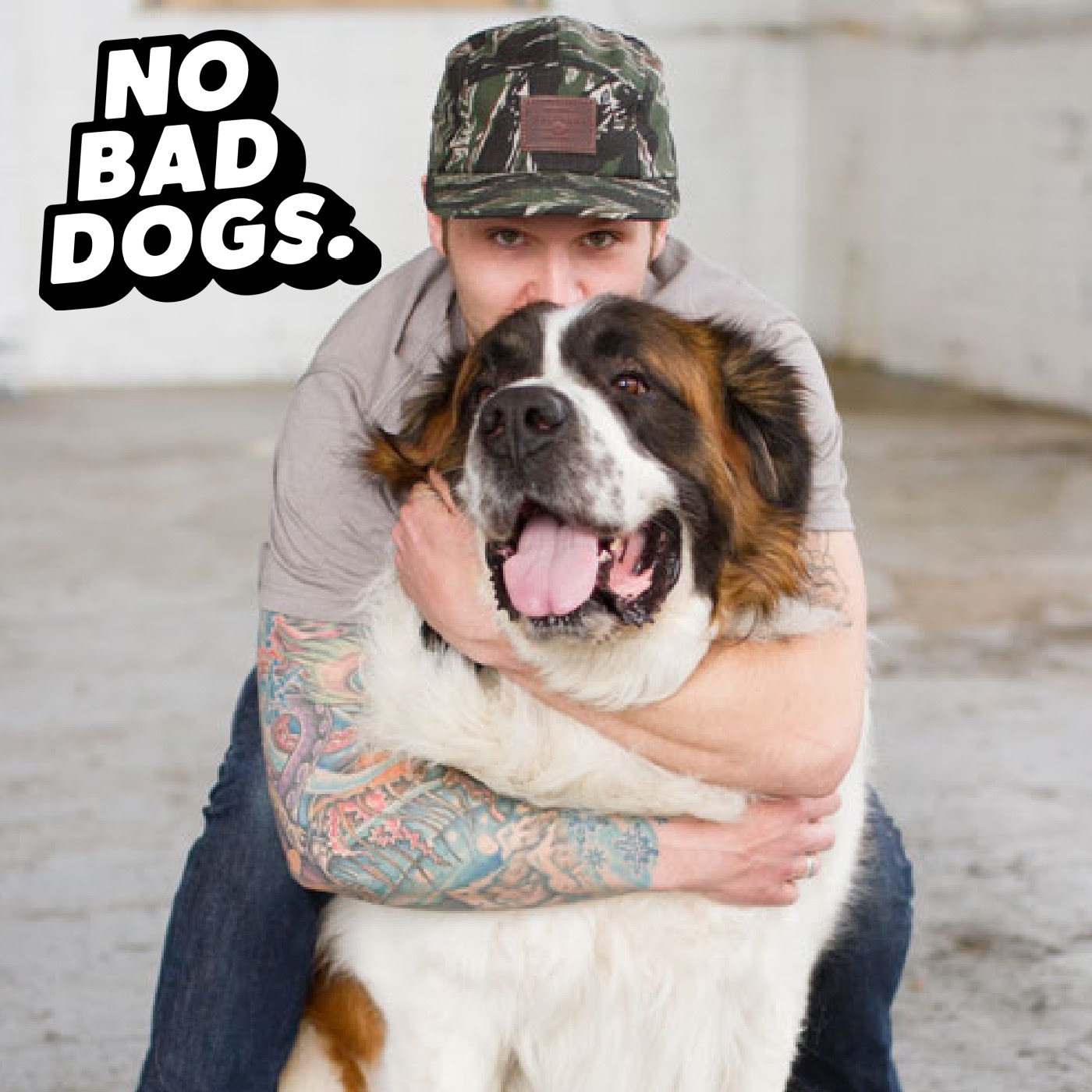
E376- THIS One Mistake Can Change EVERYTHING With Your Dog
Dog Trainer Tom Davis talks about how giving our dogs too much freedom is the deal breaker.
Get 50% your first We Feed Raw Order By Using My Link! https://wefeedraw.com/?promoCode=NBD50
Advertising Inquiries: https://redcircle.com/brands
Privacy & Opt-Out: https://redcircle.com/privacy
2026-05-08
11 min
Transcript
Available Results
Generated results are saved to the knowledge database for reuse and search.
No generated results are available for this episode yet.
Extract Knowledge
Pick what you want extracted first. Model, scope, and chapter options appear after a template is selected.
Generated results for public episodes are saved to the knowledge database so they can be reused and searched later.
Transcript
[SPEAKER_00]: Hello everybody, welcome back to the Noob Eddogs podcast.
[SPEAKER_00]: Today we're going to be talking about something that a lot of dog owners do and they get really frustrated and they spend a lot of time and most importantly they spend a ton of money on trying to chase this tale that they never are able to catch.
[SPEAKER_00]: and it makes it really frustrating for the dog, it makes it really frustrating for you.
[SPEAKER_00]: And your life could be much better with your dog after knowing some of these things we're going to be talking about in this podcast real quick.
[SPEAKER_00]: I want to give a shout out to my friends over at We Feed Raw for sponsoring this episode of the podcast.
[SPEAKER_00]: If you guys want to fresh, not all its her process food delivered straight to your door to help your dog live the healthiest life.
[SPEAKER_00]: You guys can save 50% off your first order by clicking the link in the description.
[SPEAKER_00]: Let's get into the podcast.
[SPEAKER_00]: guys we're going to be talking about freedom today and now I've talked about this before and many different avenues, many different ways, but this is a very specific podcast specifically for this freedom issue.
[SPEAKER_00]: So let's say you have a problem with your dog barking out the window.
[SPEAKER_00]: Let's say you have a frustration with your dog reacting towards the door when people come in.
[SPEAKER_00]: When guests come over, when the Amazon driver gets here, etc.
[SPEAKER_00]: What a lot of people do, and listen up, because this is important, guys, what a lot of people do is they give their dog, they say, let me back up, they say, Tom, my dog's barking at the door.
[SPEAKER_00]: My dog is barking at the window, my dog, when people come over, they go crazy, etc.
[SPEAKER_00]: I say, what do you do?
[SPEAKER_00]: What they say is they say, well,
[SPEAKER_00]: I told my dog to know, and I grabbed him by the collar, I put him in the other room, I push him back, I say no, no, no, no, don't, all the things, right?
[SPEAKER_00]: But what people forget, and again, this is the big misconception, is that the leash is only for outside.
[SPEAKER_00]: Guys, that is not what the leash is only for.
[SPEAKER_00]: The leash is your ability to plug in with your dog and communicate with your dog effectively and efficiently.
[SPEAKER_00]: So as you guys are working through this type of,
[SPEAKER_00]: situation with your dog.
[SPEAKER_00]: You have to understand the three levels of obedience, right?
[SPEAKER_00]: This is something that's just subjective to me and my ethos of level one obedience is having your dog on a leash.
[SPEAKER_00]: Lots of motivation asking them to do something in a clinical environment with nothing going on.
[SPEAKER_00]: Level two is having your dog still on leash with a little bit more distraction and less food praise.
[SPEAKER_00]: And level three is off leash.
[SPEAKER_00]: Your dog doing what you ask no matter what.
[SPEAKER_00]: And so what a lot of people do is they ask their dog to do something that they're not set up for, and they're not prepared for, and that they don't know how to do.
[SPEAKER_00]: So they're asking their dog to do something like a level three, which is widely going to be a huge failure, let's say.
[SPEAKER_00]: And, of course, they're frustrated and the dog is still doing all the wrong things.
[SPEAKER_00]: So, take away your dog's freedom if they haven't earned it.
[SPEAKER_00]: And I don't want you guys to think of freedom as like, well, my dog deserves to be free.
[SPEAKER_00]: Well, of course, to do that's not what we're talking about.
[SPEAKER_00]: What I'm talking about is like, let's say your 10-year-old kid comes up and says, hey, give me the keys to the car.
[SPEAKER_00]: You say, no, so you're taking away that freedom that they haven't earned that, right?
[SPEAKER_00]: They're not old enough, they haven't got their learners, permit, they haven't got their driver's license, they don't have the skill sets,
[SPEAKER_00]: So, of course, for every single person out there, well, the same people I should say, let's say, yeah, that makes sense.
[SPEAKER_00]: So, it's the same thing with dogs.
[SPEAKER_00]: As a lot of people don't put in the work, and they don't have the skill set.
[SPEAKER_00]: So, let's just break down the skill sets, which is going to make your life much less stressful and set up your dog for success.
[SPEAKER_00]: The skill sets that you need for entry chaos, let's say, or barking out the window at people when they walk by,
[SPEAKER_00]: is the place, which is sending your dog away to a targeted area.
[SPEAKER_00]: It's the recall, which is the dog is running towards the front door, because somebody's coming in.
[SPEAKER_00]: You say, they come right back to you.
[SPEAKER_00]: And then they leave it.
[SPEAKER_00]: They're barking out the window.
[SPEAKER_00]: We don't have to say, get away from the window.
[SPEAKER_00]: We just have to say, no, you can be next to the window.
[SPEAKER_00]: I just don't want you to bark your face off and we correct the dog for that whatever, right?
[SPEAKER_00]: So those are the three skill sets that's going to start breaking down the frustration that a lot of people have in the home with this with that entry chaos or the window chaos and a lot of people have this issue.
[SPEAKER_00]: But what they try to do is they try to stop the issue.
[SPEAKER_00]: I call it the stop at syndrome.
[SPEAKER_00]: It's a time I just want this to stop.
[SPEAKER_00]: Like you not just stop, right?
[SPEAKER_00]: It's like asking a personal trainer, I just want to lose 50 pounds.
[SPEAKER_00]: It's like, okay, that doesn't work like that.
[SPEAKER_00]: We have to put in the work to reach those goals.
[SPEAKER_00]: Can't just turn it off, right?
[SPEAKER_00]: So it's really important for dog owners out there that are struggling with their dog that are freaking out at the door, rushing out the door, barking out the window, we understand.
[SPEAKER_00]: We have to provide the dog with clear skill sets in order to be successful here.
[SPEAKER_00]: We have to provide the dog with a road map.
[SPEAKER_00]: And I always ask Doug and I said, what do you want your dog to do alternatively?
[SPEAKER_00]: Well, I don't want him to bark.
[SPEAKER_00]: I don't want him to rush the door.
[SPEAKER_00]: I don't want him to jump at my guess.
[SPEAKER_00]: Okay.
[SPEAKER_00]: As you recall, how's your sendaway?
[SPEAKER_00]: You can't just tell a dog to stop doing something.
[SPEAKER_00]: That's instinctual to them and then go, okay?
[SPEAKER_00]: That makes sense.
[SPEAKER_00]: You're going to have to fight against this.
[SPEAKER_00]: and work on your skill sets just like a kid.
[SPEAKER_00]: You pull up to their favorite store.
[SPEAKER_00]: You're not going to be able to tell that kid don't get excited when we pull up.
[SPEAKER_00]: But what we can do is when we get there, hold my hand, pay attention, look both ways.
[SPEAKER_00]: We do it safely.
[SPEAKER_00]: We have protocols.
[SPEAKER_00]: We have systems in place to make sure that this is safe and we're taking away any freedom that they may have.
[SPEAKER_00]: Kid gets out of the car and spins across the parking lot.
[SPEAKER_00]: You're not going to let them do that again for a while.
[SPEAKER_00]: because you're taking away that freedom to set them up for success.
[SPEAKER_00]: And they also have to have the skill sets and for kids in that situation to take hold my hand.
[SPEAKER_00]: Okay, they know what that is.
[SPEAKER_00]: Wait for mommy and daddy, okay, they know what that is, right?
[SPEAKER_00]: We have to have these skill sets in place.
[SPEAKER_00]: It's the same thing with dogs, guys.
[SPEAKER_00]: Somebody comes to the front door.
[SPEAKER_00]: You're not gonna tell your dog not to care.
[SPEAKER_00]: You may not even be able to tell your dog not to be vocal.
[SPEAKER_00]: You can minimize the vocalization with skills, but really you're gonna say, okay.
[SPEAKER_00]: Somebody's at the door.
[SPEAKER_00]: My dog's being a dog.
[SPEAKER_00]: I'm going to send my dog away to a place and I'm going to stay.
[SPEAKER_00]: Those are things that you can work on separately outside of the realistic context to make sure that you're prepared for that.
[SPEAKER_00]: And guys, we do this.
[SPEAKER_00]: You don't realize it, but we do this every day as humans.
[SPEAKER_00]: Any single person listening to this, you have done this before in your life.
[SPEAKER_00]: You've prepared yourself for the real thing, rather it's taken a test in third grade on how to spell, rather it's taken a driver's test, rather that's going on a competition, running a marathon, whatever.
[SPEAKER_00]: You guys have done all of these things.
[SPEAKER_00]: I have this test coming up, I need to practice.
[SPEAKER_00]: Profound, right?
[SPEAKER_00]: I mean, so many people miss this really easy, like this easy road map and this easy infrastructure and it's not because you guys don't care and it's not because you don't know, maybe it is, but it's it's more about you just don't understand the how to's we just think the dog's barking at the door, the dog's running at the door, the dog's barking at the window.
[SPEAKER_00]: doesn't know what they should be doing.
[SPEAKER_00]: You have it taught them the skill sets to be successful.
[SPEAKER_00]: Kid goes into a restaurant and says, give me grilled cheese, macaroni, and cheese now.
[SPEAKER_00]: Is that a rude kid?
[SPEAKER_00]: No, we're the parents.
[SPEAKER_00]: Why didn't you two?
[SPEAKER_00]: May I please have this?
[SPEAKER_00]: Thank you very much, right?
[SPEAKER_00]: So we didn't teach the dog the skill sets in order to be successful and be polite if you will.
[SPEAKER_00]: And so, teaching the place command, put your dog on a leash, go to a targeted area such as their bed or their raised cot, dog place, pay the dog.
[SPEAKER_00]: What a lot of people do, they drop the leash, they walk away.
[SPEAKER_00]: Ah, too much freedom.
[SPEAKER_00]: Don't do that.
[SPEAKER_00]: Keep your dog on the leash.
[SPEAKER_00]: That's your training wheels.
[SPEAKER_00]: Do not throw your kid down the hill without the training wheels on, unless they know how to ride that bike.
[SPEAKER_00]: That's what you're doing when you send your dog to a place and walk away and drop the leash.
[SPEAKER_00]: There's levels to that.
[SPEAKER_00]: There's levels to the game to be able to turn your back.
[SPEAKER_00]: Trigger one.
[SPEAKER_00]: Dropping the leash, trigger two, walking away, trigger three.
[SPEAKER_00]: Those are all different triggers for dogs.
[SPEAKER_00]: And a lot of people again, my dog just won't get it.
[SPEAKER_00]: First question is, is your dog on a leash?
[SPEAKER_00]: Well, no, we're inside.
[SPEAKER_00]: I'm going to put your tug back on the leash.
[SPEAKER_00]: Your leash is your ability to communicate with your dog.
[SPEAKER_00]: Those are your training wheels.
[SPEAKER_00]: Put your dog's training wheels back on until they learn how to ride that bike.
[SPEAKER_00]: but your dog to a place, work on your stay.
[SPEAKER_00]: All these things are really important, guys.
[SPEAKER_00]: So many people struggle for years.
[SPEAKER_00]: I've had dog owners come in.
[SPEAKER_00]: I've had people consult with me.
[SPEAKER_00]: You guys have heard my podcast talking to dog owners.
[SPEAKER_00]: But dogs react in at the door.
[SPEAKER_00]: They're aggressive.
[SPEAKER_00]: They're a puppy and they're scratching everyone up and jumping and nipping and being a dog.
[SPEAKER_00]: Like okay put your dog on a leash move them back to the place command.
[SPEAKER_00]: What's the place?
[SPEAKER_00]: Okay, these you know it's the same thing guys.
[SPEAKER_00]: I preach about this all the time my dog pulls.
[SPEAKER_00]: How's your heel doesn't exist?
[SPEAKER_00]: Uh-huh my dog won't come back when call how's your recall doesn't exist.
[SPEAKER_00]: Uh-huh
[SPEAKER_00]: can't complain about things we don't put the work into and I'm not saying you guys aren't willing to put in the work obviously you are you're listening to this podcast you guys are groovy you're ready you're waiting to learn it's amazing but I think just people fundamentally don't understand that if your dog isn't doing something that you want them to do it's because they don't know how and I think it's really that simple so guys take away that freedom put your dog back on the leash and if you're ever having an issue with your dog outside of genetics
[SPEAKER_00]: meaning the certain genetics that you guys can't control right like if you have a super nervous aggressive dog like you probably shouldn't be practicing these things it should be working more on avoidance right we will put the dog in the crate we will put the dog in the other room because there's too much of a risk here because the dog's nervous which is out of your hands right but that's a few and far and between that's like the one percentors
[SPEAKER_00]: So when you guys are working on this, put your dog on a leash and really audit.
[SPEAKER_00]: Okay.
[SPEAKER_00]: My dog is doing something.
[SPEAKER_00]: This is kind of your template, guys.
[SPEAKER_00]: This would be in a book if I wrote it.
[SPEAKER_00]: My dog is doing something I don't want them to do.
[SPEAKER_00]: Okay.
[SPEAKER_00]: Audit.
[SPEAKER_00]: Have you countered with the skill sets they need to be successful?
[SPEAKER_00]: Again, pulling on the leash, heal.
[SPEAKER_00]: Not coming back, recall.
[SPEAKER_00]: Barking at the door, leave it.
[SPEAKER_00]: Barking at the door, sending them away from the door.
[SPEAKER_00]: These are important things.
[SPEAKER_00]: If you don't have those skill sets, that's what you have to start working on.
[SPEAKER_00]: And moreover, I could have done this whole podcast with just telling people to put their leash back on their dog.
[SPEAKER_00]: So many people let their dog off leash, do what they want, and they're running around chasing the dog.
[SPEAKER_00]: I'm like, you'd, that's level three.
[SPEAKER_00]: There's a, that's, and here's the thing.
[SPEAKER_00]: People don't understand that letting your dog off leash is a privilege.
[SPEAKER_00]: Letting your dog off leash is difficult.
[SPEAKER_00]: Letting your dog off leash and then listen and understand you and do things is very difficult.
[SPEAKER_00]: It's a huge challenge.
[SPEAKER_00]: And the amount of people who don't even have level 1 skill sets are asking their dog to do level 3 things and not only failing but getting frustrated.
[SPEAKER_00]: And that's when you guys are on the internet and you're searching how do I get how do I get and I'm cutting through the noise and saying hey your big issue is that you haven't taught your dog the skill sets to be successful like that's a full stop you know what I mean So guys I just wanted to hop on here this is short and sweet appreciate you guys if you guys listening to this and spot if I do me a solid favor and follow us
[SPEAKER_00]: And if you're listening to this iTunes, I'm going to be answering three dog training questions in the reviews that you guys leave, so make sure you leave a review in the iTunes, and I'm going to answer your questions on the next podcast.
[SPEAKER_00]: Thank you guys so much for listening, and I will talk to you on the next one.
[SPEAKER_00]: Bye, everybody.
Chapters
No chapters available.