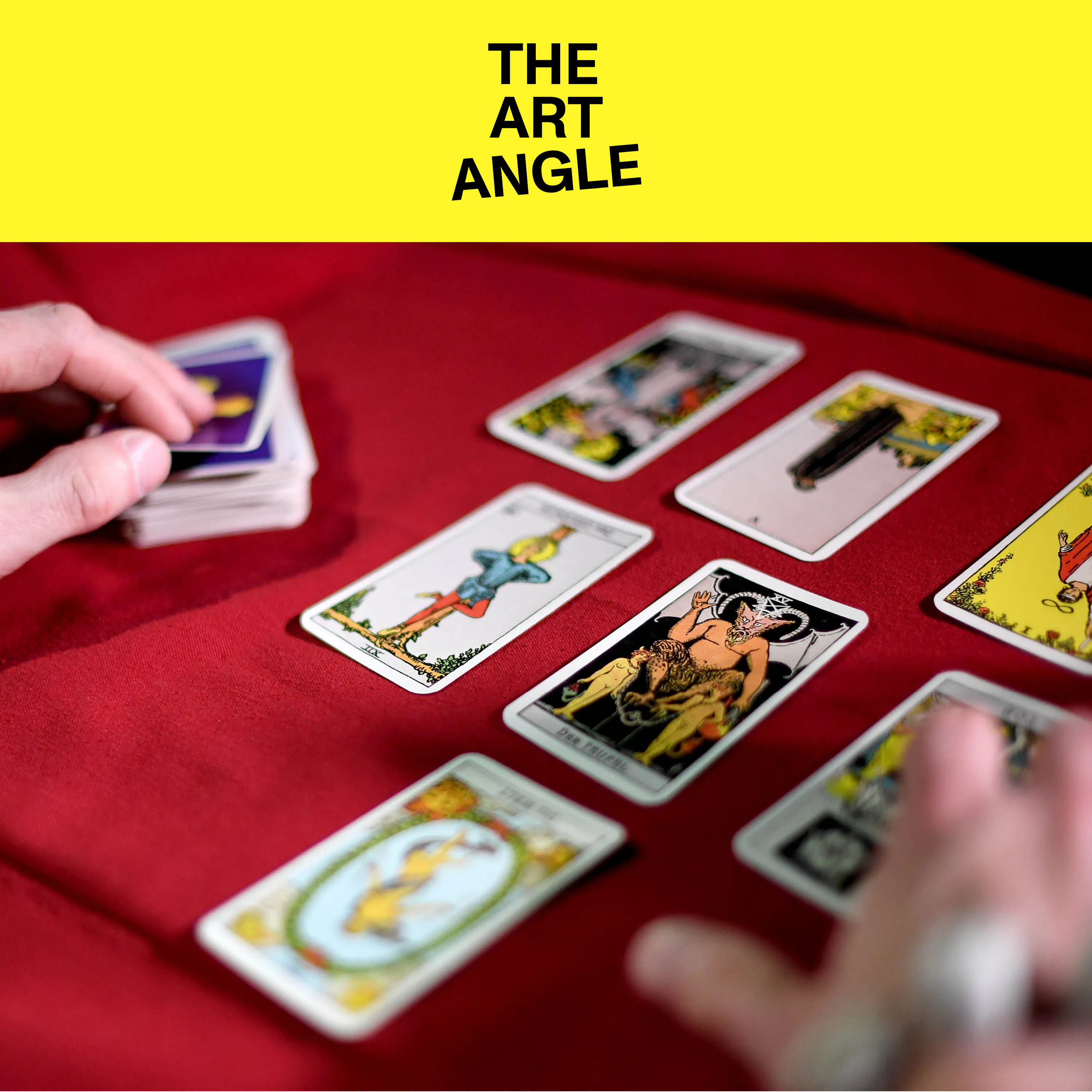
Why Artists Keep Turning to Tarot
Artists and creatives have been fascinated with tarot for over 600 years. Recently, that fascination has resurfaced in a big way, showing up everywhere from museum walls to fashion runways.
That's not surprising. As a sweeping universal narrative language small enough to fit in your pocket, tarot's archetypal imagery is built for rediscovery and reinterpretation. Once a medieval royal court game, tarot drifted into the realms of the occult, especially in the 18th and 19th centuries. In the 21st, it's entered the pop culture zeitgeist—accessible, affordable, and able to offer insight into the present, past, and future, but most importantly, yourself.
Artists have long mined the cards for spiritual and creative inspiration, contributing to their enduring relevance. Pamela Colman Smith designed the deck that's still the industry standard, back in 1909, though her name was buried for decades under the man who commissioned it. Leonora Carrington painted a hauntingly surreal Major Arcana in 1955. Salvador Dalí spent decades on his own gilded, cinematic deck, finishing it in the 1970s. Now, dozens of artists and designers are dabbling with imagery that fuses art history, numerology, astrology, and psychology with color, gesture, and form.
That's the real magic of tarot: The plurality of meaning and the staying power of images.
A major show at the Morgan Library and Museum in New York explores the history of and our enduring fascination with the cards. Annikka Olsen, Artnet's Galleries Editor, recently covered the exhibition and she joins Margaret Carrigan, Artnet's News Editor, on this episdoe to talk tarot, in all its many guises.
More description
Artists and creatives have been fascinated with tarot for over 600 years. Recently, that fascination has resurfaced in a big way, showing up everywhere from museum walls to fashion runways.
That's not surprising. As a sweeping universal narrative language small enough to fit in your pocket, tarot's archetypal imagery is built for rediscovery and reinterpretation. Once a medieval royal court game, tarot drifted into the realms of the occult, especially in the 18th and 19th centuries. In the 21st, it's entered the pop culture zeitgeist—accessible, affordable, and able to offer insight into the present, past, and future, but most importantly, yourself.
Artists have long mined the cards for spiritual and creative inspiration, contributing to their enduring relevance. Pamela Colman Smith designed the deck that's still the industry standard, back in 1909, though her name was buried for decades under the man who commissioned it. Leonora Carrington painted a hauntingly surreal Major Arcana in 1955. Salvador Dalí spent decades on his own gilded, cinematic deck, finishing it in the 1970s. Now, dozens of artists and designers are dabbling with imagery that fuses art history, numerology, astrology, and psychology with color, gesture, and form.
That's the real magic of tarot: The plurality of meaning and the staying power of images.
A major show at the Morgan Library and Museum in New York explores the history of and our enduring fascination with the cards. Annikka Olsen, Artnet's Galleries Editor, recently covered the exhibition and she joins Margaret Carrigan, Artnet's News Editor, on this episdoe to talk tarot, in all its many guises.
Listen elsewhere
Available Results
Generated results are saved to your library for reuse and search.