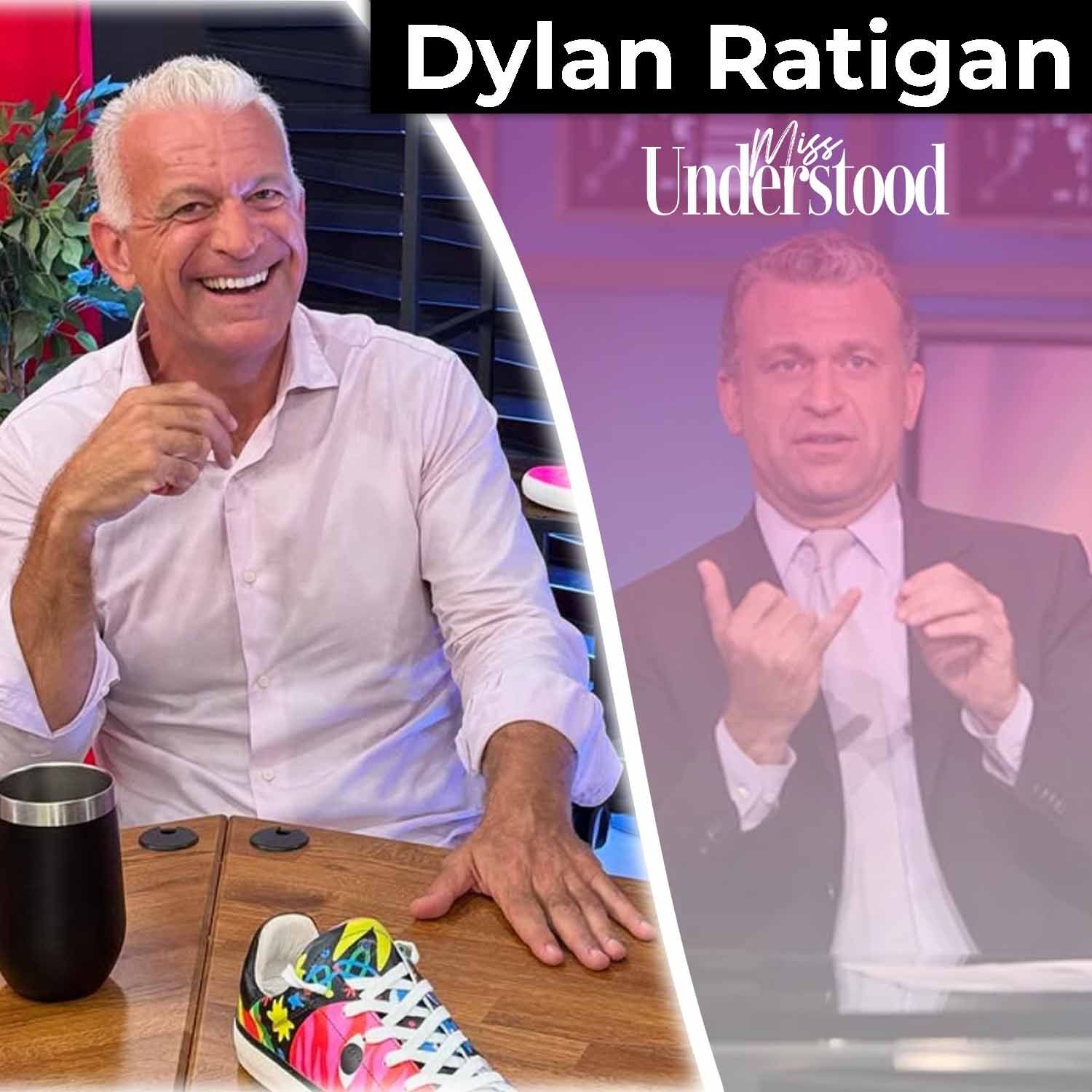
After the Viral Rant: Dylan Ratigan on Leaving TV for Purpose and Fulfillment in Italy
What happens when one of the most recognizable voices in news walks away from the spotlight? Dylan Ratigan did just that.
Best known as the fiery host of The Dylan Ratigan Show on MSNBC—and for his viral on-air rant that captured America’s frustration during the financial crisis—Dylan has always been a truth-teller unafraid to challenge systems of power. But after a bestselling book (Greedy Bastards) and years in front of the camera, he pivoted into a new chapter: entrepreneurship. Today, Dylan is building companies like Euforia Sneakers, a sustainable sneaker brand, and Reservations.com, a travel platform reshaping the way we book.
In this raw and thought-provoking conversation, Dylan opens up about why he left media, what he sees in America’s political future, and why the fight for reform is personal. He also shares what it’s like to reinvent himself while staying true to the convictions that made him one of the most outspoken voices in journalism.
Connect with Dylan Ratigan:
If you’ve ever wondered what happens when a newsmaker becomes a changemaker, this is an episode you don’t want to miss.
--- --- ---
PLEASE LIKE, SHARE, SUBSCRIBE, AND GIVE US A 5-STAR REVIEW!: ratethispodcast.com/missunderstood
Become a Patreon Member: https://www.patreon.com/c/MissUnderstoodwithRachelUchitel
Shop Miss Understood Merch https://missumerch.com/
Follow Rachel on Instagram! https://www.instagram.com/racheluchitelnyc/?hl=en
Follow Rachel on TikTok! https://www.tiktok.com/@itsracheluchitel
Executive Producer: George Carmona
Do you have show ideas, media requests or sponsorship opportunities? Email the show at: ru@missumedia.com
Listen on Apple, Spotify or wherever you get your podcasts.
YouTube: https://www.youtube.com/channel/UCw13NrSKD-nD_8E0vBHt5hA
Rumble: https://rumble.com/c/RachelUchitel
Website: https://missunderstoodpodcast.com/
Hosted by Simplecast, an AdsWizz company. See pcm.adswizz.com for information about our collection and use of personal data for advertising.
Available Results
Generated results are saved to the knowledge database for reuse and search.
Extract Knowledge
Pick what you want extracted first. Model, scope, and chapter options appear after a template is selected.
Transcript
[SPEAKER_02]: Today, on misunderstood with Rachel Yucatel.
[SPEAKER_03]: Tens of trillions of dollars are being extracted from the United States of America.
[SPEAKER_03]: Democrats aren't doing it.
[SPEAKER_03]: Republicans are not doing it.
[SPEAKER_03]: An entire integrated system, financial system, trading system, taxing system that was created by both parties over a period of two decades.
[SPEAKER_02]: You can see when on this rant and it became a thing that went viral,
[SPEAKER_04]: that clipped from, in the end, in the end, in the end, in the end, in the end, in the end, in the end, in the end, in the end, in the end, in the end, in the end, in the end, in the end, in the end, in the end, in the end, in the end, in the end, in the end, in the end, in the end, in the end, in the end, in the end, in the end, in the end, in the end, in the end, in the end, in the end, in the end, in the end, in the end, in the end, in the end, in the end, in the end, in the end, in the end, in the end, in the end, in the end, in the end, in the end, in the end, in the end, in the end, in the end, in the end, in the end, in the end, in the end, in the end, in the end
[SPEAKER_02]: I want to get to September eleven because that's a big day that we both work together.
[SPEAKER_04]: Two dozen of my good friends were in that building working.
[SPEAKER_04]: A number of your good friends were in that building working, but more significantly, the year fiancé was in that building work.
[SPEAKER_04]: I think it changed both of our lives permanently.
[SPEAKER_01]: You live in Italy.
[SPEAKER_04]: Yes, I live in it, but I also live specifically in Milan.
[SPEAKER_04]: I wanted to do a new Italian sneaker company in Milan.
[SPEAKER_04]: The goal is to provide the world with the most comfortable and stylish Italian sneaker ever.
[SPEAKER_02]: Welcome back to Misunderstood.
[SPEAKER_02]: I'm your host, Rachel Eucatel.
[SPEAKER_02]: There are moments in television that cut through the noise.
[SPEAKER_02]: Moments so raw, so unfiltered that they become cultural touchstone.
[SPEAKER_02]: For Dylan Radigan, that moment came live on MSNBC in two thousand and eleven.
[SPEAKER_02]: When he is frustration with America's broken financial system, boiled over into a viral rant that set out loud what millions of people were feeling, but couldn't put into words.
[SPEAKER_02]: It was the kind of television you can't script.
[SPEAKER_02]: Anger, truth, vulnerability, all colliding in a way that made people stop and listen.
[SPEAKER_02]: And to this day, that rant still holds the same amount of weight.
[SPEAKER_02]: But now, Dylan is an entrepreneur creating companies like Euphoria sneakers and taking over reservations.com.
[SPEAKER_02]: He's taking the same passion of once electrified television and pouring it into businesses that focus on sustainability, travel, and building things that last.
[SPEAKER_02]: But underneath it all, Dylan is still a truth-teller.
[SPEAKER_02]: still the guy unafraid to say the system is broken, still searching for ways to make it better.
[SPEAKER_02]: In our conversation, Dylan opens up about why he really left the media, what people misunderstand about him, and how he now defines success.
[SPEAKER_02]: Spoiler, it's not about ratings or headlines, it's about impact.
[SPEAKER_02]: Dylan and I also share some stories with you on how we met each other and how we got so close.
[SPEAKER_02]: So today's conversation is one about reinvention of refusing to be boxed into a single role of proving that sometimes the loudest way to make change is to step away from the microphone and get to work.
[SPEAKER_02]: Please enjoy my conversation with my friend Dylan Radigan.
[SPEAKER_02]: Dylan Radigan, thank you so much for joining me on my show, Ms.
[SPEAKER_02]: Understood.
[SPEAKER_04]: It is an absolute honor and a pleasure.
[SPEAKER_02]: Very nice to see you.
[SPEAKER_02]: So people don't know this and I'm so excited for them to know this, but we've worked together many years ago.
[SPEAKER_02]: What is it now like, twenty or something?
[SPEAKER_04]: We need to discuss time range every day in the past.
[SPEAKER_02]: Yeah, in the past for a couple years and always on the other side of this, you are on TV.
[SPEAKER_02]: I was the, you were the producer.
[SPEAKER_02]: I was the lowly person on the assignment desk first.
[SPEAKER_02]: Then I think I rose the ranks a little bit and became rose quickly and and appropriately.
[SPEAKER_02]: Yeah, but we had some amazing times.
[SPEAKER_02]: You taught me a lot.
[SPEAKER_02]: And before we get into all of that, I just want to know how did you get there?
[SPEAKER_02]: Because I arrived there and you were like the most intimidating senior person on air, this presence that when you walked in the room, it was like you ran Bloomberg.
[SPEAKER_02]: You were the guy.
[SPEAKER_02]: So I don't even know how you got there.
[SPEAKER_02]: What made you get into media?
[SPEAKER_02]: And what did you done up until that point?
[SPEAKER_04]: Yeah, it was a job.
[SPEAKER_04]: It was my first job out of, just like you.
[SPEAKER_04]: Yeah.
[SPEAKER_04]: Bloomberg was your first job out of school.
[SPEAKER_02]: How long did you been there?
[SPEAKER_04]: I started when I was twenty two.
[SPEAKER_04]: I mean, you, I can't live in there for five or six years.
[SPEAKER_02]: Okay.
[SPEAKER_02]: And did you start on air?
[SPEAKER_04]: No, no.
[SPEAKER_04]: I started, I started as on the assignment on the rewrite desk as a reporter in New Jersey, rewriting press release.
[SPEAKER_04]: Is it was my first job at a college?
[SPEAKER_02]: Wow.
[SPEAKER_04]: And it was also just the combination of like fortunate timing because I was one of the first reporters hired by Bloomberg.
[SPEAKER_06]: Right.
[SPEAKER_04]: Bloomberg was at a moment when I started at that company.
[SPEAKER_04]: There were eight thousand Bloomberg terminals in the world.
[SPEAKER_04]: Now there's, you know, three or four hundred thousand.
[SPEAKER_04]: I don't even know how many.
[SPEAKER_04]: And so I just happened to also come in at a moment when that company was on the verge of explosive growth.
[SPEAKER_04]: And when you're inside of a company that's growing extremely fast, there's an unlimited opportunity because there's much more work to be done than there are people to do the work.
[SPEAKER_04]: And so so much of life is really a function of timing.
[SPEAKER_04]: And if you end up in the right company at the right time and you can do the things that need to get done, you can get a lot of wealth.
[SPEAKER_02]: Right.
[SPEAKER_04]: If your work ethic is... And if you have whatever the skills are, I mean for me, even when I was a little boy, the most interesting thing for me was always to go to wherever the most action was.
[SPEAKER_04]: And so I like activity, I like when things are happening, I like to go when I was three years old, I'd run into the hurricane.
[SPEAKER_04]: And my mother would be like, why are you outside in a hurricane?
[SPEAKER_04]: And I'd say, because look at the hurricane, it's amazing.
[SPEAKER_04]: And so it was a really partially accidental, partially intentional.
[SPEAKER_04]: I wanted to be an interest in being a reporter.
[SPEAKER_04]: I had an interest in being a New York City.
[SPEAKER_04]: And Bloomberg was hiring, and so I was able to get a job first in New Jersey, rewriting press releases, and then one thing led to another, and I became the television host that you were describing.
[SPEAKER_02]: So you didn't have necessarily any skills in TV or business news at the time.
[SPEAKER_04]: No, no.
[SPEAKER_04]: I was I graduated from I was twenty two years old.
[SPEAKER_04]: I graduated from Union College and I was trained.
[SPEAKER_04]: I was trained by Bloomberg on how to do all those things.
[SPEAKER_04]: I was I was among so at that point, Bloomberg was a small company.
[SPEAKER_04]: Small, medium-sized company, small enough that every three months, everybody who had been new hires were put into a three-week training program that was run by Michael Bloomberg himself.
[SPEAKER_04]: And so I was among the last training class that was actually run by Michael Bloomberg, not by
[SPEAKER_04]: the training organization, although there are lots of other people that were involved with the training.
[SPEAKER_04]: And sort of the pleasure of that.
[SPEAKER_02]: So you got to understand the system, the Bloomberg.
[SPEAKER_04]: And just the attention.
[SPEAKER_02]: Yeah.
[SPEAKER_04]: I mean, because Bloomberg strategy to company and the person was higher, smart young people invest huge amounts of resources in training them and those who perform reward them constantly, reward them constantly.
[SPEAKER_04]: And those who don't perform get rid of them immediately.
[SPEAKER_04]: I mean, Bloomberg, as you know, a lot of most corporations, especially that corporation at that time, most corporations function on more of a passive aggressive culture.
[SPEAKER_04]: Bloomberg functioned on an aggressive aggressive culture.
[SPEAKER_04]: And so if you perform, there was immediate rewards in advance.
[SPEAKER_04]: And if you didn't perform, there was immediate elimination.
[SPEAKER_04]: It was like a very specific culture.
[SPEAKER_02]: And your skills you asked a lot of questions.
[SPEAKER_02]: And that's probably what made you stand out and rise in the ranks there because that seemed to be how you got to where you were.
[SPEAKER_02]: Yeah.
[SPEAKER_04]: I mean, I also just think because of my curiosity going back to my interest as a little boy and everything where I've been an eighty countries, I lived in Japan or live in Italy now.
[SPEAKER_04]: I like to have new experiences.
[SPEAKER_04]: I want new and complex challenges, some small.
[SPEAKER_04]: But I would say that the
[SPEAKER_04]: key characteristic for me I think that help me with that and still helps me today is listening comprehension.
[SPEAKER_04]: I listen to people and I want to understand them and reading comprehension.
[SPEAKER_04]: So to just the ability to, the more I can understand what's important for you, so if I'm you're interviewing the Treasury Secretary or interviewing the US President or you're interviewing the CEO of a company, the interview is much better if you're able to understand the priorities for that person.
[SPEAKER_04]: And it's also just helped me in general.
[SPEAKER_02]: But you were also very good at balancing that and conversations like that with understanding that you may have some viewers that didn't understand that person's job at all.
[SPEAKER_02]: You were great at getting them to as a translator.
[SPEAKER_02]: Yeah, to translate and to talk to even that woman folding her laundry at home during the day listening and wanting to smarten up a little, but in a way that she could understand it was interesting.
[SPEAKER_04]: I spent a lot of my childhood explaining things to my mother.
[SPEAKER_04]: And so I'm very, in addition to sort of listening and reading comprehension, I also have, I believe have a reasonably good ability to translate complex ideas into relatively simple concepts as also help me for sure.
[SPEAKER_02]: So, you know, I don't know if a lot of people know this, but the culture at Bloomberg was a lot different.
[SPEAKER_02]: Like you were saying, then in other companies, and I loved it.
[SPEAKER_02]: I don't know your experience.
[SPEAKER_02]: I love that no one really, I mean, everyone had a title, but you were able to move the flat organization, Mike didn't have an office.
[SPEAKER_02]: And there was no, there was no walls.
[SPEAKER_02]: Everything was glass.
[SPEAKER_02]: You could see what everyone was doing.
[SPEAKER_02]: And I really thought that made a difference because you could be whoever you want it to be.
[SPEAKER_02]: You could get whatever job and attain that role.
[SPEAKER_04]: If you just tried hard, if you ask questions, if you got credit to my Bloomberg's desk and be like, I think we should start a television show.
[SPEAKER_02]: Right.
[SPEAKER_04]: And he'd be like, tell me why.
[SPEAKER_02]: Right.
[SPEAKER_02]: And having that access was what you made the difference, I think, because everyone's opinion or questions mattered.
[SPEAKER_02]: And you don't really see that anywhere.
[SPEAKER_04]: Well, it really spoiled me for life, honestly.
[SPEAKER_04]: One of the biggest reasons why I think I've spent the last ten years creating my own companies or participating with other entrepreneurs like my friend Tim Henshal, we'll talk about from hotel planner.
[SPEAKER_04]: where they created these things from nothing is because I really missed that culture.
[SPEAKER_04]: I spent, as you know, a lot of my career working at NBC, which was much more visible, much more sort of a high profile.
[SPEAKER_04]: But the culture at NBC is closed doors, offices, all that passive, aggressive, all the backstabbing, all the sort of triangulation.
[SPEAKER_04]: Right.
[SPEAKER_04]: And because Bloomberg was such a direct
[SPEAKER_04]: organization, direct engagement and flat.
[SPEAKER_04]: It was fabulous in my opinion, and I think you and I both appreciated that.
[SPEAKER_02]: Yeah, a hundred percent.
[SPEAKER_02]: And so you, I would say, I would credit you to being one of the people that really taught me about work ethic and about asking questions and about
[SPEAKER_02]: killing people with kindness.
[SPEAKER_02]: And if you don't know the answer, don't be ashamed of that, but just go figure it out.
[SPEAKER_02]: And I really learned that from you.
[SPEAKER_02]: You were someone who, if I didn't have the answer, you would come, you'd spend time with me at my desk, you'd show me how to do it.
[SPEAKER_02]: I would get frustrated and be like, well, here's where it ends.
[SPEAKER_02]: I can't go further than this.
[SPEAKER_02]: And you'd be like, what are you talking about?
[SPEAKER_02]: Of course you can.
[SPEAKER_02]: You need to ask this person.
[SPEAKER_02]: You need to go here.
[SPEAKER_02]: And I don't see that work ethic in the younger generations at all.
[SPEAKER_02]: Like, people stop me all the time and say,
[SPEAKER_02]: You're much quicker.
[SPEAKER_02]: You get it quicker.
[SPEAKER_02]: You do things in a way that I don't see any younger people.
[SPEAKER_02]: And as I was saying before, we started this.
[SPEAKER_02]: It's really hard to hire younger people because I think the work ethic is so different.
[SPEAKER_02]: Do you see that?
[SPEAKER_04]: I mean, yes and no, I think that there's always a sense that I think every generation forever is always said, well, the kids these days are not the same thing.
[SPEAKER_04]: And I definitely think there's an aspect of that.
[SPEAKER_04]: But I also
[SPEAKER_04]: think that if you have a clear purpose and a clear mission, you will naturally attract other people who want to be part of that.
[SPEAKER_04]: And so I believe that the thing to do, I wouldn't be afraid of your inbox.
[SPEAKER_04]: Instead of looking for somebody to be a producer or an assistant or whatever for this show, you're better to look into the inbox of somebody who loves this show.
[SPEAKER_04]: Right.
[SPEAKER_04]: I mean, you know, it's like, you know, the reason you for years, you for years, because I was able to put out the signal that I wanted to do a new Italian sneaker company in Milan, which is a crazy idea for an American to do in Italy.
[SPEAKER_04]: But because I did that, there were younger Italians who became aware that I was trying to do that and who put themselves forward and said, we would like to help with that.
[SPEAKER_04]: We can, we know, we would, you, you, I think it's,
[SPEAKER_04]: You have to have the patience to put out the signal for who you are and what you're doing and then let the people that respond to that signal come to you rather than trying to grab people and mold them into what you're trying to do.
[SPEAKER_04]: So maybe the younger people are less and maybe they're not.
[SPEAKER_04]: But can I tell you one quick story that I remember just about our discussion?
[SPEAKER_01]: That's good advice.
[SPEAKER_01]: Yeah.
[SPEAKER_04]: I can remember sitting with you, this is early on because the other thing that's a priority for me, not just in the context of any relationship with anyone, is not just to know the thing like this is a shoe or this is a copper, this is a microphone, but why?
[SPEAKER_04]: I think someone doesn't really learn if you just say, well, this is the list of things you need to do.
[SPEAKER_04]: Someone learns that they have a context for why these things need to be done.
[SPEAKER_04]: And I can remember saying to you, as I remember this very clearly, and I said to you, why does Wall Street exist?
[SPEAKER_04]: Why does it exist?
[SPEAKER_04]: Why do we have the New York Stock Exchange?
[SPEAKER_04]: Why are there stocks?
[SPEAKER_04]: Why are there regulations?
[SPEAKER_04]: Why are there regulators?
[SPEAKER_04]: And you said, so people can make money?
[SPEAKER_04]: And I remember laughing, and I was like, so you think that we've got all these, that just so people could make money, which obviously, people make a tremendous amount of money.
[SPEAKER_04]: And it was actually a reasonable answer and probably a more true answer.
[SPEAKER_04]: But it just led to the conversation about the idea.
[SPEAKER_04]: In the world, there's human beings and companies that have ideas.
[SPEAKER_04]: And those ideas need money to manifest.
[SPEAKER_04]: And then there's people who have money who want to participate in new ideas.
[SPEAKER_04]: And the reason Wall Street exists at its highest and best purpose is if a group of brilliant individuals have an idea for a cure for cancer.
[SPEAKER_04]: but they don't have the money that they can go to Wall Street and explain why their idea is a great idea and then get money.
[SPEAKER_04]: And so anyway, but I want you to understand that the reason Wall Street exists is to combine money with ideas and that everything else is really just in support of that.
[SPEAKER_04]: It helps you understand all the little tasks.
[SPEAKER_04]: So anyway, I just would say that, you know, send your signal and let the people come to you and context is the easiest way to learn is if you have a context for why things exist.
[SPEAKER_02]: Right.
[SPEAKER_02]: So you, I want to get to September eleventh because that's a big day that we both were together.
[SPEAKER_02]: I rarely talked to people that I actually spent that actual day with and it's interesting to me because in my opinion, and I'm curious about yours, that was a day that changed for you as an anchor as well or someone on.
[SPEAKER_04]: Yeah, change my life forever.
[SPEAKER_04]: I think it changed both of our lives permanently.
[SPEAKER_02]: But as someone who is on air, you know, you're used to the teleprompter, you're used to also ad libbing, but interviewing people and talking about business news.
[SPEAKER_04]: All right.
[SPEAKER_02]: All of a sudden, you're on air and anyone who was on air during that morning.
[SPEAKER_02]: essentially got caught on air until eleven or twelve when or they could want to clock for you when they could finally get off air they could cut to a commercial and they had to add lib they had to figure it out you were relying I don't want to tell you what you were lying on but I was relying on you someone like me or people you were the producer for this let's just I think we should not be around the boy okay
[SPEAKER_04]: I was the host of the morning show on Bloomberg at the time.
[SPEAKER_04]: The first planes hit the air, the buildings while I was on air.
[SPEAKER_04]: Because of that, they extended me basically.
[SPEAKER_04]: They didn't have me stay.
[SPEAKER_04]: You were my producer.
[SPEAKER_04]: Right.
[SPEAKER_04]: You were in the control room, in the earpiece.
[SPEAKER_02]: Right.
[SPEAKER_02]: Well, originally, I was upstairs.
[SPEAKER_04]: Whatever.
[SPEAKER_02]: I was upstairs and you were in direct communication.
[SPEAKER_02]: I was in direct communication.
[SPEAKER_04]: I was receiving communication from you on the, on the, on the DM or whatever it is on the, on the, on the tournament.
[SPEAKER_04]: Yeah, but it's a turn, the Bloomberg DM.
[SPEAKER_02]: Yes, right.
[SPEAKER_02]: And, and what I do remember is that.
[SPEAKER_02]: everyone thought it was just a passenger plane or a small plane and it no you know no one was in chaos and I'm upstairs saying I'm gonna have to call analysts I got to call airlines I got to see how this is gonna affect the open you know so that's what I was worried about and you're doing what you're doing and then the second plane hits but also just as a point of contact because I think the one thing that as a bond that you and I share and also as a differentiation between us and a lot of other people is
[SPEAKER_04]: Two dozen of my good friends were in that building working.
[SPEAKER_04]: A number of your good friends were in that building working, but more significantly, the year fiancé was in that building working.
[SPEAKER_04]: So we were in a social where it wasn't just, it was not for us, it was not just a news event, it was a social experience and we didn't know what was about to happen.
[SPEAKER_02]: Right.
[SPEAKER_02]: We had no, I say this all the time and it's a terrible word, but we did not have the creativity to realize the buildings were actually going to fall.
[SPEAKER_02]: This day was going to end the way it was going to end and I will fast forward to a moment
[SPEAKER_02]: later that you and I go back and talk to where we end up downstairs just the two of us.
[SPEAKER_05]: One PM.
[SPEAKER_02]: At one PM after you get off air, we must have texted each other and said we got to meet.
[SPEAKER_02]: And people are walking up silent park.
[SPEAKER_04]: No cars and it's just people.
[SPEAKER_02]: In soot covered in soot people that are just crying, people are not talking.
[SPEAKER_04]: Thousands of people.
[SPEAKER_02]: And we are standing there on our avenue, lighting up a cigarette, and almost laughing, because we couldn't, we were like, what the hell is going on?
[SPEAKER_04]: Well, also because we had gone into the building at five a.m.
[SPEAKER_04]: that morning, like we do every day.
[SPEAKER_02]: Right.
[SPEAKER_04]: We hadn't left the building for nine hours.
[SPEAKER_06]: Yeah.
[SPEAKER_04]: We'd spent the, and the thing is when you're in a studio environment, like we're in now,
[SPEAKER_04]: It's a surreal experience because there's a separation between yourself and reality because you're looking at cameras and your life is microphones and people are made up and sort of very controlled.
[SPEAKER_04]: So even though we're getting this information, even though we watch the buildings collapse together and we watch the communication with our friends and your family disappear as those buildings collapse, it still didn't for me the reality didn't set it until we were on park Avenue smoking that cigarette and now I'm not a television anchor, you're not a television producer.
[SPEAKER_04]: We're two people who live in New York watching our fellow New Yorkers walk home in Jordan in the disaster.
[SPEAKER_02]: And wondering the big question that I remember saying to you, I will never forget.
[SPEAKER_02]: I wish it was a year from now, so we knew what was going to happen.
[SPEAKER_02]: Like we did not know how that day was going to end.
[SPEAKER_02]: We didn't know that the not knowing might extend for a few days for a month.
[SPEAKER_02]: You know, they didn't find Andy's body or months.
[SPEAKER_04]: Well, I mean, let's, I mean, I don't, I don't want to be getting to something that's too sensitive.
[SPEAKER_00]: No, matter.
[SPEAKER_04]: The fact that we all went home that night,
[SPEAKER_04]: and did not know who was going to come home.
[SPEAKER_04]: And so it wasn't that there was no information.
[SPEAKER_04]: And so the only way information was gathered is you woke up the morning of September twelve.
[SPEAKER_04]: And on the morning of September twelve, there were certain people that didn't come home.
[SPEAKER_02]: And even one of them.
[SPEAKER_02]: And so I didn't go back into work for at least a couple of months.
[SPEAKER_02]: And it was obviously, and we don't have to get into that.
[SPEAKER_02]: The most devastating thing that happened to me, but I shared that day with you.
[SPEAKER_02]: And it was something that I will always have with you.
[SPEAKER_02]: And we will always have that bond.
[SPEAKER_04]: And we shouldn't smoke cigarettes.
[SPEAKER_02]: We shouldn't.
[SPEAKER_02]: And I haven't.
[SPEAKER_02]: I mean, I did for a little while after.
[SPEAKER_02]: But I haven't.
[SPEAKER_02]: Good.
[SPEAKER_02]: Do you now live in Italy?
[SPEAKER_02]: Oh, OK.
[SPEAKER_04]: Although recently, yes, but sometimes no.
[SPEAKER_02]: Well, I took chantics.
[SPEAKER_04]: Okay.
[SPEAKER_04]: I did as well.
[SPEAKER_02]: It makes you see dead people.
[SPEAKER_02]: Did that happen to you?
[SPEAKER_04]: You got no, but you got a, I do get crazy dreams though.
[SPEAKER_02]: Yeah.
[SPEAKER_02]: Well, I got a crazy dreams awake.
[SPEAKER_02]: Like after dating for dead people.
[SPEAKER_02]: I don't know.
[SPEAKER_02]: I was like, I'm seeing dead people.
[SPEAKER_04]: Dead people, you know, or just people?
[SPEAKER_02]: No.
[SPEAKER_02]: I'll tell you.
[SPEAKER_02]: I was walking down the street.
[SPEAKER_02]: There was a homeless man.
[SPEAKER_02]: And I remember thinking, don't look in his eyes.
[SPEAKER_02]: He doesn't have eyes.
[SPEAKER_02]: He's the devil.
[SPEAKER_02]: And I'm thinking to myself,
[SPEAKER_02]: What the hell are you talking about?
[SPEAKER_02]: And it was day four of Chantix.
[SPEAKER_02]: I stopped at a day five, but it still worked.
[SPEAKER_02]: I never smoked again.
[SPEAKER_04]: Chantix is a magical drug.
[SPEAKER_04]: I mean, it's unbelievable.
[SPEAKER_04]: It actually makes you not want to smoke.
[SPEAKER_04]: I did use it as well.
[SPEAKER_02]: And it makes you not want to drink.
[SPEAKER_04]: Yeah.
[SPEAKER_02]: Yeah.
[SPEAKER_04]: Yeah.
[SPEAKER_04]: The interesting thing with the Chantix is because it's so effective, I use it as an excuse to smoke.
[SPEAKER_04]: Because then I know if I ever want to not smoke, I can just think.
[SPEAKER_01]: Oh, you can take tantux.
[SPEAKER_04]: Which is terrible, actually.
[SPEAKER_04]: But at the moment, I'm not smoke.
[SPEAKER_01]: But you live in Italy.
[SPEAKER_01]: So all right.
[SPEAKER_04]: But even the Italians listen, Italy gets a bad rap because Italy is the young, I work, yes, I live in Italy.
[SPEAKER_04]: But I also live specifically in Milan.
[SPEAKER_04]: And I also get the privilege of working with a really amazing group of young Italian professionals who I don't think are reflective of the cliche or the stereotype of Italians.
[SPEAKER_04]: meaning that they are extremely hardworking.
[SPEAKER_04]: I think the Italians get a bad rap for not being hardworking.
[SPEAKER_04]: I know that the people that I work with has harder harder than anybody that I worked with at Bloomberg or NBC.
[SPEAKER_04]: I think they're extremely creative.
[SPEAKER_04]: I think they're extremely passionate and I think they're extremely healthy.
[SPEAKER_04]: The idea that everybody's smoking and hanging around drinking apparel spritz and always on holiday
[SPEAKER_04]: is sort of a pleasant joke, right?
[SPEAKER_04]: It's a nice way to, it's like, ah, it's the Italians.
[SPEAKER_04]: I'm here to tell you, I live in Milan, and I'm the only American working with an incredible group of young Italian men and women with the euphoria with the sneaker business, but it's not just that, I have other friends in mind that are young Italians with real estate businesses or with pharmaceutical things, whatever, they work their ass off.
[SPEAKER_04]: And they are incredibly talented and now maybe that's only Milan.
[SPEAKER_04]: But I think it's more that the world is driven by young people that want to create things.
[SPEAKER_04]: And Milan has become a magnet for that energy.
[SPEAKER_04]: I'm not just for Italians, but for a lot of people around the world.
[SPEAKER_04]: So anyway, I just would like to speak a little bit of counter narrative.
[SPEAKER_04]: Yeah, no, I love half of the Italian.
[SPEAKER_02]: I think that's great.
[SPEAKER_04]: And it's illegal to smoke it, by the way, even though even the smoking rules, you can't, like if you think you can go, you want to go to, you want to go with your fiance, I know you're recently engaged, you want to go and sit out and have an apparel spritz and take a look at the Castelos Vorsesca and enjoy yourself.
[SPEAKER_04]: Have a cigarette, can't illegal.
[SPEAKER_00]: Can't do it.
[SPEAKER_04]: It's not as bad as LA where you can't smoke on the sidewalk anywhere.
[SPEAKER_02]: Right.
[SPEAKER_02]: Right.
[SPEAKER_04]: But it is illegal.
[SPEAKER_02]: Can you spit gum on the ground?
[SPEAKER_02]: Like I don't think I'm allowed to do that.
[SPEAKER_04]: And so I can't say.
[SPEAKER_02]: So you've never stopped for that.
[SPEAKER_02]: Right.
[SPEAKER_02]: Okay.
[SPEAKER_02]: Well, probably.
[SPEAKER_04]: But I would hope that you can't.
[SPEAKER_02]: Yeah, I would hope so.
[SPEAKER_04]: Like spitting gum seems to be a lie.
[SPEAKER_02]: Seems like a terrible way.
[SPEAKER_02]: Do that.
[SPEAKER_04]: I think chewing gum in general is questionable.
[SPEAKER_02]: Yeah.
[SPEAKER_02]: Well, I agree.
[SPEAKER_02]: Yeah.
[SPEAKER_02]: I don't think a lot of people do that.
[SPEAKER_04]: I don't think they do either.
[SPEAKER_04]: Yeah.
[SPEAKER_02]: All right.
[SPEAKER_02]: Let's move on.
[SPEAKER_02]: So you ended up moving on from Bloomberg as did I. I can't remember who left first.
[SPEAKER_02]: Probably me.
[SPEAKER_04]: Probably you.
[SPEAKER_02]: I think for me, actually, I worked for a whole another year.
[SPEAKER_02]: Bloomberg was the best job I ever had.
[SPEAKER_02]: really regret that I ever left to be honest.
[SPEAKER_02]: I mean, not ever, but at the time, I regret that I left.
[SPEAKER_02]: I met somebody I decided to get married.
[SPEAKER_02]: He did not want me to work anymore.
[SPEAKER_02]: But before that, like a year after September, eleven, it was the anniversary.
[SPEAKER_02]: And it was the first time in all the years, right?
[SPEAKER_02]: Because now we've done this twenty-four times.
[SPEAKER_02]: But it was where everybody was remembering a year later.
[SPEAKER_02]: And it was just the way, you know, it was being covered and the way it was being covered and all that was great.
[SPEAKER_02]: For me, it was having to relive it.
[SPEAKER_02]: And it was very difficult for me to have to relive it.
[SPEAKER_04]: And for me, it was hard.
[SPEAKER_04]: And your level of exposure was emotionally was a thousand times mine.
[SPEAKER_04]: And mine was unbearable on it.
[SPEAKER_02]: Right.
[SPEAKER_02]: Yeah.
[SPEAKER_02]: And so I had to take a leave of absence again a year later.
[SPEAKER_02]: And then
[SPEAKER_02]: I kind of got it together, worked there, but then eventually ended up leaving, getting married.
[SPEAKER_02]: That was a whole nother mistake.
[SPEAKER_02]: But I ventured off to Vegas and started working in Vegas, which I also loved, totally different life.
[SPEAKER_02]: But for you, you moved on to NBC.
[SPEAKER_02]: Can you talk a little bit about that?
[SPEAKER_02]: How different was it from blue?
[SPEAKER_04]: The difference is incredible.
[SPEAKER_04]: I mean, it was just...
[SPEAKER_04]: because Bloomberg was a relatively small television station, much less celebrity, much less sort of notoriety.
[SPEAKER_01]: And you were the big celebrity.
[SPEAKER_04]: And I was Mr. Big over there for a minute.
[SPEAKER_04]: And so, but the culture with the, but the people were incredibly hardworking, incredibly intelligent, incredible people, basically.
[SPEAKER_04]: NBC had this beautiful front end and certainly was great for my career in terms of elevating my public profile and an opportunity.
[SPEAKER_04]: But the culture was much more, here's what I learned in that transition to say this in the most elegant way.
[SPEAKER_04]: When you're inside of a grow, there's two ways to relate to the world.
[SPEAKER_04]: One is what I'll say is an offensive posture where if somebody that works with you has a great idea, your inclination is to say, tell me about your idea, how do I help you let's do it?
[SPEAKER_04]: And then there's another world where somebody has an idea and every other person and every other idea is a threat.
[SPEAKER_04]: So you can either have a defensive psychological position where anything that Rachel gets comes at my expense
[SPEAKER_04]: or anything that I get comes at your expense is one psychological profile and the other psychological profile is that we can always make the pie bigger and the more the more the more Rachel or the more I can get out of you the more the more the more I can make maximum Rachel or the more people help make maximum mirror maximum each other
[SPEAKER_04]: That's good for all of us.
[SPEAKER_04]: And Bloomberg, to me, was defined by the culture of we can always make the pie bigger.
[SPEAKER_04]: And your job is to work with the people around you to get the best out of them.
[SPEAKER_04]: Be demanding, early late, all the intensity, but help them give them more resources.
[SPEAKER_04]: And make the introduction.
[SPEAKER_04]: Oh, you should know this person.
[SPEAKER_04]: Don't withhold information from them to try to make it more difficult.
[SPEAKER_04]: It's hard life is hard enough.
[SPEAKER_05]: Right.
[SPEAKER_04]: Whereas NBC was really dominated by as an incumbent, that was in slow decay, even though it's a massive business, you can see it's still in decay.
[SPEAKER_04]: But not just NBC, all those for the old media companies.
[SPEAKER_04]: And so the, and there's, everybody's making a lot of money and all the things.
[SPEAKER_04]: And the culture is one that is anything for you comes at my expense.
[SPEAKER_02]: Right.
[SPEAKER_04]: So it was just, I was in big transit.
[SPEAKER_02]: Meaning they saw that only a few people could be at the top.
[SPEAKER_04]: And yeah, it's in my interest for you to fail.
[SPEAKER_02]: Right.
[SPEAKER_04]: as it in my interest the simplest way to say it is and Bloomberg it was the culture was it's in my interest for you to succeed at NBC the in the culture was it's in my interest for you to fail right so you started there to do twenty or three I I I with my own television show okay which was I was that was a big step up that was a big deal yeah for me at them yeah I would say yes I would say yes
[SPEAKER_02]: Yeah, so I sure about one fast money.
[SPEAKER_04]: No, that was called bull's eye.
[SPEAKER_02]: Bull's eye was short-lived.
[SPEAKER_04]: Bull's eye was dealing radicine.
[SPEAKER_04]: It was one of my least successful undertakings.
[SPEAKER_02]: But it was the premise of that.
[SPEAKER_04]: It was lacking a premise.
[SPEAKER_04]: It was part of the issue.
[SPEAKER_02]: Okay.
[SPEAKER_04]: You see.
[SPEAKER_04]: Okay.
[SPEAKER_04]: And so the absence of a premise made it a very less successful promise.
[SPEAKER_02]: It didn't stand out.
[SPEAKER_02]: Okay.
[SPEAKER_04]: And then that show was canceled.
[SPEAKER_04]: And then the way television works, they can take you off the air, but you have these contracts.
[SPEAKER_04]: So then you're just being well paid to do nothing, which is very degrading, ultimately.
[SPEAKER_04]: And then so there was another person there who was another executive of television, big television producer, named Jonathan Wald, who had been in charge of the today show, who had also been deactivated.
[SPEAKER_04]: And so we were both just sitting in the office
[SPEAKER_04]: And I think it could train a half end of the flood, something that happened, some big news that happened, and they needed to launch, they really wanted to fire me for sure.
[SPEAKER_04]: They were like waiting to fire me.
[SPEAKER_04]: And they probably wanted to fire him.
[SPEAKER_04]: One more year with these guys, and they're out.
[SPEAKER_02]: I knew we were just behind the scenes at this point.
[SPEAKER_04]: I was just clung it out.
[SPEAKER_02]: Yeah.
[SPEAKER_02]: OK.
[SPEAKER_02]: I'm still coming into the office.
[SPEAKER_02]: You have to bothering people.
[SPEAKER_04]: Well, not even just hanging out.
[SPEAKER_04]: I don't try to bother people.
[SPEAKER_02]: Well, okay.
[SPEAKER_04]: I mean, I guess it's in the eye of the holder.
[SPEAKER_01]: Right.
[SPEAKER_04]: That's right.
[SPEAKER_04]: So Jonathan and I did a show.
[SPEAKER_04]: And that show became very successful.
[SPEAKER_04]: It was called on the money.
[SPEAKER_04]: I want to say very successful.
[SPEAKER_04]: It became, it was successful.
[SPEAKER_04]: And then we started a segment on that show called Fast Money.
[SPEAKER_04]: And the premise was, and that was a show that I'd always been pitching to Michael Bloomberg, which is Mike, this is stupid to have everybody on these sets.
[SPEAKER_04]: We're reading these scripts with stock prices all these leads.
[SPEAKER_04]: It's not interesting.
[SPEAKER_04]: Don't you think they'd be more interesting just to sit around with no script and talk to people who are actually making, taking, doing it every day.
[SPEAKER_04]: And I'm like, Rachel, why did you do this?
[SPEAKER_04]: Why did you do that?
[SPEAKER_04]: And Mike liked the idea.
[SPEAKER_04]: We liked each other.
[SPEAKER_04]: But he was the structure of Bloomberg television was not one that was going to have a big whatever.
[SPEAKER_04]: So we started that as a segment on the show.
[SPEAKER_04]: And the segment was well raided, highly raided.
[SPEAKER_04]: And they had just launched Mad Money, which has been on forever.
[SPEAKER_04]: And so the producers of Mad Money wanted another show.
[SPEAKER_04]: We went to the owners of the NASDAQ in Times Square.
[SPEAKER_04]: They were like, we'll give you your own studio in Times Square.
[SPEAKER_04]: Anyway.
[SPEAKER_04]: And then that became one of the most successful television shows in the history of financial television.
[SPEAKER_00]: Amazing.
[SPEAKER_04]: Life is a one part planning, one part accident.
[SPEAKER_04]: So you just got to keep going.
[SPEAKER_02]: So how did that end?
[SPEAKER_02]: How did that come to a... What, a fast moment?
[UNKNOWN]: How did that end?
[SPEAKER_04]: I mean, was that this was before... This was before the financial crisis, fast money became a sensation.
[SPEAKER_04]: It became... It was like crowds in time square and it was like a TV.
[SPEAKER_04]: It was like... The first time I was actually lived as some version of a very relatively small, but still as a TV star, crowds, security, billboards, things, TV things.
[SPEAKER_02]: So now you're really well now.
[SPEAKER_04]: It really wells a strong word.
[SPEAKER_04]: I'm known well by live within a small group.
[SPEAKER_02]: Okay.
[SPEAKER_02]: So let's fast forward then to twenty eleven is it?
[SPEAKER_04]: Well twenty-one nine is the financial crisis and I become very aggressive and critical of the solution to the financial crisis.
[SPEAKER_04]: Right.
[SPEAKER_04]: Up to the point where I decline an offer from CNBC offer be a five-year contract to stay after that which I declined in a fairly contentious interaction.
[SPEAKER_06]: Okay.
[SPEAKER_04]: although it was fine.
[SPEAKER_04]: And then I transitioned from CNBC to MSNBC on the thinking that I basically, I felt that the political, I felt that what happened in two thousand and nine was evidence of political corruption in the United States of America because effectively what I perceived happened in the financial crisis was the largest theft and cover up in the history of the world.
[SPEAKER_04]: We're basically a small group of individuals on the border directors and the CEOs of the large
[SPEAKER_04]: banks compensated themselves for ten years for a bunch of risk that was taken that they actually couldn't manage.
[SPEAKER_04]: Anybody can pay myself for risk as long as I don't have to pay that.
[SPEAKER_04]: If I bet in Vegas every time and I only collect the winners and I don't have to pay the losers, my only incentive is to bet as much as humanly possible.
[SPEAKER_04]: And that was what was going on in Wall Street and I was very vocal and being critical of that.
[SPEAKER_04]: up to the point where I resigned and gave up a lot of resources and security and took up a much more insecure job as a political host at MSNBC which then became a couple more years of political confrontation with the American government in a very direct manner because of the profile of that job and a lot of time in Washington D.C.
[SPEAKER_04]: I wrote a book that was in New York Times bestseller, more criticism criticism criticism culminating in two thousand eleven.
[SPEAKER_04]: Well, criticism, but criticism being you are, this is a corrupt system.
[SPEAKER_04]: Both political parties are working in conjunction to extract huge amounts of resources from the American people on behalf of a very small group of individuals, which is something that I still believe is true.
[SPEAKER_04]: And I was very precise.
[SPEAKER_04]: I spent two hours a day.
[SPEAKER_04]: five days a week outlining precisely how I believe that was happening.
[SPEAKER_04]: I wrote a book as I mentioned outlining precisely how I believe that was happening and I would spend time in private meetings with U.S.
[SPEAKER_04]: senators, U.S.
[SPEAKER_04]: cabinet secretary, the U.S.
[SPEAKER_04]: presidents, U.S.
[SPEAKER_04]: Congress people and explain to them what you're doing.
[SPEAKER_04]: is enabling a system, and that system is a paid-a-place system based on Jerry Mandard political districts.
[SPEAKER_04]: So you actually don't even have the ability to actually select your representation, because it's pre-selected by the way that the political parties select their own voters.
[SPEAKER_04]: So this part of Florida's Republican, this part of New York is Democrat.
[SPEAKER_04]: And the cake is baked, it's a pretend game.
[SPEAKER_04]: And anyway, so I was explaining all this layers of that which I'm happy to do that again with you now.
[SPEAKER_02]: Well, so no, I just want it for people that are listening if they're like, I'm getting confused by this.
[SPEAKER_02]: I just want to say the point is is no longer were you a guy who was a talking head who was a person who was up there.
[SPEAKER_02]: Being paid to talk about business news, financial news, political news, you are invested now.
[SPEAKER_02]: You had been writing a book where you were spending all this time doing research and really knowing the subject, the answers, the questions, the wise, and how did we have political activists at this point as a cable news host and author?
[SPEAKER_02]: Right.
[SPEAKER_02]: So here we go.
[SPEAKER_04]: We figured by the financial crisis.
[SPEAKER_02]: Right.
[SPEAKER_02]: So here we get to this day that if people Google, Dylan Radigan, there is a
[SPEAKER_02]: What people call a rant, I guess?
[SPEAKER_04]: We've entered the call.
[SPEAKER_02]: A rant where do you want to describe it?
[SPEAKER_02]: You're hosting a roundtable with three people.
[SPEAKER_02]: And we don't really get to see what happens up until that moment.
[SPEAKER_02]: I guess we could watch that.
[SPEAKER_02]: But this poor guy who had really was caught in the crosshairs and had nothing to say in this four minutes and these two girls that were fighting to talk.
[SPEAKER_02]: And it was essentially about the debt.
[SPEAKER_04]: And it was about the government in general.
[SPEAKER_04]: I'll give you all try to give you the most efficient description.
[SPEAKER_04]: I began the process of my political activism as an advocate for the American people, as I see it, against the coordinated corruption of the two political parties working together in two thousand and nine.
[SPEAKER_04]: So then for my perception was, okay, I've spent all of two thousand and nine talking about this doing thousands of hours of detailed segments and guests and people and things and then the book and the speeches and on and on.
[SPEAKER_04]: All of two thousand and nine, all of two thousand and ten, all of two thousand and eleven.
[SPEAKER_04]: So that's three years of my life.
[SPEAKER_04]: And now it's the summer of two thousand and eleven and it's the same what I perceive to be stupid conversation.
[SPEAKER_04]: I also was in the middle of spending my mornings at that time writing the book in my apartment.
[SPEAKER_04]: And so I was really deep in the gory details of the corruption, because I was just studying.
[SPEAKER_04]: Well, if the money goes here and the money goes there, whatever.
[SPEAKER_04]: So I was particularly sensitive to it.
[SPEAKER_04]: And I also probably didn't have a lot of sleep because I was writing a book at the same time that I'm hosting this TV show every day and whatever.
[SPEAKER_04]: And so then I'd be yes, I came to work.
[SPEAKER_04]: And
[SPEAKER_04]: I believe I just became very frustrated.
[SPEAKER_04]: It was accumulated frustration from three years of effort on my part.
[SPEAKER_04]: But it was also, I have a different perspective on it now, which I can share in a minute.
[SPEAKER_04]: But the context of it at that time was, I've been working on this for three years.
[SPEAKER_04]: This is stupid.
[SPEAKER_04]: This entire conversation is stupid, and I basically became more emotionally animated.
[SPEAKER_04]: And articulated that frustration.
[SPEAKER_04]: Now retrospectively, I believe that the one of my lessons now is that when you are, it is a mistake to assume responsibility for the world outside of yourself.
[SPEAKER_04]: The mistake that I, when you become a political advocate, your ego gets
[SPEAKER_04]: too big.
[SPEAKER_04]: And so you're like, oh, well, my opinion really matters.
[SPEAKER_04]: And I have the power.
[SPEAKER_04]: I'm going to change the government.
[SPEAKER_04]: I'm going to get the Senate to do this.
[SPEAKER_04]: I'm going to get the government.
[SPEAKER_04]: I've got these list hundreds of thousands of people with me, of all these support, sort of all this validation, which misleads you or misled me into this, what I think very ego driven.
[SPEAKER_04]: mindset, and then it's sort of, and then, meaning that you felt you could change.
[SPEAKER_04]: Like, yeah, I thought I was going to, I'm like, I'll change the legislation.
[SPEAKER_02]: Well, she kept saying, how?
[SPEAKER_02]: Why?
[SPEAKER_02]: And you had the answer.
[SPEAKER_04]: Yeah, I do have the answer.
[SPEAKER_04]: And I still have the answer.
[SPEAKER_04]: I don't have it.
[SPEAKER_04]: I believe I have answers that are worthy of discussion.
[SPEAKER_04]: Right.
[SPEAKER_04]: At the time, my ego would have said, I have the answers, do what I say.
[SPEAKER_04]: Right.
[SPEAKER_04]: I wouldn't present it that way at this point in my life.
[SPEAKER_04]: And so yes, it became a cumulative frustration and it attracted the attention of many millions of human beings.
[SPEAKER_02]: But ultimately.
[SPEAKER_04]: And I think resonated because I think a lot of people agree with me and a lot of people are frustrated.
[SPEAKER_02]: And that's what I was going to say.
[SPEAKER_02]: Ultimately, it made a lot of noise and
[SPEAKER_02]: You know, you can see you went on this rant and it became a thing that went viral, but everyone said, you know, Dylan Radigan loses it on air, but rightly so.
[SPEAKER_06]: That's right.
[SPEAKER_02]: And if you look it up today, you almost think this could have, you could have been out of the sled.
[SPEAKER_04]: That's how you know the system is so messed up.
[SPEAKER_02]: Right.
[SPEAKER_04]: Is literally that, that, that, if you look at that comment, that clip from me from, from, to, thousand eleven, it's two thousand twenty five.
[SPEAKER_04]: It's going to be two thousand twenty six.
[SPEAKER_04]: It's fifteen years ago.
[SPEAKER_04]: It's not yesterday.
[SPEAKER_05]: Right.
[SPEAKER_04]: exact same thing.
[SPEAKER_04]: I also believe that's very much why you have the the Trump phenomenon.
[SPEAKER_04]: I think that the Trump phenomenon and the Bernie for not both the Trump and the Bernie aspects or the Mamdanian now like and it all the political extremism both on the left and right.
[SPEAKER_04]: I believe is very much derived
[SPEAKER_04]: from the correct perception of the corruption of the traditional Republican and Democratic parties.
[SPEAKER_04]: I actually just think that whether it's the left, that the Trump or the Bernie solution are the incorrect.
[SPEAKER_04]: They are identifying the correct problem in my view, but they're not offering the correct solutions.
[SPEAKER_02]: Right, right, but just like briefly to people that are listening and want to know your answer on this, what do you see as the solution or where are we at right now that people should be thinking, oh, this is what the future looks like.
[SPEAKER_02]: This is how things are going to change.
[SPEAKER_02]: Now the Trump is in office.
[SPEAKER_04]: Yeah, I mean, so power is like water and water flows based on
[SPEAKER_04]: the force of gravity and the structure underneath it.
[SPEAKER_04]: So think of a riverbed.
[SPEAKER_04]: And the riverbed dictates the flow of the river based on the like a visit move it down.
[SPEAKER_04]: Like if the riverbed is steep, the water goes really fast.
[SPEAKER_04]: If the riverbed is shallow flat, then the river goes very slow.
[SPEAKER_04]: If the riverbed has a big tree in it, then the river goes around the tree, whatever it is.
[SPEAKER_04]: What we see in our politics is all this discussion about think of the water as all the resources, it's all the money of all the people, not just America, but the whole world, see it in Italy too, by the way, that the politicians, whether it's Trump or the left or the right, it doesn't matter, spend their time talking about what the water should do.
[SPEAKER_04]: We should give the money to these people.
[SPEAKER_04]: We should give the money to those people.
[SPEAKER_04]: We need to spend more on defense.
[SPEAKER_04]: We need to do this as opposed to dealing with the underlying structure of the river bed.
[SPEAKER_04]: And so, and I'm not trying to give you a deliberately opaque or complex metaphor.
[SPEAKER_04]: This goes one of two ways.
[SPEAKER_04]: Power is either widely distributed and resources or either a lot of people have a little bit of money or a lot of people have some money
[SPEAKER_04]: and a lot of people have some power or a few people have a lot of money and a lot of power and everybody else has nothing.
[SPEAKER_04]: That's the only thing that exists.
[SPEAKER_04]: And so the thing that's appealing about the traditional Republican Party, or the traditional conservative mindset, rhetorically, it's not true in practice, which is a point of great frustration, which is why I ended up yelling on television, is they advocate for distributed power states, right, stay out of my bedrooms, go to you, you do you, no taxes, you keep your money, figure it out, whatever.
[SPEAKER_04]: But what we're seeing with the Republicans, and we've seen it for decades, and we're seeing it with this administration, is they're just as interested in consolidating power for themselves and accumulating resources for themselves as the left is.
[SPEAKER_04]: And so the real question.
[SPEAKER_04]: So you say what's the solution?
[SPEAKER_04]: The solution is a set of tax policies, interest rate policies, basically financing policies, bank regulation policies, that force more smaller banks,
[SPEAKER_04]: your large banks, and more money to be distributed to more places in the private sector.
[SPEAKER_04]: And so there was a Jewish Supreme Court justice named Lewis Brandeis.
[SPEAKER_04]: People may have heard of Brandeis University, and I think it's in Boston, or some such thing.
[SPEAKER_04]: And he was very famous, and I think he's worth Googling, or used chatGBT, and say, who's Lewis Brandeis.
[SPEAKER_04]: And he was at his line was the further a person is from a problem, the less qualified they are to make the decision.
[SPEAKER_04]: So you always want to create systems where the problem solving and the decision making is made as close as possible to the problem.
[SPEAKER_04]: And when you move power away from Milwaukee or Wyoming or upstate New York or South Florida or
[SPEAKER_04]: you wreak a California or a name of thousand places and you take power away from those places and move it all the Washington D.C.
[SPEAKER_04]: It makes everything worse.
[SPEAKER_04]: The problem is that both political parties, particularly Republican Party, use as the rhetoric of saying, we're not going to do that.
[SPEAKER_04]: And then when the Republican Party comes in, they come in and they've got the biggest budget ever.
[SPEAKER_04]: They've got the biggest deficits ever.
[SPEAKER_04]: They're actually accumulating more resources than anybody.
[SPEAKER_04]: And that is frustrating.
[SPEAKER_02]: Right.
[SPEAKER_02]: Right.
[SPEAKER_04]: I hope that was not boring.
[SPEAKER_02]: No, not boring at all.
[SPEAKER_02]: And I have a million other questions about that.
[SPEAKER_04]: But on my point, it's, do you want to deal with the infrastructure?
[SPEAKER_02]: Yeah.
[SPEAKER_04]: Right.
[SPEAKER_04]: Like I don't want to tell you what to do.
[SPEAKER_04]: I want to give you an environment where you're naturally going to do things that are going to be healthy for you and for this society.
[SPEAKER_02]: Right.
[SPEAKER_02]: Right.
[SPEAKER_04]: And I'll tell you what to do.
[SPEAKER_04]: Bloomberg created an office culture where you were naturally rewarded for doing things that were valuable for the company.
[SPEAKER_04]: So if you were hostile to your colleagues and didn't make introductions and didn't help people out, you were not going to advance.
[SPEAKER_06]: Right.
[SPEAKER_06]: Right.
[SPEAKER_04]: Whereas NBC had a culture where if you were hostile to your colleagues and nasty, you could advance.
[SPEAKER_02]: Yeah.
[SPEAKER_02]: This could be a home other podcast so we I'll stop it here, but it is fascinating and it is I think that people are really starting to see that a lot of change that they were hoping for and why they get involved in their local politics or whatever is going on.
[SPEAKER_02]: That is going nowhere and it's frustrating and I've had a couple people on the show to talk about that here in Florida and in different places and then I've had right and then I've had the bigger politicians on the show.
[SPEAKER_02]: That's still complaining about the same thing.
[SPEAKER_02]: So it's kind of... It's a universal.
[SPEAKER_04]: It is a universal thing.
[SPEAKER_04]: Which is always my final conclusion is the more that my decision, as I remove myself from it, obviously, long ago.
[SPEAKER_04]: The more you can focus on how you treat other people in your life.
[SPEAKER_04]: Instead of it's to sit and complain about how other people treat people is very rewarding emotionally, but it's a very low vibrational action.
[SPEAKER_04]: as opposed to making the decision.
[SPEAKER_04]: And we all do it.
[SPEAKER_04]: You're all like, oh, the Trump this or Biden that.
[SPEAKER_04]: It doesn't matter that you're like, it's like a pleasure.
[SPEAKER_04]: It was around the tell you're like, I got to see it.
[SPEAKER_04]: And so it's like, the more you can recognize in yourself when you're doing that and sort of moving into that sort of that stimulation of that low vibration.
[SPEAKER_04]: and move to a higher vibration, which is I'm not gonna, I'm gonna reduce my attention on things that are outside of my control.
[SPEAKER_04]: And I'm gonna treat myself better first and foremost.
[SPEAKER_04]: I'm gonna drink water, I'm gonna sleep, I'm gonna exercise, I'm not gonna smoke, whatever it is, I'm gonna treat myself better physically and emotionally.
[SPEAKER_04]: And I'm gonna treat the people in my life better.
[SPEAKER_04]: more patients, more empathy, more engagement, even I'm going to treat the strangers.
[SPEAKER_04]: I'm going to hold the door.
[SPEAKER_04]: I know these sounds like stupid things, but the more that we are kinder to ourselves and those around us in the tiniest way is vastly more valuable from a vibrational standpoint than sitting back and complaining.
[SPEAKER_02]: You ran, you got involved in politics.
[SPEAKER_04]: Now the conclusion of my political activism started in twenty or nine and then I ran for Congress in twenty-eighteen.
[SPEAKER_02]: Okay.
[SPEAKER_02]: And do you ever think you'll do it again?
[SPEAKER_04]: I will not.
[SPEAKER_02]: But you had so much to say and you were so good.
[SPEAKER_04]: I know, but the political, I shouldn't say I know.
[SPEAKER_04]: Thank you.
[SPEAKER_04]: The system is not, the system is so incentives.
[SPEAKER_04]: The political system is designed to reward people.
[SPEAKER_04]: The people that are really good at raising money and really good at character assassination rise to the top.
[SPEAKER_02]: Right.
[SPEAKER_02]: And who are not?
[SPEAKER_04]: And I'm not a great character assassin.
[SPEAKER_02]: Right.
[SPEAKER_02]: Well, because I don't think you believe that that's where the problem is.
[SPEAKER_02]: I don't think that's on a problem.
[SPEAKER_04]: Right.
[SPEAKER_02]: Yeah.
[SPEAKER_02]: You focus on what?
[SPEAKER_04]: But I mean, it's much easier to get ahead through character assassination.
[SPEAKER_04]: And so what you really have in our government is some of the most skilled fundraisers and character assassins in the world because the system has filtered for that skill set.
[SPEAKER_02]: Right.
[SPEAKER_02]: Okay, so you're not going to do that anymore.
[SPEAKER_02]: You now live in Italy.
[SPEAKER_04]: Yes, I do.
[SPEAKER_02]: You are involved.
[SPEAKER_02]: Well, first of all, before you get into that, weren't you involved in like a plant company?
[SPEAKER_02]: Let us.
[SPEAKER_02]: What did you do with that?
[SPEAKER_02]: What was that?
[SPEAKER_04]: You're building lettuce.
[SPEAKER_02]: Okay.
[SPEAKER_04]: How that go for you?
[SPEAKER_04]: Have very well.
[SPEAKER_02]: Okay.
[SPEAKER_04]: Have very well.
[SPEAKER_02]: Why?
[SPEAKER_02]: What was it?
[SPEAKER_02]: Tell people what it was.
[SPEAKER_04]: This is when you know your ego is gone out of, this is why things have gone crazy.
[SPEAKER_04]: So I'm in the political activism routine and I've decided that basically distributed resource, that I'm a huge advocate for distributed resources, judge Lewis Brandeis, more resources and more places.
[SPEAKER_04]: Also a huge advocate of technology.
[SPEAKER_04]: of the obvious technologies that we all use on the computer side, but agricultural technology, transportation technology, and a believer in distributed resources.
[SPEAKER_04]: And so I get in my mind that we can basically create a kit
[SPEAKER_04]: that you could put anywhere in the world, and you deploy the kit and the kit will immediately provide electricity via solar power, and then use the solar power to clean water, use the solar power to operate a pop-up hydroponic farm, so basically you could take a forty-foot shipping container, like a picture like an IKEA kit, a box, but the IKEA box is loaded
[SPEAKER_04]: with enough gear that when you that you could drop it out of the back of a C- Seventeen or some big airplane with a couple of parachutes, drop it down, have it land, unpack it, stand up a hydroponic farm, stand up a solar power station, establish Wi-Fi, establish electricity, run a water filter, and run an operating farm.
[SPEAKER_02]: It's not about idea.
[SPEAKER_04]: incredibly great idea.
[SPEAKER_02]: So what happened?
[SPEAKER_04]: Well, it was amazing.
[SPEAKER_04]: And everybody loved it.
[SPEAKER_04]: Right.
[SPEAKER_04]: Not only was it a good idea, but I took a bunch of my own money and enrolled other people to put their money and hired a team of oil field services engineers and Lafayette Louisiana because who can do something like this?
[SPEAKER_06]: Right.
[SPEAKER_04]: So I'm like, who's going to build this thing?
[SPEAKER_04]: I'm like, we're going to Louisiana the oil guys because in New York you can't do anything because everybody saw we'll do a TV show and do anything.
[SPEAKER_04]: I don't know if they don't do anything.
[SPEAKER_06]: Right.
[SPEAKER_04]: Maybe they'll do a banker.
[SPEAKER_04]: give you a loan, okay?
[SPEAKER_04]: Great.
[SPEAKER_04]: No, no, no, I need to make a thing.
[SPEAKER_04]: No one makes a thing in New York.
[SPEAKER_04]: No one makes a thing in California.
[SPEAKER_04]: No one really probably makes a thing in Florida.
[SPEAKER_04]: But they make things in Texas and then Louisiana, like they make things.
[SPEAKER_04]: Oil rigs.
[SPEAKER_04]: So I'm like, we're going to Louisiana.
[SPEAKER_04]: So go to Louisiana, we make this whole thing.
[SPEAKER_04]: It's amazing.
[SPEAKER_04]: The things amazing.
[SPEAKER_04]: And the problem when you have a really amazing thing and you have lots of like, love friends who like you and they have lots of power and whatever.
[SPEAKER_04]: They love your idea.
[SPEAKER_06]: Right.
[SPEAKER_04]: So you're getting all this encouragement.
[SPEAKER_04]: Just like you're like, that's a great idea.
[SPEAKER_04]: And I'm like, yeah, we're going to do a network of these outposts.
[SPEAKER_04]: I call them outposts.
[SPEAKER_04]: And we'll pop them off, pink, pink, pink, whether it's the food deserts in Brooklyn or whether it's the refugee camps in Turkey or everything in between.
[SPEAKER_04]: From so from from Iraq to Brooklyn.
[SPEAKER_02]: Okay, so all this sounds great to what?
[SPEAKER_04]: Amazing.
[SPEAKER_04]: Such great meetings.
[SPEAKER_04]: State Department, USAID, Gates Foundation, CZI, Chinatz Zuckerberg.
[SPEAKER_04]: Do you want to hear very cynical?
[SPEAKER_04]: I'm sorry.
[SPEAKER_02]: I want to hear what happened.
[SPEAKER_04]: What became apparent?
[SPEAKER_04]: Whether it's the US State Department, we're at very senior meetings.
[SPEAKER_04]: or whether it was with the government in Abu Dhabi, or in order to get to Iraq after go through Vienna back in the, it was a quite a thing.
[SPEAKER_04]: Anyway, you could go to Erbil.
[SPEAKER_04]: Anyway, it's not worth it.
[SPEAKER_04]: But what becomes apparent is that those who have the resources, whether it's a large charitable foundations, gates, foundation, et cetera, or the governments,
[SPEAKER_04]: Relationship with helping people is to manufacture dependency.
[SPEAKER_04]: So the problem with my proposal is it created independence.
[SPEAKER_04]: So they would say we don't want to give them a working farm with power or anything.
[SPEAKER_04]: We want to give them bottles of water and bags of rice so that that way we can control them.
[SPEAKER_04]: Like if we give them your device, we lose power over them.
[SPEAKER_04]: But if we constantly supply them with rice and beans and water, then we have the ability to choke the resources back to control them.
[SPEAKER_04]: So then I tried to make it into a commercial business anyway.
[SPEAKER_04]: It was very challenging to make that into a business that makes money, but it was a phenomenal education for me, not just in terms of the cynicism of politics, but just on the end it was my first major enterprise as a business.
[SPEAKER_02]: Is the book closed on that?
[SPEAKER_02]: Or were you just ahead of your time?
[SPEAKER_04]: Maybe as a result of this extremely popular high-profile podcast, we will receive some magic inbound that somebody's gonna say, we're gonna do that, we're gonna rename it, the miss, the, the, the, maybe I've been misunderstood.
[SPEAKER_04]: I was misunderstood by the way.
[SPEAKER_02]: I know you were.
[SPEAKER_02]: That's why you're here.
[SPEAKER_04]: Yeah.
[SPEAKER_04]: Okay.
[SPEAKER_04]: And then one of the many misunderstandings, I was misunderstood regarding my intentions with this farming's thing because we're like, oh, you're growing weed or you're growing lettuce.
[SPEAKER_04]: I'm like, no, no.
[SPEAKER_04]: We are trying to offer distributed resources, power, water, Wi-Fi and food in a way that can be popped up literally around the world in a way that will seed a level of stability and opportunity that likes at which the world does never seem.
[SPEAKER_06]: Right.
[SPEAKER_04]: And I believe that is very much still true, and I am ahead of my time, and maybe the time will come.
[SPEAKER_04]: And I'm sure the oil engineers in Lafayette will be ready to start banging about any time.
[SPEAKER_02]: OK.
[SPEAKER_02]: So let's get into what you do now, because you are a Renaissance man.
[SPEAKER_02]: You have, we were talking about this on the way over here.
[SPEAKER_02]: You have the ability to take your skills, and you are good at just about anything.
[SPEAKER_02]: You could start anything, and what ends up getting in the way.
[SPEAKER_02]: Sometimes is you.
[SPEAKER_02]: Sometimes you're a head of your time.
[SPEAKER_02]: Sometimes do you know what I mean?
[SPEAKER_02]: Like you have these big ideas.
[SPEAKER_02]: No, of course.
[SPEAKER_04]: I mean people have not your accuracy.
[SPEAKER_02]: People, okay, people have not caught up to it yet.
[SPEAKER_02]: Doesn't mean it's wrong.
[SPEAKER_04]: It just means they call it product market fit.
[SPEAKER_02]: Okay.
[SPEAKER_02]: So now here you are, living in Milan.
[SPEAKER_04]: I'm Milanese.
[SPEAKER_02]: Speaking the language and really and wearing the shoes.
[SPEAKER_04]: I am wearing Italian shoes.
[SPEAKER_02]: So why are you what are you doing in a shoe?
[SPEAKER_04]: Well, first of all, can we talk about the name of the shoe companies?
[SPEAKER_04]: You for you.
[SPEAKER_02]: Okay.
[SPEAKER_04]: With the Italian spelling.
[SPEAKER_02]: Yeah.
[SPEAKER_04]: You for you.
[SPEAKER_02]: Did you come up with the name?
[SPEAKER_04]: I did come up with the name.
[SPEAKER_02]: Why?
[SPEAKER_04]: Because I received a request for a private collection of Italian sneakers, and in order for me to provide the private collection of Italian sneakers, I needed to have a company.
[SPEAKER_01]: Got it.
[SPEAKER_04]: And so as I have, we're going to take this contract and sell these people to sneakers, they need a company to buy them from.
[SPEAKER_02]: So this is going to be like a one-time thing.
[SPEAKER_04]: It was a one-time thing.
[SPEAKER_04]: A friend of mine.
[SPEAKER_04]: who was one of the, from the technology world in California, was doing a private party for a bunch of tech founders.
[SPEAKER_04]: They were doing an anniversary for an IPO for one of the companies.
[SPEAKER_04]: And they had an idea of doing a party favor of these shoes that were covered in artwork, original artwork.
[SPEAKER_04]: Right.
[SPEAKER_04]: There's a yellow one up there.
[SPEAKER_04]: And it was done as a private collection.
[SPEAKER_04]: It'd be like, you're in Palm Beach.
[SPEAKER_04]: Palm Beach, they do big parties.
[SPEAKER_02]: And each one was different.
[SPEAKER_04]: Each one was a different one, and it was done as a private collection for a group of technology founders in California.
[SPEAKER_02]: So here you are now.
[SPEAKER_04]: Well, no, so then that collection, so I found a factory that does handmade production in Venice, Italy, what's called the Vulcanize Soul, which is a fancy soul with a nice sort of Nike style.
[SPEAKER_04]: It has a memory, like the inside of the thing is ridiculously, I mean, I'm not, here's my shoe add.
[SPEAKER_04]: But anyway, the inside of the shoe is, it's like a really nice shoe.
[SPEAKER_04]: The Frisfer's collection was a huge hit, just privately.
[SPEAKER_02]: And people were like, where can I get them?
[SPEAKER_04]: I love this.
[SPEAKER_04]: What is this company?
[SPEAKER_04]: This is not golden goose.
[SPEAKER_04]: This is not zenia.
[SPEAKER_04]: This is not whatever.
[SPEAKER_04]: Obviously, it's not any of those things.
[SPEAKER_04]: But like it's a Italian handmade luxury sneaker company.
[SPEAKER_04]: What is this?
[SPEAKER_04]: Who knows?
[SPEAKER_04]: It's nothing.
[SPEAKER_04]: It's me with my friends and Italy.
[SPEAKER_04]: Right.
[SPEAKER_04]: We'd have a website, we'd have anything.
[SPEAKER_04]: Then we got another request for that shoe behind you with the kiss from a company called Sugar Fina.
[SPEAKER_02]: I know it well.
[SPEAKER_04]: And so sugar feena said, let's do a, we wanted to a private collection for us.
[SPEAKER_04]: You did a private collection for the tech founders up in Palo Alto.
[SPEAKER_04]: Let's do a private collection for sugar feena using our sugar lips candy for our stores and Beverly Hills, et cetera, et cetera.
[SPEAKER_04]: So these private collections started coming in.
[SPEAKER_04]: This is a couple years ago.
[SPEAKER_04]: And then in the process, I was introduced to a group of young Italians who are sneaker professionals working for big Italian shoe brands.
[SPEAKER_04]: or Jimmy Chu, Primiatta, Versace, whatever, these brands people know.
[SPEAKER_04]: I'm obviously not a sneaker person, but especially now that I'm a little bit more experienced, or I would even say a lot more experienced, I'm very, very quick to understand when I don't know something to get help immediately.
[SPEAKER_04]: And so I reached out to them and I said, we have this opportunity, we have these resources, we have this momentum in the private market, would you like to join with me to create a new Italian sneaker company and they, you know, had some contingencies, of course, they're like, yeah, I'll do it if you do, you know, there's certain things that are certain, under certain requirements, yes, we will.
[SPEAKER_04]: And so I ended up with, you know, probably there's probably twelve of them all in, you know, a couple full-time, one for sure, full-time, and then,
[SPEAKER_04]: ten or twelve of them part-time but a lot of part-time work from them.
[SPEAKER_04]: And they expanded beyond these art sneakers which are exciting to look at to what like this one in front of you which is made of Italian hand made of Italian goat leather with the memory foam insole that is what I would argue will be the softest and most comfortable shoe that you will ever sneaker that you'll ever
[SPEAKER_04]: where.
[SPEAKER_04]: So, but the point is we went from doing sort of these wild and crazy things to what will be more, you know, we have, there's a sway, this one here, there's a pink, this pink swayed one, it's a super popular.
[SPEAKER_02]: For men and women.
[SPEAKER_04]: For men and women.
[SPEAKER_04]: I only brought the women's because you are a fabulous lady, but there are, there is a men's version there of.
[SPEAKER_05]: Right.
[SPEAKER_04]: We took it to Paris a couple months ago.
[SPEAKER_04]: It was extremely well received there.
[SPEAKER_04]: We got a distribution deal in Japan.
[SPEAKER_04]: So now we're going to go to Japan.
[SPEAKER_02]: Well, what's the goal?
[SPEAKER_02]: Like are you trying to start?
[SPEAKER_02]: Thank you.
[SPEAKER_02]: No, no, no, no.
[SPEAKER_04]: Well, where the goal is to provide the world with the most comfortable and stylish Italian sneaker ever.
[SPEAKER_02]: and be a household name because the only thing that people want to do.
[SPEAKER_04]: And it's the fastest growing category in the world.
[SPEAKER_02]: Yeah.
[SPEAKER_04]: Because of COVID and the transition away from Bali away from church is away from Brooks Brothers to these luxury sneakers.
[SPEAKER_02]: And also the sorry.
[SPEAKER_02]: I don't know.
[SPEAKER_02]: That was going to say the price point is high because it's hundred luxury, but it's not as high as the Zenia.
[SPEAKER_04]: Exactly.
[SPEAKER_04]: It's sort of, I call it Zoey, who's our head of sales doesn't love when I say this, but I have so much help.
[SPEAKER_04]: But it's sort of, I call it Brunello Cucinelli on the outside and Nike on the inside.
[SPEAKER_04]: And it basically is a four to six hundred dollar Italian handmade luxury sneaker that's extremely well made and extremely stylish that you can wear every day where you might not well, you're wear your Zanya or your Cucinelli shoes all the time every day because they are so expensive.
[SPEAKER_02]: Right.
[SPEAKER_02]: Talk to me for a second about customer service because I also know that you now on reservations.com and customer service and something like this has got to be a big deal.
[SPEAKER_02]: If someone in America is trying to buy shoes online, how do we know our fit?
[SPEAKER_04]: There's a stat was so the fit is something that's always imperfect.
[SPEAKER_06]: Yeah.
[SPEAKER_04]: Right.
[SPEAKER_04]: And so if you really want to know you're really want to know your fit, well, you have to do is measure your company inches as your foot.
[SPEAKER_06]: Got it.
[SPEAKER_04]: which I don't want to do that.
[SPEAKER_04]: But I'm saying, thank you.
[SPEAKER_04]: And then you convert to your European or your American size.
[SPEAKER_04]: But because of the partnership with TTM, which is a huge agency based in Milan, that is one of the best customer services agencies in the world.
[SPEAKER_04]: And that is one of the best logistics agencies in the world.
[SPEAKER_04]: Euphoria's customer service is powered by the TTM relationship.
[SPEAKER_04]: And TTM is an extraordinarily successful business that is specializes in logistics and customers.
[SPEAKER_04]: meaning that we have a warehouse and the exchanges and that the response rate, all the things that you would expect from an established Italian luxury brand exist at euphoria because of the TTM agency, really.
[SPEAKER_02]: Okay, so people on America should not hesitate to be buying these at all.
[SPEAKER_04]: Okay.
[SPEAKER_02]: No, no.
[SPEAKER_02]: And when we look online, how many different collections do you have?
[SPEAKER_04]: There's sixty, there's thirty men's and thirty women's.
[SPEAKER_04]: Everything right now is working only on this one style.
[SPEAKER_05]: Got it.
[SPEAKER_04]: But with different, some with swayed, some with goat leather and some with high top.
[SPEAKER_04]: Eventually, lots of things will get done.
[SPEAKER_04]: But for the moment where we just want to sort of establish ourselves, my priority is to establish a high level of brand awareness.
[SPEAKER_04]: So that when you see this version of this type of issue, you know it's a euphoria issue.
[SPEAKER_04]: We talked about doing, you can do a high top.
[SPEAKER_04]: You can do a runner basically.
[SPEAKER_04]: There's lots of things that can be done.
[SPEAKER_04]: Sure.
[SPEAKER_04]: But I think that creates brand confusion at the outlet.
[SPEAKER_04]: So I thought that the sort of hold with this specific thing.
[SPEAKER_04]: And because the shoe when you wear it is so comfortable, and I believe patients are to our advantage right now as the first few hundred and few thousand customers are putting on the shoes at right now.
[SPEAKER_04]: I believe that word of mouth is going to be a very powerful marketing tool for the company.
[SPEAKER_02]: It's also a really good time after COVID less and less people are going back into the office.
[SPEAKER_02]: People are working from home.
[SPEAKER_02]: People are more casual.
[SPEAKER_02]: You don't see women and heels all the time.
[SPEAKER_02]: You know, so it is more normal to see sneakers and even kids, you know, when they get dressed up, girls and dressers are wearing sneakers.
[SPEAKER_02]: So teenagers, I was saying when I was looking at this, my daughter and all of her friends, this is what they would be wearing.
[SPEAKER_04]: Exactly.
[SPEAKER_02]: Right now they're wearing the adidas, whatever it is.
[SPEAKER_04]: Exactly.
[SPEAKER_02]: And this is comparable, but looks obviously elevated and nicer.
[SPEAKER_02]: Talk to me about reservations.com to really briefly.
[SPEAKER_04]: No, what mean reservations.com was really just an opportunistic.
[SPEAKER_04]: It wasn't that was, you know, all these things were ultimately opportunistic, but I bought reservations.com because of a longstanding friendship and partnership and relationship.
[SPEAKER_04]: with a man named Tim Hensho and his partner, John Prince, who are actually also down here in Florida.
[SPEAKER_04]: They are the founders of a company called Lexel Travel Technologies, which is one of the most important travel tech companies in the world right now.
[SPEAKER_04]: And so Lexel Travel Tech powers another company called Hotel Planner.
[SPEAKER_04]: And so when I found out the reservations was for sale, I found out I had the opportunity to buy it.
[SPEAKER_04]: And I found out I had the opportunity to use the Lexel Travel Technologies back end.
[SPEAKER_04]: They're murdered, they're inventory, and they're customer service, they're AI to power it.
[SPEAKER_04]: It was really an opportunity.
[SPEAKER_04]: And I did think reservations is a great domain.
[SPEAKER_04]: I'm a very hospitable guy.
[SPEAKER_04]: I like to host people.
[SPEAKER_04]: I like to be out with people.
[SPEAKER_04]: And so I thought it would be fun to have a basically a hospitality business.
[SPEAKER_04]: using what I think is one of the most, a domain name that has some of the highest potential in the world, because even though reservations.com right now is selling a few thousand hotel rooms a day, there's no reason reservations.com can't sell tickets and can't have a broader name.
[SPEAKER_02]: Oh, hundred, okay, so there's a huge upside there.
[SPEAKER_02]: I believe it's in a lot of money, domain, and you're involved.
[SPEAKER_02]: Like you're not just buying it.
[SPEAKER_04]: I'm completely involved and I am incredibly enthusiastic and appreciative of that business.
[SPEAKER_00]: amazing.
[SPEAKER_04]: And I need to travel a lot for this sneakers.
[SPEAKER_04]: Right.
[SPEAKER_04]: So I'm a good like brand ambassador for reservations.com.
[SPEAKER_00]: Right.
[SPEAKER_04]: Because how can I be in South Florida with you if I didn't make a reservation?
[SPEAKER_04]: That's right.
[SPEAKER_04]: That's right.
[UNKNOWN]: I love it.
[SPEAKER_02]: All right, so we could talk all day, but I know that we need to stop.
[SPEAKER_02]: So I do want to thank you for coming on.
[SPEAKER_02]: I do think you are someone who has been misunderstood, but in a way that so many people listen.
[SPEAKER_02]: Do you know what I mean?
[SPEAKER_02]: There are people that are misunderstood and people dismiss them.
[SPEAKER_02]: They think it's all sorts of things.
[SPEAKER_02]: For you, I truly believe that you're too smart for your own good sometimes.
[SPEAKER_02]: Your head of the curve, your head of the, and it's become threatening.
[SPEAKER_02]: to people.
[SPEAKER_02]: But it's not being misunderstood, it's more that you have such a powerful voice.
[SPEAKER_02]: And anytime you walk into a room, everybody is aware of it.
[SPEAKER_02]: And so.
[SPEAKER_04]: Not necessarily with the positive point of view.
[SPEAKER_02]: Well, but I'm saying sometimes that triggers other people.
[SPEAKER_02]: to react in a way that makes them misunderstand you.
[SPEAKER_02]: So, you know, we could also talk about how something that makes you so good at work can make you so terrible in relationships.
[SPEAKER_04]: We could talk about that in a whole podcast.
[SPEAKER_04]: There's a, are you suggesting that I'm terrible in relation?
[SPEAKER_02]: No, but I just think, you know, we know that you've had a history, though, of being, just like me.
[SPEAKER_04]: Well, of being what?
[SPEAKER_02]: Of being,
[SPEAKER_02]: Highly emotional, that's a terrible way.
[SPEAKER_04]: That's not true.
[SPEAKER_02]: Highly.
[SPEAKER_04]: What do we know?
[SPEAKER_02]: Well, I don't want to say people's names, but I remember, listen, I can also say highly romantic.
[SPEAKER_02]: You would come in to work for a five a.m.
[SPEAKER_02]: shift.
[SPEAKER_02]: I was telling my fiance, leave at the end of the day, fly to London for a girl who you thought you were in love with, cook her dinner fly right back, so you could be back in studio five a.m.
[SPEAKER_04]: Well, that, that, that, that, so I, I basically, what, it was, I, I said to this particular individual, yeah.
[SPEAKER_04]: Can you have dinner tomorrow?
[SPEAKER_04]: And she said,
[SPEAKER_04]: I'm in London and I said, I didn't ask you where you're located.
[SPEAKER_04]: I said, are you free for dinner tomorrow?
[SPEAKER_02]: love it.
[SPEAKER_02]: These were, and we all lived by carelessly through you because we want it.
[SPEAKER_04]: And I flew over there and I cooked her dinner.
[SPEAKER_02]: Yeah.
[SPEAKER_04]: But her and her sister.
[SPEAKER_02]: Right.
[SPEAKER_02]: So I think you have these great big ideas.
[SPEAKER_02]: And I think they're amazing.
[SPEAKER_02]: And sometimes it's a different podcast.
[SPEAKER_02]: Yeah, it's a different podcast because sometimes you may get excited about something, not you just you, but people get excited about something before they should get excited about that.
[SPEAKER_02]: And you were gone plenty of weekends because you were cooking dinner.
[SPEAKER_04]: I know.
[SPEAKER_04]: But I was also, I would say at this point I'm a little bit more
[SPEAKER_04]: I've taken, you know, you take some licks along the way.
[SPEAKER_04]: So, you know, life sort of corrects you.
[SPEAKER_04]: And so, I think I appreciate that version of myself because it was so much enthusiasm and all the rest of that with very, very romantic.
[SPEAKER_04]: I'm very romantic.
[SPEAKER_04]: But can I make one comment very quickly?
[SPEAKER_04]: I'm just really a pleasure for me to be here and just want to say that I know that you have also been misunderstood and I feel like I've always had a very clear understanding of you and at your best and I was introduced to the best version of you when you were right after you graduated from university and I've been able to watch you both at your ex wonderful highs in your life and I know some also some challenging moments in your life and I just am
[SPEAKER_04]: incredibly proud of the person that you are and the person that you've always been and the way that you have taken the good parts of your life and also the challenges in your life and made them all a foundation for your life today in a way that's incredibly impressive and incredibly difficult to do both your talent in doing this but also your emotional strength and spiritual strength I would say I would say that what you're
[SPEAKER_04]: What when life is challenging, the only way to navigate it is with a spiritual solution.
[SPEAKER_04]: And I believe that those of us that have significant challenges or unexpected negative events are being called to a higher spiritual life and it's a blessing.
[SPEAKER_04]: And I think that you are
[SPEAKER_04]: blessed in that way and I'm really proud of what you are who you are and I'm happy to be your friend.
[SPEAKER_04]: So thank you.
[SPEAKER_02]: I love you so much.
[SPEAKER_02]: Thank you.
[SPEAKER_02]: Anyone who wants to find you reach you no more about the shoes working day.
[SPEAKER_04]: The sneaker website is you for your sneakers.
[SPEAKER_04]: You can practice your Italian.
[SPEAKER_04]: Want to try it with me?
[SPEAKER_04]: You for a year.
[SPEAKER_00]: You for a year.
[SPEAKER_00]: How'd I do?
[SPEAKER_04]: Very good.
[SPEAKER_00]: You for a year.
[SPEAKER_04]: No, no, you for a year.
[SPEAKER_00]: You for a year.
[SPEAKER_04]: I don't even really know myself.
[SPEAKER_04]: And then the Instagram is euphoria dot sneakers and my Instagram is Dylan dot rat again, our A.T.
[SPEAKER_04]: IG.
[SPEAKER_02]: Great.
[SPEAKER_02]: Dylan, thank you so much.
[SPEAKER_02]: It's a pleasure and an honor and I am so lucky to know you.
[SPEAKER_04]: The feeling is mutual.
[SPEAKER_02]: Thank you so much for listening to Ms.
[SPEAKER_02]: Understood.
[SPEAKER_02]: I'm your host, Rachel, you could tell.
[SPEAKER_02]: Please be sure to subscribe to the show and give us a five-star rating and review.
[SPEAKER_02]: You can support the show by joining our Patreon at Patreon.com slash Ms.
[SPEAKER_02]: Understood with Rachel, you could tell.
[SPEAKER_02]: Do you have ideas for the show or want to reach out email us at info, Ms.
[SPEAKER_02]: Understood podcast at gmail.com that's spelled MISS understood?
[SPEAKER_02]: Thank you so much and I'll see you next time.