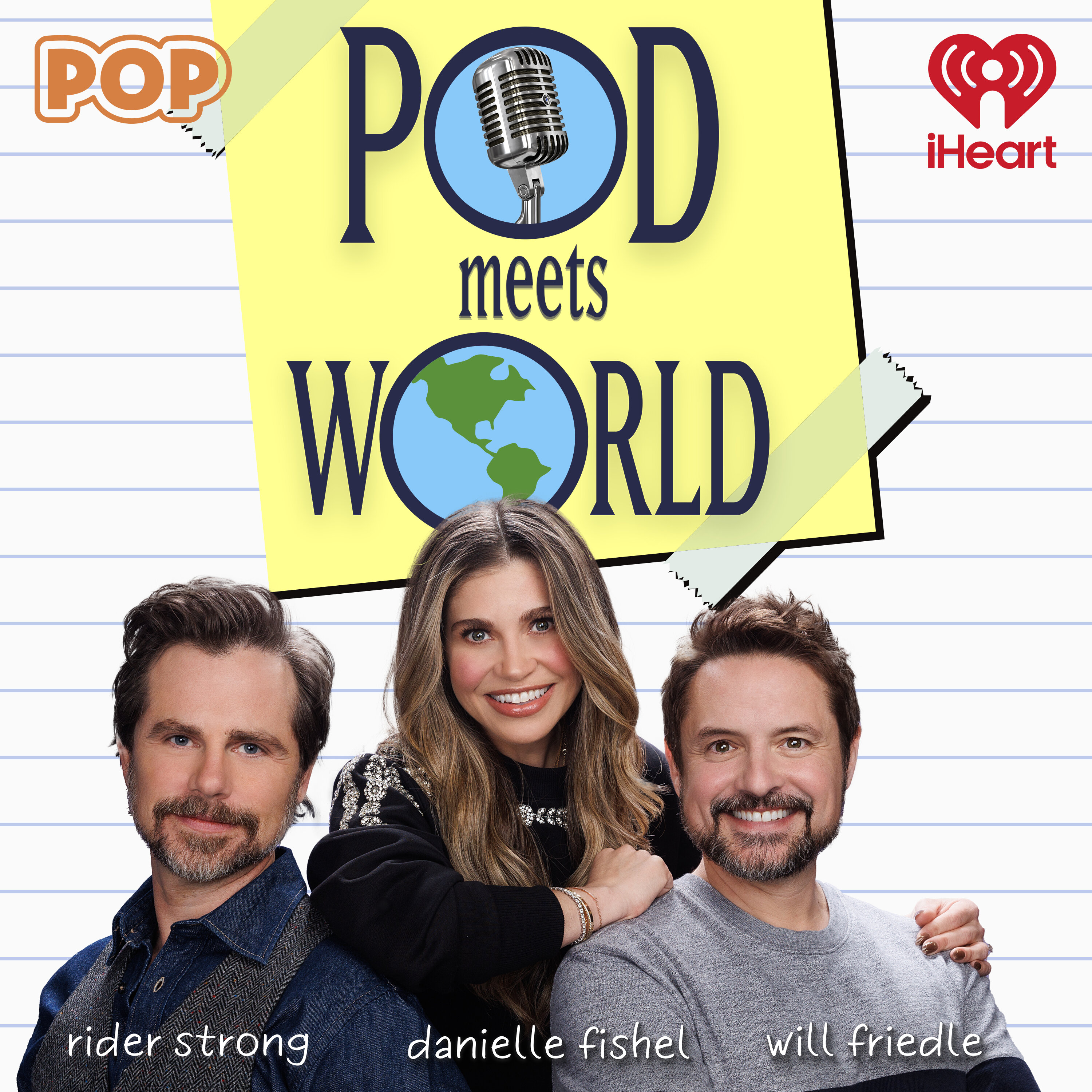
Prop Master David Glazer Meets World
The menus at Chubbie’s! A “New Principal is Weeny” headline! The infamous “red drink!”
These are just some of many legendary props that made Boy Meets World so special, and we’re talking to the man who made it all appear!!
David Glazer was Prop Master for all 7 seasons of BMW and he’s ready to share how all these iconic artifacts came to life. Find out how he handled the tight turnarounds and what inspired some of his most memorable contributions…like the “candy clown.”
Plus, we get an unexpected update from the “Magnum PI” shirt guy - on a prop-er episode of Pod Meets World!
See omnystudio.com/listener for privacy information.
Available Results
Generated results are saved to the knowledge database for reuse and search.
Extract Knowledge
Pick what you want extracted first. Model, scope, and chapter options appear after a template is selected.
Transcript
00:00:20
Speaker 1: When we recently recapped the season five episode Fraternity Row, we found ourselves slightly focused on one featured background actor used for an underdeveloped gag involving a Magnum Pi shirt.

00:00:34
Speaker 2: You guys remember this, Oh yeah, Mega Pie.

00:00:37
Speaker 1: Okay, So we assumed this guy had a bit of a story as to why it felt so awkward, and.

00:00:43
Speaker 3: Guess what, we were right.

00:00:46
Speaker 1: We got an email from that background actor, one Robin Hunter, who lives now in Canada, and Jensen asked him to record some of his memories from that day and maybe shed some light on the weirdness that was happening, and thankfully he delivered. Here are Robin Hunter's memories of being on our show, the Magnum Pie shirt, and probably why it didn't end up making a ton of sense.

00:01:13
Speaker 4: Hey, gang, I am the Magnum Pie T shirt guy, Robin Hunter. I check out the podcast from time to time and started listening to the Fraternity Row episode and it made me cringe immediately when my name was mentioned. After my work visa ran out, I moved back to Canada. I moved to Toronto and I used to use Boy Meets World to pad my resume, and I hadn't really thought of it much until Your Guys' podcast. It was a lot of fun doing background when you first are starting out, just to kind of get a feeling for the business and everything. And I was fresh off my first acting gig, dancing with Shania Twain in one of videos. If You're not in It for Love, I'm out of here. I basically just kind of act like an idiot and got paid for it. So Fraternity Row Episode I was picked as a feature extras. It's funny to think of how excited I was at the time, because you're like, oh my god, oh maybe I'll get a line, maybe I'll get whatever. And one thing I remember is I had to stand incredibly awkward so that the T shirt was featured and all that, and as we either did rehearsals or we did a couple takes, somebody I don't know who it was suggested that, oh I would just tell him to say no, or I.

00:02:40
Speaker 2: Can't suggest a line or something.

00:02:42
Speaker 4: But I remember it was like shot down immediately, So going from like, oh my god, yes too, Oh that's that's terrible. And then that episode there was supposed to be two T shirt gags. I watched the episode again and I'm guessing it was a love boat T shirt, so I imagine the same type of thing. But from what I gather from some of the podcasts, I was maybe a pawn in the uh Paul and Alan feud. I was waiting backstage for my cue to go on. Paul took me aside and gave me direction to do, and you're like, oh, oh yeah, for sure. Like the guy the Breakfast Club is is telling me what to do, I'll do that, and so I go out and do it and it was totally different than Alan's direction, and He's like no, no, no, no no, and then he tells me what to do.

00:03:30
Speaker 2: I go back.

00:03:31
Speaker 4: Paul's at me again, convinces me to do it his way, and I think it happened like two or three times, and Alan was quite annoyed, and basically I was cut from the scene, but I was pretty bummed out.

00:03:45
Speaker 5: You're sitting there and you're like, oh, I was.

00:03:47
Speaker 4: I was gonna have my big chance. Maybe the second one I would have got a line. Who knows I was on like some of the weird episodes. I was on the World War II one. I may even have a picture of me in wardrobe and like, you know, like, oh, I'm dressed.

00:04:00
Speaker 2: In World War two.

00:04:01
Speaker 4: I remember on that episode we had to stand like that Sabrina cat was there, and we had to stand like completely still while the real cat went there. And the handler had like a special spoon that had cat food and a bowl.

00:04:16
Speaker 5: On it, and so I had to stay.

00:04:19
Speaker 4: Completely, completely still while this cat ran across the thing for their you know, couple second shot. I don't even know other memories. I didn't have a lot of interaction with you guys. I wasn't one of the background kids that were like all chatty with you, and I don't know, it seemed like a lot of people were trying to talk to you guys every two minutes. I do remember Matthew Lawrence being really nice. He seemingly remembered me from other episodes and would say hi. I remember Rider being a bit intense and maybe sort of over it all, and the only really interaction I remember talking with him and maybe a couple other people about some indie movie that came out. A couple other memories that I have of the show when you're in the background holding everyone's telling these tall tales about how how bigger they are, or they've got this project or they've got that kind of going on, and you know, blowing smoke a little bit. And one girl kept saying that she was Jennifer Love Hewitt's stand in or something like that, and she would talk about it NonStop, and she kind of looked vaguely like Jennifer Love HEWITTT But you didn't really notice unless she didn't. If she didn't say anything, you.

00:05:27
Speaker 5: Wouldn't you wouldn't notice.

00:05:29
Speaker 4: Well, while I was waiting for Paul to sabotage my my T shirt moment, I remember looking over and I saw this extra I saw her all done up, and I remember thinking, oh my god. I was like, she really does look like Jennifer Love Hewitt. I was like, I kept staring at her and like amazed at like whoever did the transformation of her? And then she looked at me and saw me staring, and then smiled and said hello. And I smiled at her and said hello, as I realized, oh my god, that is Jennifer Dward, the background performer that was rambling NonStop. So I just like said hello and stopped staring at her. I have a lot of fond memories of being slightly involved in the show.

00:06:13
Speaker 5: You know, learned a lot.

00:06:15
Speaker 4: I still act mostly commercials. I'm a member of Extra, which is Canadian SAG. I also work a lot of behind the scenes. Just kind of a mixed bag, especially in Canada. You kind of have to I wish you guys all the best and thanks for the good memories for early in my career.

00:06:33
Speaker 2: Wow, that is so cool.

00:06:35
Speaker 6: First of all, he sounds just like Canadian Adam Scott. Yes, that's what was going through my head. And secondly, that's a big no no for an actor to direct.

00:06:48
Speaker 3: Another actor giving him no.

00:06:51
Speaker 6: Like what obviously not the man's passed away, not trying to bash somebody who's not here anymore, but kind of the nerve that was like his second episode. He's a guest star. He's going against our director and directing another actor.

00:07:04
Speaker 2: That is very uncool. Yeah, and unfortunately this young man took the brunt of it.

00:07:08
Speaker 1: Yes, it's funny that there were you know, two t shirt bits, probably one where he was in Magnum Pie and another one where he was wearing a love boat shirt.

00:07:17
Speaker 2: Well, it would have made the love Boat makes sense.

00:07:18
Speaker 7: I was going to say, yeah, we needed that love boat moment because otherwise it just comes out of nowhere. It's so funny that they just decided to shelve that logic and they were like, oh, let's go for a magnum pie joke instead.

00:07:29
Speaker 2: Yeah, so weird, so funny.

00:07:31
Speaker 1: It's so cool to hear other povs, you know, like from we were All there, we all and just to have someone chime in and say, here's my POV. So fun So Robin, thank you so much for reaching out to Thank.

00:07:43
Speaker 7: You, Robin.

00:07:44
Speaker 5: So cool.

00:07:45
Speaker 2: I don't remember Ryder being intense as a kid.

00:07:48
Speaker 6: I don't know what you're talking about and talking about indie movies while being over the show.

00:07:55
Speaker 1: Wrong person, Matthew Lawrence, nice guy, never heard of it.

00:08:00
Speaker 2: Yeah, exactly.

00:08:03
Speaker 5: Wow.

00:08:04
Speaker 3: Well, welcome to pod Meets World. I'm Daniel Fischel, I'm rather strong, and I'm Wilfordell.

00:08:20
Speaker 1: Today we are very excited to have a special guest with us during our rewatch. Some of the most fun we've had involves checking out our surroundings. It's the little items on set that sometime bring us the most nostalgia or even the most laughs. Now, thirty years later, and though there was a team a village even that made sure the environment of Boy Meets World was as deep and as smart as the show. It was prop master David Glazer who worked on all seven seasons of Boy Meets World and led the way the prop master in film or TV is responsible for purchasing, acquiring, manufacturing, properly, placing, and or overseeing any props needed for a production. It's high stress, high pressure, and of very high importance. And if our listeners have learned anything about the typical weekly schedule of a Boy Meets World episode, things were changing constantly. So just because we needed a sad looking salad for Foeni in the script doesn't mean it'll be in the scene come tape day. So some of your hardest and best work never even ends up on the screen. In addition to the entire run of our show, David worked on classic films like When Harry Met Sally Scrooged, and National Treasure, while also contributing to other TV shows like Sex and the City, Carnival, and long runs on Cold Case and Melissa and Joey. But today we are forcing him to sit with us and talk about what exactly was in that red drink we were forced to drink. Take after take in the cafeteria as children. And if that's the reason we're so weird. Now, welcome to Pod meets World. The Master of the Props, David Glazer, diavu.

00:09:59
Speaker 5: Hi guys.

00:10:00
Speaker 3: I can already tell you're wearing a boy met jacket.

00:10:04
Speaker 5: Yes, I am.

00:10:05
Speaker 3: The baseball jacket.

00:10:06
Speaker 5: Yes, all of my swag from all the years.

00:10:11
Speaker 1: That's amazing. You probably have more of it than I do. I have most, but I definitely lost.

00:10:16
Speaker 3: A few things. Yeah, I don't know how that happens. I still have the mug.

00:10:20
Speaker 5: I uh, I'm drinking my coffee out of it right now.

00:10:23
Speaker 2: Wow, that's the one thing I don't have, the mug.

00:10:26
Speaker 5: I have everything else.

00:10:26
Speaker 2: I don't have the mug.

00:10:28
Speaker 1: Oh, you geared up for us. We are so appreciative. Thank you for joining us. It would have been impossible to recap our time on boy Meets World without talking to you. We gave a little description in the intro, but I wanted to let you give a description of your job for our listeners. What exactly are the responsibilities of a prop master right?

00:10:49
Speaker 5: Well, a prop master is responsible for anything that an actor handles or touches. It could be anything from a pencil to a machine gun. It includes food and food eaten by the actors on the set. Watches such as Michael Jacob's watch that he gave me at the end of the show.

00:11:07
Speaker 2: Yes they still have that too.

00:11:09
Speaker 5: Yeah, And eyeglasses, wedding rings, police belts, badges, when we interfaced with wardrobe and and makeup and hair all the time.

00:11:23
Speaker 1: Wow, so cool. So I like thinking, that's a really simple way of thinking about it. Anything an actor has to touch and interact with.

00:11:31
Speaker 5: But we work very closely with set deck because times the set decoration becomes a prop, and sometimes the prop becomes a set decoration, and we have to we have to work closely together. And Robinson Royce, who was the set decorator world, I mean he and I. He and I had a great relationship which really helped a lot.

00:11:51
Speaker 6: You know.

00:11:51
Speaker 1: Well, then I'm going to jump right to a very hot topic on our show that we segued here. We have been paying attention to all of the changing images above the sink in the boys apartment, all the food pictures, and we understand that this is a set deck thing. But since you mentioned set Deck, and since you mentioned your close relationship with them, could you maybe enlighten us. We had no memory of this going on, and then we saw it and we were like, maybe.

00:12:22
Speaker 3: I have a vague memory of us talking about the food.

00:12:26
Speaker 2: It's hamburgers.

00:12:27
Speaker 3: What's going on?

00:12:29
Speaker 2: What's happening?

00:12:30
Speaker 5: I think sometimes it's just that they forget from season to season what they're doing, honestly, and sometimes it's a joke. I mean sometimes, Yeah, we have done things where we've put things in a set just to see did anybody notice that? You know?

00:12:46
Speaker 1: And this must have been one of those, because it's not changed from season to season.

00:12:50
Speaker 3: It's week to week.

00:12:50
Speaker 1: There's a new picture of food, right, every episode there's a new picture of food.

00:12:56
Speaker 5: Right. That's obviously an end joke that I actually wasn't of joke by the set dressers, and maybe just a little something so they would watch the show and get a good laugh. Yeah.

00:13:08
Speaker 3: Well, our mystery somewhat continues.

00:13:11
Speaker 1: We're still on the hunt for the story about the changing food pictures. How did you find yourself first working in Hollywood art departments?

00:13:19
Speaker 5: Well, you know, I originally wanted to be an actor and junior high high school college, I did community theater. I even had an agent, and after about one year I realized that I did not have the stomach for it. I didn't have that fire in my belly. And I started at cal State Northwich. I was a theater major, and then I switched over to what they called at the time radio TV film. Unfortunately, at the time, all they taught was how to be a director. They didn't teach you anything else. So I got out of college and had one friend who worked in the business who did not go to college, so he was four years ahead of me, and he was a non union art director prop master, and he hired me at a couple of jobs, and from there I just made more and more connections and I was in the non union world for eight years, and then I finally got into the Union in about nineteen eighty five eighty six.

00:14:18
Speaker 3: And so, how did you end up on Boy Meets World with us?

00:14:21
Speaker 5: It's a good story, you know. I had only ever done feature films, and I had done mostly non union and then when I got into the Union, I started getting on better and better pictures. Well, my wife at the time was really unhappy with the movie business. She hated it. I was gone all the time I was on the location. She said, you better find a way to stay home. And coincidentally, at the time, my friends Gary Ramirez and Pilar Ronaldo had done the pilot on Boy Meets World, and when Pillar was asked to come and be the prop master, she wasn't available, so she recommended me to Uri Grayson and I had an interview, and interestingly enough, you know there's there's there was. I don't know how it is at the time, there was prejudice then against people that did features versus TV, because Arlene's opinion was, well, you know, feature people, you know they get eight weeks to prep a show, and you know, we've got three days, and we're not sure you'd be fast enough. And I had to convince her that yes, I could be resourceful and fast enough to not have to read a script for six weeks, and she hired me, and it was the best decision that I ever made, taking that job, and I think Arlene and I became close friends, as I did with with Karen McCain. But that's how I ended up on the show. And I got to say my first few my first few rehearsals and shows, I was really baffled because I didn't get the sitcom format. I'd never worked on a sitcom ever. And at the time, if you remember, Mark Absen was my assistant, he was a sitcom king at the time. So the very very first run through, you know, I had prepped everything, but I had no idea what the run through was. So I said to him, what what what would you like me to do? He says, go sit over there and stay out of the wa And you know, I learned how to work on a sitcom and that was my lesson, my baptism of fire. And and I was a little surprised because I know that the writers are really have to support their own writing and their script, and you know, the first draft maybe isn't the best. And all these people were laughing hysterically, and I was at the run through, and I'm going, what are they laughing at? It be funny, but it's not.

00:16:48
Speaker 6: Yeah, there's there's no laugh like a writer laughing at his.

00:16:50
Speaker 2: Own joke.

00:16:52
Speaker 7: Trying to keep it in the script, doesn't it.

00:16:58
Speaker 5: That's because the thing is, you know, after every take, you know that we would do, the writers would all scurry together and they'd be you know, that didn't work, that didn't work.

00:17:09
Speaker 1: Yes, so funny, Okay, So for Boy Meets World. Can you walk us through what maybe a week looked like for you. It's obviously very fast paced. As you mentioned, you may only have like three days of prep. There's a lot of moving parts. So how did when did you get the first draft of a script? And when and how did you start prepping for your week?

00:17:29
Speaker 5: If I was lucky and there was a complicated prop, either Bob Young or David Kendall would call me a couple of weeks ahead of time and give me. They might give me a heads up and say, hey, we're writing a script, and you know, I'm thinking of Quiz Show where we had those brains. Yes, hey, we're thinking we got a show coming up. You know we have this idea or if you remember the one about the gazillions of sprinkles falling from the sky, Yeah, yoga.

00:18:00
Speaker 4: You know.

00:18:00
Speaker 5: He gave me a heads up and that help. But in general, mostly I would get a script on show night, the final script. So that's why you wouldn't see me very much on show night, because we'd be starting the show on Friday night, I guess, and we'd start working. They would deliver or was it Thursday nights? Thursday nights because the production meeting was Friday, so we'd start the show and then as soon as the show started, they would start distributing the script for the next episode that night. Wow the production meetings the next morning at ten am, you know, so I would generally not be on the set unless there was a big deal going on, and I'd have to be going through that script so that I could be ready at ten am with some answers or questions, you know, and then Friday would come and you know, we'd start that first read through with practically no props, or we would use stand in props, just stuff that we're laying around. But by Monday I was expected to have a lot of the props, so Fridays were extremely busy. I would just zoom out. I would hit the prop houses or my printer, the manufacturers. I'd be zooming around and try to get as much there as possible by Monday for rehearsal, and as the days were on, I had to get more and more of everything and make sure it was all camera ready because a lot of times, you know, you're come in with something that was not painted and then the first question you would get is, hey, is that going to be painted. I only made it this morning. We would rush and hurry, and I'd be out shopping, and of course during rehearsals director would come up with ideas. The actors would ask for things, and I'd get a phone call from Mark or one of the other assistants and say, hey, they just asked for you know, twelve dozen, which is not a big deal, you know, but it divert me over to the market, you know. And or they'd ask for something else and I'd have to or worse, they call me up and say, hey, guess what this is cut and I'm already making it.

00:20:12
Speaker 6: So wait a second, I'm sorry. I'm trying to understand this. The props didn't just magically appear for you the way they did for us.

00:20:23
Speaker 5: To understand that the elves would bring them.

00:20:26
Speaker 2: I mean, it's what we thought, essentially at the time.

00:20:29
Speaker 6: We're so oblivious to what everybody else is doing that we just assume they magically appeared for you as they did for us.

00:20:36
Speaker 5: You know, people would ask us, do you have this? I say, let me, let me check my other ass you know, do.

00:20:42
Speaker 6: You recall do you ever recall a time where you said no? I said no, I can't. This is impossible, we can't do it.

00:20:50
Speaker 5: It's a pretty tough answer in TV to do that. But the answer to that would be I learned by lessons. Obviously, especially with Michael Jacobs, you could never say no.

00:21:03
Speaker 3: I mean, I'm just going to say.

00:21:05
Speaker 5: It only took one time to say I'm not sure we can do that, and I learned my lesson. So the answer always was how much time do I have? And then I would say, well, it's going to cost this much. And so that was the politest way of saying no. And it wasn't always no, it was well what can we do? Differently, because if they would call me on you know, Tuesday, and say from the writer's office, say hey, we need this for run through for tomorrow, I'd say, well, you know, that only gives me a day to get this printed and I've got to hire a photographer. Maybe it's a newspaper or a magazine. How much money do you want to spend? We got to hire a photographer. Those were the ways. But I got to say, my greatest champions, we're Bob Young and David Kendall. They were very astute producers. They they didn't they weren't pie in the sky because I'd get called to the writer's office all the time. I'd get called up there to say, Okay, this is what we have in mind, or I'd be bringing them a show and tell and we'd get in there, I'd bring in the show and tell, and you know, the writer's room had fifteen people in it at the time, and everybody be shouting out ideas, why don't you do this, well, why don't you make it that? Have it be this and problem Hold on a second, guys, you know days to make this. Let's try to get it something that is possible for our show within budget, because unfortunately, the bottom line always was budget.

00:22:34
Speaker 3: Yeahah, of course, exactly.

00:22:37
Speaker 1: Geez, do you remember having a favorite set in all seven seasons? Was there a particular set you really loved providing props for.

00:22:45
Speaker 5: Yeah, I mean, I'd have to say that Chubbies was actually a lot of fun. Chubbies was a lot of fun. You know, it wasn't you didn't really see any gourmet food or anything. But I always enjoyed those scenes because, you know, whatever it was that they wrote, you know, sometimes it was funny props and you'd get to come up with funny props. Every time we did a restaurant scene, we'd have funny props. I mean, I don't know if you remember. Once we had to have Michael asked for gigantic menus once. I don't know why he asked for gigantic menus, so we had to have gigantic menus made. Those were always a lot of fun you know.

00:23:23
Speaker 7: Oh my gosh, and you said funny props. I just had the memory. Do you guys remember the when when is a knife? Funny thing?

00:23:30
Speaker 5: Oh?

00:23:30
Speaker 2: Yeah, do you know?

00:23:33
Speaker 7: Not funny? Not funny, funny, funny funny funny, not funny, funny funny.

00:23:39
Speaker 5: I went into David Kendall recently. It was a show that a mutual friend of ours was doing called An Evening with Groucho by Frank Ferrante. It's a one person show where he portrays Groucho, and David Kendall was a friend of him. Anyway, we ran into each other at the performance and we talked about that. We talked about back. There was a production meeting once where I made a prop illustrating that. It was a fold out card and I'd written funny, funny, funny, as I asked, I opened it up bigger and bigger.

00:24:17
Speaker 3: I love it.

00:24:29
Speaker 6: Okay, So wait, so before we get deeper into borm me thorl, because I know we all have other questions, I want to go back to the films a little bit, because you did some pretty amazing films and I'm curious A what your favorite film was, and B do you prefer doing films or sitcom.

00:24:46
Speaker 5: I'll start back with this with the second question. Honestly, I preferred sitcoms, okay, even more than I did lots of episodic TV too. Sitcoms are the dream job in the industry. I'm not sure how it is now time seven years, but at the time, first of all, Boyme's World was the best job I'd ever had. We had Jewish holidays off with pay. We had Christmas two weeks off, we had Thanksgiving two weeks off. And when you kids were young, we could only work eight hours a day. We didn't make a ton of money like you might make on a movie, but it was much more of a family, much more of a feeling of working together that sometimes you always get that on movies, but it sometimes takes weeks because everybody's just so insane working on it. But the other question. My favorite movies that I ever worked on probably, I mean, the most famous one I ever worked on was When Harry Met Sally. That was a blast. But I also did some non union movies back in the day, a Dreamscape, which.

00:26:02
Speaker 2: A great movie is that Dennis Quaid? Yes, Yeah, great movie.

00:26:05
Speaker 5: Ape which became kind of a cult film. And there another movie directed by Abel Ferrara called Fear City, which is kind of a film noir, a dark movie. We shot that in New York. And my other favorite movie of all time that I worked on was Soap Dish. Oh, Sosh Boldberg and Sally Field.

00:26:25
Speaker 2: That's right.

00:26:26
Speaker 6: You wait, you and I had a conversation about Soap Dish and if memory serves, didn't you tell me that Robert Downey Junior wanted like different glasses in every single scene he was in.

00:26:37
Speaker 5: Yeah, I mean at first I thought, well, okay, this is a horrifying continuity nightmare. But you know, I talked to the director about it was basically, let him do whatever he wants. And the way kind of the way we solved it is had we had a stand on his desk, which I don't know it was ever seen, but it had like ten pair of glasses on it and sometimes he would switch in the middle of a scene and it worked out. I mean, he actually, you know, he's one of the my favorite people ever worked with. He treated me so well. I mean, I know he got a lot of bad press in the early problems and stuff, but he was a total pro. I really enjoyed him.

00:27:16
Speaker 2: But he's also a genius.

00:27:17
Speaker 6: I mean, he's an actual genius when it comes to as an actor.

00:27:21
Speaker 2: It's incredible.

00:27:22
Speaker 5: And you know, I was going to say, some of my most favorite moments in any show, more so on movies, is when you're shooting a scene in a small room and there's only five or six people in there. There may be the two actors and the director, the cameraman, the prop guy, makeup, hair, script supervisor. We'd get that small group because a lot of times we'd be in those offices or you'd be in somebody's bedroom. The crew couldn't fit in there. And this was kind of almost before video village, and it was such a privilege to be right there when you see the acting going on.

00:28:01
Speaker 7: Yeah, okay, so I want to know what is your proudest moment of fabrication, Like, what what is your favorite prop that you ever delivered for in general, and then I want to hear what your favorite on Boy Meets World was.

00:28:18
Speaker 5: Well, I have actually a list from Boy Meets World. I mean, so many props throughout so many movies are just mundane, you know, gotens and police badges and i ds and all that. Very often you get to make an iconic prop. I don't think any of mine were as famous as the Maltese falcon or right, But I've got to say specifically on Boy Meets World, and I don't know if you remember this, it was a very early episode. We had to make a candy clown that Lily, not Lily. It was the other little girl had Lindsay.

00:28:53
Speaker 3: Had early on though Lily Lily.

00:28:57
Speaker 5: Yeah, there was a candy clown. It was was they wanted a clown three feet tall and it was made all of candy. I looked for the episode. I couldn't find episode. It was very early in the show, and so I had a friend who did crafty type props for me. The idea was she was supposed to carry in this clown and I don't even know what the gag was, but my friend made it and we bought all of this different kinds of candy and it was glued all over. Well, we pick it up. It was so heavy there was no way she could pick it up.

00:29:34
Speaker 3: Oh my god.

00:29:35
Speaker 5: I showed it to them and they said, well, can you put it on wheels? So we put it on wheels and she rolled it in. Now, I mean, it may not have been my proudest moment, but it was. It was something that we had to figure out. A couple of others from the show that were great. Again, I couldn't find the episode there was one where honey got poured down from the part of it. I mean, all those little gags actually took a lot of thinking and a lot of a lot of work. Of course, the brains, those those electronic brains. So this is interesting because you know, Michael Jacobs had for some reason gone on a vacation or he was on another show. I don't know what he was doing, but I've been told that these brains were coming up. And when it got closer and I went to talk to the producers, and you know, I talked to I guess you know, all the guys there, David, and they described, well, it's just just we just want a brain that they wear it like a hat. And I said, okay, you know we made that. I found some brains. We we cut them in half. We had to glue them together to make big enough. We had an electronics guy make all this. Michael comes back just in time for the run through and he he looks at me, go is no, no, no. He says, they're supposed to be like the Mars attacks brains. And Michael, nobody ever told me that.

00:31:02
Speaker 2: Yeah, and he was, Oh, I should never.

00:31:05
Speaker 5: Have left, you know, communicate that clearly to his writers. So they gave me what they but you know, it ended up being a funny prop anyway. Yeah, and we had to make all of them for the audience as well, if you remember, we had audience superwearing. But I mean those were some great props. I mean, in all the other shows that I've done, there's always stuff that came up. But you know, you make an electronic prop, yeah, it's fun. But you know, the sitcom props and all the sitcoms I did sometimes were the most challenging.

00:31:42
Speaker 6: So you you mentioned at the beginning that there was you would often work closely with wardrobe because you would get a lot of the things that we would have to wear would also be considered props. Where is that line drawn of what wardrobe does and what the prop department does?

00:31:58
Speaker 5: It's it's it's a fine line. I mean with with police props does the badges and the gun belts. But sometimes costumes would show up with the costume and it would have badges and it would have a gun belt and we would provide the gun. A lot of times it just came from having a discussion ahead of time, you know, what are we going to do? Who is going to handle this?

00:32:23
Speaker 3: Yeah?

00:32:24
Speaker 5: And that's when you have the most cooperation. I mean, I think I always worked with great people on the show, so I was lucky. You know. It could be as simple as the script says, somebody takes their wallet out of their pocket, right, and or somebody takes a hair brush out of their pocket, and the girl's costume shows up or the or the man's costume shows up, the pocket's not big enough or the pocket's not there, and you go and it's like these are the things you're going. Was it really necessary to talk about a pocket when the script there was a pocket? Because I wouldn't normally bring that up and get there and it'd be on like run through day or whatever, and you go, my god, what they don't have pockets? And why should they have the wardrobes and why should they have pockets? Well, because it says in the script they take the naro prop out of their pocket. So try to avoid those things. But sometimes those really fine lines would get for gotten and we'd get the same thing with hair, of hair and makeup sometimes. I mean when I mean for Tapanga's character, I mean there was often she was putting on makeup. Those were props, but I'd have to go through a makeup I would say, hey, what what is what is she using in this? Or what color are you using? I'd usually buy my own, or if they were nice, they would give me some, but I'd always have to greek out the name because Disney allowed zero product placement. So we'd have our own props that match the makeup props. And the same with hair. If somebody's brushing their hair, or if there was a haircut scene, it was the time when when to Panga cut her hair, you know, we would have to tell, okay, what are we using? Uh? You know, and so we would we would we would work very closely with them.

00:34:15
Speaker 1: Yeah, obviously I'm assuming for that it was scissor hair cutting scissors Lori Heaps provided since I was actually cutting my hair.

00:34:23
Speaker 5: Yes, I do remember. It was your real hair, as I recall.

00:34:25
Speaker 3: Yes it was, yeah, I were. It wasn't just like, uh yeah it.

00:34:32
Speaker 2: Was we just found these here, these are in my belt.

00:34:35
Speaker 5: Those were real haircutting shears.

00:34:36
Speaker 4: Yeah.

00:34:37
Speaker 5: It was great too. We you know, I remember all these people so clearly as if it was yesterday, and I really felt that we had a great team.

00:34:47
Speaker 7: Yes, we did.

00:34:48
Speaker 6: I remember when when then Mark left for a little while and Hector came in. Yes, we used to play a game with Hector because he always wore that vest and where it was essentially like.

00:34:59
Speaker 2: Name something and I have it on me and we come up with.

00:35:02
Speaker 6: The most esoteric we want blanks for a thirty eight special.

00:35:05
Speaker 2: All right here you go right back to zoom.

00:35:07
Speaker 6: It was like come and no matter what you would say, he would have it in a pocket somewhere. It was amazing how you were always just what do you need, We've essentially got it, or we'll have it in a day.

00:35:16
Speaker 5: Well that's that whole vest idea came from feature films and It came from one of our mutual mentors whose name was Eric Nelson, and Eric's passed away. Now Eric did the lethal Weapon movies. He's a national treasure. But he started that. He wore the vest of many pockets, which is to be from addition. Yeah, and I tried it, but it was just so heavy for me. Yeah, Hector. Hector kept up that tradition and even though on a sitcom you could work off of a cart, he kept everything on his body and it was kind of admirable.

00:35:59
Speaker 3: You know, that was great, that's so cool.

00:36:02
Speaker 7: So there was always a prop cart, right, which have like sort of just a bunch of objects that might be needed, mugs, glasses, all those kinds of things, but then purses. But then I also remember, you guys had a room on stage right, like a big and it was like and we didn't really go back there that often, but I remember going back. It was a magical place. I think when we were kids, we weren't allowed back there because there's so many like things that we could grab or mess up. But can you just describe what you would have in that room. It's like a walk in closet that was just filled with stuff.

00:36:34
Speaker 5: Well, first of all, on the modern stages now they have dedicated actual physical rooms. Like when we were in one of our last seasons at Radford, we actually have an actual physical room with a door on the ceiling. But in general, on Stage two at Disney, I mean that was not built as a sitcom stage. So what they did is they built gold rooms for all the departments. They were wooden. They were wooden structures that they built, and believe it or not, you were on your own. They gave you a wooden box with a door, and that was it. Good luck. So you know, I had to first I had to get lights. I had to get fluorescent lights. We had to get power strips and put power all over and get shelves built. But what we started with was the scripted the scripted props, and as if I knew other episodes were coming up, we'd have boxes labeled with you know, episode one oh one, episode one o two, episode one oh three, And every time I got an inkling of something coming up, I'd buy it and I just toss it in that box and maybe time would come by and then we would have the actual hero props, the things that people wore all the time, whether it was a watch that a character wore, or well, mister Feenie had his own glasses, but we had a double pair of them, an exact pair of them in case something happened.

00:38:00
Speaker 3: Amy and Allan's wedding rings exactly.

00:38:02
Speaker 5: So we would have all of those in one of our prop boxes. And so we would have shelves of stuff, and a lot of it was just generic stuff. A lot of it was like, you know, soda cans that we could label, candy bars that we could throw labels on, grocery bags, telephones, uh, you know, yeah, backpacks, kids backpacks, student backpacks, notebooks, things.

00:38:28
Speaker 2: The peachy folders is that what the same folders.

00:38:33
Speaker 5: We would have lots of this stuff in there, and then this room we called our gold room, and that's where I generally did all of my work, and we'd have a computer and you know, my scripts and stuff, and that's where you know, if you didn't have it on your set cart, you'd be running there at the last second. But you know, I had my little set cart, and in there we keep the wedding rings and the watches and the glasses and all the things you'd need right away, and little tools, little things that you might need tape, glue, anything that might come up to fix something on the moment. But you know our prop boxes for a prop master, that is that is our thing. I mean, I'm just one person, and without my prop kit, I'm just another guy. So the prop kit is kind of what makes you the superhero. If you don't have things to get, you know, you're not really doing your best job. Right.

00:39:41
Speaker 1: Okay, I need to know what was the red drink that we drink in the cafeteria sets all the time in those early years. They were in those little plastic like juice things and it was just bright red.

00:39:57
Speaker 3: Was it fruit punch? Hawaiian punch?

00:40:00
Speaker 5: Was were probably Hawaiian punch or fruit punch, the little boxes that you put the straw in.

00:40:06
Speaker 3: No, no, it was plastic.

00:40:09
Speaker 1: They look kind kind of similar to the Martinelli's apple juice, but they were they were smaller and yeah.

00:40:16
Speaker 5: Exactly what that is. Oh yeah, they were milky kind of plastic. Yes, they were very very inexpensive drinks that I would get from Spartan Final because, as I said, I was out of budget. I mean I'm sure they were you know, purple flavored and green flavored.

00:40:33
Speaker 2: Exactly, but they're mostly glue.

00:40:36
Speaker 7: The red dye.

00:40:39
Speaker 3: We just have always called it red drink, bread drink.

00:40:42
Speaker 5: You know, I never knew that that, And you know, at the time, you know, I was always cognizant of what actors needed to eat and drink, but I never thought much about that. I always wanted to make sure that the food was edible and that nobody got sick. But the drinks, yes, I remember, I used to buy those by the because the cafeteria scenes took a lot of my time, even though we barely ever saw the food. But everybody's going in and out. So I mean, in the prop room, I'd have all of this pre prepared stuff which I would basically microwave or I would buy it hot and then just spoon it out, you know, whatever it was, unless it was a specific funny prop. But I had all this generic food that I would just pull out, start slapping on trays, and I'd load up the cart and i'd wheel it out there. And then you remember the first time I worked so hard on that, the very one of the very first cafeteria episodes, and we did like two takes and we moved on, and I said to Mark, I said, all this for that.

00:41:45
Speaker 7: Yep.

00:41:46
Speaker 6: Well yeah, no, we needed the red drink to wash down the cold, uncooked French fries. Yeah, and soggy cold green beans.

00:41:55
Speaker 5: So gross. I got to apologize because it was very difficult in those days because we basically had a two man crew. Yeah, I mean that was it. I mean for the days where you were basically told you've got two people, that's it.

00:42:11
Speaker 7: Now you have like twenty extras in those cafeterias. Names you have to provide and they all have.

00:42:16
Speaker 1: A tray and a plate and a dream and drop in and silverware.

00:42:21
Speaker 5: As we got further along in the show, and I don't know if I gained any more clout, but it just became more industry standard to have three people on a crew. Get to have somebody extra in on show nights to help us with that stuff. But but yeah, it was it was hard. And then and of course they wouldn't give me the luxury of money to hire a food stylist, you know, to come in and actually keep food hot, and we didn't have the space for it. I mean, as I gained more experience in props and I had space, I mean, we would set up you know, chafing dishes and have hot things. But that required two or three people, and so yes, I apologize the food barely.

00:43:02
Speaker 6: So you mentioned the which we I'm dying to know. I have a vague memory of it during run through the clown, the Johnny Candy clown, but I don't think it ever made it to air.

00:43:14
Speaker 5: It may not have.

00:43:15
Speaker 6: But other than that, would that also be the most difficult prop you've ever had to do in life?

00:43:22
Speaker 5: Probably not. No, that wasn't the most difficult because I basically made a phone call and talk everybody about building it. But you know, it's set. I get asked that question a lot. And some of the things that are the most difficult are the most mundane. And that's bad thing because you know, I did commercials for a lot of years, and you know, be an orange juice commercial or whatever, you had to have an orange juice as part of this healthy breakfast, and you could go out and shop and bring in twenty different orange juice glasses, and some agency person will say, well, you know, like the shape of this one, can it be? But can it be the size of this one? And so the the most difficult props I feel were the most mundane because it'd be the one where, like I, you know, I'd be told you can you can just go out and find that in the trash can out in the studio. I'm going, oh really. Or the worst thing was well, well it was later in life, but you'd see it on What's What's that site where everybody posts pictures of their stuff. But anyway, you know, it's oh I saw yeah, yeah, I saw it on Pinterest. Yeah, right there, I saw it on Pinterest. Well yeah, except the pictures from eight years ago. Those were the toughest. I mean, honestly, because the rest of it is just persistence. I mean that's all it is. I mean, there were I will tell you one of the toughest props on the show, and it was prior to the studio. I was really cracking down on having to have animal wranglers on set because we all know animals are animal actors, and the rules require a member of the Humane Society to be there wrangler. But in the early years or the years that we were doing Boy Meets World, it wasn't so strict, and I wasn't as much of an advocate for animals back then, but we needed a bird. It was a scene in the boys that the college kid's apartment.

00:45:29
Speaker 2: It was a oh yes, but it was the roommate. Eric has a roommate who has a creepy bird.

00:45:35
Speaker 5: That's right, right, So you know, that fell to me and they said, oh, David, we don't need an animal wrangler. You know, it costs thousands of dollars. They said, can you just go maybe just you rent a bird you can find maybe somebody has a bird, I mean a bird.

00:45:52
Speaker 2: Questions all watch one outside.

00:45:54
Speaker 5: Yeah, we get these questions all the time from producers because they didn't want to spend money. So I had first I did call all the animal wranglers. I know was that. I think it was a Laura heat. I'm not sure what it was, but I couldn't they nobody had a red bird, and I was getting desperate and I started calling bird stores throughout throughout the city. And it's funny, it was around this time that my dad was pretty sick and I used to take them to his doctor's appointments all the time, sometimes even when I was working, and I was always working the phone, and my brother is with me, and we're sitting there and I'm on the phone while we're waiting for my dad to come back out of the doctor's office and I'm sitting there. He says, what are you so obsessed about? He says, I have got to get a red bird, and I need it by Friday, and if I don't get this red bird, my career will be over. Well, well, what if you can't find it, Oh, I said, Oh, I will find Oh. I have to paint one myself. And it took I mean prior to the internet being what it is now. Yes, I probably could have found one in five minutes then, but I called hundreds of birds stores and I finally found somebody who had a red bird who was willing. I had to buy him for like a thousand dollars or whatever, fifteen hundred dollars because it was a very expensive bird. I had to buy him. And if he was returned healthy, they were going to keep like five hundred dollars or whatever. If we didn't return him healthy, then we owned him. So we had that bird for about a week during rehearsal, and he lived in my office and he took care of him, and you know, and when the show was over, he was perfectly healthy and happy, and I actually fell in love with him buy him. But we only had cats at the time, so ah, I'm not a good combo. Yeh oh, yeah, that's that's an example of a.

00:47:50
Speaker 2: You know who had birds.

00:47:52
Speaker 6: I hate to tell you this, but you know who actually had birds and I think had a red bird was Rusty.

00:47:57
Speaker 5: Wow.

00:47:57
Speaker 2: We really Yeah, Rusty had birds for a lot.

00:48:00
Speaker 6: He had one bird for like twenty some odd years that I think was a red parrot or McCall or something.

00:48:04
Speaker 4: There.

00:48:05
Speaker 5: You go, see, some people just don't know what you're going for. He announced to the crew, Hey, anybody got a red.

00:48:11
Speaker 2: Bird because like, yeah, I have several Yeah, rest at birds.

00:48:15
Speaker 5: That was. That was a real tough one on boy me. And uh, you know, I I lived to tell another day because you know, it's it's really tough. I mean it's really hard to say no. I mean, the only time you can ever say no if it's if it's on the moment and it's you're ready to shoot. They say, hey, by the way, do you have a sippy cup? I can just handle this across. Yeah, well, you know a sippy cup. You know, I think I've got one in my garage, you know, Yeah, yeah.

00:48:50
Speaker 1: Yeah, we have talked a little bit about how Michael always wanted up to date comic books in Chubby's or the fake magazines that we would read.

00:49:00
Speaker 3: How did they.

00:49:01
Speaker 1: Get purchased or fabricated? And do you remember any of our specific magazines that we would read.

00:49:07
Speaker 5: I'm trying to remember. I don't have I brought some of the stuff here. I don't, yes, the specific magazines. But what happened is say it was a oh well, for instance, I mean there was the Bridle magazines when Topanga was looking for a wedding dress. Yes, so I had to create that from scratch. Earl Hayes Press at the time was the standard of printed props at the time, and you could go there and they would have various magazines already made up, but in general a lot of them were very dated. So in most cases it was a lot of footwork. I would go to Corbis or one of the photo agency places. We would find a photo. I would show it to Michael and we would purchase the photo. I would take it to the ground fixed place to to Earl Hayes or another place, and they would create these magazine covers for us, along with fake ads. Because the thing about props, especially magazines and newspapers and books is when the actors looking at it, the audience only sees the back. We would always have to make sure we had appropriate ads on the back that were cleared books. I mean we made tons of books. I brought. I brought some of the books. I mean we made this one was was one of the drops.

00:50:31
Speaker 8: Remember that that so you're going I wrote all the books that.

00:50:43
Speaker 5: Way, we didn't have to clear any writers.

00:50:48
Speaker 2: Although the Witchcraft for dumb dumbs.

00:50:51
Speaker 5: Stuff from that one. Yeah, and witchcraft occasionally they would write in a book that was written by a specific actor or whatever. But I think this one was also from Boy Meets World. That's my son. Yeah, So you know those I've kept all of these. These were great, great props, great souvenirs, and they didn't want them back. I mean to them, they were nothing. You know, they had their expendables or their their recoverable assets list that I had to go by. But those magazines, the newspapers, I've got a couple of those here. Those were those were a lot of work. I mean, if you remember this one when they did Marini computer, so I had we had a computer guy there who did the typing because remember they changed it from feenie to weenie. You know, a ma one like this chick like me, you know I would have. So it's very fast turnaround because makeup, hair and wardrobe did not have this together till almost a day or two before. So we did a photo shoot. In fact, this may not even be what was on camera, but it was close enough so that I could do a photo shoot and get the picture in there. And then of course my favorite, my favorite of all time was the one that was the nineteen fifties one which was curly headed spot.

00:52:20
Speaker 3: Oh my god, that picture.

00:52:22
Speaker 2: Bell These are great.

00:52:24
Speaker 5: That was one I shot and you have if you remember. Of course, nobody remembers newspapers nowadays. Newspapers used to be this big. Yeah, papers were that big. So those were a lot of fun, and I always kept copies of all my work doing that. I enjoyed the I always enjoyed the graphics part a lot.

00:52:44
Speaker 7: Well.

00:52:44
Speaker 1: While we are taping it this, there is currently a Boy Meets World prop for eBay on sale for almost one thousand dollars, and I wanted to know a little bit about it. It is a version of the newspaper that announces Corey into Penga's breakup in season five. It's a great eight site gag, pretending the Patriot Spirit is already reporting on the breakup that happened just seconds before. And the prop that's for sale is slightly different than the one we see for sale. I mean, then the one we see on camera, the one that's for sale includes a subheadline Bunsen Burner still missing, and it includes a picture of the said Bunsen burner.

00:53:23
Speaker 3: So can you explain how many.

00:53:25
Speaker 1: Versions of these props were made or maybe how or why something like this one with the Bunsen burner headline wasn't used, but the other one was.

00:53:33
Speaker 5: Well weirdly enough, I and I, I mean it was thirty years ago. I don't remember that specific one. I'm assuming the newspaper.

00:53:41
Speaker 1: Was in the show, right, Yes it was, we just saw it recently. It's the one where Corey and Tapanga breakup. Is it the Ski Lodge episode?

00:53:49
Speaker 5: Yeah? Yeah, it's weird a lot that I kept copies of everything that I made, but maybe I didn't. The only thing I can, and I don't want to say it's a fake. It is possible that there was an initial version that was made that maybe the producers rejected, but it cost a lot of money to make these newspapers at the time. I mean, to make our own newspaper was like two or three hundred dollars with our own copy on it, you know, in those days again before desktop publishing, these were actually set by hand, like a newspaper. Macintosh and all that were around, but a lot of printers weren't using them yet. So honestly, I have to say, I'm going to plead I have no memory of that.

00:54:39
Speaker 2: It was First Lives Club, it was the episode you're looking for it.

00:54:41
Speaker 5: I know that a lot of things ended up, you know, being sold, you know, when the prop everything that we owned that we had on a show belonged to Disney. I mean, we kept souvenirs and stuff, but most everything got turned into the studio and the Disney prop house closed down a few years after Boymet's World ended, which was an absolute crime. They had one of the best studio prop houses in Hollywood and they closed it. They turned it into an office building. They sold everything. So yeah, so they sold everything and they auctioned everything. So probably a lot of the stuff ended up being sold that way. I have been asked. In the past, I've gotten emails to verify that something was a prop from homes World, and I would say, yeah, yeah, we made that, you know. But they they were just they were throwing things out, and I was there, and the painting of the picture of the original family which hung over the fireplace was there, and because it was turned in as part of the you know, everything was fair and it never made it to the Disney archives, so it was there and they didn't care what happened to it. I took it home, right, I took it home, and then years later, when Girl Meets World started, I sent it to Michael, so it sailed it to him. I don't think it was ever in your show, but I just said, you know, I've been hanging on to this for safekeeping for years. I think somebody else should have it.

00:56:22
Speaker 1: So I'm so disappointed that they did that and none of us even knew about it.

00:56:27
Speaker 2: No, but well that's happened.

00:56:29
Speaker 6: I mean again, I was at a convention where somebody came up with the Feenie doll, oh, the one where Eric has it at the end and it slides down the thing, and he said, yeah, I bought this, and I could tell it was the real thing. I mean it was unless it was a perfect fake. Yeah, I mean I knew it was the real doll. So it was Yeah, these things are definitely getting out there. But yeah, we should have been. I mean talk about as a television lover and a film lover, My god, I would have gone and bought a whole bunch of stuff from the.

00:56:57
Speaker 5: Eric doll. The Eric doll, the one with the polstering.

00:57:00
Speaker 2: Yes, yeah, yeah.

00:57:01
Speaker 5: Those were hysterical. And you know, I mean the studio looks at stuff, and I know that Disney saves tons of stuff where it's archives, but it wasn't important enough for them, you know.

00:57:12
Speaker 7: So it was like, okay, right, David, I was you brought it up already, but I was going to ask you if you could just describe what a prop house is, and you know, cause I doubt I didn't know what it was until after Boy in the World and Will and I were working on a project when we went to our first prop house and I was.

00:57:26
Speaker 2: Like, what these places?

00:57:30
Speaker 7: So, could you just describe what they are and how they function?

00:57:33
Speaker 5: Back in the day, Back in the seventies and eighties, there were actually even more prop houses or prop rental companies than there are now. There was a lot of consolidation. There's a lot of specialty prop houses. So Alpha Medical at the time was the one that specialized just in medical equipment. Spelman Desk only rented desks. There was Street First, Street Furniture only rented Eastern stuff. Now as the years went by, they all combined, so we're now left with some pretty giant, amazing general prop rental companies. The biggest one of all is ISS, which is Independent Studio Services. A prop house is a collection of items that would be used in a show, either by an actor or as set dressing, and for instance ISS And if you ever get a chance, you go out to Sun Valley, get a tour there. It is thousands and thousands of square feet and they have giant rooms. They have Western World, and then they have Gym World, and you go into the gym section and there's gym machines and weights and fake weights and all that. And then there's the Police World and you go in there and it's just police stuff from all over the world and badges, and then you know tool rooms and oh my god, end, and then there'd be rows and rows of coffee cups and plates and all this generic stuff that is just part of the background of a show if you're doing a dinner scene. And so a prop house was an amazing place for us as a resource. And the biggest one of all back in the day was Ellis Mercantile, which started back in I guess the early nineteen hundreds during Silent Movies. It was started. It was a hardware store back in the day, and those silent movie prop guys used to go there and rent things from them. That turned into one of the biggest prop rental places in Hollywood. They eventually got absorbed by the other prop houses and again their inventory went up on eBay for sale.

00:59:48
Speaker 2: Unfortunately, Oh oh my gosh.

00:59:51
Speaker 5: But you know, we have an ISS. We have the Hand Prop Room, which was started by propmaster Alan Levine. ISS was started by propmaster Greg Bilson Sr. A lot of these guys just basically had so much collection of stuff that they decided, Okay, maybe I should start renting this stuff, you know, And these have turned into huge businesses and the specialty prop houses still exist. I mean there's Lenny Marvin Enterprises. Lenny's passed away, but his son carries on Lenny was the place you went for gambling equipment, I mean, pin machines, slot machines. It's expanded way beyond that, I mean. And then there were the other places, the ancillary places. Earl Hayes Press, which was a printing place which was specifically just for props, and you'd go there and you could order license plates and car decals and magazines and prescription bottle labels. They had They had drawers full of generic labels for canned food because again on Boy Meet's World, they Disney did not allow any product placement. So anytime we used a can or anything, I'd have to go to Earl Hayes Press by a thing that says, you know, Johnson's peas or whatever, Johnson's carrots, and we'd have to label it. Was a lot of labor intensive stuff and they provided all this stuff and it's it's there. They're great, great resources, amazing, gosh, I love it.

01:01:34
Speaker 1: Okay, I don't think we have gotten to this point in the show yet, but Dedie to Stefano reminded us that she started hiding a red lobster around in different sets near the end of the show.

01:01:47
Speaker 3: Does this ring any bells? To you and is there any anything you can tell us about that?

01:01:51
Speaker 5: It rings a bell and it's a It's a common thing, and I think because we like Ddie so much, we didn't care. I mean, we wouldn't normally let people just stick things on set because well because we just didn't want to have anything accidentally set off anyone's ire. You know, it wasn't supposed to be there. But yes, it was fun and we've all done that. I mean, we we had a rubber chicken. I mean that we used to stick in places also.

01:02:19
Speaker 3: I remember the rubber chicken.

01:02:21
Speaker 5: A while. Rubber chicken would go like in a bookcase like where we writers sitting, and he's just had to be sticking out. I mean, these are just totally stupid jokes that that we would make, you know, And in years later, you know, I became a huge doctor who fan, so I had a little you know, tartists about this big and I used to stick that on people's you know, shelves in the background of of sitcoms and stuff. But it's a very very common thing on shows.

01:02:50
Speaker 2: That's who's your favorite doctor?

01:02:52
Speaker 5: Oh, I got to say David Tennant? Okay, Yeah, I mean I I am not like fans who don't like various people. I love each and every watching in college when it was Tom Baker, and then when I got back into it and then knew who I went back and started watching the ones that I'd never seen as a kid. I worked as a volunteer at Gallifray one for a number of years. Cool He's the big fan convention that they would hold near lax at one of the hotels. I did that for a lot of years until it became too much like work. And then that was a lot of fun and one of my favorite shows.

01:03:31
Speaker 1: Every Cool One, other thing other outside of Boy Mean's World. I wanted to ask you about. In all the list of amazing movies you've worked on, one of them that jumped out to me was Scrooged with the Bill Murray Christmas Movie.

01:03:42
Speaker 3: Was that a fun movie to do?

01:03:44
Speaker 1: Considering all the Christmas oriented props you needed?

01:03:47
Speaker 5: It was My mentor, Eric Nelson, was the prop master on that, and he hired me as his assistant. And it was amazing because I got to meet, I mean, a lots of great actors that I'd never met before in my life. It was a ton of fun. Bill Murray was hysterical. He was hysterical. And Dick Donner, who directed it, was even the most bigger than life director I've ever met in my life. It was so much fun. I mean I never saw Eric. I mean Eric was busy all the time. He was kept on his toes constantly. So it was me and a couple of other people. We ran the set and it was a huge amount of work. I mean, I loved the scenes on the screwge set, you know where the guys carrying the big posts and browning the little mouse, and you know, Bill Murray says, staple them on, you know the little mouse. I'll give you one really quick, very funny Dick Donner Bill Murray story. So actors sometimes are reluctant to come out of their trailer for one reason or another. We were waiting and waiting and waiting for Bill Murray. And this was at Paramount on you know Paramount. It was very tight together there, you know, the streets, and he wouldn't come out. Finally, Dick donnerd got really upset. He yelled, gets something, yells to the crew, all right, we're all gonna go and get Bill Murray. And he says let's go. And he marched. He led the entire crew like a hundred people, and his trailer is parked like, you know, three blocks away, and we were marching through the studio yelling we want Bill, we want Bill, and so loud. People were coming out of the offices and buildings to what the hell's going on? And we finally appeared at his trailer and shouting, and he came out with the most waiting grin. I mean, he was like, oh.

01:05:47
Speaker 2: My god, Oh that's awesome.

01:05:50
Speaker 7: But that's a great move. Oh yeah, yeah, Wow, that's brilliant.

01:05:56
Speaker 3: Wow.

01:05:57
Speaker 1: Well, with everything that you have worked on in your very long career, which I know you said you retired seven years ago, I want to ask you about that as well. But did you ever think we would still be talking about Boy Meets World thirty years later?

01:06:09
Speaker 5: Wow? No. In fact, as many people say, at the time, it was just another job. It was just another job, and it became by the end of the first season it was more than a job to me because each one of the characters number one, meant so much to me that I had to do my best to make sure that every prop was perfect for them. But the crew and everybody, and I thought, yeah, well, it's a good show. I'm glad I'm working on it. And as the years went by, after the show is over, I am shocked and amazed by the people. You know, my son, who was only like, I think a few years old, was a huge Boy Meets World fan. As he got older and gave him my Boy Meets World cap, which I had at the time, still has it. So yeah, I never expected to be talking about it, and in fact, I'm very honored to be on a show that is still remembered all these years later, because so much of what I've worked on was completely forgettable.

01:07:19
Speaker 3: Well what are you doing now in your retirement? Where do you live? What are you doing?

01:07:24
Speaker 5: I still live where I've lived at the time. We are all we are all neighbors.

01:07:28
Speaker 6: Yeah, this is insane that we're this close to each other and haven't seen it.

01:07:32
Speaker 5: You haven't seen each other at Ralphs or Whole.

01:07:34
Speaker 2: Food Large or Trader Joe's.

01:07:37
Speaker 3: Come on.

01:07:39
Speaker 5: But I about three years before I retired, I started volunteering for an animal rescue called Best Friends Animal Society.

01:07:48
Speaker 3: I know best Friends very well.

01:07:50
Speaker 5: I only had enough time to volunteer, like one day a week, and I did that. When I finally reached retirement, I decided this is my thing. I really like this, and I started volunteering about three to four days a week with best Friends. And at the time, I had very little experience with dogs. I had cats all my life and big dogs I was scared of. And they have amazing training, amazing training. So I went through many, many, many hours of training with them and learned how to handle every kind of dog and every kind of temperament. And the best part about that I enjoyed working with best Friends, besides doing all the adoptions and the dog walking, is because of my media experience, I kind of was able to be hooked up with the PR people and the social media people, and I was able to do quite a lot of shoots with them as a dog hander, and every now and then, you know, I got to be on camera and just talk about a dog. We did one show for Animal Planet called Give a Dog a Home Live, and I was basically a dog handler, but I got to sit in a couple of times and talk about dogs. Then Best Friends eventually they decided to move and downsize their shelter and they moved to West l A and West LA. Just as much as I love the organization, it was a little bit geographically unacceptable because it was just taking so long to get up and back. The other group that moved into the shelter, which is in Mission Hills where Best Friends was, is called Pause for Life.

01:09:31
Speaker 6: That's where I got my dog. Oh my god, my dog is from Pause for Life. We go up there and we take classes there all the time. We got Sammy from there three years ago. Yeah, I know she was. She was trained by the prisoners in the Lancaster State Prison and has been our pride and joy.

01:09:47
Speaker 2: We are a huge Pause for Life fans.

01:09:49
Speaker 5: Dog.

01:09:50
Speaker 2: She's she's a mutt, she's mostly a cattle dog. Her name name is Samy. She was there for a long time. You know her name was back then it was always Sammy.

01:09:59
Speaker 6: We kept it yep. So yes, no, she's been our pride and joy. So we are big, big fans of Pause for Life.

01:10:05
Speaker 5: It's a totally different kind of organization and how they run it, but the bottom line is they are a nonprofit, no kill organization, which is my thing. Because of the specific facility that we work in that Best Friends had leased. The building is in Mission Hills kind of right down the street from the San Fernando Mission and it is a huge facility. It was built as the seventh Los Angeles City Animal shelter about eleven years ago and it was never opened, I'm assuming for financial reasons, and it sat empty for several years. And Best Friends, which was headquartered in Canab, Utah at the time, they sent staff here, took over the building and then ran that building for almost ten years and now best Friends is nationwide. But the specific thing with that building is is because it's owned by the City of Los Angeles. Our task is to rescue animals only from the city of La So we are an overflow because they're a way I don't know what the percentage is, but they are way over capacity. They have more dogs than they have room for, so they house two or three to a kennel. Sometimes they do the best they can, but it's very hard. So with the team that goes and rescues dogs from the city shelters, and we have a capacity of about one hundred and fifty dogs at our place. So for every dog that we rescue from La City, that saves another life because it makes room for them to bring in one more dog, and then when our dogs get adopted, that saves yet another life because when a dog of ours gets adopted, we have room to bring in another dog. So I mean, for me, I think if I had discovered this thirty five years ago, it might have been my calling, you know, but I didn't discover it till late in life. And I used to go four to five days a week. I'm down to about three now because my back basically hurts. You know, when I think that I used to be able to stand for fourteen hours at a show and now, you know, three hours of walking dogs, I usually get in about fifteen thousand steps. So that is what I do mainly. The rest of the time, I'm with my wife and I have three dogs, and you know, I spend time with my family and friends. But that is my reason for getting up every day, is the Dug shelter because my mantra is that those dogs won't walk themselves, and you know, we have to get out there and we have to give them the best possible life that they can have while they are in a shelter because they're all suffering from fear, anxiety or stress. And our job as staff and volunteers. Is to let them be a dog. Is to get them out to have a walk, to sniff, go to playgroup, meet other dogs, to get rid of that fear and anxiety. And that's that's my mission now in life.

01:13:07
Speaker 2: Well they are.

01:13:07
Speaker 6: They are a wonderful organization and Sammy has been an absolute joy for us.

01:13:11
Speaker 2: We are so happy. Yeah, absolutely happy.

01:13:14
Speaker 3: That's so great.

01:13:15
Speaker 5: Yeah.

01:13:16
Speaker 1: My final question for you is if anyone is listening today and is interested in getting into the into props, prop mastering, the art department for film or TV. It's not an aspect of our industry that is usually you know, often talked about in such detail. What would you recommend they do to learn more or to get their foot in the door.

01:13:37
Speaker 5: Props is a job for people that are obsessive compulsives. Number one, you have to be extremely detail oriented, and you have to be goal oriented, and you have to be extremely persistent. So those are just personality factors. It's right thing to do with skill. I'm getting jobs in any action of the movie business is a matter of persistence because especially now when it's so challenging with the slowdown and work. But for people wanting to do props for me. I did go to college. It wasn't necessary to get a job. I mean I graduated from cal State Northwiche with a bachelor's and Radio TV Film broadcasting. But what going to college did teach me was it gave me a broad view of literature and geography and science and etc. So that when something comes up in a script, I would know that you know who wrote Gone with the Wind, Or I would know who wrote But because every week there was a book of the week in Phoenie's class, you know there was something book and this would come up and I'd have to know enough about that. So getting a good education is important. College is not specifically necessary, but having a good set of skills, being good with your hands in terms of simply arts and crafts. You don't have to be a carpenter or a builder. I mean I am not a carpenter, although I've built many many things throughout my career on various shows. But I know how to get things done, and that is the key thing is if you can make it yourself, if you have that skill. If not, I've got to have the creativity to be able to explain to somebody with much more talent than me. How to create the vision of the producer or the director. But in general, be persistent. If you're out there and you want to do props, do it. The best way is to start. You can start in community theater, college theater, high school theater. I mean, learn about learn and appreciate those backstage people because when I was a kid actor, I had no clue how anything got there. I had no clue.

01:15:50
Speaker 3: And sounds familiar.

01:15:52
Speaker 2: Yeah, magical elves, magical elves.

01:15:54
Speaker 5: And to have some respect for like, well, how did they come up with that? Or where did they come and to you know, ask questions and you know, find a mentor. I mean, even if you don't get hired right away. You know, because of the Internet now it's easily too easy to connect with people, especially through IMDb I get. I mean not so much now as I've retired, but I would always get many, many, many emails from people say how do I do this? And I always took the time to talk to them and send them emails and give them advice and encouragement. Because if we don't have the next generation, we don't have an eat you know.

01:16:32
Speaker 3: Yeah, wow, absolutely. Are you still in touch with Mark Pobson?

01:16:35
Speaker 5: No, I haven't seen Mark in years. He retired, they moved to Big Bear, and I'm not even sure what he's doing. I did see him, I mean a number of times after that, but he retired, and then Hector went on to become a prop master, so that's why he left. And then we had if you remember, Pete Tulo worked with us for a while and Pete eventually got out of the film business he did not like it. So yeah, I've had some great assistance through the years.

01:17:00
Speaker 3: Wow. Well, thank you so much for joining us, David.

01:17:03
Speaker 1: It was so good to see you, so great to hear your stories, your experiences.

01:17:08
Speaker 3: It's just been an absolute pleasure, So thank you for joining us.

01:17:10
Speaker 5: I just want to say one thing. One of my biggest joys on this show was we started with eleven year old kids who came with their moms to hurt to work, and by the time it was over, y'all had cars and drivers license, were flying all over the world. And that was a privilege to see you guys grow up.

01:17:29
Speaker 3: That was really Thank you so much.

01:17:31
Speaker 5: Thank you Thank you for man, Thank you care.

01:17:33
Speaker 2: We'll see you around town.

01:17:35
Speaker 3: I'll see you to see you a trader Joe's yeah too, but.

01:17:39
Speaker 5: Thank you, thank you be man so cool.

01:17:44
Speaker 7: Gosh, I could talk like props and behind the scenes stuff all day. I just said, all of it's so fascinating to me.

01:17:50
Speaker 6: I am so utterly pissed that Disney Soul all that stuff and we didn't we didn't know about it. Can you imagine having gone there and see some of the the amazing pieces of Hollywood history that you could own by being Oh, it's killing me.

01:18:05
Speaker 5: It's killing me.

01:18:06
Speaker 7: One of my favorite memories and in life actually, or just favorite spaces I've ever been into. I did the graduate in Perth at this theater called His Majesty's Theater, one of these old you know, Australian theaters and very old school and giant, and we you know, we did the play for three months and the last week, you know, we got to know the crew very well. And last week the crew said we'd like to have you down for drinks at our bar and we were like, what a do you tight?

01:18:35
Speaker 6: You?

01:18:35
Speaker 7: The cast was like, what do you mean? They're like, well, we don't really spread the word because it's our spot. But underneath this theater, like three levels down, we have our bar, our speakeasy that we run, and they invited us down after a show and it was they had collected objects and props deep down under the theater from you know, one hundred years of theater history to build this beautiful bar. So it was like all these objects from different eras. They had one of those old school thunder machines like they used to have to roll over, so it was it was, but it was just it's like one of the cool and we all just had drinks in this you know, you know, it's a big space, but it was just so cool to have like the Western things, the Victorian stuff like from whatever era or from whatever, you know, the Space age stuff, all the different plays that they had done over the years. They kept certain things and built this giant bar. It was so cool. And that's a way like prophouses feel, you know. It's just like it's just a mishmash of like so many different ideas and spaces and time periods and it's so cool.

01:19:38
Speaker 5: You love all that stuff.

01:19:40
Speaker 1: Well, thank you all for joining us for this episode of Pod Meets World. As always, you can follow us on Instagram pod Meets World Show. You can send us your emails. Pod Meets World Show at gmail dot com. And we have March.

01:19:52
Speaker 2: We need this March built perfectly, and we need it tomorrow.

01:19:55
Speaker 3: Pod Meets Worldshow dot com writer send us out.

01:19:59
Speaker 7: We love you all, pod dismissed. Podmeats World is an iHeart podcast producer and hosted by Danielle Fischel, Wilfridell and Ryder Strong executive producers, Jensen Karp and Amy Sugarman Executive in charge of production, Danielle Romo, producer and editor, Tara Subachsch producer, Mattie Moore engineer and Boy Meets World Superman Easton Allen. Our theme song is by Kyle Morton of Typhoon. Follow us on Instagram at podmets World Show or email us at Podmeats World Show at gmail dot com