Guayusa Rants
A 2 hour rant about the upper Amazon, the Paramo, ant symbiosis, Ilex guayusa, ethnobotany at the fruit market, giant neotropical bamboos, and much more.
Ad-free episodes of the podcast are available on the Crime Pays Patreon at : https://www.patreon.com/c/CrimePaysButBotanyDoesnt
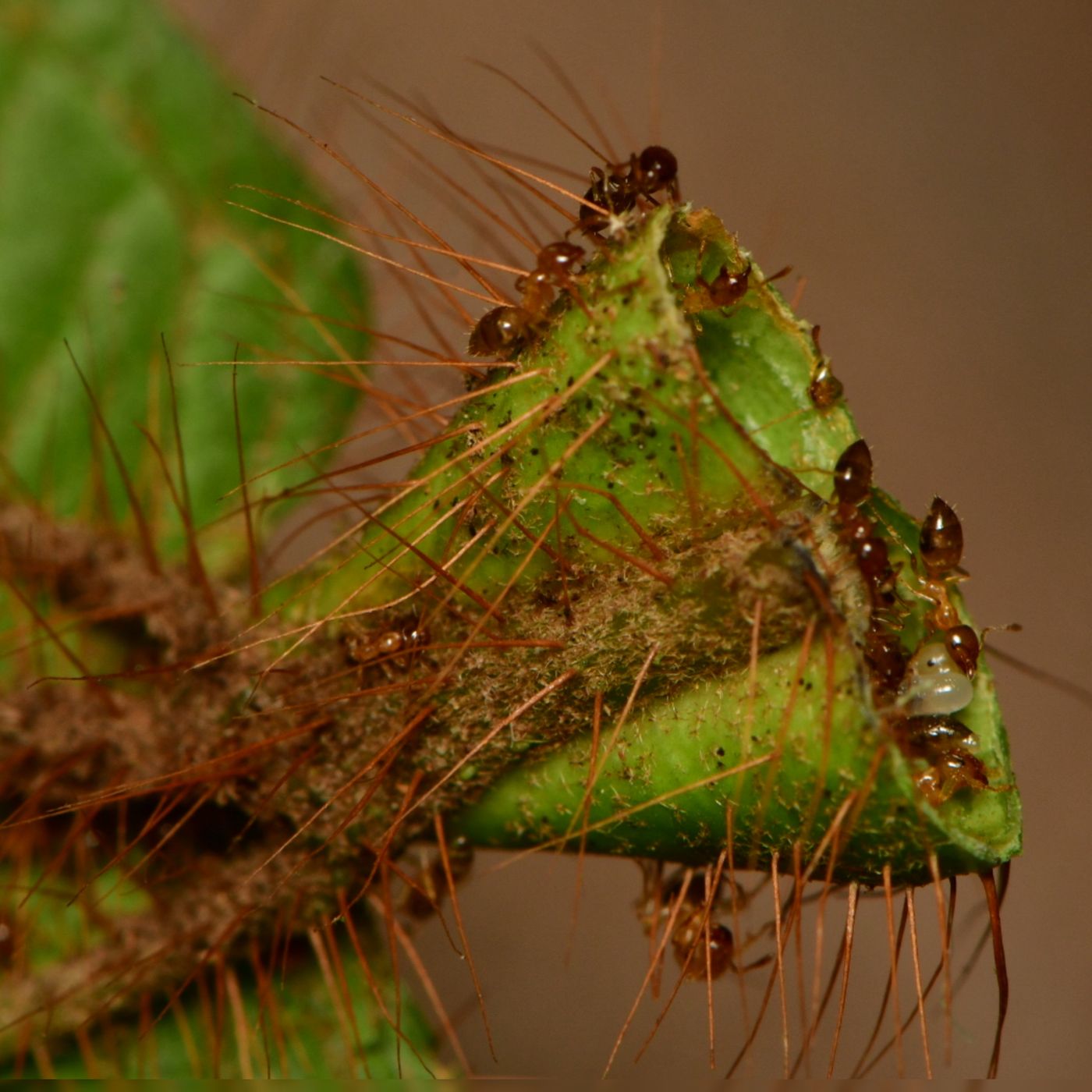
Thumbnail is a photograph of Miconia inobsepta and its swollen petioles acting as ant domatia.
Ad-free episodes of the podcast are available on the Crime Pays Patreon at : https://www.patreon.com/c/CrimePaysButBotanyDoesnt
Thumbnail is a photograph of Miconia inobsepta and its swollen petioles acting as ant domatia.
2025-02-20
130 min
Transcript
Available Results
Generated results are saved to the knowledge database for reuse and search.
No generated results are available for this episode yet.
Extract Knowledge
Pick what you want extracted first. Model, scope, and chapter options appear after a template is selected.
Generated results for public episodes are saved to the knowledge database so they can be reused and searched later.
Transcript
<v Speaker 1>M hmmm, welcome to the crime pace. But body doesn't podcast.
<v Speaker 1>That's some that's some smooth ship. That's nice. I like
<v Speaker 1>to I like to listen to be Humphrey every once
<v Speaker 1>in a while. You know, she's an amazing musician on
<v Speaker 1>the blue Note label. Anyway, all right, we can finish
<v Speaker 1>off with that. What's going on? Welcome back? I just uh,
<v Speaker 1>I just got back from I was an ecuador Alan
<v Speaker 1>and Mandy invited me to come down there and be
<v Speaker 1>the plant person on a little uh like mycology tour
<v Speaker 1>they were doing down there, and it ended up being, uh,
<v Speaker 1>it was a fucking wonderful time. It was. I met
<v Speaker 1>a lot of cool people, spent the last two weeks
<v Speaker 1>hanging out with like nerds of the highest order. But great,
<v Speaker 1>I mean great conversations, mentally stimulating conversations. I learned a
<v Speaker 1>ship ton just from being down in that kind of
<v Speaker 1>habitat and observing the plants. Uh, And I said, wow,
<v Speaker 1>you know, the blue the tropical blueberry diversity is really wild,
<v Speaker 1>as well as members of the orders in Gibrelei's the
<v Speaker 1>Ginger order and all the families in there. You know,
<v Speaker 1>morantasy uh, helicony, ac cost they s et cetera Cyclant.
<v Speaker 1>They see the Panama hat family. They look so much
<v Speaker 1>like palms at first glance. Uh, and then you get
<v Speaker 1>up close and realize this is not a palm, and
<v Speaker 1>the inflorescence is wild and they can be the members
<v Speaker 1>of Cyclant, Theacey. We'll get into this later, but you know,
<v Speaker 1>they were like vining epiphytes. There were you know, small
<v Speaker 1>tree like things. The only kind of hint that they're
<v Speaker 1>not palms comes in the leaf shape. They've got this
<v Speaker 1>this it looks like a palm frond that splits into
<v Speaker 1>a v wild shit. That was down there with herpers
<v Speaker 1>I was down there with I mean, just other biologists.
<v Speaker 1>I guess it was technically an eco tour that they
<v Speaker 1>were offering, but almost everybody on this tour, on this
<v Speaker 1>thing was whatever to fuck you call it. I mean,
<v Speaker 1>it was you know, it was not it was not
<v Speaker 1>like fluffy and h click baity or any of that.
<v Speaker 1>You know. It was like pretty in depth learning and
<v Speaker 1>extremely educational and just fucking fun. But basically everybody on
<v Speaker 1>it was some sort of you know, had some sort
<v Speaker 1>of biological background or not. Everybody. There were some people
<v Speaker 1>that didn't, but you know, and everybody got afforded the
<v Speaker 1>chance to learn. It wasn't like there was you know,
<v Speaker 1>like it was h like to be to go on it.
<v Speaker 1>You didn't need to be extremely well versed in any
<v Speaker 1>of this stuff already, but you certainly would be by
<v Speaker 1>the time you left. And man, it was just it
<v Speaker 1>was so fucking great. You know, it was a little
<v Speaker 1>more plush than I would have you know, been traveling.
<v Speaker 1>And I mean I normally am like when I go somewhere,
<v Speaker 1>I'm living out of a beat up rental rental car
<v Speaker 1>and just fucking you know, just not for changing my clothes,
<v Speaker 1>and I'm just like, you know, wake up, get caffeinated,
<v Speaker 1>eat some food, pack some food, then got in on
<v Speaker 1>the field for ten hours and just bust ass to
<v Speaker 1>take you know, three thousand photos, make notes, collect some
<v Speaker 1>herbarium specimens. Whatever. This was a little more relaxed, and
<v Speaker 1>you know, they fed us and everything. It was kind
<v Speaker 1>of cool, but yeah, it was. It was an expenses
<v Speaker 1>paid trip to just go down there and basically be
<v Speaker 1>the botany person, be the plant the plant person, which
<v Speaker 1>when I you know, when it comes down to it,
<v Speaker 1>I mean, tropical botany is so new to me. I
<v Speaker 1>learned so much in this trip. But there's there's families
<v Speaker 1>that I had no prior experience with, like cost aacy,
<v Speaker 1>you know, these weird monoca families, myriantasy cyclant the see
<v Speaker 1>another great example, uh erythroxylce the coca family, the cocaine family,
<v Speaker 1>which I guess has four genea. Almost all the species
<v Speaker 1>are in Erythroxylum, which is the erythroxylum whatever. However, I
<v Speaker 1>think Erythroxylum so really the way to pronounce it, it's
<v Speaker 1>a lot easier. But those are that's the like the
<v Speaker 1>largest genus in a family. And there's a couple other ones.
<v Speaker 1>I guess there's disjunkt Erythroxylum in Africa, which I did
<v Speaker 1>not I did not know, but these are you know,
<v Speaker 1>these are like montane, very wet, very humid. It was
<v Speaker 1>an I opener for me too in the sense that
<v Speaker 1>I picture the Amazon. We were in Upper Amazon, to
<v Speaker 1>be fair, we were like three thousand feet God, that
<v Speaker 1>wonderful South Texas there. It smells like burning plastic can
<v Speaker 1>garbage fire. It is such a fucking dystopia being back here. Man,
<v Speaker 1>it has been unreal. Was It's just like they go
<v Speaker 1>to fucking Walmart to return this speaker, which I should
<v Speaker 1>you know, I would love to patronize an independent business.
<v Speaker 1>But I'm in fucking South Texas, so there's nothing down here.
<v Speaker 1>Walmart is what we got. I have to go there.
<v Speaker 1>I have to fucking it's I'm that's my own hell.
<v Speaker 1>Like this is punishment for some shit I did, probably
<v Speaker 1>a decade ago. I don't know, but I'm being punished.
<v Speaker 1>I feel like I'm being spiritually punned. I had to
<v Speaker 1>go to Walmart. I bring my kid with me. I say,
<v Speaker 1>you're coming with me, you know, for emotional support, getting
<v Speaker 1>so I put her on my shoulders. We go into
<v Speaker 1>fucking Walmart, and I'm dying the minute I walk in.
<v Speaker 1>I can smell the off gassing plastic, the fluorescent lights,
<v Speaker 1>you know, the consumers being farmed. We're all being farmed
<v Speaker 1>here in the United States. It's part of the dystopia.
<v Speaker 1>I hope you're enjoying it. Uh. And in South Texas especially,
<v Speaker 1>it feels like the Matrix. I feel like I'm living
<v Speaker 1>in the matrix, like a nineteen fifty style. It's so
<v Speaker 1>fucking dark, you know what, I should be taking this
<v Speaker 1>up with my shrink, not you. But this is part
<v Speaker 1>of the fun. In the podcast for me is I
<v Speaker 1>get to fucking dump on you. You don't mind, do you?
<v Speaker 1>What are you doing? You know right? You got time?
<v Speaker 1>So I go in there and I had to return
<v Speaker 1>this speaker that I bought for a fucking electric drum
<v Speaker 1>set that I have so I can make some like
<v Speaker 1>a bleke sel beats. I can make some beats for
<v Speaker 1>background music and shit like that. I played drums, been
<v Speaker 1>playing drums like twenty five years, and so I needed
<v Speaker 1>this little speaker so I could hear the thing because
<v Speaker 1>I don't know where I live. I live in a
<v Speaker 1>small house and I'm just I don't have enough room
<v Speaker 1>for an actual drum set. So I got this thing. Whatever,
<v Speaker 1>I'm returning this. I shouldn't have bought the speaker at
<v Speaker 1>Walfart to begin with, because it was I knew it's bad,
<v Speaker 1>all right, It's just like go I have to go
<v Speaker 1>in there for groceries sometimes and uh, just an awful experience.
<v Speaker 1>So I was I but I did, and of course
<v Speaker 1>it was like cheap garbage that you know, came in
<v Speaker 1>a shipping container, was probably made by you know, nine
<v Speaker 1>year olds on the outskirts of Beijing. So I brought
<v Speaker 1>it back to return the thing, and I'm watching these
<v Speaker 1>two dudes like unpack this fucking TV that was like
<v Speaker 1>had to be nine feet long or something, and I
<v Speaker 1>was just like, that's you know, this is this is it.
<v Speaker 1>It's like the TV is not big enough. It's like
<v Speaker 1>a table. You could flip that on its side and
<v Speaker 1>eat off that thing, you know, with like a fucking
<v Speaker 1>twelve person dinner. And then I just realized, like God, what,
<v Speaker 1>like the fucking who the fuck? What do you need
<v Speaker 1>a TV that But the fuck you're gonna watching a
<v Speaker 1>TV that big? You know what, are you running a
<v Speaker 1>rec center? You got like an orphanage or something. I mean,
<v Speaker 1>I could see if you had an orphanage, you know,
<v Speaker 1>you have like movie night, you need a TV that big.
<v Speaker 1>It was just depressing. But it's at this connection from
<v Speaker 1>the real world, right that this part, it's all part
<v Speaker 1>of it. So anyway, get a TV in a South
<v Speaker 1>so's that a sick car? Uh that's just my judgments anyway,
<v Speaker 1>So uh, anyway, what the fuck? So it was it
<v Speaker 1>was an eye opener for me being in the Amazon.
<v Speaker 1>That's what I came back to. I was like trying
<v Speaker 1>to get out, you know, kind of come to terms
<v Speaker 1>with these wonderful life forms I've been seeing, and and
<v Speaker 1>then the human hell, the dystopic scenery of billboards and
<v Speaker 1>car dealerships and just consumer hell and complete alienation and
<v Speaker 1>isolation from the living world and what's real, and that's
<v Speaker 1>what you know, that's what a great many people live
<v Speaker 1>in in the United States and many other places as
<v Speaker 1>well anyway. So, but being in the Amazon was an
<v Speaker 1>eye opener for me because, you know, I picture I
<v Speaker 1>had never been to the tropical rainforest before, and I
<v Speaker 1>pictured hot, humid, miserable, and indeed, it can be that,
<v Speaker 1>but it wasn't at the elevations we were at. We
<v Speaker 1>were about thirty one hundred feet and it wasn't that bad.
<v Speaker 1>It wasn't as hot as I pictured it. It was
<v Speaker 1>chilly on some mornings. It's certainly not as hot as
<v Speaker 1>South Texas and June or August, you know, throughout the
<v Speaker 1>whole summer. And the mosquitoes weren't that bad, primarily, I
<v Speaker 1>would assume, because you know, i'd well, first off, mosquitoes
<v Speaker 1>are going to be worse and disturbed areas and in
<v Speaker 1>places that humans have basically cleared, you know, except for
<v Speaker 1>like Alaska. I was talking with Matt about this the
<v Speaker 1>other day, you know, and like remote Alaska, the mosquitoes
<v Speaker 1>are really bad because there's so much you know, so
<v Speaker 1>many large mammals for them to feed off of it,
<v Speaker 1>and it's just hell. But if there's not a large
<v Speaker 1>food source around and there's not a lot of human
<v Speaker 1>clearance because human disturbance, clearing the habitat also kills everything
<v Speaker 1>that eats the mosquitoes, which we don't realize because you know,
<v Speaker 1>we're disconnected and alienated from what's real and we live
<v Speaker 1>in this little hell of our own making. And so
<v Speaker 1>you know, in disturbed areas, it's when you get the mosquitoes,
<v Speaker 1>and it's for species like eighties a jipdi, these invasive
<v Speaker 1>mosquito species that you know, didn't they're not from North America.
<v Speaker 1>They were brought over. And not only that, but they
<v Speaker 1>they're like you know, Norway rats and feral cats, et cetera.
<v Speaker 1>They kind of follow humans. They they are organisms that
<v Speaker 1>benefit directly off of human society. You're gonna encounter, you know,
<v Speaker 1>those those show up once the land gets cleared and
<v Speaker 1>the et cetera, and they're you know, they're they've spent
<v Speaker 1>thousands of years co evolving with humans too as their
<v Speaker 1>food source. So well, I shouldn't say co evolving, just
<v Speaker 1>evolving because humans aren't really well. I guess humans are
<v Speaker 1>evolving in response to eighties a gyp D. Right, that's
<v Speaker 1>what sickle cell is. Anyway, the mosquitoes weren't that bad
<v Speaker 1>in the Amazon. There were a few, but you know,
<v Speaker 1>there's so many frog species and other insects that prey
<v Speaker 1>on them that there's the checks and balances, and it's
<v Speaker 1>I mean, it's the same story with ticks, right. The
<v Speaker 1>tics get out of control when you knock out the
<v Speaker 1>editors that keep the deer populations down, or when you
<v Speaker 1>stop burning. And so that's why ticks are so bad.
<v Speaker 1>Part of the reason why ticks are so bad in
<v Speaker 1>Northeast fire suppression, you know, removal of predators and complete
<v Speaker 1>imbalance of the deer populations. Anyway, I didn't know what
<v Speaker 1>to expect when I got down there, and it was
<v Speaker 1>it was really pleasant. It's just humid and it rains
<v Speaker 1>a lot. You've got you know, the intertropical convergent zone,
<v Speaker 1>and so that's you've got these warm air masses you know,
<v Speaker 1>rising and uh of course creating low pressure systems low
<v Speaker 1>pressures of course associated with rainfall, and so you know,
<v Speaker 1>basically the other end of that Hadley Stell, you've got
<v Speaker 1>the high pressure zones, that high pressure cold they were
<v Speaker 1>descending at thirty degrees latitude north and south, creating deserts
<v Speaker 1>in certain areas. And that was air that originally rose
<v Speaker 1>at the tropics. We're part of that air originally rose
<v Speaker 1>at the tropics and then got pushed to thirty degrees.
<v Speaker 1>So because of that rising air, it just rains all
<v Speaker 1>the fucking time. It was like, I think the rainfall
<v Speaker 1>for where we were was between fifteen and twenty five
<v Speaker 1>feet of annual rainfall a year. And you know, many
<v Speaker 1>of the places where we were, it's wild. It's like
<v Speaker 1>you'll be walking and then there's just this little two
<v Speaker 1>foot crevasse that opens up two foot wide by like
<v Speaker 1>three feet deep, and then there's just water running through
<v Speaker 1>it and it's just a drainage and it's clear water.
<v Speaker 1>It's not like nasty brown water. It's clear water. It's
<v Speaker 1>got a little fish in it, and then that's just
<v Speaker 1>part of the drainage. I mean, the ground is just
<v Speaker 1>always wet. There's lots of leaf litter the forests. There
<v Speaker 1>were just fucking incredible. I kept thinking the whole time
<v Speaker 1>I'm there, I'm like, what is it like? What is
<v Speaker 1>it like to do psychedelics in this kind of habitat?
<v Speaker 1>It's got to be incredible because everything around you is alive,
<v Speaker 1>you know, versus like where I live now, everything around
<v Speaker 1>me is dead, you know, including like the people on
<v Speaker 1>the inside. Right, It's just like it's like the modern
<v Speaker 1>American that's where we're all headed. Like I think, you know,
<v Speaker 1>just we're all gonna be walking dead, just farmed this
<v Speaker 1>consumers dead on the inside, alienated from what's real. So uh,
<v Speaker 1>but just to be surrounded by like this, all this
<v Speaker 1>living green, living green fabric everywhere has got to be intoxicating.
<v Speaker 1>And then the fucking frogs at night, the frog diversity
<v Speaker 1>there's insane. Saw a lot of cool herbs who saw
<v Speaker 1>coral sneak. We saw what was it Boutria kophis, some
<v Speaker 1>pit viper species that the Alex, one of the herpetologists,
<v Speaker 1>was with. They milked the venom out of it. So
<v Speaker 1>we got the milk the venom out of it. That
<v Speaker 1>was cool at least see how it's done. Uh. And
<v Speaker 1>then they of course use that to create anti vent
<v Speaker 1>and it was. It was a really great experience, but
<v Speaker 1>the plant life was just fucking nuts. We went up
<v Speaker 1>to the Paramo one day, which is you know, Paramo
<v Speaker 1>habit that for anybody who doesn't know, is high elevation,
<v Speaker 1>low latitudes, basically what twelve one hundred feet looks like
<v Speaker 1>on the equator, and it was just fucking nuts. I've
<v Speaker 1>been wanting to go there for a while. But you
<v Speaker 1>get all these temperate lineages, lineages from you know, points
<v Speaker 1>further north or south, latitudes further north or south, but
<v Speaker 1>they're at the equator, and basically at the equator it's
<v Speaker 1>far too warm for them and just too different of
<v Speaker 1>a climate and habitat type at lower elevations. The only
<v Speaker 1>place they can really get on is at higher elevations.
<v Speaker 1>But they're also kind of on these islands in the sky,
<v Speaker 1>you know, the andes, and so they they speciate you
<v Speaker 1>just but it's just nuts, man, and there's so much
<v Speaker 1>hummer pollination. Serato stemma elatam was a really wild looking
<v Speaker 1>member of Eric Casey, the blueberry family that was there.
<v Speaker 1>It was like this scandent vining epiphyte as well, and
<v Speaker 1>it was just fucking you know, these bright red flowers,
<v Speaker 1>very neck, the rich, the petals recurved back. It looks
<v Speaker 1>like a little bell with these recurved petals. And then
<v Speaker 1>these exerted stamens poking out, and some of these things
<v Speaker 1>would form like these woody tubers. They were epiphytes, but
<v Speaker 1>they would form woody tubers on their branches, which was
<v Speaker 1>nuts to me. It was like they were forming storage
<v Speaker 1>mechanisms for those you know, short periods that they may
<v Speaker 1>dry out. I mean, I don't know what the habitats
<v Speaker 1>like that. We were there in the paramo and it
<v Speaker 1>was it was very wet and cool, you know, chillier
<v Speaker 1>than sand. It was like, it's such a weird habitat.
<v Speaker 1>It was like climate not even climate of San Francisco,
<v Speaker 1>like climate of like coastal Humboldt County, like coastal like
<v Speaker 1>up in the Redwood Belt, like Chili almost and very foggy.
<v Speaker 1>Everything's wet, and we're walking through this short canopy for us,
<v Speaker 1>maybe twenty feet tall. The dominant tree was Escalonia myrtaloides,
<v Speaker 1>one of the escalonias, you know, which is in the
<v Speaker 1>order escaloni alies. That doesn't tell you that much, but
<v Speaker 1>you know, if you look on the angiosperm phylogeny poster,
<v Speaker 1>it's somewhat close to the order astles, the sunflower order,
<v Speaker 1>and the Lobelia order and the trigger plant order. So
<v Speaker 1>but anyway, Escalonia is really diverse in South America. You know,
<v Speaker 1>there's a ton in Chile. There's a couple members of
<v Speaker 1>the family. I'm pretty sure in Australia and New Zealand,
<v Speaker 1>and a lot of things we saw had disjuncts, had
<v Speaker 1>other members of the genus or the family in New
<v Speaker 1>Zealand or in Tasmania. It's that gondwan in connection. There
<v Speaker 1>was like when I when I was in Chile, we
<v Speaker 1>saw Rakua Rakawa. How are you fucking pronounced that? Ra
<v Speaker 1>a u k a u a lead of virans, which
<v Speaker 1>is in arali a c the Ginseng order, order Apa
<v Speaker 1>les a carrot order. Uh not Ginseng order, Jinseng family.
<v Speaker 1>Excuse me. Arali acy, which is a rarely ac is
<v Speaker 1>like the sister family to the carrot family. Ginseng family
<v Speaker 1>is sister family to the Carat family. So h but
<v Speaker 1>order Apa Le's we saw Rakawa lad of virans and
<v Speaker 1>then I looked up and uh, you know the ce
<v Speaker 1>my my I naturalist profile where else I've seen that
<v Speaker 1>fucking genus before, and I had seen it in New Zealand,
<v Speaker 1>so I you know, that happened a lot. And there
<v Speaker 1>was another a couple other genera two that I looked
<v Speaker 1>at and realized, oh, I've seen this or a related
<v Speaker 1>genus in New Zealand. So you know, these plant lineages
<v Speaker 1>in South America, especially in Chile, you know, go back
<v Speaker 1>a very long time, you know, to when the continents
<v Speaker 1>were a little bit close together, fifty sixty million years
<v Speaker 1>in some cases, the same with Gunnera. Some of those
<v Speaker 1>might be long distance dispersal, but I'm sure a good
<v Speaker 1>many of them are the result of Gondwana and affiliations. Anyway. Yeah,
<v Speaker 1>the Paramo was just just filled with wild shit Pinguicula calyptrata,
<v Speaker 1>a carnivorous plant. I think the thing for me that
<v Speaker 1>was that was wild to see was the habitat up
<v Speaker 1>there is. You know, a lot of stuff was fuzzy,
<v Speaker 1>a lot of stuff was covered in hairs. But it's
<v Speaker 1>not a dry habitat. I normally associate plants with hairs
<v Speaker 1>with with you know, dry or seasonally dry habitats. I
<v Speaker 1>don't think it's ever really dry for long periods in
<v Speaker 1>the Paramo. Certainly nothing compared to deserts or tropical dry
<v Speaker 1>forest or tropical thorn forest, et cetera. These hairs were
<v Speaker 1>mostly there as a result of adaptation to ultraviolet light
<v Speaker 1>and to frosts, because you're so high up that it
<v Speaker 1>can get very cold, especially at night. So just just
<v Speaker 1>the too a totally novel habitat for me and filled
<v Speaker 1>with diversity. There's a supposedly there's a disjunct Epiletia stand
<v Speaker 1>or Espilletia stand or Espalicia if you want to pronounce
<v Speaker 1>like that E S P E L E. T I A,
<v Speaker 1>which is a huge genus that's almost I think it's
<v Speaker 1>all endemic to the Paramo, but they're mostly in Colombia.
<v Speaker 1>It's astracy, so it's the sunflower family. But they can
<v Speaker 1>form these uh sometimes two or three meter tall colescent
<v Speaker 1>wooly just really bizarre look in doctor use plants. And
<v Speaker 1>there's a disjunk stand of Espialetia I forget what species.
<v Speaker 1>I think it begins with an L in Yanga nat
<v Speaker 1>National Park in this you know, like in which is
<v Speaker 1>like mid Ecuador. Most of the Espalicias are in the
<v Speaker 1>Espilletias are in the north, but there's this one disjunk
<v Speaker 1>population down down where we were. But it's it's like
<v Speaker 1>a two day hike in over some rough drink cat
<v Speaker 1>that would be fucking amazing to do. Yeah, the diversity
<v Speaker 1>in the Parmo was just fucking it was so cool.
<v Speaker 1>It was so cool. We didn't get enough time, but
<v Speaker 1>I could have spent I could have spent the you know,
<v Speaker 1>a few days. There. Two gunnera species, those weird ass
<v Speaker 1>you know, elephant ear looking plants. If you're not familiar
<v Speaker 1>with them, they're just they look like, you know, there,
<v Speaker 1>we saw Gunnera tinctoria in Chile, but up here it
<v Speaker 1>was Gunnera mage I guess it was gunna A magellanica.
<v Speaker 1>It didn't look anything like the gunner of Magellanica I
<v Speaker 1>saw in southern Gile. It's probably a different species. I
<v Speaker 1>don't think that's the DNA has been sequenced. Probably, uh,
<v Speaker 1>they just you know, just based on morphology alone, it's
<v Speaker 1>been lumped in with Magellanica. At least that's what I assume,
<v Speaker 1>because it's it's certainly a different ecotype. It's it's phenotypically different.
<v Speaker 1>I'm sure it would be genetically different. If you look
<v Speaker 1>at it, it's probably a different species or should be
<v Speaker 1>should be split up. And then I think there was
<v Speaker 1>gunner a mannicotta down there as well, anyway, unrelated. It's
<v Speaker 1>nuts to see. I mean, it's such it's such a
<v Speaker 1>it's such a shit storm here back in the US,
<v Speaker 1>and I knew it was gonna be. I mean, I
<v Speaker 1>try not to. I'm just trying to close my eyes
<v Speaker 1>and take more of a Carlin esque approach to the
<v Speaker 1>fucking dystopic idiocracy nightmare that is the United States. It's
<v Speaker 1>just it's this. It just feels bad. It feels bad
<v Speaker 1>to see, to be here, It feels bad to think
<v Speaker 1>about this place. It feels bad to hear. It feels
<v Speaker 1>bad to read the comments, just of shit that's going
<v Speaker 1>on here, just reading about what's going on, Like the
<v Speaker 1>people are still in such denial, you know, the I mean,
<v Speaker 1>I knew this was going to be Reagan two point zero.
<v Speaker 1>I knew it was going to be defunding everything. I
<v Speaker 1>knew the country is gonna get dumber. I know people
<v Speaker 1>are going to be even more farmed than they are now.
<v Speaker 1>I know the middle class is going to continue to eroad,
<v Speaker 1>But it's just such a dystopias. Seeing the support still
<v Speaker 1>among I mean, it's whatever. It shouldn't surprise me. People
<v Speaker 1>are fucking morons, people are retards. At least we could
<v Speaker 1>say retard again, you know, without being lectured by some fucking,
<v Speaker 1>you know, elitist nerd. That's the that's like the high point, right,
<v Speaker 1>the one like the whole the whole country is going
<v Speaker 1>to ship. But at least you could say read again.
<v Speaker 1>She would never say to someone who's actually mentally disabled.
<v Speaker 1>But but it's this is the poisonous concoction. That's the
<v Speaker 1>result of the last fucking i don't know, ten years.
<v Speaker 1>I mean social media too, the effects this all has.
<v Speaker 1>But you know, having numerous friends that have lost their jobs,
<v Speaker 1>the defunding of science, like it's just gonna get worse.
<v Speaker 1>This is what the right has been wanting to do
<v Speaker 1>for forty five fifty years now. Reagan started it, and
<v Speaker 1>this is finishing it off. It's just it's fucking unbelievable. Man.
<v Speaker 1>It's just it's so dystopic. It's such a death cult.
<v Speaker 1>It's talking about being alienated and estrange from the living world.
<v Speaker 1>And I think just the stupidity too, like the just
<v Speaker 1>realizing there's not a lot going on upstairs. It's just
<v Speaker 1>like these lowest common denig dominator, bottom of the brain
<v Speaker 1>stem primate instincts to like acquire money and hoard and
<v Speaker 1>anything that stands in a way of that. But uh, gutting, education, gutting.
<v Speaker 1>You know, I've got so many friends that that have
<v Speaker 1>federal jobs. They're scientists, They've got federal jobs, uh to
<v Speaker 1>you know, for surveying, for collecting data, for monitoring important shit,
<v Speaker 1>you know, for keeping the living skin of the earth alive,
<v Speaker 1>for keeping this living machine functioning. And he's fucking retards
<v Speaker 1>on the right. These people that just are so disconnected
<v Speaker 1>from anything real. They live in this make believe land
<v Speaker 1>of of that humans have just created of of a
<v Speaker 1>of the economy and the fucking investment portfolios and the
<v Speaker 1>shareholders and whatever the fuck that diseased, boring ass world
<v Speaker 1>is focused on, but disconnected from anything alive and real,
<v Speaker 1>and the decisions that they're making is just god man,
<v Speaker 1>it's just what the what a fucking the properate existence
<v Speaker 1>they must lead. But yeah, a lot of people have
<v Speaker 1>just lost their jobs who are more than qualified. Because
<v Speaker 1>we're cottag or cottag we gotta cot. We gotta buy cots.
<v Speaker 1>And what are you gonna do with that money? You're
<v Speaker 1>gonna You're gonna you're gonna get basically award contracts to
<v Speaker 1>your friends, your crow. I mean, the oligarchy is just
<v Speaker 1>gonna be fully cemented in now. I you know, I
<v Speaker 1>don't want to talk about because I know this is
<v Speaker 1>this should be an escape, right, a little bit of
<v Speaker 1>an escape, but it's, uh, the dystopia is just it's
<v Speaker 1>so ripe now. So I think the answer is just
<v Speaker 1>more of this, just the you know, complete irreverence for
<v Speaker 1>that world and complete reverence and respect for the living
<v Speaker 1>world in front of you. By studying something, by learning
<v Speaker 1>about something, by obsessing and fixating on something, it's a
<v Speaker 1>way of respecting it and also spreading it, you know,
<v Speaker 1>spread it like a contagion. Make other people excited about
<v Speaker 1>this stuff as well. And grow the shit out of everything,
<v Speaker 1>to grow the shit out of all the plants you
<v Speaker 1>can make, you know, spread this. You know, there's so
<v Speaker 1>much you could do, you know, just don't just focus
<v Speaker 1>on that world. Don't pull out of that world and
<v Speaker 1>get immersed in this dark, make believe dystopic reality that
<v Speaker 1>the humans have created in the United States. You know,
<v Speaker 1>it's the country that doesn't want to believe, the country
<v Speaker 1>that's in denial. Right, it's going to be morning in
<v Speaker 1>America again. All over all you have to do is
<v Speaker 1>say it, say it three times and click your heels
<v Speaker 1>and it'll happen. While the price of eggs never went
<v Speaker 1>up anyway, God fucking okay. So yeah, so the Paramo,
<v Speaker 1>we'll talk more about that later. That was some pretty
<v Speaker 1>fucking wild habitat and just just the diversity. And then
<v Speaker 1>I mean, I've got so many videos to edit to
<v Speaker 1>and put clips to put together, and I'm still working
<v Speaker 1>on Chile stuff. I'm really busier than I ever have been.
<v Speaker 1>And then I'm going to be in Chicago at the
<v Speaker 1>end of this month, at the end of February to
<v Speaker 1>do a presentation, to give a presentation at the Wild
<v Speaker 1>Things Conference. Then I got to come back here. I've
<v Speaker 1>got shit signed up for June, which is like, you know,
<v Speaker 1>I've got like four presentations I'm giving in the next
<v Speaker 1>few months. So anyway, but back to the Amazon, you know,
<v Speaker 1>the most diversity in the lower regions that we were in,
<v Speaker 1>not the Paramo. We've moved on to talking back about
<v Speaker 1>the elevations between thirty two hundred feet four thousand feet.
<v Speaker 1>Below three thousand feet, I think it probably gets a
<v Speaker 1>lot more miserable, just like humid as hell, and you know,
<v Speaker 1>probably a lot more buggy. But but where we were
<v Speaker 1>at like thirty six hundred and thirty seven hundred feet,
<v Speaker 1>the most common families that we sawcaus nariac for sure,
<v Speaker 1>which is in the order lamy alas. So you got
<v Speaker 1>bilatteroidsymmetrical flowers, generally opposite leaves, lots of adaptation and hummingbird pollination.
<v Speaker 1>Some really wild forms too, like they just the tropical
<v Speaker 1>plants are so crazy to me. I mean, huge leaves,
<v Speaker 1>you know, hairs in some parts, but overall pretty glabrous
<v Speaker 1>to shed water, especially on the top. There's a ton
<v Speaker 1>of aeroid diversity and thoriums and philodendrons everywhere, which that
<v Speaker 1>philodendrion that all the uh, you know, the aeroid nerds were,
<v Speaker 1>like the covid era aeroid nerds were paying like six
<v Speaker 1>thousand dollars for phill Dendron varicosum or some of those lookalikes.
<v Speaker 1>There was this giant ass Bogonia that it got to
<v Speaker 1>like fifteen feet tall, was parvifolia, with which were the
<v Speaker 1>plants were diecius to. I went and looked at the flowers.
<v Speaker 1>A lot of bogonias will have male and female flowers.
<v Speaker 1>You could tell them apart because the female flower they
<v Speaker 1>look alike, but the female flowers will have an ovary
<v Speaker 1>subtending the flower. It looks like a little winged fruit,
<v Speaker 1>immature fruit. But they've both got that yellow, you know,
<v Speaker 1>basically yellow sexual parts. Like the female flowers on begonias
<v Speaker 1>try to make it look like they're producing pollen because
<v Speaker 1>the bees that hit them are pollen collecting bees and
<v Speaker 1>so anyway, but normally you'll find both sexes on the
<v Speaker 1>same plant. With this one, it was like fucking fifteen
<v Speaker 1>feet tall, huge leaves, you know, foot and a half
<v Speaker 1>two feet across, well maybe foot and a half eighteen
<v Speaker 1>inches across, and it will it's uh, it was just
<v Speaker 1>they were dioecious, you know, it's monsters. There was a
<v Speaker 1>really cool tree called Brownia, which was in its own
<v Speaker 1>subfamily of the legume family, a subfamily that I don't
<v Speaker 1>normally encounter very much. I've only seen a few members
<v Speaker 1>of it. It was a detereoid e D. E. T. A. R. I, O, I, D,
<v Speaker 1>E A E. What else is in the terrioid. It's
<v Speaker 1>a weird family. Uh uh oh shaddy, yeah, I think
<v Speaker 1>I've seen some. Actually it's got h yeah, well let's
<v Speaker 1>see genus Anea A, Gourdia, gabonius i, Curia labor vilias, Sindoropsis.
<v Speaker 1>I don't know anyway, it's a fucking weird Uh. It's
<v Speaker 1>a weird subfamily of Fabase that was only created a
<v Speaker 1>few years ago once, uh, you know, due to due
<v Speaker 1>to some new ship, due to some incoming molecular evidence.
<v Speaker 1>But you look at the flowers and they look remarkably
<v Speaker 1>different from most p flowers. They look more like say,
<v Speaker 1>sell pinioid, almost like a centa or a camacrista. But
<v Speaker 1>the flowers are axillary. They're these big red flowers that
<v Speaker 1>come or not accilary, excuse me, calliffloris. So they come
<v Speaker 1>right out of the you know, the plant is coalesce
<v Speaker 1>and it's got a main stomach, gets upwards of like
<v Speaker 1>thirty feet tall maybe in some cases really unique philotaxi
<v Speaker 1>to cool leaves, and the flowers just come right out
<v Speaker 1>of the main trunk. And what's cool is that before
<v Speaker 1>the flowers open. I've noticed there are ants that just
<v Speaker 1>guard the opening flower buds. I'm not sure if they're
<v Speaker 1>collecting some sort of material or wax off of it
<v Speaker 1>or what I've seen that. I remember seeing that with
<v Speaker 1>like pae andies. My mom when I was growing up,
<v Speaker 1>you used toll grow peonies and the when the as
<v Speaker 1>the flowers would open, before they would open the air
<v Speaker 1>would always be ants crawling around the flower buds. Tons
<v Speaker 1>of antiversity too. I got to see the Atta species
<v Speaker 1>down there, Atta, the leaf cutters, because we get at
<v Speaker 1>in Texas too. We get leafcutter ants in Texas. It's
<v Speaker 1>out of Texana up here, but down there it was
<v Speaker 1>a different species. You know, all these connections to which
<v Speaker 1>was cool. I mean, you know, similarities. When you see
<v Speaker 1>a plant that's similar enough to one you already know
<v Speaker 1>that occurs, you know, one thousand miles north of it,
<v Speaker 1>you can you get a window into how that might
<v Speaker 1>have evolved or speciated. And the distribution of these plants,
<v Speaker 1>of these plants, well, my voice keeps fucking cracking. I
<v Speaker 1>don't know what. I don't know why. So that was yeah,
<v Speaker 1>Brownia was wild. There was the aeroid diversity was nuts.
<v Speaker 1>We saw an anthorium up in the paramol too at twelve
<v Speaker 1>thousand feet. Uh. The neotropical palms was fucking crazy. God,
<v Speaker 1>there's so many cool ones. This Ethnobodany video that I
<v Speaker 1>got coming out next week, I mean, it really shows
<v Speaker 1>the importance of some of these palm species, both for
<v Speaker 1>fiber and for fruit. The what was it that was
<v Speaker 1>Bactris is the genus of palm, and the fruit that
<v Speaker 1>it produces is like a little golf ball sized fruit.
<v Speaker 1>You gotta peel it, and then the fruit tastes like squash.
<v Speaker 1>It's delicious. It tastes like kabocha squash, and then you
<v Speaker 1>just you know, the spit out, the spit out the seed.
<v Speaker 1>You kind of have to eat around it. Seeds kind
<v Speaker 1>of big. The fucking market there was wild. And then
<v Speaker 1>the last day, crews made us go to this market
<v Speaker 1>with didn't make us. He suggested it sounded cool. I
<v Speaker 1>went there. It was fucking great, and it was just
<v Speaker 1>loaded with with all kinds of cool shit. It was fun.
<v Speaker 1>Mostly native fruits there. I mean they had stuff that
<v Speaker 1>wasn't native that like, you know, bananas obviously aren't native
<v Speaker 1>to to the Americas. Same with rambutans. They're not native
<v Speaker 1>to the Americas. They're in the you know, they're related
<v Speaker 1>the light cheese. They're in the maple family. Step in Dacy.
<v Speaker 1>But they had these big ass beetle grubs too, which
<v Speaker 1>was the genus was rinko forests. They're like two or
<v Speaker 1>three inch long beetles. They live in the palms. And
<v Speaker 1>then and you can eat them and grill them whatever,
<v Speaker 1>fry and whatever. They're supposed to be fucking delicious. I
<v Speaker 1>didn't actually end up trying any. And then the beetle
<v Speaker 1>that it makes is cool too. It's not like one
<v Speaker 1>of those rhinoceros beetles. It's one of those circoulianids which
<v Speaker 1>has like a long snout, like a weavil like snout.
<v Speaker 1>You got to get down with eating bugs. Don't be
<v Speaker 1>fucking weany about it, Okay. It's but also like seeing
<v Speaker 1>the ecology too. I mean, these things are connected to
<v Speaker 1>the palms. They're using the palms. They eat the palm.
<v Speaker 1>It's not wood, because palms are not you know, they're
<v Speaker 1>not woody, they're fibrous. Monocots don't produce wood. They don't
<v Speaker 1>produce you know, lateral marris, theems. They don't produce secondary
<v Speaker 1>growth except for a few of the few of them,
<v Speaker 1>like you know, a few monocuts do, like the fucking
<v Speaker 1>some drosinas I guess, and other I should actually do it. Well,
<v Speaker 1>we'll mention that later. We'll get into like secondary growth
<v Speaker 1>and monocuts. If you don't know what I'm talking about,
<v Speaker 1>you really should, because this is a key point of
<v Speaker 1>angiosperm anatomy. Dicots and udikots and conifers, which are obviously
<v Speaker 1>not angiosperms, produce vascular cambium. They can grow laterally, not
<v Speaker 1>just up and down. Palms and monoca, which are monocot
<v Speaker 1>can only grow up and down. They don't ever get wider.
<v Speaker 1>That's why when you look at a palm tree, it's
<v Speaker 1>a spindly rod. It's been the same with its entire life.
<v Speaker 1>It doesn't get bigger. But some palms have found a
<v Speaker 1>way around that, including some that I encountered down in
<v Speaker 1>the Amazon, like what was it Eriardia del toida, the
<v Speaker 1>dick palm. It produces, you know, these lateral roots that
<v Speaker 1>come out at a forty five degree angle to form
<v Speaker 1>this kind of flanged base, which is primarily you know,
<v Speaker 1>it forms like an hour glass base basically so that
<v Speaker 1>it can't be tipped over in this squishy soil or
<v Speaker 1>get blown over. But when these things germinate there like
<v Speaker 1>pencil thin a couple maybe that were I think a
<v Speaker 1>little bit bigger, but but they can basically get a
<v Speaker 1>little bit wider as they grow, you know, up to
<v Speaker 1>a certain point by forming these lateral roots, which I'm
<v Speaker 1>really curious about the physiology of that too, Like you
<v Speaker 1>send out this lateral root, but where is the bud
<v Speaker 1>for the lateral root, and it's it's further they look
<v Speaker 1>like they end up looking like a mangrove because they're
<v Speaker 1>not the original stem kind of rots away as the
<v Speaker 1>tree matures, and then they've just got this series of
<v Speaker 1>thirty or forty roots coming out at forty five degree
<v Speaker 1>angles and with their you know, they come out like
<v Speaker 1>three feet above the ground and then eventually root into
<v Speaker 1>the soil. They come out, you know, at a forty
<v Speaker 1>five degree angle outwards and then eventually root into the soil.
<v Speaker 1>And that's how the palm stabilizes itself. Because these palms
<v Speaker 1>get like thirty, forty, fifty, sixty fucking feet tall, and
<v Speaker 1>they've got fishtail leaves too. Really weird, not like any
<v Speaker 1>washing tony is that you see in North America. Complete
<v Speaker 1>different file a taxi or like the Phoenix canary ancess.
<v Speaker 1>It gets planted all throughout California, including it. The old
<v Speaker 1>Southern Pacific Railroad stations like Southern Pacific Road used to
<v Speaker 1>plant Phoenix Canary ancest everywhere wherever they would put up
<v Speaker 1>a depot, you know, Canary island palm or Phoenix deck,
<v Speaker 1>the liffra the date palm complete different fileottaxi complete different
<v Speaker 1>leaf shit, not phileo taxi, but leaf shape. I guess
<v Speaker 1>it is a pilotaxi because it looks like these little
<v Speaker 1>fishtail palm leaves that come off the racus just so much.
<v Speaker 1>You know, I would see shit and just be like,
<v Speaker 1>what the fuck is that? I have no idea. I
<v Speaker 1>need to know what that is. I need to learn
<v Speaker 1>about that. So I head up Scott Zona. You know
<v Speaker 1>you got any references on neotropical palms, And he referenced
<v Speaker 1>the book that I ordered. I found it on the
<v Speaker 1>internet for like ten bucks, which was cool. I didn't
<v Speaker 1>check lib jin. It's probably on there, but hold on,
<v Speaker 1>I get your name, I'll get you to name it.
<v Speaker 1>A book in a second. Yeah, Field Guide to the
<v Speaker 1>Palm of the Americas by Henderson looks like it came
<v Speaker 1>out in the nineties, but god damn man. Yeah, just
<v Speaker 1>just you know, I'm fair stated by this shit. But
<v Speaker 1>I also know that in learning about it, I'll probably
<v Speaker 1>learn about other things, because everything's connected, you know this. Uh,
<v Speaker 1>you learn about one thing that might seem inconsequential and unimportant,
<v Speaker 1>and then you end up realizing, oh, it's not. It's
<v Speaker 1>like through learning about that thing, you learn a new
<v Speaker 1>example of how something is biologically accomplished, or how something evolves,
<v Speaker 1>or or just something as simple as what other species
<v Speaker 1>this plant. You're not initially concerned with what it might
<v Speaker 1>be connected to. So learning that kind of shit, because
<v Speaker 1>I've seen that happen so many times. Something I'm not
<v Speaker 1>interested in initially because I find it boring, and then
<v Speaker 1>later on I learn, oh, it's actually connected to this thing.
<v Speaker 1>Fuck that's cool. Now I'm interested in it. And also
<v Speaker 1>just you know, I'm not gonna lie. A lot of
<v Speaker 1>this just comes from like complete revulsion at the human
<v Speaker 1>world in front of me, you know, especially like what's
<v Speaker 1>going on in the United States right now. Like I
<v Speaker 1>just watched the country I have to live in getting
<v Speaker 1>dumber and greedier and just more disgusting culturally speaking. And
<v Speaker 1>so I just you know, Bondi's not just an escape,
<v Speaker 1>it's also the answer. It's not just an escape. I
<v Speaker 1>feel like it's also there's some good instructions for living
<v Speaker 1>and for morality by studying the living world. So don't
<v Speaker 1>be a dumb dick. That's basically what I'm saying. Okay, Anyway,
<v Speaker 1>what other diversity the gasnierriads the well. First off, hummingbirds
<v Speaker 1>are of course big pollinators, so we saw tons of
<v Speaker 1>red tubular flowers. Bats are big pollinators to Bremysterra is
<v Speaker 1>another genus that was really interesting to me. And I
<v Speaker 1>was just showing my kid something about because we were
<v Speaker 1>looking at bat nation. I was trying to show our
<v Speaker 1>pictures of bats pollinating things because I showed her some
<v Speaker 1>pictures of these bats that we saw in a cave
<v Speaker 1>that we went into. Nobody got COVID, as much as
<v Speaker 1>I would have loved to bring back COVID two point
<v Speaker 1>oh to the United States, nobody got it. And the
<v Speaker 1>people have been going in this cave for a while anyway,
<v Speaker 1>So uh, but I was trying to show where you know,
<v Speaker 1>bats can pollinate things. Then they went there. There's like
<v Speaker 1>videos and sguaros and shit whatever. But there was a
<v Speaker 1>nice video on Bermeestra, which is a lobilioid. It's related
<v Speaker 1>to Lobilia, and it's got that same flower structure with
<v Speaker 1>the fused anther tube and a little pollen presenter that
<v Speaker 1>pops out of it, and you know, is male on
<v Speaker 1>the first day and it becomes female on the second or
<v Speaker 1>third day whatever, and so uh anyway, but Bremeistra, you know,
<v Speaker 1>you see this thing and you can tell it's a
<v Speaker 1>Lobilia or it's a Lobilia relative because of that fused
<v Speaker 1>anther tube and the pomp presenter. But then you look
<v Speaker 1>at the flower. It's got a really distinct morphology to it.
<v Speaker 1>CenTra Pogon was down there to it. Another cool genus
<v Speaker 1>in Lobilioidy of companilacy, the bellflower family. Anyway, but these
<v Speaker 1>little these bermeyestras were out everywhere, and they're not red,
<v Speaker 1>they're not tubular, and they're you know, they're they're obviously
<v Speaker 1>possessing the traits that have been selected for by bats.
<v Speaker 1>The bats have like actively bred these things over millions
<v Speaker 1>of years. Whatever. You know, the bats, the ones that
<v Speaker 1>are most appealing to the The flowers that are most
<v Speaker 1>appealing to the bats are the ones that end up
<v Speaker 1>getting pollinated and then producing more of themselves. The ones
<v Speaker 1>that aren't, you know, appealing, appease appealing to them for
<v Speaker 1>whatever reason, don't you know. It's typical natural selection how
<v Speaker 1>it works. But the fruits, I'm curious about what disperses
<v Speaker 1>these fruits because the fruits were like these inflated hollow
<v Speaker 1>bags and then on the center like the burmeister are
<v Speaker 1>fruit I saw, at least I don't know what species
<v Speaker 1>it was. Very few of my e naturalists observations have
<v Speaker 1>been you know, put to species level. They're just genera
<v Speaker 1>or family whatever, And it's good enough for me. And
<v Speaker 1>that's the most you can hope to get in such
<v Speaker 1>a dense, diverse, species rich area that's also probably understudy.
<v Speaker 1>There's so much shit in many of these places that's
<v Speaker 1>understudied because there's just so much out there and there's
<v Speaker 1>not enough botanist to work on it whatever. And there's
<v Speaker 1>actually a lot of good bodany that's been done on Ecuador.
<v Speaker 1>I mean, you just go to like Google scholar, you'll
<v Speaker 1>see a shift ton of papers. But this fruit was
<v Speaker 1>like a bagfruit. And then in the center of it
<v Speaker 1>was like a little nodule. And then on that nodule
<v Speaker 1>where all the you know, hundreds of tiny seeds because
<v Speaker 1>lobilioid seeds are tiny. That's probably part of the reason
<v Speaker 1>they're all over the fucking globes, because the seeds are
<v Speaker 1>so tiny. But but fuck man, was it was. You know,
<v Speaker 1>anytime you're encountering a new genus, it's it's pretty exciting,
<v Speaker 1>especially with such a like distinct and unique flower morphology,
<v Speaker 1>because all these flowers are a little puzzles, right, they're
<v Speaker 1>little clues at what this thing evolved with, or what
<v Speaker 1>pollinates it, or what its ecology is, et cetera. So
<v Speaker 1>Bremstra was a genus we frequently encountered. I also saw
<v Speaker 1>some cool micoheterotropse, of which there's many. Most of the
<v Speaker 1>fungi in the Amazon, the micorrhizal fungi is arbuscular mico hisea.
<v Speaker 1>These are fungi that don't that disreproduce a sexually. For
<v Speaker 1>the most part, they don't. They don't produce mushrooms. They're
<v Speaker 1>not basidio my seats. They're glomero mi seeds, and so
<v Speaker 1>they're mostly just you know, infused everywhere in the soil,
<v Speaker 1>but they're also associating with probably most of the plants
<v Speaker 1>eighty percent of the plants there, if not more. But
<v Speaker 1>there's a number of plants that have found a way
<v Speaker 1>to exploit this, Plants from unrelated families like Burmanniac or
<v Speaker 1>Gentian Ac Gentians. Voi Rihea was one that I saw,
<v Speaker 1>jim No Siphon Andy saw, which is in uh that's Burmaniac.
<v Speaker 1>I believe what else was there, Teco phile Ace, there
<v Speaker 1>was quite a few. Field Museum of Chicago has a
<v Speaker 1>bunch of good PDFs and they've been a huge, huge
<v Speaker 1>source of help seeing those PDFs online. They were when
<v Speaker 1>I was in Brazil too, and I think that's what
<v Speaker 1>I was referencing. There's a PDF on mico heterotrophs of
<v Speaker 1>Brazil and it's just thumbnail photos. It's a single thumbnail
<v Speaker 1>photo for each species. But you know, when you see that,
<v Speaker 1>then then that can at least point you to what
<v Speaker 1>genus you're looking at. It's been immensely helpful. Let me
<v Speaker 1>find this thing because there's that it'd be cool to
<v Speaker 1>throw some names out there. At least tell you where
<v Speaker 1>you can look it up. God, okay, yeah, voiriea. Of
<v Speaker 1>course we mentioned that already Gentienac. It was triur not
<v Speaker 1>tecophile ac was excuse me sorry, triurid ce t r
<v Speaker 1>I U R I D A C E A E.
<v Speaker 1>The PDF is called Micoheterotrophic Plants of Reserva particular de
<v Speaker 1>patrimonial natrural do Crystallino. It's Portuguese, uh, which is in
<v Speaker 1>Matto Grosso, Brazil. But yeah, burmanniac triurid a C. That
<v Speaker 1>is a fucking femine. It's not even on my radar yet.
<v Speaker 1>Triurid s thismyac. Of course, some really cool thismia is
<v Speaker 1>down there, which I did not No, I did not
<v Speaker 1>think of it. Thimia milanomitra looks fucking insane. Uh ooh
<v Speaker 1>what is this? So they got corloid root morphology. A
<v Speaker 1>lot of these micoheterotrophs, when you look at their roots,
<v Speaker 1>they've got these things that look like these papillomas. Aenal
<v Speaker 1>peppoaloma Rein's previous anal peppaloma. Just had to get that
<v Speaker 1>out there, Marco Rubio anal peppa paloma. Uh hopefully you're
<v Speaker 1>getting some terrible imagery. Oh god, I hate it. Here triurid.
<v Speaker 1>They see Sia philip propriria, these papaloma like roots, like
<v Speaker 1>wardy roots. They look like cauliflower, like col knobs of califlower,
<v Speaker 1>which attached I assume are just infused with this arbuscular
<v Speaker 1>micro rise. And you know, I'm trying to think of
<v Speaker 1>how these relationships go, because it's not just we anthropomorphise, right,
<v Speaker 1>we say the plant is just stealing from fungi. That's
<v Speaker 1>an easy way to introduce the idea to people. But
<v Speaker 1>of course it's it's a simple, it's an oversimplified way, right.
<v Speaker 1>It lacks the complexity that's going on in this relationship,
<v Speaker 1>which obviously started as a two way relationship and might
<v Speaker 1>still in some way be a two way relationship. The
<v Speaker 1>fungus might be benefiting somehow, but to us on the surface,
<v Speaker 1>it just appears like this plant is a pit. In
<v Speaker 1>any case, it's fucking fascinating. Triua deacy. I gotta look
<v Speaker 1>at it. I'm gonna have to consult the angiosperm phylogeny poster,
<v Speaker 1>which is down by the way plant Gateway, dot com
<v Speaker 1>or dot org, whatever it is. Is down, they're updating it.
<v Speaker 1>I can't get a hold like guy James being a
<v Speaker 1>friend of a friend in I guess he's moving to
<v Speaker 1>a new botanical institution in Europe. I don't know. I
<v Speaker 1>don't know what these guys. I don't know what they're doing.
<v Speaker 1>You know, nice guy though, he said I could use
<v Speaker 1>that angiosperm phylogeny poster from my book, which will be
<v Speaker 1>out in fucking nine years. Thanks Abrams Press. Uh. I
<v Speaker 1>can't wait to do unpaid labor for you when I'm
<v Speaker 1>designing it on in design. You know, if only I
<v Speaker 1>wasn't a dumb ass and had had my lawyer look
<v Speaker 1>at the contract before fuck me? You know, why? Why
<v Speaker 1>have an angry Irish attorney, you know, who's just a
<v Speaker 1>fucking bottle of piss and vinegar. I love him, He's
<v Speaker 1>a perfect attorney for me. Why have one of those
<v Speaker 1>if you're not going to use him. I didn't use him.
<v Speaker 1>I thought that the lady who reached out to me
<v Speaker 1>from the book company he doesn't even work there anymore.
<v Speaker 1>From the publisher, I thought she's so nice, she's such
<v Speaker 1>a nice lady. Why she wouldn't fuck me over? You know,
<v Speaker 1>she wouldn't screw me over. There's not even got nothing
<v Speaker 1>to worry about. I'll just sign this contract. I'm sure
<v Speaker 1>it's fine, And I ended up signing. This was a
<v Speaker 1>while ago. This book has been under for a while. Then.
<v Speaker 1>I'm working on another book, which I'm actually pretty excited about,
<v Speaker 1>which is should be done here soon. But I'm just
<v Speaker 1>I'm up to my knees and shit and good shit,
<v Speaker 1>but it's just shit, and I'm so fucking busy, and
<v Speaker 1>I've just stopped responding to text and emails and every
<v Speaker 1>I just don't give a fucking rudt of time. Sorry, Okay, anyway,
<v Speaker 1>the andrew spronphilogic, but I don't have to look this
<v Speaker 1>up because I've not try her a daisy. What the fuck?
<v Speaker 1>It's a monoc family. Let me let me go look
<v Speaker 1>at this. Okay, but this anyway, the point I was
<v Speaker 1>getting to about the andrew Sprimfilogny poster. It's down for now,
<v Speaker 1>but it's gonna be back up again. I guess they're
<v Speaker 1>working on it. They're gonna there's some new revisions that
<v Speaker 1>need to be made, and it'll be up again at
<v Speaker 1>some point in the meantime. If you need a copy
<v Speaker 1>of it. Email me. Make it short. I'm not gonna
<v Speaker 1>do anything but just send you a link. Uh and
<v Speaker 1>uh that's it. Yeah, okay, hold on all right, my
<v Speaker 1>mind is blown. I'm so happy I got one of
<v Speaker 1>those posters on my wall. I can just go right
<v Speaker 1>to the wall and look at it. You know, I
<v Speaker 1>have to go online. I threw a fit today and
<v Speaker 1>was about to throw this fucking cannon print through out
<v Speaker 1>the window. God, I just think about it and I
<v Speaker 1>feel bouts of rage. I just want to strangle the
<v Speaker 1>fucking thing. I want to like. Oh God, I just anyway, sorry,
<v Speaker 1>I couldn't get the printer to hook up today. I
<v Speaker 1>had a nervous breakdown. I've had this problem for eight months,
<v Speaker 1>and of course the company doesn't give a fuck you.
<v Speaker 1>I just I bought a paper weight. Now I'm fucked.
<v Speaker 1>That's the thing, you know, just these little bits, you know,
<v Speaker 1>where the system is getting one over on you, right,
<v Speaker 1>Just it's just one example of the many ways. It's
<v Speaker 1>not like equivalent to having to call the health insurance company.
<v Speaker 1>I tried to get health insurance too. Uh, and then
<v Speaker 1>I realized I can't do it. It Just I feel
<v Speaker 1>like it's a scam. I'm being robbed. I'm not going
<v Speaker 1>to pay four hundred dollars. This is insane and so
<v Speaker 1>but now they just have been billing me anyway, even
<v Speaker 1>though I'm any coverage and I had to get the
<v Speaker 1>tax credit, and so the government's probably going to the
<v Speaker 1>irs is probably gonna still charge me the tax credit.
<v Speaker 1>The whole thing is fucked. I don't know more CEOs,
<v Speaker 1>you know more Luigi's free Luigi. Okay. Anyway, Trieridas is
<v Speaker 1>related to veloziac in the order pandinals family and order.
<v Speaker 1>Should always be asking what family and order is this
<v Speaker 1>fucking plant that I'm interested in? Ge get a little
<v Speaker 1>bit more context for uh, for life, and then if
<v Speaker 1>you don't know that family or order, well what the
<v Speaker 1>fuck is in and ask about go to in neet,
<v Speaker 1>hit the explore feature type in the family name uh,
<v Speaker 1>look at pictures of that plant, learn about it, and
<v Speaker 1>then click on the map and see where it's distribution occurs.
<v Speaker 1>Very interesting, it'll help you know, zoom out in larger world,
<v Speaker 1>et cetera. But triarid Ace is, yeah, it's in. It's
<v Speaker 1>another weird fucking family in the order Pandinales, the screw
<v Speaker 1>Pine order if you don't know what a screw pint is,
<v Speaker 1>it's fine, it's you know, you can you can be forgiven.
<v Speaker 1>Because they're not really in in North America anywhere. They're weird.
<v Speaker 1>They're all weird. But the Lows, the Ac and uh,
<v Speaker 1>the the Panama hat family cyclant the see is also in.
<v Speaker 1>It's just the weird order of monocots. But apparently triarid Ac.
<v Speaker 1>I wonder, I suppose all of triarid A s is micoheterotrophic. God,
<v Speaker 1>that's cool. God, these fucking weird, weird things, these strange
<v Speaker 1>and beautiful things. So ethysmyac triarid A s. In gent
<v Speaker 1>On an unrelated note, and I know I'm all over
<v Speaker 1>the place. Just bear with me, okay, all right. Was
<v Speaker 1>drew from Carnivoro, the carnivorous plant nursery was over earlier
<v Speaker 1>this morning. Stopped by my house to shoot the shit,
<v Speaker 1>and because he was down here anyway for family stuff,
<v Speaker 1>and he was telling me about a front of his
<v Speaker 1>that that has discovered a bunch of new carnivorous plant species,
<v Speaker 1>including one in the Amazon that's underwater for a few months.
<v Speaker 1>I think it's got a dormancy strategy, but most plants
<v Speaker 1>with a dormancy strategy. It's a response to cold or
<v Speaker 1>to dry they grow in like cold temperate latitudes, or
<v Speaker 1>they've got they're grow in seasonally dry places or deserts.
<v Speaker 1>But this is a plant that's got a dormancy strategy
<v Speaker 1>in relation to being inundated with water and you know,
<v Speaker 1>blocked off from sunlight because it's growing. You know, it's
<v Speaker 1>under six feet twelve feet of water whatever, and and
<v Speaker 1>uh and then once the you know, the water's subside,
<v Speaker 1>then it comes back, it springs back to life and
<v Speaker 1>you know, that's it's never died, you know what I mean,
<v Speaker 1>figure of speech and starts doing its thing. But that's
<v Speaker 1>that was totally novel to me too. A fucking dormancy
<v Speaker 1>strategy in response to being flooded. All this shit is
<v Speaker 1>so foreign to me. The whole Amazon. I mean, I
<v Speaker 1>was looking at maps with my friend Zane, who's a
<v Speaker 1>herpetologist down there, and and we were looking at you know,
<v Speaker 1>I was like, I, for some reason, I don't know why,
<v Speaker 1>I thought you could just like drive east from Ecuador
<v Speaker 1>and you're just driving to Brazil. There's I know, it's
<v Speaker 1>all the Amazon, but there's surely a highway that goes
<v Speaker 1>through it. Yeah, I was so fucking ignorant. And then
<v Speaker 1>I looked and I'm like, oh, there's nothing like It's
<v Speaker 1>really like people use boats to get around. There's no roads,
<v Speaker 1>there's you can't it's so thick and just water log
<v Speaker 1>there's no Uh. It's like a such a huge portion
<v Speaker 1>of Earth's service. It's amazing. I'm so curious about it now.
<v Speaker 1>I want to go there and get deng gay and
<v Speaker 1>you know some other horrible tropical diseases. Zaying, by the way,
<v Speaker 1>had leish maniasis, which is a protist that you get
<v Speaker 1>from uh and causes the horrific rash that you get
<v Speaker 1>from something called sand fleas or sand flies. I don't know,
<v Speaker 1>these little diptera, these little flies that just can spread this.
<v Speaker 1>That sounds fucking awful. And he's got a friend who
<v Speaker 1>got out in his nose and ate half his face.
<v Speaker 1>Now he's fine. His nose came back, he grew it back.
<v Speaker 1>I don't know if you got to get a skin
<v Speaker 1>graft from his ass or something or whatever, but it
<v Speaker 1>sounds fucking bad. And it pops up like six months
<v Speaker 1>after the originally infected with it. What fun. One of
<v Speaker 1>many tropical diseases you can get. It's just like, it's
<v Speaker 1>so fucking humid down there. Shit just thrives. Not where
<v Speaker 1>I was, it was fine. I might still have denga.
<v Speaker 1>I don't know, but uh, Alex got denga. You know,
<v Speaker 1>he was out for you can't do anything. It's he
<v Speaker 1>was out for a few weeks. But he's fine now.
<v Speaker 1>But anyway, this, uh yeah, check out that Mike Mico
<v Speaker 1>heterotrophy pdf. I just saw a little voi rhea. I
<v Speaker 1>don't know what species it was, but some of these things,
<v Speaker 1>it's fascinating. They're fucking fun to draw it through. They're
<v Speaker 1>really cool. Excuse me, I just burped. Somebody wrote me saying,
<v Speaker 1>I listened to this guy's podcast, but it's disgusting. I
<v Speaker 1>can hear you drinking water, And then I had to
<v Speaker 1>remind her, well, it's a good thing you can't hear
<v Speaker 1>me pissing in bottles because I do that too. You know,
<v Speaker 1>if I'm like right now, I could just pause and
<v Speaker 1>go to the bathroom. But if I'm talking with someone, hey, buddy,
<v Speaker 1>I don't have time to I'm not gonna take away
<v Speaker 1>from the conversation. You know, that would affect you the listener,
<v Speaker 1>you'd hear the pausing or whatever. I'm just gonna piss
<v Speaker 1>in a bottle. They don't know. I just mute the
<v Speaker 1>thing a pissing a bottle. I had to inform where
<v Speaker 1>that happens too, and she was repulsed. It was she
<v Speaker 1>understood though. It was all good fun. So uh so, yeah,
<v Speaker 1>the fucking micae heterotrophy thing was cool. Well, and then
<v Speaker 1>I think I probably have a I'm getting a little
<v Speaker 1>bit of a more of an interest in ethno botany.
<v Speaker 1>I've always been interested in etho botany. I've always been
<v Speaker 1>interested in human relations to plants. That's one of the
<v Speaker 1>few times I feel hopeful about humanity or just about
<v Speaker 1>people as individuals, is seeing them get excited about plants,
<v Speaker 1>especially kids. When people are dead on the inside and
<v Speaker 1>they no longer have that appreciation for the living world,
<v Speaker 1>nor do they have the capacity to get excited about it.
<v Speaker 1>That's when I'm I just don't you know, like really, like,
<v Speaker 1>what do you do? What's going on up there? Really?
<v Speaker 1>You don't like see any greater context. You just video
<v Speaker 1>games and fucking sport, Like what do you deal with
<v Speaker 1>your time? Like sports cars are fucking collecting shit to pray.
<v Speaker 1>You know what, I don't understand the I don't understand it.
<v Speaker 1>But you know, no judgment is they say bless their hearts.
<v Speaker 1>Ah So anyway, but the ethno botanical aspect of all
<v Speaker 1>this is, especially if some of these plants, you know
<v Speaker 1>it's fucking wild, islex y Usa, which is in the
<v Speaker 1>genus islex same genus as yerba mate, same genus as yopon,
<v Speaker 1>which you know we get up here. It's a caffeine
<v Speaker 1>source native North American caffeine source Islex vamitatoria. Unfortunate species name.
<v Speaker 1>A friend of mine makes a makes macha out of
<v Speaker 1>that species and sells it. He's got like a little company.
<v Speaker 1>It's it's sold for a lot of money and whole foods.
<v Speaker 1>But you could probably pocket it from the store though
<v Speaker 1>you know it's gonna he's gonna make money either way.
<v Speaker 1>So anyway, but yeah, Ilex Yusa is like a thirty
<v Speaker 1>to forty foot tall tree. In some cases it's larger.
<v Speaker 1>I don't think it's one of those plants. It's like
<v Speaker 1>Salvia divi norm where, which is supposed to not occur
<v Speaker 1>in the wild. It's a cultagen. It's been in human
<v Speaker 1>cultivation for so long that or is probably a product
<v Speaker 1>of human cultivation. Maybe who knows that the species itself
<v Speaker 1>or that genome, whatever it is, doesn't exist in the wild.
<v Speaker 1>It's just predominant in cultivation. But it's it's man, they
<v Speaker 1>drink this shit like it's just water down there. It's
<v Speaker 1>great and it's you know, they'll make it really light,
<v Speaker 1>so it's not overpowering. But it's got caffeine and it
<v Speaker 1>feels like a much softer, more pleasant to the taste
<v Speaker 1>yerba mate because yerba mate will give me a headaches
<v Speaker 1>sometimes and it's got kind of a weird flavor to it.
<v Speaker 1>This stuff is pleasant, this pie, and it feels good.
<v Speaker 1>Of course I fuck it up and make it too strong.
<v Speaker 1>But it's what's enabled me to quit coffee for the
<v Speaker 1>last month. Except for a few times, I've mostly been
<v Speaker 1>off the coffee, which is great. I needed to be
<v Speaker 1>off of it because I just overdid it. I've been
<v Speaker 1>addicted to coffee since I was like fourteen or fifteen.
<v Speaker 1>Uh yeah, so it's been nice. I feel less. I
<v Speaker 1>feel slightly less ince anyway. On the uh the subject
<v Speaker 1>of ethnobotany, a plant that was I found really fascinating
<v Speaker 1>and that I had never been exposed to before was
<v Speaker 1>Crescentia couhetae, which is in Big Noniac, the Catalpa family,
<v Speaker 1>the trumpet vine family, some North American relatives, the desert
<v Speaker 1>willow family, Big Noniac order. Lamy a leis uh so
<v Speaker 1>you know bilatterally symmetrical flowers opposite leaves generally speaking. But
<v Speaker 1>the name for this is calabash tree. And it produces
<v Speaker 1>these fruits that look like many basketballs, you know, like
<v Speaker 1>the little ones. So you might see it like a
<v Speaker 1>game at the you know when you you go to
<v Speaker 1>like fucking daven Busters or chuck E Cheese, you know,
<v Speaker 1>one of those like basket the little mini the mini
<v Speaker 1>basketballs like that size, not the big ones. And uh
<v Speaker 1>my cult trill references, they really place me. I used
<v Speaker 1>to I used to go to Chunkie Cheese. You know,
<v Speaker 1>you take take your take the kid there and she's
<v Speaker 1>run all over the place. You gotta go there on
<v Speaker 1>the weekdays, you know, because it's a fucking Petrie dish.
<v Speaker 1>Otherwise now it's a ripoff, but you could always find it. Wait,
<v Speaker 1>there's scams. You could pull a chuck E Cheese, you
<v Speaker 1>know with the ski ball machine or something. The whole
<v Speaker 1>place is a scam. Really, when it comes down to it,
<v Speaker 1>they're just milking you anyway. Uh. The calabash tree family
<v Speaker 1>Bignonia ac order lamy alies produces this fruit that's the
<v Speaker 1>size of one of those mini basketballs. You cut it
<v Speaker 1>open and it's got this uh woody exocarp. It's like
<v Speaker 1>a woody it's part of the fruit. It's beneath the rind,
<v Speaker 1>but it's it's woody tissue and it creates a perfect bowl.
<v Speaker 1>So these imagine like one of those mini basketballs cut
<v Speaker 1>in half. It creates a perfect bowl. They're fucking everywhere. Uh,
<v Speaker 1>and I think, let me stick at the range map.
<v Speaker 1>It is the distribution. I mean it's planted throughout Southeast
<v Speaker 1>Asia now too. This is obviously see an immensely useful
<v Speaker 1>plant because you basically have a bowl from it. Right.
<v Speaker 1>It's like it's not the hardest wood it's got. I
<v Speaker 1>mean you could definitely step on it and break it,
<v Speaker 1>but you've basically got it. What. Yeah, it sin Dominican,
<v Speaker 1>it's throughout the Caribbean, it's throughout southern Mexico, and it's
<v Speaker 1>I think it's is it colifflorous, two flowers popping right
<v Speaker 1>out of the trunk. Yeah, it parts, yeah, but it's
<v Speaker 1>a fucking cool It's a really cool plant. Odd pinnate leaves,
<v Speaker 1>big noniac, just like the sausage tree, which is also
<v Speaker 1>big noniac, which I've I grew a few of those.
<v Speaker 1>I've got seeds, actually stuff. I got sausage tree seeds.
<v Speaker 1>Who wants a sausage tree? Anybody out there work for
<v Speaker 1>a conservatory that could use Kegelia africana, would you like
<v Speaker 1>a sausage tree. I'll send you these seeds. It's a
<v Speaker 1>great plant for a fucking conservatory, especially, but you know,
<v Speaker 1>obviously you need a glasshouse. You need to be in
<v Speaker 1>Florida or southern Califia or in my case, deep South Texas.
<v Speaker 1>But it still dies back. Mine just died back in
<v Speaker 1>a freeze. Once they get big enough, they don't fully
<v Speaker 1>die back. The leaves will die. It's like a thirty
<v Speaker 1>foot tall one. We got it froze. It got down
<v Speaker 1>to like twenty eight here for a few hours, and
<v Speaker 1>I was freaking. I had to bring all that. Hovier
<v Speaker 1>brought all my shit inside for me because I was
<v Speaker 1>in Chile. Thank god, you know, uh, and then then
<v Speaker 1>it was supposed to get fucking cold again because most
<v Speaker 1>of the native cac died down here. Are fine, you know,
<v Speaker 1>all the mammalarias and all the native any native cactus
<v Speaker 1>in South Texas can take a freeze. But I've got
<v Speaker 1>other stuff that I you know, like someone gave me
<v Speaker 1>one of those. Uh. I think Andy Andy from Andy's
<v Speaker 1>Orchids gave me one of those ant house orchids. It's
<v Speaker 1>like the stems are you know, it's a mermecophile and uh, anyway,
<v Speaker 1>some of those are just I've got shit that's that's sensitive.
<v Speaker 1>You know. Some of them are tillococtus you might use
<v Speaker 1>for grafting or something, and well are sensitive to this stuff.
<v Speaker 1>And I've got like columnars like my pack of series
<v Speaker 1>wherebe I the tip died, so this will be less
<v Speaker 1>of an issue. As they get bigger, they can take
<v Speaker 1>these early morning freezes for a few hours, you know,
<v Speaker 1>dipp into like twenty eight without dying back. But while
<v Speaker 1>they're small still it can so anyway, it's just anyone.
<v Speaker 1>It's the pain in the ass. But yeah, if you
<v Speaker 1>want those Kagelia affri kind of seeds, email me and
<v Speaker 1>I'll send you some. A friend of mine who has
<v Speaker 1>a seed company in Rwanda gave them to me and
<v Speaker 1>I've already grown a few and it'd be great. It's
<v Speaker 1>definitely a cool plant to show people because the fruit
<v Speaker 1>does look like a fucking sausage. And then the flowers
<v Speaker 1>are incredible to It's got these pendent influorescences that are
<v Speaker 1>pollinated by birds and bats, you know, the huge flowers.
<v Speaker 1>So anyway, but yeah, this Criscientia cool heade was was
<v Speaker 1>really cool to see and I had no prior knowledge
<v Speaker 1>of it. You see, when you see the fruit, you
<v Speaker 1>think it would be either some sort of large palm
<v Speaker 1>fruit or it would be in Kukerbatasi it would be
<v Speaker 1>a cucumber fruit. It's neither. It's from big noniac. I
<v Speaker 1>wonder what this thing evolved with. What you know, the
<v Speaker 1>inside of the fruit is filled this white meae substance
<v Speaker 1>that it was probably megafun I guess, of course, but
<v Speaker 1>this white meae substance with you know, many seeds inside.
<v Speaker 1>And now I want to grow this thing because it
<v Speaker 1>seems like it's got a drought tolerance too. But you know,
<v Speaker 1>again all this shit and the climate's so fucked up
<v Speaker 1>and the jet stream. You know, the Arctic's warming so
<v Speaker 1>much that the jet stream isn't stable. So now we
<v Speaker 1>get these polar vortexas. Remember whenever that cold air is
<v Speaker 1>dipping far down south on the other side of it,
<v Speaker 1>just like a wave and a trough, you've got warm
<v Speaker 1>air going way up to the Arctic too. The Arctic
<v Speaker 1>warms like one of the during the deep freeze that
<v Speaker 1>happened here in Texas and was it twenty one? I
<v Speaker 1>think Alaska that day was like warmer than fucking somewhere
<v Speaker 1>in Arizona. And I forget anyway. Uh, you know, it's
<v Speaker 1>all it's all part of the the general trend of
<v Speaker 1>warming climates. I can't believe that fucking people like Joe
<v Speaker 1>Rogan are full on climate deniers now. It's fucking insane. God,
<v Speaker 1>it's so it's so fucking crazy. I shared a clip
<v Speaker 1>on a YouTube channel yesterday by climate Town, which is Uh,
<v Speaker 1>that guy Roley, I forget his fucking name. He's out
<v Speaker 1>in New York. He's got a climate science policy degree,
<v Speaker 1>but he says it with like a it's kind of
<v Speaker 1>tongue in cheek. But he runs climate Town the YouTube channel,
<v Speaker 1>which is great. It's fucking hilarious, hilarious, and it's good info.
<v Speaker 1>But I posted it because I kept seeing people sharing
<v Speaker 1>that land Man show. I don't know if you know
<v Speaker 1>about that. You're you know, suburban dads, boomers, climate deniers.
<v Speaker 1>They love this show because it's the main clip from
<v Speaker 1>it is this billy Bob Thornton, who really went out
<v Speaker 1>on the deep end. I said, wow, you know, he's
<v Speaker 1>got like a he's doing like a Captain Jack Sparrow
<v Speaker 1>impression in his daily life. He's dressed like a fucking pirate.
<v Speaker 1>You know, he's dressed like a drag queen pirate. No shade,
<v Speaker 1>I'm just saying it's, you know, anyway. So, but he's
<v Speaker 1>doing this. He plays this West Texas land man who
<v Speaker 1>works for the oil companies. It helps get land. And
<v Speaker 1>there's this scene where he's it's so fucking tongue in
<v Speaker 1>chee man, it's not tongue and she it's so cliche,
<v Speaker 1>like it's so like, this is what I would imagine,
<v Speaker 1>you know, a Joe Rogan bro or like a West
<v Speaker 1>Texas bro who's never left West Texas would think of
<v Speaker 1>like the California liberal. You know, the roles are very
<v Speaker 1>cliche it's very cartoon, it's very predictable. But you've got
<v Speaker 1>this landman played by Billy Bob Thorton, and then the
<v Speaker 1>the liberal out there who's all for renewable energy, and
<v Speaker 1>he's telling her how none of this is renewable. It's
<v Speaker 1>those windmills are bullshiting, you know, blah blah, and oil's
<v Speaker 1>all we got. Yeah, everything's out here is made of oil.
<v Speaker 1>And you know, like the typical thing, the typical argument
<v Speaker 1>you hear against electric cars. And I'm not for any
<v Speaker 1>of this shit. I'm not four cars, I'm not four windmills.
<v Speaker 1>Any of this. It all feeds the tumor. It's all
<v Speaker 1>part of the same disease, just a different source. I
<v Speaker 1>will say, I don't like oil, though I don't like cancer.
<v Speaker 1>I don't like the fucking smell of exhaust. That was
<v Speaker 1>something that was running through my mind the whole anytime
<v Speaker 1>I go to Latin America, because the fucking air pollution
<v Speaker 1>is so bad. There's no catalytic converters on most of
<v Speaker 1>the cars. Mexico City smells like a fucking parking garage.
<v Speaker 1>I love Mexico City, I just it smells like a
<v Speaker 1>parking garage. The fucking auto pollution is terrible. It's all
<v Speaker 1>car pollution. It gives me a fucking headache. I want
<v Speaker 1>to puke. I literally get a nauseous when I smell that,
<v Speaker 1>And I'm just like, man, you know, cars fucking suck.
<v Speaker 1>But like if shit was electric, like infrastructure had slowly
<v Speaker 1>been moved to electric. Of course it couldn't have been
<v Speaker 1>because the technology didn't exist yet, and electric cars have
<v Speaker 1>their own downsides, especially when it comes to temperature and
<v Speaker 1>then the minerals required whatever. But either way, you're gonna
<v Speaker 1>be you know, fucking robbing. You're gonna be looting the
<v Speaker 1>habitat to get the materials you need for any of this.
<v Speaker 1>But the answer is just less cars and better better
<v Speaker 1>urban planning. But regardless, the whole time, I'm just thinking,
<v Speaker 1>like God, man, like electric cars, like internal combustion engines
<v Speaker 1>are just so inefficient, you lose so much energy to heat,
<v Speaker 1>et cetera. Electric cars are fewer moving parts, better pick up,
<v Speaker 1>they don't and most importantly, they don't fucking stink. They
<v Speaker 1>don't like spew poisoned into the air. All right, I'm
<v Speaker 1>not a booster for any but anyway, so I shared
<v Speaker 1>this Climate Town clip because I just got so tired
<v Speaker 1>of seeing that landmank that from this TV show. You know,
<v Speaker 1>I'm like, this is just I've been hearing these parroted
<v Speaker 1>arguments when people parrot arguments, and you know, people on
<v Speaker 1>the left do this too, of course, like the American left.
<v Speaker 1>They part these stupid talking points and then like try
<v Speaker 1>to pass them off like they thought on them themselves,
<v Speaker 1>like they're they're educated, though you've never heard this before
<v Speaker 1>or you know, and everybody's doing it right, especially of course,
<v Speaker 1>and that's what they're always you always reading the comments
<v Speaker 1>like those electric cars, the minerals and blah blah blah,
<v Speaker 1>and you know, climate's always changing. The climate deniers have
<v Speaker 1>their own round of this shit. But people basically they're
<v Speaker 1>repeating shit that you've heard nine thousand times already, and
<v Speaker 1>it was stupid as fuck the first time you heard it.
<v Speaker 1>And then they're they're telling you to telling it to
<v Speaker 1>you like you've never heard it before, like you're supposed
<v Speaker 1>to be blown away by this. This is some new new
<v Speaker 1>information they're going to blow your mind with. And then
<v Speaker 1>they're like passing it off as their own and it's like, man,
<v Speaker 1>I know, you just heard that somewhere else. You didn't
<v Speaker 1>even fucking think about this or look at look into it.
<v Speaker 1>You're just using it to back up your dumbass opinion.
<v Speaker 1>It just it's it irritates the fuck out of me.
<v Speaker 1>You know, it's like, man, I wasn't born. Yesterday I
<v Speaker 1>met a fucking idiot. And also you're not an original
<v Speaker 1>thinker regardless. I shared this clip on the YouTube channel
<v Speaker 1>yesterday and the amount of like climate deniers I was
<v Speaker 1>seeing in the comments was blowing my mind. I'm like,
<v Speaker 1>how the fuck did you get Why do you follow
<v Speaker 1>this channel? Do you know what I do? Like? You
<v Speaker 1>just think the fucking you think like the fact I
<v Speaker 1>curse or I have like a problem. I have a
<v Speaker 1>problem with cursing, right, I curse far too much some time?
<v Speaker 1>You just what is it that? How did you get here? Like?
<v Speaker 1>What are you doing here? You know it's like seeing
<v Speaker 1>a crackhead in an AA meeting? Well, actually that makes sense. Sometimes,
<v Speaker 1>you know, people relapse and they just stand up back
<v Speaker 1>in the meetings. You know, the door's always open, come
<v Speaker 1>on in here. You know you could come into this
<v Speaker 1>meeting still spun out of your mind. It's fine, you
<v Speaker 1>know we're gonna give you the recovery you need, even
<v Speaker 1>though we know it's not gonna work. Nobody's denied. But
<v Speaker 1>you know what I mean, this the climate denial shit again,
<v Speaker 1>this is just more I just can't fucking I need
<v Speaker 1>to get out of this country at some point. You know,
<v Speaker 1>every place has its own flavor of poison. Every place
<v Speaker 1>is filled with idiots in human toxicity. And there's nice
<v Speaker 1>things in every place too, of course, don't forget that.
<v Speaker 1>Live laugh left, But I just need to I can't
<v Speaker 1>sit still. So this is just the home base. I'm
<v Speaker 1>just here from my daughter. And then, you know, I
<v Speaker 1>don't know where. I don't know where to. Wind will
<v Speaker 1>blow me later on, you know, hopefully not off a cliff.
<v Speaker 1>But uh yeah, the US is rough, Texas is rougher,
<v Speaker 1>culturally speaking. Wonderful plants and animals here, Okay anyway, So
<v Speaker 1>Krishanthia Kueta, I'm gonna try to grow that. It's it's
<v Speaker 1>drought tolerant. It's it's gotta grows in areas with a
<v Speaker 1>seasonally dry climate. I really like those seasonally dry areas,
<v Speaker 1>not quite deserts, you know, men as your eyes. Brazil,
<v Speaker 1>parts of the Dominican Republic love to be there in
<v Speaker 1>the wet season, so I could really you know, I'm
<v Speaker 1>not misled into thinking it's more dry than it is
<v Speaker 1>or that it's just whatever it's season. Like if you
<v Speaker 1>go to Wahaka cloud Forest during the rainy season, you're like, oh,
<v Speaker 1>this is just a cloud forest, you know, rainy whatever,
<v Speaker 1>and it never dries out here. And then you go
<v Speaker 1>there in the winter and during the dry season you're like,
<v Speaker 1>oh shit, this is like the roads are dusty. It's
<v Speaker 1>completely different. It's complete and you want to get that
<v Speaker 1>full picture. Anyway, what are we talking about here? Where
<v Speaker 1>are we going with this? Let's keep moving on. So
<v Speaker 1>on another note, there was a really cool orchid that
<v Speaker 1>we encountered, fragment Pedium, which I think is one of
<v Speaker 1>five genera in subfamily and orchid subfamily siper pedioid E,
<v Speaker 1>which has two anthers instead of only one anther like
<v Speaker 1>orchid doity. The subfamily like the terrestrial orchids in North
<v Speaker 1>America or Australia, or epidendroid E, a lot of which
<v Speaker 1>are the most epidendroids I think are Epiphytes siper pedioid
<v Speaker 1>the lady slipper orchids. What a stupid names. Lady slip,
<v Speaker 1>what is that that's not culturally relevant to me? It's
<v Speaker 1>a little bag. They're a bag orchids just what I'm
<v Speaker 1>gonna call them, the Jewel bag orchids, like a bag
<v Speaker 1>you get from the Jewel Osco, which is a Chicago
<v Speaker 1>supermarket chain. Do they still do it? They still have
<v Speaker 1>plastic bags? That did jewe Losco? Or do the woke
<v Speaker 1>Bob type of away well, all plastics just like the
<v Speaker 1>plastic straws. The woke Bob took away the plastuck straws
<v Speaker 1>at a plastic bag. Anything's a woke mob. Anything you
<v Speaker 1>don't like that tries to like do a little bit
<v Speaker 1>of environmental good in a world as a woke mob.
<v Speaker 1>Just reminder for all the Americans here, what a what
<v Speaker 1>an idiotic dystopi? Okay? Anyway, the Jewel bag orchids, the
<v Speaker 1>Jewel Losco bag orchids, the siper pedioid E two anthers,
<v Speaker 1>the staminos really cool flower morphology orchids of course always
<v Speaker 1>have such a fascinating flower morphology. The flowers are like
<v Speaker 1>little puzzles where you look at this thing and you say,
<v Speaker 1>what is it doing there? How is it doing it
<v Speaker 1>what pollinates it lots of specialists pollinators, lots of deceptive pollination.
<v Speaker 1>Many times no nectar or pollen being offered. It's you know,
<v Speaker 1>pheromones that are alluring in uh, pollinators to dupe them all, right, epipac,
<v Speaker 1>this gigantea which we get here in Texas, all the
<v Speaker 1>way west to California, is pollinated much the same way
<v Speaker 1>that this fragment pedium is. It's it. It lures in
<v Speaker 1>flies hoverflies that are are that mostly uh, I believe
<v Speaker 1>they all are meant most of them lay eggs in
<v Speaker 1>aphid colonies and then the eggs hatch, the larvae eat
<v Speaker 1>the the aphids, and so to lure them in, yeah,
<v Speaker 1>you need some sort of bait to fool them into
<v Speaker 1>thinking that there's an aphid colony there, whether it's pheromones
<v Speaker 1>or in the case that is fragment pedium. It's thought
<v Speaker 1>that the lure is these splotches that look like aphids
<v Speaker 1>on this bag flower. So uh, I believe all of
<v Speaker 1>these not ladies, slipper orchids, but the jewel bag orchid
<v Speaker 1>because that labellum is a little pouch. It's a big
<v Speaker 1>inflated bag. The insects crawl in there, and then it's
<v Speaker 1>got this trap and least pollination system, just like aeroids do,
<v Speaker 1>and just like aristolochia do. Really fascinating It temporarily traps
<v Speaker 1>the insect, makes it hang out in there for a
<v Speaker 1>day or two Aristolochia does. I don't know how long
<v Speaker 1>it is with the jewel bag orchids, the siper pedioids,
<v Speaker 1>and then lets them out. But when they go out
<v Speaker 1>in the case of fragment pedium, in the case of
<v Speaker 1>like Aristolochia, the pipevines like Aristolochia erecta that we get
<v Speaker 1>in Texas, which is a fucking wonderful species that I'm
<v Speaker 1>trying to propagate a lot more of we need if
<v Speaker 1>you live in Texas, propagate the shit out of Aristolochia erecta.
<v Speaker 1>It's not grown enough. They're easy to grow from tuber
<v Speaker 1>I think like to just take cuttings of and you
<v Speaker 1>should just set aside a little area of your yard
<v Speaker 1>to grow this plant. And they're also the host plant
<v Speaker 1>for really dope caterpillar and butterfly, the swallow tails orange
<v Speaker 1>black caterpillars. They turn into these fucking really cool butterflies.
<v Speaker 1>And we saw some wild aristolochia down at this little
<v Speaker 1>butterfly sanctuary this lady had set up in her yard
<v Speaker 1>down there in Mara, Ecuador, and I've got to do
<v Speaker 1>the video on it. God, it was fucking wild. It
<v Speaker 1>was like a six inch eight inch tall bag of aristolochia.
<v Speaker 1>And there were caterpillars there, of course, And there's caterpillars
<v Speaker 1>on coca plants Erythroxylum coca as well, which makes sense
<v Speaker 1>all those fucking alkaloids in the leaves. You know that's
<v Speaker 1>you got a plant with strong toxic fhito chemistry, you're
<v Speaker 1>gonna get a caterpillar that evolves to bioaccumulate that stuff
<v Speaker 1>and hold it in its tissue, so that if a
<v Speaker 1>bird comes neaeds the caterpillar of pukes, it's a great defense, right,
<v Speaker 1>gain a tolerance to these compounds, then bioaccumulate them so
<v Speaker 1>if anything tries to eat you with pukes and doesn't
<v Speaker 1>try to eat any more of your species, selective advantage
<v Speaker 1>in that. So God, the erythroxyland was so cool. What
<v Speaker 1>a cool genus, not even just for like the stupid
<v Speaker 1>drug aspect, because I think cocaine's fucking awful. It makes
<v Speaker 1>people so intolerable to be around, almost as much as
<v Speaker 1>alcohol does. But it's a really cool, curious genus. I
<v Speaker 1>chewed on Erythroxylum grisillipes leaves that had been planted a
<v Speaker 1>century or two before at this research station and at
<v Speaker 1>forty eight hundred feet in the upper Amazon of Ecuador,
<v Speaker 1>and it like made my mouth nomin and gave me
<v Speaker 1>a little bit of a boost. I didn't like it
<v Speaker 1>because I don't like blow. I haven't done blowing like
<v Speaker 1>fifteen years. But the feeling of it is gross, Like
<v Speaker 1>it's mostly the comdown too, Like I got like a
<v Speaker 1>little peppa. It was like a coffee It felt like
<v Speaker 1>a more unpleasant coffee crash. But the fact that it
<v Speaker 1>numbed my mouth, I was like, Jesus Christ, this is potent.
<v Speaker 1>The whole thing was covered in moss and lichens and
<v Speaker 1>algae growing on the leaves too, really wet. Environment wasn't
<v Speaker 1>that hot, Like it was chilly at night. God, that
<v Speaker 1>was such a lovely morning, waking up after it fucking
<v Speaker 1>pissed all night, and the sounds of the birds and
<v Speaker 1>the forest, and you know, we were up on top
<v Speaker 1>of this mountain where they built this research station. They
<v Speaker 1>didn't haul anything up there. They built it with trees
<v Speaker 1>from the surrounding area. Really dope, set up to drinking
<v Speaker 1>Guayusa tea at night, solar panels, they had the fucking
<v Speaker 1>starlink so they had good internet there, microscopes, a library.
<v Speaker 1>It was like a dream. That's like what I want
<v Speaker 1>to have at Thorn Scrubs Sanctuary sometime, like a research
<v Speaker 1>station like this, and they host visiting groups. It was
<v Speaker 1>so pleasant, you know, and it had it not been rainy,
<v Speaker 1>you could look across and see these volcanoes. Like Alex
<v Speaker 1>was showing me pictures, like nobody could see this giant volcano.
<v Speaker 1>And he showed me pictures of like the volcano with
<v Speaker 1>like lava spewing out of it too, like this is
<v Speaker 1>a small eruption. Anyway, what was I talking about? So
<v Speaker 1>the uh this trap and release mechanism, which aeroids do it?
<v Speaker 1>Aeroids will temporarily trap their pollenate ARISTOLOCHI will temporarily trap
<v Speaker 1>its pollinators. And this fragmentpedium did it as well. And
<v Speaker 1>I looked up this paper called pollination of slipper Orchids
<v Speaker 1>siper pedioid e review by Pemberton, Florida Museum of natural
<v Speaker 1>history and it's fucking fascinating. And it turns out see this.
<v Speaker 1>I was never into orchids before Peter Bernhardt got me
<v Speaker 1>into them because he studies them and he studies their
<v Speaker 1>unique pollination systems, and that's what is so cool about them.
<v Speaker 1>It's like every fucking orchid is a puzzle. You know,
<v Speaker 1>when you stop seeing these things, is this is the
<v Speaker 1>pretty flower? Who gives a fuck about that? I don't
<v Speaker 1>care about aesthetics, that's nice, whatever. I'm interested in this
<v Speaker 1>like ornate morphology that's evolved in so many orchids, just
<v Speaker 1>having like intricate ornate morphology to their flowers. It's like
<v Speaker 1>a puzzle everything is. In this case, this Fragmentpedium pierci,
<v Speaker 1>which we saw growing on these limestone rocks that are
<v Speaker 1>on this river. That and the river is they're surely
<v Speaker 1>submerged at some point because there's so much rain that
<v Speaker 1>you get torrents. I mean, there was a giant boulder
<v Speaker 1>in the middle of this river that I'm sure you know,
<v Speaker 1>it was the size of a fridge, probably weighed, you know,
<v Speaker 1>two thousand pounds. I'm sure it didn't be pushed there
<v Speaker 1>in an epic flood however, long ago, right, and a
<v Speaker 1>series of those epic floods, these epic torrents where the
<v Speaker 1>river is just swollen and it ends up moving at
<v Speaker 1>another one hundred feet, and then it sits there for
<v Speaker 1>a century, and then another flood comes by. It sits
<v Speaker 1>there for twenty years, then another flood comes by and
<v Speaker 1>moves it a little bit further down the river. Just wild, wild,
<v Speaker 1>fucking god, it was so cool. I mean, this habitat
<v Speaker 1>is just so rich. I'm gonna fucking I'm gonna do
<v Speaker 1>to Ayahuashka thing. I don't care, you know, I don't care.
<v Speaker 1>It's a cliche. You know, the hanky's going down here,
<v Speaker 1>the gringoes, whoever, you know, the techies to do psychedelics
<v Speaker 1>in a place like that, because psychedelics and nature just
<v Speaker 1>go hand in hand. That's what's psychedelics are. They're probably
<v Speaker 1>a way, they're probably away for the plant to fucking
<v Speaker 1>get us to chill out with whatever stupid shit we're doing.
<v Speaker 1>You know, this race to nowhere where we're completely shitting
<v Speaker 1>all over the place, right, behaving like a teenager that
<v Speaker 1>just found a liquor cabinet. Now we're just puking and
<v Speaker 1>shitting all over the place, you know, bottles, we're just
<v Speaker 1>trashing the house, right This maybe what the plants are doing.
<v Speaker 1>Maybe if I, you know, blow these people's minds, maybe
<v Speaker 1>they'll they'll have a moment of clarity and settle down.
<v Speaker 1>I don't know. I get a little woo wu. But
<v Speaker 1>it's a nice theory. But to do ayahuasca, I mean,
<v Speaker 1>when you do ayahuasca, you're not even there anymore. You're
<v Speaker 1>off somewhere else. It's like a prolonged DMPT trip. But
<v Speaker 1>to do any kind of psychedelic and we did encounter
<v Speaker 1>quite a few silosophy species zop at the korum young
<v Speaker 1>gensis or is it young ee I forget uh, and
<v Speaker 1>a couple of a couple other like the more or
<v Speaker 1>higher altitude Mexican species. Uh. We encountered there too. But yeah,
<v Speaker 1>Zapata korn was there. We saw Zapata oh who chiganyi too.
<v Speaker 1>The psilosophy with the sharpest nipple saw that as well.
<v Speaker 1>Mushroom trip in it that kind of habit. That would
<v Speaker 1>be amazing too, because that's what, you know, that's what peyote.
<v Speaker 1>Any of these things therefore talking to the plants, therefore
<v Speaker 1>being surrounded with nature, and also, you know, facing the
<v Speaker 1>shit you don't want to face so you can become
<v Speaker 1>a better person, a little bit of introspection. Anyway, this
<v Speaker 1>fragment pedium was growing on these boulders of limestone that
<v Speaker 1>had fossils in them. On this river. It had been
<v Speaker 1>pissing all day, it had been raining. I was trying
<v Speaker 1>to keep my camera dry. I still got it wet.
<v Speaker 1>But if you ever get a camera wet, the way
<v Speaker 1>around that is buy some fucking silica packets online and
<v Speaker 1>put it in a bag with a shit ton of
<v Speaker 1>silica packets and they will absorb the humidity. And then
<v Speaker 1>of course you could just dry the silica packets out
<v Speaker 1>in the oven. Great method for you know, especially for
<v Speaker 1>phones too. Fuck rice, get the silica. Get the silica packets.
<v Speaker 1>You know, the stuff, you know, the ones that say
<v Speaker 1>do not eat when you get a bag of that,
<v Speaker 1>the seaweed stuff, you know. But this fragmentpedium, the floral
<v Speaker 1>structure was insane. And there's I'd later found out from
<v Speaker 1>this paper it's pollinated. It's dependent supposedly on a single species.
<v Speaker 1>Three of the four I'm quoting the paper now three
<v Speaker 1>to four insect pollinated. Fragment pedium species are narrow specialists,
<v Speaker 1>being pollinated by a single insect species. Fragment Pedium perci
<v Speaker 1>and fragment pedium called datum are each pollinated by female
<v Speaker 1>hoverflies of a single species Pemberton twenty eleven. Fragment Pedium
<v Speaker 1>longe of folium is pollinated by both a female hoverfly
<v Speaker 1>and a halictid bee. See. I don't even know what
<v Speaker 1>a helictid bee is. Now, I gotta look it up. Now,
<v Speaker 1>I gotta look this up. What's what the fuck is
<v Speaker 1>a helicted bee? Sounds fascinating? What is it? Now? Are
<v Speaker 1>sweat bees? All right? Helictid bees belonging to the family
<v Speaker 1>Helictity are known as sweat bees. They are at a
<v Speaker 1>verse group of bees found worldwide, with over forty five
<v Speaker 1>hundred species described. Here are some key characteristics and facts
<v Speaker 1>about helicted bees, size and appearance. Helicted bees are generally
<v Speaker 1>small to medium size, ranging from three to ten millimeters.
<v Speaker 1>Where did I encounter one of these that wouldn't leave
<v Speaker 1>me alone? I encountered a sweat bee. They literally go
<v Speaker 1>for sweat. It wouldn't It was a mean all the time.
<v Speaker 1>It was kind of cute. It never stung me. I
<v Speaker 1>don't even know if this thing could sting, but it
<v Speaker 1>was really interested that I was sweating like a pig,
<v Speaker 1>sweating like a whore in church, and I just, you know,
<v Speaker 1>I forget where that was. I remember it was in
<v Speaker 1>a video. Interesting. You know, the sweat bees are called
<v Speaker 1>sweat bees because they're attracted the human sweat. You know,
<v Speaker 1>this is because they need salts and minerals. So where
<v Speaker 1>would they get that if there weren't people around now?
<v Speaker 1>And if there's an OrCAD that's pollinated by halictied bees,
<v Speaker 1>by sweat bees, what does it do to get him
<v Speaker 1>in there? How do you get those guys in there?
<v Speaker 1>I don't know. Now, I gotta look up this species
<v Speaker 1>fragment Pedium, lounge of folium, this stuff. I am endlessly
<v Speaker 1>fascinated by this kind of shit, these relationships, How does
<v Speaker 1>this stuff evolve? The floral morphology and the things are
<v Speaker 1>just fucking beautiful too. But this this uh orchid had
<v Speaker 1>had two anthers, which was unique. Again, most orchids only
<v Speaker 1>have one, a single anther, with each anthro theica uh
<v Speaker 1>per ethiki producing a a polinia, a pollinium. Excuse me,
<v Speaker 1>you know, because orchid pollen is arrogated into these little
<v Speaker 1>knobs called the polinea, just like milkweeds. And then so
<v Speaker 1>it had two anths. And then this stamino with these
<v Speaker 1>little eyelash looked like a mustache kind of. And then
<v Speaker 1>the whole column is fascinating. And then of course that
<v Speaker 1>big bag pouch with the splotches on it. But you know,
<v Speaker 1>you see these things and you're like, I know something's
<v Speaker 1>going on there. That's an incredibly ornate flower. It's incredibly complex.
<v Speaker 1>What the fuck? And you look into it and sure enough,
<v Speaker 1>I would love to sit there and do pollination studies.
<v Speaker 1>They don't quite have the patience for it. Maybe you
<v Speaker 1>could put a little camera or something that might be hard.
<v Speaker 1>But I fucking hate sitting still. That's the big problem
<v Speaker 1>with me for for like getting work like this done,
<v Speaker 1>you know, like for like writing or whatever. It's like,
<v Speaker 1>I just I gotta get some fucking activity. Can't sit down,
<v Speaker 1>you know, you stand up and do squats. That was why,
<v Speaker 1>you know, when I got my locomotive license, I knew
<v Speaker 1>it was wasn't gonna last. I couldn't do that. I'd
<v Speaker 1>be fucking miserable being trapped sitting down anyway, before I forget,
<v Speaker 1>I want to play the sound of an oropendula, and
<v Speaker 1>I'll probably play this again. These are these birds that
<v Speaker 1>make these hanging nests. They're related, They're in the same
<v Speaker 1>family is the birds that make the hanging nests here
<v Speaker 1>in South Texas, the ultimira orioles. And this is what
<v Speaker 1>I woke up to every morning. Just listen to this.
<v Speaker 1>I had to. I should have recorded these guys earlier.
<v Speaker 1>Those are two separate verds. One does the little water
<v Speaker 1>drop puts down in the other response the fuck? What
<v Speaker 1>did I saying to each other? I don't know? Oh god?
<v Speaker 1>So uh anyway, shout out to Cora. The genus Cora
<v Speaker 1>a basidio liking. Most liking is asco my seats. This
<v Speaker 1>is a basidio my seat, and it associates with cyanobacteria too.
<v Speaker 1>I put an Instagram post up about that, if you
<v Speaker 1>want to see photos a fucking gorgeous organism. It looks
<v Speaker 1>like a basidium my seat. It looks like a shelf fungus,
<v Speaker 1>but it's got the habit of a lichen and it's
<v Speaker 1>growing epiphytically with a bunch of moss. Where I encountered
<v Speaker 1>It was growing epiphetically with a bunch of moss and
<v Speaker 1>a little blueberry member called spherrospermum bucks of folium with
<v Speaker 1>bright purple fruits, an epiphytic one of the epiphytic bloomberries.
<v Speaker 1>What are the many many species? And I think the
<v Speaker 1>first time I saw where else? I saw it in
<v Speaker 1>Brazil And maybe I saw it that. Where else did
<v Speaker 1>I see? Let me look this up? Got inga edgeless
<v Speaker 1>the ice cream bean with a bean pod three feet long,
<v Speaker 1>tried growing at once that hated South Texas. Where did
<v Speaker 1>I encounter this? I think it was just maybe it
<v Speaker 1>was just Brazil. I feel like I've seen it in
<v Speaker 1>other places too. Yeah, it was near Nova Friebergo, Brazil.
<v Speaker 1>Different species of cora, there's probably I think there's like
<v Speaker 1>hundreds of species of Cora, each growing in different habitats.
<v Speaker 1>But uh god, it's just a fucking beautiful, beautiful organism.
<v Speaker 1>This one was like this bright turquoise teal color with
<v Speaker 1>you know, striations in it. A fucking yeah, man, And
<v Speaker 1>I don't think you get them in any of the
<v Speaker 1>northern latitudes. Actually, let me see, like you know what,
<v Speaker 1>let's see that. Let's see you get Cora's in uh
<v Speaker 1>anywhere in North America. I should have checked this earlier.
<v Speaker 1>I gotta eat something I didn't fucking eat today. Just
<v Speaker 1>had some way USA. Let's see taxonomy, Cora. Now, I
<v Speaker 1>don't think none of the United States. No observations in
<v Speaker 1>the US. Some in Mexico, Colombia, Ecuador, Chile. Oh yeah,
<v Speaker 1>did I not see? Did I not? You know? I
<v Speaker 1>think I saw some in Chile. Maybe I didn't get
<v Speaker 1>any photos. What a jackass? What a jig? None in
<v Speaker 1>the Amazon. None in Central South America, like this center
<v Speaker 1>of the con that. I'm not sure if that's just
<v Speaker 1>not been observed or what. I'm so curious, you know,
<v Speaker 1>get your shots. Go to the state of Amazonas in Brazil.
<v Speaker 1>I just want to see what it's like. Just take
<v Speaker 1>a little just go down a river there. God man,
<v Speaker 1>so much, so much cool stuff out there, you know,
<v Speaker 1>so much cool stuff to observe. Well, you want to
<v Speaker 1>spend your time thinking about depressing things and this this
<v Speaker 1>flailing ending empire. Okay, anyway, let's uh, let's go back
<v Speaker 1>and keep talking here another yes, anyway, inga edgelist. I
<v Speaker 1>talked about that briefly, but that was another plan from
<v Speaker 1>the Ethnobotany market. Three foot long bean, delicious fruit, white
<v Speaker 1>mealy pulp around the the relatively large inch and a
<v Speaker 1>half long seeds. And they're fucking delicious too. Yeah, but
<v Speaker 1>they you know, I think they grow in Veracruz, Mexico,
<v Speaker 1>it's probably the closest. But they need warmth, they don't
<v Speaker 1>tolerate freezing, and they also need a lot of water.
<v Speaker 1>So this is gonna, you know, during those long dry
<v Speaker 1>spells we get in South Texas, it's going to be miserable.
<v Speaker 1>You could probably grow them in part portions of Florida
<v Speaker 1>before it's you know, submerged beneath the Atlantic Ocean. But yeah,
<v Speaker 1>fucking delicious. But that's I mean. The cool thing too
<v Speaker 1>is they were volunteering in disturbed areas like roadsides and
<v Speaker 1>shit all over, you know, this little area near Marra
<v Speaker 1>and Puyo, Ecuador, which makes sense. I mean, you buy
<v Speaker 1>this thing at a market for fifty cents. You lit
<v Speaker 1>me fifty cents for this three foot long bean, and
<v Speaker 1>then it's got like forty thirty seeds in it. You're
<v Speaker 1>eating all of them, eating this stuff around them. You
<v Speaker 1>spit them out land, you know, the seed lands and
<v Speaker 1>and doff. The climate here barely ever dries out, so
<v Speaker 1>it's moist all the time. The duff is going to
<v Speaker 1>be moist all the time. And you could see how
<v Speaker 1>these things just they spread like cow. I mean that is,
<v Speaker 1>it's a plant that's taken very well to producing the
<v Speaker 1>sweet material that's you know, enjoyed by humans, and then
<v Speaker 1>the humans basically distribute the seeds everywhere. God, there was
<v Speaker 1>so much cool shit in that fruit market. You know,
<v Speaker 1>tons of back rist species. Two up in a paramo,
<v Speaker 1>we saw back risk and this the Looides, which is
<v Speaker 1>one of those winged leafless stembackris stem coyote bush. Saw
<v Speaker 1>some cool flug marrieurs up there, to those really weirdlycopods
<v Speaker 1>that look like you know, inch diameter worms that can
<v Speaker 1>be two feet long in some cases. Jamisonia, which is
<v Speaker 1>one of the Chylanthoid fern genera, some really fucking weird
<v Speaker 1>ones in that that genus. But I want to I
<v Speaker 1>want before I go back to talking about the parmo,
<v Speaker 1>I do want to focus on the lower elevations because
<v Speaker 1>this is where a lot of the weird stuff was.
<v Speaker 1>How have I not even mentioned the genus Socropia yet? Right?
<v Speaker 1>These are most. I think all Cycropia are New world
<v Speaker 1>they're all neotropical, but they're they're a pioneer. They're all
<v Speaker 1>pioneer species for the most part. You know, they're the
<v Speaker 1>first to re colonize disturbed land, the first to start
<v Speaker 1>to reclaim the land after humans have fucked it or
<v Speaker 1>ruined it. You know, they they get around easily, and
<v Speaker 1>they have huge peltate leaves. There's quite a few species.
<v Speaker 1>I remember seeing what species did I see in Brazil
<v Speaker 1>with the silver undersides? The family is ertic Casey and uh,
<v Speaker 1>let's see what species was it? I think they were
<v Speaker 1>in their own family for a while, or they've been
<v Speaker 1>in more ac as well. It was yeah, Socropia hollow Luca,
<v Speaker 1>Socropia hollo luca. And uh, where do I see shriber
<v Speaker 1>shri bariana? Where was that? Oh that was in the
<v Speaker 1>d Aren't the Meinican Republic. But really cool leaves umbrella
<v Speaker 1>like leaves, peltate leaves, a really cool pilotaxi. When the
<v Speaker 1>leaves are emerging, they look all wrinkled and just have
<v Speaker 1>this beautiful form as they emerge from the bud. And
<v Speaker 1>then the fruits of course are you know, eaten by
<v Speaker 1>a number of animals. These are immensely ecologically important trees,
<v Speaker 1>especially since they're they're i mean, being a pioneer species.
<v Speaker 1>They're one of the first plants to show up and
<v Speaker 1>then get the land ready for the next succession of
<v Speaker 1>species that are not pioneer species, for next you know,
<v Speaker 1>the next line of plant species that wind up growing there,
<v Speaker 1>that need a little bit more forest cover, that need
<v Speaker 1>that living skin on the earth. They can't just you know,
<v Speaker 1>before they can get established, you know, they can't do
<v Speaker 1>the species that are secondary or third in succession to
<v Speaker 1>you know, to recolonize an area after it's been cleared
<v Speaker 1>or destroyed for agriculture or pasture or whatever. You know,
<v Speaker 1>those pioneer species are important. That's basically what you're doing
<v Speaker 1>when you kill your lawn, You're you're you're helping the
<v Speaker 1>land reclaim. You're helping the life, the living skin reclaim
<v Speaker 1>what was taken and destroyed. You know. So those pioneer
<v Speaker 1>species are important, and then you plant those first so
<v Speaker 1>that the secondary, secession secessional species can get established. The
<v Speaker 1>stuff that might need a little bit of shade or
<v Speaker 1>might not be able to thrive, you know, on barren soil.
<v Speaker 1>That's getting beaten to death by sun might need a
<v Speaker 1>little bit of cover. Maybe can't compete with weedy stuff
<v Speaker 1>too well. You plant, you know, it's a process, and
<v Speaker 1>then after a decade or so, you've got the hopefully,
<v Speaker 1>you know, maybe you could create not a climax community,
<v Speaker 1>but close enough to it. That's basically what I did
<v Speaker 1>here in South Texas. That's what I do when I
<v Speaker 1>kill lawns. I'm not like, I'm not so much. I'm
<v Speaker 1>not a fucking designer. I'm trying to just recreate the
<v Speaker 1>living skin. You plant the stuff that's gonna cover. Especially
<v Speaker 1>where I am the sun is so hot. You plant
<v Speaker 1>those pioneer species first with the full intent of maybe
<v Speaker 1>later removing them or having them only be temporary, just
<v Speaker 1>as a way to increase the immediate humidity, which they
<v Speaker 1>do to act as a living shade cover, et cetera.
<v Speaker 1>Because there's a feedback loop at some point. Anytime you
<v Speaker 1>kill a lawn, you know, the plants start thriving. When
<v Speaker 1>it reaches a certain density, stuff starts growing a hell
<v Speaker 1>of a lot faster because the immediate humidity's been upped.
<v Speaker 1>The plants are creating humidity for themselves. You know, holding
<v Speaker 1>helping hold humidity in and that layer of air beneath
<v Speaker 1>the little canopy they've created, even if it's just a
<v Speaker 1>shrub layer or a you know, you've got like a
<v Speaker 1>scrubby setting, if it's only four feet tall, they're preventing
<v Speaker 1>the sun from hitting the ground, baking the ground, you know,
<v Speaker 1>causing the ground to lose less moisture than it otherwise
<v Speaker 1>would be. You know, they're acting like a living mulch
<v Speaker 1>in a way, well, performing the same the same service
<v Speaker 1>that mulch does, you know, just more cover and then
<v Speaker 1>you just you know, go in there, let it get
<v Speaker 1>out of control, and then just go in there and
<v Speaker 1>just give it a haircut so you can walk through it,
<v Speaker 1>keep it trimmed, keep the city off your back. Whatever. Anyway,
<v Speaker 1>I digress. Socropio is everywhere beautiful plant, immensely important and
<v Speaker 1>especially important ecologically, you know, for the services in food
<v Speaker 1>it provides to the things that eat the fruit as
<v Speaker 1>well as the things that palm it. You know, cecropia
<v Speaker 1>are wind pollinated, but you know some insects can assist.
<v Speaker 1>There is I'm sure even with a lot of wind
<v Speaker 1>pollinated plants, I'm sure there's still insects going in there
<v Speaker 1>and eating pollen. But but yeah, the main the main
<v Speaker 1>benefit is in the fruits. But yeah, they're fucking everywhere.
<v Speaker 1>They get huge and multiple species. I mean, it's they
<v Speaker 1>could be hard to identify because often the leaves are
<v Speaker 1>so high above the canopy unless you're in a disturbed
<v Speaker 1>area where they just grew. But you know, you see
<v Speaker 1>a lot of them in the forest too. Especially they're
<v Speaker 1>especially easy to make out, like when you're on the
<v Speaker 1>other side of a river on a narrow, sketchy road
<v Speaker 1>in a canyon and you can see just these giant
<v Speaker 1>peltate leaves, especially if some of the more silvery species,
<v Speaker 1>you know, like Howlo Luca for instance, I mean, they
<v Speaker 1>stand out, like the leaves look so unique and different
<v Speaker 1>from anything else. Another common plant that that I encountered
<v Speaker 1>there was triplerois comingiana, which is in the family Polygones.
<v Speaker 1>It's in the buckwheed family. But it's like an eighty
<v Speaker 1>foot tall tree, if not taller, and you could see
<v Speaker 1>them from far away because they've got these the flowers
<v Speaker 1>have these bright red bracts. No idea what pollinates. It's
<v Speaker 1>probably a hummingbird or something like you know what I
<v Speaker 1>should look that up while I'm here. Oh wow, wind. Okay,
<v Speaker 1>I guess that makes sense. And so it's wind just
<v Speaker 1>like cecropia, it's dioecious. So the individual plants, either male
<v Speaker 1>or female, just like cecropia. And those red bracs, of course,
<v Speaker 1>are only on those red bracts are they're like wings
<v Speaker 1>for dispersal, They're only on the females. That red color.
<v Speaker 1>I'm curious about that. I wonder why why so bright red?
<v Speaker 1>I suppose it's Oh, you know what, this actually makes
<v Speaker 1>sense because there was an article that just came out
<v Speaker 1>recently about the red color on stigmas or on other
<v Speaker 1>tissues of wind pollinated plants. Why the red color if
<v Speaker 1>it's wind pollinated, the flowers don't need to be showy,
<v Speaker 1>there's no why would they be creating this this pigment.
<v Speaker 1>Turns out that, of course that red color is created
<v Speaker 1>by anthocyanins. In the case of polygonace, this would be
<v Speaker 1>you know, since there are carriophilales, this would be it this,
<v Speaker 1>it would be beta aine pigments. But still beta aine
<v Speaker 1>pigments are of course analogous to to anthoscionance. Just for
<v Speaker 1>the order Carriophilales, the cactus and beat order. Anyway, it's
<v Speaker 1>it's it's protective, it's it's basically like a like a
<v Speaker 1>plant sunscreen. There was this article that came out I
<v Speaker 1>think it was from Washington University where the research was done,
<v Speaker 1>but it was about windo. I forget what what plant
<v Speaker 1>genus they were looking at, but it was a wind
<v Speaker 1>pollinated plant. And this researcher was curious because the stigmas
<v Speaker 1>were red. What's the point of that? And I'll see
<v Speaker 1>that in a lot of carric species sometimes or even grasses,
<v Speaker 1>the stigma will be red. Well, it's that tissue on
<v Speaker 1>the stigma is extra thin. We meaning it's also you know,
<v Speaker 1>much more susceptible too. And it's thin because it has
<v Speaker 1>to be so pollen grains can land in Germany out
<v Speaker 1>germanate on it and when it since it's so thin,
<v Speaker 1>it's also that makes it more susceptible to UV damage
<v Speaker 1>or cold damage, et cetera. Which, of course, these red pigments,
<v Speaker 1>whether it's anthocyanins or betolanes, whatever, stress pigment provides some
<v Speaker 1>protection against. So that that makes sense, I guess, because
<v Speaker 1>there's there's no attractive benefit in the fruits of a
<v Speaker 1>well maybe I guess for dispersal. But these wings on
<v Speaker 1>this triplearis, this tree, the polygones look they certainly look
<v Speaker 1>like maple samaras. They've got that like helic helicopter thing
<v Speaker 1>going on. Surely wind dispersed anyway, I I guess I
<v Speaker 1>should look home on. Let me look into this too. Yeah,
<v Speaker 1>it is, it is pollen. It's it's or wind dispersed,
<v Speaker 1>wind pollinated, wind dispersed. Another study said insect pollinated. But
<v Speaker 1>that's not fucking right, there's no I no. I didn't
<v Speaker 1>see any males though, but again the males wouldn't be
<v Speaker 1>showy because they don't know those red bracks, so they
<v Speaker 1>wouldn't be as not showy, but as conspicuous the either way.
<v Speaker 1>Triplais kaminguiana is another pioneer species. Like Ciba, it very common,
<v Speaker 1>it's fast growing again families polygonac, the buckweed family, and
<v Speaker 1>it's got mutualisms with ants, which with the which Cycropia
<v Speaker 1>also does. Like Cycropia, it's wind pollinated and uh and
<v Speaker 1>got a mutualism with ant with ant species. This was yeah,
<v Speaker 1>I mean, this was a really conspicuous tree that I
<v Speaker 1>just was completely unfamiliar with until Now another another plant
<v Speaker 1>that fucking blew my mind down there with Guadua and Gustafolio,
<v Speaker 1>which is a bamboo, some of the shoots of which
<v Speaker 1>can reach ninety feet tall. I mean, this is a
<v Speaker 1>monstrous bamboo species. It's a native New World bamboo, a
<v Speaker 1>native neotropical bamboo that forms these massive colonies and the
<v Speaker 1>forest there, and I'm curious how to get established and
<v Speaker 1>how big the seeds are. But you'll see new shoots
<v Speaker 1>that are six feet tall and just look like these
<v Speaker 1>these sharp asparagus buds six foot tall asparagus buds sticking
<v Speaker 1>out of the forest floor there. And then you know,
<v Speaker 1>forming these massive colonies. I mean that the diameter of
<v Speaker 1>these things is like ten inches in some kind. I mean,
<v Speaker 1>they're fucking massive. And then they form these lateral branches
<v Speaker 1>that are covered in spikes that nobody likes. They make
<v Speaker 1>it very unpleasant to touch these things, you know, like
<v Speaker 1>an inch long spike. Maybe they can be bigger. The
<v Speaker 1>ones I saw were an inch. And then the deligules
<v Speaker 1>of these bamboos, well, I guess it would be the lamina,
<v Speaker 1>like the little leafy part, but it's like a bract
<v Speaker 1>that in many cases of the guad the guadua. Probably
<v Speaker 1>pronounced it wrong, guad dua it was. You know, it's
<v Speaker 1>like a foot to eighteen inches tall, the fucking little
<v Speaker 1>protective bract is, and it's covered in these like rusty
<v Speaker 1>maroon hairs, these little that feel like a shark tongue.
<v Speaker 1>Just fucking crazy. Such a cool that's such a plant.
<v Speaker 1>I would have loved. I would have loved to spend
<v Speaker 1>more time with it, observing it. You know, I'm curious
<v Speaker 1>what the flowers look like. How often it flowers, probably
<v Speaker 1>not very often. What are the inflorescences look like? A
<v Speaker 1>wild species? The ant? I mean, this is a nothing
<v Speaker 1>I need to look into, Like I've got notes of
<v Speaker 1>all this shit I need to look into and research.
<v Speaker 1>But like the the the abundance of ant symbiosis down there,
<v Speaker 1>like tripleeris uses ants as defenders. It's got this mutualism
<v Speaker 1>with the ants. These these scale insects are they eat
<v Speaker 1>the tripleris, But apparently there's a payoff because the ants
<v Speaker 1>then farm the scale insects and also provide protection to
<v Speaker 1>the tree, like ant bouncers, you know, from things that
<v Speaker 1>might eat it. Socropia of course has ant bouncers. In it.
<v Speaker 1>There's someone sent me a paper of these ants that
<v Speaker 1>hang out on socropia leaves, kind of looking like they're
<v Speaker 1>questing like ticks to you know, like hanging on to
<v Speaker 1>it with their legs and then another set of legs
<v Speaker 1>and a pair of legs reaching out and they'll catch
<v Speaker 1>things like moths and shit, just and you know, like
<v Speaker 1>essentially trapping other insects and then eating it. It's fucking
<v Speaker 1>it's crazy down there. There's so much to study ecologically,
<v Speaker 1>but the ant relations were especially cool. It was a
<v Speaker 1>really just mysterious thing to see. I mean, you go
<v Speaker 1>there and if you're paying attention, you just end up
<v Speaker 1>walking away with so many questions. So ant the ant
<v Speaker 1>symbiosis was abundant there. I have a new appreciation for
<v Speaker 1>ants after spending ten days in the Upper Amazon, I
<v Speaker 1>will tell you that. And again I also saw that
<v Speaker 1>native Ada species. What's the leaf cutter? I mean, I
<v Speaker 1>gotta consult that naturalist again. What is the species of Ada?
<v Speaker 1>The leaf cutter? Genus any Amazon? Right? Not like the
<v Speaker 1>ones that we get in Texas. You know, the little
<v Speaker 1>bastards I let hang out my front yard. I appreciate them.
<v Speaker 1>I was happy to see them. It's cold as hell
<v Speaker 1>right now. It's thirty four degrees on a Texas Mexican
<v Speaker 1>border right now. But just yesterday they were out and
<v Speaker 1>they were mad at me too because accidentally stepped on them.
<v Speaker 1>They'll let you know, they'll fucking bite you. And then
<v Speaker 1>Ada Cephalodes that's the one in the Amazon. That's the
<v Speaker 1>leaf cutters in the Amazon, at acephalodes, and boy, they
<v Speaker 1>were you know, they were busy. They were getting to
<v Speaker 1>work feeding their little fungus underground. Which was exciting too
<v Speaker 1>because unrelated to this was with termites. But there were
<v Speaker 1>these termite mounds we would see at the lower elevations
<v Speaker 1>at like three thousand and thirty one hundred feet what
<v Speaker 1>is that meters nine hundred meters and we would see him.
<v Speaker 1>They'd be at the base of a tree. These are
<v Speaker 1>not the termites that are gonna do well. Maybe they
<v Speaker 1>would destroy your house, I don't know. I think they're
<v Speaker 1>mostly just recycling nutrients. They're performing a very essential ecological function,
<v Speaker 1>you know, akin to fire in terms of recycling dead
<v Speaker 1>plant matter and nutrients. They're they're raking and cleaning the forest.
<v Speaker 1>Circa what fucking year was it that moron said at
<v Speaker 1>twenty seventeen. Why did he say raking and cleaning the forest?
<v Speaker 1>There was twenty seventeen. That's what the termites are doing.
<v Speaker 1>They're raking and cleaning the Amazon. But they build these
<v Speaker 1>little wood, these little nests, these little mounds like the
<v Speaker 1>size of a yoga ball, like the sigh of an
<v Speaker 1>erotic yoga ball. You know, I knew this guy. I'm
<v Speaker 1>really all over the place today with the ad D.
<v Speaker 1>I knew this guy who had a fucking what are
<v Speaker 1>the super neurotic dogs, the border collie, And he got
<v Speaker 1>at a yoga ball that he would take it to
<v Speaker 1>the park and let it heard the thing, because it
<v Speaker 1>wasn't enough just to taste the fuck just to take
<v Speaker 1>a fucking tennis ball. He take the yoga ball out
<v Speaker 1>there and throw it his thing with chase the yoga ball.
<v Speaker 1>He lived in Sacramento. There was a long time. It
<v Speaker 1>was like ten years ago. Maybe I don't know anyway anyway, Okay,
<v Speaker 1>but so back as we saw this termite mound and
<v Speaker 1>it had a mushroom growing out of it, and that
<v Speaker 1>was because and the mushroom species was luco A garrighis.
<v Speaker 1>Let me see what what was this? Uh? I think,
<v Speaker 1>let me see what this was, basidio my coda, because
<v Speaker 1>I don't know my mushroom family is that. Well, what
<v Speaker 1>the fuck was this? I got a photo of it. Yeah, oh,
<v Speaker 1>it was a garricus. It was just an Agaricus species
<v Speaker 1>probably undescribed, had a really ahead of really distinct wardy look,
<v Speaker 1>barnacle look kind of on the top of its cap.
<v Speaker 1>But it was fruiting out of a termite mound. And
<v Speaker 1>that's because it was the fungus. It was the mushroom
<v Speaker 1>to the fungus that the termites were farming, and I
<v Speaker 1>guess they would eat this fungus this hole. And you
<v Speaker 1>could see my selam all over this giant yoga ball
<v Speaker 1>sized termite nest. Fucking fascinating, but it was cool to
<v Speaker 1>see the fungus fruiting. And these these leaf cutter ants,
<v Speaker 1>whether it's the ones the added Texana that are in
<v Speaker 1>my front yard here in South Texas or or the
<v Speaker 1>ad of Cephalodes down are on the Amazon, have a
<v Speaker 1>fungus too. That's what they're bringing the leaves for to
<v Speaker 1>feed the fungus, and it would fruit too, presumably when
<v Speaker 1>the when the nest dies. If the nest does die here,
<v Speaker 1>I don't know one of the leaf cutter fungus. How
<v Speaker 1>do you get them to fruit? I think it's a
<v Speaker 1>what is the what is the fungus? Let me let
<v Speaker 1>me ask the oracle here? What is the fungus that
<v Speaker 1>leaf cutter ants farm? Luko Agaricus gongola gongolo for us,
<v Speaker 1>Luco gericas, gongal gonglaers gong You ever have a bad
<v Speaker 1>case of gongalapherus? Uh? You know it's so hard to
<v Speaker 1>get antibiotics these days. That's what you gotta have your
<v Speaker 1>friend in Mexico purchase them for you, because you can't
<v Speaker 1>really just cross the border and go to the pharmacy
<v Speaker 1>and get the antibiotics because those are probably fake. They're
<v Speaker 1>probably knockoffs, you know, knowing if you know the border
<v Speaker 1>towns like I do, you know they're sleazy, slimy and
<v Speaker 1>full of uh miscreant entrepreneurs of all shapes and sizes.
<v Speaker 1>And a lot of the drugs you're probably getting are
<v Speaker 1>probably fake too, So be careful with those inhalers, and
<v Speaker 1>certainly be careful with an if you're going there for
<v Speaker 1>ozempic or something, which, uh, what is the connection with
<v Speaker 1>between no zembic and helo monsters. Isn't there one there?
<v Speaker 1>There certainly is. I'm not gonna we're not gonna talk
<v Speaker 1>about that now though, because it's not related to the Amazon,
<v Speaker 1>but just should you should just know, you know, the
<v Speaker 1>helo monsters are helping the American fatties live their cardependent
<v Speaker 1>lifestyles by reducing the appetite. So thank a helo monster
<v Speaker 1>near you. Right, America. What a wonderful land. It's made
<v Speaker 1>walking obsolete. Okay, So anyway, but these aunt symbiosis are
<v Speaker 1>there were ants everywhere and let me see. Did I
<v Speaker 1>get bit by any of them? I think so, I
<v Speaker 1>can't remember. I don't know, but but yeah, I mean
<v Speaker 1>the ants are a bun in the Amazon, and there's
<v Speaker 1>tons of mermeco fights. There's tons of ant symbiosis. And
<v Speaker 1>one of my favorites was from the family Melostomatasi. Well,
<v Speaker 1>first off, like triplayis we talk about that Triplaris That
<v Speaker 1>Trio was just telling me about polygon Ac. The buckwheed
<v Speaker 1>family gets up to eighty feet tall when pollinated, probably
<v Speaker 1>insect pollinated to I believe bees have been observed going
<v Speaker 1>in the flowers. The only way to really tell is
<v Speaker 1>to get up there and go observe the flowers firsthand,
<v Speaker 1>but you would have trouble getting up there climbing the
<v Speaker 1>tree because the stems are hollow and they're inhabited by ants.
<v Speaker 1>It's another more mecophyte obviously. But there was a tree.
<v Speaker 1>It was I thought it was called Demia in obcepta,
<v Speaker 1>not a tree. It was a small herb two or
<v Speaker 1>three feet tall, and it was it's Melastoma tases. So
<v Speaker 1>it's got those really cool flowers with the really fucking
<v Speaker 1>weird anthers, those inflated porcidal anthers, and the distinct leaf pattern.
<v Speaker 1>Remember all melastomes, they're like se and note this, they're
<v Speaker 1>like the genus c and note this is completely unrelated,
<v Speaker 1>but they're like it in the sense that the leaves
<v Speaker 1>have that distinct venation to them. Most notably, I think
<v Speaker 1>in most cases it's it's three main primary veins well
<v Speaker 1>on one mid vein, and then two lateral veins, one
<v Speaker 1>on each side of the mid vein. But it's I mean,
<v Speaker 1>you can see it's one of the few plant families
<v Speaker 1>where you could see leaf and be like, yeah, it's
<v Speaker 1>a it's a melostom. Even if it's not in flower,
<v Speaker 1>there's a few exceptions, of course, but for the most part.
<v Speaker 1>But anyway, Clydemi and abcept. It was a plant I encountered.
<v Speaker 1>It was everywhere, and only a few places that I
<v Speaker 1>see at flowering with these pink flowers, with these really
<v Speaker 1>cool flower morphology. Fun is fuck to draw like that
<v Speaker 1>kind of you know, that kind of fun, like the
<v Speaker 1>flowers that the anthers are inflated, their portcyl their hollow tubes.
<v Speaker 1>It's got the five pedals, it's got a fuzzy klyx,
<v Speaker 1>fuzzies hell, got the hairs all over it, on the stem,
<v Speaker 1>on the leaves, on the ounder side of the leaves,
<v Speaker 1>and the and the on the sepals and the klyx
<v Speaker 1>of course, and uh, the veins are red, the leaf
<v Speaker 1>is green. And then it's got these swollen petioles. Put
<v Speaker 1>I did a video on us on the integram if
<v Speaker 1>you want to go find it, if you give a shit,
<v Speaker 1>If not, that's fine too. But those swollen petioles and
<v Speaker 1>there they look like little knobs. They're very conspicuously swollen,
<v Speaker 1>you know, and you cut them open and there's ants inside.
<v Speaker 1>There's these little orange aants that don't bite, and they're
<v Speaker 1>they're raising their young in there. They enter on the
<v Speaker 1>underside of the leaf, at the distal end of the knob,
<v Speaker 1>so kind of where this lead the swollen petiole actually
<v Speaker 1>meets the leaf. They crawl in there, there's a little
<v Speaker 1>hole and you can eat them. They taste like lemon.
<v Speaker 1>I didn't eat them because I felt bad. I already
<v Speaker 1>fucked up their day by cutting their home open to
<v Speaker 1>film it and take some photographs. This turned out to
<v Speaker 1>not be Clydemia and Abcepta. It was uh, Miconia, it
<v Speaker 1>was I thought it was a Clydemia got changed to
<v Speaker 1>Maconia and Abcepta. And then one of these aspy you know,
<v Speaker 1>one of the aspy uh I naturalist people, you know,
<v Speaker 1>God bless them, bless their hearts. The people that are
<v Speaker 1>on I naturals all the time but rarely doing much fieldwork.
<v Speaker 1>We need those people. I'm not knocking them. Someone in
<v Speaker 1>Europe who was certainly aspy, very very aspy, just being
<v Speaker 1>like so ablest right now. Uh you know, I'm on
<v Speaker 1>a fucking spectrum to so take it easy with your
<v Speaker 1>with your stupid buzzwords, right, I'm not not being ablest,
<v Speaker 1>I'm just you know, whatever you got to be on
<v Speaker 1>the spectrum a little bit to fucking be on. I
<v Speaker 1>n astress all the time, getting people's identifications to this
<v Speaker 1>this degree. I don't identify shit on aign astress. I
<v Speaker 1>don't care. He was strictly for myself, Okay. I have
<v Speaker 1>a love hate relationship with people like this. I love
<v Speaker 1>the work they do. They can also be extremely fucking annoying.
<v Speaker 1>But uh, and I don't know how to hell this
<v Speaker 1>dude knew this because he was in Denmark. Again, bless
<v Speaker 1>his heart or her, whoever it is. But he said,
<v Speaker 1>certainly not mconya in obsepta, because genus mcconia. It's just
<v Speaker 1>Jenus mconya because genus because mcconyan upsepta has strongly initial
<v Speaker 1>filess leaf pairs and axillary inflorescences. I mean the inflorescence
<v Speaker 1>has just come out of the stems, out of the
<v Speaker 1>leaf axles. This one belongs to the old genus of tococa. Now,
<v Speaker 1>how to fuck would this guy notice if he's not
<v Speaker 1>an expert in melastomes, I don't think power to him.
<v Speaker 1>He's just a little ass by, which is fine. That's
<v Speaker 1>fine too, I could certainly relate. And plus people just
<v Speaker 1>go nuts about melastomes. Watch this is like, I don't
<v Speaker 1>know who this is too, but if this is like
<v Speaker 1>a famous melastome researcher, and I'm just like, I'm not slandering.
<v Speaker 1>I'm just teasing. Loosen up, okay, unpucker, all right, unclench.
<v Speaker 1>But it would probably key to Mconia to coca. But
<v Speaker 1>that species has a very wide circumscription, meaning it's it's
<v Speaker 1>probably very broad and needs to be split up. It
<v Speaker 1>encompasses many different ecotypes and species probably species in there
<v Speaker 1>in Meconia tocca. So you just put it in Maconia.
<v Speaker 1>So I need someone who who's a mellostone expert to
<v Speaker 1>go in there and figure out a Nissophilus leaf pairs.
<v Speaker 1>A niophiley is one of a leaf as when a
<v Speaker 1>plant has leaves of different sizes of not a uniform size,
<v Speaker 1>and a lot of tropical plant families do. This especially
<v Speaker 1>gives ni a ace the African violet family. What a
<v Speaker 1>silly common name, huh gives nari As is those hairy bastards.
<v Speaker 1>You know, flowers are hairy. John Clark Studies and we
<v Speaker 1>had John Clark here in a podcast a year or
<v Speaker 1>two ago. Wonderful conversation I wish I remembered more of
<v Speaker 1>it in my extremely overpacked and fucking neurotic brain, but
<v Speaker 1>I don't. But that podcast is out there. Gais nari As.
<v Speaker 1>It's one of those plant families where you'll you know,
<v Speaker 1>it's in lamey a least, so it's got biletteral symmetrical flowers,
<v Speaker 1>it's got opposite leaves, it's got the very hairy you know,
<v Speaker 1>the abundant in the tropics, both New World and Old
<v Speaker 1>World tropics, and very hairy. Everything's harry and a lot
<v Speaker 1>of hummer pollination, and it's very distinct. There was a
<v Speaker 1>ton of Gazneria diversity. I could do a whole other
<v Speaker 1>podcast and the gasnieri Ac diversity in the Upper Amazon,
<v Speaker 1>but obviously won't go into it too much. But yeah, anyway,
<v Speaker 1>a Nissophilus and nissophile isophiley is when all leaves are uniform,
<v Speaker 1>which is what most people are used to, uniform size,
<v Speaker 1>uniform shape, and nisophiley is when they're not uniform. And
<v Speaker 1>it's a very common thing, especially in Melostoma tase this family,
<v Speaker 1>and in Gasneriac and a few others in the tropics.
<v Speaker 1>It's a way to basically maximize light exposure or light
<v Speaker 1>catchment in the understory of what are generally dark forests.
<v Speaker 1>So anyway, speaking of the leaf cutters, and it's so
<v Speaker 1>fucking cold right now in South Texas. It's thirty four
<v Speaker 1>and it's gonna be here for the next three days
<v Speaker 1>at these lower and then hopefully that's it and then
<v Speaker 1>it'll be It was just like we were setting up
<v Speaker 1>fencing at Thorn Scrub two days ago, no, yesterday too,
<v Speaker 1>Jesus Christ. We got so much stuff going on. I'm
<v Speaker 1>so busy. It's it's stressing me out. It's kind of
<v Speaker 1>making me miserable. Videos, to edit, presentations, to give it,
<v Speaker 1>a book to finish. I'm just fucking done. I'm done.
<v Speaker 1>But we were at Thorn Scrub yesterday or two days ago,
<v Speaker 1>and it was like eighty five and now it's getting
<v Speaker 1>down to thirty fourth. The you know, the get dream
<v Speaker 1>is all fucked up. It's wavering. So being that we're
<v Speaker 1>in a trough, some the longitude just to the west
<v Speaker 1>of us at higher latitudes is in a crest, and
<v Speaker 1>so it's abnormally warm up there and abnormally cold down here.
<v Speaker 1>But anyway, I guess the Texas leaf cutters are limited
<v Speaker 1>from spreading further not by their tolerance to the cold,
<v Speaker 1>but by their fungal food sources tolerance to the cold.
<v Speaker 1>And I guess the genus of that fungus used to
<v Speaker 1>be adam mice's uh ata, after the genus of ant,
<v Speaker 1>but I guess now it's just it's all. And then
<v Speaker 1>it was Luco coprinus for a while, and now it's
<v Speaker 1>Luco Agericus gongailapherus, and it creates this was kind of interesting.
<v Speaker 1>I didn't know this, but it produces uh, it's well.
<v Speaker 1>First off, it's completely dependent on ants for survival, with
<v Speaker 1>the workers feeding it cut plant material, and it produces
<v Speaker 1>gonga lydia that's the name. Gonkilophorus and gonga lydia are
<v Speaker 1>nutrient rich hifel swellings, so like these little knobs along
<v Speaker 1>the heifelstrands upon which the ants feed. And so this
<v Speaker 1>seems to be a specific adaptation for its co evolutionary partner,
<v Speaker 1>which is amazing. It's so fucking amazing. But anyway, the
<v Speaker 1>I guess the fungus uh, you know, at higher latitudes,
<v Speaker 1>is much more cold tolerant than ecotypes of the funk
<v Speaker 1>or populations of the fungus or phenotypes of the fungus
<v Speaker 1>at the lower latitudes, and so the ants. But still
<v Speaker 1>even during cold because you get Texas leaf cutters in
<v Speaker 1>Louisiana too, but the ants during cold periods will actually
<v Speaker 1>move these fucking I mean, and I know this because
<v Speaker 1>you know my yard, my house is tiny, My yard
<v Speaker 1>is like a quarter acre almost, but they'll be there's
<v Speaker 1>ant holes all over it. I get harvest the ants,
<v Speaker 1>which I appreciate to and then the leaf cutters as well,
<v Speaker 1>and they don't really do get out too much. But
<v Speaker 1>I think that's why I probably get so many because
<v Speaker 1>I've got those ants. That's why I get like four
<v Speaker 1>different species of lizards, including the Texas spiny lizard, which
<v Speaker 1>a fucking one. I feel like one that was the
<v Speaker 1>size of a hamburger ran by me yesterday, no three
<v Speaker 1>days ago. But anyway, these caverns, these underground their underground layer,
<v Speaker 1>I just want to say the word. Their underground layer
<v Speaker 1>will be like one hundred you know, they'll be enormous
<v Speaker 1>in some cases, you know, one hundred feet deep supposedly,
<v Speaker 1>and so that seems a little excessive though, really, like
<v Speaker 1>who did did some entomologists dig one hundred feet into
<v Speaker 1>the ground. The point is they're fucking massive and they
<v Speaker 1>can probably span for a few a few city blocks.
<v Speaker 1>But the ants will you basically cultivate these gardens of
<v Speaker 1>fungus and keep keep basically, you know, manicure these gardens,
<v Speaker 1>make sure that humidity is right, and then also move
<v Speaker 1>the fungus up and down. You know, obviously move it
<v Speaker 1>deeper if temperature extremes are coming, like if it's getting
<v Speaker 1>too hot or it's it's it's gonna freeze, et cetera.
<v Speaker 1>Which is fascinating all this stuff. I used to never
<v Speaker 1>give a shit about ants, but you start seeing how
<v Speaker 1>everything's connected. It's like anything. I start seeing how everything's connected,
<v Speaker 1>and you're like, oh shit, it's kind of cool. There's
<v Speaker 1>a whole system here. There's a whole pyramid of interrelatedness
<v Speaker 1>that's evolved over millions of years. So anyway, I appreciate
<v Speaker 1>the Texas leaf cutter ants, and I mean, fuck, I
<v Speaker 1>appreciate all of them now. But yeah, ants, ambrosia, beetles,
<v Speaker 1>and termites are the only groups of insects to use
<v Speaker 1>fungus based agriculture. To have this kind of co evolution
<v Speaker 1>with a fungus but just fucking insane when you think
<v Speaker 1>about it. That's basically what humans are doing with different
<v Speaker 1>plant species, right, like weed especially. I imagine the amount of
<v Speaker 1>weed lords. I mean, I don't get it. Don't get
<v Speaker 1>I mean, I enjoy I've grown pop before I grew
<v Speaker 1>up my backyard when I lived in Oakland, and I
<v Speaker 1>would just give it away, generally to the dudes that
<v Speaker 1>hung out on a corner. You know, these old guys.
<v Speaker 1>They would hang out on a corner and they they'd
<v Speaker 1>be drinking, and I realized, you know, you give them
<v Speaker 1>some weed, maybe they'll lay off the booze a little bit.
<v Speaker 1>I don't know, but uh but it's it smells good
<v Speaker 1>and it was a fun plant to grow, and it's
<v Speaker 1>easy too. But I guess you know, that's what humans
<v Speaker 1>do with so many plant species. That's what humans do
<v Speaker 1>in the Upper Amazon with ice cream bean, which again,
<v Speaker 1>those pods, those three foot long bean pods were everywhere
<v Speaker 1>fucking delicious, What a delicious plant. I would have loved
<v Speaker 1>to spend so much more time in that fruit market
<v Speaker 1>or in markets like that. God is it was so cool.
<v Speaker 1>It's such a it's such a like unique just I
<v Speaker 1>don't know, man, you know they're really it really sowed
<v Speaker 1>the seeds of ethnobotany. I mean, plenty of things do.
<v Speaker 1>I'm paying attention to that shit all the time, but
<v Speaker 1>especially being there, you know where it's mostly native fruits
<v Speaker 1>and native native plants being used, you know, for rope,
<v Speaker 1>for bowls, for whatever. I wonder if I could grow
<v Speaker 1>Christynthia the Calabash tree, big non eac down here in
<v Speaker 1>South Texas. Anyway, It's been two hours and I could
<v Speaker 1>keep going, but I'll say it for another episode. So
<v Speaker 1>with that being said, i'lbe at the Wild Things Conference
<v Speaker 1>in Chicago on the twenty eighth, twenty ninth, and thirtyth No,
<v Speaker 1>there's no fucking twenty you know what I mean, February
<v Speaker 1>twenty eighth and March first and second. I forgot, there's
<v Speaker 1>no it's not a leap year, and February's only got
<v Speaker 1>twenty eight days. But I'm going to Chicago for the
<v Speaker 1>weekend in beautiful Roseman at the Rosemont. We're gonna bring
<v Speaker 1>back the Rosemont Horizon. Did you ever go to see
<v Speaker 1>the WWF SmackDown? What do they call it? This? What
<v Speaker 1>is it? Those guys in a rubber underwear slapping each
<v Speaker 1>other around, hitting each other with chairs and shit in
<v Speaker 1>the That was That was a remember scene. I remember
<v Speaker 1>when I was a kid. I always see the commercials
<v Speaker 1>for the Rosemont Horizon. They'd be wwf in it everywhere.
<v Speaker 1>I don't think the Rosemont Horizon exists anymore. What is it?
<v Speaker 1>The All State Arena. Some fucking corporation owns it now,
<v Speaker 1>those fucking crooks. God, ah, it's just the pollution. They
<v Speaker 1>got to put their name on everything. The mental pollution.
<v Speaker 1>It's like a bad fart in an elevator of life
<v Speaker 1>that you can't escape. It's just the corporate branding. God,
<v Speaker 1>it's awful. But I'll be there, uh speaking, and then
<v Speaker 1>I'm gonna what else do I don't know. I like,
<v Speaker 1>I said yes to all these things and then forget
<v Speaker 1>what they are, and all I have to protect me
<v Speaker 1>and remind me that they're occurring is the little Google
<v Speaker 1>calendar app. So uh, I don't know. I need to stop.
<v Speaker 1>I need to start saying no, but I probably won't
<v Speaker 1>because I enjoy this stuff. I just you know, my
<v Speaker 1>time is so fucking limited and my brain is going
<v Speaker 1>nine different directions. So uh, anyway, I just want to
<v Speaker 1>go out and look at it again. I had trips.
<v Speaker 1>I was going to try to go to Mexico in
<v Speaker 1>Mars too, but I probably can't. I've got a lot
<v Speaker 1>of shit work to do and anyway, Yeah, but I'll
<v Speaker 1>be doing another podcast episode soon about more interesting stuff.
<v Speaker 1>I want to talk about the work we've been doing
<v Speaker 1>at Thorn Scrub two setting up fencing, which has been
<v Speaker 1>a pain in the ass, but I'm hopeful trying to
<v Speaker 1>shoot the feral pigs there, and yeah, and just good
<v Speaker 1>old habitat preservation. I'm really hoping that we get rained
<v Speaker 1>soon so the biocrust out there can come back to life,
<v Speaker 1>because what is life if it's not filled with little
<v Speaker 1>bits of bio crust here and there, you know, those
<v Speaker 1>little bits of the living, the literal living skin of
<v Speaker 1>the earth that nobody pays attention to. Anyway, that's all
<v Speaker 1>I got. Have a good rest of your day. Try
<v Speaker 1>not to puke. Okay. It's so hard for me coming
<v Speaker 1>back into the United States and looking at the billboards
<v Speaker 1>with the shit eating grins on them everywhere, and people
<v Speaker 1>trying to sell me shit I don't want or need,
<v Speaker 1>and just this money worshiping culture that is so predominant,
<v Speaker 1>not everywhere, but in many places, as if there's nothing
<v Speaker 1>else to live for except just the accumulation of dumb shit,
<v Speaker 1>of dumb bullshit, of shiny shit. No creativity, no art,
<v Speaker 1>no imagination, no adventure, no fun, just fucking buying shit
<v Speaker 1>and status. And it's so hard for me to be
<v Speaker 1>around all that and a culture that just worships that
<v Speaker 1>and not puke. So I think I will puke every
<v Speaker 1>once in a while. You got a puke, just let
<v Speaker 1>it out, right, If not literally, then figuratively, just just
<v Speaker 1>go puke everywhere, Just let it out, Just barf all
<v Speaker 1>over the place, figuratively speaking literally if you have to. Okay,
<v Speaker 1>don't make yourself bulliem it, don'n't be doing it too much.
<v Speaker 1>Just every once in a while. It's a great it's
<v Speaker 1>a great act, all right. Just a little bit of
<v Speaker 1>vomit here in there. It really does you good. If
<v Speaker 1>you're not vomiting in today's dominant society and something's wrong
<v Speaker 1>with you, you're not healthy, you know, you've got to
<v Speaker 1>purge every once in a while. Better out that and
<v Speaker 1>then the other, you know what I mean? All right,
<v Speaker 1>that's all. I gotta have a grocery day. Go fuck
<v Speaker 1>you somebody,
Chapters
No chapters available.