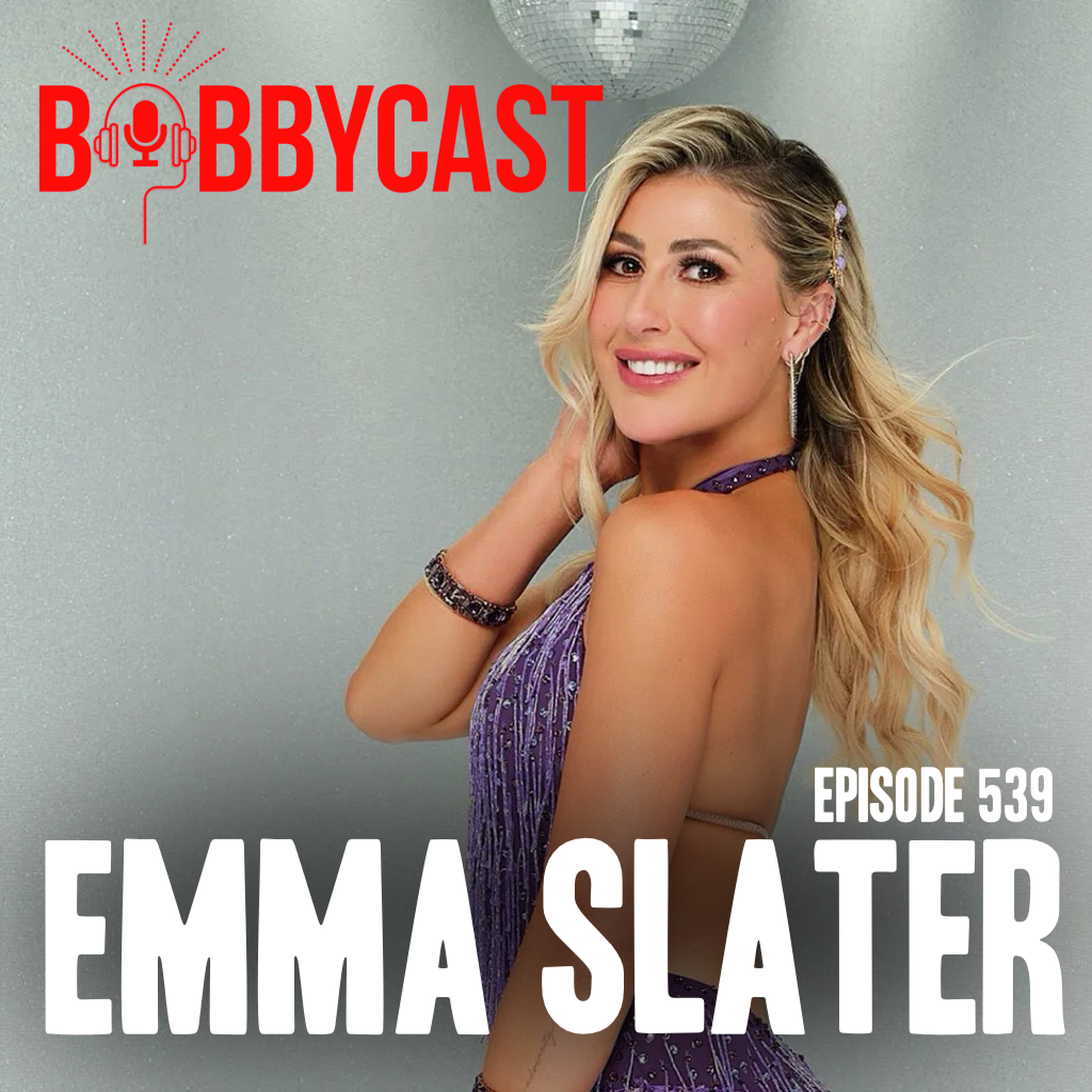
#539 - Emma Slater on Backlash over DWTS Partner Andy Richter + Behind the Scenes of the Competition + Randy Jackson on His Love for Luke Combs + The Most Unassuming Aspect of Contestants on 'Name that Tune' + Bobby Answers Most Asked Listener Questions
On this episode of the BobbyCast, Bobby talks with Dancing with Stars professional dancer, Emma Slater. Bobby and Emma know each other from Bobby's time on the show, so they reminisce on her reaction to getting paired with Andy Richter, and a behind the scenes of the show. Long-time TV judge and record executive, Randy Jackson also joins Bobby and tells him why he loves listening to Luke Combs, the first instrument he learned as a kid and the most unassuming aspect of contestants on the show 'Name that Tune'. And Bobby does another solo listener Q&A segment. He answers questions about the reason some members of the radio show work from his home studio, his greatest advice from Ryan Seacrest to stay in radio, how artists make money on concerts, and much more!
Follow on Instagram: @TheBobbyCast
Follow on TikTok: @TheBobbyCast
Watch this Episode on Youtube
See omnystudio.com/listener for privacy information.
Available Results
Generated results are saved to the knowledge database for reuse and search.
Extract Knowledge
Pick what you want extracted first. Model, scope, and chapter options appear after a template is selected.
Transcript
00:00:06
Speaker 1: Welcome to episode five point thirty nine with Emma Slater from Dancing with the Stars, one of the professionals, Randy Jackson from American Idol, Name that tune and then basically I do frequently ask questions, so FAQ's here at the end of this podcast, but I do want to start with Emma. She is the greatest. I just messaged her almost like, hey, will you come on? By the way, Dancing with the Stars premiered on Tuesday of this week, and it airs every Tuesday at eight pm Eastern and Pacific on ABC and then on Disney Plus. You can watch it as well, and so you'll hear from her accent. She's originally from England. She has a twin sister. We talked about that her sister is not a dancer. I don't know how long she danced, if she did it all, but to me different whenever twins aren't doing the same type of thing. I think her sister's a designer. But Emma was the friendliest to me when I would doing my season. She was there with John Schneider, he was the guy from Duke's Hazard, and they didn't last as long as we did. I mean I won so I guess except for three other people, nobody did.

00:01:12
Speaker 2: But she was so supportive because she.

00:01:14
Speaker 1: Knew I was struggling the entire time, and of all the people still left on the show.

00:01:19
Speaker 2: As far as professionals, she's what I root for. She is my favorite.

00:01:22
Speaker 1: She has won the show before, and I think I really got to know her a lot too whenever we were touring, because we worked out together, meaning we would dance up in the facility, and they have all these rooms that are close together, and it's not even that you're in the same room training, but you're in rooms that connect, and so when you go into the lobby to like eat or drink water or anything, that's kind of where you hang out. And so between that and then you know, just touring and when you tour, you're just on a bus. And I did a couple of shows and was out for like a week with them, So pretty cool. She has done so so much more than dance on Dancing with the Stars, which is kind of how you get to be a professional. You really have to be accomplished, and she talks about that in this and I think hopefully it gives people that maybe you're just casual fans of Dancing with the Stars a better idea of who she is. Again, she's such a great person, and so we're gonna start with Emma Slator and then we'll come back with Randy Jackson.

00:02:18
Speaker 2: Okay, here we go, Hello Emma.

00:02:20
Speaker 3: Oh Bobby, how are you.

00:02:22
Speaker 1: It is so good to see, although it's weird because I know we haven't spoken in a while. But since you follow people on social media, you feel like you kind of know what's going on with their life. So I don't feel I know, I don't feel like it's been like this long gap because I still am keeping up with you.

00:02:34
Speaker 2: But I hope you're doing awesome.

00:02:35
Speaker 4: I'm doing great. But you know what, I also think that depends on the people too. You're always so personable and we always got on so well that you know, when you just like, you know, oh it's Bobby. You know, you click back into like talking and friendship. It's like really easy.

00:02:49
Speaker 1: Well I wish I could see in person, but I'm so happy that you came on with me. Mostly, I kind of want to get an idea of two things. One, I was reading all the comments about how people were upset that you were teamed with Andy I love Andy Richt. I'm a massive fan. You saw the comments. What are your thoughts on how people are reacting? Do you being team with Andy? Well?

00:03:12
Speaker 4: I saw the comments and I thought my first thought was I really hope that Andy isn't disheartened by reading this, because for me, I think Andy is the best partner for me. I truly do. I have got to that point in my life. And also, I've done the show now for nineteen seasons. I know where my let's just say, like, my expertise are, and I know what I love to do, and I really love to see the improvement and the growth in my partners, and that's what I'm probably best at. I'm probably best at bringing out people that are not dancers, that are potentially even nervous to do the show and to give them the best possible experience. And trust me, all the pros give their partners and such an incredible experience and the best one that they could possibly do. But Andy, to me is the best partner. I love being partnered with the funny guys. I love being partnered with the personalities. I love being partnered with the people that have this special quality about them, and so I'm thrilled, and I always was thrilled that I had Andy as a partner.

00:04:20
Speaker 2: Do you think that that's why they probably do that?

00:04:22
Speaker 1: Is because they know that you will do so well with getting them at least like introduced to the regimen, and they may not feel comfortable because you are the most personable person of that whole crew, at least according to me.

00:04:34
Speaker 2: Do you feel like that's why they do that.

00:04:35
Speaker 4: I think that they know that I the producers, They know that I will lean into kind of the quirky I'm a quirky person by nature. Anyway, I'll lean into the fun, I'll lean into the into and everybody does, by the way, I just want to stress that everybody really does embrace the whole experience. I'm also potentially one of the more patient pro and it just happens that that's something that I really love to do and I get really excited about, like sharing an experience with a celebrity who is probably not a dancer and is more of a personality type. And so I think that's probably why they do it.

00:05:19
Speaker 1: There's such an important part of the relationship between the pro and the celebrity because if you do not have a dynamic that works, it can be miserable.

00:05:30
Speaker 2: Would you agree with that?

00:05:31
Speaker 4: Yeah, four hours in a room with someone if you're not connecting is really hard and it can be draining.

00:05:37
Speaker 3: I haven't really had that experience.

00:05:39
Speaker 4: I mean, obviously there's people that you literally line up the room and it goes really fast. So I feel very lucky. But you need to get on with your partner. You also just need to find out find a way to connect. And I think it's your your job as a pro to make your celebrity feel safe and find a way to connect with them and just talk to them and get to know them. When Andy and I get into the rehearsal room in the morning, we stretch. We get on those roll of foam things on my light just went out. Sorry don't look as cute now. But we get on the like fola roam things and we stretch and we talk and I love to know about his family. And what I really like about Andy is like he asked me questions all the time, like you know, how are you, how did you get started?

00:06:25
Speaker 3: You know, how is everything in your personal life?

00:06:28
Speaker 4: Like I want to see pictures of your house. He really likes to connect in that way, and then by the time we get up and dance, I feel like I'm dancing with my friend and my actual, you know, teammate in all of this and not just someone who's there for the common goal of like, you know, being on a show.

00:06:43
Speaker 2: You've done nineteen seasons. That is that's so many partners.

00:06:47
Speaker 4: Yes, off the top of my head. I don't know if that's accurate. I think it is. It's about nineteen seasons.

00:06:53
Speaker 2: Yeah, who was your first ever partner?

00:06:55
Speaker 4: It was Bill Engvil, who is a comedian again, comedian simil a type of age to Andy. So I was like, oh my god, he was my favorite. So I was like, oh my god, this is like Bill Engvill season. I'm so excited for it, and it feels I just love that type of person. It feels nostalgic to me. Bill Engvill is a comedian that used to work with blue Collar Comedian group. That was their name, I believe, unless my memory doesn't serve me well. And he was just like the loveliest guy. Would turn up in Volkswagen like you know van and was like quirky, a little bit surfer.

00:07:39
Speaker 3: It was really nice.

00:07:40
Speaker 2: You were in the troop before you became a pro.

00:07:42
Speaker 4: Yeah, I did three seasons of Troop, which I found to be really beneficial because it can be really mad.

00:07:49
Speaker 3: You know, the choreography part of.

00:07:50
Speaker 4: The show is really stressful and some people don't realize we have to handle the choreography. You have to understand where the cameras are in the room, and you have to direct your choreography so that it can be clearly shot and it reads well and it has the most impact. And there's definitely certain ways that you do that. So being on Troope really allowed me to watch the other professional dancers choreograph and work with their celebrity. It gave me a really good understanding of how the show works from week to week, who the producers are, what the room looks like, everything.

00:08:26
Speaker 3: I thought it was so valuable.

00:08:28
Speaker 2: How does it work where you find out the dance you're doing and then do you just have to start choreographing it yourself as soon as you hear the type of dance you're doing.

00:08:36
Speaker 4: Yes, the music plays a really big part of it for me, for everybody, Again, I think I think some people are different in the sense of they might have specific style that they want to go for. For me, I need to hear the music and then I can visualize certain things in my head and then I'll stand up. Sometimes it's embarrassing because I'll be at like a cafe and I'll get the email with the audio track on, and I'll just like listen to it because i want to make sure that it's okay and it's what I'm imagining. And then I'll get up and I'll try a few steps and then I'll remember I'm in Starbucks. Sit back down. But that's always been my life. But yeah, so it's really down to the music for me.

00:09:19
Speaker 1: So when you get to the room day one, a lot of times are you still figuring out what you're going to do while you're teaching that celebrity what you're doing? Is that ever part of the process?

00:09:30
Speaker 3: Yeah, day like day one of the show. Is that what you mean?

00:09:33
Speaker 1: Yeah, day one of like the week when you learn you're going to do whatever, Dan, if it's a jive and you have your song. Oh, when you go in that day one of practice, do you have it fully mapped out? Or do you have it mostly mapped out and you're figuring it out while you're in there?

00:09:46
Speaker 4: Bobby, Like, the goal is to have it like fully mapped out. But you know it's like stress City, so the show will be for us now. It used to be on Monday, now it's on Tuesday. So we come in on Wednesday and the pros have probably you've been safe the night before.

00:10:02
Speaker 3: You already have your music. You know you're going to do jive.

00:10:04
Speaker 4: Let's say you've already got it choreographed, because you need to have it choreographed before you go into it because you can't really just try things on them, like you need to have like a plan, so you can't try things and change it.

00:10:18
Speaker 3: But you need a plan.

00:10:19
Speaker 4: So you go in on the Wednesday and it's all choreographed. But the you know, production are trying to do a ton of interviews. You're also trying to get social. They've also had like a really long day the day before. All you're thinking about is like chucking this choreography into their brain so that when they go to sleep they have something solid to wake up to and then come in and build on the next day. You just have to like chuck things at them, and it's going to be kind of like disjointed, and a lot of changes are going to happen. For the first like three maybe four days, and then by the weekend you get into like really solidly running it and you have your dance.

00:10:56
Speaker 1: Who was the most advanced partner you had from the beginning where you thought, wow, they know what they're doing and we can actually change as the week goes.

00:11:04
Speaker 4: That would be James van der Beek. So I won with Rishard Jennings and he was excellent, no dance experience, but just had something very special. But James van der Beeek came into the show and he had done gymnastics before and he was an absolute danced enthusiast, had performed on stage, but not actually taught like learnt dancing.

00:11:32
Speaker 3: But he was just a natural. He had an ability, and he had a presence and he knew how to stand. So he loved it.

00:11:38
Speaker 4: He threw himself in it, and I thought, wow, like he was very trainable, he was flexible, he loved contemporary and so he was probably the most versatile dancer that I've ever had without even still having formal training.

00:11:56
Speaker 1: That reminded me because I was thinking, I was just talking to somebody about you.

00:11:58
Speaker 2: It was James.

00:11:59
Speaker 1: He lives in Texas now and I was in Austin and we were together and he was like, hey, you know Emma. I was like, I love Hima. Emma's like the one that I like that's on the show still that I care about the most. And he was like, oh my god. And we talked about you for like fifteen That's exactly who it was.

00:12:13
Speaker 2: It was James.

00:12:14
Speaker 1: I had no idea that he knew how to dance or that he had any background to dance at all.

00:12:18
Speaker 4: He had like it was interesting because he had a background in gymnastics, so he and he was just natural, Like he was the type of person that would, you know, again, be playing with his kids in the garden. And I've been to see him in Austin too, a beautiful place that they live in, like great ranch and the kids are like outside of the time, he'd be playing with them and he'd be kind of like moving around and dancing with them and just he would have no inhibitions when it came to movements. So it just made for an incredible mover, especially when it came to contemporary.

00:12:48
Speaker 3: You know, he just knew what to do.

00:12:50
Speaker 1: So who was it that started from the lowest And maybe they didn't win, but you had the most growth and maybe not even growth as a dancer, but you were so proud of when it was over that it almost made you emotional.

00:13:04
Speaker 4: Reginald vel Johnson last season, I mean, for me, he was and is somebody so special and he came onto the show was so endearing and again we connected straight away. And the second that I saw him move I thought to myself, this is going to be potentially the most challenging season for movement that I've ever had. But he was so lovable and so special that the gross that he had in the show, because to me, the show is a journey. It is a dance show, but people don't realize it's so much more than that the end of the day. It's an entertainment show at its core. So I believe that Reginald vel Johnson came onto the show and really made so many people fall in love with him with his charm and his personability.

00:13:57
Speaker 3: Is that a word personal work?

00:13:59
Speaker 2: You're English works?

00:14:00
Speaker 5: Yeah?

00:14:00
Speaker 3: An yeah, right, Yeah.

00:14:03
Speaker 4: I believe that he came on and just was so lovely and wonderful and game that even if he did and we did count it was sixteen steps in the first dance, I was proud of those sixteen steps. I was so proud of him no matter what he did, and we weren't nervous because I knew whatever he was going to do, it was he was going to own it, and he might forget some steps, but you know he was going to be there and who's going to give it his all and people would love him for it, and people celebrated that kind of quality in a person. So I was super proud of him.

00:14:36
Speaker 1: People will wonder what you're saying to your partner while you're dancing. What are you saying to your partner while you're dancing on television?

00:14:42
Speaker 4: Well, everything, So I'm saying the whole choreography. So we just Andy and I just did our wide shot. And you remember that, Bobby, that's that part in the week where you get that wide angle video of your entire dance to music so that the directors can map out all the cameras. So we just did our video where we did the dance to music, and you can hear the music, but you can hear me screaming on top of the music for the most part, and it'll be things like and I won't scream it at you because that would not be pleasant for your viewers. But it would be things like I say twinkle toes at one point because it gives him the visual of like fast feet, I say, tall hand on head, I'll say quick, I'll say have fun. Because there's a moment where I asked him, I said, what does this step? How do you become more free in this step? And he says, oh, it makes me think of having fun. So every time we get to the step, I say have fun and he does it like he really comes alive. So I need to keep giving him, and usually all my partners a lot of structure during the show, during the dance by you know, vocal cues, and it helps them. If I ever really stop that, it becomes a bit of a problem. I've tried a couple of times, but it's much better for them when they have kind of all angles like support at least at least like you know a lot of my partners.

00:16:01
Speaker 2: Did you start ballet at a young age?

00:16:03
Speaker 3: I did, but I can't really own that because I quit. I was five or six, and I have a twin sister, so we started together and we started ballet.

00:16:15
Speaker 4: But I just had so much energy. I just wanted to run everywhere. I didn't like how strict it was. You know, ballet can be really strict and regimented, and it was all about positions and I I wasn't ready for that kind of strict just you know, not being able to move my body. It was just the wrong form of dancing for me personally. So I decided. I told my mom that I didn't like it. I didn't want to go back, and I don't remember how long I went, but it was not long enough to get like a foundation. But then I started borom dancing when I was ten, and it was everything. I watched this girl drop into the splits and enjoying a performance, and I was like, oh my gosh, this is the best dancing ever. So then I signed up and and that was history.

00:17:01
Speaker 2: Did you become obsessed as a teenager where that's all you did?

00:17:04
Speaker 3: Yes.

00:17:05
Speaker 4: I was that kid in school that had, like, you know, the life that sounds awful, but you know, an entire separate life outside of school. So I had my school friends, and I actually really enjoyed school. But then I would just go and just be I'd slick my hair back and I'd be this really dedicated dance at the weekend like dancer at the weekend, and I would have to travel. My parents were amazing. They would drive me three hours in England. There's a place called Whole and that's where my partner would live and it was three hours away, so they would drive me sometimes on a school night and then back again. It was so much dedication from them that I owe them so much. But I was definitely that person.

00:17:45
Speaker 1: Yes, when did you realize you could actually do this as a career.

00:17:49
Speaker 4: When I was sixteen, I had like a predicament because I had some choices. I could stay on school and I wanted to do psychology, or that's probably what I would have chosen. I also wanted to go to a performing arts school in London, and I got in, but it was so expensive, really and I didn't want to put my parents through having to pay for that. And then, just as life does and life has you know, has you held, I got offered a touring show that was kind of like Indefinitely was a rolling on show that paid every week and it was really decent pay for me at the time as a sixteen year old. It meant that I could dance every day. I toured England and then we started to go internationally a little bit, and they also wanted to take my partner with me, my professional dance partner, so we got to practice every day. We didn't have to travel anymore. So I left school and that's what I did, And it meant that my parents didn't have to pay for my lessons anymore because I could practice with my partner and I could pay for them myself. And that's really That was my first ever job, and it was dancing. And so from there, an agent approached me and I just said yes. I just kind of said yes to opportunities as they came up, and I realized I had not really chosen it. It had chosen me, which sounds cliche. But I just kept going and kept dancing, and more opportunities kept coming up, and before I know it, I was a dancer.

00:19:21
Speaker 1: Was it odd for your parents for their daughter just to travel and tour as a dancer at sixteen, seventeen years old?

00:19:28
Speaker 3: It was really sad for my mom.

00:19:30
Speaker 4: She found it difficult to let go of me, and I remember specifically her dropping me off in London one day when I basically started my first day of this big job, and we say goodbye, and she was crying, and I remember it, and she still talks about it. She still says, oh, I left my baby so early, and it was ultimately it was the right thing to do.

00:19:55
Speaker 3: It really, to start so early.

00:19:58
Speaker 4: Into something I was so passionate. I was very fortunate. But it did mean that my parents and my twin you know, we were a family of four, and then all of a sudden, I was off and I was traveling and I was with a dance family.

00:20:11
Speaker 3: So it was a big shark.

00:20:13
Speaker 1: What do you say to people who have birthdays on holidays like my wife's birthday, it's like right after New Year's And so I've really tried to do a great job of separating the holiday from the birthday because it can get lumped in with the holiday. Now, this has been a big part of your life because your Christmas birthday.

00:20:31
Speaker 4: Right, yus. I'm so happy that you asked me that question. And by the way, say hi to your wife for me. Give her a big hug. When I was younger, me and my twin sister thought that having a birthday on Christmas Day was really cool, and then we realized, well, hang on, we're getting we're getting kind of jipped because everybody celebrates Christmas, which is great.

00:20:56
Speaker 3: You have the day off, but it's not really your day.

00:20:59
Speaker 4: And now I'm old, I'm getting older, I'm like, I really don't necessarily care that much for birthdays for my birthday, so it's good again. But yeah, we we used to have the thing where people would buy one big present for both of us for Christmas and for Birthday and then we just share it. I don't think at the time it was that big of an issue, but I don't mind it now I don't mind it. And I actually had somebody the other day tell me, oh, Christmas Birthday is really interesting because they said to me that the whole world has this very positive energy on Christmas morning. I was born on Christmas morning has this really high energy because it's Christmas Day and the kids are waking up and they're so excited and it's just everybody's kind of at peace.

00:21:47
Speaker 3: And then when you're born on that day, you kind of like take that energy with you.

00:21:51
Speaker 4: And I was like, oh, I would love to think that, but it comes with its challenges.

00:21:57
Speaker 3: But you always have the day off.

00:21:59
Speaker 1: Yeah, that's a good point. You always have the day off. Yeah, yeah, that's good. It's tough though, because I really and my wife's the same. She's not a big birthday person. But as you get an adult, right, it's not as much about the cake. It's mostly about the people that you love. But I still try to do a great job at separating them because I do want her to feel like special with it being her day. And I know in school she was not at school when it was a birthday and everybody was just like, well, your day. Your birthday's at right after New Year's so we'll just celebrate it all together. But I wondered how you dealt with that as a kid.

00:22:28
Speaker 3: Yeah, that's hard.

00:22:30
Speaker 4: I'm so glad that you to like separate it because it's nice to do that. I don't really know what it feels like to have a birthday. It's really just Christmas for me.

00:22:39
Speaker 2: Oh no, that's so sad.

00:22:44
Speaker 3: I love it. It's what's It's fine.

00:22:46
Speaker 4: I have my twin and we like it's funny because we like at our ages up.

00:22:51
Speaker 3: Together, so we always say, oh, we're seventy eight, you know.

00:22:54
Speaker 1: So a couple more dancing questions now as far as the show, and I was talking to a producer friend of mine who works at a different network, and he was like, hey, when you did that show, did you know? And I was like, I knew nothing the whole time, Like they keep everything from me because there are actual laws, because you're competing for money, Like you don't really know anything as it's happening.

00:23:13
Speaker 4: Right, No, we don't know anything as it's happening, for sure. I mean I feel like, are you're talking about the producers.

00:23:21
Speaker 1: I'm talking about you knowing where you finished, how many votes you got, if you're in the bottom before they tell you.

00:23:28
Speaker 2: If that you know, you know nothing? Right?

00:23:30
Speaker 5: Oh?

00:23:30
Speaker 4: No, no, nothing. And so when you're standing there, you know when that music comes on at the end of the night and it's like elimination and they put the red music on. It's so dramatic. You really are finding out at that point, you know, if you're in the bottom two or if you're going home. You know nothing beforehand, there's like no leaks, nobody tells you anything. And then I've never they're so good the dancer of self producers. I've never had any known any information about where people's votes were or where you stack up. It's kind of like just blind, you know, you're just dancing and you're hoping that it works out.

00:24:04
Speaker 3: But people don't, you know.

00:24:06
Speaker 4: The voting is so important, so important, and it literally makes or breaks people. And I've heard scenarios where you know, it might have been so close, but for some reason, this person had like a massive jump in the votes and it ended up saving them. So we hear situations like that, but we never hear any information about where you are placed.

00:24:28
Speaker 3: In the competition. We just don't know.

00:24:29
Speaker 4: And even the leaderboard, you can't really base it off of that because no one knows what the votes are.

00:24:34
Speaker 1: Whenever you won with Richard, do you remember them announcing your name as the winners.

00:24:38
Speaker 4: Yes, it's so funny that you say this, Bobby, because go back and watch it. Okay, I want to tell you a story when when they announced this as winners, I was standing with Rishard on Tom Bergerard's Bergeron's left hand side, and right before they announced it, my like, I mean, maybe four seconds before he says our name, my body starts doing this weird like celebration and my mouth and you.

00:25:07
Speaker 3: Can see it for a split second. My mouth kind of goes and then I stop, and then I'm like, why, why did I do that?

00:25:13
Speaker 1: Why?

00:25:14
Speaker 3: Like I just did something really weird involuntary.

00:25:17
Speaker 4: There was this surge of energy that did this and then I and then I went back down because I realized there's nothing's happened, like you're you didn't hear anything. And then and then they said our name, and then it went back and watched and it literally is just a little it's a little mouth thing, but the energy at that point that I felt.

00:25:36
Speaker 3: Something my body.

00:25:39
Speaker 4: Something happened where I maybe heard them in the boost into the earpiece or something, but my body started celebrating and my mind had no idea.

00:25:48
Speaker 3: What was happening. It was like the weirdest thing.

00:25:51
Speaker 4: And then, of course the pictures they take and I don't know if this is your experience too, the pictures they take of you when you win. I looked at Trocia like my mouth was, oh, I was screaming. I looked like I was like scared some really bad photo. But Rishad deserved it so much, and he looked like, you know, he just put his arm in the air and it was such an amazing moment for him, so and deserved it like a lot. But you know, did you have the same experience where they took a picture of you after you won and you were like, oh my gosh, I look crazy.

00:26:24
Speaker 2: Ah yeah, all of it felt crazy.

00:26:26
Speaker 1: I just I have shocked eyes in every picture because I was genuinely shocked. So my eyes are a little too wide open in every single picture because I'm like, wait, what is this some sort of prank show? Because even I felt that, so yeah, it was all. It was all bizarre, Like I remember too, Yeah, like hearing when they said my name, all I heard was and I was like, oh my god, Yeah, that was it for me.

00:26:50
Speaker 4: It's an amazing feeling, you know, when you've gone through so much work and then you're there at the end and you're just hoping that they say, you know, the start of your name and then you can just like celebrate and have Thanksgiving and then rest.

00:27:04
Speaker 3: Finally. It's such an amazing experience.

00:27:06
Speaker 1: Well, I wish you the best of luck and the best of health, and I'm rooting for you whoever you get. Oh, by the way, let me ask this question last question. And it's like so much kindness combined with you and Alan now dating.

00:27:20
Speaker 2: What what the heck? You guys? That's awesome.

00:27:24
Speaker 3: Oh, thank you so much.

00:27:25
Speaker 4: Yeah, it's great, and it's it's gonna be a really fun season. We're going to be able to support each other through both of our partners.

00:27:32
Speaker 3: But yeah, thank you so much.

00:27:34
Speaker 1: Yeah, Alan's like the kindest guy too, So rooting for you in life more so than the show, but rooting for you on the show. And I hope you have a great season. Emma, thank you so much for coming on the show. And hopefully I will see you soon.

00:27:44
Speaker 3: Yes, hopefully see you soon. Thanks Bobby.

00:27:46
Speaker 6: Let's take a quick pause for a message from our sponsor, and we're back on the Bob Cast.

00:28:01
Speaker 1: All right, So this is an interesting one. So I love Randy Jackson. I can tell my Randy Jackson story of him just being the nicest guy. I would almost picture like Forrest Gump whenever Forrest is getting on the bus and everybody's like, can't sit here, sit here, So he's taken. I was going up to be one of the judges for the Miss America competition. I didn't know anybody, and I flew in by myself.

00:28:25
Speaker 2: I got there, I got picked up.

00:28:26
Speaker 1: They're like, okay, you're gonna go get on this bus and you're gonna go and learn how to be a judge, and I'm like great, So I go and I'm walking on the bus and there are all these other judges and a lot of them are celebrities. And it's not that they weren't nice, but they also didn't know who I was. It's not like I'm as famous as even they were. But the one person who was like, you can sit here, my Jenny was Randy Jackson, and he was so nice. He's been super nice every single time I've been around him, and so we were gonna have him on to talk about celebrity Name that tune, which I did watch this past week.

00:28:57
Speaker 2: He did oddly. I don't watch.

00:29:00
Speaker 1: Anything, and I was on YouTube TV and I don't even go to the live part of YouTube TV for the most part unless its sports because it has my first like four things up. It's always sports. And I was flipping through and it was on, and so I watched some of it.

00:29:13
Speaker 2: Would you be good at it? I'd kill.

00:29:16
Speaker 1: One of them was Sheryl Crowe. All I want to do and they were like, can we do this in four notes? And they missed it and the next person got I was like, I got it in two because they give you a clue as well. So I think on the clue I would get it.

00:29:30
Speaker 2: That's the game. I think that I would be the greatest.

00:29:32
Speaker 1: I think i'd be better at that than Jeopardy because Jeopardy i'd only be pretty good. With our crew, I'm good, I think normal crew. I'm good because I like, I don't want to say trained, but that's what I did. My whole high school was trained for trivia. So I was just studying any kind of question. But man, i'd be so good and name that too, and I think, so.

00:29:51
Speaker 2: Yeah, the show was on, it's really good. Check it out.

00:29:53
Speaker 1: But what happened was is we were going on with Randy. I saw him drinking lemon water. Did you see it? Yeah?

00:30:00
Speaker 2: I think you limonwater and a thing of tea.

00:30:03
Speaker 1: He was double fisting maybe, and I thought, I know that that means either your throat hurts or you're losing your voice. And so he comes on and you're gonna hear he had no voice, and about forty five seconds into it, in my mind, I'm like, we gotta get out. I don't want to torture him with continuing to talk to him about stuff when he can't even talk. But he was gonna stay on the whole time. This is a very short interview, but you're gonna hear him try and then me just go like, all right, there it.

00:30:30
Speaker 2: Is, Name that tune. Check it out.

00:30:31
Speaker 1: But I do love Randy Jackson, and I'm sure we'll get him on again at some point. But extremely accomplished career, more so than just American Idol, although he was the longest serving judge on the show twelve seasons because the other two had left and he stayed on for a while. But here he is, and you guys can follow him at Randy Jackson on Instagram.

00:30:50
Speaker 2: Here he is Randy Jackson. Randy, good to see you, man.

00:30:54
Speaker 5: What's going on? Brother? How you beating? Man?

00:30:56
Speaker 2: I'm good? Hey. Where are you right now?

00:30:57
Speaker 1: Looks like you're in a fancy bathroom.

00:31:00
Speaker 5: My kripp in la. Man, it's got this great oleigraphy behind me.

00:31:04
Speaker 2: Yeah, it looks cool.

00:31:06
Speaker 1: So let's talk a little bit about the task at hand first, which is I love named that tune. I love when you guys did it non celebrity. I love with celebrities. Do you find working with celebrities that have like a background in an art, like they know music a little better than you would think.

00:31:21
Speaker 5: Well you would think they do, but some of them don't. It's really weird. It's a weird thing. It's hard to predict. I find that people that are most un assumed, those are the ones that know.

00:31:31
Speaker 1: Everything, most unassuming, like they accidentally know or they studied music.

00:31:36
Speaker 5: Well, they accidentally know that they live. You know, you can tell who loves music. You know what I mean? Do you love it? I know a lot of people listen, but do you love it? You love it? You'll dig deeper. You read the credits, you'll understand the lyrics, you really remember the titles.

00:31:52
Speaker 1: With you as detailed as you've been in music at all the different levels.

00:31:56
Speaker 2: Do you still love new music?

00:31:59
Speaker 5: Still? Do? Man? Fact by Jam I'm pumping right now. It's called Back in the Saddle by Luke Holmbs. That's a good one, great record, great great song, amazing.

00:32:10
Speaker 2: What is it about Luke Combs that you find to be interesting or that song? Even?

00:32:13
Speaker 5: To me, he's the epitome of all in new country. He's just pure raw. What you see is what you get. Crazy voice, it's just the track, the music to production, everything I love about it.

00:32:27
Speaker 2: With name that tune, like how detailed?

00:32:30
Speaker 1: Is it for you behind the scenes with because I know you're the band leader, but you're also like the guy, you're the face of the show as well, So like, how much influence do you have on what's going to happen on the show?

00:32:39
Speaker 5: Not a lot of incidents on what's going to happen because the songs are random d chosen, but the music and the arrangements we dig deep, we dig really deep.

00:32:48
Speaker 1: Are you able to look at sheet music and can you picture music in your head by just seeing it instead of sitting there and playing it? Can you can you look at music and know what exactly what's going to sound like?

00:32:58
Speaker 5: Yeah, there's a course you taken from you a music major ll sight singing, meaning that you got to hear it and write it down, not from a note, just some hearing it and writing it down.

00:33:11
Speaker 1: Was that something that was easy for you or is your music history like took at.

00:33:17
Speaker 5: It took a while? Pro really did it took a while?

00:33:20
Speaker 2: What was the first instrument you picked up?

00:33:22
Speaker 5: And then I hopefully drums first, then guitar, then based in saxophone, then back to bass.

00:33:29
Speaker 1: When you said you wanted to play drums as a kid, were your parents or whomever, like, I don't know, that's awfully loud or were they super supportive?

00:33:36
Speaker 5: Well, they were really supportive because my brother was older than me, was a drummer.

00:33:40
Speaker 1: Usually with family dynamics, another person will play another instrument. It's interesting that you also played the drums even though your brother was playing drums, but only.

00:33:48
Speaker 5: In the beginning. Then I switched completely to guitar. Then I went to based into saxophone. So it was a tradition, a trajectory. I guess I was inspired by him because he used to for my parents' garage. It's a little bad. So I was like, whoa, this is cool. Trump's to be I feel.

00:34:06
Speaker 2: It with name that tune? Do you guys go and shoot in another country?

00:34:10
Speaker 5: We shoot in Dublin?

00:34:11
Speaker 1: Iron?

00:34:12
Speaker 2: Yeah? Yes, what's that like?

00:34:14
Speaker 5: Blast? You know? Like the first crowd loves the show, they love us. Love's come over there, have a good time. It's great. The energy from them is amazing, Like yelling at ac DC songs.

00:34:30
Speaker 2: How long do you go over there and stay?

00:34:32
Speaker 5: Three four weeks?

00:34:33
Speaker 2: Do you like know the town?

00:34:34
Speaker 1: Now?

00:34:34
Speaker 2: Do you know Dublin like you have your own places?

00:34:36
Speaker 5: Yeah? Yeah, definitely, definitely know the restaurants, and we know it pretty well.

00:34:40
Speaker 1: Now.

00:34:41
Speaker 5: I'll over this since season two. Season two was our first one there and there ever.

00:34:46
Speaker 1: Since September fifteenth is the premiere. It's on every Monday. Baby, Yeah, yeah, Well, I hope you have a Yeah, I hope you have a ton of success. I love the show like I love again. I've loved all iterations of it. I think the celebrity element adds a new flare to it.

00:35:04
Speaker 2: And Randy, thank you for the time.

00:35:06
Speaker 1: And I hope you guys killing the ratings and you're able to do this for many more seasons.

00:35:09
Speaker 5: Reading one more thing, I mean you to come on and play against Ryan Steakrest.

00:35:14
Speaker 1: Come along. If you can get Ryan to do it, I will fly over and do it as well. That would be awesome me and Ryan. I feel like I'm pretty strong musically, but he also has been around and done music for so long.

00:35:26
Speaker 2: I'm in. If he's in. You tell Ryan if he's in. I'm in.

00:35:29
Speaker 3: The duels in the finish, let's go.

00:35:32
Speaker 2: We'll gamble our paychecks, mine versus his.

00:35:36
Speaker 5: Wow.

00:35:36
Speaker 1: Okay, I got a lot more to win. That's why I would do that. I got a lot more to win if I win his all right, Randy, thank you for the time, good luck with the show, and hopefully i'll run.

00:35:47
Speaker 7: It to you soon. Thanks for the group to see you all right, see you, Randy. The Bobby Cast will be right back. This is the Bobby Cast.

00:36:04
Speaker 1: And finally I got on Instagram and said, hey, what are the questions that you guys want to send in in like the five or six that I get the most, I'll do an faq here that was a little more elaborate than what I do just online when you just write on a single tile. So here are some FAQs and that's what's up. So I got on Instagram and I said, hey, send a question, which is pretty normal, and I said the seven or eight that I get the most, I will answer here and maybe with a little more depth because on Instagram I really only have that one page that I can write. So these are the questions that were asked the most. This one's from Chelse, not Leney, and it was asked a bunch of times. How can I come work for you and your team? Now I get this message a lot because I often say that I'm always open to hire somebody, but I'm never looking for anybody, and kind of a weird juxtaposition between those two things. I don't need anybody right now for my team. But if someone is like, hey, I have all these skills. I'm great at lighting, I'm great at editing, I'm great at and I would like to come and work on your team. Is there any chance that you would look at me? I absolutely will. I get a lot of resumes from people going I've never actually done anything in your area, but would you consider me because I'm really driven? Sadly that answer is no, because there's a lot of really driven people.

00:37:28
Speaker 2: And my advice would be to find and learn.

00:37:34
Speaker 1: And invest in a skill, Like if you wanted to come and work for me, it's not even just about radio.

00:37:39
Speaker 2: It'd be very little about radio as a matter of fact. Like I don't pay the radio show.

00:37:44
Speaker 1: That's the company, which is why I don't pay the radio show bonuses because we all get paid by the company. But like my personal team that I pay, and now that team has gotten a little larger, it's people like me Brandon read kick off Kevin in a capacity you know, he does some hybrid work both sides. You know, I have a full staff that works with me on projects outside of the radio show.

00:38:13
Speaker 2: And I'm always open to hire anybody.

00:38:15
Speaker 1: If you come and you say, I got this crazy good skill, I want to join the team.

00:38:19
Speaker 2: What do you think.

00:38:19
Speaker 1: I may not hire you full time at first, but I'm always looking for somebody. But I'm never looking for anybody that just is a go getter, because I don't need a go getter. I got like thirty two go getters already. So that's the answer to that, And that is the question that I get the most. But my advice would be there is to go and develop a skill and then present that skill to whomever. It doesn't have to be me. I'm just using it because I get this question so much. Next question from fire Nice twenty twelve. Realistically, how much longer do you think you'll do the show? I think it's a great question. My easy answer is forever in some capacity now, God willing that I have the health to do it. I think I will do a version of whatever I'm doing forever because I enjoy doing it. I also think that's where my success comes from, is that I enjoy doing it and I've never chased money. And I was talking with an artist friend of mine. We were talking about money. We were kind of having an existential crisis just on living in a creative space. And it's so much more unpredictable now than it's ever been. There is no chance to hit critical mass anymore, which I would say, like five years ago, I was starting to hit that edge where I was hitting critical mass, meaning.

00:39:36
Speaker 2: I was starting to flirt with actual fame.

00:39:40
Speaker 1: Never got famous, like, I never got to be that successful where everybody.

00:39:44
Speaker 2: Knew who I was.

00:39:45
Speaker 1: But it had a run of like three or four years where I was doing American Idol or Dancing with the Stars, and that was turning into my own TV shows on that Geo or Peacock. The radio show was still the biggest thing by far, and that was feeding the success that the and I was in a lot of places, and I got very close to reaching that critical mass to where they could actually do research on me with Jen Pop. It's almost impossible to get to that point now because everything is so fractured. There are so many services. You don't have to have a TV show to be famous. In fact, what I've done over the past I would say two years, is heavily invested into my own project and projects because.

00:40:31
Speaker 2: This business is very fickle.

00:40:34
Speaker 1: They might like you today, they may not like you tomorrow, so they may fire you tomorrow, especially in television. I remember once talking to Ryan Seacrest, who's probably the most successful television person well alive right now, but maybe in history at times different Like Dick Clark was on for like fifty years there are like three channels, But Ryan's approaching that now. And he was asking me kind of the same question, like how long do you want to do this?

00:40:57
Speaker 2: And I said, I think forever. I believe.

00:41:00
Speaker 1: We were both in Hawaii do an American ile together, and he was a man. Always do radio, he said, because that's not fickle. He's on these television shows. New Boss comes in, You're out. You know, these shows get picked up year to year, Like rarely are there two and three year deals on these TV shows, Like there's season to season. He was like, stay and focus so much on the radio, which means audio, which means podcasting, which to me, that's all radio is, is like audio that comes from your phone. So when I say radio, that's what I mean. So I want to do this forever. However, and I talked about this in one of the last podcasts that I did, not the last one with John Fogerty, but the one before. I don't think I can go at this pace forever. Also, I do too many shows I just do right now. I do too many shows between and I don't have to walk all the way through them. But the Bobby Bone Show, the couple of sports shows, this show, the Interview show. I could keep going going, there's no way that people want to listen to me that much. There's no chance. I don't want to listen to me that much. My wife doesn't want to listen to me that much. So I can't keep going to this pace because one, I don't have the energy sometimes, and it's not just getting on a microphone and talking, but it's constantly having to think of new things for new shows, and multiple new shows a day, and yet it's not working at the mill like my stepdad did. I get that, but it doesn't stop. I've got to always come up with ideas and then execute them and sometimes not good. And I don't really have time to focus on how to get better at something, cause I got something else coming up. I can't go at this pace forever. But while the sun's out, you know, I get a suntan. That's what we're doing right now, that's not really that same.

00:42:47
Speaker 2: But forever, I hope.

00:42:50
Speaker 1: But also I could be fired tomorrow and I would keep doing this. Like the great thing about now in the media is there aren't as many gatekeepers and I wouldn't make as much money, at least not at first. But I would just flip up a camera though on a live hit record on little screen, and then you can put out a podcast and you have your audience. You'd have to rebuild some of your audience, but I think I'll do this in a capacity in perpetuity, hopefully forever. But that's the answer there. I still really enjoy My favorite thing is they're doing the radio show. I don't like the hours of it. At times, I feel like there are too many voices, too many microphones like that happens sometimes, but it's still my favorite thing to do. But thank you for the question from Christianwolf dot eighty nine. When you do the show from home, why is only Amy and Eddie there? And I got a few of these, and I think this is a great question. And I don't think about this stuff because I know the answers. But I'm glad you asked this. So at my home studio, there are only so many seats. We basically have four places for a microphone. We don't even really have four for a camera. We kind of have two places for a camera and sometimes we make that third camera work. But of the four places, there is the production like stand where Mike D stands. When we're shooting from my house, there really are only two seats for host and co host, which is Amy and myself, and then there's another spot with a microphone that we have to turn a camera on kind of sideways, but that's where Eddie runs the cameras. So it's very much a broken down studio with only about half of us when we work from my house because there just aren't enough seats. Also, there's not enough parking in my house to have eight people. But we really don't have enough microphones or places for someone to sit while doing the show because we have to have Amy here, we have to have Mike D here, and we have to have cameras run and that's what Eddie's doing, and obviously I have to be here and why we record from my house Sometimes it could be many things. It could be I have a doctor's pointment at eleven, and I understand that I can work till ten forty eight from my house and get to the doctors pointment on time, rather than if I have to go from work, get out of the parking garage and it takes me twenty five. Sometimes it's just issues with timing. Another example would be Dave Ramsey is going to do a Bobby cast with me. I don't know if it's next week or the week after, but when we do that, because of his radio show, he only was able to get to a studio at ten thirty. Now, if I were to do the show downtown, which is a big studio, I would not be able to do the full show and then drive twenty minutes home, get set up have Dave Ramsey. But what I can do is do the radio show untill ten fifteen. It's over. Dave Ramsey slides right in and we do an hour. So a lot of that's timing stuff, and that's why a Morgan or a Lunchbox Ray can't work here because he has to run the board. But that's why it's us. And also sometimes with Eddie we roll into podcasts right after, and it's just easier if Eddie hops into Amy's chair if we're doing one of the sports shows.

00:45:58
Speaker 2: But I appreciate that question.

00:46:00
Speaker 6: Let's take a quick pause for a message from our sponsor, Wow, and we're back on the Bobby Cast.

00:46:15
Speaker 1: Here's one from Kristen Corcoran. How do artists make money from concerts? There are a couple of ways, and I'll use me as an example here. Way number one is I would say, hey, I'm going a tour, and so promoters would come to me and go, Okay, we're gonna pay you seventy five cents if you'll come do this show. And so they're gonna pay me seventy five cents, and they're gonna rent the whole arena, or they're gonna rent the theater and they'll pay a dollar. So they have a dollar seventy five in right now, and they're gonna try to make two dollars. So I'm getting my guarantee of seventy five cents. They're paying their dollar to rent the place, and then they're gonna try to make at least two dollars on all in. So they're just trying to make more than they're spending. But that's really what it is. It's again guarantee from a promoter. At least that's how I got money from my shows. Now, you could sign an overall deal if you're a big artist, like with a Live Nation or something, and they'd go, we'll give you ten million dollars and you do fourteen shows for us. You still got to get yourself to and from. You know, there's still all the costs. But you can take an overall deal for like an entire tour as well. But that's really the two ways that I'm familiar with that artists that are mid or big you get a guarantee and so that's the money you're getting from the promoter, and then the promoter's.

00:47:27
Speaker 2: Trying to make money from ticket sales.

00:47:29
Speaker 1: Now, there is a point too in my ticket sales where if I had like over eighty five percent, I would then get a percentage of anything over eighty five percent. So I hope I explained that good. But that's kind of how you get paid now. There are also when you're starting out, you can just get the door. It's like I will play here and I'll take the door, and you get the alcohol. There are a lot of little scenarios like that, or a bar can just pay you like two hundred bucks and then you make tips, or you just make tips. They're all those ways. I feel like that's pretty good. Here's one from Leah Rose. When did you realize you kept calling Dusty by the name Bradley on the last podcast. Yeah, I'll explain this because I did it one other time too, Bradley with my dog before Dusty. We had been talking about Bradley on the show because that was the dog that my stepdad said they had to give away to his buddy.

00:48:15
Speaker 2: At the farm.

00:48:16
Speaker 1: Turns out that wasn't true, and I just had Bradley on my mind whenever I was talking about Dusty. But I appreciate all the messages. I got ten million of them. What kind of music do you listen to the most? I think we all have our familiar music from when we were like fifteen to twenty two that if we're not listening to new music, we just kind of go to it. And for me, it's mostly John Mayer Counting Crows. I have a whole list of early Casey Musgraves type stuff.

00:48:51
Speaker 2: But that's kind of it.

00:48:53
Speaker 1: You know, there's moods that I get into that's like classic rock, moods, and so I've got a playlist for that, and I could kind of just show you some of these playlists.

00:49:04
Speaker 2: That I have.

00:49:05
Speaker 1: But I've got like a nineties pop rock playlist that I listen to a lot, and one that I've even put together myself. I've got a seventies and eighties acoustic list that I've put together for me, Like when I'm working, it's Tom Petty free Fallin' Fleetwood, Mac Landslide Eagles like four songs, Phil Collins in the air tonight. I'm not a big Bruce Springsteen fan.

00:49:30
Speaker 2: But I do have.

00:49:33
Speaker 1: I'm on fire Jam, so kind of that if I'm just sitting in my computer working, it's kind of that. It's like a sixties, seventies, a little bit of eighties acoustic. But if it's artists based, it's John Mayer Counting Crows or Casey Musgraves.

00:49:52
Speaker 2: How do you arrive at show content? Each day?

00:49:59
Speaker 1: I keep a note app in my phone and I know, you guys that are listening, you won't be able to see this, but.

00:50:07
Speaker 2: So on my phone, I have all of these.

00:50:11
Speaker 1: And so I have one tab that says lots to say, and I keep notes. Now we just finished recording lots to say, so I've exhausted a lot of the notes, but lots to say. Is my NFL show I do with former NFL quarterback Matt Castle, and I have notes should a Sanders not wanting to be a raven?

00:50:29
Speaker 2: What's it like? First week as a backup? Now starter?

00:50:31
Speaker 1: Because that happened with the Bengals, and also that happened with Matt Castle because he's the guy that went in after Tom Brady got hurt. I have the Kansaity Chief schedule, so this is for one show, and I constantly keep notes inside each of these areas. So another one would be the Bobby Cast, which is what I'm doing now.

00:50:51
Speaker 2: I have so many notes on this.

00:50:56
Speaker 1: I have one note about a radio and I'm not sure what city it was in because stations will do liners sometimes and they'll like sometimes there's like BOBFMS, like BOBFM, we love to eat wheaties and they just say weird stuff and that's all fun. But there was one country station that was like, at least our morning guy doesn't wear a cardigan every day, and I was like, obviously, that's it me. I just didn't understand it, like what's wrong with a cardigan? And secondly, this is my longest bit ever. Every day for a year at work, I've wore a cardigan. I don't think I've ever worn a car again in my life until I just decided one day I was gonna wear a cardigan every day for a year. It's my longest bit. It's not even that funny. I just love doing it now. Also, it's so much easier because I don't have to worry about what I'm gonna wear. I have like twenty cardigans, some of them nice, send them not so nice.

00:51:56
Speaker 2: And because we record sometimes.

00:51:57
Speaker 1: I wear the same cardigan like three days in a row, so you don't know which day I recorded.

00:52:01
Speaker 2: But I didn't really understand the.

00:52:02
Speaker 1: Station making the joke about our guy doesn't wear cardigans.

00:52:06
Speaker 2: Like, in no way am I insulted by that.

00:52:09
Speaker 1: So you just made me feel like you're talking about me, which makes me feel good because that means I'm on your mind. Like if you were to make fun of my looks or something, at least I would respect that and go, Okay, they're taking a shot at me. They're making fun of me. Yeah, that's a weird one though. Also in the bobbycast notes, I've got song lyrics that I thought were interesting.

00:52:30
Speaker 2: I've got a list of the best lead singers.

00:52:35
Speaker 1: I have all these little stories because I like historical facts and I like to write on how they affect me based on decisions I've made in my life. And I'll give you one here. This is, Oh, you're gonna think this is so boring. Maybe the story of Ulysses S. Grant and the power of no reaction. And what's funny is this is kind of what I was talking about just a minute ago.

00:53:05
Speaker 2: And I didn't pull it up for this reason. But when Ulysses S.

00:53:08
Speaker 1: Grant was a president, he was not the most polished guy.

00:53:13
Speaker 2: He was not a great speaker.

00:53:16
Speaker 1: He didn't love politics, and a lot of people criticized him for that, and sometimes to his face. One story goes that a man insulted him in public in front of a lot of people, and he did it to provoke him, wanting to get a response, to show that he was weak. I think most people, most politicians, would have snapped back, they would have argued, they would have defended themselves for sure.

00:53:40
Speaker 2: But Grant he didn't do that.

00:53:44
Speaker 1: He sat back. He always smoked a cigar. So he continued to smoke a cigar and the guy just kept ranting. And so when the guy finally stopped, because you can only talk for so long, Grant looked at him and said, you know what, I agree with you, and then Grant walked away. It drove the guy bananas. And when I read this story, I was like, dang, that's awesome. But one, it's so hard to do. Two, Grant had every right to clap back. He had power. He was smarter than this dude. He could have had somebody else do the clapping for him, but he didn't. He was freaking president, the power that you have as president. So he had the power of the platform. He had the authority, but he chose silence, not to get defensive, not to fight. And the thing is people noticed. They noticed he wasn't reactionary. They remembered that he was calm even though someone was trying to trigger him.

00:54:53
Speaker 2: And so.

00:54:55
Speaker 1: Just me talking about that Cardigan thing, because I didn't really plan to talk about it in this.

00:54:58
Speaker 2: Order, that makes me think about that.

00:55:01
Speaker 1: And we also live in a world where everybody wants a last word or the last word, or they want the mic drop, or they want the viral comeback, but I think a lot of times the strongest move is no move at all, because you're giving someone the satisfaction of knowing they get to you. And I think the takeaway with this story for me is that you don't have to fight every battle. Sometimes the most powerful response to negativity really is no response at all. I'm not a cigar smoker, but metaphorically speaking, just keep smoking your cigar, keep moving forward, and don't worry about other people making fun of your cardigans. That's what I think. Had a friend called me yesterday in the artist world and he's like, Hey, this other artist is provoking me. And you know me, I love theatrical conflict. We did a whole episode on What's Happening right Now with Zach Bryan and Gavin.

00:56:04
Speaker 2: Adcock and that's funny to me.

00:56:06
Speaker 1: Because it ain't real. It's real to them right the second, but it's not real life real. And I've predicted that in like three years are going to do a song together, maybe before that, And he said, I got a text from this person who's also an artist and they're talking garbage, like what do I do?

00:56:25
Speaker 2: And I said, well, do you want to do? Something. They were like, not really, are you offended?

00:56:30
Speaker 1: Not really? Will it bother you if you don't say something? They said, not really, I said, then say nothing, because it's going to drive them the craziest if you do nothing to them provoking you. And so he didn't, and he's so much going to win this little battle of it's not even really a battle, it's a one side of battle. But I've been in a lot of these little little skirmishes, so I do feel like I have a good advice when it comes to that. But sometimes the best thing to do is nothing at all. I'll give you one more. And this is the answer to your question. How do I do my content? I keep it all in tabs, and I'm constantly feeling. And if I got an idea, I go, what tab do I put it in?

00:57:18
Speaker 2: This is called let's call it, seven near deaths and a lottery ticket. So there was this.

00:57:25
Speaker 1: Guy from Croatia named Frayne. Some people say he's the unluckiest man ever. Some people say he's the luckiest man ever. And it all depends that your perspective towards Frayne. So the story goes, he survived a lot of disasters. Now listen to this. His train deralled into a river. That's not his fault. He's not driving the train, but he's on a train. It goes into the river. He lives. Some other people don't.

00:57:52
Speaker 2: But he lived.

00:57:54
Speaker 1: A plane he was on ran off the tarmac and it was basically a plane crash.

00:57:59
Speaker 2: Now it wasn't one.

00:58:00
Speaker 1: It was in the air that crashed, but people got hurt. He was in a plane crash, a plane incident, he lived. He was in a bus crash, a bus fell off the side of a cliff.

00:58:12
Speaker 2: He lived. He was in a car accident, he got hit by a truck.

00:58:17
Speaker 1: He was in another accident where he skided off a mountain road, but somehow landed in a tree and walked away. All in all, this guy Frayan had seven near death experiences in total, So extremely unlucky guy had some injuries for sure, but didn't die. And then after all that, he won the lottery. He won millions of dollars in the lottery. So this frame dude has been in all these accidents, has almost died all these times, very unlucky wins the lottery. Now you hear that story and it makes you wonder, was he cursed. Was he blessed? I mean both sides are true. Yeah, he was cursed. All these things happened to him. Most were out of his control, all the crashes, all the near deaths, But he did hit the lottery and that is unbelievable luck. And I think that's a lot like life. I mean, most of us don't go through sven year death experiences. I think I've had three, and I think that's more than the normal person. But we do all deal with things that feel like set back stacked on setbacks, and it's just like, I don't know if I'm ever going to be able to dig out of this where it does feel a bit like the world's against you. But old frame, what his story kind of shows is that the hard stuff might be what puts you in the position for something amazing down the road. Like had he not had all those incidents that maybe it wouldn't have put him in a place to where he even went to the store that day to where he maybe needed something for the store because his neck hurt, so he went to the store and bought a lottery ticket while he was at the store. So the lesson is this, if you see yourself as lucky or unlucky. That's true because it's usually about the perspective that you choose. I mean, some people only see the crashes and they go, oh my god, I can't believe that dude on want died seven times. Some people only see that he won the lottery and they're like, oh my god, what a lucky guy for to live through all those and then win the lottery.

01:00:09
Speaker 2: And both are absolutely true.

01:00:12
Speaker 1: And the real luck, because I'm not a big luck guy, is just making it through long enough to see what's waiting on the other side. And even Frayin probably still waiting. But if you see that as very lucky, yep, you're right. If you see that as very unlucky, yep, you're right there too. So to answer your question, and I'm just pulling from this, I've also got like a music list, so I keep all of everything into my phone organized on the notes app. It's not even like a crazy colap or anything. Let me see, there's one other question here, your easiest friendship to maintain. This is interesting because I was just talking on the radio show about what I call sleeper cell friendships, and I don't think it's the same thing. I think all friendships take different levels of maintenance. If it's somebody you talk with a lot, if it's somebody that you know is like your hardcore friend but you don't get to see them because of proximity. But a sleeper cell, in like terrorist organizations, are groups of people for a cause that aren't working for the cause unless they're called to do so. So like there was a television show called The Americans and they were Russian spies and they came over. They were just living a normal American life, but if they were reached out to, they had to like basically wake up and for Russia. And that can mean a lot of really bad things. That can mean despying, that can mean killing, but you're just doing your own thing until they wake you up to be the terrorist organization.

01:01:41
Speaker 2: Again.

01:01:41
Speaker 1: Now it doesn't have to be that in this instance, but I have sleepers sell friendships where I have friends that I know that I haven't talked to in a year, in maybe even two years at this point, but I know if I called right now, I'd be like, hey, I need you. It's like the sleeper cell waking up and they're like, yep, I'm here. Whatever you need, I will walk through a wall because I think I'm not to friends too. I think they are friends of mine that I haven't talked to in a couple or few years. They live in different part of the country, but that doesn't mean we're less friends. We may not get to spend as much time together, we may not communicate as much, but there's always that thread of whatever you need whenever you need it. All you gotta do is wake the sleep or sell up, and I am there. So all friendships deserve maintenance. I really do enjoy the sleeper self friends, though I got a couple of those.

01:02:35
Speaker 2: That's it for this episode.

01:02:37
Speaker 1: Thank you, guys. Thanks to Randy Jackson. I know he was sick. That sucked. I felt bad for him, so we cut him early. Thanks to Immislator. Hope she does awesome on Dancing with the Stars. Thanks to you guys. If you're watching on YouTube and you don't mind subscribing, that would be awesome. Thanks for listening to the podcast and we will see you guys next week.

01:02:54
Speaker 6: All right, bye, everybody, Thanks for listening to a Bobby Cast production