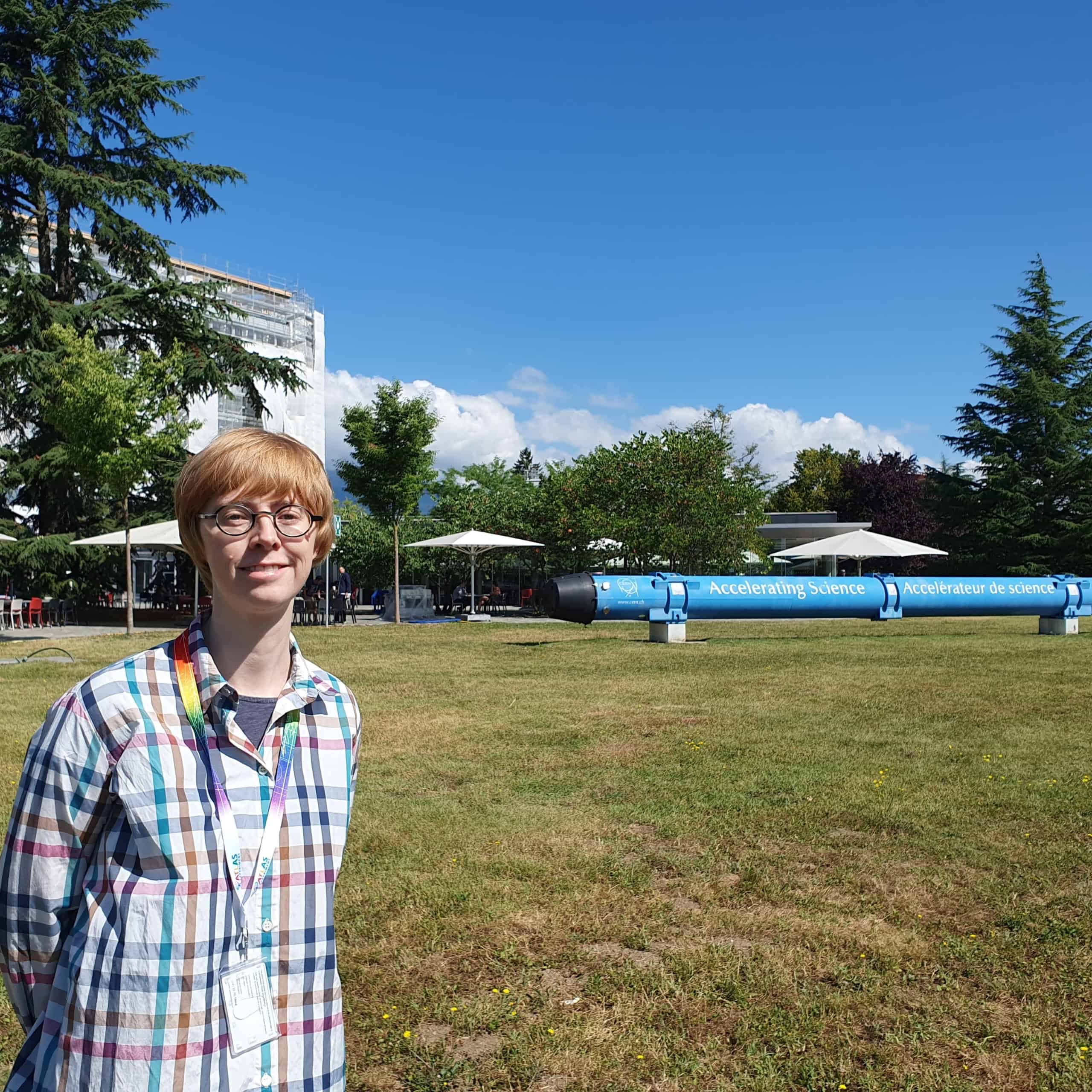
Inside ATLAS: Sara Alderweireldt explains how the CERN experiment homes in on new physics
This podcast features an interview with Sara Alderweireldt, who is a physicist working on the ATLAS experiment at CERN – the world-famous physics lab that straddles the Swiss-French border and is home to the Large Hadron Collider (LHC).
Based at the UK’s University of Edinburgh, Alderweireldt is in conversation with Physics World’s Margaret Harris and explains how physicists sift through the vast amount of information produced by ATLAS’ myriad detectors in search of new physics.
They also chat about the ongoing high-luminosity upgrade to the LHC and its experiments – which will be finished in 2030 – and the challenges and rewards of working a very long term project.
Available Results
Generated results are saved to the knowledge database for reuse and search.
Extract Knowledge
Pick what you want extracted first. Model, scope, and chapter options appear after a template is selected.
Transcript
1
00:00:08,240 --> 00:00:11,519
Hello, and welcome to the Physics World weekly

2
00:00:11,519 --> 00:00:12,019
podcast.

3
00:00:12,484 --> 00:00:13,865
I'm Hamish Johnston.

4
00:00:15,044 --> 00:00:17,945
In this episode, we meet Sarah Alderweireld,

5
00:00:18,484 --> 00:00:21,285
who is a physicist working on the ATLAS

6
00:00:21,285 --> 00:00:22,904
experiment at CERN,

7
00:00:23,445 --> 00:00:26,980
the world famous physics lab that straddles the

8
00:00:26,980 --> 00:00:30,100
Swiss French border and is home to the

9
00:00:30,100 --> 00:00:31,720
Large Hadron Collider

10
00:00:32,100 --> 00:00:33,079
or LHC.

11
00:00:34,260 --> 00:00:34,920
The podcast

12
00:00:35,219 --> 00:00:35,719
explores

13
00:00:36,100 --> 00:00:38,119
how the huge ATLAS detector

14
00:00:38,945 --> 00:00:41,765
is used to study the high energy collisions

15
00:00:42,064 --> 00:00:43,045
of protons

16
00:00:43,424 --> 00:00:44,325
and sometimes

17
00:00:44,704 --> 00:00:45,685
lead ions

18
00:00:46,145 --> 00:00:47,045
at the LHC.

19
00:00:48,225 --> 00:00:51,445
In conversation with Physics World's Margaret Harris,

20
00:00:52,170 --> 00:00:55,710
Sarah explains how physicists deal with the vast

21
00:00:55,769 --> 00:00:56,989
amounts of information

22
00:00:57,609 --> 00:00:58,909
produced by ATLAS.

23
00:00:59,689 --> 00:01:03,070
Margaret and Sarah also chat about the ongoing

24
00:01:03,609 --> 00:01:04,430
high luminosity

25
00:01:04,969 --> 00:01:06,590
upgrade to the LHC

26
00:01:07,115 --> 00:01:08,094
and its experiments,

27
00:01:08,875 --> 00:01:11,534
which will be finished in 2030.

28
00:01:12,155 --> 00:01:14,954
And they also talk about the challenges and

29
00:01:14,954 --> 00:01:15,454
rewards

30
00:01:15,915 --> 00:01:18,734
of working on a very long term

31
00:01:19,275 --> 00:01:20,495
scientific project.

32
00:01:21,109 --> 00:01:22,489
Here's that conversation.

33
00:01:31,270 --> 00:01:32,969
My guest today is Sarah Aldoworlds,

34
00:01:33,275 --> 00:01:35,194
a postdoc at the University of Edinburgh in

35
00:01:35,194 --> 00:01:37,215
Scotland and a member of the ATLAS collaboration

36
00:01:37,275 --> 00:01:39,694
at CERN, the European particle physics laboratory.

37
00:01:40,314 --> 00:01:41,935
Hello, Sarah. Welcome to the podcast.

38
00:01:42,474 --> 00:01:42,974
Hello.

39
00:01:44,075 --> 00:01:46,094
Perhaps you could begin by telling our listeners

40
00:01:46,540 --> 00:01:48,859
what ATLAS does and what your role is

41
00:01:48,859 --> 00:01:49,599
within that.

42
00:01:50,700 --> 00:01:53,359
So ATLAS is a large detector

43
00:01:53,739 --> 00:01:55,519
at the Large Hadron Collider,

44
00:01:55,819 --> 00:01:58,640
which is built as a general purpose experiment.

45
00:01:59,974 --> 00:02:02,795
And we try to zoom in on interesting

46
00:02:03,174 --> 00:02:05,734
collision events that are happening when the LHC

47
00:02:05,734 --> 00:02:06,394
is on,

48
00:02:06,694 --> 00:02:09,275
in order to study both our understanding

49
00:02:09,655 --> 00:02:12,240
of the standard model of particle physics and

50
00:02:12,240 --> 00:02:14,400
look beyond it to see if we can

51
00:02:14,400 --> 00:02:16,180
find signs of new physics.

52
00:02:17,039 --> 00:02:18,800
And what's your role within that? Because ATLAS

53
00:02:18,800 --> 00:02:20,560
is a really big collaboration. It's got hundreds

54
00:02:20,560 --> 00:02:23,199
of physicists working on it. Absolutely. It's even

55
00:02:23,199 --> 00:02:23,699
thousands.

56
00:02:24,385 --> 00:02:26,724
I am in my current role as postdoc

57
00:02:27,025 --> 00:02:28,645
working on several analysis,

58
00:02:29,344 --> 00:02:30,965
mostly in the searches area.

59
00:02:31,825 --> 00:02:34,224
And I also work on the detector as

60
00:02:34,224 --> 00:02:35,284
a trigger expert,

61
00:02:35,665 --> 00:02:36,784
which deals with,

62
00:02:37,269 --> 00:02:40,069
the decision making life as the collisions are

63
00:02:40,069 --> 00:02:40,569
happening

64
00:02:41,110 --> 00:02:43,750
to decide which ones we record and which

65
00:02:43,750 --> 00:02:45,669
ones we give up on because we don't

66
00:02:45,669 --> 00:02:47,610
have the bandwidth to study everything.

67
00:02:48,229 --> 00:02:50,789
And then in parallel with those two hands

68
00:02:50,789 --> 00:02:52,414
on efforts, I'm also a coordinator

69
00:02:53,034 --> 00:02:54,735
for the Higgs multiboson

70
00:02:55,034 --> 00:02:55,694
and supersymmetry

71
00:02:55,995 --> 00:02:59,435
searches group, which is about a 500 sized

72
00:02:59,435 --> 00:03:02,574
subset of people that are all looking into,

73
00:03:02,875 --> 00:03:04,094
searches for new physics.

74
00:03:04,900 --> 00:03:06,980
Yeah. What does searches actually involve? You know,

75
00:03:06,980 --> 00:03:09,300
talk me through what happens when the collider

76
00:03:09,300 --> 00:03:11,300
is operating. You know, what's what's your your

77
00:03:11,300 --> 00:03:12,680
daily work look like?

78
00:03:14,099 --> 00:03:17,780
So when you imagine processes happening in nature,

79
00:03:17,780 --> 00:03:19,939
which are then also the ones that we

80
00:03:19,939 --> 00:03:23,215
can try to create with the the accelerator,

81
00:03:24,634 --> 00:03:25,375
you expect

82
00:03:25,754 --> 00:03:27,375
that certain processes happen

83
00:03:27,995 --> 00:03:30,715
more frequently than others. And we have a

84
00:03:30,715 --> 00:03:33,275
very good description of nature in the standard

85
00:03:33,275 --> 00:03:35,530
model, and so we have a prediction of

86
00:03:35,530 --> 00:03:38,030
how frequently we expect these things to happen.

87
00:03:38,250 --> 00:03:41,310
What the detector then does is testing

88
00:03:41,769 --> 00:03:44,009
whether if we look at the the collisions

89
00:03:44,009 --> 00:03:46,329
we're actually seeing and we analyze them, we

90
00:03:46,329 --> 00:03:48,269
identify them as a certain thing,

91
00:03:48,625 --> 00:03:51,284
whether this matches with the prediction we have.

92
00:03:51,824 --> 00:03:54,164
And in on one hand of the measurements,

93
00:03:54,224 --> 00:03:56,305
we have the very precise measurements of the

94
00:03:56,305 --> 00:03:57,925
standard model where you verify

95
00:03:58,864 --> 00:04:00,405
that you are getting

96
00:04:01,060 --> 00:04:03,139
things right with this prediction. And on the

97
00:04:03,139 --> 00:04:04,739
other hand of the word, there are the

98
00:04:04,739 --> 00:04:05,239
searches

99
00:04:05,620 --> 00:04:08,199
for things that lie beyond, because we have

100
00:04:08,419 --> 00:04:11,219
signs from, for example, astrophysics as well, that

101
00:04:11,219 --> 00:04:12,599
there are things in nature

102
00:04:12,900 --> 00:04:15,699
connected to dark matter or tensions in other

103
00:04:15,699 --> 00:04:16,185
areas,

104
00:04:16,504 --> 00:04:18,185
where there has to be a little bit

105
00:04:18,185 --> 00:04:20,504
more than we have in our standard mobile

106
00:04:20,504 --> 00:04:21,004
prediction.

107
00:04:21,625 --> 00:04:25,305
And then from small deviations in places or

108
00:04:25,305 --> 00:04:25,805
maybe

109
00:04:26,665 --> 00:04:27,564
tough to catch

110
00:04:28,185 --> 00:04:30,125
patterns in in the detector,

111
00:04:30,504 --> 00:04:32,800
there could be a hint that this has

112
00:04:32,800 --> 00:04:35,279
to have an explanation in new physics because

113
00:04:35,279 --> 00:04:37,519
if we only had the standard version, it

114
00:04:37,519 --> 00:04:39,519
wouldn't be there. Then what we do is

115
00:04:39,519 --> 00:04:42,660
on one hand, we optimize the detector to

116
00:04:42,959 --> 00:04:45,759
be as as thoroughly covering as possible in

117
00:04:45,759 --> 00:04:47,379
all of these potential signatures

118
00:04:48,045 --> 00:04:50,524
and then record the data. And then when

119
00:04:50,524 --> 00:04:52,685
we have the data, often these things happen

120
00:04:52,685 --> 00:04:55,245
in parallel on, like, the previous set while

121
00:04:55,245 --> 00:04:56,705
you work on the next one,

122
00:04:57,324 --> 00:04:58,625
you develop algorithms,

123
00:04:59,165 --> 00:05:00,705
classic ones, but also

124
00:05:01,245 --> 00:05:03,139
using modern techniques to

125
00:05:03,600 --> 00:05:04,980
zoom in on

126
00:05:05,360 --> 00:05:07,680
what is in this dataset. You put your

127
00:05:07,680 --> 00:05:08,180
prediction,

128
00:05:08,720 --> 00:05:10,800
we call this the background, and then you

129
00:05:10,800 --> 00:05:13,120
look at the the signatures that you could

130
00:05:13,120 --> 00:05:14,834
potentially see on top of this.

131
00:05:15,634 --> 00:05:17,894
And then we make the the statistical prediction

132
00:05:18,274 --> 00:05:20,995
of, how well these things agree. And as

133
00:05:20,995 --> 00:05:22,995
soon as you find something that doesn't agree,

134
00:05:22,995 --> 00:05:24,375
that's when it gets exciting.

135
00:05:25,634 --> 00:05:28,149
Now you talk about seeing and searches, but

136
00:05:28,149 --> 00:05:29,990
it's actually been a long time since people

137
00:05:29,990 --> 00:05:32,229
were literally seeing what's happened in a particle

138
00:05:32,229 --> 00:05:33,829
collider. You know, you had the cloud chamber

139
00:05:33,829 --> 00:05:35,589
days where you could see particle traces and

140
00:05:35,589 --> 00:05:36,089
collisions.

141
00:05:36,550 --> 00:05:38,310
What does it involve to, you know, sort

142
00:05:38,310 --> 00:05:40,389
of say, oh, that event is interesting. Let's

143
00:05:40,389 --> 00:05:41,910
let's look at that one. Let's save that

144
00:05:41,910 --> 00:05:43,754
event. How does that process work?

145
00:05:44,875 --> 00:05:47,274
This gets back to the the trigger work

146
00:05:47,274 --> 00:05:48,175
I was mentioning

147
00:05:48,875 --> 00:05:49,375
where,

148
00:05:49,754 --> 00:05:52,475
for the ATLAS detector, this happens in several

149
00:05:52,475 --> 00:05:55,274
phases. You have the level one system and

150
00:05:55,274 --> 00:05:57,800
the higher level trigger system, and then offline

151
00:05:57,800 --> 00:06:00,060
processing can continue a bit more even.

152
00:06:00,439 --> 00:06:00,939
And

153
00:06:01,479 --> 00:06:04,279
in the level one system, you use custom

154
00:06:04,279 --> 00:06:07,560
hardware because you have to take decisions ultra

155
00:06:07,560 --> 00:06:08,060
fast,

156
00:06:08,519 --> 00:06:10,439
and it's so fast that you don't even

157
00:06:10,439 --> 00:06:12,455
have time to read out all of the

158
00:06:12,455 --> 00:06:14,615
information that is in the detector. You just

159
00:06:14,615 --> 00:06:17,175
take crucial parts of it that help you

160
00:06:17,175 --> 00:06:19,415
in this decision making. You make a first

161
00:06:19,415 --> 00:06:19,915
decision.

162
00:06:20,455 --> 00:06:22,154
And then in the second step,

163
00:06:22,935 --> 00:06:24,634
say something was really energetic

164
00:06:25,014 --> 00:06:25,620
and it had

165
00:06:26,579 --> 00:06:29,240
two object flying in two different directions,

166
00:06:30,419 --> 00:06:30,919
and,

167
00:06:31,220 --> 00:06:33,220
that matches one of the things we're interested

168
00:06:33,220 --> 00:06:34,979
in. And you can zoom in on those

169
00:06:34,979 --> 00:06:38,100
blobs and look at the precision around them

170
00:06:38,100 --> 00:06:40,819
in this second layer of trigger algorithms which

171
00:06:40,819 --> 00:06:41,564
happens in

172
00:06:42,125 --> 00:06:43,964
software, and that then gives you the more

173
00:06:43,964 --> 00:06:46,845
precise decision, which can allow you to filter

174
00:06:46,845 --> 00:06:49,245
better again which events you really want to

175
00:06:49,245 --> 00:06:51,805
keep, and those then get passed on for,

176
00:06:52,205 --> 00:06:53,185
offline analysis.

177
00:06:53,970 --> 00:06:55,509
And in that same process,

178
00:06:56,050 --> 00:06:58,770
we also run the algorithms that try to

179
00:06:58,770 --> 00:06:59,270
identify

180
00:06:59,970 --> 00:07:01,970
the different elements of a collision that we

181
00:07:01,970 --> 00:07:03,650
know. So you can try to find the

182
00:07:03,650 --> 00:07:05,745
electrons, and you can try to find,

183
00:07:06,464 --> 00:07:09,444
the heavier particles, maybe the standard model bosons.

184
00:07:09,985 --> 00:07:12,944
And, actually, in connection to how in the

185
00:07:12,944 --> 00:07:15,104
past things happened with the bubble chamber and

186
00:07:15,104 --> 00:07:16,805
we actually looked at the snapshot,

187
00:07:17,264 --> 00:07:19,584
now in the software, we also have ways

188
00:07:19,584 --> 00:07:22,529
to visualize this. And we're talking about data

189
00:07:22,529 --> 00:07:23,509
analysis with

190
00:07:23,970 --> 00:07:25,970
numbers of events that is way too large

191
00:07:25,970 --> 00:07:27,669
to manually look at everyone

192
00:07:28,209 --> 00:07:28,709
individually.

193
00:07:29,250 --> 00:07:31,490
But if we're interested in a particular one,

194
00:07:31,490 --> 00:07:33,490
we can visualize it and bring this up

195
00:07:33,490 --> 00:07:35,169
and actually zoom into it and look at

196
00:07:35,169 --> 00:07:35,990
it as well.

197
00:07:36,850 --> 00:07:38,985
What are some of the specific events that

198
00:07:38,985 --> 00:07:40,824
you're you're looking for that you would get

199
00:07:40,824 --> 00:07:42,365
really excited if you saw?

200
00:07:43,144 --> 00:07:45,805
So personally, I'm a supersymmetry expert.

201
00:07:46,665 --> 00:07:48,125
And the idea of supersymmetry

202
00:07:48,584 --> 00:07:50,904
is that, if you take all of the

203
00:07:50,904 --> 00:07:53,899
standard model particles we know, there would be

204
00:07:53,899 --> 00:07:56,399
an a duplicate set of supersymmetric

205
00:07:56,779 --> 00:07:58,860
particles, and they all line up one to

206
00:07:58,860 --> 00:08:00,319
one with some

207
00:08:00,620 --> 00:08:03,419
parameter changes, of course. And this could then

208
00:08:03,419 --> 00:08:06,865
explain various open questions that we have, about

209
00:08:06,865 --> 00:08:08,084
how the world works.

210
00:08:08,464 --> 00:08:08,964
And

211
00:08:09,584 --> 00:08:11,524
because this is quite a well developed

212
00:08:11,904 --> 00:08:14,784
theory model, it also allows to to make

213
00:08:14,784 --> 00:08:15,284
predictions

214
00:08:16,224 --> 00:08:18,689
of what these signatures would look like, if

215
00:08:18,689 --> 00:08:19,669
they were there.

216
00:08:20,050 --> 00:08:21,889
And a lot of them go hand in

217
00:08:21,889 --> 00:08:24,229
hand with something we call missing

218
00:08:24,689 --> 00:08:25,669
transverse energy.

219
00:08:26,289 --> 00:08:28,449
Because when you have a collision in the

220
00:08:28,449 --> 00:08:30,289
detector or you you have a collision and

221
00:08:30,289 --> 00:08:31,669
you record it with a detector,

222
00:08:32,575 --> 00:08:34,414
energy that comes in also has to go

223
00:08:34,414 --> 00:08:38,095
out. And because our detector is constructed to

224
00:08:38,095 --> 00:08:40,914
be all covering or as much as possible,

225
00:08:41,695 --> 00:08:43,855
if you have things flying in two directions,

226
00:08:43,855 --> 00:08:45,480
those factors have to sum up.

227
00:08:46,440 --> 00:08:49,019
And if they don't, then something is missing,

228
00:08:49,320 --> 00:08:51,500
and this missing thing could be an invisible

229
00:08:51,559 --> 00:08:52,059
particle.

230
00:08:52,519 --> 00:08:54,839
And there are some particles in in the

231
00:08:54,839 --> 00:08:57,639
standard mobile version of the world where they

232
00:08:57,639 --> 00:08:59,659
are invisible, but they're usually

233
00:09:00,039 --> 00:09:02,745
not the dominant part of of processes.

234
00:09:04,004 --> 00:09:06,804
In the under standard model physics, you have

235
00:09:06,804 --> 00:09:08,725
many more particles that could be a lot

236
00:09:08,725 --> 00:09:12,424
heavier that might have interactions that aren't typically

237
00:09:12,565 --> 00:09:16,059
visible in our detector because they don't interact

238
00:09:16,059 --> 00:09:18,379
with materials in the same way, and they

239
00:09:18,379 --> 00:09:19,759
would leave much larger

240
00:09:20,379 --> 00:09:23,100
amounts of missing energy in our sums. And

241
00:09:23,100 --> 00:09:24,700
so we look for a lot of the

242
00:09:24,700 --> 00:09:26,860
searches, we look for signatures with lots of

243
00:09:26,860 --> 00:09:27,679
missing energy.

244
00:09:29,535 --> 00:09:31,774
Now regular listeners to the podcast may remember

245
00:09:31,774 --> 00:09:33,615
that this is kind of a transition period

246
00:09:33,615 --> 00:09:36,174
for CERN. We had CERN's next director general,

247
00:09:36,174 --> 00:09:38,654
Mark Thompson, on the podcast in January talking

248
00:09:38,654 --> 00:09:40,835
about plans for the lab's long term future.

249
00:09:41,339 --> 00:09:43,259
And then back at the March, I spoke

250
00:09:43,259 --> 00:09:45,019
about visiting CERN, and you were one of

251
00:09:45,019 --> 00:09:46,720
my tour guides on my visit, actually,

252
00:09:47,100 --> 00:09:48,860
and just learning about plans for the next

253
00:09:48,860 --> 00:09:50,879
upgrade of the the Large Hadron Collider.

254
00:09:51,419 --> 00:09:53,179
What's it like to work at CERN during

255
00:09:53,179 --> 00:09:54,799
this this sort of period of transition?

256
00:09:55,914 --> 00:09:58,394
This is an absolutely exciting time to be

257
00:09:58,394 --> 00:10:00,014
here because it's

258
00:10:01,514 --> 00:10:03,914
wonderful to be able to be not only

259
00:10:03,914 --> 00:10:06,235
in one aspect of high energy physics, which

260
00:10:06,235 --> 00:10:08,735
is already cool in itself, but actually

261
00:10:09,035 --> 00:10:10,794
three or even more parts. And when I

262
00:10:10,794 --> 00:10:13,789
say three, I'm thinking of, on one hand,

263
00:10:15,129 --> 00:10:16,350
we have data

264
00:10:16,730 --> 00:10:18,970
that has been recorded over the past ten

265
00:10:18,970 --> 00:10:20,110
ish years of LHC,

266
00:10:20,809 --> 00:10:21,709
and we can

267
00:10:22,009 --> 00:10:24,329
make analysis with it and learn more about

268
00:10:24,329 --> 00:10:24,825
physics.

269
00:10:25,625 --> 00:10:27,644
And then in a second element,

270
00:10:28,105 --> 00:10:29,965
we have plans for the next

271
00:10:31,065 --> 00:10:31,884
n years.

272
00:10:32,264 --> 00:10:34,345
It continues quite far, but let's start with

273
00:10:34,345 --> 00:10:36,345
the first part, the phase two upgrade for

274
00:10:36,345 --> 00:10:38,044
the high luminosity LHC.

275
00:10:38,539 --> 00:10:41,579
This will start happening quite soon with the

276
00:10:41,579 --> 00:10:44,139
long shutdown in which we turn things off

277
00:10:44,139 --> 00:10:46,539
and we make quite sizable upgrades to the

278
00:10:46,539 --> 00:10:47,039
detectors.

279
00:10:49,100 --> 00:10:51,659
This means that these detectors have been in

280
00:10:51,659 --> 00:10:52,720
design for

281
00:10:53,204 --> 00:10:55,204
a number of years already. And right now,

282
00:10:55,204 --> 00:10:58,084
we're actually starting to get the components that

283
00:10:58,084 --> 00:11:00,424
are the final ones and putting these together.

284
00:11:01,044 --> 00:11:03,784
Some examples, for example, are currently coming together

285
00:11:03,845 --> 00:11:06,500
in, like, the big development hall next to

286
00:11:06,500 --> 00:11:08,600
where the detector sits above ground.

287
00:11:08,980 --> 00:11:11,059
We get to work on those, test that

288
00:11:11,059 --> 00:11:13,700
it all comes together correctly. It works on

289
00:11:13,700 --> 00:11:14,839
the surface level.

290
00:11:15,299 --> 00:11:15,959
And then

291
00:11:16,580 --> 00:11:19,139
once these come together, they will go down

292
00:11:19,139 --> 00:11:19,959
to the detector,

293
00:11:20,475 --> 00:11:22,475
and then get put to use. That's the

294
00:11:22,475 --> 00:11:23,774
the actual hands on

295
00:11:24,235 --> 00:11:25,534
building the detector.

296
00:11:26,315 --> 00:11:29,294
And I said the upgrade continues very long.

297
00:11:30,075 --> 00:11:32,634
Even beyond this upgrade, we're thinking about the

298
00:11:32,634 --> 00:11:35,514
next ones already, and this then involves detector

299
00:11:35,514 --> 00:11:38,529
design and thinking about what technology will be

300
00:11:38,529 --> 00:11:40,690
available and how can we use it to

301
00:11:40,690 --> 00:11:42,950
to make the best possible detectors in future.

302
00:11:43,330 --> 00:11:46,070
And so these three phases really bring together

303
00:11:46,210 --> 00:11:47,190
all of the possibilities

304
00:11:47,970 --> 00:11:48,470
for

305
00:11:49,330 --> 00:11:50,355
research in physics.

306
00:11:50,914 --> 00:11:51,414
And

307
00:11:52,834 --> 00:11:54,834
it goes in cycles. And right now, it

308
00:11:54,834 --> 00:11:56,674
just happens to be one where you really

309
00:11:56,674 --> 00:11:58,754
get hands on connection to to all of

310
00:11:58,754 --> 00:11:59,414
the parts.

311
00:12:00,514 --> 00:12:03,235
What are the biggest challenges associated with these

312
00:12:03,235 --> 00:12:04,695
tasks, particularly with the upgrade?

313
00:12:06,230 --> 00:12:09,190
Timelines are always a a tricky thing, especially

314
00:12:09,190 --> 00:12:11,929
because they are so extended. And you need

315
00:12:12,070 --> 00:12:14,809
experts of many different types. Like, we need

316
00:12:15,029 --> 00:12:16,409
engineers. We need

317
00:12:17,429 --> 00:12:20,514
people who understand the physics to to connect

318
00:12:20,514 --> 00:12:22,514
with the engineers and say, like, okay. Yes.

319
00:12:22,514 --> 00:12:25,795
That is high techno high important technology, but

320
00:12:25,795 --> 00:12:28,595
it might not do exactly what it is

321
00:12:28,595 --> 00:12:30,935
we are interested in zooming in and on.

322
00:12:31,154 --> 00:12:34,409
We also need students to be there to

323
00:12:34,409 --> 00:12:36,330
learn some of these things so that it

324
00:12:36,330 --> 00:12:37,070
can continue,

325
00:12:37,850 --> 00:12:39,690
later on. Then you need people who are

326
00:12:39,690 --> 00:12:42,190
in touch with outside who

327
00:12:42,809 --> 00:12:43,309
get

328
00:12:44,009 --> 00:12:46,750
to see how maybe data analysis algorithms

329
00:12:47,125 --> 00:12:49,605
or detector technology gets to evolve also in

330
00:12:49,605 --> 00:12:52,485
other places and keep feeding that into what

331
00:12:52,485 --> 00:12:53,945
we are doing right here.

332
00:12:54,965 --> 00:12:57,045
So it really brings together a a lot

333
00:12:57,045 --> 00:12:57,625
of people.

334
00:12:58,165 --> 00:12:59,764
And that's also one of the things that

335
00:12:59,764 --> 00:13:02,200
makes the CERN campus a very interesting place

336
00:13:02,200 --> 00:13:04,600
to be because it actually has good seeding

337
00:13:04,600 --> 00:13:06,779
ground here to come together like that.

338
00:13:07,399 --> 00:13:09,399
You're an early career researcher. So, you know,

339
00:13:09,399 --> 00:13:11,240
maybe in contrast to some of the lab's

340
00:13:11,240 --> 00:13:13,480
senior leadership, you're likely to be around not

341
00:13:13,480 --> 00:13:16,040
only for the HiLumie upgrade, but for whatever

342
00:13:16,040 --> 00:13:18,024
comes after that and even beyond, as you

343
00:13:18,024 --> 00:13:19,325
say, the next n years.

344
00:13:19,945 --> 00:13:21,625
What are your thoughts about that? Do you

345
00:13:21,625 --> 00:13:23,945
think that far ahead? You're just more head

346
00:13:23,945 --> 00:13:25,965
down, focused on the immediate task?

347
00:13:27,065 --> 00:13:28,985
I think there are two parts to that.

348
00:13:28,985 --> 00:13:29,965
On one hand,

349
00:13:30,779 --> 00:13:33,100
also because nothing is ever guaranteed in this

350
00:13:33,100 --> 00:13:33,600
field,

351
00:13:34,139 --> 00:13:36,299
you do want to focus on the now

352
00:13:36,299 --> 00:13:38,220
and see what you can do now and

353
00:13:38,220 --> 00:13:39,919
and do the best you can.

354
00:13:40,539 --> 00:13:41,980
But on the other hand, I think if

355
00:13:41,980 --> 00:13:44,620
you stick around in in any research field

356
00:13:44,620 --> 00:13:45,524
for long enough,

357
00:13:46,085 --> 00:13:48,165
you start to see the bigger picture and

358
00:13:48,165 --> 00:13:49,684
you do want to be a part of

359
00:13:49,684 --> 00:13:52,585
it, and you have the ideas of

360
00:13:52,965 --> 00:13:55,445
this might work better than that. I can

361
00:13:55,445 --> 00:13:58,165
see how globally this evolves, what other people

362
00:13:58,165 --> 00:14:00,480
are interested in, And then it becomes a

363
00:14:00,480 --> 00:14:03,120
puzzle of of bringing together and chipping in,

364
00:14:03,120 --> 00:14:05,040
like, the little bits where I maybe am

365
00:14:05,040 --> 00:14:05,700
the expert.

366
00:14:06,160 --> 00:14:06,660
And

367
00:14:07,680 --> 00:14:08,500
I would say

368
00:14:09,200 --> 00:14:11,620
I started thinking about the future already,

369
00:14:12,154 --> 00:14:15,355
say, when becoming a postdoctoral researcher, so after

370
00:14:15,355 --> 00:14:16,575
finishing the PhD.

371
00:14:17,115 --> 00:14:17,615
And

372
00:14:18,394 --> 00:14:21,134
we really are talking long time scales because

373
00:14:21,434 --> 00:14:23,535
if we talk past HLLHC,

374
00:14:23,995 --> 00:14:26,254
I will be close to retirement age.

375
00:14:26,909 --> 00:14:29,070
And that makes it then also connect with

376
00:14:29,070 --> 00:14:32,509
teaching and and mentoring and supervising and and

377
00:14:32,509 --> 00:14:34,690
making sure that the knowledge is spread

378
00:14:35,149 --> 00:14:35,649
because

379
00:14:37,549 --> 00:14:39,389
I can do what I can, and I

380
00:14:39,389 --> 00:14:41,365
would love to continue doing it. But I'm

381
00:14:41,365 --> 00:14:43,445
also very aware that we will need the

382
00:14:43,445 --> 00:14:46,264
next people after that because fundamental research,

383
00:14:47,285 --> 00:14:48,904
does not happen in ten seconds.

384
00:14:49,764 --> 00:14:51,764
Because I guess also with the with just

385
00:14:51,764 --> 00:14:53,764
the process of building a detector, if you

386
00:14:53,764 --> 00:14:55,750
only do it every twenty years, that is

387
00:14:55,750 --> 00:14:58,069
literally generation, and there's a risk that people

388
00:14:58,069 --> 00:14:59,529
will forget how to do it.

389
00:15:00,949 --> 00:15:01,449
Absolutely.

390
00:15:02,389 --> 00:15:02,889
We

391
00:15:03,190 --> 00:15:05,750
see this even on on shorter time scales

392
00:15:05,750 --> 00:15:08,389
as well where you you quite frequently hear,

393
00:15:08,389 --> 00:15:09,129
but documentation

394
00:15:09,509 --> 00:15:10,569
is very important.

395
00:15:11,875 --> 00:15:13,955
And then you find yourself in the control

396
00:15:13,955 --> 00:15:17,475
room with some tricky problem making everything fail.

397
00:15:17,475 --> 00:15:19,394
And you know, like, oh, I've seen this

398
00:15:19,394 --> 00:15:22,034
error before, but why is it doing this

399
00:15:22,034 --> 00:15:22,774
right now?

400
00:15:23,230 --> 00:15:25,309
And you you look at it for half

401
00:15:25,309 --> 00:15:27,470
an hour, an hour, and you're still scratching

402
00:15:27,470 --> 00:15:29,549
your head after going out for a quick

403
00:15:29,549 --> 00:15:30,049
lunch.

404
00:15:30,590 --> 00:15:31,809
And at some point,

405
00:15:32,350 --> 00:15:34,990
some colleague that hasn't been near there in

406
00:15:34,990 --> 00:15:38,085
in in years walks past, asks you what

407
00:15:38,085 --> 00:15:39,845
you're doing, and you tell them and it's

408
00:15:39,845 --> 00:15:40,345
like,

409
00:15:41,125 --> 00:15:42,745
maybe you want to check this.

410
00:15:44,004 --> 00:15:46,504
Lo and behold, this is always the solution.

411
00:15:48,565 --> 00:15:51,625
So, yeah, we do need long term experts,

412
00:15:52,049 --> 00:15:54,129
but also people who are just keen on

413
00:15:54,129 --> 00:15:57,429
on digging into finicky issues and being creative

414
00:15:57,490 --> 00:15:58,389
with the solutions.

415
00:15:59,250 --> 00:16:00,769
Thank you very much for speaking to us,

416
00:16:00,769 --> 00:16:02,370
Sarah. Thank you. It's been great to talk

417
00:16:02,370 --> 00:16:03,029
to you.

418
00:16:03,409 --> 00:16:05,429
Likewise. Thanks for inviting me.

419
00:16:13,215 --> 00:16:14,754
That was Sarah Alderweireld

420
00:16:15,134 --> 00:16:18,495
of the University of Edinburgh in conversation with

421
00:16:18,495 --> 00:16:20,434
Physics World's Margaret Harris.

422
00:16:20,960 --> 00:16:24,019
We're more than halfway through 2025,

423
00:16:24,240 --> 00:16:26,960
which has been declared the International Year of

424
00:16:26,960 --> 00:16:28,740
Quantum Science and Technology

425
00:16:29,279 --> 00:16:30,740
by the UN agency

426
00:16:31,200 --> 00:16:31,700
UNESCO.

427
00:16:32,559 --> 00:16:34,100
As part of our celebrations

428
00:16:34,399 --> 00:16:37,795
here at Physics World, we've published a 62

429
00:16:37,795 --> 00:16:39,335
page quantum briefing.

430
00:16:40,035 --> 00:16:42,674
The cover of the briefing features a painting

431
00:16:42,674 --> 00:16:46,375
by the physicist turned artist, Felicity Inkpen.

432
00:16:47,154 --> 00:16:49,095
That work is called Qubit's

433
00:16:49,409 --> 00:16:49,909
Duality.

434
00:16:50,450 --> 00:16:52,929
And in a recent episode of the Physics

435
00:16:52,929 --> 00:16:54,389
World Stories podcast,

436
00:16:54,929 --> 00:16:59,089
Felicity shares her journey from academic physics to

437
00:16:59,089 --> 00:17:00,070
the art world,

438
00:17:00,529 --> 00:17:03,110
and talks about the creative process

439
00:17:03,464 --> 00:17:06,924
as she explores the elusive nature of quantum

440
00:17:06,984 --> 00:17:07,484
reality.

441
00:17:08,424 --> 00:17:09,804
Also in that podcast,

442
00:17:10,184 --> 00:17:12,125
Physics World's Tushna Kamasariat

443
00:17:12,825 --> 00:17:15,724
talks about a feature article in the Quantum

444
00:17:15,785 --> 00:17:19,880
Briefing that's called the curious case of quantum

445
00:17:20,179 --> 00:17:21,240
Cheshire cats.

446
00:17:21,779 --> 00:17:23,880
It explores the strange phenomenon

447
00:17:24,419 --> 00:17:25,799
whereby a particle's

448
00:17:26,099 --> 00:17:26,599
properties

449
00:17:27,059 --> 00:17:29,380
seem to be in a different place from

450
00:17:29,380 --> 00:17:30,679
the particle itself,

451
00:17:31,460 --> 00:17:31,960
reminiscent

452
00:17:32,259 --> 00:17:33,399
of Lewis Carroll's

453
00:17:33,914 --> 00:17:34,975
famous feline

454
00:17:35,355 --> 00:17:36,975
in Alice in Wonderland,

455
00:17:37,755 --> 00:17:38,654
whose grin

456
00:17:39,035 --> 00:17:39,535
lingers

457
00:17:39,914 --> 00:17:41,535
even after it's gone.

458
00:17:42,154 --> 00:17:45,134
That episode of the stories podcast is called

459
00:17:45,275 --> 00:17:46,654
painting the unseen,

460
00:17:47,559 --> 00:17:48,059
visualizing

461
00:17:48,519 --> 00:17:51,240
the quantum world. And you can find it

462
00:17:51,240 --> 00:17:54,519
on the physics world website or at your

463
00:17:54,519 --> 00:17:56,299
favorite podcast provider.

464
00:17:56,840 --> 00:17:59,900
And you can read the entire quantum briefing

465
00:18:00,359 --> 00:18:01,340
on our website.

466
00:18:02,134 --> 00:18:02,634
Just

467
00:18:03,174 --> 00:18:04,954
click on the magazine tab.

468
00:18:05,494 --> 00:18:07,414
I'm afraid that's all the time we have

469
00:18:07,414 --> 00:18:10,214
for this week's podcast. Thanks to Sarah and

470
00:18:10,214 --> 00:18:11,595
Margaret for a fascinating

471
00:18:11,974 --> 00:18:12,474
conversation,

472
00:18:12,934 --> 00:18:15,494
and a special thanks to our producer, Fred

473
00:18:15,494 --> 00:18:15,994
Isles.

474
00:18:16,500 --> 00:18:19,059
We'll be back again next week. See you

475
00:18:19,059 --> 00:18:19,559
then.