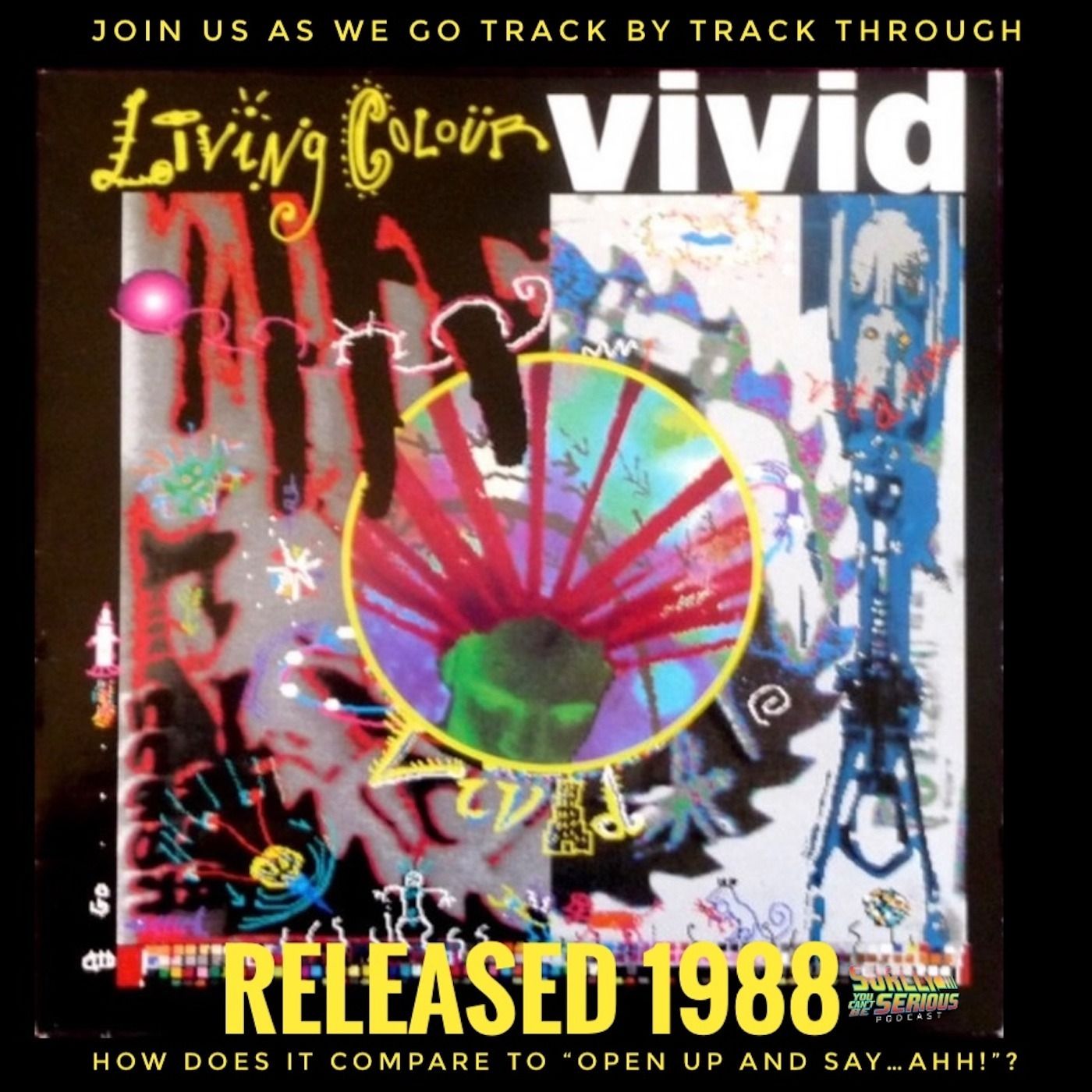
Living Colour's "Vivid" (1988): Track by Track
In 1988, Living Colour released an album that would simmer for nearly a full year before kicking down the door of the standard rock scene with one of the biggest pounding rock anthems of the decade. "Cult of Personality" became their biggest hit and changed the idea of what a rock band should look and sound like. Vernon Reid's blistering guitars and Corey Glover's soulful voice, along with some help from Mick Jagger and Michael Jackson, helped push this album over the top. Come and join us as we go track by track through "Vivid" with Patreon member James Buckley!
2023-05-09
60 min
Transcript
Available Results
Generated results are saved to the knowledge database for reuse and search.
No generated results are available for this episode yet.
Extract Knowledge
Pick what you want extracted first. Model, scope, and chapter options appear after a template is selected.
Generated results for public episodes are saved to the knowledge database so they can be reused and searched later.
Transcript
<v Speaker 1>And during the few moments that we have left, we
<v Speaker 1>want to talk right down to earth and the language
<v Speaker 1>that everybody here can easily understand.
<v Speaker 2>Hello everybody, and welcome back to the Shirley You Can't
<v Speaker 2>Be Serious podcast. We are here today talking Living Color,
<v Speaker 2>Damon Wayne's.
<v Speaker 3>And David Allen Green, Jim.
<v Speaker 2>Carrey, No sorry wrong, Living Color. We are here today
<v Speaker 2>to talk about the album Vivid. We are here with
<v Speaker 2>our good friend, original Patreon subscriber, mister James Buckley. How's
<v Speaker 2>it going, James?
<v Speaker 4>It is a lovely day in paradise. Anytime I can
<v Speaker 4>talk with you, guys is a good time.
<v Speaker 1>It's been about about a year or so since you
<v Speaker 1>talked to allis in chains with us, right, I guess
<v Speaker 1>that was last fall.
<v Speaker 4>Yeah, for a while, but I figure you guys had
<v Speaker 4>hit the bottom of the barrel again. So you called
<v Speaker 4>me a favorite albums of all time.
<v Speaker 2>So this is part of our Summer of eighty eight series.
<v Speaker 2>This one came out the exact same day as Open
<v Speaker 2>Up and Say Ah by Poison? Did you buy both
<v Speaker 2>albums that day?
<v Speaker 3>Not that day?
<v Speaker 1>It took me until nineteen eighty nine to catch on
<v Speaker 1>to Living Color.
<v Speaker 2>Yeah, James did, you know, living in Color before they
<v Speaker 2>started hitting the radio waves or MTV.
<v Speaker 4>I remember hearing Cult Personality before we saw the video.
<v Speaker 4>There was a local radio station out of Streetport which
<v Speaker 4>played had a pretty good selection of rock music, and
<v Speaker 4>they were playing Cult Personality. How can you not fall
<v Speaker 4>in love with that song? But it wasn't until I
<v Speaker 4>guess early eighty nine when I finally saw the video
<v Speaker 4>and wanted a pair of body glove clothing, you know,
<v Speaker 4>right away, but still of course, yeah, And I think
<v Speaker 4>that's around the time I got the cassette because I
<v Speaker 4>remember I was a freshman in college and a guy
<v Speaker 4>in my English class he was a bass player, and
<v Speaker 4>he went I would just sit at the back of
<v Speaker 4>the classroom and geek out over the musicianship on that album.
<v Speaker 2>The originator of this band is a guy named Vernon Reed.
<v Speaker 2>He's the lead guitarist at the band. I can remember
<v Speaker 2>talking to other guitarists at the time because this was
<v Speaker 2>about the time that I started playing guitar, I told
<v Speaker 2>Jason after nineteen eighty eight, and it was because I
<v Speaker 2>had started playing guitar, I got introduced to classic rock
<v Speaker 2>that I had never listened to before, and so I
<v Speaker 2>was listening to Led Zeppelin, Leonard skinnerd The Eagles, all
<v Speaker 2>these seventies bands in nineteen eighty nine. So unless it
<v Speaker 2>was a nuclear bomb song like Welcome to the Jungle
<v Speaker 2>or Cultural Personality, I didn't really know about it.
<v Speaker 1>I told you I was on a ski trip and
<v Speaker 1>our buddy Patreon, Chris Bauer. You know, it was back
<v Speaker 1>in the days when you were passing off headphones and
<v Speaker 1>that's how you would share music.
<v Speaker 3>Hey man, here, put my headphones on. Listen to this.
<v Speaker 1>It's play like dude, that song is awesome, And that's
<v Speaker 1>how I got to know culture Personality.
<v Speaker 3>Now.
<v Speaker 1>The release dates on this is it's tricky because this
<v Speaker 1>album was released on May third of nineteen eighty eight.
<v Speaker 1>It did not catch fire in my neighborhood until nineteen
<v Speaker 1>eighty nine. It was a slow burner for a long time.
<v Speaker 3>Before it actually caught on.
<v Speaker 1>Rolling Stone ranks this as the number sixty fourth best
<v Speaker 1>album of the nineteen eighties, and it's two times platinum.
<v Speaker 1>It has hard rock, funk, metal, jazz, pop, arena, rock,
<v Speaker 1>and punk all merged together on one album. And I'm
<v Speaker 1>like evangelistic about this album. I think it's great. I
<v Speaker 1>tell everybody about it. Most people know culture personality, but
<v Speaker 1>they don't know it's packed full of great songs.
<v Speaker 2>Trying to define this band or fit them into one
<v Speaker 2>particular category is pretty well impossible, they said. People would
<v Speaker 2>come up to us afterwards and go, you know, what
<v Speaker 2>kind of music is this? And they would say, well,
<v Speaker 2>what kind of music do you think it is? Because
<v Speaker 2>everybody had a different perspective on it, and it was
<v Speaker 2>they were taking from so many different musical fields and
<v Speaker 2>just amalgamizing them together. It was it was something that
<v Speaker 2>nobody had done before.
<v Speaker 4>The late eighties were a weird time in heavy metal.
<v Speaker 4>A lot of the hair stuff was starting to lose
<v Speaker 4>some of it's so lower, even though I still loved
<v Speaker 4>a lot of it. You had in the Northwest. You
<v Speaker 4>had Sound Garden who were starting to come out and
<v Speaker 4>they were combining my traditional black Sabbath tap and metal
<v Speaker 4>with psychedelia and punk rock. You had Faith No More
<v Speaker 4>who were cramming heavy metal in with everything from cabaret
<v Speaker 4>jazz to punk. And then you had a Living Color.
<v Speaker 4>I mean, as you said, it was everything. It was metal,
<v Speaker 4>it was punk, it was funk, free form jazz, all
<v Speaker 4>crammed into one album and I'm still listening to what
<v Speaker 4>thirty five years later.
<v Speaker 2>Yeah. Yeah, So Vernon Reed, trained as a jazz musician,
<v Speaker 2>was involved with the guy James that you had talked
<v Speaker 2>to us about, and you said you thought that his
<v Speaker 2>experience with this guy probably was key in sculpting his
<v Speaker 2>musical abilities.
<v Speaker 4>Yeah. He played with a jazz drummer named Ronald Shannon
<v Speaker 4>Jackson who was a free jazz guy. You know, being
<v Speaker 4>a North Louisiana guy, have obviously have an extensive background
<v Speaker 4>in free jazz appreciation. Of course, I took one for
<v Speaker 4>the team and I went and listened to some of
<v Speaker 4>the decoding Society stuff. He played with Ronald Shannon Jackson.
<v Speaker 2>Uh huh.
<v Speaker 4>And it's bizarre. It's like you'll have guys playing in
<v Speaker 4>several keys at the same time, several rhythms. Sometimes it
<v Speaker 4>seems like different times signatures, but they still found a
<v Speaker 4>way to make it resolve.
<v Speaker 2>There were a couple of different bands that Vernon Reed
<v Speaker 2>had called Living Color for the true Core grouperformed Okay,
<v Speaker 2>and they were more jazz. It was a totally different
<v Speaker 2>sound than what we end up with for Vivid.
<v Speaker 1>These guys, their influences are led Zeppelin, Leonard Skinner van
<v Speaker 1>Halen Prince. He said Little Red Corvette was like manna
<v Speaker 1>from heaven.
<v Speaker 4>Vernon also mentioned a band called The Bad Brains who
<v Speaker 4>I happened to love. And it's kind of an interesting
<v Speaker 4>story because the Bad Brains were four guys from New
<v Speaker 4>York who were like jazz musicians, but then they heard
<v Speaker 4>the Ramones and the Dead Boys and other punk bands
<v Speaker 4>and decided they wanted to start a band. And it
<v Speaker 4>was very fast, hardcore punk. I know the Living Colors
<v Speaker 4>covered their songs Sailing on a lot, but their guitarists
<v Speaker 4>was a guy named Doctor no Kunow. His real name
<v Speaker 4>is Gary Miller. I think Bernon also listed him as
<v Speaker 4>being one of his influences. So you can kind of
<v Speaker 4>see them as a follow up with the Bad Brains
<v Speaker 4>started back in the eighties.
<v Speaker 3>You sent me this morning.
<v Speaker 1>You sent me their cover version of Should I Stay
<v Speaker 1>or Should I Go?
<v Speaker 3>By the clash.
<v Speaker 5>Darling, you got to let men Noah.
<v Speaker 4>You can hear a lot of the Bad Brains influence
<v Speaker 4>and the way they did that the chorus that really
<v Speaker 4>sped up chorus, that's kind of more of the Bad
<v Speaker 4>Brains approached the song.
<v Speaker 1>Yeah, it sounded like somebody was messing with the record
<v Speaker 1>player back in the day when you could switch from
<v Speaker 1>thirty three to forty.
<v Speaker 2>Five, you know, And they hit the double time.
<v Speaker 4>Now.
<v Speaker 2>They did the double time in the original Clash version
<v Speaker 2>as well, but they didn't do it. They didn't do
<v Speaker 2>it until like the end of the song, which is
<v Speaker 2>my ears. That's where you expected is it comes in
<v Speaker 2>on that end, but they kind of they took it
<v Speaker 2>and they really cranked it up right in the middle,
<v Speaker 2>and then they went back to slow again, and then
<v Speaker 2>they cranked it up again at the end as well.
<v Speaker 3>It's crazy, okay.
<v Speaker 1>So Vernon Reed and Corey Glover meet at a birthday party.
<v Speaker 2>It was birthday.
<v Speaker 1>This is Corey Glover's ex girlfriend's birthday party. So anyway,
<v Speaker 1>for what a reason, Corey Glover's ex girlfriend asks him
<v Speaker 1>to sing Happy.
<v Speaker 3>Birthday to her. Not everyone, right, Yeah, I want Corey
<v Speaker 3>to sing to me.
<v Speaker 1>Yeah, And Corey, in an effort to win her back,
<v Speaker 1>is going to blow the doors off singing Happy Birthday
<v Speaker 1>to her, right. Yeah, He's trying to impress her. So
<v Speaker 1>here comes Happy Birthday. But Vernon Reid catches him later
<v Speaker 1>and says, hey, man, I'm putting together a band, and
<v Speaker 1>you have a very strong singing voice.
<v Speaker 3>How would you like to make music with me?
<v Speaker 2>Yeah. When he came to audition for the band, there
<v Speaker 2>was another guy who was there also auditioning for the band, right,
<v Speaker 2>that's true. Yeah, And they said, okay, so we'll think
<v Speaker 2>about this. We'll give you guys a call back. And
<v Speaker 2>he was expecting to hear something, you know, a day
<v Speaker 2>or two later, and nothing for several weeks, and so
<v Speaker 2>like after several weeks, he's like, I didn't get the job.
<v Speaker 2>He was right, he didn't get the job. But then
<v Speaker 2>they had set a gig. Whoever the guy was that
<v Speaker 2>they had hired to be their lead singer bailed on them,
<v Speaker 2>and so they called him up and said, can you
<v Speaker 2>come to the song Phil, we have this gig, and
<v Speaker 2>it was he was ready. He was ready to go.
<v Speaker 2>He had for those first several days he'd been learning
<v Speaker 2>the song and sees he thought, I got this, I
<v Speaker 2>got this. It paid off because ultimately he was able
<v Speaker 2>to slide in there.
<v Speaker 3>That's good.
<v Speaker 1>So after that they added Will Calhoun, who was an
<v Speaker 1>award winning Berkeley College.
<v Speaker 3>Of Music graduate.
<v Speaker 4>Yeah, Will Calhoun, he's one of those guys up until
<v Speaker 4>when I first heard him in the late eighties. He
<v Speaker 4>really opened my eyes what you could do within a
<v Speaker 4>rock drumming context. Will came from a jazz background as well.
<v Speaker 4>I think he'd won the Buddy Rich Award. Why was
<v Speaker 4>it Burkeley, which I'm pretty sure they don't just hand out.
<v Speaker 4>When he joined Living Color, oh man, it was like
<v Speaker 4>they put John Bonham, gave him a little bit of
<v Speaker 4>musical steroids and threw in some of his jazz fusion influences.
<v Speaker 4>And Will Calhoun is just a monster. He still amazes
<v Speaker 4>me to this day.
<v Speaker 3>Yeah.
<v Speaker 1>Plus he looks cool. I love he's always wearing a
<v Speaker 1>tank top. He's muscled up, and he looks like he's
<v Speaker 1>on the way to the gym like he does.
<v Speaker 2>He looks fierce.
<v Speaker 3>He does look fierce. That's right, Hey, I'm on the
<v Speaker 3>way of the gym.
<v Speaker 1>I guess I can stop and play drums for you
<v Speaker 1>and a culture personnel.
<v Speaker 4>He does lots of cool little jazz influenced licks, but
<v Speaker 4>he does them in a way it sounds like a
<v Speaker 4>rock player playing. He doesn't sound like a jazz player
<v Speaker 4>trying to play rock.
<v Speaker 1>After that they added muzz skillings.
<v Speaker 4>Yeah, a bass player. He was another. All these guys
<v Speaker 4>are from the New York Queens area, even though Vernon
<v Speaker 4>was born in England, which I guess explains why they
<v Speaker 4>have the OU in color.
<v Speaker 3>And really blame them for putting OU and anything.
<v Speaker 2>But keep going.
<v Speaker 4>I apologize. I see, yeah, Muzz was just an on. One
<v Speaker 4>of these guys had a jazz background. He played around
<v Speaker 4>town with some few people, and he played in some
<v Speaker 4>rock bands I think, some jazz, some funk bands, And
<v Speaker 4>I tell you, I was listening to the album closely
<v Speaker 4>this week, and he is a phenomenal player. He really
<v Speaker 4>throws in some really great bass licks.
<v Speaker 2>So they had a relationship with a bass player named
<v Speaker 2>Doug Wimbush before this, and he didn't he didn't play
<v Speaker 2>with this original setup of the band, but was still
<v Speaker 2>friends with them right ultimately in nineteen ninety two, whenever
<v Speaker 2>Muzz Skilling sleeves, he comes in to become the BA player.
<v Speaker 2>But he is a key ingredient to the reason we
<v Speaker 2>know this band. He's the guy that got Rolling Stones
<v Speaker 2>Mick Jagger to come to CBGB's and listen to these
<v Speaker 2>guys play.
<v Speaker 1>So I've heard a couple of different versions, but Mick
<v Speaker 1>Jagger was looking for musicians to play on his second
<v Speaker 1>solo album that was called Primitive Cool, and he invited
<v Speaker 1>Vernon Reed to come an audition for that. Corey Glover
<v Speaker 1>wasn't doing anything, so he just tagged along. Up to
<v Speaker 1>that point, Corey Glover was working as a security guard
<v Speaker 1>at Tower Records undercover, and his job was to keep
<v Speaker 1>people from shoplifting. He said, I was terrible at it
<v Speaker 1>because I let people steal records all the time.
<v Speaker 2>You go ahead and take them bananas. I brought Damon
<v Speaker 2>Waims back into it Color.
<v Speaker 3>Yeah.
<v Speaker 1>But when they got there, Vernon Reed and Corey Glover
<v Speaker 1>standing there and they said, well, I'm here to audition
<v Speaker 1>for your band, but we also have our own band.
<v Speaker 3>It's called Living Color.
<v Speaker 1>And Mick Jagger said, I've heard of you guys, and
<v Speaker 1>they said, really, you've heard of us, and he said, dude, yeah,
<v Speaker 1>i've heard you were great. They're like, well, guess what,
<v Speaker 1>we got a gig next weekend. Why don't you come?
<v Speaker 1>And so he says, I'll be there and they were like,
<v Speaker 1>oh my gosh, Mick Jagger is coming to hear his play.
<v Speaker 1>So they actually had to rope off a table for him.
<v Speaker 1>He came to CBGB's to hear him play, and he said, wow,
<v Speaker 1>we need to get you on an album.
<v Speaker 2>If Mick Jagger comes to Epic and says these guys
<v Speaker 2>are good, They're really really good, Epic is going to say,
<v Speaker 2>all right, well let's get him on the let's get
<v Speaker 2>him on the Parrol.
<v Speaker 3>Well, here's the thing. It didn't quite go that easy.
<v Speaker 1>Yeah, they actually so Mick Jagger produced two demos for them.
<v Speaker 1>He produced Which Way to America and he produced the
<v Speaker 1>demo for Glamour Boys. When they started shopping those around,
<v Speaker 1>every record company in town said no, this is and
<v Speaker 1>this is with Mick Jagger.
<v Speaker 3>Hitting them up.
<v Speaker 2>Yeah.
<v Speaker 3>They even had one A and R guy.
<v Speaker 1>Their manager went to one AIR and R guy and
<v Speaker 1>he said, Mick Jagger, what's he done lately?
<v Speaker 3>Are you kidding me?
<v Speaker 2>Wow?
<v Speaker 1>So they ended up signing with Epic and Ed Stacium
<v Speaker 1>is the guy who produced this album. He had done
<v Speaker 1>albums with the Ramones, Talking Heads, and he was actually
<v Speaker 1>the producer for Permanent Cool for Mick Jagger, and so
<v Speaker 1>they recorded this album late in nineteen eighty seven.
<v Speaker 4>It's Staceyum. It's an interesting choice because you mentioned the
<v Speaker 4>talking Heads. That'll come up later, but ed it also
<v Speaker 4>in a couple of years he would produce my favorite
<v Speaker 4>Motorhead album, nineteen sixteen. I think the people he recorded
<v Speaker 4>pretty much reflects what you hear in Living Color Sounds.
<v Speaker 4>You got the kind of weird alternative stuff, you got
<v Speaker 4>the pop rock, and you've got heavy metal all thrown in.
<v Speaker 4>So Ed may have been the perfect choice.
<v Speaker 1>So this article that I read that you sent me
<v Speaker 1>this morning, James, I had no idea Corey Glover was
<v Speaker 1>actually I mean it kind of started off as an actor.
<v Speaker 1>I almost fell out of my chair when I realized
<v Speaker 1>that he was in the movie Platoon.
<v Speaker 2>Well, and he was also in an army recruitment commercial
<v Speaker 2>where he's sitting in a little diner with some friend.
<v Speaker 2>They're like, well, what are you going to do after school?
<v Speaker 2>I don't know what are you going to any He's like,
<v Speaker 2>do something special, you know, join the army. Oh something special, Vietnam.
<v Speaker 2>I'm gonna do something specially.
<v Speaker 1>Well, I'm gonna come out with this rock anthem that's
<v Speaker 1>gonna blow people's socks off, called Court of Personality.
<v Speaker 3>Are you ready to dive in?
<v Speaker 1>Track by track on this album, This is the Time,
<v Speaker 1>This is the time, Okay, first song out of the
<v Speaker 1>Gate is a song called Cult of Personality.
<v Speaker 6>You want to talk right down to the language is
<v Speaker 6>everybody here can understand.
<v Speaker 2>All I gotta say right now is I wish you
<v Speaker 2>guys could see what we can see, because there is
<v Speaker 2>a Louisian, a lawyer in a suit and tie with
<v Speaker 2>drumsticks swinging at the screen. It is absolutely fantastic.
<v Speaker 4>If that opening, like I was saying, if that opening
<v Speaker 4>doesn't get your blood boiling and your pulster racing, you
<v Speaker 4>may as well just go back to your favorite swift
<v Speaker 4>albums again. And I'll do apologies to the Swifties. I
<v Speaker 4>know there are a lot of you out there.
<v Speaker 1>But this is the power anthem. This is the best
<v Speaker 1>song on the album. This is one of the best
<v Speaker 1>songs of the eighties. You had it on your list
<v Speaker 1>of eighty eight. I think you had it on your
<v Speaker 1>list of eighty eight.
<v Speaker 2>You have so many new and different things going on here.
<v Speaker 2>Like we talked about the ability of these musicians to
<v Speaker 2>take different influences and shove them all together. But not
<v Speaker 2>only do you have that, you have a band that
<v Speaker 2>looks completely different than all of the other bands that
<v Speaker 2>we're seeing on MTV at the time. They are not
<v Speaker 2>only a band completely composed of African Americans versus all
<v Speaker 2>of these white guy bands that we're seeing, but instead
<v Speaker 2>of leather and chains, they're in like these bright spandex
<v Speaker 2>body glove style clothing, and it's just it's like, what
<v Speaker 2>the heck is going on? And then they're playing music,
<v Speaker 2>which is I mean, that opening riff is so led
<v Speaker 2>Zeppelin ish, but even more powerful because they're they're throwing
<v Speaker 2>those jazz influences in there and then coming with those
<v Speaker 2>crashing drums I mean, holy Cow. And then they put
<v Speaker 2>in hyper intellectual lyrics to the song, right, I mean,
<v Speaker 2>I didn't know what cult of personality was before I
<v Speaker 2>heard this song. I had to go find this stuff out, right,
<v Speaker 2>So and then once I learned about it, I'm like,
<v Speaker 2>holy Cow, this is an amazing phenomenon. So it comes
<v Speaker 2>from a Nikita kruzh Chef report on Stalin. The name
<v Speaker 2>of the report is on the cult of personality and
<v Speaker 2>its consequences, but Stalin is kind of that key definitive
<v Speaker 2>cult of personality guy, cult of personality being where you
<v Speaker 2>have this greater than life image, right, you know, creating
<v Speaker 2>an icon out of a human being, and that's what
<v Speaker 2>the song is all about. And not only do they
<v Speaker 2>talk about that that side of things, but then they
<v Speaker 2>also throw in, hey, this isn't just the bad guy Kamis.
<v Speaker 2>They're throwing in Kennedy right and Gandhi right. You know,
<v Speaker 2>it's this idea that, hey, we can take these mortal
<v Speaker 2>men and turn them into superheroes or super villains, no
<v Speaker 2>matter who they might be, because they've got some sort
<v Speaker 2>of charisma that, like, in our mind, creates a bigger
<v Speaker 2>and more powerful character.
<v Speaker 3>So let's do the list.
<v Speaker 1>You got Mussolini, you got Kennedy, yep, you got Gandhi,
<v Speaker 1>You've got Martin Luther King, you've got Malcolm X, you've
<v Speaker 1>got Jesus Christ alluded to you give them power in
<v Speaker 1>your God's name. But the one that they had to nick,
<v Speaker 1>they actually cut this one out.
<v Speaker 2>Yeah. I was gonna say, you may have to spell
<v Speaker 2>it because you know, the software out there picks up.
<v Speaker 2>We're talking about H I T L E R.
<v Speaker 3>And they're gonna like, thank you mix something I know
<v Speaker 3>right again.
<v Speaker 2>Hyper It's it's so I mean. And that's the reason
<v Speaker 2>they took it out is that it was they were
<v Speaker 2>worried that it was going to become too controversial. I
<v Speaker 2>can remember listening to the solo on this song and
<v Speaker 2>saying to myself, there is no rhyme or reason, there's
<v Speaker 2>no logic to what this guy is playing. And it's
<v Speaker 2>still blowing my freaking mind. Like it's all over the place.
<v Speaker 2>It doesn't follow any kind of you know, what you
<v Speaker 2>would expect as a pattern or scale, and it's still
<v Speaker 2>absolutely singable.
<v Speaker 3>Yeah, it's like somebody.
<v Speaker 1>Spilled a box of belts, you know. It Just it's
<v Speaker 1>all over the place. It's chaotic and it's awesome.
<v Speaker 4>It's controlled chaos, and you look at Vernon's musical background
<v Speaker 4>you figure out where someone that came from. But like
<v Speaker 4>you guys said, it doesn't really make any melodic sense,
<v Speaker 4>but it somehow it works from the top of the
<v Speaker 4>guitar songs of all time, I think.
<v Speaker 2>Yeah.
<v Speaker 1>I heard the producer talking about it, said that Vernon
<v Speaker 1>Reed did it one time, hailed it. He said, he
<v Speaker 1>didn't give him any directions. He said, you don't f
<v Speaker 1>with art, right.
<v Speaker 2>They caught lightning in a bottle for sure. Yeah.
<v Speaker 3>So here's the interesting thing.
<v Speaker 1>They discovered this riff when they were trying to practice
<v Speaker 1>another song like they stumbled upon it.
<v Speaker 2>Yeah, it actually came from Corey Glover humming something and
<v Speaker 2>then Vernon Reid hearing something in what he hummed and
<v Speaker 2>trying to recreate that on the guitar. That's where it hits.
<v Speaker 2>And then they're like, okay, well you know what are
<v Speaker 2>the lyrics? And Vernon Red opens up this little notebook
<v Speaker 2>that he has, first page that he comes to says,
<v Speaker 2>look in my eyes, what do you see? They called
<v Speaker 2>the personality?
<v Speaker 4>Reid said that that riff, he said it had a
<v Speaker 4>Zeppelin vibe, but it also had what he called a
<v Speaker 4>Mahavish New Orchestra vibe. Mahavish New Orchestra one of those
<v Speaker 4>crazy jazz fusion acts from the seventies who would play
<v Speaker 4>in Life one thirty seven eight times, gen for time
<v Speaker 4>signature and stuff like that. So once again there's this
<v Speaker 4>hard rock in his jazz influences getting slammed together and
<v Speaker 4>I'm up with one of the great risks of all time.
<v Speaker 1>By the way, in the studio, Ed Staceyum rearranged the song.
<v Speaker 1>So they had been playing this for years, right, they'd
<v Speaker 1>played this like thousands of times at CBGB's and stuff
<v Speaker 1>like that. Vernon Reid said, what you guys hear on
<v Speaker 1>the record is not what we had been playing for
<v Speaker 1>those first thousand times.
<v Speaker 3>He made us put the hook at the beginning of
<v Speaker 3>the song.
<v Speaker 1>When we look back on it, we're like, how did
<v Speaker 1>we not start with that great hook?
<v Speaker 3>Yeah, that's what a good producer will do for you.
<v Speaker 4>There's just a lot going on in the song. Man,
<v Speaker 4>it's all awesome.
<v Speaker 1>Let's talk about the importance of Michael Jackson's smooth Criminal
<v Speaker 1>on Curlt's personality.
<v Speaker 2>This is a story I've been waiting to hear. I
<v Speaker 2>deliberately did not go and look this up because you
<v Speaker 2>mentioned it. I'm like, this is a story. I want
<v Speaker 2>to just sit down and sit by the campfire and
<v Speaker 2>hear the story. Give out.
<v Speaker 3>Okay, all right, So here's the deal.
<v Speaker 1>Here's what we have to understand is that this album
<v Speaker 1>was released in May of nineteen eighty eight. It basically
<v Speaker 1>did nothing in the United States until April of eighty nine. Okay,
<v Speaker 1>so what's going on within that year, Well, they had
<v Speaker 1>released a couple of singles in Britain, but it hadn't broken,
<v Speaker 1>hadn't done anything in the US, and so Epic basically
<v Speaker 1>said to MTV, we will not give you Michael Jackson's
<v Speaker 1>smooth criminal video until you put Cult of Personality in
<v Speaker 1>heavy rotation.
<v Speaker 2>Wow.
<v Speaker 1>And at that moment when the King of Pop holds
<v Speaker 1>his video back, MTV is like, okay, deal heavy rotation
<v Speaker 1>for Cult Personality and that causes it to go through
<v Speaker 1>the room. So Michael Jackson and Mick Jagger have a
<v Speaker 1>huge impact on this success of Believing Color Awesome. By
<v Speaker 1>the way, they won the Grammy for Best Hard Rock
<v Speaker 1>Performance for this song. I watched the actual presentation. It
<v Speaker 1>was presented by Cindy Lauper and the B fifty twos.
<v Speaker 1>They also won the MTV Music Award for Best New
<v Speaker 1>Artist and Best Group Video. This was actually presented by
<v Speaker 1>Mick Jagger on stage because they opened. They opened for
<v Speaker 1>the Rolling Stones during the Steel Wills tour in September
<v Speaker 1>of eighty nine. Now listen, on this tour you had
<v Speaker 1>Living Color, Guns N' Roses and the Rolling Stones and
<v Speaker 1>James you just said your wife was.
<v Speaker 3>She just came out and told us.
<v Speaker 2>She was, that she was there.
<v Speaker 4>She saw it down in New Orleans.
<v Speaker 1>That would have been one amazing concert, especially at that moment,
<v Speaker 1>and actually Living Color kind of got in a war
<v Speaker 1>of words with Axel Rose over the lyrics.
<v Speaker 3>To one in a million.
<v Speaker 4>Yeah, Axel, Yeah. He I think he had a daily
<v Speaker 4>list of people to tick off, and Vernon and the
<v Speaker 4>boys just happened to make it that day. The video
<v Speaker 4>blew away a lot of folks and opened up a
<v Speaker 4>lot of ears and eyes. I found that great quote
<v Speaker 4>from Tom Morello for Rage against the Machine.
<v Speaker 3>Yes, he said that.
<v Speaker 4>I was absolutely blown away that queerly there were other
<v Speaker 4>African Americans who unapologetically love led Zeppelin and wanted to
<v Speaker 4>shrew it.
<v Speaker 2>You know.
<v Speaker 1>De mentioned the body glove that Corey Glover wears in
<v Speaker 1>that video. He said when he was shopping, he was like,
<v Speaker 1>you know, I want something kind of splashy.
<v Speaker 3>I want to look cool.
<v Speaker 1>Well, body Glove took notice of that, and they started
<v Speaker 1>sending him stuff to wear for his concert. He said,
<v Speaker 1>everything that sent me looked more and more like superheroes. Okay,
<v Speaker 1>the Billboard Hot one hundred for May sixth, nineteen eighty nine. Okay,
<v Speaker 1>I've got to roll through this real quick. Okay, but
<v Speaker 1>what number did this? Do we know what number? The
<v Speaker 1>shit thirteen is where it topped out.
<v Speaker 3>That's nuts thirteen Okay.
<v Speaker 2>So that means that people thought there were twelve songs
<v Speaker 2>better than that.
<v Speaker 1>Now the twelve songs that are quote unquote better than this.
<v Speaker 1>I told you this is like a list of my
<v Speaker 1>mom's favorite songs from nineteen eighty nine.
<v Speaker 3>Okay, all right, so here you go.
<v Speaker 1>I want to start at fifteen because we're getting ready
<v Speaker 1>to do rain Man here in a few months. And
<v Speaker 1>so at number fifteen you have ico Ico by the
<v Speaker 1>Bell Stars, popular from the movie rain Many. Number fourteen
<v Speaker 1>rock On by Michael Damien, soap opera star Michael Damien,
<v Speaker 1>I actually.
<v Speaker 2>Liked that song.
<v Speaker 3>That's a good song.
<v Speaker 1>Then you have cult personality. Then you have the song
<v Speaker 1>thinking of You by Sapphire. Okay, gets number eleven Heaven
<v Speaker 1>Helped Me by dion Estes. She drives Me Crazy by
<v Speaker 1>the fine Young Cannibals.
<v Speaker 2>I would rather have a nail up my foot to
<v Speaker 2>can currect me. Please, don't you have room to move?
<v Speaker 1>By an emotion which we talked about last week. Right,
<v Speaker 1>you have Soldier of Love by Donnie Osmond. Oh my god,
<v Speaker 1>Donny Osmond beats out cult personality?
<v Speaker 3>Are you kidding me?
<v Speaker 2>Nuts?
<v Speaker 3>After all?
<v Speaker 1>By Peter Satara and share second Chance by thirty eight, Special,
<v Speaker 1>Forever Your Girl by Paula Abdul Funky, Cale Medina by
<v Speaker 1>Tone Loke, Real Love by Jodie Wattley, I'll Be There
<v Speaker 1>for You by Bon Jovie, and.
<v Speaker 3>Like a Prayer by Madonna.
<v Speaker 2>Wow.
<v Speaker 3>That's a little bit of a rough list.
<v Speaker 2>Some of those are decent songs, but most of them
<v Speaker 2>are not, and none of them are better than this song.
<v Speaker 2>I agree with that.
<v Speaker 1>I agree with that Cult Personality is the best song
<v Speaker 1>on that list for sure.
<v Speaker 2>Okay, guys, time to move on. I hate to do
<v Speaker 2>it because this is such a nuclear bomb of a song,
<v Speaker 2>but song number two on the album I want to Know.
<v Speaker 4>I think it's kind of funny that you're discussing this
<v Speaker 4>album in tandem with a Poison album, because honestly, the
<v Speaker 4>riff of this song I could have seen it being
<v Speaker 4>on any a big hair metal hit. It just shows
<v Speaker 4>the variety of the band. This is more of their upbeat,
<v Speaker 4>poppy side. I love it. It's got a great riff, great solo,
<v Speaker 4>Corey Glover singing his tail off as usual. This should
<v Speaker 4>have been a massive hit as well.
<v Speaker 3>I think you're right. I think it's poppy.
<v Speaker 7>I know.
<v Speaker 3>Side melodic, is kind of fun.
<v Speaker 2>It's toe tapper, Like you said, the music is some
<v Speaker 2>very hair band ish. Honestly, it kind of it predates it,
<v Speaker 2>I know, but it kind of reminds me of the
<v Speaker 2>song from Dumb and Dumber She don't eat meat, but
<v Speaker 2>she sure likes the bone song.
<v Speaker 4>What's that called? What was by a Louisiana.
<v Speaker 2>Band, dig new age girl, so similar, so out of that,
<v Speaker 2>And I said, I realized it predates it. The lyrics though,
<v Speaker 2>like it's almost like a new kid's on the block
<v Speaker 2>boy band style on these lyrics. I mean it's and
<v Speaker 2>he I think they've they've doubled his or maybe even
<v Speaker 2>tripled or quadrupled his voice to give that kind of
<v Speaker 2>harmony sound to it. But it is, it's very it's
<v Speaker 2>very boy band on the lyrics side of things.
<v Speaker 4>On the song, it's got an epic guitar solo at
<v Speaker 4>the end, which you know would not have been out
<v Speaker 4>of place on a darking song or something like that.
<v Speaker 1>According to vernon Read, this song is about unrequited angst,
<v Speaker 1>and he says there's some lyrics in this song.
<v Speaker 3>That he would take back today.
<v Speaker 1>So there's some things even when you talk about like
<v Speaker 1>a male crushing on a female. Some things he wrote
<v Speaker 1>in there, like I'm standing in the shadows baby, he
<v Speaker 1>said with the me Too movement, he's not as comfortable
<v Speaker 1>with those lyrics as he once was, and so he
<v Speaker 1>would probably change those today.
<v Speaker 3>But I don't care. I think this is a great song.
<v Speaker 3>I love it, or two for two right out of
<v Speaker 3>the gate for me.
<v Speaker 4>Well, I mean standing in the metaphorical shadows doesn't really
<v Speaker 4>quite have the same do it.
<v Speaker 2>So there's a Police song from nineteen eighty three that'll
<v Speaker 2>put this on the day, that's true.
<v Speaker 4>I do not skip a single track on this album,
<v Speaker 4>and I think almost any one of them could have
<v Speaker 4>been a hit. So this is clearly proves my point.
<v Speaker 3>I totally agree.
<v Speaker 2>Okay, moving on to song number three on the album,
<v Speaker 2>Middleman all Right, another Jimmy Page influenced click to start
<v Speaker 2>this song out the guitar on this is so freaking awesome.
<v Speaker 2>I love it. He's got a phaser in there giving
<v Speaker 2>it this kind of lanngee wah sound. I dig it.
<v Speaker 2>I like this song a lot.
<v Speaker 4>Was this one released as a single.
<v Speaker 3>This was released.
<v Speaker 1>This was the first single released in May of eighty
<v Speaker 1>eight in the.
<v Speaker 3>UK, not in the US, though.
<v Speaker 4>I can't understand this one not being a smash shit
<v Speaker 4>either mean lyrically, it's very deep. The music is it
<v Speaker 4>called fantastic music. Will Calhoun plays some incredible drums on
<v Speaker 4>the s Vernon plays another ethic solo. I mean, all
<v Speaker 4>the Living Color trademarks are here.
<v Speaker 3>Okay.
<v Speaker 1>The most amazing thing about this song is how we
<v Speaker 1>got the lyrics to it. This comes from the suicide
<v Speaker 1>note that Corey Glover wrote from when he was a teenager.
<v Speaker 2>Gosh, you know this story, Oh tell me more.
<v Speaker 1>So Corey Glover, I guess, had kind of had it
<v Speaker 1>with everybody. He was caught in the middle of everybody's
<v Speaker 1>mess and sort of the tug of life, and he
<v Speaker 1>wrote out a suicide letter, I'm sick of this. I'm
<v Speaker 1>tired of being in the middle. I don't want to
<v Speaker 1>be caught in this anymore, tired to be in the middleman.
<v Speaker 1>So when Vernon Reied writes the music to this, he
<v Speaker 1>pulls out that letter and that becomes song Middleman.
<v Speaker 2>But wow.
<v Speaker 1>Actually he was talking about this during an interview and
<v Speaker 1>Vernon reed this is the first song they collaborated on together.
<v Speaker 1>And Vernon Reed's sitting there He's like, what are you
<v Speaker 1>talking about? He had no idea they had written it,
<v Speaker 1>they had recorded it, they put it on the album,
<v Speaker 1>and he had no idea that it.
<v Speaker 2>Was written form a suicide note.
<v Speaker 4>Wow.
<v Speaker 3>I thought that was fantastic.
<v Speaker 1>By the way, whenever they opened for the Rolling Stones,
<v Speaker 1>this was the song they opened with. They took the
<v Speaker 1>stage and they said, hey everyone, We're a living color
<v Speaker 1>and no no, no, no, no, no no.
<v Speaker 3>And that's how they started.
<v Speaker 4>And then I know you liked the cross handed drum
<v Speaker 4>build up.
<v Speaker 3>I did.
<v Speaker 1>I text you say, hey, man, can you can you
<v Speaker 1>do that? You sent me a video about ten seconds later.
<v Speaker 1>Have you cross handed drumming?
<v Speaker 4>Yeah? It looks it looks cool, but it's not that
<v Speaker 4>hard compared to the rest of the stuff he plays
<v Speaker 4>on this album. Oh my god, guys, an absolute beast.
<v Speaker 4>This song is one of my top three or four
<v Speaker 4>favorite songs on the album.
<v Speaker 3>Okay, I love it, fantastic. Three for three, All right, yes,
<v Speaker 3>three for three.
<v Speaker 2>We're on to number four. This song is called Desperate
<v Speaker 2>People Now. On this one, I got all kinds of
<v Speaker 2>Aerosmith going on. This is so strong on the Aerosmith
<v Speaker 2>vibe that.
<v Speaker 3>Dun Dunda Dunda du du Yeah, Okay.
<v Speaker 2>This is a great, great build for the beginning of
<v Speaker 2>the song, and they keep on building, they keep on building,
<v Speaker 2>and then you get that primal yell by Corey. I
<v Speaker 2>was I was just like, whoa, this is going to
<v Speaker 2>go somewhere. And then when they come in with the lyrics,
<v Speaker 2>he's got that gruff voice going on instead of his
<v Speaker 2>more melodic voice, and it's hitting all those hair metal
<v Speaker 2>feels that I needed to hear back in nineteen eighty nine.
<v Speaker 4>I love it. I love how that chaotic opening sequence
<v Speaker 4>just goes straight into that monster riff and Corey's voice
<v Speaker 4>on this one. Man, I'm with d on this. I
<v Speaker 4>like he shows the more aggressive side of a singing
<v Speaker 4>and a couple of those whales he does this make
<v Speaker 4>the non existent hair stand up on the back of
<v Speaker 4>my neck.
<v Speaker 1>Yeah, so you got that interesting that fast rock and start,
<v Speaker 1>and then it slows into this this power rock anthem
<v Speaker 1>You a Paper. I told Dee that I thought this
<v Speaker 1>was one of the best songs on the album. I
<v Speaker 1>love it, and I'm with you, guys, Corey's vocals on
<v Speaker 1>this song, outside of Culture Personality, may be the strongest
<v Speaker 1>on the album.
<v Speaker 3>I love what he's doing on this song.
<v Speaker 4>Particularly after the guitar solo that comes in, his voice
<v Speaker 4>even gets a little harsher and gruffer, and I like that.
<v Speaker 4>The intensity of the song just builds all the way
<v Speaker 4>to the end.
<v Speaker 3>So interesting.
<v Speaker 1>The lyrics on this song, Vernon Reed talks about how
<v Speaker 1>this song is definitely about addiction, but also about the
<v Speaker 1>people in your life that encourage addiction. He even brings
<v Speaker 1>up the old cliche that misery loves company.
<v Speaker 4>There was a line where says you get your sun
<v Speaker 4>shine from a tab of paper, which I guess I
<v Speaker 4>assume that meant somebody taking someone llucinogenics or LSD or something.
<v Speaker 4>So yeah, it was definitely its abuse element to this.
<v Speaker 1>There is a breakdown in the middle of this song
<v Speaker 1>that I just I love.
<v Speaker 3>I think it's fantastic.
<v Speaker 4>And that chunky rhythm part, Man, I love that the
<v Speaker 4>rhythm guitar in this burning is a mean. He can
<v Speaker 4>play these incredible epic solos and he can play just
<v Speaker 4>the most bad a rhythm part. You gotta love the
<v Speaker 4>guy again. I mean, we're what four for four now
<v Speaker 4>four for four not bad odds?
<v Speaker 2>Okay, we are moving on to what I would say
<v Speaker 2>is my second favorite song on the album. This one
<v Speaker 2>is a little slower, a little smoother. This one's called
<v Speaker 2>Open Letter to a landboll.
<v Speaker 8>Now you can terri banding down, but you canny race.
<v Speaker 7>Memory. These houses made of all.
<v Speaker 8>Down, but they have a vain you can't see.
<v Speaker 2>So again, just amazing change and still beauty. You've got
<v Speaker 2>Vernon playing this muted guitar. It's so subtle you almost
<v Speaker 2>don't hear it, but they're doing a little harmonizing behind,
<v Speaker 2>using the os behind it. Yeah, it's so like a
<v Speaker 2>choir at a church. He comes in singing such a
<v Speaker 2>soulful beginning to this song. It is sweet and beautiful,
<v Speaker 2>and then all of a sudden they come in with
<v Speaker 2>the drums and just start cranking away.
<v Speaker 4>Jason and I texting about this album, one of the
<v Speaker 4>things we both really appreciated was how they managed to
<v Speaker 4>address social issues without getting overly preachy. And this song
<v Speaker 4>was about the gentrification of some of the poor neighborhoods
<v Speaker 4>in New York at the time, how the buildings for
<v Speaker 4>people to live for generations were being torn down and
<v Speaker 4>replaced by newer buildings that the people who lived there
<v Speaker 4>previously couldn't afford and they make it to a really beautiful,
<v Speaker 4>compelling song, but it doesn't feel like they're preaching at you.
<v Speaker 1>Yeah, I would say that the verse is are sad
<v Speaker 1>and angry, but the chorus is uplifting. I texted you,
<v Speaker 1>I'm like, this song is so beautiful it needs strings.
<v Speaker 1>I would love to hear this song played by the
<v Speaker 1>London Symphony or something like that.
<v Speaker 3>I read how Vernon Reid was talking about how.
<v Speaker 1>The Black Rock Coalition group that he helped form, was
<v Speaker 1>very concerned that some of the buildings had been torn
<v Speaker 1>down to make way for the gap.
<v Speaker 4>There was a guy named Tracy Morris who was another
<v Speaker 4>member of the Black Rock Coalition. He was more a
<v Speaker 4>poet than a musician, but evidently he worked with Vernon.
<v Speaker 4>He gave Vernon some of the stanzas and lines for
<v Speaker 4>that song, and Vernon incorporated it into the overall song.
<v Speaker 4>This is another great example of what incredible musicians these
<v Speaker 4>guys are. We talked about it. The dynamics, that soft
<v Speaker 4>general opening, really crunchy choruses, and at the end that
<v Speaker 4>big fade out with all the background vocals. It's just masterpiece.
<v Speaker 4>Did they perform this one on Satday Night? Live. Maybe
<v Speaker 4>I know they performed Cult of Personality.
<v Speaker 1>But it probably was this song that they did on
<v Speaker 1>Saturday Night Live.
<v Speaker 4>That article I've showed you guys. It was a funny
<v Speaker 4>line in it. There's a singer named was John Witherspoon.
<v Speaker 4>It's for a heavy metal band called seven Dust.
<v Speaker 2>Uh huh.
<v Speaker 4>I said, they just mentioned the title of this song
<v Speaker 4>to him, an instantly he sang the first verse. That
<v Speaker 4>was a pretty big influence on him as well.
<v Speaker 2>Okay, so this is one of the singles off of
<v Speaker 2>the album. Yes had a video with it. Yes video
<v Speaker 2>was directed by Drew Carolyn, who was the same guy
<v Speaker 2>who directed the Cult of Personality video. Uh huh. They
<v Speaker 2>shot a bunch of live footage at a place called
<v Speaker 2>Toad's Place in New Haven in front of a live audience.
<v Speaker 2>Adam Command. But this was right before they left on
<v Speaker 2>the Steel Wheels tour with.
<v Speaker 4>And I do know that from listening to this cassette
<v Speaker 4>over and over again, back and forth to school, that
<v Speaker 4>this was the last song on side once you know
<v Speaker 4>what that means.
<v Speaker 1>It's Bud your tap player, kick it out, flip it
<v Speaker 1>over for side to first song is funny Vibe.
<v Speaker 2>So the beginning of this song, I'm like, ooh, this
<v Speaker 2>is like STP came and stole this stuff from them. Man,
<v Speaker 2>this is so free grunge music. I'm totally digging it.
<v Speaker 2>And then all of a sudden they totally switch gears
<v Speaker 2>and they go into this very jazzy lead going on
<v Speaker 2>lead riff and must skillings is just slapping the crap
<v Speaker 2>out of the base on the song. And then when
<v Speaker 2>the lyrics come in, I'm like, are we channeling run
<v Speaker 2>DMC here? This is like total hip hop from eighty three?
<v Speaker 1>Yeah, I mean it's wrap, it's funk, it's rock.
<v Speaker 3>I get Prince vibes from this one.
<v Speaker 2>Yeah, yeah, that too for sure.
<v Speaker 4>This is where the band's funk background really began to show.
<v Speaker 4>I mean, the guitar solo sounds like something Eddie Hazel
<v Speaker 4>from Harlam and Funkadela could have played. And of course,
<v Speaker 4>you know, we got sneak appearances by Chuck Dee in
<v Speaker 4>Flavor Flavor from Public Enemy shout out.
<v Speaker 3>Oh right, how cool is that?
<v Speaker 4>It sounds like it was based on more personal experiences,
<v Speaker 4>just people seeing in the streets and being threatened by
<v Speaker 4>them saying no, no, I'm just a normal guy trying
<v Speaker 4>to go about my life, not gonna hurt you, You're
<v Speaker 4>not gonna do anything.
<v Speaker 1>Just well, here's the deal. Yeah, So Vernon Reid was
<v Speaker 1>in a department store. He said he was having the
<v Speaker 1>best day of his life. He was in a great mood,
<v Speaker 1>and he got on an elevator and there was an
<v Speaker 1>older woman in the elevator with him and when he
<v Speaker 1>looked at her, he kind of looked at her smiled,
<v Speaker 1>and she sort of subconsciously clutched her handbag and moved
<v Speaker 1>to the corner. And he said, it just enraged him.
<v Speaker 1>And so the lyrics from this song came out of
<v Speaker 1>that experience. No I'm not gonna rob you, No I'm
<v Speaker 1>not gonna beat you, No I'm not gonna rape you.
<v Speaker 1>I saw a video during COVID and you had the
<v Speaker 1>drummer from Anthrax, Charlie Benante. Then you had the bassis
<v Speaker 1>from Suicidal Tendencies Rodiez, and then the guitarist from Butcher Babies.
<v Speaker 1>His name is Henry Flurry, and they got together over
<v Speaker 1>Zoom and they're gonna play their version of Funny Vibe,
<v Speaker 1>and so they said, well, we need a singer. But
<v Speaker 1>if you're going to cover Living Color, you got to
<v Speaker 1>get somebody who could really sing, so they called Corey Glover,
<v Speaker 1>and Corey Glover got on there with him and they're
<v Speaker 1>doing the four way zoom thing and it is awesome.
<v Speaker 3>You've got to check that out.
<v Speaker 4>Unless I'm mistaken, I think that at some point in
<v Speaker 4>the late eighties and or very early nineties, Living Color
<v Speaker 4>and Anthrax may have toured together.
<v Speaker 3>Oh wow, Okay, that's cool.
<v Speaker 1>I showed this as the last single from Vivid, although
<v Speaker 1>their schedule of releasing singles is so messy, I can't
<v Speaker 1>tell what's first and what's last. There's also so a
<v Speaker 1>false ending in this song that's really cool. It fades out,
<v Speaker 1>fades out, fades out, you think the song is done,
<v Speaker 1>and then it crashes back in.
<v Speaker 3>I love it.
<v Speaker 4>I'm swear I think we're six for six now.
<v Speaker 1>All right, let's move on to the next song on
<v Speaker 1>the album. This song is called Memories Can't Wait.
<v Speaker 2>Okay, so this.
<v Speaker 3>Is a cover?
<v Speaker 4>Yeah, it is.
<v Speaker 2>Is a cover of the Talking Head song Memories Can't Wait.
<v Speaker 2>It was off of their nineteen seventy nine album called
<v Speaker 2>Ear of Music. It wasn't a single off of that album.
<v Speaker 2>It wasn't some big hit. I'm not really sure why
<v Speaker 2>they chose this song. I mean, it's kind of interesting
<v Speaker 2>to listen to. Have you guys heard the Talking Heads version?
<v Speaker 1>No, let's listen to it. Despite evidence to the contrary,
<v Speaker 1>these are the same song.
<v Speaker 2>Yeah, the drum I can hear the song the same
<v Speaker 2>drum beat. Beyond that seems like a very different kind
<v Speaker 2>of song.
<v Speaker 3>Yeah.
<v Speaker 1>So interestingly, the producer on this album, Ed Stacian, had
<v Speaker 1>produced for the Talking Heads, so there's that connection.
<v Speaker 4>Vernon Reed probably came up because of his age and
<v Speaker 4>the time he was in New York. I mean, they
<v Speaker 4>were a big part of the late seventies New York
<v Speaker 4>rock scenes, so I'm sure he was familiar with the
<v Speaker 4>band and their material.
<v Speaker 1>Well, yeah, Talking Heads were big at CBGB's and so
<v Speaker 1>he was also a fan of post punk, and so
<v Speaker 1>he said he felt a connection to them, and so
<v Speaker 1>he wanted to cover one of their songs. This one,
<v Speaker 1>to me is a little off Bullseye.
<v Speaker 4>I enjoy it just because you got those big booming
<v Speaker 4>drums that come in throughout the song. And again, I
<v Speaker 4>think Corey sings really well on It's kind of got
<v Speaker 4>a darker field than some of the other material, so
<v Speaker 4>it wouldn't be one of my top songs off the album,
<v Speaker 4>but I still enjoy it.
<v Speaker 2>It's kind of interesting to listen to. But this is
<v Speaker 2>not my style of.
<v Speaker 1>Music, right, Well, let's move on to the next song.
<v Speaker 1>Ladies and gentlemen, put your hands together, Broken hearts.
<v Speaker 4>Joy.
<v Speaker 2>Okay, So the introduction is a guy named Dennis Diamond
<v Speaker 2>saying doing the carnival barking there. Then we get a
<v Speaker 2>harmonica come in. You know who's playing the harmonica, Big Jagger?
<v Speaker 1>Oh well cool.
<v Speaker 6>Yeah.
<v Speaker 2>He was also involved with some production on some of
<v Speaker 2>the later songs that we're gonna talk about here in
<v Speaker 2>a second, but he played the harmonica on that. This
<v Speaker 2>song is it's got a very wild horses.
<v Speaker 3>On the rolling stones alte to it.
<v Speaker 2>But I think somebody forgot to tell Will Calhoun, like,
<v Speaker 2>you don't have a country honky tonk drum beat going on.
<v Speaker 2>You've got a big old boom boom boom, and I'm
<v Speaker 2>just like it works. I don't know why it works,
<v Speaker 2>but somehow we've got this steel guitar, this honky tonk sound,
<v Speaker 2>the harmonica, the doop de doo and big drums, and
<v Speaker 2>somehow they still make it work.
<v Speaker 6>Then change.
<v Speaker 1>Bernar Reid said this was a straight up love song
<v Speaker 1>and their attempt to mix country, blues and hip hop.
<v Speaker 4>I think this song pretty much belongs to Corey and Muzz.
<v Speaker 4>Corey sings beautifully throughout it, and if you listen, Muzz
<v Speaker 4>has that burbling bass going through the whole thing. He
<v Speaker 4>even plays a bass solo and which you don't really
<v Speaker 4>hear a lot in pop radio. He plays a very
<v Speaker 4>melodic bass solo that leads right into one of Burnin's
<v Speaker 4>most beautiful solos. So, yeah, this song definitely works for me.
<v Speaker 1>Berni Reid said that this song is just like Old
<v Speaker 1>Town Road just thirty years earlier.
<v Speaker 2>Well, I like this song better than that song. This
<v Speaker 2>is the one. This is the song on the album
<v Speaker 2>that was like the hidden gym for me. I had
<v Speaker 2>never bought this song, bego, I didn't have this album.
<v Speaker 2>I got to this song and I'm like, wow, I
<v Speaker 2>really really dig the song.
<v Speaker 3>It's great, great, it's great.
<v Speaker 1>Once again, Vernar Reed talks about the similarities between country
<v Speaker 1>and hip hop because they're both story based and they're anecdotal.
<v Speaker 7>Yeah, I love this song.
<v Speaker 3>I think it's great, it's pretty. It's the power ballad
<v Speaker 3>of the album yep.
<v Speaker 2>So is this a single? Yep.
<v Speaker 4>I don't think it was, which was a huge miss
<v Speaker 4>in my estimation.
<v Speaker 3>Okay, moving on.
<v Speaker 2>So I mentioned before Mick Jagger involved in the producing
<v Speaker 2>side on some of these songs. This is the first
<v Speaker 2>of those songs. Another big hit off the album song
<v Speaker 2>number nine, Lammer Boys.
<v Speaker 9>The Drama Boys, Well they are the Drama Boys.
<v Speaker 2>The grand uncle on song all right, give me a
<v Speaker 2>killer drum beat, yep, give me a funky bass line, yep,
<v Speaker 2>give me a happy little rhythm guitar yep. Now give
<v Speaker 2>me some lyrics with a melody that are an absolute hook.
<v Speaker 3>Yeah.
<v Speaker 2>I don't know how the song didn't chart better than
<v Speaker 2>it did. This is like a perfect little song.
<v Speaker 1>It's a great little pop song, right.
<v Speaker 4>Yeah, funny, funky, great playing, funny lyrics, everything you need.
<v Speaker 3>No, this is so fun. It's it's a pop song.
<v Speaker 3>It's fun, it's catchy, it's radio friendly.
<v Speaker 2>You know.
<v Speaker 3>I love my radio friendly hits.
<v Speaker 9>Yes.
<v Speaker 3>I texted James this week.
<v Speaker 1>And I said, ps, I'm not a glamor boy, and
<v Speaker 1>he texted me right back, I'm.
<v Speaker 2>Fierce right, and they and they kind of they come
<v Speaker 2>in with a little harder guitar right there when they
<v Speaker 2>say I'm fierce, just so that they know that, you know,
<v Speaker 2>they're not just about being radio friendly. They are fierce.
<v Speaker 3>They are fierce.
<v Speaker 4>It's funny, it's funky, it's got those clever lyrics. D
<v Speaker 4>what's talking about? I mean this? This could have been
<v Speaker 4>a smash.
<v Speaker 1>Okay, have you guys seen the video to this song
<v Speaker 1>since nineteen eighty nine?
<v Speaker 4>No?
<v Speaker 1>Probably not Okay, so obviously it's it's putting down the
<v Speaker 1>sort of the party guys who spend all their money
<v Speaker 1>on clothes to get girls, but they have.
<v Speaker 3>No real substance in the video.
<v Speaker 1>They have these huge plastic like Kendall masks.
<v Speaker 3>That they wear around.
<v Speaker 1>They look ridiculous and it's funny, like there's they're really
<v Speaker 1>showing their sense of humor in this video.
<v Speaker 4>Does put them in a very dubious position. I love
<v Speaker 4>this song. It wasn't it nominated for a Best Rock
<v Speaker 4>Duo Performance like in ninety or ninety one?
<v Speaker 1>So I guess nominated for a Grammy for Best Rock
<v Speaker 1>Perfer Performance by a Duo or Group in nineteen ninety
<v Speaker 1>And just so.
<v Speaker 2>We don't leave it out, the Oklahoma Boys have to
<v Speaker 2>say they also put the Ou and Glamour.
<v Speaker 3>Yes, good job.
<v Speaker 4>Maybe Vernon's a secret fan.
<v Speaker 3>I think he is.
<v Speaker 1>This song reached number thirty one on the Hot one hundred.
<v Speaker 1>Do you want to hear the thirty No, I'm just kidding, Okay,
<v Speaker 1>I've got to read this to you because my mind
<v Speaker 1>was blown by this.
<v Speaker 3>Okay.
<v Speaker 1>The music video was directed by Graham Elliott and John England.
<v Speaker 1>Both these guys went to the Royal College of Art
<v Speaker 1>in London. They were the ones who designed the album
<v Speaker 1>cover for Vivid. Okay, so, and this is after Vernon
<v Speaker 1>Reid saw a postcard that they did and asked for them.
<v Speaker 1>When they started working on it, the album did not
<v Speaker 1>have a name and the band didn't have a logo yet,
<v Speaker 1>so they sketched a placeholder logo and inserted a temporary
<v Speaker 1>positioner where the album title would go with the name
<v Speaker 1>and design house they were working under the name of
<v Speaker 1>the design house they were working under, Vivid. That is
<v Speaker 1>how the album got its name. Vernon Reeds saw the
<v Speaker 1>album cover look said, looks great. That title right there
<v Speaker 1>looks great. We're keeping it living color Vivid.
<v Speaker 4>That's awesome And this is why I love you guys.
<v Speaker 4>That's a kind of deep dives you do not get
<v Speaker 4>anywhere else. All.
<v Speaker 3>Right, on to the next song.
<v Speaker 1>This song is called What's your Favorite Color Baby?
<v Speaker 4>Living Color?
<v Speaker 5>Ye, what's your favorite color baby?
<v Speaker 1>Okay, I told you guys all last night I was
<v Speaker 1>walking around my house.
<v Speaker 3>At the point of my daughter, I'm like, what's your
<v Speaker 3>favorite color? Baby?
<v Speaker 1>She didn't know to repeat back to me Living Color?
<v Speaker 3>But what's your favorite color baby?
<v Speaker 7>Y color?
<v Speaker 2>What's Yeah? It was still fun. This song sounds so
<v Speaker 2>much like the intro song for the series that would
<v Speaker 2>come out two years later. You had to have stolen, right.
<v Speaker 1>Well, I mean it's it's like a TV theme song, right, Well.
<v Speaker 2>It does. It sounds like that, but because I know
<v Speaker 2>it as a TV theme song, right, I mean, the
<v Speaker 2>guy who is the composer for in Living Color, the
<v Speaker 2>series that we reference at the beginning of the episode, right,
<v Speaker 2>is a guy named Tom Rizzo. They're not giving any
<v Speaker 2>credit to the Living Color. Oh, you guys, it's just
<v Speaker 2>seems very similar.
<v Speaker 3>Very similar. Let's listen to that theme song real quick.
<v Speaker 3>Sounds awfully familiar.
<v Speaker 4>Yeah, in terms of copyright law, I don't think Homie,
<v Speaker 4>I don't think Homie likes that.
<v Speaker 1>Yeah, Well, Homie did not play that one.
<v Speaker 2>I got a song about it. I'd like to hear
<v Speaker 2>it here go.
<v Speaker 1>Bernie Ree talks about how this is their theme.
<v Speaker 3>Song, right yeah, He's like Chic had a theme.
<v Speaker 1>Song, you know, you know, Bad Company had a song
<v Speaker 1>called bad Company. This is our theme song. What's your
<v Speaker 1>favorite color?
<v Speaker 3>Color?
<v Speaker 4>And this song should almost be a joke or a filler,
<v Speaker 4>but somehow it works. As you start off with that crunchy,
<v Speaker 4>metallic real then you get funky with a capital f
<v Speaker 4>u n k y. It's fun. I mean, there's no
<v Speaker 4>great lyrical significance to it. It's just a fun song.
<v Speaker 3>But it's only two minutes long.
<v Speaker 2>Just fyi. My favorite color is green, but I'm not mean.
<v Speaker 4>Yeah. Leading up to this, I was talking to a
<v Speaker 4>friend of mine named Jeff Bowders, who's an amazing drummer
<v Speaker 4>in Los Angeles, and because he was also a big
<v Speaker 4>fan of Will Calhoun's playing on this album, you know,
<v Speaker 4>we spent a few moments of geeking out about that.
<v Speaker 4>So hopefully you'll have a new listener out in Los
<v Speaker 4>Angeles for this is over with awesome.
<v Speaker 3>What's up Jeff howy doing?
<v Speaker 2>Buddy? Is he a Skins hitter? As well.
<v Speaker 4>He is. Yeah, he is to a very advanced degree.
<v Speaker 2>My drummer. My favorite line from high school was somebody
<v Speaker 2>was introducing my drummer to somebody and they said, this
<v Speaker 2>is Kevin. You can't go five minutes without beating on something.
<v Speaker 3>Well, Jeff, it's good to have you. I hope you
<v Speaker 3>enjoy what you're hearing.
<v Speaker 1>Hit us up on Facebook, hit us up on Twitter,
<v Speaker 1>send us an email.
<v Speaker 3>I love to hear from you.
<v Speaker 2>Welcome to the family, Jeff.
<v Speaker 1>All right, So that brings us to the last song
<v Speaker 1>on the album. This song is called Which Way to America?
<v Speaker 2>Muzzin will knocking it out of the park again. I
<v Speaker 2>mean he comes in with a machine gun style on
<v Speaker 2>the drums on this one, and then with the chorus,
<v Speaker 2>Vernon is playing this very funky, like you would describe
<v Speaker 2>as a Prince style rhythm. But then when they come
<v Speaker 2>in in a chorus, it's like heavy metal, hard rock,
<v Speaker 2>right in your face, crunchy guitar. They again, this is
<v Speaker 2>like every other song on this album, but it really
<v Speaker 2>kind of is the key to finish off the album
<v Speaker 2>of You Can't Put Us in a Box.
<v Speaker 4>It's got a really heavy, propulsive feel that I love
<v Speaker 4>and we talked to Earlie about their ability to work
<v Speaker 4>social issues into their lyrics without becoming overly preachy, and
<v Speaker 4>this one talking about how one person's view of the
<v Speaker 4>American dream may be a little bit different than the other.
<v Speaker 4>I thought they had some really deep lyrics. I changed
<v Speaker 4>the channel your America is doing fine. I read the
<v Speaker 4>headlines my America is doing fine. After the kind of
<v Speaker 4>whimsical nature of Glamour Boys and what Your Favorite Color?
<v Speaker 4>This is kind of a slightly more down song, but
<v Speaker 4>it's got very intelligent lyrics and the music is just incredible.
<v Speaker 1>Henri says, this is the difference between the idealized America
<v Speaker 1>home and heart and life on the streets. This is
<v Speaker 1>a little bit off center for me. I'm more of
<v Speaker 1>the Glamour Boys radio friendly hits, but it's impossible not
<v Speaker 1>to tap my toe to this one.
<v Speaker 4>These guys, even when they're heavy music and heavy issues,
<v Speaker 4>they still make it pretty. It is that funk background. Man,
<v Speaker 4>those guys make it tap your toe even to most
<v Speaker 4>serious songs on the album.
<v Speaker 2>I would be curious as to what they set the
<v Speaker 2>metronome at on this one. This This tempo is so
<v Speaker 2>freaking fast in this song, I've got to think it's
<v Speaker 2>like one forty or one fifty or something.
<v Speaker 3>I mean, it's cook it.
<v Speaker 4>It is definitely a fast one of their faster songs
<v Speaker 4>and share other songs they'll throw in these quick, almost
<v Speaker 4>speed metal parts and they work it in so seamless.
<v Speaker 4>So that's just I guess just how talented these guys are.
<v Speaker 4>They can blend the thrash with the funk and never
<v Speaker 4>miss a step.
<v Speaker 10>Okay, guys, So that does it for Vivid. We are
<v Speaker 10>now going into final judgment before Jason and James and
<v Speaker 10>I tell you what we think. We got Dale Selby
<v Speaker 10>to give us his opinion on Open Up and say,
<v Speaker 10>Ah versus Vivid.
<v Speaker 2>Well, what do you think, man?
<v Speaker 11>Well, we discussed it. Two very different albums. You probably
<v Speaker 11>couldn't put them on farther sides of the spectrum. You've
<v Speaker 11>got the one that's political, that's making a statement, very
<v Speaker 11>different kind of music, you know, You've got the wrap
<v Speaker 11>the rock kind of intertwined. Obviously, different types of guys
<v Speaker 11>who are doing the albums themselves. Right, both of them
<v Speaker 11>incredible albums from the year of nineteen eighty eight. I
<v Speaker 11>think Vivid for me is not as fun, right, it's
<v Speaker 11>not as rock and roll, maybe as as Open Up
<v Speaker 11>and Say Ah was has some great tracks on it.
<v Speaker 11>Cult of Personality was a mega hit when we were
<v Speaker 11>fifteen years old. Great song, great great song for me.
<v Speaker 11>I think in the end, though, when I was fifteen,
<v Speaker 11>I was into having fun and driving with the windows
<v Speaker 11>down and having Open Up and say Ah cranked. I'm
<v Speaker 11>gonna go with Open Up and say Aw.
<v Speaker 2>Not surprised, fantastic, not surprised.
<v Speaker 1>James, you're our guest. Please go first between Open Up
<v Speaker 1>and Say Ah by Poison or Vivid by Living Color.
<v Speaker 4>I had both albums. I love both albums. Open Up
<v Speaker 4>and Say Ah. It was I thought a fairly serious
<v Speaker 4>step forward for the band. There was some great riffs,
<v Speaker 4>the songwriting and improved, great production, and it was pretty
<v Speaker 4>much hop metal perfection. But over the decades, I don't
<v Speaker 4>find myself going back to it as much, and I'll
<v Speaker 4>hear some of the songs in the radio and enjoy it.
<v Speaker 4>But I listened to Vivid a lot still. Every time
<v Speaker 4>i'll listen to it, I'll get something new. It meant
<v Speaker 4>more to me as a musician and just a music
<v Speaker 4>lover than the other album did. I don't think there's
<v Speaker 4>any question that if you called the members of Poison,
<v Speaker 4>if you told them that they were glamour boys, they'd
<v Speaker 4>be okay with that. The Living Color and Vivid, it's
<v Speaker 4>fears and it takes the top spot for me.
<v Speaker 1>Wow, Okay, there's one vote for Vivid and one vote
<v Speaker 1>for Poison.
<v Speaker 3>Okay, all right, I'm going first.
<v Speaker 1>So I still contend that on that Poison album, you
<v Speaker 1>have the best party rock song of the eighties. You
<v Speaker 1>have one of the best power ballads of the eighties,
<v Speaker 1>the entire eighties, you have radio friendly hit after radio
<v Speaker 1>friendly hit, and that's my bag baby.
<v Speaker 3>On Vivid, you've.
<v Speaker 1>Got one of the best hard rock songs of the eighties,
<v Speaker 1>and then you've got a whole bunch of songs that
<v Speaker 1>are really great. So which one am I grabbing? I
<v Speaker 1>owned both, I love both. I could really go either
<v Speaker 1>way on this. If I'm walking out the door, I'm
<v Speaker 1>probably grabbing both. But if you put a gun to
<v Speaker 1>my head and you said you can only bring one
<v Speaker 1>album with you, I'm grabbing Vivid because there are more
<v Speaker 1>great songs on this album than on Open Up and say, ah,
<v Speaker 1>how about that?
<v Speaker 2>I think you are one hundred percent correct. I think
<v Speaker 2>you and James are both one hundred percent correct. The
<v Speaker 2>musicianship on Vivid is better, the lyrics are stronger, more intelligent.
<v Speaker 2>The best song on the album is better than any
<v Speaker 2>song on Open Up and Say Out, flat out better
<v Speaker 2>than any other song on the album. My problem is
<v Speaker 2>I did not own this album in the nineteen eighties
<v Speaker 2>or nineteen nineties.
<v Speaker 4>Yeah.
<v Speaker 2>I did, however, by Open Up and Say Ah when
<v Speaker 2>it came out on May third, nineteen eighty eight, and
<v Speaker 2>I played it on heavy rotation. This album, I know
<v Speaker 2>it's better, but it cannot overcome the memories from nineteen
<v Speaker 2>eighty eight and nineteen eighty nine. I think I think
<v Speaker 2>our band covered at least three different songs off Open
<v Speaker 2>Up and Say Ah. And so I have to say,
<v Speaker 2>I got to pick poison, and I'm picking my poison.
<v Speaker 2>And I fully acknowledge Vivid is a better album. But
<v Speaker 2>Walking Out the Door, just because of all the fields
<v Speaker 2>that it gives me, I'm picking up for it.
<v Speaker 1>Don't be ashamed, man, Spike the football dude, awesome.
<v Speaker 3>Well that's fantastic. Well, we want to hear from you.
<v Speaker 1>These are two gigantic albums from the eighties.
<v Speaker 3>If you are a listener. We definitely want to hear
<v Speaker 3>from you on this.
<v Speaker 1>If you're walking out the door, do you grab the
<v Speaker 1>feel good, fun, glitz and glamour of poison or do
<v Speaker 1>you grab the more serious, pounding rock of living.
<v Speaker 3>Let us hear from you. D what we got on
<v Speaker 3>the books next week.
<v Speaker 2>So we were talking about the villain in both Rumblefish
<v Speaker 2>and the store clerk in The Outsiders, and I was like,
<v Speaker 2>I didn't remember who this guy was, but he looked familiar.
<v Speaker 2>And I'm like, and it goes back to the old
<v Speaker 2>Clint Eastwood movie and you were like, oh, I love
<v Speaker 2>that movie. And we started talking. We didn't realize that
<v Speaker 2>we both loved these kind of movies that people don't
<v Speaker 2>really talk about anymore. Yeah, but we don't mind talking
<v Speaker 2>about him. We're going to be covering Clint Eastwood's Every
<v Speaker 2>Which Way but Loose and the second one, which is
<v Speaker 2>called any Which Way You Can, and we're going to
<v Speaker 2>be comparing those two movies for his birth month May.
<v Speaker 2>He'll be turning ninety three this year. Caw, holy cow,
<v Speaker 2>and talk about an icon. I mean, the guy was
<v Speaker 2>megastar decade after decade after decade, and we get to
<v Speaker 2>talk about a couple of his lesser known but really
<v Speaker 2>great movies that we remember from our youth.
<v Speaker 1>You say lesser known, but these are two of his
<v Speaker 1>bigger hits.
<v Speaker 2>Isn't that a crazy thing? Like most profitable movies in
<v Speaker 2>his catalog? Yes?
<v Speaker 3>Wow, how about that?
<v Speaker 2>You guys have to join us as we discuss those movies. James,
<v Speaker 2>you every which way, but loose any which way you can.
<v Speaker 4>Fan. I remember going to see the second one when
<v Speaker 4>I was a boy my cousin in Junction City, Arkansas,
<v Speaker 4>and for years afterwards, all we would say was right,
<v Speaker 4>turn Clyde.
<v Speaker 1>Right turn Clyde. James, thanks for being here with us, man.
<v Speaker 1>We love talking with you. We love kicking around these
<v Speaker 1>albums with you. We appreciate your patronage and friendship over
<v Speaker 1>the years. I hope you had a great time today
<v Speaker 1>talking about an album that you left.
<v Speaker 4>Talking about one of my favorite albums with my favorite podcast. Man,
<v Speaker 4>you can't beat It's a great way to spend a
<v Speaker 4>Friday afternoon.
<v Speaker 2>I think for the next album, we're gonna have to
<v Speaker 2>get your wife on though, because she that accent, that
<v Speaker 2>Louisiana accent that she's got, that's gonna that's gonna to
<v Speaker 2>melt some arts.
<v Speaker 4>Strong, but when she speaks Spanish, she sounds like she
<v Speaker 4>just stepped across the border from Tijuana.
<v Speaker 3>All right, everybody, that's it for us.
<v Speaker 1>Come back next week where we do the Clint Eastwood
<v Speaker 1>and Clyde The Orangutang Double Feature Way turned Clyde, what's
<v Speaker 1>your baby colored, Baby Living Color,
Chapters
No chapters available.