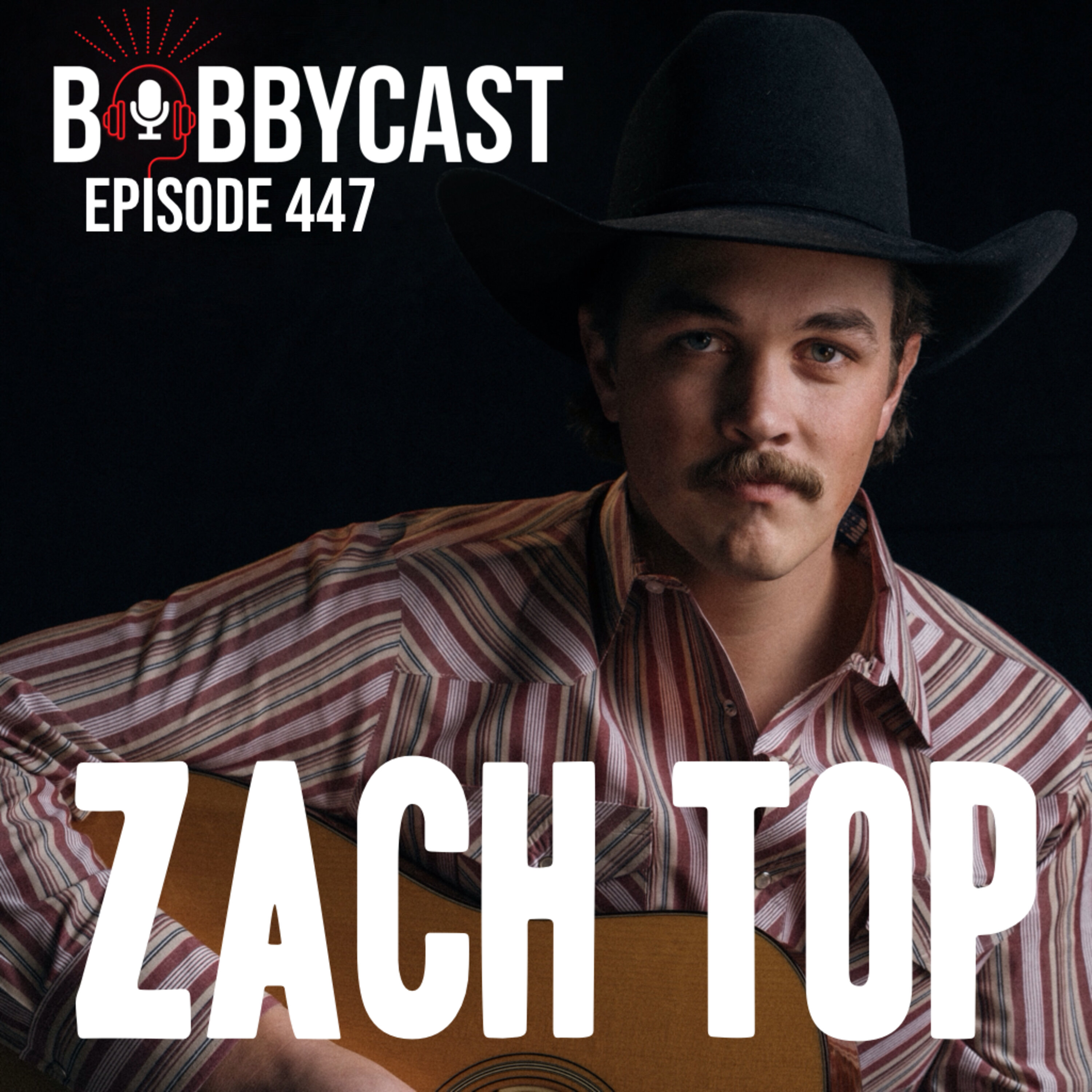
#447 - Zach Top on Jake Owen’s Support of His Music + Growing up Homeschooled and Playing in Family Band + Booking His First at 7 Years Old Over the Phone
Rising country artist Zach Top (@Zach_Top) sat down with Bobby Bones to talk about his fast-rising music career, his upbringing and more. Zach's debut album Cold Beer & Country Music came out April 5th and he talked about what the title means and the process of writing the songs for the record. He also shares how he did not want to post his music on TikTok but then his song "Bad Luck" went viral. Zach also tells Bobby how he feels about Jake Owen supporting his music and saying that he "predicts he is about to change country music in a big way." Zach recalls growing up being homeschooled, playing in his family band, how he started taking music business calls when he was only 7, dropping out of college and moving to Nashville and more!
Follow on Instagram: @TheBobbyCast
Follow on TikTok: @TheBobbyCast
Watch this Episode on Youtube
See omnystudio.com/listener for privacy information.
Available Results
Generated results are saved to the knowledge database for reuse and search.
Extract Knowledge
Pick what you want extracted first. Model, scope, and chapter options appear after a template is selected.
Transcript
00:00:06
Speaker 1: I've always begrudgingly used all the social media stuff, and that was the first time where it felt like, yeah, this is a way you can reach a ton of people, and all of a sudden, there's a bunch of people that know my name.

00:00:20
Speaker 2: This is episode four forty seven, Zach Topp. I heard about Zach first from Jake Owen, and Jake's like, this dude is so good. So I know much about him, and so I went and searched him up. And you know, he is so traditional sounding. I just thought he'd be older.

00:00:36
Speaker 3: Yeah, he's gonna be poor.

00:00:37
Speaker 2: Yeah, because he's really good, no doubt about it. But the first time I heard him without really seeing him, I thought, oh, I see why Jake like some Jake Love's traditional country music. And I thought, man, it was this guy coming out finally signed to make a record. I don't know, fifty three, but he's like right above being a kid. He's like a young adult.

00:00:54
Speaker 3: Even just say speaking voice is much much older.

00:00:57
Speaker 2: It's like an adult man. Yeah, I really like Zach. After hanging out with him, for sure. He released his debut single, Sounds Like the Radio. And also, you think when you hang out with him, because he's a cowboy. He's like a real life cowboy, and you think, hmmm, what are we going to talk about, like how nice is or how warm will a cowboy be? Because some cowboys it's not their meme. But it's a hard life, not that warm. It sounds like a country song already. I know he's I mean, I really like Zach top so you can follow him. Zach underscore top a couple things. It was the number one most added song that sounds like the radio for two weeks in a row. It's in the top around the top thirty now, which is really cool. His debut album, Cold Beer and Country Music no more traditional album name than that, is out now. It came out on April fifth, and so what was cool was it was at least by a new independent label, which Zach's like their flagship artist. But like he's very independent, but just is catching some major because people love his sound and love what he's about. He's going out with Landy Wilson. I don't know what else to say. He's a great mustache. Oh dude, it's solid. It's like it's almost fake looking because it's so solid.

00:02:11
Speaker 3: Yeah, I'm jealous.

00:02:12
Speaker 2: Yeah, would you grow a mustache. She could. I can't.

00:02:15
Speaker 3: I've tried. I can't grow any facial hair.

00:02:17
Speaker 2: Is that hispanic thing?

00:02:20
Speaker 3: My dad has an awesome mustache.

00:02:21
Speaker 2: He like twirls at a fan. He does have an awesome mustach.

00:02:23
Speaker 3: I can't grow anything.

00:02:24
Speaker 2: You are a failure to your genetics.

00:02:26
Speaker 3: Yeah, now my family.

00:02:28
Speaker 2: Zach underscore Top on Instagram, Zach top on TikTok z ah. Here he is. I didn't know what I was getting. Didn't expect him to be young and super nice. Here he is, Zach Top. Is that good to meet you, buddy? I use will Bobby, thank you one of my I mean, now it's it's spread like a positive virus. But at the time one of my good friends Jaco and yeah, a long time ago, I was like, you know, Zach top guy. And I was like, I know he is, Like I don't know a lot about him yet, but he was like, man, he's the real deal. I didn't you were so young. Yeah, I'm a bit of a baby, I guess. Yeah, because you know your music is extremely traditional in the sense of traditional compared to today. Yeah. Absolutely. I mean if you'd have been born in the nineties, you'd have been not traditionally've been current, Yeah, exactly, cutting edge. Yeah. So but Jake was like, man, this guy is so good. Are you starting to feel like a bit of love from inside the industry, like from some artists that's just like, man, we love what you're doing. Yeah, definitely.

00:03:27
Speaker 1: There's been a bunch that have reached out and been real positive and really encouraging.

00:03:33
Speaker 2: You know.

00:03:33
Speaker 1: He was I think about one of the first ones, and he's been super good to me. And it's funny. We we joked over at the at the label I'm signed with, We're like, if Jake Owens ever looking for a gig, he's going to run the promo team over here for Zach.

00:03:48
Speaker 2: Yeah. Even I mean really even to me, he's like, man, this guy's so good. Yeah. So he's been a big fan for a long time. He's been awesome, which has made me go, let me check it out. And then obviously you wouldn't be hereified I think you're you know, I appreciate that. So this stage of your life, yeah, are you running all the time right now or is it kind of the calm before what you feel is about to be the storm? Like where are you on the tired scale? At a little bit of both. I guess I stay pretty tired.

00:04:16
Speaker 1: I like to say I've been busier in the one Legged Man in a butt Kicking contest for the last I guess since last August was our first kind of like it took off, and it was just touring NonStop and starting to do you know, signed with the label. So every day there wasn't a tour stop, there was a radio stop somewhere. So we're run around doing a lot of that. I feel like it's it's a little of both. The I guess had a little break in January, and it's you know, just picking back up into touring now, and and I feel like as busy as I felt like I was at the end of last year, I think it's probably just gonna be about twice as much as that the rest of this year.

00:04:52
Speaker 2: So it's not even just the cowboy hat. It's not even just the sound of your music or the jean jacket, the denim you got the single mustache.

00:05:02
Speaker 1: Well, I'm telling you you gotta have.

00:05:04
Speaker 2: The hole on some And the thing is, I believe it well because there are some I don't believe. Yeah, And I know for a fact, well I know what I feel like is a fact that they're putting on a bit. Yeah, I feel like you're not putting on at all. No, I don't ever try to put on too much. Already had of my stash when you were nine, and that's how that's how we know.

00:05:26
Speaker 1: No, lord, No, I couldn't look at my face, Bobby, I can't grow hair on it wor a dang uh.

00:05:31
Speaker 2: No. I it's funny.

00:05:32
Speaker 1: I've been working on this thing for the last it's probably like the last three years. I made a bunch of tries at it, and it get kind of long and whispering, and it's still too thin. I'd shave it back off, but no, No, my my papa did, my mom's dad.

00:05:47
Speaker 2: It's funny.

00:05:48
Speaker 1: He and I are real like looking at young pictures of him, I'm kind of spitting the image of you.

00:05:53
Speaker 2: I guess it's gonna be a permanent thing. Oh yeah, it's not like it because I grew my hair as a joke and I cut a lot of it off today, but it was all a bit. But this is this is part because it should it looks. It's it's all real deal. Yeah, I know. You don't even get your pants tailored you just roll them up. That's right, that's right. Well, yeah, these things are too dang long, and so I just rolled them up. You're from Washington, yes, sir, states where they make all the good country music, didn't you know? You know I can't agree with that state, not DC for this for those one dam I've been to watching a bunch of times different parts of the state. It is. It feels at times very isolated because it's it's a couple hours back. It's way to the north. Yep, you know you're up in the corner. What was what was country music? What was music like for you within your families? I know you big blue grass? Yep, if you guys all played together, yep. What was music for you growing up ages? You know, six to thirteen, that.

00:06:40
Speaker 1: Was, yeah, a ton of blue grass and started to the first thing that like kind of made me fall in love with music. The thing I got the bug from. My folks were just huge George Strait fans. They had that playing in the house NonStop, and I thought he looked pretty cool in the cowboy hat and holding a guitar. So why they like him, I think probably just the songs, and you know, it's it's the cool thing. You know, him being a real cowboy actually was attractive. My dad, you know, works in the livestock business, still has for a long time, and you know, so it's kind of we were living. You know, I would not call myself a cowboy, but I got to play cowboy.

00:07:19
Speaker 2: A good bit growing up.

00:07:20
Speaker 1: And uh and so you know we listen to music that kind of fed into that a little bit, him and Marty Robbins, and you know that that was kind of the earliest stuff I remember, just always here in on Texas.

00:07:34
Speaker 2: Yeah, I mean, yeah, you know I think of mart Robbins. Do I think if obviously just l Passo, Yeah, oh yeah absolutely, but Washington. Did you live in a rural part of Washington that felt like a rural part of the South or Texas, because there are parts of New York that's rural that feels like the South.

00:07:50
Speaker 1: Yeah, yeah, absolutely, I think yeah, having seen it now, uh, it's I mean, it's it's a little different thing with you know, the the north West is I would say it's more like like a Colorado.

00:08:02
Speaker 2: Or Wyoming feel.

00:08:03
Speaker 1: Where I was at, I think high desert and you know, we're the Cascade Mountains run down the middle of the state over you know, everybody thinks of Washington, think Seattle and rain and over where I was at Hill it barely rains three inches a year. It feels like out there nothing at sage brush and cheek grass, and.

00:08:19
Speaker 2: So it was.

00:08:19
Speaker 1: I would say it feels a lot like you know, some of them West kind of towns more than or or parts of the world rather than South.

00:08:27
Speaker 2: But what about school? What was how big was your school? What was school? Like? What kind of student were you? Yeah? We it was a big school, three students. I was homeschooled. Are you serious? Yeah?

00:08:36
Speaker 1: Oh yeah, yeah, man, my mom homeschooled all of us kids up through basically our sophomore year of high school.

00:08:44
Speaker 2: Was that just a trick, said they should get to do more work around the house? Uh, there was some of that, you know of that, yeah, around the house. Yeah exactly. So you, you and two of your siblings were homeschooled. Yeah, well all four of us. My my oldest sister is just a good bit older. She was kind of yeah, she was out graduating exactly, she graduated, she was doing she was exactly top academy. She was doing as she went to community college.

00:09:05
Speaker 1: I guess by the time, I you know, kind of remember doing school. But yeah, we my younger brother and then I got a sister. We're all sixteen or eighteen months apart, and we uh yeah, so it was it was a lot of I was a pretty good student.

00:09:19
Speaker 2: I was good at math. Did you learned on the road a lot? Because you guys were playing music? I mean you were what seven when you started playing with the family band? Yep? Did you since since you were playing a lot of music, was that really why you were homeschool so you guys could play music and travel? No, not really.

00:09:33
Speaker 1: The homeschooling thing was a big like the church that we grew up in and stuff. It real fundamental type, you know folks. And that was a big thing in our church. Was you know, keeping you know, protecting your kids from the world. I guess a little bit. And uh so we uh that was just kind of the culture we were all in. So what they what they decided to do with us. And you know, as far as learning on the road, we didn't. The way bluegrass stuff works, it's really really heavy in the summer and then there's not a ton of stuff, you know, it's a bunch of outdoor festivals and stuff like that. There's not a bunch of traveling that we did during the you know.

00:10:08
Speaker 2: School year.

00:10:09
Speaker 1: I guess there was maybe three or four festivals that we'd go to during the winter, and then that was more than you know, we'd play basketball and then baseball in the spring, so we could do some sports as well, and then pretty much the whole summer was just dedicated to the music thing.

00:10:24
Speaker 2: How did you play sports? Because if you play basketball, yeah, they got two more players than you on the oh yeah, five v three it's hard to win. Where did you How did you play? Well?

00:10:33
Speaker 1: We it was all like club teams, you know, was just starting in little league obviously.

00:10:38
Speaker 2: In Arkansas. Yeah, exactly, So you played ball, played basketball, yep, yep.

00:10:42
Speaker 1: I was through in baseball. That was kind of it for me. And it started golfing pretty early on to my my mom's whole side of the family's big golfers and and my dad loves playing too, so that was a big one for us early on.

00:10:55
Speaker 2: Do you have to pass like a graduation test.

00:10:59
Speaker 1: Yeah, the way like the homeschool thing, the state you still have to pas basically just have an assessment at the end. Of every year, the state sends you a test basically just you know, go over your knowledge and does.

00:11:12
Speaker 2: Anyone look over you taking it? Can your mom take it for you? Well she didn't, but maybe I'm saying could other people have cheated the system? Probably?

00:11:21
Speaker 1: Yeah, I don't know what the verification was like. There was no you know, camera on us or anything.

00:11:26
Speaker 2: Take and trying to do, Zach, how can homeschool my kids when I have home and take there and so I can just make them do housework perfect? I think I think you can get away. I'm not accusing you.

00:11:34
Speaker 1: Way for me to do that, Well, cameras are so much more prevalent now. I'm sure they make you, you know, sit there with your kid on the camera taking the test.

00:11:42
Speaker 2: Musical instrument that you played first?

00:11:45
Speaker 1: My parents said they started me on piano first. The first memories I have is with a guitar. They got me, you know, I say that they got me a Walmart first at guitar when I was like three or something like.

00:11:55
Speaker 2: Small, like yeah, little little thing, and I.

00:11:59
Speaker 1: Was left handed and they got me a right handed guitar, and neither of us knew the difference. So I just banged around on an upside down, but starting to take lessons. My oldest sister was a really, really good, classically trained pianist, and so she started teaching all us younger kids.

00:12:15
Speaker 2: I don't know that must have been four or five.

00:12:16
Speaker 1: I took my first guitar lesson when I was five, so it must have been somewhere right in there about the same time that I started taking piano lessons as well.

00:12:23
Speaker 2: Do you remember loving music as a young kid or just thinking this is what we do because older sister siblings we did this is just part of school that No, it was. It was definitely uh.

00:12:35
Speaker 1: As far as the guitar playing side in country music, I love that forever. The piano lesson thing, they my parents kind of dragged me kicking and screaming through that, and I hated. I wish i'd have applied myself more now, but I think it was all. You know, I didn't have any interest in learning Beethoven and Chopin. I was, you know, I wanted to if somebody was teaching me how to play piano like Pig Robbins, I probably would have loved it, but.

00:13:00
Speaker 2: But you know it was I just wouldn't.

00:13:02
Speaker 1: The music didn't do anything for me, So I just kind of hated it, and gosh, I wish I could play, you know, if i'd applied myself and be able to play piano, like I can play guitar at all, Yeah, I can, fool I can do you a little piano man, Billy Joe.

00:13:16
Speaker 2: You know, you can fake it for a couple of songs, make everybody think you're good. Yeah, I could get by that. Yeah. Yeah, well I used to do. I used to do this bit at my comedy shows. I don't know anymore because everybody finally had seen it. But I well, first I took piano lessons as an adult, yeah, which was very hard. Yeah. How old when you thirty thirty? Yeah, older than you. Yeah. And it was like I was like, I want to learn to play piano because I want to because I played guitar for comedy reasons. Yeah, but I'm not a guitar player, but I play enough. Yeah. I was like, I'm gonna learn how to play piano. So I learned some chords just so I could write some funny songs. Yeah. And I had a TV appearance once and I played a song on I actually played it on a piano. It was okay, but I was really nervous, not comfortable piano at all. But then I just recorded the track, and I thought, what if I do my comedy shows and I just take a keyboard and fake it, nobody knows the difference. Yeah, just played the track over the top like the DJs do sometimes. Yeah, and so but then I it was fun I would just sing it. But the song was pretty funny. If it wasn't any it was crazy funny. But then I thought, what if I do the song and then all of a sudden, I have somebody else record the track for me, and all of a sudden it turns into like a Beethoven chowpin and I look like I'm up there, just yeah you go, And then it's so advanced. Yeah. So then I end up like standing on one foot just doing it like bugs bunny. Yeah yeah yeah. So then everybody knew it was a joke, right yeah yeah, but makes it a bit. Yeah. Then I stopped doing piano lessons because it was extremely hard as an adult he to wrap my head around it.

00:14:33
Speaker 1: Man, It's it's funny that I think about that a lot, like the fact that my parents did you know, let me be cause they didn't. My parents aren't musical at all. They didn't have any background in it. My oldest sister basically started playing pianos so she could play in church.

00:14:46
Speaker 2: So is she the leader of the band, the family band? Then? No, that was me? It really yeah, Okay, we'll come back to that. He wont before you're telling me now.

00:14:53
Speaker 1: But yeah, so we I think about that a lot, the amount of time that, like, I probably from the ages of five to fifteenrobably played guitar like three hours a day or something. And just like knowing other artists and people that have started, you know, in their teen years or something, I can't imagine because you just don't have time anymore to do that, you know, let alone being actually having to work full time as an adult. I remember my dad for a second was gonna so we had I played guitar, obviously, my little brother played mandolin, Maddie and my sister played fiddle, and then the oldest sister lake and played bass for the little bluegrass family band. And so we're missing the banjo. So my dad got a wild hair that he was going to be the banjo player at some point. But it was the same sort of thing where you know, he it was probably a couple months. He had a lesson every week, but yeah, you know, he ain't got time to sit down and practice and let alone just your you know, you get older, it's hard to Yeah.

00:15:48
Speaker 2: It has already established how it's gonna work. Absolutely. You say you were basically the leader of uh top top strings. Yeah, the top string. Yeah, my mom was really proud of that one. Still, but you're not. You weren't the oldest, So how do you lead if you're not the oldest sibling. I would just think naturally the oldest of the oldest would be like, I'm the leader of the band. Yeah.

00:16:08
Speaker 1: I think I wanted it worse than anybody else. For sure, they did it and had fun with it most of the time. I think I was pretty difficult to work with at times. Maybe that hasn't changed. I don't know, but anyways, Yeah, we hic. I booked our first show. I guess an old family friend of ours, Randy, had called my dad and asked the first show we played was opening for a Passiklin musical at the at the local high school, and Randy had heard that we were. He was part of the roadary clip you know, help him put it on or whatever. He had heard that we were taking music lessons, and you know, we kind of we didn't even weren't even doing it as a band. Everybody was just learning their instrument individually and we were all doing our own thing kind of. We had nothing worked up together. And he called and asked my dad if we'd like to come do the come open for that musical And my dad said, well, Randy, you're gonna have to ask them. I can't answer answer that for him, and so he put me on the phone.

00:17:02
Speaker 2: I don't remember that. How were you seven? I've been told the story enough. He uh. He was like, Hey, we'd like you come do the show. And I said, well, Randy, that sounds great, we'd love to and he's in.

00:17:15
Speaker 1: My first question was how long is it or how much time do we have and he was like, oh, showing for a couple months, and I said, well that's perfect. We'll know some songs by then and we'd love to do it.

00:17:25
Speaker 2: So then you start rehearsing, yeah, yeah, and then we started actually, yeah, trying to work up stuff together. So yeah, kids do the darness things, do they ever? That was you at seven running the business. Yeah, Why would you play guitar for hours at a time? Meaning? Was it pure enjoyment? Was it pursuing the dream of music? Was it pursuing the idea of getting out of Washington? Not a negative way, but no, right, yeah, why would you dedicate so much time to it? In your mind as a kid? What did you think it would lead to?

00:17:58
Speaker 1: I really don't know that I thought it would lead to anything. All I knew was I loved the music, and country music specifically. I remember my folks had a remember them briefcase things that had a bunch of slots for tapes.

00:18:12
Speaker 2: Yes, at tapes.

00:18:13
Speaker 1: They have one of those down downstairs, and we still had a tape machine. I think it was pretty out of date at that point, but we had a tape machine down in the basement and I would go through that thing, just one by one, take one out, play it through, trying to learn every song on there, to learn how to sing them, learn how to play them, just sit down there in front of that tape machine for hours, sitting there with my guitar.

00:18:34
Speaker 2: Did you want to be amer?

00:18:36
Speaker 1: I loved performing, Yeah, for sure. I loved being on stage. I was always, you know, the front man from the start, the one talking between songs, doing most of the lead singing. My sister Maddie's an awesome singer as well, and Jorman Lakenar too, but we the two of us did most of the lead singing. And yeah, I really it was a long time before I ever thought anything about now, maybe I could actually do this for a living.

00:19:01
Speaker 2: It just I was ate up with the music. I loved it. It was just passion. It was just it was just a love yep. Whole bunch of old bluegrass records.

00:19:09
Speaker 1: I remember I got a box set thing with like eighty George Jones songs on a CD. I went through all of those, learned all that stuff. I remember the first time they had the uh Don't Close your Eyes tape of Keith Whitley, and I about lost it when I heard that thing.

00:19:24
Speaker 2: Learned every song off of it. And then it's like you're two hundred inside of a body of a well seven year old. Yeah, now twenty five, do you did you always feel a bit more mature than the kids your age when it came to the art that you enjoyed.

00:19:39
Speaker 1: Yeah, yeah, I think so, And I always, you know, I think I always hung out with you know kids that were I played up a good bit, whether it was sports or music or anything. I was always hanging with kids that were a couple of years older than me, and and especially in.

00:19:55
Speaker 2: The in the music sense of it.

00:19:57
Speaker 1: I guess I grew up with a handful of guys that I ended playing in a band with called North Country for a little while. And those, you know, they're most of the guys in that band were ten years older than me or something, but I love they.

00:20:09
Speaker 2: Were because I'm familiar with the band. Yeah, so like twenty fifteen, you guys start, what was your role in that band? It was I came in.

00:20:17
Speaker 1: They they had a mandolin player that got picked up by it.

00:20:20
Speaker 2: Now they find it.

00:20:22
Speaker 1: We just uh, they were Washington guys too, so all the festivals up in the Pacific Northwest, we were going to all the same festivals, so we'd see each other, non stuff, you know, just for a long time, just jam and having fun. We didn't think it was. But when they lost that fellow Nick Doomas did most of the lead singing for him and played mandlin, they asked me if I would like to learn mandlin and come be their lead singer.

00:20:44
Speaker 2: So did you learn mandolin. Was it pretty easy to go one to the other.

00:20:50
Speaker 1: On the one hand, Yeah, it's it's weird. It's just like technical things. It's a different attack that took me a little bit to get used to. But they asked me, I guess in like November of twenty fourteen. I think our first show was in February of twenty fifteen.

00:21:07
Speaker 2: Man, it's awesome because I want to watch Ricky Skaggs. Yeah, and I know Ricky from me playing the opera at the same Yeah, and I was a Ricky Skaggs fan, yeah, as a kid, and then get to get to know Ricky at the opry. Yeah, But then to watch them play up it's just yeah, it's so yeah. Man, it just feels so intense up it close, way, way more intense than it seems from afar.

00:21:31
Speaker 1: Yeah, and I think it's I think it's a more difficult instrument to play in my opinion the guitar, And probably that's partly because I've spent more time on the guitar, but like just from like physically, you got two strings, you know, the double strings tune the same, so you're depressing two strings at a time instead of just one.

00:21:50
Speaker 2: You know, just little things like that.

00:21:51
Speaker 1: I felt like it was hard on my hands compared to and it's tiny too, like you're wrapped around a whole handle with your hand and the frets are smaller. I felt like it was kind of I faked my way through it.

00:22:01
Speaker 2: When's the last time you played a mandlin? It's been a minute. If I handed you one, could you fake it like you did? You can't? Oh yeah, I could play I fake it. I'll still play it, yeah, yeah, yeah, but you could make somebody feel like yeah of course, yeah. Yeah. Man. That week, I can't think anything that good. Nothing, I can't think anything.

00:22:18
Speaker 1: I've gotten so good at faking so much stuff. I'm telling you.

00:22:22
Speaker 4: Let's take a quick pause for a message from our sponsor, and we're back on the Bobby Cast.

00:22:36
Speaker 2: So you're in another band at this point. It's another group. It's another group dynamic yp were the thoughts ever? Hey, I think I can do this by myself or I want to pursue something not to lose the other guys, but something that's more real, true and traditional to me, which is you know the sound we call your traditional sound? Now, yeah, when did that start kind of creeping in that was.

00:22:58
Speaker 1: I guess when I started work working with Carson Chamberlain, my producer and co writer on everything, that started to feel like once I started working with him, he was really focused on trying to like That's why from the first times we talked together he impressed upon me in the importance of that too, Like, all right, so we know you love Keith Whitley, and you love George Jones, you love Merle Haggard, and you love George straight. But when you sing a Keith Whitley song, you got to start figuring out how to sing like Zach not like Keith Whitley all the time. And you know, or whoever it was that I was covering the song, and so there was a lot of you know, when we would be writing, and or even when I just listen to demos or whatever it was, it was a lot of working on figuring out my thing that was, you know, gonna set me apart from everybody else. And so at that point I think it started being like, all right, this needs to be my thing, not as much of a The way all those bluegrass bands worked was, you know, it's a collie of effort. Everybody's got their input on what songs they think we should be doing and how we should arrange them, and.

00:24:05
Speaker 2: You know, all this different type of stuff.

00:24:07
Speaker 1: And so once I started, yeah, focusing in on who I was as an artist, then it all of a sudden it felt important that it's like, all right, I got to call the shots now, sort of like when.

00:24:20
Speaker 2: You were seven, Yeah, exactly. North Country was North Country bluegrass though. Yeah, well so that was a issue.

00:24:26
Speaker 1: Yeah, very much like if you the early skag stuff, and you know, even Whitley in that last you know thing he did with J. D. Crow where it was it was mostly bluegrass instruments, but they had some drums on some stuff, and some steel on some stuff, and piano I think too in.

00:24:39
Speaker 2: There a little bit.

00:24:40
Speaker 1: We loved everybody in that North Country band was a big fan of that kind of hybrid thing. So we were doing a bunch of country songs. We played all bluegrass instruments. It was an entirely acoustic band, but we we loved, you know, bridging that gap a little bit between.

00:24:54
Speaker 2: Since you were the young, they were ten years older or so. Generally was their mind, Hey, we're just doing this for fun. We got jobs and kids.

00:25:05
Speaker 1: Mostly, Yeah, I mean they they all loved the music. There was one other kid that was he's a couple or yeah, a year or two younger than I am. Whose phenomenal musicians from up in uh Squamish, British Columbia. So we were the youngest in the band. And but the older guys I think definitely was more of a for fun thing.

00:25:25
Speaker 2: It's funny. The other guy that was kind of the band leader.

00:25:28
Speaker 1: I started being responsible for a lot of the song selection and in uh set list or like writing yeah, set list. And but this guy, Will mc seventy was kind of the band leader. He ran the you know, as far as the business side of things and everything. He took care of all of that and did some of the co writing on some of them songs with me too. He was he's here in Nashville now, he's got a little he's got a small bluegrass label.

00:25:51
Speaker 2: He's got a few artists signed too.

00:25:53
Speaker 1: So he's kind of you know, I think, really enjoys the business side of the thing, probably more than the you know, being the one on stage making the music. So he's in the music business still. But I think, yeah, for the rest of them, it was more of a you know, it's a fun thing to do on the weekends.

00:26:10
Speaker 2: If you're in a band and I don't know, did you sneak off and do something by yourself for the first time or were you just like, I'm gonna go recorded you just like the band's no longer, I'm gonna just like the first song you recorded? Was it under the because once I snuck and worked at another radio station, didn't tell anybody. Yes, yeah, use a fake name, because like, let me see if I like it. Yeah, what was the first record when it was just Zacktop or was it Zachtop? Was that your name? Yeah? Oh yeah, okay, Yeah, So what was the first song you recorded? And was it when you were like, I'm not in the band anymore?

00:26:41
Speaker 1: No, it was so after that North Country band, I joined up with another group that was I mean they were all scattered around. Fiddle player from Murphy's Boro, bass player from just outside of Saint Louis, mandolin.

00:26:54
Speaker 2: Player still living up there. I was still living in Colorado at the time. Yeah, and uh, and I don't even know when you moved in Colorado. Oh yeah, that was seventeen.

00:27:03
Speaker 1: We played our last show with the Family Band the summer of twenty fifteen, and you moved to Colorado eventeen for what reason? Both my sisters were moving out there. My parents kind of shipped me off. They wanted me to get out of town. I was dating a little gal, and they thought I shouldn't have a little business.

00:27:22
Speaker 2: Yes, yes, that's making sure. She's a regular side. Okay, regular, God, it's making sure. Yeah.

00:27:29
Speaker 1: So they they kind of were like, because I thought I was gonna stay there and uh, you know, just get married her and get married and go to wazoo or something, And anyway ended up that's WSU I guess probably for Washington people.

00:27:43
Speaker 2: Yeah. Perfect.

00:27:45
Speaker 1: So anyway, they kind of My sisters were going out to Colorado to see you, and they kind of just shipped me off with them. And you living Boulder yep, as a bolder for the first it was really fun while I was. I was in school there for a year and had a blast while that went on. As soon as I had decided I was done with school and quit that and started working.

00:28:06
Speaker 2: I got pretty tired of it pretty quick. What'd you do for work? I started working construction? Were you still playing music? Yeah? On weekends yep. And what did you think? What did you foresee happening within the next five years or so once you decided school's not for me. Yeah, you still played music, obviously loved it. Did you see a future in it for you long term? Yeah? Yeah.

00:28:27
Speaker 1: That was the reason that I quit school was that was like, hell, I'm well, I guess I was only one year away from finishing I was a mechanical engineer.

00:28:36
Speaker 2: I was only one year away from finishing my degree. Didn't you want to hang another year? Huh?

00:28:40
Speaker 5: No.

00:28:41
Speaker 2: I was just like, I.

00:28:42
Speaker 1: Gotta be done with this, and you know it's going into debt on school. I felt like I was just digging myself a hole to where obviously, knowing what I know now on the music business side of things, it's not good to start in a hole because you're going to get yourself in more one trying to start this kind of career. So but the yeah, I basically was just like, I got to make some money and save it up so I can move to Nashville.

00:29:05
Speaker 2: So that's why you're working.

00:29:06
Speaker 1: Yep, that's why I decided to quit and what my parents were thrilled as you can imagine that I decided to quit my mechanical engineering degree before.

00:29:13
Speaker 2: You know one year, I get it, I get it. I see why. Oh I know I quit as a sophomore. Yeah no, not a junior senior. Yeah, but no, you knew what you wanted to do. You're right, and you obviously had a head on your shoulders. It was pretty good considering how old you were. That seems to be the thing that's in common throughout your whole life, if you're seven, or if you're nine running the band, or if so when you moved to Nashville, what was that number you needed to hit, either financially or because you're saving up money? But what are you saving to have so you can move out? Just enough to move to move and half five thousand of the bank? Like, what was it?

00:29:48
Speaker 1: I think more than financially, it was just like to be in a position where I and you know, construction is just a thing. You can do that anywhere, So that was kind of I'll save up a little money and then I'll move to Nashville. I'm sure I can get a construction job out there, and that's what I did for the first little bit that I was out here. But I think more than anything, like I didn't know how to get to Nashville, or what the hell I was going to do when I got here. I had no clue about the music business outside of just you know, the tiny.

00:30:13
Speaker 2: Little world of bluegrass.

00:30:16
Speaker 1: So when I started talking to Carson, that was Carton Chamberlin yep, Carson Chamberlain.

00:30:22
Speaker 2: Uh Spring of twenty eighteen.

00:30:24
Speaker 1: After Daryl Singletary passed away, I put up a video of his song Spilled Whiskey, and that thing kind of blew up for me.

00:30:30
Speaker 2: I'd never you know, i'd been.

00:30:31
Speaker 1: I'd started posting some videos just pretty much on Facebook. I guess I didn't even have a Instagram. I don't think anyway, I was. I was posting stuff on Facebook, and i'd got, you know, fifteen hundred views on a video before or something, and that thing kind of took off and shot up to three hundred thousand views on it, and had a bunch of people reaching out to me. Were you living here then or still color out? Yes, sir, I had a bunch of people. You know, I felt like shyster's for her a better term. You know, it's the kind of thing whereas you can come up with twenty thousand dollars and you know, we'll cut your record and put it out. It was I didn't know anything, but I knew that that didn't feel right, and I was pretty sure that wasn't the way it worked. But around that same time, Carson Uh reached out to me and we started talking, and you know, just seeing his resume and all the you know, hit songs and people he's produced and all the work he's done throughout the industry, was like, all right, this guy's a real deal. And from the you know, moment we first started talking, he was much more of a long term, big picture. You know, we're not going in and cutting next week, We're probably not doing it this year. And so it was that made sense to me that it everything he was saying and telling me felt like the way to build a career, not just like let's capitalize off a little bit of online buzz.

00:31:58
Speaker 2: Was that video going a bit viral? What was the final part of the catapult that made you just go, I got I need to get out there.

00:32:06
Speaker 1: I think it talking to Carson was was what kind of he find you?

00:32:11
Speaker 2: Because the video?

00:32:12
Speaker 1: Yeah, yeah, he found me Country Rebel if you know that page they had reposted that video and Uh and so he found it on there and starting to you know, I spent better part of two years flying in and out of town. I'd come, you know, once a month, I'd come in for a week and he'd set up co writes for us. I'd stay at his house and all that. We did that for a little while. But that was finally once I started working with him, that felt like, Okay, now I've got something to move out there for. And because as much as bad as I wanted to get out here, I didn't feel like there was much point in, you know, just coming out with nothing to I don't know, I guess it just finally validated.

00:32:54
Speaker 2: That's like, all right, this guy wants to work with me a shot. Yeah, now, like lend you stand his how yeah? Oh yeah, oh yeah.

00:33:01
Speaker 1: He's treated me like another kid to his make you do the dishes well sometimes.

00:33:06
Speaker 2: Okay, See that's how you know it's real. Absolutely, So you're moving from Colorado to Nashville. You just pack up the truck and drive it. Were you more excited or nervous or were you what was your mindset, like, let's just give it a shot and see what happens. If not, worst case, I go back home.

00:33:22
Speaker 1: Yeah, I was pumped I was very excited. And you know, it was funny when I told my parents I was quitting school and coming out here, like I said, they were not thrilled.

00:33:33
Speaker 2: I was being facetious. They were not fans of that. I think we all got that, yeah, yeah, yeah.

00:33:39
Speaker 1: And so it was I had a bit of a rocky relationship with them for a little bit.

00:33:43
Speaker 2: Really. It did create a bit of splinter for a while. Yep, it did.

00:33:47
Speaker 1: And then but I think, as you know, when I could call home and tell him I was working with this Carson Chamberlain guy and explain to them, you know, what he'd been been doing for the last forty years and you know, send home some of the songs we've been writing and that sort of thing, I think that validated it to them as well, and so I think they kind of jumped all on board and they were very supportive after a minute. So it did feel like when I moved out here, it's like, I'm gonna go for it. We'll see, I've got a you know, safety net I can, I've got family, and I felt like I had Carson looking after me to where I didn't feel like I was just going to be out here on my own trying.

00:34:27
Speaker 2: To figure out through the barren tundra of Nashville, what was this sound like for you when you moved out here, or at least what did it? What was your perception of Nashville the first six months, because my definite perception was different than what it is now. It was dumb. I hated it because Carson told me.

00:34:42
Speaker 1: I figured when I'd get moved out here that I'd be playing in bars every night and writing songs every day. And he told me, absolutely not, you don't need to do that. We'll write a couple of days a week, and you keep working construction. And I think, you know, looking back, as a ton of wisdom in that, just to keep from getting kind of swallowed up in the Nashville machine and becoming one in the crowd, I think I was able to keep the town just a little bit at arms length and keep working on, you know, my own thing that made it stand out. So it was, you know, I moved to spring Hill, Uh it was, you know, So I was. I wasn't on Broadway every night.

00:35:24
Speaker 2: I didn't.

00:35:25
Speaker 1: I think i've been. I haven't even spent a night on Broadway. I didn't have much interest in that I found kind of some of the more divy places that were playing some old school music that I liked, stuff like the local and music city bar and grill and.

00:35:38
Speaker 2: Stuff like that.

00:35:40
Speaker 1: But so I was still, you know, I was working construction four or five days a week and right in two days a week, and it was.

00:35:49
Speaker 2: It was work a little bit though, Like I'm in Nashville, Dan Man, I want to.

00:35:53
Speaker 1: Do more big time and like looking at other sort of peers of mine, uh, you know that were you know, they already had publishing deals or what have you, it felt like they're doing what I want to be doing. And uh and I think it was. It was even once I got my first publishing deal, I kept working construction and that was all you know, Carson kind of urging me to do that and not ever play in town pretty much. And you know, I had a decent little road schedule.

00:36:25
Speaker 2: Still, what kind of shows were you playing on the road.

00:36:29
Speaker 1: It was I had a country band at that point and we were, you know it just whatever we could get into some smaller time festivals, you know, play little fairs. Just you know, a lot of some bar owner saw a Facebook video of mine, and so he wants me to come play, and it was a bunch of that stuff.

00:36:46
Speaker 2: Did that Facebook video, that Darrell Singletary video, did it live a long time before? People were still like, dude, I just saw this video and you're like, that's four years ago.

00:36:53
Speaker 1: It felt like not that long, but it felt like for like the whole year after that.

00:36:57
Speaker 2: Yeah, that thing kept coming back. That's pretty cool. Yeah, yeah it was. It was the.

00:37:01
Speaker 1: First kinda I kind of I've always begrudgingly used the all the social media stuff, and that was the first time where it felt like, yeah, this is a way you can reach a ton of people. And you know, when I had nothing else going on, all of a sudden, there's a bunch of people that know my name and you know, are following me now, and I think that, yeah, it's funny. I didn't ever want to make a TikTok I didn't want to post on Instagram.

00:37:28
Speaker 2: Yeah you're not the guy. To me that seems like he's just craving TikTok no, But it has now been seen that is, if you don't do it cheesy, it's not cheesy NOx And I mean now, because there was such a I'm not gonna get on TikTok because I'm not doing a dance, I'm not being a g But now it is what you make of it. The band that really switched that for me was like, I don't know if you know Red Clay Straits. Yeah, man, I had him on my show week. I just love love us all Alabama boys and it's kind of this mixture of like retro rock the country. Yeah, Jerry Lee Lewis, Yeah, just awesome. So they came up to the show and I was like, when next time you guys are in Tennessee, come play my show. So they did. They showed up, we played, We did the whole thing on the air. But I told them they were like the first band to meet them in Lake Street Drive Yeah, lake Street Diving. Yeah. They made it not cheesy yep, because they just did what they did. Somebody just captured what they were doing and it didn't feel like some you know, some strings being pulled by someone trying to create the content that they think will work. Yep. And those were the artists that really made me tell my other artist friends, like, shut up, just do what you do. Just have somebody recorded. Yeah, yeah, use the platform for what you do, don't they kill't like, yeah, don't run towards the platform exactly. Let the platform come to you. And if it doesn't, that's okay. Yep.

00:38:49
Speaker 1: No, yeah, it's just if you're making compelling content, people will watch it. You don't have to be dancing or you know, doing something funny or whatever.

00:38:55
Speaker 2: That was.

00:38:56
Speaker 1: That's all I've ever posted on TikTok pretty much just me sitting there with a guitar dance playing an old song.

00:39:01
Speaker 2: No, there was.

00:39:02
Speaker 1: One video that I considered not posting, U There's I made it.

00:39:09
Speaker 2: Well. I was working on this house up in north of Nashville.

00:39:12
Speaker 1: It's I've got my tool belt on, you know, I've got my hammer loop in the back, and guys will do a trick where they toss the hammer up and and it goes in the loop. And so that was the closest thing I kind of came to doing a dance.

00:39:23
Speaker 2: I guess, yeah, it's not close to doing a dance. So you're so good in my.

00:39:27
Speaker 1: Well, there was I mean I was shaking my ass around trying to trying to catch the thing, you know a little bit. So as it was, I think some people enjoy can you dance? I can two step a little. I have swing dance a little, this swing dance top. My grandma taught me a two step. I'm from Arkansas, so you know, my grandma taught me to two step. And then I also grew up in the you know, nineties, two thousands, when music was then universally available online now after yep, so you could really have any kind of music, yeah, at all. So I also went to a school that wasn't just all white like a two step.

00:40:01
Speaker 2: But then I would just grind. Yeah, I just get on a button grind. Yeah, that's what we did at the dance and then and so, but never really had like, you know, I wasn't super good at I Want to Dance with the Stars. I won that show, but he did. Yeah, I didn't know you were on that the mirror balls right behind there. But it's like I never was good. Yeah, but I really I I enjoyed it fine. It was music. Oh yeah. Yeah. My point was I line danced a little bit. Yeah, I tried to. I never could get into that much.

00:40:29
Speaker 1: When I was out in Colorado, I had a bunch of you know, kind of rednick buddies that I lived with, and we'd go down to the Grizzly Rose and lay there before.

00:40:37
Speaker 2: Yeah, I believe it. Yeah, I love that place.

00:40:39
Speaker 1: We spent a lot of a lot of time in there, and I tried the line dancing thing a little bit and it didn't.

00:40:45
Speaker 2: It wouldn't my thing if I didn't have a you know, i'd like to have.

00:40:48
Speaker 1: I don't think I will girl under three, a little girl. Yeah, that's what I want to be dancing. If I'm dancing by myself, I look dumb as hell. And so I spent more time on the pool tables.

00:40:58
Speaker 2: I guess I definitely look dumb. Yeah, but I was okay with it. But it's I love it. You know.

00:41:02
Speaker 1: It's like a wedding dance party. Like you said, you dance. Oh yeah, I'll get out there.

00:41:07
Speaker 2: You're not cool to do it? No, No, you got it.

00:41:10
Speaker 1: A couple of beers in me and I'll start taking clothes off and doing things nobody's ever seen.

00:41:15
Speaker 2: No, I'm good not knowing about that. Yeah, that's all right. In college pictures you can find No, I'm good in college. I took line dancing, okay, because I know all the girls were. It's a class. Yeah, just at one of the clubs or something southern Arkansas. No, I get class. It was a college class. It was a college class. Yeah, like a Tuesday Tuesday evenings. I would go and take line dancing and I learned the dances because I was like this is but really I just wanted to get What got me though, was I went. I was like, I'm gonna meat all these girls because apparently it's like ninety percent female, but it was like ninety percent female, non traditional so they're all like fifty Oh there you go. Yeah, so I really you'll have that. I really just that was really just you just became a really good dancer. Yeah. I just got a lot better at life. I didn't have no distraction.

00:41:56
Speaker 5: The Bobby Cast will be right back. This is the Bobby Cast.

00:42:10
Speaker 2: The Washington State music scene. I'm not gonna even say Seattle because Seattle to me, obviously is what it's associated with. To me is two things won the grunge in the nineties. Yeah, of course from Nirvana you can go to and then even a bit of a hip hop movement yep, with Maclamore, absolutely that what the Washington state country scene. Is there a country scene or is there the bluegrass scene? Even bigger? I don't.

00:42:40
Speaker 1: I mean, it's hard to say the bluegrass scene was not big out there. We have there's a festival in Washington somewhere every weekend you can go to all summer, and a handful of good ones in the winter as well, So it felt like it was big at the time. I mean, it's nothing like the Southeast. And as far as country, there was no like. I didn't play any country music up there. I was playing country songs in my Bluegras sets. But there's no like, there's not a circuit of clubs you can play.

00:43:12
Speaker 2: No straight ahead country clubs. No, no, not really.

00:43:16
Speaker 1: There's one that Tractor Tavern in uh In, Seattle is a pretty strictly country spot. I have not played there yet, hopefully soon. But that was, you know, and even just music to country music to see that, you know, it was basically when you got the County Fair Rodeo, they bring in something. I remember the first big show I went to see was John Michael Montgomery opened up for uh Dwight Yoakum, I believe, and I took that little gal I was dating that was she.

00:43:45
Speaker 2: Had grown a little by then, she had grown, she had gone pretty good. Yeah, yeah, absolutely, we were talking about like a video going viral, but I saw that bad luck had really blown up on Yeah, and that wasn't that was just you. That was just you doing your thing.

00:44:00
Speaker 1: Yeah, it was me doing a stupid thing. I was laying on a dang seat in a pontoon.

00:44:04
Speaker 2: So my jeenst, what did you learn from that? Man? It's so funny. I don't know, because.

00:44:14
Speaker 1: I don't know what it was about that video that was compelling to people, because it was like, you know, if I listened back to it, it wasn't the best I've ever sang. It wasn't the best I've ever played guitar. It was like I was sitting in a position where it was difficult to play guitar. And I don't know if it was just because it was kind of goofy that, you know, I'm wearing jeans on a boat, I look uncomfortable while I'm playing. I don't know if there's something goofy about that that kind of made it resonate with people or what. But like I can point to twenty different videos on my TikTok where it's like, no, now that was a compelling performance of the song got anywhere near the amount of views that one did. It feels like such a like it's the wild West out there. You don't know what's gonna hit her, you know, Even with that song. I've loved that song ever since we wrote it. But I figured just the type of song it was, the fact that.

00:45:04
Speaker 2: It's so different doesn't sound like anything was.

00:45:08
Speaker 1: It felt to me like this is probably gonna be like my sneaky favorite on the record, and most other people won't pay attention to it, and or was I wrong about that? So it's it feels so strange to I feel like I know a good song when I hear one, and know something like that can be a hit. But even that one, I didn't call that shot, that's for sure.

00:45:29
Speaker 2: And I think because I've also seen the video, it seemed You're right, I don't even know why. I'm comfortable, but it just seemed so not shiny. Yeah, because it wasn't. No, I think that is likeable, And I think too, it's just like you just do your thing over and over again. Don't don't get don't be distraught when it doesn't work. You just keep doing it. Because because it's not going viral doesn't mean that it's not going to connect. No. Yeah, like it's almost like you have to keep doing it over and over again until you catch the freaking algorithm.

00:46:06
Speaker 1: Yep, yep, it's wild how that stuff works. Yeah, Like even like reposting. We you know, at the beginning of my well, I had it when we first hired my management team hired a company to start running my socials because it was you know, it gets to be too much for one person to run. They you know, they would even repost the same video a couple of weeks later and.

00:46:30
Speaker 2: Do totally different numbers, good or bad, right exactly.

00:46:32
Speaker 1: And you know, just keeping on hammering that, keep throwing mud against the wall and at some point something will stick.

00:46:39
Speaker 2: The dumbest thing. I did a video the other day just ad my hair. I was growing it out because I thought it was hilarious. Yeah, for no other reason. Yeah, my wife wanted to kill me. But I put it in like five different little ponytails, which I've never done that before. Yep, I'm not ponytail guy. Really got I'm positive, yeah, got a million strings on that video. I didn't do anything. Yeah, I had my hair in five ponytails, and I was like, hey, hope you guys are having a good day. Yeah, that was I mean, that was really nothing. It's it's wild and I think if I did it again and make it like a thousand, right, it's there's no telling there. There's a combination of the two things, me being so good looking and so charming, and those together really made that video work.

00:47:17
Speaker 1: Those would be the leading factors, no doubt. What does your hair look like? It's fluffy. There's a lot of it right now.

00:47:22
Speaker 2: Look at you. Yeah, there's you have all that. You have all the hair. Oh you have like Aaron Tippin hair. Yeah, I wish I had these muscles. Yeah, well, I saw we can work on that. He like five years ago, a pre pandemic. He came to the studio and he was in his sixties now yep, still pretty jagged. Oh yeah, oh yeah, big time still Yeah for a sixty year old dude, that to me, like that was that part of country music. I used to roofhouses. We listened to a lot of Aaron Tipping because we felt like we felt like he was roofing houses with us.

00:47:54
Speaker 1: Yeah, he's he was kind of the blue collar, yeah, working man's country guy.

00:47:59
Speaker 2: For like he's working man's PhD. Right, yeah, exactly, that's him. I guess his songs just told me and I just believed him. Yeah exactly. But then I met him and I was like, no, he was telling the truth. Yeah exactly, he wasn't because he was yeah. Yeah. So what's the like, what's what's the goal for you in country music? Like? What would make you the happiest if you had? What? Blank?

00:48:26
Speaker 1: I want to write and put out songs that stand the test of time that in fifty years people are still coming back to them and being like this is the gold standard in country music.

00:48:40
Speaker 2: But what if they're not successful? Now, what if they're just good? But in fifty years they're still good? Would you give that up to be great for ten and then be forgotten after?

00:48:52
Speaker 5: No?

00:48:53
Speaker 2: I would.

00:48:54
Speaker 1: I just the all the icons that I like emulated and and the guys that I look back to as like that was country music at its finest right there. You know, if it's Merl Haggard or George Jones or whatever.

00:49:08
Speaker 2: You know.

00:49:08
Speaker 1: Gary Stewart, I think, is a great example of somebody that didn't have a huge career for a lot of reasons. You know, he wouldn't know Garth Brooks or George Strait. But some of those records and some of those songs, that's like, that's the gold standard in country music right there.

00:49:23
Speaker 2: So then I'll go back to those time after time after time.

00:49:25
Speaker 1: Yeah, obviously I'd love to be selling out stadiums and you know, do all that too, But most importantly, I think it just put out songs that people will keep coming back to and be like that was that was as good as country music could get.

00:49:40
Speaker 2: April fifth, the full album comes out. Yes, sir, you went with a wild name that's totally off brand telling you cold beer in country music? Yes, sir, is that a track? Yeah? I thought it was. That was one of these facts. Yeah, that was the first thing. Why did you select that as your that because again, you can pick there's a lot of that. I mean we could roll through that. You could have been cowboys like me do it could have been there are a lot bad luck could have been there.

00:50:06
Speaker 1: Why why that sounds like the radio? I mean that's just me to a tea right there. You see that title, you know what you're getting. You're getting the country music here, and you best get the cold beer out because you're gonna want so soon as you hear the first track.

00:50:18
Speaker 2: What about warm beer? That would be fun too, but it's less enjoyable in a pinch. I've never drank beer, so I don't I've.

00:50:26
Speaker 1: Drank a warm one before when there would have no cold ones to be having a hot beer, I'd probably avoid, Like you like tea, like it's.

00:50:35
Speaker 2: Lose all the carbonation. That would be horrible. You haven't done it right, Maybe not a tea beer. I don't think i've that's I never had a beer, so I can have all the reason they keep it all cold, I'm sure. But I just think you could just tell people it's different, good and they think it was great. We're doing hot beer.

00:50:54
Speaker 1: Yeah, I could be a big branding thing for me, the country music guy.

00:50:59
Speaker 2: So oh, this record's gonna come out. Yes, the songs that we haven't heard yet. Because by the way you're that this sounds like radio crush. That song it was like most added or whatever. Yeah, yeah, it was one used added for three weeks straight. I think, like that's all. How does that make you feel?

00:51:14
Speaker 1: It's I was blown away. It felt like a bit of a sigh of relief. It's kind of you know, I knew that that song obviously sticks out like a sore thumb compared to anything else on the charts right now, and uh, I figured, if it sticks out that bad, it's either going to be a love it or hate it thing. And so I just very thankful, felt like we could Okay, we weren't making it up, we weren't crazy this, this might work.

00:51:37
Speaker 2: Once that came out and it got that response, the rest of the songs that we haven't heard yet, h sonically, what are they more the same? Baby?

00:51:45
Speaker 1: I said that ain't a Billboard interview recently, and I didn't even think of it when I said it, But when I read the ride up after, I was like, ah, it was pretty fun.

00:51:54
Speaker 2: It was a pretty good line.

00:51:55
Speaker 1: I said, Uh, for those of you that like it, that's great. You're gonna get a hold much more of the same. If you don't, you're not getting anything different. So it's it's more country music, as as good as I can manage to make it.

00:52:10
Speaker 2: Do you still listen to any any blue grass that's being made like current current bluegrass? Not much, that's the same sort of thing.

00:52:21
Speaker 1: I feel like if I go listen to some bluegrass, it's usually older school stuff. Larry Sparks or you know that old JD. Crown, the New South stuff. I love bluegrass album band stuff. That's where it was at for me. Lone from River Band. That was the stuff that made me fall in love with it, that I wanted to emulate and play Dirks.

00:52:37
Speaker 2: Obviously you're going to do something, yes, sir. That dude, Yeah, he'll bluegrass all day, yes sir, and legitimately ye, Like it's not an act. I mean he went record, yeah, exactly, and spend a bunch of time and money and energy and just because I've he loved to do it. I mean I was talking to Dolly and she was talking about blue Ger said she had to get rich before she could do something that she wanted to do when she was poor, which was make a bluegrass record. I think Ricky's Gags had a line about that too, something about, yeah, I went and made some money in country music so I could afford to keep making grass music. Well man, congratulations, It's really cool because I mean so many just so many of the folks around here that I like kind of vouched for what you were doing. Sure, because I mean there are ten thousand things coming in all of us, every single day. Yeah, absolutely, you know with you people with me, and so I don't get around to everything i'd like to, and I make a note go. But there were two or three people that were like, Zach top's awesome, like he's like the neck and so I was like, well, let me see, and I'd listen. I liked it, but then I was like, let me see if this dude's putting on or not, because like you know, oh absolutely, you look like you could be cosplaying a cowboy, but it's really you. Yeah. The mustache is not only real, it's just af. I mean, if you didn't have a mustache, I would go like, you need a mustache. Yeah, yeah, it feel it feels like it completes the picture. But you're just like a kid. Yeah, and my mustache looks like a kid's mustache. Oh no, it's good. No, no, it's definitely solidciate. Well, man, I'm a big I'm a big fan now, and thank you so much. I'm rooting for you. I like anybody who it doesn't matter what style you're doing. It doesn't have to be a country music can be whatever. I like anybody who doesn't really change because the temperature says so and it can be a bit difficult to be doing it one way when everybody says, hey, maybe you should just modify slightly, and I just don't feel like you've done that. And I feel like that's the strongest thing about you, and that's what's gonna really propel you, the same way you talk about your songs like you gonna love it, You're gonna hte it. You know, with you, that's all. That's where, that's where you want everything right, because you can't get any traction if you're just pretty good. Nobody cares. Yeah, yeah, somewhere in the middle of it doesn't do you any at all. And so like, I just think you're gonna kill it because you're You're the real deal as far as what you present, and if you don't like it, you're still the real deal. But you don't worry about them. There are enough people that love what you do. Really cool, man, This has been super fun for me. You guys can follow Zach at Zach unders or top on Instagram and then Zach Top on TikTok. But you got more TikTok followers and Instagram followers, Yes I do. Yeah, TikTok's been good to me. It's so funny, isn't that weird? Never one, you are the one that TikTok has been good to. Yeah it is goofy. It's ironic, dentim on dnom that's right, jeans, rolled up, mustache, wearing Aaron Tipp and hat having Yeah, well he didn't have had the hair hair hair hair yeah anywhere. That sounds like the radio which is now. But this podcast will live on in perpetuity. So whatever you're putting out, everybody check it out. Zach, top, Mike, anything you want to say to Zach here.

00:55:35
Speaker 3: It inspired me to grow a mustache. I've been trying for like twenty years.

00:55:38
Speaker 2: Come on, don't stop believing. I have a hope now, don't stop believing, all right, Zach, good to see buddy, Thank you, Bobby, thanks for listening to a Bobby Cast production.