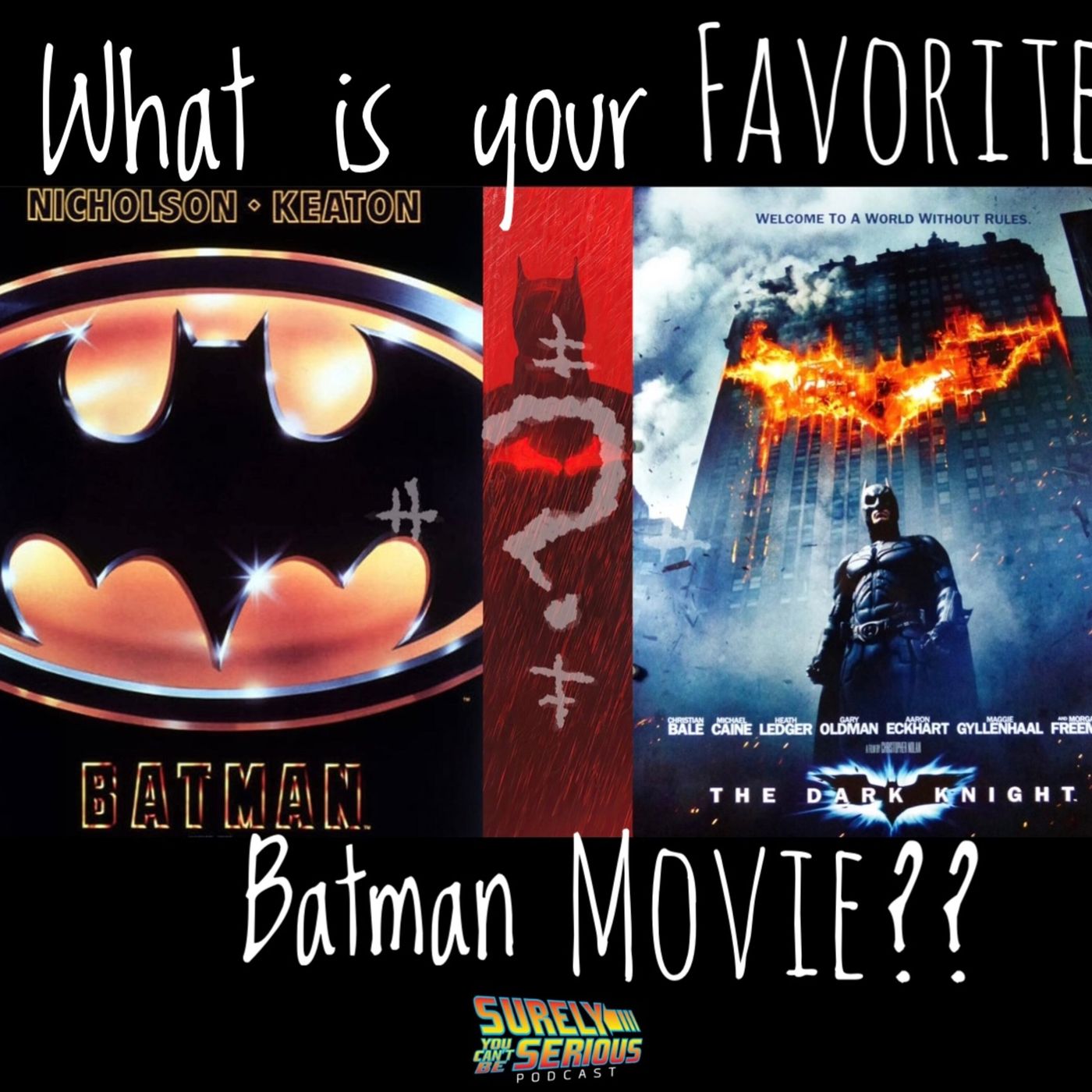
Batman (1989) vs. The Dark Knight (2008): Part 1
Have you ever danced with the Devil by the pale moonlight? This episode we tackle the Caped Crusader and his nemesis, the Joker! We discuss a little bit of Batman comics history, how comics became mainstream and how Batman '89 came to be. Join us for Episode 1 of 3, as we discuss all things Batman and Joker! We may even discuss 2022's "The Batman"!
2022-02-09
60 min
Transcript
Available Results
Generated results are saved to the knowledge database for reuse and search.
No generated results are available for this episode yet.
Extract Knowledge
Pick what you want extracted first. Model, scope, and chapter options appear after a template is selected.
Generated results for public episodes are saved to the knowledge database so they can be reused and searched later.
Transcript
<v Speaker 1>This is a podcast from Minute Media.
<v Speaker 2>Gentlemen, let's broaden our minds.
<v Speaker 3>Lawrence, Hello everybody, and welcome back to the Surely You
<v Speaker 3>Can't Be Serious Podcast, Season number three.
<v Speaker 2>I am so stinking excited. It's been too long, man,
<v Speaker 2>I'm glad to be back doing this with you. Yeah.
<v Speaker 2>Who needs Christmas? Who needs New Year's? Who needs time off?
<v Speaker 2>Who needs families and children? Yes, I've missed my buddy, man,
<v Speaker 2>I've missed you. And you know what, here's what I think. Okay,
<v Speaker 2>it's like we're made for each other, beauty and the beast.
<v Speaker 2>But if anyone else calls you a beast offered pair long,
<v Speaker 2>I just want you to know that you are my
<v Speaker 2>number one a guy. All right, everybody, welcome back for
<v Speaker 2>season three. We're starting off with a mammoth task. We
<v Speaker 2>are tackling Batman, Dark Knight, and a little bit of
<v Speaker 2>the Batman. I can't wait to see this. I think
<v Speaker 2>it's really promising looking. Yes, I think it's it's going
<v Speaker 2>to be more of a character study. It's going to
<v Speaker 2>be the darkness that the two movies that we were
<v Speaker 2>talking about jumped into, and not the bright and shiny
<v Speaker 2>made for kids garbage. Oh, my gosh.
<v Speaker 4>You know, I went through Batman eighty nine. I studied
<v Speaker 4>Batman Returns, I studied Batman forever. I studied Batman and
<v Speaker 4>Robin along with Batman begins The Dark Knight, The Dark Knight,
<v Speaker 4>I said.
<v Speaker 2>I did it all. Okay, Okay, I looked into all
<v Speaker 2>of it.
<v Speaker 4>Yeah, the Batman Burton franchise of the eighties and nineties, Yeah,
<v Speaker 4>went down so fast.
<v Speaker 2>It was just appalling how terrible those got so quickly. Yes,
<v Speaker 2>And as it turns out, it's really just history repeating itself,
<v Speaker 2>and it starts all the way back with the comic books.
<v Speaker 2>This darkness turned into bubblegum, campy pop, just to return
<v Speaker 2>to darkness, just to go back to pop. I mean,
<v Speaker 2>it just goes back and forth. I'm glad that they
<v Speaker 2>seemed to be resisting the urge to lighten things up. Well.
<v Speaker 2>I mean, if we were talking about what's happened after
<v Speaker 2>the Dark Knight trilogy, if we're talking about Zack Snyder's Batman,
<v Speaker 2>he went in directions that I think a lot of
<v Speaker 2>us weren't happy with. And certainly when Joss Whedon got
<v Speaker 2>a hold of it in the Justice League, he turned
<v Speaker 2>it into a bright colorful ball of puke, right, and
<v Speaker 2>so yeah, I think once again where we've reached that
<v Speaker 2>point that people said, why did we go bright and
<v Speaker 2>colorful with Batman yet again, when what truly works is
<v Speaker 2>our dark knight. You know, one of the things that
<v Speaker 2>excites me about the trip it looks gritty and dark.
<v Speaker 2>The thing that caught my ear more than anything, yeah.
<v Speaker 4>Was the Something in the Way by Nirvana Underneath and
<v Speaker 4>you've really got to be listening for it.
<v Speaker 2>And it's dark, and I'm like, man, that flashes me
<v Speaker 2>back to our episode absolutely, and it was you that
<v Speaker 2>you tuned me onto that. You're like, you got to
<v Speaker 2>you gotta see this preview right now. It's so good.
<v Speaker 2>And you start off with that sound of the ripping
<v Speaker 2>duct tape and the darkness that unfolds, and you've got
<v Speaker 2>a muscle car as the Batmobile, and you've got characters
<v Speaker 2>that are still characters. I mean, you see that villain
<v Speaker 2>and he it harkens back to those guys, even from
<v Speaker 2>the campy Batman nineteen sixty six version. But it's got
<v Speaker 2>the darkness and I'm really excited about who they have
<v Speaker 2>for the villain. I know, I'm Jim Carrey, no no, sorry, no,
<v Speaker 2>that's the wrong Riddler. Yeah, no, not that one.
<v Speaker 4>It does look like they're gonna make the Riddler the
<v Speaker 4>bad guy, yes, but he is that same dark joker,
<v Speaker 4>anarchist looking character.
<v Speaker 2>Yeah, there's something going on there that's much much darker
<v Speaker 2>than a guy in a bright green spandex with question marks. Olover. Awesome, Awesome. Well,
<v Speaker 2>this is a mammoth task because people love these two
<v Speaker 2>movies and people strong feelings about this third one that's
<v Speaker 2>coming out. Yeah, so let's just talk about this for
<v Speaker 2>a second. The comic book the character first came about
<v Speaker 2>back in nineteen thirty nine, so we're talking over eighty
<v Speaker 2>years of history here, and we're only going to do
<v Speaker 2>a couple episodes on this, so we can't really devote
<v Speaker 2>the time that a full analysis of the Batman character deserves.
<v Speaker 2>We could spend probably an entire season just on the
<v Speaker 2>comic books and the cycles that it's gone through. We're
<v Speaker 2>going to give it the justice that we can give it,
<v Speaker 2>but focus mainly on the two most iconic movies, that
<v Speaker 2>being Batman eighty nine and The Dark Knight from two
<v Speaker 2>thousand and eight. Exactly exactly. So you mentioned it Batman first,
<v Speaker 2>appeared in Detective Comics number twenty seven, March thirtieth, nineteen
<v Speaker 2>thirty nine. Yeah. So the concept came about because Superman
<v Speaker 2>had become a success for DC Comics, and this young
<v Speaker 2>guy named Bob kin was interested in becoming involved in
<v Speaker 2>comic books. He loved to draw. He found out that
<v Speaker 2>Schuster and Segull were making like six hundred dollars a
<v Speaker 2>week back in nineteen thirties, money, which was something to behold. Right,
<v Speaker 2>this is the depression time, right, Detective Comics was trying
<v Speaker 2>to find another character, and so his answer was to
<v Speaker 2>come up with somebody that was kind of the antithesis
<v Speaker 2>of the Superman. You know, you mentioned that Bob Kane
<v Speaker 2>was right place, right time. Yeah, he was also very entrepreneurial. Yes,
<v Speaker 2>he saw them making some money and he's like, man,
<v Speaker 2>how can I get on board this train. It is
<v Speaker 2>important to note that Bob Kaine's primary goal was to
<v Speaker 2>become rich and famous. Well you know what he did that.
<v Speaker 2>He did do that. Now, he used some tactics that
<v Speaker 2>are questionable at the very best at best is questionable
<v Speaker 2>and downright dirty might be what some other people say,
<v Speaker 2>but we'll we can talk about that in a bit, okay, okay,
<v Speaker 2>So Bob kin to come up with an idea that
<v Speaker 2>he thinks is going to sell, decides to make something
<v Speaker 2>that is sort of the polar opposite of Superman.
<v Speaker 1>Right.
<v Speaker 2>He's not bright and shiny, He's dark, He's mysterious, and
<v Speaker 2>he has three inspirations that lead him to creating what
<v Speaker 2>he would say would either be the Birdman or the Batman.
<v Speaker 2>By the way, I watched Birdman last night. Jed, who
<v Speaker 2>did our intro in our first season, Jet Who's got
<v Speaker 2>his own podcast out there called Limos and Roses. Be
<v Speaker 2>sure and check it out. He has been on me
<v Speaker 2>for like the last six years to watch this movie,
<v Speaker 2>and finally I did it, and I loved it. You
<v Speaker 2>hated it, right, dude, are you crazy? I thought it
<v Speaker 2>was great. I could see why you hated it because
<v Speaker 2>it's not your type of movie. But I really, I
<v Speaker 2>truly enjoyed it. But I thought it was interesting that
<v Speaker 2>the name of that was the Birdman, and the two
<v Speaker 2>ideas that Bob Kine had were either the Birdman or
<v Speaker 2>the Batman, and his inspiration came from a book he
<v Speaker 2>read by Leonardo da Vinci, where he had a glider
<v Speaker 2>a single man glider that he had drawn, and the
<v Speaker 2>wings looked like the wings of a bat, and so
<v Speaker 2>he thought, well, this is this is great. I'm going
<v Speaker 2>to take this and I'm going to combine it with
<v Speaker 2>my other hero, who is Zoro. Right. And you'll notice
<v Speaker 2>a lot of times in the Marquee when the family
<v Speaker 2>walks out of the movie theater, they've been watching the
<v Speaker 2>Mask of Zorro. Okay, So he's like, okay, I'm going
<v Speaker 2>to combine these guys. So what he comes up with
<v Speaker 2>is a guy in a red suit, a red suit,
<v Speaker 2>a red suit, and he has the Zoro style mask
<v Speaker 2>just over the eyes, and he has literal bat wings
<v Speaker 2>coming out of his back, right, not a cad but
<v Speaker 2>like fixed glider wings. Yeah, fixed slider wings. So he
<v Speaker 2>goes to his buddy Bill figure. Bill Finger is an
<v Speaker 2>important feature in our story. We will we will talk
<v Speaker 2>about that in more detail as we go on down
<v Speaker 2>the line, but it is important to note that Bill
<v Speaker 2>Finger is the one that said this is not quite right.
<v Speaker 2>To Bobcaine's credit, he knew it wasn't quite right. So
<v Speaker 2>he goes to his gifted and talented friend Bill Finger yeah,
<v Speaker 2>and says, well, what do you think, and he's like,
<v Speaker 2>well he needs to since he's fighting crime at night
<v Speaker 2>and he's a vigilanti and stuff like that, he needs
<v Speaker 2>to be you know, masked and covered.
<v Speaker 4>And so that little domino mask that's not really going
<v Speaker 4>to do the trick. So let's cover him up and
<v Speaker 4>give him a cow.
<v Speaker 2>Also, those fixed wings, it's not really practical, and what
<v Speaker 2>happens when he's walking around, so let's give him a cake? Right,
<v Speaker 2>And he also changed it from red to gray, right, right,
<v Speaker 2>because he's at night, right, he's got to blend into
<v Speaker 2>the shadows. Yeah. And so Bob Kane takes this creation,
<v Speaker 2>which also the cowl included the little bat like ears
<v Speaker 2>on top, and takes it to DC Comics, then Detective
<v Speaker 2>Comics and says, here's my character. They say, we love it.
<v Speaker 2>They signed a contract and on the contract is his name,
<v Speaker 2>Detective Comics name, and nobody else.
<v Speaker 4>Yes, and there's a whole We watched a document around
<v Speaker 4>this called Batman and Bill.
<v Speaker 2>I recommend it to everybody, whether you are a comic
<v Speaker 2>book fan or not, you definitely need to watch this
<v Speaker 2>dive in because what happened that day was one of
<v Speaker 2>those make or break moments and Bob Kane chose to
<v Speaker 2>do the wrong thing and had to double down on
<v Speaker 2>it again and again throughout the course of his life,
<v Speaker 2>and it cost poor Bill Finger a career. Yeah, so
<v Speaker 2>we got the comic books. He's immediately he is a
<v Speaker 2>hit out of the gate, and interestingly his first year
<v Speaker 2>he's got guns right, and he's market people. I mean,
<v Speaker 2>it's he really is a vigilanting right, the no kill
<v Speaker 2>Batman did not exist yet. This was a guy who
<v Speaker 2>was a vigilante, who was going out and doing dirty
<v Speaker 2>work and important to the idea of detective comics. He
<v Speaker 2>was solving mysteries. He was like a detective. And then
<v Speaker 2>things changed. Okay, so we can keep on going on
<v Speaker 2>the comic books, but we're here to talk about movies.
<v Speaker 2>I want to talk about nineteen forty three Batman's first
<v Speaker 2>appearance in film. It was that was really pretty much
<v Speaker 2>just World War two propaganda. You had a evil mustache
<v Speaker 2>toiling Japanese guy as the villain. Uh huh, I am
<v Speaker 2>that guy.
<v Speaker 5>I'm observing of this much. Just the hero hit that
<v Speaker 5>by divine destiny, my country shall destroy the democratic forces
<v Speaker 5>of evil in the United States to make way for
<v Speaker 5>the new Order.
<v Speaker 2>But Interestingly, this is the first time the concept of
<v Speaker 2>the bat Cave appeared really okay in the movie. Yes,
<v Speaker 2>in this it was a serial, you know, like cereals
<v Speaker 2>in the nineteen forties. This is forty three, So you've
<v Speaker 2>got You've got the Batman. He's got the bat Cave
<v Speaker 2>in this, which first time you see that, and also
<v Speaker 2>the concept of him going to it through the Grandfather clock,
<v Speaker 2>which is both of those things have just become iconic,
<v Speaker 2>but most people don't know about this old thing, or
<v Speaker 2>that they came about from a movie and not from
<v Speaker 2>the comic books. Originally interesting, it was also the first
<v Speaker 2>time you had a thin Alfred in the comics. He
<v Speaker 2>had been this little portly fat dude. Okay. And the
<v Speaker 2>guy who played Batman and that was named Lewis Wilson.
<v Speaker 2>He didn't appear in film again until nineteen forty nine.
<v Speaker 2>It was another sixteen episode serial, and this one was
<v Speaker 2>Batman and Robin Robert Lowry had played Batman. And in
<v Speaker 2>that one we had Jane Adams as Vicky Vale. Stop
<v Speaker 2>the brand who.
<v Speaker 1>Sticky Vail, Sticky Vale.
<v Speaker 2>I like that Vicky Vale.
<v Speaker 4>The one thing I know about old time Vicky Vale. Yeah,
<v Speaker 4>I know she was a reporter, and I know she
<v Speaker 4>had red hair.
<v Speaker 2>That's it. I don't think we could have sold Kim
<v Speaker 2>Bay Singer as a red head. No, but thankfully we
<v Speaker 2>got Nicole Kidman as doctor Chase Meridian a couple of
<v Speaker 2>pictures later. Well, I wish I could say that my
<v Speaker 2>interest in you was purely professional. Well as nice as
<v Speaker 2>she looks, she didn't save that film, true, right, Okay, So,
<v Speaker 2>so by the nineteen fifties, comic books had really increased
<v Speaker 2>in popularity and they had basically become the TikTok or
<v Speaker 2>the violent video games of the nineteen fifties. That's right.
<v Speaker 2>They had the parents and the psychologists and all of
<v Speaker 2>the adults of the time were saying, corrupting the minds
<v Speaker 2>of the youth. I know, right, this is the MTV
<v Speaker 2>of the nineteen forties. Well, and you've got Batman out
<v Speaker 2>market people, right, he had a machine gun on the Batmobile.
<v Speaker 2>So what happened is a crusade started against them, and
<v Speaker 2>ultimately what they did is they created their own governing
<v Speaker 2>morality board, and there were rules that were put in
<v Speaker 2>place to censor the comic books, to keep them from
<v Speaker 2>corrupting the minds of the youth. Okay, now we said
<v Speaker 2>a bit ago. You know, we've got this idea of
<v Speaker 2>Batman does not kill, right, I'm no executioner. Yes, now
<v Speaker 2>people have tread on that rule. You you idiot, You'll
<v Speaker 2>made me. And so the question is where the rule
<v Speaker 2>come from?
<v Speaker 6>Right?
<v Speaker 2>It turns out that it probably came from this sensor board.
<v Speaker 2>Interest as a matter of fact, it's definitely came from
<v Speaker 2>this sensor board. What they said is superheroes cannot kill villains.
<v Speaker 2>They can fight the villains, the villains can die, but
<v Speaker 2>the villains cannot be murdered by the superhero. They have
<v Speaker 2>to die as a result of their own macanizations. So
<v Speaker 2>if say, the Joker falls off a gigantic cathedral, that's okay, Well,
<v Speaker 2>it depends.
<v Speaker 4>But if Batman tastes grenade and sticks it in his
<v Speaker 4>pants like he does, and Batman returns, that would be wrong.
<v Speaker 2>Well yeah, Or if he throws a grapple hook around
<v Speaker 2>his ankle and then ties the other end to a
<v Speaker 2>two ton gargoyle, is that one bunt run a foul?
<v Speaker 2>I would say it probably would. Yeah, interesting, But I
<v Speaker 2>think that's key to the beauty of this character. If
<v Speaker 2>you have a Batman and the Kills, you just have
<v Speaker 2>a vigilating It is that one rule which we can
<v Speaker 2>talk about more, especially when we get to Dark Knight,
<v Speaker 2>that he does not kill. That makes his character more interesting. Okay,
<v Speaker 2>that is interesting because, like you said, in the Dark Knight,
<v Speaker 2>that is his rule. That is the rule he will
<v Speaker 2>not break. Right, that's the one rule I will not
<v Speaker 2>be an executioner. In Batman eighty nine, he doesn't have
<v Speaker 2>that rule. Doesn't seem too In fact, he goes to
<v Speaker 2>the joke and he's like, I'm gonna kill you, Yeah,
<v Speaker 2>right after he threw some guy down a gigantic bell shaft.
<v Speaker 2>The ninja who happened to appear at the top of
<v Speaker 2>the cathedral, the ninja who just happened to show up.
<v Speaker 2>But we can get into those all right, when we
<v Speaker 2>find flaws. Now, let me say this. Let me say this. Now, yes,
<v Speaker 2>we will discuss some flaws with these movies. But keep
<v Speaker 2>in mind, we are diehard fans, We are total fanboys.
<v Speaker 2>So please don't think that we don't love these movies.
<v Speaker 2>We just we have to point out the things that
<v Speaker 2>are not quite perfect. Okay, So comic books, finally they
<v Speaker 2>got rained in a a little bit. They're still escalating
<v Speaker 2>in popularity. And one of the guys who was a
<v Speaker 2>huge comic book collector, like filled his parents' garage with
<v Speaker 2>the comic books he bought was a guy named Michael Uselin.
<v Speaker 2>So back in nineteen sixty five they had the very
<v Speaker 2>first comic con I heard about. This.
<v Speaker 4>This was in like a ghetto part of New York City,
<v Speaker 4>in the basement, like in this scummy hotel that actually
<v Speaker 4>burned down later.
<v Speaker 2>Yeah, yeah, I think the original one was sixty four
<v Speaker 2>that was in New York and it was it was bad.
<v Speaker 2>That one was bad, but this one was also bad.
<v Speaker 2>This said, the one in sixty five is the one
<v Speaker 2>that became a recurring thing. Okay, And it wasn't in
<v Speaker 2>just in you know, some guy's basement or something, but
<v Speaker 2>it was the hotel in Detroit. And yes, there were
<v Speaker 2>bums asleep on the floor in the lobby. Yes. And
<v Speaker 2>then as they walked through to the convention area, they
<v Speaker 2>have to walk through the bar. And as they're walking
<v Speaker 2>through the bar, little Michael Uslan says, oh my gosh,
<v Speaker 2>that's Auto Binder, like he would go on he at
<v Speaker 2>the time he was doing Captain Marvel. He would go
<v Speaker 2>on to create Supergirl. He was a huge figure in
<v Speaker 2>comic books. And he's having you know, a whiskey sour
<v Speaker 2>up at the bar, and Kitty is exactly what he's
<v Speaker 2>come here kid. He goes and he says, do you
<v Speaker 2>want to meet the guy who created Batman? And Michael
<v Speaker 2>Luslan is like, I'm going to get to meet Bob Kane,
<v Speaker 2>and Auto Binder says, here, I'd like you to meet
<v Speaker 2>Bill Finger. Who is this? So this this comic con,
<v Speaker 2>this first one was the first time that Bill Finger
<v Speaker 2>had come out in public and talked about how big
<v Speaker 2>a factor he had been in the creation of Batman
<v Speaker 2>and all of the villains, which is huge. And I
<v Speaker 2>don't mean all, but I mean Joker, Catwoman, some some
<v Speaker 2>pretty big deals. Batmobile a lot of times got them.
<v Speaker 2>I think. Yeah, back in these days, they had ghost
<v Speaker 2>writers just like they do now. Sure, but this went
<v Speaker 2>beyond that. This was the guy who was truly creating
<v Speaker 2>all of the storylines, the brilliance behind all of the villains,
<v Speaker 2>and Bob Kane was drawing the pictures and he was
<v Speaker 2>along for the ride. And it wasn't as though he
<v Speaker 2>contributed nothing but the idea that the guy who was
<v Speaker 2>primarily responsible for the story ideas got no credit at all.
<v Speaker 2>It's truly troubled. Yeah, okay, so one year later, something
<v Speaker 2>happens nineteen sixty six. Yes, mister Adam West and Bert Ward.
<v Speaker 4>And Julie Numar and Burgess Meredith, they create Batman sixty
<v Speaker 4>six the TV show.
<v Speaker 2>Nona or the shark repellon. Oh the shark repellent. Oh yes,
<v Speaker 2>the spray can shark repellent. I had forgotten all about that.
<v Speaker 2>That's fantastic. So Michael Luselan is at this point a
<v Speaker 2>slightly older kid, you know, he's in his teenage years,
<v Speaker 2>and he is both excited and mortified at what is
<v Speaker 2>going on because now the world knows about Batman, which
<v Speaker 2>is exciting to him because he loves Batman so much.
<v Speaker 2>The troubling part is he's a goofball. Yeah, he's pow
<v Speaker 2>and KaBlam and bob. Michael Luselan is like, this is
<v Speaker 2>not my Batman. Holy can't be spoofed Batman? Right, right?
<v Speaker 2>So Batman the series definitely brings a lot of spotlight
<v Speaker 2>onto the Batman character, right Lunchbox's action figures. Adam West
<v Speaker 2>becomes a star, Julie Nimara Think described him as the
<v Speaker 2>carry Grant of TV. I mean, he was just this
<v Speaker 2>cool guy. And what Michael Luslan says when he sees
<v Speaker 2>this is I am going to make it my mission
<v Speaker 2>in life to show people the real Batman, the Batman
<v Speaker 2>of the dark, the Batman that is mysterious and troubled
<v Speaker 2>and torn and not capaw blam pow. I would say,
<v Speaker 2>like Bill Finger, Michael Uslin is the unsung hero of Batman. Lord.
<v Speaker 2>I've given away the storyline here, but he is involved
<v Speaker 2>in every Batman movie from the nineteen eighties on. I'm
<v Speaker 2>surprised we haven't heard more about this guy. Okay, so
<v Speaker 2>if you watch the documentaries, he's always there. It doesn't
<v Speaker 2>matter which Batman Bee that he is there. And what's
<v Speaker 2>interesting is he goes to college seventies, now goes to
<v Speaker 2>law school. And during this time, the University of Indiana says, hey,
<v Speaker 2>we are going to allow people to pitch us ideas
<v Speaker 2>for college courses that may be unusual and will decide
<v Speaker 2>whether they get credit or not. Say, Michael Uslin is
<v Speaker 2>like perfect, I'm going to teach a class on comic
<v Speaker 2>books and their relationship to mythology and to history, and
<v Speaker 2>he goes in to make his pitch and the Dean
<v Speaker 2>looks down his nose at him and said, oh, you're
<v Speaker 2>the funny books guy. Right, Yeah, he says, there's no
<v Speaker 2>way I am going to approve comic books. Don't get
<v Speaker 2>me wrong, I loved them. I read them when I
<v Speaker 2>was a kid. Entertainment is what he called them, Yes,
<v Speaker 2>just cheap entertainment. And so Michael Usland says, are you
<v Speaker 2>familiar with the story of Mosts? And the Dean says yes.
<v Speaker 2>He says, can you tell me the story of Mosts?
<v Speaker 2>And the Dean says, well, his parents were worried about him,
<v Speaker 2>afraid he was going to be killed, so they put
<v Speaker 2>him in a basket see him down the river. He
<v Speaker 2>was ultimately picked up by the Royal family, raised as
<v Speaker 2>one of their own, but went on to be a
<v Speaker 2>hero of his own people. And then Michael Usland said,
<v Speaker 2>now you said that you read Superman, right, and the
<v Speaker 2>Dean says yes. He goes, can you tell me the
<v Speaker 2>story of Superman's origin? And then the Dean said, yeah,
<v Speaker 2>his origin was he started off on Krypton as a baby.
<v Speaker 2>His parents were worried about him dying, and so they
<v Speaker 2>sent him off on a ship and he was raised
<v Speaker 2>by other parents. Mister Uslin, your course is approved. I
<v Speaker 2>love that story. Man. Oh thank you, mister Dane. I
<v Speaker 2>will take it and run with it. Now here's something
<v Speaker 2>that you don't know. Okay, so Uselin truly appreciating what
<v Speaker 2>he had in his hands with this college course, right
<v Speaker 2>one fame by anonymously calling local newspaper reporters and TV
<v Speaker 2>stations and complaining about the course. Really, as a result
<v Speaker 2>the news and the newspapers, the TV is like, oh,
<v Speaker 2>this is interesting. This is a somebody's teaching a college
<v Speaker 2>course on comics and it's dumb. Let's go check it out.
<v Speaker 2>And they all showed up. There were newspaper articles that
<v Speaker 2>came out, there were news stories that came out, and
<v Speaker 2>he immediately became famous from teaching this class. That's fantastic.
<v Speaker 2>I heard that. Stanley calls him out of the blue.
<v Speaker 4>Hey, man, I just want to tell you thank you
<v Speaker 4>for legitimizing comic books.
<v Speaker 2>Yeah.
<v Speaker 4>And then you had guy Saul Harrison, who is the
<v Speaker 4>VP of DC. Yeah at the time, he invited him
<v Speaker 4>to come visit them in New York City.
<v Speaker 2>Check it out. He taught this class for quite a
<v Speaker 2>few years actually, and he had intended to have these
<v Speaker 2>guys each semester have different guest speakers come in and speak.
<v Speaker 2>But he found out that Dannie O'Neil, the guy who
<v Speaker 2>created Russell hal Goole is he was the one that
<v Speaker 2>everybody always asked for, and so he's just like, okay, well,
<v Speaker 2>I'm just going to make him the regular invitee. And
<v Speaker 2>so Dannie O'Neill, who's a huge part of the Batman cannon,
<v Speaker 2>became a regular speaker at this college classes class as well.
<v Speaker 4>Razill goul is the bad guy in Batman begins if
<v Speaker 4>you remember that, yeah, the Leem Neeson character exactly.
<v Speaker 2>Okay. So he ends up participating on talk shows and
<v Speaker 2>radio shows, and ultimately this spins into a job for
<v Speaker 2>him as as a production attorney for United Artists, That's right.
<v Speaker 2>And so he meets somebody there who's got an inside deal.
<v Speaker 2>He pitches this idea of making the Batman movie but
<v Speaker 2>making it in the Dark Night style. Now, Dark Knight
<v Speaker 2>had been coined, but wasn't the comic book yet, And
<v Speaker 2>so on October third, my birthday, nineteen seventy nine, I
<v Speaker 2>was four years old. Hey, they got DC Comics to
<v Speaker 2>option them the rights to Batman movie and Batman cartoons,
<v Speaker 2>and they formed Batfilm's Inc. On that day, nineteen seventy nine. Okay,
<v Speaker 2>let's talk about what was going on in nineteen seventy nine. Sure,
<v Speaker 2>so I'm old enough to remember nineteen seventy nine. Yeah,
<v Speaker 2>during the seventies and early eighties, super Friends was on
<v Speaker 2>all the time. Yeah, did you watch super Friends? Absolutely
<v Speaker 2>Wonders when Powers activate and all that stuff. I always
<v Speaker 2>thought it was an injustice for the super twin who
<v Speaker 2>could only do form of water. What the other guy
<v Speaker 2>gets the big any animal, when you have to be ice,
<v Speaker 2>water or vapor, that's it. I'm a tideaway, I'm a
<v Speaker 2>bucket of water. But so, in nineteen seventy eight, Richard
<v Speaker 2>Donner released Superman in the Movie, right, and of course
<v Speaker 2>a couple of years prior to that, in nineteen seventy
<v Speaker 2>seventy of Star Wars, Right. And so now you're having.
<v Speaker 4>These big blockbuster, sort of popcorn entertainment movies. But really
<v Speaker 4>the father of the Batman eighty nine movie is Superman
<v Speaker 4>nineteen seventy eight.
<v Speaker 2>We talked about, and please listeners go back and listen
<v Speaker 2>to our Superman one and two versus Man of Steel.
<v Speaker 2>We did that episode with John Reid from the thirty
<v Speaker 2>something Movie podcast. Also go subscribe to that podcast is
<v Speaker 2>flat out awesome. We talked about that history and detail
<v Speaker 2>on Superman seventy eight happens and they say, oh wow,
<v Speaker 2>it turns out that a comic book movie can make money, right,
<v Speaker 2>which Warner Brothers also did Superman. They see this opportunity
<v Speaker 2>with these guys who are like, hey, we want to
<v Speaker 2>do Batman next, and it's the next logical step. But
<v Speaker 2>it was nineteen seventy nine, and we know Batman didn't
<v Speaker 2>happen for another almost ten years. Batman, Batman, Can somebody
<v Speaker 2>tell me what kind of a world we live in?
<v Speaker 2>We're a man dressed up as a bat it's all
<v Speaker 2>of my press. This town needs an enema. Yeah, so,
<v Speaker 2>what the heck happened? I don't know exactly why that
<v Speaker 2>took so long, but I can tell you what happened
<v Speaker 2>in that span. Yeah.
<v Speaker 4>Imagine you're holding the Batman property right and you're watching
<v Speaker 4>the box office. You're like, holy cow, Superman's out there.
<v Speaker 2>It's making money. Love it. It's fantastic.
<v Speaker 4>Superman two comes along in nineteen eighty one, people are like, hey,
<v Speaker 4>this is great. It's a little bit corny, but it's fantastic.
<v Speaker 2>People love it.
<v Speaker 4>Nineteen eighty three comes along, Superman three comes out. Eh,
<v Speaker 4>that movie sucked. No, that movie sucked.
<v Speaker 2>And then a bit of the Richard Pryor Show. But
<v Speaker 2>it was the Richard Pryor Show. Yeah. And then in
<v Speaker 2>nineteen eighty seven you have Superman four The Quest for Piece.
<v Speaker 2>Now imagine you're holding the Batman property and you see
<v Speaker 2>that piece of crap that comes up on the screen.
<v Speaker 2>The biggest tird that Superman ever shot is that turd
<v Speaker 2>worse than Jos four. We will find out later on
<v Speaker 2>this summer. That's gonna be fun when we do our
<v Speaker 2>worst of the number four. We know that Batfilm's Inc.
<v Speaker 2>Is formed October third, nineteen seventy nine. Yes, we know
<v Speaker 2>that ten years go by before the Batman comes to
<v Speaker 2>the movie theaters. So in addition to what happened with
<v Speaker 2>Superman movies, some other interesting things happen. Okay, a guy
<v Speaker 2>named Frank Miller. This is a guy who at six
<v Speaker 2>years old went to his mom and said, I want
<v Speaker 2>to draw comics for the rest of my life. That's
<v Speaker 2>all I want to do. He had it as a
<v Speaker 2>mission from six. He knew he wanted to go to
<v Speaker 2>New York City because that's where many of his comic
<v Speaker 2>book heroes were from. Ultimately, that's what he did. He
<v Speaker 2>got a job as a comic artist and he was very,
<v Speaker 2>very good. But he, like Michael Uselin, wanted to go
<v Speaker 2>back to that original concept of the Dark Knight detective
<v Speaker 2>mystery vigilante character, and so in nineteen eighty six he
<v Speaker 2>released a series called The Dark Knight Returns. There are
<v Speaker 2>a few storylines that play into both of these movies.
<v Speaker 2>One is the Killing Joke, one is The Dark Knight Returns.
<v Speaker 2>One is a Long Halloween, and then the other is
<v Speaker 2>Batman Year one. That's right. I get a strong feeling
<v Speaker 2>with the Batman that's coming out in March that we're
<v Speaker 2>going to get a lot of Batman Year one, Right,
<v Speaker 2>sure and hopeful. I think you're right. You know what
<v Speaker 2>else happened in nineteen eighty five other than Back in
<v Speaker 2>the Future. Other than Back to the Future, same summer,
<v Speaker 2>you have this movie called Pee's Big Adventure that comes out, Yeah,
<v Speaker 2>directed by this guy named Tim Burton. Yeah, So here's
<v Speaker 2>the story on that one right. Yeah. So the reason
<v Speaker 2>they had taken so long to make Batman into a
<v Speaker 2>movie is because they couldn't get a good script and
<v Speaker 2>they couldn't find a script that worked. They had been
<v Speaker 2>talking about Bill Murray as Batman with Eddie Murphy as Robin,
<v Speaker 2>and I've been rymen directing. Yeah, we would have had
<v Speaker 2>a Richard Lester version of Batman. Had we probably had
<v Speaker 2>either one of those guys direct, right, we would have
<v Speaker 2>had Gremlins or Ghostbusters version of Batman. And that wouldn't
<v Speaker 2>have been right. Let's say that again. I've been rightman.
<v Speaker 4>Yeah, Bill Murray as Batman, Eddie Murphy as Robin.
<v Speaker 2>Hysterical, but not the Batman that we have. Not what
<v Speaker 2>we want, No, not what we want.
<v Speaker 4>I want to get into castile in here a little
<v Speaker 4>bit because I've got a whole You know, when you
<v Speaker 4>have a movie that's developed for.
<v Speaker 2>Over ten years, Yeah, there's gonna be a lot of
<v Speaker 2>names associated with it. Sure, some of them will blow
<v Speaker 2>your skirt up. Yeah, they're gonna blow your mind. So
<v Speaker 2>Warner Brothers was ready to shelf the project. They couldn't
<v Speaker 2>get a script. They were going to put it on
<v Speaker 2>the shelf and say we're not making this movie. Bob
<v Speaker 2>Kane got on his knees and prayed for a savior,
<v Speaker 2>and that savior's name was Tim Burton. Will they get
<v Speaker 2>a load of me? So Tim had been working for Disney.
<v Speaker 2>He had made a couple of shorts, ones called Frank
<v Speaker 2>and Weeney. The other one is called Vincent's. Okay, both
<v Speaker 2>movies I saw when I was a kid and I
<v Speaker 2>will shorts I song was a kid and I love it.
<v Speaker 2>They're weird, very Tim Burton style. Sure, but he wasn't
<v Speaker 2>anybody famous at this point, and so he had found
<v Speaker 2>some favor with this lady named Bonnie Lee who worked
<v Speaker 2>over Warner Brothers, and she convinced him to come over
<v Speaker 2>and join Warner Brothers. Well, another prodigy of Bonni Lee
<v Speaker 2>is a guy named Sam Ham. Yeah, Sam Am And
<v Speaker 2>so Bonnie Lee is really I mean, she's the glue
<v Speaker 2>that brought these things together. And she said, Hey, Sam,
<v Speaker 2>could you come over to Tim's office. I would love
<v Speaker 2>for you guys to talk about some stuff. And Sam's like, okay, yeah, sure,
<v Speaker 2>and so they go over. They shoot the breeze for
<v Speaker 2>a while, and then Tim Burton's like, you know what
<v Speaker 2>about this batman? Script, What do you think we can
<v Speaker 2>do on that? And so sam Ham, you know, secretly,
<v Speaker 2>is jumping for joy and it's like, oh, yeah, you know,
<v Speaker 2>if you're interested in that, I guess I probably you know,
<v Speaker 2>look at it, right, And he ends up developing a
<v Speaker 2>script which becomes basically the first two acts of Batman.
<v Speaker 2>Act three is something we need to talk about when
<v Speaker 2>we talk about Warren's Yeah. So Warren Scarrin comes in
<v Speaker 2>later on as a writer and he touches up some
<v Speaker 2>stuff that sam Ham has done. But Samam couldn't do
<v Speaker 2>anything at the time because there was a writer's skip
<v Speaker 2>strike going on. He couldn't come in and make adjustments
<v Speaker 2>during the movie, so they were kind of winging things
<v Speaker 2>a little bit. Listen, Jack Nicholson and he's carrying Kim
<v Speaker 2>Basinger up to the top of the cathedral, says, says,
<v Speaker 2>where am I going? Like what am I doing here?
<v Speaker 2>And they're like, we're not sure what's going on just yet,
<v Speaker 2>but we're working on right, So here's the origin story
<v Speaker 2>on this on that thing. Okay, the night before I'm
<v Speaker 2>not even kidding. The night before, Tim Burton and Peter
<v Speaker 2>Guber go and watch Phantom of the Opera, and the
<v Speaker 2>last scene of Phantom of the Opera is him taking
<v Speaker 2>her up in this tower, and so they're like, we
<v Speaker 2>should do that. Hey, great idea, let's do that. Oh
<v Speaker 2>my gosh, here's the other half of the rest of
<v Speaker 2>the story. Yes, Kim Basinger, who is currently banging John Peters,
<v Speaker 2>who's the other producer on Batman, right, says, well, wait
<v Speaker 2>a minute, where's Vicky Vaiale. She needs to go up
<v Speaker 2>in the tower. She wasn't supposed to go in the tower.
<v Speaker 2>It was just supposed to be Batman chasing Joker. That's it.
<v Speaker 2>Oh my gosh.
<v Speaker 4>And so he's like, you know what, honey, I agree
<v Speaker 4>with you since you're laying in bed next to me.
<v Speaker 2>Oh my god.
<v Speaker 4>Kim Bay, Singer, John Peters, Peter Guber, and Tim Burton
<v Speaker 4>got together and created the third act out of Underwear
<v Speaker 4>and Chocolate.
<v Speaker 2>So Underwear and So rewind just a little bit. Bonnie
<v Speaker 2>Lee gets Tim Burton over. She introduces him to this
<v Speaker 2>guy from the Groundlings named Paul Rubins, Yeah, who was
<v Speaker 2>interested in making a movie based on this character. He
<v Speaker 2>had for a stand up routine called pee Wee Herman
<v Speaker 2>making mister Hermann, Mister Herman, you have a telephone call
<v Speaker 2>at the front desk, and I've seen that stand up
<v Speaker 2>routine and it is breaking hilarious. And when they meet
<v Speaker 2>each other, they are two peas in a pot. And
<v Speaker 2>then they decide, Hey, you know what, we need somebody
<v Speaker 2>to write the music for this thing. And Paul Rubin says, Oh,
<v Speaker 2>I know this guy. His name's Danny Elfman. He plays
<v Speaker 2>with his band called Oengo Buindo. He might be a
<v Speaker 2>good fit.
<v Speaker 4>You sent me a clip from the nineteen any six
<v Speaker 4>Gong show. Yeah, where the Knights of Oingo Boying the
<v Speaker 4>Mystic Knights of Oingo Boingo.
<v Speaker 2>Yes, we can talk more detail about that whenever we
<v Speaker 2>get to our composers. But man, there's some fascinating how
<v Speaker 2>Danny Elfman came through all that is incredible. So before
<v Speaker 2>Warner Brothers was completely ready to green light Tim to
<v Speaker 2>direct the project, they needed to see that he could
<v Speaker 2>make a movie that would put money in the bank. Yep.
<v Speaker 2>So Tim does this other movie that you might have
<v Speaker 2>heard of called Beeple Juice, People Juice, Wheele Juice. What
<v Speaker 2>are your qualifications? Ah well, I intended tally are. I'm
<v Speaker 2>a graduate the Harvard Business school. I travel quite extensively.
<v Speaker 2>I lived through the Black Plague and I had a
<v Speaker 2>pretty good time during that.
<v Speaker 5>I've seen the ex Or systembout one hundred and sixty
<v Speaker 5>seven times, and I can't getting buddier every single time.
<v Speaker 2>I said, not to mention the fact that you're talking
<v Speaker 2>to it.
<v Speaker 1>That guy, No what you'll think.
<v Speaker 2>It's a fantastic movie. And that's where you get. I mean,
<v Speaker 2>Alec Baldwin and Geena Davis get their started it. Yep,
<v Speaker 2>you get Catherine O'Hara, who goes on to do Home Alone.
<v Speaker 2>The principal from Paris Bieler's Day Off is in it.
<v Speaker 2>How have you not, said Winona writer, I was waiting
<v Speaker 2>on you to say I was young enough at that
<v Speaker 2>point that it was okay for me to have a
<v Speaker 2>total cushion.
<v Speaker 4>Well, and Tim Burton uses her later in Edwards SUSA.
<v Speaker 4>And then of course you have the amazing performance by
<v Speaker 4>Michael Keaton.
<v Speaker 2>It's show Down. So you've got some pieces that are
<v Speaker 2>starting to fall together. We've got a director who has
<v Speaker 2>a vision, We've got a script that's got legs. We
<v Speaker 2>just need good financing and a star's face. I've got
<v Speaker 2>some great stuff on casting we'll come back to that
<v Speaker 2>here after we go through the beginning and the origins
<v Speaker 2>of the Dark Knights. Like I always say, if you
<v Speaker 2>got to go, go Smike, go with a smile. So interestingly,
<v Speaker 2>at this exact same time, nineteen eighty six, there's a
<v Speaker 2>young man nineteen twenty comic book fan. He sends a
<v Speaker 2>letter he sent actually quite a few letters that end
<v Speaker 2>up getting published, about to blow your mind, right, Are
<v Speaker 2>you ready for this? Yes? Okay? So he sends a
<v Speaker 2>letter to Marvel Captain America issue and says, let me
<v Speaker 2>congratulate you. You got me reading Captain America again. He
<v Speaker 2>goes on to give some ideas. Now think about the
<v Speaker 2>movies when I say this, all right, just what the
<v Speaker 2>letter says, the fact that Captain America is a symbol
<v Speaker 2>of the American dream creates a number of story problems.
<v Speaker 2>What type of man would have the audacity to proclaim
<v Speaker 2>himself a living symbol of America. So he's going to
<v Speaker 2>this psychological weight right of Captain America, and he says,
<v Speaker 2>what exactly does cap represent? Our government isn't nearly as
<v Speaker 2>upfront or virtuous as the elected officials would have us believe.
<v Speaker 2>Does the Captain unquestioningly accept whatever the current American policy is,
<v Speaker 2>or does he formulate opinions of his own. I mean,
<v Speaker 2>that's the Avengers plot line in nineteen eighty six, thirty
<v Speaker 2>years before the movie comes out. Who is this guy?
<v Speaker 2>His name is David S. Goyer. Yeah, he would go
<v Speaker 2>on just a year or two later to write some movies.
<v Speaker 2>The first one that got made was a terrible script,
<v Speaker 2>but he met a guy who was excited about it.
<v Speaker 2>He didn't speak very good English. His name was Jean
<v Speaker 2>Claud ven Dam and the movie was about a prison first.
<v Speaker 2>I just I gotta tell you this story, all right, Okay.
<v Speaker 2>So he's huge comic book fine, and he's also decides
<v Speaker 2>he wants to be a writer, wants to be a screenwriter.
<v Speaker 2>And he reads an article about this agent who is
<v Speaker 2>had become an agent at like twenty two years old,
<v Speaker 2>which is really young to become an agent. But he
<v Speaker 2>thinks this guy's got some moxie, he's got some drive,
<v Speaker 2>he's hungry, right, yeah, I'm going to give him a call. Okay.
<v Speaker 2>So he's in college and he calls this agent. He
<v Speaker 2>gets a secretary and she's like, okay, I'll let him
<v Speaker 2>know you called he's like, okay, he knows he's not
<v Speaker 2>going to call back, so he calls again the next day,
<v Speaker 2>and the next day and the next day for forty
<v Speaker 2>five days straight, and finally, on the forty fifth day,
<v Speaker 2>the agent picks up the phone and he's like, who
<v Speaker 2>them is this, and he's like, well, my name is
<v Speaker 2>David S. Koyer. He's like, I don't know why I
<v Speaker 2>threw the S in there. I guess it just made
<v Speaker 2>me think it sounded I sounded important that way, and
<v Speaker 2>I want to be a writer. And the guy's like, listen,
<v Speaker 2>send me your script. I'm probably not going to represent you,
<v Speaker 2>but send me your script and don't call here anymore.
<v Speaker 2>So he sends him the script and the agent calls
<v Speaker 2>him back. Nice, No, he doesn't. Two weeks go by
<v Speaker 2>and he's like, okay, I'm gonna start calling again. You
<v Speaker 2>ask for a buddy. So two weeks goes by, he
<v Speaker 2>calls again and the agent's like, you know what, the
<v Speaker 2>script sucks, but I want to represent you anyway, because
<v Speaker 2>you've got drive, You've got something here that can become something.
<v Speaker 2>And pretty soon that agent introduces him to Jean Claude
<v Speaker 2>ven dem who is a excited about the script that
<v Speaker 2>he has written where a cop infiltrates a prison and
<v Speaker 2>the name has changed from dust In to a movie
<v Speaker 2>you might have heard of called Death Point came out
<v Speaker 2>in nineteen ninety. A few years later, about ten scripts in,
<v Speaker 2>he writes a script based on a comic book and
<v Speaker 2>it becomes Marvel's first movie, first real movie, Blade with
<v Speaker 2>Wesley Snipes. You want to know what's crazy. They optioned
<v Speaker 2>Blade from Marvel for one hundred and twenty five thousand dollars.
<v Speaker 2>Come on, man, I mean the franchise is probably probably
<v Speaker 2>a multi hundreds of millions of dollars, if not a
<v Speaker 2>billion at this point from the three that came and
<v Speaker 2>the second one they got for one hundred and seventy
<v Speaker 2>five just because it was part of the contract. They
<v Speaker 2>didn't have any choice. It's about to be rebooted again.
<v Speaker 2>But keep in mind, this is what started Marvel in
<v Speaker 2>the movies, right. It's amazing. Every Marvel thing you saw
<v Speaker 2>before this was TV like thor on the incredible Hule
<v Speaker 2>TV series. Right. Nothing good. By the way, there's a
<v Speaker 2>movie that never got made on the Fantastic Four. I
<v Speaker 2>think we got to do a series on the Curse
<v Speaker 2>of the Fantastic Four because it's a great comic book
<v Speaker 2>series that has never produced a good movie. But Roger
<v Speaker 2>Corman was supposed to do a Fantastic Four movie back
<v Speaker 2>in the early nineties. Jay Underwood is Johnny Storm and
<v Speaker 2>it never came to see the light of day. But
<v Speaker 2>they filmed the whole movie and there's a documentary on them.
<v Speaker 2>We've got to do that thing. You watch it. Yeah,
<v Speaker 2>we gotta find By the way, the paycheck that he
<v Speaker 2>got for death warrant went out and bought an a
<v Speaker 2>Zuzu Trooper, which got stolen the same Well, I'm glad
<v Speaker 2>to see that he did better for himself later on
<v Speaker 2>Den Round. So blade happens. He's doing well. And in
<v Speaker 2>two thousand and two, a guy pitches a Batman reboot
<v Speaker 2>to Warner Brothers. Guy's name Josh Whedon. Interesting, and Warner
<v Speaker 2>Brothers said, nah, no thanks. So what happens is they
<v Speaker 2>think it's a good idea to reboot Batman. This is
<v Speaker 2>just the wrong script for it, and so they start
<v Speaker 2>sending out calls to directors they're interested in. Well, one
<v Speaker 2>of the directors that they're interested in is a guy
<v Speaker 2>who has done two movies. One of them was fantastic
<v Speaker 2>called Memento. Right. The other one was Insomnia, which is okay,
<v Speaker 2>I didn't really care for it that much. Okay, but
<v Speaker 2>he's done a couple of decent movies right, right, And
<v Speaker 2>he has been trying to make this movie based on
<v Speaker 2>people going into the mind of others during their dream state,
<v Speaker 2>this idea for a movie called Inception. But the studios
<v Speaker 2>that he's talking to, I'll say, this is absurdly expensive
<v Speaker 2>if you are not qualified at this point to do it.
<v Speaker 2>You know, see if you can make an action movie
<v Speaker 2>and then come back and see us. And this is
<v Speaker 2>the same time that Warner Brothers is sending out calls
<v Speaker 2>and so this guy named Christopher Nolan's wife, Emma Thomas,
<v Speaker 2>gets a message that says, hey, this is Warner Brothers.
<v Speaker 2>We want to know if Chris might be interested in
<v Speaker 2>doing something with Batman. And she thinks, no way, Yeah,
<v Speaker 2>he's a chance. He's a high yper intelligent independent filmmaker.
<v Speaker 2>And have you seen the Batman movies lately? No way, right,
<v Speaker 2>But she tells him anyway, and Christopher Nolan says, actually,
<v Speaker 2>I think there's a story on the Batman that hasn't
<v Speaker 2>been told yet. Now, are you familiar with Darren Aronsky.
<v Speaker 2>He did Requiem for a Dream and Pie and the
<v Speaker 2>Noah movie with Russell trow Right, right, Yes, I heard
<v Speaker 2>he was attached at one point. Moving on, so, Christopher
<v Speaker 2>Nolan says, I want to do a movie that truly
<v Speaker 2>tells the origin story of Batman. Everybody knows the kid
<v Speaker 2>with his parents outside the theater, they're murdered, et cetera,
<v Speaker 2>et cetera. Right, you have mcdams with a bit of
<v Speaker 2>by moon Light, but what happens in between there and
<v Speaker 2>the Batman? The only thing we really see in the
<v Speaker 2>comic books is he dedicates his life to making himself
<v Speaker 2>the best mentally and physically that he can't. But that's it.
<v Speaker 2>Christopher Nolan says, I think there's a story that can
<v Speaker 2>be told there that is worth telling. But there are
<v Speaker 2>a few things that I need to establish. We're not
<v Speaker 2>doing the same stuff that the Batman have been doing
<v Speaker 2>in the past. We are going to do a movie
<v Speaker 2>that could really happen. It's based in reality, right, and
<v Speaker 2>he admits, you know, this is cinematic reality, but we
<v Speaker 2>want to be as true to real life as we
<v Speaker 2>can possibly be. Okay, So before we go any further.
<v Speaker 4>For me, I wrote down some big ideas between these
<v Speaker 4>movies that I want to discuss, and one of the
<v Speaker 4>big ideas about the Dark Knights series the end of
<v Speaker 4>the Christopher Nolan Batman series is the plausibility of these movies, right, okay,
<v Speaker 4>So he went above and beyond, in my opinion, to
<v Speaker 4>make sure that these things are, as you say, cinematic realism.
<v Speaker 4>Right In Batman begins, for instance, Christian Bale's character Verusuayne
<v Speaker 4>goes across and study and becomes this ninja guy. He
<v Speaker 4>studies from Rozel Goal and he has these armor things
<v Speaker 4>on his arm because he's fighting swords.
<v Speaker 2>And so that that's why he has those armor plated
<v Speaker 2>foe arm things. Sure, okay.
<v Speaker 4>So with the talking about the plausibility, and the producers
<v Speaker 4>in the studio said, well, we really feel like it
<v Speaker 4>needs to have the Batmobile in some capacity. Just really
<v Speaker 4>not a Batman movie without the Batmobile. So Christopher Nolan's like, okay,
<v Speaker 4>you know, I think I can work with that. So
<v Speaker 4>he goes to his production designer. His name is Nathan Crullley,
<v Speaker 4>and Nathan's like, okay, well, what do you what do
<v Speaker 4>you have in mind? And Christopher Nollan's like, well, I
<v Speaker 4>think it's going to be some sort of combination between
<v Speaker 4>a Humbye and a nineteen seventies Lamborghini, and so he's like, okay,
<v Speaker 4>And so he actually went to like Toys r us
<v Speaker 4>or hobby Lobby and he got a model kit of
<v Speaker 4>both a Humby and a Lamborghini and made a hybrid
<v Speaker 4>in the like his living room, and that became the
<v Speaker 4>infamous tumbler from the Christopher Nolan movies.
<v Speaker 2>Yeah he's had it looked like crap, but ultimately it
<v Speaker 2>led to the It led to that Batmobile, and it
<v Speaker 2>led to what Christopher Nolan says was his first contribution
<v Speaker 2>to the script, which is does it come in black?
<v Speaker 2>Oh yeah, that's fantastic. Yeah. So really interestingly, Bruce Wayne
<v Speaker 2>drives a Lamborghini and both Batman begins and in the
<v Speaker 2>Dark Night and it is a convertible Martial Lago, which
<v Speaker 2>means bat you got it. I have given a name
<v Speaker 2>to my Lamborghini, and it is the bats fantastic Okay.
<v Speaker 2>So after David Goyer sold his script and God is
<v Speaker 2>a Zuzu Stolen, he decided, Hey, I'm a writer. Now
<v Speaker 2>I'm gonna have some business cards made up, and so
<v Speaker 2>he had business cards that just said David S. Goyer
<v Speaker 2>writer and he's pretty proud of it. He takes him
<v Speaker 2>back to his screenwriting teacher, who's Nelson getting at usc
<v Speaker 2>and says, look look what I've got, and Getting looks
<v Speaker 2>at this and he's like, throw this away. Why he goes,
<v Speaker 2>you're not a writer, you are a human being who
<v Speaker 2>writes for a living. Throw these away and go live
<v Speaker 2>life saving way quote. To write about life, you got
<v Speaker 2>to live it. And so David throws away his business
<v Speaker 2>cards and he starts traveling the world. Goes to Africa,
<v Speaker 2>goes to Europe, and he also goes to Tibet. Okay,
<v Speaker 2>he didn't know that later on Christopher Nolan would be
<v Speaker 2>calling him up and saying, Hey, I've got this idea
<v Speaker 2>for Batman and how he becomes Batman, and I'm thinking
<v Speaker 2>that he needs to go through some sort of training
<v Speaker 2>like in the Orient or Asia. And David says, you
<v Speaker 2>know what, I just got back from Tibet, and I
<v Speaker 2>think I got a good idea how we can make
<v Speaker 2>that work. I would say that his travel probably influenced
<v Speaker 2>The Dark Knight on why he went to Hong Kong
<v Speaker 2>as well. Exactly. So Christopher and David es Gooyer they
<v Speaker 2>write this movie called Batman Begins, which is fantastic. I
<v Speaker 2>watched in preparation for what we're doing, but I can't
<v Speaker 2>get distracted on it because what we're really here to
<v Speaker 2>talk about is the Dark Knight. Now, David had written
<v Speaker 2>some treatments for sequels to Batman Begins, and they had
<v Speaker 2>the Joker, and they had Harvey Dent, and in it,
<v Speaker 2>as per the comic books, Harvey's scarring of his face
<v Speaker 2>happens because the Joker throws acid on him from the
<v Speaker 2>witness chair. That was what was going to happen in
<v Speaker 2>the movie. Now we still have a similar scene, right,
<v Speaker 2>We've got Harvey Dent who gets a gun pointed at
<v Speaker 2>him from a witness in a witness chair and takes
<v Speaker 2>it away. But imagine the anticipation of all of your
<v Speaker 2>comic book fanboys when he jumps up there like, oh,
<v Speaker 2>two faces about to happen now, and it doesn't. In
<v Speaker 2>case you missed that scene, it does happen in Batman Forever.
<v Speaker 4>Tummy Lee Jones is the district attorney Harvey Dent and
<v Speaker 4>gets acid thrown on his face while Batman is sitting
<v Speaker 4>in court and the most ridiculous looking thing of all
<v Speaker 4>the time.
<v Speaker 2>Is this the Belcomer one? Yes, okay, so the last
<v Speaker 2>one I watched before I watch Batman again. I'm just
<v Speaker 2>I gotta be honest. I love Batman, but I could
<v Speaker 2>not bring myself to watch the Colooney versions. You are
<v Speaker 2>really selling yourself short, I'm telling you, uh huh. I
<v Speaker 2>don't believe you. But anyway, you do see that court
<v Speaker 2>room scene and Batman sitting there in his bat outfit
<v Speaker 2>in court. It looks so ridiculous. But we're not here
<v Speaker 2>to talk about Mannett forever. Okay. So, so David Goyer
<v Speaker 2>has written these treatments, but really, when it comes to go,
<v Speaker 2>he's got a storyline that becomes The Dark Knight. But
<v Speaker 2>Christopher Nolan's brother, Jonathan Nolan, is also a major factor
<v Speaker 2>on writing the script for part two for The Dark
<v Speaker 2>Knight that we're here to talk about to day. One
<v Speaker 2>of the things that you mentioned you kind of refer to.
<v Speaker 2>At the end of Batman begins, Gordon says, Hey, we're
<v Speaker 2>having a little bit of a problem. We've got this
<v Speaker 2>guy who's causing trouble, and he shows Batman a Joker
<v Speaker 2>card in a ziploc bag, and when I saw that
<v Speaker 2>in a theater, people gasped. People were like, oh my gosh,
<v Speaker 2>that's incredible Joker. So there was a lot of anticipation
<v Speaker 2>for the Dark Knight and the Joker character. I think
<v Speaker 2>a lot of people wanted him to bring back Jack Nicholson.
<v Speaker 2>That wouldn't have been necessarily a horrible choice, except then
<v Speaker 2>we get what we get. Yeah, I want to know
<v Speaker 2>how I got these scars.
<v Speaker 1>My father was a drinker and a fiend. That one
<v Speaker 1>night he goes off crazier than usual. Mommy gets the
<v Speaker 1>kitchen knife and DEFENDERSLF. He doesn't like that, not one bit.
<v Speaker 1>So me watching he takes the knife to her, laughing
<v Speaker 1>while he doesn't. He turns to me and he said,
<v Speaker 1>why so serious?
<v Speaker 2>Okay, Jason, tell you a story about a young man
<v Speaker 2>who loses two loved ones on the same day, is
<v Speaker 2>totally distraught, leaves home, goes to learn how to be
<v Speaker 2>a fighter, to learn how to be a man, comes
<v Speaker 2>back and becomes an annenforcer of the law and becomes
<v Speaker 2>a hero to the people.
<v Speaker 7>Yeah, Bruce Wayne, Teddy Roosevelt, Teddy Roosevelt, Teddy Roosevelt Okay,
<v Speaker 7>So I don't just say that because I'm like grasping
<v Speaker 7>his draws here.
<v Speaker 2>Teddy Roosevelt was the guy that Christopher Nolan told everybody
<v Speaker 2>as they started, Batman begins, this is the biography you
<v Speaker 2>need to read, because this is our Bruce Wayne. See,
<v Speaker 2>that's interesting that you say that, because I have always
<v Speaker 2>seen the Dark Knight Christopher Nolan Batman as George W. Bush.
<v Speaker 2>Oh wow, because and when we paint this picture for you, yeah,
<v Speaker 2>go ahead, this is post nine to eleven. You have
<v Speaker 2>a very serious person about fighting terrorism and using whatever
<v Speaker 2>means necessary to bring justice to those who are inflicting pain,
<v Speaker 2>and willing to bend a few rules to get the
<v Speaker 2>job done.
<v Speaker 4>And it just kind of fits that timeslot for me.
<v Speaker 4>That's why I always thought it was George W. Bush
<v Speaker 4>to tell me about Teddy Roosevelt. Well, so, Teddy Roosevelt,
<v Speaker 4>it's not his mom and his dad. Well, it's his mom,
<v Speaker 4>but not his dad. His dad actually died of cancer
<v Speaker 4>when he was very young. He didn't tell anybody that
<v Speaker 4>he had cancer. Just suddenly he's gone.
<v Speaker 2>So he grows up, he gets married, He lives in
<v Speaker 2>the house with his mother and his new bride and
<v Speaker 2>she is expecting a child, and his wife dies in childbirth,
<v Speaker 2>and just within an hour or two later, his mother dies.
<v Speaker 2>Both die on the same day he leaves. He leaves
<v Speaker 2>his newborn with nurses to take care of her, because
<v Speaker 2>that's the way things went back in the late eighteen hundreds,
<v Speaker 2>I guess. And he goes out and becomes a rough rind.
<v Speaker 2>He goes out and lives on the plane and probably
<v Speaker 2>is contemplating his own death much like Bruce Wayne is doing. Okay, right, Yeah,
<v Speaker 2>get as dirty and nasty and hard as I can get.
<v Speaker 2>And then he comes back and he becomes a street
<v Speaker 2>out right, not a bicycle who ultimately becomes Commissioner of
<v Speaker 2>the police, who ultimately becomes President of the United States
<v Speaker 2>in credible Yeah and not know that story blow my
<v Speaker 2>mind all right now. For his inspiration for The Dark Night,
<v Speaker 2>Christopher Nolan looked at the Joker in his debut in
<v Speaker 2>nineteen forty the original Batman comic, right, was it April
<v Speaker 2>of nineteen forty? I believe it just says the spring
<v Speaker 2>issue of nineteen forty. Okay, so I think the month
<v Speaker 2>before Robin had gotten introduced, and then the next month
<v Speaker 2>Batman gets his own named comic book, and we get
<v Speaker 2>introduced to the Joker and Catwoman.
<v Speaker 1>Yeah.
<v Speaker 2>Wooh, that's a big one. Wow. So there's that. When
<v Speaker 2>he's looking at that, he's looking at the killing joke
<v Speaker 2>from nineteen eighty eight, and as we discussed before, the
<v Speaker 2>nineteen ninety six series The Long Halloween, which retold Harvey
<v Speaker 2>Dentz origin. By the way, the Dark Knight nickname first
<v Speaker 2>applied to Batman in Batman Number one, nineteen forty story
<v Speaker 2>by the Finger. All Right, so Christopher Nolan goes back
<v Speaker 2>to the guy who had done cinematography for him for Memento,
<v Speaker 2>guy named Wally Feister. Fantastic cinematographer. This was the first film,
<v Speaker 2>mainstream feature that utilized Imax seventy milimeter cameras. That's incredible. There.
<v Speaker 2>I think they used four IX cameras. They were huge
<v Speaker 2>and heavy and bulky, seventy milimeter cameras.
<v Speaker 4>That's incredible. There were I think they used four IX cameras.
<v Speaker 4>They were huge and heavy and bulky.
<v Speaker 2>Five hundred million dollars apiece, no, sorry, five sorry, got
<v Speaker 2>my war drone five hundred thousand dollars a piece, yes,
<v Speaker 2>and one of them was destroyed during the Joker Bazooka
<v Speaker 2>scene under the street in that and another one was
<v Speaker 2>destroyed in The Dark Knight Rises when Selena Kyle runs
<v Speaker 2>over it with the motorcycles. Basically a million dollars worth
<v Speaker 2>of lost cameras in just a couple of accidents. But
<v Speaker 2>that's those cameras are why you get those incredible city
<v Speaker 2>scope scenes of Gotham, which is actually Chicago, but it's incredible. Yeah,
<v Speaker 2>it gives you a much taller picture. And there's twenty
<v Speaker 2>in the Dark Knight. There's twenty eight minutes of IMAX
<v Speaker 2>footage and that includes the semi flip, which is awesome,
<v Speaker 2>awesome and not cgi they flipped a freaking Simi And
<v Speaker 2>how are you going to get a semi going vertical.
<v Speaker 2>You got to have Imax. That's the aspect ratio that's
<v Speaker 2>going to give you something tall enough to get that.
<v Speaker 2>And then the other is all of that opening scene
<v Speaker 2>with the bank robbery and the Joker. Yeah, it's fantastic,
<v Speaker 2>so good, so clear and crisp man. I love it
<v Speaker 2>that opening scene, and I know will break down the movie,
<v Speaker 2>but it's such a rush to start the movie with
<v Speaker 2>a bank robbery heist that could be its own movie. Yeah,
<v Speaker 2>let me touch on that real quick. Okay, I just
<v Speaker 2>want to say this now. So I recognize the mask,
<v Speaker 2>and it took me a while to figure out where
<v Speaker 2>I had recognized it from. It's from a Stanley Cooper
<v Speaker 2>movie called The Killing. The Guys. It's got the guy
<v Speaker 2>who's in He's also in Doctor Strangelove. He's the dirty
<v Speaker 2>cop and the Godfather. He's the main character in this one.
<v Speaker 2>This is the one that I mentioned way back when
<v Speaker 2>we were talking about Rodney Daingerfield and Cadashac. Rodney Dangerfield's
<v Speaker 2>first appearance in a movie is like as an extra
<v Speaker 2>at a bar in The Killing, which involves a bank
<v Speaker 2>robbery gone wrong, where they wear clown mask and it's
<v Speaker 2>this exact clown mask. But then watching something and they're like, oh,
<v Speaker 2>this mask was inspired by the clown mask that Caesar
<v Speaker 2>Romero wore in one of the Batman episodes where he's
<v Speaker 2>like doing the opera singer thing, and I'm like, wait
<v Speaker 2>a minute, can't be both. Well, it is. It's that
<v Speaker 2>mask from The Killing, but painted with the face paint
<v Speaker 2>like the one from Caesar Romera. Yes, Caesara Ramera is
<v Speaker 2>a guy who played Joker in the Batman sixty sixth series. Yes, Hello, kiddies,
<v Speaker 2>gonna Meet the Joker, which our buddies Brad and Jeff
<v Speaker 2>did an episode at the film by On the Killing
<v Speaker 2>by Stanley Kubrick. If you had an interest to check
<v Speaker 2>that out, Yeah, definitely check out a film. That's where
<v Speaker 2>I got my information about Rodney Dangefield, a film by
<v Speaker 2>Dot Dot. Yep, great podcast. So I just want to
<v Speaker 2>take a step back here, right, how many hundreds of
<v Speaker 2>millions of dollars Warner Brothers puts on the line to
<v Speaker 2>make Batman begins? Right? With a guy who's directed two
<v Speaker 2>movies if you don't count the cheap you know, I
<v Speaker 2>filmed this with my buddies on the weekend thing that
<v Speaker 2>he did to first start out right, He's done two movies.
<v Speaker 2>One of them is an Oscar movie, but it's not
<v Speaker 2>a big budget movie. Sure, he's an indie filmmaker and
<v Speaker 2>they're trusting him with the Batman franchise. Is that nuts?
<v Speaker 2>That is nuts? It is nuts. You want to get nuts?
<v Speaker 2>You're exactly right, I mean, let's get nuts. I don't
<v Speaker 2>really understand it.
<v Speaker 4>But in both of these series, they turned the Batman
<v Speaker 4>franchise over to Tim Burton, who had done Pee's Big
<v Speaker 4>Adventure in beel Juice to not exactly action movies, Nope,
<v Speaker 4>not comic goood not certainly not superhero movies. And then
<v Speaker 4>for Nolan, who had done Memento and Insomnia, not superhero movies. No, right,
<v Speaker 4>And they're their own money like crazy at these Yeah.
<v Speaker 2>And so you listen to the producers and they talk
<v Speaker 2>about how there just was never any doubt. It's like
<v Speaker 2>they got ninety percent finished with filming the movie and
<v Speaker 2>suddenly somebody was like, what had happened if this had
<v Speaker 2>worked out? And they're like, never even occurred to us. Gosh.
<v Speaker 2>And it's kind of the same thing with Tim Burton.
<v Speaker 2>I mean, they had to guide him, but they really
<v Speaker 2>let him create his own world. And it's because this
<v Speaker 2>is another quote from David es Gooyer, hire good people
<v Speaker 2>and get them out of the way. Yeah, And that's
<v Speaker 2>what they did in these two circumstances. They trusted their director,
<v Speaker 2>Tim Burton, they trusted their director Christopher Nolan, and what
<v Speaker 2>resulted were five of the most profitable movies in history.
<v Speaker 2>It's really amazing when a studio lets artists work. Yeah,
<v Speaker 2>and you and I have talked many times that movies
<v Speaker 2>are not as good as they used to be because
<v Speaker 2>the studio gets in the way and they don't let
<v Speaker 2>artists work. The first four days of The Dark Knight
<v Speaker 2>like filming, they didn't film one shot. Did you hear this? No,
<v Speaker 2>first four days okay, they.
<v Speaker 4>Screened two movies a day with the entire cast because
<v Speaker 4>they wanted to get the tone right.
<v Speaker 2>Now. Imagine you're a Warner Brothers studio exact and you're like, wait, wait,
<v Speaker 2>we're not filming where everybody's just sitting around watching movies,
<v Speaker 2>and you call the director.
<v Speaker 4>He's like, well, yeah, it's important to get the tone right.
<v Speaker 4>So here's what they watched, Heat nineteen ninety five, Cat
<v Speaker 4>People nineteen forty two. They watched Citizen Kane nineteen forty one,
<v Speaker 4>King Kong nineteen thirty three, Batman Begins two thousand and five.
<v Speaker 2>Logically, yes, Black Sunday from nineteen seventy seven, A Clockwork
<v Speaker 2>Orange nineteen seventy one. Absolutely, and Still Logs seventeen, nineteen
<v Speaker 2>fifty three. Two movies a day get the tone right.
<v Speaker 2>Before that happened, Jonathan was writing the character of the
<v Speaker 2>Joker and Christopher Nolan does the same thing. He's like,
<v Speaker 2>here's the movie that you need to watch to understand
<v Speaker 2>the Joker. The movie The Testament of Doctor Mabouse by
<v Speaker 2>Fritz Lang that we talked about in our episode where
<v Speaker 2>he literally was about to be arrested because he put
<v Speaker 2>the words of Hitler in his psychotic villain in this movie.
<v Speaker 2>So what does Christopher Nolan say, If you want to
<v Speaker 2>know how to write a psychotic villain, go see that movie.
<v Speaker 2>And that's what Jonathan did. Fantastic.
<v Speaker 6>All right, everybody that is going to do it for
<v Speaker 6>part one of our Batman comparison, be sure to come
<v Speaker 6>back next week when we talk about all sorts of
<v Speaker 6>more things Batman. Super exciting. Can't wait to jump into it.
<v Speaker 2>See that. We'll see you next week. One
Chapters
No chapters available.