Hitler’s Olympics, Part 2: Pangloss, Polonius, Prufrock
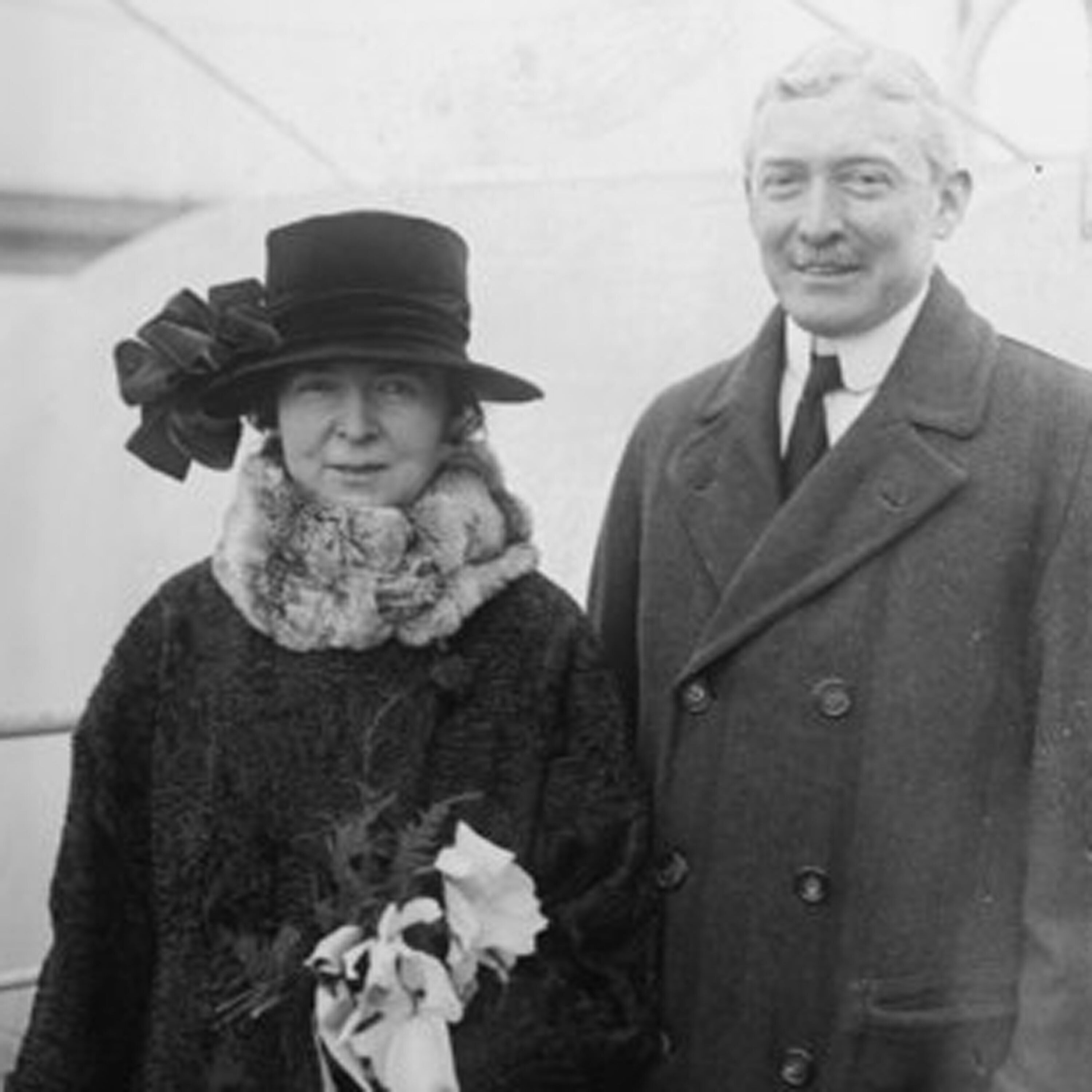
Charles Sherrill was everything a gentleman of his generation was supposed to be: rich, handsome, charming, Ivy-Leagued. He was impossibly well connected and extravagantly mustachioed. He was also the person who, as much as anything, decided whether American athletes would participate in the 1936 Olympics. Faced with one of the great moral dilemmas of the day, America needed the wisdom of Solomon. Instead, it got the wisdom of Sherrill.
See omnystudio.com/listener for privacy information.
2024-07-04
32 min
Transcript
Available Results
Generated results are saved to the knowledge database for reuse and search.
No generated results are available for this episode yet.
Extract Knowledge
Pick what you want extracted first. Model, scope, and chapter options appear after a template is selected.
Generated results for public episodes are saved to the knowledge database so they can be reused and searched later.
Transcript
00:00:08
Speaker 1: Bushkin. We can't. I have never had a single conversation where both you and I were not kind of grinning as we told charge all stories.

00:00:27
Speaker 2: Well, I think there's something kind of lovely about his un self consciousness. I mean, he's a rare breed in this day and age, the like, completely unself conscious man who never for a second doubts his abilities, even though there's so much evidence for why he should be doubting his abilities.

00:00:45
Speaker 1: I'm talking to Ben Adaph Haffring, my partner in our series on the nineteen thirty six Olympics, the most consequential Olympic Games in history.

00:00:55
Speaker 2: And he's also just a really excellent partner in the goal of mocking him, because he really preserves all of the evidence of his follies and he reads like a great character out of literature.

00:01:10
Speaker 1: This episode is about Charles Hitchcock Cheryl, the man who in the early nineteen thirties was at the center of the debate over whether the United States should go to the Berlin Games. In fact, if you ask why the Olympic Games are the Olympic Games, how it flourished. It endured over the course of the most tumultuous century in history. There are really only two people who matter. One is Avery Brundage, and we'll get to Brundage later in the series. The other is Charles Hitchcock. Cheryl. Cheryl is a forgotten figure. Today, traces of him persist only in little scraps here and there. But in his day, when Cheryl gave an after dinner speech somewhere, it made the Times. When Cheryl complained about his neighbour's dog, it made the Times when he died. The New York Times wrote no fewer than five stories five. He was everywhere. He knew everyone. He was friends with every American president, from Teddy to Franklin Roosevelt. He attended every reception of importance, every luncheon that mattered. In his sixty nine years, he crossed the Atlantic ninety times. He was in constant motion. He was Zelig.

00:02:22
Speaker 2: He's Forrest Gump.

00:02:23
Speaker 1: He's Forrest Gump. You know I'm about to you know who he is? Hold on, hold on, hold on, Oh no, wait wait wait wait wait wait wait wait, he's polonious. I have to get this right here. We are okay. So this is from love song with j alf Proof Rock maybe T. S. Eliot's most famous poem, and proof Rock is a kind of self aware version of Charles Cheryl, Oh, yes here we are okay. No, I am not Prince Hamlet, nor was meant to be. I am an attendant.

00:02:55
Speaker 3: Lord, the one that will do to swell a progress, start a scene, or to advise the Prince, no doubt, an easy tool, deferential, glad to be of use, politic, cautious and particulous, full of high sentence, but a bit of cuse at times, indeed almost ridiculous, almost at times.

00:03:21
Speaker 1: The fool that's him?

00:03:24
Speaker 2: That is him? And also can I do another literary pe? This is he's also Pangloss, you know, Condide's sort of utopian philosopher who's completely fatuous. The Pangloss quote is it is demonstrable that things cannot be otherwise than as they are. We're all being created for an end, all is necessarily for the best end. And that's also Ryl's kind of that's his philosophy of inconsequence, why really bother because everything's so great and it's just how it ought to be?

00:03:56
Speaker 1: Zelig force Gump, polonious Pangloss. Oh, and one more.

00:04:01
Speaker 2: That reminds me of the Dorothy Thompson who goes Nazi quote that he has been treated to forms of education which have released him from inhibitions. His body is vigorous, his mind is childish. His soul has been almost completely neglected.

00:04:16
Speaker 1: A yes. Remember Dorothy Thompson's parlor game where she describes going to parties, looking around the room and picking out which person was most likely to go Nazi. Thompson had two particularly interesting archetypes, misters B and C. Charles Cheryl was the embodiment of mister B. Mister B has risen beyond his real abilities by virtue of health, good looks, and being a good mixer. He married for money, and he's done lots of other things for money. His code is not his own. It is that of his class, no worse, no better. He fits easily into whatever pattern is successful. That is his measure of value. Success. Nazism as a minority movement would not attract him. As a movement likely to attain power, it would. My name is Malcolm Gladwell. You're listening to Revisionist History, my podcast about things overlooked and misunderstood. This is episode two in our series Hitler's Olympics, How and Why America went to the nineteen thirty six Games. Charles Cheryl grew up in Washington, d c. His father made a lot of money lobbying for the big railroad interests. He went to college at Yale, then worked for a time as a lawyer on Wall Street. He was tall, slender, with a long imperial nose, bright twinkling eyes, a full head of blonde hair, and a thriving mustache. He wrote twenty books, mostly about stained glass. It's his memoirs, though, that are ar tour de Force, an unpublished three hundred and sixty page compendium of every anecdote, accolade, witticism, and celebrity encounter in his entire life. Here is my favorite. In October nineteen thirty one, I had the honor of lunching alone at the White House with President Hoover because he wanted me to undertake a certain matter, which I guessed he thought me reluctant to do. That opening is very Charles Cheryl. He was not the sort who volunteered. That would be ghusch. He waited for opportunity to ask him to lunch. It was an excellent luncheon, he continues, and I was pleased to see upon each of the four corners of the table small silver dishes containing cherries. I am very fond of cherries, and so looked forward to indulging in them when the arrived. Therefore, while I was partaking out of a cup of soup, the President ate the cherries out of his dish and remarked to me, I see you do not like cherries, and then proceeded to eat all the cherries out of all four dishes. This stunned me, but of course I made a comment upon his disposal of all the cherries in sight. The President then makes a pitch for the post. He wants Cheryl to take some minor ambassadorship or blue ribbon panel. Cheryl demurs. The President is crestfallen, but as they leave the luncheon, Cheryl turns to Hoover and gently says, I think, sir, that you do not realize that a man does not always know just what the other man likes or does not like. For example, at luncheon, you said I did not appear to like cherries, But you are mistake, because I am very fond of cherries. But there might be something else which I would like to do to serve you, which I like as much as I like cherries, and possibly it is something that you have not thought of in connection with me. And then the kicker, perhaps this remark of mine has something to do with his subsequently asking me to undertake the embassy to Turkey. I mean, can you see why we are so fascinated with Cheryl? It's all there in the showdown over the cherry bowl, his willingness to speak truth to power, his will to succeed, his daring conversational gambits. Cheryl's most enduring fame, however, was as a sportsman. He was a champion sprinter at Yale. He never went to the Olympics, but he did briefly share the world record for the hundred yard dash. But that was just part of it. You know how sprinter's crouch at the start of every race instead of standing. Charles Cheryl invented the crouching start, or at least he says he did.

00:09:02
Speaker 4: Any One that looked at my hand will be that I have a luck line which surprises all of those who are wise in such.

00:09:09
Speaker 1: Such Cheryl was much sought after as an after dinner speaker, and he would often begin with a story or two of his halcyon days at Yale as a champion athletic innovator.

00:09:22
Speaker 4: Which brings me to the athletic thought that although I should play credit for the invention of the catching start, the real fact is that it's due more to luck than brain. I happened upon it and it turned out to be worth at least the yard, and I got credit or something with my luck really deserved.

00:09:49
Speaker 1: You know how you have an uncle who stole home in the little league to win the county championship and he's still telling that story fifty years later. Cheryl was like that with the crouching start.

00:10:01
Speaker 2: He has this glorious life that everyone in the world is basically supporting, because even he get has all these letters from presidents just being not saying anything important, but being like, Chaz loved your book on stayin Glass. Yeah, like three paragraphs from Teddy Roosevelt telling him how great his book on stained Glass is. And I believe that he actually read Charles Cheryl's book on Stained Glass. But for what reason other than to make Cheryl feel good about himself, which is just the mission of even the most powerful man in the world.

00:10:33
Speaker 1: Do you know about the Teddy Roosevelt. There's a great Teddy Roosevelt moment in uh oh, yeah, he goes to see Roosevelt. This is from his tires and he's he waits for half an hour before going into the president study because Booker Washington had been called called in to advise up upon a speech touching on the colored race. So just so we know, like he's.

00:10:56
Speaker 2: Like, something meaningful is really going on.

00:10:58
Speaker 1: Booker T. Washington was one of the most important African American leaders of his generation, and they're talking about the central problem facing the American public. And Cheryl is like waiting impatiently because he said, I followed him and after the purpose of my visit was concluded a rose to leave. The President asked my opinion of two bronzes. One was the Bronco Buster, which had been presented to him by the old Regiment, the rough Riders. The other was the Crouching Start by Tate McKenzie.

00:11:26
Speaker 2: Ah, that's that's what I found in the museum.

00:11:29
Speaker 1: We are deep into digression mode here, But at some point in our mutual obsession with Charles Cheryl Ben found himself in a community museum in some waspy corner of Connecticut, and stumbled upon a statue of a tall, handsome man in a crouching start. Chills went down his spine exactly exactly, I laughingly declared my inability to give any unprejudiced answer because I was the first runner to use the crouching start.

00:11:58
Speaker 2: Not true.

00:11:58
Speaker 1: By the way, come back here and sit down, snapped out the President, and then followed a rapid fire useilade as to why that start had been invented, its advantages, limitations, etc. Until I felt as if a stomach pump had been applied to my brain.

00:12:16
Speaker 5: Like just so we understand, Roosevelt has just met what Booker t WASHINGTD to discuss the central issue facing the Republic, which is the continued like crime be committed against the black people.

00:12:30
Speaker 1: Cheryl shows up, Now what does the president do? Finally comes alive with the question of the origin of the crouching start. Presidents were impressed by Charles Cheryl, and so was an organization that lies at the very heart of this story, the International Olympic Committee the IOC. The IOC is the governing body of the Olympic Games then is now. It is based in Lauzon, Switzerland, neutral territory. It has ultimate control over all aspects of the games, the rules, the events, the schedule, where the games are held, Who gets invited. The organization's founder was Pierre de Coupertan Baron de Cupertin, a French aristocrat. He got the modern game started in Greece in eighteen ninety six, planted the seed, and from the beginning he surrounded himself with his friends, basically other aristocrats. He referred to them as the trusted Men. The Baron's successor to run the IOC was Count Henri dubayers LeTour of Belgium. Someone once wrote of the Count's wife, the Comtesse Elizabeth von Clarie Unaldringen. She traveled widely as her husband was a passionate tourist. The comtest was also a Nazi, who wrote a personal note of thanks to Adolf Hitler after he invaded her country. But we're getting ahead of ourselves. Another Olympic committee member, his Excellency the most excellent, the Marquise of sam the Spanish aristocrat who ran the IOC for twenty one years. One biographical note on Samarank reads that quote. During his studies he practiced roller hockey, for which he created world Championships, which the Spanish team won roller hockey. He picks a sport no one plays, and then invents a world championships where he has to be the favorite. I mean, that is just about the most perfect description of enterprising white guy privilege ever. And let's not forget about Lord David George brownlow Cecil Berlin, heir to the Marquess of Exeter, who once ran around the upper promenade deck of the Queen Mary Ocean Liner in fifty seven seconds dressed in street clothes, a record that I'm pretty sure still stands. Burgley was the one who bestowed the golden bronze medals on the American runners John Carlos and Tommy Smith at the Mexico Games in nineteen sixty eight, where on the victory stand the two famously raised glove fists in a black power salute. When asked why Carlos and Smith wore gloves that day, Burley said, I thought they'd hurt their hands. These were the men of the Io Sea. They would meet every year or so in a grand hotel in one of the many storied capitals of Europe, put on long black coats and striped pants and bowler hats, drink a lot of Chateau Lafitte Rothschild, and regale each other with stories of past athletic triumphs. It was the greatest men's club in the world, and in retrospect, it was surely only a matter of time before the IOC set their sights on a certain dashing mustachiote sprinting champion from New York City who held the ear of Presidents. Let me read to you from the June eighth, nineteen twenty two edition of the New York Times. Olympic Committee Aleks Mister Cheryl will bring a vast store of athletic knowledge to the Committee. While at Yale he won the intercollegiate one hundred yard dash championship four years in succession. He was wait for it, the originator of the crouching start, which is now used in all sprints in every section of the world. Zelig Forrest Gum, Polonius Pangloss, Mister b and the Thomas Edison of the crouching start. Our man of parts has now been given his greatest role ever a member of the International Olympic Committee, and over the next decade his medal will be put to the test do I dare to introduce yet another literary analog, Hercules, of course, whom the Oracle of Delphi directed to perform twelve trials in exchange for immortality, the slaying of the Hydra, the cleansing of the augien Stables, on and on. You read the Greek myths and immediately your thinking of Charles Hitchcock Cheryl. And by the way, where is the most famous depiction of the labors of Hercules in a sculpture found in the Temple of Zeus at Olympia. It all fits. Adolf Hitler's rise to the leadership of Germany was swift. In nineteen twenty three, in his mid thirties, he makes an incredibly clumsy coup attempt in Munich and gets arrested. Spends nine months in prison, where he writes Mankomfe his vision for a new ary in Germany, cleansed of Jews and outsiders, and as soon as he gets out, his star ascends. By the time our famous American journalist Dorothy Thompson interviews Hitler at the Kaiserhoff Hotel in nineteen thirty one, the Nazis are the second biggest party in the German parliament, and gaining ground, and Thompson is trying to figure out whether Hitler can actually get elected Chancellor, especially since he makes it clear that he doesn't actually believe in democracy. Thompson wrote, people were to awaken, and Hitler's movement was going to vote dictatorship in in itself a fascinating idea. Imagine a would be dictator setting out to persuade a sovereign people to vote away their rights. In nineteen thirty three, Hitler pulls it off. It comes to power almost immediately. There's a boycott of Jewish businesses. People start beating up Jews in the streets. Jews get banned from professional organizations and sports clubs. The Nazis, it turns out, care a great deal about sports, about physical fitness, about vigorous competition, and their vision of sports does not include Jews. Germany's best tennis player at the time is Jewish doctor Daniel Prenn, and he gets kicked off the country's Davis Cup team. In the spring of nineteen thirty three, the head of the German an organizing committee for the Berlin Games, Teodolibald, is stripped of his post because there were some Jewish people in his family tree. In May of nineteen thirty three, the German Sports Commissioner gives an interview where he says that German sports are for arians. The American Jewish Congress sends a telegram to the American delegates to the IOC. It says, no jew in America or in other countries could, in self respect undertake to appear in Germany under present conditions. The Olympic ideal and the Nazi agenda are on a collision course. Now it's June nineteen thirty three. The IOC has its big meetings set for Vienna. It was almost certainly at the Hotel Imperial, a magnificent building in the Italian Neo Renaissance style, marble lobby, coffered ceilings, crystal chandeliers. No other place would be up to the IOC's standards. Little known fact about the Imperial, by the way, Hitler worked there briefly as a janitor when he was bombing around Vienna in his twenties. Sixty six delegates are coming for the IOC meeting from every country of significance in the world. The Men's Club has gathered in their long black coats, their striped pants and bowler hats. A special program is printed up for all in attendance, which begins on its opening page with a questionnaire. Are you a sportsman? One? Do you play the game for the game's sake? Two? Do you play for your team and not yourself? Three? Do you carry out your captain's orders without question or criticism? Four? Do you accept the umpire's decision absolutely? Five? Do you win without swank and lose without grousing? And then the crucial one six would you rather lose than do anything which you are not sure is fair? The Vienna meeting focuses squarely on that sixth question. A true sportsman would rather lose than do anything that wasn't fair, And the delegates are perfectly aware of what's going on in Germany. Not letting Jews compete simply because they are Jews is for the sportsman surely the definition of unfairness.

00:21:25
Speaker 4: But our International Committee does not concern itself with internal athletic conditions in any country, but only with the choice of that country's members for its Olympic team.

00:21:44
Speaker 1: This is Cheryl in a speech outlining the Commission's dilemma that week in Vienna.

00:21:48
Speaker 4: Now that's very important to remember with that choice, we insist that race, religion, color, and sofar shall.

00:21:56
Speaker 1: Not interfere cognitive dissonance upon us. And the Olympic committee members have four ways they can resolve it. They can move the game somewhere else. They can cancel the games the way they did in nineteen sixteen in the middle of the First World War. They can keep the games in Berlin and simply let everyone boycott. Or they can convince the Nazis to have a change of heart when it comes to their Jewish athletes. What should they do? Let us put ourselves in the mind of our hero, Charles Hitchcock Cheryl. He has sailed the Atlantic ninety times. He has written a book on German stained glass windows. He knows the Teutonic soul and did not Charles Hitchcock Cheryl stare down the President of the United States over the thorny issue of the disputed cherrybyl Why bow to tyranny? Why not compel tyranny to bow to you? The last option to convince the Nazis to be less Nazi was the only choice. Cheryl sends a telegram home to the American Jewish Congress, rest assured that I shall stoutly maintain the American principle that all citizens are equal under the law. The key business of the Vienna meeting was conducted by a six man executive committee headed by the Belgian count Henri du Baye LeTour, and Cheryl, by virtue of his stature as a diplomat and storied athlete, is the key player in that inner circle. They meet behind closed doors. Imagine a room full of mustachio gentlemen in an ornate conference room festooned with portraits of other mustachio gentlemen. Cheryl by LeTour and the English delegate on one side of the long oak conference table, the Germans on the other. It was a trying fight, Cheryl explains later in a letter to a friend. The British said, let the Germans be, but Cheryl would have none of it. The Germans yielded slowly, very slowly. First they conceded that the other nations could bring Jews. Then I went at them hard, insisting that as they had expressly excluded Jews, now they must expressly declare that Jews would not even be excluded from German teams. He would tell this story often in the intervening years.

00:24:27
Speaker 4: I personally fearing unfair treatment of Jewish athlete in the selection for the German nineteen thirty sixth Olympic team. Made it my business who pushed the points so far that our committee received from the German Ministry of Interior Ministerium dos Center a letter of three short paragraphs, third of which reads, as a principal German Jews shall not be excluded from German team at the game of the eleventh Olympia. At his next year, I had the honor of drafting that third paragraph. Perhaps you will agree that I felt everyone at home and abroad thought that I was thus doing my best for the Jews.

00:25:24
Speaker 1: In Vienna, there are reporters gathered at the hotel waiting for news to break. Cheryl emerges, triumphant that games will go on. A cheer goes up around the world. The New York Times, Charles Cheryl's newspaper of record, calls him a hero. The straightforward character of the promise obtained from the German government came as all the greater surprise, and the opinion was expressed that a real blow had been struck in the cause of racial freedom, at least in the realm of sports. Charles Cheryl confronts the contradt of the Berlin Games, the cognitive dissonance of a pure competition in an impure place, and he resolves it how not like Dorothy Thompson. She said, you resolve it by not going. He says, no, you resolve it by making the impure place pure, by staring down his German counterparts across the negotiating table, and through sheer force of personality and intelligence and courage and good old fashioned New York City moxie, bending them to our will. The Vienna Declaration was Charles Hitchcock Cheryl's finest hour. The controversy over the Games faded, The Olympics were saved. Problem solved, right, Oh, no, problem is just beginning.

00:27:00
Speaker 2: I want to keep talking about what's funny about Charles Cheryl, because I do think he's hilarious and he brings me so much joy. I think he also raises a number of very complicated moral questions. Yeah, and I found myself at the end of the second day that I went into the archives. His scrapbooks are at the New York Historical Society.

00:27:21
Speaker 1: The New York Historical Society is a massive bozar building on Manhattan's Upper West Side, right by the Natural History Museum. If you were a man of Charles Cheryl's stature, there is no other place worthy of your collected papers.

00:27:36
Speaker 2: So we found out that Charles Pitchcock Cheryl had lovingly documented his entire life. You know, most archives you go to, they're just boxes of stuff that was left to a library, and then they had to figure out some kind of archival organization's scheme for it. Not Charles Cheryl's papers. Everything that he kept was preserved in a scrap book, in actually four four scrap books that then when he died in nineteen thirty six, his wife be queathed to the New York Historical Society.

00:28:08
Speaker 1: Ben spent days at Historical Society archives digging to the Cheryl mother lord.

00:28:15
Speaker 2: I mean they're all like six inches wide. And the thing is, the legacy of Cheryl continues in the pristineness of these scrap books. I mean, his ink doesn't fade, the glue he uses to bind this stuff doesn't give, and all of the paper was still so crisp and weighty. Everything is written on these like robins egg blue and pearl thick stock pages, or like silky diary pages. He just had the best of everything, and it's all withstood the test of time.

00:28:48
Speaker 1: Was the wife in donating these materials? Let's accept for a moment the premise that the wife may not have been, the relationship may not have been. Should we say conventional? Do you think she's Do you think she knows what she's doing? Oh? The wife? We haven't talked about her yet. She was the heir to the Berkshire Cotton manufacturing Company, which would later merge with Hathaway to create you guessed it, Berkshire Hathaway, which her family would turn around and sell to a young Warren Buffett. Yet another way in which the world turns around. Charles Hitchcock Cheryl. Anyhow, missus Charles Hitchcock Cheryl takes the complete set of her husband's papers, has them preserved in perpetuity, and apparently never checks to see what's in them. Or maybe she does and she's fine with it. Now. It's crucially important that he dies in thirty six right.

00:29:49
Speaker 2: The former head of manuscripts that the New York Historical Society points out that this is the rare occasion on which a American who really fell in love and hard with the Nazi Party was unable to then sanitize his records after seeing what happened in World War Two. So what we have here is a perfectly preserved in amber. It's like the Jurassic Park Mosquito of nineteen thirties American fascism, because nothing there was, you know, already a very high bar for self consciousness in Charles Cheryl's life, and so the full force of his love for the Nazis is on display in volume thirty five of his forty four scrap book collection.

00:30:32
Speaker 1: In our next episode, we delve into the buried treasure of scrap Book thirty five, the uncensored journal of a man in the process of going Nazi.

00:30:43
Speaker 3: I'm an attendant lord, one that will do to swell a progress, start a scene, or do advise the Prince, no doubt, an easy tool, deferential, glad to be of use, politic, cautious and particulous, full of high sentence, but a bit of cute at times, indeed almost ridiculous, almost at times.

00:31:10
Speaker 1: The fool Well Yes Religious History is produced by ben Na daph Haffrey, Tolly Emlin and Nina Bird Lawrence. Our editor is Sarah Nix. Fact checking by Arthur Gomberts and Jail Goldfein. Original scoring by Luis Gara, mastering by Flan Williams, Sarah Buger and Jake Gorsky. Engineering by Nina Bird Lawrence. Our executive producer is Jacob Smith. Special thanks to Karen Chakerji. I'm Malcolm gladwa
Chapters
No chapters available.