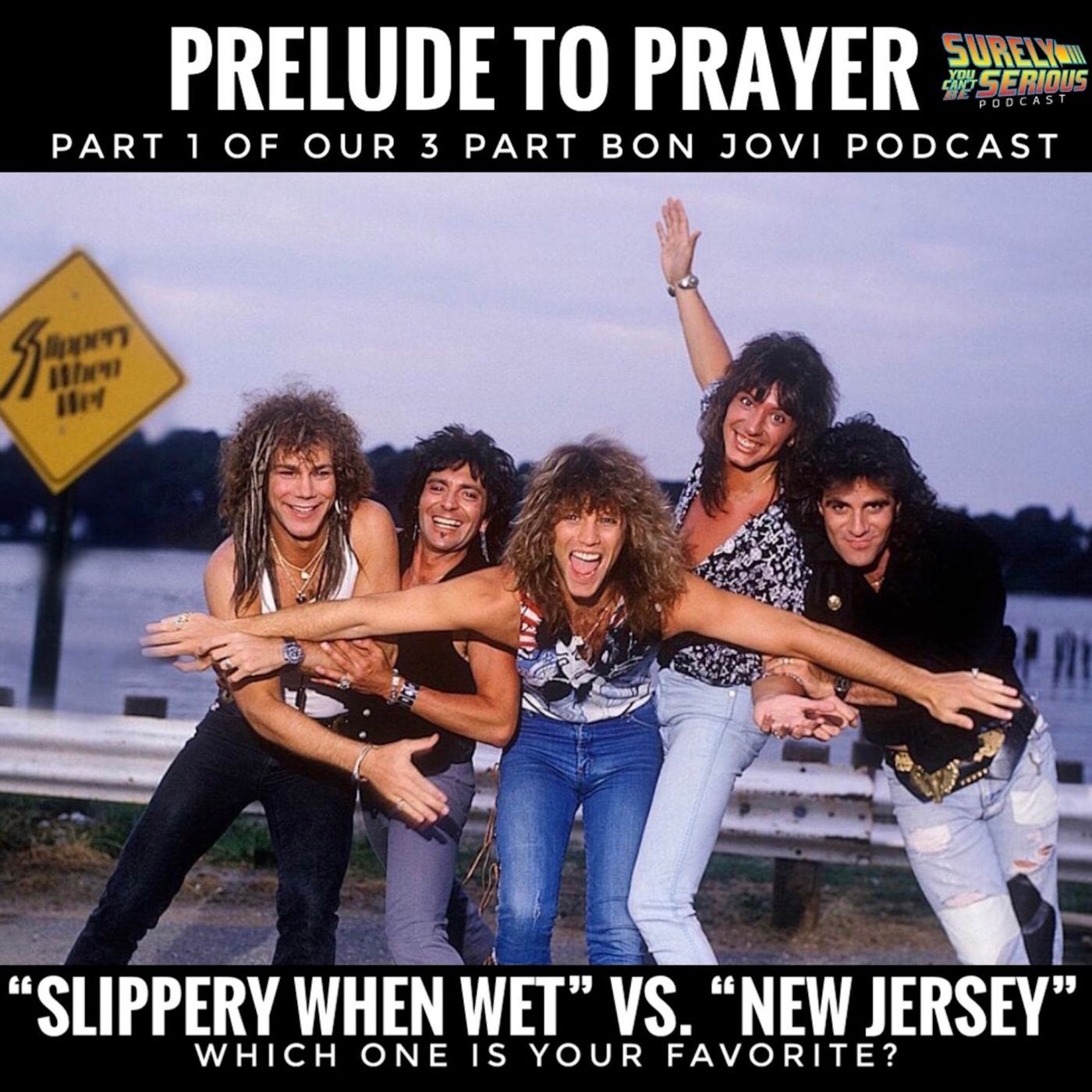
Bon Jovi: Slippery When Wet ('86) vs. New Jersey ('88) Part 1
Before the the iconic "Slippery When Wet" album, Jon Bon Jovi had a hit song and no band. Listen to us go in depth on how he founded one of the biggest bands of the 80's, what he has to do with R2-D2 and the amazing stories leading up to the amazing "Slippery When Wet" album. Grab your talk box and double necked guitar and let it rock!
2021-01-26
31 min
Transcript
Available Results
Generated results are saved to the knowledge database for reuse and search.
No generated results are available for this episode yet.
Extract Knowledge
Pick what you want extracted first. Model, scope, and chapter options appear after a template is selected.
Generated results for public episodes are saved to the knowledge database so they can be reused and searched later.
Transcript
<v Speaker 1>All right, everybody, Welcome back to the Shirtley You Can't
<v Speaker 1>Be Serious Podcast, Season two, Episode one. I'm Jack Dah.
<v Speaker 1>I am so glad to be back. We've been gone
<v Speaker 1>too long. We're comparing Slippery when Wet versus New Jersey
<v Speaker 1>bon Jovi's Two Bigs South.
<v Speaker 2>You say that and I get chills. I'm just I'm
<v Speaker 2>so excited about this. I'm ready to let it rock.
<v Speaker 2>I'm ready to let it go because you can't stop a.
<v Speaker 1>Fire burning out of control. No, and I'm just I'm
<v Speaker 1>hoping we're still wanted dead or.
<v Speaker 2>We did take two steel horses to this location tonight
<v Speaker 2>to pods.
<v Speaker 1>So all right, Jason. Before we jump in, I want
<v Speaker 1>to say thanks to our executive producer for this episode,
<v Speaker 1>mister Jonathan Tweety. He entered in, gave us a Patreon subscription,
<v Speaker 1>and he is the executive producer of our bon Jovie episode.
<v Speaker 2>Thanks Jonathan, we really appreciate you. If you would like
<v Speaker 2>to be a Patreon and become an exclusive producer, go
<v Speaker 2>to our Patreon page, click subscribe.
<v Speaker 1>And it's that easy that you just didn't subscribe. Now
<v Speaker 1>pick your amount you can. You can be an executive
<v Speaker 1>producer for as little as five dollars a month. We
<v Speaker 1>start sending out prizes after that, so be sure and
<v Speaker 1>take advantage of that while it lasts. But anything that
<v Speaker 1>you can do to help out, we truly appreciate. And
<v Speaker 1>if you can't do that, tell a friend, tell five friends,
<v Speaker 1>tell ten friends, and we'll forgive you for not giving
<v Speaker 1>us a five dollars a month. There's this place I
<v Speaker 1>like to go. It's called the nineteen eighties. Let's do it,
<v Speaker 1>let's go, let's see eighties.
<v Speaker 2>All right, so listen, dee, this is a massive battle
<v Speaker 2>for me personally. Okay, okay, So there are a few
<v Speaker 2>pillar albums in my life, right, So Thriller's one yes,
<v Speaker 2>Hysteria is one yes, Slippery w and Wet and New Jersey.
<v Speaker 2>That rounds out my big four pillars. Now, I've had
<v Speaker 2>love affairs with fifty one, fifty and nineteen eighty four,
<v Speaker 2>and you know, so these others, but these are my
<v Speaker 2>four pillars. So today we're going to start the comparison
<v Speaker 2>between two of my all time favorite albums.
<v Speaker 1>Yeah, well, I've mentioned it before. One of the songs
<v Speaker 1>on one of these albums is the reason that I
<v Speaker 1>started playing guitar, which is a huge, huge thing in
<v Speaker 1>my life. So that's a big deal. We're excited about this. Yeah,
<v Speaker 1>this is pretty awesome. This is amazing, and you know,
<v Speaker 1>it's kind of interesting. It took a long time for
<v Speaker 1>bon Jovi to get critical acclaim. You know, they were
<v Speaker 1>always a popular band, and because they were a popular band,
<v Speaker 1>there were haters out there and a lot of them
<v Speaker 1>more critics. And to those folks, I just got to say,
<v Speaker 1>screw you, man. You guys are missing out. Yeah. Yes,
<v Speaker 1>it's it's enjoyable to listen to this music. It's also
<v Speaker 1>enjoyable to bang your head to this music. This is
<v Speaker 1>just kick butt, good, top down, turn it up music. Absolutely,
<v Speaker 1>these guys have it all. They've got.
<v Speaker 2>They had looks, they had ability, they had great timing,
<v Speaker 2>and they had great songs.
<v Speaker 1>Yeah.
<v Speaker 2>So I mean, we are going to have so much fun.
<v Speaker 2>You want me to do my checklist. Let's run down
<v Speaker 2>the checklist. Checklist before we dive in. Let's make sure
<v Speaker 2>I've got everything I need. Okay, we got we got
<v Speaker 2>the talk box YEP, we've got six pack in the radio,
<v Speaker 2>We've got lipstick, plastic and paint, and we're gonna dance
<v Speaker 2>the tango with a broomstick in our hand.
<v Speaker 1>Okay, okay, you ready, let's let it rock. Bon Jovi
<v Speaker 1>slippery win way. Okay, So we've got to start at
<v Speaker 1>the big and I'm not sure which beginning we start at,
<v Speaker 1>but might as well start with John. His name is
<v Speaker 1>the band name after all, right for sure. So interestingly,
<v Speaker 1>bon Jovi is spelled differently than you might expect. It's
<v Speaker 1>it is a complete word bo in gio v I
<v Speaker 1>bon g o v. Because they're Italian.
<v Speaker 2>Definitely got some Italian in there.
<v Speaker 1>Yeah. And he was born to a couple of marines,
<v Speaker 1>a man and a woman who met in the marine corps,
<v Speaker 1>and then his mom went on to become a playboy bunny,
<v Speaker 1>not in the magazines, but in the clubs, the Playboy restaurant.
<v Speaker 1>She walked around with the little tuft tail and the
<v Speaker 1>ears on and would wait on people like Dean Martin
<v Speaker 1>and Frank Sinatra.
<v Speaker 2>Yeah, baby, no baby, Yeah yeah, I did a Google searched.
<v Speaker 2>You can see her, and she's wearing her little little
<v Speaker 2>ears and her little cottontail.
<v Speaker 1>Yeah yeah, so she looked good. She looked like a
<v Speaker 1>nineteen sixties playboy money yeah wow.
<v Speaker 2>So former marine Yeah, God bless America.
<v Speaker 1>Yes. So when they got married, he was going to
<v Speaker 1>do the standard. You know, I'm going to go become
<v Speaker 1>a plumber. And she was like, you know, why don't
<v Speaker 1>you become a hairdresser because I spend a lot of
<v Speaker 1>money on my hair and it'd be nice if you
<v Speaker 1>could do it. And he was like, okay, if you
<v Speaker 1>want me to do that, I'll do that. And so
<v Speaker 1>he became a hairdresser, which is probably why John has
<v Speaker 1>some of the best hair over all. Right. So he
<v Speaker 1>at some point they decide, listen, you got to learn
<v Speaker 1>a musical instrument, and so at seven years old he
<v Speaker 1>started playing the guitar. They took him to the guitar lessons.
<v Speaker 1>He started playing the guitar, and he said that it
<v Speaker 1>was like at the guitar shop and the old man
<v Speaker 1>had a pipe and would nod off and it was done.
<v Speaker 1>No no, no, no, no no, And you know, he
<v Speaker 1>was just not interested at seven. And after a few
<v Speaker 1>weeks of lessons, he was told to clean up, and
<v Speaker 1>so his way of cleaning up was to chunk the
<v Speaker 1>guitar down into the basement just to hear it clang.
<v Speaker 1>And so it took several years till he was thirteen
<v Speaker 1>before he picked the guitar back up again. And as
<v Speaker 1>it happened, a gentleman moved across the street who was
<v Speaker 1>like a session musician, but his name was Al Paranello. Well,
<v Speaker 1>just so that you know, bon Jovi, it has special
<v Speaker 1>little pins that are like in the shape of the
<v Speaker 1>Superman logo that if you go long enough with the
<v Speaker 1>band like crew or band member whatever. It's a very
<v Speaker 1>honorary thing and it takes a lot of time to
<v Speaker 1>get it. And John when Al died, he took his
<v Speaker 1>off and put it in the casket with Al. That's
<v Speaker 1>how important it was he was to him. And so
<v Speaker 1>he started taking lessons from him, and instead of the scales,
<v Speaker 1>he's like, I'm gonna teach you how to play House
<v Speaker 1>of the Rising Sun, which I loved because that was
<v Speaker 1>like the first song my dad taught me how to
<v Speaker 1>play on the guitar. I'm sure it's the first song
<v Speaker 1>for a whole lot of folks, right, And so he
<v Speaker 1>teaches shows him how to play it. He says, come
<v Speaker 1>back next week. Comes back the next week, he still
<v Speaker 1>know how to play it. He's like, okay, well come
<v Speaker 1>back next week. I need you to know it. Comes
<v Speaker 1>back the next week, he still doesn't know it. He says, listen,
<v Speaker 1>I don't have time to around with you. Okay, I
<v Speaker 1>got kids. If you're going to do this, do it.
<v Speaker 1>If not, don't waste my time. Come back here next
<v Speaker 1>week and you don't know what we're done. And John
<v Speaker 1>was like, that was the exact kick in the butt
<v Speaker 1>that I needed. And I worked the entire week and
<v Speaker 1>made sure that I knew it by the time I
<v Speaker 1>went back. So while he's trying to make it in
<v Speaker 1>high school and trying to put these you know, trying
<v Speaker 1>to do something with these bands, he'll go and play
<v Speaker 1>at clubs during the week and play until the wee
<v Speaker 1>hours of the morning, and then come to school the
<v Speaker 1>next day, you know, play all three go to school
<v Speaker 1>at eight and one night, while he's playing, a guy
<v Speaker 1>in the back named Bruce Springsteen decides to come and
<v Speaker 1>join him on stage. How cool is that if you're
<v Speaker 1>a high school kid, seventeen year old kid and the
<v Speaker 1>boss says, hey, can I come up and with you?
<v Speaker 1>Uh duh? Yeah? Yeah? And he was one of John's idols,
<v Speaker 1>I mean yeah.
<v Speaker 2>John talks about how it was it was Bruce Springsteen,
<v Speaker 2>it was Southside Johnny it was Jay GAW's band. I mean,
<v Speaker 2>those guys were who he looked up to musically. Yeah,
<v Speaker 2>and hey, Bruce Wingstein, my idol. You want to play
<v Speaker 2>with me?
<v Speaker 1>Absolutely, let's go. Yeah. And he had a couple of
<v Speaker 1>buddies who also took guitar lessons from this guy. And
<v Speaker 1>one of those buddies name was Dave skid Row. You
<v Speaker 1>got it, yep.
<v Speaker 2>We talked about him last, Paul Ye. Dave and John
<v Speaker 2>were good buddies. Later on, John got a job at
<v Speaker 2>the radio station and he was being a gopher and
<v Speaker 2>he would sleep floors and he would go get dry
<v Speaker 2>cleaning and this and that. So he brought his buddy
<v Speaker 2>Dave Sabo up to the to the place and Dave's like,
<v Speaker 2>that's Ozzy Osbourne right there, right Jagger, that's mc jagger.
<v Speaker 1>Yeah. He's like, duh, why would you not want to
<v Speaker 1>work here? You know? Right? Yeah. So that guy that
<v Speaker 1>owned the radio station was a second cousin of John's.
<v Speaker 1>His name was Tony bun Jovi, and the radio station
<v Speaker 1>was called the Power Station, and it was a place
<v Speaker 1>where obviously a lot of big names were coming. A
<v Speaker 1>Sting has an album called fifty seventh and ninth, which
<v Speaker 1>is named after the intersection that he would cross walking
<v Speaker 1>to that studio. All right, yeah, so he's working for
<v Speaker 1>his cousin as a gopher in this station, goes to
<v Speaker 1>get coffee, goes to make bets for people, doing whatever
<v Speaker 1>he can during the day, and then he had a
<v Speaker 1>long bus ride. He would spend his bus ride writing songs,
<v Speaker 1>and then he would get home at night and play practice. Right,
<v Speaker 1>and at some point he puts together a song. He
<v Speaker 1>puts together several songs, but he's really excited about this
<v Speaker 1>song called Runaway, Runaway. But now a lot of people
<v Speaker 1>think this is his first professional recording, but it's not
<v Speaker 1>breaking on. Let's go, I would get this tray question.
<v Speaker 1>His first professional recording actually occurred a couple of years earlier,
<v Speaker 1>when a small movie called Star Wars was recording a
<v Speaker 1>Christmas album and they were recording a song called R
<v Speaker 1>two D two we Wish you a Merry Christmas, and
<v Speaker 1>Tony at the recording station says, hey, my cousin over here,
<v Speaker 1>he'd be good to sing that song for you, And
<v Speaker 1>so John bon Jovi's first professional record is on Christmas
<v Speaker 1>and the Stars, the Star Wars Christmas album, and here is.
<v Speaker 1>Here's a sample of John bon Jovi singing R two
<v Speaker 1>D two we wish you a merry Christmas. You know
<v Speaker 1>lesson we don't go back to the Winter Stars. We
<v Speaker 1>know that unity's big. That is so freaking awesome. Man,
<v Speaker 1>I don't know that I would say awesome. It's a
<v Speaker 1>little it's a little strange. It doesn't sound like the
<v Speaker 1>Bonjob we know and love, but it is pretty crazy
<v Speaker 1>to hear that. Are you ready for this? Yes? I
<v Speaker 1>have this album. Oh my god, I have this album.
<v Speaker 1>You own it.
<v Speaker 2>I own this album, this record like you had the
<v Speaker 2>Open Well. I was a Star Wars freak, Yes, so
<v Speaker 2>I had everything I can get my hands on Star Wars. Wise,
<v Speaker 2>I didn't become a Bonjob freak until later. It just
<v Speaker 2>happened that world's collided and I looked on.
<v Speaker 1>Like, hey, I got this record. Oh my gosh.
<v Speaker 2>There's another song on I think called what do you
<v Speaker 2>Buy a Wookie When He's already got a comb.
<v Speaker 1>Or something like that. That was like my favorite song
<v Speaker 1>growing up. So it's fantastic. That is fantastic. So it
<v Speaker 1>wasn't the runaway hit that Runaway became, and neither was
<v Speaker 1>Runaway when it first came out. He was very excited
<v Speaker 1>about it. He was singular focused. He had he knew
<v Speaker 1>what he wanted, and that was what he was pursuing
<v Speaker 1>with all of his effort. And so he was sending
<v Speaker 1>out this demo of Runaway to all of these radio
<v Speaker 1>stations and wasn't getting any where. And he thinks to himself,
<v Speaker 1>you know who's the loneliest guy in the music industry.
<v Speaker 1>It's the DJ right right, because he's just there in
<v Speaker 1>a room by himself, talking to a microphone, pretending he's
<v Speaker 1>talking to the world. And so he goes to this
<v Speaker 1>station called WAAP the Apple and he walks in and
<v Speaker 1>it's a very new station and they don't even have
<v Speaker 1>a receptionist yet. And so he walks in and the
<v Speaker 1>DJ's in the booth like talking to the microphone, looking
<v Speaker 1>at him, like what the heck, what are you doing here?
<v Speaker 1>He's like, I just you know, I've got this music.
<v Speaker 1>I was wondering if you would listen to it and
<v Speaker 1>maybe play it on the radio. And so the guy
<v Speaker 1>listens to Runaway and he's kind of impressed, and he
<v Speaker 1>shows it to the station director and the station director's
<v Speaker 1>kind of impressed. And not only do they want to
<v Speaker 1>play it on the radio, but they want to put
<v Speaker 1>it on an LP that they're making of local, homegrown
<v Speaker 1>music that then happens to get distributed because they're a
<v Speaker 1>chain radio station. It distributed to all of these sister
<v Speaker 1>radio stations around the country. I heard John when he
<v Speaker 1>talked about this. He went to the DJ.
<v Speaker 2>First of all, he had the hustle and the drive
<v Speaker 2>and the ambition and the guts to go up to
<v Speaker 2>this guy and say, look, play this. It's really good.
<v Speaker 2>When he said, he said, listen, if you'll play this
<v Speaker 2>three and a half minutes from now, you'll realize standing
<v Speaker 2>in front of you is.
<v Speaker 1>A rock star.
<v Speaker 2>And you know what, he was right, Yeah, I mean
<v Speaker 2>I can say that and that wouldn't be true, but
<v Speaker 2>when he said it, it was true.
<v Speaker 1>Yeah. Absolutely. And when it started to get the airplay,
<v Speaker 1>suddenly all of those record companies that he had been
<v Speaker 1>getting getting turned down by were now giving him calls.
<v Speaker 1>Ended up going with the record label Mercury, and they said,
<v Speaker 1>all right, we need to we need to put together
<v Speaker 1>this song, we need to put together an album. And
<v Speaker 1>so he puts together a band that's supposed to be
<v Speaker 1>together for three weeks, right, when Runaway comes out. He
<v Speaker 1>doesn't have a band, he doesn't have management, he doesn't
<v Speaker 1>have a record label. He's just a guy with a
<v Speaker 1>great song. You know. He didn't play all the music himself.
<v Speaker 1>He did have some guys playing the music for him,
<v Speaker 1>but it wasn't his band. But here's who it was.
<v Speaker 1>The guitarist was Tim Pierce, who played with Rick Springfield
<v Speaker 1>and several other huge names. Wow. The keyboardist was Roy Britton,
<v Speaker 1>who was a member of the East Street Band with
<v Speaker 1>Bruce Springsteen and several I mean they call him the Professor.
<v Speaker 1>He's a big name. The bassist was Hugh McDonald who
<v Speaker 1>is now the bassist for Bon Jovie. I mean, he
<v Speaker 1>had a top notch crew on that first first single
<v Speaker 1>recording that he had, but they weren't his band. He
<v Speaker 1>needed to have a band, and so he called up
<v Speaker 1>Dave Brian. David Brian was born David Brian Roschbaum. He
<v Speaker 1>got tired of spelling out his last name, so he
<v Speaker 1>changed He shorted it down to David Brian. He was
<v Speaker 1>a keyboardist for John before Runaway became a big hit.
<v Speaker 1>They were in a band together called the Atlantic City
<v Speaker 1>Expressway that was one of about three bands that John had.
<v Speaker 1>There was one called Rais, there was one called The Rest.
<v Speaker 1>When John gets this record deal, he calls up David
<v Speaker 1>Brian and he's like, hey, I need a band. Come
<v Speaker 1>be my keyboardist. And Dave's like, okay, well, I'm pre
<v Speaker 1>med at Rutgers University and I've got a four point
<v Speaker 1>zero and I realized that I wanted to be in
<v Speaker 1>the music industry, but I just got into Juilliard. But yeah,
<v Speaker 1>sure I'll go. I'll go tour the country with you
<v Speaker 1>and make next to nothing. Sure, let's give this rock
<v Speaker 1>band thing a dry. He did bet on himself, Yeah,
<v Speaker 1>and it ended up working out. So David Bryan calls
<v Speaker 1>Alec john Such, who's a bass player, says hey, we're
<v Speaker 1>putting this band together. Come be a part of it.
<v Speaker 1>Alec john Such had been in a band called Phantom's
<v Speaker 1>Opera with Tico Torres, and Tiko Torres is older than
<v Speaker 1>the rest of the guys, and so when he gets
<v Speaker 1>the call and listens to John bon Jovi's song, he's thinking,
<v Speaker 1>I think this is it. I think I'm finally going
<v Speaker 1>to make it. And his wife's like, no, we have
<v Speaker 1>a house, we have things that need to be taken
<v Speaker 1>care of. And he's like, I just I believe that
<v Speaker 1>this is going to be great. And she says, I
<v Speaker 1>believe I'm going to leave you yea, And that's where
<v Speaker 1>she went. Wonder how she feels.
<v Speaker 2>That she feels pretty sad about that decision.
<v Speaker 1>Yes, So Tico Torres not only had he played with
<v Speaker 1>the marvel Attes, and not only had he played with
<v Speaker 1>Chuck Berry, but when Kiss got rid of Peter Chris,
<v Speaker 1>they he was one of the guys on the shortlist
<v Speaker 1>to be the drummer for me. He went out an
<v Speaker 1>audition for him. Wow, just didn't make it. So Tico's in,
<v Speaker 1>Alec john Such is in, Dave Bryan is in, and
<v Speaker 1>their guitarist is, as you mentioned, Dave Sabo from skid Row. Yes,
<v Speaker 1>although yet yes right, And so Dave Sabo was never
<v Speaker 1>really like a member of the band per se.
<v Speaker 2>It was just just kind of helped out with the
<v Speaker 2>touring of Runaway, right. And so Alec John Sutch had
<v Speaker 2>also been in a band with this guy called Richie Sambora.
<v Speaker 1>He had been around, I mean, he had his own
<v Speaker 1>independent record label. He had played with several big names.
<v Speaker 1>He had signed a couple of different times. His bands
<v Speaker 1>had signed a couple of different times, just hadn't gotten
<v Speaker 1>there yet, like it was just not quite there. Then
<v Speaker 1>he did this tour as the opening act for Joe
<v Speaker 1>Cocker and then eighty two when Kiss and as Freely
<v Speaker 1>part Ways. Yes, he goes in auditions for Kiss to
<v Speaker 1>be their guitarist. So weird, right, Yeah, he's pretty close. Yeah,
<v Speaker 1>two of the guys from bon Jovi tried to replace
<v Speaker 1>two of the guys from Kiss and we're not successful,
<v Speaker 1>Thank goodness for that. Yeah, And so Richie Sambor comes back.
<v Speaker 1>Alec John Sutch is like, hey man, you got to
<v Speaker 1>come listen to this band that I'm playing with. They're phenomenal.
<v Speaker 1>And Richie's like okay. He goes and he sees them
<v Speaker 1>and he said it was magic. And after the show
<v Speaker 1>he goes up to John he says, Hi, I'm your
<v Speaker 1>new guitarist.
<v Speaker 2>Yeah. I heard him talking about this, he said when
<v Speaker 2>he watched John run around the stage, He's like, yep,
<v Speaker 2>that kid's star.
<v Speaker 1>Yeah. And so John was like, okay, you know, let's
<v Speaker 1>see you know what you can do or whatever. And
<v Speaker 1>so he's like, come out, you know, we'll play together.
<v Speaker 1>She hired you know these five songs, right, know these
<v Speaker 1>five songs. And so he Richie comes to the studio
<v Speaker 1>or wherever it is they're practicing. He gets there on
<v Speaker 1>time late, He works with the band while John is arriving.
<v Speaker 1>And when John gets there, they're already tight and play
<v Speaker 1>for him, and he's like, well, get sure in, I
<v Speaker 1>guess you're in. Oh my gosh.
<v Speaker 2>Just the incredible opportunity and the timeliness of this. And
<v Speaker 2>John bon Jovi and Richie Simbur are a songwriting duo
<v Speaker 2>that gave us these great songs.
<v Speaker 1>Yeah. Absolutely.
<v Speaker 2>Doc McGee comes to him and says, do you have management?
<v Speaker 1>No, I don't. As a reminder, doc McGee is the
<v Speaker 1>guy who managed Motley Crue.
<v Speaker 2>Molly Crue Kissed the Scorpions.
<v Speaker 1>Right, But but bon Jovi was pretty early on in this.
<v Speaker 1>He early he had Motley Crue. He had Motley Crue
<v Speaker 1>and that was about it. At that point, he's on
<v Speaker 1>his way up with Motley Crue.
<v Speaker 2>So Motley Cruz happening, and he goes to bon Jovi
<v Speaker 2>and he says, I want to image you guys, and
<v Speaker 2>I want to make you the biggest band in the world.
<v Speaker 1>Right, And so this just just to kind of lay
<v Speaker 1>the foundation for another story that might get told. Also
<v Speaker 1>around this time, about January of nineteen eighty two, Doc
<v Speaker 1>McGee meets a guy named Steve Kaylish in the Kayaneman
<v Speaker 1>Islands who is known as the last Gentleman Smuggler. We'll
<v Speaker 1>get into all that maybe later on, but for now,
<v Speaker 1>it's just a seed, a little teaser, if you will.
<v Speaker 1>And so they go into the studio to record their
<v Speaker 1>first album, which obviously must include Runaway. They named the
<v Speaker 1>album bon Jovi, which you know they're they're doing the
<v Speaker 1>full Van Halen, right, let's name the let's name the
<v Speaker 1>band after me, and let's go ahead and name the
<v Speaker 1>first album after me too, Yep, And it does. Okay,
<v Speaker 1>Runaway cracks the top forty thirty nine, I think is
<v Speaker 1>as high as a guy. That would be a crack.
<v Speaker 1>That's a crack. That is a tiny little crack in
<v Speaker 1>the top forty. And so they're touring, opening up for
<v Speaker 1>other bands, and they after a while they do a
<v Speaker 1>second album called seventy eight hundred Degrees Fahrenheit. They really
<v Speaker 1>don't know who they are at this point. And if
<v Speaker 1>you've watched any of the videos that they have for
<v Speaker 1>any of these songs, they're so cringey. I think they
<v Speaker 1>might be more cringey than those deaf Leopard by Romania videos. Watch.
<v Speaker 2>I watched one the other day. I think it was
<v Speaker 2>it was one of the songs on seventy eight hundred.
<v Speaker 2>I think it was Only Lonely a pre terminator. Linda
<v Speaker 2>Hamilton is the girl that he's in love with in
<v Speaker 2>the video.
<v Speaker 1>Oh my word, how about that. That's crazy. So when
<v Speaker 1>they get done touring, they realize we're paying more money
<v Speaker 1>to our crew than we are to ourselves.
<v Speaker 2>The only guy in the band who had his own
<v Speaker 2>house was Tico Torres, right, everybody else lived with mom
<v Speaker 2>and dad.
<v Speaker 1>Yeah, I'm a rock star. And they come on a
<v Speaker 1>TV I'm living to my mom's basement. Yeah, they go
<v Speaker 1>back and live with mom and dad and so Richie
<v Speaker 1>Sambora's parents worked during the day, both of them, and
<v Speaker 1>so John would come over to his house in the morning.
<v Speaker 1>They would go down to the and they start working
<v Speaker 1>on songs, and John gives him this idea for a
<v Speaker 1>song that kind of has this relationship to touring, similar
<v Speaker 1>to a cowboy writing into town, taking your money, taking
<v Speaker 1>your women, and getting out of town before you know
<v Speaker 1>what's happened and gives him the layout and Richie Sambora
<v Speaker 1>walks this little line down the guitar neck and John's like,
<v Speaker 1>that's it, man, that is exactly what it needs to be.
<v Speaker 1>And that was going to be the original name, or
<v Speaker 1>that was the original name of Slippery when Wet. They
<v Speaker 1>were going to call the album Wanted Dead or Alive.
<v Speaker 1>I think that's a cool name. Oh yeah.
<v Speaker 2>They actually took publicity pictures where they all kind of
<v Speaker 2>grew their beards out and they had they looked like
<v Speaker 2>young guys. I mean, that's they look like the poster
<v Speaker 2>of young guys. But calling the album Wanted Dead or Alive,
<v Speaker 2>I don't think would have been a hindrance at all.
<v Speaker 1>I mean. Now, so he and Richie are writing songs
<v Speaker 1>together and Richie's parents' basement, and they decide they want
<v Speaker 1>to recruit somebody to help them write hits because we're
<v Speaker 1>about to do album number three and if album three
<v Speaker 1>doesn't make them, it's going to break them, Yeah, because
<v Speaker 1>if you don't hit it on album three, the record
<v Speaker 1>company is going to be done with you. And so
<v Speaker 1>they recruit this gentleman named Desmond Child. So Desmond Child
<v Speaker 1>at the time that they say, come write some songs
<v Speaker 1>with us. What's he got on his list?
<v Speaker 2>Okay, So he came up with the song I Was
<v Speaker 2>Made for Loving You, which Kiss did, which was for
<v Speaker 2>Kiss fans.
<v Speaker 1>They know this.
<v Speaker 2>It's like the disco Kiss. Yeah, he introduced disco to Kiss.
<v Speaker 2>But it was a successful song. But the song that
<v Speaker 2>John really liked, John and Richie liked that to want
<v Speaker 2>to work with Desmond was a song called Heaven's on
<v Speaker 2>Fire by Kiss.
<v Speaker 1>So Desmond Child drives out to New Jersey, driving to
<v Speaker 1>Richie sam Bori's house, sees this wooden plank house out
<v Speaker 1>next to a swamp. You can see the smokestacks from
<v Speaker 1>the factory down the road. And he's like, what am
<v Speaker 1>I getting myself into? A rock star lives here? Yeah? Right,
<v Speaker 1>And so he goes down to the basement and they
<v Speaker 1>started talking and he says, you know, I really think
<v Speaker 1>a great name for a song would be you give
<v Speaker 1>Love a Bad Name? And John goes shot through the
<v Speaker 1>heart and You're to blame. And then John, Richie and
<v Speaker 1>Desmond all at the same time go you give Love
<v Speaker 1>a Bad Name? And it was magic. Yep.
<v Speaker 2>John stole that shot through the Heart. That was a
<v Speaker 2>song from his first album Yeah, called Shot through the Heart.
<v Speaker 1>Yeah.
<v Speaker 2>Okay, So they said down and in this writing session
<v Speaker 2>with Desmond Child, they write you give Love a bad Name.
<v Speaker 1>Yep.
<v Speaker 2>They also write a song called without Love I Die
<v Speaker 2>for You. Oh, and they also wrote this little song
<v Speaker 2>you might have heard called living on a Prayer.
<v Speaker 1>I think is that on Slippery One? I think? Okay
<v Speaker 1>it is.
<v Speaker 2>So anyway, Desmond Child comes. They write four songs that
<v Speaker 2>make the album, and so they start working on songs.
<v Speaker 2>One of the songs I know, John and Rishie wrote
<v Speaker 2>in the Basement You talked About One and Dead Are Alive.
<v Speaker 2>They also wrote the song never Say Goodbye. So they're
<v Speaker 2>gathering songs and the record company says, well, it's time
<v Speaker 2>to record the album. We want you away from New York, right,
<v Speaker 2>So we're going to fly you to Vancouver.
<v Speaker 1>Right. Well, they they both Richie and John both really
<v Speaker 1>liked the album lover Boy by Lover Boy, and John
<v Speaker 1>also really liked the album Without Love, which was by
<v Speaker 1>a heavy metal band called Black and Blue. And so
<v Speaker 1>they said, this is our guy, this is our producer.
<v Speaker 1>So he says, I want you guys to come up
<v Speaker 1>here to me in Canada and we're going to record
<v Speaker 1>up here. You got the World's Fair going on over there.
<v Speaker 1>You've got this place called the Number five Orange Strip Club.
<v Speaker 1>So they get up there, they start laying down tracks
<v Speaker 1>and they go, you know, they get done at ten
<v Speaker 1>or eleven at night, and they're like, oh, this is early, fairly,
<v Speaker 1>let's go to the strip club. And so they go
<v Speaker 1>with Doc McGee and they're all at the strip club
<v Speaker 1>and this woman literally, Now, of course, why wouldn't we
<v Speaker 1>on our very first episode of season two, why wouldn't
<v Speaker 1>we start talking about strippers. Why wouldn't we we have to,
<v Speaker 1>I mean stripper music. We Okay, So this woman comes
<v Speaker 1>sliding from the ceiling, comes sliding down a pole, then
<v Speaker 1>goes and gets in the shower, soaps herself up, and
<v Speaker 1>Doc McGee goes, you know, I always thought a good
<v Speaker 1>name for a song or an album would be slippery
<v Speaker 1>when wet and their tongues are hanging out of their
<v Speaker 1>mouths and they're going, yeah, that sounds great, Yeah, whatever
<v Speaker 1>you say, yeah sounds good. That is that's how they
<v Speaker 1>got the name of the album. Yeah, that's where slippery
<v Speaker 1>when it came from. YEP, and for most Folks who
<v Speaker 1>have seen the album cover, you would think, oh, this
<v Speaker 1>is a road sign kind of thing. Well, that's not
<v Speaker 1>the original album cover. Let's talk about the original album. Okay.
<v Speaker 2>So after they had completed the songs, which we'll get
<v Speaker 2>to here in a second, they came out with an
<v Speaker 2>album cover where they went to the Jersey shore. They
<v Speaker 2>gathered up some great looking girls. They took some pictures
<v Speaker 2>to it with your boy, Mark Weiss, Yes, Mark Wis.
<v Speaker 1>Mark Weis whose wedding was where John bon Jovi's parents
<v Speaker 1>discovered Sebastian Bach.
<v Speaker 2>Go back and listen to our Skid Versus Doctor Feel
<v Speaker 2>Good episode.
<v Speaker 1>There you go.
<v Speaker 2>So they gathered up and they found this one girl.
<v Speaker 2>Her name was Angela, and they liked Angela because she
<v Speaker 2>was particularly busty. They gave her a Slippery when Wet shirt.
<v Speaker 2>They cut it up.
<v Speaker 1>They took a close up of her.
<v Speaker 2>It's a you know, it's a it's a nineteen eighties
<v Speaker 2>metal cover. She's you know, wet, wet and bursting at
<v Speaker 2>the seams.
<v Speaker 1>Yeah. They put a pink.
<v Speaker 2>Trim around the edge of border that was supposed to
<v Speaker 2>be like matching her lipstick. They called the album Slippery
<v Speaker 2>When a Wet yeap, and when the record company saw it,
<v Speaker 2>they're like, we cant this is another album you gave us.
<v Speaker 2>We can't sell in Walmart. What are you doing to
<v Speaker 2>us here? And John saw it, It's like pink, Why
<v Speaker 2>is this pink crap on here? I'm a serious rocker.
<v Speaker 2>I like the girl, but I can't have the pink.
<v Speaker 2>So they grabbed these at the last second and they
<v Speaker 2>pulled like they had printed like forty thousand of these.
<v Speaker 1>Yeah, well they and they got issued in Japan. They yes,
<v Speaker 1>you can actually buy these on eBay right and it's
<v Speaker 1>just fyi. Bon Jovi was a hit in Japan long
<v Speaker 1>before they were a hit in the United States, so
<v Speaker 1>it's way to go Japan, and you guys were on
<v Speaker 1>the ball. So John says, look, this is I'm not
<v Speaker 1>having this. Pull this right now.
<v Speaker 2>And so they go over to Mark Weise's house and
<v Speaker 2>they're like, we got to come up with an album
<v Speaker 2>cover right now. So they stretch out a garbage bag,
<v Speaker 2>a black garbage bag laid on a table, spray it down,
<v Speaker 2>and John writes with his finger slippery when Wet snapped
<v Speaker 2>a couple of pictures, and that's the album cover you
<v Speaker 2>see today brilliant.
<v Speaker 1>It works too. Yeah.
<v Speaker 2>So before we jump into the album, the producer of
<v Speaker 2>this album, as you mentioned, was Bruce Fairbern. He had
<v Speaker 2>this little engineer that was an up and coming guy.
<v Speaker 1>Yeah, might have heard of him. His name is Bob Rock.
<v Speaker 2>He produced Doctor Feel Good Yep. He then produced Metallica's
<v Speaker 2>Black album.
<v Speaker 1>Right which he got because of Doctor fiel Good, which
<v Speaker 1>he got because of Doctor Feel Good. We're hoping to
<v Speaker 1>cover that later this year. Yeah.
<v Speaker 2>But yeah, he is a major, major producer. They just
<v Speaker 2>caught him right before he broke big. So before we
<v Speaker 2>dive into the songs, I have a really cool story
<v Speaker 2>for you, okay. So they have thirty or so demo songs.
<v Speaker 2>They had gone to Vancouver. They had demoed all these
<v Speaker 2>songs that they had written in Richie's mother's basement. Right
<v Speaker 2>around the corner from their studio was a little pizza place.
<v Speaker 2>So they would go down to the pizza place and
<v Speaker 2>there's all these teenagers would hang out there, and they thought,
<v Speaker 2>you know what this if this is our audience, why
<v Speaker 2>don't we ask them what they think? So they invited
<v Speaker 2>this crew of teenagers back to the studio and they
<v Speaker 2>played the demos for them, and the teenagers would make comments,
<v Speaker 2>you know, hey, this is not too bad, and I
<v Speaker 2>kind of like this one, and this is pretty good,
<v Speaker 2>and there are songs.
<v Speaker 1>Actually I think what they said was it doesn't suck,
<v Speaker 1>this doesn't suck, which.
<v Speaker 2>Sounds like our teenagers, right right, right. But John is
<v Speaker 2>very clear and very public that some of the song
<v Speaker 2>songs that made Slippery and Wet would not have been
<v Speaker 2>there if it hadn't been for what they called the
<v Speaker 2>Pizza Parlor Jury.
<v Speaker 1>One of those songs never say Goodbye, Living on a Prayer,
<v Speaker 1>Living on a Prayer, Doc McGee said, but for the
<v Speaker 1>Pizza Parlor Jury, living on a Prayer probably would not
<v Speaker 1>have been on Slippery.
<v Speaker 2>We'll talk about that here in a second. John was
<v Speaker 2>not as big a fan of this song.
<v Speaker 1>No, I know. All right, we ready to dive in.
<v Speaker 1>Let's dive into this album. We got to start listening
<v Speaker 1>to the music right now.
<v Speaker 3>Next week, aliphanger, Oh hang around, come back next week
<v Speaker 3>we will dive in track by track Slippery when we.
<v Speaker 1>Love it, come back and see us. Tell your friends,
<v Speaker 1>subscribe Patreon, Patreon, subscribe, five star review. Love you guys,
<v Speaker 1>See you soon,
Chapters
No chapters available.