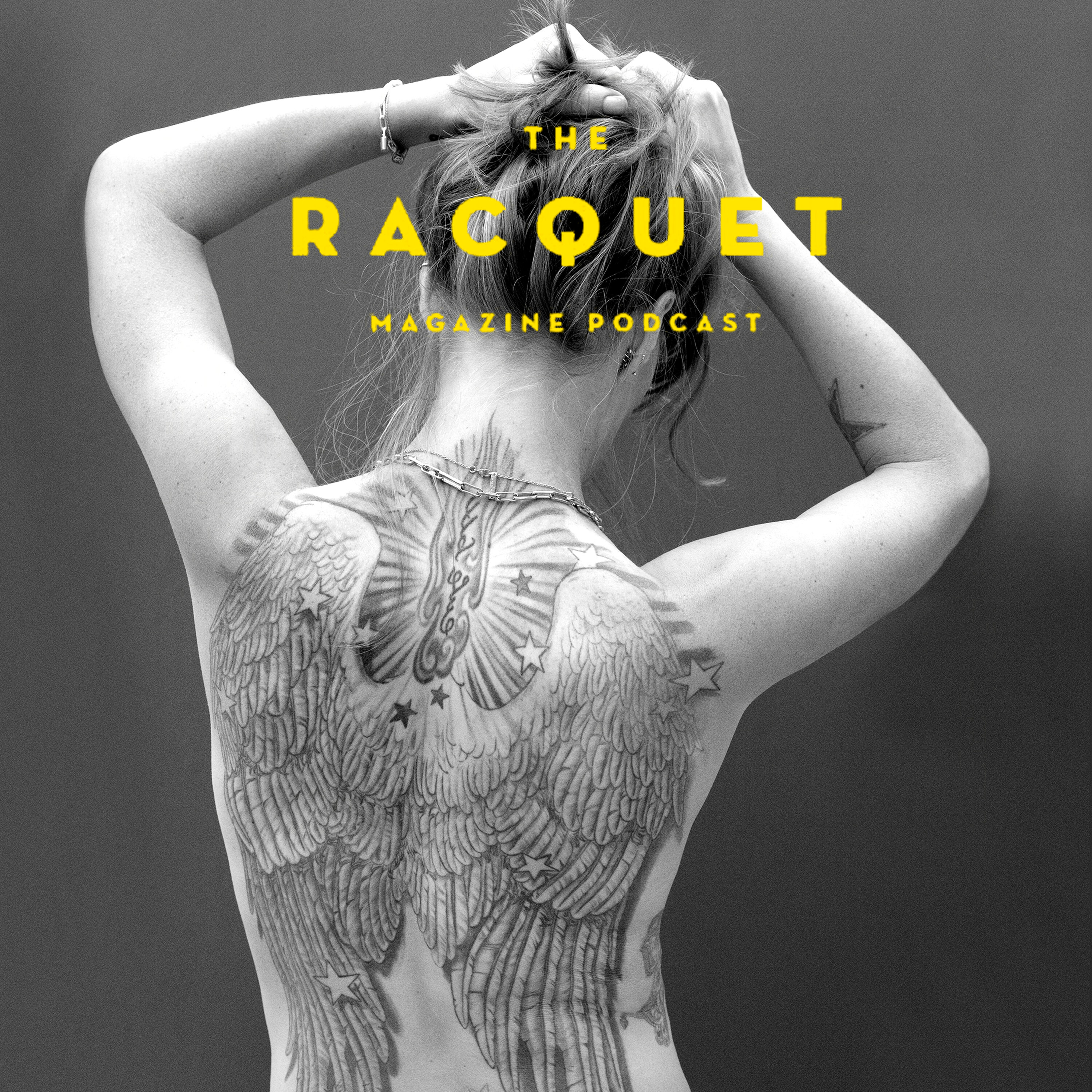
Svetlana Kuznetsova
The Russian stalwart joins us at Racquet House to share her philosophy of life, talk through her post-career plans and clear her name against Kim Clijsters' accusation that she let out the pigs.
Hosted on Acast. See acast.com/privacy for more information.
See omnystudio.com/listener for privacy information.
2020-04-06
45 min
Transcript
Available Results
Generated results are saved to the knowledge database for reuse and search.
No generated results are available for this episode yet.
Extract Knowledge
Pick what you want extracted first. Model, scope, and chapter options appear after a template is selected.
Generated results for public episodes are saved to the knowledge database so they can be reused and searched later.
Transcript
00:00:04
Speaker 1: This episode of the Racket Magazine podcast is brought to you by Sergio Chucchini, offering iconic tracksuits, classic polos, and the new Young Line sneaker. Originally designed in the mid nineteen eighties.

00:00:15
Speaker 2: It's our favorite spring silhouette and it's back.

00:00:17
Speaker 1: You can get it now at Sergiotucchini dot com and follow them on Instagram at Sergio Tacchini Underscore Official. For updates, Enter the promo code racketmag at checkout and you'll get thirty percent off your order.

00:00:35
Speaker 2: Me Kim Kleisers told us you I would pep and go close to the stdeo.

00:00:50
Speaker 3: Okay, this week we're back with one of the all time greats. She's been a Grand Slam champion. She's been up, she's been down, she's been basically off the tour. She's been back on the tour, winning times as recently as last year. She is a renaissance woman. She's got certainly the biggest and baddest tattoos of anyone on the on the tour.

00:01:08
Speaker 2: She's definitely got the biggest, certainly the biggest.

00:01:11
Speaker 3: Those angel wing tattoos were captured in photos. Will share them with you. We're talking, of course, about Sveatlana Kuznetsova.

00:01:17
Speaker 2: Yeah, what a woman. I love her.

00:01:20
Speaker 3: I mean, I mean, she's amazing.

00:01:22
Speaker 4: She is There's one there's literally only one player that on tour that I would walk by and really have to be careful about how I approached her, whether it be with the words that I said or the physicality of the location of my arm, like because she would punch me and it was lovely and lovingly sure, but she doesn't realize how strong she is, so I would or she would grab my arm in it, you know, just like hey, come here and like squeeze my arm so hard that it would bruise me.

00:01:54
Speaker 2: But she's just that person that you just always love to see. She's just she's a great.

00:02:00
Speaker 3: So Vetlana came to Racket House to do a taping. She shows up in a very very cool all white ensemble. She was wearing sort of like white tuxedo shorts some of her trademark sneakers. If you don't follow her on Instagram, you're missing out on somebody living life very well because her and her little dog are inseparable.

00:02:17
Speaker 2: Not a little dog, it's it's like a pitbull. Wouldn't call it a fluffy dog. I mean she kind of makes it look fluffy.

00:02:24
Speaker 3: Yeah, it's true. She kind of makes them look fuffy. She's a character.

00:02:27
Speaker 5: Though.

00:02:27
Speaker 3: We got it really into it, she go She went really deep in this interview. She talked about her ups, her downs, sort of having to overcome negativity, her parents who are very very intense, who obviously gave her some of her intensity, but learning to be her own woman. Like we really I felt like it was a therapy session.

00:02:44
Speaker 2: Yeah. Well, the thing about Svetlana and this is why I love to you know, this is why.

00:02:47
Speaker 4: We love doing the podcast is that you get you delve into the depths of someone truly, because when you get to interview them on TV, it's like a three minute interview.

00:02:55
Speaker 2: You get to ask some three of all questions.

00:02:57
Speaker 4: You know, someone from their PR department or the WTA like hovering over you giving you the okay, wrap it up signal. Just when you start to get into like really talking to someone and getting in depth answers from them, they're telling you to wrap it up. So with the podcast, we get to sit there for forty five minutes and they have to sort of they get deep, get deep into it, and she opened up a door that I think a lot of people will be surprised about her philosophy on life and tennis.

00:03:22
Speaker 3: I loved it and we were able to link it back to another podcast, one of my favorites that we've done with Kim Cloisters, because Kim told an amazing story about spet Lana and we took it to her and pigs and so we took it to her and got her version of events, which do not disappoint. So if you listen to any of our shows.

00:03:41
Speaker 2: They will disappoint Kim though, because we may have to go back with.

00:03:44
Speaker 3: Kim and we're gonna have to just get them in a room and have them try to tell the same story.

00:03:47
Speaker 2: Said By said, that's the plan.

00:03:49
Speaker 3: I mean, that's I think it'd be a great podcast.

00:03:51
Speaker 2: Anyway, listen, here's the deal we got Svetlana. Don't call it kuzy. First of all, thank you, we're happy here.

00:04:02
Speaker 4: Yeah, thanks. Well, I always called a koozie, but she's like anti coozie.

00:04:08
Speaker 6: Why I was just listening and saying thanks God, she didn't say cozy.

00:04:13
Speaker 2: Why Why is that? Tell me I need to know never say it again. It's my name. My name is veta like Cuzy sounds like a dog. Cuzy.

00:04:22
Speaker 6: I can stand it, really, like you can call a cool kid like couzy.

00:04:27
Speaker 2: Just to me. It hurts my.

00:04:28
Speaker 6: Ear, like when somebody comes Tom, hey, Cuzy, and I'm like if it says the guy says behind my bag, I'm like punching him.

00:04:37
Speaker 2: Wow, it's that, but I don't like it. It's like brings like.

00:04:43
Speaker 4: Okay, well she's hitting so many times that I've now learned not to say it.

00:04:51
Speaker 2: But you know us, we're Australians. We don't like to shorten.

00:04:54
Speaker 4: We just it's just I get my around the Thanks anyway, thanks for joining us. I guess one of the things we're in Indian wells. I guess we have to ask you a little bit about what's happened over the last couple of days.

00:05:12
Speaker 2: Huh sure should we? I mean you've been out what how many years have been? Twenty is twenty years? I think I started like in two thousands or something.

00:05:21
Speaker 6: It says in my biography, Wow, biography, you're Russian.

00:05:26
Speaker 2: You can say we can speak Spanish. Would be like so twenty yeah, I believe so Jesus so nothing like what has happened here? We are in Indian Wales.

00:05:37
Speaker 4: We do want to just say that just could go at any time, but have you. I mean, this has been crazy. What's just happened in the last twenty four hours?

00:05:44
Speaker 2: Can you like even.

00:05:45
Speaker 6: I was in the mall, I'm getting some food for the house and I read the email.

00:05:53
Speaker 2: I'm all right with my English but not perfect. And I read the email. Am I so I gave my physical fund? Your english is better? Please?

00:06:03
Speaker 6: Could you translate if I'm if I get in it right? And it's just like no way, because nobody felt like it could come.

00:06:11
Speaker 2: Yeah, from one day to another. Yeah, we saw us last night and you guys were telling me that you play qualities.

00:06:17
Speaker 6: Yeah, same play qualie And I look the drawer. I wanted to see the draw qualite to see who's playing.

00:06:22
Speaker 2: Who's what? Yeah, and I time to find it. It's no draw, no draw, no drawing. And the email is like, yeah, I mean it's something which and accept. I have to be honest.

00:06:34
Speaker 7: When we watched the wildfires in Australia and everybody at home was thinking, oh, of course, like this is going to affect the tournament players.

00:06:41
Speaker 8: On courts breathing, it's an issue, but they didn't cancel the tournament at all, So I thought, if they didn't cancel it to the Australian wildfires, why would they cancel this for coronavirus. So it seems crazy that this has happened.

00:06:53
Speaker 2: But I mean, obviously we're happy to have you with a little bit of extra time in there. There's going to be a place with a lot of time, and there was the time on your hands. Okay, So Renee talk about when you first saw Speter and Matvet.

00:07:06
Speaker 4: Yeah, Actually the first time I saw you, I believe, was in Madrid, Is that right?

00:07:10
Speaker 2: I turned off to Madrid.

00:07:12
Speaker 4: I didn't go like, look, I wasn't a big go and let me play every playcour tournament. But Madrid was one of the one of the tournaments that I went to with Lisa. And you played Lisa, Is that right, my old doubles partner. You played her in singles and I remember watching and hold you fifteen six. Yeah, So I mean Lisa at that point was probably top thirty in singles. Playsta wins the match, but we walk off the court. Lisa walks off the court and she looks at me and she goes, fuck, that chick is going to be so good one day. I mean, you were so young at that point. Lisa was a you know, very you know, accomplished singles and doubles player, and you know, it wasn't a surprise that she won, but we just immediately went wow, like that girl is going to be so good.

00:07:59
Speaker 2: So that was I think them.

00:08:00
Speaker 6: So And it was the first tument ever the game like wildcard, and I played college and then also was in the college, so I'm sure if.

00:08:13
Speaker 2: I beat her. I think little Hoober was in the coalis as well. I bead her and then first round I won against VV as well, which is a good way.

00:08:27
Speaker 6: Six much points down really, I was six match points down. Wow for me, like I remember us like me and then was similar age then was she is one year younger than me. And we were watching it was Medina and Maria Josse Martinez.

00:08:47
Speaker 2: They were quite good for us.

00:08:49
Speaker 6: We were like, yeah, sixteen and they were like we said, we wish one day would be good as them. Yeah, And we watched them play. They played against each other and they were like examples for us. It was great memory. I still then like I would not have any This is very important for me. The topic for the clothes deals, Like I had no clothes I was buying, and so I played two or three matches and I had no skirt to weirs, so I played short shirts. And then my coach kept me, I don't want to see you never in the practice clothes on a tennis match, so I don't have Yeah, it's like when you're Russian, you don't get deals.

00:09:33
Speaker 2: No, how did you end up there in Spain like you and Genaro?

00:09:37
Speaker 6: Well, Marat was in Spain in Valencia, and Dinara went there to practice. My mom always said me an example, look, Gnar is so good. She was burying me very easy. And we were deciding between going to the States and going to Spain. We had to go leave Russia because it's not much of course, coaches and just Meema is not so good and yeah, it's tough. Mentality was not great for me. But then we didn't know that. But now I know that I wouldn't through it there for sure. Yeah, and but why okay, because they're very negative and I'm very sensitive person.

00:10:18
Speaker 2: And if you go hearted me.

00:10:20
Speaker 9: Like I I shut down now Not because now I'm older, I'm confident and I know more about Yeah, and.

00:10:32
Speaker 6: We know you know, and then after so when we came to Spain, like we decided. My father was coach his cyclist in the camp in Spain and my head so it wasn't between Barcelona and Valencia, and we asked mom of Dinara to give us the phone number if we would go to Valencia. When we arrived to this camp of my dad, we called her and they didn't have no one working there or.

00:11:01
Speaker 2: Something was going on the wrong phone number.

00:11:03
Speaker 6: I have no idea, but thanks thanks God had happened that way. My dad was going crazy and in two days without practice. It's not allowed in our family to do that. So his friend said, look, he opened some club in Spain in Barcelona. Way, let's go there. So this friend take us there. Took us there and Angel Jim Andez met me first time, and straight away I had my first dreams out of two million drills.

00:11:34
Speaker 2: First it happened.

00:11:36
Speaker 6: It happened really like by luck, and first I just got there and yeah, yeah, what.

00:11:42
Speaker 8: Do you think about the different way that being in Spain. You said, you're a sensitive person. The Russian system didn't feel very accommodating.

00:11:51
Speaker 2: The Russian not Russian system.

00:11:54
Speaker 6: Russian Russian people away of talking of getting off teaching.

00:11:59
Speaker 2: It's different of this system. Uh, it's personality.

00:12:02
Speaker 6: And in Spain, I think what works really well Russian with Spanish, not Spanish people growing in Russia because in Spain, because they're like too soft, too nice, too too they have not.

00:12:18
Speaker 2: Been through hard times.

00:12:19
Speaker 6: We've been through really bad and we always have to stay stay tough. And when we go we have it in US and when we go in Spain and they're nice to you and then cheer you up and they tell you how good you are.

00:12:33
Speaker 2: Like first days, I was, what is going on? You didn't believe it. They just told me yesterday that I'm like never gonna be no One. And I'm like a piece of say, piece of shit.

00:12:45
Speaker 6: And today media comes to me and tell me you're gonna be in top one hundred. I look at him, I said, youkay, out of this world. I don't believe you. And then there's something. I was working really hard and and in mask in same when I was there, like I didn't like to play. I didn't have motivation. I didn't I didn't.

00:13:07
Speaker 2: Have a joy. I didn't choose the sport at that time.

00:13:10
Speaker 6: And when I came to Spain, I knew how much effort my parents did and how much it cost them to my dad, my parents that I play, and first of all, I started to do well because I wanted to pay them back for their effort. And then I started fall in love with the game. And then I just work, work, work, work, and let's see it twenty six hours a day.

00:13:36
Speaker 2: And in my family, it's normal. I grew up in my dad's he's a cyclist, right.

00:13:43
Speaker 6: My dad's club, and there are all the guys that lived there, and to wake up at seven, to go to bed at ten, it's normal. So I haven't seen other life, and it was great because if you see two side of the story as your kid, you cannot choose. It's impossible to choose. And it was normal for me. So when I see kids they were like not doing their thing for me, I couldn't understand it. Like I have different goals and I knew where I was going. Other kids in the academy like not many, not many families can afford the clubs, and I was lucky I could have this life. And many of kids who worked with me there they didn't have that goals, they didn't have It was kind of yeah, the parents chooses.

00:14:33
Speaker 2: For them, they could afford it.

00:14:35
Speaker 6: They had everything in the family, and it was like, okay, it's likely granted.

00:14:40
Speaker 2: And for me it was not like that.

00:14:42
Speaker 4: So it's basically going to Spain that helped you discover the passion for like actually really enjoying playing tennis. With the influence of like the system, the Russian system, your parents, it was like, oh, I actually really like what I'm doing.

00:14:56
Speaker 2: Yeah, yeah, kind of like that.

00:14:59
Speaker 6: And it was great that somebody else who I could believe tell me that I'm good, because I never heard it.

00:15:07
Speaker 2: In my life, not just your family. No, I didn't hear it from my family.

00:15:11
Speaker 6: My family is very Yes, when I won friend job and my dad told me I was lucky, I was like, okay, but he was peaceed, he was pisceed. I didn't tell him on the speech thanks to my parents. I was really stressed. I was so stressed. You were so young too, Yes, I said, yes, you see, but sorry.

00:15:38
Speaker 7: Anyway, Well, let me ask you another question about Spain, because it seems to me that one of the things that everybody, myself especially loved so much about your game is the variety, the mix, the the retrieving, the defense, to offense.

00:15:53
Speaker 8: I have to imagine the training so much on clay. Obviously you've won the French Open. Do you think that opened up elements of your game or is that giving Spain too much? Kind of and it was just in there already.

00:16:04
Speaker 6: You know. When I arrived to the now it's academy, before it was a club, it was really small and if I would arrive now, I'm not sure if I would achieve the same things as before.

00:16:19
Speaker 2: It was really a small group of people.

00:16:23
Speaker 6: First time when I can nobody told them like look after her. It was so many players coming with them contacts by somebody told them to go, advise them to take care of them more.

00:16:36
Speaker 2: Nobody did it for me. My group was terrible.

00:16:39
Speaker 6: One girl was always looking into wards the beautiful guys, another girl was all day eating donuts.

00:16:46
Speaker 2: And the third girl was from Ukraine.

00:16:48
Speaker 6: She was quite, she was good, but she didn't like to play with me because I was busying her.

00:16:53
Speaker 2: So I was trying to say, please make play with me. She's like.

00:16:58
Speaker 6: And I could just push myself on the drills, and drills is main part.

00:17:04
Speaker 2: And but I mean it was really funny because my group was like very very very.

00:17:10
Speaker 6: Bad but now after three four months, somebody noticed me really and then they moved me.

00:17:16
Speaker 2: But it was one girl who had unbelievable deals. She was higher than me.

00:17:21
Speaker 6: She was very talented, she was Italian, amazing. She had wild cards. I had zero wild cards. I was playing all ten thousands schoalis, my andro qualist, my andro qualist. I was dead by the main dro.

00:17:34
Speaker 5: But anyway, yeah, but still I didn't have anything given.

00:17:41
Speaker 6: Like nobody helped me. And I pushed myself all the day. If I wouldn't push on these practices, I wouldn't get for them to notice me. And of course it was like I was working machine, like I.

00:17:54
Speaker 10: Didn't care how much that's your reputation on the court. I think that's the the homework. I have a very weird question for you, but give me a second. We interviewed Kim Cloisters two years ago on the podcast We had a We had such a long chat with her, we took two hours. We had to cut it up and make it into two episodes.

00:18:11
Speaker 2: She told us the funniest story I've ever heard about.

00:18:14
Speaker 4: Oh my god, this is you know what's coming, don't you know?

00:18:18
Speaker 2: She told us it involves animals.

00:18:21
Speaker 8: She told us that you were you were coming through Belgium, you had some rehab.

00:18:25
Speaker 2: There was a doctor that was that was known in the area, and you.

00:18:28
Speaker 8: Guys are friends because Kim is lovely and she said, oh, Speta comes over, lah la la. But then I come home and the pigs are gone. I'm thinking, how the pigs are ready in the neighbor's house.

00:18:45
Speaker 2: I'm just telling you what well, I know she's telling you what she thinks she remembers. So let's just say that.

00:18:51
Speaker 6: When that was like two years ago, I finally gone back to top ten when I played the Semis of Singapore and the w Washington. No, it was later on before as well. No, then after they opened on the US Open next year.

00:19:12
Speaker 2: Next year I was in top ten. I was here in my back hand and I.

00:19:16
Speaker 6: Broke my wrists, so I had to do surgery, and I called everybody to see which doctors is the best. So Melinda Benki Kiing Cloisters and some other girls.

00:19:28
Speaker 2: I forgot who else, but they did the surgery there.

00:19:31
Speaker 6: So I came there the guys in the guns in Belgium and like he's like for me, it's very good doctor. He took me without scheduling like he was very busy. He and his team, they came out on the day off and what happens when you're a bad So he's very nice and they took care of me. So I was supposed to come there a few times to recovery.

00:19:56
Speaker 2: And then I called him.

00:19:58
Speaker 6: I said, look, this is very boring here do said, well, I'm going with Jada to the practice and then I.

00:20:04
Speaker 2: Go to see the pigs.

00:20:07
Speaker 6: The much of my husband team. He's coaching basketball. So I said, okay, come join me to the house sometime to the house in the kitchen, I'm sitting there with kids, everything growing. We go to the yard to feed the pigs chickens.

00:20:24
Speaker 2: I don't know. I didn't know that many animals. So and then I said, okay, so what is here? And was like on the street.

00:20:31
Speaker 6: It was some sandwiches in the plastics and somebody brings me every time.

00:20:36
Speaker 2: I said, why did you stay here? There? There?

00:20:38
Speaker 6: So we were leaving the house to go to the practice of Jada and when the tea on the practice on the match.

00:20:45
Speaker 2: And somebody calls her and she's laughing. I said, what's wrong? She said, oh, the pink pig run away.

00:20:52
Speaker 6: Somebody was catching her pig, so so we should go back to catch the pie.

00:20:56
Speaker 2: She said, no, my neighbors do that. I said, it's very nice neighbors.

00:21:00
Speaker 4: MM.

00:21:01
Speaker 2: So you're saying that it wasn't you that let the pig out.

00:21:04
Speaker 4: Me class just told us you can go close to this, right, You're going to have to ask her about this.

00:21:12
Speaker 2: I will ask her. You ask her about this, she said, is a great house guest. But if she comes over, just make sure that your pigs don't.

00:21:19
Speaker 6: Get out, because I don't think many of us because I don't think so. But we were on the kitchen and one finding thing was like, she say, I never could imagine you would be in my kitchen. It's so awkward, like we face ourselves and we see us like outside of our normal ways. And here Kim classes kitchen eating like next almost to the pigs with the kids.

00:21:45
Speaker 7: And maybe, okay, we're going to go back to Kevin. Tell her it was not your fault, because I think you just did you quit it yourself from it.

00:21:55
Speaker 2: One of the things that I wanted to ask you, and which is always.

00:21:58
Speaker 4: When I commentate, if commentate your matches. Back to the Spanish Russian thing, is that I always thought the thing about you is that you get caught between your Russian, but you play Spanish like you're half Spanish half Russian.

00:22:12
Speaker 2: The way you play like you hit with a lot of spin.

00:22:15
Speaker 4: You have variety, Like you said, you have a kick serve that's sort of like your thing. You go after it, but you also have that kicker. They're all sort of shots that you don't develop as a Russian. Most Russians are hit the ball flat. They hit the ball hard, like you hit the ball hard, but you've always created this spin.

00:22:29
Speaker 2: But then you get a little bit when you get tight, you get a little defensive.

00:22:33
Speaker 4: So it's kind of like you learned almost the great things about being Spanish.

00:22:38
Speaker 2: But then you have the heart of a Russian.

00:22:40
Speaker 4: But there's this like juxtapose Sweatlana Kuznetsova like.

00:22:44
Speaker 2: Magic, you know, like my signature.

00:22:47
Speaker 4: But it's but it's like I always felt like there was a part of you that like that was good and part of it that was bad. You know, like that when you get a little bit nervous, you would get very defensive and then you want.

00:22:59
Speaker 2: To be like no, be RUSSI like come for it, flatten the ball, was that is that something that makes sense to you? Well, for me, it was hard, like firstly teach me in Spain. In Spain that.

00:23:10
Speaker 6: I don't I don't do down the line when I'm out of the court because Russian we always go when I say it's low percentages and you have to understand, no, you have to go. This is ya Russian. So sometimes I have to be very patient. And then for me when I play spin, but the girls it's very hard.

00:23:30
Speaker 2: When I play heavy. No they're not, but it's not about that.

00:23:34
Speaker 6: It's a different placement and the zone of them receiving the ball, and for me, like it's much easier to do that than to play hard.

00:23:46
Speaker 2: Yeah.

00:23:47
Speaker 6: So when I go play spin spin, spin, then I'm like, okay, I'm.

00:23:51
Speaker 2: Willing too easy.

00:23:52
Speaker 6: I have to improve and I start hitting Yeah, And then I find myself in the third set because the girls are comfortable and it's harder for me to be hidden because it's more physically. Yes, so I started to place spin again and this is a game. But then I don't I like when I hear people say she should have done that, I don't see it like that because for me, I'm there, I'm doing my best of course, and sometimes I look very awful and understand but this is part with me.

00:24:21
Speaker 2: You know you can't. Also it's easy to say.

00:24:25
Speaker 7: I was talking with Andrea A Pakko it choos on our show a lot, and she says, some people come up to me and they say, you know, I love you group.

00:24:33
Speaker 8: Why didn't you hit it down the line on the third set in the tiebreak between Camilla Georgie and you could have had that shot, And it's like.

00:24:39
Speaker 2: Fuck you. You weren't there, you didn't play the whole match. You weren't. In my mind, the.

00:24:43
Speaker 5: Idea that people have this ability, well, it's easy after the matches down.

00:24:47
Speaker 2: It's also easy after the matches down.

00:24:48
Speaker 5: But I do think when you're such a public figure, you're a Grand Slam champion multiple times, the difficulty of what you're doing and how special the alchemy of what you need to do on the court doesn't always People people who are don't don't always understand.

00:25:01
Speaker 2: Has that been something that they never understand and they're not in your head? Nobody can ever understand you understand. I don't expect to in your feet, you know, in your like because it's impossible.

00:25:14
Speaker 1: Of course, this episode of the Racket Magazine podcast is brought to you by Sergio Tacchini, revitalizing and disrupting the status quotes and s nineteen sixty six. Follow them on Instagram at Sergio Tichini Underscore Official and go to Sergio Tikini dot com for more. Enter the promo code Racket mag at checkout and you'll get thirty percent off your order.

00:25:48
Speaker 4: Can I ask you to go back to the US Open that moment like you were so young?

00:25:53
Speaker 2: Like how much does that change your life? And how? And also like how much did that change the expectation figure like going forward? Like how difficult is that in some ways for people.

00:26:04
Speaker 4: That I don't know how hard it is to win a Grand Slam and then have to back it up?

00:26:08
Speaker 6: You know, as I've been told so many times in my life, I never would get nowhere. I haven't even dream about being somewhere in the top, and I never could sing that I would win a Grand Salmon. Here I was like, playing my here was pretty good. I had a couple of good wins. Doho Dubai played very well and was very busy. Year we played after Wimbledon, we played Argentina in the clay and then it was the Olympics, and then when I was like, Dad, have that I come to use open. I played singles and doubles all the year and much is by much, by much. I start to feel good and then I go to the finals play Leonard dvine to.

00:26:51
Speaker 2: Whom I lost just a few weeks ago in La.

00:26:55
Speaker 6: I believe and I I you know, I never felt of winning it, so it was kind of good stuff. Now when you see young girls, they have no pressure, and this is what I had and where it gets to you when you win.

00:27:10
Speaker 2: First of all, I had no idea what I've done.

00:27:13
Speaker 6: And I remember when I came back to Spain after two weeks because after this event, I went to Bali. I won bally tournament and I played double. I played finals of U soap and doubles and I want you so I flew to Bali overnight and I fell asleep on the interview on the phone and the guy talking, I'm like sleep and I'm dead. I played singles and doubles, but I lost doubles final with a Rancha and I wont Bali and then I flew to begin and thanks go Donna forgot to interest in doubles.

00:27:53
Speaker 2: Yes, I had, because came over just to play doubles.

00:27:57
Speaker 6: I was really un happy, but she had.

00:28:02
Speaker 2: It's okay, Now I don't think it matters.

00:28:05
Speaker 6: And I lost finals to Serena Beijing. She chased me down the tea on my match very much. Point like, I didn't even see the story. No, it just it's happened to a lot of people. Okay, so yes, and and then I was very tired. And then the coach told me it looks that you've done something good. You don't something amazing, and you'll be proud all your life and you don't.

00:28:34
Speaker 2: And I didn't because for me, it was just another yeah. And I didn't even like have something nice celebration. I couldn't.

00:28:41
Speaker 6: I was like I was a regular kid liveing in Spain. They always treated me like a regular person. They told me, first you have to be a person, and after you'd.

00:28:54
Speaker 2: Be a player, good or not so good.

00:28:57
Speaker 6: It's good in some ways, and they say it's good in some ways, maybe prepared for my personal confidence. It didn't help because it kind of pushed me down as well. But anyway, I worked over years and I found my solutions to it.

00:29:13
Speaker 8: So when you want another Grand Slam. Was it a different feeling? Was it you were more prepared? I mean you didn't thank.

00:29:19
Speaker 2: Your parents so that no, but after that you were you more ready for because you understood what it meant.

00:29:25
Speaker 6: After that opened Sorry, I go back because you win it and you have expectations and you don't as you how to face it.

00:29:33
Speaker 8: And you're.

00:29:36
Speaker 6: I lost first round, and I mean I was injured before then, and I mean you're twenty, you're by yourself, crazy, you have your coach okay, and all expectations. You read shit about yourself and you're like, maybe.

00:29:52
Speaker 2: I'm not great.

00:29:53
Speaker 6: I never thought that. But it's not like maybe I just couldn't. Is I Every time I have to do good, good good there.

00:30:02
Speaker 2: If you do once, if you do twice, it's great.

00:30:06
Speaker 6: If you are the greatest, then I expect you be nothing the greatest there. And then I've seen so many girls fall there. It's great to be in the top. It's everybody will fall down because we're all humans. But to get back and to stay there, this is what makes you really good. It may be great whatever it is, but it really which makes you strong. Only strong players do that, because some players they have unbelievable year. Then players start to figo you. First of all, they don't afraid you because they know your game. You're not incognito anymore, and for them to beat you, it's already great. They're not afraid to lose against you when you're not cover. Everybody, even tops, are like, oh, she's good, she's new comer. And then you okay, you're wonder of us. Yeah, and then you stay with us. Yes, this is different staying on top. I mean we're sort of jumping ahead.

00:31:07
Speaker 8: But I remember watching you make the finals at Washington and winning it and thinking to myself, how how how amazing it must feel to know you could enter a tournament, be a wild card, be unseated, be coming back from injury, and still go Wait Cord Grace to tear.

00:31:25
Speaker 2: Through a tournament. But wait.

00:31:26
Speaker 4: Prior to Washington, though, I want to bring something up, because that was after your injury. I want to remember the day that you came into the US Open. I think you lost for the second round and we were in the back. I was still playing, and you said something to me along the lines of like that you couldn't play because you were put so much expectation on yourself and you were I mean you just said you like you choked, like you got nervous, like it was too much for you, Like explain to people, like what that feels like? Because you were, you're successful, You've on Grand Slam. Why does that happen like to as you said, it's going to happen to everybody. Happens to everybody, It's just some people show it differently. Like that moment when I saw you, I remember thinking like, this is the people.

00:32:11
Speaker 2: This is what people don't see.

00:32:12
Speaker 4: The downs where you doubt yourself so much and you wonder if you should keep doing this because it's so hard to put yourself out there on the line and be nervous and have to play well, you know, because of also what you've done and what people expect from you, And then you have to go out and you have to give people what they expect, even though you're thinking.

00:32:32
Speaker 2: That you want that yourself. But how hard is that to dig out of a hole like that and to come back from an injury and win tournaments?

00:32:39
Speaker 4: And how great does that feel to get through those tough times?

00:32:46
Speaker 6: You know, it's really interesting because when I win, I see it as no more as it should be yeah, because not because I'm I don't see it like I'm much better than her. I know that I work my ass off to do that, and I know I'm very talented. I know how much I worked in my life. I believe I did it more than most of the girls. And this is what my confidence grows there. Because when I told me I can't be no one, I see other girls playing better than me, doing this better, I was insecure. I said I'm gonna work more and harder than now. So when I stand next to them, maybe she's very good, but she gotta run and she gotta beat me.

00:33:30
Speaker 2: And if she beats me.

00:33:31
Speaker 6: Once, next time, she gotta do repeat it, and I'll be there and doing this. This is what helped me at those times. And for me, of course, it was very hard when I was injured.

00:33:46
Speaker 2: I come to the Torrents.

00:33:47
Speaker 6: Look now, it's very easy for me to talk because I've been there for twenty years.

00:33:52
Speaker 2: I know how to.

00:33:54
Speaker 6: Do this, how I face these things. It's much easier. I've been through times when I play San Diego, I'm serving for a much point and Tiereak against Radvanska, and I'm standing there to serve and I feel I'm tight and I and I crawnb like second time in my life.

00:34:14
Speaker 2: I crown like I never cramb. Yeah, I mean it's not susceptable.

00:34:17
Speaker 6: And I tried to jump before they serve and I cannot jump, not because of the crowns, because I'm my second serf was into the baseline. You asked me to tell people how it's so much tense. It's important to you When I tell us when we lose on purpose or we are bus we're stupid or.

00:34:40
Speaker 2: Whatever, you don't. Yeah, they criticize idea, it's not it's like you have to understand.

00:34:48
Speaker 6: First of all, you have to understand all these haters, why they do that? How many are these happy people?

00:34:56
Speaker 2: No? No, do they happy with themselves? Of course do they? Are they happy to see you win? They should be, But no, it's.

00:35:04
Speaker 6: Not about what they should it's about other No, because for them, if you win, it's normal. But to tell you, shep they're happy with that, So they're bad with themselves. It's their own problem. This is what you should understand and this is now on the normal mind. For me, it's easy to understand. But when you're losing, you're very critical, vulnerable, vulnerable, So you're very sensitive to all the critics. It's not like why they tell me why, and they don't know, they don't know. You practice, you sweat, you do that when nobody see that, they have no idea. And for them, the tennis players, they earn money, they're very rich, and nobody knows that. You travel day to day. You travel week after week, and when you.

00:35:58
Speaker 2: Lose, you lose every day. It's a satisfaction.

00:36:06
Speaker 6: And every week you go, you lose like every not even second week, every like I don't know. Yeah, and if you didn't lose five weeks a year, it's a successful year.

00:36:19
Speaker 2: Incredibly successful. It's an unbelievable I tell you that.

00:36:24
Speaker 6: And you just don't have to see after critics. Yeah, you don't have to.

00:36:29
Speaker 8: Was there a part in your career where you felt like you you were talking about vulterability, you were talking about self belief, you were talking about how.

00:36:37
Speaker 2: You've learned to understand who you are.

00:36:39
Speaker 8: Was there a part in your career where you've started to be able to say, fuck the critics, fuck haters, I know what I'm doing, I know what give me joy, I know how to be happy with.

00:36:49
Speaker 2: My performance, and all I can do is my process.

00:36:52
Speaker 8: All I can do is try Was that something that you had to learn or did it sort of developed?

00:36:58
Speaker 2: Are you about to say or is that your continuing to this time?

00:37:01
Speaker 6: It just says now now I'm like I said, Okay, I don't have to do this nobody.

00:37:06
Speaker 2: You can play for anything. You play for yourself.

00:37:09
Speaker 6: It's not like that. I still play for people. I play for my friends, I play for my parents. But it's differently. And what as I learned? You know that tennis. Last night when I was in the gym, I have very nice conversation with my fitness coach and he asked me a great question.

00:37:29
Speaker 2: He said, have you ever thought who would you be if you didn't like this? What did you say? He said? You know what? I think.

00:37:38
Speaker 6: I believe I'm a happy person to be where I am because I never have had this thought in my life, because I'm blessed to be where I am, because tennis gave me the development that knowledge.

00:37:57
Speaker 2: I grow so much as a person. This is where.

00:38:02
Speaker 6: The most value for me is. It's not the money, it's not the titles. It's how I developed myself, how much knowledge I have about myself how to face different problems, different situations. How many hard times I've been through and now where I am as human being and a person. It's amazing. And let's say I'm not just talking of tennis. It's a personal life combined to the tennis, to the traveling, to the investments, to the spending money, to having friends to do that. And this is a pack you gotta do, like a Lego, but lego of normal human being. It's like two thousand pieces, maybe one thousand. Yeah, tennis player lego. My lego is like fifty thousand.

00:38:50
Speaker 2: And that's before the age of forty. Lego is analogy.

00:38:55
Speaker 6: That's actually, that's actually, that's a fifty fifty thousand pieces.

00:39:02
Speaker 2: You've got to live it, maybe ten lifetimes, yes, because.

00:39:06
Speaker 6: Every time you go you're like, uh, fifteen, I was in Madrid fifteen and thirty four. Imagine how many choices I've done in my life every time you put what priority I want. I grew up from a kid of a women to the women now and all the speriod, I play tennis.

00:39:28
Speaker 2: All this time.

00:39:29
Speaker 6: My priority supposed to be tennis, and it was not like this all the time. And it's normal and it's okay. And what people don't understand, it's not only tennis.

00:39:39
Speaker 2: In my life. It's not like for them, I was sitting on the sofa changing channels. All these beach cousiness. Didn't move your rest today? Did the beach cousiness? So I didn't have a will.

00:39:50
Speaker 6: And it's also okay, you didn't have the vel I love it.

00:39:58
Speaker 2: Something.

00:39:59
Speaker 6: Sometimes I was like us whatever, she's like, look at her, So do you play with me today?

00:40:03
Speaker 2: You don't. Sometimes this happens and it's a bad day. That's okay.

00:40:08
Speaker 6: So we could maybe which can break his ast every day.

00:40:13
Speaker 2: So let me ask you this. You've been playing for twenty years. Hopefully we'll have you for another twenty No, I doubt it. I don't want to do that to work any years.

00:40:21
Speaker 6: She canna please enjoy?

00:40:24
Speaker 2: Yes, no, she likes to have.

00:40:25
Speaker 8: But what yeah, what are some of the things that you would spend your time on doing when you walk away from this collecting tattoos?

00:40:32
Speaker 6: I mean there's no, no, no, no tattoo small tattle.

00:40:36
Speaker 2: I was gonna say, bullshit, you get another one by the.

00:40:39
Speaker 11: End of like small, small, small, Yes. I would like to go to dancing classes. I would like to start to play guitar. I would like to go. I went, and I still need more time to for makeup lessons, what what how to walk properly? Then how to speak better to the camera and in front of the of the people.

00:41:08
Speaker 2: And yeah, it's my list is pretty big.

00:41:11
Speaker 6: It's a pretty nice and travel to a few countries to have family, kids, have nice house.

00:41:20
Speaker 2: Houses probably, I'm sure your house is fine. Wait, so we're getting to the end because we appreciate your time.

00:41:27
Speaker 4: But I was asked sort of like, what's the one if there was one match you could go back to.

00:41:35
Speaker 2: Could read There's always.

00:41:36
Speaker 4: A lot of matches, but it says one in particular, you know, like I say, some get all philosophical with me.

00:41:43
Speaker 6: Also in the life, Yeah, mistakes, that's good.

00:41:47
Speaker 2: Well I knew the choices. But for example, I would tell you.

00:41:52
Speaker 6: Now, for example, I remember that match point I lost to miss Quina and French Open. I was up two thousand and four and she won't I kick hard of the court. It's a much point. She knows the match is done, so she's running like listen, she just calls her and do like this, touches and it just fills over my side. Yes, this is what's a much point? I could have win, but it's not a choice.

00:42:15
Speaker 2: You didn't. You can there's another balls for sure there to win that much.

00:42:21
Speaker 6: But then listen, the theory is Miskina is not winning French.

00:42:29
Speaker 2: Maybe neither do I because it was just quarters.

00:42:32
Speaker 6: Then doesn't get so motivated to win US Open, and Switzlanta doesn't win use Open.

00:42:39
Speaker 5: You know it's you never know how you think it is purpose, you think it's I think all.

00:42:46
Speaker 6: My losses brought me to my good wins as well. Okay, I would tell you just the final of one more s told you I would pick another up titled okay, and I was suggested can in both finals and they're pretty easy.

00:43:06
Speaker 2: But okay, I'll pick that. Okay, you can pick that. Well. I have a suggestion for you.

00:43:10
Speaker 10: I think among your long list of things that you can do after your career is over, I.

00:43:14
Speaker 2: Think just besides learning how to walk, learning how to walk, I love that guitar, house, kids, music.

00:43:20
Speaker 4: Dancing, no speaking, speak speaking, I think you could be a philosopher.

00:43:25
Speaker 2: I think you need to be a guru. I think you need to teach people. They told me I have to do books. I love it. People translated, not my book, she said.

00:43:35
Speaker 6: One person told me your book, Okay, it would be good, but then but then yeah, different books. I'm not I'm still thinking about what books told me to write.

00:43:46
Speaker 2: Okay, do you want to write a piece in Racket magazine? Will get you started slowly? Yeah, you can write write a piece. This is how I know Pekovich. I asked her to write a poet, but she does great business. I think you have a philosophy. Okay, yeah, so I tell you what, It's very different your book.

00:44:04
Speaker 3: You have a death that I think people would enjoy reading about. So if you decided to write your philosophy, Tom, you have a place to.

00:44:10
Speaker 2: Do and to do my book.

00:44:11
Speaker 6: I still don't know how how far I can open myself so in that book, because it could be bestseller, but I won leave to.

00:44:20
Speaker 2: Write that when you're in like seventy five, nobody would remember. This doesn't matter if you have If you have some salacious things to say, it's good, all right.

00:44:29
Speaker 6: Thinks what I would tell when I'm seventy would interest any people who older woul.

00:44:40
Speaker 2: I'm done, thank you so saying this is really nice. Thank you again.

00:44:43
Speaker 4: Thanks, hey hold on, Thanks Svetava.

00:44:49
Speaker 1: Thank you, guys, and that's it for this episode of the Racket Magazine podcast. Thanks for listening. Our host is Renee Stubbs. Our co host and producer is Me Caitlyn. Music by internationally renowned DJ Stretch Armstrong. Thanks to Tim or Jerried and.

00:45:05
Speaker 2: The team at ACAST.

00:45:06
Speaker 1: Find us at racketmag dot com, slash podcast, and subscribe to us at any of your favorite podcatchers.
Chapters
No chapters available.