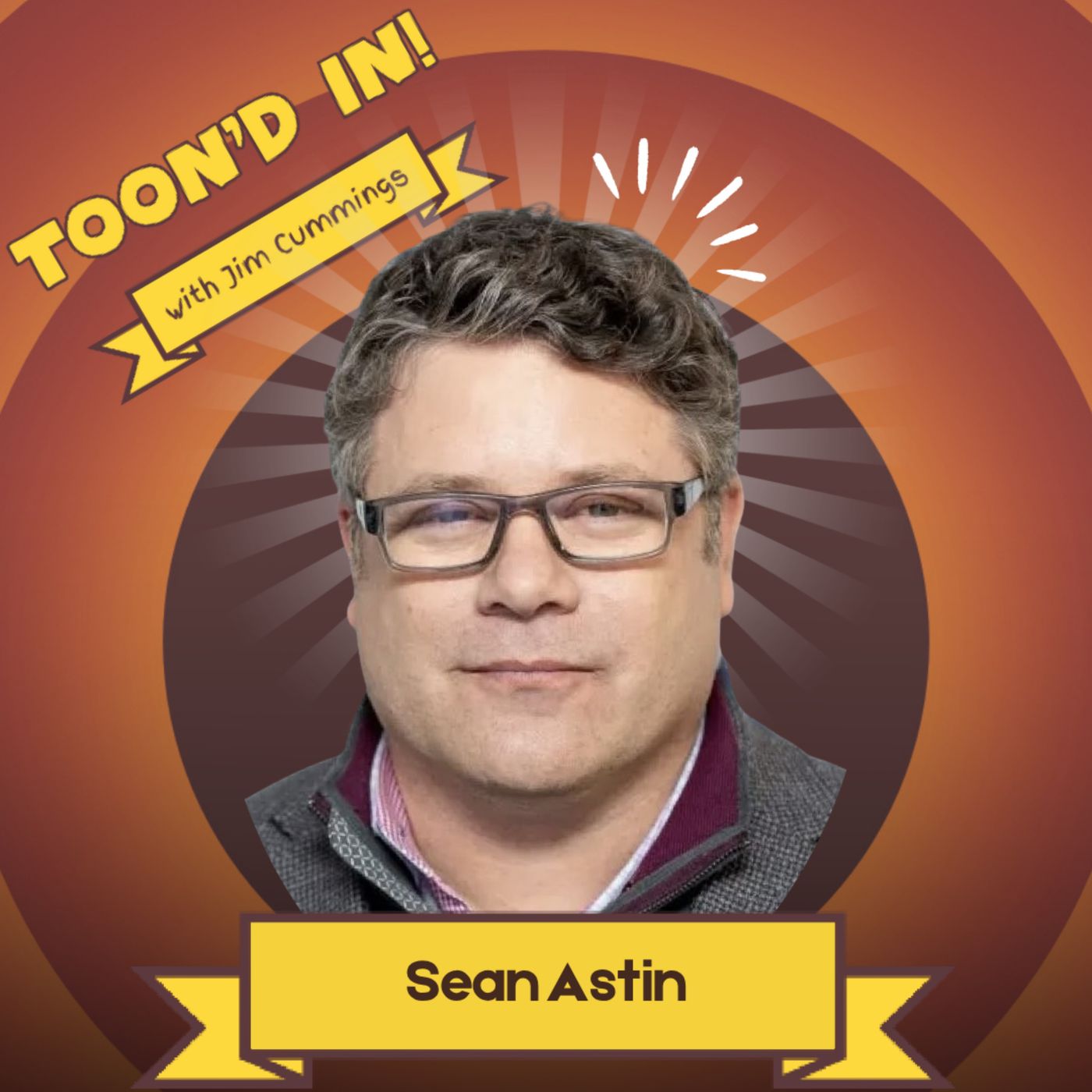
Sean Astin (The Lord of the Rings, The Goonies)
This week on Toon’d In!, Jim Cummings welcomes the legendary, lovable, and endlessly versatile Sean Astin—the iconic actor behind unforgettable roles like Samwise Gamgee in The Lord of the Rings, Mikey in The Goonies, Rudy, and the voice of Raphael in Teenage Mutant Ninja Turtles (2012), among many others!
From Middle-Earth to mutant sewer lairs, Sean takes us through the highs, the heart, and the humor of a career that spans decades across film, TV, and voiceover. Hear what it was like bringing depth to beloved characters, stepping into iconic franchises, and growing up in a Hollywood legacy—plus some hilarious behind-the-scenes moments you won’t want to miss.
💫 Curious how Sean balances fantasy, fandom, and finding his voice across generations of storytelling? Tune in and get Toon’d In!
🎟️ Meet Jim and Sean in person! Catch Jim Cummings at these upcoming conventions:
Stay Toon'd for more appearances—because these legends are just getting started!
🎧 Listen on Spotify: bit.ly/4fHWwxa
🍎 Listen on Apple: bit.ly/3AmUYZi
💖 Support on Patreon: patreon.com/jimcummingspodcast
🎉 Order a Cameo from Jim: cameo.com/toondinjimcummings
Become a supporter of this podcast: https://www.spreaker.com/podcast/toon-d-in-with-jim-cummings--5863067/support.
From Middle-Earth to mutant sewer lairs, Sean takes us through the highs, the heart, and the humor of a career that spans decades across film, TV, and voiceover. Hear what it was like bringing depth to beloved characters, stepping into iconic franchises, and growing up in a Hollywood legacy—plus some hilarious behind-the-scenes moments you won’t want to miss.
💫 Curious how Sean balances fantasy, fandom, and finding his voice across generations of storytelling? Tune in and get Toon’d In!
🎟️ Meet Jim and Sean in person! Catch Jim Cummings at these upcoming conventions:
- San Diego Comic Con (San Diego, CA) - July 24-27
- Nostalgia Con (Houston, TX) – August 22-24
- SacAnime (Sacramento, CA) – August 29–31
- Amazing Art Expo (Las Vegas, NV) – September 12–14
- Nostalgia Con (Milwaukee, WI) – September 26–28
- Smoky Mountain Anime Fest (Gatlinburg, TN) – October 17–19
- Armageddon Expo (New Zealand) - October 24-27
- Supanova Comic Con Adelaide (Australia) - October 31 - November 2
- Supanova Comic Con Brisbane (Australia) - November 7-9
- Nostalgia Con (New Orleans, LA) – November 21–23
- Nostalgia Con (Salt Lake City, UT) – March 13–14, 2026
- Comic Con Manchester (UK) - July 26-27
- Bell County Comic Con (Belton, TX) - August 2-3
- Oklahoma Comic Con (Tulsa, OK) - August 9-10
- For the Love of Fantasy (UK) - August 16-17
- Rose City Comic Con (Portland, OR) - September 5-7
- Fanboy Expo Orlando (Orlando, FL) - September 26-28
- Comic Con Denmark (Denmark) - November 15-16
Stay Toon'd for more appearances—because these legends are just getting started!
🎧 Listen on Spotify: bit.ly/4fHWwxa
🍎 Listen on Apple: bit.ly/3AmUYZi
💖 Support on Patreon: patreon.com/jimcummingspodcast
🎉 Order a Cameo from Jim: cameo.com/toondinjimcummings
Become a supporter of this podcast: https://www.spreaker.com/podcast/toon-d-in-with-jim-cummings--5863067/support.
2025-07-20
93 min
Transcript
Available Results
Generated results are saved to the knowledge database for reuse and search.
No generated results are available for this episode yet.
Extract Knowledge
Pick what you want extracted first. Model, scope, and chapter options appear after a template is selected.
Generated results for public episodes are saved to the knowledge database so they can be reused and searched later.
Transcript
<v Speaker 1>If you're a fan of everything we do here at
<v Speaker 1>tuned In with Jim Cummings, you could support the show
<v Speaker 1>on Patreon for bonus exclusive podcasts, as well as early
<v Speaker 1>in ad free access to the show itself, prize drawings,
<v Speaker 1>and more. You'll feel the difference, so go ahead and
<v Speaker 1>join the tuned In family today at patreon dot com
<v Speaker 1>slash Jim Cummings Podcast.
<v Speaker 2>Do it now?
<v Speaker 1>How you doing out there? It's me Tigger, I am
<v Speaker 1>Doc Wayne Duck. It's me Bunkers Deep Bobcat.
<v Speaker 2>All right, y'all? Is it great? Your favorite firefly you desire?
<v Speaker 2>Hold old knock Gud.
<v Speaker 1>My name is Jim Cummings and welcome to tuned In.
<v Speaker 3>Welcome back, everybody to another episode of Tuned In with
<v Speaker 3>Jim Cummings. Today we have a very special guest for you,
<v Speaker 3>none other than Shawn. Asked and how are you doing today, sir?
<v Speaker 4>It's me.
<v Speaker 2>I'm here. I'm here. I finally made it and I
<v Speaker 2>found parking.
<v Speaker 3>Yeah, the parking.
<v Speaker 2>Yeah, we're it was easy once I knew where it was.
<v Speaker 3>We're in a new studio, so there was a couple
<v Speaker 3>of kings to work out. But yes, you guys will
<v Speaker 3>like it.
<v Speaker 2>Going forward, We're gonna have such a good conversation. You
<v Speaker 2>wait and see.
<v Speaker 3>I was since we're already talking about Rudy, I wanted
<v Speaker 3>to ask you, by the way, yeah, okay, I wanted
<v Speaker 3>to ask.
<v Speaker 2>You this is gold Well, it's beautiful.
<v Speaker 3>Joe Montana was talking about Rudy and he said that
<v Speaker 3>Rudy was like not taken seriously, like by anybody on
<v Speaker 3>the team, and like that historic moment of like when
<v Speaker 3>they hoist him up. You know, it was actually like
<v Speaker 3>a bunch of jokesters on the team and they were
<v Speaker 3>like kind of you know, giving them the gas. It
<v Speaker 3>wasn't like a genuine Have you ever heard this before?
<v Speaker 2>Oh sure, yeah, oh sure, I think it was. Well
<v Speaker 2>if you look at the actually the actual footage exists,
<v Speaker 2>you know, I was super right taken by one of
<v Speaker 2>the dads, wasn't it at the end of the movie AI, Yeah, yeah.
<v Speaker 2>And then but in the movie, in the dream version
<v Speaker 2>of it, you know, the ideal movie version with the
<v Speaker 2>swell of you know, the score andever Jerry Goldsmith's incredible score,
<v Speaker 2>the whole team picks him up. On the day, it
<v Speaker 2>was like two or three people or maybe four or
<v Speaker 2>five whatever, But the point it wasn't the whole team
<v Speaker 2>picking up but I always got the sense that it
<v Speaker 2>was it's fun because like why are you picking him
<v Speaker 2>off the field. But it also was like they you know,
<v Speaker 2>they didn't appreciate Yeah, they appreciated him, So you know,
<v Speaker 2>we we invested it with a kind of you know,
<v Speaker 2>mythological well you have to, yeah.
<v Speaker 3>You have to you know, story, you're not gonna you know.
<v Speaker 2>But Joe Montana was when the movie came out. First
<v Speaker 2>of all, the movie was not like a successful movie.
<v Speaker 2>It made like fifteen million dollars. Yeah, it was it
<v Speaker 2>only it developed an audience over the life of Cable
<v Speaker 2>and that. But it he was really cool. Joe Montana
<v Speaker 2>was really cool. He did this is super Bowl win?
<v Speaker 2>How many super Bowls? So do you gotta win? And
<v Speaker 2>he was like, oh, yeah, I remember Rudy. He was
<v Speaker 2>really cool. We liked him. Oh that's really great. And
<v Speaker 2>then over time this like I think he had to
<v Speaker 2>put up with a lot of people who were irritated
<v Speaker 2>with Rudy. My friend who I was just texting with
<v Speaker 2>last night about how we were up with our how's
<v Speaker 2>your kids doing? Oh, this one's there, his daughter's moving
<v Speaker 2>out here and so we're friends. But he was on
<v Speaker 2>his mission to tell his story about perseverance and grit
<v Speaker 2>and all this stuff. But the thing that was charming
<v Speaker 2>about it that really appealed to the writer, Angelo Pizzo,
<v Speaker 2>was it It was about the last guy on the bench.
<v Speaker 2>So but something happened where the movie becomes I remember
<v Speaker 2>what was the football coach's name from Washington, newhausel Rick Neuhaus.
<v Speaker 2>He came to coach at UCLA and we went to
<v Speaker 2>this I went to this thing the Spies, which is
<v Speaker 2>the awards, and it's the only time I ever played golf.
<v Speaker 2>Like we won something. I think we came in the
<v Speaker 2>second place. I love with a trophy with a thing
<v Speaker 2>with a golf ball on, and I was like, honey,
<v Speaker 2>I won this, and she goes golf golf. So is
<v Speaker 2>my wife Christine? You know Christine? Yes, I do, I
<v Speaker 2>remember her. They all say to send you their love
<v Speaker 2>by the way, Oh bless her heart. They were very
<v Speaker 2>upset that I was leaving in the house too late today.
<v Speaker 2>Don't make Jim Waite, no, we're gold but he so.
<v Speaker 2>But he Basically it became a thing where the movie
<v Speaker 2>started to really you know, Notre Dame would give Like
<v Speaker 2>Rick when he was at in Washington and they were
<v Speaker 2>recruiting him. They can't give you a car, you know
<v Speaker 2>they can they can give you bring you a gift basket.
<v Speaker 2>And in the gift basket, Rick says to me that
<v Speaker 2>day in the in wherever, Orange County, he goes, you know,
<v Speaker 2>just so you know, Notre name gave me a little
<v Speaker 2>gift basket that had nine copies of Rooty in it.
<v Speaker 2>And I was like, oh, that's cool. He goes, no,
<v Speaker 2>you should know that. Yeah, And I was like, oh,
<v Speaker 2>He's like telling me, well, wait, there's like a there's
<v Speaker 2>like a financial there's a reputational component to this. And
<v Speaker 2>I was like that, okay, I don't okay, Well it's great.
<v Speaker 2>They love the movie. There was a point which the
<v Speaker 2>movie started to become really important in the in the
<v Speaker 2>lore and and at that moment I think Rudy maybe
<v Speaker 2>wasn't as gracious as he should have been and when
<v Speaker 2>talking about it, because he you know, he was He's
<v Speaker 2>still a guy who was fighting to be acknowledged at
<v Speaker 2>this point for somebody figured out how to get a
<v Speaker 2>movie made, a movie that it would had no right.
<v Speaker 2>Who makes a movie about the last guy on the bench,
<v Speaker 2>you know. So, but it was his sheer perseverance and
<v Speaker 2>will and creativity. Rudy's who got that movie made? Who
<v Speaker 2>got the writer director from from Hoosier's stately So.
<v Speaker 3>He really really was interesting.
<v Speaker 2>He did it by you know, and he so. But
<v Speaker 2>at this particular moment, some of the notame folks were players,
<v Speaker 2>you know, alumni, were irritated with him that like it
<v Speaker 2>wasn't he wasn't being respectful enough of like how many
<v Speaker 2>how many championships you have to win before like you're
<v Speaker 2>the guy who you know what I mean? And and
<v Speaker 2>so I think it's sort of Enrich Eisen, you know
<v Speaker 2>the Eisen Show. He was he said Rudy was off side.
<v Speaker 2>He didn't call it. So you know, I don't know,
<v Speaker 2>have possession as nine tenths of the law is that account? Yeah? So,
<v Speaker 2>but anyway, Rudy is now I think it's it's reached
<v Speaker 2>a place where it's respected within the university. But they
<v Speaker 2>have their program and they're off doing their next things
<v Speaker 2>that are championships and so forth. And and but but
<v Speaker 2>your question had to do with Joe Montana, who I
<v Speaker 2>think is a prince and really.
<v Speaker 3>He's a great guy.
<v Speaker 2>Yeah.
<v Speaker 3>I went to school with his kids.
<v Speaker 2>Yeah. Yeah, my kids did too. How old are you?
<v Speaker 2>I'm thirty four and you went to school with Joe
<v Speaker 2>Montana's kids.
<v Speaker 3>Yeah. He was my quarterback in high school. Nick Montana. Wow,
<v Speaker 3>because he's like two years ago.
<v Speaker 2>What I mean, Christian, Yeah, oh Christian. Yeah. My daughter's
<v Speaker 2>twenty eight and she went there, and I thought she
<v Speaker 2>was there. Does he just have one kid?
<v Speaker 3>I think?
<v Speaker 2>I don't know. Yeah, anyhow, I always telling them maybe
<v Speaker 2>what I mean is my kids went to the same
<v Speaker 2>school school. Yeah, yeah, that's right.
<v Speaker 3>What happens to football movies? There was like remember the Titans.
<v Speaker 3>There was Rudy any given Sunday there was Yeah, there
<v Speaker 3>was the one with Sandra Bullock where she adopted the big.
<v Speaker 2>Black kids, the left tack left.
<v Speaker 3>The blind Side. And it just feels like they don't
<v Speaker 3>make football movies anymore. It's like they were so popular.
<v Speaker 2>And yeah, I mean they'll they it'll, it'll come back.
<v Speaker 2>I mean I literally I said Brian Song because I
<v Speaker 2>get these messages from people, you know, all the time
<v Speaker 2>saying the Brian Song and Rocky are there too, and
<v Speaker 2>Rudy they go they you know, with the head trauma
<v Speaker 2>that goes on with football. I think football is like
<v Speaker 2>kind of needing a little bit of a relook for sure.
<v Speaker 2>You know.
<v Speaker 1>It's uh, well, they're working on the helmets like mad
<v Speaker 1>to make them, you know, like mattresses.
<v Speaker 3>This is off topic, but kind of on topic, but
<v Speaker 3>I thought it was hilarious. Have you seen those new
<v Speaker 3>helmet covers that they made for the NFL And it's
<v Speaker 3>like a padded cover that goes over top of the
<v Speaker 3>helmet and it's like proven to like drastically reduce concussions.
<v Speaker 3>And I'm laughing because you see a couple players on
<v Speaker 3>teams wear them, right, and I think they're brand NU
<v Speaker 3>list last season, and so the NFL, you know, they
<v Speaker 3>come out and they say we have these brand new helmets.
<v Speaker 3>You know, they they you know, they reduce concussions even more.
<v Speaker 3>But it's optional to where it's optional. And it's like
<v Speaker 3>you guys are sitting there saying you're all about player safety,
<v Speaker 3>but the helmet looks goofy.
<v Speaker 2>So then it's like but it's like the baseball thing,
<v Speaker 2>you know, like it takes a while for the culture too.
<v Speaker 2>But I mean, but college and high school you should
<v Speaker 2>have to wear. It's a dangerous sport. They could change
<v Speaker 2>the rules about how you tackle and stuff like that,
<v Speaker 2>but they have big time. They have yeah and there
<v Speaker 2>and you know the penalties and everything else. But still,
<v Speaker 2>you know what does some stories will come up, stories
<v Speaker 2>will happen, they'll I don't know if what you're talking about,
<v Speaker 2>I mean, Rudy certainly didn't help. It was financial success. Yeah,
<v Speaker 2>I don't know. It's a good an interesting question. Football
<v Speaker 2>movies the future. It's hard to see their faces, yeah,
<v Speaker 2>you know what.
<v Speaker 3>I mean, it's so much less recognizaball.
<v Speaker 2>They're wearing shorts and T shirts basically, you know, and
<v Speaker 2>you can see every like little bit of sweat. How
<v Speaker 2>can you tell that, you know from the stands that
<v Speaker 2>One of the cool things we always talked about with
<v Speaker 2>Rudy was they hired NFL films to shoot the football sequences,
<v Speaker 2>so they used long lenses. They didn't come onto the field,
<v Speaker 2>and that is really why they look like authentic football sequences.
<v Speaker 2>Because as soon as because that's how we're used to
<v Speaker 2>watching football games, So as soon as you you know,
<v Speaker 2>get that close up camera of the you know, the
<v Speaker 2>nose tackle or whatever, and you're right in his face,
<v Speaker 2>it's actually, well you are you like a surrogate for
<v Speaker 2>the defense, like you know, so I don't know. Yeah,
<v Speaker 2>it's I mean nineteen seventies. We were making a period
<v Speaker 2>movie in nineteen ninety one, you know, or nineteen ninety two.
<v Speaker 2>Now the seventies is like, you know, is that is
<v Speaker 2>that World War two?
<v Speaker 1>Yeah?
<v Speaker 2>Yeah, that's so true, isn't it. Yeah?
<v Speaker 1>And the helmet, God, they're so different. They're from space,
<v Speaker 1>like you were saying.
<v Speaker 2>There are. But the neck is the issue. It's traumatic
<v Speaker 2>brain injuries. But also like our next even these big
<v Speaker 2>football players who are big thick necks, you know, they
<v Speaker 2>look like, you know, the spine is the fragile little
<v Speaker 2>piece of equipment and you just you know. I remember
<v Speaker 2>when my daughter was going to go play, was going
<v Speaker 2>to do gymnastics, and she had a really long neck,
<v Speaker 2>and I'm like, you shouldn't do gymnastics. Why. My wife's like,
<v Speaker 2>why would you discourage her from something? I'm like, I'm
<v Speaker 2>not going to discourage her. I'm just looking at the
<v Speaker 2>physics so she can. Of course, you don't listen to that.
<v Speaker 2>She goes and doesn't. She comes on one day and
<v Speaker 2>she's like, we got to call the chiropractory because she
<v Speaker 2>landed on her neck. I'm like, let's call the chiroprecture.
<v Speaker 2>Was fine, but it's like at a certain list, just
<v Speaker 2>common sense, you know. Yeah, what are you doing again? Yeah?
<v Speaker 2>Oh ouch painful. We finally are doing this.
<v Speaker 1>Yeah, I know. I'm really glad to have you pot.
<v Speaker 2>We tried to do it in England. We tried to
<v Speaker 2>do it in Yeah, when you had your traveling road show.
<v Speaker 2>That's right, Yeah, are you traveling these days? Do much?
<v Speaker 2>Gosh so much? That's it so much? I I just
<v Speaker 2>decided I did my Broadway debut last year. I played
<v Speaker 2>two parts Santa Claus. It was a and the bad
<v Speaker 2>guy Mister Greenway, and it was the Broadway Musical Revival
<v Speaker 2>of Elf, and it was it just we got nominated
<v Speaker 2>for some sort of Audience Choice Award or something and whatever.
<v Speaker 2>But it was amazing because my parents had done I
<v Speaker 2>was Santa Wow. How cool is that? It was so much?
<v Speaker 2>Did you do your Ed McMahon.
<v Speaker 1>That's that's like I always end up sounding like Ed
<v Speaker 1>McMahon whenever I do Santa.
<v Speaker 2>Well, I want to hear Ed McMahon. Now the god
<v Speaker 2>that was funny. Those Johnny Carson shows where he was
<v Speaker 2>the Tonight Show always looking at but everything drunk. It
<v Speaker 2>was always drunk. Yeah, always look at him like all right,
<v Speaker 2>put my finger, you are correct sir? No. I got
<v Speaker 2>to sing. Used to be I could depend on the children,
<v Speaker 2>they believe, and I'd be skywood bound something like that.
<v Speaker 2>But uh yeah, So and I got to do all
<v Speaker 2>of the Broadway kind of rituals, the things that you
<v Speaker 2>that as legend, you know, comes down to you about
<v Speaker 2>what what do the actors do? What is a company?
<v Speaker 2>What is where do they rehearse? We rehearse the eight
<v Speaker 2>ninety Broadway, which is this like where I guess the
<v Speaker 2>guy's name was Michael. I can't remember his last name
<v Speaker 2>at the moment, but he put together course line in
<v Speaker 2>that building. So all the wood, the hallways are all wood,
<v Speaker 2>and you just it's like flash dance, you know, but
<v Speaker 2>like you paved with the blood of dancers, you know
<v Speaker 2>what I mean? Like this is like this is a
<v Speaker 2>no joke, serious place with serious people, and I got
<v Speaker 2>to kind of go in in and do that. When
<v Speaker 2>we finished, it was it was nerve wracking for you
<v Speaker 2>at all. I was terrified the entire time, absolutely terrified
<v Speaker 2>until like the last two weeks. You know, I can
<v Speaker 2>learn several pages of dialogue like that. You know if
<v Speaker 2>I why not me? Well, it depends on the dialogue.
<v Speaker 2>Yeah right, Like there are some law show and you
<v Speaker 2>do a scene and it's you and another person in
<v Speaker 2>the logic of what you're saying makes okay. But some
<v Speaker 2>of this dialogue in the in the musical. You know,
<v Speaker 2>it was two months and I was still looking at
<v Speaker 2>the pages. And the mind is a powerful or not.
<v Speaker 1>Yeah, a powerful detriment.
<v Speaker 2>It's a powerful detriment. It's a big liability. It's but
<v Speaker 2>the my mind. My wife is like I married you
<v Speaker 2>for your mind. I'm like, what are you saying? You're like, no, ship, Like,
<v Speaker 2>come on, I played Rudy. But I decided at the
<v Speaker 2>beginning of this year that I was going to load
<v Speaker 2>up on like convention appearances. I do speeches about mental health,
<v Speaker 2>kind of my mom's legacy. Uh, there I do. This
<v Speaker 2>is the fortieth anniversary of the Goony, So they're having
<v Speaker 2>a bunch of screenings like so the paint fly me
<v Speaker 2>out there and pay one time.
<v Speaker 1>A couple of years ago, you were hosting one, Yeah,
<v Speaker 1>hosting a what would you call it? A watching as
<v Speaker 1>as not a signing.
<v Speaker 2>But we were I remember where we were. Remember where
<v Speaker 2>we were, Yes, at a convention Buffalo, I think it
<v Speaker 2>was Buffalo. No. I remember this because we went your
<v Speaker 2>daughter was going to watch Yeah, went and sat next
<v Speaker 2>to her. And it was like in a proper theater,
<v Speaker 2>not a yeah, an actual yeah, the projector off. Yeah,
<v Speaker 2>and the people loved it. Yeah, yeah, I kind of
<v Speaker 2>did I do an introduction or something. I think this
<v Speaker 2>one is like.
<v Speaker 1>Well, you were very well dressed and you had your
<v Speaker 1>vest and your that.
<v Speaker 2>Was that was my Bruce Campbell face. Oh okay, that
<v Speaker 2>was what. Well, if you used to go I haven't
<v Speaker 2>seen Bruce Campbell's at a timble. Yeah, I haven't seen
<v Speaker 2>him in a convention in in fifteen years. But he was.
<v Speaker 2>He used to be true. That was his thing. He
<v Speaker 2>was like the mayor of the conventions. And he always
<v Speaker 2>wore a zoot suit. I don't know if it was
<v Speaker 2>technically a zootsuit, but like shoes. Yeah, the shoes were
<v Speaker 2>you look like you in that movie. It looks snappy, snappy,
<v Speaker 2>he looks snappy. Yeah, and he and it was like
<v Speaker 2>you put effort into it, and you know it was
<v Speaker 2>and a lot of us are just didn't shave, you know,
<v Speaker 2>wearing whatever. Yeah, and you just kind of show up
<v Speaker 2>and you're there. And I think the crowd likes whatever
<v Speaker 2>you bring. If they see you put effort in it,
<v Speaker 2>they're like, oh, that's like because they're dressing up, they're
<v Speaker 2>wearing oh, you know, all their clothes and stuff. So uh.
<v Speaker 2>But for a short period of time, I think it
<v Speaker 2>was when I got heavier, I started wearing a vest
<v Speaker 2>and a suit jacket sometimes. I guess I even wore
<v Speaker 2>a very daper. I was dapper. That was a short
<v Speaker 2>lived period of time. You caught me at my best.
<v Speaker 1>There you have it, folks.
<v Speaker 2>But my point is just that this year I decided
<v Speaker 2>that I wanted to you know, the politics, the culture,
<v Speaker 2>like the world is in a kooky place, and so
<v Speaker 2>I decided I'm going to just do these public appearances,
<v Speaker 2>you know, paid public appearances and uh. And so I've
<v Speaker 2>been doing it, and I'm it's a lot between that
<v Speaker 2>and the union. My wife is like, and you are, yeah, yeah, yeah, yeah, yeah.
<v Speaker 1>Well you've you've been union bound for a good while.
<v Speaker 2>Now, yeah, six years you've been that's six years of
<v Speaker 2>being on the on the job. Man. Good for you.
<v Speaker 3>Yeah, you're on the board of SAG.
<v Speaker 2>There's there's a national board, which I'm on, and then
<v Speaker 2>there's the local board. Uh, I'm on that as well,
<v Speaker 2>and I'm on about twenty seven committees. So this is
<v Speaker 2>what I've learned.
<v Speaker 3>How do your time in the day? Well, wow, a.
<v Speaker 2>Lot of work. Actors can do whatever we want. I
<v Speaker 2>got my master's, No way, I onn't got a master's.
<v Speaker 2>I got a master's in public administration and public policy.
<v Speaker 3>Wow.
<v Speaker 2>Yeah, from American University. They I just picked up. It
<v Speaker 2>was the only show that I missed of my Broadway
<v Speaker 2>run was to go down to d C and they
<v Speaker 2>let me do the commencement address and they gave me
<v Speaker 2>a Pete Honorary PhD.
<v Speaker 3>And like that's cool.
<v Speaker 2>It was pretty great. Wow, it's pretty great. It's pretty great.
<v Speaker 2>Thank you, thank you. Well, this is the story about
<v Speaker 2>how great. That's good stuff. That's pretty good. But I
<v Speaker 2>I I think my mind is nobody's ever like diagnosed
<v Speaker 2>me as being like on a spectrum. But like I
<v Speaker 2>used to run marathons.
<v Speaker 1>Would you like me to?
<v Speaker 2>I can do it? Hey, Hey, the second American Pope. Yeah,
<v Speaker 2>that's true. True, Well, maybe you were the first in
<v Speaker 2>this one. Yeah, yeah, no, I I I think when
<v Speaker 2>I do something, in order for me to feel like
<v Speaker 2>I could do it, I have to be like all in.
<v Speaker 2>But like all in at a leve where you're like, okay, yeah,
<v Speaker 2>but I ran marathons and I was I had to
<v Speaker 2>do that, and you think that is about the physical
<v Speaker 2>you know, usually marathon. I did a triathlon like those,
<v Speaker 2>there's the there's a physical like need that you have,
<v Speaker 2>but I mine was mental. Mine was like it was
<v Speaker 2>about a level of heightened concentration over time. That's like
<v Speaker 2>my jam. But then at a certain point it resolves
<v Speaker 2>and then you're like, Okay, what's the next thing that
<v Speaker 2>I get to do. But the union's been six years
<v Speaker 2>and I've learned the ins and outs. I've been on
<v Speaker 2>five negotiating committees, including the one where we had the
<v Speaker 2>big strike. Actually we're on strike. I'm not on the
<v Speaker 2>negotiating committee, but the video games contract is on strike
<v Speaker 2>right now, and there's there's a you know, hopefully who
<v Speaker 2>knows what the story is there, but we have a
<v Speaker 2>big meeting tonight on that. So I my sense of
<v Speaker 2>purpose and mission in life is aligned. You know. My
<v Speaker 2>mom was president of the union so with certain things.
<v Speaker 2>You know, we all like to help other people. And
<v Speaker 2>the best is is when your passion for something align
<v Speaker 2>with how you're helping, you get a kind of super
<v Speaker 2>charged yeah impact, kind of an outsized result, quality of result.
<v Speaker 2>And so that's been so rewarding and maddening and interesting,
<v Speaker 2>and so anything you want about the union, I'm here,
<v Speaker 2>definitely just don't ask me the residuals uh. We we
<v Speaker 2>just uh almost supposed to say. I'm trying to think
<v Speaker 2>there's got to be a pad answer here somewhere. No,
<v Speaker 2>there's there. It's about disclosing whether or not I want
<v Speaker 2>to given committee, and I think I'm allowed to, but
<v Speaker 2>I won't just because I'm not one hundred percent sure.
<v Speaker 2>But I was on the animation committee. So we you
<v Speaker 2>we didn't you zoom in with us at one point,
<v Speaker 2>did you? Yeah, something came to you for some question.
<v Speaker 2>I think zoom in, but yeah, I remember. Yeah. Well,
<v Speaker 2>you see in our circuit, you see, our people are
<v Speaker 2>a voiceover people all different. They they people stepping in help,
<v Speaker 2>you know, stepping and helping, then step out and do
<v Speaker 2>your own thing. That's what a volunteer led union is
<v Speaker 2>supposed to be. Really, so yeah, that's right. Yeah, but
<v Speaker 2>that was that was a great deal. We've got a
<v Speaker 2>great animation deal. Have you seen the I mean people
<v Speaker 2>are pretty happy about that. Yeah. Otherwise not so much.
<v Speaker 2>It depends depends on your yeah, yeah, yeah, yeah. You know.
<v Speaker 1>The one thing that I remember being passionate about was
<v Speaker 1>back in the day, whenever the day was was video
<v Speaker 1>games and they were they and everybody seemed to think.
<v Speaker 2>First they thought cable was not a big deal. And
<v Speaker 2>I remember.
<v Speaker 1>Thinking, yeah, because here's the thing.
<v Speaker 2>Nothing comes out, nothing is innovative, and it's like, and
<v Speaker 2>my best example, historic example is horseless carriages, really horseless. Please.
<v Speaker 2>Well see somebody knows to invest in bumpers though, and
<v Speaker 2>that guy's a trillionaire.
<v Speaker 5>Yeah yeah, yeah yeah, and you know, and it just
<v Speaker 5>doesn't because nothing comes out and then fades away and
<v Speaker 5>no advancement, easier, better, higher quality.
<v Speaker 2>Nah.
<v Speaker 1>If you're a fan of everything we do here at
<v Speaker 1>Tuned In with Jim Cummings, you could support the show
<v Speaker 1>on Patreon for bonus exclusive podcasts, as well as early
<v Speaker 1>in ad free access to the show itself, prize drawings,
<v Speaker 1>and more. You'll feel the difference, so go ahead and
<v Speaker 1>join the Tuned in Family Today at Patreon dot com,
<v Speaker 1>Slash Jim Cummings podcast, Do It Now.
<v Speaker 2>The funny thing is that performers are so generous and
<v Speaker 2>we're also a little bit we're not necessarily as far ahead, yeah,
<v Speaker 2>in terms of business acumenism. So you you know, we
<v Speaker 2>agree when cable comes in that will will take a
<v Speaker 2>little less while you they're like, well it's a new
<v Speaker 2>but they, the people who design this equipment and who
<v Speaker 2>pay for it, have a long lead time. They know
<v Speaker 2>what the success of the you know, I mean, I
<v Speaker 2>wish I could be in the rooms now as they're
<v Speaker 2>talking about AI with what with how we're going to
<v Speaker 2>be consuming information. Mostly it'll be just like touching something
<v Speaker 2>in your brain like oh, twenty five dollars, Oh twenty
<v Speaker 2>five dollars. But when you're when you're well, when you're
<v Speaker 2>in the union, what you want to what you want
<v Speaker 2>to try and do is anticipate to the best your
<v Speaker 2>ability and protect you know, you want to protect people
<v Speaker 2>from because when you see something people don't. Really. When
<v Speaker 2>you see a cartoon, tell me this about you, it's you, right,
<v Speaker 2>and you see Winnie the Pooh, you're seeing yourself, right. Yeah,
<v Speaker 2>A little bit to an extent. Yeah, if I do.
<v Speaker 2>If I do a character, and I've maybe done i
<v Speaker 2>don't know, twenty probably done twenty thousand of them. But
<v Speaker 2>anytime I see a picture of that character, I'm like, oh,
<v Speaker 2>that's me. And once it was it was you. It
<v Speaker 2>was you. You remember that, don't you? Twice? Twice? It
<v Speaker 2>happened to me twice one with that yes, yeah, yes,
<v Speaker 2>and they were if I'm not mistaken, the characters in
<v Speaker 2>there referred to my character as Shawn asked in the
<v Speaker 2>actor Yes, actor Shawn asked it. Yes, yeah, I remember that. Yeah,
<v Speaker 2>And I have one of those.
<v Speaker 1>And it was at the end of because back during
<v Speaker 1>when we were recording tas Mania, it was test and
<v Speaker 1>they drew me into the run once when Taz comes
<v Speaker 1>out of the jungle and all the animal all the
<v Speaker 1>antelopes and the deer and the elephant are running and
<v Speaker 1>I'm the last one running out and I had all
<v Speaker 1>this long, dark hair. It was a while ago.
<v Speaker 2>Didn't they tell you it was a while ago?
<v Speaker 1>No, No, they said, they said, no, you really have
<v Speaker 1>to watch this one. And I watch all of them. Well, okay,
<v Speaker 1>but watch this one to the ending. And there I was, and.
<v Speaker 2>I went oh ship, that's awesome. Yeah, it just kicked
<v Speaker 2>my but an episode. Oh yeah, many, many many. Yeah.
<v Speaker 3>Wait, so explain the relationship between you guys, because you
<v Speaker 3>guys go way back, right Uh.
<v Speaker 2>Yeah, oh yeah, well my dad. Yeah, I was going
<v Speaker 2>to say your your your dad. I mean, what an icon?
<v Speaker 2>Jesus John John asked who is Gomez? And he did
<v Speaker 2>the three penny Opera on Broadway with uh Ed Asner
<v Speaker 2>that in your pipmate spoke but but yeah, no, he
<v Speaker 2>at a certain point in his life. All of a sudden,
<v Speaker 2>you go to his house and you see different things,
<v Speaker 2>animation things that he was doing. One of them was Taz.
<v Speaker 2>One of them was Ta Yeah. It was great, you know,
<v Speaker 2>he was.
<v Speaker 1>He and Rob Paulson, he was They were Bull and
<v Speaker 1>Axel and they were out there and your dad is, well, we're.
<v Speaker 6>About to be plum olden many interesting and painful ways,
<v Speaker 6>you know, and he's got this great delivery, you know,
<v Speaker 6>sort of ruminating looking at the sky.
<v Speaker 2>Taz was about to kill us.
<v Speaker 5>This is gonna hurt oh boy.
<v Speaker 1>Yeah, yeah, it's gonna hurt home both. Oh it'll hurd Axel.
<v Speaker 2>Yeah, my gosh, funny stuff. So then I was lurch.
<v Speaker 2>You were lurk, which was you know typecast, Yes, you
<v Speaker 2>know the really tall guy. What is a deep was
<v Speaker 2>with that.
<v Speaker 7>Deep voice mister Adam's talent.
<v Speaker 2>Oh yeah, well anyway, mine like that was they cast
<v Speaker 2>me as I was doing a movie. This wasn't the
<v Speaker 2>high point of my like where what I thought was
<v Speaker 2>my juice in the industry. I was over in England
<v Speaker 2>starting a movie and I got a package waiting for me,
<v Speaker 2>and I opened the package up and there was all
<v Speaker 2>this cell art. Not cell art, but it was. It
<v Speaker 2>was images of the title character of their new kids
<v Speaker 2>show called OsO Special Agent OsO. And they where they
<v Speaker 2>had offered me the part. Well, I auditioned for a
<v Speaker 2>lot of parts and I don't get them. So this
<v Speaker 2>is a pretty good just to be offered it out right,
<v Speaker 2>So I there was a deal. They negotiated the deal.
<v Speaker 2>It was fine. I was so excited. I get to
<v Speaker 2>be because I had an auditioned for maybe a thousand
<v Speaker 2>things and never gotten them. The only thing that I
<v Speaker 2>had gotten, I think to that point was.
<v Speaker 1>Was Yeah, I feel terrible for him, don't you.
<v Speaker 2>This is no thist. Oh it was a Strosen directed
<v Speaker 2>thing where yeah, I had my experience too, and you too. Yeah,
<v Speaker 2>it was called I played Dylan, son of Sinnon in
<v Speaker 2>damn It. I can't remember the name of it at
<v Speaker 2>the moment, but damn It. I think I played Dammit.
<v Speaker 2>It was on the table. No, my wife was working
<v Speaker 2>in a commercial agency and she had sent me this
<v Speaker 2>thing and I got the audition and I got the
<v Speaker 2>part and it was a big Oh I can't remember anyhow.
<v Speaker 2>So now here I am and I go to the
<v Speaker 2>studio on a weekend. Oh, we're gonna do it on
<v Speaker 2>a weekend because you're shooting all week and I and
<v Speaker 2>you know, and I was living in Windsor, and I
<v Speaker 2>just felt like so important and it was so important
<v Speaker 2>for it. It was a good, good fifteen minutes of real importance.
<v Speaker 2>And I get to the London recording studio when it's
<v Speaker 2>just a little closet and I'm patched in and it's
<v Speaker 2>like all the Disney mucky MUCKs and everything else, and
<v Speaker 2>I would I would do it, and they're like, that's great,
<v Speaker 2>that's great. Can you pitch it up a little bit?
<v Speaker 2>And I was like, okay, so I pitch it up
<v Speaker 2>a little bit. They're like, great, Greg, Greg, can you
<v Speaker 2>can you pitch it up a little bit, and I
<v Speaker 2>realized that whatever it was that they were hoping to hear,
<v Speaker 2>I was straining my absolute best to like try and
<v Speaker 2>give them what they want. Hell, especially when I was ah,
<v Speaker 2>it's all part of it, and I'm like leaning backwards,
<v Speaker 2>it's drink what but but but I it was. It
<v Speaker 2>was terrifying because it was like, no, no, now you're
<v Speaker 2>in the group where you actually have to be able
<v Speaker 2>to You have to you have to understand what your
<v Speaker 2>instrument is. And I had understood it better because of
<v Speaker 2>Lord of the Rings. We had dialect coaches and for
<v Speaker 2>six weeks before we did Lord of the Rings. Hmm,
<v Speaker 2>dialogue coaches. We were in dialect dialect dialect coaches. But yeah,
<v Speaker 2>but when we were down there, we would for an hour,
<v Speaker 2>hour and a half a day, five days a week
<v Speaker 2>for six weeks. We'd go into this little building that
<v Speaker 2>was kind of like a hut, and they had pictures
<v Speaker 2>up on the wall of like a cross section of
<v Speaker 2>the human body, so you could really see the teeth
<v Speaker 2>and the tongues, they had, the diaphragm, the throat, the
<v Speaker 2>vocal cords, you could you know, and they would they
<v Speaker 2>would point like this is what's happening. You know, this
<v Speaker 2>is your soft palette, this is where we want you
<v Speaker 2>to do this. And then they would work us through
<v Speaker 2>a whole different series of we'd have homework and the
<v Speaker 2>homework so and what I realized was, I, you know,
<v Speaker 2>when I would do voiceover stuff, the people on the
<v Speaker 2>other side of the glass would have a comment an
<v Speaker 2>adjustment to make, and I would think I was doing it,
<v Speaker 2>but to them it was the exact same. So it
<v Speaker 2>was like I was doing I was making the decision
<v Speaker 2>in my mind, or you know, making an adjustment on
<v Speaker 2>my mind. And it was finally down there in New
<v Speaker 2>Zealand where I was able to hear what they were hearing,
<v Speaker 2>you know, And and so you know.
<v Speaker 1>They recorded it and played it back for you.
<v Speaker 2>I would hope they did. I had a hook for
<v Speaker 2>and they and they gave me a recording of a
<v Speaker 2>farmer in England with his and it was a whole
<v Speaker 2>speech of his but I just took the first bit
<v Speaker 2>and before every single line of dialogue in Lord of
<v Speaker 2>the Rings, I would look off to the side and
<v Speaker 2>I would say this little prompt for myself. And I
<v Speaker 2>don't think I could actually do the accent without their
<v Speaker 2>supervision until one of the video games, like five years later.
<v Speaker 2>I was acting in a video game and Roschen who's
<v Speaker 2>our Irish woman or our dyingite coach, she was unavailable,
<v Speaker 2>so I was there and we just did it and
<v Speaker 2>I sort of worked out. But the line of the
<v Speaker 2>line of dialogue was, or the line from the farmer was,
<v Speaker 2>well that's a nice shiny apple. That's a nice shiny apple.
<v Speaker 2>Well that's a nice shiny apple. Wow. That was my touchdown.
<v Speaker 2>That was a for for turtles. It was come on,
<v Speaker 2>stop talking and start fighting. Come on, Leo, like you
<v Speaker 2>know that. I literally couldn't do any line of dialogue
<v Speaker 2>if I didn't say that about the other offers were
<v Speaker 2>so patient with me, but you sounded just like you.
<v Speaker 2>That's well. Rob Paulson, who was the OG voiceover sure
<v Speaker 2>sure for Raphael for how many years they did the
<v Speaker 2>original then I came into the twenty twelve iteration right,
<v Speaker 2>and he was playing Leonardo. Yes, So every time I
<v Speaker 2>would do a line for Raphael, I would look over
<v Speaker 2>at O g Raphael and he and Rob, I mean,
<v Speaker 2>Rob Paulson is such a you know you guys, you giving, yeah,
<v Speaker 2>give generous and and he he he had a role
<v Speaker 2>to play in that, like he was a leader. He
<v Speaker 2>looked at me, He's like, he just indicate he knew that.
<v Speaker 2>I was hoping that he approved of it. Not that
<v Speaker 2>you need excessive approval, but when people are nice to
<v Speaker 2>each other and everybody's working on something and it's working,
<v Speaker 2>you know, it's successful. People like it. Everybody has their
<v Speaker 2>role to do, not just their role, but like everybody
<v Speaker 2>has their position relative to what the show is. Uh.
<v Speaker 2>And Rob had his and he was he wore it
<v Speaker 2>with real grace and I really appreciated, never liked him.
<v Speaker 2>Piece of ship. Oh that is knucking thuts.
<v Speaker 3>So growing up with parents in the entertainment industry, was
<v Speaker 3>this always something that you wanted to get into or
<v Speaker 3>was it just like, oh, this is you know, this
<v Speaker 3>is going to be my path. You know. We were
<v Speaker 3>just talking to Cam Clark right before this, and he
<v Speaker 3>kind of had a similar upbringing, you know, with parents
<v Speaker 3>show business and all that jazz.
<v Speaker 2>Yeah.
<v Speaker 3>Yeah, but I'm always curious to hear these stories.
<v Speaker 2>You know. So my dad, I was saying, my dad
<v Speaker 2>did three penny Opera Broadway. My mom, uh did the
<v Speaker 2>did the Miracle Workers. She played Helen Keller brought away
<v Speaker 2>in the early sixty she wanted to Academy Award for
<v Speaker 2>her Yes, she did film portrayal so Valley of the Dolls,
<v Speaker 2>Valley the Dolls, which I can't watch. It's too brutal. Okay,
<v Speaker 2>she's a drug addict. I strung out. I can't look
<v Speaker 2>at it. I can tell you that I had that.
<v Speaker 2>I probably told you this before.
<v Speaker 1>I had a crush on your mom, like like crazy.
<v Speaker 1>And oh, by the way, Patty, yeah, I like Patty.
<v Speaker 1>Kathy was cool. Yeah, but she talked funny. Yeah, you know,
<v Speaker 1>but but but Patty, I'm talking about the Patty Duke Show.
<v Speaker 2>And uh, Patty, most everywhere kat is only seeing the
<v Speaker 2>size of girl can see from Brooklyn night. But what
<v Speaker 2>yeah yeah, yeah, but their cousins.
<v Speaker 1>I did cousin and you'll find they laugh alike, the
<v Speaker 1>walk alike at times. They even talking like you could
<v Speaker 1>lose your mind right.
<v Speaker 2>Right when cousins are you. I never saw that show.
<v Speaker 2>Hot Dog makes her lose control. That's one of the
<v Speaker 2>things Doors the ballet Russa crapes is that as something
<v Speaker 2>minuet or and hot Dog makes her lose control. Yeah,
<v Speaker 2>that's a funny one. That I always heard like hot
<v Speaker 2>dog makes her lose control. Okay, yeah, but that there.
<v Speaker 2>They basically, you know, they made things possible my mother.
<v Speaker 2>It was a time when, you know, the ratio of
<v Speaker 2>professional young performers two parts available for them was still
<v Speaker 2>relatively low. Now it's you know, ten thousand and one,
<v Speaker 2>that's impossible. So but you know, my mother came to
<v Speaker 2>me when I was seven or eight years old and said,
<v Speaker 2>would you like to do an after school special with me?
<v Speaker 2>This is when ABC had those issue of the weak ones,
<v Speaker 2>you know, yeah, homelessness, team, pregnancy whatever, they solve it
<v Speaker 2>in a week. And my mom was she was going
<v Speaker 2>to play an abusive mother and I would be her
<v Speaker 2>abuse child, and the aptly titled Please Don't hit me Mom.
<v Speaker 2>That was then it was please don't hit me, Please
<v Speaker 2>don't hit me Mom? Was the ABC after school special
<v Speaker 2>and they were I said, my questions were, I didn't
<v Speaker 2>ask for this, you know, this was being an opportunity
<v Speaker 2>to being presented to me. So I know, it's it's
<v Speaker 2>like a Mozart and Salieri, Like some people fight, they train,
<v Speaker 2>they do everything and the imaginable to get the gig.
<v Speaker 2>And I'm like, well do I want to do it.
<v Speaker 2>I don't know, but I said, do I get money?
<v Speaker 2>And she said, you get ten thousand dollars, but you
<v Speaker 2>don't actually get it until you're eighteen. I was like,
<v Speaker 2>all right, okay. I was like, do I get out
<v Speaker 2>of school? She said three hours a day? Yeah? So,
<v Speaker 2>and then but I did have to audition for that one.
<v Speaker 2>They needed to make sure that I could do it,
<v Speaker 2>so that, you know, but even there was that, then
<v Speaker 2>there was I did a Was that your first time?
<v Speaker 2>That was the first thing? Yeah? First er No, No,
<v Speaker 2>we did a when I was in diapers. We did
<v Speaker 2>I told this to John and he was like, well,
<v Speaker 2>old does that make me? But we did a lifeguard,
<v Speaker 2>a coastguard, voting safety PSA. Oh, and the whole all
<v Speaker 2>five brothers, my dad's sons from his first marriage, and
<v Speaker 2>my my my brother, my mom's you know whatever, the
<v Speaker 2>five of us and uh so, but the first like
<v Speaker 2>paid gig, which I think they taffed heart lead me.
<v Speaker 2>So I think I was Actually I'm not sure if
<v Speaker 2>I joined the union then no, I I joined in
<v Speaker 2>eighty one. That's what my cards as, so I guess
<v Speaker 2>that would have been I did. I didn't work like
<v Speaker 2>kid actress work. Some some young performers are they're they're
<v Speaker 2>doing it. They're working just as hard as I did.
<v Speaker 2>I did two weeks on this after school special. And
<v Speaker 2>then when I was ten, I did three months on
<v Speaker 2>a mini series with Elliott Gould and Elizabeth Montgomery called
<v Speaker 2>the Rules of Marriage and they were getting divorced, and
<v Speaker 2>I played their divorced son, Mountain Katsolis directed that one
<v Speaker 2>I can remember some things, some things come back. Prince Valiant.
<v Speaker 2>Prince Valiant was the the that was the missing link. No,
<v Speaker 2>that was the first voiceover thing that I did. Then
<v Speaker 2>I play Dylan Sun and said that was directed by
<v Speaker 2>what's his name? Uh, what's his name? So yeah, so,
<v Speaker 2>but so I did that. I auditioned for it. My mom,
<v Speaker 2>I think knew the director. It was a very powerful audition,
<v Speaker 2>the one for Rules of Marriage and the only cold one.
<v Speaker 2>But that was it. So, you know, three months and
<v Speaker 2>two weeks out of twelve years before I got the Goonies.
<v Speaker 2>But I think at that time my parents' agent knew
<v Speaker 2>that I was would be marketable. He could tell, Uh,
<v Speaker 2>he can tell that I because I was naturally charismatic,
<v Speaker 2>and you know, and so and I had the The
<v Speaker 2>one thing that my mother really not the one thing,
<v Speaker 2>but one thing that my mother really did for me
<v Speaker 2>was she really wanted to develop my communication skills as
<v Speaker 2>an infant. Hmm. So like I was terrible at anything?
<v Speaker 2>Good for her anything? She yeah, well it's what she
<v Speaker 2>WASTI presient. Yeah she knew, she knew since Yeah, she
<v Speaker 2>knew language. And so I could speak in full sentences
<v Speaker 2>as you. I can't speak now. I can't put a
<v Speaker 2>sentence again and now, but as a young child, and
<v Speaker 2>I think so, I think my my parents agent could
<v Speaker 2>sort of see that, and so they kept asking to change,
<v Speaker 2>do you Yeah. Richard Lewis was my mom's agent at
<v Speaker 2>the time. Richard Lewis, he smoked these large he was like,
<v Speaker 2>what's his name? It was like, what's his name in
<v Speaker 2>uh uh, Jimmy Glick. He was like, Jimmy is a
<v Speaker 2>journalist that Martin short plays. But Richard Lewis was my
<v Speaker 2>mom's You want to think you'd be gorgeous, So you'd
<v Speaker 2>be fantastic. I think if I sent you something, what
<v Speaker 2>if I sent you something? You know kind of thing, don'tkay? Sure? Whatever?
<v Speaker 2>So they sent the audition for the Goonies and my
<v Speaker 2>parents had gotten separated and or divorced at this point.
<v Speaker 2>I can't remember when the actual dividing line was, but
<v Speaker 2>my dad had a condo where I would see the
<v Speaker 2>task pictures up. Uh. He got it close enough so
<v Speaker 2>that I could ride my bike from Ucla, which is
<v Speaker 2>where my our house was growing up to his place
<v Speaker 2>in West la And he worked with me on this
<v Speaker 2>Goonies audition. And there's so much that I can't remember,
<v Speaker 2>but I remember he took it really seriously. He took
<v Speaker 2>this particular audition really seriously. You know. He directed Night Gallery.
<v Speaker 2>Fielberg had directed Night Gallery, right, so yeah, but it
<v Speaker 2>was also small community, you know, and I think he
<v Speaker 2>I think he saw that thing for me. I think
<v Speaker 2>he was just a grand entrance. Yeah. Great. It was
<v Speaker 2>a nice opening act there. Sure. When he taught me
<v Speaker 2>acting in that audition, he taught me what and is
<v Speaker 2>basically what he said is stop acting, you know, he said,
<v Speaker 2>stop being what you think the idea of that he
<v Speaker 2>was Sean, this is you, this is a kid. You're
<v Speaker 2>a kid. This kid is riding his bike. You rode
<v Speaker 2>your bike over here. Just talk, just say it normal,
<v Speaker 2>you know, basically, and then he drove me over to
<v Speaker 2>the audition. Great advice. Yeah, that's how me. And when
<v Speaker 2>I did Rudy, my whole thing was don't fake it.
<v Speaker 2>You're the title character of this movie. It's a studio movie,
<v Speaker 2>Like who knows how many chances you'll get like this,
<v Speaker 2>Just don't fake it. And when we did the big
<v Speaker 2>scene whe Rudy gets into the end of Notre Dame
<v Speaker 2>finally his final year of the commodity, there's the scene
<v Speaker 2>where he opens the letter, the acceptance letter, and he
<v Speaker 2>starts crying, and we did a few takes of it
<v Speaker 2>and I was like, you know, I was sort of stoic,
<v Speaker 2>and the director was sort of losing it, you know,
<v Speaker 2>He's like what you know, And at a certain point
<v Speaker 2>he goes, what are you afraid of? And I started
<v Speaker 2>balling and he's like wait a minute, Like yeah, But
<v Speaker 2>I always thought as a kid, what if I would
<v Speaker 2>want to do something else. Maybe I would be a teacher,
<v Speaker 2>maybe I'd go into politics. I just realized recently, like
<v Speaker 2>in the last week, that I could have had a
<v Speaker 2>different career. Logistician. I like logistics. We would do conventions
<v Speaker 2>in the early two thousands, you know, regional comic cons Like, yeah,
<v Speaker 2>they what the heck? They lots of course, yeah, yeah,
<v Speaker 2>So well I just realized, like I would get there
<v Speaker 2>and there'd be you know, a thousand people, or say
<v Speaker 2>say two hundred people. Two hundred people is a lot
<v Speaker 2>of people. If you have a wedding with two hundred people,
<v Speaker 2>that's a big wedding. And you go into these halls
<v Speaker 2>and you'd have two hundred people and they wouldn't have
<v Speaker 2>any real organization. They'd have tables set up up, you know,
<v Speaker 2>where you come up and sign or something, but they
<v Speaker 2>didn't have it organized. So when I would get there early,
<v Speaker 2>I would get tape out and I would get on
<v Speaker 2>the ground and I would make tape leans Oh you
<v Speaker 2>did the oh god, yeah, and I invented them. Let's
<v Speaker 2>just put it here about that.
<v Speaker 1>If you're a fan of everything we do here at
<v Speaker 1>tuned In with Jim Cummings, you could support the show
<v Speaker 1>on Patreon for bonus exclusive podcasts as well as early
<v Speaker 1>in ad free access to the show itself, prize drawings,
<v Speaker 1>and mare. You'll feel the difference, so go ahead and
<v Speaker 1>join the tuned In family today at Patreon dot com
<v Speaker 1>slash Jim Cummings Podcast Do It Now.
<v Speaker 2>Well as some of these original ones where the thing
<v Speaker 2>that the people were good at. They realized that if
<v Speaker 2>they they realized that there's a deal to be made,
<v Speaker 2>they realized something that the union couldn't get the studios
<v Speaker 2>to agree to, which is they're developing a relationship between
<v Speaker 2>the people on the screen or their voices and the
<v Speaker 2>people who were enjoying them that they you know, those
<v Speaker 2>you should be able to go anybody who worked on
<v Speaker 2>the cruise should be able to go to a convention
<v Speaker 2>and earn money, you know, because it's like, hey, the dollary,
<v Speaker 2>that moment of Harrison Ford when he sees the whip
<v Speaker 2>or when he sees the gold thing, that's the sensitivity
<v Speaker 2>of a dollar grip pushing that. But that's not who
<v Speaker 2>the audience sees. So we the performers, we can go
<v Speaker 2>out there and we can actually have like a democratized
<v Speaker 2>paid public appearance where somebody pays for your autograph or
<v Speaker 2>they pay for you to do that, you know, wish
<v Speaker 2>we happy birthday or something like that, and it's it's amazing.
<v Speaker 2>So a lot of the people, a lot of the
<v Speaker 2>businessmen or entrepreneurs in the early two thousands were realizing
<v Speaker 2>this was before Big Bang theory, Big Bang theory basically
<v Speaker 2>industrialized it. You know, he made it a he they
<v Speaker 2>made it an accepted American entertainment. I mean, these things
<v Speaker 2>are all over the country. Everybody watched this knows where
<v Speaker 2>there's comic cons. They're all over the country, you can,
<v Speaker 2>you know. So, But when I started doing there was
<v Speaker 2>no photo ops. So every person that you meet, you'd
<v Speaker 2>want to stand up and take a picture with. Even
<v Speaker 2>before these things really were a thing, you know, you
<v Speaker 2>would you know, somebody would have their own, not the
<v Speaker 2>you know, the yeah you know, but yeah, yeah, yeah,
<v Speaker 2>but so I would come I would design like these
<v Speaker 2>lines anyhow. But my point, back to the beginning of
<v Speaker 2>your question, is just that I tried to keep my
<v Speaker 2>options optional until I was about eighteen. When I was eighteen,
<v Speaker 2>I did Memphis Bell, and Memphis Bell was working with
<v Speaker 2>really great performers, not just John Lithgow and David Strathorn,
<v Speaker 2>but Matthew Modin and d B. Sweeney and Harry Connock
<v Speaker 2>Junior and Tate Donovan and Read Diamond and Eric Stoltz
<v Speaker 2>and Billy Zane and these cats were trained. Maybe not Harry,
<v Speaker 2>he was a jazz musician. He kept man I don't
<v Speaker 2>know what we're doing. I'm a jazz musician. I don't
<v Speaker 2>just keep walking here, You'll be fine. But I took
<v Speaker 2>a look at what they were doing and I realized
<v Speaker 2>that just natural charisma was not going to be sufficient.
<v Speaker 2>That I actually had to make a commitment to doing
<v Speaker 2>this as a profession and if I wanted to do that,
<v Speaker 2>and I did, I kept open the academic lane. I
<v Speaker 2>did and went to community college for two years, at
<v Speaker 2>UCLA for three years. You know, I always just in case,
<v Speaker 2>it's not even just in case, it's like I want
<v Speaker 2>The best jobs I ever got offered were happened when
<v Speaker 2>I was busy focused on something that I was really
<v Speaker 2>interested in, because I wasn't like I didn't come to
<v Speaker 2>the audition or I wasn't just there wasn't a desperation
<v Speaker 2>is reeks, you know, it just rinks reeks. So and
<v Speaker 2>when you come in and you're like, hey, this is great,
<v Speaker 2>I would love to do this, but I'm also doing
<v Speaker 2>this other thing, you know, just in your that you
<v Speaker 2>don't have to tell them that, but I mean, yeah,
<v Speaker 2>so that so, yeah, that makes sense. I think that's yeah, yeah, yeah,
<v Speaker 2>I'll tell you. Though I did after UCLA, graduated from UCLA,
<v Speaker 2>and between graduating from UCLA, my wife and I had
<v Speaker 2>our first kid, Ali, and there was like two or
<v Speaker 2>three years now. I was like, yeah, it was like
<v Speaker 2>two years before I got Lord of the Rings. And
<v Speaker 2>in that two years, I actually experienced anxiety related to
<v Speaker 2>like what's my place and all of it, because I
<v Speaker 2>actually had a financial imperative. When you got a young family,
<v Speaker 2>you have to work. And I made a lot of money,
<v Speaker 2>but there's no guarantee that you're going to ever work again. Yeah,
<v Speaker 2>so so I definitely And when I got Lord of
<v Speaker 2>the Rings, I remember my abiding feeling like right after
<v Speaker 2>I got the part was like this is I now
<v Speaker 2>have a place? Yeah? Yeah, deep breath, yeah, no kidding, yeah.
<v Speaker 3>And that was that was a situation where you guys
<v Speaker 3>all knew that it was going to be huge, right,
<v Speaker 3>Like I feel like Lord of the Rings has a book,
<v Speaker 3>you know, because we asked this question to certain people
<v Speaker 3>and it's like, you know, we didn't know, nobody knew,
<v Speaker 3>nothing was possiblar. But I feel like Lord of the
<v Speaker 3>Rings may have been different because it was already so
<v Speaker 3>well established in culture. Is that true?
<v Speaker 2>You know? We were down there filming. At one point
<v Speaker 2>we'd been there for a while. It was two years
<v Speaker 2>of filming, six day weeks and you know, eighteen hour days.
<v Speaker 2>It was the most it was the hardest work I've
<v Speaker 2>ever done, at the most rewarding, hardest work I've ever
<v Speaker 2>done in my life. And the the some messages came
<v Speaker 2>around to us that they wanted to do some like
<v Speaker 2>some photo shoot stills and they wanted to record some
<v Speaker 2>stuff for their trailer that they were doing. And they
<v Speaker 2>had sent down some sketches and a little animatic or
<v Speaker 2>whatever that what they had done. And we looked at
<v Speaker 2>it and we were like, no, h oh, no, they
<v Speaker 2>don't get it. Like you know, because we were in
<v Speaker 2>New Zealand with Peter Jackson. It was basically like a
<v Speaker 2>student film. It was a three hundred dollar student film.
<v Speaker 2>It did not there was no films. When you were
<v Speaker 2>down there, you was it looked like it was an
<v Speaker 2>abandoned pain factory. We were filming in. We were constantly
<v Speaker 2>I mean the footprint that we had, we were like
<v Speaker 2>a pretty big circus moving around. But it didn't it
<v Speaker 2>didn't look or feel there was no art. There was nobody.
<v Speaker 2>Even the biggest stars were not the thing that was
<v Speaker 2>cool was like the miniatures. You know, let's go to
<v Speaker 2>the let's go to the studio where the miniatures are
<v Speaker 2>and look at and they call them biggertures because they
<v Speaker 2>were these ginormous things. And you'd get to the bigatures
<v Speaker 2>and uh, you know, and we knew like the swords
<v Speaker 2>they had, they had forged the swords. They created their
<v Speaker 2>own forgery to make the sor to hew this with.
<v Speaker 2>You know that, yes, they had made enough chain mail
<v Speaker 2>for eight hundred costumes by hand chain mail. Chain mail.
<v Speaker 4>Well, it was.
<v Speaker 2>A classic Well I mean this guy did it. This
<v Speaker 2>guy did it, and you know, and they they would
<v Speaker 2>design things, they would design these characters, they would design
<v Speaker 2>stuff and it was incredible. But you didn't necessarily know
<v Speaker 2>that the language, the dialogue would be as poetic.
<v Speaker 1>As it was.
<v Speaker 2>And you didn't know that the filmmaker would have the
<v Speaker 2>sensitivity to do like emotional scenes between characters. So if
<v Speaker 2>you're back at the home office in La at Newline
<v Speaker 2>and you're like, Okay, well we've got yeh, No, we've
<v Speaker 2>got this big will of a project. In their mind,
<v Speaker 2>it's a big like summer thing or I don't know
<v Speaker 2>what they thought of in terms of release times. But
<v Speaker 2>they what they showed us looked like dungeons and dragons
<v Speaker 2>and not Dungeons and Dragons of the last ten fifteen years.
<v Speaker 2>Dungeons and Dragons the like with the cartoony you know,
<v Speaker 2>very very broad kind of not cartoony. It just didn't
<v Speaker 2>look like history. You know. The cool thing about Lord
<v Speaker 2>of the Rings. If you look at Allen Lee these illustrations,
<v Speaker 2>they they it looks like mythology that could be based
<v Speaker 2>in something that really happened. The dragons don't look like
<v Speaker 2>fake dragons, look like real dragons. You know. The Orcs
<v Speaker 2>and all the different characters they so so we thought
<v Speaker 2>were astonishing. The Orcs were incredible.
<v Speaker 1>I was blown away. I remember thinking, shit, yeah, you know,
<v Speaker 1>look at that.
<v Speaker 2>And they designed some actual people. But they but they
<v Speaker 2>they didn't understand that. To us, it was like Shakespeare.
<v Speaker 2>We were doing classic mythology and they were doing something
<v Speaker 2>that was more geared for fourteen year olds or something.
<v Speaker 2>So we were kind of upset about that, and you know,
<v Speaker 2>there was a whole kind of thing went around. But
<v Speaker 2>ultimately they they brought in some people who with a
<v Speaker 2>sensitivity to token subject matter, and they brought whatever. They
<v Speaker 2>they finally understood it. They understood what the wonder they understood.
<v Speaker 2>And but when you say, like, did you know it
<v Speaker 2>was going to be a hit, the answer is no,
<v Speaker 2>you'd never know. You never know. You know that In fact,
<v Speaker 2>nine to eleven happened two months beforehand. I don't know
<v Speaker 2>what movies came out on September fifteenth, but I guarantee
<v Speaker 2>they didn't do very well. You know. But this mythological story.
<v Speaker 3>The first ring was two thousand and one, yeah, it was.
<v Speaker 6>It was.
<v Speaker 2>It was December nineteenth, and the thing was, in a
<v Speaker 2>weird way, the global political moment that happened created this
<v Speaker 2>need for a mythology that dealt with the nature of
<v Speaker 2>good and evil. So, actually circumstance and the product met
<v Speaker 2>at a point where it was kismet. I mean not kids,
<v Speaker 2>I don't want to you know, yeah, but it was.
<v Speaker 2>It almost filled a need that had been created by
<v Speaker 2>this situation. So and if it wouldn't have made a
<v Speaker 2>billion dollars, they wouldn't have put the same amount into
<v Speaker 2>the second one. They and to put the amount in
<v Speaker 2>the third one. So but we knew what we were
<v Speaker 2>doing was important because everyone was doing the best work
<v Speaker 2>of their lives ever. The costume designer, what they did
<v Speaker 2>with the costume so was and not just the look
<v Speaker 2>of them, the industrial scope of producing them. You know,
<v Speaker 2>they I had my stunt double. We had the scale
<v Speaker 2>doubles who they would put our exact clothes on, but
<v Speaker 2>with much smaller size. They had the models, the miniatures
<v Speaker 2>they had, you know, it was it was, it was
<v Speaker 2>really important quality work that we all believed in with
<v Speaker 2>our whole hearts. But you did not necessarily know if
<v Speaker 2>it would.
<v Speaker 3>Yeah, yeah, yeah, yeah, that's that's really cool to think about.
<v Speaker 3>And like that they probably you know, it gets thrown
<v Speaker 3>around around so freely, but like they probably really won't
<v Speaker 3>make another movie like that with like, you know, how
<v Speaker 3>easy it is to composite background and stuff like that.
<v Speaker 3>I remember, you know, as a kid, seeing like the
<v Speaker 3>behind the scenes on the featurettes and stuff. It was
<v Speaker 3>just like so like what you were saying that you
<v Speaker 3>guys were all enamored by, you know, the props and
<v Speaker 3>the artistry and you know, seeing like hundreds of people
<v Speaker 3>you know as background, like how to coordinate all that?
<v Speaker 3>And yeah, and it's the only fantasy movie that's ever
<v Speaker 3>won Best Picture, right, the only fantasy.
<v Speaker 2>Ever, Spielberg said on the stage afterwards, he handed Peter
<v Speaker 2>the trophy and he said, you guys finally did it.
<v Speaker 2>I can't remember what won the year that Et was nominated.
<v Speaker 2>I'm sure deserved it. But but you know, that's the
<v Speaker 2>kind of movie where he created. You know this they
<v Speaker 2>made real. You know, I believe ET. You believe that,
<v Speaker 2>you know his eyes, you believe. But you know, there
<v Speaker 2>have been I mean, Harry Potter came out right away.
<v Speaker 2>They were they they were into there. Lord of the
<v Speaker 2>Rings was at the leading edge of the technology.
<v Speaker 1>You guys were first.
<v Speaker 2>Yeah, just just I think I think we were a
<v Speaker 2>frontier project. And I think all of the Marvel Universe,
<v Speaker 2>all of those other movies that came afterwards, Game of Thrones,
<v Speaker 2>I think they owe a respectful nod towards what Peter
<v Speaker 2>Jackson A New Line did. But it was coming, you know,
<v Speaker 2>it was coming. The technology was coming, and so now
<v Speaker 2>you know, you've got to wonder what's the next thing. Yeah, yeah,
<v Speaker 2>it's the Dreadit AI, Well, that's the next thing that yeah,
<v Speaker 2>Or is it the Dreaded? I can't tell, you know, well,
<v Speaker 2>I have I'm of two minds. One as a union member.
<v Speaker 2>We've worked extremely hard to get provisions put in all
<v Speaker 2>of our contracts that recognize that where you have to
<v Speaker 2>give consent to have our visual intelligence made of your
<v Speaker 2>you know, a replica made of you, where if they're
<v Speaker 2>going to use it, they got to negotiate with you
<v Speaker 2>and compensate you for it, and uh and you know,
<v Speaker 2>get your approvals. I mean, those those things have been
<v Speaker 2>were hard fought. We've stuck one hundred and eighteen days
<v Speaker 2>over that right shut down with that thing, and then
<v Speaker 2>we've gone in each contract, we've we've made some other
<v Speaker 2>little improvement with each contract with animation. With animation, the
<v Speaker 2>biggest thing for us was to get the word human
<v Speaker 2>put in the contract. We wanted them to acknowledge in
<v Speaker 2>writing that the entities who they were hiring for these
<v Speaker 2>things were human beings. And the pushback was really interesting
<v Speaker 2>on it because like it's obvious, but they but you
<v Speaker 2>have to the legal mind and the corporate mind are
<v Speaker 2>really uh, it's fascinating how they how they work. But
<v Speaker 2>the other side of it is at the other side
<v Speaker 2>of it is really fun. It's fun, and it's unbelievable
<v Speaker 2>anything that has come up, you know, in the last
<v Speaker 2>some period of time. We're like, oh, well, let me
<v Speaker 2>call the business manager, let me call the lawyer, let
<v Speaker 2>me call this so and zone. You're like, consult with chat,
<v Speaker 2>getp first and see what chattyp Now it can be.
<v Speaker 2>So you better not go to the bank, you know,
<v Speaker 2>don't you better not do? You know, your stock investing
<v Speaker 2>based on what AI tells you to do. But it's
<v Speaker 2>able to respond to your prompts with the level of detail.
<v Speaker 2>You can put a screenshot, you know, I you know,
<v Speaker 2>you can take a screenshot of something and put it
<v Speaker 2>in there and say, can you please explain to me
<v Speaker 2>in Layman's words what this means? And it does?
<v Speaker 3>Yeah, you know, and it does.
<v Speaker 2>I'm in an accounting class right now, and there was
<v Speaker 2>this thing about ratios and I want to understand the
<v Speaker 2>ratio is better And I went to the AI and
<v Speaker 2>it generates images and it's like, so the real key
<v Speaker 2>is going to be how can you protect human humanness?
<v Speaker 2>How can you protect the authenticity of the human experience?
<v Speaker 2>How can enough people have something to do? You know?
<v Speaker 2>The fear is that isn't just like what can it do?
<v Speaker 2>It's how many people is it going to displace? While
<v Speaker 2>it does it, you know, so we and we'll be okay,
<v Speaker 2>human beings will be okay. I think that's because we
<v Speaker 2>have no choice. Yeah, we have to be. We will continue.
<v Speaker 2>Whatever the technology can be, we'll use it, We'll figure
<v Speaker 2>out what its limits are, and then we'll we'll frontier
<v Speaker 2>something else. But yeah, yeah, yeah.
<v Speaker 3>Just back on the subject of Lord of the Rings.
<v Speaker 3>I had seen online that you had to gain thirty
<v Speaker 3>five to forty pounds. Is that a rumor? Is that true?
<v Speaker 2>Oh? No, that's that's a canon now the Aston household.
<v Speaker 3>So I want to know. I want to know how
<v Speaker 3>that conversation goes, Like at what point are they like, hey,
<v Speaker 3>we need you to gain forty pounds, and then like
<v Speaker 3>what is the process of gaining that weight?
<v Speaker 2>Well? I had been running marathons, so I was skinny,
<v Speaker 2>like skinny, yeah, I like looking at those pictures skinny,
<v Speaker 2>I was, Yeah, I ran the La Marathon and then
<v Speaker 2>I did the audition and they said, well, they really
<v Speaker 2>like you for it. But there's another actor who's in England,
<v Speaker 2>a much more heavy set actor, and he, you know,
<v Speaker 2>the character is described the one character calls him a
<v Speaker 2>stupid fat hobbit. Gollum calls him a stupid fat hobbit. Yes, yes,
<v Speaker 2>so I said, I absolutely I took you know I've
<v Speaker 2>been My weight has always gone up and down from
<v Speaker 2>the time I played a drug addict in a movie
<v Speaker 2>when I was nineteen and I I lost. I went
<v Speaker 2>to the doctor. I said, how much how little can
<v Speaker 2>I eat and not have like my organ shut down
<v Speaker 2>because IM supposed to play this gaunt drug outed person.
<v Speaker 2>He said, four hundred calories a day. He said, you
<v Speaker 2>have to at least e four hundred calories a day
<v Speaker 2>you will start your organ. So so I did that
<v Speaker 2>for two weeks and was like emaciated and gaunt and
<v Speaker 2>looked horrible. This was a horrible thing to have done
<v Speaker 2>to myself. The movie is great. It's called Where the
<v Speaker 2>Day Takes You, And I think my wife's like, that's
<v Speaker 2>the best thing you ever didche on like she because
<v Speaker 2>it's a total transformation, but and has a great casting.
<v Speaker 2>Where the Day Takes You, Where the Day Takes You
<v Speaker 2>more Rooney flamboyle Baltadore, getting Peter Dobson, James Lacrosse, Uh,
<v Speaker 2>Stephen Tobolowski, Christian Slater's in it, David David No, not Coveny,
<v Speaker 2>not governor David. Okay, no, he and Cornel, he and
<v Speaker 2>Courtney got married. Uh no, no, no, it's so stupid
<v Speaker 2>that I can't remember davids last name. Okay, Jesus, I
<v Speaker 2>believed Covid, but yeah, that's right, but David. But anyhow,
<v Speaker 2>so uh but right after that, I like had never
<v Speaker 2>been over one thirty five in my life, and I
<v Speaker 2>got down to like one during the show, and that's
<v Speaker 2>a lot. And then I went up to one seventy.
<v Speaker 2>I had never been over one seventy. I remember been
<v Speaker 2>one over thirty five, and I looked bloated and like unhealthy.
<v Speaker 2>There's a picture. I just looked at it again. No, no, no, no,
<v Speaker 2>this is what happened to me.
<v Speaker 3>Was natural nineteen.
<v Speaker 2>This was the I remember I said at eighteen, I
<v Speaker 2>wanted to take my care seriously. I took it seriously.
<v Speaker 2>I played this drug addict. I fully committed to it
<v Speaker 2>and totally screwed up my my internal Yeah, they didn't
<v Speaker 2>tell you that that was the thing. So I watched,
<v Speaker 2>you know, like Matt Daman or you see these these
<v Speaker 2>people who do this incredible weight lot, and then they
<v Speaker 2>seemed to put themselves right back where they were so
<v Speaker 2>I to Nero, he right back to work. Yeah. So
<v Speaker 2>I so I had the but I knew I had
<v Speaker 2>I knew that I had this problem basically, the ability
<v Speaker 2>to go up and down and uh so I took
<v Speaker 2>footage from and Seena Man I was a little bit
<v Speaker 2>heavier and stuff like that, and I said to them
<v Speaker 2>and the process was basically I actually got in the
<v Speaker 2>gym and started weightlifting, stopped running, started weightlifting, kind of
<v Speaker 2>bulked up over the course of a month and then
<v Speaker 2>and was eating probably at least two thousand calories a
<v Speaker 2>day and just eating like a you know whatever, pig. Yeah,
<v Speaker 2>and uh and then stopped weightlifting and kept eating and
<v Speaker 2>so the natural. At a certain point, I remember Fran
<v Speaker 2>uh Fran was our producer writer fan while she at
<v Speaker 2>a certain point, I was in their kitchen and she goes,
<v Speaker 2>it's too much. Now you don't no more, no more,
<v Speaker 2>You're done, all done.
<v Speaker 1>Yeah yeah, wow, Yeah, that's amazing. Well that's commitment.
<v Speaker 3>Yeah. I think it's stories like those that, at least
<v Speaker 3>for me, really inspired me to be an actor when
<v Speaker 3>I was young. It's because I thought that was like
<v Speaker 3>the coolest thing, like to just like completely transform, like
<v Speaker 3>you're like completely committed, you know, like a like a
<v Speaker 3>Christian Bale or like any of the people that you mentioned.
<v Speaker 3>You know, it's like whoa, like they really take that
<v Speaker 3>art seriously. That's that's we were there for two years.
<v Speaker 2>You know. It was easier for that. It was easier
<v Speaker 2>for me. Some of those people, the Christian Beales, they
<v Speaker 2>do like some extended amount of time beforehand and then
<v Speaker 2>they do the shoot and then it's over. So I
<v Speaker 2>would think it's a lot harder to make that level
<v Speaker 2>of commitment when you're not actually like doing it, when
<v Speaker 2>you're every day. Yeah, I would think, yeah, yeah, yeah,
<v Speaker 2>that makes sense.
<v Speaker 3>Yeah, but still I think it's impressive.
<v Speaker 2>Well, no, I appreciate it. It it it's different than
<v Speaker 2>coming to Burbank.
<v Speaker 1>If you're a fan of everything we do here at
<v Speaker 1>tuned In with Jim Cummings, you could support the show
<v Speaker 1>on Patreon for bonus exclusive podcasts, as well as early
<v Speaker 1>in ad free access to the show itself, prize drawings,
<v Speaker 1>and more. You'll feel the difference, so go ahead and
<v Speaker 1>join the tuned In family today at Patreon dot com
<v Speaker 1>slash Jim Cummings Podcast Do it Now.
<v Speaker 2>When I say we come to we come to Burbank, right,
<v Speaker 2>voice actors know, yeah, we do where you go. It's
<v Speaker 2>only maybe Lord of the Rings, but but really it's
<v Speaker 2>the time of my life where I felt like I
<v Speaker 2>was in a company town and any of those shows.
<v Speaker 2>There was a period of time where I was doing
<v Speaker 2>a bunch of voice o works, turtles and oh so
<v Speaker 2>I did one called Binicula that was so great. I
<v Speaker 2>don't think anybody I think so yeah, yeah, so great.
<v Speaker 2>Oh my god's my favorite, maybe the favorite thing I've
<v Speaker 2>ever done ever. And nobody I played Chester, so that'll
<v Speaker 2>be the promo for the show. And what the hell
<v Speaker 2>did he did? You just say?
<v Speaker 3>Caged bird, Officer Ham, That's what I have.
<v Speaker 2>Yeah. Chester was the cat. It was set in a
<v Speaker 2>in the bayou in Louisiana, kind of manor, kind of
<v Speaker 2>whatever you call those things, a chateau. And the little
<v Speaker 2>girl Mina Mina was a nice little girl and she
<v Speaker 2>had a cat, and she had a Binicula. And Banicula
<v Speaker 2>was this possessed demonic rabbit. He wasn't demonic. He was great,
<v Speaker 2>but like he could take his head off and he
<v Speaker 2>could take his eyeballs out. And they're all these ghosts
<v Speaker 2>and spirits and hauntings and things that would happen, and
<v Speaker 2>Chester was the only one who saw what was going on.
<v Speaker 2>He's like, yeah, I'm pretty sure I permanently damaged my
<v Speaker 2>vocal course during that show.
<v Speaker 3>You saw Jim you were Jumbo Grunch. Sure you don't
<v Speaker 3>remember Jumbo Grunch.
<v Speaker 2>I can't. Oh wait, it was. He was a Cajun.
<v Speaker 3>He was an agent.
<v Speaker 2>Yeah, he was. He was the king.
<v Speaker 3>Yeah, I thing that he would some.
<v Speaker 2>Guy like that. Yeah, yeah, one damn gage and guy
<v Speaker 2>like that. Whenever. Whenever I do that, I I because
<v Speaker 2>I used to be a deckhand on a riverboat when
<v Speaker 2>I was in nineteen in Louisiana, and and I've stolen
<v Speaker 2>a few characters like Leatherhead, teenage Mutant, Ninja Turtles.
<v Speaker 7>He was my first captain on the Leon LeBlanc. He
<v Speaker 7>was from napo Yonville, Louisiana. And does how he talked
<v Speaker 7>like that, Yeah.
<v Speaker 1>And he said, you see, dad boy, that is goody
<v Speaker 1>ride down and it would.
<v Speaker 2>Be some horrid creature that fell out of a tree,
<v Speaker 2>a beetle. Yeah, you see that, that's good right down.
<v Speaker 3>So they really just eat anything down there, Because I
<v Speaker 3>remember that joke from me. Do you remember that joke
<v Speaker 3>from a water boy and they're sitting at the house
<v Speaker 3>and Adam Sadler, you know, they're eating together, and then
<v Speaker 3>the coach, so what's for dessert? Then the squirrel gets
<v Speaker 3>zapped in the bug zappers.
<v Speaker 1>Like oh yeah, yeah, squirrel squirrel.
<v Speaker 2>So Mark Twain Mark Twain's a nautical term.
<v Speaker 1>Yeah, oh yes, it is Mark. But I didn't do
<v Speaker 1>that well that He was the inspiration.
<v Speaker 2>He made me want to do it.
<v Speaker 1>I can't tell you how different it is now or
<v Speaker 1>even then in the seventies or eighties.
<v Speaker 2>Whenever I did that a week ago, Oh yeah, go
<v Speaker 2>do b.
<v Speaker 1>Was one of my lines.
<v Speaker 2>I think that was when I have my logistics epiphany
<v Speaker 2>because flying into Shreveport, now it's not You're right, it's different.
<v Speaker 2>It is the most incredible port with with container ships
<v Speaker 2>and greens and like if all of a sudden I
<v Speaker 2>was regretted being at yeah you hear and they have.
<v Speaker 2>The Japanese are really good at how they organize stuff.
<v Speaker 2>Like when you fly into their thing, you can see
<v Speaker 2>how they think, Like from the air you can see
<v Speaker 2>how they think. And it was just like that in
<v Speaker 2>a streetport. But I don't know if there's still like
<v Speaker 2>some old guy on a you know, yeah, I kind
<v Speaker 2>of hope. So I hope.
<v Speaker 3>So it's gotta go out into the country probably, Yeah.
<v Speaker 1>Yeah, it's uh yes. Certain things aren't going to stick
<v Speaker 1>around forever, and I think that might be one of them.
<v Speaker 1>We have to tell a story on your podcast, which
<v Speaker 1>which one?
<v Speaker 2>Which? So you you may have portrayed Winni the Pooh,
<v Speaker 2>the the rumor is Okay the Pooh true. So during
<v Speaker 2>this one period of time in the late two thousands
<v Speaker 2>or whatever, like two thousand and seven, eight nine, I
<v Speaker 2>think it was something like that. Oh okay, they brought
<v Speaker 2>me in and they said, oh, we're going to do
<v Speaker 2>an interstitial about Winnie the Pooh. Do you want to
<v Speaker 2>try Winnie the Pooh? Oh okay, Well I already knew you. Yeah,
<v Speaker 2>And I was like yeah, they were keen to replace
<v Speaker 2>me lots of times. Yeah. Well so I did. I
<v Speaker 2>did it. I mean I did the audition for them
<v Speaker 2>and they're like, that's great, they'll have you do it.
<v Speaker 2>And I said, well, I got to call Jim Cummings first. Yeah,
<v Speaker 2>and they're like, what do you mean. I was like,
<v Speaker 2>professional courtesy, yeah, yeah, yeah, yeah yeah, And to skip
<v Speaker 2>the rails for one second, Well my dad did. When
<v Speaker 2>Raul Julia played Gomez Adams in the Atom his family,
<v Speaker 2>you have to wonder what do the people from the
<v Speaker 2>original think. Yes, and my dad was the original Gomez.
<v Speaker 2>He basically created that character from the at Charles Adams cartoons.
<v Speaker 2>No no, no no, but yeah they're cookie mister. Yeah.
<v Speaker 2>He is never missed a show, never, not even a
<v Speaker 2>They didn't want anything to do because of some rights
<v Speaker 2>issues or because of whatever with the original cast. So
<v Speaker 2>I think it was heartbreaking for my dad to see
<v Speaker 2>America be introduced, reintroduced to the Adams family without without
<v Speaker 2>a thought, right, uh, And I know, Sam wise Gamgee.
<v Speaker 2>They would ask me in the like right in two
<v Speaker 2>thousand and two three, like do you think it'll ever
<v Speaker 2>get remade? And I said, of course it'll get remade.
<v Speaker 2>Of course it will. And they're like, it'll never get
<v Speaker 2>nobody could ever remake this. And it's like, well, human
<v Speaker 2>creativity as such, it's like the A I think people
<v Speaker 2>will we are going to figure out how to do
<v Speaker 2>People are people, People are creative. Business is business they
<v Speaker 2>want to figure out especially Yeah, so I so I
<v Speaker 2>and Gooni's too. The sequel is getting ready to be
<v Speaker 2>made really yeah, and they would have to be in it. Well,
<v Speaker 2>I mean, I mean my point, this is my point
<v Speaker 2>I have to be. I decided with my dad watching
<v Speaker 2>my dad be bummed out, that I would learn from
<v Speaker 2>that and I wouldn't be bummed out when something like that.
<v Speaker 2>I'll get ahead of the bummed out curve and I
<v Speaker 2>will try and make it so that if you know,
<v Speaker 2>and with those two characters, I'm sure that if I'm
<v Speaker 2>lucky enough to live long enough, maybe if Goonies comes
<v Speaker 2>out in two years, I don't know if they'll do
<v Speaker 2>like a continuation or proper remake. I don't know what
<v Speaker 2>they'll do, but at some point, the idea of Winnie
<v Speaker 2>the Pooh is, you know how many generations five generations
<v Speaker 2>of Americans know your voice is whinning woo. I don't
<v Speaker 2>know how long the generations. I might have just jokes
<v Speaker 2>on you. I'm one of so, but I just I
<v Speaker 2>definitely had that moment where I was like, oh, wow,
<v Speaker 2>what's the because in my you know, you talk about
<v Speaker 2>starting your career as a generation, you know, second, fifth generation, whatever.
<v Speaker 2>There's also a kind of there's an ethos in in
<v Speaker 2>an acting family. You if you walk into a room
<v Speaker 2>and there's a mature performer or somebody's in their eighties
<v Speaker 2>and nineties, you go over and say hello, and you know,
<v Speaker 2>you just demonstrate a little respect. If some kid is
<v Speaker 2>coming up behind you and it's appropriate or whatever, you know,
<v Speaker 2>you you look out for him. So I that we
<v Speaker 2>just had a moment of like of that kind of
<v Speaker 2>like pilot to pilot professional courtsing thing. That was that
<v Speaker 2>meant that meant a lot to me because I was
<v Speaker 2>glad I knew you, you know what I mean. I
<v Speaker 2>was glad I knew. I was glad I could call
<v Speaker 2>I could call you. That's a that's a that And
<v Speaker 2>I think I think wars are started in the world,
<v Speaker 2>like actual wars between countries, because people don't have the
<v Speaker 2>ability to communicate. And I feel like this industry is
<v Speaker 2>hard enough. It's hard. It's hard for anybody to get
<v Speaker 2>any job in this business. Yeah, that's right. And so
<v Speaker 2>for people who what what I knew as a kid
<v Speaker 2>of the world of animation acting was that that's a
<v Speaker 2>close knit group of people and they largely hire amongst themselves.
<v Speaker 2>So to have been so to have gotten into that
<v Speaker 2>world a little bit trying to figure out how to honor.
<v Speaker 2>It was pretty yeah, cool. Well, I remember, you know
<v Speaker 2>the great Gordon Hunt.
<v Speaker 1>He have Hannah barbera fame, directed every Hannah Barbera show
<v Speaker 1>you've ever, cartoon you've ever seen, and father of Helen.
<v Speaker 1>I remember, And I was already in the business, thank god.
<v Speaker 1>And I've read his book How to Break Into Show Business,
<v Speaker 1>and it had this and it had of course he
<v Speaker 1>was he came from Brabo. He's a director, stage director,
<v Speaker 1>just on and on and on, and he finally landed
<v Speaker 1>Hinna Barbara for many moons and he's the legendary voice
<v Speaker 1>director for the Flintstones, on and on, and he wrote
<v Speaker 1>this book, How to Break Into Show Business. The fifth
<v Speaker 1>chapter is how to a Voice. It was on a
<v Speaker 1>voiceover and it said, don't bother, don't even think about it.
<v Speaker 1>This is done by five to ten twelve people in
<v Speaker 1>Hollywood and you're not one of them.
<v Speaker 2>And I was thinking, man, I'm glad I didn't read
<v Speaker 2>this beforehand.
<v Speaker 1>That would have been like, really, are you sure? Because
<v Speaker 1>you know, yeah, but at least I was from Youngstown like.
<v Speaker 2>That had to help. You. Remember Charles Grudon's book, Oh,
<v Speaker 2>he wrote it would be so nice that the title
<v Speaker 2>was it would be so nice if you weren't here. Yeah,
<v Speaker 2>I think you know. Yeah, there's a fine line between
<v Speaker 2>not hearing no rudy. Basically, it is about a guy
<v Speaker 2>who doesn't hear no, that's true, yeah, and and then
<v Speaker 2>being like a zelot who alienates yourself from other things
<v Speaker 2>that you could be doing, because like there's no's that
<v Speaker 2>means something, and then there's nose that are actually like challenges.
<v Speaker 2>So that's right. Yeah, yeah, well that's the way I've
<v Speaker 2>always seen it. You know, people, it's.
<v Speaker 1>Because like, for me, this is probably a flaw, a
<v Speaker 1>character flaw.
<v Speaker 2>I've said this before, but nothing makes me more determined
<v Speaker 2>than does somebody say, oh, are you kidding me? No?
<v Speaker 1>Forget no, you know what, don't bother you? Yeah, go
<v Speaker 1>go go, you know, and I go, oh, my.
<v Speaker 2>Dad would tell stories about people behaving badly in the industry. No. Yeah, Well,
<v Speaker 2>I'm like, I had to look up the word guileless
<v Speaker 2>I go into it and I'm like, it's I can't
<v Speaker 2>believe that. I don't want to believe. No, it's not
<v Speaker 2>that I don't believe it. I'm sure that it happens,
<v Speaker 2>but you know this like backstabbing or out competing or
<v Speaker 2>trying to hurt somebody else. I can say that, that's
<v Speaker 2>for sure. But yeah, because it's so clear, everybody can
<v Speaker 2>see everything that's happening in real time. Yeah. Yeah, maybe
<v Speaker 2>I don't know. But and also only you know. Have
<v Speaker 2>you ever had anybody trying to undermine I don't think so. Yeah.
<v Speaker 2>If so, they did it well enough, they sure didn't succeed. Yeah,
<v Speaker 2>you can see somebody. The truth is powerful, and I
<v Speaker 2>think I have the ability to kind of when I
<v Speaker 2>look at somebody, I can see you for who you
<v Speaker 2>are and I take what you give. And there's in
<v Speaker 2>the conventions, when you're meeting with hundreds of people, it's
<v Speaker 2>a really powerful boy yift because really quickly you can
<v Speaker 2>create it. You can establish an honest bond with somebody.
<v Speaker 2>It's only going to be thirty seconds long, but it's
<v Speaker 2>there's a quality of looking at somebody where you're where
<v Speaker 2>it's about the truth. And I think if if people
<v Speaker 2>tried to do that with me, they would have to
<v Speaker 2>do it through that they would have to figure out
<v Speaker 2>a way. I don't know if I'm very good at poker,
<v Speaker 2>but but but I look at if you say so,
<v Speaker 2>I had to talk to. I'll put it in a
<v Speaker 2>general terms, but there's somebody who I know who was
<v Speaker 2>being kind of screwed over by a friend where the
<v Speaker 2>friend would say crappy things about them behind their back. No, fine, yeah,
<v Speaker 2>a true friend, a true friend, somebody who had every
<v Speaker 2>right and reason to be a true friend. And so
<v Speaker 2>trying to understand why that would happen it was nearly impossible,
<v Speaker 2>you know, like you couldn't figure it out, And so
<v Speaker 2>trying to give this per and guidance about like, well,
<v Speaker 2>you know, you have control over yourself, so do the right.
<v Speaker 2>But that's the one thing you have control over. So
<v Speaker 2>if someone's gonna behave that way, first of all, you
<v Speaker 2>have to acknowledge that it's painful. So I think if
<v Speaker 2>there was something in show business where I saw somebody
<v Speaker 2>kind of like to me, it's not underminding me. People
<v Speaker 2>in show business who do that, it's very clear that
<v Speaker 2>they're out for themselves and everybody can see it. So like, okay,
<v Speaker 2>well that's that's who.
<v Speaker 1>You are, essentially, not personal, right, Yeah, it's just it's
<v Speaker 1>only it's all about me. It's not that I don't
<v Speaker 1>like you or that I don't think you're any good
<v Speaker 1>it's just I'm better.
<v Speaker 2>Yeah, that's a true yeah, and I you can I
<v Speaker 2>guess it doesn't. It does. It's not as hurtful if
<v Speaker 2>you if you understand that, you know, and then you
<v Speaker 2>sort of figure out for yourself what how are you
<v Speaker 2>gonna how are you gonna do it?
<v Speaker 1>I mean, it depends on how you take it.
<v Speaker 2>I think it used to be more where you could
<v Speaker 2>you could make appeals to decision makers based on things
<v Speaker 2>that were other than the work itself. But I think
<v Speaker 2>it's too hard to do that now. How many jobs
<v Speaker 2>now is it obvious where that person got it because
<v Speaker 2>they were a friend of a person or because they
<v Speaker 2>screwed somebody. I think now you kind of have to
<v Speaker 2>like the you gotta the goods, and some people think
<v Speaker 2>and some people are so right for certain things, you know.
<v Speaker 2>I auditioned for Chris o'donald's part in Sense of a Woman.
<v Speaker 2>Chris o'donald audition for Rudy. There's no question that I'm Rudy.
<v Speaker 2>There's no question that that's the guy from Sensible Woman.
<v Speaker 2>Some people are so the parts come down from the
<v Speaker 2>gods for you, you know, and you and at a
<v Speaker 2>certain point if you're just true to yourself. That's gonna
<v Speaker 2>that will become clear.
<v Speaker 3>What always comes to mind when I hear that like
<v Speaker 3>parts made for like somebody who embodies that part so
<v Speaker 3>well is oh, my goodness, I can't remember his name? No, yes, oh, yes,
<v Speaker 3>for sure, the blonde kid who plays King Joffrey in
<v Speaker 3>Game of Thrones.
<v Speaker 2>Oh yeah, remember slicking.
<v Speaker 3>Like nobody else in the world could have played that role. Exactly, yeah, exactly.
<v Speaker 3>He's just like such a vile little person.
<v Speaker 2>And and that's true. And Jack Jack Gleeson and in
<v Speaker 2>life he's a prince. He's a sweetheart.
<v Speaker 3>Yeah.
<v Speaker 2>No, or he's just like that.
<v Speaker 3>Yeah.
<v Speaker 2>Ouch.
<v Speaker 1>If you're a fan of everything we do here at
<v Speaker 1>tuned In with Jim Cummings, you could support the show
<v Speaker 1>on Patreon for bonus exclusive podcasts, as well as early
<v Speaker 1>in ad free access to the show itself, prize drawings,
<v Speaker 1>and more. You'll feel the difference, So go ahead and
<v Speaker 1>join the tuned In family today at patreon dot com
<v Speaker 1>slash Jim Cummings Podcast.
<v Speaker 2>Do it now?
<v Speaker 3>Do you want to do a little voice swap game?
<v Speaker 3>We have a voice swap game in this podcast.
<v Speaker 2>It's an amazing thing.
<v Speaker 3>Okay, yes, so this is how it work. Jim will
<v Speaker 3>say Jim will say a line as one of his characters,
<v Speaker 3>and then you'll say the same line but in one
<v Speaker 3>of your character voices. And we have a couple ideas
<v Speaker 3>written down here. So the first one would be Raphael
<v Speaker 3>and Shredder.
<v Speaker 2>Okay, oh that's true.
<v Speaker 3>So you would say a line is Shredder, and then
<v Speaker 3>you'll do it the same line, but as Raphael.
<v Speaker 2>This one I think I can do.
<v Speaker 1>Yeah, we'll see, I think so. Okay, so I have
<v Speaker 1>to come up with a Shredder line. Let's see something
<v Speaker 1>about Well, an easy one would be.
<v Speaker 2>Get those turtles. Get those turtles. You sound just like you,
<v Speaker 2>I know.
<v Speaker 3>And then we wanted to do one for Balto, Cody
<v Speaker 3>from Balto and steal from Balto.
<v Speaker 2>Remember Cody from Balto. Oh no, it probably just sounded
<v Speaker 2>like me though.
<v Speaker 3>Okay, then not that one. How about Agent also and
<v Speaker 3>dark Wing Duck. Okay, oh how about you started off this?
<v Speaker 2>Oh well I'm trying. I want to feed dark Wing
<v Speaker 2>Duck and they're pretty good specially so well, it's all
<v Speaker 2>part of the plan. You're a special agent. Two, yeah,
<v Speaker 2>something like that. Okay, yeah. Step one, tie your shoes.
<v Speaker 2>Step two throw up on your pants. Step three, call
<v Speaker 2>the cleaner. Congratulations, you're a special agent. Two. Oh great,
<v Speaker 2>I can remember all of that. Tire your shoe, throw
<v Speaker 2>up on your pants, and call the cleaner.
<v Speaker 4>Step number one, tie your shoes. Step number two, throw
<v Speaker 4>up on your pants. Step number three, better clean your pants.
<v Speaker 2>I think that that's an approximation of what you said.
<v Speaker 1>Yeah, don't try this at home.
<v Speaker 3>Go ahead try it just because of that story. Is
<v Speaker 3>there any way we can hear your version of po oh?
<v Speaker 2>That's so true? Well, I'm not like I didn't really No,
<v Speaker 2>Please pass the Christopher Robbin. Would you pass the honey.
<v Speaker 2>I'm looking for some honey like that. That sounded just
<v Speaker 2>like you.
<v Speaker 1>That was really good.
<v Speaker 2>The one hundred acre what no bother, no bother? You
<v Speaker 2>can mimic it, maybe a little bit. Please pass the honey,
<v Speaker 2>Please pass the honey. That's too good? Can we cut this?
<v Speaker 2>Mickey Mouse? Your wait? Do you know that joke?
<v Speaker 3>I can't do that.
<v Speaker 2>Make I'm making.
<v Speaker 1>I can't mind what that's not bad?
<v Speaker 2>Maybe Mickey Mouse, I don't know. Huh, that's it. That's
<v Speaker 2>pretty damn good. Brett.
<v Speaker 3>You better watch your ass, Brett.
<v Speaker 2>But I can only do that I can't do anything else.
<v Speaker 2>I agree.
<v Speaker 1>Yeah, mine is wow, Wow, that's it.
<v Speaker 2>It is much better than mine. Well, we're goofing around
<v Speaker 2>at one point and somebody said like, oh, you should
<v Speaker 2>audition for Mickey Mouse or something. Not understanding the environment yet,
<v Speaker 2>and I thought, well, that's your that's not a voiceover job.
<v Speaker 2>That's like a brand man, a trademark. Yeah, you're does
<v Speaker 2>can he do other jobs?
<v Speaker 1>His name is on the money, Yeah, his voices or
<v Speaker 1>whatever however that works.
<v Speaker 2>Yeah, I know what you mean.
<v Speaker 1>Well, he's very careful and rightly.
<v Speaker 2>So yeah, well I'm sure he hasn't. I'm sure it's
<v Speaker 2>in the deal. I'm sure. And when they when they
<v Speaker 2>audition for that, it's, uh, it's it's not just what
<v Speaker 2>are you capable of it? So let's hear who you
<v Speaker 2>are as a person, you know, tell us a little
<v Speaker 2>bit about your life, what kind of interest do you have?
<v Speaker 3>You know, I've learned so much about life through work,
<v Speaker 3>where it's just like people want to work with people
<v Speaker 3>who they like. You know, it's not even really like
<v Speaker 3>oh you're so good at this sense.
<v Speaker 8>Backstable, Yeah, it's it really is, And like it's crazy
<v Speaker 8>to me how it even transcends into things that would
<v Speaker 8>to be really easy to like, you know, quantify as
<v Speaker 8>a skill.
<v Speaker 3>Like sports. You know, it's like you'll see like phenomenal
<v Speaker 3>athletes and just nobody wants to be around them, so
<v Speaker 3>no teams hire them.
<v Speaker 6>You know.
<v Speaker 3>It's like this guy is like an amazing basketball player
<v Speaker 3>and can't get on a team, like like uh Deon
<v Speaker 3>sanders Son. You know, we're just seeing all that. You know,
<v Speaker 3>it's like nobody really wants to touch them. It's like,
<v Speaker 3>you know, go and media.
<v Speaker 2>I think I can be very likable. Yeah, I also
<v Speaker 2>think there's a way in which I am a little bit.
<v Speaker 2>Don't say it Unlichael, Yeah, no, I'm not gonna say unlikable.
<v Speaker 2>But there's there's a there's a well, you are a
<v Speaker 2>colossal prick an asshole everyone everyone knows it. No, but
<v Speaker 2>there's a there's a thing about power or control or
<v Speaker 2>being able to tell somebody else what to do, like
<v Speaker 2>you know what with my mother. The idea was that
<v Speaker 2>was ingrained in me is the director is the boss.
<v Speaker 2>You go in there, what the director's asking for something?
<v Speaker 2>You try and give the director what the director wants.
<v Speaker 2>But then I got to a certain age where I realized, well,
<v Speaker 2>the director has a boss too, and those bosses have
<v Speaker 2>another boss, and ultimately the public is the boss. And
<v Speaker 2>so I developed a kind a little bit of an
<v Speaker 2>attitude where like, I both want to make sure that
<v Speaker 2>I'm giving the director what the director wants, and I
<v Speaker 2>also want to make sure it's what I want. Yeah, right,
<v Speaker 2>So I want it to be I want those two
<v Speaker 2>things to be aligned. And sometimes I could give somebody
<v Speaker 2>exactly what they want and I'll walk around, I walk
<v Speaker 2>away from it feeling like and I think it has
<v Speaker 2>to do with the fact that people say, well, how
<v Speaker 2>much of you is in your character? And you keep
<v Speaker 2>saying it's your voice that I think that's my my
<v Speaker 2>superpower is that like, it's I'm I'm authentically meet and
<v Speaker 2>for better or worse, for right or wrong or whatever.
<v Speaker 2>And that probably has little you know, it'll probably boundari
<v Speaker 2>yourself that that you can't get past. But I but
<v Speaker 2>I also think that if you push back a little bit,
<v Speaker 2>you know, and it and it has to do with schedule,
<v Speaker 2>and it has to do with money, and it has
<v Speaker 2>to do with other things that every time I want
<v Speaker 2>to talk about it, people are like, we shouldn't talk
<v Speaker 2>about that, don't you know. I put it in my
<v Speaker 2>book how much money we made on Lord of the Rinks.
<v Speaker 2>You know they and they're like or that not that
<v Speaker 2>we made that I made little. How little money Actually
<v Speaker 2>people will be shocked. But but it's real, and at
<v Speaker 2>a certain point in your life you realize like, well,
<v Speaker 2>I'm going to continue to work because I'm going to
<v Speaker 2>do what i have to do to get the jobs.
<v Speaker 2>I'm gonna demonstrate that I am professional, that I will
<v Speaker 2>show up on time, that I'll do what I'm supposed
<v Speaker 2>to do, and that I look like whatever, Like I'm
<v Speaker 2>gonna I figured out how to get jobs. People offer
<v Speaker 2>me jobs too, you know. So, but there's but understanding
<v Speaker 2>that that really in my early forties, I got the
<v Speaker 2>level of comfort like, Okay, I'm now not establishing myself
<v Speaker 2>to the industry. The industry now knows who I am.
<v Speaker 2>There's no there's no like sneaky, sneaky little thing. So
<v Speaker 2>I can stop fighting so hard to try and do
<v Speaker 2>that reintroduce myself to every new person as though it's
<v Speaker 2>a new thing, and I can start like I can
<v Speaker 2>relax a little bit and make sure that the work
<v Speaker 2>I do is because I'm I'm I see an opportunity
<v Speaker 2>or there's something that needs to happen or something like that.
<v Speaker 2>But all of that little dynamic aside, I'm like aware
<v Speaker 2>of the power dynamics. And the truth is, when I leave,
<v Speaker 2>you have they to cut me out, You have the
<v Speaker 2>ability to edit something. It takes a lot of trust
<v Speaker 2>and faith to do something and know that you've put
<v Speaker 2>it over to the filmmakers and they can do with
<v Speaker 2>it what they want. They can change things, they can
<v Speaker 2>make it appear differently, they can choose takes that you
<v Speaker 2>really didn't like. You know, there's and there's nothing you
<v Speaker 2>can do about that. That's actually just that's part of it.
<v Speaker 2>And developing a thickness of skin relative to that is
<v Speaker 2>like good. But sometimes it's not about the work, it's
<v Speaker 2>about personality. And I push back, mm hmmmm, so and
<v Speaker 2>I'm agree, Well, yeah, I mean I don't know. I
<v Speaker 2>don't do now, you know, I have a mini philosophy.
<v Speaker 1>I don't do on camera. But it's I always because
<v Speaker 1>you have to honor the writers and director and and
<v Speaker 1>I'll give them one as written. But and I'm notorious
<v Speaker 1>for better or worse, ad liverer just that's all I do.
<v Speaker 1>And you know I've said it before. Dark Ring Duck
<v Speaker 1>had this thing. I am the tear of the Flaps
<v Speaker 1>in the Night. I'm the winged skirts of pecks of Knightmare.
<v Speaker 1>I am dark Ring Dock. Well, the middle line always changed,
<v Speaker 1>and I'm telling you it was. I wish I saved
<v Speaker 1>the script. I've said this before. I don't want to
<v Speaker 1>bore anybody, but but it would be it would like
<v Speaker 1>seven shows in we did over one hundred. Uh, I
<v Speaker 1>am the Tear of the Flaps in the Night. Doesn't
<v Speaker 1>matter what I say here. You know, Jim's gonna think
<v Speaker 1>up something else anyway. I am dark gingk Duck And
<v Speaker 1>that's awesome. Yeah, and I wish I kept that script.
<v Speaker 2>That is, but I always but see. But do you
<v Speaker 2>what I do is I always do one as written,
<v Speaker 2>and then I always do one as an ad lib.
<v Speaker 1>And do you do you find yourself doing that because
<v Speaker 1>on camera probably doesn't lend itself to that as as
<v Speaker 1>quickly or as easily, because you're going to be in
<v Speaker 1>character still.
<v Speaker 2>Right, certain certain scripts, the language has been so labored
<v Speaker 2>over like the or it's so kind of like revealed
<v Speaker 2>language that first of all, it's easier to memorize and
<v Speaker 2>second of all, you know, that's what they want to hear.
<v Speaker 2>And you so you you being kind of like word
<v Speaker 2>There was one show that I did where I did
<v Speaker 2>it and it wasn't word perfect, and the writer producers
<v Speaker 2>had as scripted as scripted, and I was like, okay,
<v Speaker 2>let me do it as scripted. And I did it,
<v Speaker 2>and I thought I did it as scripted, but I
<v Speaker 2>transposed a word, not for creative purposes but just because whatever,
<v Speaker 2>you know, And it was it was a period piece,
<v Speaker 2>and so you know, maybe it felt a little bit
<v Speaker 2>like out of the period the way I said it,
<v Speaker 2>but that was a chore. That was a chore because
<v Speaker 2>I was I was trying to uh, I don't know.
<v Speaker 2>It just didn't. Whereas the other actors who had been
<v Speaker 2>there a long time I was a guest, they just
<v Speaker 2>they were just in it, in it. They were doing
<v Speaker 2>it exactly as scripted. They hadn't learned it before they
<v Speaker 2>got to the set. They worked for two seconds with
<v Speaker 2>somebody off to the side with their sides, and then
<v Speaker 2>they stepped in and did it and they were flawless.
<v Speaker 2>But then there's other things that you do, contemporary things,
<v Speaker 2>things where maybe the script isn't fully there. Maybe it's
<v Speaker 2>young people doing it. You know, I'll come in, they'll say, hey,
<v Speaker 2>do you want X number of money to come in
<v Speaker 2>for three days to do this thing? And you read
<v Speaker 2>the script and you're like, like, I see what they're
<v Speaker 2>going for. This isn't you know, the greatest thing in
<v Speaker 2>the world. But I have the time, it'd be nice
<v Speaker 2>to make the money and do it. So you land
<v Speaker 2>there on the ground having read the script, having studied whatever,
<v Speaker 2>if there's things background, whatever, and then you realize, like
<v Speaker 2>in the moment, they've certain choices that they've made on
<v Speaker 2>the location, on where to put the camera, on who
<v Speaker 2>else is hired in it. All of a sudden, the
<v Speaker 2>idea that they have isn't being fully realized by the dialogue.
<v Speaker 2>So you riff a little bit and they're like thank you, oh,
<v Speaker 2>thank God, like you understood. You brought so much to
<v Speaker 2>this moment. And you're like, you know, so it's interesting,
<v Speaker 2>Like I say, it's like fighter pilots. You got to see,
<v Speaker 2>like what air battle am I in? Am mine an
<v Speaker 2>air battle? Where I've got to be? This is you know, Shakespeare.
<v Speaker 2>You're not gonna go and ad lib Shakespeare. You're gonna
<v Speaker 2>read Shakespeare, you know, but you know, for you, for
<v Speaker 2>the signature character of a show like that, to to
<v Speaker 2>I mean, that's what the audience love every week. I mean,
<v Speaker 2>to me, that's a love letter to you. Jim's gonna
<v Speaker 2>do something else. Yeah.
<v Speaker 1>Yeah, it was pretty funny. It was a lot of
<v Speaker 1>fun and it was true.
<v Speaker 2>So I'll take that.
<v Speaker 3>Well, was there anything you want to advertise plug to
<v Speaker 3>your audience or anything where to find you on social media?
<v Speaker 3>Things like that of that nature.
<v Speaker 2>After the last election, I decided that I was going
<v Speaker 2>to get off all of social media because it wasn't
<v Speaker 2>about I felt like it wasn't about communicating with people anymore.
<v Speaker 2>It was about algorithms and agendas in corporate like you know,
<v Speaker 2>I didn't like you didn't right about that. I got
<v Speaker 2>into it right after the Arab Spring. That's when I
<v Speaker 2>was like, oh, what's this? What's this Twitter thing?
<v Speaker 3>Man?
<v Speaker 2>This is awesome? And afterwards I just thought, you know
<v Speaker 2>what I've done, And my kids said, well, Dad, you
<v Speaker 2>got to be on there for certain contract stuff, right,
<v Speaker 2>don't you have to you put in there? You do
<v Speaker 2>at least, well, you've got all these followers, do you
<v Speaker 2>want to at least. I mean, some of them are real,
<v Speaker 2>right and they're not all bot you know. And I
<v Speaker 2>was and they said we'll do it, and I said, okay,
<v Speaker 2>you do it, you do it. So they've been cool. Yeah,
<v Speaker 2>and it's interesting, you know. There was Mother's Day. Alie
<v Speaker 2>comes to me and she's like, what do you think
<v Speaker 2>of this picture of you and mom? And we were
<v Speaker 2>I was like nineteen or twenty and she was twenty
<v Speaker 2>two twenty something like that. She's like, I'm gonna put
<v Speaker 2>this out there with pictures of each of us as kids,
<v Speaker 2>and do you want to caption it? So I give
<v Speaker 2>it a little caption. So but no, I mean, people
<v Speaker 2>can The reason I came here today is because I
<v Speaker 2>honor Jim. I honor you. You are a You're a legend,
<v Speaker 2>You're a Yeah, you just you've you've you've encapsulated something
<v Speaker 2>so pure and so good over decades. And for me,
<v Speaker 2>a person who is, you know, in the anti chamber,
<v Speaker 2>I've made it. I'm through the outer wall. I'm in
<v Speaker 2>the anti chamber of this of your particular discipline, and
<v Speaker 2>so I just appreciate you so much and I just
<v Speaker 2>wanted to do it for you. So I promote that
<v Speaker 2>I promote my affection for Jim.
<v Speaker 3>Well, that's awesome. That's awesome. That's really sweet.
<v Speaker 2>I need a moment. Thank you, bless you, bless you
<v Speaker 2>from my heart to yours. God, bless you.
<v Speaker 3>Thank you.
<v Speaker 2>And my kids. By the way, wife and kids know
<v Speaker 2>I'm doing They like him. I don't know what. Yeah, okay,
<v Speaker 2>I'm gonna stop goosebumping.
<v Speaker 3>Well, thanks a lot for doing this.
<v Speaker 2>It is a lot of fun for sure. Amen. Amen,
<v Speaker 2>it's comfortable couch. You don't want to leave. You're like,
<v Speaker 2>this is a new studio. Yeah, yeah, it looks good.
<v Speaker 1>It works.
<v Speaker 3>Yeah, all right, everybody, thanks for watching. That was another
<v Speaker 3>episode of Tuned In with Jim Comming. If you like
<v Speaker 3>this content, be sure to like and subscribe. And if
<v Speaker 3>you like this content so much you want to see more,
<v Speaker 3>you can join Patreon where there's bonus episodes. There's additional
<v Speaker 3>content that nobody else gets to see here on YouTube.
<v Speaker 3>And if you leave a like and subscribe, it really
<v Speaker 3>helps us out with knowing what you guys like to see.
<v Speaker 3>It helps you out with the algorithm. It'll recommend more
<v Speaker 3>videos like this, and I think that just about covers
<v Speaker 3>it for today. Shawn as and thanks so much for
<v Speaker 3>being really appreciate it.
Chapters
No chapters available.