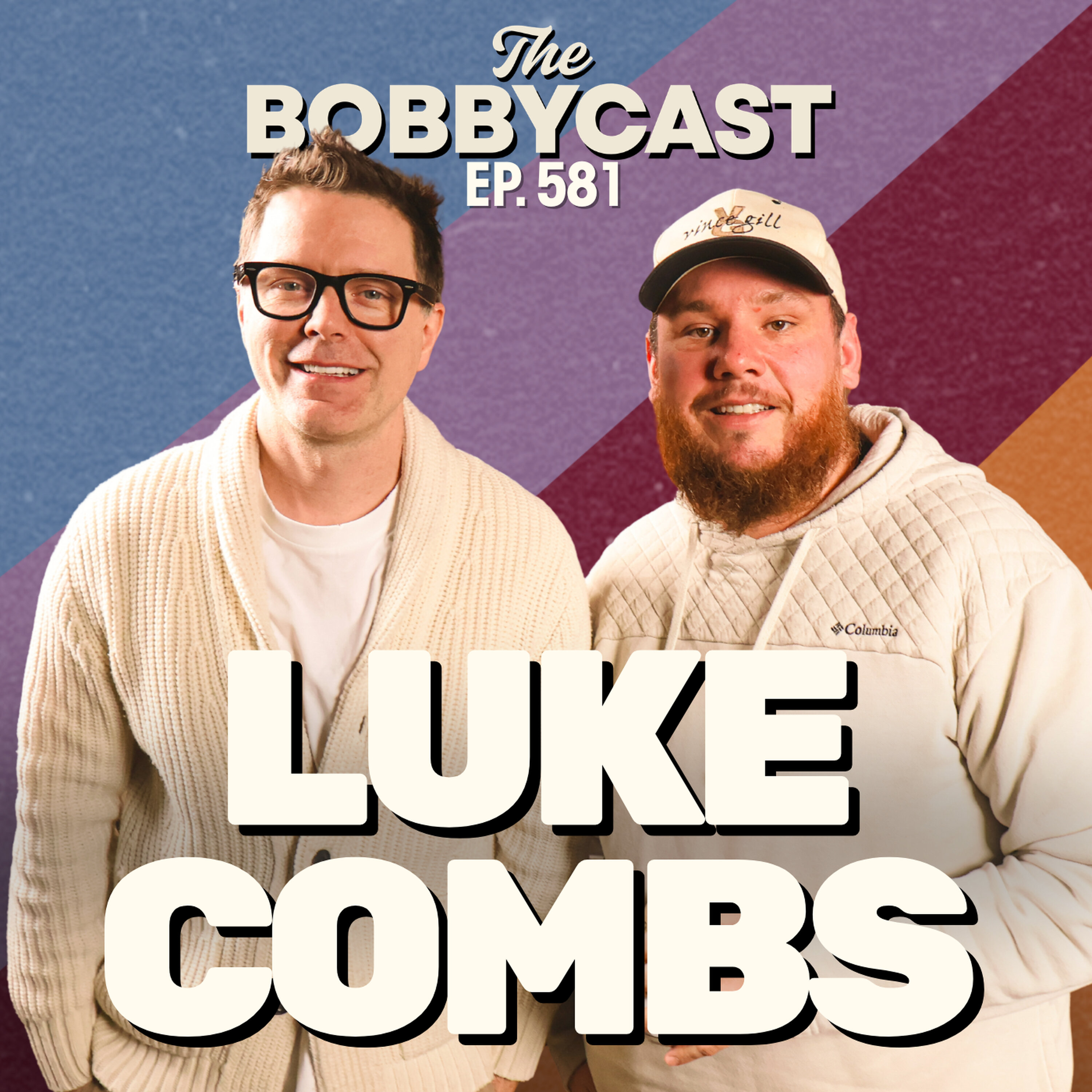
#581 - Luke Combs on Money, Fame & Giving Bobby New Dad Advice
Luke Combs joins Bobby and gets real about growing up, his rise from small-town gigs to stadium stages, and the side of fame most fans don’t see. He shares stories from his early years from living with family, playing his first shows, and figuring out how to turn music into a career while reflecting on the lessons that shaped him. Luke also opens up about fatherhood, offering candid advice for Bobby and all new dads, and explains how becoming a parent has shifted his perspective on life, priorities, and his music. From chasing dreams to handling fame and discovering what truly matters, this episode is a heartfelt look at the man behind the hits and the journey shaping his next chapter.
Watch The BobbyCast on Netflix
Follow on Instagram: @TheBobbyCast
Follow on TikTok: @TheBobbyCast
See omnystudio.com/listener for privacy information.
Available Results
Generated results are saved to the knowledge database for reuse and search.
Extract Knowledge
Pick what you want extracted first. Model, scope, and chapter options appear after a template is selected.
Transcript
00:00:06
Speaker 1: I don't want people to think I think I'm cool or famous. Like I'm aware of it, but it's not something that I take a lot of stock in, Like it doesn't provide me with a lot of like mental fulfillment.

00:00:22
Speaker 2: Hey, guys, Bobby, here, my guest today is my friend Luke Combs. He has another album coming out. It's a six studio album. It's called The Way I Am, comes out March twentieth. I hope you check it out. He always puts out banger after banger. He's also going out on a massive tour called the My Kind Of Saturday Night Tour. We're talking stadiums all through North America Europe. He's won at all eleven CMA is four ACMs. I think he has twenty number ones in a row, which is crazy. He's a grand old op. Remember he is one of the biggest country artists of all time. And here he is Luke Combs. Luke, good to see you.

00:00:56
Speaker 1: Yeah.

00:00:57
Speaker 2: Likewise, uh, thanks for the time. Do you come to now feel much? I mean I live here like this in the city because I feel like most people, once they get really famous, they have to move out a little bit.

00:01:08
Speaker 1: Yeah, I'm a little ways out. I'm not like really far out or anything. I used to be. I used to live an hour outside of town.

00:01:14
Speaker 2: Did you think I didn't know you lived here?

00:01:16
Speaker 1: Kind of? Well, I mean it's been a couple of years, so I mean there's a chance I moved somewhere else.

00:01:22
Speaker 2: You know, would you ever move back home?

00:01:25
Speaker 1: No, because me and my parents live here now, you know. So it's like everybody's down the road.

00:01:30
Speaker 2: And when did they move here? Because that's a commitment.

00:01:32
Speaker 1: They moved here a few months after we had our first kid. I'm an only child, and I thought my dad would never move and he was like basically he was like I'll never move, Like this is the house that we live, the house I grew up in. He was like, that's where I'm going to stay. And then he called me one day randomly was talking because my mom like she would have moved here when I moved here, you know what I mean, Like she didn't care if you know, if I had kids. It was like she was like, I'll go whenever. And Dad was like, I'm never moving. And three months after the kid, it was like He's like, well maybe I could. I could maybe see us moving out there, and I was like, really, I was just surprised by that, you know. I was like, well, let me know, I'd you know, I'd be glad to help you guys out get out here. And then they came a couple months after that, they came.

00:02:18
Speaker 2: Is that my in laws and we're about to have a baby? First baby?

00:02:22
Speaker 1: Yep.

00:02:23
Speaker 2: My in laws live Oklahoma, so they're not that close. I wish they were closer right when they moved here. Was that super valuable to you guys.

00:02:33
Speaker 1: Oh, certainly. I mean it was a huge resource obviously, and you know, just being able to have I mean I grew up around both sets of grandparents, you know, like not like in the same town when I was really little. My mom's parents lived in the same town, but they were all within like two hour drive, so it was like I see, I saw him all the time, which was really cool, you know what I mean. Like my wife didn't have that. My like my wife, she only knew one set of grandparents and they lived in like Las Vegas, so it's like they only see them, you know, and they saw him a lot when they were little, but you don't really remember it that much, you know. I spent a ton of time with my grand because I lived with my grandma when I started doing music because she lived in Charlotte, and so I would go there to just play for the summer or whatever. So like it's kind of a it's just a cool relationship that not everybody gets to have.

00:03:21
Speaker 2: I told my wife, she's lucky my parents are dead to have to deal with.

00:03:24
Speaker 1: Them sometimes it could potentially be better for them to not be around for sure.

00:03:30
Speaker 2: But yeah, she punches me when I say that, but I think deep down in her heart she gets it. Yeah, well I love her parents.

00:03:35
Speaker 1: Yeah, my in laws are My in laws are awesome too, Like I'm lucky, Like I don't have any Like there's no tension, like my parents and them, like they all just get along and it's like it's fine. You know. So that's great. That's so that's a you know, it's rare for that to happen.

00:03:49
Speaker 2: Yeah, with my buddy, it's really rare because like, wait till you have in laws, And maybe I didn't have parents, so maybe that's why, Like I kind of like that. Yeah, but your dad stayed in the home that you grew up in until he moved here. Did you live in the same house your whole life.

00:04:03
Speaker 1: Yeah, basically, I mean we lived in We lived in one house in Charlotte until I was eight, and then we moved to Asheville and we lived they lived in a rental. We lived in rental for a little bit until they found a house they wanted to buy. And so when I was by the time I was nine, I was living in the house that my parents lived in until like two years ago.

00:04:23
Speaker 2: How far from school was your house?

00:04:26
Speaker 1: A couple miles, like four miles, five miles, I mean not super far.

00:04:30
Speaker 2: Did you ride your bike school?

00:04:32
Speaker 1: No? No, it wasn't that close. It was like there was an interstate involved. Oh yeah, so I ride the bus. I was like a I was a school bus guy until I got a car, which was awesome.

00:04:41
Speaker 2: What kind of kid were you at eight nine years old?

00:04:45
Speaker 1: It was just chubby dude, just so that I was shopping in the husky section, you know what I mean. I was that guy.

00:04:51
Speaker 2: Were you a sports kid? Were you a music kid?

00:04:53
Speaker 3: No?

00:04:53
Speaker 1: I wasn't. I wasn't a sports kid. Man Like, my parents never really pushed me into it, you know what I mean, And it was I think there's I'm thankful that they never like forced me to do anything. But it was also like they never like, youth sports is expensive. It's more expensive now than it's ever been, but even back then, like they just didn't really have the money to like for me to be in some club sport or like play little league football. It was like they didn't have the resources financially or really the time because they were both working full time. So it was like it would have been really tough to make happen, like getting to and from practice. And also at that time, you know, we're new to town, so we don't know a ton of people, and so they just never were like, hey, you want to go play football? So I just never really thought of it. You know, I loved watching football, but I really kind of like, you almost don't even know that kids play it if you don't have like brothers or sisters playing it.

00:05:48
Speaker 2: You know, Yeah, that's a good point. When I was growing up, very similarly, we obviously didn't have any money, but I didn't play basketball because you had to buy a certain shoe everybody had to match, right, And so instead of being embarrassed by not being able to afford the shoe, I just was the guy who didn't play basketball. Right, And so once I started to have some success, and I've done it pretty much every year, I just buy the basketball team all the same. Jordan's right, just so if you played just that way, nobody has to go. I don't think I'm gonna play because I can't afford the shoes. So that's a little bit of me going through something and then trying to make it better. I know, stuff like that's important to you too.

00:06:24
Speaker 1: Oh definitely, you know I've I mean I played rugby in college, and you know, I've bought them. I bought the team's jerseys and really the women's team was at APP was struggling at one point, like after COVID to get funding and stuff, and they had like a GoFundMe and I just like paid the whole thing. Like it wasn'tonymous until right now. But you know, like I I didn't realize, I you know, like I don't like to like I don't do that stuff, like so people know that I do it, I guess, you know. But it's yeah, I mean, it's like it's awesome to do that because I've been in that situation, you know, just like you It's like there's a lot of.

00:07:02
Speaker 2: Things it's an empathy thing.

00:07:04
Speaker 1: Was like when I was in chorus, dude, like we had to buy a tuxedo to like sing, and it was like I remember it being like it's gonna be like a big it's a big spend, you know, it's like a heavy lift when and now you know, we weren't like dirt floor or anything. But like my parents were really smart. They didn't have any debt really other than debt they needed, which was like the mortgage and maybe the cars. But it's like, dude, if the washing machine broke, like that was a big deal. Like it was like, how are we gonna pay for this? You know, like how like my Dad's like, well, I'm gonna fix it. Basically, I'm gonna try to fix it. And if I can't fix it and it's an issue, it's a big problem. Like serpentine belt goes out on the car, big deal because it messes the whole budget up for the whole month. And there wasn't YouTube, No, it wasn't like you could just figure out how to do it and someone could show you exactly how to do it. It was like you had to know how to do it or you had to pay somebody to do it.

00:07:54
Speaker 2: Did you inherit any of that from your dad that like learning how to fix stuff.

00:07:58
Speaker 1: I like to do it. I wish I had more time to do it, Like I'm not a super gearhead like car guy, Like I can't open up an engine and be like, well you got to do this and this. I wish I knew how to do that stuff, But it wasn't. It wasn't something that my dad ever did like for the joy of doing it. It always was like a chore to him, because he would be like he's working forty or fifty hours a week and then it's like, you spend your Saturday fixing the lawnmower, like you're not exactly pumped about that. He wasn't exactly like, oh man, I get to work on the mower like He's like, it was more frustrating. He's already frustrated he had to mow four acres on the lawnmower, and then you go out to crank the mower up and it doesn't start. So you spend all day Saturday fixing the lawnmower, and then Sunday you still got to mow the lawn. And it was like so there was never It was done out of necessity, not out of like he loved working doing small engine repair, you know what I mean, He just couldn't afford to get anyone else to fix it for him.

00:08:57
Speaker 2: So what does a working class family think when someone wants to do a job music.

00:09:02
Speaker 1: Well, they didn't know at that time, you know what I mean. And I think, you know, I maybe there's a chance I would have discovered it sooner, you know, But it was just never. Like my parents always told me, like, do whatever you want to do and chase your dreams. They were always really encouraging, but it was kind of like, well, let's be a little realistic here, you know, of like like if I came in and was like, hey, I want to be a pole vaulter, they'd be like, I don't know that that's let's just take a look in the mirror. So and I don't think that's ever gonna work out for you, you know what I mean kind of thing. And so I don't know. The singing was just something I'd enjoyed doing. It wasn't ever anything when I was younger that I thought there would be any future too, and not because there was like I couldn't do it. It just never occurred to me that that was even in the realm of something that people do. Even though you're listening to like music all the time, I'm not thinking of it as like this is like a business that can make people money. I don't know if that makes sense. Like I was just never processing that at the time.

00:10:05
Speaker 2: I mean, I'm from a town of seven hundred people and everybody worked at the mill, right, and so that was the reality. And if you worked your way up, you got a good job at the mill.

00:10:14
Speaker 1: And if you got a job at the mill was the goal. Yeah, it was like, oh you ud dad got a job at the mill. I mean that's like, that's awesome.

00:10:21
Speaker 2: So nobody was even telling me you can't do it, because yeah, that was It wasn't something that people tried to do, like for me to like move off and try to do comedy or radio podcasting, whatever. People weren't like, you can't do it because it was such a fairy tale.

00:10:38
Speaker 1: Yeah, it was just you never it never even occurred to you that it was a job, you know what I mean. It wasn't like when you go to school, it's like, I mean, this happens I would say more often with music, but still not very often. Like you go around the room and ask a class full of third graders what they want to be when they grow up, not many of them say a musician. Not and even less they're saying radio host, podcast or actor like people are. They're just not saying that, Well, I want to be a firefighter, like that's the dream. That's like the top or an astronaut or something, you know. And even then you're like, how many people are astronauts? Not a lot?

00:11:13
Speaker 2: Yeah, I think I've ever met an astronaut.

00:11:15
Speaker 1: Not a lot.

00:11:16
Speaker 2: You haven't met an astronaut.

00:11:18
Speaker 1: I've walked I've walked past an astronaut one time. And we went and toward the in Houston, we.

00:11:25
Speaker 2: Went and you actually went to like the Space Center.

00:11:27
Speaker 1: We went to the Space Center, rode in the moon rover, which was like the car thing. Yeah, it's like a new one. And I'm like, why do we have a new one?

00:11:36
Speaker 2: We haven't been to the moon, and yeah.

00:11:40
Speaker 1: Like we haven't been there in eighty years. Why do we need a new one? Why is their new moon?

00:11:47
Speaker 2: Well they just announce the're setting up people again, like in the last week.

00:11:50
Speaker 1: Yeah, but this was. This was like six years ago, seven years ago, and it was it was sick.

00:11:55
Speaker 2: Dude.

00:11:56
Speaker 1: By the way, if you ever get a chance to do it, you gotta do it.

00:11:59
Speaker 2: It was so I don't think I don't think I get that look.

00:12:02
Speaker 1: So I think you could get that look for sure. I think you just all you got to do is to ask. It's it wasn't like classified, like it was obviously a thing set up like.

00:12:12
Speaker 2: They didn't like it wasn't like Epstein files all at once.

00:12:15
Speaker 1: Everyone. Yeah, it wasn't anything like yeah, so like they're like, you want to get in this car and I'm like, yeah, that would be so sick. Obviously I'm not driving it like I'm I'm riding Chogun. But it was. It was like fully electric, like you would imagine a Tesla or whatever it is. And you know, it was like seven years ago. That was like not a thing that was driving around the street. You know. So we're going like so the wheels were almost like it was like a ball, like a sphere. It wasn't a tire. It was like a sphere. And so we were going in this parking lot. I mean, we're going like thirty miles an hour, and we instantly went ninety degrees to the right, like the front of the car didn't turn. We were just going this way, and then all of a sudden we were going completely sideways at the same time.

00:13:01
Speaker 2: Because of how the will was built, right.

00:13:03
Speaker 1: Because it's a ball, they could just go and it was It was wild. I mean, like you're like hitting g's almost like just in a car.

00:13:10
Speaker 2: Have you ever flown in one of the I did a blue Angel flight once. Do you ever do that? No way, I don't like flying anyway, but I felt like it was something I couldn't say no to.

00:13:19
Speaker 1: I said no to it just from the sheer visual of me and like a one piece because they're gonna here's the embarrassing thing, Like they're gonna have to make you one if you're my size, Like there's not.

00:13:30
Speaker 2: Any gigantic there's any on the rack, dude.

00:13:34
Speaker 1: Like I mean even at the time, I mean at the time, I was probably thirty pounds heavier than I am right now, which is not light.

00:13:42
Speaker 2: Right now, you didn't want to put the suit on, like was there to.

00:13:46
Speaker 1: Some extent truly it was like what am I gonna wear? They're not gonna let me wear a T shirt in there. I don't think.

00:13:55
Speaker 2: No, they wouldn't have, right, they wouldn't, And I'm like, I think they would have had they take people up. They football players.

00:14:02
Speaker 1: It's the It's the hefty version of not being able to afford the Jordan's growing up. It was not being then.

00:14:09
Speaker 2: Extra large suits. Now to everybody, Oh, bro, the extra largest.

00:14:14
Speaker 1: There's no way I'm fitting in that three X dude, I would need. There's no three X flight suits in the military because there's not any three X guys flying jets.

00:14:26
Speaker 2: They invited you to go.

00:14:28
Speaker 1: They did, and it wasn't the Blue Angels, it was Thunderbirds.

00:14:32
Speaker 2: I did the Blue Angels.

00:14:33
Speaker 1: Still I don't still don't know if I would do it, to be quite honest, because they just want you to pass out.

00:14:38
Speaker 2: I hated it, but I'm glad I did it.

00:14:39
Speaker 1: Did you pass out?

00:14:40
Speaker 2: I blacked out right, so I didn't.

00:14:43
Speaker 1: Yeah.

00:14:43
Speaker 2: So what happens is because they hit this. You know, you don't wear a G suit and some of those planes they give you a G suit. This is nothing. This is just fabric, and so you have your pilot up front and I'm sitting here and they tell you whenever it starts to go to push down with your feet as hard as you.

00:15:03
Speaker 1: Can, and like when you're hitting, like you're doing the.

00:15:06
Speaker 2: Just when when you feel them taking off, push down with your feet because what happens is the blood is falling so fast because the plane is sucking you back. Your blood's falling out of your head. And if you push with your feet at least like pushes the blood out.

00:15:18
Speaker 1: See. I don't want to do that, you know. I don't want to do that. I feel like I need to do that, you know.

00:15:24
Speaker 2: And I'm shoving my feet down as hard as I can. And it gets to the point where we're doing and I forget the max geez we're doing and your eyes just start to black out, like it starts to close on you and you're pushing and it's staying. You say, see a little slit. And there's a video because there's a video of me in the back and I just do this.

00:15:42
Speaker 1: See there's two. I have too much anxiety for that, dude, Like I would be like this is the end, Like this is gonna like everyone else is fine, but I'm the guy that won't be fine.

00:15:50
Speaker 2: In my mind, you're the one that dies.

00:15:52
Speaker 1: Yeah, I'm the guy that dies in that in that scenario.

00:15:56
Speaker 2: When we landed, I laid on the floor for an hour.

00:15:59
Speaker 1: You're just so sick, Like, yeah, see I'm out. I'm not No, I'm definitely not doing it. I already didn't want to do it. Now I'm confirmed not doing it.

00:16:06
Speaker 2: I remember thinking I wish I could have gotten the moon car. When I was down on the ground, I was like, if I.

00:16:09
Speaker 1: Could so much more calm.

00:16:15
Speaker 4: Let's take a quick pause for a message from our sponsor, and we're back on the Bobby Cast.

00:16:30
Speaker 2: You posted a picture of you playing your first ever show. I think it was in Boone, North Carolina. We talked about that pictures. I'm gonna show it as we're talking.

00:16:39
Speaker 1: Yeah, yeah, it's uh, I mean yeah, it's true. I mean truly the first gig I ever.

00:16:43
Speaker 2: Played, like a paid gig.

00:16:45
Speaker 1: Yeah yeah, I mean first Yeah, I mean really first gig where it was like, hey, I'm gonna like promote myself as a person that you would come see in concert, you know. So I had sang in front of people forever, I mean my whole life. So it wasn't like anything that was particularly nervous about.

00:17:00
Speaker 2: Oh you weren't like super nervous, like this is my big shot.

00:17:03
Speaker 1: No, no, no, No. I was more excited because I was like I just felt like I believed in my ability to like deliver, Like I knew I could sing enough and play just enough to like to actually do it. So there was no nerves there, and I knew like basically, it's my first show, so it's kind of like built in. Like I had a bunch of friends, so I was like, well, I know my friends are gonna come. It's not like nobody's gonna show up. Boone's not big dude. It's a It's a small town, so yeah. And so it's a small town, so you basically know a lot. You know a lot of people in that town. It's not like you're living in downtown Charlotte and there's thousands of kids from the college that you never interact with, Like you're walking. You walk everywhere basically in town. You can't even have a car your freshman year, or you couldn't when I was there. Really you could have one, but it was parked like five miles away. So basically you would get it on the weekends, like you'd get on the bus and go to your car. And go to your car and have it in for the weekend because there's just not a ton of parking. So I didn't even bring my car my freshman year because I was like, I'm not paying to have a parking space. I don't even need and like I'm just riding the bus everywhere or walk.

00:18:11
Speaker 2: Whenever you play that first show, are you playing any songs that you wrote or are you playing covers?

00:18:15
Speaker 1: I don't think. I don't you know, I don't have a set list. I probably played for like an hour because that was about like the all I could play. I'm def I'm just doing it's ninety nine percent covers. If I did an original, it was one or two max, because I'd probably only written five songs at that point.

00:18:32
Speaker 2: What inspired you to do that show? Then? Were you singing so much? And were you doing chorus in college?

00:18:37
Speaker 1: Not? In college? I was in an a capella group my freshman year and like part of my sophomore year, and so I was singing doing that, like you know, I was always like in practice of like singing, you know. But then by the time by the time I do the show, like I had been playing for people in my living room, like at like pares and stuff. Not in an official capacity, but just like there's a guitar around and you start messing with it and people are like play play Cruise or you know, like whatever. That was a big song at the time. That was my big closer. Cruise was bad.

00:19:13
Speaker 2: I was like my core.

00:19:15
Speaker 1: Yeah, it was like everybody wanted to hear it.

00:19:18
Speaker 2: Were You're getting a lot of affirmation when you're playing at these houses and for people and they're confused, is why you're not trying it?

00:19:24
Speaker 1: Yeah, Like it's like I I basically at that time, like I knew I was a good singer, Like I knew that, and I was confident in that, and so it was just like I feel I felt like, well, man, if I play for people, they're gonna like it. I think, you know. It wasn't like like an arrogance thing. It was more just confident, like I was never wondering if like I wonder if people will like this. It was like, man, all I gotta do is put myself out there, and I think people will like this, you know, and I think it would be to the extent that it is now. But you know it, I mean it worked. You know.

00:19:54
Speaker 2: What was the first thing you posted online?

00:19:57
Speaker 1: The first video I ever posted, like doing music?

00:20:00
Speaker 2: Yeah, and was it successful?

00:20:01
Speaker 1: It was probably on like Facebook, it probably doesn't even exist anymore, but I would make them in like the app, like the Apple Studio thing like on my iMac.

00:20:10
Speaker 2: Is that like rock band or something like that or the band or whatever.

00:20:13
Speaker 1: Yeah, but it was like there was like one it's called iMovie.

00:20:15
Speaker 2: I think, oh yeah, yeah, I movie and it was on all of them.

00:20:18
Speaker 1: And like my laptop had a webcam because like at that time, cell phones didn't even have good enough cameras to do that stuff. Now you're just filming on your phone. But back then I would like set my laptop up, going to iMovie and then would just record myself like sitting in my room. So probably stuff like that on Facebook was probably the first stuff. I'm not certain what the first song would have been, but Chriz some probably something like that probably, or like Luke Bryan stuff probably or an al Dean song or something. But I didn't man, I was doing all kinds of stuff, man, just it didn't know it didn't go well. I wasn't like I was posting it and getting like hundreds of likes. It would just be like my friends would se like, oh, yeah, this guy sings. I know that.

00:21:01
Speaker 2: So your story isn't post a video, go super viral and build that way.

00:21:06
Speaker 1: No, your story is what it ended up being that. It ended up becoming that over time. But it wasn't like I posted one video and people were like, this guy's so good. It was just like, well, here's another guy posted himself singing on the internet, which I mean, now there's a bajillion people doing that. It was a little bit rarer at that time, but still pretty prevalent. And so that did become kind of how I ended up getting success here was because I was one of the first guys that like built their own thing and then brought it to town, as opposed to like the just moved to town and like figure it all out.

00:21:42
Speaker 2: Was that your plan? Did you want to bild it or did it at a time with school?

00:21:45
Speaker 1: Yeah? Just it just organically happened. Like I just I just constantly posted stuff like covers and and as I gained more and more of a following, I wasn't thinking to myself like man, this is like this is powerful to have your own audience and get built in engagement. I just didn't think. I wasn't processing it that way. I was just like, man, this is a great way for me to like market myself for my live shows. Really, I was thinking of it as like, well, maybe I could go to like there's obviously a lot of people in different towns that are following me now, you know, So I could go to Raleigh or Greenville, South Carolina, or you know, and play a show and maybe people will come to the show. Because then I was so locked in on like playing shows was the thing for me at that time that I was like, this is what I need to be doing.

00:22:33
Speaker 2: Was there a first out of town show that you were a little nervous about just because you had never played in a different town.

00:22:40
Speaker 1: Yeah, we played a lot like I did play a lot in like Charlotte, so I would go Like that summer I moved in with my grandma. She was living in Huntersville, which is just outside of Charlotte, the town I was born in, and she was living in an apartment and she let me move in the bedroom upstairs. Especially like all my cousins lived with my grandmother. At one point, it was just like we'll just moving with Grandma, and She's like let us hang out drink or she's not like staying up late, like what are you doing? You know what I mean kind of thing. So and she was, I mean, she's the sweetest dude. She's still alive and she's great. But I would go there and then basically all I did all summer was I didn't I didn't have to have a job that summer because I was making enough doing my shows in Boone and stuff to be able to not have to work. So I figured that was my first step into like quote unquote building a new market. Like I wasn't thinking of it that way, but that's what I was unintentionally doing. Is like I went there, lived there that summer, and basically I would get online and just figure out when all the open mic nights were in Charlotte for anything, like just some of them were like you could come to stand up or anything. Some of them were strictly music.

00:23:52
Speaker 2: You would go play it open mics.

00:23:53
Speaker 1: Oh yeah, I mean I would go. I mean that's what I was doing any night. So like probably there wasn't one every night, but probably four or five nights I was doing that. And then as the summer went on, like I would do good enough at some of these open mics where they'd be like, would you come play here on Wednesday night for an hour or two? And I'd be like sure, And then I would make you know, two hundred bucks doing that. And then I would drive up to Boone do a couple gigs. Those are my big money gigs. You know, it could make like guaranteed three hundred bucks or something playing one of those. So I'd drive back up the mountain play a couple nights in Boone so I wouldn't have to work come back to Charlotte. And then I met a lot of different bar owners and stuff, just through Some owner of a bar would say, Hey, this guy played here. I think he's really good. You should book him at your bar too, And they'd put me in touch with some other guy that I would call, and then maybe that show was in Winston Salem or something. So I just continually like push further east into the state, and then further west, like into East Tennessee and stuff, and a little bit south into like South Carolina, Columbia, that kind of stuff. But I did that for I mean two and a half years and just slowly built out, like pretty soon I was playing in Georgia like North Georgia and Atlanta, had some gigs in Atlanta bars, and just kind of I didn't realize I was doing anything good. I just figured out that this was what everyone does.

00:25:13
Speaker 2: Was it a strategy to grow or was it a strategy just to play music and exist?

00:25:17
Speaker 1: Yeah? Pretty much it was a strategy because like I never really knew what I wanted to do with my life. Even in college. It was like it was never like like blatantly obvious what I was cut out to do, which is weird to say now because I'd been singing forever. But once I picked the guitar up, man, I knew, like, this is what I'm supposed to do. Did I ever have any dreams of becoming like a big superstar. No, cause again I'm going back to like that blue collar mindset of well that just doesn't happen to people. So I'll just be fine, like I'm making enough money, paying all my bills, don't have to work. If that's it, then I'm happy with that, And that would be fine. If that was how it was forever, I would have true really been happy doing that. And so I kind of set myself up for success because there was never any There was never any like failure. I never viewed myself as being able to fail because I had already achieved what I wanted to achieve, which was sustaining myself on my own without help from anyone else and just playing shows. I could have lived the rest of my life that way if.

00:26:23
Speaker 2: I wanted to, so everything with house money.

00:26:25
Speaker 1: Yeah, it was. Yeah, it was like basically, it's like you go to a casino and they're like, here's ten thousand dollars and you're like, oh, perfect, I'll never blow this because I'll spend a dollar at a time.

00:26:34
Speaker 2: You know, that's not how you do it in real life though, right dollar at a time.

00:26:37
Speaker 1: I don't. I don't even gamble at all. You don't, I don't sports bet. No, if you're not a casino guy, I like, I like playing roulette, but I don't. I don't do it, Like I'm not a guy. That's like I could go to Vegas and not go in a casino and be like, cool, is.

00:26:52
Speaker 2: It because you've had your casino time?

00:26:54
Speaker 1: No, I mean I've got I've the most money I've probably ever lost in a casino is less than five hundred dollars. Wow.

00:27:02
Speaker 2: See, I don't really, I just don't get it.

00:27:04
Speaker 1: It doesn't do anything for me.

00:27:05
Speaker 2: I went hard, yeah, and now I don't do it anymore. Yeah, that's why I don't do it anymore.

00:27:09
Speaker 1: It just never because I could never get out of the mindset of well, I'm just burning this money, it's just going away. Nobody show me a guy that comes out on top. No, none, there isn't one. Yeah, there isn't a guy.

00:27:20
Speaker 2: No, there's not. And if there is a guy, he's lying.

00:27:24
Speaker 1: Yeah. I won so much, I get But how much did you lose?

00:27:28
Speaker 2: Yeah?

00:27:28
Speaker 1: Exactly. My dad always tells me about a guy that he worked with. It was like his boss when he worked at the maintenance at the college there in Nashville, and he would always be like, dude, I won thousand bucks on this scratch off or whatever. And he's like, dude, he had one of those you know, those little like metal spikes that they put receipts on a restaurants. He was like, he had one of those in his desk and it was this high with just losing. All he would say is like, dude, I want two hundred bucks on scratch offs this week. And he was like, well, yeah, but what did you spend, Like, did you spend five hundred dollars because it doesn't really count.

00:28:01
Speaker 2: Yeah, I spend four thousand dollars to hit that one.

00:28:04
Speaker 1: It's like, man, how do we get in the casino business? It's the best business in the world to be in.

00:28:08
Speaker 2: You ever play casinos?

00:28:10
Speaker 1: I did, Yeah, a bunch of radio stuff.

00:28:13
Speaker 2: I like where they pay you up because any a couple once or twice, they pay so good.

00:28:19
Speaker 1: I would did one time. I can't remember what casino was. They were always fun. They're kind of hard to like. And this is gonna be a weird way of saying this, and I'll probably say it wrong, but like, a casino is a hard place to be famous at.

00:28:32
Speaker 2: Because everybody's there for a different reason.

00:28:34
Speaker 1: Well, if I'm playing a show, everyone's staying at the casino, So it's not like I can just walk in and sit at the poker like I got in there.

00:28:42
Speaker 2: They're they're all there.

00:28:44
Speaker 1: And they know so like, you can't even really go in there and do the thing anyways, And then if you do, they're like, well, we could get you a private table, but it's you got to it's a thousand dollars a hand to get a private then I'm like, I'm not that's a total waste. So I remember one time I got, you know, because I feel like one of the big things at the casinos. And it's cool, man, if that's what you're into, and I appreciate it, but it's like they're like, well, we'll give you a marker, dude. And one of the casinos, it was like part of the payment was like I remember, they'd be like, we'll give you ten thousand dollars marker, and I'm like, how about you just give me ten thousand dollars and they were like they were like, well, we can't do that, and I'm like, what do you mean you can't, Like you're already paying me x amount, so just add ten thousand dollars todent, don't give me the chips. And they're like, well, we can either like give you the chips or not. I'm like, perfect, took the chips, walked in, sat down at the roulette table, and bet the max bet on red or black every time, and then just took what I made and walked out. Because it was basically get ten thousand dollars or nothing. So I'm like, well, at least could get maybe five thousand dollars of this something. I walked out with like seven grand. But I was like, I'm not gonna get caught up in the trap of like we'll give you ten thousand bucks, you lose it all and then you're like, what, maybe I'll just stay in here and I'm having a good time.

00:30:00
Speaker 2: I mean that's what. Yeah.

00:30:03
Speaker 1: Yeah, And it's not that I'm like overtly smart, it's just gambling doesn't do anything for me. I just don't get the I don't get the whatever the rush people get. I just don't get it.

00:30:14
Speaker 2: I don't know why the pleasure center of your brain does not go off whenever for.

00:30:17
Speaker 1: That, for that thing. No, you throw down a bag of taco bell in front of me or it's in trouble. But because gambling thing is not.

00:30:24
Speaker 2: What about buying stuff when you started to make money, did you buy like guitars or.

00:30:27
Speaker 1: Guitars and watches are my thing that I'm into. Really, the guitars have slowed down because it's a space issue, like where do you keep all these guitars? You know, I've probably got like i'd say probably like twenty guitars, which, in the terms of a guitar guy, is not really even a lot.

00:30:44
Speaker 2: Do you play them all or do you have any of that just sit and you want to look at it.

00:30:47
Speaker 1: There's some that sit that they've all been played, for sure. I'm not a guy that like, I don't have any like guitars where I'm like, well, don't ever touch it, you know, like it's it's like a sacred thing. I had one like that, and I donated it to the Country Music Hall of Fame, but that was not bought for like the intent of playing it, you know, and it.

00:31:10
Speaker 2: Was anonymous until now. So thank you for that too.

00:31:12
Speaker 1: Oh yeah, you're getting me on this man watches?

00:31:17
Speaker 2: Yeah, was that something because I had got into watches too.

00:31:21
Speaker 1: Yeah.

00:31:22
Speaker 2: I never knew watches, so I had no doubt. It was just like, wow, this is kind of cool and I can afford it now, And I think I just wanted to afford something.

00:31:30
Speaker 1: I think it starts. It starts that way, for sure. It started that way for me. The bug was like my grandfather worked at the mill by the way, and he worked there for a long time and when he retired he got a really nice watch. I got a role X and he was always like real proud of like it just signified this big achievement for him. And so when I bought my first watch, that was kind of the reasoning, like that's where it began. And then it was like, man, I can't believe, Like I never thought I would get to the point where I could afford something like this. And then that's the reason for a couple of watches. And then it just became like, man, now I really like these and now.

00:32:08
Speaker 2: I'm learning about them more.

00:32:10
Speaker 1: Yeah, and I'm like, now this is really cool, Like it's this insanely precise craftsmanship, Like I don't know, Like to me, it's like it's cooler. Then it's like buying something you can wear, and then I don't know, it's like, yeah, it's a it's a it's a deep dark hole though, the watch thing. It's bad.

00:32:28
Speaker 2: Man. I had to pull myself out a little bit.

00:32:30
Speaker 1: It's it's scary, dude.

00:32:32
Speaker 2: The two things that I had never seen were actual rolex or cocaine.

00:32:38
Speaker 1: Yeah. I've never seen.

00:32:40
Speaker 2: Seen cocaine X. The first one I ever saw is one I bought.

00:32:43
Speaker 1: You'd think in the entertainment business that like people would just everywhere, like someone's someone's off.

00:32:48
Speaker 2: Screen right now doing it on the side of the camera, someone's.

00:32:51
Speaker 1: In here right now.

00:32:52
Speaker 2: Just I've never never seen either.

00:32:54
Speaker 1: And I think people know when they meet me, they're like, this guy's not cool for cocaine, Like this guy not a cocaine guy's not cool enough, and so they're like, let's go to the cool guy room and do the cocaine and then we'll come back and he'll just think we're we have adh. We're just said by energy guys, you know.

00:33:13
Speaker 2: What do you think does? What's real though about being famous that? Because right my perception too is in entertainment, everybody's doing drugs everywhere, and that's really not it.

00:33:24
Speaker 1: It's not it.

00:33:25
Speaker 2: It's not really unless you're like, are welcoming yourself to that and you're inviting It's like there's.

00:33:29
Speaker 1: Different crowds, Like there's obviously people who are doing that somewhere, and if you're in that crowd, it's probably really prevalent. And you think everyone that's famous does drugs.

00:33:39
Speaker 3: The Bobby cast will be right back. This is the Bobby Cast.

00:33:53
Speaker 2: What happens that we don't see whenever you are super famous that now you've been exposed to.

00:34:01
Speaker 1: I think it makes your life really convenient, and it makes your life really inconvenient.

00:34:06
Speaker 2: Do convenience first.

00:34:07
Speaker 1: Convenience is obviously the ability and the financial freedom to like travel the way that you want to travel, stay at the places you want to stay, have access to things that other people wouldn't have access to, i e. Like tickets to sporting events, and like people want you to go to stuff and be it stuff and that is a really cool thing. It's really it's really great. The inconvenience is just like the obvious, like people following you to your house, or people trying to figure out where you're staying so they can get a bunch of autographs from you and sell them or what like, there's all these things like you are never you always feel like someone's looking at you all the time when I'm anywhere, And it's not like it not like in a fear way, but just kind of like it's weird to say doing what I do that I really don't like to be the center of attention that much, especially when I'm outside of my job parameters, Like I don't want people to think that I think I'm cool or famous, like I'm aware of it, but it's not something that I take a lot of stock in, Like it doesn't provide me with a lot of like like mental fulfillment. Yeah, Like I'm not like I'm famous, and that is like I don't derive any of my self worth from being famous, Like I try to derive my self worth from like being a good friend, or like being good to the people that work for me, and being kind to people that like at the venues we play at, or being nice to fans in public. Like that's where I derive a lot of my self worth from, is like just maintaining like with just being a trying to be a good person I think is important to me, and trying to be kind to people and going out of my way to do nice things for people and giving back to people. I feel like is I and fame has allowed me to do that on a greater level than I could have ever been able to do that. So very thankful for that part of it, you know. But you just kind of like sometimes you're out and you're just like I feel like everyone's like I'm kind of embarrassed because I like everyone's looking at me. Did you ever get caught up in it early, not not really no, because it happened so fast. There was like you almost like like I didn't have any free time. There was no like like it hasn't gotten like really like really convenient until like the last two years. And now I've got kids, so I've got that going on, so it's like it's never been like, oh man, I think I'm awesome, and it's like, I mean, we were riding the high of like the success in the sense of like there was a lot of pride of like I can't believe I've achieved this, and I'm very proud of achieving it, and I'm not gonna stop and I would like to continue to keep you know, climb and seeing where we can it to. So that part of it, certainly, but I didn't ever want it to like I don't know, I just feel like the way I am with my friends and my family and stuff, like they would just have never let me get to that point, you know, And I didn't want to get to that point anyways, like of being this like big egotistical guy, like my my friends would have like they would have just quit being friends with me if I got to that point. So it would have become like blatantly obvious. I think at this point, if that had ever happened.

00:37:30
Speaker 2: I think I'm gonna this is my opinion, there's a tier in current country music, and I'm gonna eliminate all the greats. I'm gonna I'm gonna take the guarths out, so they're out. But there's there's a tier in that top tier in my opinion, is you and Wallin and Zach Bryan for multiple reasons. Sure streaming success Number one's U touring success, right, you guys are doing stadiums. Sure does somebody like you still compare yourself to other people.

00:37:57
Speaker 1: I don't think musically really ever, Like I'm not like, well, I need my stuff to send where like this guy's or that guys. Obviously you're aware of other people's success just because, like I felk, my team is more obsessed with it than I am. And I don't think that's necessarily a bad thing, but it's not something I ever try to get caught up in, Like I really want to try to run my own race. You know, I can be nothing but happy for anyone else having success to me, like it's so rare to achieve and it's like the first time there's I mean there's been two stadium acts and country music history before right now Chesney and Garth. That's really it on a consistent basis. So to have three guys doing it at one time, it speaks to the the you know, the overall health of the genre. It's like it's it's you know, it's in a better place than it's ever been in, and it's been in some really great places in the past. So I feel lucky to be a part of that. And it's I think for me, I joke about that stuff more than take it seriously. Like I remember thinking like, man, I, you know, put out this one's for you and it ties Shanaia's record for the longest number one, and then Morgan puts his album out and beats it, and it's like, you know what happens, But it's like, what's that. It doesn't really change anything for me. And then like there was like there was like six months where I was the best selling country artist of all time and then it was Morgan.

00:39:20
Speaker 2: Like shortly afterwards.

00:39:22
Speaker 1: So it's like it's never going to like it never stops, and I don't know, I just like I just feel like it's a waste of time to worry about that stuff. Man Like, I have so much good stuff going on. I have no like need to be the biggest or best guy that's ever done it, or like the most tickets, or I just feel like you're missing the whole point of it.

00:39:43
Speaker 2: What's the point of it.

00:39:44
Speaker 1: The point of it is like to enjoy it, like to look back on your life and say, man, like, we did that, We accomplished it in a way we felt good about. We were good to people that we met along the way. And I've lived a great fulfilling life that was full of career success but also full of time spent with my kids and time spent with my friends and enjoying the things that I want to enjoy and enjoying kind of like the spoils of war, like getting to like go sit courtside at a Lakers game. Like I don't take that stuff for granted. It's so cool to be able to get to do that, and it's something I never would have been able to do, you know, in the past. And so just that's what it is. Man Like, if we're calling in the trappings of like who's the biggest this and I'm the best that, like, are you even really enjoying? Are you what are you even doing it for? If that's why you're doing it, why are you even doing it? Really?

00:40:36
Speaker 2: Do you need a break ever creatively to get creative again?

00:40:40
Speaker 1: Oh? Big time? Yeah, I think it can become. I feel like right now, I'm like, I want to write more than I ever have, and I've got an album coming out in March just because i haven't had time to Like, I love I love writing on stuff and writing stuff for my records. And it's an interesting segue. I know you have the segment where you bring a record and I was going to talk about this at some point.

00:41:05
Speaker 2: Well, let's do it now.

00:41:06
Speaker 1: Yeah, So this yeah pick it up record? Yeah? Is Willie Nelson start us? I don't you know you may be familiar with this record and it's Willy's most successful record of all time. Okay, And Willie Nelson, I think we can all agree, is one of the best songwriters in the history of country music.

00:41:23
Speaker 2: Right.

00:41:24
Speaker 1: This is his most successful abum he's ever had, and it's the only album that he didn't write any songs on and he did that intentionally. And this album that I'm about to put out. Is this the album that I've written the least songs on. I still wrote a lot, but there's not many that were like my idea from inception. A lot of them were ideas or starts that came from my buddies, and then some of them are songs that I didn't write on at all. And I loved this record when I I was listening to this in my college apartment, when I first got a vinyl player, and I was first going back and listening to all these records I had never been exposed to and wanted to hear. This was an album that I really gravitated towards. And it's a super moody, like slow record, like very kind of like spacey, like very light production. And at the time I didn't I just assumed he wrote all those songs. I wasn't even like. I didn't even know that artists didn't write their own songs at that time. And then when I found that out a couple of years after listening to this, I still didn't go back and reference this. I wasn't like, well, I wonder if Willy wrote that stuff like it. As I've done my research, I'm like, oh, well, Willy writes everything, you know, he just does. And then when I found out that he didn't write this record, I was like, well, maybe this is a lesson to myself that, like, you don't have to write everything. And like some of my favorite songs on this record I didn't write. I didn't write the title track to this record, I Am the Way I Am y yeahah, I didn't write that song. I just tease the song a week or two ago called b BYU. I didn't write that song. And those are some of my favorite songs on the record. And some of it was out of necessity from a time standpoint of just trying to be home with the kids more and trying to be present with my wife and like being there for my family while also doing the you know, going playing these crazy festivals last year and making this record, and some of it was out of necessity, but some of it was also out of like letting go of like the need, like maybe there was this egotistical need of like, well, I feel like I need to write my songs because that adds something to my thing. And I think that it does sometimes, you know, it doesn't always, and you know, but I do think that sometimes like I want people to know. It wasn't ever the It wasn't ever the thought of look how smart of a guy I am, or look how good I am at writing the stuff. It was more like I wanted people to know that I'm like putting the work in like that. I'm like, I'm not that. That was my thinking at the times, like, well, I'm not just phoning this in, like I'm putting the work in, like I'm in the you know, I'm in the shit, like doing the thing.

00:44:10
Speaker 2: Do you feel like you got you're so confident that you're now able to do that? Because I feel like there are two reasons you would do it, one of them as being you're so confident now that you think, Dann what it is to be a good songwriter.

00:44:19
Speaker 1: Yeah, and knowing that there's a lot better songwriters than you, and that some of those people are your friends and some of those are people you don't know, and it's like and that's okay, you know what I mean, Like I'm never going to be the best songwriter in the world. It's just never gonna happen, you know, And that's okay, you know, And but just knowing like you can do both like it's not it's not some big statement on like who you are as a guy or anything that I didn't write some of these songs, and you know, I didn't write a couple of songs on followers and sons too, And that's the most personal record I've ever made, you know, And I think there's magic in that too, Like getting to listen to those songs for that record, for this record, like it was something I'd never gotten to do before. Like I've never gotten to sit down and listen to a bunch of songs and be like, man, wow, I would have never had this idea or this is something I never would have a direction I never would have went, whether it's lyrically or melodically or you know, it's just cool getting to do that. You just get to it opens up a whole new thing. And I've I've always had so much respect for songwriters because I loved writing my stuff. I loved writing it with people. I love being a part of that process. I feel like they're underappreciated, underrepresented in our space. And so this was another way of just like digging into that, you know, into that mindset of you know, these people are great man and they're I mean, a lot of the best songwriters in the world live in this town, you know. If not, I mean most most of the best songwriters in the world live here.

00:45:53
Speaker 2: Give me some advice. I'm by to tell my first kid.

00:45:55
Speaker 1: Yep.

00:45:57
Speaker 2: Oh, man, I don't even know. It's like, just oh.

00:45:59
Speaker 1: Gosh, it don't you just don't. This is gonna be so weird to say, but just and this is it's it's the absolute antithesis of like what you should do. But just I just don't worry about it, man, Like you can't. You can't really control it. I think it's gonna Yeah, it's just gonna be It's gonna be chaos. It's gonna a polar shift of your entire life.

00:46:24
Speaker 2: Everybody says that, but until your experience, I don't think you can understand.

00:46:27
Speaker 1: I don't can't.

00:46:28
Speaker 2: I don't understand that.

00:46:29
Speaker 1: You're never ready. You're not going to be ready. You'll be ready when it happens because you'll just have been. I mean, like this is a stark comparison, but like a soldier is never ready for war, and it's not the same thing, obviously, but like that's the only metaphor I can come up with like you're never ready to do that until you're there, and then you've done it, and then you're like, oh, I guess I can do this because I kind of have to. And like when you have the kid, it's like you gotta go and there's no other choice, Like the kid can't do anything for it, Like your baby can't do anything for itself. I would say my biggest piece of advice is like the baby, the baby with the infant that comes out, it does not need you in any way. Your wife needs you a lot though, got it. Your wife is gonna be so tired, it's gonna be so exhausting because she's going through the same thing you're going through, but in it there's also a physical element for her, Like her body is gonna be completely different after this thing, and it's gonna be like she's never experienced that before, and she's gonna be dealing with all these new emotions and you're gonna be going through all these things. So helping her and like helping her through it and doing everything to make her life as comfortable and easy as it can be through that process, to me, is the most benefit that you can be for the child because the child needs your wife. It does not need you. It needs you to help the wife so she can help the baby. You know, obviously you're gonna hold it and feed it and be around. Obvious, that's obvious, but like it really benefits from that relationship with her in those formative months. And she's gonna need a lot of support. Man. She's gonna be really tired and stressed and not getting enough sleep and you're not gonna be getting good sleep. And you just got to be a team. Dude. You just can't, like you can't ever like lash out at each other because it's like they're You're not. It's not it's not you versus the baby or you versus your wife. Like this is the new team. The new team has three players on it now, and it's like how do we how do we dish the ball? Like to the new teammate, like how do we how do we get everybody involved? And that's your role, Like you're basically point guard. Don't ever shoot, just pass, you.

00:48:47
Speaker 2: Know what I mean? Like just set everybody.

00:48:49
Speaker 1: Else, set everybody up for success, man, you know what I mean? Like you're John Stockton out there, man, Like, no, you don't need you gotta give me.

00:48:56
Speaker 2: A white guy. Am I that white? Or you can you can't give.

00:49:00
Speaker 1: Yeah, okay, you're magic, Okay, you know what I mean?

00:49:04
Speaker 2: Fair enough?

00:49:04
Speaker 1: Yeah, but yeah, you just gotta That's the thing is you gotta. You just gotta be there, like you're a support player. Basically, you're an offensive lineman. You're not ever gonna score a touchdown. You're not ever gonna run the ball for eighty yards like you just got you got to help the people that are doing that do it, you know what I mean. And the only other person doing it's your wife. So you just got a block for basically.

00:49:28
Speaker 4: Let's take a quick pause for a message from our sponsor, and we're back on the Bobby Cast.

00:49:42
Speaker 2: The new record that's coming out. How many songs do you record? How many end up making it?

00:49:47
Speaker 1: I recorded forty and twenty two ended up making it. We're the other eighteen sitting room. Will they ever be heard? Probably, yes, in some capacity. Not all of them, but I think some of them will certainly, and it could just I mean, Sleepless in a hotel Room is on the record, and it's a song I wrote years ago that I didn't think it was the right time to put out because it was too like thematically close to some other things I felt like we had already had and so it's like, maybe it just needs room to breathe. And never in my mind was like, oh, I'll definitely come back to it. But I was like, I knew it was a good song. I knew I loved it. I had put out an acoustic version and people liked it. It wasn't like my most viral It wasn't like a no brainer at the time I put it out. But things change over time, you know, And so I think these songs that didn't ultimately didn't make the record could be in the same place. You know. There's one song on the record that didn't make the Fathers and Sons record because I thought the production of it in the way that we had kind of I had first heard it and then finished writing it was almost like too cool for the Followers and Sons record, you know. It was too like the Followers and Sons records, really acoustic driven. It's broken down. We cut it live, and I was like, well, this song is never going to work on this record, even though it would thematically it's like the perfect song for that record. But it needed the production that it had with it to get to where it needed to go. So it's like, well, you just wait on it and have it in the back of your mind and when the record comes around, we'll record it and if it's great, we'll put it on there, and if it doesn't, then it's in the same place it is now. It doesn't mean that any song is dead. I mean I've come back and cut stuff from years back. I mean, I've done that a bunch of times. You know, it's just got to be the right time and fit on the record in the right way.

00:51:39
Speaker 2: To me, did you ever go to a concert, especially early on, and it changed you from watching a live like.

00:51:45
Speaker 1: Yeah, I mean my first concert was Vince Gill, like ninety six. I was six years old. That was definitely like, whoa, this is really cool. He was my favorite artist, you know, and that. But the light bulb didn't go off there because you're you know, but you're like, wow, this is like really cool, man, Like this is people are here watching this. I come to see this guy's really neat. But the one for me was as Asheville Civic Center. It was Death Cab for Cutie opening for Pearl Jam at Ashville Civic Center, And that was the first concert I went to as like a teenager, and I was like liking my own music, like one, and this is a concert like I went with my mom. My mom liked Pearl Jam too, but it was like that was the first one I went to where like, this is music like that I'm liking, and we go and see the show and you're just kind of like, whoa, this is like this is wild, you know, like it's just never seen anything like this, you know. And then Avitt Brothers in Ashville was a big one. We saw them a couple of times there. That one was huge. Those were huge shows for me because they were like, like at the time, like my favorite band when I was seeing them, because they were kind of from They're from North Carolina, and I really grab gvitated to stuff from North Carolina era church, you know, I just gravitated towards that because it felt like it made it feel more like real almost. It was like, well, this guy, it's not some guy from Hollywood or whatever. In your mind you think of a famous person as like not even a real person kind of sometimes, and so it was like, man, these guys are these guys are from where I came from, and they're like having a lot of success now. At the time I see of it, Brothers, I'm not even doing music yet, but it still felt like, man, it's cool. These guys are from here, like the real people, you know what I mean, And so that those were big, big shows for me.

00:53:36
Speaker 2: I have three final questions for you. Yeah, when you moved to town, was there ever a moment of Wow, this is like the major leagues now? And I got to recalibrate.

00:53:46
Speaker 1: A lot a lot of times, like and a lot of those nights were just like nights at ten Roof really like ten Roof Demumbrians like Tenroof Revival or Whiskey Jam. You go in, you move to town, you're excited. I did. Everything's great. You know. I put some songs out in college. Those did really well. You know, I'm kind of like this standout guy in North Carolina from like a talent perspective at that time, like there's not a ton of people doing it, but from a con and I'm not saying I was the best guy, but confidence wise, I felt that way. You know, I felt like I could hang with anybody at least and you come to town, dude, and you hear I mean, like I remember being in like tin roof. I'm in there like just trying to like hang play a couple of my songs, and the next rounds like Randy Montana, Jonathan Singleton, Channing Wilson, and then the next one's like Landy Wilson and like all these great artists and writers and stuff, and you're like, man, these people are like everyone is really good, really good, you know, like everyone's better than me, and that's awesome because like now now I'm like iron sharpens iron kind of situation for me at that point, Like I really gotta step my game up if I want to like survive in this ecosystem. Oh, certainly, and excited to learn, like not in a competitive way, Like it's not like I'm like me versus you know, Jonathan Singleton as a songwriter, Like that just doesn't work, Like it doesn't make sense. It's more like how do I get in rooms with these people and learn from them and write with them? And a lot of those people have become like guys that I lean on and like truly can call friends, and like we get to do it all together and have success all together, and that's really unique thing. It doesn't exist in a lot of places, you know, like sports, aren't you know, Like obviously you can be friends with a guy on another team, but not during the game, you know what I mean. Like it's like you're competing against each other directly, you know. So I think, yeah, man, just being around people that are that good and that's the bar, you know, Like that's the point where I'm like, man, I just got to get up to the par with these people kind of like damn, like trying to be better than them like that miss probably not ever gonna happen, but like, how do I just get on the same playing field as these people? You know? I Mean it's like Laney was always so great. She's been as good as she is now for like over ten years at least, and didn't have success to win like four years ago, probably five years ago, max, But she's been in town longer than me. And like when I met her, I was like, this girl is so good. Man.

00:56:36
Speaker 2: Were you surprised she wasn't making it for a while?

00:56:39
Speaker 1: Yeah, truly, because I'm like, man, what's it take? Like, because I took my stuff took off before hers, and it was like, well, man, like, dude, she's really good, like not just singer performer, but like writer, dude, Like she is a good writer, really good, like really really good. I don't know if she gets as much credit for that as she deserves to get, but she was one of those people where I'm like, when I heard her stuff, I'm like, man, this is like if this doesn't get discovered, like then I got no hope for anybody if this doesn't work.

00:57:09
Speaker 2: There's a fun picture. I think maybe she posted or you posted of you guys together like writing. I don't know it. Probably it's over a decade ago.

00:57:14
Speaker 1: I think we were like I think we were eating burritos, I think, and we had been writing, me and her and James McNair I think writing together that day and went and had lunch. And but we wrote together a lot, man, I mean not like all the time. We didn't write together every week, but we wrote together decently, consistently, and never whenever I wrote a song that we wrote, I recorded a song that we wrote, like when I was still in college, Like, I came to Nashville and she was one of the first people I met, and she didn't have it really anything going on, and I didn't have anything going on, so I was like, hey, let's write a song. And we wrote a song called cher if you want to And it's like still this song that like my die hard fans like request to hear. And we wrote it together and I released that when I was still living in Boone because I was making I would make trips occasionally to Nashville to try to like kind of meet some people and see if I was you know, anybody would be interested in right with me? Am I gonna move here? I don't really know? And she was one of the people I met on those trips and we wrote that some little office like she was living in that camper out like West Nashville somewhere and like kind of preschool or something. It was like it was wildest spot.

00:58:23
Speaker 2: Do you look back at those times and really enjoy it looking back at it, Oh, a really great time? Yeah, like idea how great it was.

00:58:29
Speaker 1: Yeah, you just can't appreciate the greatness in the moment of like how fun it is, you know what I mean? And like you don't realize you would like long for those times back kind of like the innocence and like the honesty of that time, and like your pursuit of your goals were like there was no monetary goals, Like it was just love of the game, dude, you know what I mean. It was like it was like I'm sure there's guys that play in the NBA that would love to go play a pickup game at Rutger Park and just nobody knows them. Yeah, and just play, you know what i mean. Like and once they're gone, you can't ever get them back those days either, So you know, yeah, it's those were really fun times.

00:59:09
Speaker 4: Let's take a quick pause for a message from our sponsor, Wow, and we're back on the Bobby Cast.

00:59:23
Speaker 2: You ever go anywhere and they don't know you're a singer. They don't play this in the country music and they're like, hey, so what do you do And you're like, ah, I'm a singer. They really have no clue.

00:59:30
Speaker 1: Yeah, yeah, oh definitely, you know, and like you kind of like people always when you say you like, oh I'm play music or I'm in the music business or whatever, like people just like they can't help, but like pry, Like then they get really curious, you know, and a lot of times I don't tell them I'm not like, yeah, I'm Luke Holmes, I'm this guy or whatever.

00:59:51
Speaker 2: Like certified diamond. You don't throw that at them, No, no.

00:59:53
Speaker 1: Don't ever hit him with it. But then they ultimately like, cause if I'm in that situation, we're probably like in a sweet to a basketball game or something like someone's invited us to something and word hasn't got out, Like then I'm gonna be there to the people that were with or besides maybe the people that invited us, and they're like, well, we're not gonna tell anybody, and just it'll be chill. And ultimately, like they find out while I'm in there, but like from someone else, like they've already talked to me about They're like, hey, what do you do? And they just have no idea and like a lot of people will like apologize about it afterwards, and I'm like, you don't have to, Like I don't expect you to like know who I am. That's not something that I have in my head. Like there's a lot of people that I don't know who they are and that are probably a lot more famous than me. So it's like, so whatever, you know, it's not a big It's not like I'm not like a field disrespected by that or anything. It's just can't expect everybody to know who you are, you know. It's just if they do, great, If they don't, that's great. You know.

01:00:55
Speaker 2: Do you ever get like a really cool DM from somebody trying.

01:00:59
Speaker 1: To think some of the like John Mayer was one was like the coolest one I feel like I got.

01:01:05
Speaker 2: Is that just an appreciation DM? Like love well doing.

01:01:08
Speaker 1: Actually it was like I was wearing like a really cool watch in a picture. He's like a super watch guy. Yeah, and he sent me. He just sent me a DM and it was like it was the name of the watch I was wearing in the picture and that was what he said, and was like.

01:01:23
Speaker 2: Here's a recognition DM. Like basically he was like, yeah, see it.

01:01:26
Speaker 1: I see it.

01:01:27
Speaker 2: Respect it.

01:01:27
Speaker 1: Yeah, He's like that's a cool, cool watch. And I was like and then we kind of have had a dialogue ever since after that, And there's been a few over the years, but like it's hard I'd have to almost go through and look, but there's been a bunch coming over the years, you know, where I'm like, man, that's cool. I never thought that person would be. I think I was cool and I mean, I'm not cool, but they think I'm cool. But you know, yeah, it's neat. It's neat to get to meet some of those people. And you know, I mean they say the don't meet your hero's thing, and that can be true to some extent. It's not always true, obviously, everybody you've had those experiences. I'm sure anybody who ends up doing something like we do you ultimately have those experiences and you just kind.

01:02:09
Speaker 2: Of good and bad.

01:02:10
Speaker 1: Yeah. Yeah, Like sometimes you meet him, you're like, they're even cooler than I would have ever imagined, Like they're the coolest guy ever, Like guy would have been friends with in high school if we went to high school together.

01:02:19
Speaker 2: You know, who's that name? A really cool one?

01:02:23
Speaker 1: Oh gosh. I always come back to Jordan Davis. I love Jordan Davis. He's such a cool dude. We get along really well. The guys from Good Charlotte, Benji and Joel Madden like like, like those guys are some of the nicest guys on the face of the earth, man like and and it's like, I don't know that there's many people that I expected to meet that I thought would be cool that turned out to be cool. It's more people that maybe I never thought I would meet, where I'm like, I never thought I would meet this guy, and he's like mega chill, you know, like super cool cat.

01:03:03
Speaker 2: It's like the coolest, most normal dude.

01:03:06
Speaker 1: Yeah yeah, and like just wants to be a dad and like he is like really aware of the situation that he's in, but he just doesn't let it affect him. Like he lives a life he wants to live with no apologies. But he also doesn't have to apologize because he's just a super nice guy. Like he's really kind everyone, Like he's always doing stuff for his fans. So yeah, I really admire people like that. You know. I try to I try to emulate that and be like that. Whether it works or not, I don't know. I hope that it does, but.

01:03:37
Speaker 2: You have the reputation that it does, I hope.

01:03:39
Speaker 1: So you know, I like, you never really know. I guess what people think about you. But you know, I've always heard this too, like if you're worried about being if you're worried about being a bad parent, it means.

01:03:51
Speaker 2: You're a good parent because you care.

01:03:54
Speaker 1: Yeah, Like if you're like I think I'm a bad dad, dude, and then like that means you're a good dad, because bad dads aren't sitting around thinking about how bad of a dad they are for the most part until maybe later in their life or something, you know, but like at the time they're like, oh, kid's fine or whatever, it's probably I'm a good dad, you know.

01:04:10
Speaker 2: Final thing, I was looking at your tour and I was looking at the sport actually have and it's everybody from Tom's Rhett too, and where I my eyes popped out. I love the script. Yeah, I know they're doing some of the European Yeah, how did those guys end up with you? Yeah?

01:04:26
Speaker 1: It was like we you know, when we talked about like Europe is not you know, it's not obviously the same as the States. That's blatantly obvious. And so when we go over there, like normally when I do, you know, when you do shows in the States and you're thinking about it from well, who are my fans in the States? Want to see? Like who who are my fans here? And what do they like and what are the things that they like? Like there's not much correlation between my fan base and the Scripts fan base here, But in Europe, the crossover is huge, you know what I mean, Like people that love them also love me there for whatever reason, because you know, they don't have like they don't have terrestrial like country radio there, like, so it's all just fans that have found your music and fallen in love with your whole catalog. And so when we were putting together the European tour, I'm like, well, let's get some acts that are like, you know, country adjacent, like or maybe that touch on one side, like they don't have to fully overlap, but like there's similarities to some extent. And they were one of the bands that I think, you know, obviously is really great and that we landed on. We're like, well, this would be cool if they would do it, you know, and I'm thankful that they that they want to do it, you know. And Teski Brothers they're from Australia, but yeah, they're so good, dude. I heard somebody scoff at that one. They're awesome, dude. Yeah, yeah, scoff's the wrong word. That's as a negative contents. Yeah, like oh my gosh, yeah, like there's those are so good, you know, And and Tea Arts coming over there doing the Wembley stuff with me, and so there is like I don't know, it's like the fan base there is very similar, Like they like a lot of the same stuff that my fans here like. But I feel like the fans there they like more stuff, they like more music, almost like some of the fans here can be a little bit like, well, they mostly just like country stuff, but over there, it's kind of like if they like country stuff, they also like a lot of other stuff too. And it's not that you can group any individual into one category, but from a sociological standpoint, for the most part, you know, you have to kind of funnel it into that thing. So Europe just allows you a little more freedom with your support acts without people being like, well maybe I won't go to that show because who's that, you know what I mean. Like they're just maybe more a little bit more open to two other acts, you know.

01:06:56
Speaker 2: The way I am out March twentieth and then the and you're doing shows other than just Saturday nights on them, yeah my kind of yeh Saturday night. Yes, was it all just Saturday nights at first? And then you had to double up because.

01:07:06
Speaker 1: Yeah, yeah, yeah, so it starts you know, We always like to start with just the one, you know, and these are you know, they're three sixty shows. So the stages in the middle, except for maybe like Lambeau, there's one or two that we can't do three sixty in because the stadium doesn't want us to do it or whatever. And so yeah, like the bigs, like if we're doing one night, you know in Knoxville, I mean, that's bigger than two nights in the stadium on my last tour. Yeah, you know, so it's like you almost don't have to do the two nights and you get the same amount of folks, maybe even more in certain places. So yeah, it starts as one and then if we feel like there's an opportunity to go to go for another one, we would go for it.

01:07:49
Speaker 2: That's awesome. He appreciate the time. If there were charts, is also doing the shows with you. Yeah, that's pretty that's pretty gigantic. He is the best, speaking of great Guys speak, he's on the Great Guys. Great Dude. Yeah, that's awesome and t.

01:08:01
Speaker 1: R too, man, We mentioned him though.

01:08:03
Speaker 2: Yeah, let's do that Mount rushmore of great Dudes, Great guys, And I'm gonna country music I'm gonna keep women out for me. I think we should as a rule, because I don't want any headlines.

01:08:13
Speaker 1: To be like, there's only guys in it.

01:08:16
Speaker 2: Yeah, we're only putting dudes in it.

01:08:17
Speaker 1: Okay, Mount Rushmore, great dudes. We could do Mount Rushmore great gals.

01:08:21
Speaker 2: Too, that Okay, I don't want to steal. Okay, So you want to do dudes first?

01:08:26
Speaker 1: Yeah? Do we pick two each? Okay, we can do get collaborative Mount Rushmore.

01:08:32
Speaker 2: But the we're gonna you're gonna you're gonna have to pick Dirreks and tr because they're on your tour. Okay, are they grandfathered in since we already mentioned.

01:08:39
Speaker 1: Them a new one?

01:08:41
Speaker 2: Yeah, so those guys are there, they're they're in the hall of their jerseys, retired, they're a good guy. Mount Rushmore, great dudes.

01:08:52
Speaker 1: Okay, I'll go first, I already said Jordan Davis.

01:08:55
Speaker 2: Jordan Davis, okay, Keith Urban, Oh.

01:08:59
Speaker 1: Yeah, absolutely, solid Ca. Yeah, Yeah, I'm gonna go Vinnie Gill. Vince Gill, solid guy.

01:09:08
Speaker 2: That's a really good one. That's a solid guy, the kindest. Oh you put me on the last one, though, Like there's a lot of there's a lot a lot of pressure.

01:09:16
Speaker 1: Because you feel like maybe I'm leaving somewhere off Yeah, yeah, yeah, you know. Oh gosh, let's think it's tough, man.

01:09:24
Speaker 2: Yeah, I have like four because there are people that I really Also, it's and I love Luke Yeah not you. Yeah, I love you, but you're not you can't be on the list. Like Luke Brian and I spent a lot of time together American and he's great, he's great.

01:09:39
Speaker 1: Yeah, I think.

01:09:40
Speaker 2: I'm just gonna go with Luke Bryan.

01:09:42
Speaker 1: He's I mean, there's nothing wrong with that answer. Man, He's a great dude.

01:09:46
Speaker 2: Great guy. Are we doing junior varsity?

01:09:48
Speaker 1: And it's also it's also like it's the list is a little skewed because there's probably a lot of artists. You've spent time around a lot more people than I have.

01:09:56
Speaker 2: Really, like I almost put Plenty Black on there. Oh great, because he's so funny.

01:10:01
Speaker 1: He's really funny.

01:10:02
Speaker 2: I just have it like, yeah, with with Urban and Luke Bryant, I've spent literal days at a time with them, so I get that benefit. All right, let's do the mount rushmore of women. Awesome women. Laney, Okay, Oh, this is going to be cheating. But she's the best dolly that Yeah. Is she in the Hall of Fame though, okay, like.

01:10:23
Speaker 1: The Ring of Honor is like named after.

01:10:25
Speaker 2: Her, shouldn't be in the Hall of fame. She's so they're the Hall of Fame. Love them both, doll and Ring of Honor. We named it after them.

01:10:36
Speaker 1: It's named after them, and then everyone else hangs in that raft.

01:10:39
Speaker 2: Fair enough. I'm going to go and I don't think this is cheating because they're the same band. But I'm gonna go a little big town. Kimberley and Karen they're they're together, They're they're together in one head.

01:10:50
Speaker 1: Yeah, Ashley McBrien, Dang, that's a good one. She's great.

01:10:54
Speaker 2: That's a good one. I always have to go forth, all right. And the final person, there's a lot, a lot, I know, I.

01:11:05
Speaker 1: Don't want to like.

01:11:05
Speaker 2: This is not the list of like the only there's just so many great.

01:11:11
Speaker 1: There's so many, Yeah, there's so many. It's hard to like narrow it down. This is tough. Yeah, See, this is tough for you because now you may get some you.

01:11:21
Speaker 2: Know who I think is so funny because funny's big to me, because.

01:11:27
Speaker 1: It's funny nice though. Can you be funny and not be nice? You can? I'm not.

01:11:31
Speaker 2: If you're not nice though, and you're funny, that's never gonna get to me.

01:11:34
Speaker 1: That's true.

01:11:35
Speaker 2: And to be funny, like you.

01:11:36
Speaker 1: Almost have to kind of be nice. To be funny, you have to be smart, at least in a conversational way.

01:11:42
Speaker 2: Who am I forgett because I have something I'm gonna say, But who would? Because you know it's really funny. Who I really like being around is Megan Marony. I don't know where that well, because she's so freaking funny.

01:11:55
Speaker 1: We're on the same like, uh we might actually be both at the same imprint of Sony maybe not. I'm on Columbia. I don't know where she's at. Yeah, just like never cross paths or these things where like you barely she's she's in the night like kind.

01:12:09
Speaker 2: Of well funny and you do not expect it. So I'm gonna put like funny people. I'm gonna put it on there for like funny people a lot. What a what an exercise we just did?

01:12:20
Speaker 1: Yes and tough?

01:12:22
Speaker 2: And how many people do we offend? That's the other thing. Yeah, It's like when you do a speech and you didn't think it right there, No thanks, I really appreciate Thank you, miss best of luck on the record in the tour. You don't need your luck. You put the work in, so I really appreciate the time. There. He is the great Luke Coombs.

01:12:38
Speaker 1: Thank you, guys man, appreciate it.

01:12:41
Speaker 3: Thanks for listening to a Bobby Cast production.