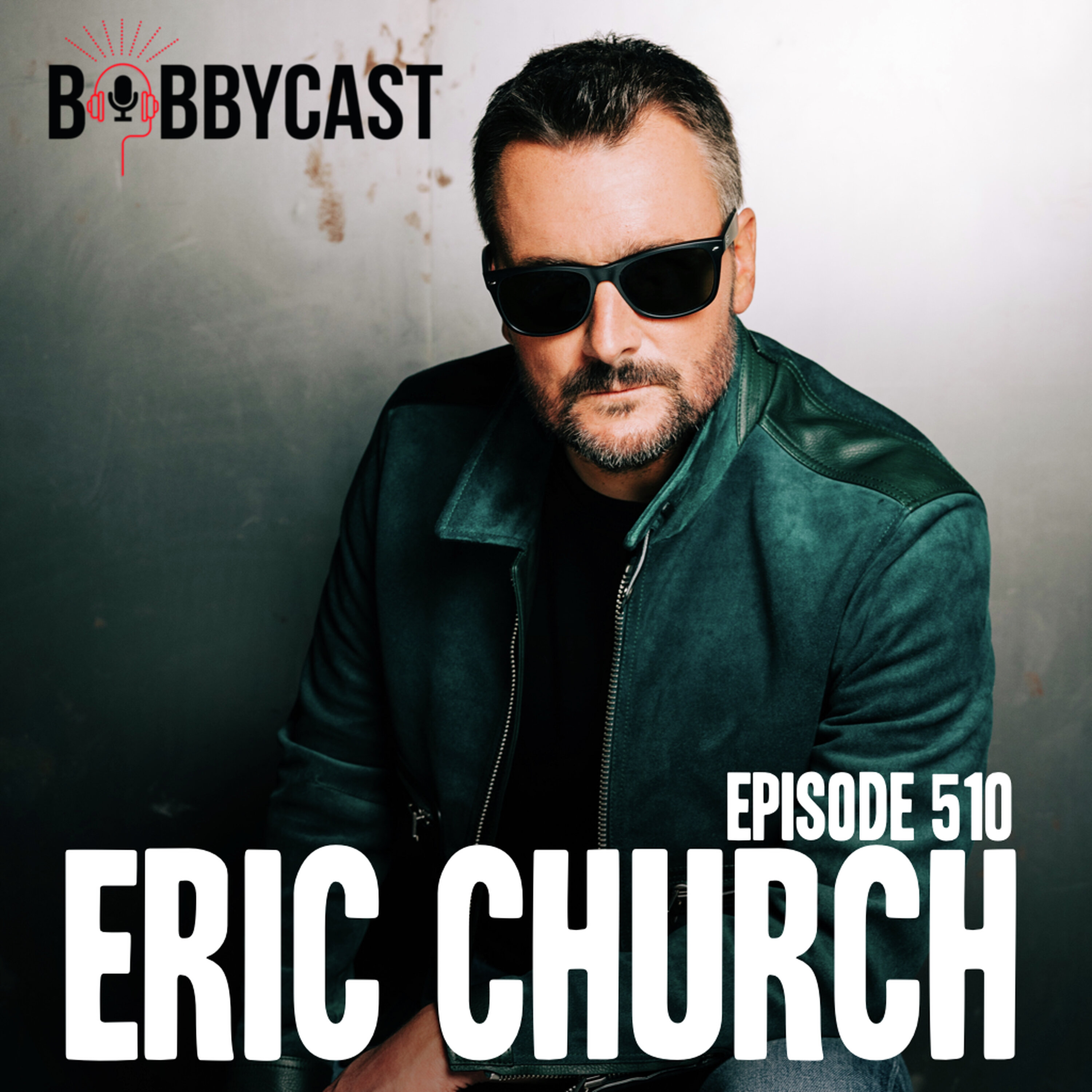
#510 - Eric Church on Getting a Call from Michael Jordan to Become an NBA Owner + Going into Business with Morgan Wallen + Almost Getting Dropped For a Hit That Almost Never Got Recorded
On this week's episode of the BobbyCast, Bobby sits down with country music superstar, Eric Church. Eric talks about being a part owner of the Charlotte Hornets after getting a call from Michael Jordan, why he always changes up his live shows, and how he and Morgan Wallen got into business together. Plus, Bobby asks Eric which hit he almost never recorded, and Eric tells the story of how that song almost got him dropped from his label, and much more!
Follow on Instagram: @TheBobbyCast
Follow on TikTok: @TheBobbyCast
Watch this Episode on Youtube
See omnystudio.com/listener for privacy information.
Available Results
Generated results are saved to the knowledge database for reuse and search.
Extract Knowledge
Pick what you want extracted first. Model, scope, and chapter options appear after a template is selected.
Transcript
00:00:06
Speaker 1: First of all, the label told me if I released that they were going.

00:00:09
Speaker 2: To drop me because of what the song was.

00:00:11
Speaker 1: Yeah, there was.

00:00:12
Speaker 3: No song like that in the year that it came out like it was. First of all, we're all on our own path anyway, and the labels like, listen, if you do this, just might as well go do it somewhere else.

00:00:23
Speaker 2: Welcome to episode five to ten with Eric Church on Instagram at Eric Church Music. His single now is called Hands of Time. We talk about the album, we talk about the tour, we talk about the time he got fired for working for basically home shopping Network, which does a pretty funny story. It was awesome, Yeah, and it was a good, pretty much hour with Eric. I think what's cool And I've been lucky enough to spend a little time with Eric outside of work, outside of anything professional. It was just a really nice guy. He's definitely still the chief. And he had a sunglasses on the whole interview. See I should have done that way or like so people can't see my eyes. I can't see my eyes. He could have been checking out my shoes, looking inside the house. I'd had no idea, That's all I was wondering coming into it was he good at wear them, Yeah, good to be the Chief, or they just could be Eric Church. He was kind of like Chief Eric. I feel like he's like so smart. Yeah, yeah, yeah, of course, Yeah, you're right, because the image of Eric Church is like this tough dude and he's you know, he gets up and he does this thing and writes songs people love, and he has that. But he's also, yeah, very smart, which is why he's such a great songwriter. And he's so cerebral. But if they called him cerebral and not the Chief, if that was his nickname, Cerebral, probably wouldn't have the same impact. So super cool to sit with Eric. He came over to the house and yeah, we did this for about an hour. He's got a new album, Evangeline Versus the Machine, that is out now. He's playing a ton of shows and Eric Church dot com get tickets to the show. Here he is. I gotta say, the Michael Jordan' story is pretty cool. It's coming up. It's just so nonchalant mj Here he is, Episode five to ten, Eric Church, Very good to see you, Bobby. Do you have Carolina Blue one on purpose underneath?

00:02:07
Speaker 1: Is it? Yeah?

00:02:09
Speaker 2: Yeah, I mean most every well I don't. Oh, I do too, but not on Yeah, this wasn't in your honor.

00:02:14
Speaker 1: I appreciate it.

00:02:15
Speaker 2: That's funny because I was talking because most everything I have has a hog on it or a razorback on it. Yeah, like red or phone or a lot of my clothes. Do you have North Carolina stuff everywhere? And like you're and now and now which is weirder. But we're involved with the Hornets too. So I have purple and teal, so it's Carolina blue and purple and tea. What do you mean involved with the Hornets here part of the ownership. Yeah, dang, I bought a pick a ball team. I don't have NBA team though ball teams are cool too, But what's up with that? So what's Lamela gonna do?

00:02:44
Speaker 3: We'll see, well, we will see. It's a there's a there's a there's a really important draft coming.

00:02:49
Speaker 1: Okay.

00:02:49
Speaker 2: Yeah.

00:02:50
Speaker 3: I got to be friends with MJ a few years back and when he sold the team, and it was one of the weirder calls you ever get in your life.

00:02:58
Speaker 1: But MJ goes, hey, I.

00:02:59
Speaker 3: Want you to be involved with the Hornets ownership group. I was, what does that mean. He said, I want North Carolina presence. I want people that are local. The group that's buying it's out of New York private equity, and he said, I want you to I want you to do it. He said, I'll help you if you need help, but he said, I want you to be involved, so you don't say no to Michael Jordan's So I got.

00:03:21
Speaker 2: That's super cool in a couple of ways. One because it is Michael Jordan, the greatest athlete or pop culture sports figure in our lifetime, I think, right, it's like bab Bruce, Michael Jordan, Tiger Woods two that Michael Jordan played for North Carolina, right, And for you that's such a personal thing and that now, yeah, that you talk to him on the phone that i'n't been like put on speaker phone recording it. So so what do you do is like part owner?

00:03:52
Speaker 3: Well, the great thing about the Hornets is the majority owners. You have majority of the minority, but the majority guys or you can different different groups in the NBA, but sometimes you get a majority that you know owns the ninety five percent of the team and you're just involved.

00:04:08
Speaker 1: But our group's really good about.

00:04:10
Speaker 3: Keeping us involved and all the decisions we're making, So you know, a lot of it rolls around draft picks, a lot of We renovated the arena there in Charlotte.

00:04:18
Speaker 1: We've did a big renovation.

00:04:19
Speaker 3: So you kind of have a three to five year plan, and Charlotte needs it because the Panthers aren't awesome and the city needs it. So we're on a three to five year plan. Really through draft picks. That's that's the best way to build a team. And luckily or unluckily, the past couple of years, we've got some good draft picks. So that's the game we play right now.

00:04:43
Speaker 2: Dan, I wasn't expecting that. That's awesome. I put a bunch of money into the Nashville baseball team, so if we get a baseball team here, nash.

00:04:50
Speaker 1: Will be a great city for that.

00:04:51
Speaker 2: Yeah, let's go. Then I'll call you. I'll be like, what's up? Owner? Owner?

00:04:54
Speaker 1: So yeah, that's right.

00:04:55
Speaker 2: When did you get your first guitar?

00:04:57
Speaker 1: Thirteen?

00:04:58
Speaker 2: Why'd you get it?

00:05:00
Speaker 3: I was writing songs, poetry kind of song things, and I was having to sing the melodies in my head and got like a Christmas gift, and then it took me a little bit to learn to play it, but you know that was just an avenue.

00:05:12
Speaker 1: For me to get the songs out.

00:05:14
Speaker 2: Did you take to it immediately?

00:05:16
Speaker 1: Yeah?

00:05:17
Speaker 2: Were you good at it quickly?

00:05:19
Speaker 1: Yeah?

00:05:20
Speaker 2: Do you have a brain that allows you to not just write lyrics? But how do you compute music? Like? How were you able to do key? I mean, like how did you learn music?

00:05:31
Speaker 1: That's a great question. I I don't know. It was the fastest thing that I was able just to kind of get.

00:05:39
Speaker 2: And then.

00:05:41
Speaker 3: You learn a lot of that too in you know, earning your salt Where I got in a band pretty quick.

00:05:47
Speaker 1: I mean I was in a band.

00:05:48
Speaker 3: It maybe seventeen, I was, I was on what and eighteen years old, and I started just playing in bands and some shady places, and I did the chicken wire thing at that show. I've had a band member leave the stage during a song and go fight a guy in the parking lot and make it back before the end of the song. And that guy was my brother. So we've done that during Now. You know, when you make it back for the end of the song, that's doing quick work, you know. But it was a skinnered song, so it was a little long. But I've done all those I've donell those things, and you learn a lot from those situations. I always talk about in the world we live in now, and you know this, in the world we live in, it's easier to get discovered and to earn a following, but it's harder to earn that as.

00:06:38
Speaker 1: A musician where you can.

00:06:41
Speaker 3: I'll give you example, and I won't name a name, but there was an act recently that I like a lot, and we were gonna we're talking about our next tour, and it's a person who has a presence social media whatever, and I said, hey, you know, we'd love to have you.

00:06:58
Speaker 1: They don't have a.

00:06:58
Speaker 3: Band yet, they've not toured yet, that's all just on what they do on their channel. They've not played yet, and it's like, you know, you've not taken anything on the road.

00:07:11
Speaker 1: You don't, right, And that's.

00:07:13
Speaker 3: A problem because you learn so much from being in those situations. And what I've found in my career, you're gonna get in big moments, and if you don't feel like you deserve the big moment.

00:07:27
Speaker 1: You might not meet the moment.

00:07:30
Speaker 3: And those early days allow you to know when you get to that moment, you've put in the work to earned that.

00:07:38
Speaker 2: I want to talk about being an advocate. I think even in this record that there's songs where you're an advocate as well, And so I don't think it's I think a big part of it is what you're doing for the communities and for people that maybe don't have a voice, but also for people that maybe need a voice. And I mean I could pull up a couple of songs even like Johnny or Darkest Hour, like those feel like advocate type songs, like you're speaking for somebody, for yourself but also for others. Well.

00:08:06
Speaker 3: I think a lot of that also comes a little bit with our We're a little bit of an anomaly that we got here completely on the backs of our fans early on because we didn't have a ton of industry success.

00:08:23
Speaker 1: We were a little bit pushed to the fringes.

00:08:26
Speaker 3: And you know, I remember one year I played Grand Rapids, Michigan like nine times because I could get a thousand tickets in Grand Rappers mission.

00:08:34
Speaker 1: We just kept rolling back.

00:08:35
Speaker 3: You know, how many times can we go to the whale because we had to have gas money to be able to move that bus around.

00:08:40
Speaker 1: Right.

00:08:41
Speaker 3: So a lot of that is the people that you end up seeing every night and then something happens, or you think about their lot in life. Yeah, I think that comes out a little bit now when I think about that, because I wouldn't be in the situation that I'm in for for them.

00:08:56
Speaker 2: Revisions history. As Eric Church moved to town, wrote a bunch of songs, was it's a successful songwriter but didn't hit and didn't even a massive star. That's revisions history.

00:09:08
Speaker 1: Yeah, that's false.

00:09:09
Speaker 2: What's the truth.

00:09:12
Speaker 3: I came to town. It was different with what music I was writing, and early on it wasn't great. You know, you come to town and you learn what real now. I mean, I say this to all young artists is you can't imagine. And a lot of people dog now a lot of the songwriting things and say, oh, it's Nashville songwriters, National songwriters, the best in the world. I mean, they're the their greatest craftsmen in the world. And it took me a minute to come to town. And I was fortunate I came at a time when we still sat across from each other and did that, you know where Now there's a lot of stuff that technologies involved, and that's fine, but I got to learn from a lot of those guys.

00:09:52
Speaker 1: So I came here and.

00:09:56
Speaker 3: My perspective when I came it's gonna be hard to believe, but was kind of a soccer mom type format.

00:10:02
Speaker 1: There were a lot of females.

00:10:03
Speaker 3: It was very driven that way, and I had a more masculine approach, and it was not liked by most were everybody, and I just had a different lane. But eventually got a record deal and got in that lane. But then that was a hard lane because we were just we were a little different on the radio and we had a hard time getting songs play because it didn't fit the formula at the time, and touring was interesting, so it was just along. The first couple albums were a really a really challenging time. Everybody comes to town and you know a lot of these young artists and they get a record deal and they think I made it, I've done it.

00:10:49
Speaker 1: But that is just the beginning of the hardest part.

00:10:52
Speaker 3: And for us, it was in that first two album period before Chief that we were grinding on the road. There was one year we did over two hundred actual shows in a year, and a lot of that was just to keep the money moving in at any level to keep moving forward, you know, to keep gaining ground. And at the time, a lot of people in the industry would have said, this doesn't really fit what we do, you.

00:11:22
Speaker 1: Know, and it's just a it's a grind. It was a grind for us.

00:11:26
Speaker 2: Why did you move to Nashville. Was it to write songs or was it to be an artist? In writing songs? Was going to get you to that place? To be an artist?

00:11:34
Speaker 1: Right? Songs?

00:11:35
Speaker 2: It was you're a writer? Yeah, how did you know that was a job?

00:11:39
Speaker 1: I found that out.

00:11:41
Speaker 3: I was in college and I had a band and I started, you know, just playing some of my original songs, uh in our cover set, and you know, people the next time I would go back and play there, they would recrest those songs. And that just kind of where I started thinking, Okay, you know, songwritings. I just never thought it was viable for me to be able to go and get a record deal and do that. It never crossed my mind. It just wasn't something I thought I could do. So I really wanted to come here and write songs. And you know, I met a couple songwriters when I moved here and kind of saw what they did and how they did it. And you go get a you know, you take a draw and you go right for a big publishing house and try to get songs cut.

00:12:25
Speaker 2: So what'd you pack up? And you what did you move into when you got here?

00:12:30
Speaker 3: I was in a I came to town in a two tone nineteen eighty six Chevy blazer, blue and gray, that's the color back then, man and I had a guitar, I had a Duffel bag, and I found an apartment. But I didn't know where to be. You know, when you moved to Nashville, it's like I didn't know what was what?

00:12:50
Speaker 2: Did you have anybody here that you could ask those questions to? No, so you blindly moved to town.

00:12:54
Speaker 1: Yeah, I came. I went to Broadway first.

00:12:57
Speaker 3: I tell this story my Chief Chief Residency as I came to Broadway because that's where the Rymen was, That's where you know tutsis is, That's where you know all these iconic things. And I tried to get gigs there and I couldn't get a gig there because I came with a you know, a sack of songs and my guitar and they wanted cover songs, and so I couldn't. I couldn't make it on Broadway, so I ended up over at Printer's Alley back in the day, which is there's a place called the Fiddle and Steel Guitar Bar. And what I found there were all the people that got kicked off Broadway. That's where they congregated, and I kind of found my tribe and there were a lot of hit songwriters in that group.

00:13:39
Speaker 1: There are a lot of musicians in that group.

00:13:41
Speaker 3: And just kind of found my people and started figuring it out.

00:13:47
Speaker 1: But I took a job. I had a job at the Shopping Home Network. I sold knives. That was my job. Thanks for calling Shopping Home. My name's Eric, I may I help you? Oh yeah. I was the phone guy, had the little headset, good stuff.

00:14:01
Speaker 2: What kind of knives?

00:14:02
Speaker 3: Like?

00:14:02
Speaker 2: What was your what was your what was your rap?

00:14:05
Speaker 1: My rap?

00:14:06
Speaker 3: At that time, I actually got fired because of my lack of rap.

00:14:09
Speaker 1: But I would answer the phone. I had the I had the shift.

00:14:13
Speaker 3: It was I think my shift was eleven PM to like seven am.

00:14:19
Speaker 1: That was the overnight shift. So that's the shift where the guy.

00:14:22
Speaker 3: Comes in he's been at a bar and he turns on Shop at Home and there's the guy. When we were looking at the studio, so where the phone bank was. It was like an amphitheater type seating and we all have our little chairs and our headsets on, and we're looking at them selling the knives out their television studio in front of us. And this guy, you know, would call in and go three o'clock in the morning, slurring, going, man, I gotta I gotta have some of these knives. It's like three hundred knives for fifteen ninety ninety nine, right. And actually one night there was a guy that called in and he I could tell he had had a long night and I had a few of those two and he was like, man, he's I asked some of these knives, you know, and he's slurring. I was like, yeah, yeah, you know, he said, you know. I said, hey, you know, what what do you favor? I said, why don't you want you go to bed? And first of all, when somebody calls and says I need a knife at that time of night, you think there's already a problem, right they don't need yeah, not right now. You don't need a knife right now. You need to go to bed. So I said, want you go to bed? And once you call me in the morning, I'll still be here.

00:15:21
Speaker 2: You know.

00:15:22
Speaker 3: He said, what says there's three left? I said, brother, trust there's more than three left. Okay, You're gonna be okay. And there's that thing where when you call into something like that and they'll say, for whatever purposes, this call may be recorded. They do that, and they happened to record this call. That's how you got got so I got cut.

00:15:44
Speaker 1: That was it.

00:15:46
Speaker 2: You're advocating for that, dude.

00:15:47
Speaker 3: I was advocating that due they didn't like that shopping on those, so they they fired me.

00:15:52
Speaker 2: Uh, what's up with that name of the record, Evangeline versus the Machine.

00:15:57
Speaker 3: Well, so I think a lot of some of this, some of this somewhat started. There's a there's a line in Johnny that's a very important song on this album because of the Covenant shooting here in Nashville. But there's a line in there says, machines control of people, and the people shoot shoot at kids. And what I've found having younger kids is there's so much of our life nowadays. It's just so fast and disposable with how we consume anything. And what I've seen is it really rounds the edges off anything we try to do different or creative, that's just not what the world is set up for today. It's not set up for the patient part of that. And so I think that line is when that title started.

00:16:45
Speaker 1: But the crux of this.

00:16:47
Speaker 3: Is Evangeline on the album plays almost a creative muse that song. So it's that creative muse and following that versus the machine that makes it very hard to execute that. And that's that's the that's the juxtaposition of love.

00:17:03
Speaker 2: What this is.

00:17:04
Speaker 4: Let's take a quick pause for a message from our sponsor and we're back on the Bobby Cast.

00:17:18
Speaker 2: When you mentioned Johnny and the shooting, and that was very personal to all of us here because it was so close to us, and it's probably close to a lot of people in a lot of places. Because it's so close to a lot of people, it's happening everywhere all the time. The Johnny Johnny versus the Devil Devil went down to Georgia that the song was playing, because that is that part of the like you were thinking about when you wrote the song. Yeah, I was hear the song Devil went down to Georgia as I was.

00:17:44
Speaker 3: My kids go nearby here and I was, which is a couple of miles from Covenant Whatever. And the hardest thing I've ever done in my life is dropped my kids off the day after the shooting because they had decided, you know, that kids needed to feel some normalcy and go back to school. And I remember, I've never I've never done anything harder than that when I when I watched them walk in.

00:18:10
Speaker 1: That school and both boys go in together.

00:18:13
Speaker 3: There's a bunch of people out front, teachers are crying everything, so everybody goes inside, and I didn't know what to do. I felt helpless, scared all those things. So I just parked in the parking lot there and I sat there, and I don't know how long I was going to sit there. I just felt like I needed to be there. And as at some point in time, during probably an hour, at some point in time, I looked to my right and I looked to my left, and there were parents that had done the same thing all the way down the line, moms and dads, and they were just sitting there. And I had the radio on and it was down low. I wouldn't paying attention to it, but that one down Georgia was on and there was a there was a piece of that in that moment as I'm looking at my left and looking to my right and thinking about my kids, that you know, Johnny rawsing up your bow and play your fiddle. Hard Hills broke loose in Georgia and the Devil deals cards and if you win, you get to shiny.

00:19:10
Speaker 1: Fidel made of gold, and if you lose, the devil gets yourself.

00:19:13
Speaker 3: And I remember thinking, if only Johnny was confined, or only if the Devil was confined to Georgia. He's out of Georgia, He's everywhere, and we need Johnny to come back and help.

00:19:24
Speaker 1: And that was it. And I pulled out of.

00:19:25
Speaker 3: The parking lot finally, and I went home and I did like and some of this may have went to the Evangeline versus the machine, because there is that Johnny versus the devil, you know, that started that thing, good evil.

00:19:40
Speaker 1: Kind of thing.

00:19:41
Speaker 3: And I went home and I said, it would be interesting if we if a song was written from that perspective, where you bring back a character from a song we all know from thirty forty years ago and he gets to play a different role.

00:19:54
Speaker 1: And so I wrote, Johnny, Yeah.

00:19:58
Speaker 2: I don't know that. I I'm glad to hear that version or like the actual story behind how you wrote the song, because now it kind of all makes sense with the record and even within the song, because you may just see the name Johnny and not understand. But do you believe things happen for a reason?

00:20:14
Speaker 1: Yes?

00:20:15
Speaker 2: Do you believe that you heard that song at that time? Yes, so you could have that thought, yes, so you could write this song.

00:20:20
Speaker 1: Yes, Huon believed that.

00:20:24
Speaker 2: And so whenever you write Johnny, you call Luke Laird and Brett Warren.

00:20:30
Speaker 1: Yeah. I couldn't get out of it. I got in it. I just couldn't figure out how to quite get out of it.

00:20:34
Speaker 2: So what do you tell them?

00:20:34
Speaker 3: Like, I just sent it to them. I record kind of what I'm doing in that time. It was so fresh with what was going on. They I mean, it wouldn't once I I couldn't figure out how to land it. Like I got in the air and got it where it was supposed to go, and I was like, I don't. And it was probably some of that was emotional where I was so tiedy in I couldn't. I had a couple of things that I thought were too They weren't the right emotion, and so I was like, hey, check me on this, and then within a day or so we had it, and then I kind of knew it was a different you know, different perspective and different thing. And then that was before us I started the residency, and so in the residency, one of the big moments is I would play that song late in the show and we would kind of do a flash mob choir that would come out behind the people and sing those choir parts ended up being a big, big part of the show and also a big part of formulating what.

00:21:28
Speaker 1: The conception for this album was.

00:21:31
Speaker 3: Where I had voices and then all of a sudden started thinking about strings and horns. I did Stagecoach, which was noisy but I loved, and all these things before I ever went in the studio. We're taking us in a different musical direction, and I was starting to feel a different pool.

00:21:48
Speaker 2: Was this the first song that you did for the album, maybe not even knowing it was gonna be the album?

00:21:52
Speaker 1: Yeah?

00:21:52
Speaker 2: First of all, so did this song actually create the rest of the album.

00:21:56
Speaker 3: I think it created the template for how we were going to do the album. So, I mean, I've not a lot of people look back in this well, your last record is twenty twenty one.

00:22:04
Speaker 1: That's not really true.

00:22:06
Speaker 3: We recorded the album in December of twenty nineteen, in January of twenty twenty and COVID happened, and we sat on it for over a year, like everybody else.

00:22:14
Speaker 1: In the industry.

00:22:15
Speaker 3: So I've not been in the studio in five six years, five years, and I think that I've got a lot of songs. There's a lot of different avenues we could have went down for this album. There's and I've done this song enough. I understand this song is going to be a hit song. This I get it. And there were different lanes we could do, but it was really Johnny and then stagecoach. It started to develop a different path that.

00:22:42
Speaker 1: Was interesting to me.

00:22:45
Speaker 2: I'm a big Tom Waits fan.

00:22:46
Speaker 1: Yeah, me too.

00:22:47
Speaker 2: It's passed down to me because I think as a kid, you don't really move toward Tom Waits's tone. Sort of listening was like twelve or thirteen years old. Love the rasp, love the grittiness. You did a Tom Waite song on this clap hands? Why that song?

00:23:02
Speaker 1: See this is you?

00:23:03
Speaker 3: Remember you just You've already asked me, You've already answered this in a question you already asked me, and do you believe things happen for a reason. So I was searching for filling out the rest of this project. And the challenge of this project is not every song fifth the room with who was in the room, and not every not the people in the room fifth song. So let's say we had fifty songs for this project, and what you're finding is those songs that made it are really the only ones we cut. Other songs it worked, just they this didn't match this. So I was sitting in to my house and there was a man, I'm Tom we on the Nickels on my favorite songs of all time, And I was sitting in my house and there was it was the end of and I got to go back and figure out exactly what it was because I've been asked this already, But it was either the end of like a Netflix series I was watching or a movie. And on the altra on the credits, clap hands comes on and I remembered it.

00:24:02
Speaker 1: Everybody. I was like, oh, yeah, remember, it's been a hot while since I've heard this.

00:24:05
Speaker 3: And I was listening to the vibe of it, and I was I had just left the studio that day and I was thinking about the room and I paused it. It was on like a DVR thing, so I paused it and I grabbed my guitar. I rewound it to when it started, and I sat there and just worked up the progression and then I laid it down with an acoustic guitar. I sent it to Jay, my producer, and I said, Hey, call me crazy, but I feel like this would really work with who we got in the room, with the weapons we have there. And he sent back almost immediately, i'll see in the morning, and we went in the next day and cut it, so, you know, within a twelve hour period. I heard it on a TV show and it was cut the next day. And there's a there's a freneticness to, you know, to that with the voices and the breaths. There's a there's a thing there that was really interested in me that I hadn't heard on a cover of that song. And Tom Waits is creatively just a name animal, and this record is a lot about creativity.

00:25:03
Speaker 2: A few weeks ago, I was sitting just like this with Ringo Star who come over to the house and we were doing this and it's pretty legendary to have a beatle. And he talked about how they would play thirteen hours a day and they were playing clubs constantly, and that now people aren't playing anywhere, Right's it's a huge problem, and that it's actually taking the overall product and it's not and he didn't say as good, but as it's not as consistent as it was back when they were going. I mean, you go all the way up until the last seven or eight years or so, probably whenever people are able to create without actually having to go out and do it. And you know, I think he was a little concerned for the future of music as far as live music because these guys aren't out playing in order to get good. That feels a bit about what you're saying.

00:25:56
Speaker 3: I am one hundred percent the same, and you can see it, like you can just see that it's just a key part.

00:26:03
Speaker 1: It's a key part.

00:26:04
Speaker 3: Of everyone's journey, is that you're going to learn a lot about yourself. I mean, everybody should have those shows where the band out numbers the audience, or those shows when you've got feedback all night, or the guitar player's guitar goes down.

00:26:18
Speaker 1: You still got to play, You still got to figure those moments out.

00:26:21
Speaker 3: Those disasters that you manage in those places are what allow you to get to a different place and grow.

00:26:28
Speaker 1: The growth is the biggest thing.

00:26:30
Speaker 3: It's hard to grow when you're putting out whatever it is and all of a sudden it's massively popular. But there's no journey from when you put that out to the popularity. There is no arc there. It just goes boom to boom when you go straight up vertical that way. It's really hard to do what you need to do to be able to do this for a long time.

00:26:52
Speaker 2: It's funny you talk about disasters because I think some of the biggest growth in my career doing stand up or doing live television is screwing up and realizing the world is an over. Just just keep going, right, Like, just keep going.

00:27:02
Speaker 3: Yeah, and your yours directly would be really like stand up is exactly what I'm talking Just you just.

00:27:07
Speaker 2: Have to keep you it.

00:27:09
Speaker 3: You're in and you'll get admitted, but you're committed, like that's the thing, and and and that's what. If you didn't have that, I would venture to guess you would not be as good at what you're doing now.

00:27:19
Speaker 2: I would agree.

00:27:20
Speaker 3: So that's that. That's the bones that I'm talking about. You got to earn those bones. And yeah, no pun intended, but it's the you got to have those things right.

00:27:29
Speaker 2: For me, it's like doing it terribly, like having a disaster happening and getting through it. It gives me the confidence to do it and get through it again when it happens to go, oh, the world's not ending right now, I can keep I got my bearings. I've done this before and it's gone wrong and I've been just fine.

00:27:41
Speaker 3: And also, you got to chase some things. So there's I'm since it's stand up, I haven't done it, but I know what I've done on stage. Sometimes you chase things that don't work. Oh yeah, but the chasing. But the chasing is what allows you to kind of you learn there, right, So and I've done that creative musically, like we've chased some stuff like hey, you know what we haven't played it for let's.

00:28:00
Speaker 1: We've done that.

00:28:01
Speaker 3: But there's a lot of the younger people and the problem is there's just not a mechanism for them. It's fast that they can go earn it on the road because it's not instant gratification. Who wants to do that, you know, so they end up going from here to here and back to the artist I was talking about. I was pretty surprised that. I was like, wow, so okay, you got a pretty good following, but you don't have a band yet. We've not even went to normally that's step one, where you are step twelve. You've went to step twelve, but one through eleven's not there at all, So that's not good, you know. I would say if someone is done it a long time.

00:28:41
Speaker 2: I'm a massive fan of Andy Kaufman because he was just brave. And Andy Kaufman died. I was a year old, didn't know him then, but he would go and just try things what you're talking about, and sometimes they would go terrible, yeah, and sometimes they would be amazing and people still talk about them today. But I feel like you're that artist to where you will go and try things. Yeah, I've seen you try things, yeah, and that would be mixed. Some people would be like, that's the greatest thing I've ever seen, and someone go like, what even just happened? But where does that bravery come from?

00:29:14
Speaker 3: I think looking at the people I think the fearlessness of the of the moment is something that's really important. And whether that's confidence or doing it or trying to. I try to put myself in when I go to shows. I would rather see a person try something and maybe not get it than see the same show I've seen a thousand times. And that's just me personally. So I think a lot of times it's a safe spot with me sometimes when there's a great relationship that we've built with our crowd, back to what we're talking about over a lot of shows in a lot of years, and I feel safe to. Sometimes I'll go for something and I feel comfortable with that, and it might not work.

00:29:54
Speaker 1: There have been nights it has not worked. It has been a disaster.

00:29:57
Speaker 2: Do you know it's not working when it's not working?

00:29:59
Speaker 1: Oh yeah, yeah, yeah, Hunterson. But I think we did.

00:30:03
Speaker 3: We were in Pittsburgh one night and we were playing golf the day we did the arena there, and the guy we were playing golf with it was a Pittsburgh Steelers fan and he said, hey, have you ever thought about Renegade? So in the fourth quarter up there, they play Renegade nearby Waves, The Terrible Tales or whatever, and I.

00:30:17
Speaker 1: Was like, nah, you know that's cool.

00:30:19
Speaker 3: So in the van on the way back from the golf course, and this is right before meet and greet, we got back late showtime. I send the band the Renegade thing, the song. I said, let's just try this tonight, and they're sitting. That's a complex song to try to come together in a hurry. And we started it and it starts out acapella and I couldn't hear the a cappella thing when we started because it's you know, hell mama, that whole thing. And I looked at I looked at the band.

00:30:50
Speaker 1: I was like, I need a notice. What keat? What did I send?

00:30:53
Speaker 3: You know, I didn't know what I sent them, And three different guys gave me three different notes like it was d C minor and I'm so so I started it as a disastrou and I didn't even make it at the chorus. I was like, you know, I caught it off, like I audibled, I punted, you know, but it was one of those things that it's still he called it off mid oh mid No. We had I had a bass player and a key and I had a guitar player. None of us were in the same key, So I mean, jazz is cool, but it just didn't really work. You know, it didn't work in that setting.

00:31:21
Speaker 2: Have you ever tried again?

00:31:23
Speaker 1: I ain't tried it ever again.

00:31:24
Speaker 2: No, that is you know what I learned that I've also cut losses. Yeah, like this was never gonna work because nobody nobody cares, Like if you cut I've done that too, where it's like, you know what, this is not. This joke gan't work and I want to go and move off of it. Nobody goes home and man, he was the mele of a joke and quit and it sucked. I'm never going back.

00:31:43
Speaker 3: They probably honestly went home and said they tried renegade and it fell in the face. Like the rest of the show could have been the great show of all time. But that's what they're going to go home and talk about it. And that's what I think is great about live music. It's experiencing a moment that no one else will ever get to experience and the rest of them.

00:32:00
Speaker 2: Is that why your shows are so different, because you want the moments to be different.

00:32:03
Speaker 1: Yes, and we try to change it.

00:32:04
Speaker 3: There should be something every night doesn't always have to be a song this set list difference. Either it could just be something that happens at the show that that person knows. I had to be here and I had to be present. I couldn't have saw this anywhere else. I think that's what makes live music and the world we live in with streaming and all the stuff we're going to, it still makes it the most special thing because you can't really simulcast that and feel that the way you can if you're there.

00:32:31
Speaker 2: About four more questions for you. I want to ask about another song though, Darkest Hour and based in concerting Carolina, Like what happened there was it.

00:32:42
Speaker 3: A bit was written before this is back to the things happened for a reason. I had written Darkest Hour and I was listening to a guy at the time. Darkest Hower is a little bit interesting that it's a hopeful song. Wrote it by myself and I wrote it about ten days before happened. I wrote it, I recorded it, I went to Florida. I was in Florida for something. I was on my way back when Hurricane Helene hit and I got back home and I remember seeing the devastation, which I couldn't fathom with being from that area. I didn't recognize any of the areas that I knew intimately. And there's a line in that song, in your darkest hour, I'll come running, I'll light your way. And we were way off schedule. We were nowhere near releasing a song we were going to be We were eight months early, and I called John Peakes, my manager, and I said, hey, you're not going to like this, but I'm going to regret.

00:33:41
Speaker 1: If we wait till next year to put this out.

00:33:45
Speaker 3: When the I think this song could be an anthem mainly for the moment, because what I realize is in this world and we all know this, something happens and everybody pays attention, and then it's a busy world news cycle on this world's in the hours, it's not in the days, and then something else happens. And I said, we need something just to keep people focused on this problem, and that it's going to take years, and I said, I really want to put this song out and I said, no, it's not a radio song. I know it's not what we would have done, but I said, I think it's a great anthem for the people there. And we it ended up everybody thinks I wrote it after Helene.

00:34:30
Speaker 1: That's not true. I wrote it. I wrote it before.

00:34:33
Speaker 2: That's why I thought you wrote it yeah, after Helene.

00:34:36
Speaker 1: Yeah, but it was sitting there ready to go. And that's what you know.

00:34:39
Speaker 3: Sometimes you give a song its moment, Sometimes a song finds its moment. And that's one of those that it just did. And I didn't feel it didn't feel right to me to wait almost a year to then go oh yeah, you know it Just it felt like I was missing an opportunity there.

00:34:53
Speaker 2: Did you and Morgan buy field and Stream as a hey, it's open you text themod like, let's buy it? Because we had every fielding stream in Arkansas? My step dad had all of them. Like that was a brand. Oh, it's still a brand like it was. It's it's an old it's it's the o G. Yes, eighteen seventy one o G as a brand, it still exists. But the magazine, I didn't see the magazine after a while, like the actual page.

00:35:14
Speaker 1: It's coming back. Yeah now yeah, so what was that?

00:35:16
Speaker 2: How did you guys decide to do that?

00:35:18
Speaker 3: We got I've got a partner who I did Chiefs with, who called who actually just kind of stumbled across a deal.

00:35:25
Speaker 1: He Dix Dix owned it at the time.

00:35:27
Speaker 3: He was stumbled across a deal this sporting good store and they he called and we were actually getting ready to go on a golfing trip with with Morgan. It was me Morgan Ben ben Weberns's name, and he called and he said, hey, do we uh do we want to look at Field and Stream And I went, we mean He said, well, they're they're looking to maybe sell it.

00:35:48
Speaker 1: I said, the brand. He said, yeah, I said sold.

00:35:52
Speaker 3: Well that was it was a bible growing up for me, and they had let it kind of uh fall in disarray. And what happened it was such a big umbrella that they had let all the pieces be sold to different entities. And so what we were able to do was take about a year and go and pull all those entities back under that umbrella and buy each one of those little pieces. So for the first time in almost one hundred years, it's back under the same roof. All the things are vertical. You've unified the belt right, all of it. So and then Morgan's so we talked to Morgan and we were like, hey, list we we should do this. He had the same experience growing up that I did with Field and Stream, and it's been it's been a ton of fun and doing well.

00:36:37
Speaker 1: It's it's it's it's it's it's a it's a wagon, so it's it's fun for me. It's fun.

00:36:42
Speaker 3: From a writer's side, some of my favorite writers and articles were those articles by guys who wrote for Fielding Stream. There was humor, there was satire, there was I mean that that we were looking at. Have a wall in my house where I went back and took all the old iconic covers. And what's interesting is you look up there and at the bottom there's the date and you're like, it's nineteen seventeen, Like that's insane. You know that there's hand hand drawn, just an American icon. And they were telling me a story one of the guys that's been at Fielding Stream a long time. When World War two happened, they weren't sure how they were going to address that such a big thing in the world. Well, the only thing that's on the cover of Field and Stream is outdoor scenes, and they couldn't figure out how they were going to address World War two ending. And they took a flock of geese in the v Formation the Victory Formation and that's the cover of Field Stream and just stuff like that that you think about a brand that you're involved with. And I keep saying to Stewart, to Ben and Morgan that you know, we are stewards of the brand. It's we don't own the brand. It's our job to get the brand to the next generation and to make sure it's taken care of because it's a piece of it's an American treasure.

00:38:10
Speaker 2: You have twenty two arena day, it's on the Free the Machine Tour. All of them be different, a little bit, little something different. Yeah, that's for now on your life is you're going to present a different environment. Again.

00:38:20
Speaker 3: I usually I get bored if I do a show on let's say Friday and Saturday. If I do a show on Friday, I'm allergic to doing that same show Saturday. I just can't do it, you know. So I'll come there'll be something that happens, and a lot of that I take myself where towards the end of the show. A lot of times I'll just get an acoustic and I'll just play for a while and I'll bring up stuff I hadn't played, or maybe a song nobody's heard.

00:38:43
Speaker 1: I mean I do that at the end of the show.

00:38:44
Speaker 2: So how's your memory with songs and things you've written forever ago? People that play this, like, I haven't thought about that in ten years? Can you do it? Can you pull it out?

00:38:51
Speaker 1: Yeah? I mean pretty deep. Yeah.

00:38:53
Speaker 3: Yeah, well I'm gonna try it back to your thing.

00:38:57
Speaker 1: Oh that's right in three different keys many.

00:39:02
Speaker 2: Uh, you're taking out Marcus King. I love that dude, and he's so good.

00:39:06
Speaker 1: It's talented.

00:39:07
Speaker 2: Yeah. We sat over here and talk forever like that.

00:39:10
Speaker 1: He's South Carolina guy. So he's he's near he's Caro kind of Carolina.

00:39:13
Speaker 2: Yeah, yeah, kind of. Yeah, he's the other Carolina has like a second cousin, not quite the same. Last last thing, you're playing golf at all?

00:39:21
Speaker 3: I played this. I just got back this last night. Oh, I was in I was in Pebble.

00:39:26
Speaker 2: We I played the Pebble pro am when you played it a couple of years ago. Yeah, you probably played it since Uh I played with this pecialar. Yeah, I saw it. We have the same golf buddy coach. Yeah, and so I saw a caddied for you. I was like, I should have I should have taken you because I took my buddy Eddy and he sucks.

00:39:42
Speaker 1: Yeah, it was actually it was actually a good idea.

00:39:44
Speaker 3: And now that didn't really help when you're not playing well and he's telling you you can never fix it in the middle of the round, as you know, it's either there or not. Don't when once you start moving hands around on stuff, it's a disaster.

00:39:55
Speaker 2: I felt like he's like a good like golf, there's a good therapy. Yeah, good there, that's what it is. I got a simulator by here that you know, whenever I am having a bad night or anxiety or just want to get away, I'm going to crank out some balls. You have one of those. I don't.

00:40:10
Speaker 1: I won't come up here.

00:40:10
Speaker 3: I'm only I'm only I'm only five houses from here.

00:40:14
Speaker 1: So this is really easy now that I know.

00:40:17
Speaker 2: Lea gates open. Yeah, okay, last last thing eight Only eight songs on the record.

00:40:22
Speaker 3: Yeah, there was six, and I was very happy with the record with six songs. The two songs that weren't on the record were Hands of Time and Rockets White Lincoln, and it had the thing I like about this record, Bobby is it's got a it's a ride and when you put it in, it's meant to write it. And if you start and then you go to the fen, it's only thirty eight minutes, right, but it's meant to be ritten.

00:40:48
Speaker 1: And the six songs were great. I loved it. It was but it was a little thick, it was a little.

00:40:54
Speaker 3: Heavy, and I was missing a smile. I was missing a Rye moment. And I I've told Jay that. I said, he said, what do you think? He said, We're doing a sixth song album and I said, I don't. I don't have a problem with that, but I said, I don't. There's something I'm missing, a thing, and and I'll relate this to this is important. So when Hurricane Eleen happened, I called Radio, I called Rod, I called the captains and I said, I need a favor.

00:41:21
Speaker 1: I need you to lean in on Darkest Hour.

00:41:25
Speaker 3: Because I want to raise the awareness of what this is and I'm raising money. And they were they did, and then what was interesting is in one of the conversations they said, you're still really important in this format and when the time comes, we need something that we can run with too. And I had hands in time, and that resonated with me. Because I was asking for help and I understood the position they were in. I understand that, and when it came time to do that that I that fit what could be the smile and lighter part of the album along with Rockets White Lincoln, And it just ended up being the last two songs that filled out the puzzle.

00:42:12
Speaker 2: Which leads me to this and then we're done. What song almost didn't get recorded that ended up being a massive consumption or a massive just hit for you that you almost didn't record Smoke of Smoke? Why didn't you not? Why did you almost not record it?

00:42:26
Speaker 1: I didn't get it at the time.

00:42:28
Speaker 3: I mean that was my wife and another my guitar player I had that kept saying and we What really changed it is we started playing it before I recorded it. We started doing a janky version of it live and they climbed the walls. But I didn't get it in the moment. First of all, the label told me if I released that they were going to drop.

00:42:50
Speaker 2: Me because of what the song was.

00:42:52
Speaker 3: Yeah, at that time, no marijuana, So there was no song like that in the year that it came out like it was. First of all, we're all on our own path, anyway, and the labels like, listen, if you do this, you just might as well go do it somewhere else. And so that was a big moment. But yeah, I got close to going I don't they, I don't know if it's gonna work.

00:43:11
Speaker 1: You know, this is not what I think.

00:43:13
Speaker 2: But once it did, did it give you more at to use the word credibility within the label? But did it get huge? Yeah?

00:43:19
Speaker 3: Yeah, because the next thing we did was made the Chief album and we came out with Homeboy first, and they were instead of fighting that, which they probably a lot of labels would have, they just went, hey, I don't I don't know that smokes songworks. Should just let him run a minute. They get whatever rope you gave him, let him, let him use it all.

00:43:37
Speaker 5: So the Bobby Cast will be right back. This is the Bobby Cast.

00:43:53
Speaker 2: Home obviously super important to you. I was talking I just some friends about the news story that came out where they're like Eric's in these houses in North Carolina. Where did that version of you giving back because you've done it in many ways you did the concert. Where did that like building a neighborhood come from.

00:44:10
Speaker 1: From the concert?

00:44:11
Speaker 3: So when the concert was over with, we were able to raise a substantial amount of money. And when it was we had raised the money, immediately was like, what are we going to do with it? And there were four or five charities that were lined up there that are great charities, they do great work, and they said, you know why, why don't you give it to us? And my next question was, Okay, what are you doing? And a lot of them were doing immediate stuff, keeping people alive, water, diapers, just temporary housing.

00:44:43
Speaker 1: But none of that did anything to change the.

00:44:46
Speaker 3: Trajectory of the lives that the people who had lost homes. None of that was going on. So I asked about housing and nobody had an answer for me on housing. So is opposed to what the government does where they come in and they provide temporary housing in a different location to have a roof over their head. So basically, and you know the area some so it's little, small communities and there's not a lot of people in these communities. Some of these communities are three four hundred people and you're taking a majority of those people and you're moving them, you're going to lose the community because you lost the people. So we started trying to see can we do this ourselves? And so I started working my Rolodex and my phone and calling people, and I got to Kevin Clayton of Clayton Holmes and I said, hey, can we do this? And I called Buddy Miney round Cisco, and I said can we do this? And they said, yeah, if you want to do it, we'll do it. So we really came up with a novel idea of building permanent housing, not temporary, and not only allowing them to live there for a period of time costs free. But the key to this, the whole we call it Blueprint for the Blue Ridge. The whole key is we want to give them a path to ownership for that home.

00:46:03
Speaker 1: So a lot of these.

00:46:04
Speaker 3: People are people that maybe could have never owned a home in their life because of their financial situation. But now with our help and with the people who gave help, you can change that entire family's generational life, not just theirs, but their kids. And so for those forty five families, the idea would be they'll end up owning those homes. And we just closed on two other properties. We're doing two additional properties. We'll end up doing about as of right now, about two hundred homes. But the best thing is like, as I looked around the country, nobody's done this, which is shocking by the way that in the United States of America this is not done. But it wasn't done during Katrina, it wasn't done during any other disaster we've had. And affordable housing is a major problem in the US, and this is when a disaster happens, it just shines a spotlight on that problem. And so we're trying to solve that the best we can in something that's blue printable for other states when it disaster happens.

00:47:04
Speaker 2: That was my question, is it's a template that what areas can use. Yes, that's the whole purpose, and that's all Usually again, I do a lot of food insecurity where that's important to me back in Arkansas, right, right, And it's a difference to help people right the second and do it some temporary but also actually building them something that they can have. It's like give a person a fish or teach them to fish. Right, It's a version of that. And the hardest thing is having something that you can easily pass along a template, a formula that somebody else can use. But it sounds like what you guys are doing with that group that you're working with is able to produce that, and there is so much value in that for other people to just lay it down and do the same.

00:47:46
Speaker 3: Right you probably affect from a government standpoint, like the way they would look at it, you're probably not affecting as many people in a minor way where you take a big sum of money and you put more people in something for a year, but you're not changing those people's lives. Then you have problem number two, which is year two, year three. So what we looked at was if you can affect a smaller number and change their entire life and their family's life, it provides a pillar for the foundation of that community, which was a little bit different than what's completely different than what's been done, but it's what we're doing in so far, it's going well, and we'll see where we're.

00:48:29
Speaker 1: Go from here.

00:48:30
Speaker 2: It's interesting the seasons of your career. I feel like this is very much the advocate season. I feel like the last five seven to ten years, and I don't know if you ever thought you would end here or it'd be a part of your career where you're often spending a lot of your time and energy advocating for other people was that the plan was it purposeful at all?

00:48:48
Speaker 4: No.

00:48:49
Speaker 1: I think a lot of that is things happen.

00:48:51
Speaker 2: You know.

00:48:53
Speaker 3: I'm fortunate to have done what I've done in my career to be in a position that I could influence, specifically North Carolina. I could when Hurricane Heleen happened, I was able to I was able to help there, and then you know, all of a sudden, you start helping and.

00:49:10
Speaker 1: Trying to help. It did intrigue me.

00:49:13
Speaker 3: I remember being on a call and I was talking to some state legislators and a person from Washington involved with FEMA, and I remember saying, like, how has this not already been Why is this not what we do? Like?

00:49:29
Speaker 1: How has this not been thought of or tried? And it just hadn't.

00:49:33
Speaker 3: And so the interesting thing for me was like, Okay, you know, I like stuff like that. Let's try something here, you know, let's try something that hadn't been done. It may not work, but nobody else is trying it, you know, and what's happening is not working, So let's try something here. So I think a lot of that is just it's it's the position to answer your question you're just in a position in your life that you never thought you would be in, and you have a chance to use your voice and Rolodex to call people and move the needle.

00:50:05
Speaker 2: I found that bureaucracy shuts down a lot of change. Yeah, and you need big, loud voices and you talk about you rolodex, but yeah, you need people that can be louder than the bureaucracy because if you have to like go through nine and I've had to do this at times, go through nine different people to get one thing checked off, that just that was three months to get a small thing maybe changed. But if you can take a sledgehammer to it, which you usually can with louder voices and bigger tools, they'll often listen.

00:50:38
Speaker 3: And that's the That's the with what we did the federal government, I mean, that's what we were doing, you know, I mean just as an aside, but like nine billion dollars went to the state of North Carolina from the federal government for Hurricane Helen relief. Right, you could give me a billion dollars right now, and I can't weaponize that billion, and nobody can. There's no down chain weaponization. There's not the contractors there's not the land to purchase, so take your billion dollars. And what we didn't really think about that I've seen and been on a thousand calls is as you go down the line from the money to putting people under a roof, we don't have that chain developed. So some of this is trying to develop one very small arm of that chain that Okay, we're into mid midtal long term housing forever, we want them to own them. We'll take this lane and you guys can figure out some other stuff. So it's not trying to solve all the problems, but it is trying to solve one of them.

00:51:39
Speaker 2: Okay, and we talked about fore you got here, But just the records out the Evangeliic versus the Machine that the Freedom Machine tours twenty two days with all King and Marcus King and Charles Wesley at Godwin and yeah, it's it's awesome again. What I'm talking about it, I'm not talking about the record of the tour. I'm just like about what what kind of you stand for? Now? Like just generally, I think we talk about a brand like Field and Stream. I think the part of the cliche statement the Eric Church brand now has turned into somebody who cares and like, I hope you like that. You didn't really pick it, it's kind of been put on you because you feel like helping. Well.

00:52:22
Speaker 1: There's a lot of parallels too.

00:52:24
Speaker 3: I mean, the longer you do something, like in music, you think, you think more about the people that did it before you. In music, you think about those artists. But like with Field and Stream, those writers and those stories and what that meant. I think the more you do something in any lane you're in, the more you have reverence and respect for the people that did it before you, and that leads you to widen out in a lot of different ways.

00:52:49
Speaker 2: I think the Eric Church brand cares now, which is different than it was to me even ten years ago, which was the Eric Church brand don't give.

00:52:56
Speaker 3: Up, you know, young and young and arrogant is the thing. That's also it's very powerful. It's very powerful.

00:53:01
Speaker 1: I mean I see a lot of artists now that are that way, and they should be that way. They should be. That's a little bit of a superpower.

00:53:08
Speaker 3: But as you get older, you know, and you start to there's other superpowers out there.

00:53:13
Speaker 2: I appreciate the time. Eric, good luck with everything. Yeah, making a difference.

00:53:16
Speaker 3: Man.

00:53:16
Speaker 2: That's the coolest thing that I can say about somebody making a difference.

00:53:19
Speaker 4: So thanks, thanks for listening to a Bobby Cast production.