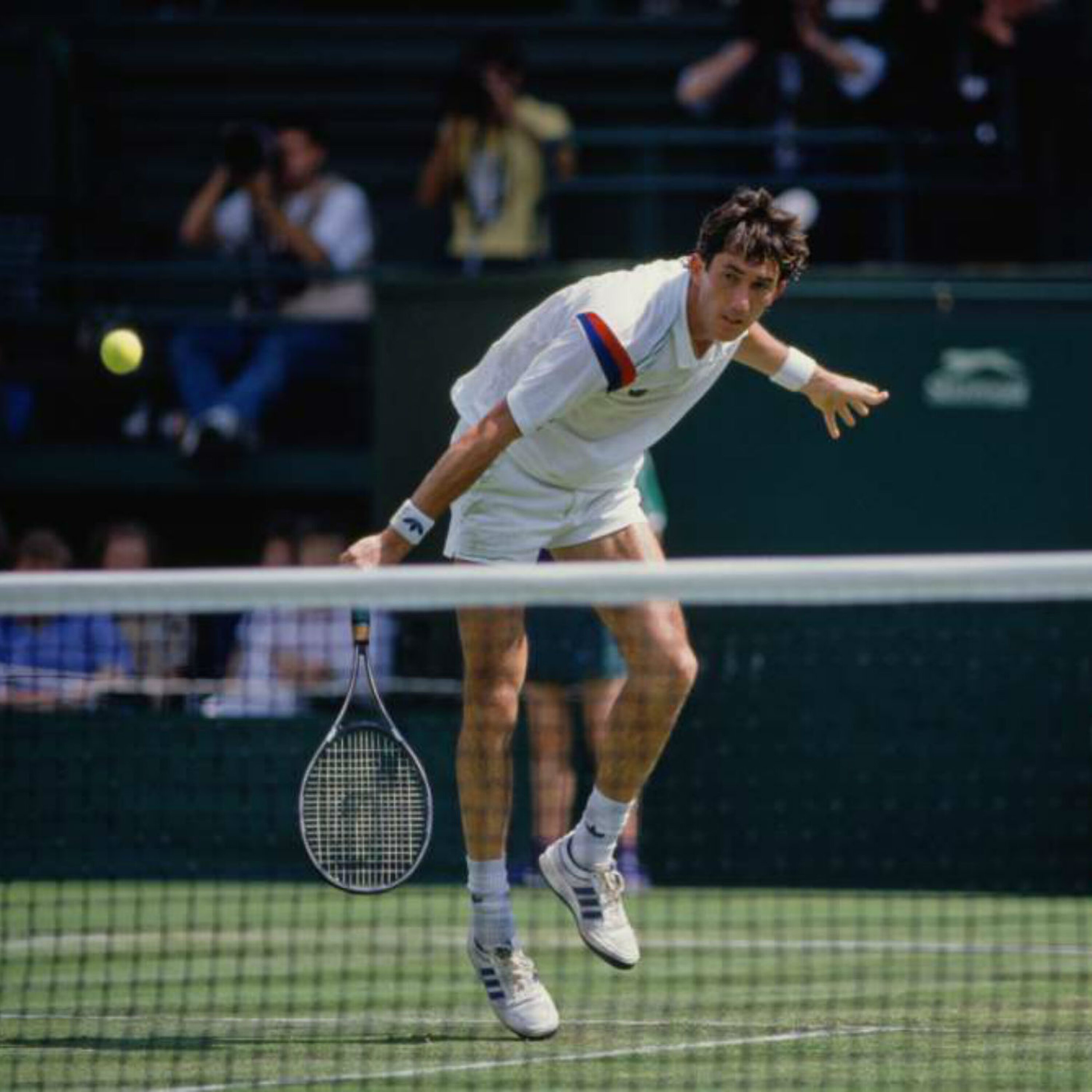
Darren Cahill
The Aussie analyst and celebrated coach of Lleyton Hewitt, Andre Agassi and current world No. 1 Simona Halep joins the podcast to talk about his playing career, coaching the greats (and almost greats), and his most embarrassing story after years on the tour.
Hosted on Acast. See acast.com/privacy for more information.
See omnystudio.com/listener for privacy information.
2018-10-22
56 min
Transcript
Available Results
Generated results are saved to the knowledge database for reuse and search.
No generated results are available for this episode yet.
Extract Knowledge
Pick what you want extracted first. Model, scope, and chapter options appear after a template is selected.
Generated results for public episodes are saved to the knowledge database so they can be reused and searched later.
Transcript
00:00:00
Speaker 1: Ray spent a little bit of time watching me and said, this kid has no chance.

00:00:15
Speaker 2: Oh my god, Caitlin, you're in Singapore.

00:00:17
Speaker 3: What's up?

00:00:18
Speaker 4: I am in Singapore.

00:00:19
Speaker 5: I am overlooking the beautiful harbor here with the six hundred thousand shipping and hauling and cargo boats. It's hot, humid, but thankfully we're playing the WTA Finals here in Singapore indoors.

00:00:31
Speaker 2: It is freezing cold in New York. Don't hurry back. Winter has come for us all.

00:00:35
Speaker 5: Oh no, so you're telling me I need to make sure I have my tan set before I come back.

00:00:39
Speaker 2: Yeah, you're going to need your tan to last all through the winter because it is for reason. Oh god, So I'm very jealous. You're in Singapore eating some noodles at Nate Markets and watching some great tennis. What's going on down there?

00:00:51
Speaker 4: Watching some great tennis.

00:00:52
Speaker 5: I'll tell you what, if you live in this area of the world, this is the best tournament to come and watch all year long, whether it be the WTA Finals the Atpins. You get to watch the best players in the world literally duking it out every single night. So last night we had a two straight set fixtories, which is not usual on the WTAF Finals, usually you have three sets, you know, battles, and believe me, I'm sure they're to come, There's no question about that. But Spitzelina was a bit of a surprise straight sets victory over Covidiva last night, and Kaya, as I call her, Carolina Pushchover, had a really great two set win over the defending champion. And Caroline wasn't the Achi last night, so I'm working with Carolina, as everybody knows.

00:01:39
Speaker 4: So it was a good night for Team Racket. Let's just put it that.

00:01:42
Speaker 2: Way, Team Racket. She was looking good in her Racket T shirt before. I'm pretty sure that I had something to do with her victory, and she won it on an ace. She's the East Queen after all, so it was really really fun to watch her get off to a good stirt there. Hopefully, you know, obviously she does really well this week.

00:01:58
Speaker 4: Yeah.

00:01:58
Speaker 5: That's the thing about the WTAF Finals is that you know, you could have a great first match and it's just like, oh, well, get over it, because now you've got to play another great player in a day. So you know, it's one of those tournaments that you kind of have a great high and then You've got to get quickly back down to earth and get back to work because there's no guarantees. You know, it depends on how people win. Is it straight sets, do they win all their matches? You know, everybody could win one match or two matches. I mean there's been people and Dominique said, Wellkovia won the tournament here.

00:02:27
Speaker 4: One year and only won one match in the round robin event.

00:02:30
Speaker 5: So you know, everybody knows very clearly that winning one match is no guarantee of a semi final birth, so we've got a lot of.

00:02:37
Speaker 3: Work to do.

00:02:38
Speaker 2: Well. One of the things that happened in addition to Kaya winning was you got to sit down with one of the most successful coaches in the world, your good friend Darren Cahill, who joins us for this week's episode.

00:02:49
Speaker 4: Tell me about that I did.

00:02:51
Speaker 5: Obviously, Darren was here with Simona Hallup, who unfortunately had to pull out of the tournament due to you know, this nagging back problem that she's sustained in China now, so you know, it's always a bummer to not have the world number one here, but Darren was here. They were here to get the you know, the trophy for what ANYU world number one. So the whole team was here ready to go to play, but they couldn't. So he was off back home to Australia last night. So I nabbed him yesterday before he could get on that plane. As we know, our Racket magazine podcast listeners have really requested Darren through the last few months and we got him, and we've got some classic stories from a classic Aussie and yeah, I laughed throughout it all.

00:03:31
Speaker 4: We were a little naughty with one another, so it's it's a lot of fun.

00:03:35
Speaker 2: Well, when I was editing it today, I had to start it a few times and remind it and play it from my wife Cleric because I was laughing out louder. She kept asking me what I was laughing at and there was copious moments, so it really did not disappoint. Obviously, the hilarious stories were highly but also what like amazingly interesting stuff he gets into from working with Andrea Ages see his own career. Obviously, you guys sharing a lot of history there with the Australian sports into too. It's really great. What a fantastic, thoughtful guy here is with a really awesome sounding waif.

00:04:05
Speaker 5: Yeah, Vicky's you know, she's the rock, right, She's the one that's got the sense of humor in the family clearly, as we'll hear from this podcast.

00:04:13
Speaker 4: But yeah, you know, it just it goes back and.

00:04:15
Speaker 5: Talks about the history of how he got into tennis, how he ended up in coaching, which was interesting in itself, you know, going from playing to a little transitional period of what he did after that, and then obviously into such a great coaching role.

00:04:30
Speaker 4: On top of the fact.

00:04:30
Speaker 5: That he's one of the best tennis analysts in the world, clearly working many hours with me at ESPN, and he's a great listen. He's my favorite commentator. So yeah, he's just a great guy around.

00:04:40
Speaker 2: Really, it's a great interview. And before I get to it, the one thing I wanted to give you an update on is I finished the Lena book that I stole from your apartment. My Life by Lina What a great book. It is so fun and she reads you a hilarious dedication to the front two Stebsy, I hope you enjoy reading my book, Lena, what a great book. I hope you're If you're there and you're gonna shore to grab her. I would love to have her on the show because I'm a hugely Naughan. More so, now that I've read her book, everyone should go and read it. It's really really thoughtful and interesting.

00:05:10
Speaker 5: Yeah, unfortunately I tried to grab her when I was in Wuhan, but you know, she's super busy with the tournament there, and then you know, unfortunately Kaya lost pretty early in the tournament, so we were out of there.

00:05:21
Speaker 4: But you know, I never inevitably I will.

00:05:24
Speaker 5: Try and grab her at some stage for our pod in the future because she is a great.

00:05:29
Speaker 2: Listen her and Jian Cheung aka Dennis all right with our fair ado listen up for a fantastic interview with Darren ky Hill coming up, ratt.

00:05:39
Speaker 6: Now, Well, here we are in Singapore. We're actually overlooking the Port of Singapore.

00:05:48
Speaker 5: It's beautiful and I'm joined by my very good friend, fellow IZZI. It seems to be a bit of a thing that I keep getting these Aussies on here, but I'm here with Darren ka Hill coach of course, Simona Hallet world number one again.

00:05:59
Speaker 6: This ye, my good friend, thanks for joining me. Killer my pleasure.

00:06:03
Speaker 3: I'm a little bit nervous. Oh God, pay you do make me nervous?

00:06:06
Speaker 4: You know.

00:06:07
Speaker 6: Yeah, Well let's not get into that reason, all right.

00:06:10
Speaker 5: First question I want to ask you is, and I guess a lot of people want to know this, including me, why the name Killer.

00:06:16
Speaker 1: I would love to be able to say that it's a really interesting story, but it's a bit of a boring story. Actually, there was a guy called Mark Beers. You're a little bit too young to remember Mark. He was from Victoria and I was a late developer, I reckon. I was the smallest kid in my class at year eleven sixteen going to Saint.

00:06:33
Speaker 3: Michael's in Adelaide.

00:06:35
Speaker 1: But I could play dissent tennis and Mark Bears was another tennis player from Victoria, and I walked in and he knew me. Our father's played football AFL football together, and actually Mark ended up playing for Collingwood, which my father coached him a few.

00:06:48
Speaker 3: Years later than that.

00:06:49
Speaker 1: But because I could play decent tennis and I was so small, he actually nicknam named me the Little Killer. So that's dark little Killer. And then about eighteen months later, I think I grew about a foot. I went from about five foot two to six fift two and little got dumped. I became killer, So it's a boring story.

00:07:07
Speaker 6: It become big killer. No, just kill the killer, the killer, the killer. That's classic.

00:07:12
Speaker 7: Actually, that brings me to the point of why tennis, because a lot of people, obviously in the tennis world, don't know that your father was a very very good AFL footy player stray and rules football for those of you around the world, of course, the strains and know what I'm talking about.

00:07:28
Speaker 6: But why tennis? Why not football?

00:07:30
Speaker 1: No, my father was a closet tennis player.

00:07:33
Speaker 3: He loved it.

00:07:33
Speaker 1: And the first thing he did when he made a bit of money was that he put a tennis court in the.

00:07:37
Speaker 3: Back of our house.

00:07:39
Speaker 1: And he was a lefties Sir Vollier, and he used to make me sit up and watch all the borg McEnroe finals at Wimbledon, and it was the only time I could stay up late was to watch those matches, and we got hooked on those amazing matches those guys played. And he tried to play like mce and roe and he take me out the back and beat me up. So we just ended up playing a lot of tennis. I played football as well until I was about sixteen decent, I'm not sure that I would have made it as a footballer because I'm pretty light framed. Not with your knees, no, and I would have got banged around quite a bit.

00:08:07
Speaker 3: But I loved football.

00:08:08
Speaker 1: I remember my childhood sitting in my room at night just tossing a football up and down and trying to hit the ceiling and taking Specky's over my brothers in the house and going playing what is that's a market over a pack of players, and then also getting the football and doing check sides, which is kicking the football sidewards and trying to get it through a door down my passageway of the house.

00:08:29
Speaker 3: So football was.

00:08:30
Speaker 1: What I did twenty three hours of the day in my house. But I played a little bit of tennis as well, and it just worked out that I was a bit better at tennis than I was at football at about sixteen or seventeen, And as you know, at sixteen or seventeen, you have to make a decision.

00:08:43
Speaker 3: So I chose tennis.

00:08:45
Speaker 5: So okay, so you choose tennis. What was the next like sort of you know grade for you with tennis? I mean, how did you know that you were an exceptional tennis player?

00:08:58
Speaker 1: You know, I caught a break. Remember Bob Carmichael, I did. Yeah, Nails passed away a number of years ago, but Nails was an avid AFL.

00:09:07
Speaker 3: Follower as well.

00:09:08
Speaker 1: He loved the Melbourne Football Club and he knew of my father, so he paid a little more attention to me than he probably should have because of who I was.

00:09:17
Speaker 3: And he was one of.

00:09:18
Speaker 1: The coaches at the Australian Institute of Sports and Ray Ruffles was the head coach. And what they had to do is they picked the ten best seventeen eighteen year old males and also female players and we'd all go to Canberra and live there and train there for a year.

00:09:33
Speaker 3: I was now any of the best hand.

00:09:35
Speaker 1: And Bob saw a little bit in me, which was I guess work ethic desperation. I was hungry to be out there on the practice court all the time, and he sort of kept an eyeing me as a young player, and so he pitched for me to be included in that ten players. And Ray spent a bit of time, and Ray notes he will tell this story. Ray spent a little bit of time watching me and said, this kid has no chance.

00:10:00
Speaker 3: He's not coming.

00:10:01
Speaker 1: His kid has no chance and Bob pleaded with him to allow me to come in to the institute. I got the tenth spot and that was my big break from there. I would never have been a tennis player if it wasn't for that.

00:10:12
Speaker 6: Oh god, I did.

00:10:13
Speaker 3: Not know that story.

00:10:14
Speaker 6: It's so great. It's funny.

00:10:16
Speaker 5: How you know we're here sitting in Singapore, the two of us, and you know we're now coaching on the WTA two and we're also working for ESPN, and we both went to the Australian Institute Sport and Ray ended up being one of my coaches.

00:10:28
Speaker 6: So it just kind of full circle moment.

00:10:30
Speaker 5: Isn't really how small the world is and how lucky small breaks like that, particularly that I need them.

00:10:37
Speaker 6: I never heard that story.

00:10:38
Speaker 1: Yeah, you need those breaks, you need somebody to believe in you, and Bob Nails was my person that sort of stood over me, and as it turned out, Bob became my coach for my entire career. I never had any other coach that Bob Carmarchael and most of my coaching philosophies come from what he taught me.

00:10:55
Speaker 6: Nails for those of us in Australian tennis.

00:10:57
Speaker 3: Two reasons.

00:10:59
Speaker 1: Two reasons one, he was a carpenter and secondly he was tough as nails.

00:11:03
Speaker 5: Yeah, yeah, good memories because he was, as we say in Australia, a great bloke. So all right, so you you work your ass off at the Australian institutes for it, I know, four hours a day on court, two hours a day in the gym.

00:11:17
Speaker 6: At least you're going to school. You're trying to manage all that chasing girls. Well, yeah, I wasn't chasing girls at that point.

00:11:24
Speaker 5: It come up everybody knows anybody's listening to my podcast and knows anything about me or Google.

00:11:32
Speaker 6: It's not But anyway, we won't get into that.

00:11:35
Speaker 3: A bit of a thing for me that one stage.

00:11:36
Speaker 5: Well I think you and I missed each other at the instance year.

00:11:40
Speaker 3: Yeah we did.

00:11:40
Speaker 6: Yeah, that's probably a good thing, would have turned me earlier.

00:11:46
Speaker 5: So all right, So you go out into the big world of professional dennis, very different back then, not as much money obviously you really have to as an Aussie.

00:11:54
Speaker 6: How many months on the year of the year were on the road?

00:11:58
Speaker 3: Yeah, My first trip Overseas were with Barry.

00:12:00
Speaker 1: Phillips more in fact, and I went over there with a group of players and My father was fortunate that he was doing pretty well, so he financed me away for my first trip. I played three satellites back then, and back in those days, a satellite consisted of five tournaments, whereas now it's five individual weeks for futures events. This was one tournament cut into five weeks, so I was away sixteen weeks, four months on the road. The very last tournament, I came through pre qualities and in the Austrian satellite pre qualities qualities and got into the main draw and earned my first at pit point and with that you're get a ranking of about eight hundred back in those days, and that was it. So I got the ranking point, I got a ranking that allowed me to get into some qualifying matches back in Australia, and then you're on the road NonStop, and basically you stay away for as long as your finances allowed, and as soon as you run out of money, you get on a plane and come home. So it's a little bit different now, but it also gave you some toughness as well, and you couldn't take the easy way out if you were having a bit of a struggle and you're having a couple of bad weeks. You had to put your head down and just work harder because the option of jumping on a plane and coming home was not there.

00:13:06
Speaker 6: Especially going back to Australia.

00:13:07
Speaker 5: Yeah, bloody expensive and long, long hours, you know, two days to recover basically every time you went home.

00:13:13
Speaker 6: So do you remember the most memorable.

00:13:15
Speaker 5: Match for you, like in your career where you were like, I've not I've made it because it's so wanky.

00:13:21
Speaker 6: But like where you go, I think I'm a good player. I think I deserve to be out here.

00:13:26
Speaker 3: Yeah.

00:13:26
Speaker 1: No, I always had doubts self, doubts about myself as a player. Even if I had a good win, I felt like I got it given to me.

00:13:36
Speaker 3: You know.

00:13:36
Speaker 1: I never could sit back and be that satisfied with a win because I never felt like I really belonged with the top players in the world. I was kind of the type of player that I could give them a tough battle if they had a bit of an off day, but if they were on, they would normally thump me. So over the course of my career, I got a few good wins over some of the top names, but normally I needed a little bit of help. So I was a tier of two down from.

00:14:00
Speaker 3: That particular level.

00:14:01
Speaker 1: But the first real breakthrough for me was coming through the qualities of the French Open. I never lost three qualities in a row and nine matches in a row at qualifying Paris. Those courts baked. They were super quick too, and they were bouncy. So my little crappy kickserve pack cash one said I had the best worst serve in the world because it was this crappy kickserve that sort of moved around in the air and bounced up and no one can.

00:14:24
Speaker 3: Actually hit it.

00:14:25
Speaker 1: So on those fast courts, I was pretty hard to beat. And even Paris when the sun is shining, they actually play really quick they do. So I had some decent results in Paris and came through qualities and I played Mark Dixon, who was ranked fifty in the world, another American out on court three, you know, caught three very well and we play thirteen eleven in the final fifth set and I won, And that was pure joy for me to get through that match and win my first match in the Grand Slam. And that also gave me belief that I could play five sets, I could play in different surfaces, and that I could play against somebody ranked so high back then, because I think I was about four hundred in the world at that stage, So that gave me belief and I think that was a big kickstart turned my career.

00:15:08
Speaker 5: And then you know what was the reasoning of the retiring And how difficult is that because I think every player really struggles with when to stop.

00:15:18
Speaker 3: Thirteen knee surgeries was mine.

00:15:21
Speaker 1: So I had bad knees from about eighteen years of age because of the little killer story I told you about. I grew so much in the space of eighteen months that I had these little golf balls coming out of the bottom of my knees, and once they went away, my tracking of my kneecaps was going outward. So I ended up using all the anticular cottage inside my kneecap and basically it was bone on bone by the time I was about twenty three years of age. So I retired or forced out of the game when I was twenty five, so pretty young.

00:15:49
Speaker 6: So okay, so what was next?

00:15:53
Speaker 1: Working in a bar back in Adelaide, I invested in a bar called Aces Bar and Bistro. Come. Yeah, we had a nightclub called the Planet.

00:16:01
Speaker 3: Do you ever come to Adelaide and go to the planet.

00:16:03
Speaker 1: Yeah, I had a peak piece of that.

00:16:07
Speaker 6: I probably helped Players Bar.

00:16:08
Speaker 1: We had Players Bar also, which was another nightclub with a couple of other people, Tim Mayer, the cricketer, Chris McDermott the footballer, and Greg Griffin, a lawyer back in Madelaide. So the four of us put together a few little investments. So I was walking working behind the bar, pouring beers. To be honest, I'm very good at pouring beers. I'm very good at giving away free beer, especially to everybody I know.

00:16:29
Speaker 6: Especially if you're topping it off a little bit.

00:16:31
Speaker 5: And well, so you go into owning a bar, work behind the bar, and then how the hell did.

00:16:37
Speaker 6: You get into coaching?

00:16:38
Speaker 3: Then?

00:16:38
Speaker 1: Yeah, I had this little phone call one day from lady Charyl and Hewitt who called me up and said, hey, listen, I've got a son that we reckon plays pretty well.

00:16:48
Speaker 3: He's twelve years of age.

00:16:50
Speaker 1: Is there any chance you could hit with him? And I'd hit with quite a few of the Adelaide kids and been out to a couple of squad trainings and try to help as much as I can. And I was okay, my knees were not good enough to play professionally, but certainly you could think I could play.

00:17:03
Speaker 3: I was fine.

00:17:05
Speaker 1: So I got a knock on the door. I said, absolutely, bring him over. I got a knock on the door. Sherdon was there. This kid has his hat backwards. He has the Nike clothes on, just like Agacy, pretty much what you look like, right exactly. He's got the racket bag with about eight rackets in the back.

00:17:21
Speaker 3: He looks at me and goes hello.

00:17:23
Speaker 1: I said, good a, Layton, how's it going.

00:17:25
Speaker 3: I'm Darren.

00:17:26
Speaker 1: Nice to me. Yep, I know who you are. And I said, you want to get some tennis balls? He said, yep, let's go. This is twelve years of age. We go out to the back. We play three sets. I reckon and I reckon. I thump him pretty easily, love and one in the first couple of sets, but by the third set get a little bit tired. He's getting fired up. He doesn't want to stop. He's given me the fist pumps, the come ons.

00:17:49
Speaker 3: At twelve years of age.

00:17:50
Speaker 1: I'm looking around in my now wife Victoria, going is this kid serious? And by the end of it, he nearly ran me off. My feet, and this is at twelve years of age, were playing pretty good tennis. So I came in after that practice session. We played for a couple of hours and Victoria said to me, what do you think, because she had seen me hit with a bunch of other kids as well. I mean, oh my god, this kid is special. Wow, this kid has got something I haven't seen before. He was also getting coached by Peter Smith, another coach in South Australia, who'd done an amazing job with his technique, but he didn't really know how to play great at technique, didn't know where to put the ball and how to utilize his game. So that sort of became my role, was to teach the kid how to play. I didn't worry so much about his technique. It was just where to put the ball from the point, what positions in the court, and how to stay alive.

00:18:37
Speaker 3: And he did it great. He was like a sponge.

00:18:40
Speaker 6: So you just stayed with him governmently after that.

00:18:43
Speaker 1: Yeah, so we were together every time we was back in Adelaide. He would come over as much as possible. We worked together for about four or five years. He did a big breakthrough at the South Australian Open, won that tournament as a sixteen year old. He actually went away for the first year on tour a little bit with Bob Carmichael in fact, but a couple of other coaches. Yeah, now, a couple of other coaches. I think his dad was traveling with him quite a bit. Didn't work out great, and so when he was about eighteen, just outside the top hundred, they called me up that asked me to go on the road.

00:19:12
Speaker 3: Before that, but they said, listen, can you take it he's.

00:19:14
Speaker 6: Still behind the bar at this point.

00:19:16
Speaker 3: Yeah, I would have been. Yeah, I would have.

00:19:17
Speaker 1: Been doing a little bit of bar work, running around with this, that and the other. I was, yeah, for sure, still based in South Australia, doing a little bit of commentary work as well. And then they asked me to go full time with him and take him on the road, and we did.

00:19:32
Speaker 3: We went to Wa played the Challenger over there.

00:19:34
Speaker 1: He broke through, won that tournament, the Challenger, and then he went from one hundred to twenty two in the first year. The second year he went to six, and the third year on the road he went to one.

00:19:46
Speaker 6: Wow.

00:19:46
Speaker 1: That's a great story as a great player.

00:19:49
Speaker 5: Talk about yeah, but you know it's it also is it really important I think for people to understand that you might have a great talent and they have to be obviously have the desire and all of that, but it is important to have white people around you for sure, particularly because you know it's a lot. It's a lot for young kids. So that's a great story of Australians helping one another as well. You know, so you go from coaching Layton and then you stop working with Layton, how did you The next coaching for you was Andre Jesus.

00:20:19
Speaker 4: It's not bad.

00:20:20
Speaker 6: How did that come about? I have a good story about that, actually, right, that's why we're here.

00:20:24
Speaker 3: Yeah.

00:20:24
Speaker 1: Two thousand and two and I'm at the Aussie Open And because I didn't know what I was doing, I was working for Channel seven. You do a little bit of work for Channel seven. I have done. And I had an agent come up to me, Amit Neil come up to me. He works with marat Safin and says, I have a player I want you to work with. I'm talking him. He doesn't have a coach. I'm talking him into appointing you as the coach. Can you come and have breakfast with me. I went and had breakfast with him. He went through the whole Marat story. And Marat's a little bit complicated as well. He'd already won the US Open, great.

00:20:57
Speaker 3: Player, six foot five.

00:20:58
Speaker 1: I come back from that met and I'm married now. My wife's there, Victoria, and we have a little baby as well. About Benjamin, who's at that stage, about nine months old.

00:21:08
Speaker 6: He's taller than you.

00:21:08
Speaker 1: Yeah, taller than I am. And she goes, where have you been? And I said, I've actually been in the meeting of a possible coaching job. And she goes, who is it and I said, it's Marat Safin. She's, oh my god, that's unbelievable.

00:21:24
Speaker 6: You've got to take that job.

00:21:25
Speaker 1: Oh my god. That guy is so hot. Oh he's so hot.

00:21:29
Speaker 3: You know.

00:21:30
Speaker 1: Me and the girls, we've actually got tickets. We've been watching all of these matches here. I said, what, Oh yeah, yeah, well where'd you get the tickets from?

00:21:35
Speaker 3: No?

00:21:35
Speaker 1: No, We've go out and buy his tickets and there's like six of us and we go to all of his matches. That guy is smoking hot. He's the big sexy you Russian. You gotta take that Job's concerned?

00:21:46
Speaker 6: How good looking other people you're gonna work with.

00:21:48
Speaker 1: I'm gonna give you some advice here. Don't worry about the money. This would be really good for you moving forward. You need to take this job. So what are they off for you? Don't worry, Let's take that job. And I'm looking at her, going you.

00:21:59
Speaker 3: Serious, and she would dead serious. So he goes on and does that tournament.

00:22:03
Speaker 1: He gets to the final and he loses to Thomas Johansen in the final. Every day she's coming up to me and she's saying, how's it going, Yeah, how's it going?

00:22:09
Speaker 3: Everything going? What can I do?

00:22:11
Speaker 6: Can I do anything?

00:22:11
Speaker 1: She's super nice to me the whole tournament, and I'm thinking to myself, this is gonna be interesting. And we get to the final. I'm not at the final and I'm sitting down watching it on TV. And can you remember that tournament? Okay, So he's in the final and he doesn't have a coach, he doesn't.

00:22:27
Speaker 3: Have an entourage.

00:22:27
Speaker 1: He has three girls in the in the playerbox sitting there. And these three girls, I promise you, they look like working girls. Not questionable. They look like working girls. They've got things hanging out of places they should not be hanging out of places. And I'm sitting there and Victoria's smirking at the television every time they flash onto these girls, which is pretty much after every point. And I look at her and I say, baby, you really want.

00:22:52
Speaker 3: To be part of that. Look a look at those three girls. They look like three working deals.

00:22:55
Speaker 6: You really want me around those three girls?

00:22:57
Speaker 3: Well, there you go. You really want that to happen?

00:23:00
Speaker 1: She goes, baby, you call me number four.

00:23:03
Speaker 6: That was exactly what she said.

00:23:07
Speaker 1: Yeah, And I'm looking I'm laughing now, and now I'm kind of thinking I got to take the job anyway, right, just to see where all this goes, right, because us Aussie's are a little bit sick anyway. So all right, So about four or five days later, I get a call and Victoria picks up the phone in my house and tell me it's not morat No, it's Andre. Andre calls up and she goes, hello, Victoria speaking, and you know, hey, it's Andrea here. And we know Andrea a little bit, not a lot. And he just had a kid, Jayden Agacy, about three months old, and actually about six months before that, I gave him a book called The Contented Little Baby Book, which is basically a bible for people that travel and try to get the kids on the schedule. So I thought he was calling me about the book.

00:23:49
Speaker 2: Yeah.

00:23:50
Speaker 1: Yeah, So I get on the phone and Victoria hands it to me, and as she's handing it to me, she's giving me the waving finger. Basically, we're not doing this. So I take the phone call and Andre goes, Hey.

00:24:03
Speaker 3: How's it going? And I said, hey, how's that book? And he goes, what book?

00:24:06
Speaker 1: And I said, the book I gave you at the Sydney Tournament six months Oh no, I left that in Sydney.

00:24:11
Speaker 3: Now I'm not calling about the book.

00:24:13
Speaker 1: I'm calling you to see whether or not you'd like to coach me because Brad and I have had a Brad Gilbert and I have had a great eight years together, but it's time for a change for both of us, and so I would love for you to think about coming over and coaching. So we have a five minute conversation. I hang up the phone. I'm tell him my problem that I've got that I've not agreed to, but a long way down.

00:24:31
Speaker 3: The path with Marat.

00:24:33
Speaker 1: I hang up the phone and Victoria goes, this ain' gonna happen, Killer, We are not doing this. We have a twenty two year old six foot five, hot, sexy Russian, the Marat Safn, and we have how old Andre, like, like forty eight, forty nine years old. He's bored, he walks like a duck. We're not taking that. We're going for the Russian guy. And I'm laughing and too, I swear. Two minutes later, the phone rings again and it's Andre again, and he goes, hey, so I'll be I'm thinking what you've been talking about with Morat.

00:25:02
Speaker 3: You can't take that job. That guy is a runaway train.

00:25:06
Speaker 1: He's a loose cannon, and you don't want your wife around that guy.

00:25:11
Speaker 6: He said this, and I started laughing.

00:25:13
Speaker 1: So so I'm not hanging up the phone until you give me the yes that you're going to take this job.

00:25:17
Speaker 3: I said, all right, I take the job, and I hung up the phone.

00:25:19
Speaker 1: So that's how I got the job with Agacy with him for the next five years. I could go on and on about the story, but they cut the long story short. We get across to San Francisco. The whole time my wife is going Killer, this is a miss. What are you going to be out of teaching. This guy is already a legend. You know, this could be in Russia right now. Going to San Francisco.

00:25:39
Speaker 3: We walk into Andrea's house. She's nervous. I'm nervous.

00:25:42
Speaker 1: It's twenty nine Grand Slam trophies sitting in this house, twenty two from Steph and seven from Andre. Walk in the house. Steph's as nice as you can be. Andrea's as nice as you can be. He picks us up from the airport. She's a bit nervous. We walk into the house. They take us to where we're actually staying and sleeping. We got this massive, big room. It's a place in Tiberon. I think it's worth about twenty two to twenty three million dollars. One view over the Golden gate Bridge, one view over the Bay Bridge, looking over the water. Victoria looks around to him and she goes, all right, killer, good call, don't fuck this up her words exactly, and I would just that made me more nervous now because now I had to make sure it worked.

00:26:25
Speaker 3: Yeah, exactly. So that's the story of how I got the job with Agassi.

00:26:30
Speaker 5: How great was that five years because you know you had that It was very different with Layton because you're sort of, you know, molding a young man, and then you go to someone like Andre, who, as Vic says, is a legend and who I know quite well as well, was quite opinionated and how he sees things and how he views things, but he's also very malleable in listening to your point of view. How life changing was that experience with him because he's quite a philosopher.

00:26:58
Speaker 3: Oh yeah, he's deep. Yeah.

00:27:00
Speaker 1: I think the reason why it worked quite well was because Australians in general are quite black and white and we can simplify really quickly. Andrea is incredibly bright and very deep, and he can make the easy really difficult. Sometimes you can give him a complex problem and he'll break it down and you'll go, oh god, I didn't even think of that. But sometimes if things are a bit simple for him, he can make it much more difficult than it needs to be. So I think his personality in my personality seemed to jell quite well with that. I could simplify a little bit what he was trying to accomplish and work on the tennis court, break down opponents, strengths and weaknesses, work out through his eyes. What would be more valuable for him to do more often. And also we talk quite a bit about coaching, is that you don't always have to bring a game. The most important thing in tennis is to find a way to win, especially when you're not playing well, and Andre didn't like that. He quite often would let matches go if he wasn't playing close to his best because he got so upset with himself. And it's so important that you don't get to number one in the world and you don't win majors unless you just survive and then you continue to work on your game throughout the course of the tournament. You don't always have to be playing your best tenners. So some of his best wins in those last couple of years, when he'd walk off the court, he'd hit six winners and six unforced errors, walk off the court and think, I don't think I play that well today, and you beat Richard gas Gay two and two. That was some of his best wins because it was finding a way to win that he wasn't used to.

00:28:21
Speaker 5: How hard was it to see him at the end struggle physically, Yeah, that was a tough.

00:28:27
Speaker 6: Finish and just quickly knowing how much he loved.

00:28:31
Speaker 1: Yeah, yeah, which goes against his book a little bit right, it does well.

00:28:35
Speaker 5: I think loving the the competitive sort of part of the game was what drew him in the end to loving the sport was that he actually, really he loved it.

00:28:45
Speaker 6: You know.

00:28:46
Speaker 1: We found a reason to play as well, and that was through education and providing education for the underprivileged back in Vegas, building the school, and that gave him a real impetus to get out there and make it happen, not so much for himself, but a real reason to to keep winning and keep playing. The last twelve months were difficult, but not as difficult as what people think, because firstly, he was a pleasure to be around. Also for me, we had very honest conversations throughout the course of that period about continuing to try. Remember in two thousand he finished in two thousand and six. In two thousand and five, he had one of his best years and he made it through to the US Open final at thirty five years of age, winning lost to Roger.

00:29:27
Speaker 3: He had a settle. I remember this like it was yesterday.

00:29:30
Speaker 1: Settle really windy day four to two and the third set thirty Love on Serve with the breeze and we were thinking, oh, and Roger didn't like playing him back in those days, so there was a good chance he was going to win that match. Roger hit a little lucky return at thirty love that leanard on the line, played a good point, thirty all. Andre got a little bit tight thirty forty. Roger breaks bang. The match just changed on a dime. But before that match he won three matches the I think it was fourth round, quarters and semis, all in five sets to get through to the final at thirty five years of age, which is one of the most amazing things I've ever seen.

00:30:05
Speaker 6: What was the thing that.

00:30:07
Speaker 5: If you had to sum him up in one word, maybe two, because you know your verbos's.

00:30:13
Speaker 6: Me, what would it be.

00:30:15
Speaker 3: He loved watching opponents suffer.

00:30:18
Speaker 1: It's a little bit like Rafa, but Rafa does it differently because he's so athletic on the court. Andre would plum himself on the baseline and take time away from players and they would feel like they played three sets against Andre when they've only played one set because you just couldn't breathe when he was playing. I played him, I was on the back end of a two and two beating when I thought I was playing.

00:30:40
Speaker 3: Really well, and you can't breathe because there's nowhere to go.

00:30:43
Speaker 1: You can't serve Vollie, you can't stay back, you can't bring him in because he's hitting the ball too hard.

00:30:49
Speaker 3: He just runs you from side to side.

00:30:51
Speaker 1: He got enjoyment out of watching players suffer and he would actually, believe it or not, could thump someone easily if he wanted to, but he would extend matches just to make the opponent suffer a little bit more to send them a message. Next time you're playing, it's going to be worse.

00:31:06
Speaker 6: It's going to be worse.

00:31:07
Speaker 5: Yeah, that's so fun. Okay, So that brings me to UK. So the Andre coaching situation finishes, you take up a bit of a consulting role, I believe at Adadas at that period of time.

00:31:24
Speaker 6: So is that how the connection came with Simona? And what's the difference? What was your thought process.

00:31:30
Speaker 5: In going into the female coaching because it's I would consider very different.

00:31:35
Speaker 3: Why you answer that question why is it different?

00:31:37
Speaker 5: Well, because I would say that, well, I guess in some respects being with Andrea being so philosophical and sort of thinking and being a little bit more tough on himself. It was probably not a bad transition to go to working with females who I feel think a lot too almost too much about why they're not winning or what's the outcome, and they worry too much about the outcome. Guys are a little bit less about are coming more about just you know, point by point, and that I get so worried about the emotional side of it, whereas Andre probably did.

00:32:07
Speaker 6: So probably wasn't that big of a transition for me.

00:32:09
Speaker 3: No, it wasn't.

00:32:11
Speaker 4: You explained it.

00:32:12
Speaker 1: No, you're right, But I think the mental game is a little bit different. The tennis itself is not that different at all. It's the same line. It's the same problems, the same trying to find ways to finish points. You know, it's the same principles as the men's game compared to the women's game. But the mental game is a little bit different, I think simply because male player with a big serve gets up a set and a break, you can coast to the finish line.

00:32:34
Speaker 3: You have a strength that you can win three points.

00:32:36
Speaker 1: You can relax a little bit and you can find your way to the finish line fairly comfortably. Not all the time, but fairly comfortably. The women can't unless you're Serena because you don't have a big weapon that can get you there. So you have to continue to execute the game plan, stay on course, deal with the nerves, have the ability to continue to be brave. You know, there's a lot of variables.

00:32:55
Speaker 5: That emotionally taxing, exactly constantly having to check check alright, check your heart, you know, not get too far ahead, not get too far behind. And so that's I don't think people are like staying in the now literally.

00:33:08
Speaker 1: So difficult, and you can you can disappear from the now with the men as well. You know, when Federi gets up a set in the Break the Return games, he can disappear. He can be relaxed and give it away and then he just switches it on for the erotic I can go through all the men basically it's the same principle. So they can cut themselves away from the mental breaks. The women cannot. So a lot of the women get a hard time for being perceived to be mentally weak. It's just not the case. And there are so many more variables that come into play. I had a little bit of a trial run because without it out, So I got to work with a bunch of the female players on a consulting role and some of them actually more full time the year that I was with Simona. For the last nine months, I was helping Simona and Angie Kerber were my two players a little more with Simona because of the fact that Angie was working with Torben, so I was consulting to the team and Simona didn't really have a coach, so I was assuming that full time coaching role. We got to the US Open outed as discontinued the job, and then we got to the US Open and Simona sat me down and asked me whether or not I would.

00:34:07
Speaker 3: Like to consider working with her full time the next year.

00:34:10
Speaker 5: And you had to juggle then, because you know, cut to a little bit, you're ESPN rong because you're now working full time for.

00:34:17
Speaker 6: ESPN at the Grand slams et cetera in.

00:34:19
Speaker 5: Different weeks on the road, and you had to juggle that as well with her, and how was she with that?

00:34:24
Speaker 6: And you still are with ESPN as am I.

00:34:27
Speaker 5: It's not easy because you know, you don't want to be seen as favoring one player, but obviously it's you know, everybody know as you're coaching somebody, so obviously you're going to favor them, but you also want to be respected in the fact that you actually love the competition of everybody.

00:34:41
Speaker 6: You don't want to see anyone do poorly.

00:34:43
Speaker 3: Correct.

00:34:44
Speaker 6: But it was a tough juggle for you.

00:34:46
Speaker 3: Yeah, it was.

00:34:48
Speaker 1: I think more so for Simona at for I'm not the perfect coach for her because the biggest tournaments in the world are the Grand Slams, and so you want somebody ideally to be there fully invested in twenty four to seven for that player, and with my role with ESPN, you're not during the Grand Slams. Even though I think sometimes coaches can smother the players and a little bit of a break, it's not a bad thing as well.

00:35:12
Speaker 3: It's not perfect.

00:35:13
Speaker 1: So I was up the front and on us, and she knew exactly what my role was at ESPN, and so it was her decision. I said, this is my role. I'm not perfect. I would love to do it if you want me to do it, but it comes with a few handbrakes.

00:35:27
Speaker 3: Yeah, exactly. So this is completely up to you.

00:35:30
Speaker 1: If you don't want me to do this, we can work together to help you get the right person. And she said, no, absolutely not, I'm fine with it. And she wasn't a youngster. She was twenty seven now, so maybe twenty four, and she was already a great player.

00:35:42
Speaker 3: So she knew the deal.

00:35:43
Speaker 1: And she has a really good team around her anyway, Taos Sissel has been a strength and conditioning trainer for the last ten years and he's been the rock and the young son hero behind her. So it was her decision and it's always been her decision, and she could have gotten rid of me at any time. So she asked me, what'd you do with Andre? How'd you get that deal done? And I said, actually, we went to a we did a six week trial and then we went and bought some takeaway for our wives. And on the way down there, he said, all right, this is how much I would like to pay you. I'd like you to be my full time coach. And I said okay, and he goes, do you need a contract? I said, not if you do, and he goes, all right, we.

00:36:19
Speaker 3: Shake on it.

00:36:19
Speaker 1: We shook hands and that was it. So I told Simona the story and she said, I want the same deal. I said, all right, how much you're going to pay me.

00:36:28
Speaker 3: Exactly.

00:36:29
Speaker 1: So it took about thirty seconds we shook hands and we haven't spoken about it since.

00:36:33
Speaker 3: That's it, Yeah, three years ago.

00:36:35
Speaker 5: So look, everybody knows you had that period of time where you had a break, right because you know Simona right, I mean, she's Romanian and they're fiery and they're fun to watch, but they're difficult to work with sometimes because they get so pissed off at themselves.

00:36:50
Speaker 6: You have that break and you come back to working with her.

00:36:52
Speaker 5: What was the difference, the biggest difference from that period of time, because it was it was an.

00:36:59
Speaker 1: Important one for it was after Miami playing Poccenski, and it wasn't just from that match, and there are a bunch of matches that were slipping away from her. And we were speaking through the mental game quite a lot, and what's expected of her and what she needs to do to improve that side of a tennis to get to the top, to win majors, because you can't have mental lapses and expect everything to go right throughout the course of a Grand Slam or the course of a year, because it just won't. There are so many things you can't control. You have to control what you can control. That's the most, the most important thing in tennis. So she'd lost a bunch of matches where it was slipping away from her in the same way. And I was trying and trying to get through her, and the worst she was, the words weren't getting through. So as a coach, you have to be prepared to try something different, walk away a little bit of a shock tactic.

00:37:52
Speaker 3: It had to be up to her.

00:37:53
Speaker 1: She had to buy into it, She had to accept that she had to get better. There were certain things that would put in place that she wasn't following through with. So either she did that with me or she found somebody else to do that with. And so we took a bit of a break for about four weeks. She went away and thought about things, tried to improve on what she was doing on the court. Would call me up after a match to see if I was watching, to see if she was better.

00:38:16
Speaker 3: She certainly was.

00:38:17
Speaker 1: And then just before Madrid started, she asked me if i'd come back, and I said, seen enough to believe that you're not perfect, but you're buying into it and you're trying, and that's good enough for me.

00:38:28
Speaker 3: So away we go.

00:38:28
Speaker 5: What did she learn from the loss in Paris when she was up a set in three.

00:38:34
Speaker 1: Yeah, that's two break sorry, three love, three break points for four love. I'm not sure you can really learn anything from that apart from.

00:38:45
Speaker 5: Really yeah, because it was such a remember specifically one game, the three love game, when she threw a racket. Yeah, and I remember thinking to myself watching that.

00:38:54
Speaker 6: I was watching it at home.

00:38:55
Speaker 3: The crewer went against her, and I.

00:38:57
Speaker 6: Wasn't even that. I just my first initial thought when she threw a racket was, what the f are you doing?

00:39:03
Speaker 5: You've just given her one slight crack of the window to actually believe there's a chance chance that she could win that match.

00:39:11
Speaker 6: That was if there was one moment.

00:39:14
Speaker 5: I mean, we all have moments in our careers where we could look back and mean, mine wasn't the enormity of that. But I actually had the biggest moment of my career where I learned my biggest lesson on that same court where I got so angry that I missed a really easy overhead and I literally was trying to tube my opponent in the semi finals of the French Open doubles and I lost the point I was on set point and we lost the set and we're up a break and we ended up losing the match.

00:39:36
Speaker 6: And I remember thinking to myself, I can never.

00:39:38
Speaker 5: Get to the point of being that angry, that all I want to do is actually to make a point.

00:39:42
Speaker 6: Rather than win the point. And it's well said.

00:39:45
Speaker 5: And then I literally we won Wimbledon three weeks later, and it taught me the biggest lesson and it was the hardest thing because I never won the French Open. There was the Undergrandslowe never won, So that moment for me was massively pivotal in that match.

00:40:00
Speaker 3: About that, that was a moment we spoke about. There are other little ones as well.

00:40:04
Speaker 1: We did speak about that one because the crowd actually turned against her before that because she's up a set and a break and in the crowd very smart tennis crowd is the French Open crowd, and so they basically thought, what you thought? Why would you do that? And I think it was fifteen or so it was for yeah, thirty fifteen, But then she won the next point, she won the next point for break point, and had two more after that. She was devastated after that match, and that loss stayed with her for a long time. She had a couple of chances for number one after that loss. She lost a concer in the quarters of Wimbledon. She lost Themregarutha. Also in the final of Cincinnati got thumped by Gabina. That match was for number one also, not just the Grand Slam title, but that match stayed with her for a long long time now. I don't think until she played Beijing, where she made it through to the final finally became number one, was she able to push that match away from her a little bit. And that was important for her to have that win. That win over Sharapova in Beijing early after losing to her at the US Open in the first round, great match, but again just played waiting for her opponent to lose instead of taking it to her opponent.

00:41:07
Speaker 3: That one taught her a lot of lessons.

00:41:09
Speaker 1: I think more than anything that lost she took against sherp over at the US Open last year taught her more about a game than any loss she's had. Why Because she played well and she lost, and normally when she plays well, she wins, And so she was asking herself a bunch of questions, why did I lose this match. Where do I need to improve because this I don't even understand?

00:41:30
Speaker 6: And where was it?

00:41:31
Speaker 3: First round of the franchise, first round?

00:41:33
Speaker 6: No, what was it that she needed to work on?

00:41:35
Speaker 1: Felt Yeah, her court positioning, her ability to step up when her opponent hits a short ball and take a little more risk. Her serving patterns worked way too predictable. There was about six or seven things that we sat down after that particular match that she wasn't She knew we'd spoken about them, but she wasn't buying into And straight after that loss, she didn't have a break. She went back to bookrest, she started training on the very things that we were working on, and then lo and behold, she hasn't believable week in Beijing.

00:42:01
Speaker 6: Yeah, that's so cool. I think that's what people don't realize as their players.

00:42:04
Speaker 5: To really get better and to really get to that next level, everybody has to reassess, right, And that was a great reassess moment. It's interesting how you can lose and how it can be the biggest difference in winning future matches. Okay, so we cut to the Aussie Open. You know, some of the most phenomenal matches that I've ever witnessed at the Austrain Open.

00:42:22
Speaker 6: And I don't know what it is about Simona, but my god.

00:42:26
Speaker 5: I can please put my hand up to commentate any matches it is Simona's because they're so fun to watch.

00:42:31
Speaker 6: But that match and the Sammis against Curb is one of the great matches I've ever seen.

00:42:35
Speaker 5: Lauren Davis Lauren Davis over four hours, and the final, you know, was also you know, besides that, I don't really want to get into the minutia of like winning and losing in those Grand Slams.

00:42:48
Speaker 6: But how frigging stressful is it? Because I know now.

00:42:54
Speaker 5: Sitting on the I mean, you played, I played, We've been through big matches.

00:42:59
Speaker 6: How just explain to people at home how fucking stressful.

00:43:02
Speaker 5: It is to be a coach because it's so stressful because you have so much onnus on what you're telling them, and they looked to you with you know, those eyes and before matches and after matches, and.

00:43:13
Speaker 1: It's so stress You're not as old as me, so you're going to learn to disconnect a little bit from the stress of every point because when you first start coaching, you ride every point like the whole matches riding on.

00:43:24
Speaker 3: It, so you look pretty well.

00:43:27
Speaker 6: Yeah, too bad, but I.

00:43:30
Speaker 3: Had I had Mark Williams.

00:43:31
Speaker 1: Mark Williams is another Australian I grew up with who was the former coach of Great Collingwood footballer, former coach of Port Adelaide, coach in Victorian. He's sort of been my mentor throughout my career and he sat behind me through the course of the Australian Open and he's a pretty cool, come elected, collected guy, has been there at the top level of the game as a coach and a player. He was stressed to his eyeball just what he looked at me, quite hot and.

00:43:55
Speaker 3: He was like, how do you do this?

00:43:57
Speaker 1: Like it's and it's what people that sit in our box, that come in their visitors to our box sick. Because she's so connected to the box, are stressed to the max, and she makes us a little bit stressed as well because of her personality. But you're gonna love it. It's because she's so invested. She wants to win so badly, she wants to please everybody in the box and do the right thing by them, and she gives everything she has so you can't I got it not love that I've got it interesting.

00:44:24
Speaker 5: Camal Murray actually said, just for your I don't know if he's told you this, but he said, in the finals of Canada this last past year in Montreal, I think it was one of the best matches I've actually maybe the best match I've seen all year actually, between Sloan and Simona. He said to og, who's sitting sim who's you know with Sign's crew.

00:44:45
Speaker 6: He looked at it.

00:44:46
Speaker 5: I think it was two all in the third and he said, man, I don't care what happens.

00:44:51
Speaker 6: You gotta love this because it was that good.

00:44:54
Speaker 5: I mean, even for a coach, you're sitting there stressed out, You're just like, man, you've got to actually love this.

00:44:59
Speaker 6: And then there are moments sweet like shit, I feel so privileged.

00:45:01
Speaker 5: I mean me doing courtside too as well for ESPN, and I'm like, I'm so lucky to do this job and watch these these kids and these girls go out there and just give it everything they've got. You know, I think that's the one thing that we have to appreciate a little bit more about what they do.

00:45:15
Speaker 6: You told me also after she won in Paris.

00:45:19
Speaker 5: You should see the crowd s Dubsy like the pressure on her at home with she's.

00:45:24
Speaker 6: Such a superstar. But yet I have to tell you we took a.

00:45:28
Speaker 5: Flight this year because she hitched a ride with her on the private plane from montre of the Cincinnati.

00:45:33
Speaker 6: Thank you for that, Simo.

00:45:35
Speaker 5: She's such a humble person, Like, she's actually such a sweet person.

00:45:39
Speaker 6: Like we try and jabber a little.

00:45:41
Speaker 5: Bit with our coarseness and our typical Australian stuff, and she kind of goes over her heead sometimes and.

00:45:47
Speaker 3: She's just doesn't go over it sometimes.

00:45:50
Speaker 5: She like you said to her, why are we giving Stubbsy a ride to Cincinnati, And you were trying to get one certain question out of her, and she said, because she's nice.

00:45:58
Speaker 6: She I just want people to know at home how actually how sweet she is as a human being. She's actually a really good person.

00:46:04
Speaker 1: Yeah, it is tough to describe the pressure that she's been under the last four or five years and expectation. You on Tyriac, who everybody knows, owns Madrid and he's been around for forever and he's sort of like the godfather of Romania. And he pulled me aside a few times and basically said listen, she needs to win a major because the country needs it.

00:46:24
Speaker 3: We need this.

00:46:25
Speaker 1: You know, Romania has had a tough thirty or so years and the culture of Romanians is a little bit of a negative one and her doing what she's doing and winning a major because we don't have a great football team and she's the biggest superstar and sport that we have. If she wins a major, it changes everything in Romania. So when someone like that pulls you aside and puts a little bit of extra pressure on you to make it happen, you feel it. So if I was feeling it, she was feeling at times one hundred. And she can't go anywhere in Romania obviously, she is the biggest athlete there and dealing what she's had to deal with the last three years that I've been with her, and the way she's done it, I have nothing but respect for her because it hasn't been easy for her and she deserves everything that she's earned. Great respect from the fans that she have in Romania. Ninety nine percent of the fans of Romania are fully behind her and they give her enormous support.

00:47:16
Speaker 3: She has a little bit of a tough.

00:47:17
Speaker 1: Time with the media sometimes that anything she says that ends up on the front page of a paper on a negative angle. But by and large, I think she deserves and the Zerne to be well respected and she's done a great job.

00:47:30
Speaker 5: Yeah, you said that her winning the French was the best day of your career.

00:47:34
Speaker 1: Yeah, because of the journey, Because sometimes I think I used to quote about sometimes the most beautiful destinations are the bumpiest roads, and we personally had a bit of a bumpy road getting there as well, and I'd been at a front row seat to watching her on that bumpy road get there. So for me it was a proud moment to see her finally do it and knowing what it meant to her and also the people back in Romania.

00:47:58
Speaker 5: I want to you know, we're getting to the end of this, but you told me it really fun story aside from the coaching and you're playing days, is that you know you've become one of the best commentators and analysts in the sport of tennis.

00:48:11
Speaker 6: Who really are You told me a great story about Dick Emburg. Yeah, you want to tell us that one.

00:48:18
Speaker 1: Yeah, I was Dick's a legend of commentating in the US and he'd worked for all the big networks for American football and for tennis, and he was legendary for ESPN doing Wimbledon. And one of my first years of working Wimbledon, they actually rostered me with Dick on center court at Wimbledon. And I was huge for me, and I was so nervous. I think it was Federer playing as well. So I got Dick Amberg legend of broadcasting Federer playing and then doing it on center court. And I'm about to and I didn't have a great deal of experience, and I'm about to walk into the booth and Dick's got all these papers lined down across his desk, and he's got the high lighter out, and he's got things circled. He's got all this work done.

00:49:01
Speaker 4: The homework.

00:49:02
Speaker 3: Oh my god, it was. And I walk in there and I have nothing.

00:49:05
Speaker 1: I have one sheet of paper basically with a few hit points and a couple of little notes that I've jotted down.

00:49:10
Speaker 6: I don't care about head to head, that's all.

00:49:12
Speaker 3: Yeah.

00:49:12
Speaker 1: And I put this little piece of paper down. I went, oh, Dick, I feel so embarrassed, you know, I'm so sorry, you know, And I knew Dick dick was always nice to me, but we'd never actually work together.

00:49:22
Speaker 3: I'm so so sorry that look at all the work you've done.

00:49:25
Speaker 1: You've done all this homework, and I've got this one piece of paper and he goes, son, sit down, So I sit down, and he goes, I would be really worried if you walked in with all these pieces of paper, because you're the expert I'm not, and you're the one that's supposed to tell me what I don't see. You're the one that's supposed to break this match down and give the viewer what they are not seeing. So if you walk in here with all these papers, you might as well take those papers and get the hell out of here.

00:49:50
Speaker 3: Oh thanks, And.

00:49:52
Speaker 1: Then away we went and I got to call, got to call a match with dick Enberg and it went really well. And he couldn't have been more friendly to work with, inclusive, because as you know, sometimes working with a legend can not be easy sometimes. But he was so inclusive and brought me into everything that he made my job a lot easier.

00:50:10
Speaker 5: Okay, so last couple of things. Your kids are playing tennis. You're out there with your son playing a lot of tennis. These days, And how tough is it for the kids like your family to have to sort of, I don't know, live up to your name because you know, your dad was very famous playing.

00:50:25
Speaker 6: Football, you're very famous in tennis. How forgot is it for your kids? Maybe?

00:50:29
Speaker 3: Oh?

00:50:30
Speaker 1: Well, if you ask my son, it's not that difficult because he's pretty super relaxed about the whole thing, just goes about his business and I try to tell him a couple of things, what would you know? So it's really yeah, he's a little more listening.

00:50:42
Speaker 6: Is he tennis brain?

00:50:45
Speaker 3: Yeah? Yeah, I think so.

00:50:47
Speaker 1: He's an old school sir Vollier, so he likes to come forward. And he's seventeen. He would love to go off to US College and do four years over there. He does a lot better in school than I used to do, so he's going to fit in there nicely. But the way the tennis is these days is that it's much more of an older sport, I think, both in the men's side and the insight. Yeah, so I think having options like us going over there between the ages of eighteen to twenty one twenty two is a great option for players now, and they do a wonderful job over there and he's kind of a US kid anyway. Because of the job with Andre. He basically was over there from one until about fifteen years of age. So the kids came back to Australia with US accents. Talia is, oh, yeah, Tarlie is my daughter exactly, and she's fourteen.

00:51:31
Speaker 3: She's Simona's biggest fan. She loves it. So the kids, they love.

00:51:36
Speaker 1: Tennis, they embrace it, but they're back into the Australian way of life now.

00:51:39
Speaker 3: They do a lot of the Aussie sports.

00:51:41
Speaker 1: Tali is a netball back there and Victoria is getting more involved in that ball as well, so it can't be the Aussie life. It's great people, great education, great way of life back in Australia. So it'll be interesting with us once the kids want to go back to the States and go back to college, we might find ourselves back there.

00:51:58
Speaker 3: I think.

00:51:58
Speaker 6: Really, yeah, it's all the world is your oyster.

00:52:02
Speaker 5: It's kind of a nice That's the one thing about tennis is that you know, it takes you around the world.

00:52:05
Speaker 6: You meet so many great people.

00:52:06
Speaker 5: All right, last question, what's the funniest story that you think from your playing days, whether it be coaching, playing that you can remember that you can.

00:52:15
Speaker 1: Finish on it's going to take a couple of minutes. It's a bit embarrassing for me.

00:52:20
Speaker 3: It's perfect, all right, that's awesome. Why we're here on the road by father.

00:52:25
Speaker 1: Most embarrassing and funniest story comes from the German Open. I want to match against Ronald Janaur in the first round, and I was due to play Lendel in the second round and clay was not my best surface. So I hurt myself in the groin a little bit on my match against Agenore. And I went into the training room and Bill Norris, who was a trainer in there. And I walked over the Bill and said, Bill, I've got a bit of a problem. I've tweaked my groin a little bit. And he goes go over to her and she'll look after you and yeah, And I said, Billy, it's a lady.

00:52:52
Speaker 3: It's a great killer. I'm busy. You can say.

00:52:55
Speaker 1: There's players everywhere, trainers looking at that. She was the only one free, and she's fine. Everyone's a pro here.

00:52:59
Speaker 3: Killers. Stop wasting my time.

00:53:00
Speaker 1: Get over there and tell it. So I get over there and I start and he also said, listener, English is not great, So talk slowly so I get over there. You know what it's like when someone doesn't speak great English. My English goes to hell too. So you start to say something like ah, so slide and grin ah. You start speaking his pigeon English. When you just if you speak normally, they have a much better chance of understanding you. And she's like, okay, okay, I specon's in English is not so good, you know, so table and just point so I point to it. I take my towel off, I got a box of shorts on. And now she starts to work her way up the leg a little bit. And now these problems as every boy who's about eighteen nineteen years of our age starts to worry about. And I'm going, oh my god, and think ugly, just think as ugly as you could possibly think.

00:53:50
Speaker 3: It didn't work.

00:53:51
Speaker 1: And the little guy starts to poke your head up a little bit and have a bit of a look around, and they're got a towel over it, whatnot. But now I'm burying my head in the pill, just going, don't do this, don't do this.

00:54:03
Speaker 3: She was a total pro.

00:54:05
Speaker 1: She just kept pushing into the air, kept pushing into the area. I was in pain, but it didn't matter, as the little guys still having a look around seeing what's going on through the towel. Anyway, I come up after she's finished. It was about fifteen minutes. I felt like an hour, it was like fifteen minutes. So I'm sweating telling the story because I lived the story every day in my mind. I come up and Bill Norris is laughing his head off, so everyone obviously saw what was going on. Everyone's looking.

00:54:35
Speaker 3: I get up.

00:54:35
Speaker 1: I look at the lady Hilda. I think her name was Yeah. I said, Hilda, I'm so sorry. I'm so sorry if that was uncomfortable. In perfect English, she says, don't worry, it wasn't big enough to get in the way. That was the most embarrassing tennis story I've got for you. I'm sorry that it embarrassed. But oh my god, bird Batim locker room just cracked up. I walked out, jumped in the shower, got my bab I went home and didn't come out of my hotel room for like two days and ended up losing a landa like too in love.

00:55:05
Speaker 3: The next day because I couldn't play killer.

00:55:07
Speaker 6: Well, I'm shaking your hand on that one.

00:55:10
Speaker 3: Thank you for joining measure.

00:55:12
Speaker 5: Only and Nazzi would tell that story with pride even with a sweet hey listen. Just to finish on, well done, Simon Night World number one again this year, two years in a row.

00:55:21
Speaker 6: You've done an amazing job with an amazing person.

00:55:23
Speaker 3: She's a rock star.

00:55:24
Speaker 6: So thanks for joining me here in Singapore. You're going home tonight.

00:55:28
Speaker 3: Going home. Well done with your show as well, You're doing great.

00:55:30
Speaker 6: Thanks, it's a lot of fun. I got to put another hat on later on today, but good luck. Yeah, thanks mate, I appreciate it.

00:55:37
Speaker 2: And that's it for this episode of the Racket Magazine podcast.

00:55:40
Speaker 6: Thanks for listening.

00:55:41
Speaker 2: Our host is Renee Stoves.

00:55:43
Speaker 6: Our co host and producer is me Keaitland.

00:55:45
Speaker 2: Tante music by internationally renowned DJ Stretch Armstrong. Thanks to tim Or, Jerry Taylor Dalton and the team at ACAST. Find us at racketmag dot com, slash podcast, and subscribe to us at any of your favorite Pride counters
Chapters
No chapters available.