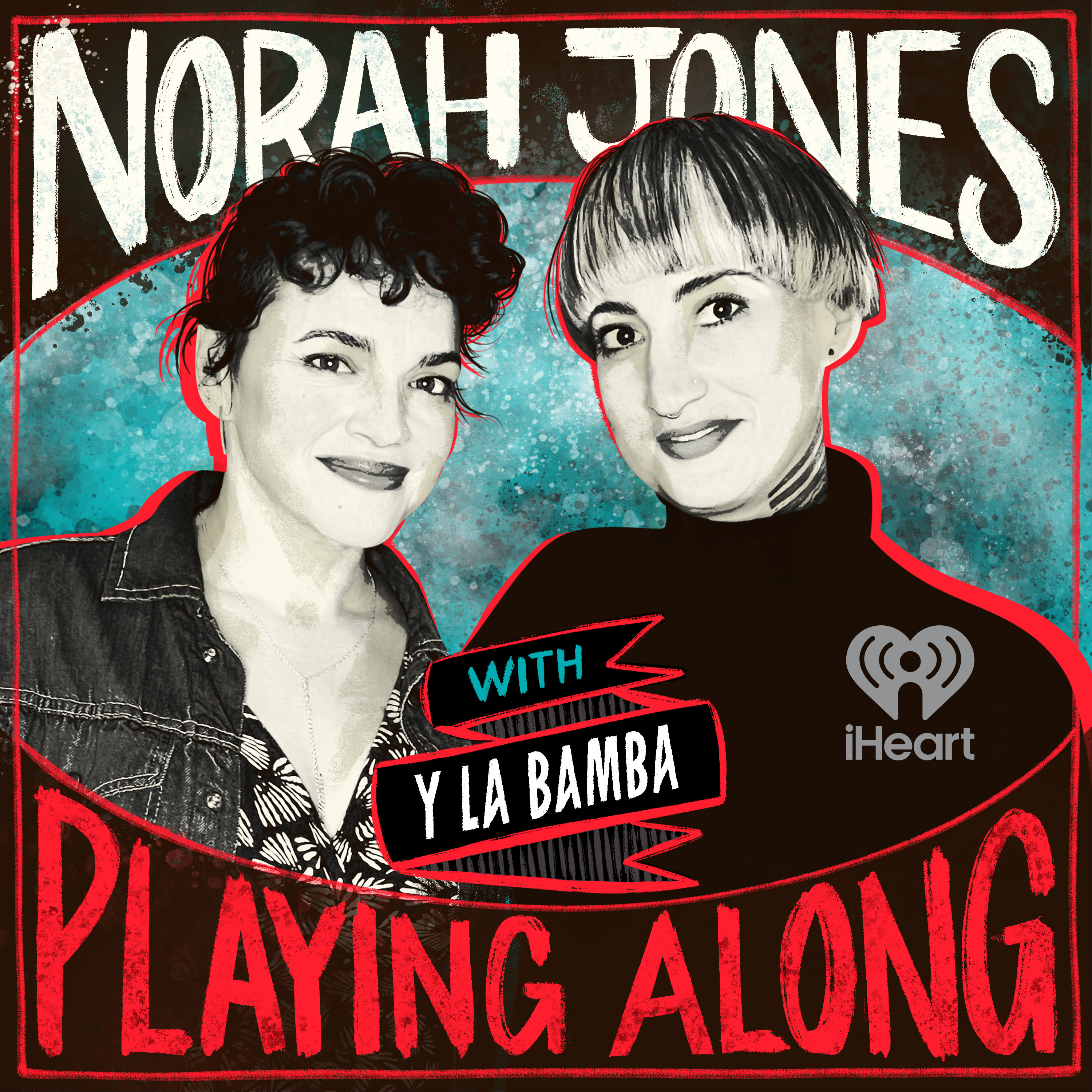
Y La Bamba
Luz Elena Mendoza Ramos of Y La Bamba joins Norah for an honest talk about heritage, identity, and songwriting. They share how their roots shape their music and the curiosity behind their poignant lyrics. Along the way, they perform a couple of beautiful songs, moving between languages. Recorded 10/16/2023.
See omnystudio.com/listener for privacy information.
2026-03-03
35 min
Transcript
Available Results
Generated results are saved to the knowledge database for reuse and search.
No generated results are available for this episode yet.
Extract Knowledge
Pick what you want extracted first. Model, scope, and chapter options appear after a template is selected.
Generated results for public episodes are saved to the knowledge database so they can be reused and searched later.
Transcript
00:00:00
Speaker 1: Hey, I'm Norah Jones and today I'm playing along with Ela Bamba.

00:00:04
Speaker 2: I'm just playing lo.

00:00:07
Speaker 3: Wezy, I'm just playing in lone Weazy.

00:00:17
Speaker 1: Hey, I'm Nourra and with me as always is Sarah Oda.

00:00:21
Speaker 4: Welcome to the show.

00:00:22
Speaker 1: Welcome to the show.

00:00:24
Speaker 4: Our guest today is Ila Bamba. We sit down with singer, songwriter guitarist LUs Elda Mendoza Ramos to talk about their influences growing up with traditional Mexican music styles that lend themselves to the art of storytelling.

00:00:38
Speaker 1: This was such a fun episode. I just love their music so much, so it was really fun for me to meet them and get to share this time with them and play music.

00:00:48
Speaker 4: I know you touch on this in the episode, but they sing in both Spanish and English, but it's like you don't have to understand what's being said to feel like your heart strings are being pulled on.

00:00:58
Speaker 1: Yes, I don't don't speak Spanish and I don't know what the meaning is, but it just feels so emotional when I hear it.

00:01:06
Speaker 4: It's so powerful to kind of transcend language music.

00:01:10
Speaker 1: I loved hanging with Louse and I'm so happy to share this episode with you, So please enjoy ela.

00:01:17
Speaker 5: Bamba okay so want to want.

00:01:21
Speaker 6: To dun.

00:02:01
Speaker 7: Since I two yan style strang manask on me if fins canuspa don't care they lie in calla callous russ as I don't know.

00:02:22
Speaker 8: I carry.

00:02:32
Speaker 9: Seven Cameo survey.

00:02:36
Speaker 5: Seven, Como.

00:02:44
Speaker 9: Seven and como seven Como et mana the save.

00:03:02
Speaker 7: Its madera the sill No my frant doll baracay.

00:03:10
Speaker 5: Be there is.

00:03:14
Speaker 6: Javis Guandoles no cre say seven co.

00:03:23
Speaker 5: Seven co.

00:03:30
Speaker 7: Javis Guandola's conservesten seven come.

00:03:39
Speaker 2: Seven.

00:03:40
Speaker 5: Come take it.

00:03:44
Speaker 10: Away into my nada the same into my na save no my fast padacay.

00:04:13
Speaker 5: Be game.

00:04:18
Speaker 6: You have a squandole Let's course no save.

00:04:23
Speaker 5: Seven come.

00:04:27
Speaker 11: Seven.

00:04:27
Speaker 7: Come you have as Grandolet's course has no set seven come seven co.

00:05:07
Speaker 11: Malory heresum quin traversy medico ever Connell pooosenties b.

00:05:24
Speaker 12: U Heresam queen travancy medico ever Connado styto.

00:05:38
Speaker 13: Malco Ever Connel booty malco Ever, gonna polo say.

00:05:54
Speaker 6: Dorata data.

00:06:21
Speaker 5: That was fun.

00:06:22
Speaker 1: That was from the new record or how old is the record?

00:06:24
Speaker 5: I like you're yeah, probably, I mean I wrote a lot of these songs, like during the shutdown.

00:06:31
Speaker 1: Yeah, so now they're pretty heavy, right, yeah.

00:06:36
Speaker 5: I mean, and then a lot of people when they interview I don't know, when you get interviewed, they're like, tell us about the record. I always forget to talk about a lot about the production part of it, where I'm like, yeah, I just got things together and lah blah blah because I'm just learning, you know, I'm learning as a producer as I go along with like good engineers and stuff like that. And like, but like when I hear the record'm like cool, Like sonically that's what it sounds like. But the words and all that are like very covid, very in that time, very during the whole George Floyd, like the uprising, that everything, it's hard not to like be like what happened, like time traveling, what is still happening?

00:07:14
Speaker 12: You know?

00:07:14
Speaker 1: Yeah, well it was an intense time, and I mean I feel like it all comes out and when you're writing, how you're feeling, and that makes a lot of sense.

00:07:24
Speaker 5: Yeah.

00:07:25
Speaker 1: Did you record all this stuff in a studio or did you sort of piece it together? Did you do a lot of stuff at home or.

00:07:31
Speaker 5: I did everything? I did stuff. I worked a lot with my my friend Ryan Oxford. He's the engineer that I've been working with like the last couple of records, and he and I collaborated, I like on Hughes. He like he did the production on that, Like he did the guitars. I mean we did together, but he already laid out like this beat and this guitar, and I was like, oh, this is awesome. So we did that on that song. And then the rest were you know, me just changing some songs a little bit here and there until I finally was like, oh, yeah, this is it. And then when we moved to Mexico and I finished it, like I added like percussion and bass and stuff like that. Moving to Mexico and doing that was like the incentive, Like the incentive is that the right thing to say, I don't know, like the moving force of that, and like having me meet community and musicians and stuff like kind of using like me finishing my record there being like, oh, like I'm meeting people with.

00:08:23
Speaker 1: More local musicians out there.

00:08:25
Speaker 5: Oh okay, And but I always make the same mistakes so too. But that's another conversation, you know, just as a woman and like as her divergent person in the studio and like so many things. I can go on and on and on, and I'm like so shy talking about but it's but at the end of the day, like that's part of the process, m mine.

00:08:47
Speaker 14: You know.

00:08:47
Speaker 1: Yeah, well, I feel like everybody has their own and it's not there's no wrong way to do it, and whatever makes you comfortable is the way you should do.

00:08:55
Speaker 15: It, you know.

00:08:56
Speaker 5: Yeah, it's interesting trying to tailor that.

00:08:58
Speaker 1: Yeah, and I feel like it's a never ending learning process too.

00:09:04
Speaker 5: Yeah.

00:09:04
Speaker 1: I've made a lot of records and I'm still like, wait a second, I shouldn't have done it.

00:09:08
Speaker 5: Like that, I know, but but that's the way it was done, the way it was done.

00:09:12
Speaker 4: Yeah.

00:09:12
Speaker 5: And then and then that's and that's part of the growth, the growth of it all, you know. I don't know how else other people see all of that process of being a creative or just being like this, you know, open channel. I don't know, there's like there's limited language for it, but just like being this just available for it to come out or whatever.

00:09:34
Speaker 9: You know.

00:09:34
Speaker 1: Yeah, well that's kind of that's the most sensitive part of the job, right and it's the part that is unpredictable and for me, that can be frustrating, but I feel like if you're open, it finds its way in and out. I feel like making records. I think it's so fun and I love it, and I love being creative in the studio. I don't like to overthink things. I like to do a lot of off the cuff takes, and you know, I don't like to over overthink the music. But then when it comes down to finishing it and mixing or something, I get really like task master. Yeah, because if it doesn't sound right the way I know it sounded in a rough mix or something, I get God.

00:10:17
Speaker 5: I drive you because because you already heard what it sounded like, you have different you have context, yeah, different versions. Oh yeah, yeah, I drive.

00:10:25
Speaker 1: I'm driving people crazy right now. But the process you know, of doing it is so fun.

00:10:30
Speaker 5: Man, we can go on for a long time.

00:10:31
Speaker 1: I know, it's so fun. Well, so you live in Mexico City. Now, where did you grow up?

00:10:37
Speaker 5: I grew up in So. I was born in California, my mom's side of the family. They slowly started to migrate to California, like the ninety nine Highway ninety nine, like harvesting fruit and nuts. So they lived in the migrant camps and worked out of them for that was like the lifestyle like in the late seventies and stuff for them. And then my dad crossed the border with the Coyota three times, went through the river through tunnel, you know. But that was like that was in the late seventies, eighties, late seventies. And then I was, you know, born nineteen eighty two, raised in southern Oregon, even though I was born in California, went and visited a lot in California, spent like a lot of it's had my KINSGNAA there, my baptism, like all the all that stuff.

00:11:20
Speaker 1: You're part California.

00:11:21
Speaker 5: Yeah, I feel it. Even though I wasn't like didn't go to high school there or like anything, I spent a lot of my time there, and like it was awkward for me in southern Oregon. We also only hung out with Mexican families and Mexican communities in Southern Oregon. So this is an interesting upbringing. I'm trying to skip all this other stuff. But and then I moved to Portland when I was like twenty four.

00:11:42
Speaker 1: And you weren't in Portland. You didn't grow up that you were in.

00:11:45
Speaker 5: No in southern Oregon.

00:11:46
Speaker 1: Was it a Medford community Portland or the.

00:11:49
Speaker 15: Where you grew up.

00:11:50
Speaker 5: Yeah, it'sch of small little town's like it's beautiful. Southern Oregon's beautiful, like Grands Pass, Ashland, Medford. Medford was where I went to school and all that. Okay, but we all we had a huge, large population in Mexico, like you know of a Latino community in southern Oregon. Portland was just way later till like twenty four.

00:12:06
Speaker 1: To twenty five, okay. And then did you live there until you moved to Mexico City a few years?

00:12:11
Speaker 5: Yes, and then I so that's really your I moved to Guada la Caada in twenty nineteen. I mean, I was like pretending. I'm like, yeah, I moved to ga Da Laada. But I was touring a lot, and then the shutdown happened. And when the shutdown, I was in twenty twenty twenty nineteen December, and then twenty twenty January, I was in Mexico City. I was like, I'm gonna try in Mexico City next, that's cool. And then I did on too. It went on tour durand Jones and then tour ended in February. February twenty ninth, I stayed in la I was like super like, came off of like a really awesome two year olds all positive and stuff. And then March fourth, you know, I'm in a hot looking at all this cold COVID shit in co Coroda. And then I went to Portland because I had a job with a choir, with a high school choir. So if I didn't have that, I would have just went back to Mexico. Go. So I stayed in Portland for the whole duration of that time. So I was already done with Portland but it was but at the same time, like, I'm sure you can relate or empathize. It felt the safest place to be during that time.

00:13:14
Speaker 1: Well at least it was familiar.

00:13:15
Speaker 5: It was super familiar. Mexico City was awesome. I made friends, but I was like, so like, this is what the hell? Like what am I? You know, like, am I gonna be isolated someone? It's new and huge in Mexicity.

00:13:29
Speaker 1: That would have been really scary.

00:13:31
Speaker 5: I think it would have taxed my mental health in a different way.

00:13:33
Speaker 1: So when did you make it down there?

00:13:35
Speaker 15: For a year and a half ago, Like for real, with my dog. I brought my dog and nice.

00:13:41
Speaker 5: But it's also part of my neurodivergent uh way of organizing myself and thinking about identity and my roots and stuff, like I have to be in Mexico to do all that work. Like it's so visceral for me to be there, Like my parents are not from Mexico City. They're from like the the sticks of you know, we talk and they're like the're ranchers. They come from like working the land and stuff.

00:14:05
Speaker 1: Okay, not even a town.

00:14:06
Speaker 15: They go to school, you.

00:14:07
Speaker 5: Know, stuff like that. Like Wow, there's a whole other story that I want to bore you with about like what I know about my family's history, but the whole like like trying to decolonize and all that, you know, Like for me, being in Mexico is where it starts when I actually do that work of decolonizing and understanding like my diaspora, my roots, my being biracial and like what it all means and like everything. Just like I think, being there's like so humbling because the conversations are different and they're necessary and I need to hear them as like a Mexican American in Mexico. So it's like, I'm glad that I'm out of the context of the nationalism of being just American here, but being put in a place where traumatized my parents and informed and shaved my parents and my culture.

00:14:55
Speaker 15: So it's like I grew up with it, so I'm there and it's familiar.

00:15:00
Speaker 5: That's why. That's why it's not I'm gonna say it's easy, but it's Visceral's natural to be there. But there's so much more that I need to educate myself in a way that they couldn't educate me of another part of Mexico that I'm like, WHOA, like the politics and the yeah, so much, so much stuff, so much sounds like a just like my ayahuasca even though I never done I've never done that, but I'm like, WHOA. I'm like, face to face with this machismo, the capitalistic, the trauma of like all that, you know, Like it's just in Mexico is a different face. You know in the United States is a different face with being there and see what it did to my parents and what it continues to you know, all of it's it's all the same. It's all the root of violence and power, and you know that is the whitness and all that stuff.

00:15:45
Speaker 1: Well, and also you're just you're just like diving right into your own self by being there, probably you know, and you're you're finding out more and more about yourself.

00:15:56
Speaker 5: Yeah, it's very humbling forty one and like trying to not take space, but then take the space. Come should come and visit. I would love to.

00:16:05
Speaker 1: I've only spent I've only been in Mexico City a couple of times, and I got I got really I think I got altitude sickness. Both times, I.

00:16:12
Speaker 5: Would get bloody noses. The first few months that I was traveling back and forth, really it was wild. I would wake up and I'm like what.

00:16:20
Speaker 1: Everyone always tells me, it's the best city and the coolest and every time I get there, I just I can't. I gotta like stay in bed. I can't. I can't hang there for a month exactly.

00:16:30
Speaker 5: I just got to get this sickness to get rid of the week long or whatever we'll do to your body.

00:16:35
Speaker 1: And then, just like you talking about that makes me think of something that is so for me. Because my my dad was Indian and I didn't really grow up. I went there a couple times. When I was little, but I didn't really grow up in that with that side of my family so much. But I always wondered what it would be like to really go and spend time there. I've spent I have spent time there, but like to live there. The whole other thing.

00:17:00
Speaker 5: There's not a lot of Mexican Americans that I know that are living in Mexico City. Yeah, there's this reverse assimilationship going on or so really I'm still trying to unpack it all. Like that's why I like hesitate talking about it.

00:17:13
Speaker 15: But I'm like trying to find the root.

00:17:14
Speaker 5: I'm like, oh, yeah, like there's certain similar things from code switching in spaces or American culture or whatever, because I grew up in just like Mexican Mexicano all, you know, those type of conversations of I don't know, just know, just knowing how to participate in a different like your culture's political affairs or emotional affairs, spiritual affairs like ancestral affairs, like all this stuff that just you know, there's people that don't care about these conversations, these topics, or they do, but I just can't help it, you know.

00:17:45
Speaker 15: I'm like, oh, like like we are like algorithms of our ancestors, you know, like.

00:17:50
Speaker 5: These you know, like yeah, and it's for me, it's if we have access to and it is a privilege to like, you know, investigate what you come from, or go to that to go to the country where your parents are from, or like. But there's not a lot of us in Mexico City that get to experience you know, Mexico City is Mexican, like Mexican Americans that come from communities that we came from, like my might you know like that. Yeah, it's interesting taking that space. And I don't want to be like, hey, in the United States, we talk about identity politics like this, and so you know, like you don't, you don't, you can't apply that shit.

00:18:24
Speaker 1: No, it's like a whole different way of being.

00:18:26
Speaker 5: Right, Yeah, and I wonder what it would be like, you know, I'm sure I can empathize with you, like I'm hearing a little I don't know you, but like you didn't grow up with that side of the family.

00:18:36
Speaker 15: But that shit will never go away. Yeah, that sh it's like so you I'm sure right.

00:18:41
Speaker 1: Well, and I'm close to them now and I was close to my dad. You know after age eighteen, So I it wasn't like it's not like they're complete strangers to me. But having not grown up in it, it's a weird place to be, like to feel like I'm not really a part of it in between. Yeah, even though they're kind and welcoming once I was a part of it. It's different to grow up in it than to be on the outside of it.

00:19:09
Speaker 5: So who am I? Yeah?

00:19:12
Speaker 1: Yeah, yeah, but what did you listen to growing up? Did you listen to just traditional Mexican music?

00:19:22
Speaker 5: Yeah? Yeah, thanks for asking that question. I grew up listening to so the music that informed my ears, my spirit, my brain, my whole environment was Mexican music. It was corrios corios like like Ramona Yela, Los Bravos and Norte Cornelio, Orna Musica del Campo, like from I can send you playlist like Plas Hilgerias Las Palomasca, you know, duets like like from like the Ranch, like just You. And then there's a lot of music that I grew up listening to is kind of misogynistic now but it just didn't age well. But it's still nostalgic for me. Like a lot of like those corridos, you know, are like but it really tells a story of how people are living, you know, even if it's like you know, and and then also seeing like misogynist, misogynistic men singing, there is that deep wound of paid, the deep wound of patriarchy. The sensitive man just like singing that's the only way to like express their emotions. At least I'm saying it from like the men that I grew up with, and my dad specifically is like such a macho dude, but like they don't share their emotions, but they will definitely sing a song on top of their lungs.

00:20:38
Speaker 14: You know.

00:20:38
Speaker 5: That's amazing long And I'm sure like a lot of like cultures are similar, Like I don't know, the American culture is like something totally different, but like I know, I know a Mexican culture like when we emote and like Mariacci music to like like it's just you're emoting. You're like saying something like Juan Gabrielle, you see that guy, it's you know, rest in peace. When you saw that person seeing holy crap, you know that person was with conviction and say something, And a lot of the men would watch and be like, oh, like kind of uncomfortable from like their homophobia and seeing a gay like man really just sing, but like they couldn't help to empathize and be like, oh, I feel the same, I feel like this pain because they can identify but not you know, like I still love that music.

00:21:27
Speaker 15: I love love love, like all the the.

00:21:30
Speaker 5: Guitars, like the the Rinkinto's And even though a lot of the lyrics. I didn't grow up listening to Boletos though that much Bolettos and Mariaci. I grew up listening to Mariacci, but Bolettos was more commercial. From what I hear, I understand it was more like around beautiful. Bolettles are beautiful, Okay.

00:21:48
Speaker 1: I don't know all the difference between there's I'm learning. I mean, I know Mariacci probably the best.

00:21:55
Speaker 5: It's very commercial.

00:21:56
Speaker 1: That's why it's commercial, okay, or.

00:21:57
Speaker 5: Like commercial in the sense where it was more what's that word, more accessible or it was I don't know the right word. But Boleros and Mariachi was the stuff that you always heard around. It was like the most go to and then all that corridos ands I think were I think a lot of there's a lot of classicism too, with like the type of music that people listen to, like I like, people would discriminate like mus be like, oh you're from that class You're like a rancher, so you listen to that type of music.

00:22:27
Speaker 1: Would it be comparable to like folk music?

00:22:29
Speaker 5: I think so. In the day, I think so. I always try to find I always try to compare. But you know, at the end of the day, you can't talk about Indian folk music. You're like, you can't really compare it to like, you're no American folk or like, go to American folk music. But even it's like kinda it's not the same. You can't compare Indian folk music with American folk music. Yeah, you can't compare Mexican music too, totally American folk music. But it is it could be somewhat similar. And that's yeah.

00:22:57
Speaker 1: Home strumming, Yeah, singing together and picking guitar pick no, like you know, huge production, right, Okay, yeah, yeah, you asked me to sing a song of yours, which I'm stoked.

00:23:09
Speaker 5: Okay, you want to do it?

00:23:12
Speaker 1: Has this been released on anything? No?

00:23:15
Speaker 15: I don't you know what I do.

00:23:16
Speaker 5: I'm really bad, So I do a lot of songs live. I don't record them. There's a lot of songs that I'm like. Grema Malone is also not on that one. But we we should do this one. Let's do this one so you'll.

00:23:31
Speaker 1: Sing I'm good. I'm going to sing it. I can't sing it like you, but I'm going to sing it like me.

00:23:36
Speaker 5: Yes, I'm excited. I'm excited. I always like, I want to write songs for people to sing, and I just get really intimidated.

00:23:44
Speaker 1: I've never done that. I've never written something for someone else.

00:23:49
Speaker 5: Imposter syndrome, intimidy. But I want someone to hear I want to hear someone else sing my song, you know.

00:23:55
Speaker 1: Yeah, I feel like it's a different mindset and it's it's hard to get in there and you.

00:24:01
Speaker 5: Feel confident about it.

00:24:03
Speaker 1: It's also I feel, I do think sometimes it's hard for someone else to sing her a song like you as good as you. Yeah, don't sing it like me, no, but I mean to embody the feeling and the actual soul of it. It's hard to do when you didn't write it. And the people, you know, great interpreters are of course, can do it. But I mean, I could imagine, like you giving a song to someone and then thinking, hmm, I think I can do that because you're so good.

00:24:33
Speaker 5: I'm surely I'm intimidated. I've been writing. So I wrote a song for my friend Emma. She's gonna put on a record, and she's learning how to produce herself, and she's learning the whole like asking me questions like, hey, so I'm recording with this guy. He's asked me for this much like she's asking me these questions, you know. And I was like, here, here's a song, Like I don't care about royalties or anything or whatever. I wrote a song. You put it on your record and like I'll produce it for you or whatever, and you don't owe me anything because no other fucking dude is going to give that to you, you know, like it's a clock, you know. Like people are like, okay, time is money. But sometimes like we I don't know, especially as a woman for me, like we need a little bit of like you know, a learning curve. We need like space, yeah, more space.

00:25:18
Speaker 1: Yeah, it's hard to know how to go about things sometimes.

00:25:34
Speaker 5: Okay. Nice. The reason why this is so hard is because, well, now that I know that it's been recorded and everything.

00:25:44
Speaker 1: Now you're overthinking it.

00:25:45
Speaker 5: Well, yeah, I'm like, oh no, because I'm just like blah blah blah blah blah. And also just it's so different like having people watching you. Oh, I know, you know, I just met you.

00:25:55
Speaker 1: Oh I know.

00:25:56
Speaker 5: It's hard to process, just like meeting. Yeah, come on, it's a weird bit, I know.

00:26:01
Speaker 15: It is totally.

00:26:04
Speaker 1: Okay, So safe space though.

00:26:07
Speaker 5: So the beginning of the song is oh yeah, you start from the beginning and then I'm gonna come in. This song too, has a lot to do with not masking anymore. A lot of the words are just like part of my healing journey of learning who I am as a person in this world. It's like seeing like something something You're right, I know, I can tell. It's like always knowing that I've you know, just been a little different, not just from trauma and sistraal trauma and stuff like that, but it's just way more, so much more complex and being on this journey being later diagnosed and trying to process all those feelings, unpack all of that, like kind of like worry or not. I won't be ashamed. Darkness, it waits silence unknown. I'm still recovering. It is like wrapping my bones, all of my body, like being conscious of my physical body and the spirit that's holding it, carrying it around. And then the part of like how curious I'm curious what will be done now? Ah, Like the curiosity of what we're going to do as a people, as a community as you know.

00:27:23
Speaker 1: Yeah, And I can feel that from these lyrics. But it's they're so clear but also so universally applicable. It's like the best kind of song.

00:27:34
Speaker 5: Right, yeah, you know, I'm talking about eating yogurt.

00:27:39
Speaker 1: You know not, but not in a shallow way, in a deep way. It's like that that simple prayer kind of thing.

00:27:49
Speaker 9: Hi.

00:27:50
Speaker 5: I kind of like singing high I write. I also write songs are not my register a lot on purpose or just because of your purpose, just because I like I can't I hear them that way, and I like seeing him like that. But when I'm live, everyone's like they can't hear me, you know, But I'm singing in my falsetto and like, just I like it.

00:28:08
Speaker 1: It's a vulnerable place to saying. I think that's probably why it rings like more true. But I love it. Should we just go for it and see what happens.

00:28:18
Speaker 5: Yeah, okay, I'll.

00:28:23
Speaker 2: So something.

00:28:33
Speaker 5: I know how I can tell you're not.

00:28:44
Speaker 3: Wall be shade, darkness, ways, silence.

00:28:57
Speaker 8: No, I'm still recovering, robbing my balls, all of my bow.

00:29:13
Speaker 5: As my speed.

00:29:17
Speaker 2: Warners around.

00:29:22
Speaker 8: I'm curious.

00:29:24
Speaker 2: Word will be done Now? I might give a dame.

00:29:52
Speaker 3: Pass, may change like the rain in the summer to.

00:30:00
Speaker 2: You might not be the same.

00:30:08
Speaker 6: Candle it calls.

00:30:12
Speaker 5: As my.

00:30:13
Speaker 9: Face. The night.

00:30:16
Speaker 2: Had the pain?

00:30:25
Speaker 1: Who who.

00:30:38
Speaker 2: Gary? Its spinning drove me away? Toscape?

00:30:55
Speaker 1: Nothing to prove.

00:30:58
Speaker 2: Today?

00:31:03
Speaker 5: What is life.

00:31:07
Speaker 12: We face? Ah?

00:31:14
Speaker 2: They God give it a try.

00:31:20
Speaker 12: To re.

00:31:24
Speaker 2: Zagon take am I give a dam.

00:31:35
Speaker 5: Oh m hmm. And then the fairies came out of sky. That I love that.

00:32:02
Speaker 1: That felt really beautiful.

00:32:04
Speaker 5: And that's a I've never sung that song, has never been sunk.

00:32:09
Speaker 1: That's amazing. But what's the recording you sent me from? Was it a demo or was it from a show.

00:32:14
Speaker 5: No, it's a demo from my house. So you hear the lady outside selling I heard that.

00:32:19
Speaker 15: Yeah she was.

00:32:20
Speaker 5: She's not selling anything, She's it's this audio recording. You hear all throughout Mexico with all these trucks trying to pick up like your old mattresses, your old like refrigerators or appliances, and they pick them up like recycle them.

00:32:33
Speaker 14: So you hear the demnon and I laughed, and then it's I started singing immediately, and it didn't even she was outside, but didn't even or it was outside, didn't keep going, so it's like a perfect time.

00:32:45
Speaker 1: That's great going the song. It's funny in the beginning, that first part it almost felt like Irish to me or something because you heard the chant.

00:32:55
Speaker 15: No, just the way.

00:32:57
Speaker 1: It was funny. I was singing and I was like, I feel irish all of a sudden. That's strange.

00:33:02
Speaker 5: I don't know I have one percent Irish in me.

00:33:04
Speaker 1: It's so funny how how the different ways of singing in completely different parts of the world sometimes just sort of are similar. You know what I love?

00:33:14
Speaker 5: I love I love Indian music and the non conventional, the non the intervals, like all like all the hidden in between, because that's.

00:33:24
Speaker 15: What the world is.

00:33:24
Speaker 5: There's no binary so when you look at it, when you look at a fret, to me, it's binary. Yeah, yeah, it's straight because there's like but and it's also like in this what is it tuned in? In this like American Western kind of like whatever. But then you see all this the fluidity. I feel like when you go, I'm so super ignorant, but like India is so fluid with so many things. It's like it's a huge, big it's non it feels non it feels non binary. It feels like there's place for so so much spirit and so much Yeah, but I don't know.

00:33:58
Speaker 1: I don't either.

00:33:59
Speaker 5: So that's music. I'm like, oh, like if people are playing, you know, different cultures are playing, like music that is like like a violin or like you know, a symphony, it's like you can just really capture so much more than like the.

00:34:15
Speaker 1: Yeah, yeah, yeah, it's beautiful, love it. It's funny too. With piano, it's very like I can't bend any notes, but.

00:34:22
Speaker 5: You can bend your vocal totally. What's up? That's what's up?

00:34:26
Speaker 2: That's what's up.

00:34:27
Speaker 1: Well this was great.

00:34:30
Speaker 5: Yeah, I mostly just I really wanted to meet you and just be in your presence and hang out. And I'm after this after I walk away and be like, what the hell just happened?

00:34:39
Speaker 4: What did I do?

00:34:40
Speaker 5: What's going on?

00:34:41
Speaker 1: We'll send you the recording and then you remember.

00:34:44
Speaker 5: All right, well then thank you. I guess this is it. This was awesome.

00:34:48
Speaker 1: You were great, you were great.

00:34:50
Speaker 5: It was so fun.

00:34:53
Speaker 1: Oh that was so nice.

00:34:54
Speaker 8: Great.

00:34:55
Speaker 4: There's such an open and beautiful soul.

00:34:57
Speaker 1: Yes, very open, and I would really thankful for that.

00:35:02
Speaker 4: Felt very connected to the music.

00:35:04
Speaker 1: Yeah, it was great.

00:35:05
Speaker 5: I learned a lot.

00:35:08
Speaker 1: The first song in that episode was de Boo Hoos de mi Alma, which came out in twenty twenty three on the album called Lucca. The second song we did is called I Might. I had so much fun singing that song. Thanks again for listening. Today's episode was recorded by Matt Marinelli, mixed by Jamie Landry, edited by Sarah Oda. Additional recording by Jamie Landry, Additional editing and mixing by Matthew Vasquez. Artwork by Eliza Frye. Photography by Shervin Linez. Coordinating producer Rachel Ward. Produced by Nora Jones and Sarah Oda.

00:35:39
Speaker 15: Hey that's me and you, Hee,
Chapters
No chapters available.