The Other 99% of Life on Planet Earth : Couch Microscopy with Dr. Julia van Etten
This conversation will make you want to buy a microscope and will make you rethink the way you envision the Tree of Life, where animals, plants and fungi are just a tiny speck on the overall tree of life.
Dr. Julia Van Etten (of the @Couch Microscopy Instagram page) talks about what the hell a Protist is and where you can find them (everywhere). We reveal how Protists are the fine particles that weave within and throughout our world."The Tree of Life is Really a Web".
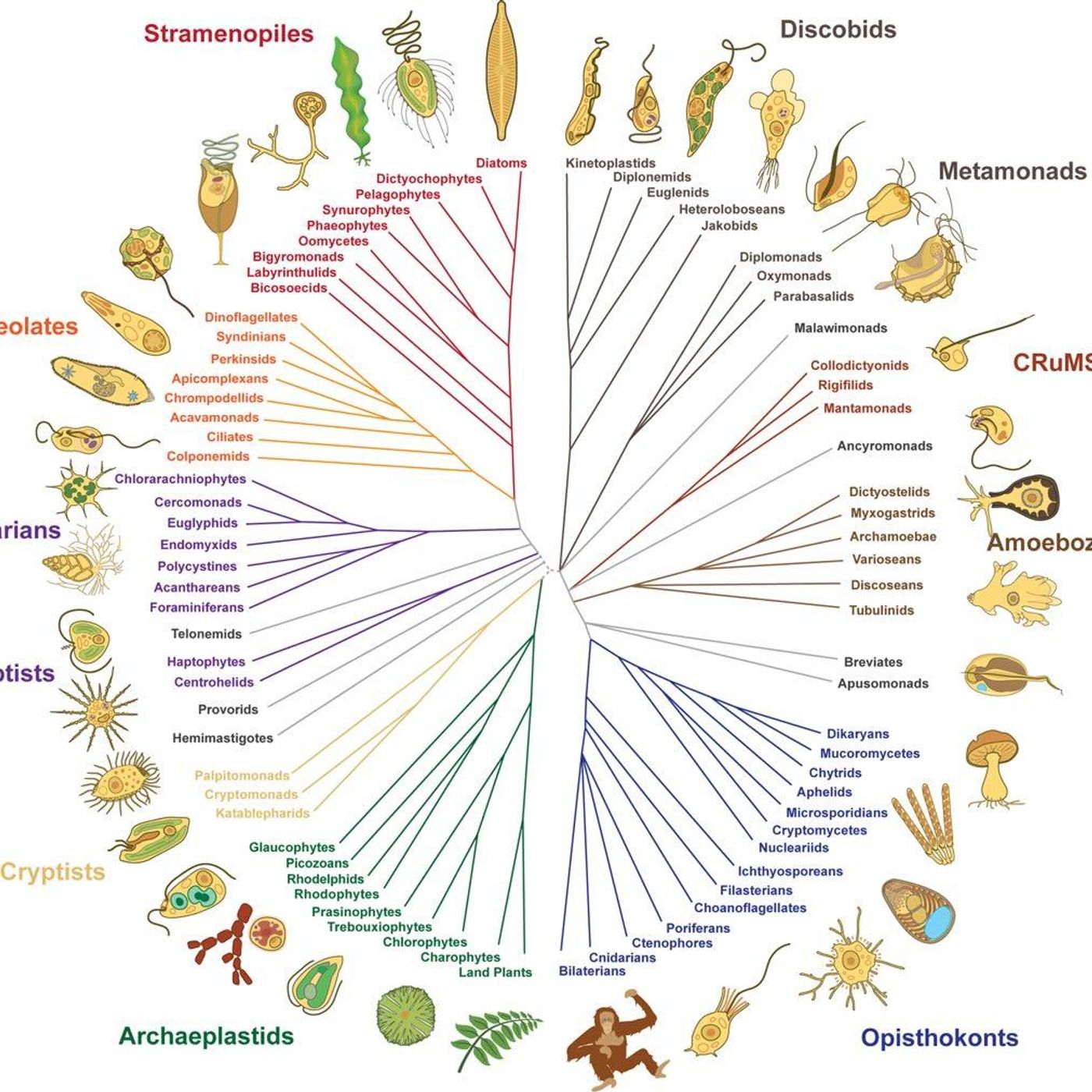
The paper that the thumbnail is from can be found at : https://journals.plos.org/plosbiology/article/figures?id=10.1371/journal.pbio.3002395
Dr. Julia Van Etten (of the @Couch Microscopy Instagram page) talks about what the hell a Protist is and where you can find them (everywhere). We reveal how Protists are the fine particles that weave within and throughout our world."The Tree of Life is Really a Web".
The paper that the thumbnail is from can be found at : https://journals.plos.org/plosbiology/article/figures?id=10.1371/journal.pbio.3002395
2024-04-23
140 min
Transcript
Available Results
Generated results are saved to the knowledge database for reuse and search.
No generated results are available for this episode yet.
Extract Knowledge
Pick what you want extracted first. Model, scope, and chapter options appear after a template is selected.
Generated results for public episodes are saved to the knowledge database so they can be reused and searched later.
Transcript
Okay, there we go. All right, welcome to another episode of the
Crime Pays a Bond and he doesn't podcast them. Here with Julia Vanette and
PhD. You're a doctor now, right, yes, recently with the doctor.
Okay, with doctor Julia Vanette and who's a microbiologist, and we're here
to talk about protists, so which no one thinks about. I feel like
like they're fucking so far off my radar. Like when I think of microbes,
I think of fungi, bacteria, arkaia, you know, because they're
so old and cool and the extreme of files. And maybe I think in
nematodes or something. But toads our nematod's even if what the fuck is the
name? Is ama toad a protest So that's actually a really good question,
so different. No, nemo toads are animal. They're actually the most abundant
animal on Earth. But our nemo tod's a microbe. I don't know,
people define microbe differently. Yeah, yeah, okay, all right, well,
I mean either way they're they're okay, So but we're going to talk
about we're gonna we gotta get to nematods, but we'll talk about Okay,
well, now I'm I don't even know where to start. Should we fuck
with nematodes for a little bit? No, I don't know about nematodes,
all right, okay, okay, well let's start. So let's talk about
produce. What the hell is the produce? First off, it's a huge
This is a massive amount of biomass and of you know, just of the
phylogenetic tree of life on Earth. Right, this is a huge kingdom.
What the fuck do you call it? What is it? So that's a
really good question. So okay, So historically a protist this is like a
really like bad definition, and I'll give you a better definition after, like
a better long winded definition. But the historically protists are eukaryotes that are not
plants, animals, or fungi. That is historically what a protust is defined.
So I tell everybody you carry out too, because we've got I'm sure
there's people have taken a biology class and fifteen years. So like a eukaryotes
just the multi it's got a nucleus and they could be single celled or multi
cells. So right, so yeah, so a ukaryote is an organism that
has a nucleus and mitochondria. The mitochondria is the powerhouse of the cell,
right yeah, yeah, But well if you want me to explain what a
protus is and what a eu caryo is in more death, I can tell
you the whole story of the mitochondria. Okay, deep, let's go deep.
Yeah man, okay, okay, So, like I don't even know
where to start. I always I've given this like explanation many times, so
I never know where to start. So basically, like you've got your ancient
planet. You've got prokaryotes, which are bacteria and archaea, which evolved when
the planet was like what we would say today was like kind of inhospitable,
but like obviously hospitable. It's a prokaryotes. They were they were doing their
thing. This is like three point eight billion probably a little bit before that,
three eight billion to roughly one billion years they were the only thing,
right well ish, So so around like a little over two billion years ago.
Although again, like people argue about it, you caryotes evolved, so
you carryotes evolved via a chimeric association between an archaeol cell and a bacterial cell
in the process of primary endosymbiosis. This is Lynn Mars jam right, yes,
yeah, yeah, love her. So what this means is that we
now know that sort of that there was. We actually don't know how this
happened. We don't know exactly when it happened, and we don't know exactly
where the nucleus came from, but we do know where the potochondria came from.
So there was some sort of proto you caryote. So there was a
cell we now know it was in the archaeol domain that had evolved some eukaryo
like features, like maybe it had some form of a cytoskeleton, maybe it
could engulf prey, maybe not, maybe effused with this other cell. However
it happened, it was our chel and it somehow ended up with an alpha
proteobacterial cell inside of it. That bacterial cell could respire oxygen, it could
do basically what is cellular respiration. And now this new archeol of cell could
exploit niches that had oxygen in them, because before all of this happened,
we had cyinobacteria that had started to produce oxygen on them. Okay, so
when you're saying our chel cell, let's explain that that's an archaeo, which
is a whole that wasn't even known to be a thing until like thirty years
of the nineties. They were just thought to be bacteria. But they're actually
different from bacteria because these are totally different domains. These are the motherfuckers that
are living at hydrothermal events and living at you know, fucking the boiling cesspools
at yellow Stone. Yes, but they're also living in regular locations too,
but yes, yeah, okay, So, and how do ARKAA differ from
bacteria? Great question, rusty on that, But they're they're just a completely
different domain of life. So there, they look a lot like bacteria.
They're unicellular, they don't have a nucleus like, they divide in the same
way. They do a lot of gene transfer like bacteria do. But like
bacteria and arkia diverged a very very very long time ago. And you see
it in the code obviously when you look at when you look at the DNA,
Yeah, yeah, would it be RNA or what dna? DNA?
Okay, yeah, Jesus, Okay, no, it's okay, it's virus.
Right, Okay, there we go, all right, yeah, all
right, okay, so we got our arkia in bacteria. And when was
I forget when this was even discovered. There's a book on it. It
was Carlos, Carl Wolfs, like, well, he was the one that
was like, there's three domains of life now, Carl Wos. Yeah,
okay, cool, all right, So we got arkia in the bacteria,
and so then this and those symbiosis. This is the whole you know quote
Gaya is a tough bitch, Lynn Margin, Yes, m m. This
is so they pushed you caryotic life, the evolutionary carecter. I went back
to two billion years ago. It might be like I've heard people say,
like way more than two billion. There have been papers that have come out
saying it's like one point something, but it's probably like two point one whatever.
We don't know, but it was probably more than two billionaires. Do
you think there was a film on land back then, like at least the
bio film on land, right, So maybe like I could talk about that
later if I go into like where plants came from and like how things colonize
land. But yeah, I don't know what was going on two billion years
ago at all. But that first cell, like that chimeric thing, I
just described from primary underscymbiosis where we got the mitochondria. At some point around
that time, the nucleus also did up. There's a lot of hypotheses about
how that happened. I'm not going to get into it. People argue about
it. We don't know, but the point is that's where eukaryotes came from.
Eukaryotes all have a nucleus and they have mitochondria. Some of them have
lost mitochondria, but whatever, the ancestor had mitochondria. That's a character that
defines all eukaryotes. So the first eukaryot was a protus. So that was
the first protus from which all these other lineages have arisen. Protus also have
linear DNA, right, not circular DNA like bacteria. Right. Protus have
the same DNA that plants, animals we have. It's in a nucleus,
it's in chromosomes. It's not yeah right, it's not just free floating around
there and free floating at a nucleus. And that's what the nucleus did.
It was a kind of like a protective covering for the DNA. And yeah,
okay, so but either way, when this shit evolves, this is
like a. This is a big deal. You know, this is out
there. It's a big deal. It's a big deal. And the nucleus
also, so it helps these organelles evolve. And I'll talk about the plastid
later probably, but like you know, there are these redox processes going on
in the mitochondria and in plastids, and when these organelles transfer from their genes
to the nucleus, it protects them from like oxidative damage and stuff. So
like, what's THEO We're going everywhere. Man, We'll be all over the
place dation and reduction. It's like, I'm not a chemist. This is
like that's not my air. But it's like it's like, yes, that's
that was gonna say. Yeah, electronsby and shuffled and donated and stolen and
yeah okay yeah, yeah, okay, well either way that doesn't mean so
okay. So, but but the cyanobacteria that caused the Great oxygenation event which
formed all the all the fucking iron and and that we use today, was
formed. It was when what was it some ion of iron got fuck I
forget what it got. The oxygen reacted with it and it was like the
bandit iron for me, right, Yeah, there was oxygen dissolved there,
dissolved iron in the ocean, and it reacts with oxygen and precipitated out and
settled on the floor because of the build up of oxygen, which was a
product of photosynthetic bacteria. Yes, so that's how and so yeah, those
those the iron formations now are like evidence that this happened all over the world,
whether it's in Michigan or Australia. This is the same time. It
was happening for probably one hundred or two hundred million years, maybe longer,
right, does it got right? Process? Yeah, so, like you
know, like over three billion years ago or whatever oxygens are to form on
the planet. Around two point four billion years is when this great oxygenation event
occurred. So sometime before that, cyanobacteria evolved their bacteria that can do photosynthesis.
There are other bacteria that can do photosynthesis, they don't do oxygenic photosynthesism.
I don't really know much about that really. Yeah, so I'm just
putting that out photo someone who knows about. So they're photosynthetic and they're they're
autotropes, but they don't and they use sunlight, but they don't produce oxygen.
The Yeah, that's that's for a different episode. I we just got
to mention that they exist. That's cool, they exist. They exist.
So there's a bunch of bacteria that can do photosynthesis, but the cyanobacteria are
the only claide of bacteria that do oxygenic photosynthesis. And they started to proliferate
and just spit out a bunch of oxygen to the atmosphere, which changed the
atmosphere. And there are people who argue that, like you carry out evolution,
and even animal evolution was like very much influenced by this increased amount of
oxygen in the atmosphere. But then there are also people who argue that that's
not the case. But whatever, the point is, like the context of
all of this is that there's now oxygen in the atmosphere, which is why
having mitochondria in your cells is useful because mitochondria you to generate energy in the
present. Mitochondria need the oxygen. Yes, they need. So it's kind
of like, I mean, you, how how else could you could you
caryotic the evolution you carriotic multicellular those are two different things, but you caryotic
multi cellular life. You know, could you about multicellularity later, yeah,
the whole other thing. But could that have evolved without oxygen? Not really
kind of, I mean maybe, well no fuel you need that fuel,
you need it. Yeah, it's so it kind of is dependent, so
that the great oxygenation event kind of led to the It definitely led to it.
So so then we have we have protists. So like the first you
carryots are protus and once like a big evolutionary transition like this happens, there's
an idea that, like a lot of evolution happens really fast, and then
a bunch of different lineages arise and then those diverge early on and then they
radiate. So that happened. Then other primary endos in by primary endos and
by this event happened that gave us algae, which I can like totally talk
about if you want to, don't talk about it. Yeah we're gonna get
that, I'm gonna write, okay. So but but either way, so
this was because ever, I mean, people that are into this, into
the evolution of life, who like to go to the museums, you know,
maybe toke a little blube walk into the museum on an off day or
whatever, uh, they know about the Cambrian explosion five hundred and forty million
years ago. This is when trilobytes and all the complex nds plants. Yeah,
no, plants were like four forty land plants were, but there was
yeah but like you know around the sceme Yeah yeah, yeah, yeah yeah,
so okay, but but but anyway, so they people know about that,
but there was a similar there was an analogous event that happened for microbes,
this explosion of Protista, right like kind of yeah, well I guess
I don't we don't know. And the other thing is like, so like
you've been asking me these questions about protusts, like I don't have good answers
for you, and no one has good answers like we there's a lot of
mystery regarding like the root of the produced tree, which protists are paraphyletic,
I don't know anyway, Yeah, like the root, the ancestor, like
a lot there's a lot of these really large like so the you carry out
tree of life like this is what I like, how I like to describe
it. Plants, animals, and fungi are tiny, little monophyletic branches on
a very large eukaryotic tree of life. This eukaryotic tree of life is made
up of dozens of kingdom level assemblages of organisms that are as different from one
another as like we are from plants. Right. The thing we're trying to
get people to think about is, especially when when we say monophyletic, if
anybody listening doesn't understand what monophyletic is, that's the fucking key term for everything
for plants. That's like something you got to learn, like put that in
your glossary monophyletic, paraphyletic, polyphyletic, learn what those mean. It takes
a minute to really let Yes, you're gonna have to keep reading ship over
and over again over a span of months and thinking about it, but and
looking at cladograms. But that's like a key term for understanding this stuff.
But but uh, But the point we're trying to get it get at is
like we think of like animals and plants and maybe fungay, it's like these
huge things. But when you zoom out, if you're looking at a phylogenetic
tree of life, like a circular diagram of all this stuff and the branches
and the lineages of different classifications, organisms and you zoom out the fungi and
the animals what we think of as these massive things, they are fucking tiny.
It's like, don't have plants. Yeah yeah, it's like thinking.
It's like thinking that like the Earth is the center of the universe and then
zooming out like seeing the entire galaxy and you're like, holy shit, this
is nothing, Like there's all these other worlds out there and this is like
yeah, yeah totally, and like this is like where you might get me
like ran thing, which is that like no one knows about this. There's
no good textbook for this. Like when I learned about this, I learned
about it because I was in college and I read one of Lynn Margulus's books
and it like blew my mind. But like this isn't taught and it doesn't
make sense, Like why why is like ninety nine percent of the UK outictory
of life, which are things that influence all of the biogeochemical cycles and there
are things that like live around us in all of the puddles, they parasitize
us, et cetera. Like why why is this not taught? I don't
know, So like we're crazy. Textbook I was going to ask there is
a textbook. There is a textbook, and it's not bad that. The
problem is there's a good textbook. It's from like nineteen ninety or something that
was good. It was good in nineteen ninety. The thing is like that
was before the genomics revolution, so now we have way more information. Listen
to me, I want to write a textbook. I talk about this all
the time. I don't want to write it, but it's like, how
do you write a textbook when every year a paper comes out where they're discovering
a new kingdom level assemblage of protus. Yeah, you're like you got to
wait for a new album to drop. You gotta wait for it, right,
you know. But yeah, I remember I did ask you that,
like like like a Bodany textbook from nineteen ninety would be useless to me today.
Right, pre pre PCR, pre like the advent of like wide scale
PCR and DNA sequencing and looking at genomes like you know, agaves were still
classified in the fucking lily family back then. You know, like that's it's
useless. That's yeah, Like this DNA changed everything, you know, like
it changed everything, and it made it made a lot of this a lot
clearer, but it made a lot of this, like a lot more questions
come up, right because things like horizontal gene transfer or what oh yeah,
well that's a whole other like bag that I'm happy to talk about it,
and learning that these were more closely related when the horizontal gene transfer, but
also like, yeah, so how are things related? How do we assess
how things are related? Like if these are things like, so, think
about plants right, like say say plant like the land plants say like whatever,
roughly five hundred whatever, a million years old. It's really hard to
resolve some of those relationships. These protuts we're talking about are over two billion
years old, may have been when their lineage is diverged from this like common
ancestor. So how do we like resolve these relationships? And then there's a
lot of different ways to go about resolving them. Maybe you use single genes,
if you use multigens, maybe use gene agnostic methods, like in every
which way you do it, you get a different tree, so like and
then and then you can't. The old microscopists would classify things based on morphology,
and that actually got us pretty far and named a lot of the species
we know about today, but that can only get you so far, because
it turns out that some of these like real different clades of Protus have really
similar looking cells even though they're not related at all yet, whether it's convergence
or like what yet, or or just like things we can't like interpret.
Yeah, so it's super confusing, and it's like there's so much life out
there that's just like not being explored or it's like being explored by like a
handful of scientists, and like I think more people should be like getting microscopes
and like exploring this. Yeah. Okay, well we're gonna get We're gonna
get to that too, So okay, tell so tell me. So you
mentioned reading Lynn Margley's book and kind of having your mind blown and this this
like eye opening moment. How did you get into this stuff? And what
is it that you do exactly? That's a good question. Well how I
so, how did I get into this? Well, so, like in
college, I was in I worked in two labs. I worked as an
algae grower at a hatchery, at an experimental hatchery, which was like not
my I intended job there, but that got me kind of into algae,
which was my first like understanding of what protists are. And then I also
worked in a lab where we studied like searchin development, which is basically like
early meta zone and like early animal evolution. So that got me thinking of
like some kind of deeper evolutionary questions. And that made me think, like
what happened before animals? So I was like asking these questions and then I
guess I was taking a class. I don't remember what class it was,
but the professor was just like there was one bullet point on one slide that
was like that was like mitochondria and chloroplasts look like bacteria. Lynn Margulus said
this, and now she's like famous, like moving on to the next point.
Like that was all that was said, and I was like I'd never
heard that before, and I was like, what, that seems important.
So then I just like went and bought one of her books that was like
how that happened. I was just like, that seems like a really important
thing to like glaze over in a class. So Lynn Martles, was she
really influenced too? Yeah? Well, I mean I think she's really influenced
everyone who saidis. I mean a lot of people don't like her a lot
of people don't like her, but well some of the stuff. Well,
I think to one one reason some people don't like her is like a couple
of the things she said have turned out to be wrong and she like vehemently
defended them. Second, people don't like the guy as stuff. But I
think a lot of people don't like her because she was just like a very
outspoken woman. Yeah really my boss, my boss knew her and like,
yeah, she was very cool. She was when I was in college.
Yeah, she was married to Carl Sneaking when she was super young. They
got divorced. Yeah that was kind of weird. But like the imagine being
a fly on that wall, you know, I know the ship they talk
about. No, but Carl say, I mean he wasn't. He wasn't
greatly older than her, was he nothing? It matters were they were the
same age or what they got just he was definitely older. No, he's
he wasn't like way older. Like I think it was undergrad. No,
I think she was like an undergrad and like he was a grad student.
Yeah, okay, yeah whatever, Yeah it wasn't like day in the profressor.
But I can don't not that I condone that if yeah, I know.
Can you imagine the ship they talked about Jesus Christ? No, I
know, I know. And and they kids and like she wrote a lot
of these books with their one of their sons. So yeah, do you
think they were smoking pop back then? Yeah, but I'm they were doing
something yeah, some mind expanding. Okay, anyway, well because moving on,
so right, right, So, so Lynn Marley's was a huge influence,
and that's of course that's where like the origin of like the end of
symbiosis idea popped up. And it turns out, well, not the origin,
not the origin. That's where the like proof of it came up because
technically it was positive by some like horrible Nazi, like one hundred years ago.
Yes, that's the Yeah, I'll just look it up. It's he's
like horrible, I use like a pedophile Nazi. Yeah, Nazi, No,
like like literally, wow, it's really a it's really a cocktail of
fucking human horrible. But yeah, but she took this idea, she like
validated it with like biochemical and like eventually some molecular data, and like she
tried to publish it and people wouldn't publish it, and it eventually got published
I think in like the Journal of Experimental Biology or something. And yeah,
anyway, so yeah, she really like took it and ran with it despite
a lot of opposition, which I think is very cool. Yeah yeah,
and now that's it's basically widely accepted that that's what happened, Yeah, widely.
And this has happened three times, the primary and crime endososis has happened
three times. That you know, what's what is that? What's primary endo
symbiosis mean as supposed to like secondary. Yeah, so this is where I'm
going to get into algae. So so so primary endosymbiosis is when some sort
of cell takes au say bacterial cell and basically like domesticates it, like it
takes its autonomy away and like keeps it within it cell and it becomes a
permanent fixture in the cell. What we would know is like an organelle.
So that happened with the mitochondria. It didn't happen with lichen though. That's
like and don't do that. That's just that's an endosymbiot but it hasn't become
like an organelle, so like and anything and endosymbiont is just a symbiotic relationship
where one cell lives inside the other like coral like corals. Right, So
there's but so primary endosymbiosis as like a process can lead to the evolution of
of an organelle or the process of organellogenesis. So that happened with the first
protus cell or the first eu caryot where we've got the mitochondria, And it
also happened in the ancestor of the archaeplastied a clade, which is algae,
which are algaes. So basically like sometime I don't know, like after those
other two events, we just talked about a protus, a phagotrophic protus,
so like a eukaryotic cell that kid engulf and consume prey cells was eating,
probably was eating a bunch of cyanobacteria, and for whatever reason it took in
a cinobacterial cell and did not digest it, and that cinobacterial cell over like
many, many, many generations, became a permanent fixture of that cell.
And that's now what we know as the plastid or the chloroplasts or the photosynthetic
organelle. So that's another primary endosymbiotic event. This is we'll maybe talking about
this later because I'd love to talk about this, but this happened one other
time in an amiba called Paulinella. But anyway, it happened in the ancestor
of archie Plastida, which is a you know, a lineage in this protoce
tree. And now I see it on the I see it on the tree
and their so that and that's where plants came from. So then we have
archie Plastida, and then that split into glacophyte algae, red algae, and
green algae. And then within the green alcal clade we have the embryo fytes
were the brown algae in here. The brown algae are in the stramenopyle clade.
They're not related to the archie Plastida algae, right, So so but
that's where secondary end. Oh my god. Yeah, So algae is algae
algae? Explain, Algae is a polyphyletic term. It doesn't mean are algae
are polyphyletic with respect to their nuclear genomes, but technically with respect to their
organellar genomes, you could make a case that they're monophyletic. But anyway,
a whole wait this because this is this is kind of blowing my so yeah,
brown algae are in the complete other side of this platogram of this tree.
So we have our red, green, and glaucophy algae that all come
from a comedy ancestor that went through this primary endosymbiotic event where protus became photosynthetic,
and then all these other heterotrophic protus are swimming around eating cells and some
of these eight algal cells, so they ate red algae or they ate green
algae, and instead of evolving their own plastids from like a bacterial cell,
they took the plastids from the algae that had already evolved and they kept those
plasids and they then became photosynthetic. So that's secondary endosymbiosis. And then to
suck you up even more, then sometimes we have tertiary and somebiosis where like
something eats that thing that has the secondary plastid, or there are some lineages
that have their ancestors have taken in red and green algoplastids or they've lost them.
It's very confusing. There's even this thing called dinotoms where there's dinoflagelets that
have taken in a diote a diatom endos amount and have like this tertiary anyway,
the whole the whole point is like the photosynthesis and eukaryotes kind of evolved
once and then from there it like spread into other clays. The way you
think about things evolving in this in protus and this level is so first off,
a red algae protus, So that's I don't know, this is something
you ask, So what what is zerity plante? I don't know. I
guess that's green algae and land plants, right, So in that sense,
red algae would be protist. I consider them protists honestly, Like in my
head, everything that's a eukaryot is protus, Like if you want it to
be monophyletic, yeah yeah, But technically protests are technically protace their pair phyletics
because we regard plant animals of fungi as their own like quote unquote kingdoms,
So people think of green algae as plant kingdom. It doesn't matter, it
doesn't matter at all. Green the green algae are the most recently derived clead
within our cheplastas, so like sure the plants whatever. And then this is
really like shaking up my whole view of the and the way you think about
inheritance on this level. It's not through like sexual reproduction. It's when when
shit can transfer horizontally and one cell candulf another and take on those traits.
There's no sexual reproduction, like well dent and then this is the other thing,
Like a lot of these things we historically thought that they were asexual,
but now like we're observing that they do both. Like so there's just a
lot going on here, which like makes the tree even harder. We don't
know anything, man, we don't know. If we don't know, we
don't know anything. I was on vacation to years ago and discovered a new
species of amba, Like we don't know shit, like where yea in North
Carolina? But where discover Where was it? Like on a roadside dock that
I dip my jobs the toilet at the motel six. I bet there's some
bacon species and maybe inside you there's some new stuff. Yeah, well right,
so like and and that's the thing. So there are these groups of
protus researchers that like there's not a lot of them, not enough of them,
but like every year, like a new revised tree comes out because someone
somewhere down the couple cells or a couple groups of cells that can't even be
placed in this tree within a known clade. They're like they're called orphan orphan
tax the orphan lineages, and some of them, some of them might just
be like different than things we know of. And when we have more resolution
in the tree and when we discover more organisms fit better somewhere, some of
them may be new with Kingdom level group. I'm getting just the fucking I'm
getting intoxicated from learning about this. You got to settle down. I'm going
to take a fucking Okay, Okay, could there be This is totally unrelated
to anything we're talking about the moment, But I am obsessed with the soil
community in the Peyote gardens here in South Texas, Okay, because there the
entire ground is alive. It's it's such a weird subtrop and not with plants.
It's such a weird subtropical climate. It's not even really a desert.
It's like where the humid Gulf coast transitions to desert and the soil substrate is
this fine particled sandy clay loam. It's not volcanics, so it's not really
rocky. It's like organic material mixed with fine particled weathered limestone, because all
of Texas is limestone basically except for a couple of volcanoes in West Texas and
enchanted rock, which is a giant granitic pluton. So it's in the way.
When limestone reacts with acidic grain water, it forms this fine particled silty
material, which you know, forms clay when it gets with organic material,
and it's this powdery dust, this caliche that when it dry is like a
powder, and when it's wet is like a fucking spongy mud. And so
this stuff is this perfect substrate for all these weird things to grow. And
I have no fucking clue what they are. I think some of them are
liking, and you know what, no one probably knows idea. Yeah,
and I want to get people down here to fucking study these things. Man
Like all comes down. Yeah, we're trying to buy this thorn, this
sanctuary land. It's the most amazing parcel of land I've ever seen. If
we don't get it, I'm gonna fucking ship my pants and cry like every
day for a month. But but uh, but anyway, but if you
need yeah, if you need a protestologist in residence. I don't know what
else. I don't know what this stuff is, and I don't know what
to start. But you can look at the ground and it's alive, and
it's this material that's black when it's dry, and when it gets wet it
kind of turns green. But it's not a fucking lichen. Man, it's
not a lichen. Probably it's probably algae or cyanobacteria. But that's the thing.
Algae inside of bacteria are two very different things. They are in different
I means of like, but i'd have to look under the microscope. But
that like brings up a really good point, which is like, when you
find something new and cool, how do you figure out what it is?
How do you study it, how do you characterize it? Which is like
a whole other problem. Right, Well, this stuff, too is this
is just what's on the surface. This isn't what's going on in the bizosphere
down with the rose, you know, three inches below the surface of the
ground six inches. But I mean, it's fucking there's totally new species down
here that nobody knows about. No one's studying this stuff down here totally,
well everywhere everywhere, there are and that's the thing. So like you know,
now we have metagenomics, and every time anyone takes a sample from the
environment and sequences it, and like for anyone listening, metagenomics is just like
taking like some dirt or some water and sequencing everything in it and assembling it
like based on algorithms into like individual taxonomic units or individual organisms. What we
think these things are. Like every time a project that is then you find
new stuff or like sometimes there's like so much stuff you're discarding stuff that's new
stuff. So like that's like something that I worked on in my PhD was
like how can we take some of the data we would discard from these projects
and like figure out like what organisms that comes from. But anyway, like
yeah, like there's so much stuff we don't know about. Anytime you go
into the environment, you're gonna find traces of taxa that have probably never been
found before. Often that's that's like putting a magnet out there, and like
the DNA is like rusty nails or something. Yeah. Yeah, and like
sometimes you can resolve whole basically like near complete genomes, and then sometimes you
can't. Like that's the problem. Like some of these most interesting taxes that
can tell us the most about protus evolution are really rare in the environment,
Like they're really low abundance organisms, and like when you're doing like metagenomes sequencing,
it's biased to hire abundance organisms. So like, how can we get
at these rare taxa? There are some like computational ways, but then also
like that brings back this idea of like just traditional like naturalist hobby microscopy or
like traditional protostology stuff, which is just like looking at stuff with microscopes,
trying to isolate it, trying to grow it, and then sequencing it just
figure out what it is. So there's like a lot of like it's hard
though, Like it's hard, and there's just like all this new stuff and
like no one knows what it is. And then like then keep yeah,
it's just traditional microscopy like looking at stuff, yeah, trying yeah yeah wow,
So, which like I think is super important. Yeah, so how
did you So how did you? Yes, Like that gets me into like
how did how did you get into all this? Like how did you get
into just looking at them? Like your Instagram page is called couch microscopy?
Where'd that come? Right? Right? So after college. I like took
a couple of years off. I had a lot of stuff going on,
and I was like sitting on my out and I was like needed something to
do. And I bought a three hundred dollars microscope, and I was just
like I know, like in my limited knowledge of this stuff. So like
I did my undergrad degree in marine biology, and like my limited knowledge of
this stuff, I like knew what plankton was, right, And I was
like, if I like go to puddles and stuff, I'm gonna find stuff.
Like that was where I was starting out, Like I know that there's
stuff I can look at somehow, And so then I just started doing it
every day, and like you can go to puddles, you can go to
dirt, you can go to a pond, you can go to the ocean.
You can use a plankton net to like concentrate the cells, or you
can just like dunk a jar in the water, and like, I don't
know, just like seeing really cool stuff. I was like seeing all this
stuff. That's the microscope guys that just found. Yeah, and what magnifications
are you looking at food? Sometimes sometimes less? Like that's the other thing,
like protists like we think of them. They they get they get very
lazily thrown into like the same bag of like all being simple like lower eukaryotes
or whatever, which is stupid, but like they all get like thrown together.
But like these also exist at like a lot of different size skills.
Like there are protusts that are smaller than some bacteria. There are protusts that
are like one micron. There are protests that you can see with the naked
eye. There are telps. Telps are a produs, helps are huge Jesus.
So like they so like you can you can see really cool stuff at
four X. You can see really cool stuff at a thousand X. So
what that brands? Okay, so what is the technical definition of a protust?
You? How would Yeah? I mean that's like I just I like
me. Yet anything that's a u caryot that's not a plant, animal or
fungus is a produce. Wow. You normally you associate them, you know,
flageliting around. They got a flagella or there's a lot of flageletts.
A lot of them have flagella, but but not all of them. So
what's what's the flagella? It's so that these things can be mobile, right,
I mean, bacteria is like an extracellular structure. There are bacterial flagella.
They're just like an extracellular structure that helps things move and sense the environment
and stuff. It's just a little tentacle that's like wiggling around kind of.
Yeah, but like some of these things that's flagellais the don't A lot of
these cells are like ameeboid cells, like in lots of different clades we have.
Our white blood cells in our body are technically a meeboid cells that moves
like a what's that mean? They're just they have like pseudopodium they're called different
things in different clades. But they have like extensions of the cytoplasm that like
move in a certain way that like undulate and like help the cell move around
and like encapsulate prey. But that's like what our white blood cells do to
eat foreign objects in our bodies. Okay, So all right, so Julia,
make me want to buy like an actual microscope. I've got a dissect
scope that's just the compound one for plants like that. They got an arbarium
where you can write the stereo stereo the accepting scope. Yeah, looks like
a zoomy and a compound is when you use the slides, right, Yeah,
you could use a slide on a dissecting scope too, probably, but
yeah, so like the compound, it just it probably gets you more magnified.
It does, like a that's the heavy about physics rather than the zoom
right, So looking at so looking at like fungal spores like Alan Rockefellers using
like a compound scope, right probably, Yeah, like two different kinds of
scopes basically, Right, I can send you a microscope back, Like I'm
not I don't have a lot of money, so like I've found I've found
a microscope. It's like pretty good that I can afford. But like obviously
you know they're much nicer microscope, right, just like beginner, Like if
I want to look at stuff in the Yeah, yeah, And that's what
I try to tell people, Like it's a it's a pretty accessible hobby.
I mean, like there's a few hundred dollars you're gonna have to if you
want to get a pretty good microscope. But like yeah, after that,
it's like really cheap and like anyone can do it. You don't need any
expertise. There's like a really interesting online like Facebook based hobby microscopist community that
I'm part of. That's like pretty cool. So this all started. The
reason I originally hit you up was because I was reading about oh, my
seats, that's how you pronounced it. Yes, Oh they're very interesting seats.
I'm not I've heard my seats. I've heard this is Irish, Irish
potato blight, the fucking sudden oak death, all these yea, the water
molds all that, so that they're strumentopiles. Okay, so there and that's
up here at this cleatogram and gave me I see where it is up there
with the brown Yeah, they're brown algae, their brown algae, their brown
algae that became parasitic basically kind of yeah, so this is cool. Like
so like my like most of my PhD was on horizon gene transfer, and
like I did learn at one point that so like for when when these things
were classified originally based on morphology, the UMI seats were classified as fungi because
they like kind of look like fungi and they behave like fungi, and they
parasitized plants the way that some fungi parasitized plants. And it turned out that
they're protus. They're not. They couldn't be more further from fungi on the
eperiot tree. But they have like a lot of genes a I don't know
how many, but they have like a handful of genes and their genome from
fungi that like can that encode proteins that confer these fungus like traits to the
umi seats. And that's probably why they were classified as fung guy. And
this is not this is not convergent evolution, Like these are the same fucking
genes that are in fungi, right right, Yeah, it's not convergent.
It's it's transfer somehow. Yeah, they gain them, but they're not,
they're not. They're not closely related to them though, not at all.
Like if you look at the tree that I sent you, they literally like
actually could not be further related. Complete opposite. Yeah, complete opposite.
And I'm gonna use this as a thumbnail too, so we should talk if
anyone's curious, this is it's not my figure, but you can use it.
Yeah yeah, yeah, it's no. It gives a ship. Some
people get so weird about that stuff I used. I use the fucking god,
this is so funny. I used the unrelated to this. I used
the really cool poster I found online of like fossils of Texas and the person
who made it had like infinitesimally small little like their name on it. But
it wasn't like a copyright thing or what. I don't know. I didn't
even think of it. And I posted it in a story, a fucking
Instagram story that the disappears in a year, and I got the fucking angry
letter or angry d M from someone who didn't even fucking follow me that.
Yeah. I was like, how do you even find this? And you
know, and she was just like, you know, you shouldn't even be
baby big day Dan. I was like, Jesus, what a smarmy fucking
me. Fuck you like come at me like that. I'm just going to
tell you to go fuck yourself. I don't care, Like I know,
well, if she could have just been like that's mine, tagged me and
gotten some fun, it wasn't even It was just yeah, it was just
so weird. It was like, Jesus Christ, I'm like trying to I
was obviously stoked on this. I was stoked on this and happy about it,
and you're being a dick, like do you have any fucking social skills?
Like have you like lived in the world at all, Like have you
ever lived in a city, like Jesus christ Man. It's crazy, really,
this is like the suburban mentality, like just in hiding inside, never
interacting with the public, like never had to eat ship or ride the bus
or fucking you know, wait for the Western Avenue bus at two am on
a fucking Coltne And I mean, just like it's it was weird. It
was really weird. And I would have had she had she come at me
another way, I would have been like, oh, that's awesome, you
made this, you know that cool? All right? But right right,
But I didn't even see it at first. Yeah, it was like so
tiny, it was looking on the phone. But anyway, so so we
have the we have the my seats and these things and these have a flagella.
They so they can swim, they can move right. Actually, I
don't know a ton about them. I don't know a ton about them.
About that, yeah yeah, I know, like yeah, they they cause
the potato famine. But yeah, that's the other thing, Like I there's
so many protists, like I don't know that any one protost scientists could tell
you about all of them. But there's so many. But there why I
wanted to reach out to you. So these and they're closely related to but
guyro monads, what is that? Yeah? So they're in the they're in
this strumenopile uh clade, which is part of this like super group of a
lot of different it's like with diatoms, right, so right, and that's
like imagine right, so imagine and but diatoms are photosynthetic because of secondary and
symbiosis, but so are a lot of other things in this strumenopiles, like
ancestor got an ancestor got a plastid, although I say, you know,
I think there was just one transfer to this streamenta palace. But anyway,
like that's the that's the point. Like imagine like being a microscopist and like
the sixteen hundreds or the seventeen hundreds and trying to figure out what stuff is
based on how it looks. You would never put my seats with the diatoms,
and you would never put either of those things with the freaking kelps,
right, Like kelp isn't that too? Kelp isn't that? Yeah? Brown
algae help is a streamentophile like a kelp is not like a giant help.
A giant kelp has a fairly recent common ancestor with like a diatom, or
with with like with like sinora in a little golden alga diotym. A diatom
for anybody listening, is like the you know, they're photosynthetic. They build
these cool shells, the calcium carbonate shells, right yeah, yeah, diatoms.
Diatoms are like I would say, probably the most well known protus,
the most well known alga, and they produce like about twenty percent of the
oxygen in our atmoss. And they're free floating in the ocean, right yeah,
ocean and fresh water. Most of them are free floating, some of
them. Okay, that was the other. So I learned about this in
like a community college class, oceanography class with a badass teacher, like twenty
years ago. And so radio do you have the calcium? We learned about
it in the context of what builds the rock at the bottom of the ocean.
You have the limestone, the calcium carbonate. The calcarrious ooze is formed
by cocara, lithophores and diatoms, which build their cell walls out of calcium
carbonate. Correct, yes, and then you have radiolarians and for maniferra.
And we should mention other differences between these things like diatoms and cocoa lithophores.
Fuck no, what's photosynthetic? What's an autotroph and a heterotroph the dioceeges.
Yeah, so autotrophs are photosynthetic, right, right, Well I know that,
but I mean and and heterrotrovs eat other things. But diatoms are photosynthetic.
And then which of the silica building uh, radiolaris or forminiphra are oh
no, no, no, So diatoms are made out of silica. I
mentioned that it's d radiolarians and diatoms are silica, and cocoa lithophores and form
innifra are calcium carbonate. Right, But and then and then if you look
at this tree, like the coca lithophores are hapta fits, they are.
They are photosynthetic. They're in the happiest supergroup that's in that tree that you're
looking at, and they're day I believe they're also photosythetic and they also have
a red plastid, But that red plastid is another secondary acquisition that's different from
the one that wants to diatoms. And then the radiolaria are part of the
ryzarian clay and they're just the type of amiba, a shell building amiba.
But anyway, the point is, like these things they're in this one giant
supergroup together, but they're they diverged billiant like over billion years ago, like
they're and they got their plastids in different ways, right, But I want
to mention this, Okay, and plasted automatically and it's an organelle that automatically
applies photosynthesis, yes, which is huge. So but I want people to
learn this stuff because this is really fucking important. Diatoms and cocolithophores are photosynthetic
and for manifera, forams and radiolarians eat other cells, right, yes,
although I do believe some can have like symbiotic algae. But yeah, they're
they're they're like yeah, And diatoms in radiolaria have biour biogenic silica sources,
like they when they die and sink to the bottom. Yes, they form
uh, they could form shirt like biogenic chirt and evaculate and then and diet
and and coco liithophores and for manifer build cell walls out of calcium carbonate that
they extract it's dissolved in the ocean water, and then when those form at
the bottom of the ocean, they form this calcareous ooze. Yeah, and
that is and that's how we learn about the paleo climate. And that turns
into limestone, but it also lifes into limestone, right, limestone, and
then the diatoms eventure before the diatoms can make diatamacious earth or like I think
the those like white cliffs, you know. Yeah, yeah, it's all
geology. Yeah. And the reason that you get you get bioed, you
get shirt in pelagic environments, really deep environments, and you don't get limestone
there is because the calcium at a certain depth, calcium dissolves right in the
ocean. What is that the calcium carbon That sounds right, but I couldn't
tell you. I mentioned that. It's been a minute since I've since I've
studied that. Yeah, what was it? The calcite compensation depth is the
depth in the oceans where the rate of calcium carbonate material forming and sinking is
equal with the rate the material is dissolving. So and depth calcium carbonate dissolves
into seawater. Do you know why that is? I don't remember. There
is, I'm sure I learned it, I don't remember. Yeah, below
the CCD, no calcium carbonate is preserved. Generally, there is no calcium
carbonate c ac O three beneath about fifteen thousand feet. And that's why limestone
doesn't because limestone's calcium covement doesn't form at depth. I'm just stating this for
my own fucking to remember this, because the point is like these protus,
Yeah, there's like a lot of the that's a lot of these really big
things we see, like chalk cliffs right like are made by like these microscopic
little diatoms. Like yeah, every for every four breast week, every four
breast we teak are made possible by just the fucking rocks you're standing on,
were made by these fucking tiny things that no one even knows. Most people
don't know exist. That's crazy, so so like, and that's the point.
That's point. That's why this is like so thing. It's like relevant.
I mean, I hate having to like always like loop things back to
like human relevance because like I don't really think humans are like that relevant to
anything. But in the context of getting people excited, you get to get
people excited about it. It's like these these not only are these things like
physically around us all the time, but they're like they're building the environment that
like we live in. Yeah, and like from the atmosphere to the ground,
like to you know, nobody. I mean, it's such an infinatmally
small number of people that are aware of this, and I'm, of course
I have to. The cynic in me always brings us out. I'm like,
why, like people could be learning about this ship, but instead they're
like like trying to save as much money to buy a fucking Dodge Charger.
Yeah for sure, not that you can't do both, but I'm just saying
it's very no. But but I also think so I think, and I
read this in a paper recently, one of the maybe maybe even the paper
that this diagram came from, which is the Keeling and egg Lit paper from
twenty twenty three. Just putting that out there. But you know, like
when part of it it's not everyone's fault, Like ignorance to protests isn't people's
fault. I didn't even like I didn't learn about this in school. I
am like beyond educated. I have taken so many science classes. I have
not taken a single science class where I have learned about protests. I have
a PhD. So I'm like trying to teach it. It's really hard.
The thing is, like you don't learn about this in textbooks, Like there's
some there's some stuff about it in textbooks. But the problem is like for
a really long time there was this like five kingdom classification that really lumped all
protests together into this like miscellaneous group that like I think part of that's out
of like laziness, and part of it is out of like these biases of
like humans being higher organisms, world plants like all that ancient yeaout it.
But it's so because it's it's just so you know, off the radar.
Sorry, go on, no, yeah, no, that's all I say.
It was just like, yeah, they were they were grouped in such
a way that they just seemed really insignificant, like oh, there are these
little things floating around in the water that don't do anything. No, it's
like mother, motherfucker, these are everything. This is just like this is
what you're making right, And it's where we came from I mean animals,
animals, we have protest ancestors. It's like that, aren't that old,
Like you know, like yeah, wow, that's yeah. So okay,
So I'm trying to figure out where to go now. So we're talking about
you know, we're talking about diatoms and fucking radiolarians, building biogenic silica beds
that turn into rock all the you know, marine we're talking about, we're
going to get and then you got cocoa lit the foes and forma never differ
building limestone. Basically, I want to talk about moving on to plants.
It came out there was a paper that came out about how the amberella genome.
You know ambrella, right, So I don't I know about it because
people have used umbrella as an analogy to talk about protus so that you can
explain it to me because I don't know. Okay, So this is this
is fucking wild. I'm trying to find a way. I'm just going to
read a paper online. So Ambrea is a really cool plant that's at the
base of the Anglo sprum family tree. I've seen it in New Caledonia.
It doesn't look like much if you see it it's not showy flowers. It's
it's oh right, it's the one that's like it's like a lone lineage.
Right. Yeah, it doesn't mean it's got like a really primitive quote unquote
vascular system. It's got Trachy's, it doesn't have so so. But anyway,
but it turned out, I guess they wait a sprawling shrub. It's
not a sprawling shrub. It's like some of them get like twelve thirteen feet
cold. I'm reading this article. But but it was turned out when they
looked at the mitochondria that this thing has, this is like a genetic grab
bag from all these different plants. Like there's like a parasitic flowering plant,
parts of a parasitic flowering plant genome in there. There's parts of a moss
genome on there. The leaves of this thing when I saw it in situ
on in Habitat and New Caledonia, were covered with algo spots that looked like
they were kind of embedded in, like they were parasitizing it somehow, like
they were growing on the leaves, like they were attached to the plant,
you know, microscopically, and the leaves or something. I don't know,
I fucking know, I might be totally off there, but it looked like
there was something else going on there. And so when they looked at the
mitochondrial genome of Ambrella, they found all this other shit in there that it
is somehow acquired and it's not this big mystery, you know, and it
was only discovered I think like twenty thirteen or something. Well, I have
a like that twenty nineteen paper that I sent you a figure for the other
day. I have like a I have it up here, and I have
something highlighted in it because it's relevant to protus. I have this quote highlighted.
If their lone branch status holds up, organisms like Teloonema delphis in corrusista
a, cavamonas, or Palpita moment palpitamnas will be every bit as informative for
the evolution of major lineages as Amberella is for plants. So that's how I
know about Amberrella because Totis people are like likening these like orphan lineages of Totus
that we don't know where to put in the tree to this plant. Yeah,
yeah, it's well, it's it's turns out that Amberrella has like six
genomes or six entire genomes worth of genetic material from other plants in there.
You're like, it's here's a quote from the paper. It's swallowed whole genomes
from other plants and algae is like, HGT stuff. I don't know.
I guess yeah, it's swallowed whole genomes from other plants and algae as well
as retained them and remarkably whole forms for eons. And this is I should
have reread this paper before we started. Fuck, but uh yeah, it's
it's really it's really weird. It's fucking weird. Well, the tree of
life is a web of life, is what I have to think about.
Oh yeah, the tree of life is a web of life. I don't
know, Like I feel like that's sometime to say that. Yeah. So
this article is on Joint Genome Institute. What the jg I dot Doe dot
gov. Where is that from? I don't know what what gove? But
it's got in it's got in there. It says Amberrella's epiphytes. It's even
got what I was just talking about. Amberella's epiphytes include mosses, liverwarts,
ferns, and other flowering plants. Amberella leaves and branches are covered predominantly with
lichens and leafy liverwarts and mosses. But there was a fucking algae in there
too. Maybe it was just the li likeens, I believe it. Yeah,
it's so fucking weird. So anyway, but so with lichens, like,
what's what's going on there? Well, lichens, the lichens I'm not
a li liken expert, but lichens are. The licens are interesting because there
are fungus right that have symbiotic or endosymbiotic algae or cyanobacteria in them. And
like, lichens confuse the hell out of me because of like they're classified weird,
like they're like they're classification is confusing to me. I know, I
like know a liking guy, but like I'm not a liking guy. But
yeah, they they have a symbiotic algae and those algae, you know,
give them sugars and they give the algae a home, right like at the
most basic level, and it's mostly like the same two or three algae in
the same side of bacteria that you find across all lichens, which is so
interesting because you'll find like things like on a mountain and like you're not finding
algae on that mountain, Like where did this all come from? Right?
Right? Well, presumably algal spores are just floating around and then yeah,
yeah, but it's the same couple like genera of algae that are in most
likeings. Really, are you sure I have no clue? Yeah. Yeah,
it's like turns of pulia and I mean, I don't know, maybe
like a chlorilla. I don't actually remember the exact ones, but it's it's
almost always like the same two. And then the sino bacteria sometimes well now
they're saying like yeasts and yeasts are involved, there's a third party involved,
right, I don't know. I mean, like it's like I'm not like
an expert, but like it's very interesting. The fungo. The fungus is
generally an asco my seat, but there are basidio my seat li likens and
uh yeah, I mean anyone listening asco my seat and pasidio my seat.
That's an important thing to know. It Refore, the first of the scores
are dispersed, but like generally all the stock and cat mushrooms are basidio,
you know, are presidio of my seats. Not all basidio my seats are
stock and catushrooms, but all stock and cat maushrooms are basidio my seeds.
But uh, but you know they're just so but it's weird. So it's
of it's a fungus farming and algae but it's the but the algae is actually
inside the fungal cells or what. Yeah, I think. So I think
it's like if you look at like a cross section in the microscope, it's
like, it's really cool how it's all organized. Yeah. Wow, Okay,
So well, so let's let's talk about algae then, because that's a
that's a polyphyletic term. It can mean a number of different things. It
doesn't necessarily mean they're all related. It just what does algae technically mean?
Like what a great question? Photosynthetic? Right, Okay, call suddenly dropped.
That might have been on mind because I'm on wi FI. Okay,
So so continuing, So what is an algae photosynthetic? But some have flagella?
So algae algae are photosynthetic ukryotes. That's like what how I would define
alergae? They're photosynthetic u caryotes. But there's like two different types of algae.
Like I said, there's the archae plastetically, which are red green glaucophye
algae. And then there's all the other algae, which I've heard in some
papers described as meta algae, which are photosynthetic u caryotes that became photosynthetical later
on because of like secondary or cereal endosymbioses that give them plastids that were evolved
in the archie plastia algae. So yeah, so algae are photosynthetic, you
carry out. That's that's how I would define them. I wouldn't define them
based on somehow flagellis them. Don't like, I wouldn't define them on morphological
traits. They're really just defined based on like the fact that they have a
plastid, right, But I just think that the idea that someone, you
know, most people don't know that, like algae can move, Like there's
many algae, some of them can move, some of them can some algae
there are out Yeah, that's what I meant to say. That's a better
way. There are some algae that that move, Like there's can be algae,
Like help is an algae. I mean, it's kind of a useful,
useless term when it comes down totally because it just means photosynthetic, I
feel like, yeah, I mean, like I I work a lot with
like the red green and glacco by algae personally in my own work, so
like I'm always just thinking of algae as like the archie plastical aid. But
it's there's algae all over the protocetpe. Yeah, it just means it just
means photosynthetic and not a plant, you know, Like I feel, yeah,
photosynthetic and not a plant and not I know, back like the algae
growing on the ground and the desert their canal algae growing in the ocean.
What what is another? Diatoms are technically algae would you call? Yep?
Yep? Diatoms are algae? Yep? Yeah, diatoms help uglinas some dinoflagellis.
What else, like chloro rachneophytes are are amibas that are technically algae.
The dinos sort of ones that cause the red tides, right they can,
yeah, they can? And what's going on there? They're just producing toxins
or what? Yeah? Yeah? Why do they do it? Is it
just a byproduct? Is there an adaptive to the toxins they have? Like?
Oh god, all right, I should know this, But they're like,
you know, they have these like biosynthetic gene clusters that can make these
toxins. But often I think, now I don't know how how definitive of
this is, but I think a lot of it has to do with like
agricultural runoff and like nutrients and like utrification and like the water chem control.
They bloom out of control and they can cause some of them cause like some
really fucked up stuff. They can kill your dog. You know, why
do they? But why do they produce these toxins? Though? What's the
adaptive benefit? Is there something that what's trying to eat them or engulf them?
Probably? Yeah, probably so it was defense against a heterotrophic produce.
It could be it could be I don't know. I don't I should know,
but I don't necessarily know. I mean, I could also be something
where like when there's one of them, it's not that big of a deal,
and you know there's a bazillion of them, it is a big deal.
Yeah yeah, but it's probably is for defense. What so what was
so? What were you what were you studying in terms of algae? Like
what got you into the ALGEI? Let's go back to that because you got
into looking through the microscope and then this kind of opened up a can of
worms and you went back to you decided to go back and study it.
Yeah, so I'm just like really interested, like as a scientist, like
generally, I'm like very interested in like major evolutionary transitions. So like,
to me, the most interesting major evolutionary transitions come from like endosymbiosis and like
new organelles forming. So that's like what got me interested in algae just because
of like their origin story. And I mean most of my PhD is on
this group of red algae that like come from yellowstone or they come from like
geothermal habitats, and these red algae have a bunch of horizontal gene transfers that
encode adaptive functions that let them basically live like bacteria anarchaea and live among like
heavy metals and heat and low pH and stuff like that. So just really
cool like adaptations in this group of red algae. But yeah, so I
don't know, I just think algae are really just really cool. I don't
know, for Foraminifera, because I'm looking at something you got right now,
like you're talking about for the study of past climates of Earth, and we
kind of touched on that briefly, Yeah, what's up with that? What's
God? God? Where it's been so long since I've read on this.
But basically, like I think, like thee someone, there are many people
who know this better than I do. But like you can take like sediment
cores like from parts of the ocean, and like different parts of that core,
like you know, it's the the exoskeleton of these forums are deposited over
time. This core is like a timeline and like there's different parts times in
history where there are more forum shells in the sediment and and less and based
on that you can like kind of reconstruct that right, Like like they evolve
quickly. So if you find this so certain certain species, certain species,
certain texts are associated with a certain time period because they only existed for that
brief window of time exactly exactly and something else. That's why the this thing
looks beautiful. This is and that kind of looks like an it's all organism,
but it's got beautiful And it's interesting that those cell walls that they secrete,
like those hard shells that end up becoming the sand, are like actually
inside their cell membrane like they're they're not even like on the outside, but
it's still just one set, it's one cell. But that So that's the
other thing about protests that I definitely want to stay on this podcast is that
like people think of unicellular organisms as being like a quote unquote simple, like
a blob, like a block, a bunch of stuff inside. All of
the things alive today are the product of like the same amount of evolutionary time.
Like we are the product of the same amount of evolutionary time as a
forum. We had to evolve multicellularity and like organ systems and stuff just to
survive the conditions we were in. They did not, So like think about
what cellular complexity might exist or like the potential to sense the environment or whatever.
Like think of like what capabilities may exist in a cell that had four
billion years to evolve but didn't spend any of that time evolving like physical complexity,
Like who knows, Like they might be really robust, Like I don't
know, Like we don't know, but like like sensing the environment or whatever,
I don't even know where to start. But like, yeah, for
me, it's crazy because this thing looks complex. They're not simple or complex.
This thing looks like an ammonite, but it's a single cell. Yeah,
yeah, there's Yeah, how does it? But it looks like compartmentalized,
Like it looks like it looks like there's more than one cell there.
Yeah, there's not. And the cool thing is like if you see one
under the microscope, like I found a few, it's easier to find dead
forums, but I found a bunch of live forums. And when they stick
their pseudopodia, which is just like the extensions of their cytoplasm out of their
cell, some of them have such extensive webs of their cytoplasm that they're kind
of shooting out that it like could take up your whole slide. It'll suck
in like dirt and all these other organisms like they they spread them out in
these networks that are so much larger than they sell itself. It's like really
interesting. What are they doing there? They're just looking for probably eating yea,
yeah, feeling around eating. So these are autotrophs, or they're both
autotrophs and they're heterotrophes. They're heterotrophs. I believe forums are basically all heterotrophes.
I know that some of them have have have symbiotic algae, but they
don't have placids. God damn. That's so they just and that's how they
eat. They just send out like this netlike structure. Yeah. Yeah,
and like and then they fago cytose. Then they like then they you know,
like suck in a food particle into their like endo membrane system and then's
all digest it inside their cell. Okay, so I'm looking at another one
marine silly it possibly vagine they're okay, they're pretty Are you looking at my
Instagram? Yeah, I'm looking at it that Yeah. So those ciliates,
So ciliates are you know, different type of cell than like an amieba like
a foram, but like a ciliate. They have cilia, which are like
cytoplasmic, uh nottoplasmic. They're little little hair like structures on the outside of
the cell that also helped them like move and feed and sendse the environment.
They also are heterotrophics, so they also fagocytos their food mostlytos. Pagosytos is
like when a cell will engulf prey and then like shoot it into the cell
in like a vesicle, and then it will digest it in the cell so
it eats. It eats like how we eat, Like it eats its food.
Some the some siliots inside yeah yeah, yeah, yeah, they have
digestive enzymes. Yeah. Some ciliates have symbiotic algae that give them photosynthesis,
but you know they're not organelles. But like paramecium, versaria has a bunch
of symbiotic I think klreilla that live inside of it that give it some sugars
and some nutrients from photosynthesis. The ones that you just mentioned, the Virgina
cola or whatever, they live in a in a lrika or like an incase
thing that they secrete that gives them like some shelter and the ability to like
adhere to things. I don't know, they're cool. Cilia's are complicated.
I don't even want to talk about it. Scilia have like multiple nuclei.
They have really complicated genetics. They have a non canonical basis. They have
weird code on a protus textbook. Listen. I don't know. I gotta
like I feel a little. I I know, I talk about this all
the time. Someone asks me at a dinner the other day, like if
you have like a bunch of funding, like what would you do, and
I was like, I would write like a big protus textbook out. The
more people learning about this stuff and getting I need a job. The more
job, the more the more discoveries it will be made too. Yeah,
yeah for sure. Yeah, Cilia's like that. And that's the thing.
Like the cilias are like one little branch. The framinifera are one little branch
of like hundreds of branches, and those are just the ones we know there.
Maybe there's a hundred more that we don't know. So with fungi,
let's go to fungi really quick. It's part of them. And you got
diecarians, mucro my seats, that's what everyone. I believe the fungi on
this tree start. I guess that's the crypto my seat, cryptom my studies.
I think that's where they start because I know microspritians are fungi. So
I think the nuclearids the outgroup. There are protists, like they are a
protests that share a common ancestor with the rest of the fungi, I think.
But I'm like, I'm not a fungi expert, but the fun the
fungi are fall very close to us in the tree, so they fall in
the the epistecon supergroup, which includes a bunch of protists and then animal right,
Yeah, where would we be bilattering blah, where we're in the billetarians?
Yeah, Biletarians and Nigerians. Which is that's starfish right, jellyfish?
Jellyfish, jellyfish. The starfish are the kind of rms. Yeah, which
are the kinds would be? Actually the coms are bioleetarians, I believed.
Is such a zoomed out view of the treo. Yeah, well, and
that's my point. I'm like telling everyone all the time, Like plants,
animals, fungi, each one small branch on, Like, what are hundreds
of branches of you? Car? And that's just you carryo you Caryots are
a pretty small portion of microbial life. Then you've got the bacteria and the
like. Think of how many unknown most most organisms most species quote unquote species,
Like what is the species? I don't know, but like most species
on the planet are unknown, and there are microbial What about amoba zones everyone
knows about. You you go to a hot spring, you get a brain
amoeba or something, or the brain amibas are somewhere else in the tree.
I think are they amba zones? Let me double like is that common?
Is that colloquial term? Correct? So, so the amiba zonones are amibas,
but there are other amibas in other parts of the tree, like the
rizarians include a lot of amibas. I believe there are amibas in thee Amibas
like algae. It's a polyphyletic term. It doesn't really mean anything, right.
So the the brain eating amiba, the Negleia genus, they are in
they are they are they are in the discopids. You can see them.
They're in that diagram. They So they're they're amibas because they move me and
amiba is just like kind of how something moves and like what itself looks like.
It's like not agenetic. Yeah, it's not an ancestry based way to
describe something. It's just like a phys physical thing. So the the Negleria,
the brain eating amibas, are in the Heterolobosians, which are part of
the discovids, which are like when I think of discovid, I think of
uglinas where they're closely related to where's discovid on the tree? Discovid It's it's
on like the top you'll see it's one of the big groups. It's on
the right side. Oh my god. Yeah they're not they're not Amba zones.
They're ways. No. But there are amiba zones that are bad,
like there are there are some like harmful to human amiba zonones. Gee,
what do they do? How did they get to? God? I gotta
remember. This is like a lot of questions. I gotta remember, like
which which one? There's a canton they do? How did they get into?
You're gonna like they're gonna like one of No, I think one of
them is like an STD. They're gonna climb in. They're gonna climb in
Maurethra when I'm in a hot top right maybe maybe? Yeah. So so
a cant amba is an amba zoning, and that one I forget what that
that does, but it can kill people, I know that. And then
there's waits an STD. What the fuck Jesus No, I think trick No,
no, No, that's something else. There's an amiba that I'm pretty
sure causes an STD. Oh no, trick andsis is a worm? No,
there's an amiba that I'm pretty sure causes an STD. I don'tber what
Jesus Christ I'll look it up to be a hypochondric. Well, I'll tell
you something like this is something I talked about. I don't will not swimm
in a pond. After like everything that I have, you could pick up
a nice end there. There's friendly out there too, and you can get
en too. Meba histolytica from having sex. What's what the is this histolytica?
Oh my god, I don't know. It's a it's an amba that
causes how to respel it. Let's look it up and to mea and meba
histolic, it's it's an amazonan. Also, I was right, I was
right. Yeah, it's an ammo zoan and it like I don't know what
causes STD's like, but that's yeah, don't google image it am a bias
is Oh now I gotta google it. Connect people who live in more common
and people who live in tropical areas. I'm not getting any like pictures of
deranged genitals or something. But this lives in It lives in the intestines.
I don't know. But anyway, the point is like diverse, and they
a lot of these so like a lot of these lineages have parasitic and non
parasitic organisms. That can infect all sorts of different plants and animals and stuff,
or they don't wan they're free living. Well, I'm a lot of
these things are free. There's malaria on this this te o. God,
malaria. Oh my gosh, malaria is a I need a second to orient
myself. Yeah, it's like a fucking next. So it's plasmodium. Let
me try to remember where plasmodium is in that tree. God, write this
textbook, Please write this textbook. Oh yeah, yeah, So plasmodium is
an ap complex in parasite, which is in the alveolates, which are closely
related to the siliods. That's what That's what malaria, And that's the thing.
This is my other hill on the ten o'clock on the tree here.
Yeah, yeah, so this is my other hill to die on. Is
like, I have a lot of friends who are medical doctors who go to
med school and think they know so much about science. They kid don't know
the difference between a you carry out and a pro caryo. They don't realize
that a lot of human infections are caused by protests. They don't realize that
malaria is caused by a protest. Everyone thinks it's caused by a back to
you. They think it's they think it's all just and I'm like, so,
I like, I want to like do a class for like med students
or something like just a refresher on like what a protest is yet there,
Yeah, maybe I'm not considering when a patient comes in you because don't or
don't give someone antibiotics, you know whatever. Anyway, it's not gonna kill
you caryo like it might. It might buy toxicity alone antibiotics. Antibiotics don't
work on EU caryos. No. I mean, like theoretically they might if
they're just like a toxic chemical, right, but like they're not going to
target specifically the U carryotic totally different pathogen machinery, right, different domain.
Right. Yeah, So anyway, there's all these yeah, a lot,
there's a lot. Well, and then I haven't even talked about pollinella yet,
which I did want to talk about, which is so I've mentioned like
all this primary end of symbiosis. There's the primary endo symbiosis that gave us
eukaryotes and mitochondria. There's the one that gave us algae and plastids. But
then the plastid thing happened the second time. So so there's this amiba called
Polinella. There's like a bunch of heterotrophic species and then there are some photosynthetic
species and we've found from Actually this was hypothesized when they were first discovered in
the eighteen hundreds in Germany by Robert Lauderborne that like, they have a primary
plastid that comes from an alpha cyanobacterium, whereas the plastids that created all the
other algae came from a beta cyanobacterium. So there's another independent evolution of plastids.
Or in the pallnela they're called chromatophores. But anyway, these amibas are
photosynthetic. They are a rizarian amibas. My lab studies them independent of photosynthesis,
yes, and eukaryotes. So it has happened twice. So the first
time it happened was like two billion years ago. It's very hard to study
how it happened and how this process happened because the plastids were looking at today
are very reduced. Once once an endosymbiontic becomes a fixture in a cell,
it loses a lot of genes and then it also transfers a lot of the
nucleus, and the nucleus controls the plastis body listening. Is that not everything
that's photosynthetic has that machinery, that genetic machinery as as a result of the
same, there's photos most of it, but there's but there's But it also
evolved the second time on its own, just popping the second time. And
the cool thing is the second time it popped up, the the event that
precipitated it happened only about one hundred million years ago compared to like millions.
It's in rizarians. It's a genus called paul and Ella. How do you
spell and p A U l I n E l l A. And the
cool thing is like yeah, yeah, and there there's circus and ambas there.
So this is so this is huge. This is wait wait wait wait
really quick, I'm sorrying this is fucking huge. So like photosynth, photos
and this is evolved recently one hundred million years ago on its Why is this
not like right? So? Why are only like why are only like three
labs in the world studying when I discovered when was this? This was discovered
in the late eighteen hundreds, by Robert Lauderborn that photos it was discovered that
photo. He hypothesized, he hypothesized that these that the the green structures in
this cell. They looked that he they probably couldn't live on their own,
so they were probably organelled. And he hypothesized, I believe that they were
different from the ones that are in all the other album. Even though he
couldn't look at that, he couldn't look at the DNA and be like,
oh wow, this is completely different. It wasn't until much later that we
like substantiated this with genomic evidence. So Robert, Robert Lauderborn, where was
he? Yeah, yeah, I can send you. I'm going to send
you some papers. I got a lot of papers on this in Germany,
Germany, Germany. So so then so he found this amiba in some stream
in Germany or whatever. He like drew it. He named it et cetera.
So, my, my, the lab that I'm in we work on
this a meiba. And the cool thing about it is because it evolved a
photosynthetic organelle via primary end of symbiosis, like one hundred million years ago,
it's still in the process of becoming an organell Like the organelles we see in
the other alergies, so we can understand how the process happened. Yeah,
you can kind of like get an idea of how this might have happened a
billion years ago or exactly if it, like assuming the two processes are analogous,
which we think they are so like, and I can go into like
the detail of this forever. But the point is when something is becoming an
organelle, what happens is like it loses its autonomy. A lot of its
genes get lost to this process called Muller's ratchet where they accumulate deleterious mutations and
they go away, and then a lot of the genes get transferred to the
nucleus. There's also this happens over a long period of times, so there
are often some horizontal gene transfers that go into the nucleus or the plastid or
whatever and maybe compensate for some lost genes. And then because some of the
organell genes go to the nucleus, the nucleus can now control the organelle in
a bunch of different ways. And because of that, like there's now like
this interplay where like this is all one cell but has kind of two genomes,
and regardless of how this happens in which genes are transferred, what always
happens is the like photosynthetic, the really important genes for photosynthesis remain encoded by
the plastid, whereas like maybe some control or regulatory genes getting coded by the
nucleus. But all of that is to say that this plastid in Polinella still
has a lot of genes, so I think it has like like most plastids,
the plastid genome is like point whatever point one or point two megabases.
This one's like one megabase, so that means like one hundred thousand, yeah,
yeah, yeah, one hundred there a million bases or get the point
one or megabase would be a million base point one, so it's like one
hundred thousand bases. Like that's atcgs whatever. That's like nothing, that's like
nothing. And then like the polinella, so like the plastid of like some
red algae and a rabbit Opsis whatever, like you know, zero point fifteen
point eighteen megabases, the chromatophor of Polinella is close to one megabase, so
it still has like it underwent one one round of like gene loss, but
it still has many more genes to lose if this organism persists, and and
the the uh cinobacterial ancestor that or like the closest living relative of the sinobacterium
that became that chromatophoor has about like a genome of about three point something megabasis,
so it's it's reduced by like a third, but like it's still going
to reduce like another six times or whatever. But so any way, we
can understand how photosynthesis evolved in new caryotes from looking at Pollinella and that I
discovered. That's the amiba I discovered on vacation, Like what are the odd
Yeah, so, so, like my lab has been studying this a meba
forever and the only isolates it's really hard to grow in the lab, and
we have a couple of genomes for it, but they've all been isolated from
like Japan, so there's like a couple of islets in Japan. We know
that there was a population in Germany that Louderborn witnessed species media new species.
Yeah. So so like my boss for the last six years has been like
you do so much micross gipy, Like why aren't you finding Paulinella in New
Jersey, and I'm like, I don't think it's in New Jersey because I'm
doing a lot of my crossby I have never found anything like it. And
then I go on vacation during lockdown to freaking North Carolina. I don't even
want to go on the trip. It's raining, it's miserable. My mom
is like, stop being such a bitch, Like do something, So I
like get up off the couch and I like collected a jar of water from
like the side of the road, Like I'm all MOPy. And I go
home and I look at it and I'm like, I'm looking at a paul
and Ella cell. What the fuck? And this was spe well, I
don't know that. So I think it's the new species. We're working to
describe it right now. But just like two years ago, three years ago,
we've since been back. We find it every time in this like one
location, and I believe it's a new species because it has some visual characteristics
that differentiate it from the known species that are all found in Asia and Europe.
And then on top of that, it like behaves kind of differently than
the ones we know about. So that's really cool. Working yeah, it's
like it's it's like epiphytic, like I find it. It uses it's the
it's pseudopodia, like it's cytoplasm structures that it used to use the feed before
it was putosynthetic. It uses them to like ad here to plants, and
it like kind of lives, it lives. I think it's it's like convergently
behaving like a plant. It's becoming sessile, like it's living on the plants
just to get like the right amount of sunlight. But anyway, it's it's
autotrophic. Yeah, it's photosynthetic. But we've we've found this location and the
coolest part about this is like, so it's probably a new species just based
on geography, and like the way it looks, we're gonna we're trying our
best to like do some genomics on it. It's just really hard to isolate.
It's really hard to isolate. It's really hard to grow because it's it's
rare. So I I find it every time we find it. I look
drop by drop on my slide. Maybe every twenty drops I find one cell.
I would say there's one cell per billion diatom cells. Really, so
it's it's super super rare. It's super crazy that I ever found. So
there's not much material to sequence if you were there's not well, well,
it's also how do you isolate one cell? It's it's also only fifteen microns,
It's very small. How do you isolate one fifteen micron cell from a
drop of water that has like a billion other cells that are all sticky with
like exo polysachrade and like sugars and shit, ailliar microns? That's fifteen one
thousands of a millimeter, one millions of a millimeter, right, or no,
one thousands of a millimeter one millions of a meter yesh. Yeah,
And so it's really tiny. And so the cool thing is though, I'm
I thought, oh, I'm the first one to make an observation of this
amiba in North America. That's so cool. I've always wanted to find a
new species. Yay. Turns out I went back super far in the literature.
I found two papers, one from nineteen oh five, one from nineteen
thirty six. One guy found it in Virginia. One guy found it in
Mississippi and Alabama and drew pictures of it. And it looks kind of similar
to the one I found. The one I found is like in between that
range. No one ever followed up on it, but it's cool. It's
like these guys over one hundred years ago also found it in these like little
ponds. And I'm so curious about who those people were to because just the
be right, I think they were just my CROs pists, like they were
looking for they were looking for blue green stuff and they call it. It's
so old. They knew about Louderborn's discovery. They say, oh, this
looks like Louderborn's type material or whatever, but they call it an animal,
like they didn't even know what a produst was. Yeah, they couldn't tell
it was photosynthetic or what they could, Yeah they could they like describe the
chromatophors. They know it's photosynthetic, but they call it an animal. What
what is a chromataphor? So the chromatophor is just what the Paulinella plasted is
called because it's just they don't want to call it a plastid because it's because
it's not from the same ancestor as that all the other plastid, right,
But it's a it's a photosynthetic organelle. Yeah, Jesus christ Man, this
is this whole conversation has like because yeah, you look at it like the
way I'm thinking of taxonomy of all these other organisms of like what we are
too, like looking at this tree. It's like, okay, I have
to I have to well also, but I have to memorize all these other
clades now to official I know I do. I do because because if you
want to you have to break it that because if you're talking about what is
a protucet, it's everything. It's so now I've got to break it down
to attached. Don't get too attached to any of these supergroup names because like
they are always changing there. They're attacks that in here that have in the
last year have been moved from one side of the tree to the other.
Don't get to the names. But I understand that these different clades are generally
like these monophyletic triangles are you have to break it down instead of looking at
you have to look at like different triangles, different sections of the Yeah,
so like what I imagine the goal the goal like I think I messaged you
this the other day, but like the goal, like I don't know if
this is the goal of everyone. But like, if we're gonna tell,
like we have like whole department studying plant science, right, Like we have
all these people studying plants, and of course plants have radiated to this amazing
degree. So there's like plants are very specios. But like, but like
if you take like every kingdom level assemblage of protists should be studied to the
degree that like plants or like animals or studies like that would be my like
protist biased opinion of epistol cons is that a king I don't, I don't
know, like I don't even kingdoms, like I don't know. Well,
we're beyond that. Were beyond you ask kingdom division, FILA were like,
so beyond that, it's so much better. I just say kingdom level.
I only say kingdom level to stress the fact that like these are really broad
classifications, like they're not general. When I when I was when I was
looking at my seats the my seat taxonomy charts in Wikipedia, there were areas
of the tax there were taxonomic levels that just said clade like there was nothing,
there was no like it. And then it would say it would say
ever has probably worked on right, well, it would say Clayde. You
know, it'd be like cladeticons, but there's not even a name for what
that clade is, like in terms of you know, kingdom, like a
general label like kingdom or division. It's a whole other level. It's a
whole other level of taxonomy. It's yeah, above pylum. You know what
level to call this. We're just gonna exactly. Yeah. And also,
just like on the oom, I see, it's like the study of protists,
like the study of prokaryotes or the study of anything is really biased towards
things that infect mammals. So like there's a lot more data on like plant
pathogens and animal pathogenic protists than like these free swimming, rare taxaes alge on
the soil of the peyote gardens and self text exactly exactly, And there's a
lot of like there's a lot of algae that have been studied because they're pretty
and they're easy to find, which I love because I love algae. But
like, you know, it's bias towards algae. There's a lot of these
flagellists and amibas out there that like no one knows about. You're you're more
into you're more into the algae than other things. Why I'm kind of into
it all. I'm into it all, like the I've just did my whole
PhD on algae, so like you know, I've been consumed by algae.
But I'm into all that. I want to know, like what all this
stuff? Because I do microscopy, like I do my cross, I'm seeing
all of it all. But primarily you're into archaeplastids, right, yeah,
yeah, Like academically you're Italian Aret, you think you were. The way
we're interrupting, the way we're in around thing. I love an overlapping conversation
style. I love it. I know it reminds me of like Italian relatives,
like my great it's Jewish, it's Italian. I'll tell you it's East
Coast ship. It's East Coast ship. That's I love it. I love
it. It's scared my ex boyfriend away. You would come to my parents
house and he'd be like, you're all fucking screaming on top of each other,
supposed to talk to motherfucker. That's when I moved to California. This
ship in California, this vibes people out and probably in Texas too. You
don't. You don't. You're not going to hear dinner table conversations like this,
or after dinner or conversations like this in California. They'll be like,
at least among among white people in California, I can hear this, you
know, no, no, my family, but my mom says like Italians
and Jews are exactly the same. I love that ship though. It's like
a lively conversation where like if I remember as a kid, I'd hear conversations
like this three rooms away, you know, and I'd be like, what
are they talking about? It sounds really interesting, you know, you know,
like the color of the couch. They're like like, well, sometimes
it was really interesting ship, but people, you know, people are getting
worked out. I fucking love that, Like that's what life isp wass to
be like, not this water. We haven't even talked about plants yet.
Like, we haven't even talked about plants. I got to take a leak.
I go hold on, let me put this on. How much time
you got you got another half hour? Yeah you're good to go? All
right, yeah, I gotta I've drank a ship. I drink like a
gallon of fucking you're mathak okay, that was all right, thank you really
so well. I want to talk about plants, but first off, I
want to talk about the human intestinal tract. Is there you know much about
what's going on there because some I these fecal transplants, and I got you
got to get that good ship, you know, the because some of the
beneficial stuff, and you can only get it by putting a tube in your
ass, right, that's very much RealD to pro carryouts. I would say
that's very much related. Is a bacteria, Oh yeah, There's there's no
protus that are beneficial in the human I'm sure there's definitely protists in the human
gut. There's definitely. I don't know how beneficial they are or not,
but there's they're rare. They're more rare though, I mean, and if
they're not rare, then you've gotten in some sort of infection. But like
the all the stuff with the sequel translants, that's all like you know,
get like if you get like a sea diff in infection, like you know,
that's all like you know, basically, I just want to I just
want to be horizontal and have someone stick a tube in my button, you
know, pull me I don't judge whatever you want in your butt support no,
but because I think those those probiotic pills you buy, that's kind of
a sham. It's it's not it's only a few. I think that it's
like, I mean, my opinion on it as someone who doesn't specifically city
bacteria, is that, Like, I don't know that it's a shame.
I think it's brand, the breads branded is sham. But I think that
everyone's microbiome is so different, like they might work for someone, but they're
not work for everyone. And we don't know. We know so little,
We know so little about how the microbiome works. But I will tell you
that a couple of summers ago, I got E Coli and it was eye
opening, and it really fucked up my microbiome for months, and it took
a really long time for things to go back to normal. All tech.
I don't know what I ate, but I was in Chicago visiting a friend.
It's my stomach hurt before I got on the plane, and the whole
time I was there, I was very very ill, and I had to
fly back. I had to fly back. It was horrible. I had
to get a wheelchair. It was like, so, yeah, it was
so bad. How did you get rid of it? You can't. They
just said you gotta let it run its course. I went to Urgent.
I went off the plane, got in the car and went to Urgent gear
and they were like, we'll give you some fluids, but like that,
that's all. Like't do anything. I think, like technically they could have
given me antibiotics, but I do. They said it's self limiting, so
like once it gets to a certain severity, it dies. And it was
discussing what keeps coli out of the from what keeps it just well, you
have a coli all the time? I think, right, well, molines
and out of the stomach. I don't know. I don't know like all
the sciences of it. I just know that, like you know, obviously
if you're if you're the ecosystem is off balance, that could grow out of
control. But then also there's like strains of ekoli that are pathogenical, like
there's Shigella that like you know whatever. Anyway, I don't know. I'm
not that kind of microbiologist. I don't know. Yeah, yeah, man,
I'm so curious. I just I heard about this guy getting shipped from
the Maybia pumped in his ass and that like made him super healthy. You
know, I'm sure it's more more complex than that, but it's also just
funny to say out loud. So you gotta get that in the Maybian ship
anyway. All right, Well, moving on to a to a brighter subject,
cherier, less crash subject. Yeah, plants. So let's talk about
plants, Okay. So I just want to bring up plants because like your
people like plants, right, I don't mean Italians, like I mean you're
in I know what you meant, goddamn it. Yeah, so are we
talking endophytes or like how does how do plants apply to protists? So?
Yeah, I just wanted to mention that, like plants, like like metazines,
like fungi, plants evolved from protest ancestors. So what's a metazin animals?
Animals? Yeah, so plants evolved from protest ancestors or like algol ancestors,
meaning that within the green algol clade there was like an early division.
We've got our chlorofy algae and our teraphyt algae or chlorophytes and streptifights. Yeah,
and streptofts include teraphytes, which paraphyletic and embryophytes, which are plants.
So so like all I just wanted to mention that like plants came from algae
or protus, and that there's I don't know if that's basically it, but
like there's a group of algae called the zagnomato ficy which people love because they
include desnids, which are very symmetrical and very beautiful and desmids d E s
m I D desmid. But anyway, these zagnomatophic were recently discovered to share
the most recent common ancestor with with the plant clade, so before that.
So like I think this is just like an interesting study of like how we
classify things to like explain why it's complicated. Beautiful beautiful. You can find
them anywhere anywhere, any pond in the spring are in there. They're teraphyte
green algae, and they they're the lineage that share the most recent combin ances
thats are with embryophytes. They're single celled. They're single celled. Sometimes they
form filaments, but they're single celled. They are made up of like two
semi cell hemi cell, semi cells whatever, but they're single cells. But
the interesting thing is if you look at like the algal tree and the plant
tree of life, you'll see that there are I have like a little diagram
I was looking at before just for fun, but basically there's there's these two.
There are other lineages of green algae, the the coldi ktophy C and
the Karaphy that look more like plant like. They look plant like, they
almost have tissues like, they're kind of multicellular. They look more plant like.
So for many years, when we are classifying things based on morphology,
we thought that those were the most close, those were the sister lineages to
land plants. But then with genomics we found that it's actually the zagnomettopicy that
share a lot more homology to land plants. And it turns out that what
probably happened was that the ancestor of the zagnomettophist in the Embryophytes was probably more
complex and more plant like, and then when the zagnomatophic in the land plants
were both kind of colonizing land, they like went about it in completely divergent
ways, like the Zagnottophyce got a lot smaller and simpler zygnomatopicy. Yeah,
they got a lot smaller and simpler, and they evolved to like make the
most of like the little water they had and like desiccated environments, whereas plants
took it to a whole other level and evolved multicellularity and complexity and becoming sessile
and all this stuff to like live on land and radiate on land. So
it's like an interesting story that's like a fairly recent development and like algyo algal
biology. Okay, I'm looking at genomes of subaerial zygnomatopic Yeah, that's that's
a really good paper. You should read that. Insights and to Land.
Yeah that is that? Chang is that? Yeah? Yeah, yeah,
yeah, I'll send you. I I got some notes to them and to
send you email them to me because your email I think before. Yeah,
yeah, I'm no, I know, yeah, what were you going to
say? No, I don't know. I wasn't going to say just meta
is just fucking ships. Like I run a Facebook page for crime page that
kind of like I got grandfathered from this company that was trying to exploit me
whatever, and they just but uh but uh, but the amount of spam
messages I get are just it's crazy, like they've gotten has no amount of
no it's horrible. And Instagram sucks now like I don't even like I've just
like losed followers, like no one even sees my Instagram anymore, which is
like fine, but it's super weird because it's like having a moment because they
want you to pay. They want you to pay for ye, well,
I'm not going to pay for anything. And I'm like, I want the
world to learn about protests, though maybe I should pay and then and then
Twitter. I'm freaking on Twitter the other day my entire feed was porn.
I was like, what the hell? It fixed itself within a day.
But something went wrong at Twitter the other day where I went on I had
to close my phone. What is going on? This is what all these
text sides, like, all the social media sides are starting to feel like
lowest common denominator ship, like the fucking National Enquire at the grocery store checkout.
But you know, it's important. It sucks because it's important. I
have to say, Like everyone says they'll get off Twitter, get on Blue
Sky, get on masted on whatever. I'm on those things. But the
fact is on Twitter. I learn about all the new papers that come out,
I learn about all the new jobs I have. Yeah, I gotta
be on it. The guys, you know, what are you gonna do?
He sucks. I hate him. He's the worst. But yeah,
anyway, so Instagram sucks too, but I still go on. It's going
to suck. The ship is going to get dumber and more anti intellectual.
And it's I mean that you need the best consumers that you know, idiots
make good consumers. Idiots make the best consumers. So it's like, I
think it's at this point it's almost strategic to dumb people, and it's it's
it's beneficial for some people. And the problem is though, like because like
with your account to like you're just like trying to teach people stuff and then
like your account's really good and like has a lot of good information, but
it's like not what the website wants people to see, and it should but
it should be. No, but that's what it's like in China from what
I hear, is like social media focuses more on things that actually make the
public smarter and the citizenry smarter, whereas whereas here the for social media focuses
on things that treat the citizenry like consumers to be formed, you know,
because I have like one mission in life and like to talk to people about
protests, and like, now that Instagram is dead, it's like, what
am I gonna do? Like, you know, I'm like, I write
scientific papers, but like was reading notes, they're not real people. The
choir. I want to make people less stupid. That's that's a. That's
a that's a that's the I would say. I want to make people less
ignorant, like I want to be. I want to be able to do
what I what I wish someone would have done for me. You know,
when I was trying to dig through this ship and figure it out, I
was like what what like just feeling overwhelmed with so many questions, like wow,
my whole vision of the world is is changing and being shaken up,
and I want to know what about this? What about this? And I
was just I want to just straight up emailing authors of papers and emailing professors
and trying to like you know, vicariously live through academia, just writing people
just because I was like, fuck it, I need to know this stuff.
And I know, but it's good it's good, Like I like your
like kind of academia stand even though I'm in academia, Like a lot of
the problems you talk about, I totally understand. I love, I love,
I'm grateful to academia for a lot of things. But I do think
there's a very like it's it's very elitist. No, it's very leader.
I've I've witnessed some like really fucked up stuff. It's it's a little esoteric
and like exclusionary, and like I know a lot of people who just really
don't want to take any time to explain things at a level that like non
scientists can understand. And I think, like, why would you be a
scientist if you're not ever gonna if you're gonna talk to other sciences, Like
you're not trying to teach it, if you're not trying to teach and like
better your community of human beings through enlightening them and educating them with the fuck
you just sniff in your own and like don't talk down to people Like that's
like week, it's just weird. It's like this fucking kid, I know,
I'm not gonna name it, but he's like twenty twenty one and I
said that to him. I was like, you're just show ving man,
You're not trying to actually help and teach people. You're just like stiffing your
arts and trying to get self validation, you know, like you're you fill
the hole in yourself. It's always like, it's always it's always, well,
this dude, he's an identitarian. He thinks he's he thinks he's not
white, and he thinks whatever. But but the point is, I mean
that shit doesn't even mean anything. It's always a fucking man though. Yeah,
it's that it's that you would be male primary neurochemistry. You know.
Well, I've been like you should. I have had so many men on
Instagram explain to me how to do my cross keepee, what a produce is
if I was a homicide? Can I tell Can I tell you the craziest
thing. I had a guy on Twitter. I won't name him because I
have like a second degree connection to him in science, But there was a
guy on Twitter who like posted something really click baity and like just wanted like
clicks and retweets right about horizontal gene transfer. And I commented something under it,
like he said, just something like horizontal gene transfer definitely exists in you
caryotes or something, and I said, yeah, First I just commented like,
yeah, totally, it does. Like it's not up for debate anymore.
But he was posting it like you wanted a debate to happen, right,
which is like not productive because it's just not up for debate anymore.
It's been we're solid on that now. But anyway, so I posted just
like a little like, yeah, of course it's real, and he comments
back something like, well, this hasn't been accepted for a long time.
There's a lot of debate over this. You should read this paper. He
put my paper, He tweeted my he tweeted Van Netton and bought Acharia twenty
twenty at me. Did he not? He's like this, your name's in
your profile, like he is my name. He didn't take the time to
look who wrote the paper. He probably assumed whoever wrote the paper was a
dude, and like I wrote the paper, like I wrote the review paper
on each TTU Carrio was like the most recent one, and he tweeted it
at me, yeah, Jesus Chris, And I was like, I didn't
even say anything. I just logged off I was like, I'm not like
because I was like I don't Yeah. I was just like, so stuff
like that happens like like all the time. I think it's funny, it's
really interesting interacting. I would totally. I would totally I think if I
was a woman, because I was like, so fucking I have, like
I for a large part of my life, I had like a reservoir of
contempt for certain not not demographics, but like prototype like if I if I
if I met you and associated you with this kind of person who's been fucked
with me as a kid, like I was gonna fuck with you, like
I was gonna come at you, you know, like fuck you. And
it was normally like authority figures a lot of male shit whatever, rich kids,
And I've dealt with that. As I got older, I got more
self awareness and I was like, yeah, man, just chilling, you
know. But but if I was a woman growing up, I probably would
have killed someone. I probably literally would have killed someone because the amount of
shit and the amount of shit you know, I grew up with. I
grew up with a single mom, Like I saw her getting shipped from men
and getting hit on and shit, and I'm not trying to be like some
sensy boy. I'm a feminist and I'm just saying no, Like looking at
the fucking neurochemistry of both sexes of human products, I'm like, god damn,
like the types of shit, the antiquated shit that like unenlightened fucking you
know what I mean. Yeah, yeah, no, no, for sure,
listen to try dating, like dating, Like, I mean, things
are going well for me now, but it's not always been the case.
Like and then I have a memory and this isn't even that bad, like
some women have been through way worse. I just have a memory in college
of like being in a lab like a lab course and some guy I had
to be partners with this guy this one week and this guy and I was
like, okay, like let's do this lab activity whatever, and he just
goes, Sweetie, you hold the flask. I'll do everything. Jesus.
Now he's a profess. He's a tenure track professor at a real R one
school, and he has a lab. And I'm like, I freaking hope
I run into this guy at a conference and I hope, like I oh,
you know, like it's like so whatever, it is what it is
it's fine and in some reason, like I'm resilient. I think it's kind
of funny. I'm trying to think about it because I've got a four year
old daughter, and I'm like, I'm trying to think, like, how
do I no, not ruin her rosy vision of the world, but also
not keep your fucking sheltered. Then I get ruined at some point, Yeah,
and just be like, look, I just like like, like,
baby, dudes are gonna come at you, because that's just how I talked
to worry and I I haven't called her anything. I just baby or I
used to call her stinky when she was a kid. Like you know,
people are gonna men are gonna come at you in a certain way, and
you kind of have to initially be suspect of them, like they're a fucking
salesman, because that's kind of what they are, Like they're not and it's
not necessarily their fault. You know, they're just dumb, fucking but there's
but there's fucking neural chemistry there and you have to Yeah, it is your
fault. You have to learn. I'm not excusing it, but you have
to learn to Like I think men have to learn and love it. We're
run by like neurochemistry. Then like every time I had my period, I'd
be like crying and punching people in the face. But like I've learned to
not do that because like a human being who wants to have like normal interaction,
well I don't. I don't mean to say, it's not their fault,
but they have to learn to control this ship. Like you've got these
urges, you've got this fucking view, this primate neurochemistry that's dictating you have
to like learn to be self aware. That's part of what being a human
is, overcoming overcoming that monkey brain is what I'm saying, you know,
and yeah, and it's yeah, and take self awareness. But I'm trying
to figure out like how to explain to her like be suspect. I don't
know, without like just be aware, because I don't want her to be
oblivious and be like, you know, like to like too cynical and miserable,
right exactly. I wanted to just be streets smart and also but also
not harp on like the negative, negative aspects of the world. You know.
I can imagine the fact that you have a daughter that she will just
like be street smart. I think she won't. I hope, I hope.
But that's the thing is, like, how do you how do you
move through the world with grace while also being socially aware and intelligent and intellectual
enough and insightful enough to know what might be going on with individual's brains,
you know, just like without being like, oh the world is shit,
I hate everything. This world's so fucked up. You go through it.
Yeah, you just have to not engage. You have to just not like
you have to just like fight the urge to engage with like every stupid thing
that a man says, Like, I just have gotten to the point I
just ignore it. If I have to go home and do a little cry
in the shower, I will, But like I'm gonna I can't engage anymore.
It's not worth it. I'm gonna get her into fucking martial arts early
on it. Yeah, that's the second you engage, The second you engage
with one of these idiots, it just like triggers them further. It's like
it gives them momentum. You just have to just cut it off. Like
she'll she'll be fine. But I feel like there's I feel like there's an
element that to well, none of us are gonna be okay when it comes
down to But I feel like there's an element too, where like if you
nip it in the bud, like if you catch it off guard to the
point where that kind of behavior like it's not even aware of itself. Maybe
it's just responding to neurow chemical impulses. And if you catch it off guard
and like display like hold a mirror up to it and also kind of stern
like motherfucker blake. But you know, and it becomes all of a sudden
you catch them off guard and they're like, oh what and it kind of
shuts them down like maybe for sure. Yeah. Well, and there's like
good guy there's there's like I'm always like, oh I hate men. I
hate them. There are good guys, Like there are men that have really
that are like introspective and have worked on themselves and like it's all good and
like you know, like whatever, and like I'm not even old, like
I'm like thirty, Like I don't like I'm not the person to talk to
you about this. You got your no, I get you got you got
your And to be fair too, I mean there's like the negative aspects I
see in women to go on about that, But normally that's a result of
society fucking them up and the lack of self love. Like I think the
biggest thing affecting a lot of women is the lack of self love. And
that's that's like genuine self esteem, not ego. Ego is disproportioned of the
self esteem. Ego is the opposite of self esteem. Ego is compensation.
But you know, I just see that in a lot. It's like man
self love. I'm with everybody learning to forgive yourself and have self esteem really
interesting. Women are really hard themselves, and like I'm I'm like I am,
I'm pretty like self confident. I'm not like a total like totally self
conscious person. But I'll tell you, like I can't give a talk at
a conference. I can't. There's something about like being in a room full
of men and having a talk that like gets me, like I become like
I become a completely different person. It's like it's weird. I've been thinking
about it a lot lately. I mean, like trying to get better at
like, yeah, my ship with fight or flight, Like if my ship
with fight or flight, I've always been a fighter to like the point where
it hurts me and shoots myself. Now I'm a flighter. I'm I'm I'm
so like you less go. Like someone compliments me, I'm like, oh,
thinks maybe I'm muttered, thank you or just kind of I don't want
to feel like I'm, you know, acting arrogant or anything. But if
someone fucking attacks me, I'm like, let's fucking go. I will well,
you know, let's get out of that happens to me occasionally. That
happens to me occasionally, but most of the time, I'm just like,
I'm just gonna leave. That's probably way better, way more strategic than because
I don't have like a monkey brain, so like I have a better I've
got a dumb monkey brain. I'm a man. It's just it's just a
way it works anyway. So okay, but getting back to what about end,
Let's getting back to to like endo fights in plants that's mostly bateria and
fungi. Are there produced endo fights? And yeah, I'm sure there are.
I'm sure there are. I don't I don't know that I know a
ton about this, but I think they're They're most often fungus or bacteria.
Yeah, I can't think, but like I can't think of there must be
some algae I can't think of, like an algol endo fighter. There must
be There must be some I don't know, what are some beneficial protus that
you can think of, Like if I look it up, it a beneficial
like like beneficial what do you like host organisms and not just those people,
but like you know, keeping the biosphere together. Well, in terms of
keeping the biosphere together, I mean like there are like keystone protists that like
I mean like half not half, but like well half of the primary productivity
down on Earth is done by cyinobacteria and protest I mean most of the beneficial
protests are the oceanic the ones in the ocean, right, yeah, But
I mean like it's all relative, but there's like I mean, for example,
like the red algae I worked on during my PhD that like live in
Yellowstone. They make up sometimes like ninety percent of the biomass and yellowstone,
and they completely drive all of the photosynthesis in the entire microbial community of this
like geo thermal springs habitat so like those yeah, so those are like super
important. There are not cyanobacteria there, there's No, there's bacteria, there's
our kia, there's fungus, there's everything. So there's a lot of there's
some of these well in the more downstream locations, like obviously prot like there's
like limits to life that are a little less. They're not, they're but
they're they're in some hot like they're in like biofilms, in some like warm
and like they can live up to like sixty three degrees celsius. Some of
these algae, which is pretty hot, and they can live at like these
algae cities live at pH down to zero. Like they're they're real true extremophiles.
But like they you know, they live in some of the more downstream
geothermal sites. They don't live like on the volcano or whatever. But like
but yeah, I mean like they like that. I would call that like
the beneficial Like I mean they completely regulate all of the metabolism of like that
entire ecosystem. Like if you took them out of that ecosystem, like nothing
would happen. Like they're the keystone species there in these these springs and Yellowstone,
Yeah, yeah, and and other geothermal habitats in other places in the
world. Yeah, I'm looking at this. What about in deserts? How
many I'm looking at this? There is protists in deserts. There's cinobacteria in
deserts. I mean there is a chlorilla, a green alga isolated from like
an Israeli desert called Chlorrella ohati i that has like a super quick doubling time
and like a really weird photosynthetic like schedule through the day and like these really
insane super desiccation adaptations. Like there's protus everywhere. How are these things getting
nitrogen? Like like because there's there's cyanoback, well that's sinobacteria. That's not
protest, but but how are some of these protusts getting nitrogen? Like the
autotrophs at least if they're not consuming other things? Some of them are,
like some of them are a lot of I think we're finding like a lot
of these organisms are like have a degree of like mix the trophy. Like
wow, even if they're autotrophs, like may they're absorbing whatever. But I
actually don't know, I don't know a lot about the nitrogen stuff. They're
photosynthetic, but they're also eating other things some things, Yeah, some of
them, God damn, this is yeah, this is Okay, these algae
to these algae that I study. These the they're called the stinidio feiicy red
algae. There's a genus called Galdaria, and they're photosynthetic. They have plastids
there, algae. They're archie plastida, like they they don't move, they're
out like they're they're bona fide algae. But like they have all these hgts,
like these gene transfers from bacteria and archia that encode like really like ancient
transfers that encode really cool adaptive functions. And like some of them have acquired
these sugar transporters, so like you can grow these algae in complete darkness forever,
and like they have so many they're able to metabolize so many different sugars.
They can live completely heterotrophically. They live in caves. They find them
in caves, like in caves and chips. They've still got photosynthetic machinery.
But like the yeah, and they haven't lost it, so like they must
be using it to some extent because they haven't lost they're plastid, they haven't
lost like the photosynthetic functionality. Like you can put them back in light and
they photos and the size. Again, we've we've found in like of our
research that there's two different genera and Yellowstone, and we found that it looks
like one of them. The syndio Sky's on is is that one's more of
a autotrophy, that one probably does most of the photosynthesis, and the environment
in the galderia probably is more of a scavenger that's more metabolically active at night.
So they're on this like diurnal thing. But anyway, like the point
is, like these things like there's a lot of like metabolic flexibility across protus
because they are microbes, so like they can adapt and evolve quicker than a
plant or animal right generation times. Yeah, yeah, so okay, So
but if someone wants to memorize this stuff or get more into it, I
really suggest I think this clatogram. I know you're saying it's going to change
the more we learn. No, this one's like, this is the most
updated version that I know of. It's it's keeling an egg lit eglit.
I don't know how to say. I'm not even I'm not going to use
the word algae anymore. I'm going to use archaelastids. I'm going to say
archai. Yeah, well there's algae and then there's the archaeplastic right, so
like that's that's good, So like instrumentopile algae two. But I'm going to
learn these I need. I feel like I need to learn this. I
think if you look at some of these papers, there's a lot of papers
written by Patrick Healing's lab. There's a lot of papers written by Sabian Burkey's
lab or Andrew rogers On lab. That's like that really goes into the eukaryotic
tree. Like they do change a lot, but like there's like a couple
of papers from twenty nineteen that I think explain this stuff really well. And
then this twenty twenty three paper is written for like a non specialist, Like
I read it when it came out. It's definitely it's not written for a
protus researcher. It's written for like a science literate person that wants to learn
about this. So that's the one with this diagram. It's called I'll pull
it up, yeah, just for people listening so they can look it up.
It's called like openly available illustrations as tools to describe eukaryotic microbial diversity and
it's open access, it's in plus biology. And this one though I have
to say, well I'm not in no comment, but yeah, like but
anyway, well, and I like I I've written a couple like articles.
I've written a couple of articles for Like I wrote an article for Atlas Obscura.
I wrote like an article for the Global Water Forum that I try to
break down some of this stuff, like in a somewhat digestible way. I
wrote one paper last year called Algae Obscura, where I like, try try.
It's hard to write a scientific like for a journal that's like digestible,
but like there's papers out there, like you know, people can dig around
and what was openly what openly available illustrations as tools to describe eukaryotic microbial diversity,
But this this cladogram is really the jam though, So it's like you
know, like they have they have supplementary files where they really describe some of
like the morphological traits that are that are I wouldn't say universal in each group
because there's so many exceptions in each group, but like that are pretty that
are somewhat somewhat generalized for each group that are good, Like if you're like
a taxonomy guy, Like, you know, they've got some like supplemental images
and diagrams that are interesting in here, but I need the I mean the
point for me I'm picking up is like I need to learn Stramino, piles,
discovids, madamonads. Yeah, like group names are good to know,
They're good to know. Those are likely going to change, are they They're
they're always going to be there, but like things may be added to them,
things maybe moved out of there, always going to be there, like
the start like strumentopile, aveolate, rizarian, baptista, cryptista, archie,
plastida, pisticon amy bezoonan, disc covid, metamonads. Those things have been
around for a while. Crumbs is new crumbs. I don't know, Like
I can't go into crumbs like new like these things used to have. So
they did attempt to like classify these things on higher levels even too, Like
I know you asked me about diaphyretics, which I don't even want to talk
about. It's like old. You know, they there was a group called
excavates that's like no longer a group because it's good challenged by a bunch of
analyzies. I don't I don't want to talk about it too much. Too
much, it don't can feel people. But but the point is, like
they've tried to classfy think these things on higher levels. I don't know that
these things that the data we have at present is like enough to go higher
than this, and I don't know that we need to but whatever, But
like, yeah, but the supergroups, it's good to know. I mean,
it's also just good to just have the general awareness that like if you're
seeing something that has flagella, or you're seeing something that looks like in amiba,
like you can't necessarily say what group it's in immediately, like you might
have to ask some people, you might have to do. You might never
know what it is. Yeah, it's it's absolutely it was an attempt to
like it was basically like everything on this left side of the tree, they
were trying to group together. But again, we don't know where the root
is. We don't know where the eucretic root is, and we don't know
where the root of some of these large assemblages that encompass some of these supergroups
are. So it's it's really hard. It doesn't it doesn't all, it
doesn't matter, it doesn't matter at that high level. It just doesn't matter
to me at least maybe it matters. You can't really go that high.
It's kind of pointless because it's just so you have to use these. These
are super groups, this level supergroups. I mean they're like above phylum,
they're like above I don't know what they are because we think of plant animal
fungi as kingdoms. But those are small compared to some of these, so
they're like they're just these higher level classifications. I don't know. Yeah,
like the it's it's it's like class first of all. Just like don't get
me started on this with microbes. But like saying what a species is is
like futile and like really difficult, especially I imagine. Yeah, so like
what so we don't even know what a species is? So how do we
know what a genus is? How do we know what a family is?
How do we know what a philon is? Like it's a little it's a
little bit arbitrary, and it is a little bit not arbitrary. So it
is what it is. There's I mean, looking at like the looking at
like looking at like mammals on this tree, on this phylogenetic tree of life,
mammals would it's like looking at a snowflake. Mammals. Mammals are like
animals. Yeah, ammals isn't even on Well, they're part of bileetarians,
but bialetarians include arthropods and things and invertebrates and right, right, But like
if you were to look for that, I mean, it's like it's like
a point on a snowflake. It's like a tiny, tiny, tiny corner
of a snowflake. And that's the problem is that we started with animals and
move backwards. Like all of our species concepts, all of our classification schemes
come from like animals and plants, which are like really derived lineages. So
like we're now like post hawk like applying some of that framework to things that
came to billion years before these organisms, and it doesn't work. I feel
like I feel like, you know, learning upon learning how ignorant the human
animal was, you know, and ignorant of this greater complexity of life.
Like one like, if we were a smart civilization, we would pause and
let's look reaching to the choir, let me understand all this before we try
to like send people into space and like you know, grow our population exponentially
to the point we've turned the planet Earth into an ashtray. You know,
I'm always saying, like, if all of the humans disappeared tomorrow, all
these protists would be largely unaffected, Like, you know, things would things
would go on. But at the same time, these things are these things
are part of the web of life that's holding everything together too, for sure,
for sure, and they're like a much more important part of the web
of life than they've ever been given credit for. So you need to write
a book. Please write a fact. I want to listen. I want
to be the one. I want to be the guy that writes the book
on this. But like I need to get like a job. I need
to get a post doc job. I need to like get a faculty job.
I need to get a job. We need allowed jew from New Jersey?
Where are you from? Is that New Jersey? Are you from from
New York? We need allowed female jew from New Jersey to write a fucking
book on like ninety what constitutes ninety nine percent of the fucking You know,
I would love I would love to write the book on this or like to
be part of like whatever team gets assembled to write the book on it,
because you would need to know. You'd need a lot, like to write
like a textbook, you need a lot of people, a lot of different
chapter it's a whole thing. So like I would love to write it.
I'm I'm friendly with like Ursula good Enough, who's like a cleminomonis like an
algae researcher. She's she's older, she's like really famous. She she wrote
like one of like a really well known genetics textbook like back in the day,
and like it's really cool, Like I was talking to her about it.
It's just really cool. Like to write a textbook is like my dream.
It's very cool thing to do, but it's a very hard thing to
do. Were people need to know about this. This really goes back to
like, you know, community, like getting taken care of your community of
humans by getting people more educated and aware of this stuff. This is and
people people love this stuff because people love this stuff because for whatever reason,
people get really nostalgic thinking about microscopy. Oddly, a lot of people look
at microscopy and shut down. Though I feel like because it's not pretty well
I used to, so I'll tell you, like I used to hate my
cross in school growing up. It was my least favorite thing. I thought
it was boring and but like but people like. But then but you know,
like I I make prints of some of my photos and I saw them
at these like slea markets and like every flea market, like thirty different like
middle aged men come up to me and like to just talk to me for
like twenty minutes, like say, they love my cross gif you no,
like, oh, like did I know? Did you know you can put
a camera on a microscope? You know, like like like just stupid.
But but anyway, they like, but they like a lot of these people
are really nostalgic for like high school science and like my cross And then people
do people love like the images, like like there's a lot of good Instagram
accounts like that posts the same stuff that I post, like you know,
it's really pretty stuff like so like that's at least what protests have going for
them is that they're weird looking. Some of them are very beautiful, symmetrical,
esthetically pleasing for like an Instagram grid. So like that like that does
get some people sucked in, you know, and then and then you know,
I mean you can probably explain better than I can. But like any
of these naturalist activities really hook people, like trying to find different tacts that
you've never found. Like it, I'm friends with a lot of plant plant
people and fungus people and bird people and whatever, bug people, and like
you know, they go nuts and like a lot of these people are not
scientists, they're just like regular people. They're hobbyists, and like there's I
think there's like a growing hobby micros skippy community. But like I think people
like the pictures of it, like I think, and anyone can take these
pictures. Like I don't have like particularly good skills. I would say,
I just have a microscope for me. It's for me. It's the context
though, it's the context of looking at this phylogenetic tream being like Jesus christ
Man, what is all this shit? The only way to learn this is
to do microscopy, Like I couldn't. There's no textbook, so I couldn't
have learned all of this stuff on my own. I mean, obviously I'm
a scientist and I can read a scientific paper and understand a lot of it.
But like what first got me into this was just doing my cross be
like like oh, we didn't even talk about multi cellularity. Maybe one day
we'll talk about it, because I think that's that's a whole podcast episode,
like complex and simple multi cellularity and how that evolved, but like I never
fully understood that. And then I'm looking at these these stocked colonial silios under
the microscope and I'm seeing them contract together, and all of a sudden,
I said, oh, that is, like that makes sense to me.
I'm witnessing like a transition. I'm like witnessing a stage and like the evolving
multi cellularity, and it like clicks for you, like watching these things under
the microsphope, you know, so it's like it's really interesting. Yeah,
God, yeah, you're making me want to get a compound scope man to
get plants. You know. It's just I think it's just I should like,
I gotta start, I gotta get like, I gotta get sponsor onis
companies and start getting a cut of this. I'm getting what's put Well,
Okay, So I have the one that I use is an am scope T
three forty B. And the reason why I like it is because it goes
up to a thousand times magnification. You can do break field and darkfield,
and you can buy like an under two hundred dollars camera that just plops right
into it, or you can use your iPhone or whatever. It was three
hundred and fifteen dollars. And like, as in my limited knowledge because I
don't I'm not made of money, and my limited knowledge of like cheat microscopes,
I think this is one of the best ones you can get. Like
I've been using it for seven years and my photos are pretty good. So
I recommend Trescope T three forty B. Yeah, that's the one I use.
I think the price is gone. So what would someone do, Like
they just stay on a whim. They buy this thing, you know,
they got money where they buy this thing, and then what has start doing?
You start? What's the first you get some razor blades and some slides
or what? Yeah? Yeah, I mean, like if you're looking at
plants through this, like if I want to look at a cat, Yeah,
that's literally what you would do. I don't know, I'm not great
looking at plants. I mean it's better to have like a tool with a
plant dis section all center, you know. But yeah, I mean for
like looking at protists and stuff, like buy some slides on wherever on amscope
on Amazon, whatever. I mean, I want to look at vascular bundles
of ca what would you what would you do? There's a kid, so
just look up, well there there must be. But like I don't look
at a ton of plants. And if you do, I just squish them
under two slides or whatever. But like, yeah, like just if anyone
wants to do this, just like YouTube how to make a wet mount and
just like learn how to prepare a slide. It's super easy. And then
if you want to look at like protus, like you can buy a plankton
net or you can just start experiment and go to a pond and like look
at for some clumps or something stinky and just put it in the jar.
Right, yes, get a plankin net, or you don't even need one,
Like if you just find any sort of glob of anything and you let
it settle in your window for a few hours and then just grab the stuff
from the bottom of the jar. I mean it's really easy to get a
feel for it and to figure out pretty quickly. You get a dropper and
you put it on it like a single I buy a plastic the little squeezy
plastic pipe had Like you can buy a bag of like a hundred of them
for like five bucks. You know, it's really it's a really cheap hobby.
I mean, like again, like I've been on a PhD student salary
for six years, so I can't buy it. If I was gonna look
at soil in a in a peote habitat, what would you do? You
take a little bit of soil and probably mix it with water. Like yeah,
you'd probably want to put some water in there, tiny amount of soil
and mix it with some water. Yeah, mix it with some water and
put that. You can experiment. You can experiment. There's all different ways
to put it. On this side. You can put it in a dish
like you can. I don't know. I mean I would probably just make
a little wet mount Put a little drop of soil, put a little drop
of water. It's a wet mountain if it's if it's not opaque, or
if it's like just what wet mounts, just when you put like a little
drop of water and then a cover slip over it. Yeah, and like
if it's if you can't see through it, you know, put more water,
right if it's too dark, and like yeah, I would just experiment.
If you're looking at soil. I'm telling not to circle us back to
the very beginning. If you look at soil, you're gonna find a ton
of nematods. What the fuck are nematodes again, They're like they're animals,
they're they're roundworms and they're just they're eating soil or what. They're so abundant
there, I think by biomass or whatever. They're like the most abundant animal
on the planet. They are everywhere. They live like hundreds of meters deep
in the soil, they live in the ocean, they live literally everywhere.
They're everywhere. If you look at soil, you're going to see like a
fuck ton of memata. Okay, And photophotography is a big way. It's
really important. It's been important for me for learning plants. Is there a
way to photograph without trying to fucking hold a cell phone camera up to it?
Yeah? Yea yeah, it's so crazy, right, Yeah. I
bought a microscope camera from am Scope. It's the m you one something am
You. I can tell you what. I got to look up what it's
called. But like they have microscope cameras that literally just sit right in and
I don't even look through the lenses. I plug it into my computer and
I look at everything on my screen so my eyes don't hurt. And that
was like two hundred bucks. So like my whole setup is about five hundred
dollars. So you don't even look through the microscope, you look at the
not anymore. Yeah, that sounds awesome. It is awesome. I like
sitting. I literally sit on my couch and do it like I sit and
watch TV. And just like couch microscopy, which is your ey'd be shocked
by some of the stuff I looked at. Its the grand page. Okay,
so just get a microscope camera from am Scope? How much of those
run? Well, the one that I have with like two hundred bucks,
and I think that's the best one because I've they've sent me a couple of
free ones that are like better, but like they don't the frame rate's really
low and they don't work with like my Mac very well. So I just
have like the two hundred dollars one plugs into a computer or what plugs right
into the computer. I had to buy an adapter for it with like eight
bucks on it is there like a screen grab, like a screen shot yeah,
they have like they have a software which like it doesn't work great on
Max, but like it works on my Mac. It's just like the light
version of the software. So like for photos, you just take a picture
with the screen, like on the screen, there's like a take a picture
button or like for video, I actually don't even use their video because I
think it sucks. I just like screen record my screen. Yeah I'm sure
someone will probably righte me. But yeah, like so like the stuff you're
posting on Instagram, that's like literally it's all just screen recorded for my screen.
Yeah that's funny. Yeah cool. Yeah, I haven't really found a
better way to do it, and like and like at this point, I'm
not even gonna try to find like a nicer, nicer equipment because it's fine,
and like I want people to know it's successible, Like I don't want
to I don't want to get like a twenty thousand dollars microscope, and like
spell out, the more accessible you make this, the more people are doing
it, and the more shit is yea to be discovered, you know,
like for sure, but for sure, And that's the thing, like anyone
can discover new stuff if you find something it's probably not new, but if
you do this long enough, you're gonna find something that is new. You're
going to post it on Facebook or on iinat or whatever, and people are
going to be like, I don't know what that is, and like you
might be able to like send it to a lab somewhere to be sequenced,
you know. Like there people find new stuff all the time. I was
on Twitter, like, so I'm on this rabbit hole of like trying to
describe this new paul and Ella species from North Carolina. I'm on Twitter.
I see this person in Japan. I don't know what they're tweeting about because
it's all in Japanese, but they post a picture of Paulinella and I messaged
them. I said, please email me, and we've been emailing back and
forth. They're just they're a hobbyist. They're not a scientist. They didn't
really they knew it was Paulinella because they know enough about microskapy to like identify
it, but they didn't realize that, like there's a lab in New Jersey
that's trying to sequence a bunch of new polinellas. So now we're like working
with this this random hobbyist in Japan, right, like, and that's just
the person who's doing this for fun, who like also may have found a
new species. Yeah, Jesus Christ, this is yeah. Okay, I'm
gonna get a microscope. I'm gonna get a microscope. I gotta finish with
this whole book thing first. I'm almost finishing this book. But oh that's
exciting. Yeah. I'm learning to use in design and I have to do
photo layouts really hard. That's really hard. The publisher can do it,
but they're not science people, and I know they're gonna they're gonna make it
look really nice, but they're gonna leave stuff out. And I'm like,
I gotta you know, I don't want that to happen. I want it
to be super photo dens with good captions because that's how people learned so well.
Geez, Julia, thank you for being done to do this this.
I could talk another hour or two, so no one's going to listen.
We'll have to. I'll have to do it against I don't know, but
yeah, it's totally totally. Oh. I also just want to say I
really like I'm very much behind, like all of your killing of the lawns.
Oh yeah, oh yeah, that's the I mean talk about learning.
That's the best way to learn about native people, native plants. I'm like,
kill your lawn, plant all that ship in your front yard and then
you can learn about it. You know, look up what what what native
plants are available? Or yeah you can't. You don't have a you don't
have a lawn. I live in an apartment. I have a lawn,
but it's not I don't own my lawn. Yeah. Yeah. The lawn
thing is fucking nuts man, It's so no. Don't even get me started
on big lawn. I read a book on it once, and I like,
I think it's just like this evil thing created in the fifties, like
men compete with other men. I like, yeah, it's the primate and
chemistry that yeah, totally. Well, thank you so much for people could
check you out on couch microscopy and you've probably written a bunch of papers too
or what yeah yeah, yeah all our couch, well couch find me on
couch, my cross pepy. I don't care about my papers. Yeah cool,
all right, thank you so much. This was this was a great
conversation. Really appreciate you. Yeah, thank you for having me This is
awesome, cool, all right, take care of have a going all right.
Bye bye,
Chapters
No chapters available.