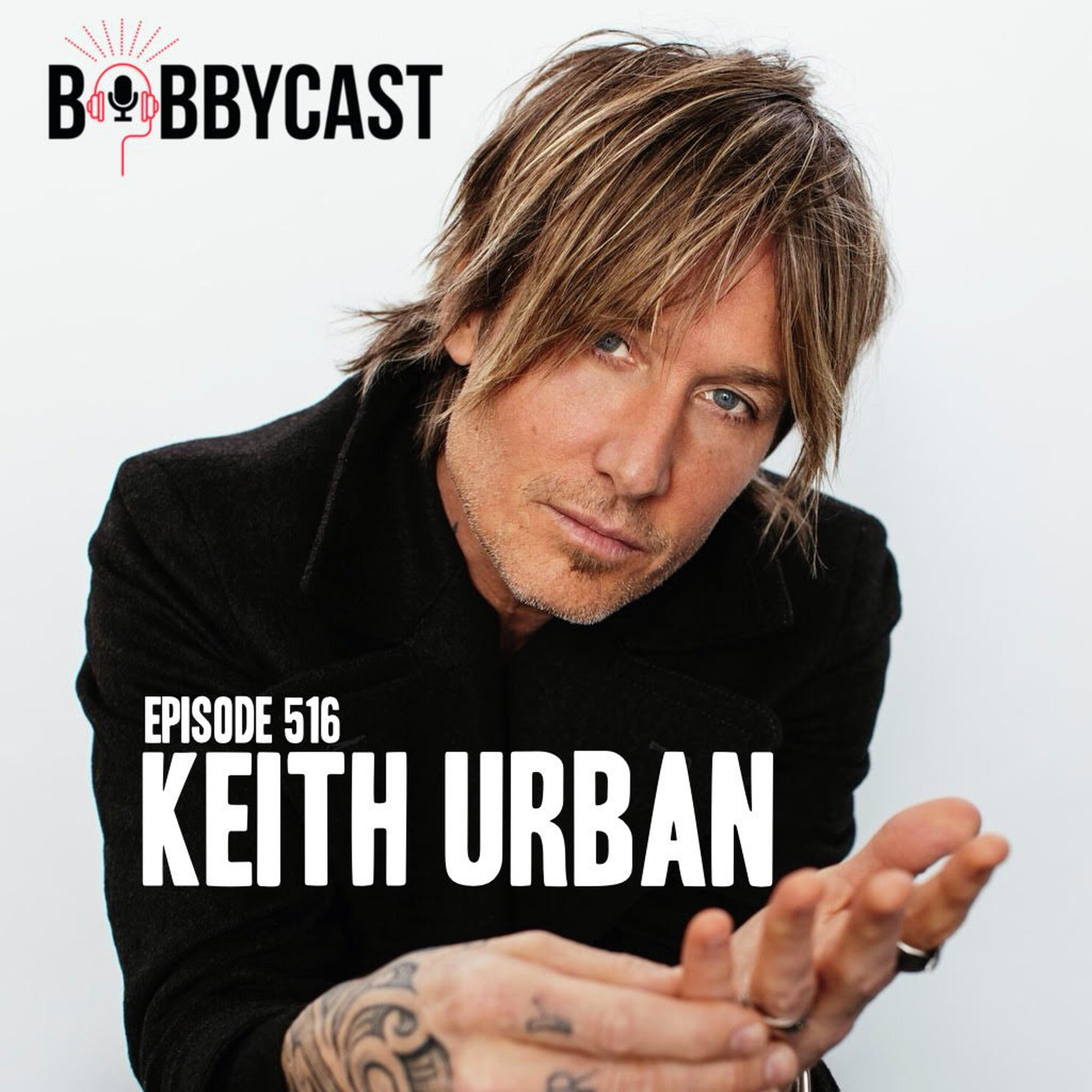
#516 - Keith Urban on His Origin Story + Going Back and Forth From Nashville to Australia Early in Career + Signing His First Record Deal + His Favorite Part of Being a Musician + Bobby & Eddie Discuss The Top 10 Most Hated Bands
On this episode of the BobbyCast, Bobby recently sat down with country music legend, Keith Urban at Keith's recording studio. Bobby asked Keith about his origin story and going back and forth from Nashville to Australia early on in his career. Keith also discussed signing his first record deal in Australia and his favorite part of being a musician. Plus, Bobby and Eddie give their thoughts on a list of the top 10 most hated bands of all time and if they deserved the negative feelings.
Follow on Instagram: @TheBobbyCast
Follow on TikTok: @TheBobbyCast
Watch this Episode on Youtube
See omnystudio.com/listener for privacy information.
Available Results
Generated results are saved to the knowledge database for reuse and search.
Extract Knowledge
Pick what you want extracted first. Model, scope, and chapter options appear after a template is selected.
Transcript
00:00:06
Speaker 1: I'm in this bar and I look over at the table I see Toby. I'm like, oh wait, that's Toby Keith. I think you've cut one of our songs. He goes, huh oh, yeah, man, did you like the song? He goes, we cut it, man, And then he just looked back at his dream and I was like, okay.

00:00:22
Speaker 2: Moving on.

00:00:23
Speaker 1: Years later, I got to know him and I told him that story. He's like, man, I'm so sorry.

00:00:29
Speaker 3: Welcome to episode five sixteen with Keith Urban. And this was us at Keith Urban's new studio that he built, that he owns, and we used a clip of this for the ACM television special that is on Amazon Prime Video if you get a chance and you want to watch it. But we had like forty five minutes, thought it was a really good interview, so we wanted to play it all back here. A couple of things. Keith's touring the High and the Live World tour going on now wraps up in October and it wraps up in Nashville, but there are so many stops. The Australian leg kicks off and he's playing in a city called Wollongong.

00:01:02
Speaker 2: Wallingong Ever been there?

00:01:04
Speaker 3: Never heard of it. Actually, if it sounds like a place I'd like to go, so you can check that out. He's got Chase Matthew, Alana Springsteen, Carly Scott Collins on tour Keith Urban dot com if you want to go check out. His shows are so awesome. I think some of the great stories we've learned about Keith in the past that we don't get to here, because we did an episode a long time ago with Keith Urban where we talked about and we could even put that up later this week, to the old Keith Urban episode. Yeah, where we talked about his dad, and he talked about his dad like super detail. I had never heard him talk about his dad that much, so yeah, we should put that up. But he talked about too, like playing at the airport where he would stand on like the conveyor belt thing in the middle, not the part that moved, but the conveyor belt moved around it, and so he would play music there and then people would come and get their bags, and they'd get their bags and walk away, then he'd start over the next time. So really interesting his story. And here we talk about like when he moved to Nashville and where he lived exactly and I hope you enjoy this. And then after this forty five to fifty minutes with Keith Urban, we're going to talk about bands that get a lot of hate but don't deserve the hate they get. So we had this already recorded and we were just going to team it up with something. So we're gonna put it at the back end of this because I really liked it as well. So Keith Urban, Episode five sixteen. If you want to watch this, by the way, we've loaded it up the whole thing Bobby Bone's channel over on YouTube. It's where we put all the Bobby casts, Bobby Bone's channel on YouTube. All right, here we go, Episode five sixteen with Keith Urban.

00:02:35
Speaker 4: Thanks for having me, Thanks for coming.

00:02:38
Speaker 2: Pretty cool space.

00:02:39
Speaker 4: Thank you.

00:02:39
Speaker 2: So, what's just like your dream studio? Did you build this?

00:02:43
Speaker 1: I didn't build it now, this got built in the mid nineties, but I've did a lot of recording here.

00:02:49
Speaker 2: So before you bought it, you recorded here.

00:02:51
Speaker 1: Yeah, a lot of stuff on all the albums from Golden Road all the way forward.

00:02:57
Speaker 2: So in that case, is that like you're waiting for it to go for sale since I.

00:03:00
Speaker 1: Couldn't believe it was for saying I put it that way, you know, and buying it was I felt like I bought my school.

00:03:05
Speaker 4: That's what it felt like.

00:03:06
Speaker 3: That would be weird, yeah, but also awesome. Yeah then you're the ruler. Yes, yeah, that's great. There's a lot of stuff I want to talk about. I think for me, your origin story is really interesting, especially when you come to Nashville. Like when you moved to Nashville, Like where do you live? What kind of place do you live, like for a new artist moving here, like a small apartment.

00:03:26
Speaker 1: Well, weirdly enough, the first place that I stayed with my manager when we came here the very first trip, we stayed over the road at Shoney's Inn, which is now comfort In, And the room that we stayed in is literally right there. And it's crazy to walk out the door of the studio and look over and see that room that my manager and I stayed in on the first trip, and to go from there to here is mind boggling.

00:03:49
Speaker 3: So why do you say you and your manager, you guys came together.

00:03:53
Speaker 1: What was that relationship we you know, we just I made a little demo tape that we just got on a plane and come over here.

00:04:01
Speaker 4: We really didn't know anybody.

00:04:03
Speaker 1: We just did the classic thing of walking up and down sixteenth and seventeenth A and going in and seeing if they'd let us play the my little cassette demo.

00:04:12
Speaker 3: So you record a cassette of songs? How many songs do you think?

00:04:15
Speaker 4: Just guess?

00:04:16
Speaker 1: Maybe five or six songs that I'd written.

00:04:18
Speaker 3: And you felt strongly enough about it that we're going to go to Nashville. He felt strongly enough about you. Yeah, that's a lot of trusting to a person too, by the way, like as a manager, going I trust this guy, like this is my guy. You fly here, you're staying at the show, and he's in for what do you think of night?

00:04:31
Speaker 2: How much?

00:04:32
Speaker 1: Oh more than we could afford at the time. I mean, we spend everything we had on the plane ticket.

00:04:36
Speaker 2: In a paying nightly rent.

00:04:41
Speaker 3: And then how do you do it again? You're knocking on doors? But what doors do you knock on if you don't know what doors are? Important?

00:04:48
Speaker 1: We did anybody that would listen, we would play it for. And I was so proud of it, you know, and thought, oh, I can't wait for everybody to hear this. It was terrible hindsight it was just terrible, you know, what do I know? You know, but played it for people that would listen to it, and it was all very much like thanks, but you know, so it was really heartbreaking, you know. It was just soul sucking. But I went anyway, I want to be here, I want to live here. Let's go, let's go.

00:05:19
Speaker 3: When you say let's go, do you go back?

00:05:21
Speaker 4: Yeah? So I was only on.

00:05:22
Speaker 1: It was really hard to get visas back then, and I couldn't legally stay longer than you know, a certain period of time. I couldn't make any money here, not legally, so I could come for a couple of weeks try and get with people to write, and then I'd have to go back to Australia. And I was doing little shows at corner pubs or wherever I could on my own solo to just stock money away so I could then get another plane ticket come back and just keep doing this back.

00:05:49
Speaker 4: And forward forever.

00:05:51
Speaker 2: How long did you go back and forth?

00:05:54
Speaker 1: I don't know, two three years, something like that. I would come over for a couple of weeks and write with some people and then go back and come back over. But I was staying in a hotel probably down here at the Shawnees, I think still. And this guy who was an engineer at one of the publishing places I went to, he said, listen, I live on my own. I got a spare room at my house if you want to stay there and stay at my hotel. So I stayed at his house and when I left to go back to Australia, I left a bunch of a bunch of clothes in the drill and he called me and he goes, hey, you left some stuff here, and I said, yeah, I'll be back because I wanted to feel like I was moving in. So I was in Australia thinking I've got clothes in Nashville like I have.

00:06:37
Speaker 4: Like it was like saying I have a place there.

00:06:39
Speaker 3: You know, before you left a toothbrush at somebody your dating's house, so now you know same kind of Yeah, you got to go back exactly. So the more you would come over, and it's a pretty intimidating place because you're coming to I mean where you are, there's music, where everybody is, there's music, and you're kind of king dealing and then you get here and you're like, wow, this is the giants are here? Did that motivate you to get better or did it did it more inspire you to get here so you could be around it, to grow into it.

00:07:05
Speaker 4: All the above.

00:07:07
Speaker 1: I knew when I got here, I just wanted to be here. All the best here, all the best guitar players are here, all the best songwriters are here, the best producers, the best everybody is here. So I just wanted to get here and get going. I knew it was going to take a while, and I just wanted to get going.

00:07:23
Speaker 3: You know, when did you get your first piece of positive feedback?

00:07:27
Speaker 4: Monday?

00:07:28
Speaker 1: Just last Monday?

00:07:28
Speaker 2: Good for you? Yeah, yeah, I'm glad it's happened.

00:07:31
Speaker 4: Thank you.

00:07:31
Speaker 2: That's pretty cool. Fine, I'm rooting for you. Yeah.

00:07:36
Speaker 1: It's all incremental, you know, it's I'm sure you got a similar experience where it's just just one good enough thing happens that you just hang in there. I mean I didn't have option B anyway. I mean, I had no other plan nothing. It never occurred to me to go back to Australia. That was never part of the thinking ever. It was just well, stay here until something happens.

00:07:58
Speaker 3: When you look back at that tape that you made it and now you know anything that creators make a long time ago, hopefully it makes us cringe because that means we've grown, right, Like That's that's the goal and thing I do. I want to like cringe is something I did two or ten years ago. But when you look back at that, what do you what can you still identify as special about that?

00:08:21
Speaker 1: I think I had a good intrinsic sense of melodic structure for songwriting, and I think people recognize that here. So I was able to get in with really good songwriters pretty early on. And I think even though my voice needed a lot of work, there was some good fundamentals in particularly commercial songwriting, you know, hook choruses and catchy melodies and things like that.

00:08:46
Speaker 3: Songwritering is interesting because you're coming from a place where my assumption is based on other conversations. There's not a lot of co writs, like the co writers really learned in Nashville.

00:08:56
Speaker 2: So were you're writing songs by.

00:08:58
Speaker 3: Yourself and then having to learn the Nashville co write culture when you're here.

00:09:02
Speaker 5: Mm?

00:09:04
Speaker 4: Yeah it was.

00:09:05
Speaker 1: Then I signed a publishing deal. It was very small income for me, which was perfect. It's all I needed. I didn't need much to live on and I had a really crappy rental car and I would drive down to Music Row from this guy's house that I was living at every day, five days a week and walk into this you know, windowless room with two yellow legal pads and a couple of acoustics and try and write a song with a total stranger and it was. I hated it, like hated it. It felt I hated going to school, but this was even worse.

00:09:36
Speaker 4: I don't know why. It was just like I just felt so.

00:09:39
Speaker 1: Insecure, so out of my depths. You know, I'm writing with these professional writers and I don't know what I'm doing, and it was and it was not inspiring. I was used to having a drum machine, writing with a bit of a groove, getting a vibe going, and that would inspire the way I write songs. And nobody wrote like that. It was literally legal pads and an acoustic and windowless room.

00:10:03
Speaker 4: And I'm like, how do you write in here?

00:10:05
Speaker 1: What?

00:10:06
Speaker 4: It's not vibe? You know?

00:10:09
Speaker 1: But from that experience, I think I learned a lot about songs, even more about song structure and how to write a song that isn't vibe based, but it actually has the bones of a good song.

00:10:21
Speaker 3: Do you feel like those experiences writing in an environment that you weren't completely comfortable, not because of the people, but because of what you were used to and also where you did your best work. Do you feel like that also help you understand where you did write the best and how you wrote the best because you're in a room with no windows and you're like, okay, I'm learning here.

00:10:41
Speaker 2: But it kind of reinforced the idea of you.

00:10:43
Speaker 3: Like to write with a vibe, you like to write with a machine, and so therefore you knew where you'd be the.

00:10:47
Speaker 4: Best spot on. That's exactly what it did.

00:10:49
Speaker 1: It mean, it reinforced how I don't want to write or how I can't write. It's not don't want to it's like it's not bringing out the.

00:10:57
Speaker 4: Best in me. You know, it's not inspiring me.

00:11:00
Speaker 1: I feel intimidated, I feel suffocated, and I can't write like this. And I think a lot of it was to do with you know, I think the foundation of country songwriting is lyric. The melody seems to always come second.

00:11:17
Speaker 4: The lyric is key. The story is important, That's what's important.

00:11:21
Speaker 1: And I was coming from it the other way, where the melody and the hooks and the riffs that those were driving the story and everything else. So I just had to find my environment and way of writing and people that.

00:11:35
Speaker 4: Also love to write that way.

00:11:36
Speaker 3: Do you feel like now when you write with people that you know are feeling a bit of the same intimidation from writing with you, you can remember that version of yourself, Oh yeah, and kind of help them through it.

00:11:45
Speaker 1: Totally, totally. I neutralize the situation immediately. I'm like, I don't know what's going to happen to day. Maybe nothing, but let's just jam a bit, let's have fun. If you get any ideas, you know, zero no pressure, no expectation. You know, maybe we write, maybe we don't, maybe just go to lunch.

00:12:03
Speaker 4: Maybe we just hang.

00:12:03
Speaker 1: Today and that will end up creating a song the next time we get together because we know each other better.

00:12:09
Speaker 3: You have a publishing deal, and you said, a Paige, you a little enough to get by. Did you have any success in your first publishing deal? When did you start to have success as a writer?

00:12:21
Speaker 1: I really, I mean I had to record my own songs to get them cut to the degree that because I wasn't a professional writer, it wasn't what I came here to do. I didn't come here to be a writer. I was an artist, but I could write.

00:12:34
Speaker 3: And that was the first way to make money too, right, Like, yeah, a steady check at least.

00:12:38
Speaker 1: Yeah, it was a steady check. And it was a way for songs to maybe get cut by the people and a few little cuts here and there, you know. Like we wrote a song, My buddy and I wrote a song, a Christmas song that Toby Keith ended up recording on an album. I was completely unknown, So this is the early nineties, and.

00:12:59
Speaker 4: I heard that he cut this.

00:13:00
Speaker 1: Song we wrote, and I was like, the song was called Jesus Gets Jealous of Santa Claus, right, and it's just it's a really beautiful songs. It's all about the anti commercialism of it, right, And so.

00:13:12
Speaker 4: We wrote it. He loved it cut it.

00:13:14
Speaker 1: I was amazed, because, I mean, Toby is a great writer. I'd never met him. I was down in Lower Broadway one night at a bar. And this is long before Lower Broadway is what it is now, and nobody went down there. I'm in this bar and I look over at the table and I see Toby. I'm like, no way, that's Toby Keith Man, I'm gonna go up and say hi, cause I got a way to introduce myself now. And whenever I said, Toby, your name's Keith Urban. I think you cut one of our songs, he goes, huh. I went, you record it one of our songs?

00:13:45
Speaker 2: You know?

00:13:45
Speaker 4: Jesus gives ye. He goes, oh yeah man, and I.

00:13:48
Speaker 1: Went, well, thanks for recording it. You know, did did you like the song? He goes, we cut it? And I went yeah, yeah, no, thank you. That's but you're a right right. I just wanted did you love the song?

00:14:01
Speaker 4: You guys? We cut it, man, And then he.

00:14:05
Speaker 1: Just looked back at his dream and I was like, okay.

00:14:08
Speaker 4: Moving on.

00:14:09
Speaker 1: Years later, I got to know him and I told him that story.

00:14:11
Speaker 4: He's like, man, I'm so.

00:14:12
Speaker 1: Sorry he couldn't have been nice. And we became really, really good friends.

00:14:17
Speaker 3: The first time I met Toby, I said, Toby, how's it going? He said, the first time I met him, and we again became friends. His Google me, how's it going? Google me, Yes, love it?

00:14:29
Speaker 4: And I said love it?

00:14:30
Speaker 3: Okay, what am I going to find? My health? And how much money I have? Oh my god? And I was like what is up with this dude? Later on, same later on, I did a lot with Toby, like yeah, and and but yeah, that was my experience too him. He was very no nonsense how it felt. It's funny talk about just going to a bar and seeing Toby Keith sitting there. I mean, I think that's kind of the magic of this town. And a lot of the stories that I have are from people who just like see you walking around them all like most of them, Like I saw Keith Thurbman. I was at a Forever twenty. He didn't go in, but I saw your wife in a makeup store.

00:15:04
Speaker 4: I was in there, and what were you doing in that? Yeah?

00:15:07
Speaker 2: Just a lot, a lot.

00:15:08
Speaker 6: Hang ty, the Bobby Cast will be right back and we're back on the Bobby Cast.

00:15:23
Speaker 3: What about this town is magical?

00:15:26
Speaker 1: Everything is if it's just uh, the people, it's a it's a it's this this hub. It's the one thing I missed a little bit about music right not being what it was. You know, it got decentralized. It kind of just went off into all these people's homes with personal recording studios and various things, and.

00:15:44
Speaker 4: People didn't have to.

00:15:46
Speaker 1: Concentrate on the row as much anymore. And it's sort of a bit sad because Nationalist such a community, and I think that cross pollinating and enmeshing with artist, songwriters, publishers, managers, everybody intersected all the time was really healthy.

00:16:04
Speaker 3: What guy, you're your first traction as the person you came here to be an artist.

00:16:11
Speaker 1: Again, it was all little incremental things. The publishing company I signed to was run by a gouck called Barry Coburn and he was managing Alan Jackson at the time. So in nineteen ninety four, Alan was shooting in music video and they needed a longhaired guitar player, and so they asked me to do it. And it's a similar Toby story.

00:16:35
Speaker 2: In the video.

00:16:36
Speaker 4: But you didn't play on the song No, but I'm in the video to Mercury Blues.

00:16:41
Speaker 3: One of my favorite Alan Jackson songs, Thank You Sorry videos.

00:16:48
Speaker 1: So it's a similarst thirty to the Toby thing. Like I didn't know Alan. I was so excited. You know, we're on a We're in a sound stage somewhere and I'm on this platform and I've learned Brent May guitar solo note for note the night before because they're going to be zooming in on me, and they filmed me for a little bit and then I see Alan come in.

00:17:07
Speaker 4: I'm like, oh, my god's Alan Jackson. This is so freaking awesome. I mean, it's nineteen ninety four. He's king, you know.

00:17:14
Speaker 1: And he comes over with his cousi and he kind of just looks at me and he looks back at the camera, and then they run the song and we both shred together. We're literally two feet from each other, and they take a little break to set some lights whatever, and I'm waiting for him to say something.

00:17:30
Speaker 4: He said, looks around me, he.

00:17:31
Speaker 6: Goes it, looks back.

00:17:36
Speaker 1: Never said a word to me, like, not one word. We finished the thing and he just walked off and I was like oh. And I went home and my buddies were like, what was Alan? Like, I go, I adn't really meet him, and they go, I thought there was a thing with the two video. I said, yeah, never made him And again got to know Alan years later and he's like, man, I'm so sorry.

00:17:59
Speaker 4: Because I hated that video.

00:18:01
Speaker 1: He said, you got to understand it's the first video I'd done where they brought in some slick la producer director. I didn't want to do it, but they wanted to sort of change my image and make it look slick. So they said, we can't use your band, and he goes, I always use my band, what do you mean? And they go, no, we have to use these other people to pretend to be your band me right, you know. So he hated it, obviously hated this longheaded dude who's not his guitar player.

00:18:27
Speaker 4: So I totally.

00:18:28
Speaker 1: Got it, and we've become really really good friends.

00:18:31
Speaker 2: And it's so funny about Alan.

00:18:32
Speaker 3: The first time I met him, not a video, but ACM Honors was doing a show and I was doing like one funny song with the guitar.

00:18:38
Speaker 2: I was talking.

00:18:40
Speaker 3: It was after like Jaco when I was playing and I was doing thing. Alan Jackson was behind me, but it was raining, so moving everybody along and they paused and I saw Alan Jackson, never seen him before, and I was like, this is crazy, Alan Jackson. I said, hey, missus Jackson bibyone, nice to meet you. He said nice to meet you, and I looked at him and goes, all right then, and that meant go away later awesome. But he hit me with the ir THENT and away, I.

00:19:02
Speaker 1: Went, it's great, and this town same experiences at the least.

00:19:06
Speaker 3: GI, Yeah, it's great, and then again we find out how freaking cool they are later.

00:19:10
Speaker 5: Yeah.

00:19:11
Speaker 3: I think that's and I think that's a bit of my point too, is people are getting first impressions of you today all the time in the same way, but because you got to live the full experience.

00:19:20
Speaker 2: Same way.

00:19:20
Speaker 3: I asked you about songwriting, like, they're probably a lot of new artists that you meet a lot of the time and that ask you, Hey, what advice do you have for somebody like moving to talent or a new artist, Like, what is the standard Keith Urban advice for a new artist?

00:19:35
Speaker 1: Well, it's always different because the whole thing is changing constantly. You know. It's like you don't have twenty years experience, you have one years experience twenty times. That's very different because it's constantly changing. So, you know what I had to do when I got here, you don't have to do that now. There's like so many other ways to get fund an audience, to make music, to write songs, to get them cut. There's just so many ways do it now. So it makes it better on one hand, but on the other there is way more competition. It's just you sort of drowning in it. Now there's so much new talent.

00:20:11
Speaker 2: Tell me about signing your first record deal.

00:20:15
Speaker 1: Well, my first one was signed in Australia. I signed it because it I want a competition where I got to record a single for EMI Records, and I did that and they liked it, and so they.

00:20:29
Speaker 4: Said, let's do a whole album. So I did a whole album.

00:20:31
Speaker 1: But I already wanted to come here, you know, so recording it to me was just a way to have an even better demo to bring over here. But I had some success with it in Australia and got a band and worked my way up to having a roague crew. This is after eight nine years in the clubs already. So now I've worked my way up to this five piece band, three man road crew, merchandise.

00:20:58
Speaker 4: I'm like, this is great.

00:20:59
Speaker 1: I got an album, songs in the radio, like everything I've ever wanted. But I really wanted to go to America. And so after all that work, I come here and you just start from the bottom again. Literally, nobody cares. You can't bring your band. I have no money, so I'm right back to ground zero and starting to pay the dues all over again. It was another five six, seven years here in Nashville.

00:21:26
Speaker 2: Until you got a deal.

00:21:27
Speaker 3: Yeah, and what was the first single they ever wanted to put out on you?

00:21:32
Speaker 1: Well, well, technically it was with my band The Ranch, and so we did a song called walk in the Country, and we did a video. We had so little money for the budget that we recorded two videos in one.

00:21:43
Speaker 2: Day, only so much time. So yeah, cram on both.

00:21:46
Speaker 1: I think it was like fifteen made them in ten grand or something. We shot two videos. We went out to a place called Adams, Tennessee. We went to this abandoned kind of street where.

00:21:55
Speaker 4: The stores were all boarded up. We helped put the camera in the street at the stores. We stood in front of there and shot that video.

00:22:03
Speaker 1: They turned the camera around and we did our other song on the other side in this where they'd torn down a building and we played in the rubble.

00:22:10
Speaker 4: So you know, we shot it all in one day. It's crazy.

00:22:12
Speaker 3: What was the success of the singles you put out early with The Ranch.

00:22:19
Speaker 1: Well, the critics really liked it, but it didn't get any real push.

00:22:25
Speaker 4: I mean, ready, I didn't know what to do with us, you.

00:22:27
Speaker 3: Know, because of the sound, because we hear.

00:22:29
Speaker 1: The sound and the look, and they're just like, what is this three piece band? And who's this long haired guy? And I look back at it now and I'm like, oh my gosh, I mean, what will we think? And we were never gonna fit in. We just weren't going to fit in. And I was frustrated because I didn't come here.

00:22:48
Speaker 4: To be in a band.

00:22:49
Speaker 2: You know.

00:22:51
Speaker 1: The three piece thing happened because I had a five piece band in Australia. I couldn't afford to bring everybody, So, Okay, what's the minimum I can bring? While as a tapla I can bring bass and drums. Then I got a band, Okay, three piece, great, I'll bring my bass plan drummer. They were the two guys in the band that didn't sing. My keyboard player and rhythm guitarist sing. So I'm here in a three piece band, the singer.

00:23:14
Speaker 4: No harmonies. I'm like, man, this is not going to work.

00:23:17
Speaker 1: And then my bass player left, got a singing bass player and we became this three piece band. Because of economic reasons. It wasn't an artistic choice.

00:23:25
Speaker 3: When you're finally Keith Urban, what was the first piece of material or song that you put out that actually gains real traction or that sells tickets or got you on a tour, right, Like, if it's something out that somebody noticed you enough that it changed your life.

00:23:44
Speaker 2: What song was that? Well?

00:23:46
Speaker 1: I mean technically, the first one was a song called It's a Love Thing, which was the first single off the solo album that I did that did okay. And then we put out a song cale where the Blacktop Ends, and that did better. Sorry You're Everything. It was a ballad called You're Everything that did better. And then the third song was but for the Grace of God, which became my first number one song. So it was this very slow incremental.

00:24:15
Speaker 4: Movement. I'm like, okay, we finally get traction.

00:24:17
Speaker 1: And then we did Blacktop after that, and then I got to make another record which became Golden Road, and first single off that was Somebody Like You.

00:24:27
Speaker 3: Was that song transcendent in how it landed as opposed to your past stuff?

00:24:33
Speaker 1: Yeah, Because I'm a live guy. I play live, That's what I do. The early years in Nashville was so hard for me because there was no I wasn't playing. I wasn't playing anywhere. I found out very quick that if you play down Lower Broadway, nobody wants to sign you because they go, You're just one of those You're just a cover band, You're not an original artist, you know. So I'm like, ah, so I can't even play anywhere.

00:24:58
Speaker 4: So after the first solo Red.

00:25:00
Speaker 1: I got to put a band together and tour and get back into my place where I feel so at home. And I think by the time he made Golden Road, I was feeling that sense of who I am musically, you know, it had I like to say that record had more stubble than the first one. It was a bit looser, and it was more raw, and I took more. I had more confidence in the studio of making the music that I wanted to make, not what was on the radio or anything like that, and it turned out to be the music that was the right music.

00:25:34
Speaker 3: Did you ever have concerned of being pigeonholed as just a guitar guy.

00:25:38
Speaker 1: No, I never had that, because I mean I always see myself as a jewet. I mean, my guitar am I singing? They go together the same way with Glenn Campbell or something like that. It's just or Vin Skiel or anybody.

00:25:50
Speaker 4: It's for me.

00:25:52
Speaker 1: The two go together, but even more than those guys because they have these these voices, and I think me and my guitar or one.

00:26:03
Speaker 3: I pay a lot of attention to your tone and not your voice tone, like your guitar tone. And even the slightest change changes the sound of a song. How much time do you spend focused on tone?

00:26:15
Speaker 4: It depends, you know. Sometimes it's.

00:26:20
Speaker 1: Every song is different, Every song is different. I'm only seeking inspiration, that's all. That's all I'm waiting for. I'm just waiting for a sound or a tone or something where I'm inspired to play something. And that could be through a cheap amp and you could have dialed it up immediately and you go, that sounds good. Let's go plays soul and you get good. That was great, moving on and then the next song you like to spend a whole day noodling and doing this and whatever.

00:26:42
Speaker 4: So they're all different.

00:26:44
Speaker 3: What song that became a massive hit took the longest to actually have fully done?

00:26:51
Speaker 4: Oh gosh.

00:26:54
Speaker 2: Ah, maybe maybe rewrites weirdly enough?

00:26:59
Speaker 1: Make Him of Us took a long time because I grew up with Don Williams Records and they were so simple. There was like nothing on them. They're so simple. And when we cut Making Memories, it had a don vibe in its structure in the recording, and I wanted to get that minimalism. And we recorded it and it was sort of like this, And then we spent a long time stripping it down, stripping it down, stripping it down, replaying the guitar, re singing it, re singing it, re singing it, trying to make it more and more simple, less slick, you know, just more singer songwriter.

00:27:34
Speaker 2: Is there a moment where you go this is it?

00:27:36
Speaker 3: Or is there never a moment where you go this is it?

00:27:39
Speaker 4: Both?

00:27:42
Speaker 1: I mean, I've heard songs on the radio where I go.

00:27:45
Speaker 4: Oh, I'm very happy with that.

00:27:47
Speaker 1: You know, I hear somebody like you now I still am really happy with that. Dave's go by things like that, and then I'll hear other things like ah, I wish we had, of wish we had, of whatever. But more than anything, I'm happy with you. It's got to get away from it for a while. I have some perspective.

00:28:07
Speaker 3: You're still so creatively driven today, as I guess the first time I met you ten years ago, like, I still feel like you're creatively chasing whatever it is it inspires you. Do you still feel as creatively driven now as you did ten twenty years ago.

00:28:22
Speaker 1: Exactly as when I lived over there at Showny's. I feel pretty much the same. I've got a better group of people I can write with and work with, and I have more capacity and facility to create the things that I hear in my head, you know, from years and year of doing it. But the adrenaline rush in the excitement of writing and creating something like straight Line, which is the single we have at now, when that comes to the studio, it's like it's an amazing feeling.

00:28:54
Speaker 3: The opposite of the question asked a minute ago, what song fell out of you? And it was done the quickest and you're like, wow, that it's great and it took almost no time.

00:29:02
Speaker 1: Somebody like you was a bit like that because it was a great band. It's the very first song I'd done with Dan haff I think the bones of the song just happened to be really good, and we recorded it at the sound kitchen. Everybody on the floor, so Chris mceu was here on drums. Jimuli SLOs is here on bass, tom bergervack's and guitar tim akers there own keyboards. I'm in the booth over there with banjo and a vocal and Dan Huffer was sitting in the middle of the floor with an electric guitar, and Justin ee Banker's in there and he hits record and away we go. I've got a recording somewhere. I used to set up a video camera in the in the studio, in the control booth and just capture a take, you know, And I have the recording of us. You hear the song start, you hear it finish, and you see Justin go whoa like this in front of the console, and it's the end of the It's the take.

00:29:57
Speaker 4: It's just it was crazy.

00:29:59
Speaker 3: There are a story about ACDC and Angus and he would play so hard for so long, he'd sweat so much that he would lose five seven pounds a night right because he would go.

00:30:08
Speaker 2: Like my version of that that I tell.

00:30:09
Speaker 3: People, is you watching you perform because you go so hard and you're so active on stage, singing, playing, running into the crowd. Is there a ramp up period for you getting in shape before you have to go on the road. Because these are very active shows.

00:30:25
Speaker 1: Yeah, I just I mean, I think we're the same, like being in decent shape anyway, just to do the things we want to do, you know, move the way we want to move, and do the things we want to do.

00:30:37
Speaker 4: And I live to play, I really do.

00:30:40
Speaker 2: Is that's still your favorite part of all of it live?

00:30:41
Speaker 4: Yeah?

00:30:42
Speaker 1: Yeah, But I mean I love being in the studio, so I bought the studio. I could spend months in here, never leave. You know, I don't have any other hobbies or interests. I love making music. It's pretty much it. I don't play any sport, not really. I love writing, recording, I love touring.

00:31:00
Speaker 3: So recently you did a project and you recorded, and then you decided we're going to start over after putting significant time.

00:31:07
Speaker 2: Will you just kind of tell me that story.

00:31:10
Speaker 1: It's never happened before. So really, since the first record, the way I make him is quite It's not chaotic, but it's very spontaneous. You know, the studios booked, we've got the players booked, got a song chosen to do. I'll drive in that day and maybe as I'm driving in, I'm like, I don't really feel this song. I have this other song that I'm sitting on or it's half written or something, and I'll play it for Dan and I go, let's do this one.

00:31:39
Speaker 4: Let's forget that.

00:31:40
Speaker 1: So I've always made records that way, so the spirit of it is always what I want to do, you know what I mean.

00:31:46
Speaker 4: So it's good that it's now. It's fun. I'm passionate about it. It's what I want to do.

00:31:52
Speaker 1: And I thought, sometimes my records sort of go off in weird musical directions, and maybe I need more discipline and make a focused records. So I went in with this idea that I was going to make a much more focused record, call it six one five, and it'll be very focused, and it'll be only this and only that and blah blah blah blah blah blah, you know. And I ended up with this record that was pretty linear. It just sort of did this. It didn't have all the stuff, the spontaneities, just didn't have the spontaneity and the spark and the spirit.

00:32:26
Speaker 4: So I scrapped it.

00:32:28
Speaker 1: And the first song we wrote was straight Line, which bursts with all that rhythmic spirit and liberation because I just come out of this attempt that didn't work at all, And I'm like, that's to your point, Earli. About writing songs, you learn what you don't want to do, and I learned why I don't make records that way. It's just much more fun for me to be spontaneous.

00:32:52
Speaker 3: In that process. And we'll call it the linear part of this journey. Did you ever feel like, oh, this isn't feeling right or are you done with it? And you're like, man, this didn't capture really what I want to capture. When did that happen where you had to evaluate, hey, we.

00:33:04
Speaker 2: May do this again.

00:33:06
Speaker 1: When I was sequencing it, and I get it, you know, sequencing, what does it matter anymore? Who wo listens to albums top to bottom, you know, but sometimes sequencing for me is the way to decide what even makes it onto an album. The sequencing kind of tells me, well, you didn't need that one. This one over here that I was leaving off would actually go good right there, So that one does make sense. So when I started sequencing these songs, that was when I realized, oh, there's a lot of very similar sounding songs here, you know. Just I was touring at the time, so I was sort of recording sporadically, I'd come off the road, we'd cut one song, We'd be like, ah, fantastic, sounds great. You know, you go into it for a few weeks, come back, cut another song that's great. Well, without thinking these together, you're not going to want it.

00:33:56
Speaker 4: That's what happened.

00:33:58
Speaker 3: When we look at the ACMs, you're one of the to do it, the triple crown, to hit one, two, three. When you move here, the goals probably just to eat and pay the bills. Yeah, But now that you look back and you have, you know, one of the few things that any country music artist has, the triple crown, Like can you look back at old Keith and be proud of them?

00:34:22
Speaker 4: Yeah?

00:34:23
Speaker 1: Yeah, and especially the perseverance in tinacity to just keep going even when it seemed. I'm glad it didn't seem as weird and crazy to me as it did to everybody else. It seems so crystal clear why I should be here. But I realized at the time people must have and I know they were a sort of going, the hell.

00:34:44
Speaker 4: Is this boar doing here? It's just crazy? He's crazy, you know.

00:34:49
Speaker 1: I'm glad I didn't know that at the time, because I felt really comfortable here and like I should be. It just took years and years and years of chipping away to finally figure out out how to fit in and not lose myself. That was the balancing act that took the longest to figure out.

00:35:09
Speaker 3: To walk through all three pretty quickly. The Best New Artist, you're that guy? Does that change you? Does it change how people treat you in town? After you get the trophy of the award?

00:35:21
Speaker 4: A little?

00:35:21
Speaker 1: I mean, just more an awareness that's all in potential, like.

00:35:26
Speaker 4: Go a little potential.

00:35:28
Speaker 2: You know a male vocalist.

00:35:31
Speaker 4: Oh man, that was a shock. That was a shock.

00:35:34
Speaker 2: I believe you when you said that, Like why why?

00:35:37
Speaker 1: Because I've never seen myself. I guess I'm so singer guitar oriented that to think of my vocal as being an independent, singular thing I've never given. I just didn't didn't see myself in that category.

00:35:54
Speaker 3: So when you're nominated, do you feel like you're just not going to win? Like this is cool to be nominated?

00:35:58
Speaker 2: Yeah? And when they called your name it was and you went shock.

00:36:00
Speaker 1: Yeah, And especially because you historically you get nominated and then you get nominated the next year, and if you're lucky the year after that, and then eventually eventually they give it to you because you've been nominated so many times, so to get nominated and win it is a big show.

00:36:17
Speaker 2: The Big Ones entertainer.

00:36:18
Speaker 3: Yeah, I think if all the voters saw you perform every night, I don't know who else would have won in the last twenty years, Like to watch it or I guess your show or why I think I told you the first time I saw you do a real show, I was like, oh, I'm blown away because I heard you play, and I've seen you play intimately, and I've seen you play on my show. But to watch a full like arena performance, I was blown away and I'm jaded. And I remember telling you that I think this is a compliment, but you're awesome. I had no idea like how how enthralled I would be, the people around me would be to watch you embrace the crowd, to get very personal, to get within the crowd, all the energy. So I feel like you'd be entertained of the year every year if everybody had to go and watch you perform. But to finally be acknowledged for that, the big One tell me about that, I.

00:37:09
Speaker 1: Mean, that's you know it's it's off of the Mountain an award recognition. Yeah, it's I mean, especially for me because I love to do it more than anything in the world. I love to play live and I love to play with an audience. I love to entertain. You know, I'm not a shoe gazer. I love to entertain.

00:37:31
Speaker 3: I'm a shoe gazer little bit in a different way. I think we're both shoegazers, just in a different way than you mean that, because you got it. I think maybe one A one B becomes the shoes. I think you and are kind of rock in the whole town. I don't ever see it, not in great shoes. Well thank you, yeah, thank you or a great car. Likewise, yeah, I remember why.

00:37:47
Speaker 4: It's your fancy kicks.

00:37:48
Speaker 3: Look and we'll land on a very music based story. One of my favorite Keith Urban stories is there's this big truck behind me, big like right on my butt, and I'm.

00:38:00
Speaker 2: About to get beat up. Whoever this is.

00:38:01
Speaker 3: I'm about to get beat up. And it was you and we were going to the opera. It was during COVID whatever, Yeah, and you were in this big truck. I hadn't I don't know it was you don't think you'd be in a truck like you're being like a I don't know, helicopter or something.

00:38:12
Speaker 2: You know, you're Keith Thurban.

00:38:13
Speaker 4: I think it was an F three fifty.

00:38:14
Speaker 2: It was a monster.

00:38:16
Speaker 3: But I thought I'm about to get beat up by whomever's behind me because we're going on that part of the opera that's like nobody else canna drive?

00:38:20
Speaker 2: Yeah, yeah, yeah, And then and.

00:38:22
Speaker 3: You're like hey, I was like, oh man, thank god, but didn't You're a car guy.

00:38:29
Speaker 1: My dad loved cars, so I grew up with my whole life. We've had We're the odd ball couple, the odd ball family in Australia that always had American cars in this tiny little town we lived in Australia. We had like Chevyes and Pontiacs and Buicks and you know, can.

00:38:43
Speaker 2: You fix a car like drink drink?

00:38:46
Speaker 3: Can you fix it?

00:38:46
Speaker 2: Like?

00:38:47
Speaker 1: No?

00:38:47
Speaker 4: I wish I could.

00:38:49
Speaker 1: It's just it's the driving aspect. I mean, my passion next to music is driving. I drive all the time, and when I'm touring, I'll rent a car if we're going to if we're going to get from a hotel to the venue, I'd rather rent to Carr and drive it myself. I hate being driven.

00:39:06
Speaker 3: Final question, because I know how much you value the people that come to your live shows, and you put so much work into the live shows. Talk to me about a set list and the art of your set list and how you put together a night.

00:39:20
Speaker 1: I probably obsess over way too much a set list because it's an experience. I mean, it's not a group of songs. I'm shaping an experience that I want to create for those two hours for the audience, and I'm trying to guess will this have that effect? And if we go from here and to here, will will that do this? Will this be about the time that the audience would want that that should be right, and then we would be able to do this after that because that.

00:39:49
Speaker 4: Would make sense.

00:39:50
Speaker 1: And you trying to create this a playlist, you know, trying to create a great playlist for a two hour party.

00:39:57
Speaker 3: You were closing your eyes as you were even talking to me through it is that in every night thing where you're changing it or changing it based on how you felt the night before.

00:40:05
Speaker 1: I've learned that it's a delicate balance of don't take too much data from that night because that was that night in that venue in that town. And if you go tinkering too much because of that feedback, this audience could be completely different. So just do it enough where at some point the set list becomes pretty solid. For me, you know, I mean always going to make quarterback calls because I can't do the exact same thing night.

00:40:33
Speaker 4: After night after night. I couldn't do it. But like an episode of SEVENS or something, I just can't do it.

00:40:39
Speaker 2: Going back out on the road again.

00:40:41
Speaker 1: Yeah, High in a Live World tour is going to kick off. Got a predominantly new band, new obviously, new songs are put in there, and brand new production, working with a production design I've never worked with before, and just trying to create a whole brand new experience.

00:40:59
Speaker 3: What is a production designer do with you? I don't know that process.

00:41:03
Speaker 1: Just the look of the stage, you know, and for me, what the lighting is going to do with the video aspects is going to do?

00:41:09
Speaker 4: What the physical.

00:41:12
Speaker 1: Environment of the stage is going to be, what's the what's the material that we're going to be standing on and the durability of it and the color of it and all this stuff so that when you walk in it has a very particular look about it.

00:41:26
Speaker 3: Other than the music rehearsal part is our timing rehearsal part with the videos, the elements that you're putting into the show.

00:41:31
Speaker 1: Yeah, it's tricky for me because I have a lot of spontaneity. So even with tracks, if we've got backing tracks on certain things that might be just percussion. There may be percussion components that the band is playing along with, but I may not want to do that exact arrangement tonight. So you know, our track guy knows how to move things in real time, and the video guys are getting really good at knowing how to move things in real time too, and swap songs around and be on the fly.

00:42:00
Speaker 3: By getting really good at it, that means being forced to because you're like, I'm changing this, and so they just have to roll with it, right.

00:42:06
Speaker 4: It's great.

00:42:06
Speaker 1: I love that kind of just that spontaneity keeps everybody on edge, like nobody can get up. Nobody in the band or in the crew can just be like, you know if you're on because you don't know what's going to happen next. And I love those kinds of shows. You can feel that kind of energy in the audience. That especially when you go into a like a spontaneous thing, a guitar solo or some moment breakdown moment or something musically and the band's like, I don't.

00:42:32
Speaker 4: Know what's happening, what's going on?

00:42:33
Speaker 1: And you're like, I don't know, we to here, we are, but we're doing it. The audience feel that they don't They don't have to be musical. They just go what is going on? What is what's this energy that's happening right now? And it's just unpredictability.

00:42:46
Speaker 3: So keep the band scared. That's the advice, is to keep your band scared anytime. Yeah, I really appreciate you.

00:42:52
Speaker 2: Having me out. Thank you, thanks for showing me the place.

00:42:55
Speaker 3: And always inspired by how you're so inspired. That's a weird thing, hey, but that's the truth, and I thank you. Yeah, I'm inspired by how you stay so inspired. So yeah, thanks for having us out any time.

00:43:05
Speaker 7: Bubby, the Bobby Cast will be right back. This is the Bobby Cast.

00:43:20
Speaker 3: I was reading this article about fifteen rock bands that supposedly don't deserve all the hate they get and ultimate classic rock lists the fifteen and all we're going to do is put it on a one to ten scale, how much we hate the band love it. We're not even going to say if they deserve the hate, we can, but the main purpose is one to ten ten mean most hate, one meaning love.

00:43:42
Speaker 5: And personal opinion. Yeah, all personal opinion, and that's art, right, like you judge art differently based on who you are.

00:43:49
Speaker 3: A number fifteen limp Biscuit. I put Limbisku out of a nine. I love limp Biscuit and love that time. Was never much of a corn guy, but loved limp Biscuit and limt Biscuit. It was a bit derivative of corn.

00:44:01
Speaker 5: Yeah they were.

00:44:02
Speaker 3: Yeah, so love limp Biscuit, love the white rock or rap type thing. I still will watch limb Biscuit videos now of them doing festivals now and still killing it, still doing good. Yeah, so I put them in a nine.

00:44:15
Speaker 5: You I'm gonna go five. Don't care either way because I respect what they did and what they're still doing. Fred Durst, I mean, you know, it's whatever. The guitarists, the guy that looked like, you know, he wore the contacts, and the monkey guy like that's pretty cool. So I didn't care much for their music. But I respect them, so I go five.

00:44:34
Speaker 3: Rarely do people say they respect limb Biscuit.

00:44:36
Speaker 5: Yeah, I haven't heard that really. Yeah, because I understand their success, I understand why people like them.

00:44:41
Speaker 3: Yeah, I really still like them. I wish they'd come in here doing acoustic. That would be to break stuff. Number fourteen Dave Matthews Band, I'm gonna put them at a I'll go eight. Their live shows aren't for me because they're jam banded and too long. But I really like Dave Matthews Band when it comes to listening to songs or albums.

00:45:04
Speaker 5: Solid, that's pretty solid. I want to put them at an eight for a different reason. I like their early stuff. I like Dave Matthews Band till about two thousand. Then after two thousand they kind of lost me. After space between some of the music kind of it didn't like I don't know, it didn't click with me. So I'm gonna go eight because I do love Dave Matthews Band, but some of their early their their later stuff, for their most recent stuff don't like so much.

00:45:27
Speaker 3: It's probably because you're on your formidable years anymore, and that stuff that you grow up with in that time of like fifteen to nineteen, thirteen to nineteen really becomes you. And if they change it all from that, you don't like that anymore because it's not in your formidable years. More than their change is just so drastic.

00:45:42
Speaker 5: Could be right, You could be right about that. I mean, dude, I love Dave Matthews so much that I would listen to all their live albums. I mean their Red Rocks album. I'd listen from start to finish.

00:45:53
Speaker 3: Dave and Toom.

00:45:55
Speaker 5: I would listen to a lot of those college albums.

00:45:57
Speaker 3: That's a good one.

00:45:57
Speaker 5: Loved it.

00:45:58
Speaker 3: That was like from Chicago theater, right. They did a bunch of different ones the day in ten. There was like one real big record though, uh Luther College. I believe that what it was that was like in Chicago. Oh possibly, don't.

00:46:08
Speaker 5: Let's let's google that.

00:46:08
Speaker 3: I don't know. Number thirteen. You too, I like you too, fine. I find them to be overrated. I put them in about a five. I don't hate you too. I would bet either Chicago or North Carolina from where they're from.

00:46:27
Speaker 5: Where is it? Iowa?

00:46:29
Speaker 2: Danger?

00:46:29
Speaker 3: Mister mc du okay, Uh you too? I put them a five. You're crazy, dude, you put you Tube where you put on biscuit. You two is a ten for me.

00:46:38
Speaker 5: I still love what YouTube puts out like I love you too.

00:46:41
Speaker 3: They take themselves way too seriously for me.

00:46:43
Speaker 5: They do. They're serious about their music, but.

00:46:46
Speaker 3: It's different than serious about their music than take themselves way too serious. Two different things. Oh you think like they Yeah, they have attached themselves like we have a purpose bigger than everybody else, and you should listen to everything we say always because we are rock stars and people have accepted and loved ust on a level that makes us superior. They have a superiority complex unfairly.

00:47:05
Speaker 5: I think that is Bono, that's I mean. And they've chosen Bono as their leader as the leader of the band. I get it, and part partly too, Like I mean, he named himself Bono, and then the Edge has a name. That doesn't help that they have these like weird first names or whatever. But dude, you two is so good. The whole world loves you too, and I think there's a reason for.

00:47:24
Speaker 3: The whole world doesn't love you too. They had their moment. They're a five for me. There are ten wow, ten Genesis a little before us, though I've been unfair. So the original singer of Genesis was Phil Collins.

00:47:41
Speaker 5: No go Peter Gabriel. Yes, it's fifty to fifty.

00:47:44
Speaker 3: And then Phil Collins was the drummer who ended up being the singer. I don't have a feeling of love or hate because I don't even know why people would hate them, right, and I liked them. I give them a six because I liked some of the early Peter Gabriel stuff. And we've done this in podcasts, like try to figure out what was what it's really present on Genesis more than it is a score sure, and why don't know why people don't like them though I don't know.

00:48:09
Speaker 5: Either, And we're definitely at the age where were we didn't grow up with it, like you said. And I think that hurts it for me because I wouldn't never turn it off if it's on the radio or it's on like, I mean, that's cool. I like that song, but I'll never seek Genesis. I half the time, I don't really even know if it's Genesis or not.

00:48:24
Speaker 3: So I go four Green Day.

00:48:28
Speaker 5: I'm wann to go love me some Green Day too, if ever, like I'm just like at a Friday, you know, six o'clock on a Friday evening and I want to just go back to a certain time. I will just grab a six pack of beer and listen to Green Day and like just flash back to high school, to college to getting out of college. I love it all. So Green Day I'll give a nine because they're not my favorite band, but I love Green Day.

00:48:54
Speaker 3: I'll give it a nine as well. I think maybe people don't like them now because they're extremely political.

00:49:00
Speaker 5: Oh are they?

00:49:01
Speaker 3: Yeah?

00:49:02
Speaker 5: I didn't even realize. And I guess you two is too right?

00:49:05
Speaker 3: Pretty political, but they're not American. Yeah, but they do hit on a lot of American polic they're not Americans. You just go, you guys aren't even American.

00:49:12
Speaker 5: A good point, Like, what are you talking about? Don't claiming your country?

00:49:14
Speaker 3: I know Motley Crue at ten.

00:49:19
Speaker 5: Again, I think it's our age. Uh, I don't. I don't hate Motley Crue. I don't see a lot of substance to Motley Crue music. It's kind of just turning on in the background. Uh, Home Sweet Home.

00:49:34
Speaker 3: Yeah, they got like two songs I like. I think I have a bunch of songs. I am indifferent about that. If it comes on the classic rock station, like I don't chase down smoking in the boys room. I was trying to think, but if it's on, I'm like smoking in the balls room.

00:49:47
Speaker 5: Girls, girls, girls, girls, guess gurs.

00:49:50
Speaker 3: Right, yeah, four. I see why people don't like them or didn't like them because they were cheesy and they were massive in the glam era. And when you're the biggest and part of an era that looks super cheesy. Mm hmm, I'm gonna yeah, I'm gonna go four.

00:50:06
Speaker 5: I'll go four with you.

00:50:09
Speaker 3: Nickelback, go ahead, go ahead, man, ten to seven, you're crazy.

00:50:15
Speaker 5: Seven.

00:50:16
Speaker 3: I think they get a lot of hate because it's the cool thing to do, and people that say they hate Nickelback actually just want to be a part of a group.

00:50:20
Speaker 5: I don't understand. Was it cool to ever say they're not cool?

00:50:23
Speaker 2: Yes?

00:50:24
Speaker 3: Yes, why that was the cool thing to say? It was Nickelback sucks. They got so big. It's the same thing people do to Coldplay. It's Coldplay does not suck. I know, but that's what happened to Coldplay. They got so big people started to go o, it's corny.

00:50:38
Speaker 5: Mm hmm. You don't think Nickelback's music, is you don't.

00:50:41
Speaker 3: Think cole plays music is wow, dude, it's very I love Coldplay, but there's definitely a corny element. It's deep to their anthemic, fast disco type song.

00:50:51
Speaker 5: Is it a little emo?

00:50:53
Speaker 2: Yes?

00:50:53
Speaker 3: No, guys, you're talking about like the fast stuff that they do now, Coldplate, Sky Full of Stars like that one. Cool Play gets lame, but I love Coldplay, love Coldplay. Nickelback can kind of get lame. But I think Nickelback's great and they should not be hated up on like they do because it became cool to hate on them.

00:51:09
Speaker 5: This is one of those things where, like, I think you and I could really get into a fight over because every time we talk about it, it's like you're so serious about like no, they're so good, and I'm so serious about like no, dude, they suck.

00:51:21
Speaker 3: You don't write that many massive songs without being a really great writer. Even if you think the songs have no texture or depth, they write bangers. The people have spoken, and I'm not going to go to a Nickelback concert. I got invited to one. I didn't want to go. Oh yeah, but I'm not because I'm not a Nickelback fan. So what do you give them, But I'm a fan of not being a hater for no reason.

00:51:45
Speaker 5: No, no, no, no, no, just seven. Rate them the way you rated Motley Kruz.

00:51:49
Speaker 3: I already did seven. They have enough good songs to come on. I'm like, that's fun, I like the song, or I definitely don't hate this song, or I'm singing along with it. Don't even realize I'm sing along with it. Never made it as a wise man. Or look at this photograph.

00:52:04
Speaker 5: Remember I told you how like Green Day, I get a six pack of beer and go back. Dude, if I ever got a six pack of her and listen to nickel Back, I would probably throw away that speaker.

00:52:12
Speaker 3: You're a hater for no reason.

00:52:13
Speaker 5: What's our scale?

00:52:15
Speaker 2: One to ten?

00:52:16
Speaker 5: No zeros?

00:52:16
Speaker 3: Nope, one liar.

00:52:19
Speaker 8: Let's take a quick pause for a message from our sponsor. Welcome back to the Bobby cast created eight.

00:52:36
Speaker 5: How you do this on furmose Let them out?

00:52:38
Speaker 3: It's on the list nine to eight.

00:52:41
Speaker 5: Look, the reason Creed rubbed me the wrong way is because I love Pearl Jam and I hated the fact even MTV did what was remember the Celebrity death matches even did any better versus Scott Creed because.

00:52:55
Speaker 3: Whatever his name is, respect him. He's played with us before.

00:52:59
Speaker 5: Because he tried to sound like Eddie Vedder. I hated that. I hated that he would talking like, do you.

00:53:07
Speaker 3: Think anybody that sings like that is trying to sing like Eddie Vedder?

00:53:10
Speaker 5: Yes, because Eddie Vedder didn't try to sing like that. It was the first one to ever sing like that. Name me someone else who sing like that before Eddie Vedder.

00:53:17
Speaker 3: Okay, everybody's derivative of something, including Eddie Vedder. Go ahead.

00:53:22
Speaker 5: I hated that about Creed so immediately I never like Creed, so I give them a one as well. Eight You're crazy with thems wide O. Did you ever buy their albums?

00:53:36
Speaker 4: Oh?

00:53:37
Speaker 3: Yeah, I went to concerts.

00:53:38
Speaker 5: How many?

00:53:40
Speaker 3: At least two? You're crazy sticks?

00:53:43
Speaker 2: Hmmm?

00:53:45
Speaker 3: Sail Away before me so much. I never saw the hate. So it's just do I like him or not?

00:53:50
Speaker 2: Yeah?

00:53:50
Speaker 3: Like I'm okay. I watched them do the web series at john.

00:54:00
Speaker 2: House.

00:54:00
Speaker 3: Yes, and then he was awesome to sing from six It's Darryl's house whatever it is. One of the two had a house and the artist would go over and I was like, that didn't sound roight. What I didn't sound right, but it's great.

00:54:14
Speaker 5: Hold on, we've done this before, man, where we like go down the sticks songs and like they're all so good.

00:54:20
Speaker 3: Dix is great, except they're great as a classic rock band that I never had any sort of relationship with because they weren't alive while I was alive. Like Renegade Gone, just stop a Renegade, that's a jam. Come sail Away, Come sail away, Come sail away with mister Robotto.

00:54:40
Speaker 5: Mister rob is awesome.

00:54:41
Speaker 3: I got too much time on my hands that I'm in Wait.

00:54:46
Speaker 5: Do they sing show me the Way like I want you? Okay?

00:54:49
Speaker 3: We played with that band, did Foreigner?

00:54:52
Speaker 5: Yeah? Oh that's cool.

00:54:53
Speaker 3: Yeah, I'm gonna give m a six.

00:54:55
Speaker 5: I like six six is strong because they I do like their songs. Don't know anything about them other than I did see that lead singer guy at home Depot one time long crazy Yeah, blonde.

00:55:05
Speaker 3: Hair, it still sounds great. Saw him over John O's house, No, Darryl's house, Pearl jam, go ahead?

00:55:14
Speaker 5: Five? Why do you do that? I swear you do that just to piss me off? Five Because there's no way that you grew up in the nineties loving.

00:55:23
Speaker 3: Don't tell me. There's no way I said what I said?

00:55:24
Speaker 5: Five, Explain yourself, my friend.

00:55:31
Speaker 3: It sounds like a cartoon character.

00:55:33
Speaker 5: What do you talk? No, one sounded like that. Do you remember Hunger Strike?

00:55:37
Speaker 3: Yeah? Okay, remember saw them play that at a show recently. They played it in the crowded the other part Chris Cornell bar that's.

00:55:42
Speaker 5: Pretty cool when they do that. That wasn't the show I went to when Hunger Strike came out. I remember people being like, who is that? Like that voice is so unique, so awesome. Who is that? That's the new lead singer of Pearl Jam.

00:55:58
Speaker 2: Dude?

00:55:58
Speaker 5: They were just they were great from the beginning and they continue to be great. They continue to didn't they move to Seattle? If fake like the from Seattle to be part of the grunch scenes Eddie did Eddie was No, no, no, that's not fair at all. Because Stone and Jeff, the two founding members of Pearl Jam, were in Mother Love Bone, who were the roots of Seattle grunge.

00:56:19
Speaker 3: These are the people they say Eddie Vedder is derivative of Jim Morrison. They stole a lot of his delivery from Jim Morrison.

00:56:24
Speaker 5: I get that.

00:56:24
Speaker 3: Neil Young stole a lot of his delivery from No Young.

00:56:27
Speaker 5: You think Eddie Vedder sounds like Neil Young.

00:56:29
Speaker 3: They say Neil's voice is higher, but veterans credited Young as a spiritual godfather of grunge, especially when he sings and does acoustian material. Okay, Michael Stie because of his mumble delivery, please mark Lanigan from streaming Screaming Trees, grunge guy. Yeah, So anyway, I'm just saying you had to look at that totally original voice that you claim everything's derivative of everybody.

00:56:52
Speaker 5: My final answer is a ten for Pearl Jam Guns and Roses. Ooh, I like Guns n' Roses. I'll give Guns and Roses a solid eight five.

00:57:02
Speaker 3: Really, Yeah, grunge kind of made them look worthless before me. You're right, and grunge made them look weird to me because I never listened to Guns and Roses in real time. Yeah, and so I was kind of like, I like, welcome to the Jungles in football movies. You're in a jungle baby, And I was like, yeah, it's a five. Cold Play unfair hated ten.

00:57:22
Speaker 5: You're gonna put them at ten?

00:57:23
Speaker 2: Yeah?

00:57:23
Speaker 5: Nice?

00:57:23
Speaker 3: I love cold Play. They have some really goofy, cheesy songs. But I love Coldplay.

00:57:27
Speaker 5: It's funny you like you like this the sad Ones more than.

00:57:29
Speaker 3: The only the sad Ones. I don't want the anthem So you.

00:57:32
Speaker 5: Don't like Viva Levita?

00:57:34
Speaker 3: Who cling?

00:57:38
Speaker 5: I don't even know what you're saying.

00:57:40
Speaker 3: Viva Lvida. Journey at three ooh, Journey before me, before us, But still like Journey, I mean, don't Stop Believing is a Yeah. They have a lot of hits too.

00:57:53
Speaker 5: I'll put them at six. The Eagles O ten.

00:57:57
Speaker 4: Eight for sure.

00:57:59
Speaker 3: Number one most hated band. Kiss?

00:58:02
Speaker 5: Oh, why do you hate Kiss?

00:58:04
Speaker 3: I don't.

00:58:04
Speaker 5: I know it's in the list, Like why would you hate on Kiss?

00:58:09
Speaker 3: I think because there wasn't a lot of substance and it was mostly all on flash, which was the makeup.

00:58:13
Speaker 5: Yeah, and uh Gene Simmons tongue.

00:58:16
Speaker 3: Yeah, but part of that, that's part of the makeup and part of that. We're going to be creatures on stage more so than just knock out hit after hit or like music with depth. But again I'm not a Kiss fan.

00:58:26
Speaker 5: Forget the depth though? Do those were jams? Though? You can roll all night?

00:58:29
Speaker 2: Go ahead?

00:58:30
Speaker 3: I know, like three songs you know that's the same song you just said.

00:58:35
Speaker 5: No, I mean I couldn't. I couldn't tell you, like I.

00:58:37
Speaker 3: Know, they have Detroit Rock City, but I can't sing that back right now. And they have the slow song from the Paul Rudd movie where he's a mentor.

00:58:48
Speaker 8: Role Models.

00:58:48
Speaker 3: Yeah, role Models.

00:58:49
Speaker 5: I've never seen that movie.

00:58:50
Speaker 2: I think all their music was in that. It was munch song.

00:58:52
Speaker 3: Yeah, yeah, let me see, because I do like that song, and it's a slow song.

00:59:00
Speaker 5: I love it loud.

00:59:02
Speaker 3: That's what I'm saying. They don't have a lot of songs. They have a lot of like we I was made for Loving You, rocking around, dishors hapens, if I wud lick it up, love gun Forever. Maybe Forever is a slow No, Beth is what I'm talking about.

00:59:13
Speaker 5: Beth.

00:59:13
Speaker 3: Yeah, Beth's awesome. It sounds like a Beatles song, it does.

00:59:26
Speaker 5: Yeah.

00:59:27
Speaker 3: Okay, so there's that. I just want to see where you fell on the hated scale.

00:59:30
Speaker 5: Yeah, you know, I didn't realize Kiss didn't have a lot of jams.

00:59:33
Speaker 3: I might know them because they got a bunch of pain on their face. That's why when they came back and did songs without paint, on their face. Nobody cared they had no more hits. All right, that's it. Thank you guys, we'll see you next week. Thanks for listening to a Bobby Cast production