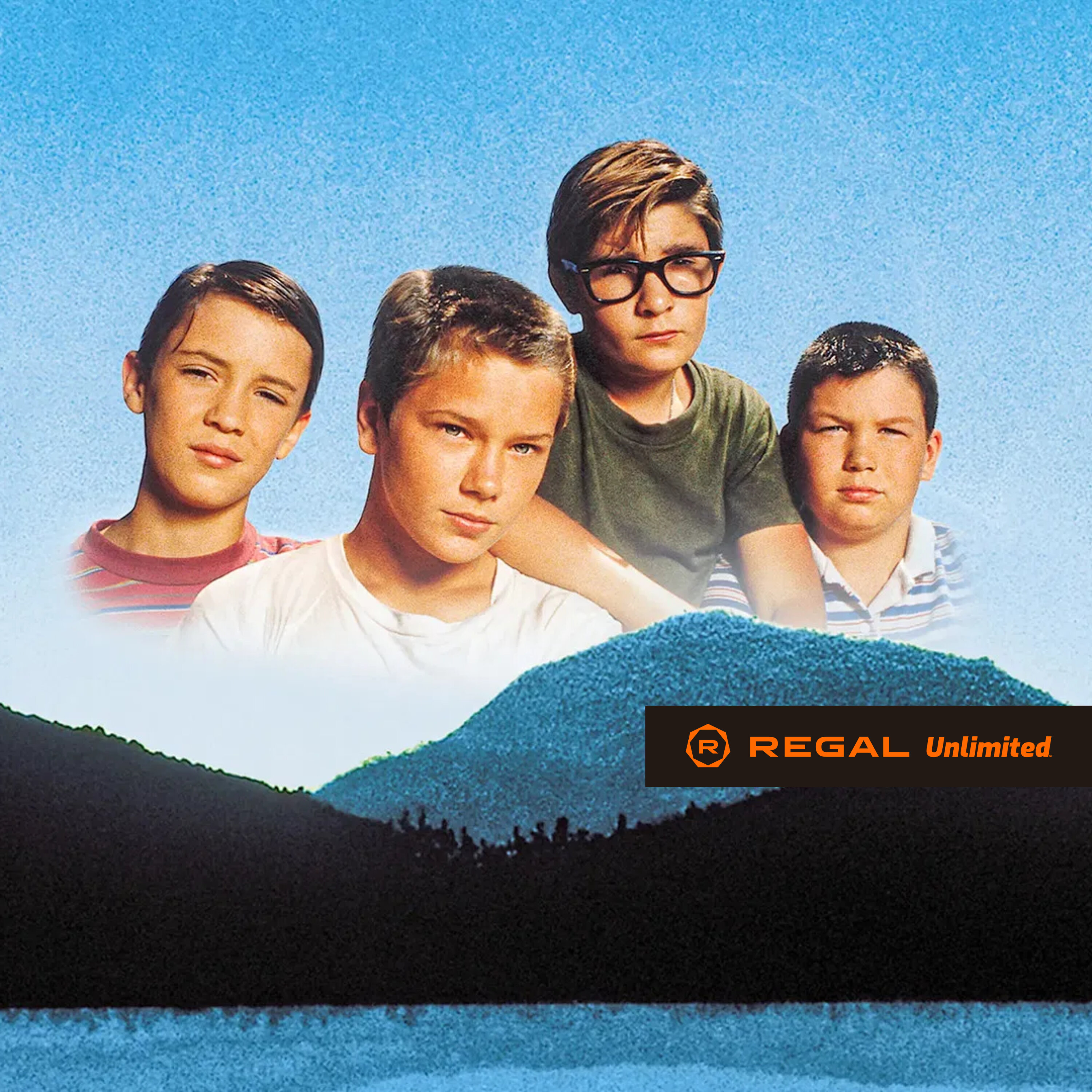
Stand by Me at 40: Why It Still Hits Hard and '40s Madness Round 1 | #1057
Why does STAND BY ME still resonate 40 years later? Adam and Josh revisit Rob Reiner’s classic, reflecting on its friendships, its wistfulness, and River Phoenix’s unforgettable performance. Plus: a review of Maggie Gyllenhaal’s THE BRIDE and a look at the Round 1 matchups of Filmspotting '40s Madness.
Join the Filmspotting Family for the full archive, bonus episodes, ad‑free listening, and more: filmspottingfamily.com
This episode is presented by Regal Unlimited, the all-you-can-watch movie subscription pass that pays for itself in just two visits. Use code FILMSPOT26 to take 15% off.
(Timecodes/chapters may not be precise with ads.)
Intro (00:00:00-00:02:53)
Stand by Me (00:02:54-00:49:35)
Filmspotting Family (00:49:36-00:57:12)
The Bride (00:57:13-01:02:59)
Notes / Save the Date (01:03:00-01:08:22)
'40s Madness Rd. 1 (01:08:23-01:24:03)
Credits / New Releases (01:24:04-01:25:53)
Correction:
-Yes, Adam realizes that he said "Jesus, does anybody" – twice! – not "anyone." He regrets the error.
Notes/Links:
-Filmspotting Madness
https://www.filmspotting.net/madness
-Stephen King: Why I Hugged Rob Reiner After Watching ‘Stand by Me’
https://www.nytimes.com/2025/12/16/opinion/culture/stephen-king-rob-reiner-stand-by-me.html
Feedback:
-Email us at feedback@filmspotting.net
-Ask Us Anything and we might answer your question in bonus content.
Support:
-Join the Filmspotting Family for bonus episodes and archive access.
https://filmspottingfamily.com
-T-shirts and more available at the Filmspotting Shop.
https://www.filmspotting.net/shop
Follow:
https://youtube.com/filmspotting
https://instagram.com/filmspotting
https://letterboxd.com/filmspotting
https://facebook.com/filmspotting
https://twitter.com/filmspotting
https://instagram.com/larsenonfilm
https://letterboxd.com/larsenonfilm
https://facebook.com/larsenonfilm
https://bsky.app/profile/larsenonfilm.bsky.social
See omnystudio.com/listener for privacy information.
Available Results
Generated results are saved to the knowledge database for reuse and search.
Extract Knowledge
Pick what you want extracted first. Model, scope, and chapter options appear after a template is selected.
Transcript
00:00:21
Speaker 1: Film Spotting is presented by Regal Unlimited, the all you can watch movie subscription pass that pays for itself in just two visits. See any standard two D movie anytime with no blackoutdates or restrictions. Sign up now on the Regal app or at the link in our description and use code film spot twenty six to receive fifteen percent off.

00:00:45
Speaker 2: What kind of a show you guys putting on here today? You're not interested in art? Now? No, Look, we're going to do this thing. We're going to have a conversation.

00:00:55
Speaker 1: From Chicago. This is film Spotting.

00:00:57
Speaker 3: I'm Josh Larson and I'm Adam Kempenard.

00:00:59
Speaker 2: Sleep Rowled sleep Roll Cereal gets a sleep rold Something on your neck?

00:01:06
Speaker 3: Yeah right, I'm not falling for that one chance there is something on your neck. Leach le je.

00:01:14
Speaker 1: Rob Reiner's death in December head people reconsidering the director's run of era and genre defining eighties films. This is spinal Tap, The Princess Bride, When Harry met Sally. Reiner was also behind the coming of age classics Stand By Me, which returns to theaters this month for its fortieth anniversary.

00:01:33
Speaker 2: Our review plus The Bride and Film Spotting Forty's Madness.

00:01:37
Speaker 3: That and more ahead on Film Spotting.

00:01:47
Speaker 2: Welcome to Film Spotting White Heat the nineteen forty nine James Cagney Gangster Picture Top of the World ma versus Disney's Bambie. That's the kind of craziness you can look forward to later in the show when we get to Round one of Film Spotting Madness. Josh, it is here, you know.

00:02:05
Speaker 1: Just before you cast that vote, Remember, James Cagney killed Bambi's mother, so keep that in mind.

00:02:12
Speaker 2: Apparently that's how it went down. We'll get into all thirty two, well not quite all thirty two. We'll highlight some of the thirty two first round matches of Film Spotting Forty's Madness. But all thirty two are live right now as you are listening to us, and you can go cast your vote at film Spotting dot net, slash Madness, or just go to film Spotting Madness dot com. The bracket contest is live. You can jump ahead if you want participate right now. It's fine multitask while you're listening or watching, or you can just wait. You can wait until we get to that part of the show. That's fine too. We'll also get to your thoughts, josh on Maggie Jillenhal's The Bride. You did finally catch up with it? A failure at the box office. It seems that nevertheless may have some artistic merit worth celebrating a.

00:03:01
Speaker 1: Failure at the box office. That explains why I was one of I think three, No, there might have been five people, and I may have been laughing the loudest. So okay, yeah, I'll get into I'll get into why a little bit later.

00:03:14
Speaker 2: It earns its exclamation point at the end of the title.

00:03:17
Speaker 3: Is that what you're saying?

00:03:17
Speaker 1: That is absolutely true?

00:03:19
Speaker 3: Okay? No false?

00:03:20
Speaker 1: Savage tisement bear.

00:03:22
Speaker 2: A quick reminder, Film Spotting is now available as a video podcast. Yes, you can watch us on YouTube YouTube dot com slash film spotting, and you can find all of our episodes at film spotting dot net slash episodes.

00:03:36
Speaker 3: But first, stand by me. It's middle age. Oh man, wait you hear this?

00:03:41
Speaker 2: What does it matter?

00:03:42
Speaker 3: You guys want to go see it?

00:03:43
Speaker 2: D body. On December sixteenth, twenty twenty five, The New York Times published an essay by Stephen King in which the famed author details how in a Beverly Hills Hotel room in the fall of eighty five. He thinks Rob Reiner showed him the body. Yes, the studio made the call later to change the title. The name of King's novella was too horror sounding, not enough coming of age. While, of course most of the details don't line up exactly. King describes The Body as the only nakedly autobiographical story I've ever done in Rob's hands. Says it all rang true. The funny parts they really drew laughs. The dramatic parts hit hard. I had felt just that torn between the writing life and the lives of my friends who were living for the moment and not going anywhere in particular except maybe Vietnam. I chose writing, but it was a near thing, which brings us back to the title of the essay, Why I hugged Rob Reiner After watching stand by Me. King was so moved that, despite being quote not ordinarily a hugging man, unquote, that's what he did, still under the film spell. After that awkward moment, King found the nearest bathroom to collect himself, and here's where he hits us with a line that reminds us that he's the grown up Gordy la chance, even if the writer's line in the body is slightly different than and arguably not quite as good as the writer's final line. And stand by me, nostalgia can be danger when it's up close. I don't exactly know what I mean by that, but it feels true. Josh Columbia Pictures perfectly time this film set at the end of summer for release at the end of summer eighty six. For us, the timing was even more providential. You were twelve going on thirteen, same as Gordie, and I was just a bit shy of that. We didn't grow up in Oregon in the late fifties, but there are parts of our childhoods up there on screen, just like kings. I don't think of you as ordinarily much of a hugger either, but if you could embrace Rhiner for something after this, revisit a scene, a line, a moment, an idea, something that ring true, what would it be as you absorbed the nostalgia, what felt dangerous up close?

00:06:16
Speaker 1: Trying to be more of a hugger as I age, Adam. So we'll see how I do.

00:06:20
Speaker 3: So I'm right, I do with that.

00:06:22
Speaker 1: Yeah, you know, Reiner. He seems like a filmmaker you could hug for whatever that's worth, you know, when you think about just his public personality as screen persona. Of course some of these beloved films that he gave us, and I'm glad we have a chance to remember him with this deep dive into stand By Me. As far as the movie itself, I think what held up was the sense of camaraderie among those four friends, and I would credit Reiner's handling of the cast and their interactions with each other more than say the writing or perhaps the direction of the tone. I was a little disappointed. I would say that this wasn't the pure nostalgia hit for me stand By Me. On this viewing, which is probably the first I've seen in oh probably decades, I think scenes here and there. I'm sure I watched it multiple times when I was closer to the age of its release, but this has been the first and a long time. So it was the real nostalgia test, right it was going Was this going to be et back to the future or was this going to be I'm sorry to report goonies, you know, And it took a bit of a gooni's downgrade, which we can maybe get into. Part of that was the tone. It's very broad some moments of how these characters react to each other, yet there's something in the air in their camaraderie and the way the actors look at each other or wait for each other to say something or tease each other. It's more in the in the in the relationships and the performances than in the writing. And I think we need to give Ryan or credit for that as well, for creating that atmosphere where these young actors, all of them give I think, incredibly strong performances. And then I'm sure we'll spend time on River Phoenix, who's just doing something completely at a different level. And in this adult revisit was the thing that impressed me the most was River Phoenix. But altogether as a group, it was a nostalgic adam because it does capture the air of hanging out with other guys at that age doing something slightly dangerous. Because this is a movie, it becomes really dangerous, but in your mind you think is movie dangerous at that age? The levels of one upmanship at play, the hierarchy that is firmly in place, but always at that age being poked at who has what standing and how that shifts. These are all things that the movie captures really well and that hold up, and that made me nostalgic, not only for that first experience of watching Stand by Me, but also of being that age and hanging out with guys like this and doing stupid stuff.

00:09:24
Speaker 2: Stupid stuff indeed, and I think camaraderie and relationships is probably where you have to start. That was my reaction as well. And it is cliche to think about what really resonates and go to that final line, but it sets up the other moments in the film that really resonated with me this time, that final line being I never had any friends later on like the ones I had when I was twelve. Jesus does Anybody? Apparently what I was referencing earlier. Apparently in the novella, the last line is the same up until Jesus did You. So we could have a side conversation about which line is better. Of course, we're used to Jesus does Anybody? And it's hard to consider any other line because that one just works so well. I mentioned last week on the show when we were teasing this, that I feel very fortunate that I have a lot of the same friends I had when I was twelve. I'm hanging out with one of them later today, and I feel very fortunate about that. If someone ever makes or if I ever write a memoir, Josh and I'm telling the stories of the stupid things we did when we were twelve years old, like these kids. This guy I'm hanging out with later, he's one of the crew. You know, he'll be in there. And I do feel fortunate about that. But the thing is, the key word there is, or the key part of the phrase, is like the ones I had when I was twelve. Even if they're the same friends, they'll never be the same as those friendships were, those bonds were when you were twelve. You can never recreate that now we try. You know, I've mentioned this before. When my band gets together and he's one of the people in the band, and we started the summer when we were twelve, just like these kids the summer they were twelve. When we get together, the performance is an excuse just to get together and reminisce about the summers when we were eleven, twelve, and thirteen. Right, So that nostalgia aspect is very, very potent.

00:11:35
Speaker 3: So that that last.

00:11:36
Speaker 2: Line does kind of create the umbrella or the lens through which you see this entire film, the moments that then the individual moments. Josh, that then really hit me this time, and I'm sure hit a lot of other people as well. It's a really emotional bit when you get to it, especially the first time you see this song. I remember sitting in the theater and feeling it is when we hear when they return to Castle Rock after this adventure, and we hear then we hear the narrator say, as time went on, we saw less and less of Teddy and Vern, until eventually they became just two more faces in the halls.

00:12:18
Speaker 3: That happens.

00:12:19
Speaker 2: Sometimes friends come in and out of your life, like bus boys in a restaurant. So we just saw these four guys go through something that you would think would bond them forever, and just as viewers, even as twelve year old kids, as viewers watching a movie, it's hard. It's hard to imagine them then going their separate ways and within a short time, perhaps a year, a couple of years, four years, whatever it is, going through junior high in high school, them just seeing Vern in the hallway and passing him and not feeling it, not being the same relationship it is right now, that's just as viewers now that I look back on it, Josh, I could also consider, I wonder if I was sitting in the theater through that prism of being a twelve year old and thinking, wait, is this what's pending for me? Is this true? Is this narrator's wisdom, which is what it certainly feels like. And we can talk about this as it comes from, as it comes from Richard Dreyfus and the way he's intoning it.

00:13:25
Speaker 3: Is this true?

00:13:27
Speaker 2: Is this knowledge that I will someday have to face And these guys that I feel so tight with, are we going to end up just like vern and Teddy and these guys separating as we go through junior high and we go through high school and go on into adulthood. And the sadness of that, That part, and the last one I'll give you is maybe what is overall the most magical scene in the film, which is the campfire, the campfire moment that first night where they all hang out together. And here it's a line again in the narration where he says, we talked into the night, the kind of talk that seemed important until you discover girls, which is a great line. It nails it perfectly. That's exactly what it is for young boys. But then we see some of that, and we hear some of that, and I'd have to spend more time, Josh, thinking about what our versions of those conversations, debating what goofy really is and things like that, like what were our mid nineteen eighties parallels. But we had them, We of course had them, and we had we had those types of conversations in those exact same types of moments. We were just on the cusp of true adolescence, of going into young adulthood, and we had those kind of completely superficial conversations that in the moment seemed like the most important thing in the world.

00:14:57
Speaker 1: Yeah, I mean, the equivalent to Mighty Mouse versus Superman might have been with my friends. I mean, we're gonna we're gonna sidetrack and blow people's minds here. But Indiana Jones or Han Solo, who would win? I mean, if it had to come down to it, that's a good that's a good sleepovernight conversation. You don't need anything else but that. While we're on the subject, of what it was like to watch this at the time and be influenced by it, affected by it. One thing I was curious about rewatching this and hearing all of these phrases that these guys throw back and forth to each other as kids. Were these invented for the movie or are these actually nineteen fifty nine phrases? So I'm thinking of it's so funny, I forgot to laugh. Suck my fast one, candy ass.

00:15:46
Speaker 3: Your ass is grass?

00:15:47
Speaker 2: I mean, no, that's these that seems like fifties all leitay to me.

00:15:51
Speaker 1: They took over recess is all I can tell you is after stand By Me, like these things were thrown around and particularly I remember you know the skin it you know where you oh, one guy puts his land out in the other Yeah, he just kind of slides his hand over it. Yes, I was doing that with friends after this movie.

00:16:08
Speaker 2: That might have been the biggest thing we stole from stand By Me. And just I want to say, boss was the word that Verne says a lot. It's so boss, It's so boss. That's when we took And the other thing he says that I don't know it had to be because King says you know, he took it from his life. I'm guessing this is verifiable and true. But the thing Vern and Vern only says a lot is sincerely, sincerely. I'd love to know whether or not there were really kids running around in the fifties so earnestly saying no, sincerely.

00:16:38
Speaker 1: Maybe yeah, yeah, yeah. So that was that was definitely a nostalgia hit with that. And I think the other thing is that it started explaining to me, you know, when we've talked to music and growing up with music. On this show, I mentioned this odd thing that middle schools where I got into oldies, so at that point it would have been like fifties and sixties music. I always attributed it to my my best friend at the times older brother, who was obsessed with the Beatles and had you know, the double album best of Cassette tracks, and we listened to those over and over, and I thought that was why I was listening to you know, Magic one O four point three with Dick BEYONDI here in Chicago. It was probably stand by me as well. Just all of these classics that our walled wall in this movie must have fed that interest. And so I feel a little less weird now about being obsessed with oldies as a middle schooler, now that I've located one of the other reasons. So yeah, just nostalgia. It's an interesting as a nostalgia piece, you know, for different eras in different ways. So we have, you know, oldies fuelling kids in the eighties fuelling this story that's set in the fifties, and the lingo, you know, being passed on to another generation. It's like, stand by me, was this jump, this bounce from one generation over to the next that should have never been using any of this lingo.

00:18:02
Speaker 3: You know.

00:18:02
Speaker 2: I've mentioned this a couple times on the show over the past year, and I even said at one point that I didn't realize until now that I'm fifty that looking back, and that of course i'm a parent, that in the eighties we were really living our parents' childhoods.

00:18:21
Speaker 3: And that's the case. We were in some ways.

00:18:23
Speaker 2: We didn't know it at the time, but we were living a boomer's childhood because we were enacting all of these fifties rights and we were listening to their music. And that's because that's what dominated for a lot of reasons that we won't get into now, that's what dominated the time. Boomer culture dominated the time, and so I was, of course thinking about that, Josh, as I watched this film, and I was trying to think about where this movie fit into that scheme, where it fit into this discussion, because you can't separate it from this eighties industry of nostalgia, this boomer, as we're saying, this boomer longing to return to the simpler, innocent.

00:19:05
Speaker 3: Days of the fifties. And it was a hit.

00:19:09
Speaker 2: It was a critical and commercial success. It was made on a very low budget, so it made even though at the time it seems modest, it made a lot of money, and it was so comforting to boomers. I'll give you a story that I heard just yesterday. Someone told me, someone close to me, told me this story that their mom, who was someone who was very prudent, very pious. You know, there was no swearing in the house church every Sunday. And this may have been familiar to you, Josh. You know, no going to rated our movies ever, that kind of thing, and Stand by.

00:19:45
Speaker 3: Me was rated r Yeah. Yeah.

00:19:48
Speaker 2: They the parents went and saw stand By Me and then came home and said, I want the kids to go see this movie. It's okay, you can go see it. So I heard that before I rewatched the film, and I'm watching it and I know this, I know this parent, and I'm thinking, wow, I kind of can't believe that they were okay with some of these conversations and some of the activities that occur in it. But that's how that's how powerful the nostalgia was. And this this parent, it's the mother. And I bring that up because this is a very boy film. You know, this is the boy in the Prince's Bride who wants thinks he wants, you know, the swashbuckling and all that stuff, not the kissing stuff. These are boys doing boy things, right, singing army songs and and you know, all all of those types of activities and and and they're certainly they're they're already starting to think about girls and talk about girls, uh, in a in a sexual way. And even this this mother saw so much of her experience from growing up in the fifties in this film and wanted her kids to experience that as well. That that's that's something really important. It'snificant, and it could very well have been been that. I mean, we're I'm psycho analyzing a stranger here, So this is all speculation. It could have been a nostalgia hit. That makes a lot of sense to me. I think to the movie's credit, maybe you know this mom saw something that I think is unique to it as a nostalgia picture, which is it's not entirely glossing over the realities of the difficulties of that era. Whether you know there references these are troubled families that we meet. War is a troubling thing in the past and looking ahead. In this film, it's honest about that America at war. This is a movie that recognizes the cost of that. So I think that it in its own way both fuels nostalgia for an earlier era and complicates that earlier era that is rare for this this period that we're talking about, for the eighties, for some of these boomers or on the same page, Josh, Yes, that's that's what I think stands out to me about this film, And that's that's at least my initial hypothesis about this movie and one of the reasons why it's still it still stands stands up or or you know, it stands up to the test of time. It feels different to me for the reason or the reasons that you're saying. It's it's that it's not just that it's so insulated and how intimate the movie is, right, or that's a big part of it. It's not just focused on one town that we we really barely see or one year, but it's it's one weekend, and it's so intensely attuned to these four boys, right, and their experience and and often what's what's going on internally and how that's manifesting in their behavior. And it isn't suggestive or as suggestive about what this period as a whole may or may not have been like. Even though there are those illusions, those are direct, those direct allusions to some of the troubling things that you mentioned. But there's something else that I at least want to throw out there, and that's that so many of those eighties films that this was their milieu or what their stock in trade was nostalgia. So many of these films function too, to borrow a phrase from Terence Mann and feel the dreams, to remind us of all that was once good and could be again.

00:23:42
Speaker 3: We can do it.

00:23:43
Speaker 2: America, Our country was once great, that was the model. An illusion. We can make it great again, also an illusion. And look, Stephen King even says in the New York Times article in the first paragraph, he's describing the setting, saying, you know, I think it was fall of eighty five Beverly Hills Hotel room. He says he can hear a rock and roll band playing somewhere in the distance, and he says that band was pure eighties. The movie allowed me entry to another more innocent time nineteen fifty nine.

00:24:15
Speaker 3: Now, whether or not.

00:24:17
Speaker 2: He's being a little coy, he knows we all think of it that way. Maybe he's winking at us a little bit, or maybe he's being completely sincere Josh. And that's how we sees it, as it was a more innocent time. That would make sense. It was his childhood, and it would make sense considering the movie we see on screen taken from his book. So even he sees it, you know, as as a more innocent time. But there's just no triumphant spirit here. There's no victory. There's there's a melancholy about this film that isn't just at the end, that runs through the entire movie. Whatever whatever this once was, that we see in stand By Me. It's not coming back, it's not mourning in America. This this feels like a eulogy by the end. You have to die, Chris. Why did did he have to die? Why?

00:25:11
Speaker 3: I don't know.

00:25:14
Speaker 2: Should have been me?

00:25:16
Speaker 3: Don't say that it should be don't say that.

00:25:19
Speaker 2: Man.

00:25:20
Speaker 1: Yeah, I think there's a more to it. There's a wistful Maybe a better way to describe its nostalgia, its brand of nostalgia is that it's more of a wistfulness than pure nostalgia. Hit and again, to go go back to this, you know this mother who wanted her kids to see it when it came out. You know, maybe she's picking up on that more realistic sense of the American past, because you know, women at that time were shut out of the good old days in ways that men weren't. And so maybe there's someone who has a more clear eyed memory of it and appreciates the clear eyed memory that that stand By Me offers. And I also wanted to throw in in terms of what someone like this person might have been thinking about is as a mother of boys, this is a unique depiction of boys at this age that in today's terms we would say you would not describe these kids as toxic males in waiting. The amount of of honest emotion shared between these boys. Also, you know, the sort of stuff that could build into what I would call locker room toxicity when they get older, is that the teasing could turn you know, sour and get into bullying it. It could maybe go that way. Yes, the fact that these kids have such heart heart honest conversations between each other, some more than others. But you think of Chris and Gordy in particular, and you know, Chris comforting Gordy, Gordy comforting Chris at various points, and what they share this is these are the kinds of kids that you would want your boys at that age to see and know that it would be okay for them to be that. Yes, they can have fun causing trouble running around, but they could also share their feelings with their friends. They could talk about what's bothering them with their friends, and so I could see as a mother, you know, whatever my other concerns seeing a movie like this, and like, let's get these kids in front of my kids for what's possible in terms of emotionally relating with others. Because you don't see that in a lot of other movies. So I think that's something that is you know, again probably to the credit of King in including that in the original story and Ryan Or in making it kind of where we started a point of emphasis in allowing this young cast to have moments like that, and then these young actors rising to the moment.

00:27:52
Speaker 2: Yeah, and how how about that dinner scene where we do glimpse what the gender dynamics are like in that house where the father is saying, you know, don't interrupt me when I'm.

00:28:03
Speaker 3: Talking to us. Right there, you know, right there, it's right.

00:28:05
Speaker 2: There on screen, and that is a very dysfunctional family unit. And I definitely take your point. I think certainly Chris and Gordie are more in tune with their sensitive sides, and I might worry a little bit more about how Teddy and Vern might turn out, especially pause of which because yeah, because of the because of the bullying that that they're already experiencing and are certainly going to experience even more, they may feel the need to try to assert themselves in life in a way that that may not go well for themselves or for others. And and also that that dialogue. I'm not going to suggest that it's false. That's that's part of what makes the movie so great. But when we're talking about what we see in our own lives or when we think back on it, what what resonates. I don't know that I can find a corollary Josh in my life.

00:29:02
Speaker 3: Now.

00:29:02
Speaker 2: Fortunately, I can say at that time, I never had a tragedy in my life, like a sibling dying. I never had anything like the level of Gordy, So I can't I can't directly relate. I don't know that I remember a moment when I was twelve where any of my group of friends shared something that personal with each other, right where we really bared all, where we cried in front of each other. I don't know that that ever happened. It could have happened. I think it probably could have because we were that close, but it didn't. And that's one of those examples I think where this film feels in the best way like a movie, and it feels true to those characters. It feels heightened emotionally, and I think actually this film, one of the things I noticed watching it is that and considering other Stephen King things that I've read and another adaptations that I've seen. What I love about it in a way, honestly, one of the things I really appreciate, Josh, is how it balances how truthful, how rooted in real events. You know, it seems like I can believe that someone who conceived this based this off of things from their life.

00:30:22
Speaker 3: I can.

00:30:23
Speaker 2: I can believe all of that watching it, And at the same time, a lot of it feels like fiction, like the way we think of the fifties, like think about the adventures. They get into the train dodge. The train dodge scene is like something out of Indiana Jones. Yeah, they have to they have to escape Chopper. Right, there's a gun, there's a body when they when they go into the fourth the Prince's bride is gonna come out one year later when they go when they go into the forest, they call it the Royal and they stop. The four travelers stop and they look at the forest and they go, you know, behold the Royal And it's ominous, and they're like, are we really going to go in? And Verne doesn't want to go in, And then what happens. There's a swamp and it's treacherous, and there's leeches. You know, it's like out of The Prince's Bride. It's the fire Swamp from the Princess Bride and Josh, there's characters named a an eyeball, and there's a game of Chicken on the road that's actually really intense, you know. And I mean, I don't know how many people grew up in the fifties actually knowing anyone named Ace an eyeball. That's straight out, you know, when Gordie calls him a cheap dime store hood at the end, that's what he feels like, like a cheap dimestore hood, sure out of a pulp novel.

00:31:42
Speaker 3: From the time.

00:31:43
Speaker 2: So it feels both exactly like a fifties that really existed and also a fifties that only existed.

00:31:51
Speaker 3: In fiction and in our imaginations.

00:31:53
Speaker 1: Yeah, And I think maybe it's it's the balancing act there that I was talking about earlier in terms of tone management, where we do get that heightened, broad almost juvenilia, and then we get this very mature adult perspective. I think Princess Bride actually Reiner threads that needle a little bit better in making a storybook movie for adults that is consistent to its own self all the way through. I agree with you what you said about you know, as close as you are with those friends at that age, you don't know if you would have those conversations. I don't think I did. I think in that sense the movie is aspirational in ways, but not unrealistic. I'm sure other people probably could say that they had those conversations at that age, and so yeah, there's an aspirational element to it. The reason it works in the movie for me, I think goes back to those performances. So I don't know if we've mentioned yet Will whe eaten by name as Gordie River Phoenix. I know I mentioned as Chris, but yeah, Corey Feldman as Teddy and then Jerry O'Connell as Vern. I do think they're all doing excellent work. But to see River Phoenix here, the word that came to mind watching him is that he's incandescent in this role. And somehow this goes back to what I was saying about it being believable. You never feel like, even though you recognize your brain you're processing the act, he recognizes he's working at another level. You never feel like he's anything but this real kid. So he has this incandescence and this ultimate believability. And for me, a lot of it. Some of it is in the line readings and the conversations, a lot of it is just in how Phoenix moves. If you watch Chris carefully, every motion he makes is an impulsive. One part of that is by character. Chris is, you know, probably the boldest of them, right, and so it's he knows this character, he abused this character. It's also how a lot of boys that age move. You know, thinking sometimes comes a little bit after acting when you're that age, no matter who you are. And that is just how Phoenix embodies Chris, which gives him this rootedness in a kid we maybe were or knew or have raised. But then the level of interior a liveness that Phoenix manages it is what also brings that incandescence. And you're like, man, this guy was such a talent that you know talking about morbidity in the back of our minds now is that you know he died at the age of twenty three and what nineteen ninety three, I mean, think about how quickly that was after this which adds this adds this metal layer to what I think the movie is honestly already interested in is.

00:34:47
Speaker 3: Like one hundred. That was a little bit of a surprise.

00:34:50
Speaker 2: And I know that may seem silly to say when the movie is based on a novella called The Body and the entire premise of the film is is that they're they're looking for a body.

00:35:00
Speaker 3: But I was.

00:35:02
Speaker 2: I was a little bit surprised, Josh by how much death hangs over this film. And it really makes sense when you think of this truly as a coming of age film, not just as a hey, we're young kids, it's our last kind of summer adventure before this transition into junior high.

00:35:18
Speaker 3: No, they're really.

00:35:19
Speaker 2: Wrestling with the big existential subjects over this weekend, right psychologically internally, but also externally as it comes out in a lot of the conversations and the incidents and events that happen with each other over the course of these three days. So it is about morbidity, and that startled me a little bit. But Phoenix then adds just that meta layer. As you said, he has such incandescence a great word, He has such a regal quality about him, and I think it comes down to why I say regal is. There is something about especially in those dramatic scenes, the way he holds himself. There's just an emotional maturity. And I wondered if actually he was older than all the other boys, and I didn't look up all their ages.

00:36:19
Speaker 3: He was fourteen.

00:36:21
Speaker 2: Will Wheaton was fourteen as well, So it's not just that he's like more mature age wise than than the other kids. Believability is the word you use.

00:36:30
Speaker 3: And I think.

00:36:32
Speaker 2: That believability and that maturity comes back to the fact that the I believe that the character, not just River Phoenix the actor. I believe that the character has earned that maturity based on what Chris Chambers has witnessed in his life through yes, what he's been through, what he has experienced, and and it's enough that he he has he has a certain composure about him that the other kids don't have. And and you wonder, now some of it that that regal quality. You say, well, well that is that is just that's the character. That's how it's written. Yes, to an extent, but how many how many young actors could play it the way Phoenix.

00:37:18
Speaker 1: Does quality being necessary and right and not just thinking I have to be natural on screen but I have to naturally be this specific character on screen. That's what Frans is doing.

00:37:29
Speaker 2: And and believably pull off moments like those campfire scenes and others where he is the same age as his friend Gordie and he becomes he takes on the role of father, he becomes, he becomes a father figure to him, and we as viewers believe that we understand that he has that kind of emotional maturity. So there is the way the camera, And it's not because the camera itself. It's not that Reiner is doing anything different with him that he doesn't do with the other actors. But the camera, the way it beholds Phoenix, the way it holds Phoenix in the frame, and the way we watch him is different.

00:38:15
Speaker 3: It is different.

00:38:17
Speaker 2: Just suppose that I told the story me Christian Chambers kid brother to Eyeball Chambers.

00:38:22
Speaker 3: Do you think that anyone would have believed it?

00:38:25
Speaker 2: Oh?

00:38:26
Speaker 3: And do you think that that would if dare try something like that, if it been one of those douchebags from up on the view, if they had taken the money, Oh way, don't know.

00:38:35
Speaker 2: But with me, beyond the obvious big release this weekend, which I am very excited to see Project Hail Mary starring Ryan Gosling. We will talk about it here on the show soon. Two movies I want to highlight and look one of them. I know by the time you hear this, it may not be available, but it's the kind of programming that Regal Cinemas is doing more and more fun to see these types of films on the big screen when you can. And it's one of my favorite Miyazaki films, maybe an underrated Miyazaki film. I hope some of you had the chance to see that film, and it's worth going to rig movies dot com to learn more about that kind of great programming. And in terms of other special programming, of course you heard us talk about it stand by Me for its fortieth anniversary, and with Regal Unlimited you might just be able to see that movie or one of the other movies I mentioned for free. Regal Unlimited is the all you can watch movie subscription pass that pays for itself in just two visits. Right now, Regal is offering film spotting listeners endless movies for less and with the code film Spot two six Film Spot twenty six, you will get fifteen percent off Regal Unlimited the only truly limitless movie subscription pass. You see any standard two D movie anytime with no blackout dates or restrictions. And with Legal Unlimited, you don't just save money on tickets, you also save on snacks. Regal Unlimited members get ten percent off all non alcoholic concessions. Sign up now in the Regal app or at the link in our description and use code film Spot twenty six to receive your discount.

00:40:23
Speaker 1: Okay, can I ask you a question because I feel like I need to back up why I said at the start a little bit more, why I would give this a Goony's downgrade, in that you know, the Nostalgia Watch was enjoyable, but maybe it didn't hold up like something Back to the Future might. The voiceover narration. We've cited it a couple of times because it is so well written. It had to have been irresistible to Reiner, and you almost had to use it as a framing device at the very least. I did find here that it became a crutch, and again understood the impulse to do it. But it is a classic example for me of the telling rather than showing as a movie, and if Reiner had been able to find ways to reveal the interiority that these lines speak of filmically, that might have made Stand by Me a movie that would hold up even more for me looking at it again now as an adult. And I was thinking at him, it's interesting, you know. As I was trying to process this, I thought about, well, you know, we have this whole sequence the Gordy's story of the boy who's the bullied boy who gets his revenge at the piet To contest by making himself sick and throwing up so that everyone in the crowd throws up on everybody, right highlight as a twelve year old highlight of the movie. And I was thinking in terms of this narration element, you know, that's a good example where Ryner is showing us, not telling us, and maybe more of the movie could have been like that. But then I realized, actually, that whole sequence, which is entertaining, don't get me wrong, actually doubles down on the voiceover narration because we have young Gordyr narrating what we're actually seeing in this imagined story. So it almost kind of further proved the point to me, or the instinct that I had, is the narration is maybe a little bit it much, And there's a whole other element tied to this where I do think this relates to your setup where you're talking about King describing how this was his wrestling as a kid at this age being a writer. I did find the whole writer framework to be a bit self aggrandizing here in that so many scenes about Gordy needing to be encouraged about what a good writer he is and how he's going to do great things when he grows up. I do feel like that's a little tangential to what is best about the film and almost unnecessary. And so it's all wrapped up in this ball of the voiceover narration that maybe you know, maybe it worked better for you and you didn't find it to be as much of a crutch.

00:43:00
Speaker 2: Well, of course, I'm a sucker for meta stories about burgeoning artists, and I would defend it. I would try to defend it a little stronger, Josh by saying that, you know, he asked Chris at one point, am I weird? Everybody has the thing that makes them weird, and I suppose you could argue that one of the things that.

00:43:21
Speaker 3: Will stand out will Wheaton. I'm sorry.

00:43:23
Speaker 2: Gordy's stand out is that he's got a he's got a brother who everyone it seems in town and his parents preferred, who has died. But the other thing is what really makes him weird is that is that he's an artist, and so he needs that thing that makes him different, and so that that feels appropriate to the story to me in a way that doesn't just feel tangential. I think I'll let you try to explain what you mean by the interiority, and maybe we're on the same page. So I'm going to agree with you potentially on where the narration maybe doesn't completely work, or or where it where it isn't applied as well as it as it could be. Perhaps, But since I know you're going to be negative on it, I'm going to say something very positive about the narration. Okay, there is something So here's here's the nostalgia part for me. I suppose there is something so comforting to me about Dreyfus's voice. I think he was my first narrator.

00:44:26
Speaker 3: I was twelve going on thirteen the first time I saw a dead human being. It happened in the summer of nineteen fifty.

00:44:34
Speaker 2: Nine, A long time ago, but only if you measure in terms of years. I was reflecting on this. I was searching for movies that were notable for their use of narration that were released in the window that I was born in nineteen eighty six. And I was definitely too young for Days of Heaven Apocalypse now, Blade Runner, Rumblefish, Taxi Driver, and you know, before my time. But I could have seen on VHS bad Lands a Clockwork Orange. Nope, too young, wouldn't have been able to see those, obviously. That goes for classics like Sunset Boulevard and Double Indemnity two. Now, I would have seen A Christmas Story a dozen times. I would have seen Fletch a dozen times. But I think, I think if you asked me, even before this rewatch and before thinking about the narrator and how it functions here, if you asked me to just kind of close my eye, do an exercise, close my eyes and just imagine the sound in my head of what a movie narrator sounds like. It wouldn't be the cliche answer of Morgan Freeman. It would be Richard Dreyfuss. I would hear his voice from stand by Me in my head, and yes, it would be partly because of him just being my first It would be because of him being my first narrator. But how he employs his voice as well. I think there is real talent in his voice acting. But it's something about I mentioned this earlier, the wisdom right there is that omniscient narrator role that he serves, and he's not there like those other narrators I just mentioned to entertain. He's not there to add punchlines. He's not there to just push the story forward. He is adding often time right, or most often, I would say, adding poignancy. He's telling truths, He's providing the lens through which we understand the weight of events. It's about perspective, and I think Dreyfus is nostalgic without being sentimental in his voice. I'll use your word. He's wistful without being burdened by regret. I think it's a really great performance and it's for me, maybe the ultimate narrator voice, and on that level, I love it.

00:46:57
Speaker 1: Yeah, so it it really hits the nostalgia button hard for you, and I agree the delivery of it is on point. I mean, it's a case where you cast someone for their ability to perform in that way, not just you know, for name recognition or something like that. I would also agree it's necessary for what this movie wants to do that you need this narrator, you need the frame work. For me, it's a matter of how often and exactly how he's employed. And maybe you know, just the one example I would give, since you cited it already, is again around that campfire scene, one of them, I think, where it's introduced and I forget exactly the moment you called out, but he's describing what you talked about at that age, before you talked about girls or discovered girls. Right, Just a line like that you could have again, because these performances are I think part of it for me, why it feels like a crutch is because it's all right there in the performances and the way Ryaner is guiding them that there could have been a way to show us that with perhaps even the camera doing something interesting with the camera, but certainly with the performances, rather than have the narrator spell that out for us in that sequence. But yeah, I don't think overall it's a mistake. I think it's I think it's a necessary framework. It's just how often and in what ways it's actually employed.

00:48:18
Speaker 2: I think I like that line so much, partly because I think that's an example of the narration doing what you're saying. It's redundant, but it's so poetic. That line is so good and it's so succinct, and so you story for that it that it that it works. And also he is doing something. He is doing show and tell at the same time, because it's a montage. It's it's editing with little dissolves going between each boy sharing those moments talking about goofy, and they're going between those different conversations, so he's doing both at the same time, which is why I said it's redundant. But I love the line and it's it's it's just pithy enough that I think that's what good narration can do. I also don't think when I watched it this time, I didn't feel like it was overused in the sense of just like how much narration there is in the film and how often we hear it. There are fairly long stretches. I was surprised to find where we don't hear from the narrator and when we do, Like I was just saying, it's pretty punchy, it's not long soliloquies, and generally I don't think it's too revealing. Now, there are times where the narration is supplementing work that the screenplay is doing, but that you wish the actors were doing as well. And I don't mean that the actors couldn't do it, but they don't seem to be asked to do. And I'm thinking specifically of moments for Gordy that are obviously crucial to the story because it's his story and this is his through line from beginning to end. But the screenplay will give Gordy moments where he has to confront his brother's death, the nightmare, for example, that he has at the campfire, But when we hear him say in the narration, at the time, I didn't know why I needed to see that body so badly. Even if no one had followed me, I would have gone on alone or earlier with or where we haven't seen the nightmare, for example. Yet with our stomachs rumbling, we pressed on toward the Royal River. The reality of Ray Brower was growing and kept us moving despite the heat. For me, the idea of seeing that kid's dead body was starting to become an obsession. Now in the book, that's just that's a mainline into his psyche, and and we we need that, we buy that completely on screen. I did feel like I needed to see that obsession. I needed to see it exactly to believe it. We can't just hear it, and we don't, at least I didn't.

00:50:54
Speaker 3: I didn't.

00:50:54
Speaker 2: I didn't feel Gordy's obsession quite the way the screenplay, the script in those moments suggested we should be.

00:51:03
Speaker 1: Yeah, it was a shortcut. Yeah, I think there's Yeah, there are yes. Shortcut is a good way to describe it. I think there's there's a lot of those, and but again they are irresistible lines, so I can see why Reiner was very tempted to include as many of them as you could.

00:51:19
Speaker 2: I have more that I wanted to get to in terms of just new things kind of surprises, including the framing device. But we do have more show to get to, and we are unfairly limited time with this recording, so let's go ahead. I think we've had a pretty decent discussion LinkedIn discussion about stand By Me, and you know, we have more shows to record, Josh, So there will be more podcasting to do, and we can talk more about stand by Me if we would like in the future, we will go ahead and call it there. Stand by Me is available VOD on most platforms. It is getting a limited re release next weekend on the twenty seventh.

00:52:01
Speaker 1: You know, Adam, when we talk about the Film Spotting Family and thank those people who have decided to support the show that way, which we're going to do here in a moment, we want to thank advisory board member Sean Kelly from Goodyear, Arizona. I don't know if we explain well enough what a good deal the Film Spotting Family is. I mean first time a month, I mean, I mean we gotta sell this four ninety nine a month. Here's what you're gonna get bonus shows, AD free listening, not an ad in your experience of film Spotting. The Family discord. You can communicate and connect with and talk about Standing by Me all you want with other film Spotting listeners. The newsletter Sam writes every week and then pre sales and discounts a little more about how that comes into play later in the show coming up soon. Here for us, now that price four ninety nine a month for all of that. It could actually be less because it's discounted. If you decide to pay the annual price.

00:52:58
Speaker 3: That's it.

00:52:58
Speaker 2: And if you want even more value now I really sound like a salesman. For just sixty nine dollars, Josh, or five seventy five per month, so we're just going from four ninety nine to five seventy five. If you price it out. You get complete archive access as well, so over one thousand and actually with all the bonus shows, additional content that's in there, going back to the old app bonus episodes we used to do, we're talking like twelve hundred episodes. You get access to all of that in Spotify or Apple or whatever podcatcher you use. So for just seventy six cents more per month with an annual Family Plus plan you get the archive access and all of those benefits. If you're interested, go to Film Spottingfamily dot com commercial over.

00:53:45
Speaker 1: But we still want to thank Sean Kelly.

00:53:47
Speaker 3: Yes, we do.

00:53:48
Speaker 1: Goodyear Arizona for being not just a Film Spotting Family member, not just a Film Spotting Family Plus member. That's right, Sean is actually an advisory board members. He's he's essentially our boss. Gets to tell us what to do, and yeah, at that highest level. Sean also shared with us how he found the show browsing the iTunes, film and TV charts back in two thousand and eight, when I discovered the wonderful medium known as podcasts. I can't remember the exact episode that got me started, but the show instantly stood out as a place for Siria film criticism. Anywhere you can talk Pineapple Express and Les circ Lar Rouge in the same episode is a place I want to hang out. That's before my time, Adams. So we're talking like episodes probably in the two hundreds or something like that.

00:54:35
Speaker 2: Yeah, Yeah, Sam looked it up August two thousand and eight, episode two twenty two. How about that there's there's film spotting in a nutshell? His favorite show segment, The Top five lists were one of my early favorites because I love lists. Ever since the first AFI Top one hundred introduced the concept of ranking movies to my adolescent brain, I've been a sucker for discussions about what should be included in the best of the best. In fact, it was the latest Pantheon project they got me to finally sign up and be a family member. The idea of having some autonomy and what the Best Film podcast includes in their Hall of fame was too much to pass up. So he's talking about when this was initiated, the inaugural Pantheon project last year. He sent this even before the new one that we started up this year's Pantheon project. And it was the best years of their lives. Josh, you when you nominated it, and how it didn't make the cut, It actually didn't get, you know, officially inducted. He was really glad to hear you nominated. Here you nominated. He was hoping it would get nominated again.

00:55:37
Speaker 3: And did you nominate it again? You did?

00:55:39
Speaker 1: Think that made him happy. I didn't even know that this was Jean's desire.

00:55:44
Speaker 2: That's right, And I was just updating Filmspoting dot net slash Pantheon. I was just updating that page over the weekend to make sure that you could see all of our twenty six nominees. And there it is, Josh, how Green was my Valley, the Battle of Algiers, the best years of our lives.

00:56:00
Speaker 3: So you made him happy?

00:56:01
Speaker 2: Yeah?

00:56:01
Speaker 3: I do.

00:56:02
Speaker 1: Sean's our boss.

00:56:03
Speaker 3: I do what he says. There you go.

00:56:05
Speaker 1: Sean also shared a review, we got wrong on the spectrum of good and evil. Josh Is love for Furiosa a mad Max saga, and Adam's disdain for Wicked are both evil. WHOA, Yes, films can be good or evil. Furiosa had the one problem a good prequel must overcome. If you're going to tell me how something happened, it had better be worth telling. There are great moments and action sequences in Furiosa, but the first ten minutes and the saga of Furiosa's mother were more compelling than anything that came after. As for Wicked, I literally gasped in the theater when Cynthia Arrivo hit the note in defying Gravity. Come on, Adam, you got to freegive the bloated runtime and sacharine nature of the production because she hit the note.

00:56:48
Speaker 2: You know all I hear there is Adam was right twice because I said that Furiosa never overcomes the first ten minutes, and I said that Cynthia Revo singing defying Gravity almost saves Wicked.

00:57:02
Speaker 3: So there you go.

00:57:03
Speaker 1: That's what Sean's looking for.

00:57:05
Speaker 2: I'm afraid, well, you know close enough. Finally, the film, Seawan credits with becoming a Cinophile, speaking of narrators the Usual Suspects. It's been my favorite film since I first saw in a home video in nineteen ninety six, and it was the first movie I rented over and over and over again from Blockbuster. I Yes, the sweet sweet days of Blockbuster. The thing that kept me coming back was how much I rediscovered on every rewatch clues to the overall mystery I'd missed on the first or second or third viewing, small character moments from Beniicio del Toro's Fenster, the amazing score from John Otman. Most of all, though, it was the ending. I referred to it as a magic trick when explaining it to people, but really it's that feeling of electricity you get when Chas Palmitary drops the coffee cup and you realize the story is not over. That feeling of a piphany when the hairs on the back of your neck stands straight up and you get chills down your spine is what I've been chasing with every film I've ever seen since.

00:57:59
Speaker 1: Well, thank you so much, Sean for being an advisory board member and for all those years of listening. If you'd like to follow Sean on Letterbox, which I just did this earlier today you can find them surprisingly Kaiser ninety five, so you can probably put that together Kaiser ninety five there on letterbox now. In addition to keeping us doing what we're doing, Membership Film Spotting Family Membership comes with the perks that we mentioned earlier. You can listen early and ad free, you can get Sam's weekly newsletter, exclusive opportunities including that Film Spotting Family discord, and of course the monthly bonus shows Adam. With me being still in Scotland and struggling with the time zones, I can't make trivia spotting, but it's.

00:58:46
Speaker 3: Dodging me on.

00:58:49
Speaker 2: You're afraid to face me. You're afraid to face me in trivia spotting.

00:58:52
Speaker 3: I know.

00:58:52
Speaker 1: That's why I moved here actually March nineteen is that when you're all getting together.

00:58:58
Speaker 2: Well, it means that by the time people hear this, it will have happened.

00:59:03
Speaker 3: That's right, it will have happened.

00:59:04
Speaker 2: So thanks everyone for a great time. It was wonderful as always. Yes I'm living in the past at the moment, but yes, another Trivia Spotting will have occurred, and I'm sure was grand. And those are the types of special events that you get to be part of as a Film Spotting Family member. More about joining the Film Spotting Family, as I mentioned earlier, is available at Filmspotting Family dot com. And we also love ratings. We really love well, we only love five star ratings. You can go and do that at Apple Podcasts or Spotify.

00:59:39
Speaker 3: What happened you? That's an accent talent, an accident. We dug you up, we brought you back to life.

00:59:51
Speaker 2: You know. Maggie Gillenhall's The Bride has failed to come to life at the box office, Josh, but with the talent involved Jill and Hall herself as writer and director, newly minted Best Actress, Jesse Buckley, and Christian Bale, we couldn't ignore it. I still haven't been able to get to the theater, but you did there in Scotland, and you're a fan.

01:00:15
Speaker 1: I'm a fan. I had a lot of fun with this. I can't wait to hear what you think of it because I have no idea which way you'll go. It's that kind of movie it is. It's a quasi musical, it's a feminist revenge flick. It's a comic horror romance, and maybe I enjoyed that last quality of it the most, the comic horror romance. It was just the wild swing I appreciated here and the performances, which I'll get to, but I probably have to give just a little bit of a sense of what's going on here, which we'll give listeners an idea of why it's a wild swing, and I can talk about the performances in particularly because you have Buckley playing Ida, who is this gangster mall in nineteen thirty Chicago, and she gets possessed by the spirit of Frankenstein. Author Mary Shelley. Buckley, in sort of a framing device, also appears as Mary Shelley in these really claustrophobic Black and White. She's kind of stuck in purgatory of a sort after death, and she's narrating the movie and tells us she's going to possess this woman's body. So from there, and trust me, this is like the first ten minutes, I'm not really spoiling everything about the film. From there, Ida becomes unruly a little less playcating and ends up getting killed for pushing back by her gangster boyfriend. That is, when she's resuscitated by a guy named Frank played by Christian Bale, who's been around for about one hundred plus years and is very, very lonely. He finds a mad scientist played by a Net Benning, and they bring Ida back, who then is sort of still possessed by Mary Shelley. So Buckley goes back and forth between this Ida persona, this Shelley persona, and you know, this kind of third persona of who this woman is becoming now while kind of falling in love with Frank. Okay, so you can already get a sense why there's no way this could totally work and it doesn't. I'm not going to get into what doesn't work. I'll leave that for the detractors. I admit that there are plenty of things that don't, but I'll be ruse. I'm never gonna say I'm disappointed to see her in a movie. I can't quite say I understand what she's doing here, but Bail Adam. I think this is my favorite Bail performance really a decade, because he's an actor who I've probably underappreciated but hasn't always jumped out at me as someone who really gets me excited. There is something he's doing here. I don't know. I said when it came to you know, Garymo, Del Torros Frankenstein, how a lord. He was so good and what is got to be one of the hardest roles to ever perform. Now we have Bail being so good. Maybe this is one of the easiest roles to ever perform. And I was totally it.

01:02:58
Speaker 2: Bail's one of our all time great talents. But I take your point.

01:03:02
Speaker 1: Okay, yeah, maybe not anyone could do this. It's just there's something about he has the scours and the stitches and all that, but there's something about the performance here where Bail is performing as if he doesn't, so he's not really leaning into that. He's almost just playing him as this lonely guy who comes to appreciate this kind of deranged woman that's been revived and the wildness that she brings to his life. So he's really good. And yeah, what to say about Buckley. I mean, you know, in the career retrospective, it's gonna start with Hamnet, but it has to make room for this because it is so bonkers. It's full of this performativeness that you know, you would maybe normally say is not necessarily great acting. But the technical dexterity that she's bringing to it and the sense of humor she's bringing to it. This is an incredibly funny character, and the switching back and forth between these personas is also funny and very impressive. I'm sure Mary Shelley scholars will have a lot to say about envisioning Shelley this way, both as author and as a performed character. But man, you're if you're an admirer of Buckley, which who isn't At this point, I kind of think the Bride is a must see.

01:04:19
Speaker 3: You do not want to get going up with me? People love a monster. There's gonna be a mob really through this before here. It is terrible. Go go, get out of you, go home. I don't know where I live.

01:04:42
Speaker 1: I can't wait to hear what you and others think about it, because it's it'll leave you in a bit of a daze. Whether that's positive or negative, it could go either way.

01:04:51
Speaker 2: Between the Frankenstein movies and Wuthering Heights. What a year for literary scholars at the cinema. No, I mean all these radio hits. I'm sure having to comment.

01:05:01
Speaker 1: Probably you're not right and maybe getting up in arms about it. I mean, it's this one in particular, I think is perhaps I'm gonna guess, not very orthodox, but that's what the movies are for.

01:05:12
Speaker 2: At The Bride is still playing in wide release. If you see it and agree or disagree with Josh's take, if you're one of the detractors, or if like Josh, you're a let us know. We'd love to hear it feedback at filmspotting dot Net. I haven't yet listened to part one of our sister podcast, The Next Picture Show. They're recent pairing, great pairing. I can tell just from the trailer to the Bride that this makes sense. They've paired The Bride with nineteen sixty seven's Bonnie and Clyde. They're calling it couples get Away.

01:05:44
Speaker 3: I don't know.

01:05:45
Speaker 2: They'll probably be split on it. I'm guessing we'll get some defense and probably a lot of distraction as well. It'll be a good spirited conversation like you get on The Next Picture Show.

01:05:56
Speaker 1: Can't wait to hear that one. And that's a whole nother thread. I didn't even mention the Body and Clyde thing, which is thrown into the mix as well.

01:06:03
Speaker 2: You can hear the Next Picture show every Tuesday wherever you get your podcasts. Next week here on Film Spotting, we'll talk about one of the year's most anticipated and much buzzed about movies, Project Hail Mary, that opens this weekend in wide release. What's your sense so far? Do the Scots love Ryan Gosling as much as we do here Stateside.

01:06:24
Speaker 1: I haven't done a poll. I can tell you that they're getting Project Hail Mary on the same opening weekend as the State, so so that I guess indicates something. It is, however, just just want you to appreciate my dedication, Adam. It's it's going to be a two bus trip to the theater for projectail Marriage, which usual for our listeners.

01:06:44
Speaker 3: Yep.

01:06:44
Speaker 2: I know.

01:06:45
Speaker 3: Usually occasionally I can walk.

01:06:47
Speaker 1: Usually it's a one bus, but I got to take two for this, and I'm gonna hold I'm gonna be holding that against Project Hill Mary. It's it's gonna really have to it's got to deliver, have to make that trip worth it.

01:06:56
Speaker 3: Yeah.

01:06:57
Speaker 2: Also next week, talk about two very different frontiers we're crossing another look at Kelly Reikert's Meeks cutoff, celebrating its fifteenth anniversary this spring. It has also been nominated by us for the film Spotting Pantheon, specifically by me for the film Spotting Pantheon. That is why we are revisiting it. The two of us have never reviewed the film. We've talked about a fair number of Kelly Reichert films over the years.

01:07:25
Speaker 3: Josh, we have.

01:07:26
Speaker 2: Never talked about Meek's cutoff together. That is why we have to talk about it now. And I am I'm excited about it.

01:07:34
Speaker 1: Yeah, that one squeaked in twenty eleven, so just before I joined the show, and I know Meek's cut off both of us, you know love It has come up here and there, referenced over the years. But this will be a great chance to really dig into it together.

01:07:50
Speaker 2: More about the Pantheon and the Pantheon project, all the movies nominated, it's available Filmspotting dot Net slash Pantheon.

01:07:59
Speaker 3: We try to make that really simple for all of you to find.

01:08:02
Speaker 2: We have some big news to announce, Josh, save the date film Spotting Fest two.

01:08:10
Speaker 3: Money Never Sleeps. That's that's what I want to go with. I don't know. I was just trying to come.

01:08:15
Speaker 2: Up with with goofy sequel names and that was better than the squeak will so I Honey Never Sleeps. June twenty seventh and twenty eighth are going to be the dates we decided, Hey, you know, March made sense for Film Spotting Fest one when we're celebrating the actual anniversary of the show. But do we always have to do it in March late February. Why not do a fest in the summertime in Chicago?

01:08:41
Speaker 3: Yeah?

01:08:42
Speaker 1: Love Chicago's the idea, great city. I love Chicago more in June than I do in March.

01:08:47
Speaker 3: Yeah.

01:08:47
Speaker 2: I think our listeners who may travel there will feel the same way. It's going to be a little bit of a pair down fest. We are thinking that we're going to save the bigger festivals for the milestone years. Three movies on Saturday. That also means it won't be just back to back to back to back films and no time to do anything, be more spread out. It'll be more laid back, and it will be a lot of fun. Three movies on Saturday at one venue, one movie Sunday morning at another. Just like last time, we'll close out with the Sunday morning kind of Mattinee who.

01:09:20
Speaker 3: Will be there?

01:09:21
Speaker 2: Two of us, Josh will be back from Scotland. He's promised me he'll be back from Scotland. Absolutely, still keep into that, Okay, Producer Sam Golden, Joe Toso, Pa, Sophie Kempenar, Michael Phillips, Mariah Gates. Now I haven't officially invited her yet, so I'm throwing this out there now that I'm going to officially invite her other friends of the show and other special guests that we can't announce at this time. Now, you mentioned this earlier, or you alluded to this earlier, Josh, Remember those special benefits we were talking about for Film Spotting Family members pre sales and discounts. You will for Film Spotting Fest two Electric Boogaloo, you will get access.

01:10:03
Speaker 1: I like that better.

01:10:04
Speaker 2: You will get access to tickets before everyone else. You will get a discount on those tickets that others won't get and family members only they'll get a special meet and greet opportunity with us and our guests.

01:10:20
Speaker 1: So to do, join the Film Spotting Familyfilmspotting Family dot com so that when tickets go on sale, you can get them early and get the discount cheaper. That's that's number one. Number two, mark your calendar June twenty seven to twenty eight. We have a lot of information to share yet the films, obviously in particular additional guests that we'll be bringing in, But for now it's those dates June twenty seven to twenty eight. Can't wait to see as many of you as possible there.

01:10:50
Speaker 2: Nobody else has ever danced the Red Shoes since you left.

01:10:54
Speaker 3: Nobody else ever shall.

01:10:56
Speaker 1: Like I probably should have told you this before, but you see well, and sanity runs in my family.

01:11:02
Speaker 3: If I could only get inside that brain of yours and understand what makes you do these crazy twisted things.

01:11:09
Speaker 2: Put on the Red.

01:11:10
Speaker 3: Shoes, Viki and dance for us again. Spot of.

01:11:18
Speaker 2: Eleven years of driving people movie mad Josh, And despite this being year eleven, Sam and I were still on the phone with each other two days ago figuring out when exactly.

01:11:28
Speaker 3: Do we put the polls live and when do they close? I don't know. I think we've got it down now. Round one.

01:11:34
Speaker 2: So yeah, Round one of Film Spotting forties Madness is live. You can vote now film Spotting Madness dot com. There's also a link right on the main page of filmspotting dot Net. It is it is truly, I can tell you now I was a little confused last week. It's as simple as this. Each round closes on Monday at eleven fifty nine pm Central time. Yes, so think of it as midnight, eleven fifty nine pm Monday, that's Central time. Each new round opens the following day, Tuesday at noon, so you have a week.

01:12:09
Speaker 3: You have a week.

01:12:09
Speaker 2: Tuesday at noon is when voting closes. Right now, you can vote in the Round one matchups as you're listening to this, as long as it's before Monday at eleven fifty nine pm Central time, and you can enter the Madness Bracket Challenge. But you do only have until Monday, March twenty third, at eleven fifty nine pm to get the Bracket Challenge in because obviously you can't predict the winners if the round has closed. And we've announced the winners of Round one. So the prize there are other prizes in the Film Spotting prize pack, but the big prize is the winner will join us for a top five of their choosing, will record an episode that will be a future bonus show, or as Sam has noted here in the fine print, or at least have the right of first refusal to join us.

01:12:59
Speaker 1: We're not going to force you.

01:13:00
Speaker 3: No.

01:13:01
Speaker 1: Have we also have we banned Ricky from being able to win this year? Has the committee done something to take the ying?

01:13:10
Speaker 2: Everybody is dying now. I haven't looked yet. I mean I could, Sam could, we could look go into the back end and see the predictions if he's entered. I don't know if he has yet. What Josh is talking about is we have had the same person six seven, eight hundred entries. We've had the same person win two years in a row. How that has happened still boggles our minds. But Ricky Kendall in the UK has done it and if he pulls off a third there will be an investigation. Scotland yard, Josh, get Scotland yard on it.

01:13:49
Speaker 3: Are they in Scotland? I don't think so. I don't know in our jurisdiction. I believe that's right. That's right, We'll get on it. So we're going to dig into round one a little bit here. But why the nineteen forties.

01:14:00
Speaker 2: We started with the nineties back in twenty eighteen, went on to do the twenty's and twenty ten, so we went forward, then we went back eighties, seventies, sixties, fifties in order, then jumped back ahead best of the twenty first century so far. Last year felt right? It was twenty twenty five.

01:14:17
Speaker 3: Twenty twenty five.

01:14:18
Speaker 2: Yep, Now we had to keep it going. It's the nineteen forties. It may be the end of the line. I know some people are sad to hear that, because they really, really really want us to do the nineteen thirties. The selection committee will ponder this and we'll kick it around, even with you, Josh, if you want to be part of that conversation.

01:14:34
Speaker 3: We'll see.

01:14:35
Speaker 2: But here we are right now at the forties. So as we transitioned around one a couple notable play in results. We were talking last week about Fantasia and Dumbo. Do you go over the head or the heart? Well, the head one out. Fantasia crushed Dumbo sixty seven percent to thirty three percent.

01:14:55
Speaker 1: Would not have predicted that one. I'm already I'm already off to a bad start in the challenge.

01:15:01
Speaker 2: In the Classic Monsters matchup, the Wolfman over Abbott and Costello meet Frankenstein Josh by only seventeen votes. Okay to back back to back best picks How Green Was My Valley did beat Missus Miniver, but only by fifteen votes. And this one went down to the wire a few hours before the other movie was up by ten votes. And then at the last minute Psycho Thrillers Kescass Spellbound over Suspicion. The Hitchcock Thrillers spell Bound beat Suspicion by one vote to advance. See.

01:15:35
Speaker 1: So this is your annual lesson for Film Spotting Madness. Every vote matters, Your vote matters.

01:15:41
Speaker 2: Okay, So what we're gonna do very quickly, We're just going to run through as we look at the Round one bracket, not go through every matchup. You can do that yourself. You can go to film Spotting Madness dot com see the bracket enter and you can also vote there in the polls. But we like to highlight a few that stand out to us Josh, difficult to pick for you personally in terms of the matchups. A couple and then maybe a couple that were difficult to predict when you filled out your bracket. And then if you had any wild cards, just start with any that were difficult to pick. Which one's vexed to you?

01:16:14
Speaker 1: Yeah, I've got one for you here when I was going through pondering making my votes, I don't think this is going to be difficult for a lot of people, and for me it's only because we have recent history with one of these films. But Casablanca versus Meshes of the Afternoon is actually the top one. Adam, Okay, it should be an overrat right seed against the sixty three. I'm just saying personally, I'm just saying personally, toughest for me to choose, because you do have, okay, Casablanca, you have a masterpiece that might be the most entertaining film of all time. Okay, okay, Grant yep, complete other end of the spectrum, a very different kind of masterpiece. Maya Darren's Meshes of the Afternoon. This is avant garde short film. I think it was part of our was it our Overlooked Tours marathon? I read that, and it's a movie operating in a different way, but at the same level as Casablanca. For me, Casablanca, you may be the Hollywood machine and it's most finely tuned. Meshes is kind of like this masterful wrench thrown into the machine of classical filmmaking. For me, that's for me. That's a tough one to choose. I'm still sitting with that one.

01:17:31
Speaker 2: Okay, Okay, I love it is. That is a bold statement, Josh, Okay. Toughest to pick for me. I'll run through them quickly here. And it's really a matter of just having not been able to revisit these films and not having seen them in a long time. So I'm just going off memory. And I really I like all of these films. I like to love all of these films, but there's just not a clear preference. The Great Dictator Chaplain versus My Darling Clementine john Ford. How do I choose The Grapes of Wrath versus Rome Open City? I know, Rome Open City, The Rossolini is the film school movie. I watched it as a film studies student. But The Grapes of Wrath is still a very powerful movie, right the shop around the corner, Lubitch, the lubitch touch, It's all there versus the Magnificent Amberson's Yes, It's It's It's a failed or not quite what it should be as an Orson Wells film, It's still a pretty damn good Orson Wells film. Rebecca pretty great, Hitchcock versus pretty good to great Howard Hawk's Red River. And then this one is actually I don't think this is gonna be tough. I think this for for our listener, this movie is gonna dominate, right, But for me, especially with the recency bias, it's actually a tough choice, Josh, for me to choose between how Green was My Valley and Treasure of the Sierra Madre.

01:19:00
Speaker 3: Okay, it is love that it is. I mean, I know, I know it's bogie.

01:19:05
Speaker 2: I know that Treasure of the Sierra Madre is a great film, John Houston, It's an all timer. I think it's gonna do well in the tournament. But for me, it's it's not one I put on a pedestal. So it's it's a difficult one. It's difficult to cheer use. Those were five that stood out to me. What stood out to you in terms of tough to predict when you filled out the bracket?

01:19:28
Speaker 1: Yeah, I have got my one. Here is one that you just listed as difficult to choose. So maybe I'm onto something here. It is Rebecca versus red River. I feel like, and maybe this is just personally for me, but Rebecca is a hitchcock that has a growing reputation and you know, Joan Fontaine, Lawrence Olivier, legendary performance by Judith Anderson as Missus Danver's in it. I do feel like I hear more and more about that movie in recent years, and maybe it's just a matter of people have gone through the other Hitchcocks and are getting to it and are realizing its top tier as well. Red River, though, I mean, how do you compare something like that to a Howard Hawk's Western with John Wayne This is, you know, and I feel like I'm leaning towards the fact that the hawks pedigree and the Western iconography might give it the edge over what might others could consider lesser Hitchcock, But I'm not sure so for me when I'm looking at this first round grouping, that's the hardest for me to predict.

01:20:38
Speaker 2: Yeah, I have another Hitchcock in tough to predict for me, and it's Rope. Rope versus Letter from an Unknown Woman, where that opals film I think is a masterpiece. I do not think Rope is a masterpiece, but I think Letter from an Unknown Woman is far more underseen than Rope. Definitely, I think people who have seen Letter will vote for it over Ropes, but I don't think enough people have seen it, so I still have it in my tough to predict because Rope isn't I don't think rope is considered It's probably considered the least worthy hitchcock of all the hitchcocks in our bracket. So that's why I think that's fair. Yeah, right, so that's why I have it here. We talked about Disney and Fantasia before. I think it could be a sleeper I could. I think it could be. How appropriate is this the Cinderella of the tournament?

01:21:27
Speaker 3: Josh?

01:21:28
Speaker 2: And nevertheless, it's up against a pretty damn great Archers film in a matter of life and death in realm. Yeah, and I just don't know if the Disney pedigree and the nostalgia for Fantasia will beat out for our hardcore sinophiles an incredible Archers film, a truly incredible film. I don't know where people will go with this one.

01:21:55
Speaker 1: I think that that Dumbo thrashing was revealing, yesh, So I think what you say about it having sleeper potential is something to keep in mind. But yeah, when the Archers come up, is a matter of life and death, like the second film that's always mentioned.

01:22:15
Speaker 3: No third or four word, but third or fourth.

01:22:18
Speaker 1: So there's you know, there are other films, maybe even in this tournament, that are more beloved, but you do hear a lot of praise for that one. Fantasia is really I'm just not sure there's clearly more affection for that than I was aware of. And so yeah, that is a tough one to weigh those two against each other.

01:22:39
Speaker 2: So lu Bitch and Wells, the Shop around the Corner and the Magnificent Anderson's I have no bearing on how those two would fare against each other. I also don't really know how Meet Me in Saint Louis will do against the Lost Weekend. The Lost Weekend is not considered usually for people in the top five or seven of wild Billy Wilder films. But also, I know Meet Me in Saint Louis is the more popular or more well known title of the two, but I don't think most people listening love that film as much as our producer Sam van Holgren does, So I'm putting it in this in this category, and then the last one I'll mention, Josh, I do I worry a little bit about how the o Zoo will do late spring up against a hitchcock in round one with Spellbound.

01:23:26
Speaker 3: Remind me of.

01:23:27
Speaker 1: The lesson I learned last time, because one of the strategies that I used to employ in predicting these was, you know, if a director has multiple films in the tournament, and I think I've learned over the years that doesn't matter. And I think I've also learned it especially doesn't matter this early on. So my guess is Ozugos, it.

01:23:51
Speaker 2: Could happen, so less mentioned here. The committee regrets I figured this out, that I figured this out within minutes after the bracket went live, and it couldn't be changed. Somehow, the selection committee failed to pit Hamlet against to be or not to be in the first round.

01:24:09
Speaker 3: Wow, I mean, what are then.

01:24:11
Speaker 2: It should be off? The whole tournament should be off.

01:24:14
Speaker 1: Well, you know, I withhold all criticisms of the selection committee for fear that I might be placed upon it. So I actually take that back. I think that's fine.

01:24:23
Speaker 2: The upset I'm rooting for the most is letter from an unknown woman over rope. That's the one I'm moving for the most. I don't think it'll happen, but I would love to see it.

01:24:32
Speaker 1: It's I don't know, it's the clear correct choice and honestly, you know, a litmus test for our listeners. So I think if that doesn't happen, you guys, you guys might have failed the test. Can I love it?

01:24:44
Speaker 3: Speaking of it on THEMSH.

01:24:46
Speaker 1: Yeah, speaking of you know, putting these in classroom terms, Can I do some homework reporting because you know, yes, this is the prime reason for many of us to do madness is to excuse to catch up with films. It also falls into my unfortunately easiest to pick personally category. Okay, I watched Frank Capra's Arsenic and Old Lace for the first time. Settled in for a fun night, was looking for something light. Carrie Grant beloved farce screwball comedy. Oh it was a bit of a rough go, I have to say, a bit of a chore saved by Kerry Grant. He is the reason to watch this movie, the double and you know, triple takes he offers really throughout are something to behold. He's not on the screen nearly enough, even though the movie runs almost two hours. It's maybe the loudest screwball comedy I've ever seen, and I allowed for volume going in. I know, I know what I'm getting, and I usually like what I'm getting in that degree, but this one left me a little wanting. And so you put it up against speaking of archers, the Life and Death of Colonel Blimp, and I personally, you know that's not even my favorite archers, but.

01:25:59
Speaker 2: I was gonna say, even though you don't think that's the masterpiece, that I out behold it as that's an easy pick for you.

01:26:05
Speaker 1: Now certainly enjoy it more than our senic and old lace.

01:26:08
Speaker 2: Okay, so we can't wait to start seeing the results pour in and get to Round two. A reminder, Round one Pulls and the Bracket Challenge live right now. They close eleven fifty nine pm Monday, March twenty third, that's Central time. Round two polls open Tuesday at noon Central time, and all the madness can be found at film Spotting, Madness dot com.

01:26:28
Speaker 3: Josh that's our show.

01:26:30
Speaker 1: Share all your madness consternation with us on social. You can find Adam and the show on Instagram, Facebook, letterboxed, YouTube. He's at film Spotting. I'm at those places as well, Larsen on film We are independently produced and listeners supported. You can support the show by joining the Film Spotting Family at Filmspotting Family dot com. You can listen early and ad free. You'll get monthly bonus episodes, a weekly newsletter, and access to the entire show archive. For show t shirts and other merch go to film Spotting dot dot slash.

01:27:03
Speaker 2: Shop, streaming vod Peaky Blinders, The Immortal Man with Barry Kyogan and Tim Roth and Killian Murphy of course and Rebecca Ferguson. That is on Netflix out wide. You can see the popular picture book series The Poutpoutfish with Nick Offerman, Rand Auto and Amy Sedaris. Ready You Not To Here I Come, the sequel to twenty nineteen's Ready or Not with Tomorrow Weaving, Sarah, Michelle Geller and my Notes tell me David Cronenberg not directing but with him in the cast. Okay, And yes, Ryan Gosling and Lorden Miller's project Hail Mary, which we'll talk about next week in addition to Meek's cutoff, and we'll have to share some of our favorite matchups in round two of film Spotting Madness.

01:27:46
Speaker 1: Film Spotting is produced by Golden, Joe Desso and Sam Van Halgren without Sam and Golden Joe. This show wouldn't go. Our production assistant is Sophie Kempinar. Special thanks to everyone at WB easy Chicago. More information is available at wbeazy dot org. For film spotting, I'm Josh Larson.

01:28:04
Speaker 3: And I'm Adam Kempinar. Thanks for listening. This conversation can serve no purpose anymore, but Barne