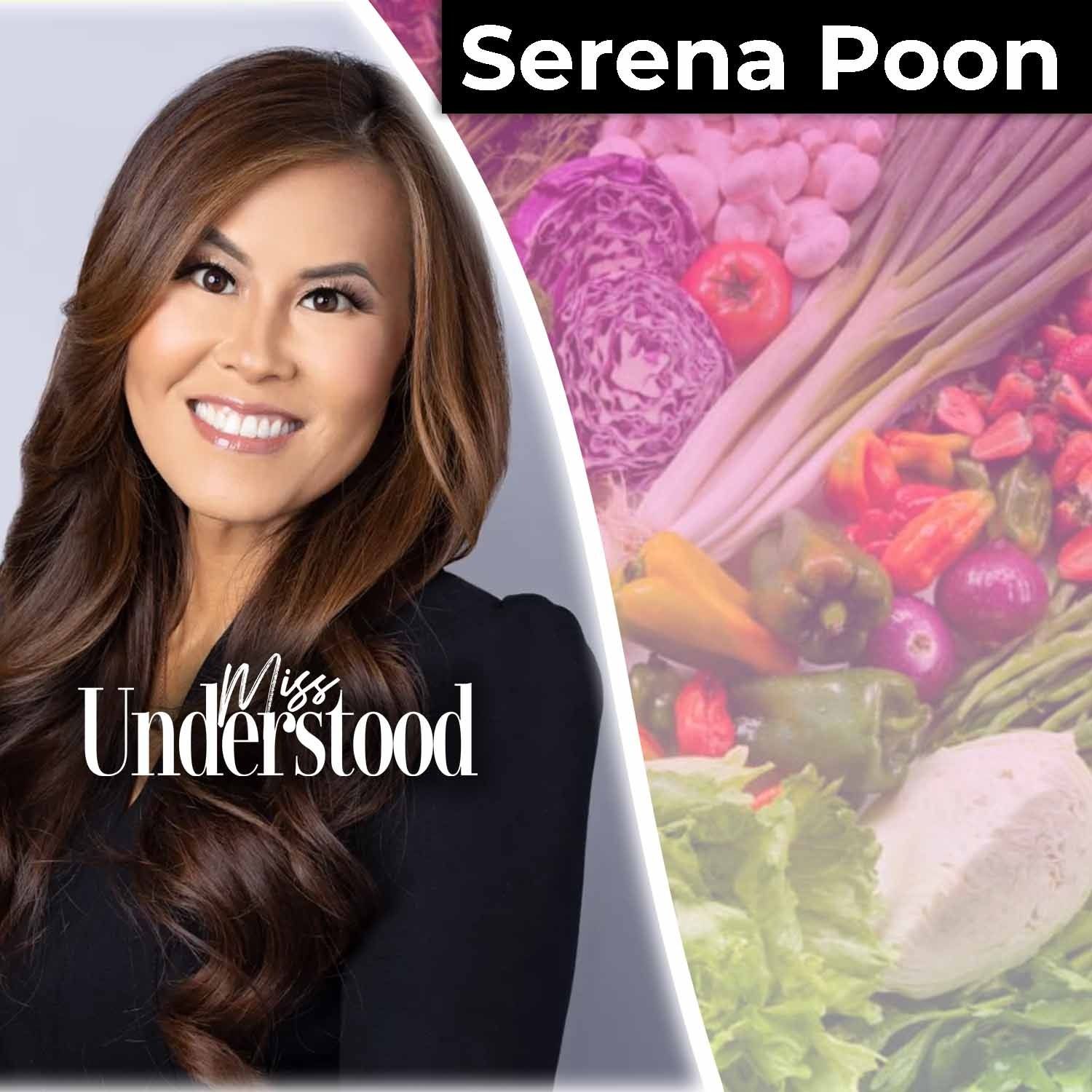
The Science of Energy: Serena Poon on Healing, Longevity, and What Wellness Gets Wrong
This week, Rachel sits down with celebrity chef, nutritionist, and energy healer Serena Poon, founder of Serena Loves, Culinary Alchemy®, and Just Add Water®. Serena has become one of the most trusted voices in wellness by merging the worlds of science, nutrition, and spiritual healing — helping everyone from high-performing CEOs to everyday people reconnect to their bodies and thrive from the inside out.
Together, they explore what’s misunderstood about wellness, why diet culture keeps us chasing the wrong things, and how emotional energy directly impacts how long — and how well — we live. Serena also breaks down the most accessible breakthroughs in longevity science and shares simple daily rituals that anyone can start today.
--- --- —
VISIT OUR AMAZING SPONSORS!
ROGERS HOOD APOTHECARY
Go to rogershood.com and use code RACHEL at checkout for 10% OFF
--- --- ---
PLEASE LIKE, SHARE, SUBSCRIBE, AND GIVE US A 5-STAR REVIEW!: ratethispodcast.com/missunderstood
Become a Patreon Member: https://www.patreon.com/c/MissUnderstoodwithRachelUchitel
Shop Miss Understood Merch https://missumerch.com/
Follow Rachel on Instagram! https://www.instagram.com/racheluchitelnyc/?hl=en
Follow Rachel on TikTok! https://www.tiktok.com/@itsracheluchitel
Executive Producer: George Carmona
Hosted by Simplecast, an AdsWizz company. See pcm.adswizz.com for information about our collection and use of personal data for advertising.
Available Results
Generated results are saved to the knowledge database for reuse and search.
Extract Knowledge
Pick what you want extracted first. Model, scope, and chapter options appear after a template is selected.
Transcript
[SPEAKER_01]: Today, on misunderstood with Rachel, you could tell.
[SPEAKER_00]: 99% of people are dehydrated.
[SPEAKER_00]: I would say everybody's got parasites.
[SPEAKER_00]: I'm not knocking Starbucks, it's just not for me.
[SPEAKER_00]: They also blend their matcha with sweetener.
[SPEAKER_00]: They blend it with sugar.
[SPEAKER_01]: People may not know what to do.
[SPEAKER_01]: only know you as this powerhouse in wellness and nutrition.
[SPEAKER_01]: So I want to start from the beginning.
[SPEAKER_00]: I grew up with just loving food and food and the kitchen was always the center of our household.
[SPEAKER_00]: Food has always really been about love and connection for me.
[SPEAKER_00]: In my senior year of college, my daddy was diagnosed with stage for liver cancer.
[SPEAKER_00]: There was a moment we were in the living room and my dad is sitting there and he's got this like horrible egg that he's holding and he's looking at this egg.
[SPEAKER_00]: He starts to get super emotional and he starts to solve and he's just like, my life has been reduced down to an egg.
[SPEAKER_00]: I talk about meditation, hydration, and eating the rainbow.
[SPEAKER_00]: Try and get all the colors of the rainbow in because you're actually hitting all the different molecules, all the different molecules, all the different vitamins, and nutrients that you need.
[SPEAKER_01]: If someone listening feels overwhelmed by wellness, what is the very first step you would recommend that they take?
[SPEAKER_00]: Just getting yourself to a point where you are, you
[SPEAKER_01]: So many of us think wellness is about green juice, supplements, or counting macros, but what if it's really about something different?
[SPEAKER_01]: What if it's about blending science, nutrition, and energy?
[SPEAKER_01]: My guest today is Serena Poon.
[SPEAKER_01]: She's built her career helping people register the gap between science and spirit, showing that the body doesn't just respond to what we eat, but also to what we feel, think, and believe.
[SPEAKER_01]: As a nutritionist, Reyki Master and founder of Serena loves, she's guided some of the biggest names in Hollywood towards health that radiates from the inside out.
[SPEAKER_01]: But behind that glow is a serious science, deep research into longevity, cellular repair, and emotional resilience.
[SPEAKER_01]: Today we're talking about what's misunderstood about wellness, while clean eating doesn't always mean health, why burnout is a symptom of disconnection, and how the latest breakthroughs in longevity can be simple, practical, and accessible to all.
[SPEAKER_01]: Please enjoy my conversation with the powerhouse Serena Prune.
[SPEAKER_01]: Serena, thank you so much for joining me today on Miss Understood.
[SPEAKER_01]: I'm excited to get healthy and live a very long time.
[SPEAKER_01]: So welcome.
[SPEAKER_00]: Thank you, thank you so much for having me.
[SPEAKER_00]: I love what you're doing.
[SPEAKER_00]: I love that you're talking about truth and humanity here.
[SPEAKER_00]: So it's a real pleasure.
[SPEAKER_00]: And I think I see a little fluffy one in the back.
[SPEAKER_00]: Yeah, one of three.
[SPEAKER_00]: We're my little gizmo.
[SPEAKER_00]: He was like, I'm reading it.
[SPEAKER_00]: And he's a question for bridge, but it looked very similar.
[SPEAKER_01]: Oh, okay.
[SPEAKER_01]: Well, yes, that is the Pomeranian, a very fat and healthy one.
[SPEAKER_01]: So who I just love her too much.
[SPEAKER_01]: I can't, you know, I can't keep every day.
[SPEAKER_01]: I'm like, okay, we're starting her diet and I just can't do it.
[SPEAKER_01]: I'm a sucker.
[SPEAKER_00]: I understand.
[SPEAKER_00]: They will let us all, you know, so.
[SPEAKER_01]: Right.
[SPEAKER_01]: So where are you?
[SPEAKER_01]: Where are you based?
[SPEAKER_00]: Um, right now I'm in LA, which is where I'm based.
[SPEAKER_00]: It's actually highly unusual.
[SPEAKER_00]: I'm usually on a plane.
[SPEAKER_00]: People ask us where we live and I'm like business class usually.
[SPEAKER_00]: So that's something nice that I'm in LA, but I do leave in a few hours.
[SPEAKER_01]: Oh, amazing.
[SPEAKER_01]: All right.
[SPEAKER_01]: Well, I'm glad you made time for this.
[SPEAKER_01]: So people may only know you as this powerhouse in wellness and nutrition.
[SPEAKER_01]: So I want to start from the beginning.
[SPEAKER_01]: People that might not know you or might not know where you're from and more personal things about you, but can you tell us a little bit of your childhood and how you got into nutrition and wellness to begin with?
[SPEAKER_00]: Yeah, sure.
[SPEAKER_00]: It's so fun.
[SPEAKER_00]: I like, I don't see myself as this powerhouse, so it's like, it's a, it's funny to hear you say those words and I receive it.
[SPEAKER_00]: Thank you.
[SPEAKER_00]: So, you know, really, I mean, I grew up with just loving food and food and the kitchen was always,
[SPEAKER_00]: The center of our households, you know, even when we had massive family gatherings and you know, you've got tables set up in every room in the house, everyone is sort of like eating and congregating in the kitchen, you know, even if they're standing.
[SPEAKER_00]: And so food has always really been about love and connection for me.
[SPEAKER_00]: and when I was in college and I was actually in college studying political science so I am first generation Chinese born here in the US and LA my parents are from Hong Kong like they grew up there and then they immigrated over here
[SPEAKER_00]: And, you know, did like college and university here, they actually met here, which is kind of funny, but yeah, they met here in LA, and so, and so, you know, like standard Chinese protocol, right?
[SPEAKER_00]: Like maybe there's supposed to be a doctor or lawyer or senior.
[SPEAKER_00]: or something like worthy.
[SPEAKER_00]: So I learned me Berkeley.
[SPEAKER_00]: I was studying political science so that I could be because you know I said I was going to be a pediatrician and then like had my and then changed my mind so like the next thing that was you know okay to do is to be a lawyer.
[SPEAKER_00]: So studying political science to go to law school but I was also studying nutrition just because I like loved to eat and I loved food and it was just more of something I was taking because I enjoyed it.
[SPEAKER_00]: And then in my senior year of college, my daddy was diagnosed with stage for liver cancer.
[SPEAKER_00]: So what it happened was, you know, he had this like blood disease, you know, he had a happy, I don't know if it came from vaccinations or something that they did in young men back then, but his grandfather had it too.
[SPEAKER_00]: and had died from that.
[SPEAKER_00]: His father didn't, but his grandpa did.
[SPEAKER_00]: So he was checking, you know, as an adult, like every six months making sure that he was okay.
[SPEAKER_00]: And somehow between two six months, check-ups he was told that he was okay to be told he was staged for.
[SPEAKER_00]: and that was getting me sitting and he was like in his forties so you know it just changed life you know instantly and even at the time you can't like process and you're you know I'm like 20 right so you can't process this information
[SPEAKER_00]: doesn't matter how much it's like coming down.
[SPEAKER_00]: And so here my dad's telling me, you know, he's got like five years and I'm sitting here thinking, I've got to have baby, get married, have babies, like be a big time where all in five years.
[SPEAKER_00]: And in reality, he probably only had a matter of months.
[SPEAKER_00]: And so he kind of stretched that time to a little over here.
[SPEAKER_00]: It was
[SPEAKER_00]: probably a lot longer than he really should have.
[SPEAKER_00]: If you wanted to make sure we're okay, and then he, he transitioned a little over like a year and three months.
[SPEAKER_00]: And, you know, he really did suffer during that time.
[SPEAKER_00]: Even though he, my daddy was a microbiologist and he even taught per seatology at like Kelsey L.A. at night and ran the clinical lab there at Huntington Hospital in Pasadena.
[SPEAKER_00]: And so we had support, you know, we had amazing doctors and an amazing oncologist that was like family to us.
[SPEAKER_00]: And so he did chemo in radiation and here he's also drinking all the teas that our families like are relatively smuggling from China.
[SPEAKER_00]: So he's doing all the things, but he obviously wasn't getting better and he was also in a lot of pain.
[SPEAKER_00]: So during that time I started looking at plants and herbs and like what other things are we not doing that could at least maybe alleviate some of his discomfort.
[SPEAKER_00]: And that's sort of like how I started going in that direction, looking at nutrition, nutrition just wasn't even like the word didn't even come out during that time period.
[SPEAKER_00]: You know, this was like over years ago.
[SPEAKER_00]: And so, you know, when talked about it, and here's my daddy, who's someone that is like, he's a foodie and he loves food.
[SPEAKER_00]: And he kind of was like, he couldn't eat anything, everything made him sick.
[SPEAKER_00]: And in order to like get any type of nutrition, like,
[SPEAKER_00]: And you type of energy into hand, they're like eat, eat, eat egg.
[SPEAKER_00]: Like eat a horrible egg and he could barely get it down.
[SPEAKER_00]: So, so that there were a couple really impactful moments that happened during that time.
[SPEAKER_00]: And it just shifted everything for me, you know, I just thought, like, this is not like there has to be more.
[SPEAKER_00]: You know, everyone suffers is not just the person who's sick, the whole family.
[SPEAKER_00]: So, so after he after you transition can use 48.
[SPEAKER_00]: My mom was diagnosed two months later, you know, at 45 and she had, and it was like this rare form of a very
[SPEAKER_00]: They're only like 24 or 25 cases before her, so it was like an experimental sort of like treatment that we did.
[SPEAKER_00]: And she had to do the whole thing.
[SPEAKER_00]: She had to do a full-historic means, so she went instantly into menopause.
[SPEAKER_00]: Couldn't do any hormone therapy because that was what was driving the cancer.
[SPEAKER_00]: And in the process of shocking grief, she had to do all of that.
[SPEAKER_00]: Plice came out in radiation, and then that became our journey.
[SPEAKER_00]: So,
[SPEAKER_00]: You know, it went from, oh my gosh, there's stuff that we don't know that we're not maybe doing and looking into plants and food and nutrition to her doctors measuring the size of the tumor by the time she was diagnosed to when we took everything out at the rate of growth and saying this started right when, you know, my daddy was at his sickest, like when he was dying.
[SPEAKER_00]: So,
[SPEAKER_00]: Somehow this is stress-related because she has a great genome, just genetically no markers for cancer to this day, her siblings, and none of her parents had cancer, and it was like stress-related.
[SPEAKER_00]: So then sort of like, I realized, you know, at the time, and it sounded very noble.
[SPEAKER_00]: It was like, all that mattered was the health and happiness of the people that I love.
[SPEAKER_00]: So,
[SPEAKER_00]: which sounds amazing and great and noble and at the same time I left myself off that list and it was to whatever end, you know, I will sacrifice sleep, I will sacrifice, you know, whatever it is, whatever it takes to make sure that the people I love are healthy and happy I'll do.
[SPEAKER_00]: So then of course, you know, then I had some health issues because, you know, here you are, and you're a caretaker, almost to an extreme.
[SPEAKER_00]: And then of course, we also had some other family members that were sick.
[SPEAKER_00]: So there was just like seven-year period where, you know, so many people in the family were getting sick or cancer or someone else died and
[SPEAKER_00]: It was a tough time and so there's sort of like this desperateness to like make sure everyone's okay, and in that time frame I, you know, obviously it's so much inflammation in my own body Wasn't taking care of myself because somehow we think that we can translate our energy
[SPEAKER_00]: or, you know, to someone that we love and make them better, you know, and, and so then I had to have surgery.
[SPEAKER_00]: Oh my gosh.
[SPEAKER_00]: We like what a story.
[SPEAKER_00]: This is, this is just trying to make it because I think you're going.
[SPEAKER_01]: No, no, keep going.
[SPEAKER_01]: This is an amazing story.
[SPEAKER_01]: But very sad.
[SPEAKER_00]: It is and what I've learned is that everyone has their experience with the loss of someone that they love or the suffering of someone that they love, and so our family was going through that I ended up needing to have surgery to remove damage and flame tissue in my body.
[SPEAKER_00]: And then I ended up getting Mersta from like the OR.
[SPEAKER_00]: Mersta is MRSA, it's like a deadly staff infection.
[SPEAKER_00]: And I associated this with like soldiers.
[SPEAKER_00]: It was like what like, you know, soldiers got during the war because they're out there getting wounded and getting infected.
[SPEAKER_00]: You know, that's kind of what my association termurster was.
[SPEAKER_00]: I mean, you can get it, it happens.
[SPEAKER_00]: It's stuff is kind of existed of everywhere.
[SPEAKER_00]: But it's actually very common to get stuff from the hospital, from an environment that's supposed to be sterile.
[SPEAKER_01]: Yeah.
[SPEAKER_00]: So I ended up getting this, and it was in my chest, and then I spent the next, almost died, and then I spent the next eight years kind of trying to get this staff out from in my chest, where it sort of was just like made a home, and it's really hard to get it when it's there.
[SPEAKER_00]: So I ended up having eight surgeries almost died after the fourth one, because I had like a massive
[SPEAKER_00]: 12 days postdoc.
[SPEAKER_01]: Wow.
[SPEAKER_00]: Um, and so all of this led all of this kind of led me to where I am now, because when I first, you know, coming off from what happened with my parents, I decided to go to culinary school.
[SPEAKER_00]: I thought, you know, food is medicine and food is love, and here it's not being utilized that way.
[SPEAKER_00]: We forget.
[SPEAKER_00]: And it's not like necessary the fault of the doctors, it was just the training, it was not, it wasn't incorporated and still isn't really incorporated into the training in medical school, you know, food as a form of medicine.
[SPEAKER_00]: So I went to culinary school instead of law school after my daddy passed and after my mom, you know, went through her treatments.
[SPEAKER_00]: And I said it look hard on blue, the grand diploma, I became a chef and I started my journey.
[SPEAKER_00]: I'm like kind of jumping around a little bit.
[SPEAKER_00]: I started my journey doing that, like trying to serve people through food and nutrition almost directly.
[SPEAKER_00]: And then when I went through my own health journey, where...
[SPEAKER_00]: you know I had to have these surgeries and I was still working as a chef and having you know and doing my business that way and then having this after my fourth surgery having a near death experience where I didn't know if I was going to be able to even use the whole left side of my arm and my body and as a chef you need both you know.
[SPEAKER_00]: And so during my recovery, I was like, what am I going to do like to support myself like how am I going to make a living?
[SPEAKER_00]: So I decided to just focus on the consultation part of my practice, which it was all kind of built into the food and to working with clients.
[SPEAKER_00]: I was always in like private.
[SPEAKER_00]: private practice and as a private chef.
[SPEAKER_00]: So then I just did the consultation part of it.
[SPEAKER_00]: And because I know I'm in LA and surgery, like especially elective surgery is so common here, especially because one of my specialties, because of my own experience was
[SPEAKER_00]: pre-op and post-op, you know, how to really prepare the body and the tissue to, you know, optimize for healing because any type of surgery is traumatic, even small, and the body receives it that way, and then how you really optimize the recovery process post-op.
[SPEAKER_00]: So I started doing that.
[SPEAKER_00]: While I was recovering,
[SPEAKER_00]: And you know during that time when I almost died I kind of went through this dark night of the soul, you know, where I'm here and I'm going through this experience and it's painful and it's sad, it's lonely, it's dark and I'm serious thinking, gosh, I'm a good person like I don't understand why this is happening.
[SPEAKER_00]: You know, you kind of like go into the base where you're victim, you know, like this happened to me, right?
[SPEAKER_00]: And that was when I realized that I had like remembered like why I'm doing what I'm doing.
[SPEAKER_00]: I'm doing what I'm doing because of what my dad went through and like what my family went through and it was just like it was just like this this shift this like reminder that
[SPEAKER_00]: it's not happening to me, it's happening for me and to like back on track.
[SPEAKER_00]: And so that's why, that's when I realize I'm here for a reason, I'm purpose much bigger than this.
[SPEAKER_00]: You know, much bigger than like sitting in my bedroom trying to figure out how I was going to crawl to the bathroom and go to the bathroom, you know, to the bathroom because so much, I was so weak and so much pain
[SPEAKER_00]: And that's when I started the consulting part of my business, and that's also when I really dive into my spirituality, I had been working with this woman, but very 911-ish.
[SPEAKER_00]: You know, I was like, I'd work with her, and then I didn't, like, I wasn't consistent with the calls, and then I'd have a moment, a 911, and then I'd call her, and I realized, here I am, I'm so concerned with my diet and fitness and supplements, everything else really consistent, but with my spiritual practice, I wasn't.
[SPEAKER_00]: So during that time when I was recovering and I was doing my consultation part of my like building up that part of my business, I committed to being very consistent with her every three weeks, three to four weeks, you know, to talk to her.
[SPEAKER_00]: And that became that inflection point in my spiritual journey.
[SPEAKER_00]: And after about eight months, she said, and she her name was Nicole, this master healer.
[SPEAKER_00]: She's amazing.
[SPEAKER_00]: She's like a new Mexico and has a most unbelievable story.
[SPEAKER_00]: After about eight months with her, she said, you know, she'd go through and say, oh, you know, I'm seeing these colors and this light and she'd go through what she called releases, you know.
[SPEAKER_00]: I had to tow my body these releases and I didn't know what she was talking about.
[SPEAKER_00]: I didn't know what she meant.
[SPEAKER_00]: Other certain areas of my body that needed more.
[SPEAKER_00]: You know, she'd say the energy was stuck or there'd be more that she had to release.
[SPEAKER_00]: And while she was doing that, I was like, well, what can I do to help myself?
[SPEAKER_00]: I just call you, you know, you do whatever you're doing for an hour and a half.
[SPEAKER_00]: I just sit here.
[SPEAKER_00]: I don't really do anything.
[SPEAKER_00]: You call me back and then tell me,
[SPEAKER_00]: this is what you did and I felt better.
[SPEAKER_00]: So as we were going through the body head to toe and she was telling me where there was like locked energy and where she did release this, I realized that we're talking about energy centers.
[SPEAKER_00]: And those energy centers, they line up with
[SPEAKER_00]: And there is a synergy and there's actually there's a thread between supporting those different energy centers and supporting those different parts of your physical body and your own.
[SPEAKER_00]: So so that's when I developed like what I call culinary alchemy and that was where I was.
[SPEAKER_00]: You know, talking about, okay, you're working on like my sake while you're working this part of my body.
[SPEAKER_00]: And yes, it doesn't feel, you know, I'm having issues there.
[SPEAKER_00]: And so what can I do to support that area for my body physically?
[SPEAKER_00]: And that's when I started to design like foods, you know, different types of like certain foods that I would eat or
[SPEAKER_00]: make into a juice or a smoothie and supplements to support the same areas of my body that she was saying need to support energetically.
[SPEAKER_00]: Right.
[SPEAKER_00]: And culinary alchemy.
[SPEAKER_00]: I don't know.
[SPEAKER_01]: Wait, can I just stop you for a second?
[SPEAKER_01]: Because I find this whole story fascinating.
[SPEAKER_01]: You've covered like 90% of all my questions back to back, so thank you.
[SPEAKER_01]: You just had a conversation with yourself, but it was all in my head.
[SPEAKER_01]: So thank you very much.
[SPEAKER_01]: Thank you.
[SPEAKER_01]: Um, I think there's a lot of people that get caught in, so they get sick or someone they know gets sick and they get caught in just listening to what the doctor say and it's medical and it's, um, you know, nutrition, nutrition is off to the side, right?
[SPEAKER_01]: It's not even about food, but it's about the medicines that they're given or the,
[SPEAKER_01]: chemo or the things that they get in the hospital or are told to do.
[SPEAKER_01]: And then there's the other side of it, which seems to some people a little like, who how he, right, whether it's Chinese medicine or it's acupuncture or it's food.
[SPEAKER_01]: And a lot of people are like, oh, that's like a whole placebo effect that doesn't really exist.
[SPEAKER_01]: So
[SPEAKER_01]: My question for you is, when did you start to realize, and I guess we all know because we heard the story with your father, that the medicine wasn't working, no matter what they were giving him, and he had a lot of support from very, you know, people with a lot of credibility in the field of medicine, and that didn't work, and he ultimately transitioned.
[SPEAKER_00]: It was your right.
[SPEAKER_00]: It was during that time.
[SPEAKER_00]: You know, even though my daddy did transition, right?
[SPEAKER_00]: It was, there was a moment.
[SPEAKER_00]: And I've shared this kind of like here and there in my journey.
[SPEAKER_00]: There was a moment when, like I will never forget it.
[SPEAKER_00]: You know, there was a moment where we're in the living room.
[SPEAKER_00]: and my dad is sitting there and he's and he's got this like horrible egg that he's holding and he's looking at this egg, you know.
[SPEAKER_00]: And I come in and you know he starts to get super emotional like he starts to sob and he's just like
[SPEAKER_00]: He's looking at this egg and he's like, my life has been reduced down to an egg.
[SPEAKER_00]: Like it was so critical for him to take this egg again because he could barely take in any food.
[SPEAKER_00]: Everything was making him sick.
[SPEAKER_00]: And here this egg is packed with all this protein and all these nutrients.
[SPEAKER_00]: And if he couldn't get anything else in,
[SPEAKER_00]: If you could get in this egg, it would like be just enough to like get him, you know, through half of the day or something like that.
[SPEAKER_00]: I mean, we told and it was, it was so, um, it was,
[SPEAKER_00]: It was just one of those moments in life that I will never forget because not only should no one ever feel like they reduced down to any one thing, you know, he's devolved and like, you know, here's my dad who's like my night in shining armor, who's so many things, who's helped so many people.
[SPEAKER_00]: But it was the fact that this was something that he loved, like food gave him joy, you know, it was a way that we were connecting and it felt almost like punishment the way he was, you know, looking at this egg, which is just like like now it's like a punishment.
[SPEAKER_00]: So I realized that we aren't using, at least during that time, we weren't using food in a way to nourish the soul, and the soul and our heart and our mind as much as we nourish with the body, and we weren't doing it at all because we were just looking at medicine, you know.
[SPEAKER_00]: and food in it of itself is because we get so many amazing nutrients, you know, vitamins and minerals and polyphenols and molecules activate longevity pathways.
[SPEAKER_00]: You know, this is all coming from other nature in a very natural way in a way that our body is actually designed better to receive.
[SPEAKER_00]: at medicine through nature, then that medicine through chemical pathways, which is why we often have, you know, there's often a side effect or a reaction or a response to, to, you know, like conventional medicine in pharmaceuticals, not to say that there isn't a need for it.
[SPEAKER_00]: But there is so much that we get from other nature through food that can be equal healing
[SPEAKER_00]: And then there's that emotional component too, to it.
[SPEAKER_00]: There's the fact that we have a relationship with our experiences with food.
[SPEAKER_00]: We commune over food, and this is a big part of my work, too, which is the memories that are connected when we have experiences and when we have experiences with food.
[SPEAKER_00]: That can become people's addictions.
[SPEAKER_00]: They're good habits, both.
[SPEAKER_01]: What if I told you that the idea that you only get parasites when you travel to some exotic country is flat wrong?
[SPEAKER_01]: Millions of Americans carry parasites right now, often without symptoms.
[SPEAKER_01]: For example, it's estimated that millions in the United States have been exposed to toxicara, a parasitic worm, yet most never even know it.
[SPEAKER_01]: parasites do not need a plane ticket.
[SPEAKER_01]: They can enter through tap water, sushi, undercooked foods, or contaminated produce.
[SPEAKER_01]: Some strains live in all stages.
[SPEAKER_01]: Eggs, larva, adults, hidden in your gut, releasing toxins, sabotage your energy and digestion.
[SPEAKER_01]: That's why I'm excited about Parify.
[SPEAKER_01]: Kim Rogers 30-day full spectrum parasite cleanse.
[SPEAKER_01]: The kit works by clearing parasites, worms, Candida, and heavy metals.
[SPEAKER_01]: Targeting parasites in all life stages, supporting gut health, detox pathways, and toxin removal.
[SPEAKER_01]: It's taken orally daily for 30 days with precise dosing.
[SPEAKER_01]: I'm actually doing it myself right now.
[SPEAKER_01]: I started with the lymph cleanse than I'm doing the purify.
[SPEAKER_01]: Want to dive deep?
[SPEAKER_01]: I did a full interview with Kim Rogers, the warm queen herself, where we expose all the myths.
[SPEAKER_01]: Understand the facts and show how to protect your body.
[SPEAKER_01]: Listen to that episode if you haven't already.
[SPEAKER_01]: Meanwhile, go to Rogershood.com and use the code Rachel to get 10% off of your order.
[SPEAKER_01]: That's our ACAGL for 10% off.
[SPEAKER_01]: Give it a try.
[SPEAKER_01]: Maybe your body's missing link is hiding inside.
[SPEAKER_01]: Let's do this together.
[SPEAKER_01]: Again, it's Rogershood.com, R-O-G-E-R-S-H-O-D.com and use the code Rachel for 10% off.
[SPEAKER_01]: So you brought up longevity, and I want to talk about that for a second.
[SPEAKER_01]: Um, there's a lot of people that choose the medicine path because it seems like the quick fix like within a couple hours, you know, your pain killer works or the Tylenol or whatever it is.
[SPEAKER_01]: As opposed to spending the time figuring out what food might help the actual headache that you're having.
[SPEAKER_01]: Um, so can you talk about the difference though?
[SPEAKER_01]: Like for example, I went to Panama a couple months ago and I went and got stem cell treatment.
[SPEAKER_01]: Um, and they were like, this is a net like a holistic natural thing.
[SPEAKER_01]: So it's going to take weeks to months to even a year to really see the effects.
[SPEAKER_01]: So here I am sitting around being like, when are my eyes going to get better?
[SPEAKER_01]: When do I am I going to feel younger and look at it and all that stuff?
[SPEAKER_01]: even though when I was there, I loved it.
[SPEAKER_01]: It wasn't as life-changing as I heard that it would be, right?
[SPEAKER_01]: But they were like, you got away.
[SPEAKER_01]: It takes a longer time.
[SPEAKER_01]: So do you believe in that?
[SPEAKER_01]: Do you believe it works?
[SPEAKER_01]: Not just themselves, but all this natural stuff works.
[SPEAKER_01]: But it just takes longer.
[SPEAKER_00]: Yeah, no, 100% stem cells are, it's a great, you know, it's a good example.
[SPEAKER_00]: Depending on your information levels, stem cells can immediately bring your information levels down.
[SPEAKER_00]: So, if you're pretty in tune with your body, you might experience and feel what it feels like when your information levels drop when you're still within your systemic information levels drop and depending were information
[SPEAKER_00]: resides in your body, whether it can be, you know, in like, it could be in your stomach, you know, it could be in your joint, it could be in your ear, wherever it is for you.
[SPEAKER_00]: Yeah.
[SPEAKER_00]: The inflammation goes down, you might experience some sense of relief, which would be immediate.
[SPEAKER_00]: But over time, yes, it takes time for those cells, you know, I call them like your good little soldiers.
[SPEAKER_00]: that you've now received, to go into your body and start to do the repair work.
[SPEAKER_00]: And it are not necessarily going to feel it, but over time there will be improvements.
[SPEAKER_00]: And it's interesting and that happens that's the same thing with like sleeping while every single day, you know, or and no one does, but at least most of the time we try to, right?
[SPEAKER_00]: And eating while, I think that's where sort of like the 80-20 rule kind of comes from,
[SPEAKER_00]: If you have a meal that is, you know, naughty and gluttonous and it's fried and sugary and salty and all the things.
[SPEAKER_00]: Let's say you're at the game or something like that, right?
[SPEAKER_00]: Is it going to feel great in that moment?
[SPEAKER_00]: Yes, because it's actually all those like neurotransmitters that make you happy and then like clean and maybe four hours that you're going to feel terrible, right?
[SPEAKER_00]: So, so there are some times those experiences that are immediate, but it is really about the over time, you know, over time things add up, so, you know, to me, longevity, yes, we have these, we have and, you know, we're on the forefront, so we see.
[SPEAKER_00]: what is happening and what will be, what is already here now that the rest of the world will know about very, very soon.
[SPEAKER_00]: But it's core the foundation of longevity and I put that in close because everyone kind of has their own sort of severed definition that's in addition to living longer.
[SPEAKER_00]: It's really about what you do every single day, you know, it's what you do every single day.
[SPEAKER_00]: It is how you live.
[SPEAKER_00]: It is your, I practice what I call holistic lifestyle medicine and that's holistic with the W because it is your physical body, your mind, body, your energy, body, your soul, body.
[SPEAKER_00]: It is all of it, you know, and every part of it has to be healthy, you know, part of it has to, you know, be balanced and you have to kind of do it on a regular basis.
[SPEAKER_00]: Yes, I think that if you drink your green tea every single day and you're getting in those polyphenols and the HECG and you're getting all those benefits from that green tea, it is absolutely going to pay off in the long run.
[SPEAKER_00]: Are you going to feel like a hit of it?
[SPEAKER_00]: You know, like you might if you had an expresso, you know, and if you're looking at that green tea to give you energy just because that's caffeine.
[SPEAKER_00]: You may not, may or may not experience it, depends on sensitive year to caffeine.
[SPEAKER_00]: But is that green tea going to benefit you in a long term?
[SPEAKER_00]: And are you going to be able to feel 30 years or 15 years of benefits in a moment?
[SPEAKER_00]: No, you won't.
[SPEAKER_00]: But you won't be able to feel it over time.
[SPEAKER_00]: And when you are older and you're doing all these things,
[SPEAKER_00]: what you will feel and experience is what you, is how you felt when you were younger in reflection, but you're still there now.
[SPEAKER_01]: Wait, I wanna ask a question about green tea because I've always wondered this.
[SPEAKER_01]: Is green tea and the benefits from it, like you're talking about?
[SPEAKER_01]: Can you get it from all green tea?
[SPEAKER_01]: If you go into Starbucks, if you get the little packets at the grocery store, if you're in the Chinese or Japanese restaurant, they have ice cream tea, where are you getting the real green tea from?
[SPEAKER_00]: So green tea obviously like different types of green tea will have, you know, more or less of the different types of polyphenols are like the catagons.
[SPEAKER_00]: So matcha is a form of Japanese green tea and it has the highest levels.
[SPEAKER_00]: I mean, that's something I've been drinking from it's 20 years.
[SPEAKER_00]: Wow.
[SPEAKER_00]: You know, and it's been grown in soil that's not full of metals, you know, quite often there's going to be metals in soil that's like normal natural that happens in nature, but there is some there are some teas that are grown in soil that is has higher levels of certain metals that we don't want in our bodies.
[SPEAKER_00]: So I would say, you know, you know,
[SPEAKER_00]: pick and choose your teas, do a little bit of research to make sure it's not, if it's not loose leaf, which is always best, but if it's not loose leaf, it's bagged in like some sort of plant-based cellulose, so it's not like a microplastic, and make sure it's sourced in a place, it's got good soil, and it's organic.
[SPEAKER_01]: No, it sounds like you would never get matcha at Starbucks, though.
[SPEAKER_00]: I mean, oh, and much no.
[SPEAKER_00]: I have, I have what I'm really desperate and I'm in some country and I'm just like, my tech, but like, you know, and they also, and sorry to all those Starbucks like, I'm not knocking Starbucks, it's just not for me.
[SPEAKER_00]: They also blend their matcha with sweetener.
[SPEAKER_00]: They blend it with sugar.
[SPEAKER_01]: Right.
[SPEAKER_00]: And that's all.
[SPEAKER_01]: I want to get into a whole day in the life of everything you're eating and doing because I think our listeners are gonna wanna know, but you brought up,
[SPEAKER_01]: that you guys like kind of are on the forefront of longevity.
[SPEAKER_01]: So I want to know, I wrote this down when you were talking, what breakthroughs feel most exciting and accessible to everyday people that you're seeing in longevity right now?
[SPEAKER_00]: Ah, well, break throughs.
[SPEAKER_00]: I have to think about like, what is happening in the every day?
[SPEAKER_00]: Um, well, I think that people have been talking about NAD precursors for a while.
[SPEAKER_00]: My dad is in talking about it for, I don't know, like, 15 years and NAD drips have been around for a long time.
[SPEAKER_00]: I was getting them pre-COVID.
[SPEAKER_00]: You know, so I think it's great that people are aware now of
[SPEAKER_00]: different supplements and molecules that help support our batteries, you know, here NAD precursors help support that there comes in different forms who can be NMNNR and AR, there's different ones.
[SPEAKER_00]: They all help support our system in terms of helping our bodies make that NAD.
[SPEAKER_00]: Right.
[SPEAKER_00]: There's a much higher awareness of like mitochondrial support.
[SPEAKER_00]: You know, there's a lot of supplements out there, and that's really important.
[SPEAKER_00]: Most people, I think people talk about telomeres a lot.
[SPEAKER_00]: I mean, David, I never talk about telomeres, but talking about mitochondrial support like that's great.
[SPEAKER_00]: And here we have a much higher awareness of
[SPEAKER_00]: photo by modulation.
[SPEAKER_00]: So, you know, there's all this talk about red light therapy.
[SPEAKER_00]: It's been around for decades and decades and decades, you know, and it's great that it's way more accessible to people now.
[SPEAKER_00]: So the more accessibility, the more cost, the more the less cost prohibitive it is, right?
[SPEAKER_00]: We're before red like, because I've been doing red like for again, like, probably 15, 20 years now it's something that you can just, you can order off of the Amazon and you.
[SPEAKER_01]: Well, that's what I was going to say when they're, when it's so accessible, does it mean that the potency is still there and it's just as good?
[SPEAKER_00]: Yeah, because it's really about the technology, you know, now you have to make sure you have a good brand, you know, you got to do a research and make sure that that brand, that the wavelengths and that brand, whatever device it is, whatever brand it is is calibrated appropriately to the wavelengths that have.
[SPEAKER_00]: that are that are in the clinical studies right.
[SPEAKER_00]: And with photo biomodulation, it's different wavelengths address different conditions.
[SPEAKER_00]: So you know different wavelengths are great for our skin, um, great for like pain, great for muscle, great for collagen.
[SPEAKER_00]: There's so many different things.
[SPEAKER_00]: It's great for like neurodegenerative conditions.
[SPEAKER_00]: So it depends on the different
[SPEAKER_00]: So whatever it is that you want it for, you want to make sure that the device that you buy is calibrated to give you the results that you want.
[SPEAKER_00]: Right.
[SPEAKER_00]: And then they've got some paperwork that to show that they're not just like claiming it and saying it.
[SPEAKER_00]: But just because it's out there for everyone does not mean that it's not great.
[SPEAKER_00]: It's great.
[SPEAKER_00]: It's been around for a long time.
[SPEAKER_00]: People just don't know about it.
[SPEAKER_00]: Even stuff like hot and cold, whether or not you're in in a $5,000 ice bath or you are jumping into your pool or your or the ocean, it doesn't make a difference.
[SPEAKER_00]: It's about the shock to the system.
[SPEAKER_00]: That's what's important, you know, it's about, it's about putting that your body and what we call this sort of adversity mode, temporarily, this temporary stress of the system.
[SPEAKER_00]: That's what we want to do.
[SPEAKER_00]: So you don't need to have like an 8,000 dollar like.
[SPEAKER_00]: baths tub filled with ice or something like keeps it.
[SPEAKER_00]: It's just, and it's not for everybody either.
[SPEAKER_00]: It's not just women, you know, it can be very good for men, but if you're talking about Chinese medicine and and some of the, these more eastern practices, balance is really what we're always looking to have, you know, and there can be good stresses, but, you know, extreme hot and extreme cold is not necessarily beneficial for women during different,
[SPEAKER_00]: times of our lives different times of the month you know you have to be really mindful about that type of thing but what I'm seeing more and more which I think is great because I've always been about like ancient wisdom you know it's on the forefront is that we're we are now just sort of making we are just making devices and we're making ancient wisdom more accessible.
[SPEAKER_00]: talking about like the biohacking world, you know, whether or not we're talking energy or quantum, I mean, these things have been around since like Tesla, but now there's more and more devices and products that we can buy, since with like testing.
[SPEAKER_00]: right like and you do you do riki right riki yeah i do riki it was during that time when i kind of figured when i develop culinary alchemy and i was working with that um master healer that was in New Mexico Nicole not Nicole Noel um she after about working together for eight months she was like come out to come out to Santa Fe
[SPEAKER_00]: I want to like teach you everything that I do because you really thought she was like 70 and she really thought she was going to transition soon, so you want to like a parenthesis and so at first I was like, what are you crazy I can't do what you do like this is nuts and I was scared to go and then finally after about I think it was November I went in February so it was like three four months I finally went there when by myself it was the first time I was meeting her in person.
[SPEAKER_00]: Um, she picked me up in this like, giant old clunky cat-a-lack from Albuquerque, and then like, and then we drove out to Santa Fe and I stayed with her in her house and she showed me everything that she did.
[SPEAKER_00]: Like, she had all these papers for me and notes and like, you know, stuff that she had written down and she channeled and then we channeled.
[SPEAKER_00]: I mean, it was, wow, it was nice.
[SPEAKER_00]: It was so cool though.
[SPEAKER_01]: Um, and she do like spiritual journey stuff.
[SPEAKER_01]: Like, I, I,
[SPEAKER_01]: I was just in San Francisco this weekend and everybody was talking about how every three months they go on some LSD journey and it's totally changed their life, which I'm too scared to do, but this seems to be part of what everyone's doing now.
[SPEAKER_00]: Yeah, so it's so funny, the different things that trend.
[SPEAKER_00]: I've never done that and that wasn't what she did.
[SPEAKER_00]: It was just totally just like energy and so it was when I came back from that weekend with her, I was so nervous about doing it wrong.
[SPEAKER_00]: You know, I'm like, I'm kind of cute the way Noel does it, but I want to do it wrong.
[SPEAKER_00]: And it was also working with this other healer, he's amazing.
[SPEAKER_00]: Rob, he's based in Barcelona.
[SPEAKER_00]: He was just like, there's no way you can like do it wrong.
[SPEAKER_00]: Everyone just has like their own technique and their own style that they've kind of curated through their experiences.
[SPEAKER_00]: So I decided to study Rakey because I just like needed some structure.
[SPEAKER_00]: You know, I like, I just needed a program.
[SPEAKER_00]: I needed some structure.
[SPEAKER_00]: to somatic to, I mean, there's so many different things, and so now when I do it, it's it's really like a combination of everything.
[SPEAKER_00]: So I may call it rakey and it is, but I add another things too.
[SPEAKER_01]: Gala.
[SPEAKER_01]: Okay, so can you walk people through what you think is good, like this holistic approach with your, you know, culinary alchemy and all this like what should we should we be eating and doing every day starting with obviously a good night's late.
[SPEAKER_01]: Okay, does it count if you have to take a sleeping pill to sleep.
[SPEAKER_00]: Well, you should be taking sweet dreams.
[SPEAKER_00]: It works much, much better.
[SPEAKER_00]: I'll send you some.
[SPEAKER_00]: It's actually taking people off of like ambience.
[SPEAKER_00]: People aren't jet lag on it.
[SPEAKER_00]: Like I know time.
[SPEAKER_00]: I just like sleep wherever it is I need to sleep.
[SPEAKER_00]: Like I never get jet lag.
[SPEAKER_00]: It's just something that really helps your body get into the circadian rhythm and used to be in wherever you are.
[SPEAKER_00]: And it gets you, like if you wear a, you know, like a wearable, like some sort of a tracker, you'll see the next day, it gets you very good deep sleep and very good REM sleep.
[SPEAKER_00]: So I'm about quality of sleep, you know, it's not it's about quality sleep.
[SPEAKER_00]: So you are sleeping for five hours, but almost the whole time you're in deep and REM.
[SPEAKER_00]: like you're probably getting better quality sleep than someone who's in bed for like eight hours and only getting like 30 minutes, you know, or like 30 of one of the other.
[SPEAKER_00]: But you know, I keep it really simple.
[SPEAKER_00]: People ask David and I all the time, like if you had three things that are top three things for a long-term video, like what would you say?
[SPEAKER_00]: We obviously do see different things.
[SPEAKER_00]: He talks about molecules.
[SPEAKER_00]: Um, I talk about meditation.
[SPEAKER_00]: hydration and eating the rainbow.
[SPEAKER_00]: At some point in your day, it would be ideal if you could cover the colors of the rainbow through whole-base, like whole foods, so through your plants, like vegetables, foods, try and get all the colors of the rainbow in because you're actually hitting all the different molecules, all the different polyphenols, all the different vitamins and
[SPEAKER_00]: and nutrients that you need if you can actually kind of like make sure that you're hitting every color.
[SPEAKER_00]: It's really easy to do.
[SPEAKER_00]: It's a visual.
[SPEAKER_00]: It makes your food look pretty.
[SPEAKER_00]: If you hit on one plate and if you can't, at least throughout the day.
[SPEAKER_00]: And it's a really simple thing that I can even teach kids, because doing as a family, it works even better.
[SPEAKER_00]: So that's like that's a very simple thing to remember and you can do it anywhere on the planet because wherever
[SPEAKER_00]: being mindful about the choices when you're going through the menu if you're eating out, like, especially if you're traveling.
[SPEAKER_01]: So do you care about calories?
[SPEAKER_01]: Do you care about carbohydrates or meats?
[SPEAKER_01]: Like, do you stay away from eating meat?
[SPEAKER_00]: So I'm personally plant-based.
[SPEAKER_00]: Okay.
[SPEAKER_00]: I have to be a bit more mindful about making sure that I get in enough plant protein or taking supplementing with some amino acids, like some essential amino acids, if I do not get in enough.
[SPEAKER_00]: So it's a little bit trickier if you are plant-based, for example, because you have to make sure that you're taking off all the boxes.
[SPEAKER_01]: But are you plant-based because that's your personal choice?
[SPEAKER_01]: Or do you believe that no one should be eating animal?
[SPEAKER_00]: Oh, no.
[SPEAKER_00]: I mean, it's my personal choice.
[SPEAKER_00]: It started for me when I was actually was during this time when I had all these surgeries, you know, and I was and because surgery in it of itself, so inflammatory.
[SPEAKER_00]: Yeah, it's so hard in your system.
[SPEAKER_00]: I was trying to put myself in the most the least inflamed.
[SPEAKER_00]: state that I could possibly be in, that I could control, you know, with like diet and what I was putting into my body.
[SPEAKER_00]: So I went plant-based, but then of course the irony is after my four surgery, when I like almost died and lost like two liters of blood from internal bleeding, I
[SPEAKER_00]: liver.
[SPEAKER_00]: I mean, I was eating.
[SPEAKER_00]: I was, you know, I was right back into like full full full meat because I rebuild my hemoglobin and I had to build back my blood.
[SPEAKER_00]: But I'm not a post.
[SPEAKER_00]: It's more about being mindful about how much meat you are eating and I would always, I will always recommend to everybody to make sure there's more
[SPEAKER_00]: more plants you know on your plate than anything else.
[SPEAKER_00]: I don't count macros.
[SPEAKER_00]: I'm not a big core counter you know and I don't count like carbs you know I have a lot of people are like guys translate away from carbs.
[SPEAKER_00]: Really it's person dependent you know we do need a balance of all of it you know we need some healthy fats we need some healthy carbs but we need some healthy
[SPEAKER_01]: You know, protein like when you eat pasta or you'll make zucchini pasta.
[SPEAKER_00]: Oh, oh my god.
[SPEAKER_00]: I will eat pasta I promise that at least once a week are you kidding?
[SPEAKER_00]: Like I'm Chinese.
[SPEAKER_00]: I grew up on noodles and rice, you know?
[SPEAKER_00]: Right.
[SPEAKER_00]: I'm for food.
[SPEAKER_00]: So yeah, I mean Italian food is probably one of my favorite things to make was my favorite coming out of culinary schools My favorite cuisine.
[SPEAKER_00]: I love making fresh homemade pasta too.
[SPEAKER_00]: Wow.
[SPEAKER_00]: Absolutely.
[SPEAKER_00]: I mean you have your body needs a balance of food.
[UNKNOWN]: Yeah
[SPEAKER_01]: Okay, and what are the your cheat day look like or your cheat meal?
[SPEAKER_00]: Okay, so I have such a weakness for fries.
[SPEAKER_00]: And I will get fries if I've been traveling for 22 hours from the US to Asia and we check into a hotel and we will order french fries.
[SPEAKER_00]: Anyway, it's not that in the world.
[SPEAKER_00]: So, you know, there's a lot of things that some people are really strict about seed oils.
[SPEAKER_00]: Well, unless you're at a certain restaurant, if you're going to have anything fried, it's going to have oils in it that are not good for you.
[SPEAKER_00]: But so is the air that you breathe, depending on what city that you're in.
[SPEAKER_00]: Yeah.
[SPEAKER_00]: So I mean, I don't believe in like, I don't believe in perfection.
[SPEAKER_00]: That's not, that's not a way like I believe and I believe in being very mindful of being educated, taking care of yourself, providing yourself with as much resources as you possibly can, but knowing that at the end of the day, it's your basics and fundamentals.
[SPEAKER_00]: That's where it all comes from.
[SPEAKER_00]: having like your emotional while being so important to longevity, you know.
[SPEAKER_01]: I want you to tell our listeners about your brand Serena loves.
[SPEAKER_01]: Can you share a little bit about that with us?
[SPEAKER_00]: Yeah, so Swina loves is basically like a lifestyle brand in a way, but I also have supplements there.
[SPEAKER_00]: So my brand, my platform really is very education driven and I do focus.
[SPEAKER_00]: There's tons of information on there and it's really about education nourishment.
[SPEAKER_00]: and providing you some tools that can help you on your journey.
[SPEAKER_00]: So there is everything from, you know, I'll talk about everything from rakey and food and nutrition, all the way to stem cells and exosomes and peptides and aphorases, you know, and everything that's happening out there in the world that we're not talking about on a regular basis yet.
[SPEAKER_00]: And then I have supplements because what I found during my now over 20 years of private practice was, you know, I couldn't, there weren't products that I could recommend to my clients and felt very confident in.
[SPEAKER_00]: So now I have a supplement line with, you know, like certain skews that I think are what everybody should have.
[SPEAKER_01]: And I was one of them, the thing you were
[SPEAKER_00]: Oh, sweet dreams.
[SPEAKER_00]: Oh, yeah.
[SPEAKER_00]: I didn't even realize that was going to be as popular as it is, but I mean, it's, I've got world, I've got many, actually, world leaders on that, and it's just a game changer for it.
[SPEAKER_01]: Is it a tea or a pill?
[SPEAKER_00]: It's actually a chewable, so it only have better.
[SPEAKER_00]: Both, yeah, people like it, so it's a chewable and it's really about the recipe, it's a blend.
[SPEAKER_00]: It's nothing like super crazy special.
[SPEAKER_00]: It's a little bit of 5HGP, a little bit of anisotall, a little bit of alfayani, and then a little bit of melatonin, but only 1.5 milligrams, because you're not supposed to be taking a ton of melatonin.
[SPEAKER_00]: Actually, it's not ideal for you or your brain.
[SPEAKER_00]: Yeah, we can talk about that in other times.
[SPEAKER_01]: Well, why does Melatonin work on some people but doesn't for others?
[SPEAKER_00]: And it depends on the amounts.
[SPEAKER_00]: You know, I think that what people are taking, most of the time people are taking too much.
[SPEAKER_00]: Oh, yeah.
[SPEAKER_00]: Anyway, like right away, on between one and three, especially for women, you know, women going through menopause, or perimenopause start to have
[SPEAKER_00]: issues with sleeping and you know between one and three is a good target and if it's kind of like if it's kind of like sustained release, that's really what works better with our body.
[SPEAKER_00]: There are it's interesting that you ask me that because there are some people that say that it gives them nightmares.
[SPEAKER_00]: I've had like maybe a handful of people that say oh I can't take my
[SPEAKER_00]: It gives me nightmares, but I also don't know where they got the melatonin flum, like what format of it, what, how high the dose, you know, what brand kind of depends, you know, I mean if it's blended with other things, it may or may not be the melatonin that's, you know, given them nightmares, but it depends on what form of it that you're taking in the dosage.
[SPEAKER_01]: What is one thing that we all are missed understanding that we all are eating right now or putting in our body that is so dangerous?
[SPEAKER_00]: Oh, wow, um, well, it's been talked about a lot, but it's true, I would say micro plastics are a really, and it's been an ongoing thing.
[SPEAKER_00]: You know, it's there's been a lot of talk about it recently, just because there's value in some longstanding studies that have been published.
[SPEAKER_00]: It's hard because it is in everything, right?
[SPEAKER_00]: You can go get a paper cup from a coffee shop and that paper cup is probably lined.
[SPEAKER_00]: with plastic somehow, you know, just so, so it doesn't leak, you know, that's why, that's why those paper cups with, with our drinks don't leak after 20 or 30 minutes, it's because it's blind, right?
[SPEAKER_00]: And so it's really about being more mindful of it and choosing non-plastic whenever you can because we're going to get it in.
[SPEAKER_00]: We're going to get it into our systems no matter what.
[SPEAKER_00]: And then there's different ways to take it out, you know, you know, one of the things when we're talking about, you know, sort of like,
[SPEAKER_00]: modalities or therapies and treatments you brought up stem cells, which, by the way, you can do them here now.
[SPEAKER_00]: So, you know, you don't have to go all the way to Panama to do them.
[SPEAKER_00]: We can talk about that later.
[SPEAKER_00]: And like, stay in the states.
[SPEAKER_00]: There's one.
[SPEAKER_01]: Well, actually, let's talk about that also because they were so specific about how in Panama, they have much more transparency here.
[SPEAKER_01]: Let's be honest.
[SPEAKER_01]: You could go to any
[SPEAKER_01]: Med Spa that's run by a 25-year-old person who doesn't know where they're getting their stuff from it just says they're doing a facial with exesomes or you know they're giving you stem cells and you probably don't know where they got it and I don't even know if they know where they got it.
[SPEAKER_00]: Yeah, they probably don't necessarily not do that ever.
[SPEAKER_01]: Right.
[SPEAKER_01]: So where would you get the stem cells in America?
[SPEAKER_00]: Well, I have a source for stem cells and it comes from, you know, it comes from an FDA and FDA registered laboratory, you know, it's got an IND so, you know, that means that the FDA.
[SPEAKER_00]: is aware that the products that are in this lab are being reviewed as an investigation new drug.
[SPEAKER_00]: So that means it is at the highest caliber in terms of viability, sterility.
[SPEAKER_00]: It is being checked across the board and it's held at the highest standard.
[SPEAKER_01]: Right, but where are we finding that?
[SPEAKER_00]: So you can ask your provider, you know, you can ask them for the certifications.
[SPEAKER_00]: They have to show it to you if they have it.
[SPEAKER_00]: Right.
[SPEAKER_00]: More it's from.
[SPEAKER_00]: I mean, ideally your stem cells are from court live that is from a court bank in from a US hospital, right, where they have
[SPEAKER_00]: patient records.
[SPEAKER_00]: And they can check for all of that.
[SPEAKER_00]: Like you can ask for that.
[SPEAKER_00]: And that's one of the most, you know, there's, my team has actually been asking me to do like an educational series on like exesence and stem cells and all the different.
[SPEAKER_00]: All the different questions that you didn't want to ask, you know.
[SPEAKER_00]: Viability is one of them.
[SPEAKER_00]: You know, you want to, you want to make sure that what you're getting isn't like frozen dead.
[SPEAKER_00]: Yeah.
[SPEAKER_00]: Right.
[SPEAKER_00]: Asked it and there's no viability, right?
[SPEAKER_00]: So that's a good question to ask.
[SPEAKER_00]: It's important to ask where it's from.
[SPEAKER_00]: You know, it's really important to ask if it's been expanded.
[SPEAKER_00]: You know, that's what does that mean?
[SPEAKER_00]: That means that they've taken like the first generation of cells and they've expanded them in a dish.
[SPEAKER_00]: And so they can expand it or blossom.
[SPEAKER_00]: There's different words for all kinds of me.
[SPEAKER_00]: It means the same thing.
[SPEAKER_00]: And there's multiple generations.
[SPEAKER_00]: And you really don't want anything passed like three generations.
[SPEAKER_00]: Ideally, you're getting stuff that's first generation.
[SPEAKER_00]: or some is in the local court tissue by in the local court blood.
[SPEAKER_00]: And that's going to be like the safe is for you as long as it's been processed, you know, and as long as it's been processed, L lab that has these certifications and how that these standards, then you know you're getting something that's safe.
[SPEAKER_01]: Yeah.
[SPEAKER_00]: the day that's a really good point that you make.
[SPEAKER_00]: It's not easy, you know, take these things and usually if it's the right source, then the provider can give you that information.
[SPEAKER_01]: Right.
[SPEAKER_01]: And you would think, I mean, the providers that are getting the real stuff will want to show you that.
[SPEAKER_01]: It's the people that push back that I wouldn't use their stuff, you know.
[SPEAKER_00]: I'm like, this is what we have here, these are the percentages of where it's from, this is all the way back to like the court, you know, the court bank that it's from, if someone can't show you that, don't use it.
[SPEAKER_00]: It's the same thing with supplements, you know, if you have a question about how much NMN is in that, we get this question all the time, you know, like what brands and it's like, we can't keep track of brands, you know, have no idea.
[SPEAKER_00]: But what you can do is, you can always ask the brand itself.
[SPEAKER_00]: I want to see your certificate of analysis.
[SPEAKER_00]: That is public information.
[SPEAKER_00]: They have to show you, you know, and I'm literally just having on their website because they're legit, and that certificate of analysis will show you how clean it is, you know, and the concentration and how pure it is.
[SPEAKER_00]: It'll have all of that there and, you know, when they're legitimate, they can provide it for you, or they can at least tell you.
[SPEAKER_01]: Right, with you at the end.
[SPEAKER_01]: Last question on your daily intake.
[SPEAKER_01]: Do you drink alcohol?
[SPEAKER_00]: I don't, but it's not like I want, you know, if I really felt like it, and if I wanted to like, I don't know if there was a celebration or if I thought like it, you know, then I would.
[SPEAKER_00]: I stopped drinking alcohol back when I did IVF.
[SPEAKER_00]: So when I was doing IVF to freeze my eggs, many, many, many years ago, I just wanted to put, I just wanted to be as healthy and clean as possible, and so I stopped drinking for like nine months.
[SPEAKER_00]: Huge difference.
[SPEAKER_00]: I mean, you will look younger within a matter of weeks like you're instantly gets better I mean, alcohol at the end of the day is a toxin, you know, like there's no It is what it is, you know, and from a social perspective and a communal sort of like community perspective I you know, it makes sense that people we've just kind of
[SPEAKER_00]: ingrained it into ourselves like we kind of need to do this to do that.
[SPEAKER_00]: So I get that, but we should not like deceive ourselves like it's a toxin and if you're going to take in a toxin, just know that you are and take some pinders, you know, it's take binders before bed and make sure it doesn't like, you know, hurt your liver, have it just kind of like have the binders bind to the toxins in the past through your liver, make sure you stay hydrated and you nourish your body the next day.
[SPEAKER_00]: Right.
[SPEAKER_00]: But I mean, that is kind of where it started from was when I did the IVF, and then it just became part of my lifestyle, and you kind of like forget, you know, you're just, yeah, you drink, and then there's just more, more, more studies that come out that show damage, and you know, it's, it's not like a preach of mine, it's just, you know, it's not good for you, so if you're going to do it, it's like meeting fries, I know fries are good for me, but I like read it once in a while.
[SPEAKER_01]: Right, we had on last week a woman who is known as the warm queen.
[SPEAKER_01]: I don't know if you're familiar with her, but she's gone viral and has a whole platform based on putting out a parasite cleanse.
[SPEAKER_01]: And she believes that parasites are in America.
[SPEAKER_01]: Everyone thinks that they have to travel to get them and go to some tropical place.
[SPEAKER_01]: And she says they're right here.
[SPEAKER_01]: And she thinks almost everyone has them and they don't know it.
[SPEAKER_01]: So do you believe in a parasite cleanse here?
[SPEAKER_00]: Um, I do, and I 100% agree.
[SPEAKER_00]: People, we all like, I would say everybody's got parasites and it might not be in a high high numbers.
[SPEAKER_00]: Um, a full-path panel, pathogen panel is some as a standard test that I run for every single client for everybody.
[SPEAKER_00]: And that tells me the amount of parasites, bacteria, fungal of liars, like everything that's happened.
[SPEAKER_01]: And so, are they freaked out by that answer that comes back?
[SPEAKER_00]: Um, I mean, no, I mean, it depends, you know, like, I don't usually, when I'm working with someone, they don't get the results, I get the results.
[SPEAKER_00]: And then I go through the results and I tell them what they need to know.
[SPEAKER_00]: And I don't freak out anybody about anything because it's solvable and everything is resolvable.
[SPEAKER_00]: Like, what three days it's going on with you is going on right now in this moment in time, and we can change it.
[SPEAKER_01]: But that's what's interesting because the cause of whatever it is, the headaches, the stomach, the bloating, is about what's in your body.
[SPEAKER_01]: Don't you think?
[SPEAKER_00]: Oh, for sure.
[SPEAKER_00]: The parasites are, they are the source of a lot of those problems.
[SPEAKER_00]: I mean, even cancers.
[SPEAKER_00]: I have some colleagues that like truly believe that parasites are the root cause of
[SPEAKER_00]: every kind of like disease and ailment.
[SPEAKER_00]: I don't know that I necessarily agree with that sentiment right we'll say that I agree that parasites are the root cause for a lot.
[SPEAKER_00]: of conditions.
[SPEAKER_00]: And I mean, listen, there's something called do notics.
[SPEAKER_00]: I mean, we give things to our fur babies and they give them to us.
[SPEAKER_00]: I mean, you don't have to be, you don't have to swim over in Bali to like pick up something like, you can get it, you can get it here and you can get it easily and most of us have a little bit of everything, but our bodies and our immune system knows how to take care of it.
[SPEAKER_00]: Some people, it's at a hand, you know, and it's at a hand and you're
[SPEAKER_00]: You are, it's coming out of you, then you know, I mean, even it before, then you should do a cleanse.
[SPEAKER_00]: It's good to do these cleans is like at least like once a year or something like that.
[SPEAKER_01]: Yeah, but yeah, fascinating stuff.
[SPEAKER_01]: All right, last question.
[SPEAKER_01]: If someone listening feels overwhelmed by wellness, what is the very first step, you would recommend that they take.
[SPEAKER_00]: I would say start small, you know.
[SPEAKER_00]: Like the way I work with clients and you know, I have had, I have, I work with some of the most prominent people on the planet.
[SPEAKER_00]: Like we start small because you can't make something a part of your lifestyle.
[SPEAKER_00]: It's not sustainable when you're overwhelmed.
[SPEAKER_00]: And one of the things I start everyone on is just hydration.
[SPEAKER_00]: 99% of people are dehydrated.
[SPEAKER_00]: I think an entirety of my career, I've had like three clients ever that were well hydrated.
[SPEAKER_00]: You know, one of them was a pro athlete, like of the elite of the elite.
[SPEAKER_00]: You know, other than that, everybody is chronically dehydrated.
[SPEAKER_01]: Yeah.
[SPEAKER_00]: Just getting yourself to a point where you are drinking enough water that your body does not have to ration it is a small but massive massive improvement that everyone in anyone can do literally starting like right now.
[SPEAKER_01]: How many glasses of water does that take?
[SPEAKER_00]: It depends on the person.
[SPEAKER_01]: I mean, I don't know that I have one a day.
[SPEAKER_01]: I'll be honest with you.
[SPEAKER_00]: Okay, then you're, you need me.
[SPEAKER_00]: I'm, so yeah, so it depends on the person like I have I have like I say you should try to target one ounce like per pound that you weigh in that if you weigh 120 pounds.
[SPEAKER_00]: shoot for 120 ounces, okay?
[SPEAKER_00]: Now you might not get there, but make a goal to be to get three quarters of the way.
[SPEAKER_00]: So if you are 120 pounds and your gold, your target is 120 ounces of water, try to get to like, you know, a hundred, you know, like 90.
[SPEAKER_00]: I mean, that's about, that's a little bit less than three liters.
[SPEAKER_00]: Now if you're someone that works out, you do cardio, you sweat a lot, you do hot yoga, you're going to need more.
[SPEAKER_00]: And bodies, and this is something everybody really needs to remember.
[SPEAKER_00]: You know, our bodies are the most incredible, complex, amazing.
[SPEAKER_00]: machines, you know, our bodies figured out like whether or not we consciously decide our bodies taken whatever it is that we give it and it figures out how to like get through and survive.
[SPEAKER_00]: So you not barely drinking a glass of water a day, you have not killed over and died yet because your body has figured out how to take whatever it is that you are giving your body and make it work with that amount of hydration.
[SPEAKER_02]: All right.
[SPEAKER_00]: function better if you give it more a hundred percent you know like does it mean you're going to function optimally if you go and you slam two liters of water today no that's not happy just like anything else you have to like because your body is your body is used to a specific base sign right now it's function on a glass of water today or to whatever it is that you do
[SPEAKER_02]: Yeah.
[SPEAKER_00]: Well, as you add in more water, you know, you're going to have to like, you know, give your body the opportunity to kind of like integrate it in assimilate it and realize, this isn't a one time thing, you know, like, I'm not just getting an extra glass today.
[SPEAKER_00]: Like, oh, okay, I'm I'm getting now 48 ounces of water in now.
[SPEAKER_00]: I can adjust.
[SPEAKER_00]: I can adjust my system.
[SPEAKER_00]: to know that I can get in 48 hours, 48 ounces, you know, and then you also detox accordingly as well.
[SPEAKER_00]: So water is the simplest thing and we can start right now and then the other thing I said about eating the rainbow is just like just think about what you're putting into your body today.
[SPEAKER_00]: Like, did you only do like, you know, only doing greens is not good either, right?
[SPEAKER_00]: Like,
[SPEAKER_00]: Did you only do one color one thing or what did you put into your body today?
[SPEAKER_00]: Try and make an effort I mean you can go get a wrap and have all the colors in a single wrap right does sparkling water count I mean sparkling water can count it's not as it's not quite as like well it can especially if it's like a mineral mineral water right Okay drinking as much you know that's how I've survived I guess
[SPEAKER_00]: Yeah.
[SPEAKER_00]: Yeah.
[SPEAKER_00]: So, you know, little by little, you know, added in a little bit more.
[SPEAKER_00]: And of course, you know, you want it to be like quality water.
[SPEAKER_00]: But that can be a whole other conversation, because I don't want to stress people.
[SPEAKER_00]: I was like, I'm adding more water.
[SPEAKER_00]: Now it's got to be special kind of water.
[SPEAKER_00]: Just at least get yourself hydrated because
[SPEAKER_00]: You know, if you're talking about quality of water, the better the water, like the more actual hydration you get, you know, so you don't want it to be like depleted of minerals and if it, and if it doesn't have minerals, put a little bit of like an actual salt in there.
[SPEAKER_01]: Right, I keep hearing that that's the thing to do.
[SPEAKER_01]: All right, so we're sorry, no, we could talk to you for hours and ask you a billion questions, but tell people where they can find you so they can get some answers on their own.
[SPEAKER_00]: So on social Instagram, you can find me at chef Serena Poon and then on my website, it's SerenaLove.com.
[SPEAKER_00]: And thank you so much for having me today and I just went on and on and on.
[SPEAKER_01]: No, I was great and and if people want to get your supplements and the sleepy time.
[SPEAKER_00]: Yeah, that's on the website.
[SPEAKER_01]: I love it.
[SPEAKER_00]: All right.
[SPEAKER_00]: I'm and you can go to the supplement section.
[SPEAKER_01]: Perfect and we'll put it in the show notes as well.
[SPEAKER_01]: Sorry to thank you so much.
[SPEAKER_01]: I really appreciate you.
[SPEAKER_00]: Thank you so much.
[SPEAKER_01]: Thank you so much for listening to Ms.
[SPEAKER_01]: Understood.
[SPEAKER_01]: I'm your host, Rachel, you could tell.
[SPEAKER_01]: Please be sure to subscribe to the show and give us a five-star rating and review.
[SPEAKER_01]: You can support the show by joining our Patreon at patreon.com slash Ms.
[SPEAKER_01]: Understood with Rachel, you could tell.
[SPEAKER_01]: Do you have ideas for the show or want to reach out email us at info, Ms.
[SPEAKER_01]: Understood podcast at gmail.com.
[SPEAKER_01]: That's spelled m-is-s-s-understood.
[SPEAKER_01]: Thank you so much, and I'll see you next time.